Claude Opus 4 vs. Claude Sonnet 4: Performance & Use Cases

The landscape of artificial intelligence is in a perpetual state of flux, with advancements in large language models (LLMs) continually reshaping how we interact with technology and solve complex problems. At the forefront of this evolution are models like Anthropic's Claude series, renowned for their emphasis on safety, helpfulness, and powerful reasoning capabilities. As developers, businesses, and AI enthusiasts navigate this rapidly expanding ecosystem, the choices become increasingly nuanced, demanding a clear understanding of each model's strengths and optimal applications. This comprehensive AI model comparison delves into two of Anthropic's anticipated powerhouses: Claude Opus 4 and Claude Sonnet 4.
While specific iterations often evolve rapidly, we will explore the projected capabilities, performance nuances, and strategic use cases for these hypothetical next-generation models, drawing insights from the current trajectory of Anthropic's development. Our goal is to provide a detailed guide that helps you discern which model aligns best with your project requirements, whether you prioritize unparalleled intelligence for critical tasks or seek a balanced, efficient solution for broader applications. By the end of this exploration, you will have a clearer understanding of the distinct roles Claude Opus 4 and Claude Sonnet 4 are poised to play in the future of AI.
Understanding the Claude Ecosystem and Anthropic's Vision
Anthropic, founded by former OpenAI researchers, emerged with a distinct mission: to build reliable, interpretable, and steerable AI systems. Their core philosophy revolves around "Constitutional AI," a set of principles that guide the AI's behavior, making it safer and more aligned with human values. This commitment to responsible AI development permeates every layer of their model architecture, from initial training to fine-tuning and deployment. The Claude family of models embodies this vision, offering a spectrum of capabilities designed to address diverse computational needs.
Historically, Anthropic has structured its models to cater to different segments of the market. There's usually a flagship model, designed for maximum intelligence and performance across the most challenging tasks, and then more agile, cost-effective models optimized for speed and efficiency in general-purpose applications. This tiered approach allows users to select an LLM that not only meets their performance requirements but also fits within their operational budget and latency constraints. The anticipated Claude Opus 4 and Claude Sonnet 4 are expected to continue this tradition, representing the pinnacle of Anthropic's engineering in their respective categories.
Claude Opus 4 is envisioned as the intellectual titan of the pair. Building upon the foundational advancements of its predecessors, Opus 4 is expected to push the boundaries of complex reasoning, deep contextual understanding, and robust problem-solving. It's the model designed for scenarios where accuracy, nuance, and the ability to grapple with highly abstract or multi-faceted challenges are paramount. Imagine an AI capable of synthesizing vast amounts of disparate information, drawing intricate logical connections, and generating profoundly insightful outputs—that’s the realm where Opus 4 is expected to shine. Its development would likely focus on enhancing cognitive architecture, expanding parameter counts, and refining training methodologies to unlock unprecedented levels of intelligence and reliability.
Conversely, Claude Sonnet 4 is positioned as the versatile workhorse. While not sacrificing intelligence, its design philosophy would prioritize speed, cost-effectiveness, and high throughput. Sonnet 4 aims to strike an optimal balance between performance and efficiency, making it an ideal choice for a wide array of everyday applications that demand robust AI capabilities without the computational overhead of a flagship model. It would be engineered for responsiveness, capable of handling a high volume of requests quickly and reliably. The evolution of Claude Sonnet models has consistently focused on democratizing access to powerful AI, ensuring that a broad spectrum of users can leverage advanced language capabilities for their projects without prohibitive costs or delays.
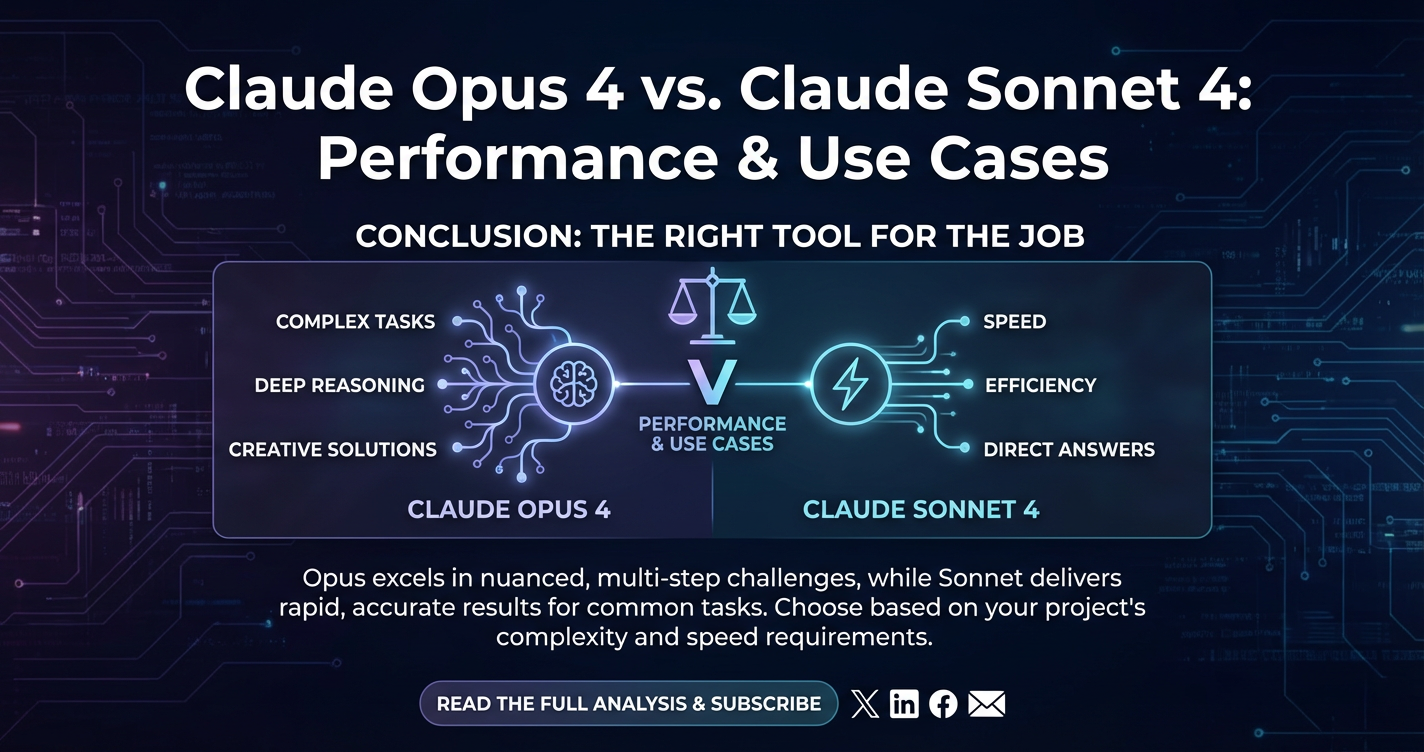
The distinction between these models is not merely about raw power but about optimized utility. Opus 4 is built for depth and complexity; Sonnet 4 is built for breadth and efficiency. Understanding this fundamental difference is the first step in making an informed decision for your AI-powered applications. As we delve deeper into each model, we will uncover the specific features, performance metrics, and ideal use cases that differentiate Claude Opus 4 from Claude Sonnet 4, highlighting why both will be indispensable tools in the evolving AI toolkit.
Claude Opus 4: The Apex of AI Reasoning
Claude Opus 4 represents the zenith of Anthropic's ambitions in creating highly intelligent and capable large language models. Positioned as the flagship offering, Opus 4 is designed for tasks demanding the absolute highest levels of intelligence, critical thinking, and nuanced understanding. Its projected capabilities place it squarely at the forefront of AI innovation, making it an indispensable asset for groundbreaking research, strategic decision-making, and advanced application development.
Core Capabilities and Design Philosophy
At its heart, Claude Opus 4 is engineered for unparalleled reasoning and comprehension. This goes beyond mere pattern recognition; it encompasses the ability to understand complex causal relationships, perform multi-step logical inferences, and process information with an exceptional degree of abstraction. The design philosophy behind Opus 4 emphasizes:
- Advanced Reasoning: The capacity to tackle highly complex problems, including mathematical proofs, intricate coding challenges, and scientific hypothesis generation, with a high degree of accuracy and coherence. It's about thinking several steps ahead, understanding implied meanings, and synthesizing information from diverse sources to arrive at robust conclusions.
- Nuanced Understanding: Opus 4 is expected to excel in interpreting subtle linguistic cues, emotional tones, and cultural contexts. This makes it particularly adept at handling sensitive communications, analyzing complex human interactions, or generating creative content that resonates deeply with its audience. Its ability to grasp the "why" behind the "what" sets it apart.
- Expansive Context Window: A hallmark of advanced LLMs, Opus 4 would likely boast an extraordinarily large context window, allowing it to process and retain vast amounts of information within a single interaction. This capability is crucial for tasks involving extensive documentation, long-form content generation, or protracted multi-turn conversations where maintaining coherence and understanding evolving context is vital.
- Robust Multimodal Capabilities: Building on current trends, Opus 4 is anticipated to feature highly sophisticated multimodal processing. This means not just understanding text, but also interpreting images, charts, graphs, and potentially even audio or video inputs with a depth of understanding akin to its textual prowess. It could analyze complex data visualizations, describe intricate scenes, or even debug code from screenshots.
Projected Performance Metrics
While specific benchmarks for Claude Opus 4 are hypothetical, we can project its performance based on the trajectory of LLM advancements and the established capabilities of its predecessors. Opus 4 is expected to set new industry standards across various evaluation metrics:
- MMLU (Massive Multitask Language Understanding): Anticipated to achieve near-human or superhuman performance, demonstrating mastery across a broad range of academic and professional subjects.
- GPQA (General Purpose Question Answering): Expected to exhibit exceptional ability in answering highly difficult, open-domain questions requiring deep knowledge and reasoning.
- MATH and HumanEval: Projecting significant improvements in mathematical problem-solving and code generation/debugging, showcasing robust logical inference and programming capabilities. It would not only generate code but understand design patterns and potential vulnerabilities.
- Multilingual Fluency: Offering state-of-the-art performance in understanding, generating, and translating content across numerous languages, with a keen awareness of cultural nuances.
- Vision-Based Reasoning: Demonstrating advanced capabilities in interpreting visual information, such as analyzing complex diagrams, understanding visual humor, or performing OCR with high accuracy on challenging layouts.
Ideal Use Cases for Claude Opus 4
Given its formidable intelligence and reasoning capabilities, Claude Opus 4 would be the model of choice for applications where compromise on quality or depth of understanding is not an option.
- Scientific Research & Complex Data Analysis: Assisting researchers in synthesizing vast scientific literature, generating hypotheses, designing experiments, and identifying novel patterns in large datasets. It could analyze genomic data, interpret complex chemical structures, or even model climate patterns.
- Strategic Business Planning & Market Forecasting: Providing deep insights into market trends, competitive landscapes, and consumer behavior. Opus 4 could analyze financial reports, predict geopolitical impacts on supply chains, or simulate various business strategies.
- Advanced Software Development & Debugging: Beyond simple code generation, Opus 4 could assist in architectural design, identifying subtle bugs in complex systems, optimizing algorithms, and even generating comprehensive test suites for large projects. It could reason about entire codebases.
- Legal and Medical Document Analysis: Reviewing and summarizing vast legal documents, identifying precedents, drafting complex contracts, or assisting medical professionals in diagnosing rare conditions by cross-referencing patient data with extensive medical literature. Its ability to handle sensitive and critical information with high accuracy would be paramount.
- Creative Content Generation (Long-Form & Nuanced): Crafting full-length novels, intricate screenplays, sophisticated marketing campaigns, or highly personalized educational content that requires deep understanding of human psychology and narrative structure.
- Personalized Tutoring and Advanced Educational Tools: Creating highly adaptive learning experiences that can identify a student's misconceptions, explain complex topics in multiple ways, and guide them through challenging problems with personalized feedback.
- Financial Risk Assessment and Fraud Detection: Analyzing intricate financial transactions and market data to identify subtle anomalies, predict potential risks, or detect sophisticated fraud schemes that evade simpler detection methods.
Strengths and Considerations
Strengths: * Unrivaled Accuracy and Depth: Delivers exceptionally reliable and insightful outputs for the most demanding tasks. * Superior Reasoning and Problem-Solving: Excels in complex, multi-step logical challenges, outperforming other models in intricate domains. * Contextual Mastery: Maintains coherence and deep understanding over extremely long conversations and documents. * Multimodal Sophistication: Processes and reasons over diverse data types (text, images, data) with advanced integration. * Reduced Hallucination: Anticipated to have significantly lower rates of factual errors or nonsensical outputs due to enhanced grounding and reasoning.
Considerations: * Higher Computational Cost: As a premium model, Opus 4 will naturally incur higher API costs due to its increased complexity and resource demands. * Potentially Slower Latency: For tasks requiring immediate, real-time responses, its processing time might be slightly longer than more optimized, leaner models. This trade-off is often acceptable for high-value outputs. * Resource Intensive: Deploying and fine-tuning Opus 4 locally (if ever possible for such a large model) would require substantial computational resources.
In essence, Claude Opus 4 is designed for the frontier of AI application, where intelligence, reliability, and depth of understanding are non-negotiable. It is the architect of solutions for problems that were once considered beyond the reach of artificial intelligence.
Claude Sonnet 4: The Agile Workhorse
While Claude Opus 4 targets the pinnacle of AI intelligence, Claude Sonnet 4 is engineered to be the agile and efficient workhorse of the Claude family. It embodies Anthropic's commitment to providing a balanced, performant, and cost-effective solution for a vast array of general-purpose AI applications. Sonnet 4 is expected to deliver a compelling combination of speed, reliability, and smarts, making it an ideal choice for high-throughput scenarios where efficiency is as crucial as capability.
Core Capabilities and Design Philosophy
The design philosophy behind Claude Sonnet 4 focuses on striking an optimal equilibrium between intelligence and operational efficiency. It aims to provide robust performance across a broad spectrum of tasks without the higher computational overhead associated with flagship models like Opus 4. Key capabilities include:
- Strong General Performance: Claude Sonnet 4 is designed to perform very well across a wide range of common AI tasks, including summarization, question answering, content generation, and classification. It might not delve into the extreme depths of Opus 4, but its competency for everyday tasks will be excellent.
- Speed and Responsiveness: A primary objective for Claude Sonnet 4 is low latency and high throughput. This makes it exceptionally well-suited for real-time applications where quick interactions are critical, such as chatbots or dynamic content generation for user interfaces.
- Cost-Efficiency: One of Sonnet's defining characteristics is its optimized cost structure. By balancing model size and complexity with performance, Anthropic aims to make Sonnet 4 accessible for projects with tighter budgets or those requiring large-scale deployment.
- Solid Code Generation and Development Support: While Opus 4 might excel at complex architectural design, Sonnet 4 is expected to be highly proficient at generating boilerplate code, assisting with routine debugging, suggesting code completions, and writing unit tests, significantly boosting developer productivity.
- Practical Multimodal Understanding: Sonnet 4 will likely feature strong multimodal capabilities, allowing it to process and understand visual inputs in a practical manner. This could include interpreting images for content moderation, extracting data from scanned documents, or generating captions for pictures, focusing on utility rather than extreme nuance.
Projected Performance Metrics
Claude Sonnet 4 is projected to demonstrate strong performance across standard benchmarks, showcasing its versatility and efficiency:
- General Language Understanding: Achieving high scores on various language understanding tasks, demonstrating a solid grasp of semantics, syntax, and discourse.
- Speed Benchmarks: Delivering significantly faster response times compared to Opus 4, making it suitable for latency-sensitive applications.
- Cost-Performance Ratio: Providing an excellent balance of output quality relative to its operational cost, making it highly attractive for scalable deployments.
- Coding Assistance: Performing competently on coding benchmarks, capable of generating functional code snippets and assisting with common programming tasks.
- Context Window: While potentially smaller than Opus 4, it will still offer a sufficiently large context window for most practical applications, handling moderately long documents and conversations effectively.
- Multimodal Tasks: Showing good performance in common vision-language tasks, such as object recognition, image description, and data extraction from visual media.
Ideal Use Cases for Claude Sonnet 4
Claude Sonnet 4 is the go-to model for applications that require reliable AI capabilities at scale, where speed and cost-efficiency are key considerations.
- Customer Support Automation: Powering intelligent chatbots, virtual assistants, and automated email response systems that can quickly understand user queries, provide accurate information, and escalate complex issues appropriately. Its speed and reliability are perfect for enhancing customer experience.
- Content Moderation & Data Filtering: Rapidly identifying and flagging inappropriate content (text, images), spam, or fraudulent activities across platforms, ensuring a safe and compliant online environment.
- Routine Content Creation: Generating a high volume of standard content such as blog post drafts, social media updates, email newsletters, product descriptions, or internal reports. Its efficiency makes it ideal for content teams.
- Developer Tools & Productivity: Assisting software engineers with code completion, generating basic unit tests, refactoring code, explaining functions, and summarizing documentation. It serves as a powerful coding copilot.
- Data Extraction and Summarization: Efficiently extracting key information from large volumes of unstructured text (e.g., reports, customer feedback, news articles) and generating concise summaries for business intelligence or rapid information consumption.
- Workflow Automation: Integrating into various business processes to automate tasks like document classification, form filling, data entry, and basic report generation, freeing up human resources for more strategic work.
- Personalized Recommendations: Powering recommendation engines for e-commerce, media platforms, or content discovery by quickly analyzing user preferences and generating relevant suggestions.
Strengths and Considerations
Strengths: * Excellent Value for Money: Offers a superb balance of performance and cost, making advanced AI accessible for a wide range of projects. * High Throughput and Responsiveness: Optimized for speed and handling a large volume of requests, crucial for real-time and scalable applications. * Versatility: Capable of performing a broad spectrum of general language tasks with high proficiency. * Ease of Integration: Its streamlined nature often translates to easier integration into existing systems and workflows. * Reliable for Standard Tasks: Delivers consistent and accurate results for common applications, minimizing the risk of errors.
Considerations: * Less Depth for Extreme Complexity: May not match Opus 4's ability to handle highly abstract, multi-layered reasoning problems or tasks requiring profound philosophical understanding. * Nuance Sensitivity: While good, it might occasionally miss the subtlest nuances in highly complex or emotionally charged linguistic contexts compared to Opus 4. * Creative Ceiling: While adept at generating creative content, its output for highly artistic or profoundly original endeavors might not reach the same groundbreaking level as Opus 4.
In conclusion, Claude Sonnet 4 is built to be the backbone of countless AI-powered applications, offering a compelling blend of intelligence, speed, and affordability. It's the practical choice for scaling AI solutions and integrating advanced language capabilities into everyday operations.
XRoute is a cutting-edge unified API platform designed to streamline access to large language models (LLMs) for developers, businesses, and AI enthusiasts. By providing a single, OpenAI-compatible endpoint, XRoute.AI simplifies the integration of over 60 AI models from more than 20 active providers(including OpenAI, Anthropic, Mistral, Llama2, Google Gemini, and more), enabling seamless development of AI-driven applications, chatbots, and automated workflows.
A Head-to-Head Comparison: Opus 4 vs. Sonnet 4
When selecting between Claude Opus 4 and Claude Sonnet 4, the decision hinges on a careful evaluation of your specific project needs, budget constraints, and performance priorities. While both models represent cutting-edge AI technology, their optimized design principles lead to distinct advantages in different scenarios. Let's pit them against each other across several key dimensions.
Reasoning and Logic
This is arguably the most significant differentiator. * Claude Opus 4: Expected to exhibit exceptional reasoning capabilities. It's designed to excel in complex, multi-step logical inference, abstract problem-solving, mathematical proofs, and deeply analytical tasks. If your application requires the AI to "think" like an expert, synthesise disparate information, identify subtle patterns, or perform critical, high-stakes decision-making, Opus 4 is the clear leader. Its strength lies in its ability to parse ambiguity and arrive at highly reliable conclusions, even with incomplete or noisy data. * Claude Sonnet 4: Offers very good reasoning capabilities for a general-purpose model. It can handle moderately complex logical problems, perform effective summarization, and follow multi-turn conversations coherently. For typical business logic, code generation, or information extraction, Sonnet 4 will perform admirably. However, it might struggle with the most abstract, research-level problems or those requiring extreme levels of creative problem-solving where Opus 4 shines.
Speed and Latency
The responsiveness of an LLM can be a critical factor, especially for user-facing applications. * Claude Opus 4: Due to its advanced architecture and the sheer computational power required for its deep reasoning, Opus 4 is likely to have moderate latency. While still fast, it may not be instantaneous for very long or complex prompts. For critical tasks where accuracy outweighs immediate response, this trade-off is often acceptable. * Claude Sonnet 4: Is optimized for speed and high throughput, making it significantly faster than Opus 4. Its design prioritizes quick processing, making it ideal for real-time interactions, high-volume requests, and applications where user experience demands minimal waiting times.
Cost-Efficiency
Budget is almost always a consideration, especially for scalable applications. * Claude Opus 4: Positioned as the premium offering, Opus 4 will naturally come with a higher per-token or per-request cost. This higher price reflects its unparalleled intelligence and the greater computational resources required for its operation. It's an investment for high-value tasks. * Claude Sonnet 4: Is designed to be highly cost-effective. It offers excellent performance at a significantly lower price point, making it suitable for applications with high query volumes, tight budgets, or scenarios where the cost per interaction needs to be minimized for economic viability.
Context Window Management
The ability to process and maintain context over long inputs is crucial for many applications. * Claude Opus 4: Expected to feature a very large context window, enabling it to process entire books, extensive code repositories, or lengthy conversations while maintaining comprehensive understanding and coherence. This is vital for deep document analysis, long-form content generation, or complex multi-turn dialogues. * Claude Sonnet 4: Will also have a large and capable context window, sufficient for most typical business documents, multi-page reports, or sustained conversational interactions. While possibly not matching Opus 4's extreme capacity, it will be more than adequate for the majority of use cases.
Multimodality (Vision)
The ability to understand and reason over images, charts, and other non-textual data is a growing trend. * Claude Opus 4: Anticipated to offer advanced multimodal understanding, capable of deep interpretation of visual cues, complex data visualizations, subtle details in images, and even spatial reasoning from visual inputs. Its multimodal capabilities would be integrated with its superior reasoning. * Claude Sonnet 4: Will likely provide good multimodal capabilities, suitable for practical tasks like object recognition, image description, data extraction from forms, or content moderation based on visual input. It focuses on utility and efficiency in visual processing.
Benchmarking Comparison
To summarise their anticipated differences, here's a comparative table:
| Feature / Metric | Claude Opus 4 | Claude Sonnet 4 |
|---|---|---|
| Reasoning Depth | Exceptional (complex, multi-step, abstract) | Very Good (moderate complexity, practical) |
| Task Complexity | High to Extreme (research, strategic, critical) | Moderate to High (general business, automation) |
| Speed / Latency | Moderate (optimized for depth) | Fast (optimized for responsiveness) |
| Cost-Efficiency | Higher (premium, high-value tasks) | Lower (volume, budget-friendly) |
| Context Window | Very Large (extensive documents, conversations) | Large (most typical documents, conversations) |
| Code Generation | Advanced, Architectural, Debugging | Solid, Completion, Unit Tests |
| Multimodality | Advanced Vision, Nuance, Data Interpretation | Good Vision, General Description, Extraction |
| Best For | Critical, Complex, High-Value, Research | General, Volume, Real-Time, Cost-Sensitive |
| Primary Advantage | Intelligence & Reliability | Efficiency & Scale |
Decision Matrix: When to Choose Which
The choice between Claude Opus 4 and Claude Sonnet 4 often comes down to a few key questions:
- Is absolute accuracy and depth of understanding non-negotiable? For legal analysis, medical diagnosis support, scientific research, or critical financial modeling, Opus 4's superior reasoning is indispensable.
- Is speed and cost-effectiveness paramount for your application? For customer support chatbots, content moderation, routine content generation, or developer tools where high volume and responsiveness are key, Sonnet 4 offers a much better balance.
- Are you dealing with extremely long or complex documents/conversations? Opus 4's very large context window makes it ideal for managing vast amounts of information in a single interaction.
- Is your budget constrained, but you still need powerful AI? Sonnet 4 provides an excellent price-to-performance ratio for a broad range of applications.
- Does your task involve highly creative, nuanced, or abstract problem-solving? Opus 4 will likely produce more original and insightful outputs in these domains.
In many real-world scenarios, the optimal strategy might not be to choose one over the other exclusively, but to strategically deploy both.
Strategic Deployment and Optimization
Leveraging the full potential of advanced LLMs like Claude Opus 4 and Claude Sonnet 4 goes beyond merely selecting the right model; it involves strategic deployment, intelligent workflow design, and continuous optimization. The most effective AI applications often integrate multiple models or employ sophisticated techniques to maximize performance and minimize cost.
Hybrid Approaches: The Best of Both Worlds
One of the most powerful strategies is to implement a hybrid approach, using both Opus 4 and Sonnet 4 within a single workflow. This allows developers to capitalize on the unique strengths of each model while mitigating their respective drawbacks.
- Tiered Intelligence: Imagine a customer support system. Initial, high-volume queries could be routed through Claude Sonnet 4 for quick, cost-effective responses to FAQs and common issues. If a query proves to be complex, nuanced, or requires deeper problem-solving (e.g., diagnosing a technical issue, handling an escalated complaint), it could then be intelligently passed to Claude Opus 4 for a more thorough and accurate resolution. This ensures that the most powerful model is reserved for tasks where its intelligence is truly needed, optimizing both cost and performance.
- Multi-Stage Content Creation: For generating long-form, high-quality content, Opus 4 could be used for initial outlining, brainstorming complex ideas, and developing the core argumentative structure, leveraging its superior reasoning. Then, Claude Sonnet 4 could take over for generating detailed paragraphs, expanding on sections, or drafting supplementary materials, benefiting from its speed and cost-efficiency for execution.
- Code Development Workflow: Opus 4 might be leveraged for designing complex software architectures, identifying potential design flaws, or debugging highly intricate code sections. For everyday coding tasks—like generating function bodies, writing unit tests, or suggesting code completions—Claude Sonnet 4 would be the agile choice, providing rapid assistance to developers without incurring the higher cost of Opus 4 for routine operations.
Cost Management Strategies
Given the varying costs of LLMs, effective cost management is paramount, especially for applications designed for scale.
- Dynamic Model Switching: Implement logic that intelligently switches between models based on the complexity of the input query or the criticality of the task. This requires a robust classification or heuristic system to determine which model is most appropriate at any given time.
- Token Optimization: Regardless of the model, efficient prompt engineering that minimizes unnecessary token usage can significantly reduce costs. This includes careful instruction phrasing, avoiding redundant information, and optimizing the length of system and user messages.
- Caching and Pre-computation: For frequently asked questions or recurring tasks, cache responses or pre-compute common outputs to avoid repeatedly querying the LLM.
Prompt Engineering Best Practices
Even the most advanced LLMs require well-crafted prompts to deliver optimal results. * Clarity and Specificity: Clearly define the task, desired output format, and any constraints. Ambiguous prompts lead to ambiguous results. * Role Assignment: Tell the AI what role it should adopt (e.g., "You are a legal expert," "You are a creative writer"). * Provide Examples (Few-Shot Learning): Supplying a few input-output examples can significantly guide the model towards the desired behavior, especially for specific tasks. * Iterative Refinement: Don't expect perfect results on the first try. Experiment with different prompt structures, phrasing, and parameters. * For Opus 4: Lean into its reasoning capabilities. Ask it to "think step-by-step," "justify its reasoning," or "consider alternative perspectives." Provide complex scenarios and multiple constraints. * For Sonnet 4: Focus on clear, concise instructions for direct tasks. It excels at following straightforward commands efficiently. For more complex tasks, break them down into smaller, manageable steps.
The Role of Unified API Platforms in Streamlining Deployment
Managing multiple LLM APIs, especially when implementing hybrid strategies, can introduce significant operational complexities. This is where unified API platforms become invaluable. They abstract away the intricacies of individual API integrations, offering a single, standardized interface to access a diverse range of models.
Consider the challenge: a developer wants to use Claude Opus 4 for complex analysis, Claude Sonnet 4 for customer service, and perhaps another provider's model for image generation. Each model has its own API endpoints, authentication methods, rate limits, and data formats. Integrating and maintaining these diverse connections can be a development nightmare.
This is precisely where XRoute.AI steps in. As a cutting-edge unified API platform, XRoute.AI is designed to streamline access to large language models (LLMs) for developers, businesses, and AI enthusiasts. By providing a single, OpenAI-compatible endpoint, XRoute.AI simplifies the integration of over 60 AI models from more than 20 active providers, enabling seamless development of AI-driven applications, chatbots, and automated workflows.
With XRoute.AI, you can hypothetically access both Claude Opus 4 and Claude Sonnet 4 (and many other models) through a consistent API interface. This means:
- Simplified Integration: Developers write code once for a single API, rather than learning and maintaining multiple SDKs and authentication schemes.
- Low Latency AI: XRoute.AI focuses on optimizing API calls to ensure rapid responses, which is crucial for real-time applications, especially when dealing with Sonnet 4's speed advantages.
- Cost-Effective AI: The platform can intelligently route requests to the most cost-effective model for a given task, or allow developers to easily switch between models like Opus 4 and Sonnet 4 without changing their underlying code. This facilitates dynamic model switching and budget optimization.
- High Throughput and Scalability: XRoute.AI's infrastructure is built to handle high volumes of requests, ensuring that your applications can scale without performance bottlenecks, regardless of which LLM you're calling.
- Developer-Friendly Tools: Its OpenAI-compatible endpoint significantly reduces the learning curve for developers already familiar with popular AI APIs.
By leveraging platforms like XRoute.AI, businesses can accelerate their AI development cycle, experiment with different models more easily, and deploy robust, multi-model AI solutions with greater efficiency and lower operational overhead. This not only makes strategic deployment of models like Claude Opus 4 and Claude Sonnet 4 more feasible but also opens doors to even more sophisticated AI integrations across the entire ecosystem.
Evaluating Performance in Production
The work doesn't stop once models are deployed. Continuous monitoring and evaluation are essential. * Key Performance Indicators (KPIs): Define clear metrics for success, such as response accuracy, latency, user satisfaction, task completion rates, and cost per interaction. * A/B Testing: Experiment with different models, prompt variations, and deployment strategies to identify the most effective configurations for specific tasks. * User Feedback Loops: Gather qualitative and quantitative feedback from end-users to identify areas for improvement. * Monitoring for Drift: AI models can sometimes "drift" in performance over time due to changes in input data or subtle model updates. Regular monitoring helps detect and address this.
By adopting a holistic approach that encompasses smart model selection, strategic integration, and continuous optimization, organizations can unlock the full transformative power of advanced LLMs like Claude Opus 4 and Claude Sonnet 4, building AI applications that are not only intelligent but also efficient, scalable, and genuinely impactful.
The Future of Claude and AI Model Evolution
The journey of AI model development is a relentless pursuit of greater intelligence, efficiency, and utility. As we look beyond the anticipated Claude Opus 4 and Claude Sonnet 4, the horizon promises even more profound advancements, shaping not only Anthropic's trajectory but also the broader AI landscape.
Anticipated Advancements in Future Generations
The evolution of LLMs typically follows several key vectors:
- Increased Context Window and Recall: Future models will likely be able to process and perfectly recall information from even larger contexts, extending to entire books, vast legal databases, or years of conversational history. This will unlock new possibilities for deep learning from extensive, multimodal data.
- Enhanced Multimodality: The integration of text, vision, audio, and potentially even tactile or olfactory data will become increasingly seamless and sophisticated. Models will not just "see" an image but "understand" the physics within it, or not just "hear" speech but "interpret" emotional intonation and environmental context with human-like acuity.
- Improved Reasoning and Planning: Beyond current capabilities, future models will exhibit more robust symbolic reasoning, enabling them to plan multi-step actions, develop complex strategies, and even self-correct errors with greater autonomy. This moves towards more proactive and less reactive AI.
- Reduced Hallucination and Greater Factual Accuracy: Continued research into model grounding, retrieval-augmented generation (RAG), and self-verification mechanisms will significantly reduce the incidence of factual inaccuracies, making AI outputs even more reliable for critical applications.
- Personalization and Adaptability: Future models might become highly adaptable to individual users or specific organizational cultures, learning preferences, communication styles, and domain-specific knowledge to provide hyper-personalized experiences.
- Ethical Alignment and Interpretability: Anthropic's foundational commitment to safety and ethics will continue to drive research into making AI systems more transparent, controllable, and aligned with human values, addressing concerns around bias, misuse, and accountability.
The Increasing Specialization vs. Generalization of Models
The AI industry appears to be moving in two complementary directions: * Extreme Generalization: Flagship models like Opus will continue to push the boundaries of general intelligence, aiming for "Foundation Models" that can tackle almost any task with exceptional competence. These models become the bedrock upon which specialized applications are built. * Deep Specialization: Concurrently, there will be a proliferation of smaller, highly specialized models or fine-tuned versions of general models designed for niche tasks (e.g., a model specifically for legal contract drafting, or one for medical image diagnosis). These specialized models can offer superior performance and cost-efficiency within their narrow domain.
The interplay between these two trends means that platforms like XRoute.AI, which can seamlessly orchestrate calls to various models (generalists and specialists alike), will become even more critical for building flexible and powerful AI solutions. This dynamic landscape will create an ecosystem where developers can combine the raw power of a Claude Opus 4 with the focused efficiency of a highly specialized small model for specific sub-tasks.
The Competitive Landscape
Anthropic operates in a fiercely competitive environment alongside tech giants and innovative startups. Companies like OpenAI, Google, Meta, and various open-source initiatives are constantly pushing the envelope. This intense competition is a powerful driver of innovation, accelerating the pace of advancements and ensuring that models like Claude Opus 4 and Claude Sonnet 4 continually evolve to meet and exceed market demands. The focus will remain on developing models that are not only powerful but also efficient, safe, and easily integrated into existing technological stacks.
Ethical Considerations in AI Development
As models become more capable, the ethical responsibilities grow proportionally. Anthropic's Constitutional AI approach is a testament to the importance of building safeguards and ethical guidelines directly into the AI's core. Future developments will undoubtedly continue to grapple with: * Bias Mitigation: Ensuring models are fair and equitable, minimizing biases present in training data. * Transparency and Explainability: Making AI decisions more understandable and interpretable to humans. * Safety and Robustness: Preventing misuse, ensuring models are resistant to adversarial attacks, and maintaining reliability in critical applications. * Privacy: Handling sensitive user data with utmost care and compliance.
The ongoing conversation around responsible AI development will not only shape the technical features of models like Claude, but also influence policy, regulation, and public trust. The focus on safe and beneficial AI, as championed by Anthropic, will remain a cornerstone of progress.
In conclusion, the future of AI, exemplified by the continued evolution of the Claude family, promises a future where artificial intelligence becomes an even more pervasive and transformative force. Models like Claude Opus 4 and Claude Sonnet 4 are not just incremental improvements; they are stepping stones towards an era of more intelligent, adaptable, and ethically aligned AI systems that will redefine human-computer interaction and problem-solving across every industry. The strategic selection and deployment of these advanced tools will be crucial for innovators aiming to build the next generation of AI-powered solutions.
Conclusion
The choice between Claude Opus 4 and Claude Sonnet 4 is a strategic decision that hinges on a clear understanding of your project's unique demands, financial constraints, and performance objectives. As we've explored in this detailed AI model comparison, both models represent the pinnacle of Anthropic's innovation, yet they are engineered for distinct purposes.
Claude Opus 4 emerges as the intellectual powerhouse, designed for tasks demanding unparalleled depth of reasoning, complex problem-solving, and nuanced understanding across vast contexts. It is the ideal choice for high-stakes applications in scientific research, strategic business planning, advanced software development, and any scenario where accuracy, reliability, and profound insight are non-negotiable, even if it comes with a higher cost and potentially moderate latency.
Conversely, Claude Sonnet 4 positions itself as the agile workhorse, offering an exceptional balance of strong general performance, speed, and cost-efficiency. It excels in high-throughput environments such as customer support automation, routine content creation, data summarization, and developer assistance, where rapid response times and economical operation are paramount. Claude Sonnet models, in particular, democratize access to powerful AI, making advanced capabilities accessible for a broader range of applications and budgets.
In many contemporary AI applications, the most effective strategy may involve a hybrid approach, intelligently leveraging Claude Opus 4 for critical reasoning tasks and Claude Sonnet 4 for efficient execution of high-volume, general-purpose operations. Furthermore, the complexities of managing diverse LLM APIs can be significantly simplified by platforms like XRoute.AI, which provide a unified, OpenAI-compatible endpoint for seamless integration, optimizing for low latency AI and cost-effective AI across multiple models.
As the AI landscape continues to evolve, the ability to make informed decisions about model selection and deployment will be crucial for staying competitive and innovative. Both Claude Opus 4 and Claude Sonnet 4 are poised to be transformative tools, each offering distinct advantages that, when understood and strategically applied, can unlock immense value and drive the next wave of AI-powered advancements. The future is bright with possibilities, and understanding these powerful models is the first step towards building it.
Frequently Asked Questions (FAQ)
Q1: What are the primary differences between Claude Opus 4 and Claude Sonnet 4?
A1: The primary differences lie in their optimization targets. Claude Opus 4 is Anthropic's flagship model, designed for maximum intelligence, complex reasoning, and nuanced understanding, making it suitable for high-stakes, analytical tasks. It typically comes with a higher cost and moderate latency. Claude Sonnet 4 is a more balanced and efficient model, optimized for speed, cost-effectiveness, and high throughput across a wide range of general-purpose tasks, making it ideal for scalable applications and real-time interactions.
Q2: When should I choose Claude Opus 4 over Claude Sonnet 4?
A2: You should choose Claude Opus 4 when your application requires the absolute highest level of accuracy, deep logical reasoning, complex problem-solving (e.g., scientific research, strategic planning, advanced code debugging), or the ability to process and understand extremely long and nuanced contexts. It's best for critical tasks where the quality and depth of the AI's output are paramount, even if it means a higher operational cost.
Q3: Can I use both Claude Opus 4 and Claude Sonnet 4 in the same application?
A3: Absolutely! Many advanced AI applications benefit from a hybrid approach. You can strategically use Claude Opus 4 for initial complex reasoning or critical decision-making phases, and then switch to Claude Sonnet 4 for high-volume execution of routine tasks, content generation, or customer interactions. This allows you to leverage the strengths of both models while optimizing for cost and speed.
Q4: How do these models handle multimodal inputs, like images?
A4: Both Claude Opus 4 and Claude Sonnet 4 are expected to feature strong multimodal capabilities. Opus 4 would likely offer more advanced and nuanced interpretation of visual data, suitable for complex analysis of charts, graphs, or intricate scenes, deeply integrating vision with its superior reasoning. Sonnet 4 would provide good, practical multimodal performance, efficient for tasks like object recognition, image description, and data extraction from documents, focusing on utility for general applications.
Q5: How can a platform like XRoute.AI help me manage Claude Opus 4 and Claude Sonnet 4?
A5: XRoute.AI simplifies the management of various LLMs, including models like Claude Opus 4 and Claude Sonnet 4, by providing a single, OpenAI-compatible API endpoint. This means you can integrate and switch between these models (and over 60 others) without needing to learn multiple APIs. XRoute.AI helps optimize for low latency AI and cost-effective AI, offering benefits like simplified integration, high throughput, scalability, and intelligent routing to ensure you're always using the best model for your needs efficiently.
🚀You can securely and efficiently connect to thousands of data sources with XRoute in just two steps:
Step 1: Create Your API Key
To start using XRoute.AI, the first step is to create an account and generate your XRoute API KEY. This key unlocks access to the platform’s unified API interface, allowing you to connect to a vast ecosystem of large language models with minimal setup.
Here’s how to do it: 1. Visit https://xroute.ai/ and sign up for a free account. 2. Upon registration, explore the platform. 3. Navigate to the user dashboard and generate your XRoute API KEY.
This process takes less than a minute, and your API key will serve as the gateway to XRoute.AI’s robust developer tools, enabling seamless integration with LLM APIs for your projects.
Step 2: Select a Model and Make API Calls
Once you have your XRoute API KEY, you can select from over 60 large language models available on XRoute.AI and start making API calls. The platform’s OpenAI-compatible endpoint ensures that you can easily integrate models into your applications using just a few lines of code.
Here’s a sample configuration to call an LLM:
curl --location 'https://api.xroute.ai/openai/v1/chat/completions' \
--header 'Authorization: Bearer $apikey' \
--header 'Content-Type: application/json' \
--data '{
    "model": "gpt-5",
    "messages": [
        {
            "content": "Your text prompt here",
            "role": "user"
        }
    ]
}'
With this setup, your application can instantly connect to XRoute.AI’s unified API platform, leveraging low latency AI and high throughput (handling 891.82K tokens per month globally). XRoute.AI manages provider routing, load balancing, and failover, ensuring reliable performance for real-time applications like chatbots, data analysis tools, or automated workflows. You can also purchase additional API credits to scale your usage as needed, making it a cost-effective AI solution for projects of all sizes.
Note: Explore the documentation on https://xroute.ai/ for model-specific details, SDKs, and open-source examples to accelerate your development.