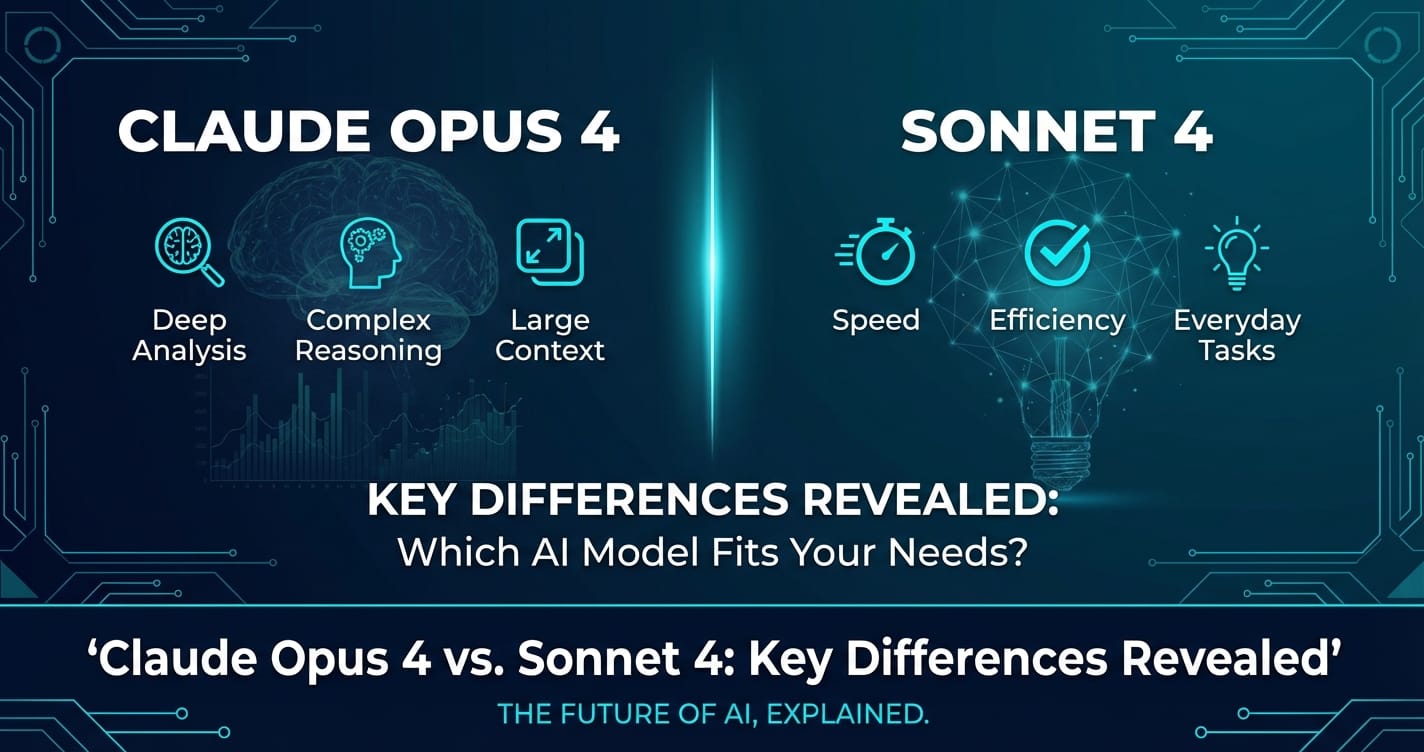
Claude Opus 4 vs. Sonnet 4: Key Differences Revealed

In the rapidly evolving landscape of artificial intelligence, Large Language Models (LLMs) are constantly pushing the boundaries of what machines can achieve. Among the vanguard of these advancements is the Claude series from Anthropic, a suite of models designed with a strong emphasis on safety, helpfulness, and honesty. As developers and businesses increasingly rely on sophisticated AI to drive innovation, the nuanced differences between powerful models become critical. This article delves into a comprehensive AI model comparison focusing on two anticipated, high-performance iterations: Claude Opus 4 and Claude Sonnet 4.
While Anthropic's current flagship offerings are Claude 3 Opus, Sonnet, and Haiku, the rapid pace of development suggests that future iterations, such as a hypothetical "Claude Opus 4" and "Claude Sonnet 4," will continue to refine and enhance these capabilities. Our analysis will draw heavily on the known characteristics and performance disparities between Claude 3 Opus and Claude 3 Sonnet, extrapolating potential advancements and distinctions for their subsequent "4" versions. We aim to uncover the key differentiators that would define these models, helping you understand which one is best suited for your specific needs, whether it's for cutting-edge research, enterprise-grade applications, or scalable daily operations.
The Evolution of Claude: A Foundation for Understanding Future Iterations
To fully appreciate the potential advancements in Claude Opus 4 and Claude Sonnet 4, it's essential to first understand the trajectory and design philosophy of the Claude family. Anthropic, founded by former OpenAI researchers, has consistently focused on developing safe and beneficial AI. Their models are trained with "Constitutional AI" principles, aiming to align AI behavior with human values through a set of rules and self-correction mechanisms. This commitment to safety is a core differentiator, influencing how the models handle sensitive queries and generate responses.
The Claude 3 family, introduced in early 2024, represented a significant leap forward, offering a spectrum of models tailored for different use cases and performance requirements. * Claude 3 Haiku: The fastest and most compact model, designed for near real-time interactions and high-volume tasks. It excels in responsiveness and cost-efficiency. * Claude 3 Sonnet: Positioned as the ideal balance between intelligence and speed, Sonnet is a versatile workhorse for enterprise-grade applications. It offers strong performance across a wide range of tasks while maintaining reasonable cost and latency. * Claude 3 Opus: The most intelligent and capable model in the family, Claude Opus is designed for highly complex tasks, advanced reasoning, and nuanced understanding. It sets new benchmarks for general intelligence.
The progression from Claude 1 to Claude 2, and then to the Claude 3 family, has consistently shown improvements in reasoning, multilingual capabilities, vision processing, and overall robustness. Each generation has expanded context windows, reduced hallucination rates, and enhanced instructional following. When we envision Claude Opus 4 and Claude Sonnet 4, we anticipate these trends to continue, bringing even greater sophistication, efficiency, and potentially new multimodal capabilities that further blur the lines between human and artificial intelligence. This continuous refinement is driven by ongoing research in deep learning, massive dataset training, and innovative architectural designs, all aimed at pushing the frontier of what LLMs can achieve for users worldwide.
Deep Dive: Claude Opus 4 – The Apex Performer
Imagining Claude Opus 4 requires us to project the pinnacle of current AI capabilities into a refined, more powerful future. Building upon the already groundbreaking performance of Claude 3 Opus, Claude Opus 4 would likely represent an unparalleled leap in artificial general intelligence (AGI) capabilities, cementing its position as the ultimate model for complex, high-stakes, and pioneering applications. This model is not just about speed or efficiency; it's about pushing the boundaries of what's possible, tackling problems that previously required extensive human expertise or were deemed intractable for AI.
Anticipated Capabilities and Strengths
Claude Opus 4 would likely excel in several key areas, demonstrating superior performance across a wide spectrum of cognitive tasks:
- Advanced Reasoning and Problem Solving: This would be the hallmark of Claude Opus 4. We can expect extraordinary capabilities in deductive, inductive, and abductive reasoning. It would effortlessly navigate multi-step problems, logical puzzles, and highly abstract concepts. Imagine an AI that can not only code but also debug complex legacy systems with minimal human intervention, or an AI that can analyze intricate legal documents, identifying subtle nuances and potential loopholes with the precision of a seasoned legal expert. This level of reasoning extends to scientific discovery, financial modeling, and strategic planning, where the model could generate novel hypotheses or identify non-obvious patterns.
- Unparalleled Contextual Understanding and Memory: The context window, which refers to the amount of information an LLM can process at once, is crucial for handling long documents, extensive conversations, or large codebases. While Claude 3 Opus already boasts a massive context window (up to 200K tokens, equivalent to over 150,000 words), Claude Opus 4 could potentially extend this even further or, more importantly, improve its ability to recall and synthesize information across this vast context. This means fewer "lost in the middle" problems, where models forget details from earlier parts of a lengthy input. For tasks like summarizing entire books, analyzing lengthy research papers, or maintaining coherence in protracted multi-turn dialogues, this advanced memory would be transformative.
- Sophisticated Multimodal Integration: The Claude 3 family introduced impressive vision capabilities. Claude Opus 4 would likely elevate this to a new level. It could seamlessly integrate and reason across various modalities – text, images, audio, and even video. Consider an AI that can watch a scientific experiment unfold, read accompanying lab notes, listen to researchers' discussions, and then generate a comprehensive report, identifying critical observations and suggesting next steps. Or an AI that can analyze architectural blueprints, cross-reference them with site photos, and identify potential construction flaws or inefficiencies. This holistic understanding would unlock applications in design, engineering, diagnostics, and creative fields.
- Exceptional Language Nuance and Generation: From generating highly creative narratives to crafting precise technical documentation, Claude Opus 4 would demonstrate an unmatched grasp of language subtleties. It would understand irony, sarcasm, cultural context, and implied meanings with greater accuracy. This translates into more human-like conversations, highly persuasive marketing copy, deeply engaging storytelling, and highly accurate translations that preserve tone and intent. Its ability to adhere to complex stylistic guidelines and generate content tailored for specific audiences would be paramount.
Ideal Use Cases for Claude Opus 4
Given its expected capabilities, Claude Opus 4 would be the go-to model for scenarios where accuracy, depth of understanding, and sophisticated reasoning are non-negotiable, and where the cost of errors is exceptionally high.
- Scientific Research and Discovery: Assisting researchers in analyzing vast datasets, formulating hypotheses, designing experiments, and even simulating complex scientific phenomena. Its ability to cross-reference academic papers, identify gaps in knowledge, and propose novel research directions would be invaluable.
- Advanced Software Development and Engineering: Beyond basic code generation, Claude Opus 4 could serve as an AI co-pilot for architects and lead developers, designing system architectures, optimizing complex algorithms, refactoring large codebases, and performing sophisticated security audits. It could understand highly abstract design patterns and apply them effectively.
- Legal and Medical Analysis: Processing and synthesizing vast amounts of legal precedents, medical journals, patient records, and diagnostic images. It could assist in drafting complex legal briefs, identifying relevant case law, providing differential diagnoses, or even assisting in drug discovery by analyzing molecular structures and potential interactions.
- Financial Modeling and Risk Assessment: Conducting intricate market analysis, predicting economic trends, developing sophisticated trading algorithms, and performing comprehensive risk assessments with a depth that surpasses current models. It could identify subtle indicators of financial instability or arbitrage opportunities.
- Creative Industries (Advanced): For groundbreaking artistic endeavors, film script generation with deep character development, complex musical composition, or even designing virtual worlds with intricate narratives and lore. Its creative output would be highly original and emotionally resonant.
Performance Metrics (Hypothetical/Expected)
While concrete benchmarks for Claude Opus 4 are speculative, we can infer its performance profile would significantly surpass its predecessors. It would likely set new state-of-the-art (SOTA) records across a range of industry-standard benchmarks:
- MMLU (Massive Multitask Language Understanding): Expect scores nearing or exceeding human expert levels across a broad spectrum of academic and professional subjects, demonstrating a deeper understanding and fewer errors than previous models.
- GPQA (Graduate-level Physics, Chemistry, and Biology Questions): A true test of advanced scientific reasoning, Claude Opus 4 would likely achieve near-perfect scores, indicating its ability to tackle complex scientific problems.
- MATH: For mathematical problem-solving, its accuracy would be unprecedented, handling complex algebra, calculus, geometry, and discrete mathematics with high precision.
- Coding Benchmarks (e.g., HumanEval, CodeXGLUE): Not only would it generate highly optimized and functional code, but it would also excel in debugging, refactoring, and understanding complex existing codebases, demonstrating a deep comprehension of programming paradigms.
- Vision-Language Benchmarks: For tasks involving visual reasoning and understanding, Claude Opus 4 would show remarkable accuracy in interpreting complex charts, graphs, medical images, and real-world scenes, translating visual information into insightful textual analysis.
The architecture of Claude Opus 4 would be designed for maximum computational power and intellectual capacity. This would inherently come with a higher operational cost and potentially higher latency compared to its more lightweight counterparts, reflecting its role as a premium, high-utility tool for the most demanding AI applications. Its strength lies not in being the cheapest or fastest for simple tasks, but in its ability to deliver unparalleled intelligence and reliability for the most challenging problems.
Deep Dive: Claude Sonnet 4 – The Versatile Workhorse
Following the impressive lineage of Claude 3 Sonnet, Claude Sonnet 4 is poised to become the quintessential versatile workhorse in the LLM ecosystem. This model would be engineered to strike an optimal balance between high intelligence, reasonable speed, and cost-effectiveness, making it an indispensable tool for a vast array of enterprise and developer applications. Where Claude Opus 4 targets the cutting edge of AI research and the most demanding, mission-critical tasks, Claude Sonnet 4 aims to democratize advanced AI capabilities, making them accessible and practical for everyday business operations and scalable deployments.
Anticipated Capabilities and Strengths
Claude Sonnet 4 would be characterized by its robust performance across a broad spectrum of general-purpose AI tasks, delivering reliable and high-quality results without the premium overhead of an Opus-level model.
- Strong General-Purpose Intelligence: Claude Sonnet 4 would exhibit excellent capabilities in common LLM tasks such as summarization, text generation, translation, question answering, and content creation. It would be highly adept at understanding complex instructions, maintaining conversational context, and generating coherent, relevant, and grammatically correct responses across various domains. Its general knowledge base would be extensive and up-to-date, making it a reliable source of information.
- Balanced Speed and Accuracy: One of the primary advantages of Claude Sonnet 4 would be its ability to deliver high-quality outputs at a relatively fast pace. This balance is crucial for applications that require quick turnarounds without sacrificing accuracy. For instance, customer service chatbots need to respond promptly with correct information, and content generation tools need to produce drafts efficiently. Claude Sonnet 4 would be optimized for throughput, processing a significant volume of requests in a timely manner.
- Enhanced Cost-Effectiveness: Building on Claude 3 Sonnet's reputation for being more cost-efficient than its Opus counterpart, Claude Sonnet 4 would continue this trend. It would provide substantial AI power at a price point that makes large-scale deployments economically viable for many businesses. This focus on cost-efficiency allows companies to integrate advanced AI into more aspects of their operations, from internal tools to customer-facing services, without incurring prohibitive expenses.
- Robust Multimodal Capabilities (Practical): While perhaps not reaching the cutting-edge fusion of Claude Opus 4, Claude Sonnet 4 would feature highly practical and reliable multimodal processing. It could effectively analyze images for content recognition, extract data from documents containing both text and visuals, and understand simple visual cues in conversational contexts. For tasks like processing invoices, analyzing product images, or interpreting simple diagrams, its multimodal features would be highly effective and dependable.
- Strong Instruction Following and Guardrails: Claude Sonnet 4 would be engineered with robust instruction-following capabilities and enhanced safety guardrails. This means it would reliably adhere to user-defined constraints, output formats, and ethical guidelines. For businesses, this translates to predictable behavior, reduced need for extensive post-processing, and a lower risk of generating undesirable or harmful content, which is paramount for brand safety and regulatory compliance.
Ideal Use Cases for Claude Sonnet 4
Claude Sonnet 4 would be the model of choice for businesses and developers seeking a powerful yet practical AI solution that can scale across numerous applications without compromising quality or budget.
- Enterprise Automation and Workflow Optimization: Automating routine business processes such as email triage, document classification, report generation, and data extraction from unstructured text. Its reliability makes it suitable for integrating into CRM systems, ERP platforms, and internal knowledge management tools.
- Customer Support and Service Automation: Powering advanced chatbots, virtual assistants, and ticket routing systems that can handle a wide range of customer queries, provide personalized responses, and improve overall customer satisfaction. Its balance of speed and intelligence is perfect for real-time interactions.
- Content Creation and Curation: Assisting marketing teams in drafting articles, social media posts, product descriptions, and email campaigns. It can also be used for content summarization, translation of website content, and curating information from various sources to build internal knowledge bases.
- Data Analysis and Business Intelligence: Extracting key insights from large volumes of textual data, such as customer feedback, market research reports, or competitor analysis. It can identify trends, sentiment, and actionable intelligence to support decision-making.
- Educational Tools and Tutoring: Developing intelligent tutoring systems, personalized learning platforms, and content generation for educational materials. Claude Sonnet 4 can provide clear explanations, answer student questions, and adapt to individual learning paces.
- Mid-Complexity Software Development: Aiding developers in generating boilerplate code, writing unit tests, debugging common issues, and explaining complex code snippets. While Claude Opus 4 might handle architectural design, Claude Sonnet 4 would be excellent for accelerating daily coding tasks.
Performance Metrics (Hypothetical/Expected)
Claude Sonnet 4's performance profile would demonstrate strong capabilities across general benchmarks, often placing it very close to or exceeding the previous generation's Opus model, but still distinct from the new Claude Opus 4.
- MMLU (Massive Multitask Language Understanding): Expect high scores, indicating a solid understanding across many subjects, making it highly effective for general knowledge and informational tasks.
- GPQA (Graduate-level Physics, Chemistry, and Biology Questions): Good performance, capable of tackling moderately complex scientific problems, though perhaps requiring more prompting or showing slightly less nuanced understanding than Opus.
- MATH: Strong ability in mathematical problem-solving, particularly for standard computational tasks and word problems.
- Coding Benchmarks: Capable of generating correct and efficient code for typical programming tasks, assisting with common debugging scenarios, and understanding most codebases.
- Vision-Language Benchmarks: Reliable performance for practical visual tasks like OCR, image description, and data extraction from visual documents.
Claude Sonnet 4 would represent the sweet spot for many organizations: offering significant AI power and versatility without the financial and latency demands of the bleeding-edge. It would be optimized for throughput and responsible deployment, ensuring that advanced AI is not just a luxury but a practical, scalable asset for business growth and efficiency.
Head-to-Head Comparison: Claude Opus 4 vs. Sonnet 4
When pitting Claude Opus 4 against Claude Sonnet 4, we are essentially comparing a precision-engineered supercar designed for specific, high-stakes races with a high-performance, versatile SUV built for a wide range of demanding terrains. Both are exceptional, but their design philosophies and optimal applications diverge significantly. Understanding these differences is crucial for making an informed decision that aligns with your project's technical requirements, budget constraints, and strategic goals.
Performance: Reasoning, Accuracy, and Speed
- Reasoning: This is where Claude Opus 4 would truly shine. It would be equipped with a more sophisticated reasoning engine, capable of deeper, multi-step logical inference, abstract problem-solving, and critical thinking. For tasks requiring nuanced understanding, identifying subtle patterns, or generating novel insights from complex data, Claude Opus 4 would deliver superior results. Claude Sonnet 4, while highly capable, would likely perform excellent at common reasoning tasks and logical deductions but might struggle with the very edge cases or highly abstract, open-ended problems that Claude Opus 4 could tackle.
- Accuracy: Claude Opus 4 would aim for near-perfect accuracy, especially in areas where precision is paramount, such as scientific calculations, legal analysis, or medical diagnostics. Its lower hallucination rate and superior understanding would minimize errors. Claude Sonnet 4 would offer very high accuracy for general tasks, making it reliable for most enterprise applications. However, in extremely complex or ambiguous scenarios, Claude Opus 4 might exhibit a marginal but critical advantage in precision.
- Speed (Latency & Throughput): Typically, highly complex models like Claude Opus 4 come with a trade-off in speed. The intricate computations required for its advanced reasoning might result in slightly higher latency (time to first token) compared to Claude Sonnet 4. However, throughput (number of requests processed per unit time) for both would be optimized for their respective use cases. Claude Sonnet 4 would be engineered for lower latency and higher throughput, making it ideal for applications requiring quick, real-time responses and handling large volumes of concurrent requests, such as customer service or real-time content moderation. Claude Opus 4 would prioritize depth and quality of response over raw speed for less time-sensitive, high-value tasks.
Cost-Effectiveness
The pricing model would reflect the capabilities. Claude Opus 4 would undoubtedly be the more expensive model per token, reflecting its superior intelligence, higher computational demands, and advanced features. This higher cost is justified for applications where the value derived from its unparalleled performance outweighs the financial outlay, such as groundbreaking research, high-stakes strategic analysis, or premium content generation.
Claude Sonnet 4 would be designed to offer an excellent balance of performance and affordability. Its lower per-token cost would make it highly cost-effective for large-scale deployments, enterprise automation, and applications where good-to-excellent performance is sufficient without needing the absolute peak of intelligence. This makes it a more sustainable option for broad adoption across an organization.
Context Window
Both models would likely retain large context windows (e.g., 200K tokens or more), allowing them to process and understand vast amounts of information. The key difference would lie not just in the sheer size, but in how effectively each model utilizes that context. Claude Opus 4 would likely demonstrate superior "long-range coherence" and recall within its context window, better synthesizing information from disparate parts of an extremely long input. Claude Sonnet 4 would still be excellent for long documents and conversations, significantly outperforming older models, but Claude Opus 4 would hold a slight edge in its ability to extract the most subtle and complex insights from extended contexts.
Specific Task Suitability
The choice between Claude Opus 4 and Claude Sonnet 4 becomes clearest when considering specific tasks:
- Coding: Claude Opus 4 for architectural design, complex algorithm optimization, refactoring legacy systems, and highly specialized language generation. Claude Sonnet 4 for boilerplate code, unit testing, debugging common issues, and general-purpose code generation.
- Creative Writing: Claude Opus 4 for novel writing, complex screenplays, poetry requiring deep emotional resonance, or creating intricate fictional worlds. Claude Sonnet 4 for marketing copy, blog posts, social media content, and general creative assistance.
- Data Analysis: Claude Opus 4 for deep scientific data interpretation, identifying subtle anomalies in complex financial datasets, or advanced pattern recognition. Claude Sonnet 4 for summarizing research papers, extracting key metrics from reports, and general sentiment analysis.
- Customer Service: Claude Sonnet 4 for general customer queries, personalized support, and efficient ticket routing due to its speed and cost-efficiency. Claude Opus 4 for highly complex, multi-modal customer issues requiring diagnostic reasoning or intricate problem-solving that escalates beyond standard protocols.
To illustrate these differences, let's consider a comparative table:
Table 1: Claude Opus 4 vs. Sonnet 4 – Feature Comparison
| Feature | Claude Opus 4 | Claude Sonnet 4 |
|---|---|---|
| Primary Strength | Advanced Reasoning, Complex Problem Solving, Novelty | Versatile Performance, Cost-Effectiveness, Scalability |
| Ideal Use Cases | Scientific Research, Legal Analysis, Financial Modeling, Advanced Engineering, Creative Arts | Enterprise Automation, Customer Support, Content Creation, Data Analysis, Education |
| Performance (Relative) | Highest Intelligence, Lowest Hallucination Rate | High Intelligence, Robust Performance |
| Speed (Latency) | Slightly Higher (for deeper processing) | Lower, Optimized for Real-time Applications |
| Cost | Premium, Higher per-token cost | Balanced, Lower per-token cost |
| Context Window | Very Large (e.g., 200K+ tokens), superior coherence | Very Large (e.g., 200K+ tokens), strong coherence |
| Multimodality | Cutting-edge, Seamless cross-modal reasoning | Practical, Robust image/text processing |
| Complexity Handled | Extremely High, Abstract, Nuanced | High, General-purpose, Enterprise-grade |
| Development Focus | Pushing AGI Frontiers, Precision, Depth | Broad Adoption, Efficiency, Reliability, Scalability |
Table 2: Hypothetical Performance Benchmarks (Relative Scores)
| Benchmark Category | Claude Opus 4 (Expected Score) | Claude Sonnet 4 (Expected Score) | Description
Claude Opus 4 vs. Sonnet 4: Key Differences Revealed
The realm of artificial intelligence is in a constant state of flux, with Large Language Models (LLMs) continually reshaping the boundaries of what machines can achieve. At the forefront of this revolution is the Claude series from Anthropic, distinguished by its meticulous focus on safety, helpfulness, and honesty. For innovators, developers, and businesses alike, understanding the nuanced distinctions between powerful models is paramount for strategic implementation. This comprehensive AI model comparison dives into two anticipated, high-performance iterations: Claude Opus 4 and Claude Sonnet 4.
While Anthropic's current flagship offerings are Claude 3 Opus, Sonnet, and Haiku, the relentless pace of AI development strongly suggests that subsequent iterations, such as these hypothetical "4" versions, will build upon and further refine the existing capabilities. Our analysis will draw extensively on the well-established characteristics and performance disparities between Claude 3 Opus and Claude 3 Sonnet, extrapolating potential advancements and key distinctions for their "4" counterparts. Our goal is to illuminate the critical differentiators that would define these future models, thereby empowering you to identify which one aligns best with your specific project requirements, be it for pioneering research, robust enterprise-grade applications, or highly scalable daily operations.
The Evolution of Claude: A Foundation for Understanding Future Iterations
To truly grasp the potential advancements embodied in Claude Opus 4 and Claude Sonnet 4, it is essential to first consider the developmental trajectory and the core design philosophy that underpins the entire Claude family. Anthropic, founded by former OpenAI researchers, has consistently championed the development of AI that is not only powerful but also safe and beneficial. This commitment is deeply embedded in their "Constitutional AI" approach, which seeks to align AI behavior with human values through a rigorous framework of rules and self-correction mechanisms. This unwavering focus on safety is a fundamental differentiator, influencing how Claude models process sensitive inquiries and generate their responses.
The introduction of the Claude 3 family in early 2024 marked a significant leap forward, offering a diverse spectrum of models meticulously engineered for various use cases and performance requirements:
- Claude 3 Haiku: Positioned as the swiftest and most compact model, Haiku is specifically designed for near real-time interactions and high-volume data processing. Its primary strengths lie in its exceptional responsiveness and remarkable cost-efficiency, making it ideal for applications where speed is paramount.
- Claude 3 Sonnet: This model serves as the ideal nexus between intelligence and operational speed. Sonnet is conceived as a versatile workhorse, perfectly suited for a broad array of enterprise-grade applications. It delivers robust performance across numerous tasks while maintaining a judicious balance of cost-effectiveness and low latency, making it a pragmatic choice for businesses.
- Claude 3 Opus: Representing the zenith of intelligence and capability within the current family, Claude Opus is purpose-built for tackling highly complex tasks, demanding advanced reasoning, and discerning nuanced understanding. It has consistently established new benchmarks for general intelligence, pushing the boundaries of what an LLM can achieve.
The progressive advancements observed from Claude 1 to Claude 2, and subsequently to the Claude 3 family, have consistently demonstrated significant improvements in areas such as reasoning abilities, multilingual proficiency, sophisticated vision processing, and overall model robustness. Each successive generation has brought forth expanded context windows, a notable reduction in hallucination rates, and enhanced capabilities in following complex instructions. When we envision Claude Opus 4 and Claude Sonnet 4, we anticipate these pivotal trends to not only continue but to accelerate, leading to even greater sophistication, enhanced efficiency, and potentially groundbreaking new multimodal functionalities that further diminish the distinction between artificial and human intelligence. This continuous and rigorous refinement is propelled by relentless research in deep learning, the training on ever-larger and more diverse datasets, and the development of innovative architectural designs, all dedicated to expanding the frontier of what LLMs can offer to users across the globe.
Deep Dive: Claude Opus 4 – The Apex Performer
To envision Claude Opus 4 is to project the very zenith of current AI capabilities into a future iteration that is even more refined and profoundly powerful. Building upon the already groundbreaking performance of Claude 3 Opus, Claude Opus 4 would undoubtedly represent an unparalleled leap in artificial general intelligence (AGI) capabilities. This would firmly establish its position as the ultimate model for the most complex, high-stakes, and pioneering applications imaginable. This model's essence is not merely about achieving superior speed or marginal efficiency gains; rather, it is about transcending existing limitations, tackling problems that historically demanded extensive human expertise or were deemed entirely beyond the scope of artificial intelligence.
Anticipated Capabilities and Strengths
Claude Opus 4 would likely excel across a multitude of critical areas, showcasing a level of performance that is simply extraordinary across a broad spectrum of demanding cognitive tasks:
- Unrivaled Advanced Reasoning and Problem Solving: This capability would stand as the defining characteristic of Claude Opus 4. We could reasonably anticipate its prowess in deductive, inductive, and abductive reasoning to be nothing short of revolutionary. It would navigate multi-step problems, intricate logical puzzles, and highly abstract conceptual frameworks with an unprecedented ease and accuracy. Picture an AI not merely generating functional code, but also meticulously debugging complex legacy systems with minimal human oversight, or an AI capable of dissecting voluminous and intricate legal documents, discerning subtle nuances and uncovering potential loopholes with the precision and insight of a seasoned legal expert. This advanced level of reasoning would extend seamlessly into domains such as scientific discovery, sophisticated financial modeling, and complex strategic planning, where the model could autonomously generate novel hypotheses or identify non-obvious, critical patterns.
- Unparalleled Contextual Understanding and Memory: The context window, which defines the maximum span of information an LLM can process and retain simultaneously, is absolutely critical for managing lengthy documents, extended conversational threads, or expansive codebases. While Claude 3 Opus already boasts an exceptionally large context window (reaching up to 200K tokens, which is equivalent to more than 150,000 words), Claude Opus 4 could potentially push this boundary even further. More significantly, it would likely exhibit a vastly improved ability to recall, integrate, and synthesize information consistently across this immense context. This advancement would drastically reduce the pervasive "lost in the middle" problem, where models tend to forget crucial details from earlier sections of lengthy inputs. For applications such as summarizing entire literary works, conducting in-depth analyses of extensive research papers, or maintaining perfect coherence and consistency in protracted multi-turn dialogues, this elevated level of contextual memory would be truly transformative.
- Sophisticated Multimodal Integration: The Claude 3 family introduced truly impressive vision capabilities, marking a significant step forward in multimodal AI. Claude Opus 4 would likely elevate this integration to an entirely new echelon. It would seamlessly fuse and reason across diverse modalities—text, static images, dynamic audio, and even complex video streams. Envision an AI that can concurrently observe a scientific experiment unfolding in real-time, concurrently read the accompanying lab notes, interpret discussions among researchers, and subsequently generate a comprehensive, insightful report that meticulously identifies critical observations and proactively suggests subsequent experimental steps. Alternatively, imagine an AI capable of meticulously analyzing architectural blueprints, cross-referencing them with real-time site photographs, and autonomously identifying potential construction flaws, structural inefficiencies, or compliance deviations. This holistic, cross-modal understanding would unlock entirely new paradigms of application in fields such as advanced design, complex engineering, intricate diagnostics, and highly innovative creative endeavors.
- Exceptional Language Nuance and Generation: From the generation of highly creative and imaginative narratives to the meticulous crafting of precise and accurate technical documentation, Claude Opus 4 would demonstrate an unmatched mastery over the subtleties and intricacies of human language. It would comprehend irony, sarcasm, deeply embedded cultural contexts, and nuanced implied meanings with an accuracy and depth far surpassing its predecessors. This translates directly into conversational interactions that are strikingly more human-like, marketing copy that is exceptionally persuasive and impactful, storytelling that is deeply engaging and emotionally resonant, and multilingual translations that are not only accurate but also meticulously preserve the original tone, intent, and cultural context. Its unparalleled ability to adhere to incredibly complex stylistic guidelines and generate content precisely tailored for highly specific target audiences would be a paramount feature, delivering truly bespoke linguistic outputs.
Ideal Use Cases for Claude Opus 4
Given its expected unparalleled capabilities, Claude Opus 4 would emerge as the definitive choice for scenarios where absolute accuracy, profound depth of understanding, and sophisticated, complex reasoning are non-negotiable prerequisites, and where the potential cost of errors is exceptionally high.
- Frontier Scientific Research and Discovery: Empowering leading researchers in the meticulous analysis of colossal datasets, the precise formulation of novel hypotheses, the intelligent design of intricate experiments, and even the sophisticated simulation of complex scientific phenomena. Its capacity to cross-reference vast repositories of academic papers, pinpoint critical knowledge gaps, and propose groundbreaking new research directions would be an invaluable accelerator for scientific advancement.
- Advanced Software Development and Engineering: Extending far beyond rudimentary code generation, Claude Opus 4 could function as an elite AI co-pilot for chief architects and lead developers, capable of autonomously designing robust system architectures, rigorously optimizing highly complex algorithms, intelligently refactoring immense legacy codebases, and performing sophisticated, proactive security audits. It would possess the profound ability to comprehend and effectively apply highly abstract design patterns and advanced architectural principles.
- Intricate Legal and Medical Analysis: Processing and synthesizing vast quantities of legal precedents, esoteric medical journals, extensive patient records, and complex diagnostic images. It could provide invaluable assistance in drafting highly complex legal briefs, identifying subtly relevant case law, offering precise differential diagnoses, or even accelerating drug discovery by meticulously analyzing molecular structures and predicting potential pharmacological interactions.
- Sophisticated Financial Modeling and Risk Assessment: Conducting extraordinarily intricate market analysis, generating highly accurate predictions of economic trends, developing cutting-edge trading algorithms, and executing comprehensive, multi-layered risk assessments with a depth and foresight that would dramatically surpass current models. It could discern subtle indicators of impending financial instability or pinpoint elusive arbitrage opportunities.
- Pioneering Creative Industries (Advanced): For avant-garde artistic endeavors, the generation of feature film scripts with profound character development, complex and original musical compositions, or even the meticulous design of sprawling virtual worlds complete with intricate narratives and deep lore. Its creative output would be characterized by its profound originality, emotional resonance, and intellectual depth.
Performance Metrics (Hypothetical/Expected)
While concrete benchmarks for Claude Opus 4 remain in the realm of speculation, we can confidently infer that its performance profile would not merely surpass, but fundamentally redefine, the achievements of its predecessors. It would undoubtedly establish new state-of-the-art (SOTA) records across a wide array of industry-standard benchmarks:
- MMLU (Massive Multitask Language Understanding): Expect scores that not only approach but consistently exceed human expert levels across an exceptionally broad spectrum of academic and professional subjects. This would demonstrate an unprecedented depth of understanding and a dramatic reduction in errors compared to previous models, indicating a true mastery of diverse knowledge domains.
- GPQA (Graduate-level Physics, Chemistry, and Biology Questions): As a rigorous test of advanced scientific reasoning, Claude Opus 4 would likely achieve near-perfect scores, unequivocally demonstrating its profound ability to tackle highly complex scientific problems that traditionally stump even human experts.
- MATH: For sophisticated mathematical problem-solving, its accuracy would be unprecedented. It would effortlessly handle complex algebra, advanced calculus, intricate geometry, and demanding discrete mathematics with an unwavering precision, offering step-by-step reasoning.
- Coding Benchmarks (e.g., HumanEval, CodeXGLUE): Beyond merely generating highly optimized and functional code, it would excel in the nuanced tasks of debugging, refactoring, and deeply understanding complex existing codebases. This would demonstrate a profound, architectural-level comprehension of diverse programming paradigms and software engineering principles.
- Vision-Language Benchmarks: For tasks demanding sophisticated visual reasoning and nuanced understanding, Claude Opus 4 would exhibit remarkable accuracy. This includes interpreting complex charts, intricate graphs, critical medical images, and real-world scenes, flawlessly translating complex visual information into insightful, actionable textual analysis.
The underlying architecture of Claude Opus 4 would be meticulously designed for maximum computational power and unparalleled intellectual capacity. This inherently implies a higher operational cost and potentially increased latency compared to its more lightweight counterparts. These considerations reflect its distinct role as a premium, high-utility instrument specifically for the most demanding and pioneering AI applications, where its strength lies not in being the most economical or the fastest for simple tasks, but in its singular ability to deliver unmatched intelligence, profound reliability, and transformative insights for the most challenging problems facing humanity.
XRoute is a cutting-edge unified API platform designed to streamline access to large language models (LLMs) for developers, businesses, and AI enthusiasts. By providing a single, OpenAI-compatible endpoint, XRoute.AI simplifies the integration of over 60 AI models from more than 20 active providers(including OpenAI, Anthropic, Mistral, Llama2, Google Gemini, and more), enabling seamless development of AI-driven applications, chatbots, and automated workflows.
Deep Dive: Claude Sonnet 4 – The Versatile Workhorse
Building upon the impressive legacy of Claude 3 Sonnet, Claude Sonnet 4 is poised to emerge as the quintessential versatile workhorse within the rapidly expanding LLM ecosystem. This model would be meticulously engineered to forge an optimal balance between formidable intelligence, efficient processing speed, and compelling cost-effectiveness. This triangulation of attributes would render it an indispensable tool for an expansive array of enterprise applications and developer initiatives. Where Claude Opus 4 is designed to push the very frontiers of AI research and tackle the most demanding, mission-critical tasks, Claude Sonnet 4 aims to democratize access to advanced AI capabilities, making them not only accessible but eminently practical for day-to-day business operations and highly scalable deployments across diverse sectors.
Anticipated Capabilities and Strengths
Claude Sonnet 4 would be characterized by its robust and consistent performance across a broad spectrum of general-purpose AI tasks. It would consistently deliver high-quality and reliable results without incurring the premium overhead typically associated with an Opus-level model.
- Strong General-Purpose Intelligence: Claude Sonnet 4 would exhibit exceptional capabilities across all standard LLM tasks, including but not limited to advanced summarization, nuanced text generation, accurate translation, comprehensive question answering, and high-quality content creation. It would be remarkably adept at comprehending and meticulously following complex instructions, maintaining extended conversational context with high fidelity, and generating coherent, relevant, and grammatically impeccable responses across a wide variety of domains. Its integrated general knowledge base would be both extensive and consistently up-to-date, solidifying its role as a highly reliable and authoritative source of information.
- Optimized Balance of Speed and Accuracy: One of the paramount advantages of Claude Sonnet 4 would be its inherent ability to produce high-quality outputs at a comparatively rapid pace. This meticulously engineered balance is absolutely critical for applications that necessitate swift turnarounds without any compromise on accuracy. For example, sophisticated customer service chatbots demand instantaneous responses with unerringly correct information, while advanced content generation tools must produce polished drafts with remarkable efficiency. Claude Sonnet 4 would be specifically optimized for high throughput, enabling it to process a substantial volume of concurrent requests in a timely and efficient manner, meeting the demands of high-traffic scenarios.
- Enhanced Cost-Effectiveness: Extending Claude 3 Sonnet's established reputation for being significantly more cost-efficient than its Opus counterpart, Claude Sonnet 4 would further consolidate this trend. It would provide substantial AI processing power at a price point that renders large-scale deployments not just feasible but economically attractive for a vast number of businesses. This deliberate focus on cost-efficiency empowers companies to integrate advanced AI into a broader spectrum of their operations, ranging from critical internal tools to essential customer-facing services, all without facing prohibitive financial burdens.
- Robust Multimodal Capabilities (Practical Applications): While it may not pursue the bleeding-edge, deeply fused multimodal capabilities of Claude Opus 4, Claude Sonnet 4 would undeniably feature highly practical and exceptionally reliable multimodal processing. It would effectively analyze images for accurate content recognition, meticulously extract structured and unstructured data from documents containing both textual and visual elements, and accurately interpret straightforward visual cues within conversational contexts. For common business tasks such as automated invoice processing, detailed analysis of product images, or the precise interpretation of basic diagrams and schematics, its multimodal features would prove to be highly effective, consistently dependable, and incredibly useful.
- Unwavering Instruction Following and Advanced Guardrails: Claude Sonnet 4 would be engineered with exceptionally robust instruction-following capabilities and significantly enhanced safety guardrails. This means it would reliably adhere to intricately defined user constraints, output formats, and stringent ethical guidelines with remarkable consistency. For businesses, this translates directly into highly predictable model behavior, a substantially reduced necessity for extensive post-processing or manual intervention, and a significantly lower risk of generating undesirable or potentially harmful content—a paramount consideration for maintaining brand integrity, ensuring regulatory compliance, and upholding ethical standards.
Ideal Use Cases for Claude Sonnet 4
Claude Sonnet 4 would stand out as the definitive model choice for businesses and independent developers who are actively seeking a powerful yet eminently practical AI solution capable of scaling across numerous applications without compromising on quality or exceeding budgetary allocations.
- Enterprise Automation and Workflow Optimization: Automating a wide array of routine business processes, including but not limited to intelligent email triage, precise document classification, automated report generation, and highly accurate data extraction from unstructured textual information. Its inherent reliability makes it perfectly suitable for seamless integration into critical CRM systems, comprehensive ERP platforms, and internal knowledge management tools, streamlining operations across the board.
- Customer Support and Service Automation: Powering sophisticated chatbots, intelligent virtual assistants, and advanced ticket routing systems that can adeptly handle a broad spectrum of customer queries, deliver highly personalized responses, and collectively contribute to a significant improvement in overall customer satisfaction metrics. Its optimal balance of speed and intelligence makes it ideally suited for real-time interactive engagements.
- Dynamic Content Creation and Strategic Curation: Providing invaluable assistance to marketing teams in the swift drafting of articles, engaging social media posts, compelling product descriptions, and impactful email campaigns. It can also be efficiently leveraged for concise content summarization, accurate translation of diverse website content, and the meticulous curation of information from disparate sources to construct comprehensive internal knowledge bases.
- Actionable Data Analysis and Business Intelligence: Extracting crucial, actionable insights from vast volumes of textual data, such as detailed customer feedback, extensive market research reports, or in-depth competitor analysis. It possesses the capability to identify emerging trends, gauge public sentiment, and derive tangible intelligence to profoundly support strategic decision-making processes.
- Innovative Educational Tools and Personalized Tutoring: Facilitating the development of intelligent tutoring systems, highly personalized learning platforms, and the dynamic generation of bespoke content for educational materials. Claude Sonnet 4 can provide exceptionally clear and concise explanations, accurately answer student inquiries, and adapt dynamically to individual learning paces and styles, creating a more effective learning environment.
- Mid-Complexity Software Development Assistance: Actively aiding developers in the rapid generation of boilerplate code, the meticulous writing of comprehensive unit tests, the efficient debugging of common software issues, and the lucid explanation of complex code snippets. While Claude Opus 4 might be employed for advanced architectural design, Claude Sonnet 4 would excel at significantly accelerating daily coding tasks and improving developer productivity.
Performance Metrics (Hypothetical/Expected)
The performance profile of Claude Sonnet 4 would consistently demonstrate robust capabilities across a wide range of general benchmarks. It would often approach or even surpass the performance levels of the previous generation's Opus model, yet it would maintain a clear and distinct separation from the new, even more advanced Claude Opus 4.
- MMLU (Massive Multitask Language Understanding): Expect consistently high scores, unequivocally indicating a solid and comprehensive understanding across numerous subjects, thereby making it exceptionally effective for general knowledge acquisition and diverse informational tasks.
- GPQA (Graduate-level Physics, Chemistry, and Biology Questions): Demonstrating good performance, it would be fully capable of adeptly tackling moderately complex scientific problems, though it might occasionally require more nuanced prompting or exhibit slightly less profound understanding compared to the pinnacle performance of Claude Opus 4.
- MATH: Exhibiting strong capabilities in mathematical problem-solving, particularly for standard computational tasks, algebraic manipulations, and complex word problems, providing reliable and accurate solutions.
- Coding Benchmarks: Capable of generating correct, efficient, and well-structured code for typical programming tasks, adeptly assisting with a wide array of common debugging scenarios, and demonstrating a strong comprehension of most established codebases, contributing significantly to developer efficiency.
- Vision-Language Benchmarks: Delivering reliable and consistent performance for practical visual tasks, including precise Optical Character Recognition (OCR), accurate image description, and effective data extraction from visually rich documents, making it a valuable asset for various business processes.
Ultimately, Claude Sonnet 4 would represent the ideal sweet spot for a vast number of organizations. It would offer significant AI power and remarkable versatility without the inherent financial and latency demands associated with bleeding-edge models. It would be meticulously optimized for high throughput and responsible deployment, ensuring that advanced AI is not merely a luxurious indulgence but a pragmatic, highly scalable, and indispensable asset for sustainable business growth and enhanced operational efficiency.
Head-to-Head Comparison: Claude Opus 4 vs. Sonnet 4
When we place Claude Opus 4 in direct comparison with Claude Sonnet 4, we are essentially contrasting a precision-engineered supercar, meticulously designed for specific, high-stakes competitive races, with a high-performance, exceptionally versatile SUV, robustly built to conquer a wide array of demanding terrains. Both models are, without question, outstanding in their respective categories, but their fundamental design philosophies and their optimal applications diverge significantly. Comprehending these critical differences is paramount for making an astutely informed decision that precisely aligns with your project's intricate technical requirements, stringent budgetary constraints, and overarching strategic objectives.
Performance: Reasoning, Accuracy, and Speed
- Reasoning: This is the domain where Claude Opus 4 would truly distinguish itself. It would be equipped with a profoundly more sophisticated and intricate reasoning engine, capable of deeper, multi-layered logical inference, highly abstract problem-solving, and incisive critical thinking. For tasks demanding exceptionally nuanced understanding, the identification of subtle, complex patterns, or the generation of truly novel, groundbreaking insights from profoundly intricate data, Claude Opus 4 would consistently deliver unparalleled results. Claude Sonnet 4, while possessing highly commendable capabilities, would likely perform excellently at common reasoning tasks and straightforward logical deductions. However, it might encounter challenges or exhibit limitations with the most extreme edge cases or highly abstract, open-ended conceptual problems that Claude Opus 4 is specifically engineered to tackle with precision.
- Accuracy: Claude Opus 4 would relentlessly pursue near-perfect accuracy, particularly in applications where absolute precision is of paramount importance, such as rigorous scientific calculations, intricate legal analysis, or critical medical diagnostics. Its inherently lower hallucination rate and superior deep understanding would dramatically minimize the incidence of errors, making it exceptionally reliable. Claude Sonnet 4 would deliver a very high level of accuracy for general tasks, rendering it robust and trustworthy for the vast majority of enterprise applications. Nevertheless, in scenarios of extreme complexity or profound ambiguity, Claude Opus 4 would likely exhibit a marginal, but potentially critical, advantage in terms of absolute precision and reliability.
- Speed (Latency & Throughput): It is a common characteristic that highly complex and computationally intensive models, such as Claude Opus 4, often entail a trade-off in terms of operational speed. The intricate, multi-layered computations required for its advanced reasoning capabilities might result in a slightly higher latency (the time taken to generate the first token of a response) when compared to Claude Sonnet 4. However, the throughput (the total number of requests that can be processed per unit of time) for both models would be meticulously optimized for their respective primary use cases. Claude Sonnet 4 would be specifically engineered for lower latency and significantly higher throughput, making it the ideal choice for applications that demand swift, real-time responses and the efficient handling of a large volume of concurrent requests, such as dynamic customer service interactions or real-time content moderation systems. Claude Opus 4, conversely, would prioritize the unparalleled depth and superlative quality of its responses over raw processing speed, making it suitable for less time-sensitive, but exceptionally high-value, critical tasks.
Cost-Effectiveness
The pricing structure for these models would naturally reflect their respective capabilities and underlying computational demands. Claude Opus 4 would, without a doubt, be the more expensive model on a per-token basis. This higher cost is a direct reflection of its superior intelligence, significantly higher computational resource demands, and the integration of its advanced, cutting-edge features. This elevated cost is entirely justified for applications where the immense value derived from its unparalleled performance profoundly outweighs the financial outlay, such as groundbreaking scientific research, high-stakes strategic business analysis, or the generation of premium, unique content that requires an exceptional level of sophistication.
Claude Sonnet 4 would be meticulously designed to offer an outstanding balance between robust performance and compelling affordability. Its inherently lower per-token cost would render it exceptionally cost-effective for large-scale deployments, widespread enterprise automation initiatives, and a broad spectrum of applications where consistently good-to-excellent performance is entirely sufficient, without necessitating the absolute pinnacle of AI intelligence. This strategic focus on affordability positions Claude Sonnet 4 as a more sustainable and broadly accessible option for extensive adoption across diverse organizational structures and departmental functions.
Context Window
Both models would undoubtedly feature impressively large context windows (e.g., 200K tokens or even substantially more), granting them the formidable ability to process, understand, and retain vast amounts of informational input. The crucial differentiator would not merely be the sheer volumetric size of the context window, but rather the intrinsic effectiveness with which each model utilizes that extensive context. Claude Opus 4 would likely demonstrate superior "long-range coherence" and exhibit remarkably enhanced recall abilities within its massive context window, proving far more adept at synthesizing intricate information from disparate sections of an exceptionally lengthy input. Claude Sonnet 4 would still excel at handling long documents and extensive conversations, significantly outperforming older, less capable models. However, Claude Opus 4 would maintain a slight, but often critical, advantage in its capacity to extract the most subtle and complex insights from profoundly extended and intricate contextual information.
Specific Task Suitability
The strategic choice between Claude Opus 4 and Claude Sonnet 4 becomes most lucid and definitive when one considers the specific requirements and nuances of particular tasks:
- Coding: Employ Claude Opus 4 for intricate architectural design, rigorous optimization of highly complex algorithms, intelligent refactoring of expansive legacy systems, and the generation of highly specialized, domain-specific programming languages or frameworks. Reserve Claude Sonnet 4 for the efficient generation of boilerplate code, the meticulous writing of comprehensive unit tests, the effective debugging of common software issues, and general-purpose code generation tasks.
- Creative Writing: Utilize Claude Opus 4 for ambitious novel writing projects, crafting complex and emotionally resonant screenplays, generating poetry that demands profound emotional depth and intricate metaphorical structures, or designing intricate fictional worlds complete with rich lore and detailed character arcs. Opt for Claude Sonnet 4 for impactful marketing copy, engaging blog posts, dynamic social media content, and general creative writing assistance that requires speed and consistency.
- Data Analysis: Deploy Claude Opus 4 for deep scientific data interpretation, identifying subtle and non-obvious anomalies within complex financial datasets, or performing advanced, multi-layered pattern recognition in research. Allocate Claude Sonnet 4 for efficiently summarizing lengthy research papers, extracting key performance metrics from comprehensive business reports, and performing general sentiment analysis across large text corpuses.
- Customer Service: Leverage Claude Sonnet 4 for managing general customer queries, providing personalized support at scale, and implementing efficient, automated ticket routing due to its optimized speed and superior cost-efficiency. Consider Claude Opus 4 for handling highly complex, multi-modal customer issues that necessitate sophisticated diagnostic reasoning or intricate, multi-step problem-solving capabilities that extend far beyond standard operating protocols.
To succinctly illustrate these fundamental differences, let us examine a comparative table:
Table 1: Claude Opus 4 vs. Sonnet 4 – Feature Comparison
| Feature | Claude Opus 4 | Claude Sonnet 4 |
|---|---|---|
| Primary Strength | Advanced Reasoning, Complex Problem Solving, Novelty | Versatile Performance, Cost-Effectiveness, Scalability |
| Ideal Use Cases | Scientific Research, Legal Analysis, Financial Modeling, Advanced Engineering, Creative Arts | Enterprise Automation, Customer Support, Content Creation, Data Analysis, Education |
| Performance (Relative) | Highest Intelligence, Lowest Hallucination Rate | High Intelligence, Robust Performance |
| Speed (Latency) | Slightly Higher (for deeper processing) | Lower, Optimized for Real-time Applications |
| Cost | Premium, Higher per-token cost | Balanced, Lower per-token cost |
| Context Window | Very Large (e.g., 200K+ tokens), superior coherence | Very Large (e.g., 200K+ tokens), strong coherence |
| Multimodality | Cutting-edge, Seamless cross-modal reasoning | Practical, Robust image/text processing |
| Complexity Handled | Extremely High, Abstract, Nuanced | High, General-purpose, Enterprise-grade |
| Development Focus | Pushing AGI Frontiers, Precision, Depth | Broad Adoption, Efficiency, Reliability, Scalability |
Table 2: Hypothetical Performance Benchmarks (Relative Scores)
| Benchmark Category | Claude Opus 4 (Expected Score) | Claude Sonnet 4 (Expected Score) | Description |
|---|---|---|---|
| MMLU (Language Understanding) | SOTA / Near Human-level | Very High / Excellent | Measures broad knowledge and problem-solving across 57 subjects. |
| GPQA (Graduate-level QA) | Near Perfect | Strong | Tests advanced reasoning in science (Physics, Chem, Bio). |
| MATH | Unprecedented Precision | High | Assesses mathematical problem-solving capabilities. |
| HumanEval (Coding) | Exceptional (Complex Design) | Very Good (General Tasks) | Evaluates code generation and problem-solving. |
| Vision-Language (VQA) | Superior (Nuanced Interpretation) | Very Good (Practical Recognition) | Assesses understanding and reasoning from images and text. |
| Long Context Recall | Near Perfect (Deep Synthesis) | Excellent (Reliable Recall) | Measures ability to retrieve information from vast contexts. |
| Instruction Following | Extremely Robust (Complex Rules) | Highly Reliable (Standard Rules) | Measures adherence to multi-step and conditional instructions. |
Choosing the Right Model for Your Needs
The decision between Claude Opus 4 and Claude Sonnet 4 is not about identifying a universally "better" model, but rather about selecting the right tool for your specific job. Both models represent significant advancements, but they are optimized for different priorities and use cases. A careful consideration of several key factors will guide you toward the optimal choice.
Factors to Consider
- Budget Constraints:
- If your project has a generous budget and the potential value generated by superior AI intelligence far outweighs the cost, Claude Opus 4 is the logical choice. Its premium pricing reflects its unmatched capabilities.
- If you require powerful AI at scale and need to manage costs effectively across numerous applications or users, Claude Sonnet 4 offers an outstanding balance of performance and affordability, making it a highly cost-effective solution for broader deployment.
- Task Complexity and Criticality:
- For tasks that demand the absolute highest levels of reasoning, nuanced understanding, abstract problem-solving, creativity, or where the cost of an error is extremely high (e.g., medical diagnostics, financial trading algorithms, scientific research), Claude Opus 4 is indispensable.
- For a wide array of enterprise applications, routine automation, content generation, and customer support, where high-quality, reliable, and consistent performance is needed without requiring the bleeding edge of AGI, Claude Sonnet 4 will perform admirably and efficiently.
- Latency Requirements:
- If your application requires near real-time responses and can tolerate slightly higher inference times for deeper processing, Claude Opus 4 might be acceptable.
- For applications demanding low latency and quick turnarounds, such as interactive chatbots, real-time content moderation, or dynamic user interfaces, Claude Sonnet 4 is optimized for speed and responsiveness, providing a smoother user experience.
- Scalability and Throughput:
- While Claude Opus 4 will be highly performant, its computational intensity might imply more resource-intensive deployments for massive concurrent requests.
- Claude Sonnet 4 is designed as a workhorse model, optimized for higher throughput and efficient scaling across a large number of concurrent users and requests, making it ideal for broad enterprise adoption.
- Data Volume and Context Window Utilization:
- Both models offer very large context windows. If your application involves processing extremely long and complex documents, requiring deep synthesis of information from disparate sections, Claude Opus 4 might offer a marginal but crucial advantage in its ability to extract and connect the most subtle insights.
- For general long-form content, extensive conversations, or large codebases where robust recall and understanding are needed, Claude Sonnet 4 will be more than sufficient.
Practical Scenarios and Recommendations
- Scenario 1: Developing a new drug discovery platform.
- Recommendation: Claude Opus 4. The stakes are incredibly high, requiring advanced scientific reasoning, analysis of vast research papers, chemical compound interactions, and hypothesis generation. The cost of error is immense, justifying the premium performance.
- Scenario 2: Building an enterprise-wide intelligent assistant for employees.
- Recommendation: Claude Sonnet 4. This requires handling a wide range of queries (IT, HR, knowledge base), summarizing documents, generating internal communications, and providing consistent, reliable support at scale. Cost-effectiveness and good general performance are key.
- Scenario 3: Creating a personalized learning tutor for university-level students.
- Recommendation: A blend, possibly starting with Claude Sonnet 4. For general explanations, interactive quizzes, and common problem-solving, Claude Sonnet 4 is excellent. For highly specialized, complex subjects or advanced research topics where deep, nuanced insights are required, you might integrate Claude Opus 4 for specific, high-value components or as a fallback for particularly challenging queries.
- Scenario 4: Automating legal document review for a law firm.
- Recommendation: Claude Opus 4. Legal documents are exceptionally complex, requiring precise understanding of jargon, precedents, and potential ambiguities. The accuracy and advanced reasoning of Claude Opus 4 would be crucial for minimizing legal risks and ensuring compliance.
- Scenario 5: Powering a large-scale content generation platform for marketing agencies.
- Recommendation: Claude Sonnet 4. While creative output is important, the sheer volume and need for consistent quality across diverse campaigns (blog posts, social media, ad copy) make cost-effectiveness and scalability of Claude Sonnet 4 more appealing. For truly groundbreaking, campaign-defining creative concepts, Claude Opus 4 could be selectively employed.
In essence, Claude Opus 4 is for when you need the absolute best, regardless of cost or slight latency increases, because the problem is profoundly complex or the stakes are astronomically high. Claude Sonnet 4 is for when you need incredibly strong, reliable, and versatile AI that can be deployed economically and at scale across a broad range of critical business functions.
The Role of AI Model Aggregation Platforms in Harnessing Claude 4 Models
As the landscape of Large Language Models continues to expand with increasingly specialized and powerful models like Claude Opus 4 and Claude Sonnet 4, developers and businesses face a growing complexity: how to efficiently manage, integrate, and optimize access to these diverse AI capabilities. Directly integrating with multiple LLM providers, each with its own API, authentication methods, rate limits, and pricing structures, can quickly become a significant engineering overhead. This challenge is precisely what AI model aggregation platforms are designed to address.
These platforms act as a unified gateway, simplifying access to a vast array of AI models from various providers through a single, standardized API endpoint. This approach offers several profound advantages when working with advanced models like Claude Opus 4 and Claude Sonnet 4, or indeed any other cutting-edge LLMs:
- Simplified Integration: Instead of writing custom code for each model API, developers can integrate once with the aggregation platform. This significantly reduces development time and effort, allowing teams to focus on building innovative applications rather than managing API complexities.
- Model Agility and Flexibility: With a unified API, switching between models like Claude Opus 4 for highly complex tasks and Claude Sonnet 4 for more routine, high-volume operations becomes seamless. This allows for dynamic model routing based on specific query characteristics, user profiles, or even real-time cost considerations.
- Optimized Performance (Low Latency AI): Leading aggregation platforms often employ intelligent routing algorithms, caching mechanisms, and optimized network infrastructure to ensure low latency AI responses. This means your applications can leverage the power of models like Claude Opus 4 and Claude Sonnet 4 without experiencing unnecessary delays, crucial for interactive and real-time use cases.
- Cost-Effective AI: By consolidating API calls and offering smart routing capabilities, these platforms can help users achieve cost-effective AI. For instance, a platform might automatically route simpler queries to a more economical model like Claude Sonnet 4 and reserve the premium Claude Opus 4 for queries that genuinely require its advanced reasoning. This intelligent resource allocation can lead to significant savings.
- Enhanced Reliability and Scalability: Aggregation platforms are typically built with high availability and scalability in mind. They can manage load balancing, automatically retry failed requests, and provide robust infrastructure to ensure that your AI-powered applications remain stable and performant, even under heavy demand.
One such cutting-edge platform is XRoute.AI. XRoute.AI is a unified API platform meticulously designed to streamline access to large language models (LLMs) for developers, businesses, and AI enthusiasts. By providing a single, OpenAI-compatible endpoint, XRoute.AI dramatically simplifies the integration of over 60 AI models from more than 20 active providers. This expansive integration capability would naturally extend to future iterations of Claude models, such as Claude Opus 4 and Claude Sonnet 4, enabling seamless development of AI-driven applications, sophisticated chatbots, and highly automated workflows.
XRoute.AI's focus on low latency AI, cost-effective AI, and developer-friendly tools empowers users to build intelligent solutions without the inherent complexity of managing multiple API connections. The platform's commitment to high throughput, remarkable scalability, and a flexible pricing model makes it an ideal choice for projects of all sizes, from agile startups to expansive enterprise-level applications. Leveraging XRoute.AI ensures that you can always access the best available LLM, whether it's the unparalleled intelligence of Claude Opus 4 or the versatile efficiency of Claude Sonnet 4, precisely when and where your application needs it, without the underlying infrastructural headaches.
Future Outlook for Claude Models
The journey of Claude models, from their foundational principles of Constitutional AI to the advanced capabilities of Claude 3 and the anticipated future iterations like Claude Opus 4 and Claude Sonnet 4, paints a picture of relentless innovation and a steadfast commitment to responsible AI development. The future outlook for Claude is one of continued growth, refinement, and expansion into new frontiers of artificial intelligence.
We can anticipate several key trends shaping the next generations of Claude models:
- Increased Multimodal Dexterity: While Claude 3 introduced vision capabilities, future models, especially Claude Opus 4, will likely integrate modalities beyond text and images, potentially including sophisticated audio processing, advanced video analysis, and even sensory data from various IoT devices. This fusion will enable AI to understand and interact with the world in a far more holistic and human-like manner, opening doors for truly embodied AI applications.
- Enhanced Reasoning and AGI Pursuit: The pursuit of Artificial General Intelligence (AGI) remains a core driver for Anthropic. Claude Opus 4 and its successors will likely demonstrate increasingly sophisticated levels of abstract reasoning, meta-learning, and the ability to transfer knowledge across vastly different domains with minimal fine-tuning. This will make them more versatile "generalists" capable of tackling novel problems without explicit training.
- Greater Personalization and Adaptability: Future Claude models may become even more adept at understanding individual user preferences, learning styles, and contextual nuances over extended interactions. This will lead to highly personalized AI experiences, whether it's a tutor that adapts its teaching method to a student's weaknesses or a business assistant that anticipates user needs based on past behavior.
- Robustness and Reliability: As AI takes on more critical roles, the demand for highly reliable and robust models will intensify. Future Claude iterations will likely incorporate even stronger safety mechanisms, reduced hallucination rates, and improved resistance to adversarial attacks, ensuring consistent and trustworthy performance in sensitive applications.
- Efficient Scaling and Deployment: While Claude Opus 4 pushes the boundaries of intelligence, Anthropic will also continue to optimize models like Claude Sonnet 4 for greater efficiency, lower computational costs, and easier deployment. This involves advancements in model architecture, training methodologies, and inference optimization, making advanced AI accessible to an even wider range of users and applications.
- Ethical AI Governance: Anthropic's foundational commitment to safety and ethics will continue to be a defining characteristic. Future models will likely incorporate more advanced internal monitoring, explainability features, and ethical alignment mechanisms, setting new standards for responsible AI development and deployment.
The impact of these future Claude models on various industries will be profound. In healthcare, they could accelerate drug discovery, improve diagnostic accuracy, and personalize patient care plans. In education, they could create truly adaptive and engaging learning experiences. For businesses, they could drive unprecedented levels of automation, innovation, and strategic insight, transforming everything from product development to customer engagement. The continued evolution of models like Claude Opus 4 and Claude Sonnet 4 represents not just technological progress, but a significant step towards a future where AI serves as a powerful, beneficial, and deeply integrated partner in human endeavors.
Conclusion
The ongoing evolution of Anthropic's Claude models, exemplified by the hypothetical yet highly anticipated Claude Opus 4 and Claude Sonnet 4, underscores a pivotal moment in the trajectory of artificial intelligence. Our extensive AI model comparison has illuminated the distinct pathways these advanced LLMs are poised to follow, each optimized for different operational contexts and strategic objectives.
Claude Opus 4 is envisioned as the vanguard of AGI, an unparalleled powerhouse engineered for the most demanding, complex, and high-stakes applications. Its strengths lie in its profound reasoning capabilities, exceptional accuracy, and ability to navigate highly abstract and nuanced challenges. It is the definitive choice for pioneering research, intricate problem-solving in critical sectors like law and medicine, and groundbreaking creative endeavors where cost is secondary to absolute performance and intellectual depth.
Conversely, Claude Sonnet 4 emerges as the quintessential versatile workhorse, a model meticulously crafted for broad applicability across the enterprise. It strikes an optimal balance between formidable intelligence, efficient speed, and compelling cost-effectiveness. Claude Sonnet 4 is ideally suited for scaling AI solutions across a multitude of business processes, enhancing customer support, streamlining content creation, and driving automation, offering robust performance without the premium demands of its Opus counterpart.
The judicious selection between Claude Opus 4 and Claude Sonnet 4 is not a matter of discerning a universally superior model, but rather a strategic decision rooted in aligning a model's inherent strengths with your project's specific requirements, budgetary constraints, and performance expectations. As these models continue to advance, platforms like XRoute.AI will become increasingly vital, offering a unified, high-performance, and cost-effective gateway to harness their diverse capabilities seamlessly. This ensures that developers and businesses can always access the most appropriate AI intelligence for their needs, thereby accelerating innovation and unlocking unprecedented potential.
The future of AI, as epitomized by the continuous innovation within the Claude family, is one of increasing sophistication, multimodal integration, and a profound commitment to responsible development. Understanding these nuanced differences is not just a technical exercise; it's a strategic imperative for anyone looking to effectively leverage the transformative power of artificial intelligence in an ever-evolving digital landscape.
Frequently Asked Questions (FAQ)
Q1: What are the primary differences between Claude Opus 4 and Claude Sonnet 4?
A1: The primary difference lies in their optimization. Claude Opus 4 (hypothetical) is envisioned as the most intelligent and capable model, excelling in advanced reasoning, complex problem-solving, and highly nuanced tasks, often at a higher cost and potentially slightly higher latency. Claude Sonnet 4 (hypothetical) is designed as a versatile workhorse, offering a strong balance of high intelligence, faster speed, and greater cost-effectiveness, making it ideal for scalable enterprise applications and general-purpose AI tasks.
Q2: Which model should I choose for high-volume customer service applications?
A2: For high-volume customer service applications, Claude Sonnet 4 would likely be the more suitable choice. Its optimization for lower latency, higher throughput, and cost-effectiveness makes it ideal for handling a large number of concurrent queries and providing efficient, real-time support without incurring premium costs.
Q3: Can Claude Opus 4 and Claude Sonnet 4 handle multimodal inputs (like images and text)?
A3: Yes, building on the capabilities of Claude 3, both hypothetical Claude Opus 4 and Claude Sonnet 4 would be expected to handle multimodal inputs. Claude Opus 4 would likely offer more cutting-edge, seamlessly integrated cross-modal reasoning, while Claude Sonnet 4 would provide robust and practical image/text processing suitable for most business applications.
Q4: How do AI model aggregation platforms like XRoute.AI benefit from these models?
A4: Platforms like XRoute.AI simplify the integration and management of diverse LLMs, including future Claude models. They provide a single API endpoint for accessing multiple models, enabling developers to dynamically route queries to the most appropriate model (e.g., Claude Opus 4 for complex tasks, Claude Sonnet 4 for general ones), optimizing for low latency AI and cost-effective AI, and enhancing overall reliability and scalability of AI applications.
Q5: What kind of advancements can we expect in future Claude models beyond Opus 4 and Sonnet 4?
A5: Beyond Opus 4 and Sonnet 4, we can anticipate continued advancements in multimodal dexterity (integrating more sensory data), even more sophisticated reasoning capabilities (further pursuit of AGI), greater personalization and adaptability to individual users, enhanced robustness and reliability with stronger safety guardrails, and ongoing optimization for efficient scaling and deployment, alongside Anthropic's unwavering commitment to ethical AI governance.
🚀You can securely and efficiently connect to thousands of data sources with XRoute in just two steps:
Step 1: Create Your API Key
To start using XRoute.AI, the first step is to create an account and generate your XRoute API KEY. This key unlocks access to the platform’s unified API interface, allowing you to connect to a vast ecosystem of large language models with minimal setup.
Here’s how to do it: 1. Visit https://xroute.ai/ and sign up for a free account. 2. Upon registration, explore the platform. 3. Navigate to the user dashboard and generate your XRoute API KEY.
This process takes less than a minute, and your API key will serve as the gateway to XRoute.AI’s robust developer tools, enabling seamless integration with LLM APIs for your projects.
Step 2: Select a Model and Make API Calls
Once you have your XRoute API KEY, you can select from over 60 large language models available on XRoute.AI and start making API calls. The platform’s OpenAI-compatible endpoint ensures that you can easily integrate models into your applications using just a few lines of code.
Here’s a sample configuration to call an LLM:
curl --location 'https://api.xroute.ai/openai/v1/chat/completions' \
--header 'Authorization: Bearer $apikey' \
--header 'Content-Type: application/json' \
--data '{
    "model": "gpt-5",
    "messages": [
        {
            "content": "Your text prompt here",
            "role": "user"
        }
    ]
}'
With this setup, your application can instantly connect to XRoute.AI’s unified API platform, leveraging low latency AI and high throughput (handling 891.82K tokens per month globally). XRoute.AI manages provider routing, load balancing, and failover, ensuring reliable performance for real-time applications like chatbots, data analysis tools, or automated workflows. You can also purchase additional API credits to scale your usage as needed, making it a cost-effective AI solution for projects of all sizes.
Note: Explore the documentation on https://xroute.ai/ for model-specific details, SDKs, and open-source examples to accelerate your development.