Claude Opus 4 vs. Sonnet 4: The Ultimate AI Showdown

The landscape of artificial intelligence is evolving at an unprecedented pace, with large language models (LLMs) standing at the forefront of this revolution. These sophisticated AI systems are reshaping industries, redefining human-computer interaction, and opening up new frontiers of innovation. Among the titans of this burgeoning field, Anthropic's Claude series has carved out a significant niche, distinguishing itself through its commitment to "Constitutional AI" – a framework designed to make AI assistants more helpful, harmless, and honest. As the demand for more capable, efficient, and versatile AI models grows, Anthropic has responded with a new generation that promises to elevate performance to new heights.
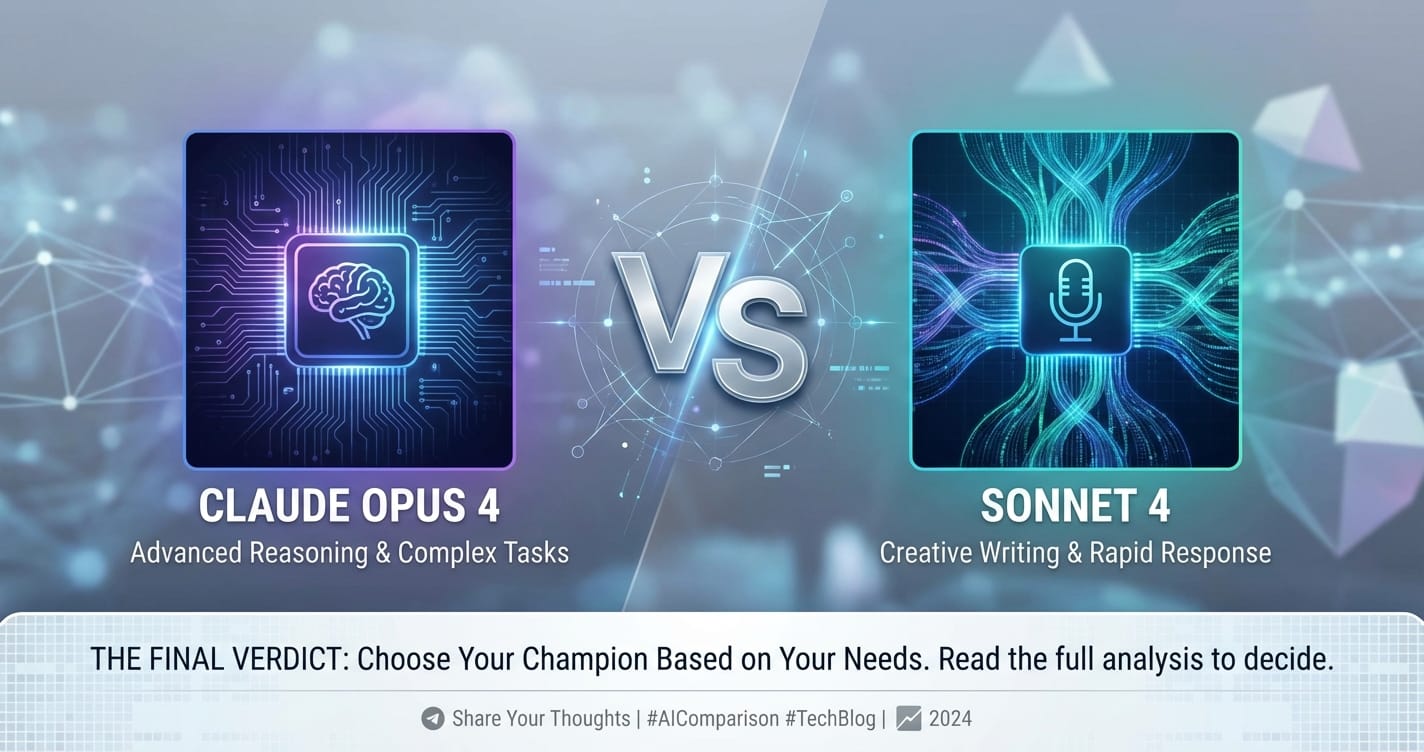
This article delves into a comprehensive AI model comparison between two of Anthropic's latest and most compelling offerings: Claude Opus 4 and Claude Sonnet 4. These models, while sharing the same foundational architecture and ethical principles, are designed for distinctly different purposes, each excelling in particular domains. Claude Opus 4 is positioned as the flagship, a "frontier" model engineered for the most complex and high-stakes tasks, pushing the boundaries of what AI can achieve in terms of reasoning, creativity, and nuanced understanding. In contrast, Claude Sonnet 4 emerges as the efficient workhorse, striking an optimal balance between intelligence, speed, and cost, making it ideal for a vast array of mainstream applications.
Understanding the subtle yet significant differences between Claude Opus 4 and Claude Sonnet 4 is crucial for developers, businesses, and researchers looking to harness the full potential of advanced AI. Choosing the right model can dramatically impact project outcomes, operational efficiency, and overall return on investment. This showdown will dissect their core architectures, explore their unique capabilities, evaluate their performance across various benchmarks, identify their ideal use cases, and provide a strategic guide for deployment. By the end, readers will have a clear picture of which Claude model is best suited to empower their specific AI endeavors, ensuring they make an informed decision in this rapidly advancing technological era.
1. The Evolution of Claude - A Brief History
Anthropic, founded by former OpenAI researchers, embarked on a mission to build reliable, interpretable, and steerable AI systems. Their core philosophy, Constitutional AI, aims to train AI models using a set of principles that guide their behavior, making them less prone to generating harmful, biased, or untruthful content. This approach provides an additional layer of safety and ethical alignment beyond traditional reinforcement learning from human feedback (RLHF).
The journey of Claude began with earlier iterations, which quickly gained recognition for their strong performance in conversational AI, summarization, and content generation. These initial models laid the groundwork for Anthropic's commitment to safety and helpfulness, demonstrating the potential of an AI guided by explicit ethical rules. They were instrumental in proving the efficacy of the Constitutional AI approach, setting Anthropic apart in a competitive field.
As AI capabilities rapidly advanced, the need for more sophisticated and specialized models became apparent. Developers and enterprises required AI that could handle increasingly complex reasoning tasks, process vast amounts of information, and integrate seamlessly into diverse workflows, all while maintaining high standards of safety and ethical conduct. This demand spurred Anthropic to develop the Claude 3 family, which includes Opus, Sonnet, and Haiku (the fastest and most compact model, not the focus of this comparison). The Claude 3 series represents a significant leap forward, offering enhanced performance, improved safety, and broader applicability, building upon the strong foundation of its predecessors while pushing the boundaries of what AI can accomplish. The introduction of Claude Opus 4 and Claude Sonnet 4 marks a new chapter in this evolution, bringing unprecedented power and versatility to the hands of users worldwide.
2. Deep Dive into Claude Opus 4
Claude Opus 4 stands as Anthropic's most advanced and capable model to date, representing the pinnacle of their current AI research and development efforts. It is designed to tackle the most challenging intellectual tasks, exhibiting a level of understanding and reasoning that approaches human expert performance in many complex domains.
2.1 Architecture and Design Principles
The foundational architecture of Claude Opus 4 is a testament to cutting-edge deep learning techniques, built on a massive scale of parameters and trained on an extraordinarily diverse and extensive dataset. While the precise number of parameters remains proprietary, it is understood to be significantly larger than its counterparts, allowing for a deeper and more nuanced internal representation of knowledge and linguistic patterns. Its design emphasizes robust reasoning capabilities, allowing it to perform multi-step problem-solving, abstract thinking, and complex logical inference with remarkable accuracy.
A key design principle behind Opus 4 is its ability to integrate and synthesize information across various modalities and vast context windows. This means it can not only process and generate text but also interpret and analyze visual information, drawing connections and insights that were previously beyond the reach of AI models. The model's training methodology likely involves advanced techniques for self-supervised learning, combined with reinforcement learning from AI feedback guided by Anthropic's constitutional principles, ensuring both superior performance and ethical alignment. This intricate dance between massive computational power and principled design enables Opus 4 to operate as a "frontier" model, constantly pushing the envelope of what's possible in AI.
2.2 Unparalleled Capabilities
Claude Opus 4 boasts a suite of capabilities that set it apart, making it the go-to choice for demanding applications.
- Advanced Reasoning and Problem Solving: Opus 4 excels in tasks requiring sophisticated logical inference, strategic planning, and deep analytical thought. This includes complex mathematical problems, intricate coding challenges, scientific research analysis, and strategic business consulting. It can break down multifaceted problems into manageable steps, identify underlying patterns, and propose innovative solutions, often exhibiting a level of insight comparable to human subject matter experts. Its ability to perform multi-hop reasoning, where it connects disparate pieces of information to arrive at a conclusion, is particularly impressive. For instance, in a coding scenario, it can not only generate code but also debug complex issues, optimize algorithms for performance, and explain the intricacies of design choices, demonstrating a profound understanding of software engineering principles.
- Multimodality: Vision Capabilities: A significant leap forward for Claude Opus 4 is its robust multimodal capability, particularly in vision. It can interpret and analyze images, charts, graphs, and diagrams, extracting information, identifying objects, and understanding spatial relationships. This allows for applications like analyzing scientific imagery to identify anomalies, interpreting complex data visualizations in financial reports, or even understanding humor in memes. For example, a user could upload an image of a complex architectural blueprint and ask Opus 4 to identify potential structural weaknesses or suggest design improvements, demonstrating its capacity to bridge the gap between visual input and sophisticated textual reasoning.
- Context Window Mastery: One of the most critical features for advanced LLMs is their context window – the amount of information they can process and remember in a single interaction. Claude Opus 4 boasts an exceptionally large context window, capable of handling hundreds of thousands of tokens (equivalent to entire books or lengthy research papers). This enables it to maintain coherence over extended dialogues, summarize voluminous documents, analyze entire codebases, and perform detailed data extraction from extensive reports without losing track of crucial details. This mastery over long contexts means it can engage in truly sustained, in-depth conversations and analytical tasks, retaining nuanced understanding throughout.
- Fluency and Nuance: The text generated by Opus 4 is remarkably coherent, sophisticated, and human-like. It can adapt its tone, style, and vocabulary to suit a wide range of contexts, from formal academic papers to creative narratives. It understands and generates subtle nuances of language, including irony, sarcasm, and figurative speech, leading to more natural and engaging interactions. This level of linguistic dexterity makes it invaluable for tasks requiring high-quality content generation, detailed explanations, and persuasive communication.
- Creative Aptitude: Beyond analytical tasks, Claude Opus 4 also demonstrates significant creative aptitude. It can generate compelling stories, develop intricate plotlines, compose poetry, draft innovative marketing copy, and even brainstorm artistic concepts. Its creativity is not merely superficial; it often exhibits genuine originality and a deep understanding of creative principles, making it a powerful tool for writers, artists, and marketers seeking inspiration or assistance in content development.
2.3 Primary Use Cases and Applications
The advanced capabilities of Claude Opus 4 make it indispensable for a variety of high-value, complex applications:
- Enterprise-level Strategy and R&D: Companies can leverage Opus 4 for strategic planning, market analysis, competitive intelligence, and complex research and development initiatives. Its ability to synthesize vast amounts of information and perform sophisticated reasoning can provide critical insights for executive decision-making.
- Advanced Scientific Research: Researchers can use Opus 4 to analyze scientific literature, generate hypotheses, design experiments, and interpret complex data across disciplines like biology, chemistry, and physics. Its multimodal capabilities further enhance its utility in analyzing scientific images and graphs.
- Complex Software Development and Auditing: For developers, Opus 4 can serve as an advanced pair programmer, capable of writing, debugging, and refactoring highly complex codebases. It can also perform security audits, identify vulnerabilities, and suggest architectural improvements.
- Legal and Financial Analysis: In fields requiring meticulous attention to detail and complex regulatory understanding, Opus 4 can assist with contract analysis, legal research, financial modeling, risk assessment, and compliance checks, processing large legal documents and financial reports with high accuracy.
- High-End Content Creation and Creative Arts: For professional writers, journalists, marketers, and artists, Opus 4 can be a powerful co-creator, generating in-depth articles, marketing campaigns, scripts, and creative narratives that require a high degree of originality and sophistication.
- Advanced Customer Support and Consulting: While Sonnet might handle routine support, Opus 4 can be deployed for highly specialized customer queries, providing detailed technical explanations, troubleshooting complex problems, or acting as a virtual consultant for intricate product or service inquiries.
2.4 Performance Benchmarks and Real-World Examples
While specific, granular benchmark scores for "Claude Opus 4" might not be publicly detailed as of a precise version number, Anthropic's flagship models, like Opus in the Claude 3 family, are designed to significantly outperform previous generations and compete with leading frontier models on established AI benchmarks. These typically include:
- MMLU (Massive Multitask Language Understanding): Measures knowledge across 57 subjects, including STEM, humanities, and social sciences. Opus is engineered to achieve state-of-the-art results here, showcasing its broad general knowledge and reasoning abilities.
- GPQA (Graduate-level Physics, Chemistry, and Biology Questions): A rigorous benchmark designed to test expert-level knowledge and multi-step reasoning in science. Opus aims for strong performance, indicating its capacity for advanced scientific inquiry.
- MATH: Assesses mathematical problem-solving skills, from algebra to calculus. Opus demonstrates superior mathematical reasoning.
- Human Evaluation of Open-ended Conversation and Instruction Following: Beyond numerical benchmarks, Opus often leads in subjective evaluations for its ability to follow complex instructions, maintain conversational coherence, and provide genuinely helpful and insightful responses in open-ended scenarios.
- Vision Benchmarks: For its multimodal capabilities, Opus would also be evaluated on benchmarks like VQA (Visual Question Answering) and OCR (Optical Character Recognition) tasks, where it interprets visual data and extracts information from images.
Real-world examples of Opus 4's impact could include: * A major pharmaceutical company using Opus to accelerate drug discovery by analyzing vast libraries of scientific papers and chemical structures, identifying potential new drug candidates faster. * An investment bank deploying Opus to analyze real-time market data, company reports, and news sentiment, providing analysts with deeper insights and predictive capabilities for trading strategies. * A creative agency leveraging Opus to rapidly generate multiple iterations of complex ad campaigns, complete with persuasive copy and conceptual images, tailored for different demographics and platforms.
In essence, Claude Opus 4 is built for situations where precision, depth of understanding, and sophisticated reasoning are paramount, and where the value of a high-quality output far outweighs any associated computational cost. It is an AI designed to augment human intellect at the highest levels, tackling challenges that previously required extensive human expert intervention.
3. Deep Dive into Claude Sonnet 4
While Claude Opus 4 targets the apex of AI performance, Claude Sonnet 4 serves a different yet equally crucial role within the Claude 3 family. It is meticulously engineered to be the optimal choice for the vast majority of enterprise workloads, striking an impressive balance between high intelligence, rapid response times, and exceptional cost-efficiency. Sonnet 4 is the versatile workhorse, designed for scalability and reliability in mainstream applications.
3.1 Architecture and Design Principles
Claude Sonnet 4 benefits from the same foundational research and ethical alignment principles as Opus 4, including Constitutional AI. However, its architecture and training are specifically optimized for efficiency and speed. While still a very large model, it likely employs a more streamlined network architecture and potentially a more focused training dataset or fine-tuning approach compared to Opus, allowing it to deliver strong performance without the immense computational overhead of its more powerful sibling.
The design philosophy behind Sonnet 4 emphasizes speed, low latency, and high throughput. This means it is built to process a large volume of requests quickly and consistently, making it ideal for interactive applications and automated workflows where rapid turnaround is critical. Anthropic has focused on ensuring that Sonnet 4 remains highly capable in reasoning and understanding, but with an emphasis on practical deployability and economic viability at scale. This intelligent compromise makes Sonnet 4 a highly attractive option for businesses looking to integrate advanced AI into their daily operations without incurring the premium cost associated with frontier models. Its training also likely incorporates optimizations for common enterprise tasks, ensuring its performance is highly relevant and effective for typical business applications.
3.2 Core Strengths and Features
Claude Sonnet 4 distinguishes itself with a combination of attributes that make it incredibly versatile:
- Balanced Performance: Sonnet 4 offers a remarkably balanced set of capabilities. It provides strong reasoning, summarization, content generation, and question-answering skills, performing well across a broad spectrum of tasks. While not reaching the absolute peak of Opus 4's strategic reasoning, it significantly outperforms many other models in its class, offering a sophisticated level of intelligence suitable for a wide range of practical applications. It can handle nuanced prompts, understand complex instructions, and generate coherent, contextually relevant responses.
- Speed and Responsiveness: A primary advantage of Sonnet 4 is its exceptional speed. It processes requests and generates responses much faster than Opus 4, making it ideal for real-time applications where latency is a critical factor. This includes interactive chatbots, live customer support agents, and dynamic content generation systems where users expect immediate feedback. Its responsiveness ensures a smooth and engaging user experience, crucial for maintaining user satisfaction and operational efficiency.
- Multimodality (Vision Capabilities): Like Opus 4, Sonnet 4 also possesses robust multimodal capabilities, particularly in vision. It can interpret and analyze images, charts, and documents, extracting information and performing visual reasoning tasks. While its depth of visual understanding might be slightly less profound than Opus 4 for highly intricate analysis, it is more than sufficient for common business applications such as processing forms, analyzing product images, or understanding simple data visualizations. This feature significantly broadens its applicability across various industries.
- Cost-Efficiency: Perhaps the most compelling strength of Sonnet 4 is its cost-effectiveness. It offers significantly lower pricing per token compared to Opus 4, making it an economically viable choice for applications that require high volumes of AI interactions. This allows businesses to scale their AI deployments without prohibitive expenses, enabling broader adoption across departments and use cases. For many organizations, the optimal blend of performance and cost that Sonnet 4 provides is the sweet spot for maximizing AI investment.
- Reliability: Sonnet 4 is designed for consistent and reliable performance. Its optimized architecture ensures stable outputs and predictable behavior across diverse inputs, which is essential for mission-critical business operations. Developers can trust Sonnet 4 to deliver consistent results, minimizing the need for extensive post-processing or error correction, thereby improving overall system stability and reducing operational overhead.
3.3 Primary Use Cases and Applications
The blend of intelligence, speed, and cost-efficiency makes Claude Sonnet 4 suitable for a broad range of applications:
- High-Volume Customer Service and Support: Sonnet 4 is an excellent choice for powering chatbots, virtual assistants, and conversational AI agents in customer service. Its speed enables real-time interaction, and its intelligence allows it to handle a wide array of customer queries, from basic FAQs to more complex troubleshooting, providing immediate and helpful responses.
- Data Processing, Summarization, and Extraction: Businesses can use Sonnet 4 to automate repetitive data tasks such as summarizing long reports, extracting key information from documents (e.g., invoices, contracts), classifying emails, and performing sentiment analysis on large datasets. Its efficiency makes these processes much faster and more scalable.
- Backend Automation and Internal Tools: For internal business operations, Sonnet 4 can automate tasks like drafting internal communications, generating meeting minutes, triaging support tickets, or assisting employees with quick information retrieval from internal knowledge bases. It acts as an efficient AI co-pilot for various internal workflows.
- Web Content Generation and Email Drafting: Marketing teams and content creators can leverage Sonnet 4 for generating diverse web content, including blog posts, social media updates, product descriptions, and email newsletters. Its ability to quickly produce high-quality, relevant text saves significant time and resources.
- Code Generation and Debugging (Moderate Complexity): While Opus excels at highly complex coding, Sonnet 4 is perfectly capable of assisting developers with generating boilerplate code, writing scripts, performing basic debugging, and explaining code snippets for moderate complexity tasks.
- Content Moderation and Filtering: Due to its speed and understanding, Sonnet 4 can be effectively used for content moderation, identifying and filtering inappropriate or harmful content on online platforms, ensuring a safer digital environment.
3.4 Performance Benchmarks and Real-World Examples
Like Opus, Sonnet (within the Claude 3 family) also performs strongly on various benchmarks, though typically positioned slightly below Opus in terms of peak intellectual capacity, it aims for superior efficiency.
- MMLU, GPQA, MATH: Sonnet 4 would show strong performance on these benchmarks, often comparable to or exceeding other leading "intermediate" LLMs, demonstrating its robust general intelligence and reasoning.
- Throughput and Latency Metrics: Where Sonnet truly shines is in benchmarks measuring tokens per second and response latency. It is designed to deliver a significantly faster output rate and lower response times compared to Opus, making it ideal for real-time applications.
- Cost-Performance Ratio: Crucially, Sonnet is benchmarked on its cost-efficiency, often demonstrating the best performance-to-cost ratio among Anthropic's models for typical enterprise workloads.
Real-world examples illustrating Sonnet 4's strengths: * An e-commerce platform deploys Sonnet-powered chatbots to handle millions of customer inquiries daily, providing instant support and reducing the workload on human agents, leading to higher customer satisfaction and lower operational costs. * A media company uses Sonnet to rapidly summarize news articles, generate social media updates, and draft initial content for trending topics, significantly accelerating its content pipeline. * A financial institution employs Sonnet to process thousands of customer support emails, automatically categorizing them, extracting key details, and drafting personalized responses, thereby streamlining their communication workflow and improving response times.
Claude Sonnet 4 is the pragmatic choice for businesses and developers who require advanced AI capabilities at scale, where speed and cost-efficiency are as important as intelligence. It offers a powerful, reliable, and economically viable solution for integrating AI into a wide array of daily operations, making advanced AI accessible to a broader audience and facilitating widespread adoption across industries.
4. Head-to-Head Comparison: Opus 4 vs. Sonnet 4
Having explored each model individually, it's time to conduct a direct AI model comparison to highlight their key differentiators and help identify which model is the superior choice for specific scenarios. While both are members of the same advanced family, their distinct design philosophies cater to different sets of priorities.
4.1 The Core Differentiators
- Intelligence and Reasoning: This is the most significant differentiator. Claude Opus 4 is engineered for "frontier" intelligence, demonstrating superior performance in complex, multi-step reasoning, abstract problem-solving, and nuanced understanding across highly specialized domains. It can connect disparate pieces of information, infer subtle meanings, and generate innovative solutions to problems that require deep analytical thought. Claude Sonnet 4, while highly intelligent, offers a balanced level of reasoning. It excels at common enterprise tasks, providing strong logical inference and understanding, but may not reach the same depth of strategic or highly abstract problem-solving as Opus. Think of Opus as the expert consultant and Sonnet as the highly competent manager.
- Speed and Latency: Here, Claude Sonnet 4 takes the lead. It is optimized for speed, offering significantly lower latency and higher throughput. This makes it ideal for real-time interactive applications where immediate responses are critical, such as live chat agents or dynamic content generation. Claude Opus 4, with its larger architecture and deeper processing, naturally has higher latency, meaning it takes longer to generate responses. This trade-off is acceptable for tasks where deep thought is more valuable than instantaneous output.
- Cost-Effectiveness: Claude Sonnet 4 is designed with cost-efficiency in mind, offering significantly lower pricing per token for both input and output. This makes it the more economical choice for high-volume, repetitive tasks where the cumulative cost of interactions can quickly add up. Claude Opus 4 commands a premium price, reflecting its unparalleled intelligence and computational demands. Its cost is justified for high-value, critical tasks where the quality and depth of output deliver substantial returns.
- Context Window: Both models boast impressive context windows, allowing them to process extensive amounts of information. However, Claude Opus 4 is generally positioned to handle even larger contexts with a greater degree of coherence and detailed retention, making it slightly better for analyzing entire books, massive codebases, or extremely long legal documents where every detail matters. Sonnet's context window is still substantial and more than adequate for most enterprise applications, like summarizing long reports or managing extended conversational threads.
- Multimodal Capabilities: Both models feature strong multimodal vision capabilities, allowing them to interpret images, charts, and documents. The difference lies in the depth and complexity of visual reasoning. Claude Opus 4 can likely extract more subtle insights, perform more complex visual pattern recognition, and understand highly nuanced graphical representations. Claude Sonnet 4 is highly capable for standard image analysis, data visualization interpretation, and document processing, effectively serving a wide range of practical multimodal needs.
- Creativity and Nuance: Claude Opus 4 exhibits superior creative aptitude, capable of generating more original, sophisticated, and contextually rich creative outputs. Its understanding of stylistic nuance and narrative structure is more profound. Claude Sonnet 4 can certainly generate creative content and adapt to different tones, but its outputs might be more direct and less inherently inventive compared to Opus 4's frontier capabilities.
4.2 When to Choose Opus 4
Choosing Claude Opus 4 is a strategic decision for scenarios where the highest level of AI intelligence, accuracy, and depth of reasoning are non-negotiable, and where the value generated by superior insights outweighs the higher cost and latency.
- High-Stakes, Complex, and Strategic Tasks: This includes advanced scientific research, intricate financial modeling, strategic business consulting, and complex legal analysis. If a decision based on AI output has significant financial, legal, or ethical implications, Opus 4's superior reasoning reduces the risk of errors and provides more robust insights.
- Research and Development: For pushing the boundaries of innovation, such as designing novel algorithms, developing new product concepts, or exploring theoretical frameworks, Opus 4's ability to synthesize information and generate creative hypotheses is invaluable.
- Advanced Coding and Software Architecture: When building complex software systems, designing new APIs, debugging intricate codebases, or performing comprehensive security audits, Opus 4 acts as an elite co-developer, offering deep architectural insights and precision.
- Detailed Data Analysis and Interpretation: For analyzing vast, unstructured datasets, identifying subtle trends, or extracting highly specific information from voluminous reports, especially those with multimodal elements like complex charts, Opus 4's meticulous understanding and context mastery are paramount.
- Creative Brainstorming for Critical Projects: When originality, sophistication, and a deep understanding of audience psychology are crucial for creative outputs – like crafting a groundbreaking marketing campaign, developing a new intellectual property, or writing a complex narrative – Opus 4 shines.
- Augmenting Human Experts: Opus 4 is best utilized when augmenting the work of human experts, providing them with a highly intelligent assistant that can delve into complex problems with a level of insight and accuracy that few other AIs can match.
4.3 When to Choose Sonnet 4
Claude Sonnet 4 is the pragmatic and powerful choice for the vast majority of enterprise and consumer applications where efficiency, speed, and cost-effectiveness are paramount, without significantly compromising on intelligence.
- High-Throughput, Routine, and Cost-Sensitive Applications: This is the sweet spot for Sonnet 4. Any application requiring a large volume of AI interactions, such as automated customer support, content moderation, or data entry automation, will benefit from Sonnet's efficiency and lower cost per token.
- Customer Service and Virtual Assistants: For powering interactive chatbots, virtual customer support agents, and internal helpdesks, Sonnet's speed and balanced intelligence ensure a smooth, responsive, and satisfying user experience for a wide range of queries.
- Data Processing and Automation: Tasks like summarization of daily news feeds, extraction of specific data points from invoices, categorization of emails, translation services, and general data transformation are perfectly suited for Sonnet 4's efficient processing capabilities.
- Backend Automation and Internal Tools: For streamlining internal workflows, automating report generation, drafting internal communications, or providing quick information retrieval for employees, Sonnet 4 offers a reliable and fast solution.
- General Productivity and Content Generation: For generating blog posts, social media updates, product descriptions, email drafts, or personalized outreach messages at scale, Sonnet 4 delivers high-quality content quickly and affordably.
- Developers Building Interactive Applications: Any application where user wait times need to be minimized, or where budget constraints for AI inference are a significant factor, will find Sonnet 4 to be the ideal choice.
4.4 Tabular Comparison: Key Differences at a Glance
To further clarify the distinctions, the table below provides a detailed AI model comparison across crucial metrics.
Table 1: Claude Opus 4 vs. Claude Sonnet 4 - Detailed Comparison
| Feature | Claude Opus 4 | Claude Sonnet 4 |
|---|---|---|
| Primary Goal | Frontier Intelligence, Complex Problem Solving | Balanced Performance, Efficiency, Speed, Cost |
| Intelligence Level | Highest, near human-expert level | Very High, robust for most enterprise tasks |
| Reasoning Depth | Exceptional: Multi-step, abstract, strategic | Strong: Logical inference, general problem-solving |
| Speed/Latency | Lower (higher latency) | Higher (lower latency) |
| Cost-Efficiency | Higher price per token | Significantly lower price per token |
| Context Window | Extremely large, superior coherence for vast inputs | Very large, excellent for extended interactions |
| Multimodal Vision | Advanced, nuanced visual analysis | Strong, effective for standard visual tasks |
| Creativity | Superior, highly original & sophisticated | Good, capable of generating diverse content |
| Ideal Use Cases | R&D, strategic consulting, complex coding, advanced data analysis, high-stakes decisions | Customer support, data automation, general content generation, backend processes, interactive apps |
| Resource Demands | Higher computational resources | Lower computational resources |
| Scalability | Excellent for high-value tasks, but cost can limit breadth | Excellent for broad, high-volume deployments |
4.5 Tabular Comparison: Illustrative Use Case Scenarios
Table 2: Ideal Model Selection for Specific Scenarios
| Scenario | Recommended Model | Justification |
|---|---|---|
| Drafting a CEO's strategic market report | Claude Opus 4 | Requires deep market analysis, nuanced strategic insights, and highly sophisticated language. Accuracy and depth are paramount, justifying the higher cost. |
| Powering a real-time customer support chatbot | Claude Sonnet 4 | Needs fast, low-latency responses for a seamless user experience. Cost-efficiency is crucial for high-volume interactions. Sonnet's intelligence is more than sufficient for most customer queries. |
| Debugging a complex, multi-module software system | Claude Opus 4 | Demands advanced logical reasoning, deep understanding of code architecture, and precise problem identification. Opus's superior reasoning and context handling are critical here. |
| Summarizing thousands of daily news articles for internal consumption | Claude Sonnet 4 | High-throughput task where speed and cost are key. Sonnet can efficiently process large volumes of text and extract main points without needing the frontier reasoning of Opus. |
| Developing a novel algorithm for drug discovery from genomic data | Claude Opus 4 | Requires cutting-edge scientific reasoning, ability to synthesize vast and complex biological data, and potentially multimodal interpretation of scientific images. |
| Automating the creation of personalized email marketing campaigns | Claude Sonnet 4 | Needs to generate varied, engaging content quickly and affordably at scale. Sonnet's balance of creativity and efficiency makes it ideal for this high-volume task. |
| Analyzing complex legal contracts for specific clauses and risks | Claude Opus 4 | Requires meticulous attention to detail, deep understanding of legal language, and the ability to identify subtle implications across vast documents. Accuracy is non-negotiable. |
| Transcribing and summarizing weekly team meetings | Claude Sonnet 4 | A routine automation task where accuracy and speed are important, but not at the level of high-stakes strategic analysis. Sonnet provides excellent performance for this type of summarization. |
In conclusion, the choice between Claude Opus 4 and Claude Sonnet 4 is not about which model is inherently "better," but rather which model is "better suited" for a given task and set of constraints. Opus 4 is the expert, for when you need the absolute best; Sonnet 4 is the efficient professional, for when you need great performance at scale.
XRoute is a cutting-edge unified API platform designed to streamline access to large language models (LLMs) for developers, businesses, and AI enthusiasts. By providing a single, OpenAI-compatible endpoint, XRoute.AI simplifies the integration of over 60 AI models from more than 20 active providers(including OpenAI, Anthropic, Mistral, Llama2, Google Gemini, and more), enabling seamless development of AI-driven applications, chatbots, and automated workflows.
5. Technical Considerations for Implementation
Deploying and integrating advanced LLMs like Claude Opus 4 and Claude Sonnet 4 into real-world applications requires careful technical planning and execution. Beyond selecting the right model, developers must consider API integration, optimization strategies, and robust infrastructure to ensure scalability and reliability.
5.1 API Integration and Development Workflows
The primary method for interacting with Claude models is through their API. While Anthropic provides well-documented APIs, developers often face the challenge of managing multiple API integrations, especially when experimenting with different models like Claude Opus 4 and Claude Sonnet 4 to find the perfect balance of performance and cost. Each model, or even each provider, might have slightly different API endpoints, authentication methods, and data formats, leading to increased complexity in development and maintenance.
This is precisely where a unified API platform like XRoute.AI becomes invaluable. XRoute.AI streamlines access to over 60 AI models from 20+ active providers through a single, OpenAI-compatible endpoint, making it incredibly easy to switch between models, optimize for low latency AI or cost-effective AI, and deploy high throughput AI solutions. For instance, a business could use XRoute.AI to seamlessly leverage Claude Opus 4 for critical, high-precision tasks and then switch to Claude Sonnet 4 for high-volume, cost-sensitive operations, all without refactoring their codebase. Its focus on developer-friendly tools and scalability truly empowers AI innovators. By abstracting away the complexities of individual API integrations, XRoute.AI allows developers to focus on building innovative applications rather than getting bogged down in infrastructure management. It simplifies model experimentation, A/B testing, and dynamic model switching based on real-time needs, making the adoption of cutting-edge AI both faster and more efficient.
5.2 Optimizing for Performance and Cost
Effective utilization of LLMs goes beyond simple API calls; it involves strategic optimization to maximize performance while controlling costs.
- Token Management: Understanding how tokens are counted (both input and output) is crucial. Developers should design prompts to be concise yet comprehensive, minimizing unnecessary input tokens. Similarly, guiding the model to generate only the required information can reduce output tokens. Techniques like few-shot prompting or RAG (Retrieval Augmented Generation) can help focus the model, reducing the need for excessively long inputs.
- Prompt Engineering: The quality of the prompt directly impacts the quality of the output. Crafting clear, unambiguous, and well-structured prompts is essential for both Opus 4 and Sonnet 4. Iterative testing and refinement of prompts are often necessary to achieve desired results. For complex tasks, breaking down prompts into smaller, chained queries can improve accuracy.
- Caching Strategies: For frequently asked questions or repetitive tasks, implementing a caching layer can significantly reduce API calls to the LLM, thereby decreasing costs and improving response times.
- Asynchronous Processing: For tasks that don't require immediate real-time responses, leveraging asynchronous API calls can improve the overall throughput of an application, allowing it to handle more requests concurrently.
- Dynamic Model Switching: As mentioned with XRoute.AI, having the ability to dynamically switch between Claude Opus 4 and Claude Sonnet 4 based on the specific task's requirements (e.g., using Opus for high-value strategic reports and Sonnet for routine customer inquiries) is a powerful cost-optimization strategy.
5.3 Scalability and Reliability
For any production-grade AI application, scalability and reliability are paramount.
- Handling Increasing Demand: As user adoption grows, the AI infrastructure must be able to scale horizontally to handle a larger volume of requests without degradation in performance. This involves load balancing across multiple instances, efficient resource allocation, and robust monitoring systems.
- Ensuring Uptime and Consistent Performance: Downtime or inconsistent performance can severely impact user experience and business operations. Implementing retry mechanisms for API calls, circuit breakers to prevent cascading failures, and comprehensive error logging are crucial for maintaining high availability.
- Robust Infrastructure: The underlying infrastructure, whether cloud-based or on-premise, must be robust and secure. This includes secure API key management, encrypted data transmission, and compliance with relevant data privacy regulations. Leveraging managed services from cloud providers or platforms like XRoute.AI that handle much of the underlying infrastructure complexity can significantly ease the burden on development teams.
- Observability: Implementing comprehensive monitoring and logging for AI applications is essential. This allows developers to track API usage, monitor model performance, identify bottlenecks, and troubleshoot issues quickly, ensuring the application operates smoothly and efficiently.
By meticulously addressing these technical considerations, developers and organizations can effectively integrate Claude Opus 4 and Claude Sonnet 4 into their ecosystems, unlocking their full potential while maintaining optimal performance, cost-efficiency, and operational stability. The strategic choice of a unified platform can further accelerate this integration, making advanced AI more accessible and manageable.
6. Ethical AI and Responsible Deployment
Anthropic's commitment to ethical AI is a defining characteristic of the Claude series, deeply embedded through its Constitutional AI framework. Responsible deployment of models like Claude Opus 4 and Claude Sonnet 4 is not just a technical challenge but a societal imperative.
6.1 Anthropic's Constitutional AI
The core of Anthropic's ethical approach lies in Constitutional AI. Instead of relying solely on human feedback for alignment, which can be inconsistent or prone to human biases, Constitutional AI uses a set of principles (a "constitution") to guide the AI's self-correction. The model critiques its own responses based on these principles and revises them to be more helpful, harmless, and honest. This framework is particularly crucial for powerful frontier models like Claude Opus 4, where the potential for misuse or unintended consequences is higher. It helps ensure that even as the models become more capable, their underlying behavior remains aligned with human values and safety standards. For Claude Sonnet 4, it ensures that even in high-volume, automated scenarios, the AI's interactions remain ethical and trustworthy.
6.2 Bias and Fairness
Despite constitutional alignment, all AI models, including Claude, can inadvertently reflect biases present in their training data. These biases can lead to unfair or discriminatory outputs. Responsible deployment requires continuous effort to mitigate these risks:
- Bias Auditing: Regularly evaluating model outputs for potential biases related to gender, race, religion, or other sensitive attributes.
- Data Curation: Anthropic strives to use diverse and high-quality training datasets, but developers integrating these models must also be mindful of the data they feed into the AI. Input data should be carefully vetted for biases.
- Fairness Metrics: Implementing metrics to measure fairness in AI decisions and taking proactive steps to correct disparities in performance across different demographic groups.
- User Feedback Loops: Establishing mechanisms for users to report biased or problematic outputs, allowing for continuous model improvement and fine-tuning.
6.3 Transparency and Interpretability
The "black box" nature of deep learning models presents challenges for understanding why an AI makes a particular decision. While Anthropic is actively researching interpretability, developers can contribute to transparency:
- Explainable AI (XAI): Implementing techniques that provide explanations or justifications for AI outputs, especially in critical applications like healthcare or finance.
- Clear Disclosure: Informing users when they are interacting with an AI system and setting clear expectations about its capabilities and limitations.
- Audit Trails: Maintaining detailed logs of AI interactions and decisions for accountability and post-hoc analysis, which is vital for compliance and debugging.
6.4 Safety and Security
Protecting sensitive data and preventing misuse are paramount for responsible AI deployment.
- Data Privacy: Ensuring that all data processed by Claude Opus 4 and Claude Sonnet 4 adheres to strict privacy regulations (e.g., GDPR, CCPA). This includes anonymization, data encryption, and robust access controls.
- Content Moderation: Implementing robust content filters and moderation systems to prevent the generation or dissemination of harmful, illegal, or unethical content, complementing the AI's built-in safety features.
- Vulnerability Management: Regularly assessing the AI system for potential vulnerabilities that could be exploited for malicious purposes, such as prompt injection attacks or data exfiltration.
- Human Oversight: Maintaining a "human-in-the-loop" approach for critical decisions, where AI acts as an assistant, and ultimate judgment rests with human operators. This is especially true for Opus 4 in high-stakes applications.
By actively addressing these ethical and safety considerations, organizations can build trust in their AI applications, ensure responsible innovation, and harness the immense power of models like Claude Opus 4 and Claude Sonnet 4 for the betterment of society.
7. The Future Landscape of AI Models
The rapid evolution seen in models like Claude Opus 4 and Claude Sonnet 4 is merely a snapshot of an accelerating trajectory in AI development. The future landscape promises even more profound transformations, driven by continuous innovation and the integration of AI into virtually every facet of human endeavor.
7.1 Continued Innovation
The pace of AI advancement shows no signs of slowing. We can anticipate future generations of LLMs to exhibit even greater reasoning capabilities, broader multimodal understanding (incorporating sound, touch, and other sensory inputs), and enhanced long-term memory. Breakthroughs in foundational research, such as more efficient training algorithms and novel neural architectures, will continue to push the boundaries of what these models can achieve. The drive towards truly general artificial intelligence (AGI) remains a long-term goal for many researchers, and each new model, including the evolution of Claude, brings us closer to understanding its potential. Furthermore, we might see specialized models becoming even more refined, focusing on niche domains with extraordinary depth, alongside general-purpose models that integrate a wider range of functionalities.
7.2 Specialization vs. Generalization
The contrast between Claude Opus 4 (general frontier model) and Claude Sonnet 4 (efficient workhorse) highlights a growing trend: the balance between specialization and generalization. In the future, we may see an even greater divergence. Highly specialized "expert" models could emerge, meticulously trained on specific datasets (e.g., medical imaging, legal precedents, scientific simulations) to achieve superhuman performance in narrow domains. Concurrently, generalist models will continue to expand their breadth of knowledge and reasoning, becoming more adept at seamlessly switching between tasks and integrating diverse information sources, effectively acting as universal problem-solvers. The optimal approach for many applications will likely involve a combination of both – using specialized models for critical domain-specific tasks and generalist models for broader integration and common queries.
7.3 Hybrid Approaches
The future of AI deployment will likely involve sophisticated hybrid approaches that combine the strengths of various models and techniques. This could include:
- Ensemble Models: Utilizing multiple AI models (e.g., one for classification, another for generation, another for fact-checking) working in concert to achieve more robust and accurate results.
- Agentic AI Systems: Developing autonomous AI agents that can break down complex goals into sub-tasks, interact with external tools and databases, and dynamically select the most appropriate AI model for each step. This kind of system could leverage Opus 4 for strategic planning and Sonnet 4 for executing high-volume, routine sub-tasks.
- Integration with Traditional Software: Seamlessly embedding LLMs into existing software ecosystems, allowing them to augment human capabilities within familiar applications rather than operating as standalone entities.
- Personalized AI: Models adapting to individual user preferences, learning styles, and contextual nuances over time, providing highly personalized experiences.
7.4 Impact on Industries
The continuous evolution of AI models will have transformative impacts across virtually all industries:
- Healthcare: Accelerating drug discovery, personalizing treatment plans, assisting in diagnostics, and streamlining administrative tasks.
- Finance: Enhancing fraud detection, optimizing trading strategies, automating financial advice, and improving risk management.
- Education: Creating personalized learning experiences, automating grading, and providing intelligent tutoring systems.
- Manufacturing: Optimizing supply chains, predicting maintenance needs, and automating design processes.
- Creative Arts: Democratizing content creation, inspiring new artistic forms, and assisting creators across various mediums.
As models like Claude Opus 4 and Claude Sonnet 4 continue to advance, they will not only automate existing tasks but also enable entirely new capabilities and business models. The key to navigating this future will be a deep understanding of each model's strengths, combined with a responsible and strategic approach to deployment. The "ultimate AI showdown" is not a one-time event but an ongoing evolution, with each new iteration pushing the boundaries of what is possible, demanding continuous learning and adaptation from those who seek to harness its power.
Conclusion
The showdown between Claude Opus 4 and Claude Sonnet 4 reveals not a single victor, but rather two distinct champions, each perfectly sculpted for different arenas within the expansive realm of artificial intelligence. Claude Opus 4 stands as the undisputed titan for complex reasoning, intricate problem-solving, and high-stakes decision-making. Its unparalleled intelligence, depth of understanding, and sophisticated creative capabilities make it the optimal choice for frontier research, strategic enterprise initiatives, and any task demanding the absolute pinnacle of AI performance, where precision and nuanced insight are paramount, irrespective of the premium cost.
Conversely, Claude Sonnet 4 emerges as the quintessential workhorse, delivering an exceptional blend of high intelligence, remarkable speed, and cost-effectiveness. It is the pragmatic powerhouse for the vast majority of enterprise applications, excelling in high-volume operations such as customer service automation, data processing, and general content generation. For scenarios where rapid response times, scalability, and economic viability are critical drivers, Sonnet 4 provides an unbeatable proposition, making advanced AI accessible and efficient for broad deployment.
The "best" model, therefore, is not an objective absolute but a strategic choice dictated by the specific requirements of a project. Organizations must meticulously assess their needs: is it the raw intellectual firepower for groundbreaking innovation, or the efficient and scalable intelligence for everyday operations? Do they prioritize absolute accuracy and depth, or speed and cost-efficiency?
Ultimately, the advent of such sophisticated models as Claude Opus 4 and Claude Sonnet 4 signifies a pivotal moment in the advancement of AI. They not only expand the horizons of what AI can achieve but also underscore the importance of judicious selection and responsible implementation. As we move forward, understanding these nuanced differences will be crucial for developers and businesses looking to strategically leverage the power of cutting-edge AI, paving the way for a future where intelligent machines seamlessly augment human potential across every conceivable domain. The journey of AI model comparison is ongoing, constantly evolving with each new breakthrough, driving us towards a more intelligent and efficient world.
Frequently Asked Questions (FAQ)
Q1: What is the main difference between Claude Opus 4 and Sonnet 4? A1: The main difference lies in their primary design goals and performance profiles. Claude Opus 4 is Anthropic's most intelligent, "frontier" model, designed for complex reasoning, strategic analysis, and creative tasks where accuracy and depth are paramount. Claude Sonnet 4 is optimized for speed, cost-efficiency, and balanced performance across a wide range of common enterprise applications, making it ideal for high-volume, routine tasks where responsiveness and budget are key.
Q2: Which Claude model is more cost-effective for general business use? A2: Claude Sonnet 4 is significantly more cost-effective. It offers a much lower price per token compared to Opus 4, making it the preferred choice for businesses that need to deploy AI at scale for tasks like customer support, data summarization, or general content generation, where high volume is a factor.
Q3: Can both Claude Opus 4 and Sonnet 4 handle multimodal inputs, such as images? A3: Yes, both Claude Opus 4 and Claude Sonnet 4 possess robust multimodal vision capabilities. They can interpret and analyze images, charts, and documents. However, Opus 4 is generally more adept at nuanced visual analysis and extracting deeper insights from complex visual data, while Sonnet 4 is highly capable for standard visual tasks in most business contexts.
Q4: For enterprise applications requiring the highest level of accuracy and strategic thinking, which model is recommended? A4: For enterprise applications that demand the highest level of accuracy, deep strategic thinking, and complex problem-solving (e.g., advanced research, financial modeling, legal analysis, or strategic planning), Claude Opus 4 is the recommended model. Its superior reasoning capabilities are designed to handle such high-stakes and intricate tasks.
Q5: How can developers efficiently integrate and switch between different AI models like Claude Opus 4 and Sonnet 4? A5: Developers can efficiently integrate and switch between different AI models by using a unified API platform like XRoute.AI. XRoute.AI provides a single, OpenAI-compatible endpoint that simplifies access to numerous AI models, including Claude Opus 4 and Sonnet 4. This allows developers to easily experiment, optimize for low latency AI or cost-effective AI, and dynamically switch between models without extensive code changes, accelerating development and deployment of high throughput AI solutions.
🚀You can securely and efficiently connect to thousands of data sources with XRoute in just two steps:
Step 1: Create Your API Key
To start using XRoute.AI, the first step is to create an account and generate your XRoute API KEY. This key unlocks access to the platform’s unified API interface, allowing you to connect to a vast ecosystem of large language models with minimal setup.
Here’s how to do it: 1. Visit https://xroute.ai/ and sign up for a free account. 2. Upon registration, explore the platform. 3. Navigate to the user dashboard and generate your XRoute API KEY.
This process takes less than a minute, and your API key will serve as the gateway to XRoute.AI’s robust developer tools, enabling seamless integration with LLM APIs for your projects.
Step 2: Select a Model and Make API Calls
Once you have your XRoute API KEY, you can select from over 60 large language models available on XRoute.AI and start making API calls. The platform’s OpenAI-compatible endpoint ensures that you can easily integrate models into your applications using just a few lines of code.
Here’s a sample configuration to call an LLM:
curl --location 'https://api.xroute.ai/openai/v1/chat/completions' \
--header 'Authorization: Bearer $apikey' \
--header 'Content-Type: application/json' \
--data '{
    "model": "gpt-5",
    "messages": [
        {
            "content": "Your text prompt here",
            "role": "user"
        }
    ]
}'
With this setup, your application can instantly connect to XRoute.AI’s unified API platform, leveraging low latency AI and high throughput (handling 891.82K tokens per month globally). XRoute.AI manages provider routing, load balancing, and failover, ensuring reliable performance for real-time applications like chatbots, data analysis tools, or automated workflows. You can also purchase additional API credits to scale your usage as needed, making it a cost-effective AI solution for projects of all sizes.
Note: Explore the documentation on https://xroute.ai/ for model-specific details, SDKs, and open-source examples to accelerate your development.