Cost Optimization Strategies: Maximize Savings & Efficiency
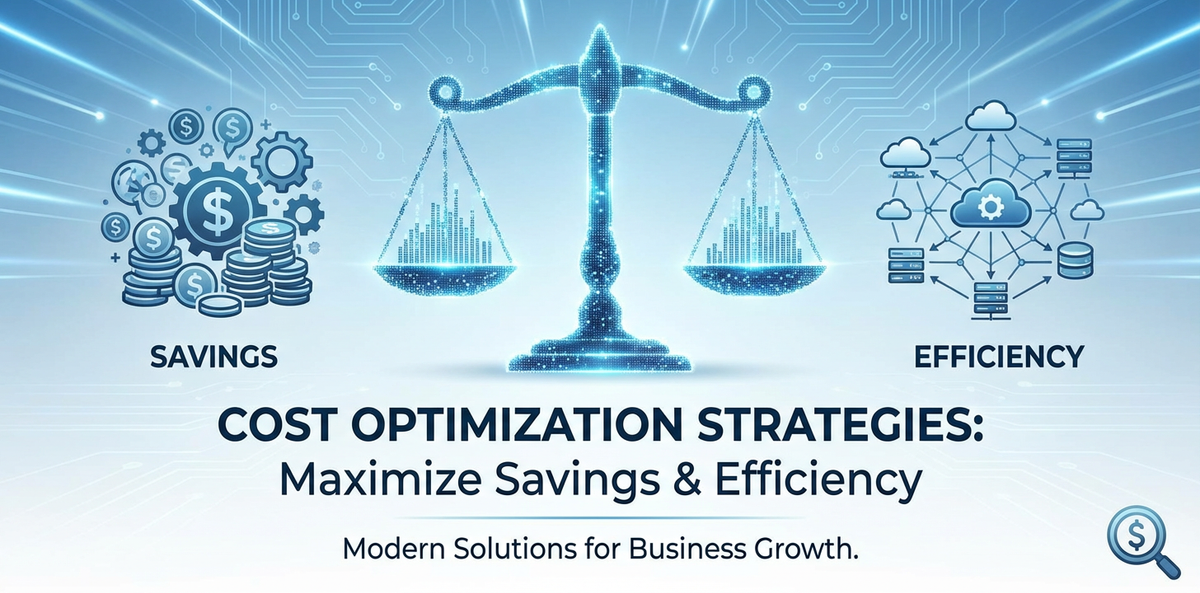

In today's dynamic and fiercely competitive business landscape, the ability to effectively manage and reduce expenses is no longer merely a reactive measure but a strategic imperative. Organizations across all sectors are constantly seeking innovative ways to improve their bottom line without compromising quality, innovation, or operational effectiveness. This pursuit leads directly to the core concept of cost optimization: a systematic and continuous process designed to reduce enterprise expenses while maximizing business value. It's about achieving more with less, streamlining operations, and making informed financial decisions that drive sustainable growth and enhance profitability.
True cost optimization goes far beyond simple cost cutting. While cost cutting often involves immediate, drastic reductions that can sometimes impair future capabilities, optimization is a holistic approach. It intelligently analyzes expenditure, identifies areas of inefficiency, eliminates waste, and reinvests savings into areas that fuel innovation and competitive advantage. This comprehensive strategy impacts every facet of an organization, from procurement and operations to human resources and technology infrastructure. In an era where technological advancements, especially in areas like Artificial Intelligence and cloud computing, introduce new layers of complexity and cost structures, mastering cost optimization is paramount for long-term success and resilience.
This extensive guide will delve into the multifaceted world of cost optimization strategies. We will explore foundational principles, examine various strategic pillars, deep dive into specific areas of application—including the often-overlooked yet critical domain of AI/ML cost management and token control—and provide actionable insights for implementing a robust optimization framework. Our aim is to equip business leaders, finance professionals, and technology stakeholders with the knowledge and tools necessary to not only achieve significant savings but also to enhance organizational efficiency, fuel innovation, and build a more agile and profitable enterprise.
The Imperative of Cost Optimization in the Modern Enterprise
The pressure to optimize costs stems from a confluence of factors, each contributing to the urgency with which businesses must approach their financial management.
Economic Volatility and Global Competition: Unpredictable economic cycles, global supply chain disruptions, and intense international competition force businesses to operate with extreme financial prudence. Companies that can maintain lower operational costs without sacrificing quality or speed gain a significant competitive edge, allowing them to offer more attractive pricing, invest more in R&D, or achieve higher profit margins.
Technological Advancements and Digital Transformation: While technology offers immense opportunities for efficiency and growth, it also introduces new and often substantial cost centers. Cloud computing, while offering flexibility and scalability, can lead to spiraling expenses if not meticulously managed. The burgeoning field of Artificial Intelligence, particularly Large Language Models (LLMs), presents incredible capabilities but also comes with significant computational and operational costs, making token control and model efficiency critical considerations. Managing these technological expenditures effectively is a cornerstone of modern cost optimization.
Investor Scrutiny and Shareholder Value: Publicly traded companies and even many privately held firms face constant pressure from investors and stakeholders to demonstrate financial discipline and maximize shareholder value. Efficient cost optimization directly contributes to healthier profit margins, improved return on investment, and stronger financial performance, which are key indicators for investors.
Sustainability and Resource Management: Beyond purely financial metrics, there's a growing awareness of environmental and social responsibility. Optimizing resource consumption—energy, materials, water—not only reduces costs but also aligns with corporate sustainability goals, enhancing brand reputation and attracting environmentally conscious customers and talent.
Agility and Resilience: Organizations with optimized cost structures are inherently more agile and resilient. They possess greater financial flexibility to pivot quickly in response to market shifts, invest in new opportunities, or weather unforeseen challenges without severe financial strain. This adaptability is invaluable in today's fast-changing business environment.
Foundational Principles of Effective Cost Optimization
Before diving into specific strategies, it's crucial to understand the underlying principles that govern successful cost optimization initiatives. These principles provide a framework for a sustainable and impactful approach.
- Holistic View, Not Just Cost Cutting: As mentioned, optimization is distinct from mere cost cutting. It requires a comprehensive understanding of the entire organization's value chain. Decisions should not be made in silos; rather, their impact across departments, on customer experience, and on long-term strategic goals must be considered. The goal is to maximize value, not just minimize expenditure.
- Data-Driven Decision Making: Effective cost optimization is impossible without robust data. This means having clear visibility into all expenditures, understanding cost drivers, and analyzing performance metrics. Companies need to invest in tools and processes that provide accurate, real-time financial data to identify waste, benchmark performance, and measure the impact of optimization efforts.
- Continuous Improvement and Iteration: Cost optimization is not a one-time project; it's an ongoing journey. Market conditions, technological landscapes, and business needs are constantly evolving. Organizations must establish a culture of continuous review, adaptation, and improvement, regularly re-evaluating their spending patterns and optimization strategies.
- Strategic Alignment: Optimization efforts must be aligned with the overarching strategic goals of the organization. Reducing costs in an area critical for future growth or customer satisfaction can be detrimental. Conversely, identifying inefficiencies in non-core areas can free up resources for strategic investments. Every optimization decision should pass the test: "Does this support our strategic objectives?"
- Focus on Value Creation: The ultimate aim is to create and deliver more value for customers and stakeholders at a lower cost. This involves understanding what customers truly value and eliminating expenditures that do not contribute to that value. Sometimes, this might even mean increasing spending in certain areas (e.g., automation technology, talent development) if it leads to significantly greater value or disproportionately larger savings elsewhere.
- Empowerment and Accountability: Successful cost optimization requires buy-in from all levels of the organization. Employees need to be empowered to identify inefficiencies and suggest solutions. Simultaneously, clear accountability for budget management and optimization targets must be established across departments.
Strategic Pillars of Cost Optimization
To effectively implement cost optimization, organizations can focus on several key strategic pillars. Each pillar offers distinct opportunities for savings and efficiency gains.
Pillar 1: Data-Driven Analysis and Financial Visibility
The first step in any cost optimization journey is to understand where money is actually being spent. Without accurate, granular financial data, any optimization effort is merely guesswork.
- Comprehensive Expense Tracking: Implement robust systems to track every dollar spent across all departments and projects. This includes everything from supplier invoices and software subscriptions to utility bills and employee expenses.
- Cost Driver Identification: Pinpoint the underlying factors that drive costs. For example, in manufacturing, it could be raw material prices or energy consumption; in IT, it might be data transfer rates or compute instance hours. Understanding these drivers allows for targeted intervention.
- Budgeting and Forecasting Accuracy: Develop more precise budgeting processes and improve forecasting capabilities. Regular comparison of actual spend against budget helps identify variances early and allows for corrective action.
- Benchmarking: Compare internal spending patterns and key performance indicators (KPIs) against industry benchmarks and best practices. This helps identify areas where the organization is overspending or underperforming relative to its peers.
- Financial Reporting and Dashboards: Create clear, accessible financial dashboards that provide real-time insights into spending, cost trends, and the impact of optimization initiatives. Visualizing data helps stakeholders quickly grasp the financial landscape.
Pillar 2: Resource Management & Performance Optimization
This pillar focuses on optimizing the use of all organizational resources—physical, technological, and human—to ensure maximum output with minimal waste. This is where performance optimization plays a crucial role, directly contributing to cost savings by improving efficiency.
- Asset Utilization: Maximize the use of existing assets (machinery, equipment, software licenses) to avoid unnecessary new purchases. This could involve better scheduling, asset sharing, or extending the lifespan of assets through proper maintenance.
- Rightsizing and Demand Matching: For cloud infrastructure, this means provisioning the right amount of compute, storage, and networking resources for actual demand, rather than over-provisioning. In manufacturing, it's about matching production capacity to demand to avoid excess inventory or idle equipment.
- Waste Reduction and Lean Methodologies: Implement lean principles (e.g., Just-In-Time inventory, continuous flow) to eliminate waste in all forms: overproduction, waiting time, unnecessary transport, over-processing, excess inventory, unnecessary motion, and defects. This improves efficiency and reduces material and labor costs.
- Energy Efficiency: Invest in energy-efficient equipment, lighting, and building management systems. Optimize HVAC settings, encourage responsible energy consumption, and explore renewable energy sources where feasible.
- Process Automation: Automate repetitive, manual tasks to reduce labor costs, minimize errors, and free up human resources for higher-value activities. Robotic Process Automation (RPA) is a key tool here, applicable across finance, HR, and IT operations. This directly contributes to performance optimization by speeding up processes.
- Supply Chain Optimization: Streamline procurement, inventory management, and logistics to reduce costs. This involves negotiating better terms with suppliers, optimizing transportation routes, and reducing holding costs for inventory.
- IT Infrastructure Optimization: This is a vast area, covering server consolidation, virtualization, cloud migration (with careful management), network optimization, and leveraging containers or serverless architectures to improve resource utilization and reduce operational overhead. Achieving optimal performance optimization in IT ensures that applications run efficiently, consuming fewer resources.
Pillar 3: Technology & Tooling Leverage
Smart use of technology can significantly accelerate and enhance cost optimization efforts.
- Cloud Cost Management Platforms (FinOps Tools): Tools like CloudHealth, Apptio Cloudability, or native cloud provider cost management tools provide granular visibility into cloud spending, identify idle resources, recommend rightsizing, and help manage reserved instances or savings plans.
- AI-Powered Analytics: Utilize AI and machine learning to analyze large datasets, identify spending anomalies, predict future costs, and suggest optimization opportunities that might be missed by manual review.
- Automation Software: Beyond RPA, consider broader automation platforms for IT operations (ITSM, orchestration), marketing (CRM, marketing automation), and customer service (chatbots, self-service portals) to reduce manual effort and improve efficiency.
- Unified API Platforms for AI: For organizations heavily leveraging AI, particularly LLMs, a unified API platform like XRoute.AI can be a game-changer. By consolidating access to multiple AI models and providers through a single endpoint, it simplifies management, allows for dynamic model switching based on cost and performance, and provides centralized token control and monitoring. This directly supports performance optimization of AI applications by facilitating the selection of optimal models.
Pillar 4: Process Re-engineering & Automation
Streamlining business processes is fundamental to eliminating waste, reducing cycle times, and improving overall operational efficiency.
- Process Mapping and Analysis: Document current processes to identify bottlenecks, redundancies, and non-value-added steps. Use tools like value stream mapping to visualize the flow of work and pinpoint areas for improvement.
- Business Process Re-engineering (BPR): Fundamentally rethink and redesign core business processes to achieve dramatic improvements in cost, quality, service, and speed. This often involves leveraging technology and challenging conventional wisdom.
- Standardization: Standardize processes, templates, and workflows where appropriate to reduce variability, minimize errors, and improve efficiency. This is particularly effective in areas like onboarding, procurement, and IT operations.
- Digital Transformation: Embrace digital tools and platforms to transform manual, paper-based processes into efficient digital workflows. This can significantly reduce administrative costs, improve data accuracy, and accelerate operations.
Pillar 5: Vendor & Contract Management
A significant portion of operational costs is tied to external vendors and service providers. Effective management of these relationships offers substantial cost optimization opportunities.
- Strategic Sourcing: Develop a strategic approach to procurement that goes beyond simply finding the lowest price. Focus on total cost of ownership, supplier reliability, quality, and long-term value.
- Contract Negotiation: Regularly review and renegotiate contracts with suppliers, focusing on pricing, service level agreements (SLAs), payment terms, and volume discounts. Consolidating vendors can also lead to better pricing.
- Vendor Consolidation: Reduce the number of vendors for similar services or products to leverage greater purchasing power and simplify management.
- Performance Monitoring: Continuously monitor vendor performance against contractual agreements and SLAs. Underperforming vendors can lead to hidden costs through delays, rework, or quality issues.
- Software License Optimization: Manage software licenses diligently to ensure compliance and avoid over-licensing. Utilize license management tools to track usage and identify unused or underutilized licenses.
Pillar 6: Innovation & Future-Proofing
Sometimes, the best cost optimization strategy is to invest in innovation that prevents future costs or unlocks new, more efficient ways of operating.
- Research & Development: Invest in R&D to develop more cost-effective products, services, or internal processes.
- Talent Development: Invest in training and upskilling employees to improve productivity, reduce errors, and foster internal innovation, thereby reducing reliance on expensive external consultants or preventing skill gaps.
- AI/ML Investment (Strategic): While AI/ML can be costly, strategic investments in the right AI solutions can automate processes, optimize decision-making, and unlock efficiencies that lead to significant long-term savings. This is particularly relevant when considering advanced token control mechanisms for LLMs, which ensure that AI operations are not just powerful but also cost-efficient.
- Proactive Maintenance: Implementing predictive maintenance for machinery and IT infrastructure can prevent costly breakdowns, extend asset lifespans, and reduce emergency repair expenses.
Deep Dive into Specific Optimization Areas
Let's explore specific strategies within key operational domains, highlighting how cost optimization, performance optimization, and in relevant cases, token control, are applied.
1. Cloud Cost Optimization
Cloud computing offers unparalleled flexibility and scalability, but without stringent management, costs can quickly spiral out of control. This is a prime area for performance optimization linked directly to cost savings.
- Rightsizing Compute Instances: Regularly review your compute instances (VMs, containers, serverless functions) to ensure they match the actual workload requirements. Many organizations over-provision resources "just in case," leading to significant waste. Tools and cloud provider recommendations can help identify underutilized instances for downsizing.
- Leveraging Reserved Instances (RIs) and Savings Plans: For stable, predictable workloads, committing to 1-year or 3-year RIs or Savings Plans can provide substantial discounts (up to 70% or more) compared to on-demand pricing.
- Utilizing Spot Instances: For fault-tolerant, flexible workloads (e.g., batch processing, analytics, stateless applications), spot instances offer heavily discounted compute capacity (up to 90% off) by bidding on unused cloud capacity.
- Storage Optimization:
- Tiering: Move less frequently accessed data to cheaper storage tiers (e.g., archival storage like AWS Glacier or Azure Archive Storage).
- Lifecycle Policies: Implement automated policies to transition data between tiers or delete outdated data.
- De-duplication & Compression: Use these techniques to reduce storage footprint.
- Networking and Data Transfer: Data transfer costs, especially egress (data leaving the cloud provider's network), can be surprisingly high. Optimize application architecture to minimize data movement across regions or out of the cloud. Use Content Delivery Networks (CDNs) strategically.
- Serverless Architectures: Embrace serverless computing (AWS Lambda, Azure Functions, Google Cloud Functions) where appropriate. You only pay for the actual execution time and resources consumed, eliminating idle server costs.
- Automated Shutdown/Startup: For non-production environments (dev, test, staging), automate the shutdown of resources during off-hours or weekends.
- Tagging and Cost Allocation: Implement a robust tagging strategy for all cloud resources to accurately attribute costs to specific teams, projects, or applications. This enables clear accountability and helps identify spending anomalies.
- Cloud Cost Management Tools (FinOps): Utilize specialized tools that provide granular visibility, identify waste, offer optimization recommendations, and automate cost-saving actions. These tools are crucial for continuous performance optimization of your cloud spend.
Table 1: Cloud Cost Optimization Strategies Comparison
| Strategy | Description | Benefits | Best For | Potential Challenges |
|---|---|---|---|---|
| Rightsizing | Adjusting resource capacity (CPU, RAM) to actual usage. | Reduces wasted resources, immediate savings. | All workloads, especially over-provisioned ones. | Requires continuous monitoring, understanding workload patterns. |
| Reserved Instances/Savings Plans | Committing to a specific amount of compute usage for 1-3 years. | Significant discounts (up to 75%), predictable costs. | Stable, predictable base workloads. | Requires careful forecasting, limited flexibility once purchased. |
| Spot Instances | Using spare cloud capacity at steep discounts, with risk of interruption. | Huge cost savings (up to 90%). | Fault-tolerant, stateless, batch processing, development workloads. | Workloads must handle interruptions, not suitable for critical apps. |
| Storage Tiering | Moving data to cheaper storage classes based on access frequency. | Reduces long-term storage costs. | Archival data, infrequently accessed data. | Requires data lifecycle management, understanding access patterns. |
| Serverless Computing | Paying only for actual function execution, no idle server costs. | Eliminates idle costs, automatic scaling, reduced operational overhead. | Event-driven workloads, APIs, microservices, data processing. | Vendor lock-in, cold starts, potential complexity for long-running tasks. |
| Automated Shutdown | Turning off non-production resources during non-working hours. | Eliminates costs for idle development/testing environments. | Development, staging, and testing environments. | Requires clear scheduling and communication, potential for forgotten restarts. |
2. Operational Cost Optimization
Beyond technology, traditional operational processes offer fertile ground for cost optimization.
- Supply Chain & Logistics:
- Supplier Rationalization: Consolidate suppliers to gain leverage for better pricing and terms.
- Inventory Optimization: Implement precise inventory management (e.g., JIT, demand forecasting) to reduce holding costs, prevent obsolescence, and minimize stockouts.
- Route Optimization: For logistics, use software to optimize delivery routes, reducing fuel consumption and driver hours.
- Warehouse Efficiency: Optimize warehouse layout and processes to improve picking efficiency and reduce labor costs.
- Energy Management:
- Smart Building Systems: Implement building management systems (BMS) to control lighting, HVAC, and other energy consumers based on occupancy and schedules.
- LED Lighting Upgrades: Replace traditional lighting with energy-efficient LED systems.
- Equipment Upgrades: Invest in newer, more energy-efficient machinery and appliances.
- Behavioral Changes: Promote energy-saving habits among employees.
- Maintenance & Facilities:
- Predictive Maintenance: Use IoT sensors and data analytics to predict equipment failures before they occur, reducing costly unplanned downtime and emergency repairs.
- Space Utilization: Optimize office and facility space utilization to reduce rent, utility, and maintenance costs. Consider hybrid work models or hot-desking.
3. Human Capital Cost Optimization & Productivity
While not about cutting jobs, optimizing human capital involves maximizing productivity and efficiency of the workforce.
- Training and Development: Invest in employee training to improve skills, increase productivity, reduce errors, and minimize the need for external consultants.
- Automation of Repetitive Tasks: Implement RPA and other automation tools to handle mundane, high-volume tasks, freeing human employees for more strategic and value-added work. This is a direct contributor to performance optimization of human tasks.
- Workforce Planning: Accurately forecast staffing needs to avoid over-hiring or under-hiring, which can lead to either increased labor costs or reduced productivity.
- Employee Engagement: High employee engagement leads to lower turnover, reduced recruitment costs, and increased productivity. Invest in a positive work culture, recognition, and growth opportunities.
- Benefits Optimization: Regularly review and optimize employee benefits packages to ensure they are competitive and cost-effective, balancing employee satisfaction with budgetary constraints.
4. AI/ML & Large Language Model (LLM) Cost Optimization, with a focus on Token Control
The rapid adoption of AI and particularly LLMs introduces a new frontier for cost optimization. While these technologies offer immense value, their operational costs can be significant, making astute management crucial. Here, token control and performance optimization are paramount.
- Understanding LLM Cost Drivers:
- Token Usage: The primary cost driver for LLMs is the number of tokens processed (input prompt + output response). Longer prompts, complex instructions, and verbose responses directly lead to higher costs.
- Model Choice: Different LLMs (e.g., GPT-4, Claude, Llama, custom fine-tuned models) have vastly different per-token costs and performance characteristics. Larger, more capable models are generally more expensive.
- API Calls/Latency: The volume of API calls and the latency of responses can impact overall system costs, especially in real-time applications where every millisecond counts.
- Context Window: Models with larger context windows (ability to process more input tokens) might be more expensive.
- Fine-tuning vs. Prompt Engineering: Fine-tuning a smaller model can sometimes be more cost-effective for specific tasks than always relying on a large general-purpose model, but fine-tuning itself has costs.
- Strategies for LLM Cost Optimization and Token Control****:
- Prompt Engineering for Conciseness and Clarity: Design prompts to be as short and precise as possible while still conveying the necessary information. Eliminate superfluous words. Guide the model to generate concise responses. This is direct token control.
- Output Length Management: Explicitly instruct the LLM to provide brief answers or to adhere to specific length constraints (e.g., "Summarize in 3 sentences," "Provide a bulleted list of no more than 5 items").
- Model Selection Based on Task: Don't use a large, expensive model (e.g., GPT-4) for simple tasks that a smaller, cheaper model (e.g., GPT-3.5, open-source alternatives) can handle effectively. Implement a routing mechanism to intelligently select the appropriate model. This improves performance optimization by using the right tool for the job.
- Caching Mechanisms: For repeated or common queries, implement caching at the application layer to store LLM responses. This avoids redundant API calls and saves on token usage.
- Batching API Requests: Where possible, bundle multiple independent prompts into a single API request if the LLM provider supports it. This can reduce overhead per request.
- Asynchronous Processing: For non-real-time tasks, use asynchronous API calls to manage high volumes efficiently without compromising user experience or incurring excessive real-time costs.
- Pre-computation & Pre-rendering: For static or infrequently changing content that would otherwise be generated by an LLM, pre-compute and store the results.
- Knowledge Base Integration (RAG - Retrieval Augmented Generation): Instead of feeding entire documents into the LLM's context window (which is costly due to token limits), retrieve relevant snippets from a knowledge base and inject only those snippets into the prompt. This drastically reduces input token count, enabling better token control.
- Leveraging Unified API Platforms like XRoute.AI:
- Dynamic Model Routing: XRoute.AI provides a single, OpenAI-compatible endpoint that integrates over 60 AI models from more than 20 providers. This allows developers to dynamically switch between models based on real-time factors like cost, latency, and performance requirements without changing their code. For instance, a simple query might go to a cheaper, faster model, while a complex analytical task is routed to a more powerful, albeit pricier, model. This is critical for performance optimization and cost optimization.
- Cost-Effective AI: By enabling easy switching and offering visibility into different model costs, XRoute.AI directly contributes to optimizing LLM expenditures. It helps users make informed decisions on which model to use for each specific task, thus ensuring optimal token control by leveraging the most cost-effective solution.
- Low Latency AI: Its focus on low latency ensures that even with dynamic routing, applications remain highly responsive, contributing to overall performance optimization of AI-driven workflows.
- Simplified Integration: A single API reduces development complexity and maintenance overhead, freeing up engineering resources.
- Scalability and High Throughput: Designed for high throughput and scalability, XRoute.AI allows businesses to manage growing AI workloads efficiently without worrying about underlying infrastructure complexities, further contributing to performance optimization and ensuring AI services remain available and responsive at scale.
Table 2: LLM Cost Optimization Strategies for Token Control****
| Strategy | Description | Impact on Cost & Tokens | Benefits |
|---|---|---|---|
| Concise Prompt Engineering | Crafting prompts that are short, clear, and to the point; guiding output length. | Directly reduces input & output token count. | Lower per-query cost, faster responses, better token control. |
| Task-Specific Model Selection | Using cheaper, smaller models for simple tasks and more expensive, powerful models only when necessary. | Reduces per-token cost by using optimized models. | Significant overall savings, improved performance optimization by matching model to task. |
| Caching LLM Responses | Storing and reusing responses for repeated queries instead of re-calling the API. | Eliminates token usage for cached responses. | Substantial savings for frequent queries, reduced latency. |
| Retrieval Augmented Generation (RAG) | Fetching relevant information from a knowledge base and injecting only snippets into the prompt. | Dramatically reduces input token count by avoiding full document context. | Highly effective token control, improves factual accuracy, reduces hallucinations. |
| Unified API Platforms (e.g., XRoute.AI) | Centralized access to multiple LLMs, enabling dynamic routing based on cost/performance. | Optimizes model choice for each query, leveraging cost-effectiveness. | Seamless token control, performance optimization, simplified integration, reduced vendor lock-in. |
| Output Length Management | Explicitly requesting concise outputs (e.g., "summarize in 3 sentences"). | Directly limits output token count. | Reduces cost per response, makes responses more digestible. |
XRoute is a cutting-edge unified API platform designed to streamline access to large language models (LLMs) for developers, businesses, and AI enthusiasts. By providing a single, OpenAI-compatible endpoint, XRoute.AI simplifies the integration of over 60 AI models from more than 20 active providers(including OpenAI, Anthropic, Mistral, Llama2, Google Gemini, and more), enabling seamless development of AI-driven applications, chatbots, and automated workflows.
Implementing a Cost Optimization Framework: A Step-by-Step Guide
Successfully embedding cost optimization into an organization requires a structured approach.
- Phase 1: Assess and Analyze
- Define Scope & Goals: Clearly define what areas will be optimized and what specific financial targets are aimed for (e.g., 15% reduction in cloud spend, 5% reduction in operational costs).
- Baseline Current Spend: Gather detailed financial data for all relevant areas to establish a baseline. Understand current costs, cost drivers, and allocation.
- Identify Opportunities: Analyze data to pinpoint areas of waste, inefficiency, and potential savings. Conduct interviews with department heads to uncover hidden costs or process bottlenecks.
- Form Cross-Functional Team: Assemble a dedicated team comprising finance, operations, IT, and other relevant department representatives.
- Phase 2: Strategize and Plan
- Prioritize Initiatives: Based on potential impact, feasibility, and alignment with strategic goals, prioritize the identified optimization opportunities.
- Develop Action Plans: For each prioritized initiative, create a detailed action plan, including specific steps, assigned responsibilities, timelines, required resources, and expected outcomes.
- Set KPIs and Metrics: Define clear Key Performance Indicators (KPIs) to measure the success of each initiative (e.g., percentage reduction in specific cost categories, improved resource utilization rates, reduced lead times).
- Secure Executive Buy-in: Ensure strong support from senior leadership, which is critical for driving change and overcoming resistance.
- Phase 3: Execute and Implement
- Roll Out Initiatives: Systematically implement the action plans, starting with high-impact, low-effort initiatives to build momentum.
- Communicate and Educate: Clearly communicate the goals, benefits, and progress of the optimization efforts to all employees. Educate teams on new processes, tools, and best practices (e.g., cloud best practices, token control for LLMs).
- Monitor Progress: Continuously track the KPIs and metrics established in the planning phase. Use dashboards and regular reports to keep stakeholders informed.
- Phase 4: Monitor, Review, and Iterate
- Evaluate Results: Regularly assess the actual impact of each optimization initiative against its planned outcomes and financial targets.
- Adjust and Refine: Based on performance data and feedback, make necessary adjustments to strategies and processes. What worked well? What didn't? Why?
- Institutionalize Best Practices: Embed successful optimization strategies and new, efficient processes into standard operating procedures. Foster a culture of continuous improvement.
- Reassess & Restart: As market conditions and business needs evolve, periodically reassess the overall cost landscape and restart the optimization cycle. Cost optimization is an ongoing journey, not a destination.
Overcoming Challenges in Cost Optimization
While the benefits of cost optimization are clear, organizations often face hurdles during implementation.
- Resistance to Change: Employees may resist new processes or perceived cuts that impact their daily routines or department budgets. Effective communication, demonstrating the benefits, and involving employees in the process can mitigate this.
- Lack of Visibility: Inaccurate or insufficient data on spending can cripple optimization efforts. Investing in robust financial and operational tracking systems is crucial.
- Short-Term vs. Long-Term Thinking: The temptation to make quick, superficial cuts can undermine long-term strategic goals. Leaders must balance immediate savings with sustainable value creation.
- Siloed Operations: Departments operating in isolation can hinder holistic optimization. Cross-functional collaboration and a unified approach are essential.
- Underinvestment in Tools/Training: Reluctance to invest in the very tools (e.g., FinOps platforms, AI management systems like XRoute.AI) or training that enable optimization can be a false economy.
- Fear of Compromising Quality/Innovation: Optimization should not equate to sacrificing quality or stifling innovation. It's about smart spending that protects and even enhances these critical aspects.
Measuring Success & Continuous Improvement
To ensure cost optimization efforts are effective and sustainable, robust measurement and continuous improvement mechanisms must be in place.
- Key Performance Indicators (KPIs): Beyond just "cost savings," track specific KPIs relevant to different optimization areas:
- Financial: Gross Profit Margin, Operating Expenses as % of Revenue, Return on Investment (ROI) of optimization projects.
- Cloud: Cloud Spend per User/Application, Resource Utilization Rate, Percentage of Reserved Instance Coverage.
- Operations: Inventory Turnover, Lead Time, Waste Reduction Percentage, Energy Consumption per Unit.
- AI/ML: Cost per Inference, Token Usage per Query, Latency Improvement, Model Accuracy per Cost Unit.
- Regular Reporting and Reviews: Establish a schedule for reviewing progress against KPIs. This could be weekly operational meetings, monthly executive reviews, or quarterly strategic assessments.
- Feedback Loops: Create mechanisms for employees at all levels to provide feedback on optimization initiatives. What's working? What's causing new problems?
- Adaptive Strategies: The business environment is constantly changing. Be prepared to adapt your cost optimization strategies in response to new market conditions, technological advancements, or shifts in organizational priorities.
- Celebrate Successes: Recognize and celebrate achievements in cost optimization to maintain momentum and reinforce a culture of efficiency and accountability.
Conclusion: Driving Sustainable Growth Through Strategic Cost Optimization
Cost optimization is a strategic cornerstone for any organization aiming to thrive in the modern era. It is a continuous, data-driven journey that transcends mere cost cutting, focusing instead on maximizing business value by intelligently managing expenditures, enhancing efficiency, and eliminating waste. From meticulously managing cloud resources and streamlining operational processes to strategically optimizing human capital and, critically, implementing sophisticated token control and model selection for advanced AI applications, every facet of the business holds opportunities for improvement.
By embracing a holistic approach, leveraging advanced technologies like unified API platforms for AI, and fostering a culture of continuous improvement, organizations can transform their cost structures. The benefits extend far beyond immediate financial savings; they encompass enhanced performance optimization, greater agility, improved resilience against economic shocks, and the financial freedom to innovate and invest in future growth.
In a world where every dollar counts and efficiency defines competitiveness, mastering cost optimization strategies is not just about survival—it's about laying a robust foundation for enduring success and market leadership. The journey demands commitment, data, and a forward-thinking mindset, but the rewards—in terms of profitability, innovation, and long-term sustainability—are undeniably transformative.
Frequently Asked Questions (FAQ)
Q1: What is the primary difference between cost cutting and cost optimization? A1: Cost cutting typically involves immediate, often drastic reductions in spending, which can sometimes negatively impact business value, quality, or long-term capabilities. Cost optimization, on the other hand, is a strategic, systematic, and continuous process aimed at reducing expenses while simultaneously maximizing business value and efficiency. It intelligently analyzes spending to eliminate waste and reallocate resources to areas that drive growth and innovation.
Q2: How does Performance optimization relate to Cost optimization? A2: Performance optimization is directly linked to Cost optimization because doing things more efficiently, faster, and with fewer resources inherently reduces costs. Whether it's optimizing cloud resource usage, streamlining operational workflows, or improving the efficiency of AI models, better performance means less waste, lower operational overhead, and ultimately, significant savings.
Q3: Why is Token control so important for Large Language Models (LLMs)? A3: Token control is crucial for LLMs because token usage is the primary cost driver. Every input prompt and generated output is counted in tokens, and costs accrue rapidly with longer, less efficient interactions. Effective token control—through concise prompting, output length management, smart model selection, and techniques like RAG—directly reduces the number of tokens processed, leading to substantial cost savings and improved efficiency for AI applications.
Q4: Can Cost optimization hinder innovation? A4: No, quite the opposite. When implemented strategically, cost optimization should fuel innovation. By eliminating waste and making processes more efficient, organizations free up financial and human resources that can then be reinvested into research and development, new technologies, talent acquisition, and other initiatives that drive innovation and future growth. The goal is "smart spending," not just less spending.
Q5: How can a platform like XRoute.AI assist with LLM cost management? A5: XRoute.AI helps manage LLM costs by providing a unified API platform that integrates over 60 AI models from more than 20 providers. This allows developers to dynamically route requests to the most cost-effective model for a given task, switch models based on real-time pricing and performance, and gain centralized visibility into usage. This intelligent routing and flexible model access directly contribute to token control, ensuring optimal resource utilization and significant savings while maintaining low latency and high performance optimization for AI applications.
🚀You can securely and efficiently connect to thousands of data sources with XRoute in just two steps:
Step 1: Create Your API Key
To start using XRoute.AI, the first step is to create an account and generate your XRoute API KEY. This key unlocks access to the platform’s unified API interface, allowing you to connect to a vast ecosystem of large language models with minimal setup.
Here’s how to do it: 1. Visit https://xroute.ai/ and sign up for a free account. 2. Upon registration, explore the platform. 3. Navigate to the user dashboard and generate your XRoute API KEY.
This process takes less than a minute, and your API key will serve as the gateway to XRoute.AI’s robust developer tools, enabling seamless integration with LLM APIs for your projects.
Step 2: Select a Model and Make API Calls
Once you have your XRoute API KEY, you can select from over 60 large language models available on XRoute.AI and start making API calls. The platform’s OpenAI-compatible endpoint ensures that you can easily integrate models into your applications using just a few lines of code.
Here’s a sample configuration to call an LLM:
curl --location 'https://api.xroute.ai/openai/v1/chat/completions' \
--header 'Authorization: Bearer $apikey' \
--header 'Content-Type: application/json' \
--data '{
    "model": "gpt-5",
    "messages": [
        {
            "content": "Your text prompt here",
            "role": "user"
        }
    ]
}'
With this setup, your application can instantly connect to XRoute.AI’s unified API platform, leveraging low latency AI and high throughput (handling 891.82K tokens per month globally). XRoute.AI manages provider routing, load balancing, and failover, ensuring reliable performance for real-time applications like chatbots, data analysis tools, or automated workflows. You can also purchase additional API credits to scale your usage as needed, making it a cost-effective AI solution for projects of all sizes.
Note: Explore the documentation on https://xroute.ai/ for model-specific details, SDKs, and open-source examples to accelerate your development.