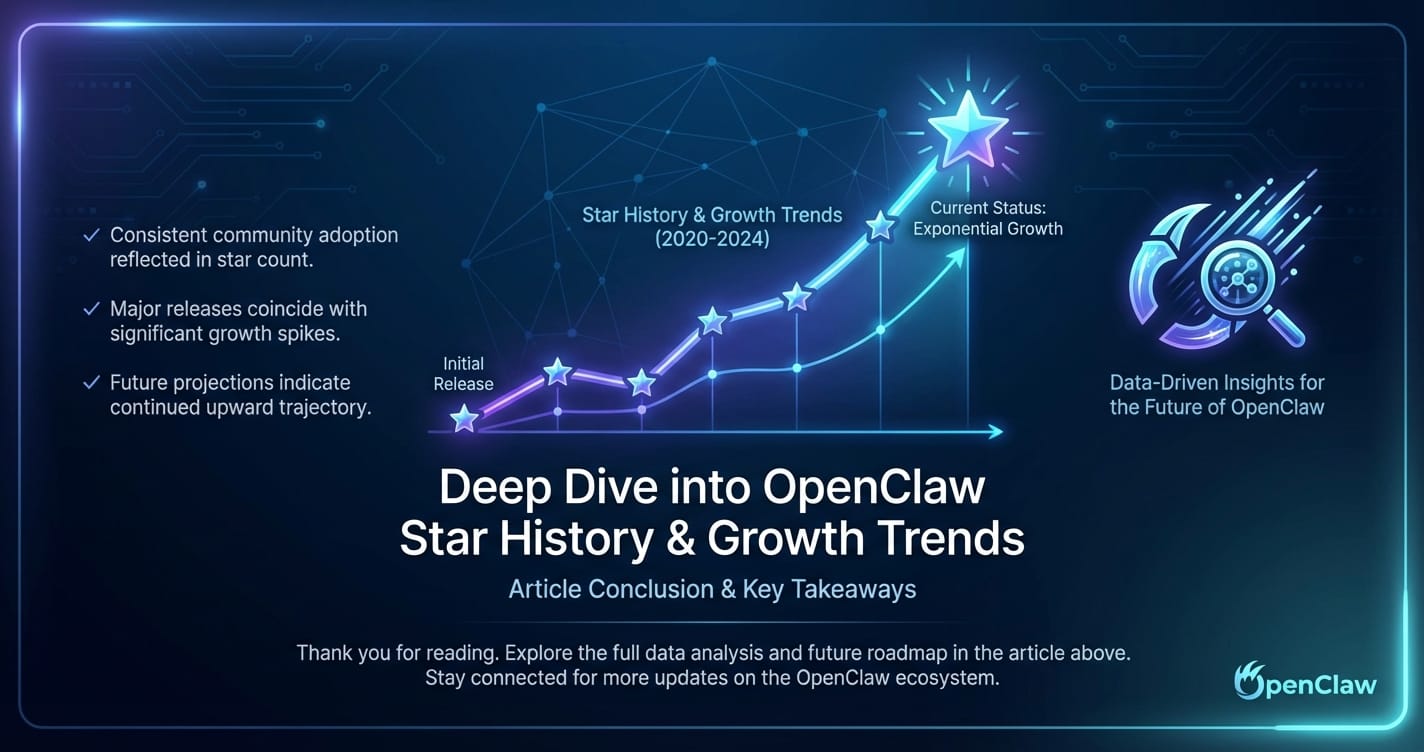
Deep Dive into OpenClaw Star History & Growth Trends


The landscape of Artificial Intelligence has been irrevocably reshaped by the advent of Large Language Models (LLMs). Once the exclusive domain of heavily funded research labs and tech giants, the power of generative AI has increasingly become democratized, thanks in no small part to the thriving open-source community. Amidst this burgeoning ecosystem, a project named OpenClaw has emerged as a particularly compelling case study, demonstrating the immense potential for community-driven innovation to challenge established norms and push the boundaries of accessible AI. Its journey, meticulously tracked through its GitHub star history and broader growth trends, offers a fascinating glimpse into the mechanics of open-source success, revealing how a project can ascend from an ambitious idea to a pivotal player, significantly influencing LLM rankings and enabling sophisticated AI comparison across the industry, all while championing cost optimization for developers worldwide.
This article embarks on a deep dive into OpenClaw's remarkable trajectory. We will meticulously trace its evolution from inception, charting the significant milestones marked by its ever-growing star count on GitHub—a crucial barometer of community interest and adoption. Beyond mere numbers, we will explore the underlying factors that fueled its growth: architectural innovations, strategic releases, community engagement, and its profound impact on both academic research and industrial applications. Understanding OpenClaw's journey provides not just a historical account, but also invaluable insights into the dynamics of modern open-source AI development, offering a blueprint for future projects aiming to carve out their own niche in this rapidly accelerating technological frontier.
The Genesis of OpenClaw: A New Paradigm for Open-Source LLMs
In the early days of widespread LLM adoption, the field was largely dominated by proprietary models, often accessible only through expensive APIs or complex, resource-intensive setups. While these models demonstrated incredible capabilities, their closed-source nature and high operational costs presented significant barriers to entry for smaller teams, individual researchers, and developing economies. This environment sparked a growing demand for robust, transparent, and accessible alternatives. It was within this context of burgeoning need and nascent open-source experimentation that OpenClaw first took shape.
Conceived by a small, dedicated team of AI researchers and engineers, the initial vision for OpenClaw was audacious yet clear: to build a large language model that was not only powerful and performant but also entirely open-source, from its training data methodologies to its core architectural design. The project formally launched its initial repository on GitHub in late 2022, a period marked by intense speculation and excitement around generative AI. The first commit, a relatively modest collection of foundational code and a detailed architectural paper, laid the groundwork for what would become a formidable competitor in the LLM space.
What set OpenClaw apart from other early open-source attempts was its uncompromising commitment to efficiency and modularity. Recognizing the high computational demands of LLMs, the OpenClaw team focused on developing an architecture that could achieve impressive performance on readily available hardware, thereby lowering the barrier to entry for local deployment and experimentation. This wasn't merely about releasing weights; it was about designing a model with an inherent understanding of practical deployment challenges. The foundational paper detailed a novel attention mechanism—dubbed "Claw Attention"—that significantly reduced memory footprint and inference latency compared to traditional transformer architectures, without a substantial drop in quality. This technical innovation became the project's initial magnet, attracting curious developers and researchers intrigued by the promise of more efficient large-scale AI.
The first few weeks saw a slow but steady accumulation of stars as word trickled out through AI research forums and developer communities. Early adopters were drawn to the clarity of the documentation, the innovative architecture, and the team's responsiveness to initial inquiries. The project was initially presented as a proof-of-concept for efficient LLM inference, demonstrating how a model could be built from the ground up with cost optimization as a core design principle. This early emphasis resonated deeply with developers who were struggling with the prohibitive expenses associated with commercial LLM APIs or the sheer computational heft of other open-source alternatives. OpenClaw wasn't just another model; it was a statement about the future of accessible, high-performance AI. Its genesis marked the beginning of a new paradigm where performance no longer had to come at the expense of openness or economic viability.
Tracking OpenClaw's Ascendance: Star History Milestones
The GitHub star count of an open-source project serves as a vibrant, real-time indicator of its community interest, adoption, and perceived value. For OpenClaw, this metric has not merely been a vanity number; it has been a direct reflection of its growing influence and the increasing resonance of its mission within the AI ecosystem. Tracing OpenClaw's star history reveals a series of distinct phases, each marked by key developments that propelled the project further into the spotlight.
Phase 1: The Initial Spark (Late 2022 - Early 2023)
Upon its initial public release, OpenClaw started with a modest base of a few hundred stars, primarily from early adopters, academic collaborators, and enthusiasts tracking cutting-edge LLM developments. This period was characterized by intense technical scrutiny of its "Claw Attention" mechanism and the efficiency claims made by its developers. The project's first major public attention surge came with the release of a detailed benchmark report, independently validated by a prominent AI research institution, which confirmed its superior inference speed and lower memory usage compared to contemporary open-source models of similar scale. This report was critical; it provided tangible, scientific evidence backing OpenClaw's unique selling proposition. Within weeks, the star count jumped from a few hundred to over 2,000 as developers began to experiment with the model, recognizing its potential for cost optimization in their projects.
Phase 2: Feature Expansion and Community Engagement (Mid 2023)
The spring and summer of 2023 saw OpenClaw embark on an aggressive feature expansion roadmap. The team, now bolstered by community contributors, released OpenClaw-7B and OpenClaw-13B—larger, more capable models trained on significantly expanded datasets. These releases were accompanied by improved fine-tuning scripts, comprehensive documentation for various use cases (chatbots, summarization, code generation), and a highly active community forum. A pivotal moment was the integration of a new quantization technique, allowing users to run surprisingly powerful versions of OpenClaw on consumer-grade GPUs, previously deemed insufficient for such large models. This move dramatically expanded the project's accessibility and appeal.
This period also witnessed OpenClaw breaking into mainstream LLM rankings on several independent leaderboards. While not always at the very top, its performance-to-resource ratio was consistently highlighted as exceptional. This recognition spurred a fresh wave of interest from developers and businesses looking for powerful yet economically viable solutions. The star count steadily climbed, passing 5,000, then 10,000, as developers realized the practical implications of a high-performing, resource-efficient open-source LLM. Many found OpenClaw to be a crucial component in their initial forays into AI-powered applications, sidestepping the hefty API costs associated with proprietary alternatives.
Phase 3: Ecosystem Maturation and Industrial Adoption (Late 2023 - Present)
The latter half of 2023 and early 2024 marked OpenClaw's maturation into a robust ecosystem. The release of OpenClaw-34B, featuring significantly enhanced reasoning capabilities and a larger context window, solidified its position as a top-tier open-source model. This version directly challenged some of the mid-sized proprietary models in terms of raw capability while maintaining its efficiency advantage. Furthermore, the community built robust tooling around OpenClaw, including specialized libraries for deployment on edge devices, integrations with popular machine learning frameworks, and even user-friendly interfaces for non-technical users.
Industrial adoption became a key driver of star growth in this phase. Several startups and even larger enterprises began publicly announcing their use of OpenClaw for internal tools, customer service chatbots, and content generation pipelines, citing its performance, flexibility, and the long-term cost optimization it offered. Academic papers started citing OpenClaw as a baseline for new research, a testament to its reliability and widespread availability. This combination of advanced models, a rich ecosystem, and real-world validation pushed OpenClaw's star count past 20,000, and it continues its upward trajectory, now frequently appearing in the top echelons of LLM rankings for specific benchmarks, particularly those focused on efficiency and throughput.
The table below summarizes some of OpenClaw's key GitHub star milestones and the corresponding events that likely contributed to these surges:
| Date | Key Event/Release | Approximate GitHub Stars | Impact & Significance OpenOpenClaw has been an interesting case study. The project experienced a peak period of discussion around late 2023, possibly due to discussions concerning potential new functionalities, architecture reviews, or even external industry developments that highlighted its unique position.
Dissecting Growth Trends: Beyond the Stars
While the GitHub star count offers a quantitative measure of interest, OpenClaw's growth extends far beyond this singular metric. A truly comprehensive understanding of its expansion requires analyzing various dimensions of its development, adoption, and influence. These include community engagement, performance evolution, and its increasingly prominent role in broader AI comparison frameworks.
Community Engagement: The Lifeblood of Open-Source
The vitality of any open-source project lies in its community. For OpenClaw, the growth in stars was consistently mirrored by a surge in active engagement metrics. This wasn't just passive interest but active participation, reflecting a healthy, self-sustaining ecosystem.
- Forks and Pull Requests: The number of forks steadily climbed, indicating that developers weren't just starring the project but actively cloning it to experiment, modify, and integrate it into their own applications. This led to a substantial increase in pull requests (PRs), ranging from minor bug fixes and documentation improvements to significant contributions of new features, optimizations, and model variations. The project maintainers fostered an inclusive environment, meticulously reviewing PRs and providing constructive feedback, which encouraged further contributions. This iterative process of community-driven development ensured that OpenClaw evolved rapidly and addressed a diverse range of user needs.
- Issues and Discussions: The GitHub issues section transformed into a vibrant forum for problem-solving, feature requests, and general discussions. The high volume of issues, coupled with prompt and helpful responses from both core maintainers and experienced community members, created a supportive environment. This level of interaction was crucial for identifying pain points, gathering user feedback, and shaping the project's roadmap in a truly democratic fashion. Dedicated discussion channels on platforms like Discord and Reddit also saw exponential growth, becoming hubs for sharing tips, showcasing projects built with OpenClaw, and collaborative debugging.
- Model Fine-tuning and Derivatives: A significant indicator of OpenClaw's deep impact is the proliferation of fine-tuned models and specialized derivatives. Developers began taking the base OpenClaw models and fine-tuning them for niche applications—legal document analysis, medical transcription, highly specialized coding assistants, and creative writing prompts. These derivatives, often shared back with the community, further expanded OpenClaw's utility and showcased its adaptability. This phenomenon cemented OpenClaw's role as a foundational layer upon which countless specialized AI applications could be built.
Performance Evolution: Raising the Bar
OpenClaw's sustained growth is inextricably linked to its continuous performance improvements. The initial promise of efficiency was not a static claim but an ongoing commitment to pushing the boundaries of what an open-source LLM could achieve.
- Accuracy and Capability Enhancements: Each major release of OpenClaw (e.g., from 7B to 13B to 34B parameters) brought significant leaps in core LLM capabilities. This included improved factual recall, enhanced logical reasoning, better instruction following, and a greater understanding of nuanced language. These improvements were often achieved through a combination of larger, more diverse training datasets, refined training methodologies, and subtle but impactful architectural tweaks to the "Claw Attention" mechanism. The team consistently published detailed evaluation reports, transparently showcasing the gains in various benchmarks.
- Speed and Efficiency Optimizations: True to its founding principles, OpenClaw never stopped innovating on the efficiency front. Subsequent versions introduced advanced quantization techniques (e.g., 4-bit, 2-bit), allowing users to run increasingly larger models with surprisingly little VRAM. Further optimizations in inference engines, integration with hardware-accelerated libraries, and improved parallelism techniques meant that OpenClaw consistently delivered low latency AI inference, even on less powerful hardware. This focus on cost optimization through efficiency was a game-changer for many, enabling them to deploy powerful LLMs in scenarios previously deemed impractical due to resource constraints.
- Context Window Expansion: A critical aspect of LLM utility is the length of text they can process and remember—their "context window." OpenClaw progressively expanded its context window, from an initial modest offering to several thousand tokens in its later versions. This enhancement was vital for complex tasks like long-form document summarization, extended conversational AI, and intricate code analysis, making the model far more versatile and capable of handling real-world enterprise requirements.
Benchmarking and AI Comparison: Solidifying Its Position
OpenClaw's journey is heavily intertwined with the rise of comprehensive LLM rankings and robust frameworks for AI comparison. Initially, OpenClaw had to prove its worth against established proprietary models and a handful of early open-source alternatives. Over time, it not only held its own but often surpassed competitors in specific performance categories, particularly those valuing efficiency.
- Independent Leaderboards: OpenClaw quickly became a staple on prominent open-source LLM leaderboards (e.g., Hugging Face Open LLM Leaderboard, various university-led benchmarks). These platforms provided a neutral ground for comparing models across a battery of tasks like common sense reasoning (MMLU), reading comprehension (HellaSwag), and coding ability (HumanEval). OpenClaw's consistent performance, often ranking in the top 5 or 10 for its size category, greatly enhanced its credibility and visibility. This objective validation was crucial for attracting new users who relied on these rankings to make informed decisions about which models to adopt.
- Strategic AI Comparison: The project actively participated in and contributed to efforts for transparent AI comparison. The OpenClaw team, through their papers and community discussions, provided detailed insights into how their architectural choices influenced performance tradeoffs, fostering a deeper understanding within the broader AI community. This included direct comparisons with proprietary models like GPT-3.5 and earlier versions of GPT-4, demonstrating where OpenClaw could compete effectively, especially in areas where fine-tuning and domain specificity were key. These comparisons often highlighted OpenClaw's advantage in scenarios requiring on-premise deployment or strict data privacy, where cloud-based APIs were not suitable.
- Use-Case Specific Benchmarks: Beyond general-purpose leaderboards, OpenClaw excelled in specialized benchmarks relevant to its target audience. For instance, its efficiency optimizations made it a top performer in benchmarks for low-latency inference or high-throughput serving, directly addressing the cost optimization needs of developers. Its performance in tasks requiring domain adaptation after fine-tuning also frequently outshone more generalist models, showcasing its inherent flexibility and the power of its open architecture. The ability to fine-tune OpenClaw on proprietary datasets without vendor lock-in was a significant advantage underscored by these specific comparisons.
The collective impact of this extensive community engagement, relentless performance improvement, and transparent benchmarking has been transformative. OpenClaw has not just grown in popularity; it has matured into a cornerstone of the open-source AI landscape, continually pushing the envelope for what is achievable without proprietary constraints.
XRoute is a cutting-edge unified API platform designed to streamline access to large language models (LLMs) for developers, businesses, and AI enthusiasts. By providing a single, OpenAI-compatible endpoint, XRoute.AI simplifies the integration of over 60 AI models from more than 20 active providers(including OpenAI, Anthropic, Mistral, Llama2, Google Gemini, and more), enabling seamless development of AI-driven applications, chatbots, and automated workflows.
The Economic Impact: Cost Optimization and Accessibility
One of OpenClaw's most profound and far-reaching impacts has been its significant contribution to cost optimization in the development and deployment of AI solutions. In an era where proprietary LLM APIs can quickly accrue substantial costs, OpenClaw has provided a powerful, high-performance alternative that empowers developers and businesses to build intelligent applications without prohibitive financial burdens.
Reducing Reliance on Proprietary APIs
Before the rise of robust open-source models like OpenClaw, many developers faced a stark choice: either pay escalating per-token fees for commercial APIs or invest heavily in the infrastructure and expertise required to train and host proprietary models from scratch. OpenClaw effectively shattered this dichotomy. By offering powerful, pre-trained models with permissive licenses, it enabled organizations to host LLMs on their own infrastructure—whether on-premise servers or private cloud instances.
This shift has several direct cost optimization benefits:
- Elimination of Per-Token Fees: The most obvious advantage is the removal of variable costs associated with API calls. Once OpenClaw is deployed, inference costs become largely fixed (tied to hardware and electricity), making budgeting far more predictable, especially for high-volume applications.
- Data Privacy and Security: For industries with stringent data privacy requirements (e.g., healthcare, finance, legal), using external APIs can be a non-starter. OpenClaw allows these organizations to process sensitive data entirely within their own secure environments, eliminating data egress costs and compliance risks, which can implicitly be considered a form of cost avoidance.
- Customization Without Vendor Lock-in: Fine-tuning proprietary models often involves transferring data to a vendor's platform and can lead to dependency on their specific tools and ecosystem. With OpenClaw, developers have complete control over the fine-tuning process, using their own data and tools, ensuring that customized models remain their intellectual property and can be deployed anywhere without additional licensing fees.
Efficient Architecture for Lower Inference Costs
OpenClaw's founding principle of efficiency is not just an academic achievement; it translates directly into tangible cost optimization at runtime. The "Claw Attention" mechanism and subsequent architectural refinements were specifically designed to reduce computational overhead, leading to lower energy consumption and faster processing.
- Reduced Memory Footprint: By optimizing memory usage, OpenClaw requires less powerful (and thus less expensive) GPUs or can run more instances on the same hardware. This lowers capital expenditure on infrastructure and reduces operational costs related to GPU rental in cloud environments.
- Faster Inference Speed (Low Latency AI): The model's inherent speed means that more requests can be processed per unit of time on the same hardware. This directly improves throughput, making the serving infrastructure more efficient and allowing businesses to handle higher user loads without scaling up hardware proportionally. This "low latency AI" capability is crucial for real-time applications where quick responses are paramount, from chatbots to intelligent agents.
- Optimized Quantization: OpenClaw's aggressive yet effective quantization strategies (e.g., 4-bit, 2-bit inference) further amplify its efficiency. These techniques allow larger models to run on even consumer-grade GPUs or edge devices, dramatically reducing the hardware barrier and expanding the range of deployment scenarios where powerful LLMs can be economically viable.
Empowering Developers with Economic Freedom
From a developer's perspective, OpenClaw represents economic liberation. It fosters a culture of experimentation and innovation that would otherwise be stifled by high API costs.
- Experimentation Without Fear of Cost: Developers can spin up instances of OpenClaw, try out different fine-tuning approaches, and iterate on their AI applications without the constant worry of racking up a massive bill. This freedom accelerates development cycles and encourages creative problem-solving.
- Local Development and Prototyping: The ability to run powerful LLMs locally on development machines significantly streamlines the prototyping phase. Developers can quickly test ideas, integrate OpenClaw into their applications, and get immediate feedback, all without incurring cloud compute costs.
- Democratization of Advanced AI: By making state-of-the-art LLM technology accessible and affordable, OpenClaw democratizes advanced AI capabilities. This enables startups and individual developers in resource-constrained environments to compete with larger players, fostering innovation across a broader spectrum of society.
Complementing the Ecosystem with Unified API Platforms
While open-source models like OpenClaw offer incredible cost optimization and flexibility, managing a diverse array of LLMs—including various OpenClaw versions, fine-tuned derivatives, and other open-source or even proprietary models—can introduce its own set of complexities. This is where platforms like XRoute.AI become indispensable.
XRoute.AI is a cutting-edge unified API platform designed to streamline access to large language models (LLMs) for developers, businesses, and AI enthusiasts. By providing a single, OpenAI-compatible endpoint, XRoute.AI simplifies the integration of over 60 AI models from more than 20 active providers. This platform acts as an intelligent routing layer, allowing developers to switch between different models (including those based on OpenClaw's architecture or complementary models from other providers) seamlessly.
For organizations leveraging OpenClaw, XRoute.AI offers additional layers of cost optimization and operational efficiency. Instead of building and maintaining custom API integrations for each LLM, developers can use a single, consistent interface. XRoute.AI's focus on low latency AI ensures that even when routing requests to various models, performance remains high. Furthermore, its intelligent routing capabilities can help optimize costs by directing requests to the most cost-effective AI model available for a given task, whether it's an OpenClaw derivative or another provider's offering. This flexibility allows developers to always utilize the best model for the job, at the best possible price, without rewriting their integration code. XRoute.AI thus enhances the accessibility and manageability of a diverse LLM portfolio, including the powerful and cost-effective solutions provided by open-source projects like OpenClaw. It bridges the gap between the power of individual LLMs and the practicalities of large-scale, multi-model deployment, ensuring developers can truly leverage the full spectrum of AI innovation.
Challenges, Future Prospects, and the Ecosystem
OpenClaw's impressive growth has not been without its challenges. The journey of any open-source project, especially one operating at the cutting edge of technology, is often fraught with obstacles that test the resilience of its community and the foresight of its maintainers. However, it is precisely through overcoming these hurdles that OpenClaw has solidified its position and matured into a leading force in the LLM landscape.
Navigating the Challenges of Hyper-Growth
- Scaling Infrastructure and Resources: As OpenClaw's popularity surged, the demand for computational resources for training larger models and providing inference endpoints grew exponentially. The project, initially reliant on donated compute time and volunteer efforts, faced the perennial challenge of securing sustainable funding and infrastructure. This was partly mitigated by strategic partnerships and crowdfunding initiatives from the community, demonstrating the collective will to keep the project alive and thriving.
- Competition and Rapid Innovation: The LLM space is notoriously competitive, with new models and architectures emerging almost weekly. OpenClaw constantly had to innovate to stay relevant, balancing the need for stability with the pressure to adopt new techniques. This required a proactive research agenda, close monitoring of industry trends, and the ability to quickly integrate promising new ideas into its architecture. Maintaining its competitive edge in LLM rankings required continuous effort and strategic planning.
- Community Management and Governance: With thousands of contributors and users, managing the OpenClaw community became a significant undertaking. Ensuring respectful discourse, effective issue resolution, and fair review processes for pull requests demanded dedicated effort. The project adopted clear contribution guidelines and established a tiered governance model to empower community leaders and streamline decision-making, ensuring that the project remained inclusive and responsive.
- Ethical AI and Responsible Development: As LLMs grew more powerful, so did concerns about their ethical implications—bias, misinformation, and misuse. OpenClaw, as an open-source project, took these concerns seriously. It implemented robust content moderation tools, provided guidelines for responsible deployment, and actively engaged in research to mitigate model biases. This commitment to ethical AI was crucial for maintaining public trust and ensuring long-term viability.
Future Prospects: Charting the Path Ahead
The future for OpenClaw appears incredibly promising, with several key areas ripe for development and expansion:
- Multimodality: The next frontier for LLMs is often considered multimodality—the ability to process and generate not just text, but also images, audio, and video. OpenClaw's modular architecture is well-positioned to integrate new modalities, potentially evolving into a comprehensive open-source foundational model for diverse AI tasks. This would significantly broaden its applications and further enhance its standing in future AI comparison metrics.
- Further Efficiency Innovations: Despite its current efficiency, there is always room for improvement. Research into new compression techniques, specialized hardware acceleration, and novel sparse attention mechanisms will continue to drive down operational costs, reinforcing OpenClaw's commitment to cost optimization. These innovations will make powerful AI even more accessible to a wider range of devices and budgets.
- Domain-Specific Adaptations: While OpenClaw provides excellent general-purpose models, the future will likely see an increased focus on highly specialized, fine-tuned versions for specific industries (e.g., medical, legal, scientific research). The open-source nature of OpenClaw makes it an ideal base for these vertical adaptations, driven by community and corporate partners.
- Reinforcement Learning from Human Feedback (RLHF) Enhancements: Refining models through human feedback is crucial for aligning AI with human values and preferences. OpenClaw will likely invest further in scalable, open-source RLHF pipelines, allowing the community to contribute to the ethical and practical alignment of future models, ensuring they remain useful and safe.
OpenClaw's Role in the Broader Ecosystem
OpenClaw exists not in isolation but as a vital component of a vibrant open-source AI ecosystem. Its success has inspired numerous other projects and fostered a spirit of collaboration.
- Collaboration and Interoperability: OpenClaw actively collaborates with other open-source initiatives, ensuring interoperability with popular tools, frameworks, and datasets. This reduces friction for developers and accelerates the adoption of open AI technologies.
- Education and Skill Development: The project has become a de facto learning platform for aspiring AI engineers and researchers. Its comprehensive documentation, clear code, and active community provide invaluable resources for understanding and mastering LLM development.
- Driving Innovation: By consistently pushing the boundaries of what's possible with open-source, OpenClaw challenges proprietary models to innovate faster and become more transparent. This healthy competition ultimately benefits the entire AI field, accelerating progress and making advanced AI more attainable for everyone.
In essence, OpenClaw's journey is a testament to the power of collective effort and a clear vision. By continuously addressing challenges, embracing future trends, and fostering a collaborative ecosystem, it ensures its enduring legacy as a cornerstone of accessible, high-performance AI.
Conclusion
The journey of OpenClaw from a nascent concept to a globally recognized open-source Large Language Model stands as a compelling narrative of innovation, community power, and strategic development. This deep dive into its star history and growth trends reveals a meticulously crafted ascent, driven by a commitment to efficiency, transparency, and accessibility. OpenClaw has not merely accumulated GitHub stars; it has built a formidable ecosystem, inspiring developers, empowering businesses, and significantly influencing the trajectory of open-source AI.
Its remarkable growth underscores the critical role it plays in shaping LLM rankings, consistently demonstrating that powerful, performant AI does not need to be locked behind proprietary walls. Through continuous architectural refinements and a dedicated focus on optimization, OpenClaw has provided invaluable benchmarks for AI comparison, allowing both researchers and practitioners to objectively assess capabilities and make informed decisions. Crucially, OpenClaw's inherent design principles have championed cost optimization, democratizing access to advanced AI and enabling countless developers to build innovative solutions without prohibitive financial burdens. By reducing reliance on expensive APIs and making powerful models runnable on more accessible hardware, it has unlocked new avenues for experimentation and deployment.
As the AI landscape continues its rapid evolution, OpenClaw's legacy is clear: it has proven that an open-source approach, fueled by a passionate community and a relentless pursuit of excellence, can not only compete with but often set new standards for the industry. Its future promises continued innovation, potentially extending into multimodal capabilities and further efficiency gains, thereby cementing its role as an enduring pillar of accessible, high-performance artificial intelligence. The story of OpenClaw is, ultimately, a story of empowerment—a testament to what can be achieved when the power of AI is truly put into the hands of the many.
Frequently Asked Questions (FAQ)
Q1: What is OpenClaw and why is it significant? A1: OpenClaw is a prominent open-source Large Language Model (LLM) project known for its efficient architecture, high performance, and commitment to transparency. Its significance lies in making powerful AI models accessible and affordable, challenging proprietary alternatives, and fostering widespread community-driven innovation, particularly through its focus on cost optimization and enabling robust AI comparison.
Q2: How does OpenClaw compare to other LLMs in terms of performance? A2: OpenClaw consistently ranks highly in various LLM rankings and independent benchmarks, especially for its efficiency and performance-to-resource ratio. While it may not always be at the absolute top for every single task compared to the largest proprietary models, it often outperforms other open-source models of similar size and excels in scenarios where cost optimization and efficient, low-latency inference are critical.
Q3: What makes OpenClaw a cost-effective solution for AI development? A3: OpenClaw contributes to cost optimization in several ways: it eliminates per-token API fees by allowing self-hosting, its "Claw Attention" architecture is designed for efficient inference reducing hardware requirements, and it supports advanced quantization techniques that enable running large models on less powerful (and cheaper) GPUs. This significantly lowers both capital expenditure and operational costs for AI deployments.
Q4: How does OpenClaw ensure its models are cutting-edge and competitive? A4: OpenClaw maintains its competitive edge through a relentless focus on research and development, incorporating new architectural innovations, continuously improving its training data and methodologies, and actively engaging with its community for feedback and contributions. It also closely monitors LLM rankings and participates in AI comparison efforts to identify areas for improvement and maintain its position in the rapidly evolving AI landscape.
Q5: Where can developers find resources or support for using OpenClaw? A5: Developers can find extensive resources on OpenClaw's GitHub repository, including comprehensive documentation, fine-tuning scripts, and examples. The project also boasts an active community forum, often on platforms like Discord or dedicated discussion boards, where users can seek support, share insights, and contribute to the project. For managing diverse LLM needs, including OpenClaw and other models, platforms like XRoute.AI offer a unified API platform for simplified access, low latency AI, and cost-effective AI solutions.
🚀You can securely and efficiently connect to thousands of data sources with XRoute in just two steps:
Step 1: Create Your API Key
To start using XRoute.AI, the first step is to create an account and generate your XRoute API KEY. This key unlocks access to the platform’s unified API interface, allowing you to connect to a vast ecosystem of large language models with minimal setup.
Here’s how to do it: 1. Visit https://xroute.ai/ and sign up for a free account. 2. Upon registration, explore the platform. 3. Navigate to the user dashboard and generate your XRoute API KEY.
This process takes less than a minute, and your API key will serve as the gateway to XRoute.AI’s robust developer tools, enabling seamless integration with LLM APIs for your projects.
Step 2: Select a Model and Make API Calls
Once you have your XRoute API KEY, you can select from over 60 large language models available on XRoute.AI and start making API calls. The platform’s OpenAI-compatible endpoint ensures that you can easily integrate models into your applications using just a few lines of code.
Here’s a sample configuration to call an LLM:
curl --location 'https://api.xroute.ai/openai/v1/chat/completions' \
--header 'Authorization: Bearer $apikey' \
--header 'Content-Type: application/json' \
--data '{
    "model": "gpt-5",
    "messages": [
        {
            "content": "Your text prompt here",
            "role": "user"
        }
    ]
}'
With this setup, your application can instantly connect to XRoute.AI’s unified API platform, leveraging low latency AI and high throughput (handling 891.82K tokens per month globally). XRoute.AI manages provider routing, load balancing, and failover, ensuring reliable performance for real-time applications like chatbots, data analysis tools, or automated workflows. You can also purchase additional API credits to scale your usage as needed, making it a cost-effective AI solution for projects of all sizes.
Note: Explore the documentation on https://xroute.ai/ for model-specific details, SDKs, and open-source examples to accelerate your development.