Deepseak API: Simplify Your Data Integration Workflow

Unraveling the Complexity: The Modern Predicament of Data Integration
In today's hyper-connected digital ecosystem, data is undeniably the lifeblood of every successful enterprise. From granular customer interactions and intricate supply chain movements to real-time sensor readings and vast financial transactions, organizations are awash in an unprecedented volume and variety of information. Yet, merely possessing data is insufficient; the true power lies in its seamless integration, intelligent analysis, and actionable application. This is where the modern predicament of data integration often arises, transforming a vital necessity into a daunting challenge.
The landscape of enterprise IT is inherently fragmented. Applications reside across disparate platforms—on-premise legacy systems, hybrid cloud environments, Software-as-a-Service (SaaS) solutions, and a burgeoning array of microservices. Each of these systems typically operates with its own data models, protocols, and access mechanisms, creating formidable "data silos" that impede a holistic view of operations. Developers and IT architects are perpetually grappling with the intricate task of extracting, transforming, and loading (ETL) data across these heterogeneous sources. This often involves writing custom connectors, managing complex API gateways, handling diverse authentication schemes, and meticulously mapping data fields – a process that is not only time-consuming and resource-intensive but also inherently prone to errors.
Consider a large e-commerce company striving to personalize customer experiences. Their customer data might reside in a CRM system, purchase history in an ERP, browsing behavior on a web analytics platform, and social media interactions in a separate marketing automation tool. To gain a 360-degree view of a customer, these disparate datasets must be brought together, harmonized, and analyzed. Traditional integration approaches would necessitate building multiple point-to-point connections, each requiring dedicated development, maintenance, and monitoring. As the number of applications grows, the complexity escalates exponentially, leading to a sprawling "spaghetti architecture" that stifles agility and innovation. Security becomes a perpetual concern, data consistency is hard to guarantee, and the sheer overhead of managing these integrations can consume a significant portion of an IT budget.
Furthermore, the demand for real-time insights is relentless. Batch processing, while still relevant for certain use cases, often falls short when immediate data availability is crucial for decision-making. Businesses need to react to market shifts, customer behaviors, and operational anomalies with speed and precision. This necessitates integration solutions that can handle high throughput, low latency, and continuous data streams, adding another layer of complexity to an already intricate puzzle. The advent of artificial intelligence and machine learning further amplifies these requirements, as these advanced analytics often demand vast quantities of clean, integrated data to train and deploy effective models.
This intricate web of challenges underscores a critical need for a more streamlined, efficient, and scalable approach to data integration. Organizations are no longer seeking just another integration tool; they are searching for a paradigm shift—a solution that can cut through the complexity, accelerate development cycles, and unlock the true potential of their data assets. It is against this backdrop of pervasive fragmentation and pressing demands for agility that innovative solutions like the Deepseek API emerge as a beacon, promising to fundamentally redefine and simplify the data integration workflow.
Introducing Deepseek API: Your Gateway to Simplified Data Integration
In a world increasingly reliant on interconnected systems and real-time data flow, the Deepseek API arrives as a transformative solution, meticulously engineered to dismantle the traditional barriers of data integration. At its core, Deepseek API is not merely another tool; it represents a philosophical shift towards a more unified, efficient, and developer-centric approach to managing an organization's most valuable asset: its data. This platform is designed from the ground up to empower businesses to effortlessly connect, retrieve, and manipulate data across a vast and diverse ecosystem of applications and databases, thereby drastically simplifying what has historically been a notoriously complex and resource-intensive endeavor.
Imagine an environment where integrating a new data source or synchronizing information between two previously isolated systems is no longer a multi-week project involving extensive custom coding and intricate configuration. Instead, with Deepseek API, this process is streamlined, intuitive, and often achievable within hours or days. The platform's fundamental value proposition lies in its ability to abstract away the underlying complexities of myriad data connectors, proprietary protocols, and varying data schemas. It provides a consistent, standardized interface through which developers can interact with virtually any data endpoint, irrespective of its original format or location.
For example, consider a scenario where an enterprise needs to integrate customer feedback from a cloud-based survey platform with their on-premise CRM system and then push relevant insights to an AI-powered analytics engine. Traditionally, this would involve building three distinct integrations: one for the survey platform's API, another for the CRM's database or proprietary interface, and a third for the analytics engine. Each integration would demand specific knowledge of the source and destination systems, error handling mechanisms, data transformations, and security protocols. The maintenance burden alone could be substantial.
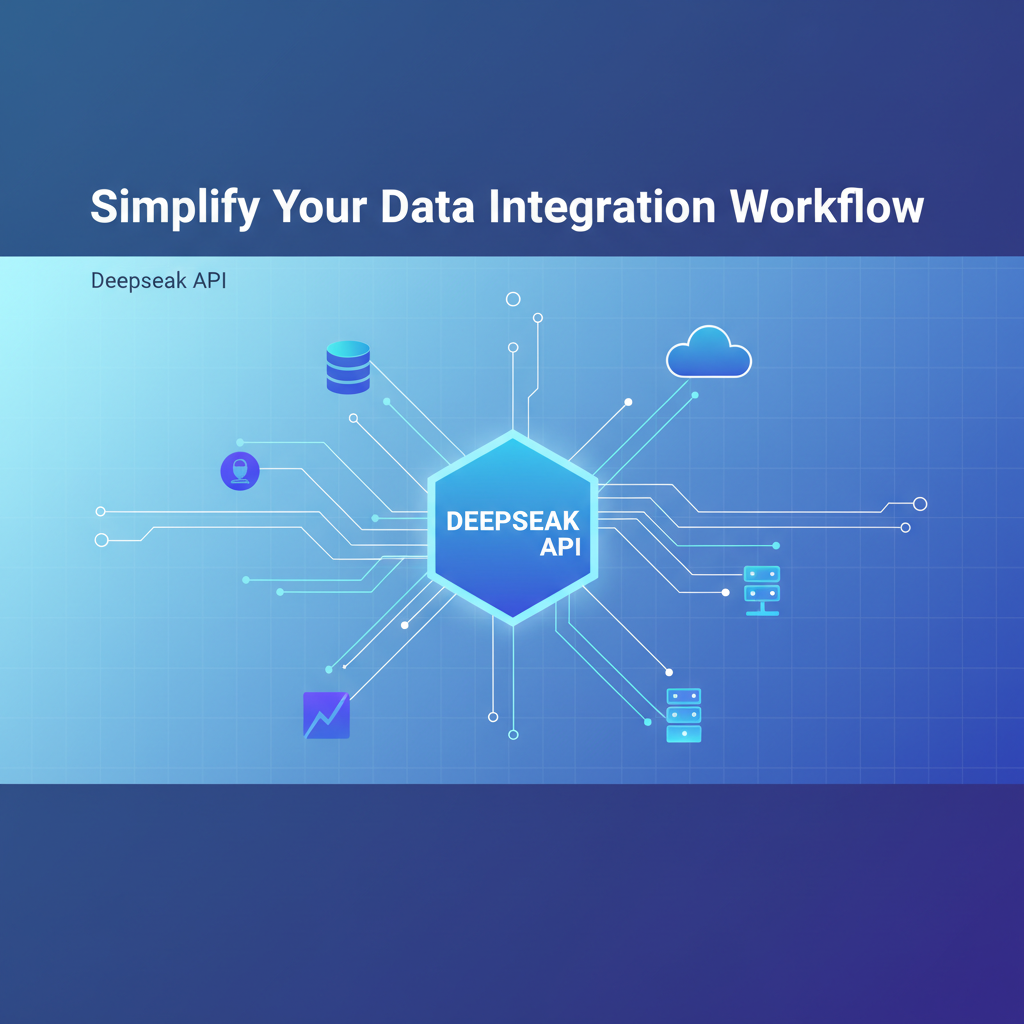
Deepseek API elegantly consolidates this complexity. By acting as a central orchestration layer, it offers a Unified API endpoint that speaks a common language, such as REST or GraphQL. Developers interact solely with this singular, well-documented interface, while Deepseek API intelligently handles the intricacies of connecting to the diverse backend systems. It manages authentication, data format conversions, error retries, and schema mappings behind the scenes. This dramatically reduces the cognitive load on development teams, allowing them to focus on building innovative features and business logic rather than wrestling with integration plumbing.
The strategic design of Deepseek API is rooted in the principle of "integration by configuration" rather than "integration by coding." While coding will always be part of application development, Deepseek API significantly minimizes the amount of boilerplate code required for data movement and synchronization. This translates directly into faster development cycles, reduced time-to-market for new features, and a substantial cut in operational costs associated with integration maintenance. Moreover, by providing a single pane of glass for managing all integrations, it enhances visibility, simplifies troubleshooting, and strengthens governance over data flow.
In essence, Deepseek API doesn't just offer an integration solution; it delivers an integration philosophy that champions simplicity, efficiency, and scalability. It's an indispensable asset for any organization striving to unlock the full potential of its data assets, accelerate its digital transformation journey, and maintain a competitive edge in an increasingly data-driven world. By transforming integration from a persistent headache into a strategic advantage, Deepseek API empowers businesses to move faster, innovate more freely, and make more informed decisions than ever before.
Core Pillars of Deepseek API: Unified Access and Multi-Model Versatility
The true power and transformative potential of the Deepseek API are best understood by examining its foundational principles: its embodiment of a Unified API paradigm and its unparalleled Multi-model support. These two pillars collectively address the most persistent and debilitating challenges faced by organizations grappling with diverse and distributed data landscapes, offering a coherent, efficient, and scalable solution.
The Unified API Paradigm: A Single Pane of Glass for All Your Data
The concept of a Unified API is revolutionary in its simplicity and profound in its impact. Traditionally, integrating with multiple applications or data sources has necessitated interacting with each one via its unique API, complete with varying authentication methods, data structures, rate limits, and error handling protocols. This fragmentation creates significant overhead, as developers must learn and manage a plethora of distinct interfaces, leading to brittle integrations that are expensive to build and even more costly to maintain.
Deepseek API fundamentally disrupts this paradigm by offering a single, standardized, and consistent interface to interact with an extensive array of backend systems. Instead of juggling dozens of different API specifications, developers only need to understand and utilize the Deepseek API’s well-defined schema and endpoint. Behind this Unified API facade, Deepseek API intelligently translates requests into the native language of the target system, whether it's a RESTful endpoint, a GraphQL query, a SOAP service, a database query (SQL or NoSQL), or even a legacy system's specific protocol.
Benefits of a Unified API with Deepseek API:
- Drastically Reduced Development Time: Developers can reuse common logic and tools for all integrations, eliminating the need to write bespoke code for each new connection. This accelerates project timelines and frees up engineering resources for core product innovation.
- Simplified Maintenance and Operations: With a single interface to manage, troubleshooting becomes far more straightforward. Updates to backend systems are handled by Deepseek API’s underlying connectors, shielding client applications from breaking changes. This reduces the operational burden and improves system reliability.
- Enhanced Consistency and Standardization: Deepseek API enforces a consistent data model and error handling across all integrated services. This leads to more robust and predictable applications, as developers no longer contend with divergent data representations or unpredictable error messages from various third-party APIs.
- Improved Security and Governance: A Unified API provides a centralized control point for authentication, authorization, and data access policies. Organizations can enforce granular security rules across all integrated data sources from a single location, significantly enhancing their security posture and ensuring compliance.
- Accelerated Onboarding: New developers can quickly get up to speed, as they only need to learn one API specification to access a multitude of services. This lowers the barrier to entry for contributing to integrated systems.
Table 1: Traditional vs. Unified API Integration
| Feature/Aspect | Traditional Point-to-Point Integration | Deepseek API (Unified API) |
|---|---|---|
| Development Time | High; custom code for each integration | Low; standardized interface, configuration-driven |
| Maintenance | Complex; managing multiple distinct integrations, high overhead | Simple; single interface to manage, backend changes abstracted |
| Data Consistency | Prone to variations across different APIs | Enforced consistency via unified data models |
| Security | Distributed; managing credentials & access per integration | Centralized; unified authentication & authorization |
| Scalability | Can be challenging to scale individual connections | Built for scale, centralized management of load |
| Developer Focus | Integration logic for each system | Business logic, leveraging consistent data access |
| Complexity | Exponentially increases with more integrations | Linear, simplifies as more systems are added |
Multi-Model Support: Embracing Data Diversity with Ease
Beyond merely unifying access, the Deepseek API distinguishes itself through its robust Multi-model support. In today's data landscape, information doesn't conform to a single rigid structure. Organizations leverage relational databases for structured transactions, NoSQL databases for flexible document storage, time-series databases for IoT data, graph databases for relationships, and object storage for unstructured blobs like images and videos. Integrating these diverse data models into a cohesive workflow presents a monumental challenge.
Deepseek API is engineered to inherently understand and interact with this diverse array of data models. This means whether your data resides in PostgreSQL, MongoDB, Cassandra, a data lake in S3, or is exposed via a streaming Kafka topic, Deepseek API provides the necessary connectors and adapters to seamlessly integrate it. It's not just about connecting to different databases; it's about intelligently interacting with their native capabilities and presenting that information in a unified, consumable format to client applications.
Key Aspects of Deepseek API's Multi-model Support:
- Broad Spectrum of Connectors: Deepseek API comes equipped with an expansive library of pre-built connectors for a wide range of databases, cloud services, SaaS applications, and enterprise systems. This significantly reduces the effort required to get started, as most common data sources are supported out-of-the-box.
- Intelligent Data Mapping and Transformation: A critical component of Multi-model support is the ability to intelligently map and transform data between different schemas and formats. Deepseek API provides powerful capabilities to define transformation rules, ensuring data consistency and integrity as it flows between disparate systems, even when their underlying models are fundamentally different. For instance, converting a relational table's rows into a JSON document for a NoSQL store, or vice-versa, is handled with sophistication.
- Flexibility for Evolving Data Needs: As businesses grow and adopt new technologies, their data storage choices will inevitably evolve. Deepseek API's Multi-model support ensures that the integration layer remains agile and adaptable. Adding a new NoSQL database or a streaming platform doesn't necessitate a complete overhaul of existing integrations; rather, it’s about configuring a new connector within the Deepseek API framework.
- Optimized Performance for Each Model: Rather than a one-size-fits-all approach, Deepseek API's underlying architecture is designed to leverage the native query capabilities and performance optimizations of each data model. This ensures that data access is efficient and responsive, minimizing latency and maximizing throughput, regardless of the data source's specific characteristics.
Table 2: Examples of Data Models Supported by Deepseek API
| Data Model Type | Description | Typical Use Cases | Deepseek API Benefit |
|---|---|---|---|
| Relational (SQL) | Structured data with predefined schemas (e.g., MySQL, PostgreSQL, Oracle) | Transactional data, financial records, inventory management | Standardized SQL access, schema mapping |
| Document (NoSQL) | Flexible, semi-structured data (e.g., MongoDB, Couchbase) | Content management, user profiles, product catalogs | JSON/BSON interaction, flexible schema handling |
| Key-Value (NoSQL) | Simple, fast data storage (e.g., Redis, DynamoDB) | Caching, session management, real-time leaderboards | High-performance access, direct key-value operations |
| Graph (NoSQL) | Data represented as nodes and edges (e.g., Neo4j, Amazon Neptune) | Social networks, recommendation engines, fraud detection | Graph query language translation, relationship traversal |
| Time-Series | Data points indexed by time (e.g., InfluxDB, TimescaleDB) | IoT sensor data, monitoring, financial market data | Efficient time-based querying, aggregations |
| Object Storage | Unstructured data blobs (e.g., AWS S3, Azure Blob Storage) | Data lakes, media files, backups, archival | Direct file access, metadata management |
| Streaming Data | Continuous data flow (e.g., Kafka, Kinesis) | Real-time analytics, event processing, IoT data ingestion | Event subscription, real-time data integration |
| SaaS Applications | Third-party cloud services (e.g., Salesforce, HubSpot, Stripe) | CRM, ERP, marketing automation, payment gateways | Standardized API interaction, credential management |
By harmonizing the power of a Unified API with comprehensive Multi-model support, Deepseek API empowers organizations to navigate the complexities of their data landscape with unprecedented agility and control. It transforms data integration from a burdensome technical challenge into a strategic enabler, paving the way for more innovative applications, deeper insights, and a truly data-driven enterprise. This dual capability is what positions Deepseek API as a critical component in the modern data stack, bridging the gap between disparate data sources and delivering a cohesive, accessible view of an organization's entire information universe.
Deep-Dive into Deepseek API's Architecture and Implementation
Understanding the internal workings of the Deepseek API reveals the meticulous engineering that underpins its promise of simplified data integration. Its architecture is carefully designed to be robust, scalable, and extensible, allowing it to seamlessly abstract complexity while delivering high performance and reliability.
At a high level, the Deepseek API operates as an intelligent intermediary layer between client applications and a myriad of backend data sources. Its core components work in concert to achieve the Unified API and Multi-model support capabilities.
Core Architectural Components:
- API Gateway & Ingress Layer:
- This is the primary entry point for all client applications. It exposes the single, consistent Deepseek API endpoint, typically following RESTful or GraphQL principles.
- Responsibilities include:
- Authentication & Authorization: Validating API keys, tokens, and user credentials, and enforcing access control policies based on defined roles and permissions. This centralized security mechanism is a key benefit of the Unified API.
- Rate Limiting & Throttling: Protecting backend systems from overload by controlling the frequency of incoming requests.
- Request Routing: Directing incoming requests to the appropriate internal service or connector based on the API endpoint and request parameters.
- Input Validation: Ensuring that incoming requests conform to the expected format and schema, preventing malformed data from reaching downstream systems.
- Connector Framework:
- This is the backbone of Multi-model support. The connector framework provides a pluggable architecture for integrating with diverse data sources.
- Each connector is specialized to communicate with a particular type of data store or service (e.g., a PostgreSQL connector, a MongoDB connector, a Salesforce connector, a Kafka connector).
- Key functions of a connector:
- Protocol Translation: Converting the internal Deepseek API request into the native protocol of the target system (e.g., SQL queries for relational databases, JSON API calls for RESTful services, specific commands for NoSQL databases).
- Credential Management: Securely handling and applying authentication details for each backend system.
- Error Handling: Capturing and normalizing errors from the backend system into a consistent format for the client.
- Connection Pooling: Efficiently managing connections to backend databases and services to optimize resource utilization and reduce latency.
- Data Transformation & Mapping Engine:
- This engine is crucial for bridging the semantic gaps between disparate data models. When data flows from a source to a target, its structure and types often need to be adapted.
- Capabilities include:
- Schema Mapping: Defining how fields from a source system correspond to fields in a target system, handling differences in naming conventions, data types, and structures.
- Data Type Conversion: Automatically converting data types (e.g., string to integer, date formats).
- Data Enrichment & Aggregation: Applying business logic to enrich data (e.g., adding geographic information based on an IP address) or aggregating data from multiple sources.
- Filtering & Validation: Filtering out irrelevant data or validating data against predefined business rules.
- Scripting Capabilities: For complex transformations, the engine might offer scripting languages (e.g., JavaScript, Python-like syntax) to define custom logic.
- Orchestration & Workflow Engine:
- For complex integration scenarios involving multiple steps, conditional logic, and parallel operations, an orchestration engine manages the flow.
- This allows developers to define multi-step workflows that might involve fetching data from one source, transforming it, enriching it with data from another source, and then pushing it to a third.
- Features include:
- Sequencing Operations: Ensuring tasks are executed in the correct order.
- Conditional Logic: Branching workflows based on data values or outcomes of previous steps.
- Error Recovery & Retries: Implementing strategies to handle transient failures gracefully.
- Parallel Processing: Executing independent tasks concurrently to improve efficiency.
- Monitoring, Logging & Analytics:
- Essential for operational visibility and troubleshooting. This component collects metrics, logs, and traces from all layers of the Deepseek API architecture.
- Features typically include:
- Real-time Dashboards: Visualizing API usage, latency, error rates, and throughput.
- Detailed Logging: Recording all requests, responses, and internal operations for auditing and debugging.
- Alerting: Notifying operators of critical issues or performance deviations.
- Traceability: End-to-end tracing of requests across multiple integrated systems.
Implementation Patterns and Best Practices:
Implementing and leveraging the Deepseek API effectively involves adhering to certain patterns and best practices:
- Idempotency for API Operations: Design API calls to be idempotent where possible. This means that making the same request multiple times has the same effect as making it once. This is crucial for robust integrations, especially when dealing with network retries or eventual consistency models.
- Version Control for API Definitions: Treat Deepseek API definitions, including schemas, transformations, and workflows, as code. Use version control systems (like Git) to track changes, enable collaboration, and facilitate rollbacks.
- Embrace Event-Driven Architectures: While Deepseek API excels at request-response patterns, it can also be used in conjunction with event-driven architectures. For example, Deepseek API could consume events from a Kafka topic, process them, and then update a database.
- Modular Design for Connectors and Transformations: Encourage the development of modular, reusable connectors and transformation logic. This improves maintainability and promotes consistency across different integration projects.
- Thorough Testing: Implement comprehensive testing strategies, including unit tests for transformation logic, integration tests for connectors, and end-to-end tests for complete workflows.
- Security from the Outset: Beyond centralized authentication, implement least privilege access for all backend systems. Ensure sensitive data is encrypted in transit and at rest. Regularly audit access logs.
- Performance Tuning: Monitor performance metrics closely and identify bottlenecks. This might involve optimizing database queries, tuning connector configurations, or scaling the Deepseek API infrastructure horizontally.
By combining a well-structured architectural foundation with thoughtful implementation practices, the Deepseek API becomes more than just an integration tool; it transforms into a powerful, reliable, and scalable integration platform. It empowers developers to transcend the complexities of data silos and disparate systems, allowing them to focus on building innovative applications that truly harness the power of integrated data. This deep architectural understanding is what allows organizations to confidently deploy Deepseek API for mission-critical operations, ensuring their data integration workflows are not just simplified, but also resilient and future-proof.
XRoute is a cutting-edge unified API platform designed to streamline access to large language models (LLMs) for developers, businesses, and AI enthusiasts. By providing a single, OpenAI-compatible endpoint, XRoute.AI simplifies the integration of over 60 AI models from more than 20 active providers(including OpenAI, Anthropic, Mistral, Llama2, Google Gemini, and more), enabling seamless development of AI-driven applications, chatbots, and automated workflows.
Practical Applications and Transformative Use Cases
The versatility of the Deepseek API extends across a multitude of industries and operational requirements, demonstrating its capacity to transform complex data challenges into streamlined, efficient workflows. Its Unified API and Multi-model support capabilities enable a broad spectrum of practical applications that drive innovation and operational excellence.
1. Enterprise Data Synchronization and Master Data Management (MDM):
One of the most common and critical applications of Deepseek API is facilitating robust enterprise data synchronization. Large organizations often struggle with inconsistent data across various systems—customer records in a CRM differing from those in an ERP, or product information varying between an e-commerce platform and an inventory system.
Deepseek API acts as the central nervous system for these synchronization tasks. It can: * Consolidate Customer Profiles: Fetch customer data from Salesforce, merge it with purchase history from SAP, and unify it into a single, golden record stored in a master data management (MDM) system or a data warehouse. Any updates in one source can automatically trigger synchronization across others. * Product Information Management (PIM): Ensure that product details, pricing, and availability are consistent across online stores, physical retail systems, and supplier portals. When a product attribute changes in the PIM system, Deepseek API pushes those updates to all connected endpoints in real-time or near real-time. * Financial Data Harmonization: Synchronize general ledger data from disparate accounting systems, expense reports, and payroll systems into a unified financial reporting platform, ensuring accuracy and compliance for consolidated reporting.
2. Real-time Analytics Dashboards and Business Intelligence:
Businesses thrive on timely insights. Deepseek API is instrumental in building dynamic, real-time analytics dashboards that pull data from diverse operational systems without the need for extensive ETL pipelines for every report.
- Sales Performance Dashboards: Connect to CRM (e.g., HubSpot), e-commerce platforms (e.g., Shopify), and marketing automation tools (e.g., Marketo). Deepseek API aggregates live sales figures, lead conversions, and campaign performance data, feeding it into a business intelligence (BI) tool like Tableau or Power BI for immediate visualization.
- Operational Monitoring: For manufacturing or logistics companies, Deepseek API can ingest data from IoT sensors on machinery or vehicles, combine it with inventory data from an ERP, and display live operational status, potential bottlenecks, and predictive maintenance alerts on a central dashboard.
- Customer Journey Analytics: Track customer interactions across website visits, mobile app usage, support tickets, and email campaigns. Deepseek API orchestrates the flow of this multi-source behavioral data into an analytics engine, providing a comprehensive view of the customer journey for personalized outreach.
3. Microservices Integration and API Orchestration:
Modern application development increasingly relies on microservices architectures, where individual services communicate via APIs. While this offers flexibility, managing a growing number of service-to-service interactions can become complex. Deepseek API simplifies this by acting as an API gateway and orchestration layer for internal microservices.
- Unified Service Access: Instead of each microservice directly calling multiple other services, they can interact with the Deepseek API. Deepseek API then intelligently routes requests, performs necessary data transformations, and orchestrates calls to multiple downstream services to fulfill a single, complex request.
- BFF (Backend for Frontend) Pattern: For user-facing applications, Deepseek API can serve as a Backend for Frontend, aggregating data from several microservices into a single, tailored response for specific client applications (web, mobile, IoT devices), thereby optimizing network calls and reducing client-side logic.
- Legacy System Facade: It can wrap existing legacy systems with modern APIs, allowing new microservices to interact with older, monolithic applications without direct, complex integrations.
4. AI/ML Data Pipelines and Model Training:
Artificial Intelligence and Machine Learning models are insatiable consumers of data. Building robust data pipelines to feed these models with clean, integrated, and continuously updated data is paramount. Deepseek API streamlines this process.
- Data Aggregation for Training: Collect raw data from various sources—customer transaction logs from a relational database, unstructured text from social media feeds, image data from object storage—and prepare it for AI model training. Deepseek API handles the extraction, initial transformation, and loading into a data lake or feature store that serves the AI/ML platform.
- Real-time Feature Engineering: For real-time inference, Deepseek API can provide low-latency access to integrated features. For example, in a fraud detection system, it can quickly combine recent transaction data, user location, and historical behavioral patterns to generate features for a real-time ML model.
- Model Output Integration: Once an AI model makes a prediction or generates an insight, Deepseek API can be used to push these results back into operational systems, such as updating a CRM with a predicted customer churn score or triggering an alert in an incident management system.
It's worth noting that while Deepseek API is excellent at general data integration, specialized needs, particularly for advanced AI, may benefit from complementary platforms. For instance, developers seeking to integrate cutting-edge Large Language Models (LLMs) with unparalleled ease might find a platform like XRoute.AI to be an invaluable complement. XRoute.AI is a cutting-edge unified API platform specifically designed to streamline access to over 60 LLMs from more than 20 active providers. By providing a single, OpenAI-compatible endpoint, XRoute.AI simplifies the integration of these powerful AI models, enabling seamless development of AI-driven applications, chatbots, and automated workflows with a focus on low latency AI and cost-effective AI. This demonstrates how a robust data integration solution like Deepseek API can work in concert with specialized AI platforms to build truly intelligent and responsive systems.
5. IoT Data Ingestion and Processing:
The proliferation of IoT devices generates massive volumes of streaming data. Deepseek API can serve as a crucial component in ingesting, processing, and routing this data.
- Sensor Data Hub: Collect data from diverse IoT devices (temperature sensors, GPS trackers, industrial machinery) using various protocols (MQTT, HTTP). Deepseek API normalizes this data and routes it to time-series databases, stream processing engines, or cloud storage for further analysis.
- Smart City Applications: Integrate traffic sensor data, public transport schedules, and environmental monitoring data to provide real-time city management insights and citizen services.
- Predictive Maintenance: Ingest continuous data streams from industrial equipment, detect anomalies using integrated analytics, and trigger maintenance alerts in an enterprise asset management (EAM) system, all orchestrated by Deepseek API.
These examples merely scratch the surface of what's possible with the Deepseek API. Its fundamental ability to simplify connections, unify access, and support diverse data models empowers organizations to unlock the full value of their information, fostering innovation and achieving operational excellence across the board. The strategic deployment of Deepseek API moves businesses from being reactive data consumers to proactive data innovators.
Overcoming Common Data Integration Hurdles with Deepseek API
Data integration is rarely a straightforward path; it's often fraught with significant hurdles that can derail projects, inflate costs, and hinder business agility. The Deepseek API is specifically engineered to not only simplify the integration workflow but also to systematically address and overcome these common challenges, offering a robust and reliable solution.
1. The Challenge of Data Silos and Fragmentation:
Hurdle: Most organizations operate with data spread across numerous disparate systems—legacy databases, cloud applications, third-party SaaS platforms, and specialized departmental tools. Each system acts as a "silo," making it nearly impossible to gain a unified, holistic view of critical business entities like customers, products, or transactions. This fragmentation leads to inconsistent data, duplicated efforts, and delayed decision-making.
Deepseek API Solution: Deepseek API directly confronts data silos through its Unified API paradigm and extensive Multi-model support. * Unified Access Layer: It provides a single, consistent entry point to access data from all connected sources. Developers don't need to learn individual APIs or database query languages; they interact with Deepseek API's standardized interface. * Centralized Connectors: Its rich library of pre-built connectors can plug into almost any data source—relational, NoSQL, APIs, file systems, streaming platforms. This means data from an on-premise ERP, a cloud CRM, and a data lake can all be accessed and managed through one platform. * Data Virtualization (Implicit): By offering a unified view of disparate data sources, Deepseek API essentially virtualizes the data layer, allowing applications to query data without knowing its underlying physical location or format, effectively breaking down silos.
2. Data Quality and Consistency Issues:
Hurdle: When data moves between systems, it often encounters issues of quality and consistency. Different systems might have varying data types, formats, validation rules, or even conflicting values for the same entity. Inconsistent data leads to unreliable reports, faulty analytics, and poor business decisions.
Deepseek API Solution: The powerful data transformation and mapping engine within Deepseek API is designed precisely for this. * Schema Mapping and Transformation: It allows for the definition of sophisticated rules to map fields between systems, handle data type conversions (e.g., string to date, integer to boolean), and apply standardizations. * Data Validation: Custom validation rules can be implemented within the transformation pipeline to ensure data integrity before it reaches the target system, flagging or correcting inconsistencies. * Data Enrichment: Deepseek API can enrich data by standardizing values, filling in missing information from lookup tables, or appending additional context (e.g., geocoding addresses), leading to higher quality, more useful data.
3. High Latency and Performance Bottlenecks:
Hurdle: Traditional integration methods, especially those involving batch processing or inefficient point-to-point connections, can introduce significant latency. This is detrimental for real-time applications, interactive user experiences, and immediate decision-making, where delays can cost businesses revenue or customer satisfaction.
Deepseek API Solution: Performance is a core consideration in Deepseek API's design. * Optimized Connectors: Connectors are often optimized to leverage the native performance capabilities of each data source, ensuring efficient data retrieval and updates. * Connection Pooling: It maintains pools of open connections to frequently accessed backend systems, reducing the overhead of establishing new connections for every request. * Caching Mechanisms: Deepseek API can implement caching strategies for frequently requested data, reducing the load on backend systems and significantly lowering response times for repeat queries. * Asynchronous Processing: For operations that don't require immediate responses, Deepseek API can handle requests asynchronously, allowing client applications to continue processing without waiting, improving overall system responsiveness. * Scalability: The architecture is built to scale horizontally, meaning more instances can be added to handle increased load, ensuring consistent low latency even during peak demand.
4. High Development and Maintenance Costs:
Hurdle: Building and maintaining custom integrations is notoriously expensive. It requires specialized developer skills, extensive coding, ongoing debugging, and continuous updates as source systems evolve. This drains resources, slows innovation, and creates a significant total cost of ownership (TCO).
Deepseek API Solution: Deepseek API drastically reduces these costs by simplifying the entire integration lifecycle. * Reduced Coding: Its Unified API and configuration-driven approach minimize the need for extensive custom code. Developers spend less time on boilerplate integration logic and more time on business-specific features. * Faster Time-to-Market: Pre-built connectors and streamlined workflows accelerate the development of new integrations, allowing businesses to launch new products or services faster. * Simplified Maintenance: With a single integration platform to manage, updates, troubleshooting, and monitoring become far more efficient. Deepseek API abstracts away backend complexities, shielding client applications from changes in connected systems. * Lower Skill Barrier: The consistent API interface lowers the skill barrier for integration development, allowing a broader range of developers to contribute effectively.
5. Security and Compliance Risks:
Hurdle: Integrating disparate systems exposes organizations to various security risks, including unauthorized data access, data breaches, and non-compliance with regulations (e.g., GDPR, HIPAA). Managing security across multiple distinct integration points is a complex and error-prone task.
Deepseek API Solution: Security is paramount and is baked into Deepseek API's architecture. * Centralized Security: It provides a single point of control for authentication, authorization, and auditing across all integrated systems. Security policies can be defined and enforced uniformly. * Granular Access Control: Deepseek API enables precise control over which users or applications can access specific data fields or perform certain operations on backend systems. * Encryption In-Transit and At-Rest: Ensures that sensitive data is encrypted as it moves through the integration pipeline and when stored temporarily. * Auditing and Logging: Comprehensive logging and auditing capabilities provide a clear trail of all data access and modifications, crucial for compliance and security forensics. * Credential Management: Securely stores and manages credentials for backend systems, preventing exposure in application code.
By systematically addressing these formidable challenges, the Deepseek API transforms data integration from a burdensome, high-risk activity into a strategic enabler. It provides a pathway for organizations to leverage their data assets effectively, ensuring data is not just connected, but also high-quality, secure, timely, and cost-efficiently managed.
Future Trends in Data Integration and Deepseek API's Role
The landscape of data integration is continuously evolving, driven by advancements in technology, changing business demands, and the relentless proliferation of data sources. To remain relevant and effective, integration solutions must anticipate and adapt to these emerging trends. The Deepseek API is strategically positioned to not only keep pace with these shifts but also to actively shape the future of data integration, particularly through its emphasis on a Unified API and comprehensive Multi-model support.
1. The Growing Influence of AI and Machine Learning in Integration:
Trend: AI and ML are no longer confined to analytics; they are increasingly being embedded directly into integration tools. This includes AI-driven intelligent data mapping, automated schema discovery, predictive error identification, and self-optimizing integration pipelines. The goal is to reduce manual effort and improve the efficiency and resilience of data flows.
Deepseek API's Role: Deepseek API can leverage AI in several ways: * Intelligent Transformation: AI algorithms can analyze data patterns to suggest optimal transformation rules, greatly accelerating the setup of new integrations and reducing human error. * Predictive Maintenance of Integrations: ML models can analyze monitoring data to predict potential integration failures or performance bottlenecks before they impact operations, allowing for proactive intervention. * Automated Data Governance: AI can help classify sensitive data, enforce compliance rules, and detect anomalies in data flow, enhancing security and governance. * Integration with Specialized AI: As discussed, Deepseek API facilitates the ingestion of data required for AI/ML model training and can also integrate model outputs back into operational systems. For advanced LLM integration, platforms like XRoute.AI serve as crucial complements, providing a unified API platform for low latency AI access to over 60 models, further streamlining AI-driven workflows enabled by Deepseek API's underlying data orchestration.
2. Event-Driven Architectures and Real-time Integration:
Trend: Batch processing, while still relevant, is being increasingly complemented by event-driven architectures (EDA). Businesses demand real-time insights and immediate reactions to events (e.g., a customer purchase, a sensor reading, a system error). This requires integration solutions that can ingest, process, and route continuous streams of data with minimal latency.
Deepseek API's Role: Deepseek API is well-suited for EDA: * Stream Processing Connectors: Its Multi-model support includes connectors for message queues and streaming platforms (e.g., Kafka, Kinesis). It can act as an event consumer, transforming and routing events to various downstream systems. * Real-time API Endpoints: Deepseek API can expose real-time APIs that trigger actions or update data in response to incoming events, making it a critical component in building responsive, event-driven applications. * Change Data Capture (CDC): Deepseek API can implement CDC mechanisms on databases to detect and propagate data changes as events, ensuring that all connected systems are updated almost instantly.
3. Serverless Integration and Cloud-Native Paradigms:
Trend: The adoption of serverless computing (e.g., AWS Lambda, Azure Functions, Google Cloud Functions) continues to grow. This allows developers to focus purely on code without managing underlying infrastructure. Integration solutions are evolving to be more cloud-native, leveraging serverless functions for scalability, cost-efficiency, and reduced operational overhead.
Deepseek API's Role: Deepseek API can embrace serverless integration by: * Serverless Deployment: The core Deepseek API platform itself can be deployed in a serverless manner, automatically scaling up and down based on demand, minimizing idle costs. * Function-as-a-Service (FaaS) Integration: It can trigger and interact with serverless functions for specific data transformations or business logic, allowing for highly granular and scalable processing of integration tasks. * Cloud-Native Connectors: Its connector ecosystem is designed to seamlessly integrate with cloud-native services and managed databases offered by major cloud providers, ensuring optimal performance and adherence to cloud best practices.
4. API-First Development and Composable Architectures:
Trend: "API-first" is becoming the dominant development paradigm. Every service, every piece of functionality, and every data asset is exposed through well-documented APIs, enabling greater reusability and composability. This leads to architectures where applications are built by composing various internal and external APIs.
Deepseek API's Role: This trend is fundamentally aligned with Deepseek API's core philosophy: * Enabling API-First: By providing a Unified API for underlying data sources, Deepseek API naturally supports and encourages API-first development. Developers consume one consistent API rather than direct database access. * API Management Capabilities: Beyond pure integration, Deepseek API offers API management features like security, versioning, and analytics, ensuring that all exposed APIs are well-governed and performant. * Facilitating Composable Enterprise: Deepseek API makes it easier to combine various internal services and external APIs (including specialized APIs like those provided by XRoute.AI for LLMs) into new, innovative applications, accelerating the development of composable enterprise architectures.
5. Data Mesh and Decentralized Data Governance:
Trend: The "data mesh" concept advocates for decentralizing data ownership and governance. Data is treated as a product, owned by domain teams, who are responsible for serving it via easily consumable, high-quality data products. This requires robust API layers and strong data governance.
Deepseek API's Role: Deepseek API is a natural fit for a data mesh approach: * Data Product Exposure: Domain teams can use Deepseek API to expose their data products (e.g., customer data, product catalog) through a well-defined, standardized API, making them easily discoverable and consumable by other teams. * Federated Governance: While Deepseek API provides a central platform, its granular access controls and audit capabilities enable domain teams to maintain governance over their specific data products, aligning with the decentralized principles of a data mesh. * Interoperability: By standardizing the access layer, Deepseek API ensures interoperability between different data products, even if they are stored using diverse data models in different underlying systems.
In summary, the Deepseek API is not a static solution; it's a dynamic platform engineered for the future of data integration. Its inherent design principles—a powerful Unified API and versatile Multi-model support—position it as a pivotal technology for organizations navigating the complexities of AI-driven, event-driven, cloud-native, and API-first paradigms. By embracing these trends, Deepseek API continues to empower businesses to unlock unparalleled agility, foster innovation, and derive maximum value from their ever-expanding data ecosystems.
Conclusion: Empowering the Data-Driven Enterprise with Deepseek API
In an era where data is increasingly recognized as the most valuable asset, the ability to seamlessly integrate, manage, and leverage this information is no longer a luxury but a fundamental prerequisite for competitive advantage. The journey towards becoming a truly data-driven enterprise is often hampered by the intricate complexities inherent in connecting disparate systems, managing diverse data models, and ensuring data quality and security across a fragmented IT landscape. This is precisely where the Deepseek API emerges as a game-changer, offering a paradigm shift in how organizations approach their data integration challenges.
Throughout this extensive exploration, we have delved into the multifaceted capabilities of Deepseek API, demonstrating its profound ability to simplify what has traditionally been a daunting and resource-intensive endeavor. At its core, Deepseek API thrives on two foundational pillars: its revolutionary Unified API and its comprehensive Multi-model support. The Unified API consolidates access to an expansive array of backend systems into a single, consistent interface, drastically reducing development time, streamlining maintenance, and fostering a standardized approach to data interaction. This eliminates the "spaghetti architecture" often associated with point-to-point integrations, paving the way for more agile and resilient IT ecosystems.
Complementing this, Deepseek API's Multi-model support ensures that no data source is left behind, whether it resides in a traditional relational database, a flexible NoSQL store, a high-throughput streaming platform, or a cutting-edge SaaS application. Its intelligent connector framework and powerful data transformation engine bridge the semantic gaps between these diverse data models, ensuring data consistency, quality, and optimal performance across the entire integration pipeline. This versatility allows businesses to truly harness all their data, regardless of its format or origin.
We've seen how Deepseek API transforms practical applications, from critical enterprise data synchronization and master data management to real-time analytics dashboards, efficient microservices orchestration, and robust AI/ML data pipelines. It systematically addresses common integration hurdles such as data silos, quality issues, high latency, escalating costs, and security risks, providing a secure, scalable, and cost-effective solution. Furthermore, Deepseek API is not merely a tool for today; its architecture and design principles align perfectly with future trends in data integration, including the increasing role of AI, event-driven architectures, serverless paradigms, and API-first development, ensuring its continued relevance and transformative power.
In essence, Deepseek API empowers developers and organizations to shift their focus from the arduous task of integration plumbing to the more strategic work of innovation and value creation. By providing an elegant, efficient, and scalable solution to complex data challenges, it unlocks the true potential of an organization's data assets, accelerating digital transformation, enhancing decision-making, and fostering a culture of agility. Whether you are building a new generation of intelligent applications or striving to modernize existing legacy systems, Deepseek API stands as an indispensable partner, simplifying your data integration workflow and propelling your enterprise towards a future of unparalleled connectivity and insight. Embrace the simplicity, power, and versatility of Deepseek API, and transform your data strategy from a bottleneck into your greatest competitive advantage.
Frequently Asked Questions (FAQ) About Deepseek API
Here are some common questions about Deepseek API to provide further clarity:
Q1: What exactly is Deepseek API and how does it differ from traditional integration methods?
A1: Deepseek API is a unified API platform designed to simplify data integration across diverse applications and databases. It differs from traditional point-to-point methods by providing a single, consistent API endpoint to interact with multiple backend systems. Instead of writing custom code for each integration, developers use Deepseek API's standardized interface, while it handles the complexities of connecting to various data sources, translating protocols, and transforming data behind the scenes. This approach reduces development time, maintenance overhead, and ensures data consistency.
Q2: What kind of data sources does Deepseek API's "Multi-model support" cover?
A2: Deepseek API's Multi-model support is comprehensive, covering a vast range of data sources and models. This includes traditional relational databases (like PostgreSQL, MySQL, Oracle), various NoSQL databases (such as MongoDB for documents, Redis for key-value, Neo4j for graphs, Cassandra for wide-column), time-series databases, object storage solutions (like AWS S3), streaming data platforms (like Kafka), and a multitude of third-party SaaS applications (e.g., Salesforce, HubSpot). The platform is designed to connect to and intelligently interact with these diverse data structures and protocols.
Q3: How does Deepseek API improve data quality and consistency across integrated systems?
A3: Deepseek API significantly improves data quality and consistency through its powerful data transformation and mapping engine. It allows users to define rules for schema mapping, data type conversion, standardization, and validation as data moves between systems. This ensures that data conforms to the required formats and business rules, preventing inconsistencies, correcting errors, and enriching data, leading to more reliable reports and accurate analytics.
Q4: Can Deepseek API be used for real-time data integration, or is it primarily for batch processing?
A4: Deepseek API is designed for both real-time and near real-time data integration, in addition to supporting batch processing where appropriate. Its architecture incorporates optimized connectors, connection pooling, caching mechanisms, and asynchronous processing capabilities to ensure low-latency data flow. It can also integrate with event-driven architectures and streaming platforms, making it highly effective for applications requiring immediate data availability and responsiveness, such as real-time analytics dashboards or IoT data ingestion.
Q5: How does Deepseek API contribute to cost savings for an organization?
A5: Deepseek API contributes to significant cost savings in several ways: 1. Reduced Development Costs: By minimizing the need for custom coding, it lowers development efforts and accelerates project delivery. 2. Lower Maintenance Overhead: Consolidating integrations onto a single platform simplifies management, updates, and troubleshooting, reducing ongoing operational costs. 3. Improved Efficiency: Faster integration cycles mean quicker time-to-market for new features and products, translating to revenue opportunities. 4. Optimized Resource Utilization: Features like connection pooling and scalable architecture ensure efficient use of infrastructure, potentially lowering cloud computing costs. 5. Enhanced Security: Centralized security management reduces the risk and cost associated with data breaches and compliance failures.
🚀You can securely and efficiently connect to thousands of data sources with XRoute in just two steps:
Step 1: Create Your API Key
To start using XRoute.AI, the first step is to create an account and generate your XRoute API KEY. This key unlocks access to the platform’s unified API interface, allowing you to connect to a vast ecosystem of large language models with minimal setup.
Here’s how to do it: 1. Visit https://xroute.ai/ and sign up for a free account. 2. Upon registration, explore the platform. 3. Navigate to the user dashboard and generate your XRoute API KEY.
This process takes less than a minute, and your API key will serve as the gateway to XRoute.AI’s robust developer tools, enabling seamless integration with LLM APIs for your projects.
Step 2: Select a Model and Make API Calls
Once you have your XRoute API KEY, you can select from over 60 large language models available on XRoute.AI and start making API calls. The platform’s OpenAI-compatible endpoint ensures that you can easily integrate models into your applications using just a few lines of code.
Here’s a sample configuration to call an LLM:
curl --location 'https://api.xroute.ai/openai/v1/chat/completions' \
--header 'Authorization: Bearer $apikey' \
--header 'Content-Type: application/json' \
--data '{
    "model": "gpt-5",
    "messages": [
        {
            "content": "Your text prompt here",
            "role": "user"
        }
    ]
}'
With this setup, your application can instantly connect to XRoute.AI’s unified API platform, leveraging low latency AI and high throughput (handling 891.82K tokens per month globally). XRoute.AI manages provider routing, load balancing, and failover, ensuring reliable performance for real-time applications like chatbots, data analysis tools, or automated workflows. You can also purchase additional API credits to scale your usage as needed, making it a cost-effective AI solution for projects of all sizes.
Note: Explore the documentation on https://xroute.ai/ for model-specific details, SDKs, and open-source examples to accelerate your development.