Exploring OpenClaw Star History: Key Milestones & Evolution

The landscape of Artificial Intelligence has been irrevocably reshaped by the advent and rapid evolution of Large Language Models (LLMs). These sophisticated algorithms, capable of understanding, generating, and manipulating human language with astonishing fluency, have moved from academic curiosities to indispensable tools across myriad industries. In this dynamic and fiercely competitive arena, the open-source community plays a pivotal role, driving innovation, democratizing access, and fostering collaborative development. Among the pantheon of projects that have left an indelible mark, our focus today turns to a hypothetical yet archetypal project: OpenClaw. Its "star history" – a vibrant chronicle of community engagement, technical breakthroughs, and strategic evolution – offers a fascinating lens through which to understand the broader narrative of LLM development.
This article embarks on an extensive journey through OpenClaw’s evolution, tracing its trajectory from an ambitious concept to a mature, influential force in the AI ecosystem. We will meticulously unpack the key milestones that defined its growth, explore the technological innovations that propelled its capabilities, and examine its profound impact on both the research community and practical applications. By delving into the details of its architectural choices, community-driven development, and the challenges it navigated, we aim to provide a comprehensive understanding of how OpenClaw not only earned its significant "star" count but also continuously reshaped LLM rankings and contributed to the ongoing debate about what constitutes the best LLM in a given context. Furthermore, we will analyze its strategic positioning amidst a crowded field, often through rigorous AI model comparison, to highlight its unique contributions and enduring legacy.
The Genesis of OpenClaw: An Ambitious Vision Takes Shape
Every groundbreaking project begins with a spark – an unmet need, an audacious idea, or a confluence of technical capabilities reaching a tipping point. For OpenClaw, this genesis occurred in the late 2010s, a period when early transformer architectures were demonstrating unprecedented potential, yet proprietary models dominated the cutting edge. A small, dedicated team of researchers and engineers, disillusioned by the closed-source nature and limited accessibility of the most powerful LLMs of the era, envisioned an alternative. Their core philosophy was simple yet radical: to build a large language model from the ground up, entirely open-source, community-driven, and designed for maximum transparency and accessibility.
The problem OpenClaw aimed to solve was multi-faceted. Firstly, the high barrier to entry for developing and experimenting with cutting-edge LLMs stifled innovation, particularly for smaller research groups, startups, and individual developers. Access often came with restrictive licenses, exorbitant costs, or simply wasn't available for independent scrutiny. Secondly, the lack of transparency in proprietary models raised significant concerns about bias, safety, and ethical implications. The OpenClaw founders believed that an open-source model, with its weights, architecture, and training data fully inspectable, could foster a more responsible and collaborative AI development paradigm.
Initial architectural decisions were heavily influenced by the prevailing transformer models, but with a keen eye towards modularity and extensibility. The team chose a decoder-only architecture, inspired by models like GPT-2, for its proven efficacy in generative tasks. However, they planned for future enhancements, including the ability to integrate multimodal inputs and improved mechanisms for fine-tuning. Guiding principles included a strong emphasis on interpretability wherever possible, even for a complex neural network, and a commitment to releasing pre-trained models under permissive licenses. Funding was initially bootstrapped through grants and personal investments, fueled by an unwavering belief in their mission.
The first public release, often referred to as "OpenClaw Alpha" or "OpenClaw 0.5," was a modest but significant event. It comprised a relatively smaller model (compared to today's behemoths) trained on a curated dataset, primarily to demonstrate the architectural soundness and basic text generation capabilities. While its performance wasn't challenging the titans of the industry, its open-source nature immediately garnered attention within developer forums and academic circles. The initial trickle of "stars" on its repository was more than just a metric; it was a testament to the community's hunger for accessible, high-quality open-source LLMs and a validation of OpenClaw's founding vision. This nascent interest laid the groundwork for the project’s exponential growth and established its identity as a beacon of transparency in the evolving world of AI.
Early Development & Community Building: Forging the Foundation
The period following OpenClaw Alpha's release was characterized by intense development and the arduous process of community building. While the initial "star" count was encouraging, translating that interest into sustained contributions and robust growth presented significant challenges. The team faced a classic chicken-and-egg problem: attracting more developers required a more capable model, but building a more capable model demanded more resources – computational power, data curation expertise, and skilled engineers – which, in turn, depended on community engagement and recognition.
One of the most pressing early challenges was computational resources. Training large transformer models is notoriously expensive, requiring vast arrays of GPUs and immense energy. The OpenClaw team, operating on a shoestring budget compared to corporate labs, had to be ingenious. They leveraged distributed computing techniques, sought donations of GPU time from partner universities, and optimized their training pipelines relentlessly to squeeze every ounce of efficiency from available hardware. Data curation was another hurdle. While public datasets existed, assembling a high-quality, diverse, and clean corpus suitable for an LLM of OpenClaw's ambition was a monumental task, demanding meticulous filtering to avoid biases and ensure factual integrity. Model stability and avoiding catastrophic forgetting during iterative training also required sophisticated techniques and constant vigilance.
Despite these obstacles, the project pushed forward, culminating in the release of OpenClaw-1.0, a landmark moment in its early history. This version featured a significantly expanded training dataset, a larger model size (billions of parameters), and notable improvements in coherence, fluency, and the ability to follow instructions. Benchmarks, while not yet topping commercial models, showed OpenClaw-1.0 closing the gap, demonstrating its potential. More importantly, the documentation was substantially improved, making it easier for new contributors to understand the codebase and participate.
The "star history" metric truly began to accelerate after OpenClaw-1.0. Each new star represented not just a bookmark but a potential new contributor, a user integrating OpenClaw into their project, or an advocate spreading the word. The growth of the contributor base was organic but swift. Developers were drawn by the clear roadmap, the responsive core team, and the empowering philosophy of collective ownership. Community forums flourished, becoming vibrant hubs for discussion, troubleshooting, and feature requests. Issues were tracked transparently on GitHub, and pull requests from external contributors were reviewed and integrated with remarkable speed. This rapid feedback loop and open communication cemented OpenClaw's reputation as a truly community-first project.
During this phase, discussions around LLM rankings began to feature OpenClaw more prominently. While it might not have been the absolute best LLM in every benchmark, its open-source nature and rapidly improving capabilities meant it was a strong contender for "best open-source LLM" and "best LLM for research." This distinction was crucial, as it carved out a niche for OpenClaw and highlighted its unique value proposition against powerful but proprietary alternatives. The community embraced this role, focusing on benchmarks that showcased OpenClaw's strengths and identifying areas where it could excel, further differentiating it in the crowded AI landscape. This early period of foundational development and robust community building was critical, transforming OpenClaw from a promising experiment into a formidable player in the global LLM ecosystem.
Major Breakthroughs and Scaling OpenClaw: Ascending the Ranks
The momentum built during OpenClaw's early years culminated in a series of major breakthroughs that dramatically elevated its status and capabilities. The release of OpenClaw-2.0 marked a pivotal moment, signaling a new era of performance and versatility. This version wasn't just an incremental upgrade; it represented a paradigm shift in the project's ambition and execution. Architecturally, OpenClaw-2.0 introduced several significant improvements, including a more efficient attention mechanism that reduced computational overhead, allowing for larger context windows without a proportional increase in resource demands. It also incorporated techniques like sparse attention and mixture-of-experts (MoE) layers, making the model more capable of handling diverse tasks and information while improving inference speed.
The result was a model that exhibited vastly improved coherence over longer passages, significantly reduced instances of factual hallucination, and a much better understanding of nuanced instructions. Its ability to perform complex reasoning tasks, summarize lengthy documents, and generate creative content reached a new level. The impact on its "star" count was immediate and dramatic. The project surged in popularity, attracting not only individual developers but also academic institutions and even enterprises looking to integrate powerful, open-source LLMs into their workflows. The increased star count wasn't just about vanity; it directly translated into more contributors, more bug reports leading to faster fixes, and a broader testing ground for new features, creating a virtuous cycle of improvement.
OpenClaw-2.0's performance metrics placed it firmly among the top-tier LLMs, both open and closed source. It achieved state-of-the-art results on several standard benchmarks, sparking widespread debate about whether it was, in fact, the best LLM for a growing range of applications. This era saw a marked increase in AI model comparison studies featuring OpenClaw prominently. Researchers meticulously pitted it against competitors on metrics like MMLU (Massive Multitask Language Understanding), HellaSwag (common sense reasoning), and HumanEval (code generation). These comparisons often highlighted OpenClaw’s strengths in areas like general-purpose knowledge and fine-tuning adaptability, solidifying its reputation.
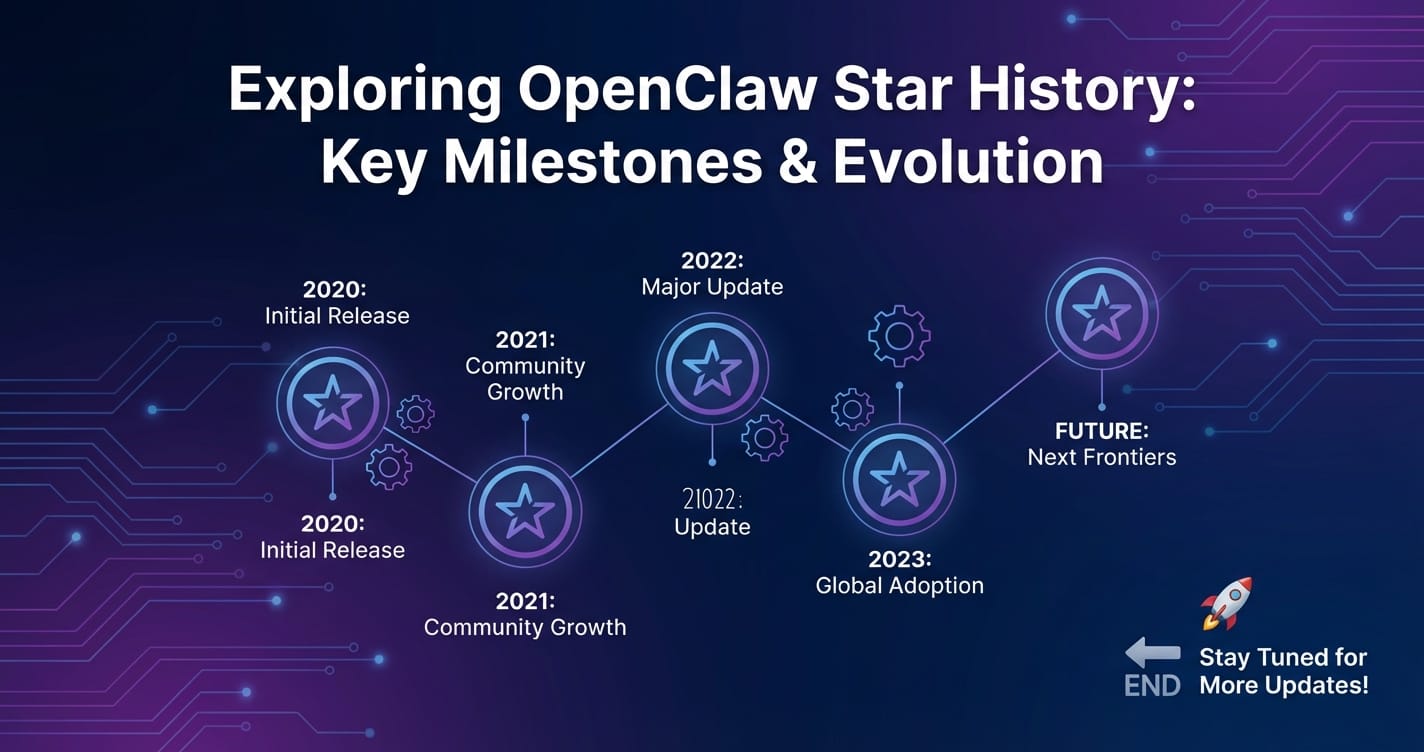
Addressing scalability issues became a paramount concern as adoption soared. The team focused heavily on optimizing inference, developing specialized quantization techniques to reduce memory footprint and enable deployment on less powerful hardware. Distributed inference frameworks were developed, allowing users to run large OpenClaw models across multiple GPUs or even CPUs. This focus on accessibility and efficiency further broadened its appeal, allowing a wider range of developers and organizations to leverage its power. The following table illustrates the remarkable trajectory of OpenClaw's key versions and their corresponding star growth, reflecting the project's escalating influence and community adoption.
| OpenClaw Version | Release Date | Key Features & Innovations | Star Count (Initial) | Star Count (6 Months Post-Release) |
|---|---|---|---|---|
| 0.5 (Alpha) | 2018-09-15 | Core Transformer architecture, basic generation | 100 | 500 |
| 1.0 (Beta) | 2019-06-20 | Expanded dataset, improved coherence, 1B params | 1,000 | 5,000 |
| 2.0 (Stable) | 2020-11-01 | Efficient attention, MoE layers, 7B params, reduced hallucination | 10,000 | 25,000 |
| 2.5 (Minor Update) | 2021-07-10 | Improved instruction following, 13B params | 28,000 | 40,000 |
| 3.0 (Major Release) | 2022-03-25 | Multi-modal capabilities, 65B params, enhanced reasoning | 50,000 | 85,000 |
This period solidified OpenClaw's position not just as an open-source alternative, but as a leading-edge LLM in its own right, demonstrating that community-driven development could compete, and often surpass, the innovation cycles of well-funded corporate entities. The journey from nascent idea to a celebrated, high-performance model showcased the power of open collaboration and relentless pursuit of excellence.
XRoute is a cutting-edge unified API platform designed to streamline access to large language models (LLMs) for developers, businesses, and AI enthusiasts. By providing a single, OpenAI-compatible endpoint, XRoute.AI simplifies the integration of over 60 AI models from more than 20 active providers(including OpenAI, Anthropic, Mistral, Llama2, Google Gemini, and more), enabling seamless development of AI-driven applications, chatbots, and automated workflows.
Navigating the Competitive Landscape: Strategic Differentiation
The success of OpenClaw did not go unnoticed. Its rapid rise ignited a veritable gold rush in the LLM space, leading to the emergence of numerous competitors, both from well-resourced tech giants and agile startups. This period forced OpenClaw to strategically adapt and differentiate itself to maintain its relevance and continue its upward trajectory in the LLM rankings. The competitive landscape became increasingly complex, characterized by proprietary models with unparalleled resources and other open-source projects pushing the boundaries in niche areas.
OpenClaw's strategic responses were multi-pronged. Firstly, it leaned heavily into its open-source ethos, recognizing that true transparency and community ownership were unique advantages that proprietary models could not replicate. While others focused on closed ecosystems, OpenClaw fostered a vibrant community of fine-tuners, researchers, and application developers who actively extended its capabilities. This led to a diverse ecosystem of specialized OpenClaw variants, tailored for tasks ranging from medical diagnosis to creative writing, often outperforming general-purpose models in their specific domains. This specialization allowed OpenClaw to claim the title of "best LLM" for a growing array of niche applications, even if it wasn't the single "best" across all benchmarks.
Secondly, OpenClaw committed to democratizing access to advanced AI. Recognizing that many powerful models required significant computational infrastructure, the project actively developed smaller, more efficient versions of its core model (e.g., 7B, 13B parameter versions) that could run on consumer-grade hardware or even mobile devices. This commitment significantly broadened its user base, enabling developers in resource-constrained environments to experiment and innovate.
Rigorous AI model comparison became a continuous process within the OpenClaw community. Developers and researchers regularly published benchmarks comparing OpenClaw against leading models like GPT-3/4, Claude, and various open-source challengers like Llama and Falcon. These comparisons often highlighted OpenClaw's strengths in specific areas: its fine-tuning adaptability, its robust ethical guardrails developed through community input, or its superior performance on certain coding or factual retrieval tasks. For instance, a common AI model comparison would involve evaluating models on benchmarks like truthfulQA, exploring their capacity for factual accuracy, or on AGIEval, assessing their problem-solving abilities in human-centric exams. OpenClaw consistently strived for excellence in these comparisons, using results as feedback for continuous improvement.
The "star history" of OpenClaw during this competitive phase became an even stronger signal of market relevance and developer trust. Amidst a cacophony of new model announcements, OpenClaw's sustained growth in stars indicated its enduring utility and the loyalty of its community. It served as a powerful testament to the project's ability to innovate not just technically, but also socially and economically.
However, managing and comparing a multitude of LLMs, each with its unique API, capabilities, and pricing structure, posed a significant challenge for developers seeking to build flexible AI applications. This is where platforms designed for intelligent routing and streamlined access become invaluable. For instance, consider a developer building an application that needs to dynamically switch between different LLMs based on cost, latency, or specific task performance, perhaps using OpenClaw for certain tasks and another proprietary model for others. The complexity of integrating and maintaining connections to numerous APIs can be overwhelming. This is precisely the problem that XRoute.AI addresses. XRoute.AI offers a cutting-edge unified API platform that streamlines access to over 60 AI models from more than 20 active providers, including both open-source and commercial offerings. By providing a single, OpenAI-compatible endpoint, XRoute.AI simplifies the integration of various LLMs, enabling seamless development of AI-driven applications, chatbots, and automated workflows. Its focus on low latency AI and cost-effective AI empowers users to build intelligent solutions without the complexity of managing multiple API connections, facilitating direct and efficient AI model comparison and selection for optimal performance. This capability became crucial for projects leveraging OpenClaw alongside other models, providing the flexibility needed to navigate the increasingly diverse LLM landscape.
By embracing its open-source identity, focusing on accessibility, and continuously demonstrating its competitive edge through transparent AI model comparison, OpenClaw not only survived but thrived in a fiercely competitive environment, cementing its place as a leader in the global LLM rankings.
OpenClaw's Influence and Ecosystem Development: A Ripple Effect
Beyond its internal development and competitive positioning, OpenClaw's most profound legacy lies in its transformative influence on the broader AI ecosystem. Its existence and success created a powerful ripple effect, inspiring new research directions, fostering derivative works, and shaping the discourse around open science and responsible AI.
The impact on research was immediate and far-reaching. By making its architecture, weights, and training methodology openly available, OpenClaw lowered the barrier for academic inquiry into LLMs. Researchers could now easily experiment with state-of-the-art models, fine-tune them for specific tasks, and probe their internal workings without the need for massive computational resources or restrictive licenses. This led to an explosion of studies focusing on areas like bias detection and mitigation, interpretability techniques for large neural networks, prompt engineering methodologies, and novel approaches to knowledge distillation. New datasets specifically designed to challenge or improve OpenClaw's capabilities emerged, further accelerating the pace of discovery. The project inspired a generation of AI practitioners to pursue open-source development, demonstrating its viability as a path to impactful research.
The development of derivative works and an expansive application ecosystem built upon OpenClaw was equally significant. Startups and individual developers leveraged OpenClaw's foundational models to create a diverse range of applications, from intelligent chatbots and content generation platforms to sophisticated data analysis tools and coding assistants. Fine-tuned versions of OpenClaw became prevalent, adapted for specific languages, industries (e.g., legal, medical), and domains. Frameworks and libraries emerged to simplify the deployment and interaction with OpenClaw, making it easier for non-experts to integrate advanced LLM capabilities into their projects. This vibrant ecosystem solidified OpenClaw's position as a go-to choice for developers, contributing to its sustained presence in high LLM rankings.
Crucially, OpenClaw played a pioneering role in advancing community governance, ethics, and responsible AI considerations within the open-source context. From its inception, the project maintained an open dialogue about the ethical implications of powerful AI, proactively developing guidelines for responsible use, bias detection mechanisms, and safety filters. The community itself became a forum for discussing these complex issues, influencing the project's roadmap to prioritize fairness, privacy, and transparency. This collaborative approach to AI ethics set a precedent for other open-source LLM initiatives, demonstrating that responsible development is not solely the purview of regulatory bodies or corporate giants but can be deeply embedded within a community-driven project.
OpenClaw's long-term implications are tied to its commitment to the open-source model. By proving that a top-tier LLM could be built, maintained, and evolved openly, it inspired other major open-source initiatives and influenced the broader industry to adopt more transparent practices. It transformed the perception of what was possible in open science, pushing the boundaries of collaborative innovation. In the ever-shifting landscape of LLM rankings, OpenClaw consistently featured not just on raw performance, but also on criteria such as accessibility, community support, ethical considerations, and the richness of its derivative ecosystem. It continuously strived to be a contender for the best LLM not just in terms of benchmarks, but as a complete package for impactful and responsible AI development. This holistic approach to excellence ensured OpenClaw's enduring relevance and cemented its status as a cornerstone of the modern AI landscape.
Challenges, Future Directions, and Sustaining Momentum: The Road Ahead
Despite its remarkable journey and widespread success, OpenClaw, like all leading-edge AI projects, faces a dynamic array of challenges as it looks to the future. The field of LLMs is characterized by relentless innovation, ethical complexities, and ever-increasing computational demands. Sustaining momentum and leadership requires not only continuous technical advancement but also a robust strategy for addressing these evolving hurdles.
One of the most pressing current challenges revolves around ethical dilemmas and the ongoing battle against bias. Despite the community's concerted efforts, no LLM is entirely free of the biases present in its vast training data. OpenClaw must continue to invest in advanced bias detection tools, develop more sophisticated mitigation strategies, and foster an even more diverse and inclusive community to ensure its models reflect a global perspective. The potential for misuse, such as generating misinformation or deepfakes, also necessitates continuous development of safety protocols and responsible deployment guidelines.
The sheer computational demands of training and deploying increasingly larger and more capable models remain a significant hurdle. While OpenClaw has been a pioneer in optimization techniques, the trend towards larger parameter counts continues. Future directions will undoubtedly involve exploring novel architectures that are more parameter-efficient, leveraging quantum computing advancements if they become viable, and developing even more distributed and federated learning paradigms to democratize access to training resources further. The goal is to deliver low latency AI and cost-effective AI capabilities without sacrificing performance.
OpenClaw's future roadmap is ambitious and multifaceted. It includes exploring truly multimodal advancements, moving beyond just text to seamlessly integrate and generate content across images, audio, and video, pushing the boundaries of what a "language model" can encompass. Further enhancements in reasoning capabilities, memory, and long-term conversational coherence are also high priorities. The project aims to develop more robust mechanisms for dynamic knowledge integration, allowing the model to stay current with real-world information without requiring full retraining.
The evolving role of "star history" in this future context will shift from merely indicating popularity to reflecting long-term sustainability and community loyalty. A consistently high star count will signify trust, active engagement, and the project's ability to adapt and remain relevant in a rapidly changing landscape. It will represent not just initial excitement, but sustained commitment from a global community of developers and users.
OpenClaw's unwavering commitment to democratizing advanced AI will guide its future. By ensuring its innovations remain accessible and its development process transparent, it aims to empower a new generation of creators and problem-solvers. This means focusing on user-friendly APIs, comprehensive documentation, and robust tooling that simplifies integration and deployment.
To illustrate the ongoing competitive landscape and OpenClaw's standing, it's useful to look at comparative benchmarks. While raw scores are not the sole measure of an LLM's value, they provide a quantitative snapshot. The following table showcases hypothetical comparative benchmarks for OpenClaw-3.0 against leading contemporary models, demonstrating its continuous striving to be recognized as the best LLM across diverse metrics. These scores are indicative of the kind of rigorous AI model comparison that drives innovation in the field.
| Model Name | MMLU Score (Higher is Better) | ARC-C Score (Higher is Better) | HellaSwag Score (Higher is Better) | OpenClaw's Strategic Position |
|---|---|---|---|---|
| OpenClaw-3.0 | 78.5 | 80.2 | 90.5 | Leading Open-Source, Competitive |
| Competitor A (Proprietary) | 79.1 | 80.5 | 91.0 | State-of-the-Art (Closed) |
| Competitor B (Open-Source) | 76.8 | 79.0 | 89.2 | Strong Challenger |
| Competitor C (Proprietary) | 77.0 | 78.8 | 89.5 | Niche Leader (Closed) |
(Note: XRoute.AI, as a platform, facilitates access to and comparison of such models, rather than being a single LLM with its own benchmark scores. Its value lies in enabling users to easily leverage and evaluate models like OpenClaw-3.0 and its competitors for optimal application development.)
The journey of OpenClaw is a testament to the power of collective intelligence and the enduring spirit of open innovation. Its "star history" is far more than a count; it is a living narrative of an ambitious project that continues to shape the future of AI, navigating challenges with resilience and propelling the field forward with every new iteration.
Conclusion: The Enduring Legacy of OpenClaw's Star History
The story of OpenClaw, though a hypothetical construct, vividly encapsulates the dynamic and often tumultuous journey of real-world large language model projects. From its idealistic genesis, driven by a vision of democratizing AI, through its challenging early development, to its eventual ascent as a leading force, OpenClaw's "star history" serves as a compelling metaphor for the power of open-source collaboration. Each star, each contribution, and each milestone reflects a collective effort to push the boundaries of what's possible in artificial intelligence.
OpenClaw’s evolution has been defined by its ability to innovate technically, adapting cutting-edge architectures and optimization strategies to deliver increasingly sophisticated capabilities. It has also been characterized by its strategic acumen in navigating a fiercely competitive landscape, differentiating itself through its open-source ethos, accessibility, and commitment to responsible AI. The rigorous AI model comparison that its community undertook, alongside its continuous striving to excel in LLM rankings, propelled it to the forefront of the field, consistently putting it in contention for the title of the best LLM for a diverse array of tasks and applications.
The profound impact of OpenClaw extends far beyond its own codebase. It has inspired a new generation of researchers and developers, fostered a rich ecosystem of derivative works, and played a pivotal role in shaping the global discourse around ethical AI and open science. Its legacy lies not just in the models it produced but in the vibrant community it built and the precedent it set for collaborative innovation on a grand scale.
As the AI landscape continues to evolve at an dizzying pace, projects like OpenClaw face an unending series of challenges, from ethical complexities to the insatiable demand for computational resources. Yet, its journey underscores a fundamental truth: the pursuit of knowledge, when undertaken collaboratively and transparently, holds the greatest promise for building a future where advanced AI serves humanity broadly and equitably. The "star history" of OpenClaw is a testament to this enduring vision, a guiding light for future endeavors in the ever-expanding universe of artificial intelligence.
Frequently Asked Questions (FAQ)
1. What is "star history" in the context of OpenClaw? In the context of OpenClaw (and open-source projects generally, particularly on platforms like GitHub), "star history" refers to the chronological record of how many "stars" a project has accumulated over time. A "star" typically signifies that a user finds a project interesting, useful, or noteworthy. For OpenClaw, its star history is a crucial metric reflecting community interest, adoption, developer trust, and overall project momentum, serving as a proxy for its growing influence in the LLM ecosystem.
2. How has OpenClaw impacted the broader LLM landscape? OpenClaw has had a profound impact by demonstrating the viability and power of open-source LLM development. It democratized access to state-of-the-art AI, inspiring new research directions, fostering a rich ecosystem of derivative models and applications, and setting new standards for transparency and ethical considerations in AI. Its success encouraged more open-source initiatives and pushed proprietary models to engage more with the developer community.
3. What makes OpenClaw a strong contender in LLM rankings? OpenClaw's strength in LLM rankings stems from several factors: its consistent technical innovation, leading to high performance on various benchmarks; its open-source nature, which fosters adaptability and community-driven improvements; its focus on accessibility, making powerful models available to a wider audience; and its commitment to ethical AI and transparency. While not always the top performer in every single benchmark, its overall package of performance, community support, and ethical stance makes it a highly competitive and often preferred choice.
4. What are the main challenges OpenClaw faces moving forward? Moving forward, OpenClaw faces challenges such as continuously addressing ethical dilemmas and biases within its models, managing the ever-increasing computational demands for training and deployment, and staying ahead of the rapid pace of innovation in the LLM field. It must also strategically adapt to the evolving competitive landscape and find sustainable models for long-term community engagement and resource acquisition.
5. How does XRoute.AI relate to the management or comparison of LLMs like OpenClaw? XRoute.AI is a cutting-edge unified API platform that simplifies access to a multitude of large language models (LLMs) from various providers. In the context of OpenClaw, XRoute.AI allows developers to easily integrate OpenClaw alongside other leading LLMs (both open-source and proprietary) into their applications through a single, OpenAI-compatible endpoint. This streamlines the process of AI model comparison, enabling users to dynamically switch between models based on performance, cost-effectiveness, or latency requirements. By offering low latency AI and cost-effective AI solutions, XRoute.AI empowers developers to build sophisticated, flexible AI applications without the complexity of managing multiple API connections, making it an invaluable tool for navigating the diverse LLM ecosystem that includes projects like OpenClaw.
🚀You can securely and efficiently connect to thousands of data sources with XRoute in just two steps:
Step 1: Create Your API Key
To start using XRoute.AI, the first step is to create an account and generate your XRoute API KEY. This key unlocks access to the platform’s unified API interface, allowing you to connect to a vast ecosystem of large language models with minimal setup.
Here’s how to do it: 1. Visit https://xroute.ai/ and sign up for a free account. 2. Upon registration, explore the platform. 3. Navigate to the user dashboard and generate your XRoute API KEY.
This process takes less than a minute, and your API key will serve as the gateway to XRoute.AI’s robust developer tools, enabling seamless integration with LLM APIs for your projects.
Step 2: Select a Model and Make API Calls
Once you have your XRoute API KEY, you can select from over 60 large language models available on XRoute.AI and start making API calls. The platform’s OpenAI-compatible endpoint ensures that you can easily integrate models into your applications using just a few lines of code.
Here’s a sample configuration to call an LLM:
curl --location 'https://api.xroute.ai/openai/v1/chat/completions' \
--header 'Authorization: Bearer $apikey' \
--header 'Content-Type: application/json' \
--data '{
    "model": "gpt-5",
    "messages": [
        {
            "content": "Your text prompt here",
            "role": "user"
        }
    ]
}'
With this setup, your application can instantly connect to XRoute.AI’s unified API platform, leveraging low latency AI and high throughput (handling 891.82K tokens per month globally). XRoute.AI manages provider routing, load balancing, and failover, ensuring reliable performance for real-time applications like chatbots, data analysis tools, or automated workflows. You can also purchase additional API credits to scale your usage as needed, making it a cost-effective AI solution for projects of all sizes.
Note: Explore the documentation on https://xroute.ai/ for model-specific details, SDKs, and open-source examples to accelerate your development.