GPT-4o Explained: What Makes This AI a Game-Changer?

The landscape of artificial intelligence is in a perpetual state of flux, continuously reshaped by groundbreaking innovations that push the boundaries of what machines can perceive, understand, and create. In this relentless march toward more sophisticated and human-like intelligence, large language models (LLMs) have emerged as pivotal forces, transforming industries and redefining our interaction with technology. From the early, nascent conversational agents to the more intricate and context-aware systems of today, each iteration brings us closer to a future where AI is not just a tool but an intuitive partner.
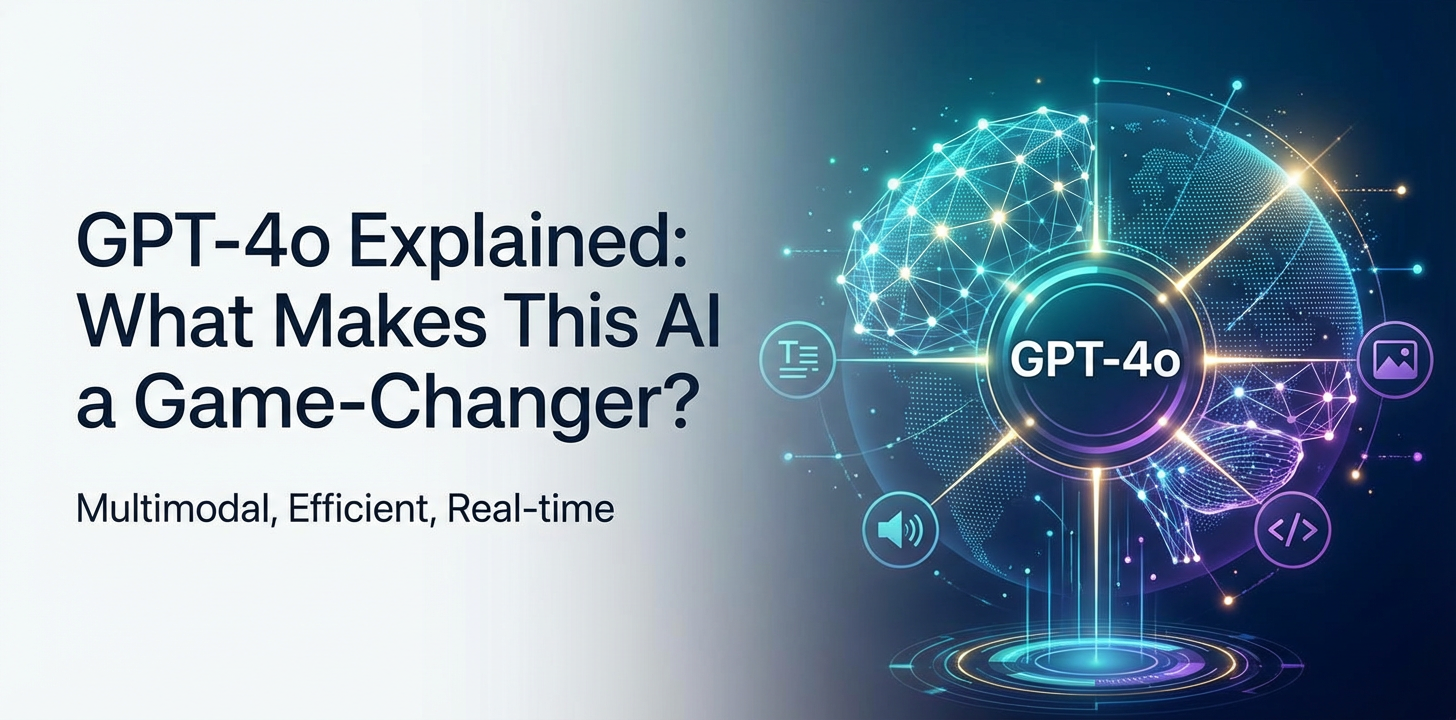
Amidst this fervent evolution, OpenAI’s introduction of GPT-4o stands as a monumental leap forward, a moment that has reverberated across the tech world and beyond. The "o" in GPT-4o signifies "omni," a concise yet profound descriptor of its core innovation: an omnimodal AI that processes and generates content seamlessly across text, audio, and visual modalities. This is not merely an incremental update; it is a fundamental re-architecture that redefines the capabilities of generative AI, offering unprecedented levels of natural interaction, lightning-fast responses, and enhanced intelligence.
GPT-4o isn't just another model in a rapidly expanding catalog; it's a paradigm shift. It promises to transcend the limitations of previous iterations by integrating multiple forms of input and output within a single, cohesive framework, eliminating the often clunky and latency-prone stitching together of disparate models. This article delves deep into the essence of GPT-4o, exploring its groundbreaking architecture, its remarkable capabilities across diverse modalities, its performance benchmarks, and the profound implications it holds for a myriad of applications, from personalized assistants to complex industrial solutions. We will unravel what truly makes GPT-4o a game-changer, examining how it elevates user experience, democratizes access to advanced AI, and sets a new precedent for the future of artificial intelligence.
The Genesis of GPT-4o – A Brief History of OpenAI's Vision
To fully appreciate the significance of GPT-4o, it is essential to trace the lineage of its predecessors and understand the evolutionary journey that led to its creation. OpenAI, a vanguard in AI research and development, has consistently pushed the envelope, releasing models that have incrementally shaped our understanding and application of artificial intelligence.
The journey began with foundational models like GPT-2, which, despite its impressive text generation capabilities for its time, was primarily a text-in, text-out system. Its ability to generate coherent and contextually relevant prose was remarkable, hinting at the vast potential of neural networks in language understanding. However, it lacked the nuanced understanding and reasoning capabilities required for more complex tasks.
Then came GPT-3, a monumental leap in scale and performance. With 175 billion parameters, GPT-3 demonstrated an astonishing ability to perform a wide array of language tasks, from translation and summarization to code generation and creative writing, with minimal "few-shot" examples. It was a generalist, showcasing how scaling up neural networks could unlock surprising new capabilities. GPT-3 significantly popularized the concept of large language models, bringing them to the forefront of public consciousness and demonstrating their profound utility in real-world applications. It laid the groundwork for the modern gpt chat experience, enabling more dynamic and intelligent conversations than ever before.
GPT-4 followed, refining and enhancing the capabilities of GPT-3.5. GPT-4 was not only larger but also significantly more reliable, creative, and capable of handling much more nuanced instructions. It demonstrated improved performance on professional and academic benchmarks, passing the Uniform Bar Exam with a score in the top 10% of test-takers, a stark contrast to GPT-3.5's bottom 10%. Crucially, GPT-4 also began to introduce preliminary multimodal capabilities, specifically with image input, allowing it to "see" and interpret images in conjunction with text. This was a critical step, but its multimodal processing was often through separate components or required specific prompt engineering to bridge the different modalities. While impressive, there was still a sense of separate processing streams being merged, rather than an inherently unified understanding.
The transition from GPT-4 to GPT-4o represents a culmination of these incremental advancements and a radical departure in architectural philosophy. OpenAI recognized the inherent limitations of models that treat different modalities (text, audio, vision) as distinct inputs to be processed sequentially or through separate specialist networks. The vision for GPT-4o was to create a truly "omnimodal" model – one single, end-to-end neural network trained natively across text, audio, and vision. This eliminates the latency and performance degradation associated with chaining together different models for different tasks, paving the way for a much more fluid, intuitive, and human-like interaction with AI.
This architectural shift is precisely what elevates GPT-4o from an iteration to a revolution. It’s not just about doing things better; it’s about doing things fundamentally differently, unlocking new paradigms of interaction that were previously confined to the realm of science fiction. The genesis of GPT-4o is a testament to OpenAI's relentless pursuit of artificial general intelligence (AGI), iteratively building towards systems that can understand and interact with the world in a manner analogous to human cognition.
Unpacking GPT-4o's Core Capabilities – Multimodality at Its Best
GPT-4o’s true brilliance lies in its native multimodality, a characteristic that fundamentally distinguishes it from its predecessors and contemporary LLMs. While previous models might have cobbled together various specialized networks to handle different data types—a text model for language, an image model for vision, and a separate speech-to-text/text-to-speech system for audio—GPT-4o processes all these modalities within a single, unified neural network. This architectural decision isn't just an engineering feat; it's a game-changer for interaction, efficiency, and intelligence.
Native Multimodality – Beyond Text
At its heart, GPT-4o is designed to perceive the world through the same diverse sensory channels that humans do: sight, sound, and text. This means it can accept any combination of text, audio, and visual inputs and generate any combination of text, audio, and visual outputs. Imagine having a conversation where the AI not only understands your spoken words but also interprets your emotional tone, reacts to facial expressions shown in a video call, and provides an answer that incorporates a visual aid or a synthesized voice reflecting empathy. This is the promise of GPT-4o.
For instance, consider a user showing GPT-4o a complex graph. Previously, one might describe the graph in text, or use an image analysis tool separately, then feed the text description to an LLM. GPT-4o, however, can directly "see" the image, understand its visual components (axes, data points, labels), infer relationships, and then explain its findings, generate a summary, or answer specific questions about the data, all within the same interaction flow. If the user then asks a follow-up question verbally, GPT-4o processes that audio in real-time, integrating it with the visual context already established. This seamless fusion of sensory data allows for a depth of understanding and responsiveness that was previously unattainable.
This native multimodality extends to output as well. GPT-4o can respond not just with text, but also with highly expressive, natural-sounding synthetic voices that can convey emotion and different speaking styles. It can even generate images or assist in visual design based on textual or audio prompts. This unified approach to input and output fundamentally transforms how we can interact with AI, moving beyond sterile text interfaces to truly dynamic and engaging experiences.
Speed and Latency – The Real-Time Advantage
One of the most immediate and impactful improvements in GPT-4o is its dramatic reduction in latency, especially for audio interactions. For far too long, engaging in gpt chat experiences, particularly those involving voice, has been hampered by noticeable delays. These pauses, even if just a few seconds, break the natural flow of conversation, making interactions feel stilted and artificial. GPT-4o shatters this barrier.
OpenAI reports that GPT-4o can respond to audio inputs in as little as 232 milliseconds, with an average response time of 320 milliseconds. To put this in perspective, human conversation typically involves response times of around 200-300 milliseconds. This means GPT-4o can engage in spoken dialogue at a speed that feels almost indistinguishable from human-to-human interaction. This breakthrough is critical for applications demanding real-time responsiveness, such as virtual assistants, customer service chatbots, and interactive educational tools.
The significance of low latency cannot be overstated. It enables a fluidity of conversation that allows users to interrupt, clarify, and guide the AI in a much more natural and intuitive way. It makes the AI feel present, attentive, and genuinely conversational, removing one of the biggest psychological hurdles to widespread adoption of voice-based AI. The rapid processing across modalities also means that an AI powered by GPT-4o can react instantly to visual cues or textual updates, maintaining a dynamic and adaptive understanding of the ongoing interaction.
Enhanced Intelligence Across Modalities
Beyond mere speed and integration, GPT-4o also demonstrates significantly enhanced intelligence across all modalities. It's not just faster; it's smarter, more accurate, and more nuanced in its understanding. On traditional text-based benchmarks, GPT-4o matches GPT-4 Turbo's performance, which was already state-of-the-art. However, where it truly shines is in its multimodal benchmarks.
GPT-4o sets new records for vision and audio understanding. For example, in tests involving complex visual reasoning (e.g., VQAv2, ScienceQA), it outperforms previous models, demonstrating a superior ability to interpret visual information and reason about it contextually. Its audio understanding isn't just about transcribing words accurately; it’s about comprehending tone, emotion, and speaker intent. This allows it to detect sarcasm, understand nuances in instruction, and even differentiate between multiple speakers in a single audio stream.
This enhanced intelligence translates into practical benefits: * Improved Contextual Understanding: By processing all modalities simultaneously, GPT-4o builds a richer, more comprehensive context for any given interaction. If you're showing it a cluttered workspace and asking for help organizing, it can not only identify objects but also understand the implicit goal of organization based on your tone and visual cues. * More Accurate Problem Solving: Whether it's solving a complex math problem presented in an image, debugging code presented verbally, or providing insights from a visually rich dataset, GPT-4o's integrated intelligence leads to more precise and reliable solutions. * Greater Nuance and Empathy: The ability to perceive emotional tone in voice and infer context from visual cues allows GPT-4o to respond with greater empathy and tailor its communication style more effectively, making interactions feel more human and less robotic.
In essence, GPT-4o isn't just a collection of powerful features; it's a unified intelligence that perceives and interacts with the world in a holistic manner. This convergence of speed, native multimodality, and enhanced intelligence makes it a profoundly versatile and powerful AI, poised to revolutionize how we build and experience intelligent systems.
The "Omni" in GPT-4o – A Holistic Approach to AI
The "o" in GPT-4o, standing for "omni," is more than just a catchy suffix; it encapsulates the model's fundamental architectural shift towards a holistic, unified approach to artificial intelligence. "Omnimodal" signifies that GPT-4o is a single, end-to-end model trained intrinsically across text, audio, and vision. This means that all inputs are processed, and all outputs are generated, by the same neural network, leading to a seamless, integrated understanding of information across different sensory types. This stands in stark contrast to previous approaches where separate expert models for each modality were often stitched together, leading to performance bottlenecks and a fragmented understanding.
Voice Interaction Revolutionized
The advancements in GPT-4o's voice capabilities are nothing short of revolutionary, transforming what was once a clunky, often frustrating experience into something remarkably fluid and natural. Previous voice AI systems typically involved a cascade of different models: a speech-to-text model to transcribe audio into text, a large language model to process the text and generate a textual response, and finally, a text-to-speech model to synthesize that response back into audio. Each step introduced latency, potential errors, and a loss of nuance.
GPT-4o bypasses this multi-stage pipeline. It takes raw audio directly as input and generates raw audio as output, alongside text and vision. This direct, end-to-end processing means:
- Real-time Responsiveness: As discussed, the average response time of 320 milliseconds for audio is incredibly close to human conversation speed, enabling true turn-taking and natural interruption. The days of awkward pauses in voice conversations with AI are effectively over.
- Understanding of Emotion and Tone: Crucially, GPT-4o doesn't just transcribe words; it understands the emotional qualities and tone embedded within the spoken input. If a user expresses frustration, excitement, or hesitation, the model can interpret these non-verbal cues and adjust its response accordingly. This opens up possibilities for more empathetic AI interactions, crucial in fields like mental health support or customer service.
- Multispeaker Comprehension: The model can differentiate between multiple speakers in an audio stream, following complex conversations with several participants. This capability is vital for meeting summarization, collaborative brainstorming tools, or even interactive gaming scenarios.
- Highly Expressive Voice Output: The synthetic voices generated by GPT-4o are incredibly natural, capable of conveying a wide range of emotions and speaking styles. They are not merely robotic voices reciting text but dynamic, human-like utterances that enhance the perceived intelligence and personality of the AI.
Imagine an AI tutor that listens to a student's hesitant explanation, understands their struggle through their tone, and responds with an encouraging voice, offering precise guidance. Or a personal assistant that recognizes your urgency in a spoken request and prioritizes it. These are no longer distant possibilities but immediate applications of GPT-4o's revolutionized voice interaction. This leap significantly enhances the human-computer interface, making voice-based gpt chat truly intuitive and engaging.
Visionary Insights – Seeing the World Differently
While GPT-4 introduced nascent visual capabilities, GPT-4o expands upon this foundation with a depth of understanding that allows it to "see" and interpret the world in profoundly new ways. Its unified architecture means that visual input is processed alongside text and audio, enabling a contextual richness that was previously impossible.
Key aspects of its visionary insights include:
- Complex Scene Description: GPT-4o can analyze images and video frames to provide detailed and nuanced descriptions of complex scenes, identifying objects, understanding their spatial relationships, and even inferring activities or intentions. For example, it could describe a bustling street scene, noting not only the cars and pedestrians but also the flow of traffic, the expressions on people's faces, and the overall mood of the environment.
- Solving Problems from Images: From handwritten notes to intricate diagrams, GPT-4o can ingest visual information and leverage its analytical capabilities to solve problems. This could range from solving a math problem captured from a textbook page, interpreting complex medical scans, or providing troubleshooting steps for a broken appliance shown in an image.
- Interpreting Graphs and Data Visualizations: It can analyze charts, graphs, and other data visualizations, extracting insights, identifying trends, and explaining the data presented. This is invaluable for business analytics, scientific research, and educational purposes.
- Real-time Video Analysis: The ability to process video frames rapidly allows GPT-4o to engage in real-time analysis of dynamic visual information. This could enable an AI to provide live commentary on a sports game, offer cooking instructions by analyzing a user's actions in the kitchen, or assist visually impaired individuals by describing their surroundings.
The implications for various industries are vast. In healthcare, GPT-4o could assist in preliminary diagnoses by analyzing medical images and patient descriptions. In manufacturing, it could identify anomalies in production lines. For creative professionals, it could generate design ideas based on visual mood boards. By genuinely seeing and understanding, GPT-4o becomes an invaluable partner for tasks requiring visual interpretation and reasoning.
Textual Prowess – Still a Master of Language
While the spotlight often falls on GPT-4o's groundbreaking multimodal capabilities, it's crucial to remember that it remains an exceptionally powerful text model. Its textual prowess is not diminished but rather enhanced by its omnimodal nature. GPT-4o continues to excel in:
- Advanced Text Generation: From crafting compelling marketing copy and intricate narratives to generating diverse forms of creative content (poems, scripts, emails), GPT-4o maintains a high standard of fluency, coherence, and contextual relevance.
- Summarization and Information Extraction: It can efficiently distill vast amounts of information into concise summaries, extract key facts from lengthy documents, and identify critical patterns in textual data.
- Sophisticated Translation: GPT-4o demonstrates excellent performance in multilingual tasks, including real-time translation across numerous languages, ensuring that the nuances of meaning are preserved across linguistic barriers.
- Code Generation and Debugging: For developers, GPT-4o can assist with writing code in various programming languages, explaining complex code snippets, and identifying and suggesting fixes for bugs.
- Contextual Understanding: Its multimodality allows for a richer textual understanding. If a user asks a text-based question about an image previously shown, GPT-4o integrates the visual context seamlessly, leading to more accurate and relevant text-based responses.
In essence, GPT-4o leverages its omnimodal architecture to enrich its understanding of any given input, whether it’s primarily text, audio, or visual. This means its textual responses are informed by a broader perception of the user's intent, emotional state, and environmental context, making it a more versatile and intelligent conversational partner across all communication forms. The "omni" truly signifies a holistic intelligence, where each modality strengthens and informs the others, resulting in an AI that is more adaptive, more intuitive, and ultimately, more human-like in its interactions.
Performance Metrics and Benchmarks – Quantifying the Leap
The qualitative descriptions of GPT-4o's capabilities are compelling, but its true impact is perhaps best understood through quantitative performance metrics and benchmark results. OpenAI rigorously tests its models against industry-standard benchmarks, and GPT-4o consistently demonstrates superior performance across a wide range of tasks, often setting new state-of-the-art results. This section delves into these metrics, comparing GPT-4o with its predecessors and highlighting where it truly excels.
One of the most significant advancements lies in its multimodal performance. While GPT-4 already had some image understanding capabilities, GPT-4o's native multimodality gives it a distinct advantage.
Table 1: GPT-4o vs. Previous Models – Key Performance Indicators
| Feature/Metric | GPT-3.5 | GPT-4 (Text) | GPT-4 Turbo | GPT-4o (Omnimodal) |
|---|---|---|---|---|
| Input Modalities | Text | Text, Image (beta) | Text, Image | Text, Audio, Vision |
| Output Modalities | Text | Text | Text | Text, Audio, Vision |
| Audio Latency (Avg.) | N/A (external STT/TTS) | N/A (external STT/TTS) | N/A (external STT/TTS) | 320ms (min 232ms) |
| MMLU (Massive Multitask Language Understanding) | ~70% | ~86% | ~87% | 88.7% |
| GPQA (General Purpose Question Answering) | - | - | - | 92.0% |
| MATH Benchmark | ~42% | ~53% | ~55% | 66.5% |
| HumanEval (Code Generation) | ~67% | ~82% | ~84% | 92.0% |
| Visual QA (VQA v2) | - | ~84.4% (early) | ~87.8% (later) | 88.7% |
| Cost (API/Input Tokens) | Low | High | Moderate | Low (0.005 USD/1K) |
| Cost (API/Output Tokens) | Low | High | Moderate | Low (0.015 USD/1K) |
| Multilingual Support | Good | Very Good | Very Good | Excellent |
Note: MMLU, GPQA, MATH, and HumanEval scores reflect specific benchmark results reported by OpenAI for different versions and may vary with exact testing methodologies. Latency for GPT-3.5/GPT-4 for audio would be significantly higher due to reliance on external Speech-to-Text (STT) and Text-to-Speech (TTS) models.
Let's break down some of these crucial metrics:
- MMLU (Massive Multitask Language Understanding): This benchmark evaluates a model's ability to understand and answer questions across 57 subjects, ranging from humanities and social sciences to STEM fields. GPT-4o's score of 88.7% is a new high for OpenAI's models, surpassing GPT-4 Turbo's 87.0%. This indicates a deeper and more robust understanding of complex linguistic and factual information.
- GPQA (General Purpose Question Answering): This benchmark, designed to be very challenging, tests a model's ability to answer difficult questions from a broad range of domains. GPT-4o's impressive 92.0% score highlights its advanced reasoning and knowledge retrieval capabilities.
- MATH Benchmark: For mathematical reasoning, GPT-4o's 66.5% score demonstrates a significant improvement over previous iterations. This is particularly important for scientific, engineering, and data analysis applications where precise numerical understanding is crucial.
- HumanEval: This benchmark evaluates a model's ability to generate correct Python code based on natural language prompts. GPT-4o's 92.0% score showcases its exceptional programming capabilities, making it an invaluable tool for developers.
- Visual QA (VQA v2): This benchmark measures a model's ability to answer questions about images. GPT-4o's 88.7% is a leading score, demonstrating its superior visual perception and reasoning skills when integrating visual information with textual queries.
- Multilingual Capabilities: GPT-4o shows excellent performance across 50 different languages, particularly in translation and understanding nuances. For instance, in real-time translation tasks, it significantly outperforms GPT-4 and other leading models, maintaining accuracy and fluency.
Perhaps one of the most compelling aspects of GPT-4o's performance is its efficiency and cost-effectiveness. Despite its advanced capabilities, OpenAI has made GPT-4o significantly more accessible, especially for API users. The input token cost is halved compared to GPT-4 Turbo, and the output token cost is also substantially reduced. This democratizes access to state-of-the-art AI, allowing more developers, researchers, and businesses to leverage its power without prohibitive expenses. This consideration is particularly relevant for those who might have previously explored the idea of a "gpt-4o mini" – a more cost-effective or streamlined version – finding that GPT-4o itself fulfills much of that desire by being both powerful and affordable.
In summary, the benchmark results unequivocally demonstrate that GPT-4o is not just a marginal improvement but a substantial leap forward. It performs at or above state-of-the-art levels across virtually all tested modalities and tasks, solidifying its position as a truly general-purpose, omnimodal AI. These quantitative measures underscore why GPT-4o is considered a game-changer, setting new performance standards that will likely influence the direction of future AI development, potentially even impacting the capabilities we might expect from future models like gpt5.
XRoute is a cutting-edge unified API platform designed to streamline access to large language models (LLMs) for developers, businesses, and AI enthusiasts. By providing a single, OpenAI-compatible endpoint, XRoute.AI simplifies the integration of over 60 AI models from more than 20 active providers(including OpenAI, Anthropic, Mistral, Llama2, Google Gemini, and more), enabling seamless development of AI-driven applications, chatbots, and automated workflows.
Accessibility and Cost-Effectiveness – Democratizing Advanced AI
One of the most significant aspects of GPT-4o, beyond its technical prowess, is its commitment to accessibility and cost-effectiveness. OpenAI has made a deliberate strategic decision to make this advanced model widely available, effectively democratizing access to state-of-the-art AI. This move has profound implications for developers, startups, educational institutions, and individual users alike, fostering innovation and broadening the reach of intelligent technologies.
Historically, cutting-edge AI models, especially those requiring substantial computational resources, have often been prohibitively expensive or gated behind strict access requirements. This created a chasm between large enterprises with deep pockets and smaller entities or individual developers eager to experiment and innovate. GPT-4o aims to bridge this gap.
Broader User Base – Free Tier for ChatGPT Users
Perhaps the most impactful accessibility initiative is the rollout of GPT-4o to a wider user base within ChatGPT. OpenAI has announced that many of GPT-4o's capabilities, particularly its text and image understanding, will be available to all free ChatGPT users. While paid subscribers (Plus, Teams, Enterprise) will receive higher usage limits, the fact that a version of this powerful multimodal AI is accessible without a subscription is unprecedented.
This means millions of users globally can experience the power of a truly multimodal AI firsthand. They can upload images, ask questions about them, engage in more sophisticated text conversations, and eventually, participate in real-time voice interactions. This broad exposure will not only educate the public about the capabilities of advanced AI but also inspire new use cases and applications as people discover how to leverage its unique features in their daily lives and work. It effectively makes a "gpt-4o mini" experience – a powerful, accessible, and efficient version – available to the masses, reducing the barrier to entry for advanced AI.
API Access and Cost Efficiency
For developers and businesses, the API access to GPT-4o is equally transformative, largely due to its remarkable cost efficiency. OpenAI has priced GPT-4o's API at a fraction of the cost of GPT-4 Turbo:
- Input Tokens: $5.00 per 1 million tokens (compared to $10.00 for GPT-4 Turbo)
- Output Tokens: $15.00 per 1 million tokens (compared to $30.00 for GPT-4 Turbo)
This 2x reduction in pricing for both input and output tokens is a game-changer. It means that applications requiring extensive AI processing can now be built and deployed at a significantly lower operational cost. For startups operating on tight budgets, this difference can be the deciding factor between feasibility and impossibility. It allows them to integrate high-quality, multimodal AI into their products without incurring astronomical expenses, fostering a new wave of innovation.
Furthermore, the increased efficiency of GPT-4o, processing complex multimodal inputs with lower latency, also contributes to cost savings. Faster processing means less computational time per query, which can translate into further reductions in infrastructure costs for high-volume applications.
Implications for the AI Ecosystem
The enhanced accessibility and cost-effectiveness of GPT-4o have several far-reaching implications for the broader AI ecosystem:
- Accelerated Innovation: By lowering the cost and barrier to entry, more developers and teams can experiment with and deploy advanced AI. This will lead to a surge in innovative applications across various sectors, from education and healthcare to entertainment and retail.
- Democratization of AI Development: Small and medium-sized businesses (SMBs) and individual developers can now compete on a more level playing field with larger enterprises, leveraging cutting-edge AI without the need for massive R&D budgets.
- New Business Models: The reduced operational costs can enable new business models for AI-powered services that were previously economically unfeasible.
- Enhanced Education and Research: Researchers and students will have easier and more affordable access to a powerful AI model, accelerating academic progress and fostering the next generation of AI talent.
- Paving the Way for Future Models: The approach with GPT-4o sets a precedent for how future, even more advanced models (like the much-anticipated gpt5), might be released. It suggests a future where powerful AI doesn't necessarily mean exclusive AI, driving towards a more inclusive technological landscape.
In essence, OpenAI's strategy with GPT-4o extends beyond technological advancement; it's about making that advancement broadly available. By democratizing access and making it significantly more affordable, GPT-4o doesn't just change what AI can do; it changes who can build with AI, paving the way for a much more dynamic, innovative, and accessible AI-driven future.
Use Cases and Applications – Where GPT-4o Shines
GPT-4o's native multimodality, combined with its speed, intelligence, and accessibility, unlocks an unprecedented array of use cases and applications across virtually every industry. Its ability to fluidly process and generate text, audio, and visual content means it can serve as a versatile, intelligent agent in scenarios that were previously complex, expensive, or simply impossible to automate with a single model. Here’s a closer look at where GPT-4o is set to shine:
Real-time Assistants and Personal AI Companions
The most immediate and intuitive application for GPT-4o is in creating vastly improved real-time personal assistants and AI companions. With its near-human latency in audio processing and highly expressive voice output, interactions become genuinely conversational.
- Enhanced Conversational Experiences: Imagine a gpt chat experience that feels truly natural, where you can speak to the AI as you would a human, interrupting it, clarifying, and receiving immediate, contextually rich responses. This is the future of digital assistants, whether on your smartphone, smart home device, or even integrated into AR/VR interfaces.
- Proactive Support: A personal AI could observe your screen activity, listen to your verbal cues, and offer proactive assistance—e.g., "It looks like you're struggling with this spreadsheet formula; would you like me to suggest one?" or "Your calendar shows a meeting in 10 minutes; would you like me to summarize the key points from our current discussion?"
- Emotional Support and Companionship: The ability to detect emotion in voice and respond with empathy opens doors for AI companions that can offer a greater degree of emotional understanding and support, from simple mood tracking to providing a comforting presence.
Education and Interactive Learning
GPT-4o promises to revolutionize education by creating highly personalized, adaptive, and engaging learning experiences.
- Interactive Tutors: AI tutors can now not only answer questions but also understand a student's confusion from their tone of voice, analyze their handwritten homework (via vision), and provide real-time, tailored explanations. They can walk through math problems visually, explain scientific concepts verbally, or assist with language learning through natural conversation.
- Content Creation: Educators can leverage GPT-4o to generate diverse learning materials, from interactive quizzes and lesson plans to visual aids and audio explanations, all adapted to specific learning styles and needs.
- Accessibility Tools: For students with learning disabilities or sensory impairments, GPT-4o can offer bespoke solutions, translating text to speech with nuanced tones, describing visual content verbally, or vice-versa, making education more inclusive.
Customer Service and Business Operations
In the business realm, GPT-4o can significantly enhance customer service, streamline operations, and boost productivity.
- Advanced Chatbots: Next-generation chatbots powered by GPT-4o can handle more complex customer queries, understanding emotional cues in voice or interpreting visual information (e.g., product defects shown in an image) to provide more accurate and empathetic support.
- Sentiment Analysis: Real-time analysis of customer interactions (voice, chat, video) for sentiment can allow businesses to immediately flag dissatisfied customers, offer proactive solutions, and improve overall customer experience.
- Automated Workflows: From transcribing meetings and generating summaries to assisting with data entry by understanding spoken instructions and visual cues from documents, GPT-4o can automate numerous back-office tasks, freeing up human resources for more strategic work.
- Sales and Marketing: Crafting personalized marketing messages, analyzing customer feedback from diverse sources (reviews, social media images, voice calls), and even generating dynamic, multimodal ad content are all within its purview.
Creative Industries
For designers, artists, writers, and content creators, GPT-4o acts as a powerful co-creator and assistant.
- Content Generation: Generating scripts, story outlines, musical descriptions (from visual input), or even assisting with video editing by understanding spoken commands and visual cues in footage.
- Design Assistance: Providing feedback on visual designs, generating mood boards from textual descriptions, or creating visual elements based on spoken instructions.
- Interactive Storytelling: Developing dynamic narratives where characters respond to user's voice and visual input, creating immersive and personalized experiences.
Healthcare and Accessibility
GPT-4o’s multimodal capabilities hold immense potential in healthcare and for improving accessibility.
- Diagnostic Aids: Assisting medical professionals by analyzing medical images (X-rays, MRIs), patient symptoms described verbally, and textual medical histories to suggest potential diagnoses or treatment plans.
- Patient Interaction: Developing AI companions for elderly or isolated individuals, offering medication reminders, health monitoring, and emotional support.
- Tools for Impaired Individuals: Creating advanced assistive technologies for the visually impaired (describing surroundings, reading text aloud) and hearing impaired (real-time sign language translation from video, transcribing spoken language instantly).
Developer Tools and AI Integration
For developers, GPT-4o simplifies the creation of sophisticated AI applications. However, integrating such a powerful, yet single, model into a broader, flexible AI strategy still presents challenges. Developers often need to access a variety of LLMs for different tasks, optimize for cost or latency, and ensure redundancy. This is where unified API platforms become indispensable.
The ability of GPT-4o to handle diverse tasks makes it a core component of many AI strategies. However, robust AI solutions often involve orchestrating multiple models—perhaps a specialized model for fine-tuned sentiment analysis, another for niche knowledge retrieval, or even future models like gpt5 when they emerge. Managing these diverse APIs, ensuring low latency, optimizing for cost, and providing consistent, reliable access is a significant technical hurdle.
This is precisely where solutions like XRoute.AI come into play. XRoute.AI is a cutting-edge unified API platform designed to streamline access to large language models (LLMs) for developers, businesses, and AI enthusiasts. By providing a single, OpenAI-compatible endpoint, XRoute.AI simplifies the integration of over 60 AI models from more than 20 active providers, enabling seamless development of AI-driven applications, chatbots, and automated workflows. With a focus on low latency AI, cost-effective AI, and developer-friendly tools, XRoute.AI empowers users to build intelligent solutions without the complexity of managing multiple API connections. The platform’s high throughput, scalability, and flexible pricing model make it an ideal choice for projects of all sizes, from startups to enterprise-level applications, ensuring that the power of models like GPT-4o (and the flexibility of choosing other specialized LLMs) is easily harnessed. This means developers can spend less time on API management and more time innovating with the incredible capabilities GPT-4o offers, and seamlessly switch to or integrate with other models, including potential future iterations like gpt5, through a single, reliable interface.
The sheer breadth of applications for GPT-4o underscores its status as a game-changer. It is not just an incremental improvement but a fundamental shift that empowers creators, businesses, and individuals to interact with and leverage AI in profoundly more natural, efficient, and intelligent ways.
The Road Ahead – What GPT-4o Paves the Way For
GPT-4o is more than just a remarkable technological achievement; it's a significant milestone on the path towards more advanced and integrated artificial intelligence. Its release not only redefines current capabilities but also profoundly influences our expectations for the future of AI development. The "omnimodal" approach sets a new standard, pointing towards a future where AI systems are inherently designed to perceive and interact with the world through multiple senses, much like humans do.
Future Implications for AI Development
- True Multimodal Integration as the Standard: GPT-4o makes it clear that truly multimodal AI, processing all sensory inputs natively within a single model, is the future. Future models will likely aim for this level of integration, moving away from disparate systems stitched together. This will lead to more robust, coherent, and context-aware AI systems.
- Focus on Real-time Interaction: The dramatic reduction in latency, particularly for audio, will drive innovation in real-time AI applications. We can expect a proliferation of AI interfaces that prioritize natural, instantaneous human-AI dialogue, making interactions feel less like conversing with a machine and more like speaking to another person.
- Enhanced Embodied AI: As AI becomes more adept at understanding the physical world through vision and audio, and interacting in real-time, the development of embodied AI (robots and agents that operate in the physical world) will accelerate. GPT-4o's capabilities provide a more intelligent "brain" for such systems, allowing for more complex reasoning and adaptive behavior in dynamic environments.
- Specialized "Omnimodal" Models: While GPT-4o is a generalist, its underlying architecture could lead to specialized "gpt-4o mini" or more compact omnimodal models tailored for specific domains or devices. Imagine an omnimodal AI optimized for a tiny edge device for smart home applications, or a medical assistant fine-tuned for understanding specific medical imagery and terminology. This concept of smaller, efficient, yet highly capable multimodal models could revolutionize ubiquitous AI.
- Ethical Considerations and Safety: As AI becomes more capable and integrated into our daily lives, the ethical implications grow. GPT-4o's ability to interpret emotions and generate highly human-like responses necessitates continued vigilance regarding bias, misuse, and privacy. OpenAI emphasizes its commitment to safety, using techniques like filtered training data, safety fine-tuning, and red teaming. This focus on responsible AI development will only intensify with future models.
Setting Expectations for GPT-5
The release of GPT-4o inevitably sparks speculation about what comes next, particularly the much-anticipated gpt5. While OpenAI has not publicly revealed details about its next major model, GPT-4o provides crucial insights into the likely trajectory:
- Even Deeper Multimodality: GPT5 will almost certainly build upon GPT-4o's omnimodal foundation, potentially integrating more sensory inputs (e.g., touch, smell, advanced proprioception for robotics) and exhibiting even more sophisticated cross-modal reasoning.
- Enhanced Reasoning and AGI Alignment: The continuous pursuit of Artificial General Intelligence (AGI) means that gpt5 will likely showcase even more advanced reasoning capabilities, better common sense, and an improved ability to generalize across novel tasks. The ambition for AGI is to create systems that can learn and perform any intellectual task that a human can, and each model iteration brings us closer to this grand vision.
- Greater Efficiency and Scalability: While GPT-4o is already highly efficient, gpt5 will likely push the boundaries further in terms of computational efficiency, allowing for even larger models to be run with reduced resources or enabling even more complex tasks to be handled in real-time.
- Robustness and Reliability: As AI takes on more critical roles, gpt5 will need to demonstrate unprecedented levels of reliability, consistency, and resistance to adversarial attacks or prompt injection.
The Continuous Pursuit of AGI
GPT-4o is a significant step, but it is part of a longer journey towards AGI. Its ability to unify different forms of intelligence within a single architecture brings us closer to a holistic AI that can understand and interact with the world in a truly integrated manner. The challenges ahead are immense, encompassing not just technical hurdles but also profound societal and ethical considerations. However, the innovations showcased in GPT-4o provide a powerful glimpse into a future where AI systems are not just tools, but intelligent, intuitive, and seamlessly integrated partners in virtually every aspect of human endeavor. The road ahead is long and complex, but with models like GPT-4o leading the charge, the pace of progress is accelerating, promising a future that is both exciting and transformative.
Conclusion
GPT-4o represents a monumental leap in the evolution of artificial intelligence, a true game-changer that redefines the capabilities of large language models. Its core innovation lies in its "omnimodal" architecture, allowing a single, end-to-end neural network to natively process and generate content across text, audio, and visual modalities. This unified approach eliminates the traditional bottlenecks of piecing together disparate models, leading to unprecedented levels of natural interaction, lightning-fast responses, and significantly enhanced intelligence.
From its near-human latency in audio conversations to its profound ability to interpret complex visual information and its continued mastery of textual tasks, GPT-4o sets new benchmarks across the board. Its dramatically improved efficiency and accessibility, including its availability to free ChatGPT users and its substantially reduced API costs, democratize access to state-of-the-art AI, fostering innovation across startups, businesses, and individual developers.
The implications are vast and far-reaching. GPT-4o is poised to revolutionize real-time assistants, interactive education, customer service, creative industries, healthcare, and accessibility tools. It empowers developers to build sophisticated, intelligent applications that feel more intuitive and human-like than ever before. Moreover, it lays a crucial foundation for future AI developments, influencing the trajectory of models like the eagerly anticipated gpt5 and accelerating the continuous pursuit of Artificial General Intelligence.
As we navigate this rapidly evolving landscape, the complexity of managing and leveraging multiple powerful LLMs, including GPT-4o, for diverse applications remains a challenge for many. This is where platforms like XRoute.AI become invaluable. By offering a unified API endpoint to over 60 AI models from more than 20 providers, XRoute.AI simplifies the integration of cutting-edge AI, ensuring low latency AI and cost-effective AI solutions. It empowers developers to seamlessly build high-throughput, scalable AI applications, freeing them to focus on innovation rather than infrastructure.
In conclusion, GPT-4o is not just an incremental update; it is a fundamental shift that empowers us to interact with AI in a profoundly more natural, efficient, and intelligent manner. It is a testament to the relentless pace of AI innovation and a powerful glimpse into a future where artificial intelligence is a truly integrated and intuitive partner in our lives, forever changing how we perceive and harness the power of intelligent machines.
Frequently Asked Questions (FAQ)
Q1: What does the "o" in GPT-4o stand for?
A1: The "o" in GPT-4o stands for "omni," signifying its "omnimodal" capabilities. This means it is a single, end-to-end model that can natively process and generate information across text, audio, and visual modalities, integrating all these sensory inputs and outputs within one unified neural network.
Q2: How is GPT-4o different from previous models like GPT-4 or GPT-3.5?
A2: GPT-4o's main differentiator is its native multimodality and significantly improved efficiency. Unlike previous models that often stitched together separate components for text, audio, and vision, GPT-4o processes all these modalities within a single model. This leads to much lower latency (especially for audio, as low as 232ms), more nuanced understanding across inputs, and enhanced performance on multimodal benchmarks. It's also significantly more cost-effective for API users compared to GPT-4 Turbo.
Q3: Can GPT-4o understand and generate human-like voice?
A3: Yes, absolutely. GPT-4o excels in real-time voice interaction. It can understand not only the words spoken but also the emotional tone and nuances in human voice. Its synthetic voice generation is highly expressive and natural-sounding, capable of conveying a range of emotions and speaking styles, making conversations feel much more human-like.
Q4: Is GPT-4o expensive to use, especially for developers?
A4: No, one of GPT-4o's key advantages is its accessibility and cost-effectiveness. OpenAI has made many of its capabilities available to free ChatGPT users. For developers, the API pricing is significantly reduced compared to GPT-4 Turbo, costing half for both input and output tokens. This makes state-of-the-art multimodal AI much more affordable for startups, businesses, and individual developers.
Q5: What are some practical applications of GPT-4o?
A5: GPT-4o has a vast array of applications. It can power highly responsive personal AI assistants, provide interactive and personalized educational tutors, enhance customer service chatbots with emotional intelligence and visual understanding, assist in creative content generation, and develop advanced tools for healthcare and accessibility (e.g., describing visuals for the visually impaired, real-time language translation). Its ability to understand and generate across text, audio, and vision simultaneously opens up new possibilities in virtually every sector.
🚀You can securely and efficiently connect to thousands of data sources with XRoute in just two steps:
Step 1: Create Your API Key
To start using XRoute.AI, the first step is to create an account and generate your XRoute API KEY. This key unlocks access to the platform’s unified API interface, allowing you to connect to a vast ecosystem of large language models with minimal setup.
Here’s how to do it: 1. Visit https://xroute.ai/ and sign up for a free account. 2. Upon registration, explore the platform. 3. Navigate to the user dashboard and generate your XRoute API KEY.
This process takes less than a minute, and your API key will serve as the gateway to XRoute.AI’s robust developer tools, enabling seamless integration with LLM APIs for your projects.
Step 2: Select a Model and Make API Calls
Once you have your XRoute API KEY, you can select from over 60 large language models available on XRoute.AI and start making API calls. The platform’s OpenAI-compatible endpoint ensures that you can easily integrate models into your applications using just a few lines of code.
Here’s a sample configuration to call an LLM:
curl --location 'https://api.xroute.ai/openai/v1/chat/completions' \
--header 'Authorization: Bearer $apikey' \
--header 'Content-Type: application/json' \
--data '{
    "model": "gpt-5",
    "messages": [
        {
            "content": "Your text prompt here",
            "role": "user"
        }
    ]
}'
With this setup, your application can instantly connect to XRoute.AI’s unified API platform, leveraging low latency AI and high throughput (handling 891.82K tokens per month globally). XRoute.AI manages provider routing, load balancing, and failover, ensuring reliable performance for real-time applications like chatbots, data analysis tools, or automated workflows. You can also purchase additional API credits to scale your usage as needed, making it a cost-effective AI solution for projects of all sizes.
Note: Explore the documentation on https://xroute.ai/ for model-specific details, SDKs, and open-source examples to accelerate your development.