GPT-4o Mini Explained: Capabilities & Benefits

In the rapidly evolving landscape of artificial intelligence, innovation often comes in waves, each bringing more powerful, efficient, and accessible tools to the fore. OpenAI’s introduction of GPT-4o Mini marks a significant milestone in this journey, promising to democratize advanced AI capabilities by making them more resource-friendly and widely available. Far from being a mere scaled-down version of its larger sibling, GPT-4o, the GPT-4o Mini model is a testament to sophisticated engineering, designed to deliver high-quality performance for a vast array of applications without the hefty computational overhead. This deep dive will explore the intricate capabilities, myriad benefits, and transformative potential of gpt 4o mini, illustrating why this compact powerhouse is set to become a cornerstone for developers, businesses, and AI enthusiasts alike.
The Evolution of AI Models: Setting the Stage for GPT-4o Mini
To truly appreciate the significance of GPT-4o Mini, it's essential to understand the trajectory of large language models (LLMs) and the challenges they've presented. The journey began with foundational models capable of basic text generation and understanding, evolving rapidly into sophisticated architectures like GPT-3, GPT-4, and the multimodal GPT-4o. Each iteration brought exponential increases in parameter count, training data, and, consequently, computational demands.
While larger models offered unprecedented intelligence, their deployment often came with significant hurdles: high inference costs, substantial latency due and resource consumption, and complex integration requirements. These factors limited their accessibility, particularly for smaller businesses, startups, and developers working on projects with tight budgets or strict performance constraints. The pursuit of more efficient yet powerful models became a paramount goal for the AI community.
The concept of a "mini" model addresses this very challenge. It’s not about sacrificing core intelligence but about optimizing the architecture, pruning unnecessary complexity, and fine-tuning for specific performance profiles. Previous attempts at creating smaller, more efficient models often involved trade-offs in capability or versatility. However, with GPT-4o Mini, OpenAI aims to redefine what a compact AI model can achieve, offering a highly capable model that is both economical and swift. This strategic move aligns with the broader industry trend towards "AI for everyone," ensuring that the transformative power of cutting-edge AI is no longer confined to those with vast resources but becomes a practical tool for daily innovation.
Understanding GPT-4o Mini: Core Concept and Design Philosophy
At its heart, GPT-4o Mini embodies a philosophy of intelligent optimization. The "o" in gpt-4o mini stands for "omni," denoting its multimodal capabilities—the ability to process and generate content across various modalities, including text, audio, and visual information. This inherited multimodal prowess, combined with a "mini" footprint, is what truly sets it apart.
Unlike simply shrinking a large model, the development of GPT-4o Mini involves intricate architectural refinements and distillation techniques. These methods aim to extract the essential knowledge and reasoning capabilities of its larger predecessors while significantly reducing the model's size, memory footprint, and computational overhead during inference. The goal is to achieve a sweet spot: maintain a high degree of intelligence and versatility while dramatically improving speed and cost-efficiency.
Key design principles likely guided the creation of gpt 4o mini: * Efficiency First: Prioritizing fast inference times and low token costs, making it ideal for high-volume applications. * Multimodal Retention: Ensuring that the core multimodal capabilities, such as understanding images and generating descriptive captions, or processing audio inputs, remain intact and performant. * Broad Applicability: Designing a model that can handle a wide range of tasks, from simple chatbots to complex data analysis, without requiring extensive fine-tuning for every use case. * Developer-Friendly: Simplifying integration and deployment, enabling developers to quickly incorporate advanced AI into their applications.
This strategic approach allows GPT-4o Mini to serve as a powerful engine for applications where instantaneous responses and economical operation are critical. It represents a shift from "bigger is always better" to "smarter and more efficient is better," especially when considering real-world deployment scenarios.
Key Capabilities of GPT-4o Mini: A Powerhouse in a Compact Form
Despite its "mini" designation, GPT-4o Mini is engineered to deliver a surprising breadth and depth of capabilities, making it a highly versatile tool for a myriad of applications. Its core strength lies in its ability to process and generate information effectively and efficiently across various formats.
1. Multimodal Understanding and Generation
One of the most exciting aspects of gpt-4o mini is its multimodal nature, inherited from the GPT-4o lineage. This capability allows it to: * Process Visual Information: Understand images, analyze charts, describe scenes, identify objects, and even interpret handwritten notes. For instance, it can take an image of a complex diagram and explain its components, or analyze a graph to extract data trends. * Process Audio Inputs: Transcribe spoken language, understand nuances in tone, and potentially respond in a natural-sounding voice. This opens doors for advanced voice assistants, interactive customer service bots, and real-time translation tools. * Generate Multimodal Outputs: Not just text, but also potentially descriptions for images, summaries of audio content, or even code snippets based on visual input.
This multimodal proficiency means that applications built with 4o mini can interact with users and data in a much more intuitive and human-like way, breaking free from the text-only constraints of many previous models.
2. Advanced Language Generation and Understanding
At its core, GPT-4o Mini remains an incredibly capable language model. * High-Quality Text Generation: From crafting coherent articles and marketing copy to summarizing lengthy documents and generating creative content, it can produce human-like text across various styles and tones. * Sophisticated Contextual Understanding: It can grasp complex instructions, maintain conversational context over extended interactions, and understand nuanced meanings, idioms, and sarcasm. This makes it excellent for intricate dialogue systems and content analysis. * Code Generation and Analysis: While perhaps not as specialized as dedicated coding models, gpt 4o mini can assist in generating code snippets, debugging, explaining programming concepts, and even refactoring existing code in various languages. * Translation and Localization: Its linguistic capabilities extend to high-quality translation, making it a valuable asset for global communication and content localization efforts.
3. Enhanced Reasoning and Problem-Solving
Even in its compact form, GPT-4o Mini demonstrates impressive reasoning abilities. * Logical Deduction: It can follow logical sequences, infer conclusions from provided data, and solve problems that require step-by-step thinking. This is crucial for tasks like medical diagnostics assistance, financial analysis, or scientific research summarization. * Complex Instruction Following: Users can provide multi-step, intricate instructions, and the model can reliably execute them, breaking down complex tasks into manageable components. * Data Analysis and Interpretation: It can parse structured and unstructured data, identify patterns, and provide insights, serving as a powerful assistant for business intelligence and research.
4. Speed and Efficiency
Perhaps the most significant differentiator of gpt-4o mini is its optimized performance profile. * Low Latency: Designed for rapid inference, it can process queries and generate responses with minimal delay, making it ideal for real-time applications like live chatbots, interactive voice response systems, and instant content generation. * Cost-Effective Operation: With a significantly reduced computational footprint, the cost per token or per query is substantially lower compared to larger, more resource-intensive models. This makes advanced AI accessible to a much broader audience and viable for high-volume, cost-sensitive operations. * Reduced Resource Footprint: Its smaller size means it requires less memory and processing power, making it easier to deploy on a wider range of hardware, from edge devices to cloud-based microservices.
These capabilities collectively position GPT-4o Mini as a versatile and potent tool, capable of handling a wide array of complex tasks while adhering to strict performance and budgetary constraints.
Technical Architecture & Optimization: How GPT-4o Mini Achieves Its Prowess
The remarkable balance of power and efficiency in GPT-4o Mini is not accidental; it's the result of sophisticated technical design and optimization strategies. While specific architectural details are proprietary, general principles of efficient AI model design shed light on how such a compact yet capable model is constructed.
1. Model Distillation and Pruning
One of the primary techniques employed to create smaller, faster models is model distillation. This involves training a smaller "student" model to mimic the behavior of a larger, more powerful "teacher" model. The student model learns to reproduce the outputs and internal representations of the teacher model, effectively absorbing its knowledge but within a much more compact architecture. * Knowledge Transfer: The teacher model guides the student during training, transferring its understanding of nuances, semantic relationships, and reasoning patterns. * Parameter Pruning: Irrelevant or less impactful parameters in the neural network are identified and removed, reducing the overall size without significantly degrading performance. * Quantization: Reducing the precision of the numerical representations of weights and activations (e.g., from 32-bit floating-point numbers to 8-bit integers). This dramatically shrinks the model size and speeds up computations, often with minimal impact on accuracy.
2. Optimized Transformer Architecture
GPT-4o Mini likely leverages a highly optimized variant of the transformer architecture, which is the backbone of most modern LLMs. Innovations might include: * Sparse Attention Mechanisms: Traditional transformers use dense attention, where every token attends to every other token. Sparse attention reduces this computational load by allowing tokens to attend only to a subset of other tokens, without losing too much context. * Smaller Embedding Dimensions: The vector size used to represent words and other data types can be reduced, leading to a smaller overall model. * Layer Reduction: Fewer transformer layers can be used if the remaining layers are highly effective at extracting and processing information.
3. Efficient Training Regimes
The training process itself is crucial for the performance of gpt 4o mini. * Curriculum Learning: Starting with simpler tasks and gradually introducing more complex ones can make training more efficient. * Data Augmentation: Techniques to expand and diversify the training data can improve generalization without requiring a larger model. * Specialized Fine-tuning: While the base model is general-purpose, specific fine-tuning for common use cases can further enhance its efficiency and accuracy for those tasks.
4. Hardware and Software Co-Optimization
To achieve low latency and high throughput, the model's architecture is often designed with specific hardware in mind, and inference engines are highly optimized. * Parallel Processing: The model might be designed to take full advantage of parallel processing capabilities in GPUs or specialized AI accelerators. * Optimized Inference Frameworks: Software libraries are tailored to execute the model computations as efficiently as possible, minimizing overhead.
Through these combined strategies, GPT-4o Mini manages to retain a significant portion of the "intelligence" of larger models while operating at a fraction of the cost and speed. This engineering marvel is what enables it to be a true game-changer in AI accessibility.
Benefits for Developers: Empowering Innovation with GPT-4o Mini
For developers, GPT-4o Mini is not just another API endpoint; it's a catalyst for innovation, addressing many of the pain points associated with integrating advanced AI into applications. Its design directly translates into tangible advantages that streamline development and enable new possibilities.
1. Cost-Effectiveness
The most immediate and impactful benefit for developers building with gpt-4o mini is the significant reduction in operational costs. * Lower Token Pricing: As a smaller model, its per-token cost is substantially lower than that of larger, more complex models. This allows developers to run more inferences, handle higher volumes of user interactions, and experiment more freely without incurring exorbitant bills. * Budget-Friendly Scaling: For applications that experience fluctuating demand or need to serve a large user base, the cost-efficiency of 4o mini makes scaling much more economically viable. Startups and small to medium-sized businesses can now leverage cutting-edge AI without breaking the bank. * Reduced Development Costs: By providing a highly capable model out-of-the-box, developers spend less time on complex fine-tuning or managing custom models, freeing up resources for core product development.
2. Low Latency AI
Speed is paramount in many modern applications, from real-time chatbots to interactive user interfaces. * Rapid Response Times: GPT-4o Mini is designed for swift inference, delivering responses with minimal delay. This is crucial for creating smooth, responsive user experiences that feel natural and engaging. * Enhanced User Experience: Low latency translates directly to better UX, reducing frustration and increasing user satisfaction, especially in conversational AI, voice assistants, and interactive content generation. * Real-time Applications: It unlocks the potential for truly real-time AI applications that were previously impractical due to the processing overhead of larger models.
3. Ease of Integration and Developer-Friendly Tools
OpenAI's ecosystem is known for its developer-centric approach, and gpt 4o mini benefits from this. * Unified API Interface: Accessing GPT-4o Mini typically involves a familiar API structure, consistent with other OpenAI models. This reduces the learning curve for developers already working within the ecosystem. * Extensive Documentation and Community Support: Developers can leverage comprehensive documentation, tutorials, and a vibrant community for troubleshooting and sharing best practices. * Flexible SDKs and Libraries: Availability of SDKs in multiple programming languages simplifies the process of making API calls and integrating the model into diverse software stacks.
4. Scalability and Reliability
Building applications that can grow with demand requires models that are inherently scalable and reliable. * High Throughput: The efficiency of GPT-4o Mini allows it to handle a high volume of requests simultaneously, making it suitable for applications with significant traffic. * Consistent Performance: Optimized architecture ensures stable and predictable performance, which is vital for maintaining service quality. * Reduced Infrastructure Load: Less computational demand means developers can achieve more with less infrastructure, simplifying deployment and management.
5. Versatility Across Use Cases
While compact, gpt-4o mini remains highly versatile, enabling developers to use a single model for a wide array of tasks. * Multimodal Development: Its ability to handle text, images, and potentially audio input/output means developers can build more engaging and intelligent applications without needing separate models for each modality. * Prototyping and MVPs: Its efficiency and cost-effectiveness make it an ideal choice for rapid prototyping and developing Minimum Viable Products (MVPs), allowing quick iteration and validation of ideas.
By providing a powerful, cost-effective, and fast AI model, GPT-4o Mini empowers developers to push the boundaries of what's possible, building innovative applications that are both intelligent and commercially viable.
Benefits for Businesses: Driving Efficiency and Innovation
For businesses, the integration of GPT-4o Mini transcends mere technical advantages, offering tangible strategic benefits that can drive efficiency, enhance customer experiences, and unlock new revenue streams. Its blend of power, speed, and affordability makes advanced AI a practical tool for everyday operations and long-term growth.
1. Enhanced Customer Service and Support
- Intelligent Chatbots and Virtual Assistants: Deploy highly responsive and intelligent chatbots that can understand complex queries, provide accurate information, and resolve common issues across various channels (web, mobile, social media). The low latency of gpt 4o mini ensures a smooth, real-time interaction, reducing customer frustration.
- Multimodal Support: Leverage its multimodal capabilities for customer interactions. For example, a customer can upload an image of a product defect, and the AI can analyze it and suggest troubleshooting steps or connect them to the right department.
- Agent Assist Tools: Provide real-time assistance to human customer service agents, summarizing previous interactions, suggesting responses, or pulling relevant information from knowledge bases, significantly reducing resolution times.
2. Streamlined Content Creation and Marketing
- Automated Content Generation: Generate high-quality marketing copy, product descriptions, blog post drafts, social media updates, and email campaigns at scale. GPT-4o Mini can maintain brand voice and tone consistently.
- Personalized Marketing: Create highly personalized content and recommendations based on customer data, leading to higher engagement and conversion rates.
- Content Localization: Efficiently translate and adapt marketing materials for different regions and languages, expanding market reach.
- SEO Optimization: Use the model to generate SEO-friendly headings, meta descriptions, and keyword-rich content, improving search engine rankings.
3. Advanced Data Analysis and Business Intelligence
- Unstructured Data Processing: Analyze vast amounts of unstructured data, such as customer reviews, social media sentiment, internal reports, and survey responses, to extract valuable insights.
- Report Generation and Summarization: Automatically generate summaries of complex financial reports, market research, or operational data, providing quick actionable intelligence to decision-makers.
- Predictive Analytics Assistance: While not a dedicated analytics engine, gpt-4o mini can assist in interpreting analytical results, identifying trends, and even generating hypotheses based on data patterns.
4. Process Automation and Operational Efficiency
- Automated Workflows: Integrate 4o mini into various business processes to automate tasks like email triaging, document processing, data entry, and form filling.
- Intelligent Document Processing (IDP): Process invoices, contracts, and other documents, extracting key information and validating data, reducing manual errors and saving time. Its multimodal capability can even read scanned documents or images of forms.
- Training and Onboarding: Create interactive training modules, answer common HR questions, and generate onboarding materials for new employees, streamlining internal processes.
5. Cost Savings and ROI
- Reduced Operational Costs: The lower inference costs and efficiency of GPT-4o Mini directly translate into significant savings compared to using larger models or manual processes.
- Improved Productivity: Automating mundane tasks and providing intelligent assistance frees up employees to focus on higher-value activities, boosting overall productivity.
- Faster Time-to-Market: Accelerate the development and deployment of AI-powered solutions, allowing businesses to respond more quickly to market demands and gain a competitive edge.
By leveraging GPT-4o Mini, businesses can transform their operations, deliver superior customer experiences, and unlock new avenues for growth and innovation, making advanced AI a practical and profitable investment.
Use Cases Across Industries: The Versatility of GPT-4o Mini
The versatility of GPT-4o Mini allows it to be applied across a broad spectrum of industries, solving unique challenges and creating novel opportunities. Its combination of multimodal understanding, efficiency, and cost-effectiveness makes it an ideal candidate for various real-world applications.
1. Healthcare
- Patient Engagement: Develop AI-powered chatbots for answering frequently asked questions about symptoms, appointments, or medication, providing initial triage, and guiding patients to relevant resources.
- Clinical Documentation Assistance: Assist medical professionals in generating patient summaries, transcribing consultations, and navigating electronic health records, reducing administrative burden.
- Medical Image Interpretation (Descriptive): While not for diagnostic purposes,
gpt-4o minican describe findings in medical images (e.g., X-rays, MRIs) for educational or explanatory purposes, or assist in generating reports by interpreting visual data from scans. - Drug Information and Research: Provide quick access to drug information, summarize research papers, and help researchers synthesize complex scientific literature.
2. Education
- Personalized Learning Assistants: Create intelligent tutors that can answer student questions, explain complex concepts, provide feedback on assignments, and adapt learning paths based on individual progress.
- Content Creation for Educators: Assist teachers in generating lesson plans, quizzes, study guides, and even creative writing prompts.
- Language Learning: Power interactive language learning applications that provide conversational practice, translate phrases, and explain grammatical rules.
- Accessibility Tools: Convert educational materials into different formats, describe images for visually impaired students, or transcribe lectures.
3. E-commerce and Retail
- Intelligent Product Discovery: Enhance search capabilities, provide personalized product recommendations, and answer customer questions about product features, compatibility, and availability in real-time.
- Automated Customer Support: Handle customer inquiries regarding orders, returns, and product information, freeing up human agents for more complex issues.
- Inventory Management Insights: Analyze sales data, customer feedback, and market trends to provide insights that can optimize inventory levels and forecast demand.
- Visual Search: Allow customers to upload an image of an item they like and find similar products within the store’s inventory.
4. Finance and Banking
- Fraud Detection Support: Assist analysts by flagging suspicious transactions or unusual activity patterns, summarizing related data points for quicker investigation.
- Personalized Financial Advice (Generative): Offer general financial information, explain complex financial products, or suggest budgeting tips, without providing regulated advice.
- Customer Onboarding: Guide new customers through account setup processes, answer questions about documentation, and verify information through multimodal inputs (e.g., photo ID analysis).
- Market News Summarization: Provide real-time summaries of market news, economic reports, and financial analyses to keep professionals informed.
5. Media and Entertainment
- Content Generation: Generate script ideas, story outlines, character dialogues, and marketing taglines for films, games, and publications.
- Interactive Storytelling: Power interactive narratives and games where player choices influence the storyline, dynamically generating responses and scenarios.
- Content Moderation: Assist in identifying and flagging inappropriate or harmful content across various platforms (text, images).
- Personalized Content Recommendations: Enhance recommendation engines for movies, music, and news by understanding user preferences and generating tailored suggestions.
6. Manufacturing and Logistics
- Supply Chain Optimization: Analyze sensor data, weather patterns, and historical demand to provide insights that optimize routing and logistics, potentially reducing delays and costs.
- Predictive Maintenance (Descriptive): Analyze sensor readings and maintenance logs to predict potential equipment failures, generating descriptive reports for maintenance teams.
- Quality Control: Assist in analyzing images from inspection cameras to identify defects or inconsistencies in products, generating reports for human review.
- Operational Manuals: Generate clear, concise operational manuals, safety guidelines, and troubleshooting guides for machinery.
This wide array of applications underscores the transformative potential of GPT-4o Mini. Its ability to deliver high-quality AI capabilities efficiently and affordably makes it a foundational tool for innovation across almost every sector.
XRoute is a cutting-edge unified API platform designed to streamline access to large language models (LLMs) for developers, businesses, and AI enthusiasts. By providing a single, OpenAI-compatible endpoint, XRoute.AI simplifies the integration of over 60 AI models from more than 20 active providers(including OpenAI, Anthropic, Mistral, Llama2, Google Gemini, and more), enabling seamless development of AI-driven applications, chatbots, and automated workflows.
Performance Metrics and Benchmarks: The 4o mini Advantage
While specific, granular benchmark data for GPT-4o Mini directly from OpenAI might evolve, its positioning and design philosophy inherently point towards a distinct performance profile. Understanding these conceptual benchmarks helps clarify when and why to choose gpt-4o mini.
1. Speed (Low Latency)
- Crucial for Real-time Interactions: The primary advantage of
4o miniin terms of speed is its significantly lower latency compared to its larger counterparts. This is not just a marginal improvement but often a dramatic reduction in the time it takes for the model to process input and generate an output. - Practical Impact: For applications like live customer support chatbots, interactive voice assistants, or real-time content suggestions, sub-second response times are critical for a seamless user experience. A delay of even a few seconds can disrupt the flow of conversation or interaction, leading to user frustration.
gpt-4o miniis engineered to minimize this lag. - Throughput: Related to speed,
4o miniis also expected to offer higher throughput—the number of requests it can process per unit of time—due to its lighter computational load, making it suitable for high-volume scenarios.
2. Cost-Effectiveness
- Token Pricing: The cost per token for
gpt 4o miniis expected to be substantially lower than GPT-4o or GPT-4. This is a direct consequence of its optimized architecture, requiring fewer computational resources per inference. - Budget Accessibility: This cost reduction democratizes access to advanced AI. Small businesses, individual developers, and projects with limited budgets can now afford to integrate sophisticated AI capabilities into their products without prohibitive operational costs.
- Scalability Economics: For applications that need to scale to millions of users or queries, the cost savings offered by
4o minibecome enormous, making large-scale AI deployment financially sustainable.
3. Capability (Quality of Output)
- Balanced Intelligence: While
gpt-4o miniis smaller, it's designed to retain a high degree of the core intelligence, multimodal understanding, and reasoning capabilities of the GPT-4o lineage. This means its outputs for common tasks are expected to be high-quality and contextually relevant. - Trade-offs (Subtle): It's plausible that for extremely complex, nuanced, or highly abstract reasoning tasks requiring immense contextual depth over very long inputs, a larger model like GPT-4o might still hold an edge. However, for the vast majority of practical business and developer applications, the
4o mini's performance is likely to be more than sufficient. - Multimodal Efficacy: The "o" for omni is crucial here. The
4o miniis expected to perform well on multimodal tasks, whether it's describing an image, transcribing audio, or understanding mixed inputs, making it incredibly versatile.
4. Energy Efficiency
- Environmental Impact: Smaller models generally consume less energy during inference. This is an increasingly important metric for businesses looking to reduce their carbon footprint and operate more sustainably.
- Edge Deployment Potential: Its reduced resource footprint also makes it more amenable to deployment on edge devices or in environments with constrained power, opening up new possibilities for localized AI.
When choosing between 4o mini and other models, developers and businesses often weigh these factors against their specific application requirements. For most real-time, high-volume, and budget-sensitive applications, the GPT-4o Mini presents a compelling advantage, delivering excellent performance where it matters most, without the overhead.
Here's a conceptual table summarizing the gpt-4o mini advantage:
| Feature/Metric | GPT-4o Mini Advantage | Impact for Users |
|---|---|---|
| Latency | Significantly Lower | Real-time interactions, smooth user experience in chatbots, voice assistants, instant content generation. |
| Cost-effectiveness | Substantially Lower Token Pricing | Accessible AI for startups, SMBs, and projects with budget constraints; sustainable scaling for high-volume applications. |
| Multimodality | Retains Core Omni-Capabilities | Versatile applications handling text, image, and audio inputs/outputs; more human-like interactions. |
| Output Quality | High for Most Common & Complex Tasks | Reliable and relevant responses for diverse applications; reduced need for extensive fine-tuning. |
| Resource Usage | Smaller Memory Footprint, Less Compute | Easier deployment, less infrastructure cost, potential for edge device integration, energy efficiency. |
| Throughput | Higher Requests Per Second | Handles larger user bases and peak demands without performance degradation; robust for high-traffic platforms. |
| Integration Ease | Developer-Friendly API (OpenAI Ecosystem) | Quicker development cycles, easier onboarding for existing OpenAI users, extensive community support. |
| Versatility | Broad Range of Use Cases Across Industries | One model can serve multiple purposes, reducing complexity in AI stack; rapid prototyping and MVP development. |
This table illustrates why the gpt-4o mini is not just a smaller model, but a strategically optimized tool designed to address critical needs in the contemporary AI landscape.
Comparison with Larger Models: When to Choose 4o mini
The introduction of GPT-4o Mini naturally prompts a comparison with its larger siblings, particularly GPT-4o and GPT-4. While larger models generally boast superior raw intelligence, understanding where 4o mini fits within this spectrum is crucial for making informed deployment decisions.
GPT-4o Mini vs. GPT-4o
- GPT-4o: This is OpenAI's flagship "omni" model, representing the pinnacle of its current capabilities in multimodal understanding and generation. It's designed for the most demanding tasks requiring the highest degree of reasoning, creativity, and nuance across all modalities. It offers unparalleled performance but comes with higher latency and significantly higher costs.
- GPT-4o Mini: As discussed,
gpt-4o miniaims to provide a substantial portion of GPT-4o's multimodal intelligence but with drastically reduced latency and cost.- When to choose GPT-4o Mini over GPT-4o:
- Cost-sensitive applications: When budget is a primary concern, especially for high-volume or public-facing applications.
- Real-time requirements: For chatbots, voice assistants, or interactive systems where sub-second response times are critical.
- Standard multimodal tasks: When the multimodal tasks are within typical ranges (e.g., describing images, transcribing audio, general text generation) and don't require the absolute maximum capacity for extremely complex, abstract, or highly specialized multimodal reasoning.
- Scalability: For systems expecting large numbers of simultaneous users or requests.
- When to choose GPT-4o Mini over GPT-4o:
GPT-4o Mini vs. GPT-4
- GPT-4: A highly capable text-based model (with some image input capabilities via plugins), known for its advanced reasoning, code generation, and long-context understanding. It excels in complex logical tasks, academic writing, and deep analysis. It does not natively handle audio or voice in the same integrated "omni" way as GPT-4o or
gpt-4o mini. - GPT-4o Mini: Offers multimodal capabilities (text, audio, image) that GPT-4 lacks in its core offering, alongside improved speed and cost-efficiency.
- When to choose GPT-4o Mini over GPT-4:
- Multimodal needs: If your application requires handling images, audio, or a combination of modalities as primary input/output.
- Speed and Cost: For any application where latency and cost are more critical than the absolute highest level of complex text-only reasoning provided by GPT-4.
- Modern Interaction: If you aim for more dynamic, human-like interactions that leverage voice and vision.
- General Purpose: For a broad range of general-purpose AI tasks where multimodal capabilities add significant value.
- When to choose GPT-4o Mini over GPT-4:
General Decision Framework
| Criterion | Choose GPT-4o Mini | Consider GPT-4o (or GPT-4) |
|---|---|---|
| Primary Need | High-speed, Cost-effective, General Multimodal AI | Absolute cutting-edge intelligence, deepest reasoning, longest context for text, most complex multimodal tasks, where cost/latency are secondary. |
| Application Type | Chatbots, Voice Assistants, Real-time Content, MVPs | Highly specialized research, advanced content generation requiring extreme creativity, complex legal/medical analysis, high-stakes reasoning with massive context. |
| Budget | Limited to Moderate | Significant |
| Latency Tolerance | Low (real-time responsiveness required) | Moderate to High (can tolerate some delay for superior quality/depth) |
| Scale | High volume, mass adoption | Lower volume, highly specialized individual interactions, or tasks where human review is always part of the workflow. |
| Modality Focus | Integrated Text, Image, Audio | Text-centric (GPT-4), or the absolute highest bar for integrated Text, Image, Audio (GPT-4o) |
In essence, GPT-4o Mini is poised to become the default choice for the vast majority of practical AI applications, especially those requiring rapid, economical, and multimodal interactions. The larger models will remain essential for niche applications demanding the very peak of AI capabilities, where the associated costs and latency are acceptable trade-offs for unparalleled performance. The brilliance of gpt 4o mini lies in making advanced AI broadly accessible without significant compromise on utility.
Challenges and Limitations: A Balanced Perspective
While GPT-4o Mini represents a significant leap forward in accessible AI, it's crucial to approach its capabilities with a balanced perspective, acknowledging its inherent challenges and limitations. No AI model is perfect, and understanding these aspects helps in designing robust applications and managing expectations.
1. Retention of "Hallucinations" and Factual Accuracy
- Inherited Tendencies: Like all large language models, GPT-4o Mini can "hallucinate" or generate plausible-sounding but factually incorrect information. While fine-tuning and safety mechanisms aim to mitigate this, it's an inherent challenge in generative AI.
- Impact: For applications requiring absolute factual accuracy (e.g., medical advice, financial reporting, legal documents), human oversight remains indispensable.
4o minishould be used as an assistant to generate drafts or summaries, not as a sole source of truth.
2. Context Window Limitations (Relative)
- Reduced Context: While potentially offering a respectable context window,
gpt-4o miniwill likely have a smaller maximum context length compared to its larger siblings like GPT-4o or GPT-4, which are designed for handling extremely long documents or extensive conversations. - Implication: For tasks requiring the model to maintain context over thousands of pages of text or very long, meandering dialogues, strategies like retrieval-augmented generation (RAG) or summarization of past interactions will be necessary to stay within the model's effective context limit.
3. Nuance and Deep Reasoning for Extreme Edge Cases
- Subtle Degradation: For the absolute most complex, abstract, or highly nuanced reasoning tasks, particularly those involving multi-step logical deductions across diverse, obscure domains, a larger model might still exhibit superior performance.
- Practicality vs. Peak Performance: While
gpt-4o miniwill excel in the vast majority of common and even many complex tasks, there might be rare "edge cases" where the full analytical power of GPT-4o (or GPT-4) is discernibly better. This is a trade-off for its efficiency.
4. Modality-Specific Limitations
- Image Interpretation Depth: While it can "see" and describe images, its ability to perform highly specialized image analysis (e.g., precise medical diagnosis from an X-ray, intricate object recognition in crowded scenes with scientific accuracy) will likely be limited compared to dedicated computer vision models or the larger GPT-4o. Its "vision" is often descriptive and conceptual rather than diagnostic.
- Audio Nuance: While capable of processing audio, interpreting highly specific emotional tones, complex accents, or distinguishing multiple speakers in a noisy environment might still pose challenges.
5. Ethical Considerations and Bias
- Data Biases: All AI models are trained on vast datasets that reflect existing societal biases.
gpt-4o miniwill inherit these biases, which can manifest in generated content that is unfair, prejudiced, or perpetuates stereotypes. - Responsible Deployment: Developers must implement robust ethical guidelines, content moderation, and monitoring mechanisms to ensure responsible and fair use of the model.
6. Over-Reliance and Automation Pitfalls
- Loss of Critical Skills: Over-reliance on AI for content creation or decision support could potentially lead to a degradation of human skills in critical thinking, writing, or analysis.
- Automation Errors: Deploying
gpt-4o miniin critical automation pipelines without proper validation and human-in-the-loop safeguards can lead to cascading errors with significant consequences.
Understanding these limitations is not an indictment of GPT-4o Mini but rather a call for thoughtful and strategic implementation. By being aware of its boundaries, developers and businesses can harness its immense power effectively while mitigating potential risks, ensuring that AI serves humanity responsibly and productively.
The Future of gpt-4o mini: Potential Advancements and Impact
The launch of GPT-4o Mini is not the culmination but rather a significant step in the journey towards more accessible, efficient, and intelligent AI. Its future trajectory is likely to involve continuous refinement, expansion of capabilities, and deeper integration into daily life and enterprise operations.
1. Continuous Performance Improvements
- Further Optimization: OpenAI will likely continue to refine the architecture and training methodologies of gpt-4o mini, leading to even faster inference, lower costs, and improved output quality without increasing its footprint.
- Specialized Mini Models: We might see specialized versions of
gpt-4o miniemerge, fine-tuned for specific domains (e.g.,gpt-4o minifor legal,gpt-4o minifor healthcare) that offer even higher accuracy and relevance within those niches.
2. Enhanced Multimodal Capabilities
- Richer Sensory Input: Future iterations could support an even broader range of input modalities, such as tactile data from robotics, richer video analysis, or even biometric data, enabling more sophisticated interactions.
- Multimodal Output Generation: Beyond text and descriptions,
4o minimight evolve to generate more complex multimodal outputs, like interactive 3D models from descriptions, simple animations, or even basic synthetic speech with more nuanced emotions.
3. Deeper Integration with Edge Devices
- On-Device AI: As model distillation techniques advance, it's conceivable that versions of
gpt 4o minicould be deployed directly on edge devices (smartphones, IoT devices, embedded systems), enabling offline AI capabilities, enhanced privacy, and near-instantaneous local processing. - Hybrid Cloud-Edge AI: A hybrid approach, where
gpt-4o minihandles immediate, less complex tasks locally while offloading more intensive processing to the cloud when needed, could become common.
4. Broader Accessibility and Democratization
- Lowering Barriers: The continued focus on cost-effectiveness and ease of use will further democratize access to advanced AI, allowing more individuals, startups, and academic researchers to experiment and innovate.
- New AI-Powered Startups: The availability of a powerful, affordable, and fast model like
gpt-4o miniwill undoubtedly fuel a new wave of AI-powered startups, building novel applications that were previously economically unfeasible.
5. Increased Focus on Safety and Ethics
- Robust Guardrails: As
gpt-4o minibecomes more widespread, there will be an intensified focus on embedding stronger safety mechanisms, bias detection, and ethical guidelines directly into the model and its deployment frameworks. - Explainability and Transparency: Future advancements might include improved methods for understanding how the model arrives at its conclusions, fostering greater trust and enabling more responsible use.
The future of GPT-4o Mini is one of widespread adoption, continuous refinement, and a profound impact on how we interact with technology and solve real-world problems. It represents a critical step towards a future where sophisticated AI is not a luxury but a fundamental utility, accessible to all who wish to innovate.
Integrating GPT-4o Mini with Platforms like XRoute.AI
The power of models like GPT-4o Mini is unleashed not just by their inherent capabilities but by how easily and effectively they can be integrated into existing and new applications. This is precisely where platforms like XRoute.AI play a transformative role, streamlining access and maximizing the utility of advanced AI.
Developers often face significant challenges when working with multiple AI models from various providers: * API Proliferation: Each model comes with its own unique API, authentication methods, rate limits, and data formats, leading to integration complexity and boilerplate code. * Vendor Lock-in: Committing to a single provider can limit flexibility and hinder access to the best model for a specific task. * Cost and Performance Optimization: Manually comparing prices, latencies, and output quality across models for every use case is time-consuming and inefficient. * Scalability Management: Ensuring consistent performance and managing traffic across different model endpoints can be a logistical nightmare.
This is where XRoute.AI steps in as a cutting-edge unified API platform designed to streamline access to large language models (LLMs) for developers, businesses, and AI enthusiasts. By providing a single, OpenAI-compatible endpoint, XRoute.AI simplifies the integration of over 60 AI models from more than 20 active providers, including, but not limited to, models like GPT-4o Mini.
How XRoute.AI Enhances GPT-4o Mini Integration:
- Unified Access: Instead of managing separate APIs for gpt-4o mini and potentially other specialized models (e.g., for different languages or specific tasks), developers interact with a single, consistent endpoint provided by XRoute.AI. This dramatically reduces integration time and complexity.
- Cost-Effective AI: XRoute.AI focuses on cost-effective AI by allowing developers to dynamically choose the best model for their needs based on price, performance, and specific features. This means you can leverage the low cost of 4o mini where appropriate, and seamlessly switch to other models if a more complex task arises, all through the same API.
- Low Latency AI: The platform is optimized for low latency AI, ensuring that requests sent to
gpt-4o mini(or any other integrated model) are routed and processed with minimal delay. This is crucial for maintaining the responsiveness of real-time applications, fully leveraging the inherent speed of gpt 4o mini. - Developer-Friendly Tools: XRoute.AI offers a developer-friendly experience with clear documentation, easy-to-use SDKs, and a familiar API structure, making it simple to get started with
gpt-4o miniand other LLMs without a steep learning curve. - Scalability and High Throughput: XRoute.AI handles the underlying infrastructure complexities, offering high throughput and scalability. This means applications built using XRoute.AI can effortlessly scale to meet growing user demands, without developers needing to worry about managing individual model rate limits or infrastructure.
- Future-Proofing: As new and improved "mini" models or more powerful LLMs emerge, XRoute.AI integrates them, ensuring developers always have access to the latest innovations without re-architecting their applications. This future-proofs your AI strategy.
In essence, by using a platform like XRoute.AI, developers can unlock the full potential of GPT-4o Mini and other advanced AI models, building intelligent solutions without the complexity of managing multiple API connections. It transforms the challenge of AI integration into a streamlined, efficient, and highly flexible process, empowering developers to focus on innovation rather than infrastructure.
Strategic Implications for AI Development
The emergence of GPT-4o Mini carries profound strategic implications for the entire landscape of AI development, signaling a shift in priorities and opening new avenues for innovation.
1. Decentralization of AI Power
Historically, the most advanced AI models were primarily accessible to large corporations with vast computational resources. GPT-4o Mini helps to democratize this power, making sophisticated multimodal AI accessible to a much broader range of developers, researchers, and small businesses. This decentralization fosters greater competition, accelerates innovation, and ensures that the benefits of AI are more widely distributed.
2. Focus on Application-Specific Optimization
With a powerful, general-purpose "mini" model available, the strategic focus for many developers will shift from building foundational models to creating highly optimized, application-specific solutions. Instead of worrying about core model capabilities, developers can concentrate on integrating gpt-4o mini into unique workflows, fine-tuning its responses for specific contexts, and building bespoke AI-powered products that solve real-world problems.
3. Rise of Hybrid AI Architectures
The existence of GPT-4o Mini encourages the development of hybrid AI architectures. Developers can use 4o mini for high-volume, real-time, and cost-sensitive tasks, while reserving larger, more expensive models for occasional, extremely complex, or high-stakes reasoning. This intelligent layering of models optimizes both performance and cost.
4. New Business Models and AI-as-a-Service (AIaaS)
The cost-effectiveness of gpt 4o mini makes new AI-as-a-service business models more viable. Startups can build innovative AI solutions and offer them at competitive price points, expanding the market for AI applications. It lowers the barrier to entry for AI product development, encouraging more entrepreneurs to explore the space.
5. Increased Demand for Integration Platforms
The proliferation of models, including efficient ones like GPT-4o Mini, will heighten the need for robust integration platforms like XRoute.AI. These platforms will become essential infrastructure, abstracting away the complexities of multiple APIs, managing model routing, and optimizing performance across a diverse AI ecosystem. Their role in simplifying AI adoption will become increasingly critical.
6. Ethical AI at Scale
As AI becomes more pervasive, the ethical implications amplify. The widespread deployment of models like GPT-4o Mini necessitates a renewed focus on responsible AI development, including robust guardrails, bias mitigation, and transparency. The strategic imperative shifts towards building ethical AI systems that are not only powerful but also fair, safe, and accountable.
In conclusion, GPT-4o Mini is more than just a model; it's a strategic enabler that is reshaping the AI landscape. It empowers a new generation of innovators, drives the creation of more diverse and intelligent applications, and underscores the importance of efficient, accessible, and ethically sound AI development. The future of AI will be defined not just by raw power, but by intelligent design and widespread utility, and gpt-4o mini is at the forefront of this transformation.
Conclusion: GPT-4o Mini – Small Size, Massive Impact
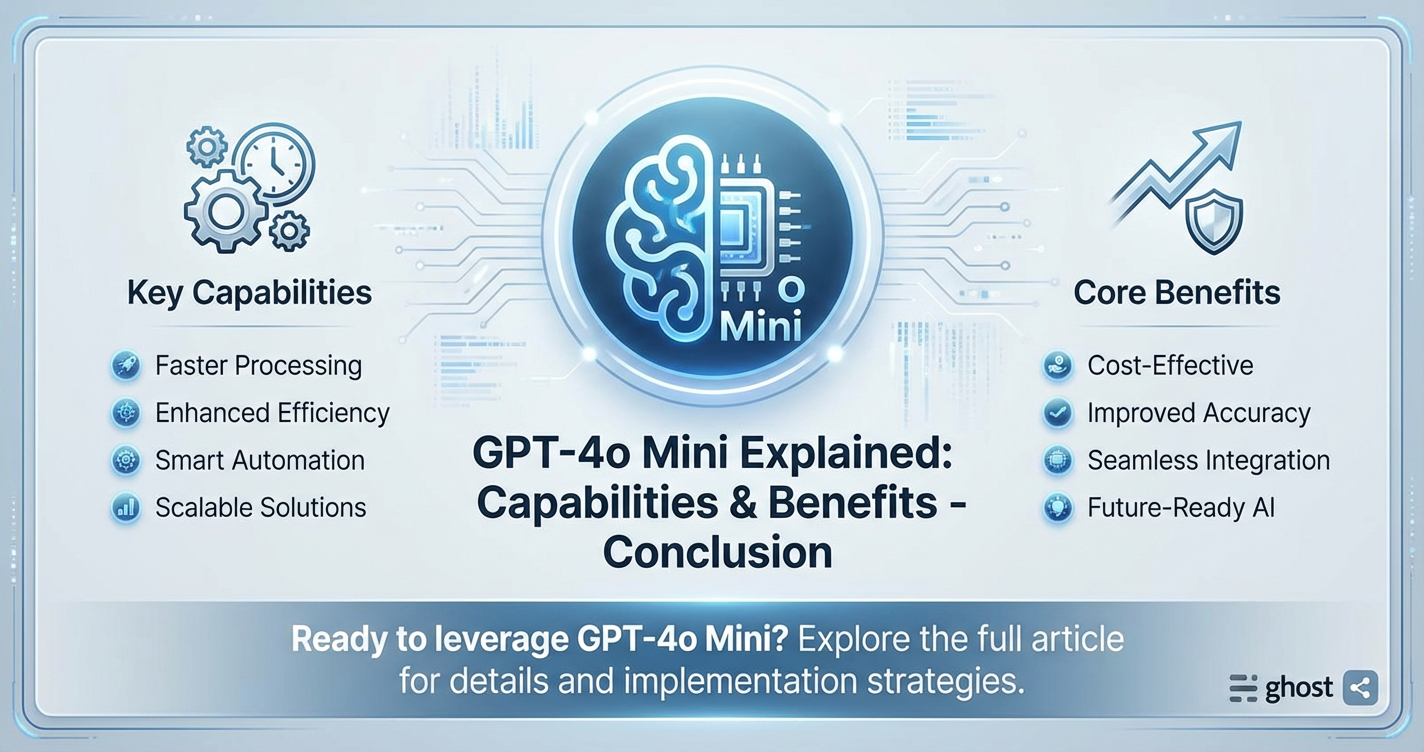
The journey through the capabilities and benefits of GPT-4o Mini reveals a model that is far more than a lesser version of its predecessors. It is a meticulously engineered solution that strategically balances the cutting-edge intelligence of OpenAI's GPT-4o lineage with unparalleled efficiency, speed, and cost-effectiveness. In an AI landscape often characterized by a pursuit of ever-larger and more resource-intensive models, GPT-4o Mini stands out as a testament to the power of intelligent optimization.
We’ve seen how its multimodal understanding and generation capabilities allow it to process and respond to text, images, and audio with remarkable fluency, opening doors to more intuitive and human-like AI interactions. Its advanced language generation and reasoning make it a versatile tool for tasks ranging from sophisticated content creation to complex data interpretation. Crucially, its low latency and reduced operational costs democratize access to advanced AI, empowering developers to build real-time, high-volume applications and enabling businesses to deploy intelligent solutions without prohibitive financial burdens.
From enhancing customer service in retail to aiding clinical documentation in healthcare, and streamlining content generation in marketing, the practical applications of gpt-4o mini are vast and transformative. It addresses critical challenges that previously hindered widespread AI adoption, making advanced capabilities accessible to startups, SMBs, and individual innovators alike.
However, a balanced view also acknowledges its limitations, such as the potential for hallucinations and the need for human oversight in critical applications. These are challenges inherent to generative AI, and responsible deployment strategies are paramount.
Looking ahead, GPT-4o Mini is poised for continuous evolution, promising even greater efficiency, expanded multimodal richness, and deeper integration into everyday devices and platforms. Platforms like XRoute.AI will play a pivotal role in this future, serving as crucial conduits that simplify access to gpt-4o mini and a diverse array of other LLMs through a unified, cost-effective, and low-latency API. This ecosystem approach will ensure that the transformative power of AI is not only readily available but also seamlessly integrated into the next generation of intelligent applications.
In essence, GPT-4o Mini is more than just a technological advancement; it's a strategic move towards a more inclusive and practical AI future. It empowers innovation, drives efficiency, and ensures that the benefits of artificial intelligence are within reach for everyone, solidifying its place as a critical component in the ongoing AI revolution.
Frequently Asked Questions about GPT-4o Mini
Q1: What is GPT-4o Mini, and how does it differ from GPT-4o?
A1: GPT-4o Mini is a more compact, highly optimized version of OpenAI's GPT-4o model. While it retains the core multimodal capabilities of GPT-4o (processing and generating text, image, and audio), its primary distinction lies in its significantly lower latency and reduced cost per token. It's designed for efficiency and broad accessibility, making advanced AI more practical for real-time, high-volume applications where cost and speed are paramount, while GPT-4o offers the absolute peak of current capabilities for the most demanding, complex tasks.
Q2: What are the main benefits of using GPT-4o Mini for developers and businesses?
A2: For developers, the main benefits include low latency AI for rapid response times, cost-effective AI with lower token pricing, ease of integration through a familiar API, and high scalability. For businesses, GPT-4o Mini enables enhanced customer service with intelligent chatbots, streamlined content creation, advanced data analysis support, and significant operational efficiency through automation, all while delivering substantial cost savings and a faster time-to-market for AI-powered solutions.
Q3: Can GPT-4o Mini handle multimodal inputs, like images and audio?
A3: Yes, the "o" in GPT-4o Mini stands for "omni," signifying its multimodal capabilities. It can process and understand information from various modalities, including text, images, and audio. This means it can, for example, describe the content of an image, transcribe spoken language, or generate text based on visual cues, making it highly versatile for interactive and rich media applications.
Q4: In what types of applications would GPT-4o Mini be most effective?
A4: GPT-4o Mini is particularly effective in applications requiring real-time interaction, high volume, and cost efficiency. This includes: * Intelligent chatbots and virtual assistants for customer support. * Real-time content generation for marketing and social media. * Personalized learning tools and educational assistants. * Automated document processing and data summarization. * Applications needing quick multimodal understanding (e.g., visual search in e-commerce, audio transcription services).
Q5: How can platforms like XRoute.AI enhance the use of GPT-4o Mini?
A5: Platforms like XRoute.AI serve as a unified API platform that streamlines access to GPT-4o Mini and over 60 other AI models from various providers. By offering a single, OpenAI-compatible endpoint, XRoute.AI simplifies integration, ensures low latency AI, facilitates cost-effective AI by allowing dynamic model selection, provides developer-friendly tools, and manages scalability. This helps developers leverage GPT-4o Mini effectively without the complexity of managing multiple API connections, accelerating development and optimizing performance.
🚀You can securely and efficiently connect to thousands of data sources with XRoute in just two steps:
Step 1: Create Your API Key
To start using XRoute.AI, the first step is to create an account and generate your XRoute API KEY. This key unlocks access to the platform’s unified API interface, allowing you to connect to a vast ecosystem of large language models with minimal setup.
Here’s how to do it: 1. Visit https://xroute.ai/ and sign up for a free account. 2. Upon registration, explore the platform. 3. Navigate to the user dashboard and generate your XRoute API KEY.
This process takes less than a minute, and your API key will serve as the gateway to XRoute.AI’s robust developer tools, enabling seamless integration with LLM APIs for your projects.
Step 2: Select a Model and Make API Calls
Once you have your XRoute API KEY, you can select from over 60 large language models available on XRoute.AI and start making API calls. The platform’s OpenAI-compatible endpoint ensures that you can easily integrate models into your applications using just a few lines of code.
Here’s a sample configuration to call an LLM:
curl --location 'https://api.xroute.ai/openai/v1/chat/completions' \
--header 'Authorization: Bearer $apikey' \
--header 'Content-Type: application/json' \
--data '{
    "model": "gpt-5",
    "messages": [
        {
            "content": "Your text prompt here",
            "role": "user"
        }
    ]
}'
With this setup, your application can instantly connect to XRoute.AI’s unified API platform, leveraging low latency AI and high throughput (handling 891.82K tokens per month globally). XRoute.AI manages provider routing, load balancing, and failover, ensuring reliable performance for real-time applications like chatbots, data analysis tools, or automated workflows. You can also purchase additional API credits to scale your usage as needed, making it a cost-effective AI solution for projects of all sizes.
Note: Explore the documentation on https://xroute.ai/ for model-specific details, SDKs, and open-source examples to accelerate your development.