How to Use AI to Create YouTube Dialogue: A Step-by-Step Guide
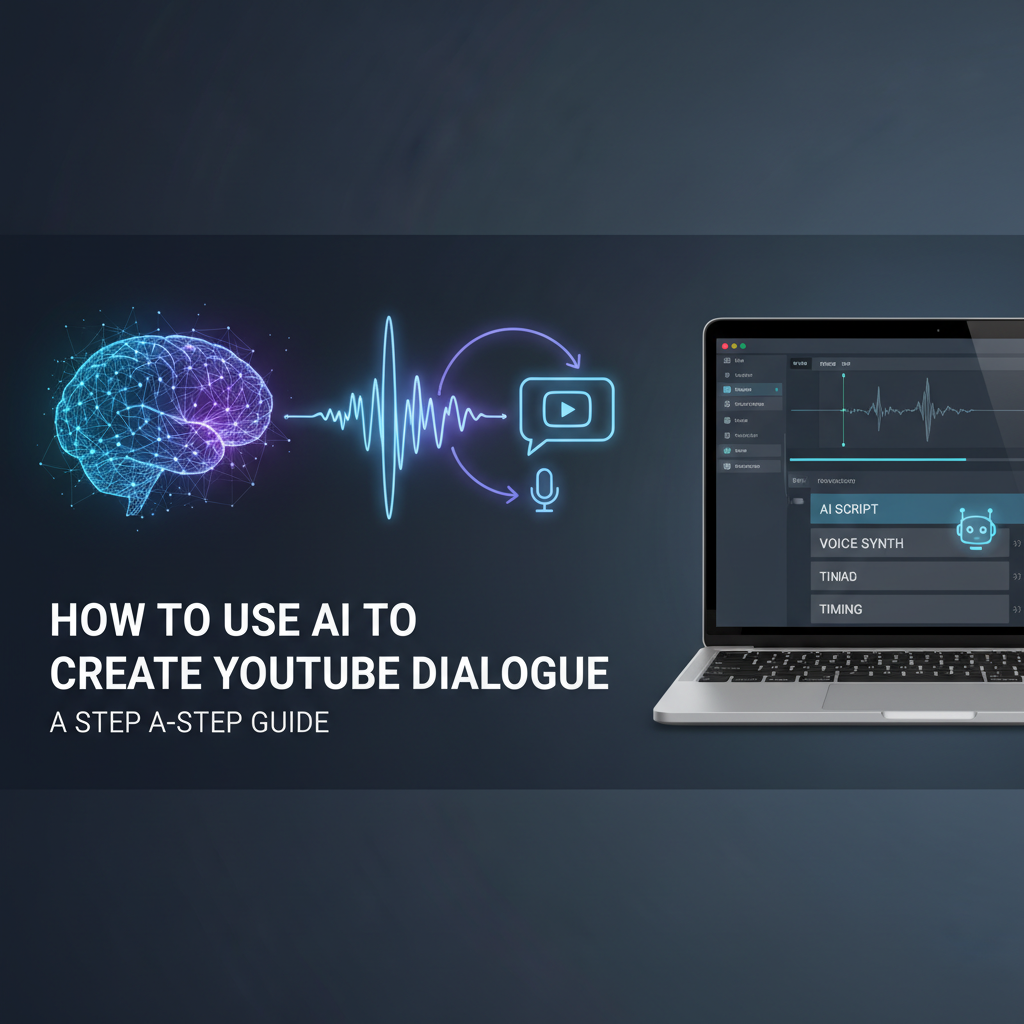

In the rapidly evolving landscape of digital content creation, YouTube stands as a colossal platform where millions of creators strive to capture attention, convey messages, and build communities. The heart of any compelling YouTube video often lies in its dialogue – whether it's an engaging monologue, a witty script for a skit, a clear explanation for a tutorial, or a heartfelt narrative for a vlog. Crafting consistently high-quality, engaging, and original dialogue can be a monumental task, often consuming a significant portion of a creator's time and energy. This is where artificial intelligence, with its remarkable capabilities in natural language processing and generation, steps in as a game-changer.
The integration of AI into the creative process is no longer a futuristic concept but a present-day reality, offering creators unprecedented tools to streamline workflows, overcome creative blocks, and elevate the quality of their content. This comprehensive guide will meticulously walk you through how to use AI to create YouTube dialogue, transforming your approach from ideation to final script. We will delve deep into the practical applications of AI, exploring how tools like an ai story generator and advanced gpt chat models can become indispensable allies in your content creation journey, ultimately enabling you to produce more engaging, efficient, and impactful videos.
Our journey will cover everything from initial brainstorming and outline generation to crafting nuanced character interactions and refining your final script, all while ensuring your unique voice and creative vision remain at the forefront. Prepare to unlock a new dimension of productivity and creativity, making your YouTube content not just good, but truly exceptional.
The Transformative Power of AI in YouTube Content Creation
Before diving into the mechanics, it's crucial to understand why AI is becoming such a vital asset for YouTube creators. The benefits extend far beyond simple efficiency, touching upon creativity, scalability, and even audience engagement.
Overcoming Creative Blocks
Every creator, no matter how seasoned, experiences creative blocks. Staring at a blank page, struggling to find the right words, or conceptualizing a fresh angle can be frustrating and time-consuming. AI acts as an instant brainstorming partner, capable of generating diverse ideas, plot twists, character concepts, and dialogue snippets that can spark new directions or jumpstart stalled projects. It provides an endless reservoir of inspiration, helping you bypass those moments of creative stagnation and maintain a consistent content schedule.
Enhancing Efficiency and Speed
Time is a precious commodity for content creators. From research and scripting to filming, editing, and promotion, the process is labor-intensive. By automating significant portions of the dialogue creation process, AI drastically cuts down on the time spent drafting scripts. This efficiency allows creators to focus more on performance, visual storytelling, or even producing more videos, thereby scaling their content output without compromising quality. Imagine generating multiple script variations or outlines in minutes, rather than hours.
Elevating Dialogue Quality and Nuance
AI models, particularly large language models (LLMs), are trained on vast datasets of human text, enabling them to understand and generate language with remarkable sophistication. This means they can help craft dialogue that is not only grammatically correct but also contextually appropriate, engaging, and even imbued with specific tones or personalities. For educational content, AI can simplify complex topics into clear, concise explanations. For narrative content, it can suggest nuanced emotional beats or witty exchanges that enrich the storytelling.
Accessibility and Democratization of High-Quality Content
Previously, producing professional-grade scripts might have required professional writers or extensive experience. AI tools democratize access to sophisticated writing assistance, leveling the playing field for independent creators. Whether you're a seasoned pro or just starting, AI provides a powerful co-pilot, making high-quality dialogue generation accessible to everyone. This lowers the barrier to entry for ambitious projects and enables creators to experiment with different content formats that might have previously seemed too daunting.
SEO Optimization and Engagement
AI can also assist in crafting dialogue that is inherently more engaging and even optimized for search. By understanding trending topics, common questions, and relevant keywords, AI can help embed these naturally within your script, improving your video's discoverability on YouTube search. Engaging dialogue also keeps viewers watching longer, signalling to YouTube's algorithm that your content is valuable, leading to better rankings and broader reach.
Understanding the AI Landscape for Dialogue Generation
Before we dive into the practical steps, it's essential to grasp the fundamental AI technologies powering these capabilities. At the core are Large Language Models (LLMs) and Natural Language Processing (NLP).
Large Language Models (LLMs)
LLMs are sophisticated AI models trained on massive amounts of text data from the internet, books, and other sources. This training allows them to understand context, generate coherent text, answer questions, translate languages, and perform a wide range of language-related tasks. Key examples include models behind tools like GPT-4, Claude, LLaMA, and others. When you interact with a "gpt chat" interface, you are leveraging the power of one of these LLMs. They are particularly adept at generating creative content, summarizing information, and continuing text based on a given prompt.
Natural Language Processing (NLP)
NLP is a field of AI that focuses on enabling computers to understand, interpret, and generate human language. It's the umbrella under which LLMs operate, but also includes tasks like sentiment analysis, text summarization, entity recognition, and machine translation. For YouTube dialogue, NLP helps AI tools process your input (prompts), understand your intent, and generate relevant, high-quality text.
Generative AI
Most of the tools we'll discuss fall under the umbrella of "Generative AI," meaning they can create new, original content (text, images, audio, video) based on learned patterns from their training data. For dialogue, this means they don't just pull pre-written sentences; they construct new ones to fit your specific request.
XRoute is a cutting-edge unified API platform designed to streamline access to large language models (LLMs) for developers, businesses, and AI enthusiasts. By providing a single, OpenAI-compatible endpoint, XRoute.AI simplifies the integration of over 60 AI models from more than 20 active providers(including OpenAI, Anthropic, Mistral, Llama2, Google Gemini, and more), enabling seamless development of AI-driven applications, chatbots, and automated workflows.
Step-by-Step Guide: How to Use AI to Create YouTube Dialogue
Now, let's break down the process into actionable steps. Remember, AI is a tool, not a replacement for human creativity. Your role as the director and editor remains paramount.
Step 1: Defining Your YouTube Content Strategy & Niche
Before you even think about AI, clarity on your content strategy is paramount. AI works best when given clear direction.
A. Identify Your Target Audience: Who are you creating for? Teens, professionals, hobbyists, students? Understanding your audience dictates the tone, vocabulary, and complexity of your dialogue. * Prompt consideration: "Generate dialogue suitable for [audience type] interested in [topic]."
B. Pinpoint Your Content Niche & Format: Are you creating tutorials, vlogs, educational explainers, product reviews, short films, or comedic sketches? Each format has unique dialogue requirements. * Examples: * Tutorials: Clear, concise, step-by-step instructions. * Vlogs: Conversational, personal, engaging storytelling. * Explainer Videos: Informative, jargon-free, persuasive. * Sketches/Short Films: Character-driven, plot-advancing, witty or dramatic.
C. Determine Your Video's Goal: What do you want viewers to do, feel, or learn? * Goals: Inform, entertain, persuade, inspire, educate, drive action (e.g., subscribe, visit a link). Knowing the goal helps AI tailor the dialogue to achieve that outcome.
D. Establish Your Brand Voice & Tone: Do you want to be funny, serious, authoritative, friendly, sarcastic, inspirational? Consistency in voice builds brand recognition. * Example: "Generate dialogue in a [tone: e.g., witty and sarcastic] voice about [topic]."
By clearly defining these elements, you provide the AI with the necessary guardrails to generate highly relevant and effective dialogue.
Step 2: Brainstorming & Outline Generation with AI
This is where your ai story generator truly shines, helping you move from a vague idea to a structured concept.
A. Initial Idea Generation: If you're starting from scratch, use AI to brainstorm video ideas based on your niche and audience. * Prompt Example: "I run a YouTube channel about sustainable living for young adults. Generate 10 video ideas about eco-friendly home improvements, focusing on practical tips and DIY projects."
B. Theme and Angle Exploration: Once you have a general idea, use AI to explore different angles or themes. * Prompt Example: "For a video titled 'DIY Vertical Garden for Urban Apartments,' suggest 5 unique angles or hooks that would appeal to busy millennials."
C. Story or Concept Development (Leveraging an AI Story Generator): This is crucial for narrative-driven content (sketches, short films, even engaging vlogs). An ai story generator can help you develop plots, character arcs, and narrative structures. * Prompt Example (for a sketch): "Develop a comedic sketch idea about a person trying to explain AI to their technologically challenged grandparent. Give me a brief plot, 2 character descriptions, and a suggested comedic premise." * Prompt Example (for a vlog): "Generate a compelling narrative arc for a vlog about overcoming procrastination, including a relatable struggle, a turning point, and a positive resolution."
D. Outline Creation: A strong outline is the backbone of any good script. AI can quickly generate a detailed structure. * Prompt Example: "Create a detailed YouTube video outline for a tutorial on 'Mastering Video Editing with DaVinci Resolve.' Include sections for introduction, essential tools, basic cuts, color grading, audio mixing, export settings, and a call to action. Ensure each section has 3-4 bullet points of content to cover."
E. Keyword Integration for SEO: At this stage, consider relevant keywords for your video. AI can help weave them into the outline naturally. * Prompt Example: "Integrate the keywords 'best video editing software 2024,' 'DaVinci Resolve tutorial for beginners,' and 'free video editor' into the outline provided, ensuring natural placement."
Table 1: Examples of AI Prompts for Brainstorming & Outlining
| Content Type | Goal | AI Prompt Example | Expected AI Output |
|---|---|---|---|
| Educational Tutorial | Clear, step-by-step instructions | "Create a YouTube video outline for 'Introduction to Cryptocurrency for Beginners.' Include sections for 'What is Crypto?', 'How to Buy Crypto (safely),' 'Understanding Wallets,' 'Risks & Rewards,' and a conclusion. Target audience: complete novices. Tone: informative, reassuring." | Detailed outline with explanations for each section, simple language suggestions. |
| Vlog/Personal Story | Engaging narrative, relatable content | "Generate a narrative structure for a vlog about 'My First Solo Travel Experience.' Include an introduction setting the scene, rising action (challenges faced), climax (moment of triumph/realization), falling action (lessons learned), and conclusion (future plans). Tone: reflective, inspiring." | Story arc with key emotional beats, suggestions for personal anecdotes. |
| Product Review | Informative, balanced, persuasive | "Outline a YouTube review for the new 'Eco-Friendly Smart Water Bottle.' Sections: Intro, Features, Pros, Cons, Personal Experience, Who is it for?, Conclusion/CTA. Emphasize sustainability and tech integration. Target audience: tech-savvy, eco-conscious consumers." | Structured review outline with prompts for specific details (e.g., 'Discuss battery life here,' 'Compare to competitor X'). |
| Short Film/Sketch | Comedic plot, character development | "Develop a short comedic plot for a YouTube sketch about a futuristic smart home assistant that takes its instructions too literally. Provide 2 character descriptions and 3 key plot points leading to a hilarious misunderstanding. Audience: general, looking for lighthearted humor." | Basic script outline with character bios, setup, conflict, and resolution points, focusing on comedic timing. |
Step 3: Crafting Compelling Dialogue with AI
This is the core of how to use AI to create YouTube dialogue. Here, gpt chat and similar LLMs become your primary tools for generating actual lines, speeches, and conversations.
A. Prompt Engineering for Dialogue: The quality of your AI-generated dialogue heavily depends on the quality of your prompts. Be specific, provide context, and define constraints.
- Context is King: Always tell the AI who is speaking, to whom, what the situation is, what their goal is, and what tone they should use.
- Example 1 (Tutorial Dialogue): "Write the opening 30 seconds of a YouTube tutorial for 'Beginner's Guide to Photography.' The speaker is friendly and enthusiastic. They should briefly introduce themselves, state the video's purpose, and hook the viewer with a promise of what they'll learn. Include a natural mention of 'camera settings explained for beginners'."
- Example 2 (Narrative Dialogue): "Write a dialogue between two friends, Alex and Ben, who are planning a surprise party for a mutual friend. Alex is meticulous and slightly anxious, Ben is laid-back and chaotic. They are discussing the cake. Alex wants a specific vegan, gluten-free cake, Ben just wants something 'tasty.' Set the scene in a bustling coffee shop. The dialogue should reveal their personalities and forward the plot."
B. Leveraging GPT Chat for Specific Dialogue Segments: Use gpt chat to generate specific sections of your script.
- Introductions and Hooks:
- Prompt: "Generate 5 engaging YouTube video intros (15-20 seconds each) for a video about 'The Science of Sleep Improvement.' Focus on capturing attention and posing a relatable problem."
- Explanations and Definitions:
- Prompt: "Explain 'quantum entanglement' in simple, conversational language for a YouTube audience that has no prior physics knowledge. Make it sound exciting and relatable."
- Call-to-Actions (CTAs):
- Prompt: "Write 3 distinct call-to-action statements for the end of a YouTube video about 'How to Start a Podcast.' One should encourage subscribing, one should promote a specific resource, and one should ask for viewer comments."
- Character Dialogue:
- Prompt: "Continue the dialogue between Alex and Ben (from the previous cake example) for another 5 lines each. They are now discussing who will distract their friend while the party is set up. Alex suggests a complex alibi, Ben suggests a simple 'let's go for coffee'."
C. Generating Variations and Alternatives: Don't settle for the first output. Ask the AI to generate multiple versions or refine specific aspects. * Prompt: "Rewrite the previous introduction in a more humorous tone." * Prompt: "Give me 3 alternative ways to explain 'blockchain technology' in a YouTube dialogue, each with a different analogy."
D. Handling Specific Constraints: If you have length limits, specific words to include, or a particular rhythm, communicate this to the AI. * Prompt: "Write a short monologue (approx. 60 words) for a character reflecting on their journey as a content creator. Include the phrase 'every upload is a lesson'."
E. Integrating Keywords (e.g., "how to use ai to create youtube dialogue"): When crafting the actual script, consciously think about where your keywords can fit naturally. For this article, for instance, you'd ensure phrases like "how to use ai to create youtube dialogue" appear organically in explanations or examples. * Prompt: "In a section discussing new content creation tools, write a paragraph highlighting a tool that helps with 'how to use ai to create youtube dialogue' for independent creators."
F. Simulating Conversations: For interview-style videos or multi-person discussions, AI can generate hypothetical exchanges. * Prompt: "Simulate a short interview segment (2 questions and answers) between a host and an expert on 'climate change solutions.' The host asks a general question, and the expert provides a concise, hopeful answer. Ensure the language is accessible."
Remember, the AI is a co-pilot. You provide the creative vision and steer the direction, and the AI handles the heavy lifting of language generation.
Step 4: Refining and Polishing AI-Generated Dialogue
Raw AI output is a starting point, not a finished product. Human refinement is essential to infuse personality, correct subtleties, and ensure authenticity.
A. Review for Cohesion and Flow: Read the entire script aloud. Does it flow naturally? Are there any awkward transitions or repetitive phrases? * Human Touch: Reorder sentences, add transition words, or combine paragraphs for better readability.
B. Inject Your Unique Voice and Personality: AI can mimic styles, but it doesn't have your specific personal quirks, humor, or delivery style. This is your opportunity to make the dialogue truly yours. * Human Touch: Add personal anecdotes, inside jokes relevant to your community, signature catchphrases, or specific inflections you use. Change words to reflect your vocabulary.
C. Check for Accuracy and Nuance: While AI is powerful, it can sometimes generate information that is factually incorrect, outdated, or lacks the necessary nuance for sensitive topics. * Human Touch: Fact-check any claims, verify statistics, and ensure the tone and language are appropriate for the subject matter and your brand values. For complex topics, simplify or elaborate as needed to ensure complete clarity.
D. Optimize for Verbal Delivery: Written dialogue doesn't always translate perfectly to spoken word. Ensure it sounds natural when spoken. * Human Touch: * Simplify Complex Sentences: Break down long, convoluted sentences. * Remove Redundancy: Eliminate unnecessary words or phrases. * Add Pauses/Emphasis Notes: (e.g., [pause for effect], [emphasize this word]) to guide your delivery. * Practice Speaking It: Rehearse the dialogue multiple times to identify areas that feel unnatural or clunky.
E. Proofread and Edit: Even advanced AI can make grammatical errors or typos. A thorough proofread is non-negotiable. * Human Touch: Use grammar checkers, but also rely on your own understanding of language and context. Pay attention to punctuation, capitalization, and spelling.
F. Seek Feedback: Share your script with a trusted friend, colleague, or your community (if appropriate) for fresh perspectives. * Human Touch: Ask questions like: "Is this clear?" "Is it engaging?" "Does it sound like me?" "Are there any parts that confuse you?"
Step 5: Integrating AI Dialogue into Your YouTube Workflow
Successfully integrating AI-generated dialogue means making it a seamless part of your overall content production process.
A. From Script to Teleprompter/Notes: Once polished, format your script for easy use during filming. * Teleprompter: If using one, ensure the font is large, lines are short, and the pacing is comfortable. * Bullet Points/Notes: If you prefer a more natural, unscripted feel, condense the AI-generated script into key bullet points or talking points that you can elaborate on during filming. This allows for spontaneity while retaining the core message.
B. Visualizing the Dialogue: As you refine the dialogue, start thinking about accompanying visuals. How will your words be supported by what's on screen? * Example: If the AI-generated dialogue talks about "the bustling streets of Tokyo," visualize b-roll footage of Tokyo street scenes. If it explains a software feature, plan screen recordings.
C. Adapting to Performance: Sometimes, a line that looks great on paper doesn't feel right when you say it. Be flexible and willing to adjust during filming. * Flexibility: Don't be afraid to ad-lib slightly, rephrase, or even cut lines that don't land well. The AI provides a foundation; your performance brings it to life.
D. Iteration and Learning: After publishing, analyze your video's performance. Did the AI-assisted dialogue resonate with your audience? * Analytics: Look at audience retention, comments, and engagement metrics. Use these insights to refine your AI prompting techniques and human editing for future videos. Learn what types of AI-generated dialogue work best for your channel.
Step 6: Optimizing for Engagement & SEO
AI can indirectly contribute to better SEO and viewer engagement by improving script quality and efficiency.
A. Keyword Research & Integration (Pre-Dialogue Generation): While not directly part of the dialogue generation, good keyword research informs what topics your AI-generated dialogue should cover. * Process: Use tools like Google Keyword Planner, TubeBuddy, or vidIQ to find high-volume, low-competition keywords related to your topic. * AI's Role: Use these keywords in your initial prompts to guide the AI to include relevant language. For example, if "how to use ai to create youtube dialogue" is a target keyword, ensure your AI prompts include this phrase when generating content about the process.
B. Engaging Openings and Closings: AI can help craft powerful hooks and compelling CTAs that keep viewers watching and encourage action. * Hooks: Start with a question, a shocking statistic, a relatable problem, or a bold statement to immediately grab attention. * CTAs: Clearly tell viewers what you want them to do (subscribe, like, comment, share, visit a link).
C. Clear and Concise Explanations: Especially for educational content, AI can simplify complex topics, making them more accessible and reducing viewer drop-off. * Benefit: When viewers understand easily, they stay engaged longer, improving watch time—a key YouTube SEO factor.
D. Storytelling Elements: An ai story generator can help incorporate narrative elements even into non-narrative content (e.g., explaining a concept through a relatable story or anecdote), which naturally increases engagement. * Benefit: Humans are wired for stories. Well-told stories keep viewers captivated.
E. Transcript and Captions: While not part of the dialogue generation, the high-quality, clear dialogue produced with AI makes generating accurate transcripts and captions much easier. These are crucial for accessibility and SEO. * Benefit: Transcripts provide text for search engines to crawl, improving discoverability. Captions cater to diverse audiences and viewing environments.
Step 7: Ethical Considerations & Best Practices
As with any powerful tool, using AI for dialogue creation comes with ethical responsibilities.
A. Maintain Authenticity and Originality: AI is a co-creator, not a replacement for your unique perspective. Ensure your voice and original ideas remain central. * Best Practice: Always review, edit, and personalize AI-generated content. Don't simply copy-paste.
B. Disclosure (When Appropriate): For highly sensitive or creative works where AI's involvement might be significant (e.g., a fully AI-generated narrative), consider disclosing its use to your audience. Transparency builds trust. * Best Practice: For general script assistance, disclosure isn't usually necessary, but use your judgment.
C. Avoid Misinformation: AI models can sometimes "hallucinate" or generate incorrect information. Always fact-check. * Best Practice: Treat AI output as a draft that requires human verification, especially for factual content.
D. Respect Copyright and IP: Be mindful of AI models trained on copyrighted data. While generative AI aims to create original content, always ensure your final script doesn't inadvertently infringe on existing works. * Best Practice: Focus on using AI for brainstorming and generating unique variations, rather than directly copying styles or ideas too closely.
E. Prevent Bias: AI models can reflect biases present in their training data. Be aware of this and actively review dialogue for any unintended stereotypes or discriminatory language. * Best Practice: Train yourself to recognize potential biases and consciously edit them out, promoting inclusive language.
Advanced Techniques and The Future of AI in YouTube Content
As AI technology continues to advance, its capabilities for content creators will only expand. Here's a glimpse into more advanced techniques and where the future might lead.
AI for Multilingual Dialogue & Localization
Beyond just generating English dialogue, advanced AI models can translate and even localize your dialogue into multiple languages, making your content accessible to a global audience. This goes beyond simple translation; it adapts cultural nuances, idioms, and humor.
- Application: Generate a script in English, then prompt the AI to translate it into Spanish or French, ensuring cultural appropriateness for a target region.
- Benefit: Broadens your reach dramatically without the need for expensive human translators for initial drafts.
Dynamic & Interactive Dialogue Generation
Imagine YouTube videos where the dialogue adapts based on viewer choices, creating a choose-your-own-adventure experience. Or live streams where AI helps you respond to chat comments in real-time, maintaining engagement.
- Current State: Early stages, but possible with sophisticated API integrations.
- Future Vision: Highly personalized content experiences driven by AI.
Integrating Multiple AI Models for Specialized Tasks
While a single gpt chat model can do a lot, the future involves orchestrating multiple specialized AI models for different aspects of dialogue creation. One model for idea generation, another for comedic timing, a third for factual accuracy, and so on. This is where unified API platforms become incredibly valuable.
For developers, businesses, and AI enthusiasts looking to harness the full power of multiple large language models without the complexity of managing countless API connections, XRoute.AI offers a cutting-edge solution. XRoute.AI is a unified API platform designed to streamline access to over 60 AI models from more than 20 active providers, all through a single, OpenAI-compatible endpoint. This simplification means creators and developers can effortlessly integrate diverse LLM capabilities into their YouTube dialogue generation workflows, allowing for hyper-customized, low latency AI interactions, and cost-effective AI solutions.
Imagine using XRoute.AI to simultaneously leverage the creative writing prowess of one LLM, the factual accuracy of another, and the sentiment analysis capabilities of a third – all to craft the most compelling and nuanced YouTube dialogue. With its focus on high throughput, scalability, and developer-friendly tools, XRoute.AI empowers you to build intelligent applications that can generate contextually rich, emotionally resonant, and perfectly tailored scripts, pushing the boundaries of what's possible in AI-driven content creation. From automated script variations for A/B testing engagement to generating character-specific dialogue across multiple voices, XRoute.AI provides the robust backend infrastructure to bring these advanced visions to life, making complex AI integrations as simple as a single API call.
AI-Powered Voice Cloning & Lip-Syncing
While dialogue generation focuses on text, the next frontier includes using AI to generate voices that sound like you (or a synthetic character) and even perfectly lip-sync them to AI-generated or human footage. * Application: Rapidly create multiple language versions of your video without reshooting or dubbing, or create animated content with realistic voices instantly. * Ethical Note: This technology has significant ethical implications regarding deepfakes and authenticity, requiring careful consideration.
The journey of how to use AI to create YouTube dialogue is just beginning. As these tools become more sophisticated and accessible, content creators will find themselves with an unprecedented arsenal to tell their stories, educate their audiences, and connect with the world in more dynamic and efficient ways than ever before.
Conclusion: Empowering Your Creative Vision with AI
The advent of AI has opened up a new era for YouTube content creators, transforming what was once a laborious and time-consuming process into an efficient and infinitely more creative endeavor. Understanding how to use AI to create YouTube dialogue is no longer a niche skill but an essential competency for anyone serious about thriving on the platform.
From using an ai story generator to conquer creative blocks and outline compelling narratives, to leveraging gpt chat for crafting nuanced, engaging, and perfectly toned dialogue, AI empowers you at every stage. It accelerates brainstorming, refines explanations, and helps you infuse personality and purpose into every spoken word. By integrating AI into your workflow, you gain the ability to produce higher quality content faster, free up valuable time for other aspects of production, and ultimately, scale your creative vision to new heights.
However, the power of AI is best realized when guided by human ingenuity. AI is a co-pilot, not an autopilot. Your unique voice, your creative vision, and your critical eye remain irreplaceable. The most successful creators will be those who master the art of prompting, refining, and blending AI-generated content with their distinct human touch, ensuring authenticity, accuracy, and genuine connection with their audience.
Embrace AI as your ultimate creative assistant. Experiment with different prompts, explore various tools, and continuously refine your process. The future of YouTube content is collaborative, innovative, and increasingly intelligent. By strategically employing AI for dialogue creation, you're not just keeping pace with the digital landscape; you're actively shaping it, delivering more impactful, engaging, and unforgettable experiences to your viewers.
Frequently Asked Questions (FAQ)
Q1: Is using AI to generate YouTube dialogue considered cheating or unethical?
A1: No, using AI as a tool for dialogue generation is not inherently cheating or unethical. It's akin to using a word processor, grammar checker, or research assistant. The key is how you use it. If you're using AI as a brainstorming partner, a first-draft generator, or a refinement tool, and then applying your own creative input, editing, and voice, it's a legitimate and efficient creative process. Ethical concerns arise only if you present entirely AI-generated content as purely your own original human creation without any human oversight, or if you use it to spread misinformation. Transparency and authenticity remain paramount.
Q2: Will AI make human scriptwriters and content creators obsolete?
A2: While AI can automate many aspects of content generation, it's highly unlikely to make human scriptwriters and content creators obsolete. AI lacks true understanding, emotional intelligence, personal experiences, and the nuanced creativity that defines human artistry. It can mimic and generate based on patterns, but it cannot conceptualize truly original ideas driven by personal vision or experience. Instead, AI is evolving into a powerful co-pilot, augmenting human capabilities. Creators who learn to leverage AI effectively will be able to produce higher quality, more innovative, and more consistent content, enhancing their value rather than diminishing it.
Q3: How can I ensure the AI-generated dialogue sounds natural and avoids an "AI" feel?
A3: To make AI-generated dialogue sound natural: 1. Provide detailed prompts: Specify tone, character personalities, context, and desired emotional beats. 2. Iterate and refine: Ask the AI for multiple variations and guide it towards your preferred style. 3. Inject your unique voice: After generation, heavily edit and personalize the dialogue with your own slang, catchphrases, humor, and sentence structures. Read it aloud to catch awkward phrasing. 4. Simplify and clarify: Remove overly complex sentences or jargon that doesn't fit your audience. 5. Focus on spoken rhythm: Ensure the dialogue flows well when spoken, adding pauses or emphasis notes where needed. Human oversight and a strong editing pass are crucial to transforming raw AI output into authentic-sounding dialogue.
Q4: What are the best AI tools or platforms for creating YouTube dialogue?
A4: The "best" tool often depends on your specific needs and budget. However, some of the leading platforms leveraging powerful LLMs that are excellent for dialogue generation include: * ChatGPT (OpenAI): Widely accessible and versatile for various text generation tasks, excellent for brainstorming, outlining, and drafting dialogue. * Claude (Anthropic): Known for its ability to handle longer contexts and maintain coherence over extended conversations, useful for detailed scripts. * Google Gemini: Google's multimodal AI, capable of advanced text generation and understanding. * Custom API Integrations: For more advanced users and developers, platforms like XRoute.AI provide a unified API to access and combine multiple LLMs (e.g., from OpenAI, Anthropic, Google, etc.) efficiently. This allows for leveraging the strengths of different models for specialized dialogue needs, ensuring low latency and cost-effectiveness.
Experiment with free versions or trials to find the tool that best aligns with your workflow and desired outcomes.
Q5: Can AI help with dialogue for different types of YouTube content (e.g., tutorials, vlogs, comedy sketches)?
A5: Absolutely! AI is incredibly versatile and can assist with dialogue for a wide range of YouTube content: * Tutorials/Educational: AI can generate clear, concise explanations, step-by-step instructions, and simplify complex jargon. * Vlogs/Personal Stories: It can help structure narratives, suggest engaging hooks, and craft reflective or conversational segments. * Comedy Sketches/Short Films: AI can brainstorm plot points, develop character dialogue, suggest witty lines, and even generate comedic scenarios. * Product Reviews: It can help outline features, benefits, pros/cons, and persuasive language. The key is to provide specific and detailed prompts tailored to the content type, desired tone, and target audience for the most effective results.
🚀You can securely and efficiently connect to thousands of data sources with XRoute in just two steps:
Step 1: Create Your API Key
To start using XRoute.AI, the first step is to create an account and generate your XRoute API KEY. This key unlocks access to the platform’s unified API interface, allowing you to connect to a vast ecosystem of large language models with minimal setup.
Here’s how to do it: 1. Visit https://xroute.ai/ and sign up for a free account. 2. Upon registration, explore the platform. 3. Navigate to the user dashboard and generate your XRoute API KEY.
This process takes less than a minute, and your API key will serve as the gateway to XRoute.AI’s robust developer tools, enabling seamless integration with LLM APIs for your projects.
Step 2: Select a Model and Make API Calls
Once you have your XRoute API KEY, you can select from over 60 large language models available on XRoute.AI and start making API calls. The platform’s OpenAI-compatible endpoint ensures that you can easily integrate models into your applications using just a few lines of code.
Here’s a sample configuration to call an LLM:
curl --location 'https://api.xroute.ai/openai/v1/chat/completions' \
--header 'Authorization: Bearer $apikey' \
--header 'Content-Type: application/json' \
--data '{
    "model": "gpt-5",
    "messages": [
        {
            "content": "Your text prompt here",
            "role": "user"
        }
    ]
}'
With this setup, your application can instantly connect to XRoute.AI’s unified API platform, leveraging low latency AI and high throughput (handling 891.82K tokens per month globally). XRoute.AI manages provider routing, load balancing, and failover, ensuring reliable performance for real-time applications like chatbots, data analysis tools, or automated workflows. You can also purchase additional API credits to scale your usage as needed, making it a cost-effective AI solution for projects of all sizes.
Note: Explore the documentation on https://xroute.ai/ for model-specific details, SDKs, and open-source examples to accelerate your development.