Integrate Sora API: Power Your AI Video Creations
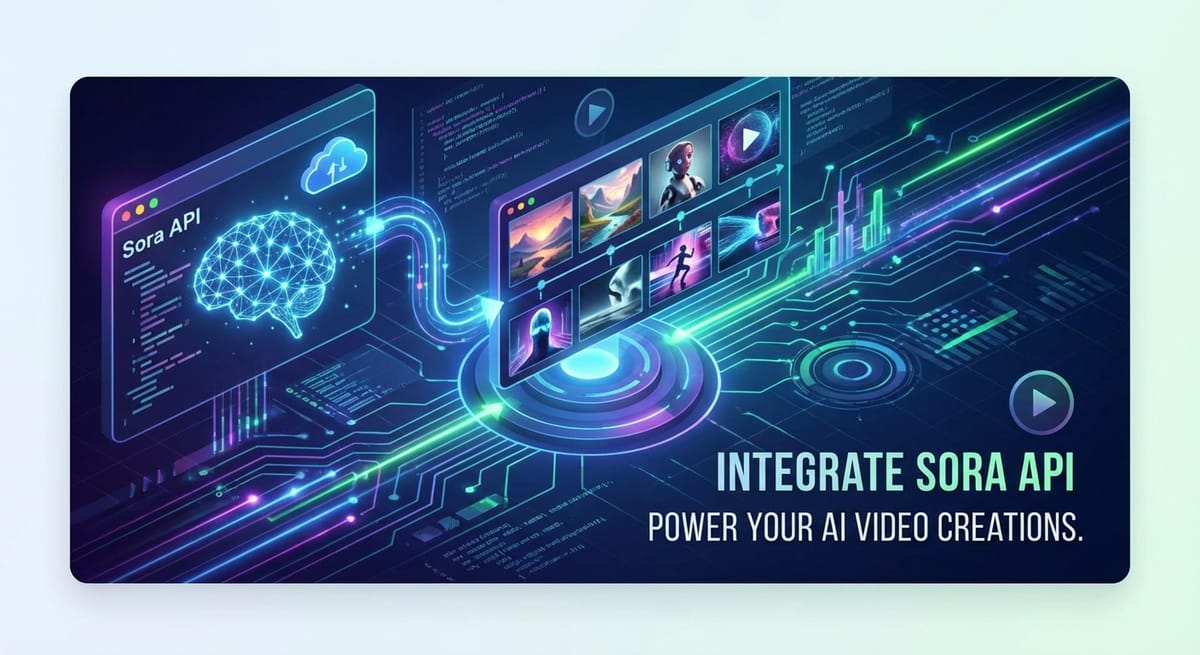

The digital landscape is undergoing a profound transformation, driven by advancements in artificial intelligence. Among the most awe-inspiring breakthroughs in recent memory is the emergence of models capable of generating high-quality video from simple text prompts. OpenAI's Sora stands at the forefront of this revolution, promising to democratize video creation and unleash unprecedented levels of creative expression. While not yet publicly accessible, the prospect of an Sora API has ignited imaginations across industries, signaling a future where dynamic, visually rich content can be conjured with mere words and lines of code.
This comprehensive guide delves into the profound implications and technical considerations surrounding the integration of an Sora API. We will explore the revolutionary capabilities of Sora, the immense potential an API unlocks for developers and businesses, and the practical steps and challenges involved in harnessing this power. From understanding the underlying technology to navigating the broader API AI ecosystem, and even touching upon how existing frameworks like the OpenAI SDK might facilitate such integrations, we aim to provide a detailed roadmap for powering your next generation of AI video creations. Prepare to explore a future where the only limit to cinematic possibility is the expanse of your imagination.
Understanding Sora's Transformative Potential: A New Dawn for Video Creation
For decades, video production has been a resource-intensive endeavor, demanding specialized equipment, skilled professionals, and considerable time and budget. Artificial intelligence is systematically dismantling these barriers, and Sora is arguably the most significant leap forward in this domain. OpenAI's demonstration of Sora’s capabilities has sent ripples through the creative, marketing, and technology sectors, showcasing a level of realism, scene complexity, and temporal consistency previously unimaginable for AI-generated content.
At its core, Sora operates on principles similar to generative AI models used for images and text, but applied to the far more intricate domain of motion. It's a diffusion model that takes noisy frames and progressively refines them into coherent, detailed video sequences. What truly sets Sora apart is its deep understanding of the physical world and its ability to maintain object persistence, character identity, and scene continuity across lengthy clips. It can generate videos up to a minute long, complete with intricate scenes, multiple characters, and specific types of motion, all from a concise text prompt. Imagine describing a "futuristic city bustling with flying cars at dusk, neon signs illuminating the rain-slicked streets, with a lone detective walking slowly, trench coat billowing in the wind," and seeing that exact vision brought to life in vibrant, photorealistic detail. This goes far beyond mere animation; it's about crafting believable, dynamic worlds.
Sora achieves this by learning from vast datasets of videos and images, absorbing not just patterns of pixels but the underlying physics, semantics, and narrative structures inherent in visual content. It can simulate a wide range of real-world phenomena, including camera movements, lighting changes, and object interactions, with astonishing fidelity. This means not only generating a static scene but also intelligently animating elements within it—water rippling, shadows shifting, expressions changing. The model effectively creates a comprehensive "world model" that allows it to predict how actions will unfold and how objects will behave over time, resulting in remarkably stable and consistent video outputs.
The impact of such a technology extends far beyond mere novelty. For filmmakers, Sora could act as a powerful pre-visualization tool, allowing directors to rapidly prototype scenes, explore different camera angles, and test narrative beats without the prohibitive costs of physical production. Marketers could generate countless variations of personalized advertisements, targeting specific demographics with unparalleled precision and creative agility. Educators might produce dynamic, engaging instructional videos on complex topics, making abstract concepts visually tangible and accessible. Game developers could populate virtual worlds with procedurally generated, unique cutscenes or dynamic environmental elements that respond to player actions. The potential for rapid content iteration, personalized experiences, and entirely new forms of media is staggering.
Furthermore, Sora's ability to create video from images or extend existing videos signifies a powerful tool for manipulation and enhancement. Users could upload a static image and ask Sora to animate it, or provide a short video clip and instruct Sora to expand it, adding new elements or extending its duration while maintaining stylistic consistency. This isn't just about creating from scratch; it's about augmenting, transforming, and evolving existing visual media in ways that were once the exclusive domain of highly skilled visual effects artists. The implications for post-production workflows, visual storytelling, and digital asset management are immense.
However, with such power comes responsibility. The ethical considerations surrounding deepfakes, misinformation, and copyright will become even more pressing as tools like Sora become more sophisticated and accessible. OpenAI has acknowledged these challenges, emphasizing the need for robust safety measures, watermarking, and public discourse around the responsible deployment of such technologies. Nevertheless, the raw potential of Sora to redefine how we conceive, create, and consume video content is undeniable. It represents not just an evolutionary step but a revolutionary leap, fundamentally altering the landscape of digital media production. The natural next step in harnessing this power for developers and businesses is through an accessible, robust Sora API.
The Vision of a Sora API: Bridging Innovation and Application
The true power of any groundbreaking AI model is realized when it moves beyond experimental demonstrations and becomes a programmable tool accessible to developers. This is where the concept of a Sora API becomes not just desirable but essential. An API (Application Programming Interface) transforms a complex AI model into a service that applications can invoke, enabling programmatic access to its unique capabilities without requiring developers to understand or manage the underlying intricate machine learning infrastructure.
For Sora, an API would represent the gateway to its vast creative potential. Imagine a developer building a marketing automation platform. With an Sora API, they could integrate a feature allowing users to input product descriptions and automatically generate compelling video advertisements, complete with animated product showcases and brand-aligned aesthetics. Or consider a content creator's suite: the API could empower users to instantly turn blog posts into engaging video summaries, complete with relevant visuals and narration. The possibilities are boundless because an API abstracts away the complexity, offering a clean, standardized interface for interaction.
The core offering of a Sora API would undoubtedly be text-to-video generation. Developers would send a textual prompt, possibly alongside other parameters, and receive a generated video file in return. This basic functionality alone can revolutionize numerous industries. But the vision extends further. Given Sora's capabilities, an API could also expose functionalities like:
- Image-to-Video Generation: Input a static image, and the API animates it according to a prompt (e.g., "make this portrait subtly blink and smile").
- Video Extension: Provide a short video clip, and the API extends its duration, continuing the narrative or introducing new elements seamlessly.
- Video Editing/Transformation: Change elements within an existing video (e.g., "replace the blue car with a red one," "change the weather from sunny to rainy"). This is a more advanced concept but aligns with Sora's demonstrated ability to understand and manipulate scene elements.
- Style Transfer: Apply a specific artistic style or aesthetic to a generated or existing video.
- Object Manipulation: Programmatically add, remove, or alter objects within a video scene.
The benefits of an Sora API for developers are manifold. It drastically reduces the barrier to entry for creating sophisticated video content. Startups can leverage this technology without needing to build their own video generation models from scratch, accelerating innovation. Enterprises can integrate advanced AI video capabilities into their existing systems, enhancing customer engagement and operational efficiency. The API provides scalability, allowing applications to generate videos on demand, accommodating fluctuating workloads without significant infrastructure investment. This empowers rapid prototyping, enabling developers to experiment with new ideas and iterate quickly, bringing revolutionary products to market faster.
This concept isn't isolated; it's part of a broader trend where API AI is becoming the backbone of intelligent applications across all domains. From natural language processing and computer vision to specialized generative models, API AI allows developers to tap into cutting-edge machine learning without deep expertise in AI research or infrastructure management. It fosters an ecosystem where AI models are treated as modular services, allowing for flexible integration and combination to create complex, multi-modal AI systems. The demand for robust, high-performance API AI platforms is growing exponentially, driven by the need for developers to access increasingly diverse and powerful models.
To give a clearer picture of what interacting with a conceptual Sora API might look like, let's consider some hypothetical parameters that a developer might use. These would govern the output quality, duration, style, and other attributes of the generated video, similar to how parameters work in existing image generation or text generation APIs.
Table 1: Hypothetical Sora API Parameters and Descriptions
| Parameter Name | Data Type | Description | Example Values |
|---|---|---|---|
prompt |
String | The primary text description of the video to be generated. This is the core instruction. | "A majestic dragon flying over a medieval castle at sunset." |
duration_seconds |
Integer | Desired length of the generated video in seconds. Constraints would likely apply (e.g., min 5, max 60). | 30 |
aspect_ratio |
String | The desired width-to-height ratio of the video. Common ratios for various platforms. | "16:9", "9:16" (for vertical video), "1:1" (for square) |
style_preset |
String | An optional parameter to guide the aesthetic style of the video (e.g., realistic, anime, cinematic, cartoon). | "cinematic", "photorealistic", "watercolor" |
seed |
Integer | An optional seed for reproducibility. Using the same seed with the same prompt and parameters should yield similar results. | 42, 12345 |
n_variants |
Integer | The number of different video variations to generate from a single prompt. More variants might incur higher costs. | 1, 3 |
camera_motion |
JSON | Describes desired camera movements (e.g., "zoom in," "pan left," "dolly forward"). Could include speed and duration. | {"type": "zoom", "direction": "in", "speed": "medium"} |
initial_image_url |
String | Optional. URL to an image to use as a starting point for the video, which Sora would then animate or extend. | "https://example.com/static-image.jpg" |
webhook_url |
String | Optional. A URL to which the API should send a notification when the video generation is complete, given the asynchronous nature of video creation. | "https://yourapp.com/sora-callback" |
model_version |
String | Specifies which version of the Sora model to use (for future compatibility or access to experimental features). | "latest", "v1.1", "experimental" |
This hypothetical table illustrates the level of granular control developers might expect, allowing them to precisely guide the AI's output to meet their specific creative or functional requirements. The existence of such an API would not only streamline video production but also enable entirely new categories of interactive and dynamic visual experiences, fundamentally shifting the paradigm of content creation in the digital age. The future of video is increasingly programmatic, and an Sora API is poised to be a cornerstone of this new era.
Navigating the Technical Landscape: Integrating with an Advanced AI API
Integrating with an advanced AI API like the conceptual Sora API requires a solid understanding of API fundamentals, asynchronous operations, data handling, and robust error management. While the exact specifications of Sora's eventual API are unknown, we can infer a great deal from existing high-performance generative AI APIs, particularly those from OpenAI, which already offer sophisticated functionalities in text and image generation.
Conceptual Architecture: Requests, Responses, and Asynchronous Operations
At its most basic, an API interaction involves an application sending a request to a server and receiving a response. For resource-intensive tasks like video generation, this process is almost certainly asynchronous. Generating a minute of high-quality video can take significant time—minutes, or even longer, depending on complexity and server load. Therefore, a typical workflow would involve:
- Initiating a Request: Your application sends a POST request to the
Sora APIendpoint, including thepromptand other parameters (as discussed in Table 1) in the request body, usually as JSON.json { "prompt": "A serene forest with sunlight filtering through leaves, a deer walks past.", "duration_seconds": 15, "aspect_ratio": "16:9", "style_preset": "photorealistic", "webhook_url": "https://yourapp.com/sora-callback" } - Receiving an Acknowledgment: The API server immediately responds with an acknowledgment, typically containing a
job_idortask_id. This ID is crucial for tracking the progress of your video generation. The response will usually indicate that the job has been accepted for processing, not that it's complete. - Asynchronous Processing: The
Sora APIthen processes your request in the background. This involves model inference, rendering, and encoding the video. - Retrieving the Result:
- Polling: Your application can periodically send GET requests to a
/status/{job_id}endpoint, checking if the video generation is complete. Once done, the status response would include a URL to the generated video. - Webhooks: A more efficient method for long-running tasks. If you provide a
webhook_urlin your initial request, theSora APIserver will send a POST request to that URL once the video is ready (or if an error occurs). The webhook payload would contain thejob_id, status, and a URL to the generated video. This push-based notification avoids constant polling and saves resources.
- Polling: Your application can periodically send GET requests to a
Authentication and Security Considerations
Access to a powerful Sora API will undoubtedly be secured. The most common method involves API keys. Developers will obtain an API key from their OpenAI (or equivalent) account, which must be included in every API request, typically in the Authorization header as a Bearer token. This key authenticates your application and links requests to your account for billing and rate limiting.
Security best practices dictate: * Never hardcode API keys directly into your client-side code. * Use environment variables or a secure secrets management service for server-side applications. * Implement proper access control on your own application to prevent unauthorized use of your API key. * Encrypt data in transit (HTTPS is standard for APIs).
Data Formats: Input Prompts, Output Video Formats, and Metadata
- Input: Requests will primarily be JSON payloads, containing the text
promptand various parameters. It’s crucial to sanitize user-provided prompts to prevent injection attacks or unintended model behaviors. - Output: The primary output will be a video file. The API would likely provide a temporary, time-limited URL from which your application can download the generated video. Common video formats like MP4 would be expected. Additionally, the API might return metadata about the generated video, such as its dimensions, duration, and potentially even confidence scores or content warnings.
- Error Handling: The API will return standard HTTP status codes (e.g., 200 for success, 400 for bad request, 401 for unauthorized, 429 for rate limited, 500 for server error). Your application must be designed to gracefully handle these errors, retry transient issues, and provide informative feedback to users.
Rate Limiting and Quotas
Due to the computational intensity of video generation, the Sora API will almost certainly impose rate limits (e.g., "X requests per minute") and potentially usage quotas (e.g., "Y minutes of video per month"). Developers need to design their applications to respect these limits, implementing backoff strategies for retries and monitoring their usage to avoid disruptions.
Leveraging Familiar Tools: The Role of OpenAI SDK
For developers already familiar with OpenAI's ecosystem, the OpenAI SDK (Software Development Kit) provides a robust and convenient way to interact with their various models. While a dedicated Sora API isn't yet public, it's highly probable that if and when it is released, it would be integrated into or mirrored by the OpenAI SDK.
The OpenAI SDK abstracts away much of the boilerplate code involved in making HTTP requests, handling authentication, and parsing responses. It typically offers client libraries in popular programming languages (Python, Node.js, etc.) that provide:
- Type-safe interfaces: Making it easier to construct requests and handle responses.
- Automatic retries and error handling: Built-in logic for common API issues.
- Streamlined authentication: Simplified ways to pass your API key.
- Asynchronous support: Often includes methods designed for non-blocking operations, which would be critical for video generation.
For instance, if the Sora API were to be part of the OpenAI SDK for Python, a conceptual interaction might look like this:
import os
from openai import OpenAI # Assuming Sora is integrated into the official OpenAI SDK

client = OpenAI(api_key=os.environ.get("OPENAI_API_KEY"))

try:
    # Conceptual call to Sora API via OpenAI SDK
    video_response = client.video.generations.create(
        model="sora-v1", # Hypothetical model name
        prompt="A bustling market scene in a futuristic cyberpunk city with flying vehicles.",
        duration_seconds=20,
        aspect_ratio="16:9",
        style_preset="cyberpunk_neon",
        webhook_url="https://yourapp.com/sora-callback"
    )

    # For polling, you might get a job ID
    job_id = video_response.id
    print(f"Video generation job initiated: {job_id}")
    # Logic to poll for status or wait for webhook

except Exception as e:
    print(f"An error occurred: {e}")
This simplified code snippet demonstrates how the OpenAI SDK would abstract the underlying HTTP calls, making the developer experience smoother and more efficient. The OpenAI SDK also benefits from community support, clear documentation, and continuous updates, ensuring compatibility with the latest API versions and features. Leveraging such an SDK would significantly reduce development time and enhance the reliability of integrations with an Sora API.
Best Practices for Robust API Integration
To ensure a stable and scalable application leveraging the Sora API:
- Idempotent Requests: Design your requests to be idempotent where possible. If a network error occurs, you should be able to retry a request without causing duplicate operations on the server side (though for video generation, retrying the initiation might create a new job, so robust
job_idtracking is key). - Comprehensive Logging: Log all API requests, responses, and errors. This is invaluable for debugging, monitoring usage, and understanding unexpected behavior.
- Circuit Breakers: Implement circuit breaker patterns to prevent your application from continuously hitting a failing API. If the
Sora APIexperiences outages or excessive errors, the circuit breaker can temporarily stop making requests, allowing the API to recover and preventing your app from cascading failures. - Configuration over Hardcoding: Store API endpoints, keys, and other changeable parameters in configuration files or environment variables, not directly in code.
- Monitor Performance: Track the latency and success rate of your API calls. This helps identify bottlenecks and potential issues before they impact users.
Integrating with an advanced generative API AI like Sora requires careful planning and robust engineering. By understanding its asynchronous nature, security requirements, and the benefits of existing tools like the OpenAI SDK, developers can effectively bridge the gap between groundbreaking AI research and practical, impactful applications. The technical journey is complex, but the destination—a world of effortless, AI-powered video creation—is well worth the effort.
XRoute is a cutting-edge unified API platform designed to streamline access to large language models (LLMs) for developers, businesses, and AI enthusiasts. By providing a single, OpenAI-compatible endpoint, XRoute.AI simplifies the integration of over 60 AI models from more than 20 active providers(including OpenAI, Anthropic, Mistral, Llama2, Google Gemini, and more), enabling seamless development of AI-driven applications, chatbots, and automated workflows.
Practical Applications: Building the Next Generation of AI Video Tools
The availability of an Sora API would unlock an unparalleled era of innovation, transforming numerous industries and enabling applications previously confined to science fiction. The ability to generate high-quality, complex video content programmatically opens doors to personalization, automation, and entirely new forms of media experiences. Let's explore some of the most compelling practical applications.
Marketing and Advertising: Hyper-Personalized Visual Campaigns
The marketing and advertising industry is constantly seeking novel ways to engage audiences and deliver compelling messages. An Sora API would be a game-changer:
- Personalized Video Ads: Imagine an e-commerce platform automatically generating unique video ads for each user, showcasing products they've viewed or added to their cart, with a dynamic voiceover personalized to their name. Sora could create hundreds or thousands of ad variations, each tailored to a specific demographic, interest, or even individual.
- Dynamic Product Showcases: Companies could automatically create captivating videos for every product in their catalog. From a simple product description and a few images, the
Sora APIcould generate a 30-second promotional video highlighting features, demonstrating usage, and presenting different angles, all without a single camera shoot. - A/B Testing at Scale: Marketers could generate countless variations of video ads—different scenarios, character appearances, emotional tones, and settings—to rapidly A/B test and optimize campaign performance, identifying what resonates most with specific audiences.
- Real-time Campaign Adaptation: Responding to trending topics or breaking news with visually relevant video content could become instantaneous, allowing brands to stay relevant and reactive in dynamic social media environments.
Content Creation: Democratizing Storytelling and Production
For creators, from independent filmmakers to large studios, the Sora API would act as an incredibly powerful assistant, democratizing access to high-end visual effects and animation.
- Rapid Prototyping and Pre-visualization: Screenwriters and directors could visualize scenes, character actions, and set designs almost instantly from their scripts. This dramatically speeds up the pre-production phase, allowing for extensive experimentation without financial overheads.
- Automated Social Media Content: Bloggers and social media influencers could transform text posts, audio clips, or even static images into dynamic, engaging video snippets perfect for platforms like TikTok, Instagram Reels, or YouTube Shorts, significantly increasing their content output.
- Short Films and Indie Productions: Independent creators with limited budgets could leverage Sora to generate complex visual sequences, special effects, or entire short films, pushing the boundaries of what's creatively possible without Hollywood-level resources.
- Interactive Narratives and Dynamic Storytelling: Imagine choose-your-own-adventure stories where each choice generates a unique video segment, creating truly immersive and personalized narrative experiences.
Gaming and Virtual Reality: Living, Breathing Digital Worlds
The immersive nature of gaming and VR environments stands to benefit immensely from AI video generation.
- Dynamic Environments and Cutscenes: Game developers could generate unique background animations, environmental effects (e.g., changing weather patterns, dynamic crowds), or even entire non-player character (NPC) cutscenes on the fly, making game worlds feel more alive and less repetitive.
- Procedural Storytelling Elements: NPCs could react to player actions by generating short video clips reflecting their emotional state or offering unique dialogue sequences, enhancing immersion and replayability.
- VR Experience Prototyping: Rapidly generate diverse virtual environments and scenarios for VR applications, from training simulations to artistic experiences, allowing for quicker iteration and broader exploration of concepts.
Education and Training: Engaging and Accessible Learning Experiences
Traditional educational content can often be static. The Sora API could inject dynamism and interactivity into learning:
- Interactive Simulations: Generate visual explanations of complex scientific processes, historical events, or abstract mathematical concepts in video form, allowing students to visualize and interact with the material.
- Personalized Learning Modules: Create tailored instructional videos that adapt to a student's learning pace or style, providing visual examples that resonate with their specific needs.
- Language Learning: Generate videos demonstrating conversational scenarios in different languages, complete with correct lip synchronization and cultural contexts, offering immersive practice opportunities.
Accessibility: Breaking Down Visual Barriers
Sora's capabilities can also be harnessed to make content more accessible:
- Text-to-Visual Narrative: Convert complex textual information into clear, engaging visual narratives for individuals who might process information better visually, or those with reading difficulties.
- Descriptive Video Augmentation: Enhance existing videos with AI-generated visual descriptions or alternative visual representations for the visually impaired, going beyond simple audio descriptions to create rich, contextual experiences.
Challenges in Real-World Deployment: Compute, Storage, and Ethical AI
While the possibilities are electrifying, deploying Sora API-powered applications at scale presents several challenges:
- Computational Demands: Generating high-quality video is incredibly compute-intensive. This translates to potentially high costs per generation and significant processing times, impacting real-time applications.
- Storage Requirements: Video files are large. Managing, storing, and delivering potentially millions of generated videos will require robust storage and content delivery network (CDN) infrastructure.
- Latency and Throughput: For applications requiring immediate video generation (e.g., interactive experiences), minimizing latency will be critical. The API must be capable of high throughput to handle concurrent requests from numerous users.
- Ethical AI and Misinformation: The ability to generate realistic video raises profound ethical questions. Developers must integrate robust safety measures, transparent labeling of AI-generated content, and adhere to responsible AI principles to prevent the spread of deepfakes or harmful content.
- Copyright and Ownership: Who owns the copyright of AI-generated video? What if the AI generates content infringing on existing works? These legal and ethical gray areas will need clear guidelines.
- Creative Control vs. AI Autonomy: Balancing the AI's creative freedom with a user's precise vision will be an ongoing challenge. While parameters offer control, achieving an exact creative output often requires iterative refinement.
Despite these hurdles, the sheer transformative power of an Sora API makes it a technology worth investing in and exploring. The applications outlined above merely scratch the surface of what's possible, pointing towards a future where intelligent video generation is an integral part of our digital lives, empowering creators and innovators across every conceivable domain.
Table 2: Use Cases for Sora-Powered AI Video Applications
| Application Category | Specific Use Cases | Key Benefits |
|---|---|---|
| Marketing & Advertising | Personalized video ads, dynamic product showcases, automated brand storytelling, A/B testing video creatives. | Increased engagement, hyper-personalization, rapid content iteration, reduced production costs, scalability for diverse campaigns. |
| Content Creation | Script-to-scene visualization, automated social media video snippets, indie film production, visual novel generation, interactive storytelling. | Democratization of high-end visuals, accelerated pre-production, increased content volume, new forms of media, reduced need for large film crews. |
| Gaming & VR | Dynamic environmental effects, procedurally generated cutscenes, unique NPC animations, VR experience prototyping, real-time reactive game elements. | More immersive game worlds, enhanced replayability, faster game development cycles, diverse in-game content without manual creation. |
| Education & Training | Interactive learning modules, scientific process visualizations, language learning scenarios, historical event reconstructions, animated instructional guides. | Improved comprehension, personalized learning paths, engaging visual content for complex topics, accessible explanations, reduced reliance on expensive video production teams for e-learning. |
| Journalism & Media | Automated news explainers, data visualization through video, rapid breaking news visuals, historical event reenactments. | Faster news production, enhanced visual storytelling, making complex data more digestible, ability to quickly generate contextual visuals for current events. |
| Accessibility | Text-to-visual narrative for learning disabilities, AI-generated descriptive video for the visually impaired, converting static content into dynamic visuals. | Broader content accessibility, more inclusive media experiences, providing alternative modes of information consumption, enhancing understanding for diverse audiences. |
| Enterprise & Business | Automated explainer videos for internal tools, product tutorials, corporate communication videos, AI-generated internal training materials. | Streamlined internal communications, consistent branding in videos, cost-effective training material creation, quick dissemination of visual information within organizations. |
| Art & Entertainment | Experimental short films, music video generation, visual art installations, dynamic digital exhibitions, generative cinematic experiences. | New avenues for artistic expression, pushing creative boundaries, generating unique visual experiences for audiences, reducing technical barriers for artists. |
This table underscores the breadth of impact an Sora API is expected to have, illustrating its potential to revolutionize how video content is created, consumed, and integrated across nearly every sector of society.
Optimizing Performance and Managing Complexity in the API AI Era
As we delve deeper into the capabilities of advanced generative models like Sora, the operational challenges associated with deploying and managing such powerful API AI services become increasingly critical. The sheer scale, computational intensity, and specialized nature of these models demand robust solutions for performance optimization, cost management, and seamless integration. This is particularly true for applications that require low latency and high throughput for video generation.
Addressing Latency and Throughput for Video Generation
Video generation, especially with models like Sora, is inherently a time-consuming process. Unlike fetching a simple text response, rendering a minute of high-quality video involves millions of calculations. This leads to significant latency. For many applications, particularly those aiming for real-time or near real-time interaction (e.g., interactive storytelling, live content generation), high latency is a major bottleneck.
Optimizing for speed in an API AI context involves several strategies: * Asynchronous Processing with Webhooks: As discussed, this is foundational. It allows your application to submit a request and continue processing other tasks while waiting for the video to be generated. * Efficient Queue Management: On the API provider's side, robust queuing systems are essential to handle bursts of requests, ensuring that jobs are processed in an orderly and timely fashion. * Distributed Computing: Spreading the computational load across multiple GPUs and servers is key to reducing processing times for individual requests and increasing overall throughput. * Caching: While generating unique videos doesn't lend itself directly to caching, certain intermediate steps or frequently requested stylistic elements might be pre-computed or cached to speed up the overall process. * Prioritization: For premium users or critical applications, API AI platforms might offer tiered services that allow for higher priority processing, reducing wait times for specific requests.
Cost-Effectiveness in Large-Scale API AI Usage
The computational resources required for advanced models translate directly into costs. For businesses operating at scale, every request to an API AI service has a financial implication. Factors influencing cost include:
- Model Complexity: More sophisticated models generally cost more to run.
- Input/Output Size: Generating longer, higher-resolution videos will consume more resources and thus cost more.
- Request Volume: High usage leads to higher cumulative costs.
- Provider Pricing Models: Different providers may have varying pricing structures (per-second, per-frame, per-token, etc.).
Developers and businesses need strategies to manage these costs effectively. This includes optimizing prompts to achieve desired results with fewer iterations, choosing appropriate video durations and qualities, and closely monitoring API usage to identify inefficiencies. Cost control often becomes a delicate balance between quality, speed, and budget.
The Challenge of Integrating Multiple Specialized AI Models
The AI landscape is not monolithic. While Sora excels at video generation, other models specialize in text generation (GPT-4), image generation (DALL-E 3), audio synthesis, or even more niche tasks like emotion recognition or code generation. A truly intelligent application often needs to orchestrate interactions across several of these specialized API AI services.
For example, an application generating personalized video ads might: 1. Use a text-based LLM to generate ad copy. 2. Use Sora to generate the video content from that copy. 3. Use a text-to-speech model to generate a voiceover. 4. Use a separate API AI for content moderation or sentiment analysis.
Managing direct connections to each of these individual API AI endpoints can be incredibly complex. Each API might have its own authentication scheme, data format requirements, rate limits, and error handling mechanisms. This leads to:
- Increased Development Overhead: Developers spend significant time writing boilerplate code for each API.
- Maintenance Headaches: Keeping up with updates, deprecations, and changes across multiple APIs.
- Performance Inconsistencies: Different APIs have different latencies and reliability, making overall application performance unpredictable.
- Cost Management Complexity: Tracking and optimizing costs across disparate billing systems.
This is where unified API platforms become indispensable.
Introducing XRoute.AI: Simplifying the API AI Ecosystem
Navigating the fragmented and rapidly evolving API AI landscape can be a daunting task for developers. This is precisely the problem that XRoute.AI is designed to solve. XRoute.AI is a cutting-edge unified API platform built to streamline access to large language models (LLMs) and, by extension, other advanced API AI models for developers, businesses, and AI enthusiasts.
By providing a single, OpenAI-compatible endpoint, XRoute.AI simplifies the integration of over 60 AI models from more than 20 active providers. This means that instead of managing multiple API connections, each with its unique quirks, developers can interact with a wide array of powerful AI models through a single, consistent interface. Imagine integrating Sora, alongside GPT-4, Llama 3, Claude, and various image or audio models, all through one standardized OpenAI SDK-like connection. This dramatically reduces development complexity and accelerates deployment.
XRoute.AI’s focus on low latency AI and cost-effective AI directly addresses the critical performance and budget challenges of the modern API AI era. The platform intelligently routes requests to the most efficient and cost-effective models available, often leveraging multiple providers to ensure optimal performance and competitive pricing. This intelligent routing means developers don't have to manually benchmark and switch between providers; XRoute.AI handles this dynamically. Its high throughput and scalability are built to support projects of all sizes, from agile startups requiring quick prototypes to enterprise-level applications demanding robust, consistent performance.
For the future integration of a powerful service like an Sora API, XRoute.AI presents an ideal solution. Once Sora becomes available, it could potentially be integrated into the XRoute.AI ecosystem, allowing developers to access its video generation capabilities alongside other API AI models through the same unified endpoint. This would empower developers to build complex, multi-modal AI-driven applications, chatbots, and automated workflows with unprecedented ease, leveraging the best models for each specific task without the overhead of managing fragmented API connections. XRoute.AI effectively acts as an intelligent abstraction layer, enabling developers to focus on building intelligent solutions rather than grappling with the complexities of underlying AI infrastructure.
The platform's developer-friendly tools, including its OpenAPI Specification, make integration straightforward, further lowering the barrier to entry for harnessing advanced API AI. With XRoute.AI, the future of AI development is not just about accessing powerful models, but about accessing them efficiently, cost-effectively, and with unparalleled simplicity. It empowers users to build sophisticated intelligent solutions, streamlining their workflow and ensuring they can truly power their AI video creations and beyond without getting lost in the intricacies of the broader API AI landscape.
The Future of AI Video and the Ecosystem
The advent of models like Sora, and the imminent potential of an Sora API, marks a pivotal moment in the evolution of artificial intelligence and its intersection with creative industries. This technology is not merely an incremental improvement; it represents a paradigm shift that will ripple through countless sectors, reshape creative workflows, and fundamentally alter our relationship with digital content.
Sora's impact on innovation cycles will be profound. The ability to rapidly generate high-quality video content from text prompts will drastically accelerate prototyping, experimentation, and content iteration across fields. What once took weeks or months of production, now could be condensed into hours or even minutes. This speed will foster an environment where bold ideas can be tested quickly, leading to faster development cycles for new applications, services, and artistic expressions. Developers, armed with an Sora API, will be able to integrate video generation capabilities into existing platforms or build entirely new ones, spawning a new wave of video-centric tools and experiences. This rapid innovation will inevitably drive down costs for video production, making high-quality visual storytelling accessible to a much broader audience, from small businesses to individual creators.
However, with great power comes equally great responsibility. The ethical considerations surrounding AI video generation are paramount and will continue to be a central focus of public discourse and policy-making. The potential for misuse, particularly in the creation of highly convincing deepfakes for misinformation, propaganda, or malicious purposes, cannot be overstated. Developers and platforms leveraging an Sora API must prioritize robust safety mechanisms, including:
- Content provenance and watermarking: Implementing systems to clearly label AI-generated content, making its origin transparent.
- Harmful content filters: Developing advanced filters to prevent the generation of illegal, violent, hateful, or discriminatory content.
- Ethical guidelines and user agreements: Establishing clear policies for responsible use and holding users accountable for misuse.
- Public education: Informing the public about the capabilities and limitations of AI-generated media to foster media literacy.
Copyright and ownership also present complex challenges in this new era. If an AI generates a video, who owns the copyright—the user who provided the prompt, the developer of the AI model, or the AI itself? What if the AI model was trained on copyrighted material, and its output inadvertently infringes on existing works? These legal frameworks are still evolving and will require careful navigation by legal experts, policymakers, and the AI community to establish clear guidelines that protect creators while fostering innovation.
Despite these challenges, the evolving role of human creativity alongside AI is perhaps the most exciting aspect of this future. Sora is not replacing human creativity; it's augmenting it. It becomes a powerful tool in the hands of artists, filmmakers, marketers, and educators, enabling them to bring their visions to life with unprecedented ease and scale. Human ingenuity will shift from the laborious technical aspects of video production to the higher-order creative tasks: conceptualizing narratives, crafting compelling prompts, refining artistic direction, and infusing generated content with unique meaning and emotional depth. AI becomes the brush, but the human remains the artist. The interaction between human intention and AI generation will open up entirely new forms of collaborative art and storytelling.
The importance of open standards and developer communities cannot be overstated in this rapidly evolving field. As models like Sora become more accessible through an Sora API, fostering open dialogue, sharing best practices, and collaborating on solutions for ethical deployment and technical integration will be vital. Platforms like XRoute.AI, by offering a unified gateway to diverse API AI models, contribute significantly to this ecosystem, simplifying access and promoting a more collaborative development environment. Such platforms enable developers to experiment and build without being bogged down by the intricacies of individual APIs, accelerating collective progress.
In conclusion, the future of AI video, spearheaded by models like Sora and powered by accessible APIs, is bright with possibility and fraught with responsibility. It promises a world where visual storytelling is democratized, innovation accelerates, and human creativity finds new avenues of expression. As developers and innovators, our role is to responsibly harness this immense power, ensuring that these transformative tools are used to build a future that is more creative, more informed, and more inclusive for all.
Frequently Asked Questions (FAQ)
Q1: What is Sora, and what makes its API so significant?
A1: Sora is an advanced AI model developed by OpenAI that generates realistic and imaginative videos from text instructions. Its significance lies in its ability to understand complex prompts, generate coherent scenes with multiple characters, specific motions, and maintain visual consistency over time. The significance of an Sora API is that it would provide programmatic access to these capabilities, allowing developers and businesses to integrate cutting-edge AI video generation directly into their applications and workflows, democratizing high-quality video creation.
Q2: What are the main benefits for developers integrating with an Sora API?
A2: Developers stand to gain numerous benefits, including rapid prototyping of video content, significant reduction in video production costs and time, ability to create highly personalized and dynamic video content at scale (e.g., for marketing), and the power to build entirely new applications like interactive storytelling or automated content generation platforms. It abstracts away the complexity of machine learning infrastructure, allowing developers to focus on creative application development.
Q3: How might the OpenAI SDK be used with an Sora API?
A3: It is highly probable that if and when an Sora API is released, it would be integrated into or accessible via the existing OpenAI SDK. The OpenAI SDK provides convenient client libraries in various programming languages, abstracting away the low-level HTTP requests, handling authentication, and streamlining the process of sending prompts and receiving video generation requests. This makes integration much simpler and more efficient for developers already familiar with the OpenAI ecosystem.
Q4: What are the primary challenges in deploying applications powered by an Sora API?
A4: Key challenges include the high computational demands of video generation, which can lead to significant latency and costs. Managing large video files requires robust storage and delivery infrastructure. Ethical considerations around deepfakes, misinformation, copyright, and responsible AI use are also critical. Developers must also consider strategies for managing multiple API AI connections if their application requires orchestrating various AI models.
Q5: How does XRoute.AI help in managing complex API AI integrations like a future Sora API?
A5: XRoute.AI is a unified API platform that simplifies access to over 60 AI models from 20+ providers through a single, OpenAI-compatible endpoint. For a future Sora API, XRoute.AI could integrate it, allowing developers to access Sora's capabilities alongside other LLMs and specialized AI models through one consistent interface. This helps manage complexity, reduces development overhead, optimizes for low latency AI and cost-effective AI by intelligently routing requests, and provides a scalable solution for building sophisticated, multi-modal AI applications.
🚀You can securely and efficiently connect to thousands of data sources with XRoute in just two steps:
Step 1: Create Your API Key
To start using XRoute.AI, the first step is to create an account and generate your XRoute API KEY. This key unlocks access to the platform’s unified API interface, allowing you to connect to a vast ecosystem of large language models with minimal setup.
Here’s how to do it: 1. Visit https://xroute.ai/ and sign up for a free account. 2. Upon registration, explore the platform. 3. Navigate to the user dashboard and generate your XRoute API KEY.
This process takes less than a minute, and your API key will serve as the gateway to XRoute.AI’s robust developer tools, enabling seamless integration with LLM APIs for your projects.
Step 2: Select a Model and Make API Calls
Once you have your XRoute API KEY, you can select from over 60 large language models available on XRoute.AI and start making API calls. The platform’s OpenAI-compatible endpoint ensures that you can easily integrate models into your applications using just a few lines of code.
Here’s a sample configuration to call an LLM:
curl --location 'https://api.xroute.ai/openai/v1/chat/completions' \
--header 'Authorization: Bearer $apikey' \
--header 'Content-Type: application/json' \
--data '{
    "model": "gpt-5",
    "messages": [
        {
            "content": "Your text prompt here",
            "role": "user"
        }
    ]
}'
With this setup, your application can instantly connect to XRoute.AI’s unified API platform, leveraging low latency AI and high throughput (handling 891.82K tokens per month globally). XRoute.AI manages provider routing, load balancing, and failover, ensuring reliable performance for real-time applications like chatbots, data analysis tools, or automated workflows. You can also purchase additional API credits to scale your usage as needed, making it a cost-effective AI solution for projects of all sizes.
Note: Explore the documentation on https://xroute.ai/ for model-specific details, SDKs, and open-source examples to accelerate your development.