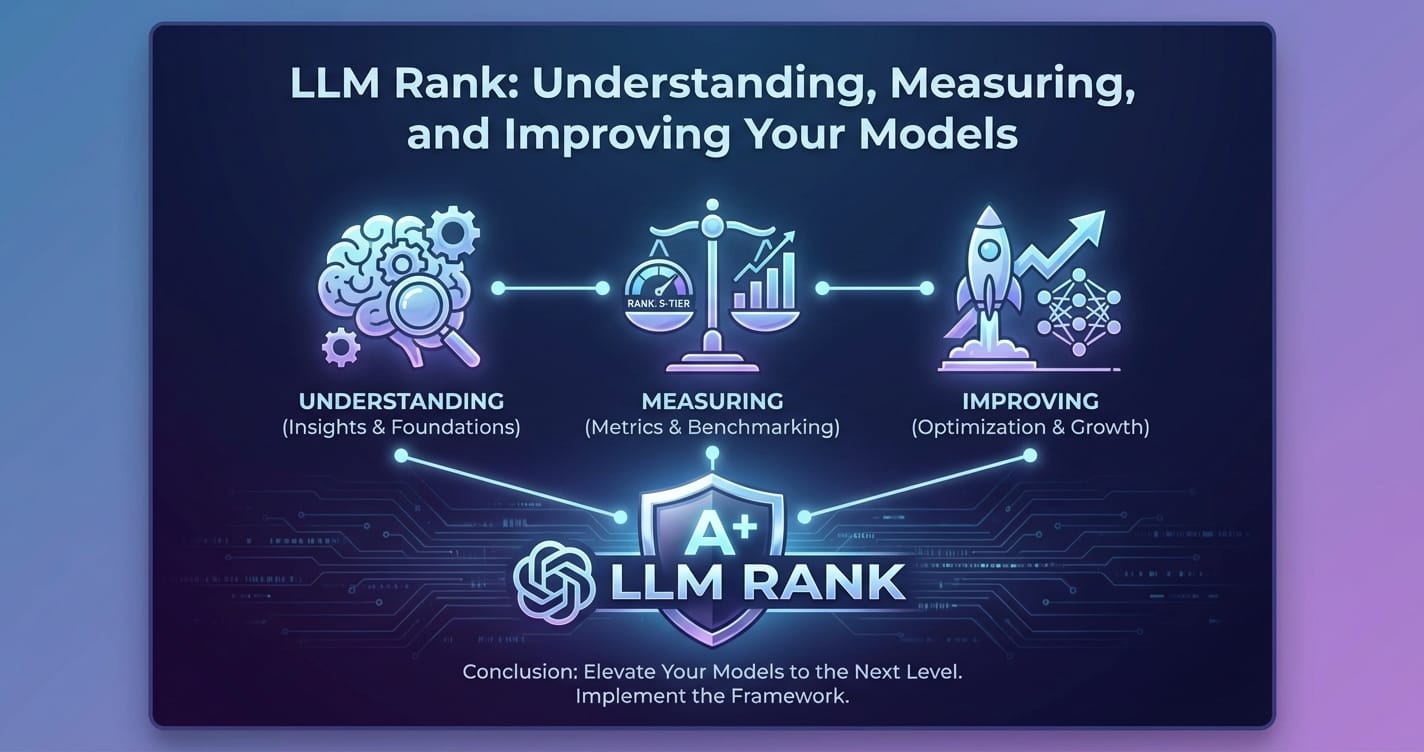
LLM Rank: Understanding, Measuring, and Improving Your Models

In the rapidly evolving landscape of artificial intelligence, Large Language Models (LLMs) have emerged as pivotal tools, reshaping industries from customer service and content creation to scientific research and software development. These sophisticated models, capable of understanding, generating, and manipulating human language with remarkable fluency, are no longer just academic curiosities but integral components of modern digital infrastructure. However, the sheer proliferation of LLMs—each with distinct architectures, training methodologies, and performance characteristics—presents a significant challenge: how do we objectively assess their capabilities, select the most suitable one for a given task, and ensure its optimal operation? This is where the concept of LLM rank becomes not just relevant but absolutely critical.
LLM rank isn't merely about a position on a public leaderboard, though those certainly play a role. It’s a multifaceted concept encompassing a model's performance across a spectrum of dimensions, including accuracy, speed, cost-efficiency, robustness, and ethical alignment, all contextualized by the specific application it serves. For developers, businesses, and researchers alike, a deep understanding of LLM rank is essential for informed decision-making, effective resource allocation, and ultimately, for unlocking the full potential of these powerful AI systems.
This comprehensive guide delves into the intricate world of LLM rank. We will explore what truly constitutes a model's "rank," dissecting the various methodologies used for robust ai model comparison, and subsequently, uncover actionable strategies for Performance optimization. Our journey will navigate through intrinsic and extrinsic evaluation metrics, the nuances of benchmarking, and practical considerations for deployment, all while aiming to equip you with the knowledge to not only understand but also significantly improve your LLM-driven applications. By the end, you'll have a clearer roadmap for navigating the complex LLM ecosystem, ensuring your chosen models not only meet but exceed your operational requirements.
The Foundation of LLM Rank – What Does It Truly Mean?
The term "LLM rank" often conjures images of competitive leaderboards, where models like GPT-4, Claude 3, Gemini, or LLaMA-2 vie for the top spot based on a few aggregated scores. While these rankings offer a superficial glance at generalized capabilities, they only scratch the surface of what LLM rank truly entails in a practical, application-specific context. At its core, LLM rank represents a comprehensive assessment of a model's utility and effectiveness for a particular set of tasks or a defined operational environment. It's a dynamic, multi-dimensional metric that goes far beyond raw accuracy.
Defining LLM Rank: Beyond the Leaderboard
To properly define LLM rank, we must move beyond simplistic comparisons. It's not a single, universally applicable score, but rather a contextualized evaluation reflecting how well an LLM performs against a predefined set of criteria crucial for a specific use case. Consider two models: one excels at creative writing with unparalleled fluency, while another is meticulously precise in summarizing legal documents, albeit with less stylistic flair. Which one has a "higher" LLM rank? The answer hinges entirely on whether you need a poet or a paralegal.
Therefore, LLM rank is a composite score derived from a nuanced analysis of:
- Task-Specific Performance: How accurately and reliably the model performs the specific tasks it's designed for (e.g., text generation, summarization, classification, translation, question answering).
- Efficiency Metrics: This includes inference speed (latency), throughput (requests per second), and computational resource consumption (memory, CPU/GPU usage).
- Cost-Effectiveness: The financial implications of running the model, considering API costs, infrastructure expenses, and development time.
- Robustness and Reliability: The model's ability to maintain performance under varying input conditions, handle edge cases gracefully, and resist adversarial attacks or unexpected inputs.
- Scalability: Its capacity to handle increasing loads and user demands without significant degradation in performance or an exorbitant increase in cost.
- Ethical Alignment and Bias: The degree to which the model avoids generating biased, harmful, or inappropriate content, and adheres to ethical guidelines.
- Developer Experience and Ecosystem: Ease of integration, availability of tools, community support, and documentation, which significantly impact development cycles and maintenance.
Why LLM Rank Matters: Driving Strategic Decisions
Understanding and actively working to improve LLM rank is paramount for several strategic reasons:
- Informed Model Selection: With countless models available—from massive general-purpose models to smaller, specialized ones—a clear understanding of LLM rank helps developers and businesses choose the right tool for the job, preventing over-engineering or under-performance. It guides the decision between, say, fine-tuning a BERT-sized model for specific classification or deploying a large GPT model for open-ended generation.
- Optimized Resource Allocation: Deploying and operating LLMs can be computationally intensive and expensive. A precise LLM rank assessment helps allocate computational resources, budget, and engineering effort efficiently, focusing on areas where improvements yield the most significant returns. It helps determine if the marginal performance gain from a larger model justifies its substantially higher cost.
- Enhanced User Experience: Ultimately, a higher LLM rank translates directly to a better end-user experience. Faster, more accurate, and more reliable AI applications lead to higher user satisfaction, increased engagement, and improved trust in the technology. Imagine a chatbot that responds instantly and accurately versus one that lags and provides generic answers; the difference in user perception is immense.
- Competitive Advantage: In industries leveraging AI, superior LLM rank in key operational areas can be a significant differentiator. Whether it’s faster customer support responses, more insightful data analysis, or higher-quality content generation, a well-ranked LLM solution can set a company apart from its competitors.
- Risk Mitigation and Compliance: By evaluating aspects like bias and robustness, understanding LLM rank helps mitigate risks associated with harmful outputs, ensuring regulatory compliance and maintaining brand reputation. This is particularly crucial in sensitive sectors like healthcare, finance, or legal services.
- Strategic Investment and Innovation: Companies that understand and track LLM rank are better positioned to make strategic investments in AI research, development, and infrastructure. It informs decisions on whether to invest in internal R&D, leverage external APIs, or pursue hybrid approaches.
Key Components Contributing to LLM Rank
Delving deeper, the specific elements that collectively form an LLM’s "rank" can be broken down into these crucial categories:
- Accuracy and Relevance: This is often the first metric people consider. Does the model generate factually correct information? Is its output directly relevant to the prompt? For summarization, is the summary faithful to the source? For classification, is the label correct? This often involves metrics like precision, recall, F1-score, or human-rated accuracy.
- Speed (Latency & Throughput): For real-time applications like chatbots, virtual assistants, or search engines, how quickly the model generates a response (latency) is paramount. Equally important is throughput—how many requests per second it can handle, which affects scalability. A model that is perfectly accurate but takes 30 seconds to respond is often impractical.
- Cost: LLMs, especially larger ones, can be expensive to run, whether through API calls (per token) or self-hosting (GPU costs, energy, maintenance). The cost-effectiveness of a model relative to its performance is a vital component of its practical LLM rank. Sometimes, a slightly less accurate but significantly cheaper model offers a better return on investment.
- Robustness and Reliability: How well does the model perform under stress or with imperfect inputs? Can it handle typos, slang, or ambiguous queries without breaking down? Is its performance consistent over time, or does it degrade ("drift")? Robustness is key to real-world deployment where inputs are rarely pristine.
- Scalability: Can the model's deployment scale up or down efficiently with varying demand? This relates to infrastructure design, load balancing, and the intrinsic parallelizability of the model's architecture. A high LLM rank implies a model that can grow with your user base.
- Controllability and Steerability: Can users or developers easily guide the model's behavior, enforce constraints, or modify its output style? Prompt engineering is one aspect, but the model's inherent architecture and training data influence its inherent steerability. For sensitive applications, the ability to control output is a major factor.
- Security and Privacy: How does the model handle sensitive data? Is it susceptible to data leakage or privacy breaches? Are there mechanisms to ensure input data is not retained or misused? This is increasingly important with stricter data protection regulations.
- Ease of Integration: How straightforward is it to integrate the LLM into existing systems? This includes API documentation quality, SDKs, community support, and compatibility with standard development practices. A complex integration process can significantly negate a model's otherwise high performance.
The Dynamic Nature of LLM Rank
It’s crucial to understand that LLM rank is not static. It’s a perpetually evolving measure influenced by:
- Newer Models and Architectures: Breakthroughs in research constantly introduce more efficient, capable, or specialized models, shifting the landscape.
- Updates to Existing Models: Providers frequently release updated versions of their models, often improving performance, reducing costs, or adding new features.
- Evolving Data and Domains: As the data environment changes, or as an application expands into new domains, a model's effectiveness can shift. What was once top-ranked for general knowledge might lag in a highly specialized field without specific fine-tuning.
- Changing User Expectations: As users become more accustomed to advanced AI capabilities, their expectations for speed, accuracy, and sophistication rise, effectively lowering the relative LLM rank of models that don't keep pace.
- Emerging Evaluation Benchmarks and Methodologies: As the field matures, new and more sophisticated ways to evaluate LLMs emerge, providing finer-grained insights and challenging existing rankings.
In conclusion, grasping the true meaning of LLM rank requires a holistic, contextualized approach. It’s about aligning a model's multifaceted capabilities with specific operational requirements and understanding that this alignment is a moving target. The next step is to explore the robust methodologies that enable us to measure these components effectively and derive a meaningful LLM rank for any given application.
Methodologies for Measuring LLM Performance and Deriving LLM Rank
To truly understand and improve an LLM rank, one must employ rigorous and systematic evaluation methodologies. These methods range from intrinsic linguistic assessments to extrinsic, task-based benchmarks, and even encompass non-functional performance aspects. A comprehensive evaluation framework synthesizes these different perspectives to provide a holistic view of an LLM's capabilities.
A. Intrinsic Evaluation Metrics: Assessing Language Foundations
Intrinsic evaluation focuses on assessing the model's fundamental linguistic capabilities, often independent of a specific downstream task. These metrics are crucial for understanding the raw generative power and language comprehension of an LLM.
- Perplexity (PPL):
- Concept: Perplexity measures how well a probability model predicts a sample. In LLMs, it quantifies how surprised the model is by a given sequence of words. A lower perplexity score indicates that the model assigns a higher probability to the actual sequence of words, suggesting better linguistic modeling and a more accurate understanding of the language.
- Calculation: It's the exponential of the average negative log-likelihood of a sequence of words.
- Limitations: While useful for language modeling tasks and comparing models on similar datasets, perplexity doesn't directly correlate with human-perceived quality or task-specific performance for complex generation tasks. A model with low perplexity might still generate nonsensical or irrelevant text.
- BLEU (Bilingual Evaluation Understudy), ROUGE (Recall-Oriented Understudy for Gisting Evaluation), METEOR (Metric for Evaluation of Translation with Explicit Ordering):
- Concept: These metrics are primarily used for evaluating text generation tasks like machine translation (BLEU), summarization (ROUGE), and more broadly, for comparing a candidate text against one or more reference texts. They measure the overlap of n-grams (sequences of n words) between the generated text and human-written reference texts.
- BLEU: Focuses on precision (how many n-grams in the candidate are also in the reference) and also includes a brevity penalty to prevent very short, high-precision outputs. Scores range from 0 to 1, or 0 to 100.
- ROUGE: Focuses on recall (how many n-grams in the reference are also in the candidate). It comes in several variants (ROUGE-N for n-gram overlap, ROUGE-L for longest common subsequence, ROUGE-S for skip-bigram statistics). ROUGE-1 and ROUGE-2 are common for summarization, indicating overlap of single words and pairs of words, respectively.
- METEOR: Attempts to address some limitations of BLEU by incorporating stemming, synonyms, and paraphrasing, and also considers both precision and recall. It tries to align words between the candidate and reference, giving more weight to matching content words.
- Limitations: These metrics are token-based and don't fully capture semantic meaning, fluency, or coherence. A high score doesn't guarantee human-like quality, and models can sometimes "game" these metrics without truly improving.
- F1-score, Accuracy, Precision, Recall:
- Concept: These are standard classification metrics, adapted for LLM tasks like sentiment analysis, text classification, or named entity recognition where the output is a discrete label.
- Accuracy: (Correct predictions / Total predictions) – straightforward but can be misleading with imbalanced datasets.
- Precision: (True Positives / (True Positives + False Positives)) – measures the proportion of positive identifications that were actually correct.
- Recall: (True Positives / (True Positives + False Negatives)) – measures the proportion of actual positives that were identified correctly.
- F1-score: The harmonic mean of Precision and Recall, providing a balanced measure, especially useful when there's an uneven class distribution.
- Limitations: Applicable only to classification-type tasks, not open-ended generation.
- Human Evaluation:
- Concept: The gold standard. Human evaluators assess LLM outputs based on criteria like relevance, factual correctness, coherence, fluency, safety, helpfulness, and style.
- Challenges: Expensive, time-consuming, subjective, and requires careful design of rubrics and training for annotators. Inter-annotator agreement can be an issue.
- Crowdsourcing/Expert Review: Can scale human evaluation (crowdsourcing platforms like Amazon Mechanical Turk) or provide high-quality, specialized feedback (domain experts).
- Why it's crucial: No automated metric can fully capture the nuance of human language comprehension and generation. Human evaluation provides the ultimate judgment on user experience and utility.
B. Extrinsic Evaluation (Task-Based): Real-World Utility
Extrinsic evaluation assesses an LLM's performance within the context of specific downstream applications or tasks. This approach provides a more practical and application-oriented LLM rank.
- Benchmarking Suites:
- HELM (Holistic Evaluation of Language Models): Developed by Stanford, HELM aims for comprehensive, transparent, and reproducible evaluation across diverse scenarios. It includes a vast collection of metrics, scenarios, and models, allowing for apples-to-apples ai model comparison. It evaluates models on dozens of metrics across various tasks (summarization, Q&A, sentiment, coreference, etc.) and scenarios (robustness, fairness, efficiency).
- MMLU (Massive Multitask Language Understanding): A benchmark designed to measure an LLM's knowledge and problem-solving abilities across a wide range of academic and professional domains. It consists of multiple-choice questions in 57 subjects, from elementary mathematics to US history and professional law.
- Big-Bench (Beyond the Imitation Game Benchmark): A collaborative effort involving hundreds of researchers, Big-Bench consists of over 200 tasks designed to probe LLMs on their reasoning, factual knowledge, common sense, and even creativity. It often includes tasks specifically designed to be challenging for current models.
- GLUE/SuperGLUE (General Language Understanding Evaluation): Collections of diverse natural language understanding tasks (e.g., sentiment analysis, textual entailment, question answering) used to train and evaluate generalized language understanding systems. SuperGLUE is a more challenging successor to GLUE.
- Purpose & Scope: These benchmarks provide standardized datasets and metrics, allowing researchers and developers to compare different models' capabilities systematically, contributing significantly to their general LLM rank.
- Domain-Specific Benchmarks:
- Beyond general benchmarks, specialized evaluations are critical for LLMs operating in niche domains.
- Legal LLMs: Benchmarks might include tasks like contract review, legal research, or case summarization, requiring deep domain knowledge and reasoning.
- Medical LLMs: Evaluations could involve diagnostic reasoning, patient record summarization, or answering medical questions based on clinical guidelines.
- Financial LLMs: Benchmarks might assess performance on financial news analysis, risk assessment, or compliance document processing.
- Importance: These benchmarks highlight the practical utility and trustworthiness of LLMs in regulated or specialized fields, often revealing that a general-purpose model's high LLM rank on broad tasks doesn't translate to domain-specific excellence.
- Real-world Application Testing (A/B testing, user feedback loops):
- A/B Testing: Deploying different LLM versions or configurations to distinct user groups and comparing their performance on key business metrics (e.g., conversion rates, customer satisfaction scores, time-on-page).
- Canary Releases: Gradually rolling out a new LLM version to a small subset of users to monitor its performance and stability before a full release.
- User Feedback Loops: Directly collecting feedback from users (e.g., "Was this answer helpful?"), analyzing logs, and monitoring user behavior to identify areas for improvement. This qualitative and quantitative data is invaluable for real-world Performance optimization.
C. Non-Functional Aspects: Beyond Raw Performance
While accuracy and task performance are vital, an LLM's LLM rank in a production environment is heavily influenced by non-functional characteristics.
- Latency and Throughput:
- Latency: The time taken for an LLM to process an input and generate an output. Critical for interactive applications where users expect near-instantaneous responses. High latency can severely degrade user experience.
- Throughput: The number of requests an LLM can process per unit of time (e.g., requests per second). Essential for applications handling a large volume of concurrent users or queries.
- Measurement: These are measured directly by monitoring API response times and system resource utilization under various load conditions.
- Cost-effectiveness:
- API Costs: For models accessed via API (e.g., OpenAI, Anthropic), costs are typically per token (input + output). Optimizing prompt length and response verbosity can significantly impact cost.
- Computational Resources: For self-hosted models, this includes GPU/CPU hours, memory, and energy consumption. Quantization, pruning, and efficient inference frameworks play a role here.
- Measurement: Tracking API usage logs, cloud infrastructure bills, and internal resource monitoring systems. This is a crucial factor in the practical LLM rank for any business.
- Scalability:
- Concept: An LLM system's ability to handle increasing workloads or data volumes efficiently without performance degradation.
- Measurement: Load testing, stress testing, and observing how performance metrics (latency, throughput) change as the number of concurrent requests or data volume increases. This involves evaluating infrastructure design (e.g., Kubernetes clusters, autoscaling groups) in conjunction with the model.
- Robustness and Bias:
- Robustness: The model's resilience to noisy, ambiguous, or adversarial inputs. Can it generate reasonable outputs even with slight variations in prompts, or does it fail catastrophically?
- Bias: Detecting and quantifying biases in the model's outputs related to protected attributes (gender, race, origin). This involves using specialized datasets (e.g., Winogender, StereoSet) and metrics (e.g., WEAT scores, fairness definitions like equal opportunity).
- Measurement: Stress testing with deliberately perturbed inputs, evaluating performance on datasets specifically designed to expose biases, and human review for subtle forms of bias or harm.
D. Synthesizing for a Composite LLM Rank
The challenge lies in combining these diverse metrics into a meaningful LLM rank. There's no single perfect formula, as the weighting of each component depends entirely on the application's priorities.
- Weighting Different Metrics: For a real-time customer service chatbot, latency might be weighted more heavily than creative writing fluency. For a content generation tool, fluency and creativity might outweigh slight increases in latency.
- Creating Custom Evaluation Frameworks: Developers often build internal evaluation pipelines that combine automated metrics with human review, tailored to their specific use cases. These frameworks often involve:
- Defining Key Performance Indicators (KPIs): Directly linking LLM performance to business outcomes.
- Developing Test Datasets: Curating diverse and representative datasets that cover typical user queries and edge cases.
- Automating Evaluation: Using scripts to run LLMs against test sets and compute metrics.
- Implementing Human-in-the-Loop: Incorporating expert review for subjective quality assessments.
To illustrate the complexity, here's a table comparing common LLM evaluation metrics and their primary use cases:
| Metric Category | Specific Metric | Primary Use Case(s) | Advantages | Disadvantages |
|---|---|---|---|---|
| Intrinsic/Linguistic | Perplexity | Language Modeling, text generation fluency | Quantitative, easy to compute, reflects model's confidence | Doesn't directly correlate with human quality/meaning |
| BLEU | Machine Translation, text generation | Widely accepted, fast computation, good for n-gram overlap | Poor for semantic meaning, brevity penalty can be harsh | |
| ROUGE | Summarization, text generation | Focuses on recall, good for content coverage | Similar to BLEU, struggles with semantic meaning, coherence | |
| METEOR | Translation, summarization, text generation | Incorporates synonyms, stemming, better semantic match | More complex to compute, still n-gram based | |
| F1-score/Accuracy | Classification (sentiment, NER), Q&A | Clear, quantifiable for discrete outputs | Only for classification, sensitive to class imbalance | |
| Extrinsic/Task-Based | MMLU/Big-Bench/HELM | General knowledge, reasoning, multi-task proficiency | Standardized, broad coverage, allows ai model comparison | May not reflect specific domain performance |
| Custom Benchmarks | Domain-specific tasks (legal, medical, finance) | Highly relevant to specific applications, high utility | Costly to create, not generalizable | |
| Non-Functional | Latency | Real-time applications (chatbots, virtual assistants) | Direct measure of responsiveness | Depends heavily on infrastructure, not model intrinsic |
| Throughput | High-volume applications, scalability | Measures capacity to handle load | Similar to latency, depends on infrastructure | |
| Cost-per-query/token | Budget-conscious applications, operational efficiency | Direct financial impact, easy to track | Varies by provider, doesn't reflect inherent quality | |
| Bias/Fairness Metrics | Sensitive applications, ethical AI, compliance | Quantifies potential harm/discrimination | Complex to define and measure, often requires human input | |
| Robustness | Production stability, handling noisy inputs | Ensures reliability in real-world conditions | Hard to exhaustively test, scenario-dependent | |
| Qualitative | Human Evaluation | All tasks, subjective quality (creativity, helpfulness) | Gold standard for true human-like quality, nuance | Subjective, expensive, time-consuming, scaling challenges |
By carefully selecting and weighting these metrics, organizations can construct a robust evaluation framework that truly reflects the LLM rank most relevant to their unique business objectives and user needs. This groundwork then enables targeted strategies for Performance optimization.
Effective AI Model Comparison Strategies
The proliferation of Large Language Models has made ai model comparison a continuous and critical task. With so many options available—from open-source giants to proprietary state-of-the-art APIs—choosing the "best" model is rarely straightforward. An effective strategy for ai model comparison isn't about finding a single winner but identifying the model that best fits your specific requirements, constraints, and operational context. This often involves a blend of rigorous evaluation, practical testing, and strategic platform utilization.
A. Defining Your Use Case Clearly: The Foundation of Comparison
Before embarking on any ai model comparison, the absolute first step is to meticulously define your use case. Without a clear understanding of your specific needs, any comparison will be arbitrary and likely lead to suboptimal choices. The "best" LLM is profoundly subjective, and its LLM rank is entirely context-dependent.
Consider the following factors when defining your use case:
- Task Type: What specific task(s) will the LLM perform? (e.g., text summarization, content generation, sentiment analysis, code generation, chatbot conversation, knowledge retrieval). Each task favors different model architectures and training objectives.
- Domain: Is it a general-purpose task or highly specialized (e.g., legal, medical, financial, creative writing)? Domain-specific knowledge is crucial for accuracy.
- Data Volume & Format: What kind of input data will the model receive? How much? What are its characteristics (e.g., short queries, long documents, structured data)?
- Latency Tolerance: How quickly does the model need to respond? Real-time interactions demand low latency, while offline batch processing might be more forgiving.
- Budget & Cost Sensitivity: What are your financial constraints for API usage or infrastructure for self-hosting? This is a major differentiator between models.
- Performance Requirements: What is the acceptable level of accuracy, relevance, and robustness? Is a 90% accuracy sufficient, or is near-perfect recall essential?
- Ethical & Safety Concerns: How sensitive is the application? Are there high risks of bias, misinformation, or generating harmful content?
- Scalability Needs: How many users or requests do you anticipate? Does the model need to scale to millions of users?
- Integration Complexity: How easily can the model be integrated into your existing tech stack?
By precisely outlining these requirements, you can create a tailored set of criteria against which all candidate models will be evaluated, transforming abstract LLM rank discussions into concrete, actionable insights.
B. Establishing a Baseline: A Reference Point for Improvement
Before comparing multiple advanced LLMs, it's often beneficial to establish a baseline. A baseline provides a reference point for your ai model comparison and helps quantify the true value added by more sophisticated or expensive models.
- Why a Baseline is Essential:
- Quantifies Improvement: Without a baseline, it's hard to measure how much better a new model performs.
- Cost-Benefit Analysis: Helps determine if the marginal performance gain of a premium model justifies its higher cost.
- Simplicity First: Sometimes, a simpler, smaller, or open-source model might suffice for a given task, saving significant resources.
- Using Open-Source or Smaller Commercial Models:
- Consider models like LLaMA-2 7B/13B, Mistral, or even older, smaller models like BERT or RoBERTa for specific tasks (e.g., classification, named entity recognition).
- Run initial tests with a chosen baseline against your specific test datasets and record its performance across your defined KPIs (accuracy, latency, cost). This will give you a fundamental LLM rank to compare against.
C. A/B Testing and Canary Releases: Real-World Comparison
For applications already in production or nearing deployment, A/B testing and canary releases are indispensable strategies for ai model comparison in real-world scenarios.
- A/B Testing:
- Concept: Divide your user base into two or more groups. Group A interacts with Model A, Group B with Model B (or an older version).
- Monitoring KPIs: Track key business metrics for each group (e.g., conversion rates, user engagement, customer satisfaction scores, task completion rates, support ticket deflection).
- Insights: A/B testing provides direct evidence of how different models impact actual user behavior and business outcomes, offering a highly practical LLM rank.
- Canary Releases:
- Concept: Gradually roll out a new LLM version or a new model to a small percentage of your user base (the "canary" group).
- Monitoring & Rollback: Closely monitor its performance, stability, and error rates. If issues arise, the rollout can be quickly rolled back, minimizing impact. If stable, gradually increase the percentage of users.
- Benefits: Allows for controlled testing in a production environment, mitigating risks associated with deploying new AI models.
D. Leveraging Unified Platforms for AI Model Comparison
The landscape of LLMs is fragmented, with dozens of providers each offering unique models, APIs, and pricing structures. Integrating and switching between these models for ai model comparison can be a developer's nightmare, involving multiple SDKs, authentication schemes, and data formats. This is where unified API platforms become incredibly valuable.
XRoute.AI is a cutting-edge unified API platform designed to streamline access to large language models (LLMs) for developers, businesses, and AI enthusiasts. By providing a single, OpenAI-compatible endpoint, XRoute.AI simplifies the integration of over 60 AI models from more than 20 active providers, enabling seamless development of AI-driven applications, chatbots, and automated workflows.
Here’s how platforms like XRoute.AI XRoute.AI revolutionize ai model comparison:
- Single Integration Point: Instead of integrating with OpenAI, Anthropic, Google, Cohere, and other providers individually, you integrate once with XRoute.AI. This drastically reduces development time and complexity.
- Effortless Model Switching: With a unified API, switching between different LLMs for testing and ai model comparison becomes trivial, often just a change in a configuration parameter. This means you can easily compare GPT-4, Claude 3, LLaMA-2, or Mistral on the fly against your custom benchmarks, allowing you to rapidly assess their relative LLM rank for your specific needs.
- Access to a Vast Ecosystem: XRoute.AI offers access to over 60 models from more than 20 providers. This breadth of choice is invaluable for finding the optimal model. You can experiment with specialized models, smaller cost-effective models, or the latest cutting-edge ones without the overhead of multiple integrations.
- Optimized Performance: Platforms like XRoute.AI are built for low latency AI and high throughput. They can intelligently route requests, leverage caching, and manage connections, often delivering better Performance optimization than direct API calls, ensuring your LLM rank isn't hampered by infrastructure.
- Cost-Effective AI: By aggregating models, these platforms often provide flexible pricing models and help users identify the most cost-effective AI solutions for their specific workloads. They allow for dynamic model selection based on cost and performance, enabling you to optimize your budget without compromising on quality.
- Experimentation and Rapid Iteration: The ease of switching and breadth of choice fostered by such platforms significantly accelerates the experimentation phase. Developers can quickly prototype with different models, run parallel evaluations, and iterate on their prompts and applications, directly leading to improvements in their application's LLM rank.
Leveraging platforms like XRoute.AI is no longer just a convenience but a strategic advantage for any organization serious about efficient ai model comparison and achieving optimal Performance optimization in their AI initiatives.
E. Ethical Considerations in AI Model Comparison
Beyond technical metrics, ethical considerations are increasingly vital during ai model comparison.
- Bias and Fairness: Ensure that models are compared not only on raw accuracy but also on their fairness across different demographic groups. Use specific datasets and metrics (as discussed in the evaluation section) to detect and quantify bias.
- Transparency and Explainability: Evaluate models on their ability to provide explanations for their outputs, especially in high-stakes applications.
- Data Privacy: Confirm that the models and evaluation processes adhere to data privacy regulations (e.g., GDPR, CCPA). Ensure comparable datasets are used across all models being compared to avoid skewed results. If one model is tested on clean, filtered data and another on noisy, real-world data, the comparison is invalid.
- Safety and Harmlessness: Actively test models for their propensity to generate toxic, hateful, or harmful content. This is a critical factor in the LLM rank for public-facing applications.
By adopting a structured, data-driven approach, incorporating real-world testing, leveraging unified platforms, and adhering to ethical guidelines, organizations can conduct thorough and effective ai model comparison, ultimately leading to the selection and deployment of LLMs that achieve a high LLM rank in their specific applications. The next step is to explore how to continuously enhance this rank through strategic Performance optimization.
XRoute is a cutting-edge unified API platform designed to streamline access to large language models (LLMs) for developers, businesses, and AI enthusiasts. By providing a single, OpenAI-compatible endpoint, XRoute.AI simplifies the integration of over 60 AI models from more than 20 active providers(including OpenAI, Anthropic, Mistral, Llama2, Google Gemini, and more), enabling seamless development of AI-driven applications, chatbots, and automated workflows.
Performance Optimization Strategies to Elevate Your LLM Rank
Once an LLM has been chosen through rigorous ai model comparison, the journey is far from over. Achieving and maintaining a high LLM rank in production requires continuous Performance optimization. This encompasses a wide range of strategies, from refining the model itself to optimizing its underlying infrastructure and ensuring cost-effectiveness. The goal is to maximize the model's value by enhancing its speed, accuracy, reliability, and economic viability.
A. Model Selection and Fine-tuning: Tailoring the Engine
The initial model choice is fundamental, but often, off-the-shelf models need refinement to excel in specific contexts.
- Choosing the Right Base Model:
- This is the outcome of your initial ai model comparison. Select a model whose general architecture and pre-training align best with your task (e.g., a strong reasoning model for complex Q&A, a highly creative model for content generation).
- Consider the size of the model. Larger models are often more capable but come with higher inference costs and latency. Smaller, more specialized models can sometimes achieve comparable LLM rank for narrow tasks at a fraction of the cost.
- Data Preparation and Quality: The Bedrock of Optimization:
- "Garbage in, garbage out" holds especially true for LLMs. High-quality, relevant, and clean data is crucial for both fine-tuning and effective prompt engineering.
- Data Cleaning: Remove irrelevant information, duplicate entries, and incorrect labels.
- Data Annotation: Ensure human-annotated data (for fine-tuning or evaluation) is consistent and accurate.
- Data Augmentation: Increase the size and diversity of your training data through techniques like paraphrasing, back-translation, or adding noise.
- Domain Specificity: The closer your data is to the target domain, the better the model's performance in that domain. This directly impacts the LLM rank for specialized applications.
- Domain-Specific Fine-tuning:
- Pre-trained LLMs are powerful but often lack specific knowledge or stylistic nuances for niche domains. Fine-tuning involves further training a pre-trained model on a smaller, domain-specific dataset.
- Benefits: Significantly improves relevance, accuracy, and adherence to domain-specific language and facts, directly elevating LLM rank for the target application.
- Techniques:
- Full Fine-tuning: Training all layers of the model, which is resource-intensive.
- Parameter-Efficient Fine-Tuning (PEFT): Methods like LoRA (Low-Rank Adaptation) or Adapters allow for fine-tuning only a small number of additional parameters, dramatically reducing computational costs and time while achieving comparable performance.
- Prompt Engineering: Crafting the Input for Optimal Output:
- Before resorting to fine-tuning, mastering prompt engineering is a powerful and often overlooked form of Performance optimization.
- Clear Instructions: Provide explicit, unambiguous instructions.
- Contextual Information: Supply relevant background knowledge.
- Examples (Few-shot learning): Show the model desired input-output pairs.
- Chain-of-Thought Prompting: Ask the model to "think step-by-step" to improve reasoning.
- Role-Playing: Assign a persona to the LLM (e.g., "You are an expert financial analyst").
- Output Constraints: Specify format, length, tone, or keywords to include/exclude.
- Impact: Well-crafted prompts can dramatically improve the accuracy, relevance, and style of LLM outputs, effectively boosting its LLM rank for specific tasks without modifying the model itself.
B. Infrastructure and Deployment Optimization: Powering the Model Efficiently
Even the best-performing LLM will fall short if its deployment infrastructure isn't optimized. This area focuses on ensuring the model runs efficiently, quickly, and reliably.
- Hardware Acceleration (GPUs, TPUs):
- LLMs are computationally intensive. Leveraging specialized hardware like Graphics Processing Units (GPUs) or Tensor Processing Units (TPUs) is crucial for accelerating inference and training.
- Cloud Services: Utilize cloud providers' optimized instances (e.g., AWS EC2 P/G series, Azure NC/ND series, Google Cloud TPU VMs).
- Quantization and Pruning: Reducing Model Footprint:
- Quantization: Reduces the precision of numerical representations (e.g., from 32-bit floats to 8-bit integers) in the model's weights and activations. This significantly reduces model size, memory footprint, and computational requirements, leading to faster inference and lower costs with minimal performance degradation.
- Pruning: Removes less important weights or connections from the neural network. This makes the model smaller and faster, often used in conjunction with fine-tuning to retain performance.
- Benefits: Essential for deploying LLMs on edge devices or in environments with strict resource constraints, directly improving their LLM rank in terms of efficiency.
- Distributed Inference:
- For very large models or high throughput requirements, a single GPU might not suffice. Distributed inference involves splitting the model or the incoming requests across multiple GPUs or machines.
- Techniques: Model parallelism (splitting the model across devices), data parallelism (processing different batches on different devices), or pipeline parallelism.
- Result: Significantly increases throughput and reduces overall latency for high-demand applications, crucial for maintaining a high LLM rank under load.
- Caching Mechanisms:
- Concept: Store frequently requested or identical LLM responses to avoid redundant computations.
- Types:
- Semantic Caching: Caching responses to semantically similar (not just identical) prompts.
- Exact Match Caching: Storing responses for identical prompts.
- Benefits: Dramatically reduces latency for repeated queries and lowers API costs, making it a powerful Performance optimization technique, especially for chatbots or knowledge retrieval systems.
- Optimizing API Calls (Batching, Asynchronous Processing):
- When using LLM APIs, how you interact with them can significantly impact performance.
- Batching: Send multiple prompts in a single API request if the provider supports it. This reduces network overhead and often leads to more efficient processing on the provider's end, decreasing effective latency per request.
- Asynchronous Processing: Don't wait for one LLM response before sending the next request. Use asynchronous programming to send multiple requests concurrently and process responses as they arrive.
- How XRoute.AI Helps: Platforms like XRoute.AI are designed with low latency AI and high throughput in mind. They abstract away much of the complexity of managing multiple API connections, potentially offering optimized routing, load balancing, and connection pooling, directly enhancing Performance optimization without custom engineering.
C. Continuous Monitoring and Iteration: The Perpetual Loop of Improvement
LLM rank is not a static achievement. It requires ongoing vigilance and adaptation.
- Establishing Feedback Loops:
- User Feedback: Collect explicit feedback (e.g., "thumbs up/down" buttons) and implicit feedback (e.g., rephrasing queries, abandonment rates).
- Expert Review: Regularly have human experts review a sample of LLM outputs against specific quality criteria.
- Drift Detection:
- Concept: LLM performance can degrade over time due due to changes in user behavior, evolving real-world data, or shifts in domain specifics. This is known as "model drift" or "data drift."
- Monitoring: Implement monitoring systems to track key performance metrics (accuracy, relevance, coherence) and input data characteristics. Anomalies can signal drift.
- Action: When drift is detected, it's a cue for retraining, fine-tuning, or re-evaluating prompt strategies to restore or improve the LLM rank.
- A/B Testing New Versions:
- Continuously experiment with new models, fine-tuned versions, or prompt engineering techniques using A/B tests in production. This allows for data-driven decisions on deploying improvements.
- Retraining and Re-evaluation:
- Periodically re-train or fine-tune your LLM with fresh data. As user interactions generate more data, this new data can be used to further improve the model's understanding and performance, thus maintaining or elevating its LLM rank.
- Regularly re-evaluate your models against your full suite of benchmarks and human evaluation processes to ensure they are still meeting expectations.
D. Cost-Effective AI Strategies: Balancing Performance with Budget
Performance optimization must always consider cost. A high-performing model that breaks the bank is not truly optimized for business.
- Balancing Performance with Budget:
- Always conduct a cost-benefit analysis. A slightly less accurate model that is 10x cheaper might be a better choice for high-volume, low-stakes tasks.
- Use model routing: For complex queries, route to a larger, more capable model. For simple queries, use a smaller, cheaper model.
- Leveraging Smaller, Specialized Models:
- Don't always reach for the largest, most general-purpose LLM. For specific tasks (e.g., sentiment analysis, entity extraction), a smaller, fine-tuned model (e.g., BERT-based) can outperform a massive LLM at a fraction of the cost.
- Utilizing Platforms for Cost-Effective AI:
- Platforms like XRoute.AI focus on providing cost-effective AI solutions by offering access to a wide array of models with transparent and competitive pricing. Their aggregation allows for flexible model selection based on both performance and cost. They can also help identify the most economical routes or models for specific requests, allowing you to maximize your budget efficiency without sacrificing the desired LLM rank.
E. Security and Robustness Enhancements: Building Trust and Resilience
A high LLM rank also implies a secure and robust system.
- Protecting Against Adversarial Attacks:
- LLMs can be vulnerable to prompt injection, data poisoning, or model extraction attacks. Implement techniques like input sanitization, guardrails, and adversarial training to strengthen the model's defenses.
- Implementing Input Validation and Sanitization:
- Clean and validate all inputs before they reach the LLM to prevent malicious injections or unintended behaviors.
- Ensuring Data Privacy and Compliance:
- Implement robust data governance, access controls, and anonymization techniques. Ensure your LLM deployment complies with relevant data protection regulations. When using third-party APIs, understand their data retention and privacy policies.
By diligently applying these Performance optimization strategies across model selection, infrastructure, continuous monitoring, cost management, and security, organizations can not only improve but also sustain a high LLM rank for their AI applications, ensuring they deliver maximum value and achieve their strategic objectives.
The Future of LLM Ranking and AI Development
The trajectory of Large Language Models is one of relentless innovation, pushing the boundaries of what AI can achieve. As these models become increasingly integrated into the fabric of our digital world, the methodologies for assessing their capabilities—our understanding of LLM rank—and the strategies for Performance optimization will continue to evolve at a rapid pace. The future promises even more sophisticated models, more refined evaluation techniques, and a greater emphasis on ethical and responsible deployment.
Emergence of Specialized LLMs
While general-purpose LLMs like GPT-4 and Claude 3 continue to impress with their broad capabilities, the future will see a further proliferation of highly specialized models. These models, fine-tuned on vast domain-specific datasets (e.g., scientific research papers, legal precedents, medical journals, architectural blueprints), will achieve an exceptionally high LLM rank within their narrow fields, surpassing general models for specific tasks. This specialization will optimize for accuracy, relevance, and efficiency within their niche, offering unparalleled utility for targeted applications and creating distinct ai model comparison challenges. Developers will increasingly choose between "generalist" and "specialist" LLMs based on the precise demands of their projects, further emphasizing the context-dependent nature of LLM rank.
Advances in Automated Evaluation Tools
Human evaluation, while the gold standard, remains expensive and slow. The future will bring significant advancements in automated evaluation tools that move beyond simple n-gram overlap. We can anticipate:
- Semantic Similarity Metrics: More robust metrics that assess the meaning rather than just the surface form of text, leveraging embedding spaces and advanced neural networks.
- Factuality Checkers: AI-powered tools capable of cross-referencing LLM outputs against trusted knowledge bases and verifiable sources to automatically flag factual inaccuracies.
- Bias and Safety Detectors: Sophisticated systems that can more accurately and comprehensively identify and quantify various forms of bias, toxicity, and harmful content generation, improving the ethical component of LLM rank.
- Adversarial Evaluation Frameworks: Automated systems that generate adversarial prompts to rigorously test model robustness and security vulnerabilities.
These innovations will enable faster, more scalable, and more consistent evaluations, providing richer data for ai model comparison and accelerating the feedback loop for Performance optimization.
The Role of Ethical AI in Future LLM Rank Metrics
As LLMs become more pervasive, their ethical implications will take center stage. Future LLM rank metrics will increasingly incorporate:
- Explainability Scores: Quantifying how well a model can explain its reasoning or provide provenance for its outputs.
- Fairness Audits: Standardized, automated, and human-in-the-loop audits that assess a model's fairness across diverse demographic groups and sensitive topics.
- Privacy Compliance Metrics: Evaluating how well models protect user data and adhere to privacy regulations.
- Carbon Footprint and Energy Efficiency: As AI scales, its environmental impact becomes a concern. Future rankings may include energy consumption as a factor, incentivizing more efficient models and deployment strategies.
These ethical and responsible AI components will not be secondary considerations but fundamental pillars of a model's overall LLM rank, driving the development of more trustworthy and socially beneficial AI.
The Increasing Importance of Unified Platforms like XRoute.AI
The fragmentation of the LLM ecosystem is a persistent challenge. As more models emerge and the need for rigorous ai model comparison intensifies, unified API platforms will become even more indispensable. Platforms like XRoute.AI XRoute.AI will continue to play a crucial role by:
- Democratizing Access: Providing a single, easy-to-use interface to a vast array of models, lowering the barrier to entry for developers and businesses of all sizes.
- Accelerating Innovation: Enabling rapid experimentation and iteration by simplifying model switching and abstracting away integration complexities, thereby fostering quicker cycles of Performance optimization.
- Optimizing Resource Utilization: Offering intelligent routing, load balancing, and cost-effective access to diverse models, allowing users to achieve low latency AI and cost-effective AI without significant overhead.
- Fostering Benchmarking and Transparency: Potentially integrating advanced evaluation tools and providing analytics that empower users to conduct more effective ai model comparison and track their application's LLM rank over time.
These platforms will serve as critical infrastructure, empowering developers to focus on building innovative applications rather than managing the intricate web of individual LLM APIs.
The Collaborative Nature of Improving LLM Rank Across the Ecosystem
Ultimately, the future of LLM rank improvement is a collaborative effort. Researchers will continue to push the boundaries of model capabilities. Developers will build novel applications and provide invaluable real-world feedback. Platform providers will create the tools and infrastructure that connect everything. And the broader community will demand and contribute to the ethical guidelines that shape AI's responsible development. This interconnected ecosystem will collectively drive the continuous enhancement of LLM performance, utility, and trustworthiness.
The journey of understanding, measuring, and improving LLM rank is dynamic and ongoing. As AI evolves, so too will our methods for taming its complexity and harnessing its immense power. By staying informed, adopting rigorous methodologies, and leveraging cutting-edge tools, we can collectively ensure that LLMs continue to deliver transformative value across all sectors.
Conclusion
The journey through the world of LLM rank reveals a landscape far more nuanced and dynamic than simple leaderboards suggest. We've established that LLM rank is a multi-faceted concept, deeply contextualized by specific use cases and encompassing everything from intrinsic linguistic capabilities and task-specific performance to critical non-functional attributes like latency, cost, and robustness. It is not a fixed score but a continuous aspiration, requiring perpetual vigilance and adaptation.
Our exploration into the methodologies for measuring LLM performance highlighted the necessity of a comprehensive evaluation framework. From automated metrics like Perplexity, BLEU, and F1-score to indispensable human evaluation and robust extrinsic benchmarks such as HELM, MMLU, and Big-Bench, each tool provides a unique lens through which to assess an LLM’s true utility. Furthermore, we delved into the critical importance of evaluating non-functional aspects like speed, cost-effectiveness, scalability, and ethical alignment, which are often the true determinants of a model's success in production.
We then traversed the realm of ai model comparison strategies, emphasizing that effective comparison begins with a crystal-clear definition of one's use case, establishing a reliable baseline, and embracing real-world testing through A/B experiments and canary releases. Crucially, we recognized the transformative role of unified API platforms like XRoute.AI XRoute.AI. By simplifying access to a vast array of models from numerous providers via a single, OpenAI-compatible endpoint, XRoute.AI dramatically streamlines the ai model comparison process, enabling developers to rapidly experiment, integrate, and optimize, all while ensuring low latency AI and cost-effective AI solutions.
Finally, we outlined a robust suite of Performance optimization strategies. These span intelligent model selection and domain-specific fine-tuning, meticulous prompt engineering, and critical infrastructure-level enhancements such as quantization, distributed inference, and caching. The discussion underscored the importance of continuous monitoring for drift, establishing feedback loops, and iterating through A/B tests to perpetually refine an LLM's capabilities. Cost-effectiveness and robust security measures emerged as indispensable pillars for sustainable, high-ranking AI deployments.
As we look to the future, the evolution of specialized LLMs, advanced automated evaluation tools, and a heightened focus on ethical AI will continue to redefine what constitutes a superior LLM rank. In this dynamic environment, platforms like XRoute.AI will remain pivotal, democratizing access, accelerating innovation, and empowering developers to navigate the complexity with unprecedented ease. By embracing a holistic, data-driven approach to understanding, measuring, and continuously improving LLM rank, organizations can not only unlock the immense potential of large language models but also build intelligent solutions that are truly impactful, efficient, and trustworthy.
FAQ
Q1: What exactly does "LLM rank" mean beyond just being #1 on a leaderboard? A1: "LLM rank" is a comprehensive, context-dependent assessment of a model's utility and effectiveness for a specific set of tasks or an operational environment. It encompasses not just raw accuracy but also performance across dimensions like latency, cost-effectiveness, robustness, scalability, ethical alignment, and ease of integration. A model's rank is highest when it optimally meets all the specific requirements of its intended application, rather than simply scoring highest on a general benchmark.
Q2: How do I choose the best LLM for my specific application given so many options? A2: The "best" LLM is subjective. Start by clearly defining your use case: what task will it perform, in what domain, with what latency tolerance, and within what budget? Then, use a combination of intrinsic (e.g., perplexity, ROUGE), extrinsic (e.g., MMLU, custom benchmarks), and non-functional metrics (e.g., cost, speed) for ai model comparison. Platforms like XRoute.AI can significantly simplify this process by providing a unified API to experiment with multiple models quickly and efficiently, helping you identify the optimal balance of performance and cost.
Q3: What are the most effective ways to improve my LLM's performance once it's deployed? A3: Performance optimization involves several strategies: 1. Fine-tuning: Train your chosen base model on a smaller, domain-specific dataset using techniques like PEFT (LoRA). 2. Prompt Engineering: Continuously refine your prompts with clear instructions, context, few-shot examples, and chain-of-thought techniques. 3. Infrastructure Optimization: Utilize hardware acceleration (GPUs), apply quantization and pruning to reduce model size, implement caching, and optimize API calls (batching, asynchronous processing). 4. Continuous Monitoring: Establish feedback loops, detect model drift, and conduct A/B tests to iterate on improvements. 5. Cost-Effectiveness: Balance performance with budget, potentially using smaller, specialized models for less complex tasks or leveraging platforms for cost-effective AI.
Q4: How can unified API platforms like XRoute.AI help with LLM evaluation and optimization? A4: XRoute.AI XRoute.AI streamlines LLM evaluation and optimization by offering a single, OpenAI-compatible endpoint to over 60 models from 20+ providers. This dramatically simplifies ai model comparison by allowing rapid switching between models for experimentation. It ensures low latency AI and cost-effective AI through optimized routing and flexible access, accelerating development, enabling quicker iteration, and helping developers achieve the desired LLM rank without managing multiple complex integrations.
Q5: What are some critical non-functional aspects I should consider when evaluating LLMs, besides just accuracy? A5: Beyond accuracy, crucial non-functional aspects include: * Latency & Throughput: How fast and how many requests per second the model can handle. * Cost-effectiveness: The financial cost per query or token, including infrastructure. * Robustness: The model's resilience to noisy or adversarial inputs. * Scalability: Its ability to handle increasing user loads. * Bias & Fairness: The absence of harmful or discriminatory outputs. * Ease of Integration: How straightforward it is to deploy and manage within your existing systems. These factors significantly influence a model's practical LLM rank in a real-world production environment.
🚀You can securely and efficiently connect to thousands of data sources with XRoute in just two steps:
Step 1: Create Your API Key
To start using XRoute.AI, the first step is to create an account and generate your XRoute API KEY. This key unlocks access to the platform’s unified API interface, allowing you to connect to a vast ecosystem of large language models with minimal setup.
Here’s how to do it: 1. Visit https://xroute.ai/ and sign up for a free account. 2. Upon registration, explore the platform. 3. Navigate to the user dashboard and generate your XRoute API KEY.
This process takes less than a minute, and your API key will serve as the gateway to XRoute.AI’s robust developer tools, enabling seamless integration with LLM APIs for your projects.
Step 2: Select a Model and Make API Calls
Once you have your XRoute API KEY, you can select from over 60 large language models available on XRoute.AI and start making API calls. The platform’s OpenAI-compatible endpoint ensures that you can easily integrate models into your applications using just a few lines of code.
Here’s a sample configuration to call an LLM:
curl --location 'https://api.xroute.ai/openai/v1/chat/completions' \
--header 'Authorization: Bearer $apikey' \
--header 'Content-Type: application/json' \
--data '{
    "model": "gpt-5",
    "messages": [
        {
            "content": "Your text prompt here",
            "role": "user"
        }
    ]
}'
With this setup, your application can instantly connect to XRoute.AI’s unified API platform, leveraging low latency AI and high throughput (handling 891.82K tokens per month globally). XRoute.AI manages provider routing, load balancing, and failover, ensuring reliable performance for real-time applications like chatbots, data analysis tools, or automated workflows. You can also purchase additional API credits to scale your usage as needed, making it a cost-effective AI solution for projects of all sizes.
Note: Explore the documentation on https://xroute.ai/ for model-specific details, SDKs, and open-source examples to accelerate your development.