LLM Routing: Optimize AI Performance

The advent of Large Language Models (LLMs) has undeniably reshaped the landscape of artificial intelligence, unlocking unprecedented capabilities in natural language understanding, generation, and complex problem-solving. From powering sophisticated chatbots and content creation engines to automating customer support and aiding scientific research, LLMs are at the forefront of the current AI revolution. However, the sheer diversity of models, providers, and their varying strengths, weaknesses, and pricing structures presents a significant challenge for developers and businesses striving to integrate these powerful tools effectively. Navigating this intricate ecosystem to achieve optimal results, whether in terms of speed, accuracy, or economic viability, is far from straightforward. This is where the strategic discipline of LLM routing emerges as a critical paradigm, offering a sophisticated approach to managing and orchestrating AI workflows.
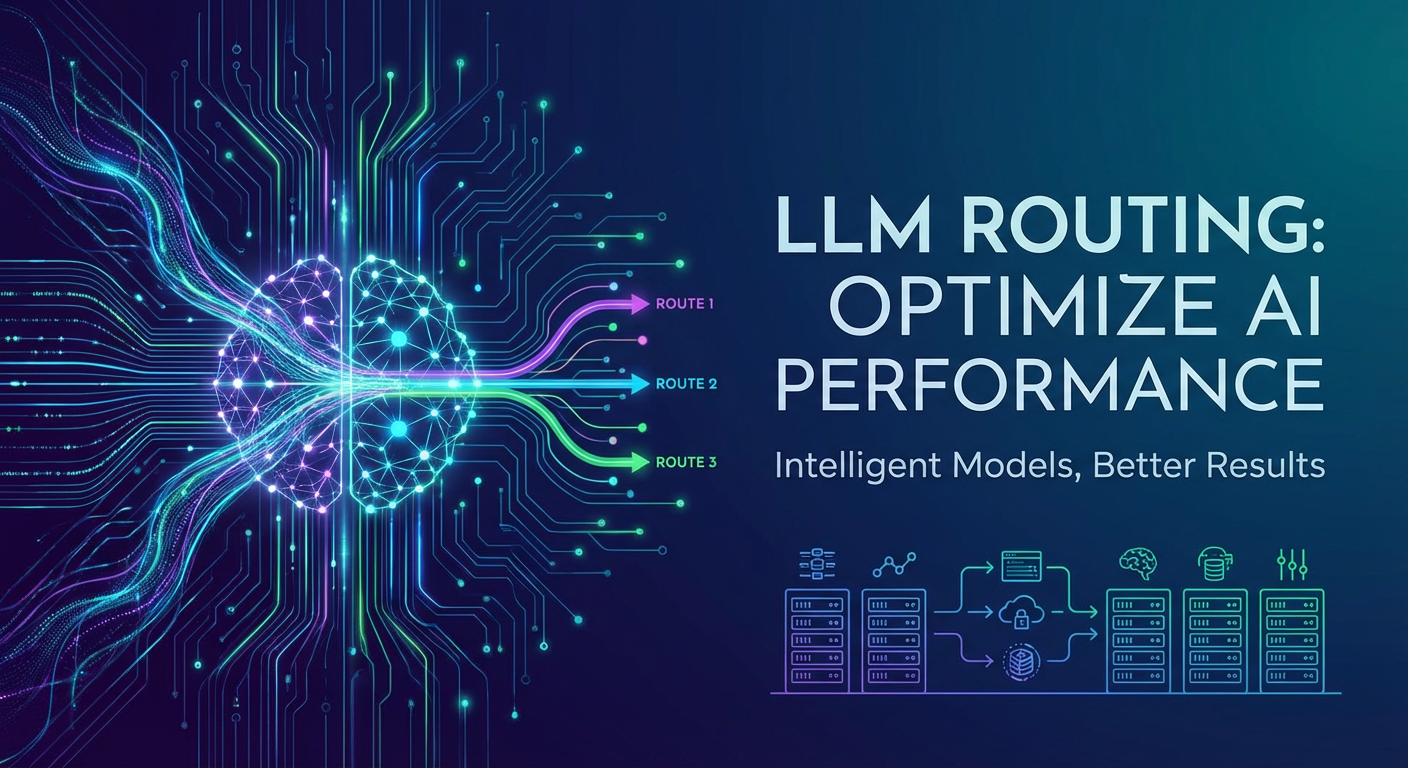
At its core, LLM routing is the intelligent process of directing a given request or task to the most appropriate Large Language Model available, based on a predefined set of criteria. These criteria can range from the desired output quality, the acceptable latency, and specific model capabilities, to, crucially, the prevailing cost-effectiveness. The promise of LLM routing lies in its ability to abstract away the underlying complexities of model selection, allowing applications to dynamically leverage the best-fit AI without constant manual intervention. This intelligent layer acts as a conductor, ensuring that every AI query is handled by the model best equipped to deliver the required outcome efficiently, thereby unlocking profound advantages in both Performance optimization and Cost optimization.
Without a robust LLM routing strategy, organizations risk falling into common pitfalls: overspending on premium models for trivial tasks, experiencing slow response times due to suboptimal model choices, or facing system failures when a primary model encounters an outage. The fragmented nature of the LLM market—with titans like OpenAI's GPT series, Anthropic's Claude, Google's Gemini, and open-source contenders like Llama and Mistral each offering unique propositions—necessitates a dynamic and intelligent system to harness their collective power. This comprehensive exploration will delve into the intricacies of LLM routing, examining how it fundamentally transforms AI integration from a static, reactive process into a dynamic, proactive one, ultimately driving superior performance, significantly reducing operational costs, and fostering a more resilient AI infrastructure.
The Landscape of Large Language Models: A World of Opportunities and Challenges
The proliferation of Large Language Models has been nothing short of explosive. What began as a handful of pioneering models has rapidly expanded into a vibrant, competitive ecosystem featuring dozens of highly capable, specialized, and general-purpose LLMs. Each model comes with its own unique architecture, training data, strengths, and often, a distinct philosophical approach to AI development.
A Glimpse at the Diversity:
- General-Purpose Powerhouses: Models like OpenAI's GPT-4 and Anthropic's Claude 3 are renowned for their broad capabilities, excelling in tasks from complex reasoning and creative writing to detailed summarization and code generation. They represent the cutting edge in terms of raw intelligence and versatility.
- Specialized Performers: Beyond the generalists, a growing number of models are fine-tuned or designed for specific use cases. Examples include models optimized for code generation (e.g., Google's Codey), those with extended context windows for deep document analysis, or even smaller, more efficient models for on-device inference or specific natural language understanding (NLU) tasks.
- Open-Source Innovation: Projects like Meta's Llama series, Mistral AI's models, and various derivatives from Hugging Face have democratized access to powerful LLMs, fostering an ecosystem of innovation where researchers and developers can fine-tune, modify, and deploy models with greater flexibility.
- Cloud Provider Offerings: Major cloud providers like AWS (Amazon Bedrock), Google Cloud (Vertex AI), and Microsoft Azure (Azure OpenAI Service) offer platforms that host a multitude of LLMs, often providing their own proprietary models alongside access to third-party ones, bundled with enterprise-grade infrastructure and security features.
Challenges in a Multi-Model Environment:
While this diversity presents immense opportunities, it also introduces significant operational complexities that organizations must navigate:
- API Fragmentation: Each LLM provider typically offers its own unique API, requiring distinct integration efforts. Developers often face the arduous task of learning and implementing multiple SDKs, managing different authentication schemes, and handling varied request/response formats. This leads to increased development time and maintenance overhead.
- Inconsistent Performance: Models vary widely in their inference speed, token generation rate, and overall latency. A model that performs exceptionally well for one type of query might be sluggish for another. Furthermore, provider-side infrastructure can introduce unpredictable delays, impacting user experience, especially in real-time applications.
- Varying Costs: The pricing models for LLMs are diverse and dynamic. They can be based on input tokens, output tokens, compute time, model size, or even per-request. Comparing costs across providers and identifying the most economical option for a given task, especially as prices fluctuate, is a continuous challenge. Without careful management, expenses can quickly spiral out of control.
- Vendor Lock-in Risk: Relying solely on a single LLM provider, while simplifying initial integration, introduces the risk of vendor lock-in. This can limit future flexibility, restrict access to new innovations from competitors, and make it difficult to negotiate better terms or switch providers if service quality or pricing changes unfavorably.
- Quality and Accuracy Discrepancies: Different models, even when prompted similarly, can produce outputs of varying quality, accuracy, and style. Ensuring that the right model is used for the right task to maintain a consistent user experience and meet specific application requirements is crucial. For instance, a creative writing model might "hallucinate" more than a factual question-answering model, which is acceptable in some contexts but disastrous in others.
- Reliability and Redundancy: No single LLM provider offers 100% uptime. Outages, rate limits, or transient errors can disrupt critical applications. Building robust systems requires redundancy and fallback mechanisms, which are complex to implement manually across multiple disparate APIs.
- Data Governance and Compliance: When using multiple LLMs, especially from different providers located in various geographical regions, ensuring consistent data privacy, security, and compliance with regulations (like GDPR, HIPAA, etc.) becomes a monumental task.
These challenges highlight a pressing need for an intelligent orchestration layer—a system that can abstract away the underlying complexity, dynamically select the most suitable model, and ensure the optimal balance of performance, cost, and reliability. This fundamental requirement gives rise to the discipline and technology of LLM routing. By strategically managing the flow of requests to various LLMs, organizations can transform these challenges into opportunities, building more resilient, efficient, and economically viable AI applications.
What is LLM Routing? A Deep Dive into Intelligent AI Orchestration
At its essence, LLM routing is a sophisticated architectural pattern and operational strategy designed to intelligently direct incoming requests to the most appropriate Large Language Model (LLM) among a selection of available options. Instead of hardcoding an application to use a single LLM, an LLM router acts as an intermediary, an intelligent traffic controller that analyzes the nature of a request and dispatches it to the model best suited to fulfill it based on a set of predefined or dynamically learned criteria. This dynamic allocation is crucial for achieving the twin goals of Performance optimization and Cost optimization.
Imagine a complex, bustling airport control tower for your AI operations. This tower (the LLM router) doesn't just send every plane (request) to the nearest runway (LLM). Instead, it considers:
- The type of plane (request complexity, intent, urgency).
- The cargo it carries (data sensitivity, context length).
- The weather conditions at different runways (model availability, current latency, rate limits).
- The cost of landing at each runway (LLM pricing).
- The specific features of each runway (model capabilities, specialized knowledge).
Based on these factors, the control tower intelligently guides each plane to the most suitable and efficient landing spot.
Core Components of an LLM Routing System:
An effective LLM routing system typically comprises several key components that work in concert to achieve intelligent model orchestration:
- Request Interception and Analysis:
- API Gateway: All LLM requests from the application are first routed through a central gateway or a proxy. This acts as the single entry point.
- Request Parser: This component analyzes the incoming request. It extracts critical metadata such as the prompt text itself, specific parameters set by the developer (e.g., desired model, temperature, max tokens), user context (e.g., user ID, tier, geographic location), and sometimes even the implied intent of the query.
- Prompt Engineering Analysis: Advanced routers might even analyze the structure or content of the prompt to infer its complexity or the specific domain it pertains to. For example, a prompt starting with "Generate Python code for..." could be flagged for a code-optimized model.
- Routing Logic and Strategy Engine:
- This is the "brain" of the router, where decisions are made. It houses the rules and algorithms that determine which LLM to use.
- Rule-Based Routing: Developers can define explicit rules. For instance: "If prompt contains 'code generation', use Model A; else if prompt contains 'summarize document', use Model B."
- Metadata-Based Routing: Routing can be based on custom metadata attached to the request, such as a
priorityflag, acost_ceilingparameter, or arequired_accuracyscore. - Contextual Routing: Leveraging external context, such as the time of day (off-peak hours might allow for cheaper models), the current load on specific models, or the user's subscription tier.
- Dynamic/Adaptive Routing: More sophisticated systems can dynamically adjust routing decisions based on real-time feedback. This could involve machine learning models that learn the optimal routing strategy over time, or systems that react to changing model performance metrics, outages, or pricing updates.
- Model Selection and Orchestration:
- Model Registry: A centralized repository that keeps track of all available LLMs, their providers, API endpoints, capabilities (e.g., context window size, supported languages), current pricing, and real-time health status.
- Load Balancing: Distributing requests across multiple instances of the same model or across different models that can fulfill the same task, to prevent any single endpoint from being overloaded and to improve overall throughput.
- Fallback Mechanisms: Defining primary and secondary (or tertiary) models. If the primary model fails, is too slow, or exceeds rate limits, the request is automatically rerouted to a predefined fallback model, ensuring resilience.
- API Abstraction Layer: The router translates the generic request into the specific API format required by the chosen LLM provider and then makes the call. This shields the application from needing to know the nuances of each LLM's API.
- Response Handling and Aggregation (Optional but beneficial):
- Unified Response Format: The router can normalize responses from different LLMs into a consistent format before returning them to the application, further simplifying development.
- Post-processing: In some cases, the router might perform minor post-processing on the LLM's output, such as sanitization, format conversion, or even simple error checking.
- Monitoring and Logging: All requests, routing decisions, model responses, latency metrics, and costs are logged for analytics, debugging, and future optimization.
Types of LLM Routing (Conceptual Framework):
- Static Routing: Simple, predefined rules. "Always use Model X for task Y." This is the most basic form and offers limited flexibility.
- Dynamic Routing: Decisions are made at runtime based on real-time data like model availability, current load, or cost. "If Model X is available and cheap, use it; otherwise, use Model Y."
- Intelligent/Adaptive Routing: Leverages machine learning or sophisticated algorithms to learn optimal routing paths, predict model performance, or adapt to nuanced prompt characteristics. This is the most advanced form, continuously optimizing based on observed outcomes.
By implementing LLM routing, organizations can move beyond a monolithic LLM strategy to one that is agile, intelligent, and finely tuned to extract maximum value from the diverse world of generative AI. This strategic shift is fundamental to unlocking significant gains in both application performance and operational cost efficiency.
Driving Performance Optimization with LLM Routing
In the fast-paced world of AI applications, performance is paramount. Users expect near-instantaneous responses, and applications must maintain high throughput and reliability to meet demand. Performance optimization in LLM-powered systems involves minimizing latency, maximizing throughput, ensuring high availability, and consistently delivering high-quality outputs. LLM routing is not merely a tool for cost savings; it is a critical enabler of superior application performance, allowing developers to fine-tune their AI stack for speed and responsiveness.
Here's how intelligent LLM routing significantly enhances performance:
Latency Reduction
Latency—the delay between sending a request and receiving a response—is a major determinant of user experience. High latency can lead to frustrated users and abandoned applications. LLM routing offers several mechanisms to dramatically reduce it:
- Model-Specific Latency Prioritization: Different LLMs have varying inference speeds and processing capabilities. For tasks where speed is critical (e.g., real-time chatbot interactions, live content generation), the router can prioritize models known for their low latency. For instance, smaller, more efficient models might be chosen over larger, more complex ones, even if the latter are slightly more accurate but significantly slower.
- Geographic Routing and Endpoint Proximity: Latency is often influenced by the physical distance between the application server and the LLM's data center. An LLM router can intelligently route requests to the nearest available model endpoint or a model hosted in a geographical region closer to the user or application server. This minimizes network travel time, which can be a significant component of overall latency.
- Parallel Requesting (Speculative Decoding/Multi-Path Execution): For highly critical or complex queries, an advanced router can send the same request to multiple LLMs simultaneously. The first response received (that meets quality thresholds) is then used, effectively using redundancy to minimize worst-case latency. This approach is resource-intensive but invaluable for latency-sensitive applications.
- Caching Mechanisms: While not strictly routing, a router often integrates with or sits atop a caching layer. Common or recent prompts and their responses can be cached. If a new request matches a cached one, the response is served immediately without hitting any LLM, resulting in near-zero latency.
- Intelligent Load Distribution: By monitoring the real-time load and queue times of various LLM endpoints, the router can direct traffic away from overloaded models to less busy ones, preventing bottlenecks that would otherwise increase response times.
Throughput Enhancement
Throughput refers to the number of requests an application can process per unit of time. Maximizing throughput is essential for scaling AI applications to handle a large volume of users or tasks.
- Dynamic Load Balancing: An LLM router can distribute incoming requests across multiple LLMs (from the same or different providers) capable of handling the task. This prevents any single model from becoming a bottleneck and allows the system to process more requests concurrently. For example, if both Model A and Model B can perform summarization, the router can alternate requests between them.
- Rate Limit Management: LLM providers often impose rate limits on their APIs to prevent abuse and ensure fair usage. A sophisticated router can track the current rate limits for each integrated model and intelligently queue or reroute requests to models with available capacity, thereby preventing rate limit errors that would otherwise halt processing.
- Batching Optimization: For applications that can accumulate multiple requests before sending them, the router can bundle these into a single batch request to a model. Many LLMs offer more efficient processing for batched inputs, reducing the overhead per request and increasing overall throughput.
- Resource Allocation for Varied Workloads: By routing simpler, high-volume tasks to smaller, more efficient models and complex, lower-volume tasks to powerful, but potentially slower, models, the router ensures that resources are appropriately allocated. This prevents expensive, high-capacity models from being tied up with trivial requests.
Reliability and Redundancy
AI applications need to be robust and resilient to failures. Downtime, whether due to a model outage or an API error, can lead to significant business disruption. LLM routing builds fault tolerance directly into the AI infrastructure.
- Automatic Failover: This is perhaps one of the most critical performance benefits. If a primary LLM (or its provider's API) becomes unavailable, suffers high error rates, or experiences excessive latency, the router can automatically and seamlessly reroute requests to a pre-configured backup model or provider. This "failover" happens transparently to the application, ensuring continuous operation.
- Health Checks and Monitoring: A robust LLM router continuously monitors the health and responsiveness of all integrated LLMs. It pings endpoints, tracks error rates, and measures latency. If a model falls below predefined performance thresholds, it can be temporarily taken out of rotation until it recovers, preventing requests from being sent to failing services.
- Diversification of Providers: By integrating models from multiple providers (e.g., OpenAI, Anthropic, Google), LLM routing inherently diversifies the AI supply chain. This reduces dependence on any single vendor, mitigating the risk of widespread service disruptions impacting the application.
Specialized Task Allocation and Output Quality
While often considered a "quality" metric, the ability to consistently deliver the right quality output for the task at hand is fundamentally a performance metric in terms of application effectiveness.
- Leveraging Model Strengths: Different LLMs excel at different types of tasks. Some are better at creative writing, others at factual retrieval, code generation, or summarization. An intelligent router can analyze the intent of a prompt and send it to the model specifically optimized for that task. This ensures higher quality and more relevant outputs. For example, a request for generating marketing copy might go to a creatively oriented model, while a request for legal summarization might go to a model with extensive legal training or a larger context window.
- Fine-tuned Model Utilization: Organizations often fine-tune LLMs for specific domains or internal knowledge bases. An LLM router can distinguish between general queries and domain-specific queries, directing the latter to the fine-tuned model to ensure highly accurate and relevant responses that would be impossible with a general-purpose model.
- Consistency and Control: By routing to models known for specific characteristics (e.g., lower "hallucination" rates for factual queries, more verbose outputs for explanatory tasks), the router helps maintain a consistent and predictable output quality across the application, which is crucial for user trust and satisfaction.
Table 1: Performance Metrics & LLM Routing Impact
| Performance Metric | Description | LLM Routing Impact |
|---|---|---|
| Latency | Time taken from request to response. | Reduces: Routes to faster models, geographically closer endpoints, uses caching, enables parallel requesting (speculative execution), and dynamically distributes load away from bottlenecks. |
| Throughput | Number of requests processed per unit time. | Increases: Dynamically load balances across multiple models/providers, manages rate limits effectively, optimizes for batching, and allocates requests to models based on their efficiency for specific workloads. |
| Reliability | System's ability to operate without failure. | Enhances: Provides automatic failover to backup models/providers during outages, continuously monitors model health, and diversifies reliance across multiple vendors, ensuring continuous service. |
| Availability | Percentage of time the system is operational. | Improves: Similar to reliability, failover mechanisms and health checks ensure that even if one model/provider is down, others can pick up the slack, maintaining high uptime for the overall AI system. |
| Response Quality | Accuracy, relevance, and consistency of LLM output. | Optimizes: Routes requests to specialized or fine-tuned models best suited for specific tasks, leveraging their unique strengths (e.g., code generation, creative writing, factual retrieval) to ensure the highest quality output for each query. |
| Scalability | System's ability to handle increasing workloads. | Enables: By distributing load and intelligently utilizing multiple models, the routing layer allows the overall AI system to scale horizontally, accommodating a growing number of users and requests without performance degradation. |
| User Experience | Overall perception and satisfaction of the end-user. | Elevates: Directly impacts user satisfaction by ensuring fast, reliable, and high-quality responses, minimizing wait times and frustration, and making the AI application feel more responsive and intelligent. |
In essence, LLM routing transforms an organization's interaction with AI from a potentially bottlenecked, single-point-of-failure system into a dynamic, adaptive, and highly performant architecture. By making intelligent, real-time decisions about where each AI request should go, it ensures that applications are not just powered by LLMs, but are powered by the right LLMs, at the right time, for optimal speed, reliability, and output quality.
XRoute is a cutting-edge unified API platform designed to streamline access to large language models (LLMs) for developers, businesses, and AI enthusiasts. By providing a single, OpenAI-compatible endpoint, XRoute.AI simplifies the integration of over 60 AI models from more than 20 active providers(including OpenAI, Anthropic, Mistral, Llama2, Google Gemini, and more), enabling seamless development of AI-driven applications, chatbots, and automated workflows.
Achieving Cost Optimization through Intelligent LLM Routing
While performance is often the primary concern, the operational costs associated with consuming Large Language Models can quickly become substantial, particularly for applications with high usage volumes or complex processing requirements. The varying pricing structures across different models and providers, coupled with fluctuating demand, necessitate a sophisticated strategy for Cost optimization. LLM routing is an indispensable tool in this regard, enabling organizations to make financially prudent decisions without compromising on performance or quality.
Here's how intelligent LLM routing helps in significant cost reduction:
Dynamic Pricing Awareness and Model Selection
The price of interacting with LLMs can vary dramatically based on the model chosen, the provider, the number of input/output tokens, the context window size, and even the time of day or specific API endpoint.
- Cost-Driven Routing Rules: The most direct way LLM routing optimizes cost is by implementing rules that prioritize cheaper models when their capabilities are sufficient for the task at hand. For instance:
- Tiered Model Usage: Routing low-priority, internal, or less critical tasks (e.g., drafting internal emails, simple text corrections, preliminary summarization) to smaller, less expensive models (e.g., open-source models hosted efficiently, or cheaper versions of proprietary models).
- Premium Model Reservation: Reserving high-cost, high-performance models (e.g., GPT-4 Turbo, Claude 3 Opus) exclusively for critical, revenue-generating applications where their superior intelligence or context window is genuinely required (e.g., complex legal analysis, sophisticated creative content generation, sensitive customer interactions).
- Real-time Cost Monitoring: An advanced router integrates with model provider pricing APIs or maintains an up-to-date database of current costs. It can then dynamically select the most cost-effective model that still meets the required performance and quality thresholds for a given request. This is particularly valuable as LLM pricing structures evolve and competitive pressures lead to changes.
- Input/Output Token Cost Management: Different models have different pricing per input token and output token. A router can estimate the expected token count for a query and route it to the model with the best token-per-cost ratio for that specific length or complexity. For example, some models might be cheaper for long inputs but more expensive for long outputs, and vice-versa.
- Context Window Cost Efficiency: Models with very large context windows often come at a premium. If a query only requires a small context, the router can choose a cheaper model with a smaller context window, avoiding unnecessary expenditure.
Provider Diversification and Negotiation Leverage
Relying on a single LLM provider can make an organization vulnerable to their pricing strategies and terms.
- Avoiding Vendor Lock-in: By integrating multiple LLM providers, an organization gains flexibility. If one provider raises prices, the router can seamlessly shift traffic to a more affordable alternative without requiring application-level code changes. This flexibility is a powerful deterrent against arbitrary price increases.
- Competitive Sourcing: Having multiple options allows organizations to engage in competitive sourcing. They can leverage pricing from one provider to negotiate better rates with another, creating a dynamic marketplace for their AI consumption.
- Leveraging Promotional Offers: Providers occasionally offer promotional rates or discounts. An LLM router can be configured to take advantage of these temporary price reductions, directing relevant traffic to the discounted model during the offer period.
Optimized Resource Allocation for Non-Critical Tasks
Not every AI task requires the highest intelligence or the fastest response. Many internal or background processes can tolerate slightly lower performance if it means significant cost savings.
- Background Processing with Cheaper Models: Tasks like routine data cleansing, internal summarization of reports that are not time-sensitive, or preliminary content generation can be routed to less expensive models, potentially even with slightly higher latency. These tasks consume a large volume of tokens over time, and optimizing their model choice leads to substantial savings.
- "Draft Mode" or "Low-Fidelity" Routing: For initial content drafts or early-stage brainstorming, a "draft mode" prompt could be routed to a small, fast, and cheap model. Only once the user is satisfied with the basic structure would a more expensive, powerful model be invoked for refinement or high-quality finalization.
- Error Handling and Retries with Cheaper Options: If a request fails with a premium model, instead of retrying with the same expensive model, the router could attempt a retry with a cheaper, secondary model, especially if the original failure was due to a transient issue or rate limit.
Monitoring, Analytics, and Budget Enforcement
Effective cost optimization requires visibility and control. An LLM router's comprehensive logging and monitoring capabilities are invaluable.
- Granular Cost Tracking: The router can meticulously log the cost incurred for every single request, broken down by model, task type, user, and application. This provides unprecedented visibility into AI expenditure, far beyond what typical cloud billing dashboards offer.
- Budget Alerts and Enforcement: Organizations can set budget thresholds for specific models, departments, or even individual users. The router can trigger alerts when budgets are approached and, if configured, automatically enforce limits by rerouting requests to cheaper models or temporarily pausing access until the next billing cycle.
- Identifying Waste and Inefficiencies: Through detailed analytics, the router can highlight where money is being spent unnecessarily. For example, it might reveal that a significant portion of expensive model usage is for simple, repetitive queries that could easily be handled by a cheaper alternative.
- Forecasting and Planning: With historical cost data tied to specific usage patterns, organizations can more accurately forecast future LLM expenditures and plan their budgets effectively.
Table 2: Cost Factors & LLM Routing Strategies
| Cost Factor | Description | LLM Routing Strategy for Optimization |
|---|---|---|
| Token Pricing | Cost per input/output token, varying by model and provider. | Dynamic Pricing: Route requests to the model with the lowest token cost for the specific prompt length/type that meets quality/performance needs. Tiered Usage: Use cheaper models for tasks requiring fewer tokens or less complex understanding, reserving premium models for token-intensive, high-value tasks. |
| Model Size/Tier | Larger, more advanced models often incur higher per-request costs. | Capability-Based Routing: Match model "power" to task complexity. Simple queries go to smaller, cheaper models; complex reasoning tasks go to premium, higher-cost models. Avoid over-provisioning LLM intelligence. |
| Context Window Cost | Longer context windows often mean higher costs, especially per token. | Context-Aware Routing: Route requests requiring minimal context to models with smaller context windows to avoid paying for unused capacity. Only use large context window models when deep document analysis or long conversational memory is genuinely required. |
| Usage Volume | High volume of requests can quickly accumulate costs. | Load Distribution & Batching: Distribute high-volume tasks across multiple cost-effective models. Utilize batching features of cheaper models to reduce per-request overhead. Off-Peak Routing: Route non-urgent high-volume tasks to models that might offer better rates during off-peak hours. |
| Provider Lock-in | Dependence on a single vendor limits negotiation power. | Provider Diversification: Integrate multiple LLM providers. Dynamically switch providers based on real-time cost comparisons, promotional offers, or to leverage competitive pricing. This provides negotiating leverage and reduces risk. |
| Regional Pricing | Costs can vary based on the geographic region of the model endpoint. | Geographic Cost Routing: Route requests to model endpoints located in regions known to have lower compute or data transfer costs, while balancing against latency requirements for performance. |
| Redundant Queries | Repeated identical or highly similar queries to LLMs. | Caching Integration: Intercept redundant queries and serve responses from a cache, completely bypassing LLM calls and associated costs. |
| Development/Ops Costs | Time/resources spent integrating & managing multiple APIs manually. | Unified API Platforms: Utilize LLM routing platforms (like XRoute.AI) that provide a single API interface to multiple models, drastically reducing integration complexity, development time, and ongoing maintenance overhead. |
| Unforeseen Failures | Costs associated with downtime, manual rerouting, or lost business. | Failover & Resilience: Automatic failover to backup, potentially cheaper, models ensures continuity, preventing loss of revenue or manual intervention costs. Health checks proactively prevent routing to failing expensive services. |
In summary, LLM routing transforms cost management from a reactive exercise into a proactive strategy. By dynamically making intelligent choices based on real-time cost data, model capabilities, and application requirements, organizations can significantly reduce their overall AI expenditure, ensuring that every dollar spent on LLMs delivers maximum value. This intelligent approach allows businesses to scale their AI operations efficiently and sustainably.
Key Strategies and Implementation Considerations for LLM Routing
Implementing an effective LLM routing strategy requires careful planning, technical prowess, and continuous optimization. It's not merely about picking the cheapest or fastest model; it's about building a resilient, adaptable, and intelligent AI infrastructure. Here are the key strategies and considerations for successful LLM routing implementation:
1. Defining Clear Routing Rules and Criteria
The foundation of any robust LLM routing system lies in well-defined rules. These rules dictate how the router makes decisions and must be aligned with the application's overall goals for performance, cost, and quality.
- Prompt Characteristics:
- Intent Recognition: Use natural language processing (NLP) to classify the user's intent (e.g., "summarize," "generate code," "answer factual question," "creative writing"). Route based on the model's specialization.
- Complexity & Length: Simpler, shorter prompts can go to faster, cheaper models. Complex prompts requiring advanced reasoning or long context windows should be routed to more powerful, potentially costlier, models.
- Keywords/Entities: Specific keywords or recognized entities within the prompt can trigger routing to domain-specific fine-tuned models.
- User Context:
- User Tier/Subscription: Premium users might get routed to higher-performance, lower-latency models, while free-tier users might use more cost-effective options.
- Geographic Location: Route to models in the closest data center to reduce latency.
- Language: Direct requests to models specifically trained or optimized for the detected language.
- Desired Output Quality & Latency:
- Strictness/Creativity: For tasks requiring factual accuracy, prioritize models known for less "hallucination." For creative tasks, choose models with higher "temperature" or creative capabilities.
- Latency Tolerance: Critical real-time applications will prioritize low-latency models, while background tasks can tolerate slower, cheaper models.
- Cost Constraints:
- Cost Ceiling: Set a maximum acceptable cost per query or per session. If a model exceeds this, reroute to a cheaper alternative.
- Budget Allocation: Route according to departmental or project-specific budgets.
- Model-Specific Parameters:
- Context Window Size: Route prompts with large contexts to models capable of handling them effectively.
- Availability/Health: Only route to models that are currently operational and within acceptable performance parameters.
2. Technical Implementation Approaches
There are several ways to build or integrate an LLM routing layer, each with its own trade-offs.
- Custom-Built Routing Layers: For highly specific requirements or ultimate control, organizations can develop their own routing middleware. This involves:
- Building an API proxy that intercepts all requests.
- Implementing custom logic for parsing prompts, selecting models, and handling responses.
- Integrating with various LLM provider APIs directly.
- Developing monitoring and fallback mechanisms.
- Pros: Maximum flexibility, tailor-made for unique needs.
- Cons: High development and maintenance overhead, requires deep expertise in distributed systems and LLM APIs.
- Using Existing API Gateway Solutions with Custom Logic: Leveraging enterprise API gateways (like AWS API Gateway, Azure API Management, Kong, Apigee) can provide a solid foundation for request interception, authentication, and basic routing. Custom serverless functions or plugins can then be used to inject LLM-specific routing logic.
- Pros: Benefits from existing enterprise-grade features (security, logging, scaling), reduced infrastructure management.
- Cons: Can still require significant custom development for LLM-specific logic, might not be purpose-built for AI orchestration.
- Leveraging Specialized LLM Routing Platforms: A growing number of platforms are emerging specifically designed to address the complexities of LLM routing. These platforms often provide a unified API, a model catalog, built-in routing logic, cost tracking, and performance monitoring.
- Pros: Significantly reduces development time, abstracts away API fragmentation, offers pre-built optimization features (e.g., failover, load balancing, cost alerts), quick time-to-market.
- Cons: May introduce another vendor dependency, less granular control compared to a custom build, can have subscription costs.
- This is where platforms like XRoute.AI truly shine, offering a comprehensive, unified solution that simplifies the entire LLM routing process, making advanced AI integration accessible and efficient.
3. Continuous Monitoring and A/B Testing
LLM routing is an iterative process. The optimal strategy is not static; it evolves with new models, changing prices, and varying application demands.
- Performance Monitoring: Continuously track key metrics for each model and routing path:
- Latency: Average, p95, p99 latency for different task types.
- Throughput: Requests per second.
- Error Rates: API errors, generation errors, rate limit errors.
- Uptime: Reliability of each model/provider.
- Cost Monitoring: Track actual spend per model, per request, and aggregate over time. Compare against predefined budgets.
- Output Quality Evaluation: Implement mechanisms to evaluate the quality of responses from different models for various tasks. This can involve:
- Human evaluation (for critical applications).
- Automated metrics (e.g., ROUGE for summarization, BLEU for translation).
- User feedback loops.
- A/B Testing Routing Strategies: Experiment with different routing rules. For example, direct 50% of "summarization" requests to Model A and 50% to Model B, then compare their performance (latency, cost, quality) to determine the superior routing path.
- Feedback Loops: Use monitoring data and A/B test results to refine routing rules, update model priorities, and adjust cost thresholds.
4. Security, Privacy, and Compliance
When routing sensitive data across multiple LLMs and providers, security and compliance are paramount.
- Data Encryption: Ensure all data in transit and at rest is encrypted (TLS/SSL for API calls, encryption for cached data).
- Access Control: Implement robust authentication and authorization for the routing layer and all LLM API keys. Use least privilege principles.
- Data Minimization: Only send the necessary data to LLMs. Avoid sending Personally Identifiable Information (PII) if possible, or ensure it's properly anonymized/redacted.
- Provider Data Policies: Understand and vet the data retention, usage, and privacy policies of every LLM provider being used. Ensure they align with internal policies and regulatory requirements (e.g., GDPR, CCPA, HIPAA).
- Regional Compliance: If data must reside in specific geographic regions, ensure chosen models and their providers comply with these restrictions. Route requests accordingly.
- Prompt Sanitization: Implement input validation and sanitization to prevent prompt injection attacks or the accidental leakage of sensitive information through adversarial prompts.
5. Scalability and Infrastructure
The routing layer itself must be highly scalable and resilient to become a single point of failure.
- Horizontal Scaling: Design the routing service to scale horizontally, allowing it to handle increasing request volumes by adding more instances.
- Redundant Deployment: Deploy the routing service across multiple availability zones or regions to ensure high availability.
- API Key Management: Securely manage API keys for all integrated LLMs, potentially using a secrets management service.
- Rate Limit Management: The router needs to manage its own rate limits with downstream LLMs to avoid being blocked. This involves intelligent queuing and exponential backoff strategies.
By systematically addressing these strategies and considerations, organizations can build an LLM routing system that not only optimizes AI performance and costs but also ensures the security, reliability, and long-term viability of their AI-powered applications. It transitions LLM integration from a challenge into a strategic advantage.
The Role of XRoute.AI in Simplifying LLM Routing
As the complexity of managing a multi-LLM environment grows, specialized platforms designed to streamline this orchestration become invaluable. This is precisely where XRoute.AI steps in, offering a cutting-edge unified API platform that simplifies access to a vast array of Large Language Models, directly addressing the challenges of LLM routing for Performance optimization and Cost optimization.
XRoute.AI is built on the premise that developers and businesses shouldn't have to wrestle with API fragmentation, inconsistent model performance, or opaque pricing structures to build intelligent applications. Instead, it provides a single, OpenAI-compatible endpoint that acts as your universal gateway to a diverse world of AI models. This compatibility is a game-changer, allowing developers familiar with the OpenAI API to integrate over 60 different AI models from more than 20 active providers with minimal code changes. This unified approach drastically reduces development complexity and accelerates time-to-market for AI-driven applications, chatbots, and automated workflows.
Let's delve into how XRoute.AI directly facilitates advanced LLM routing and delivers on the promise of optimization:
Simplifying Multi-Model Integration for Seamless Routing
The primary hurdle in LLM routing is the disparate nature of various LLM APIs. XRoute.AI eliminates this by:
- Unified API: Instead of writing custom code for OpenAI, Anthropic, Google, Mistral, and others, developers interact with just one API. This single endpoint handles the translation, authentication, and communication with the underlying models, making it incredibly easy to switch between models or even route dynamically.
- Extensive Model Catalog: With access to over 60 models from 20+ providers, XRoute.AI offers an unparalleled selection. This rich catalog is the foundation for intelligent routing, allowing users to pick the absolute best model for any given task, whether it's a specialized code generator, a high-context summarizer, or a cost-effective content creation tool.
- OpenAI Compatibility: For most developers, the OpenAI API has become a de facto standard. XRoute.AI leverages this familiarity, ensuring that integrating new models or routing between them feels natural and requires minimal learning curve.
Delivering Low Latency AI for Superior Performance
XRoute.AI is engineered with a strong focus on low latency AI, a critical factor for Performance optimization.
- Optimized Infrastructure: The platform itself is designed for high throughput and rapid response times. By centralizing requests and having optimized connections to various LLM providers, XRoute.AI can often achieve lower overall latency than direct integrations.
- Intelligent Load Balancing (Behind the Scenes): While XRoute.AI simplifies the interface, its backend handles sophisticated load balancing and routing logic. It can intelligently distribute requests to available models to prevent bottlenecks and ensure the fastest possible response, even when a specific model or provider experiences high demand.
- Fallback Mechanisms: XRoute.AI's infrastructure inherently supports resilience. If one model or provider experiences an outage or performance degradation, the platform can quickly reroute to an alternative, ensuring continuous operation and minimal impact on application performance. This provides the robust reliability essential for production systems.
Enabling Cost-Effective AI Through Smart Choices
Cost optimization is another core pillar of XRoute.AI's value proposition. By abstracting the underlying models and their pricing, it empowers users to make financially intelligent routing decisions.
- Transparent Cost Metrics: XRoute.AI provides clear insights into the costs associated with different models and usage patterns. This transparency allows developers to configure routing rules that prioritize cost-effectiveness without sacrificing quality.
- Dynamic Model Selection for Cost Savings: With a simple configuration, developers can set up rules within XRoute.AI to automatically route requests to the cheapest available model that meets predefined quality and performance thresholds. For instance, a basic text generation task might go to an open-source model through XRoute.AI, while a complex reasoning query goes to a premium model.
- Avoiding Vendor Lock-in: By providing a unified gateway, XRoute.AI enables seamless switching between providers. This flexibility gives users significant leverage in controlling costs, as they can easily pivot to more competitive pricing options without rewriting their application code.
- Flexible Pricing Model: XRoute.AI's own pricing structure is designed to be flexible, accommodating projects of all sizes. This aligns with the goal of cost-effectiveness, ensuring that users only pay for what they need while gaining access to powerful routing capabilities.
Developer-Friendly Tools and Scalability
Beyond performance and cost, XRoute.AI emphasizes ease of use and scalability:
- Simplified Integration: The OpenAI-compatible endpoint drastically simplifies the integration process, allowing developers to focus on building features rather than managing API complexities.
- High Throughput & Scalability: The platform is built to handle significant request volumes, ensuring that applications can scale from prototypes to enterprise-level deployments without performance degradation. Its architecture is designed for high concurrent usage, distributing requests efficiently across the vast network of supported LLMs.
- Comprehensive Monitoring: XRoute.AI offers tools and dashboards for monitoring usage, performance, and costs across all integrated models. This visibility is crucial for continuous optimization of routing strategies.
In essence, XRoute.AI acts as the intelligent control layer for your LLM strategy. It transforms the daunting task of navigating a fragmented LLM landscape into a streamlined, efficient process. By offering a unified API, robust routing capabilities, a focus on low latency AI and cost-effective AI, and a comprehensive model selection, XRoute.AI empowers developers and businesses to build intelligent solutions that are not only powerful but also highly optimized for performance and budget. It embodies the future of responsible and efficient AI integration, making advanced LLM routing accessible to everyone.
Conclusion
The journey through the intricate world of Large Language Models reveals a landscape rich with innovation and transformative potential. However, harnessing this power effectively demands more than simply choosing a capable model; it requires a strategic approach to managing the diverse and dynamic LLM ecosystem. This is precisely the critical role of LLM routing – an intelligent orchestration layer that stands as the cornerstone of efficient, high-performing, and cost-effective AI applications.
We have seen how LLM routing transcends basic API calls, evolving into a sophisticated strategy for directing AI traffic based on a multitude of factors. From analyzing prompt characteristics and user context to evaluating real-time model performance and dynamic pricing, an effective LLM router makes informed, instantaneous decisions that profoundly impact an application's efficacy.
The benefits are clear and compelling:
- Performance Optimization: By intelligently routing requests to the fastest, most reliable, or geographically proximate models, LLM routing dramatically reduces latency, boosts throughput, and enhances the overall responsiveness and reliability of AI applications. Features like automatic failover and load balancing ensure continuous operation, even in the face of outages or peak demand, leading to a superior user experience.
- Cost Optimization: The dynamic nature of LLM pricing, coupled with varying model capabilities, presents a significant opportunity for savings. LLM routing allows organizations to meticulously manage their AI expenditure by routing tasks to the most cost-effective models that still meet quality requirements. It prevents overspending on premium models for trivial tasks, leverages competitive pricing, and offers granular visibility into AI usage, ensuring that every dollar spent on LLMs delivers maximum value.
The journey to implementing LLM routing involves careful consideration of routing rules, technical implementation choices, and a commitment to continuous monitoring and iteration. Whether building a custom solution, extending existing API gateways, or adopting specialized platforms, the goal remains the same: to build an AI infrastructure that is agile, resilient, and financially prudent.
Platforms like XRoute.AI exemplify the evolution of LLM routing, offering a powerful, unified API platform that simplifies access to a vast array of models while embedding core principles of low latency AI and cost-effective AI. By abstracting away the complexities of multi-provider integration and providing intelligent routing capabilities, XRoute.AI empowers developers to focus on innovation, confident that their AI applications are running on an optimized, scalable, and resilient foundation.
In an era where AI is rapidly becoming indispensable across industries, intelligent LLM routing is no longer a luxury but a necessity. It is the key to unlocking the full potential of Large Language Models, ensuring that organizations can scale their AI ambitions with confidence, efficiency, and unparalleled performance. As the AI landscape continues to evolve, the ability to intelligently orchestrate and optimize LLM usage will be the defining characteristic of successful AI-driven enterprises.
Frequently Asked Questions (FAQ)
1. What is LLM routing? LLM routing is an intelligent system or strategy that directs incoming requests to the most appropriate Large Language Model (LLM) from a selection of available models. It makes decisions based on various criteria such as prompt complexity, desired output quality, required latency, and the cost-effectiveness of each model, acting as an intelligent intermediary between your application and multiple LLM providers.
2. How does LLM routing improve performance? LLM routing significantly enhances performance by reducing latency (routing to faster models or geographically closer endpoints), increasing throughput (load balancing across multiple models), and boosting reliability (automatic failover to backup models during outages). It also ensures better output quality by routing specific tasks to models best suited for them, leveraging their specialized strengths.
3. How can LLM routing reduce costs? LLM routing reduces costs by dynamically selecting the most cost-effective model that meets the required quality and performance standards for a given task. This involves prioritizing cheaper models for less critical tasks, leveraging real-time pricing awareness, managing token usage efficiently, avoiding vendor lock-in through provider diversification, and meticulously tracking spending across models.
4. Is LLM routing difficult to implement? Implementing LLM routing can range from moderately complex to highly advanced. A custom-built solution requires significant development and maintenance. However, specialized platforms like XRoute.AI simplify this process dramatically by offering unified APIs, pre-built routing logic, and abstracted multi-model integration, making advanced LLM routing accessible even for smaller teams.
5. What kind of applications benefit most from LLM routing? Any application that relies heavily on Large Language Models, especially those with high usage volumes, diverse task requirements, strict performance goals, or tight budget constraints, will benefit immensely from LLM routing. This includes sophisticated chatbots, customer support automation, content generation platforms, coding assistants, data analysis tools, and any enterprise-level AI solution requiring resilience and optimized resource utilization.
🚀You can securely and efficiently connect to thousands of data sources with XRoute in just two steps:
Step 1: Create Your API Key
To start using XRoute.AI, the first step is to create an account and generate your XRoute API KEY. This key unlocks access to the platform’s unified API interface, allowing you to connect to a vast ecosystem of large language models with minimal setup.
Here’s how to do it: 1. Visit https://xroute.ai/ and sign up for a free account. 2. Upon registration, explore the platform. 3. Navigate to the user dashboard and generate your XRoute API KEY.
This process takes less than a minute, and your API key will serve as the gateway to XRoute.AI’s robust developer tools, enabling seamless integration with LLM APIs for your projects.
Step 2: Select a Model and Make API Calls
Once you have your XRoute API KEY, you can select from over 60 large language models available on XRoute.AI and start making API calls. The platform’s OpenAI-compatible endpoint ensures that you can easily integrate models into your applications using just a few lines of code.
Here’s a sample configuration to call an LLM:
curl --location 'https://api.xroute.ai/openai/v1/chat/completions' \
--header 'Authorization: Bearer $apikey' \
--header 'Content-Type: application/json' \
--data '{
    "model": "gpt-5",
    "messages": [
        {
            "content": "Your text prompt here",
            "role": "user"
        }
    ]
}'
With this setup, your application can instantly connect to XRoute.AI’s unified API platform, leveraging low latency AI and high throughput (handling 891.82K tokens per month globally). XRoute.AI manages provider routing, load balancing, and failover, ensuring reliable performance for real-time applications like chatbots, data analysis tools, or automated workflows. You can also purchase additional API credits to scale your usage as needed, making it a cost-effective AI solution for projects of all sizes.
Note: Explore the documentation on https://xroute.ai/ for model-specific details, SDKs, and open-source examples to accelerate your development.