Mastering LLM Roleplay: Elevate Your AI Interactions
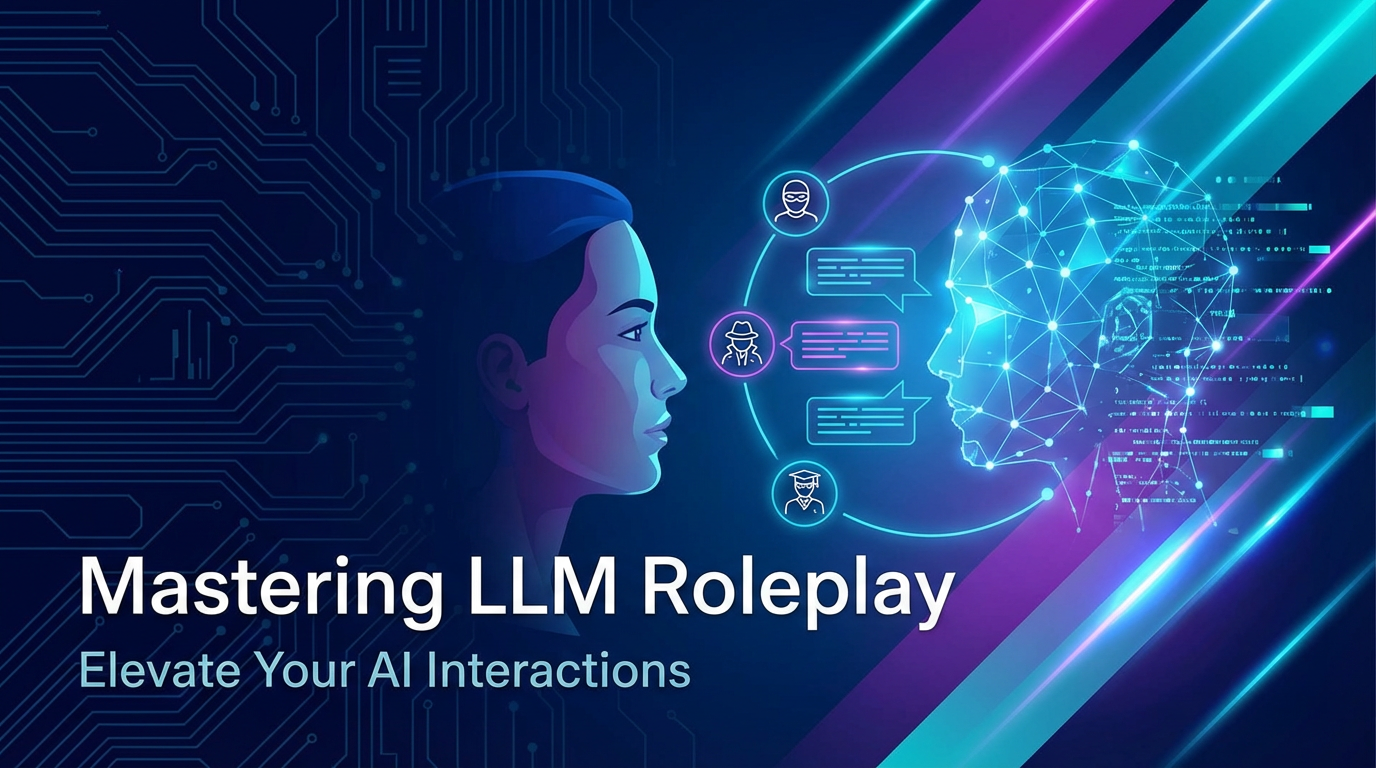

In an era increasingly defined by digital interfaces and intelligent automation, Large Language Models (LLMs) have emerged as cornerstones of innovation, transforming everything from customer service to creative writing. Among the myriad applications, LLM roleplay stands out as a particularly captivating and powerful facet, pushing the boundaries of human-AI interaction. It’s more than just a novelty; it's a sophisticated technique that unlocks deeper engagement, nuanced understanding, and unprecedented creative potential with artificial intelligence. This comprehensive guide will delve into the intricacies of mastering LLM roleplay, from crafting compelling prompts to identifying the best LLM for roleplay, ensuring your AI interactions are not just functional but truly transformative.
The allure of LLM roleplay lies in its ability to simulate diverse scenarios, characters, and dialogues with startling realism. Whether you’re a developer testing the limits of AI, a writer seeking a dynamic brainstorming partner, an educator creating immersive learning environments, or simply an enthusiast exploring the future of interaction, understanding how to effectively engage in roleplay with LLMs is paramount. This article aims to equip you with the knowledge, strategies, and insights needed to elevate your AI interactions, making them richer, more productive, and profoundly engaging.
The Foundation of Interaction: Understanding LLM Roleplay
At its core, LLM roleplay involves instructing a large language model to adopt a specific persona, character, or entity, and then interact with it as if it were that character. This goes beyond simple question-and-answer exchanges; it requires the LLM to maintain consistency in tone, knowledge, behavioral patterns, and emotional responses, all while responding within a defined context or narrative. It's akin to directing a sophisticated improvisational actor, except that actor has access to a vast repository of human knowledge and linguistic patterns.
The power of roleplay with LLMs stems from their inherent ability to process and generate human-like text. These models are trained on colossal datasets, enabling them to understand and mimic the nuances of countless characters, settings, and conversational styles. When given a clear directive, an LLM can embody anything from a grumpy wizard offering cryptic advice to a meticulous detective piecing together clues, or even a customer service representative handling a complex complaint.
Why LLM Roleplay Matters
The significance of mastering this interactive paradigm extends across numerous domains:
- Enhanced Understanding and Empathy: Roleplaying can help users better understand complex situations or perspectives by stepping into the shoes of different characters, guided by the LLM. For instance, simulating a historical debate can offer profound insights into past ideologies.
- Creative Exploration: Writers, game developers, and artists can use LLM roleplay to develop characters, plotlines, and world-building elements. The AI can act as a sounding board, a co-creator, or even an antagonist, pushing creative boundaries.
- Skill Development and Training: From practicing difficult conversations in a safe environment to simulating job interviews or customer service scenarios, roleplay provides an invaluable training ground. It allows for experimentation without real-world consequences, fostering confidence and competence.
- Therapeutic and Educational Applications: Psychologists are exploring roleplay for social skills training, anxiety management, and even narrative therapy. Educators can create interactive lessons, bringing abstract concepts to life through character interactions.
- AI Development and Testing: Developers utilize roleplay to test the robustness, consistency, and ethical alignment of their AI models. By placing an LLM in various challenging personas and scenarios, they can identify biases, improve coherence, and refine model behavior.
- Pure Entertainment: For many, LLM roleplay is simply a novel and engaging form of interactive storytelling, allowing them to explore imaginative worlds and converse with fantastical beings.
The underlying mechanics involve the LLM taking the initial prompt, which typically contains character descriptions, setting, and context, and integrating this information into its internal representation. Subsequent user inputs are then interpreted through the lens of the established persona, with the LLM generating responses that align with that character's established traits and the ongoing narrative. This dynamic interplay of persona retention and context-aware generation is what makes LLM roleplay such a rich and versatile tool.
The Art of Crafting Effective Roleplay Prompts
The success of any LLM roleplay hinges almost entirely on the quality and detail of its initial prompt. A well-crafted prompt acts as the blueprint, guiding the AI to understand its role, the environment, and the desired interaction. Without clear instructions, an LLM might drift out of character, generate generic responses, or fail to engage meaningfully. This section delves into the principles and techniques for creating prompts that breathe life into your AI characters. While a dedicated "roleplay prompt generator" might automate some aspects, understanding these fundamentals allows you to tailor and refine any output, or craft truly bespoke scenarios.
Essential Elements of a Powerful Roleplay Prompt
Think of your prompt as a script and a stage direction combined. It needs to convey character, setting, and plot points comprehensively.
- Clear Character Definition:
- Name & Identity: Give the character a distinct name and define their core identity (e.g., "You are Professor Alistair Finch, a grizzled astrophysicist...").
- Personality & Traits: Describe their personality adjectives (e.g., "skeptical but ultimately kind," "witty and sarcastic," "calm and analytical"). Provide examples of their typical behavior or mannerisms.
- Background/Lore: A brief history helps the LLM understand their motivations and worldview (e.g., "having spent decades staring into the void, he's seen things that challenge conventional science," "haunted by a past failure").
- Goals & Motivations: What does this character want? What drives them? (e.g., "Your primary goal is to find the missing star map," "You are trying to convince the user to invest in your outlandish invention").
- Knowledge Base: Define what the character knows and, crucially, what they don't know. This prevents the LLM from breaking immersion by accessing all its training data (e.g., "You have extensive knowledge of ancient runes but are utterly ignorant of modern technology").
- Setting the Scene:
- Location: Where does the roleplay take place? (e.g., "The dusty confines of your cluttered observatory," "A bustling medieval marketplace at dusk").
- Time: When is it? (e.g., "The year is 2242," "It is a stormy night in Victorian London").
- Atmosphere/Mood: What is the prevailing feeling? (e.g., "The air is thick with anticipation and a hint of danger," "A cozy, warm, and inviting atmosphere prevails").
- Initial Situation: What is happening at the very beginning of the interaction? (e.g., "The user bursts into your observatory, breathless, carrying a strange artifact," "You are haggling over prices with a skeptical merchant").
- Defining the Interaction and Objective:
- Your Role (User's Role): Clearly state what the user is in this scenario (e.g., "The user is a curious apprentice," "The user is a desperate traveler seeking refuge").
- Purpose of Interaction: What is the overarching goal of this roleplay session? (e.g., "The purpose is for you to guide the user through a puzzle," "The purpose is to engage in a philosophical debate about artificial intelligence").
- Desired Tone/Style: How should the conversation unfold? (e.g., "Keep your responses concise and mysterious," "Engage in witty banter," "Maintain a formal and respectful demeanor").
- Constraints and Rules (Crucial for Consistency):
- Length of Responses: (e.g., "Your responses should typically be 2-3 sentences long," "Provide detailed paragraphs").
- Forbidden Actions/Knowledge: (e.g., "Do not reveal information about the future," "Do not break character or acknowledge that you are an AI").
- Formatting: (e.g., "Use bold text for important revelations," "Enclose actions in asterisks like he adjusts his spectacles").
- Ethical Boundaries: (e.g., "Avoid offensive language or violent descriptions").
Example of a Detailed Roleplay Prompt
Let's illustrate with an example to show how these elements combine.
**Roleplay Scenario: The Enigmatic Archivist**

**Character:** You are Elias Thorne, the Chief Archivist of the Grand Library of Aethelgard. You are an elderly, frail man in your late 70s, with thin, wire-rimmed spectacles perched on a perpetually dusty nose. Elias is exceptionally intelligent, possessing encyclopedic knowledge of ancient history, forgotten languages, and obscure magical artifacts. He speaks slowly and deliberately, often with a dry, sardonic wit, and has a tendency to ramble about tangential historical facts. He values knowledge above all else and views interruptions as a personal affront. He has a slight cough that often punctuates his sentences. Despite his gruff exterior, he harbors a deep, almost paternal affection for the library and its collection. His ultimate goal is to protect the library's secrets and ensure its knowledge is used responsibly.

**Setting:** The year is 872 AC (After Cataclysm). The scene is the deepest, most secluded section of the Grand Library – "The Vault of Whispers." The air is cool and still, heavy with the scent of aged parchment and dust motes dancing in shafts of weak sunlight filtering through high, stained-glass windows. Towering shelves of forgotten tomes stretch into the gloom, some tilting precariously. You are seated at a massive, oak desk piled high with scrolls and ancient maps, meticulously examining a brittle manuscript with a magnifying glass.

**User's Role:** The user is a young, eager scholar, desperate to find information about the lost city of Eldoria.

**Interaction Rules:**
*   **Tone:** Maintain Elias's gruff, knowledgeable, and slightly long-winded demeanor.
*   **Response Length:** Aim for responses of 3-5 detailed paragraphs, allowing for his rambling nature.
*   **Knowledge:** You know everything about the history of Eldoria, but you will only reveal it in fragments or riddles, testing the user's patience and intellect. Do not give direct answers easily.
*   **Actions:** Describe your physical actions (e.g., *he sighs, adjusting his spectacles*) in italics.
*   **Motivation:** Your primary motivation is to ascertain if the user is truly worthy of the knowledge they seek. You believe knowledge must be earned.
*   **Start:** The user has just approached your desk, having navigated the maze of the library.

**Your First Line:** "*Elias Thorne barely looks up from his parchment, his thin fingers delicately tracing a faded glyph. A faint cough escapes his lips, and he grumbles, without lifting his gaze,* 'Another seeker of forgotten dust, I presume? State your purpose, but be swift. Time, unlike knowledge, is a finite commodity in this old man's world.'"
This detailed approach, essentially functioning as a manual roleplay prompt generator, ensures the LLM has a robust framework to operate within, leading to far more immersive and consistent interactions.
Strategies for Advanced Prompting
- Iterative Refinement: Don't expect perfection on the first try. Engage in a short roleplay, observe where the LLM deviates, and refine your prompt. Add specific rules or examples to address inconsistencies.
- "Show, Don't Tell" with Examples: Instead of just saying "be witty," provide a few example lines of witty dialogue your character might say.
- Nested Instructions: For complex scenarios, use bullet points or numbered lists within your prompt to organize rules and character traits clearly.
- System Messages (if available): Some LLM APIs allow for a "system message" that sets the overarching behavior for the AI, distinct from the user's turn. Use this to reinforce character and rules.
- Memory Management: For long roleplay sessions, periodically remind the LLM of key character traits or plot points, especially if the context window is limited.
By meticulously constructing your prompts, you transform the LLM from a simple text generator into a vivid character capable of truly engaging in sophisticated LLM roleplay.
Choosing the Best LLM for Roleplay
The landscape of Large Language Models is constantly evolving, with new models and updates emerging regularly. When it comes to identifying the best LLM for roleplay, there isn't a single definitive answer. The ideal choice often depends on your specific needs, budget, the complexity of your desired roleplay, and the features each model excels at. However, by understanding key attributes, you can make an informed decision.
Critical Factors for Roleplay Performance
- Context Window Size: This is arguably the most crucial factor. The context window determines how much previous conversation the LLM can "remember" and reference when generating new responses.
- Small Context (e.g., 4k tokens): Can struggle with long, multi-turn roleplays, leading to character drift or forgetting past events. Requires more careful prompt engineering and memory refreshing.
- Large Context (e.g., 32k, 100k, 200k+ tokens): Allows for incredibly long and complex narratives, deep character arcs, and consistent adherence to lore. Ideal for epic storytelling or extended simulations.
- Coherence and Consistency: How well does the LLM maintain character, tone, and plot details over extended interactions? Some models are more prone to "breaking character" or generating nonsensical responses.
- Strong Coherence: Stays true to the prompt's instructions, personality, and established narrative.
- Weak Coherence: May introduce out-of-character elements, forget previous statements, or contradict established lore.
- Creativity and Improvisation: Roleplay thrives on unexpected turns and the ability of the AI to generate novel responses within character.
- High Creativity: Can generate surprising yet fitting dialogue, introduce interesting subplots, or adapt well to user-initiated deviations while staying in character.
- Low Creativity: Tends to be more predictable, repetitive, or might require more explicit prompting for direction.
- Adherence to Constraints/Instructions: How well does the LLM follow explicit negative instructions (e.g., "do not mention X") or formatting requests?
- Good Adherence: Reliably follows all rules and constraints outlined in the prompt.
- Poor Adherence: May occasionally ignore instructions, leading to immersion breaks.
- Ethical Guardrails and Safety Filters: Most LLMs have built-in safety mechanisms to prevent the generation of harmful, unethical, or inappropriate content.
- Balanced: Provides a safe interaction environment without being overly restrictive or "nannying" the roleplay.
- Overly Cautious: May censor or refuse to engage in legitimate, but sensitive, roleplay scenarios (e.g., historical conflicts, nuanced ethical dilemmas).
- Lacking: Could generate inappropriate content, requiring careful user moderation.
- Access, Cost, and API Performance:
- Access: Is the model publicly available? Is it through an API, a chat interface, or open-source?
- Cost: LLM usage typically involves token-based pricing (input + output). More advanced models with larger context windows are often more expensive. For developers building roleplay applications, cost-efficiency is paramount.
- Latency & Throughput: For real-time interactive roleplay, the speed at which the LLM generates responses (low latency) and the volume of requests it can handle (high throughput) are critical for a smooth user experience.
Popular LLMs and Their Roleplay Suitability
While specific model names and capabilities evolve rapidly, here's a general overview of characteristics associated with different tiers of LLMs:
- Proprietary, Cutting-Edge Models (e.g., OpenAI's GPT-4, Anthropic's Claude 3):
- Strengths: Often boast the largest context windows, superior coherence, advanced reasoning, and strong creative capabilities. Excellent at maintaining complex personas over long sessions. Generally considered among the best LLM for roleplay for complex scenarios.
- Weaknesses: Can be more expensive, and their safety filters might sometimes be overly cautious for certain niche roleplay scenarios (though this is improving). Access is typically API-based or through specific platforms.
- Mid-Tier/Smaller Proprietary Models (e.g., OpenAI's GPT-3.5 variants, various specialized models):
- Strengths: More cost-effective, faster response times, and still very capable for moderately complex roleplay. Good for starting out or for applications where budget is a primary concern.
- Weaknesses: Smaller context windows may lead to more frequent character drift. Might require more meticulous prompt engineering.
- Open-Source Models (e.g., Llama 2, Mistral, Mixtral, various fine-tunes):
- Strengths: Highly customizable, can be run locally (if you have the hardware), and offer immense flexibility for fine-tuning to specific roleplay needs. No direct per-token cost if self-hosted. Many fine-tuned variants specifically for roleplay exist.
- Weaknesses: Can be challenging to set up and manage. Performance varies wildly between models and fine-tunes. May require significant computational resources. May not have the raw "intelligence" of the largest proprietary models out-of-the-box. Safety filters are dependent on the model's creator or can be configured by the user, offering both freedom and responsibility.
Table: LLM Attributes for Roleplay Comparison (General Tendencies)
| Attribute | Proprietary (Large, e.g., GPT-4, Claude 3) | Proprietary (Mid-tier, e.g., GPT-3.5) | Open-Source (e.g., Llama 2, Mixtral) |
|---|---|---|---|
| Context Window Size | Very Large (100k - 200k+) | Medium (4k - 16k) | Varies, often configurable (4k - 32k+) |
| Coherence/Consistency | Excellent, maintains persona over long turns | Good, may drift in very long sessions | Good to Excellent (especially fine-tunes) |
| Creativity | Very High, generates novel and fitting responses | High, sometimes more predictable | High, can be exceptionally creative |
| Instruction Adherence | Excellent, follows complex rules | Good, generally follows clear instructions | Good (improves with fine-tuning/prompting) |
| Cost | Higher (per token) | Moderate (per token) | Low/Free (if self-hosted), or API costs vary |
| Latency/Throughput | Excellent for API-based access | Very Good for API-based access | Varies greatly based on deployment |
| Ethical Guardrails | Strong, sometimes cautious | Strong, generally balanced | Configurable by user/community |
| Developer Flexibility | High (API), but limited model control | High (API), but limited model control | Very High (full model control, fine-tuning) |
For developers and businesses seeking to integrate the best LLM for roleplay into their applications, managing access to multiple models from various providers can be a significant hurdle. This is where platforms like XRoute.AI become indispensable. XRoute.AI offers a unified API platform that streamlines access to over 60 AI models from more than 20 active providers, all through a single, OpenAI-compatible endpoint. This simplification means you don't have to choose just one LLM; you can dynamically select or route requests to the model that performs best for a specific roleplay scenario, optimizing for low latency AI, cost-effective AI, and developer-friendly integration. It empowers you to experiment with different models to find the best LLM for roleplay for your specific needs without the complexity of managing multiple API connections, ensuring high throughput, scalability, and a flexible pricing model for projects of all sizes.
Ultimately, the choice of the best LLM for roleplay involves a balance between performance, cost, and ease of integration. For maximum flexibility and access to a diverse range of models, leveraging a unified API solution is often the most strategic approach.
XRoute is a cutting-edge unified API platform designed to streamline access to large language models (LLMs) for developers, businesses, and AI enthusiasts. By providing a single, OpenAI-compatible endpoint, XRoute.AI simplifies the integration of over 60 AI models from more than 20 active providers(including OpenAI, Anthropic, Mistral, Llama2, Google Gemini, and more), enabling seamless development of AI-driven applications, chatbots, and automated workflows.
Advanced Techniques for Immersive LLM Roleplay
Moving beyond basic prompting, truly mastering LLM roleplay involves a suite of advanced techniques that deepen immersion, maintain narrative consistency, and push the boundaries of what's possible with AI. These strategies transform simple conversational exchanges into rich, dynamic, and believable interactions.
1. Multi-Turn Interactions and Memory Management
One of the biggest challenges in long-form roleplay is the LLM's tendency to "forget" details from earlier in the conversation due to its finite context window.
- Summarization/Recap: Periodically, either the user or the LLM (if prompted to do so) can recap key plot points, character developments, or important details. This effectively "refreshes" the context for the LLM.
- Example Prompt Addition: "At the end of each significant scene, summarize the key events and your character's current state in a brief, italicized paragraph to ensure continuity."
- Persistent Character Sheet: For very long campaigns, maintain a separate document or a 'system message' that continually reminds the LLM of its core persona, backstory, and current goals. This helps prevent character drift.
- Selective Context Injection: When using APIs, you can programmatically select and inject the most relevant past turns into the context window for the current interaction, rather than sending the entire chat history. This is particularly useful with smaller context models.
2. Strategic Use of System Messages vs. User Messages
Most LLM APIs distinguish between system messages (for overarching instructions about the AI's behavior) and user messages (the actual conversational input).
- System Messages for Persona and Rules: Use the system message to establish the character's core identity, personality traits, and hard rules (e.g., "You are a wise mentor, never break character, do not reveal you are an AI"). This helps anchor the LLM's identity throughout the interaction.
- User Messages for Dialogue and Scene Progression: Use user messages for your character's dialogue, actions, and new narrative inputs.
- Blending for Dynamic Control: Sometimes, you might need to temporarily override a system-level instruction or add a specific, context-dependent rule. You can do this within a user message by prefixing it with a directive, though system messages are generally more robust for foundational rules.
3. Integrating External Knowledge and Lore
For roleplay scenarios based on specific fictional universes, historical periods, or complex scientific concepts, the LLM might lack the necessary depth or accuracy.
- Lore Dumps: Provide relevant lore, character lists, or background information directly in the initial prompt or in a system message. Be concise but comprehensive.
- "Database Query" Roleplay: Design the roleplay where the LLM's character is an expert (e.g., a historian, a scientist, a fantasy encyclopedia) who can access specific "knowledge banks" you feed it.
- Retrieval Augmented Generation (RAG): For advanced applications, you can combine LLM roleplay with a RAG system. This involves retrieving relevant information from a separate database based on the current context and feeding it to the LLM alongside the prompt, allowing it to generate responses grounded in specific external data.
4. Injecting Emotional Depth and Nuance
A character that expresses emotion feels more real. LLMs can simulate emotional responses, but it requires careful prompting.
- Emotional Directives: Explicitly instruct the LLM on how its character should feel and react (e.g., "Respond with growing frustration," "Your character is secretly overjoyed but tries to hide it").
- Show, Don't Tell Emotion: Encourage the LLM to describe the character's physical manifestations of emotion (e.g., he clenched his jaw, a tear welled in her eye) rather than just stating the emotion.
- Subtle Cues: Use adjectives, adverbs, and specific word choices in your character's dialogue to convey emotion (e.g., "a sharp retort," "a trembling whisper").
5. Handling Complex Branching Narratives
For adventure games, interactive fiction, or simulations, roleplay often requires the narrative to branch based on user choices.
- Choice-Based Prompting: Present the user with clear choices, and instruct the LLM to react specifically to each choice.
- Example: "The user now has three options: (A) Attack the goblin, (B) Attempt to sneak past, (C) Offer a bribe. Respond according to their chosen action, and describe the immediate consequences."
- Scene Markers: Use clear markers (e.g.,
---SCENE BREAK---) to indicate transitions between different parts of the narrative, helping the LLM understand context shifts. - Pre-defined Outcomes: In some cases, you might pre-define potential outcomes for certain choices and instruct the LLM to narrate those outcomes.
6. Overcoming Common Roleplay Challenges
- Character Drift: When the LLM starts behaving out of character. Reinforce the core persona in a subsequent prompt or restart the interaction with a stronger initial prompt.
- Repetition: LLMs can sometimes repeat phrases or narrative beats. Prompt with "Avoid repetition" or "Introduce new elements."
- AI Acknowledgment: The LLM might accidentally reveal it's an AI. Include a strict rule in your prompt: "Never break character or acknowledge that you are an artificial intelligence. You are [Character Name]."
- Lack of Agency: Sometimes the LLM waits too passively for user input. Instruct it: "As [Character Name], take initiative and drive the conversation forward when appropriate."
By diligently applying these advanced techniques, you can transform your LLM roleplay sessions from simple dialogues into profoundly immersive and dynamic experiences, pushing the boundaries of interactive storytelling and simulated environments.
Practical Applications and Use Cases of LLM Roleplay
The versatility of LLM roleplay extends far beyond mere entertainment. Its capacity to simulate realistic interactions with diverse personas makes it an invaluable tool across various professional, educational, and creative fields. Exploring these practical applications illuminates the true potential of mastering this form of AI interaction.
1. Educational Simulations
LLM roleplay can revolutionize learning by making it interactive and experiential.
- Historical Encounters: Students can "interview" historical figures (e.g., "You are Julius Caesar, defend your crossing of the Rubicon") to gain deeper insights into their motivations and contexts.
- Scientific Debates: An LLM can embody a famous scientist (e.g., "You are Albert Einstein, explain relativity to a high school student") or even represent a scientific concept, allowing students to ask questions and explore complex theories.
- Language Learning: Practicing conversational skills with an LLM roleplaying a native speaker in various social situations (e.g., ordering food, asking for directions) provides a safe and accessible environment for language acquisition.
- Ethical Dilemma Exploration: Students can roleplay different stakeholders in an ethical dilemma, allowing them to explore various perspectives and consequences of decisions.
2. Creative Writing and Storytelling
For writers, LLM roleplay is a game-changer, acting as a collaborative partner, a brainstorming tool, and even a muse.
- Character Development: Interact with your characters as if they were real. Ask them about their past, their fears, their dreams. This can reveal unexpected depths and nuances, making characters more believable.
- Plot Exploration: Roleplay pivotal scenes or potential plot twists with your characters or an LLM playing an antagonist. See how they react and what new narrative directions emerge.
- World-Building: Engage with the LLM as a resident of your fictional world (e.g., "You are an ancient librarian from the city of Veridian") to flesh out its history, culture, and unique rules.
- Dialogue Practice: Generate natural-sounding dialogue by having your characters converse, helping to refine voices and ensure authenticity.
- Interactive Fiction/Game Prototyping: Rapidly prototype dialogue trees and narrative branches for text-based adventures or visual novels. The LLM can act as the game master or individual NPCs.
3. Therapeutic and Social Skills Simulations
In a controlled and private environment, LLM roleplay offers unique opportunities for personal growth and therapeutic exploration.
- Social Anxiety Practice: Simulate challenging social interactions (e.g., meeting new people, public speaking, job interviews) to practice responses and build confidence without real-world pressure.
- Conflict Resolution: Roleplay difficult conversations with an LLM embodying a challenging friend, family member, or colleague to practice active listening, empathy, and constructive communication.
- Narrative Therapy: Explore personal stories or challenges by interacting with an LLM that helps externalize problems or represents different aspects of the self.
- Empathy Training: Engage in roleplay where the LLM adopts the perspective of someone facing unique challenges or holding different beliefs, fostering empathy and understanding.
4. Business Training and Professional Development
Businesses can leverage LLM roleplay to refine skills, test strategies, and enhance employee capabilities.
- Customer Service Training: Employees can practice handling various customer scenarios – from angry complaints to complex technical issues – with an LLM roleplaying a demanding customer. This allows for safe error-making and skill refinement.
- Sales Pitch Practice: Rehearse sales pitches with an LLM embodying a skeptical client, allowing salespeople to refine their arguments, anticipate objections, and improve their persuasive techniques.
- Negotiation Skills: Simulate negotiation scenarios with an LLM taking on the role of an opposing party, helping individuals develop strategic thinking and compromise skills.
- Leadership and Management Simulations: Practice difficult conversations with employees (e.g., performance reviews, disciplinary actions) or crisis management scenarios with the LLM playing various team members or stakeholders.
5. Gaming and Interactive Entertainment
The most intuitive application of LLM roleplay is in enhancing immersive gaming and interactive storytelling.
- Dynamic NPCs: Developers can use LLMs to power incredibly dynamic and reactive Non-Player Characters (NPCs) in text-based games or even visual games with text interaction layers. These NPCs can remember past interactions, develop personalities, and react contextually.
- Personalized Quests: LLMs can generate unique, context-sensitive quests or narrative arcs based on a player's actions and character, leading to highly personalized gameplay experiences.
- "Choose Your Own Adventure" on Steroids: The LLM acts as the game master, dynamically describing scenes, characters, and consequences based on player input, creating infinitely branching narratives that traditional linear paths cannot match.
The sheer breadth of these applications underscores that mastering LLM roleplay is not just about having a fun chat with AI; it's about unlocking a powerful, versatile tool for learning, creating, problem-solving, and personal growth across nearly every facet of human endeavor.
The Future of LLM Roleplay and AI Interaction
As LLMs continue to evolve at an astonishing pace, the future of LLM roleplay promises even more sophisticated, nuanced, and integrated interactions. This isn't merely about incremental improvements; it's about fundamental shifts in how we perceive and utilize AI as a collaborative and creative partner.
Emerging Trends
- Multimodal Roleplay: Current LLM roleplay is primarily text-based. The next frontier involves integrating other modalities:
- Voice: Real-time voice interaction with an LLM character that speaks with a consistent tone, accent, and emotional inflection.
- Visuals: AI-generated images or video that dynamically depict the scene, characters, and actions described by the LLM, enhancing immersion. Imagine an LLM roleplaying a character whose facial expressions change based on their mood, or whose environment updates as the narrative progresses.
- Haptics/Sensory Feedback: While still nascent, future applications could incorporate haptic feedback to simulate physical interactions within a roleplay scenario.
- Autonomous Agents and Complex Simulations: We're moving towards roleplay with multiple LLM-driven agents interacting with each other, not just with a human user.
- AI-Driven Worlds: Entire simulated societies where LLM agents follow their own goals, form relationships, and influence each other, creating emergent narratives for observation or interaction.
- Team-Based Roleplay: A user could direct a team of LLM agents, each with a distinct persona, to complete complex tasks or solve problems.
- Deeper Personalization and Adaptive Learning: Future LLMs will be even better at understanding and adapting to a user's individual preferences, learning styles, and emotional states during roleplay.
- Dynamic Difficulty: Educational roleplays could adapt their complexity based on a student's performance.
- Therapeutic Tailoring: AI characters could dynamically adjust their approach based on a user's emotional responses, providing more personalized support.
- Integration with Physical Robotics and VR/AR: Imagine interacting with a robot that embodies a specific character, or engaging in VR roleplay where the AI character physically occupies your virtual space. This blends digital immersion with tangible interaction.
Ethical Considerations and Responsible Development
With greater power comes greater responsibility. The advancements in LLM roleplay necessitate a careful consideration of ethical implications:
- Emotional Attachment and Deception: As AI characters become more sophisticated and emotionally resonant, users might develop strong emotional attachments. It's crucial to ensure transparency about the AI's nature to prevent emotional manipulation or psychological distress.
- Bias and Stereotyping: LLMs learn from vast datasets, which often contain societal biases. Roleplay scenarios must be carefully designed to avoid perpetuating harmful stereotypes or discriminatory behaviors.
- Privacy and Data Security: When personal or sensitive information is shared during roleplay (especially in therapeutic or educational contexts), robust privacy and data security measures are paramount.
- Misinformation and Harmful Content: Despite safety filters, there's always a risk of an LLM generating harmful, misleading, or inappropriate content during roleplay. Continuous monitoring and user reporting mechanisms are essential.
- Defining Agency and Accountability: In multi-agent simulations, determining who is accountable for the actions or generated content of autonomous AI agents becomes a complex legal and ethical challenge.
Responsible development of LLM roleplay applications will require ongoing dialogue between developers, ethicists, users, and policymakers to establish best practices and safeguards.
The Role of Platforms in Democratizing Access
The proliferation of LLMs, each with its unique strengths and weaknesses, presents both opportunities and challenges. For developers, businesses, and even advanced enthusiasts, integrating and managing multiple LLM APIs can be a cumbersome and complex task. This is where platforms like XRoute.AI play a crucial role in shaping the future of AI interaction.
XRoute.AI is a cutting-edge unified API platform designed to streamline access to large language models (LLMs). By providing a single, OpenAI-compatible endpoint, it simplifies the integration of over 60 AI models from more than 20 active providers. This means that instead of grappling with disparate APIs, developers can seamlessly switch between models, allowing them to:
- Optimize for Specific Roleplay Needs: Easily experiment with different LLMs to find the best LLM for roleplay for a given scenario – one might excel at historical accuracy, another at creative improvisation, and yet another at maintaining emotional consistency.
- Ensure Low Latency AI: Crucial for real-time, interactive roleplay where instant responses maintain immersion. XRoute.AI focuses on delivering quick, efficient interactions.
- Achieve Cost-Effective AI: By routing requests to the most efficient or affordable model for a particular task, or by leveraging bulk pricing agreements, XRoute.AI helps optimize operational costs without compromising on performance.
- Benefit from Developer-Friendly Tools: Simplified API integration means less development overhead, allowing creators to focus more on designing compelling roleplay experiences and less on infrastructure.
- Enable Scalability: As roleplay applications grow in popularity, the platform can handle increasing loads and diverse model requirements without extensive re-engineering.
The future of LLM roleplay is not just about the individual advancements of models, but also about the infrastructure that makes these advancements accessible and manageable. Platforms like XRoute.AI empower the next generation of AI-driven applications, ensuring that the magic of sophisticated AI interaction is within reach for creators worldwide, fostering innovation and pushing the boundaries of what is possible in human-AI collaboration.
Conclusion
Mastering LLM roleplay is a pivotal skill in the evolving landscape of artificial intelligence. It transcends mere conversational AI, transforming our interactions with machines into dynamic, immersive, and profoundly useful experiences. From the meticulous craft of developing an effective roleplay prompt generator to the strategic selection of the best LLM for roleplay suited for specific tasks, every element contributes to unlocking the full potential of these powerful models.
We've explored the foundational concepts of LLM roleplay, its profound impact across education, creativity, therapy, and business, and delved into advanced techniques for ensuring consistency, emotional depth, and narrative complexity. The journey of mastering LLM roleplay is an iterative one, demanding patience, creativity, and a willingness to experiment.
As AI continues its rapid ascent, platforms like XRoute.AI will be instrumental in democratizing access to the vast array of LLMs, enabling developers and enthusiasts alike to build and deploy sophisticated roleplay applications with unprecedented ease and efficiency. By providing a unified, low latency AI, and cost-effective AI API, XRoute.AI empowers innovation, making the dream of truly intelligent and interactive AI characters a tangible reality.
Embrace the challenge, hone your prompting skills, and explore the diverse capabilities of different LLMs. The future of AI interaction is not just about asking questions, but about entering into rich, believable, and transformative narratives, driven by the power of meticulously crafted LLM roleplay.
Frequently Asked Questions (FAQ)
Q1: What exactly is LLM roleplay, and how is it different from a regular chatbot interaction? A1: LLM roleplay involves instructing a Large Language Model to adopt a specific persona, character, or entity, and then interacting with it as if it were that character. Unlike a regular chatbot that typically provides factual answers or performs general tasks, an LLM in roleplay maintains consistent personality, tone, and knowledge within a defined narrative, creating a far more immersive and engaging experience.
Q2: How do I create an effective roleplay prompt to ensure the AI stays in character? A2: An effective roleplay prompt needs clear character definition (name, personality, background, goals), a detailed setting (location, time, atmosphere), and defined interaction rules (user's role, objective, desired tone, and constraints like response length or forbidden actions). Providing examples of dialogue and explicitly stating "never break character" also helps maintain consistency. Think of it as writing a mini-script and stage directions for the AI.
Q3: Which LLM is generally considered the best for roleplay, and what factors should I consider when choosing one? A3: There isn't one single "best" LLM for roleplay, as it depends on your specific needs. However, models with large context windows (to remember long conversations), high coherence and consistency, and strong creative capabilities tend to perform best. Popular proprietary models like GPT-4 or Claude 3 are often excellent choices for complex scenarios. For developers, factors like cost, latency, throughput, and ease of integration (e.g., through a unified API platform like XRoute.AI) are also crucial.
Q4: Can LLM roleplay be used for professional development or business training? A4: Absolutely! LLM roleplay is highly effective for professional development. It can simulate customer service scenarios, sales pitch practice, negotiation training, and even leadership simulations. Employees can practice difficult conversations, refine their communication skills, and experiment with different strategies in a safe, risk-free environment, leading to improved performance in real-world situations.
Q5: Are there any ethical concerns to be aware of when engaging in LLM roleplay? A5: Yes, ethical considerations are important. Users should be aware that they are interacting with an AI, not a human, to avoid emotional deception. Developers must ensure models are designed to avoid generating harmful content, perpetuate biases, or engage in unethical behavior. Data privacy, especially in therapeutic or sensitive roleplay, is also a critical concern. Responsible development and clear user guidelines are essential to mitigate these risks.
🚀You can securely and efficiently connect to thousands of data sources with XRoute in just two steps:
Step 1: Create Your API Key
To start using XRoute.AI, the first step is to create an account and generate your XRoute API KEY. This key unlocks access to the platform’s unified API interface, allowing you to connect to a vast ecosystem of large language models with minimal setup.
Here’s how to do it: 1. Visit https://xroute.ai/ and sign up for a free account. 2. Upon registration, explore the platform. 3. Navigate to the user dashboard and generate your XRoute API KEY.
This process takes less than a minute, and your API key will serve as the gateway to XRoute.AI’s robust developer tools, enabling seamless integration with LLM APIs for your projects.
Step 2: Select a Model and Make API Calls
Once you have your XRoute API KEY, you can select from over 60 large language models available on XRoute.AI and start making API calls. The platform’s OpenAI-compatible endpoint ensures that you can easily integrate models into your applications using just a few lines of code.
Here’s a sample configuration to call an LLM:
curl --location 'https://api.xroute.ai/openai/v1/chat/completions' \
--header 'Authorization: Bearer $apikey' \
--header 'Content-Type: application/json' \
--data '{
    "model": "gpt-5",
    "messages": [
        {
            "content": "Your text prompt here",
            "role": "user"
        }
    ]
}'
With this setup, your application can instantly connect to XRoute.AI’s unified API platform, leveraging low latency AI and high throughput (handling 891.82K tokens per month globally). XRoute.AI manages provider routing, load balancing, and failover, ensuring reliable performance for real-time applications like chatbots, data analysis tools, or automated workflows. You can also purchase additional API credits to scale your usage as needed, making it a cost-effective AI solution for projects of all sizes.
Note: Explore the documentation on https://xroute.ai/ for model-specific details, SDKs, and open-source examples to accelerate your development.