Mastering the LLM Playground: Experiment with AI Models

Introduction: The Dawn of Generative AI and the Quest for Understanding
The advent of Large Language Models (LLMs) has ushered in a transformative era, reshaping industries from healthcare to entertainment, and fundamentally altering how we interact with technology. These sophisticated AI constructs, capable of understanding, generating, and even reasoning with human language, have moved from theoretical constructs to indispensable tools. From crafting compelling marketing copy to automating complex data analysis, LLMs are proving their versatility and power. Yet, with this unprecedented power comes a critical challenge: the sheer diversity and rapid evolution of these models. How does one navigate the ever-expanding landscape of AI, differentiate between myriad offerings, and ultimately harness their full potential? The answer lies in systematic experimentation and diligent evaluation, primarily conducted within an LLM playground.
An LLM playground isn't just a fancy term for a user interface; it's a vital sandbox environment designed for developers, researchers, and enthusiasts to interact directly with various LLMs. It provides a low-barrier-to-entry space to test prompts, tweak parameters, and observe model behavior in real-time. Without such a dedicated space, understanding the nuances of different models would be an arduous, code-intensive task, accessible only to a select few. The playground democratizes access, allowing for agile iteration and deep insight into the capabilities and limitations of each model. It becomes the indispensable arena for practical AI model comparison, where theoretical understanding meets real-world application.
The importance of hands-on experimentation cannot be overstated. While benchmarks and academic papers offer valuable insights into model performance, they often don't fully capture the idiosyncratic behaviors or specific strengths that might be crucial for a particular application. What performs well on a standardized test might falter in a highly specialized, real-world scenario. This is where the LLM playground shines, allowing users to probe models with their unique datasets and use cases. It's about moving beyond headline-grabbing statistics and truly getting a feel for which models deliver the most accurate, coherent, and useful responses for your specific needs. The ultimate goal, often elusive yet constantly pursued, is to identify the best LLMs – not in an absolute sense, but relative to a defined set of objectives and constraints.
This comprehensive guide aims to equip you with the knowledge and strategies to master the LLM playground. We will delve into the fundamental concepts of LLMs, explore the anatomy and utility of a playground, meticulously examine the critical parameters that sculpt model outputs, and outline robust methodologies for AI model comparison. Furthermore, we will discuss how to identify the best LLMs for diverse applications, from creative content generation to complex code synthesis, always emphasizing a practical, experimentation-driven approach. By the end of this journey, you will not only understand how to effectively interact with these powerful AI models but also how to discern their subtle differences, empowering you to build truly innovative and intelligent solutions.
Understanding the LLM Landscape: A Kaleidoscope of Intelligence
Before diving into the intricacies of an LLM playground, it’s essential to grasp the vast and evolving landscape of Large Language Models themselves. The term "LLM" broadly encompasses a class of deep learning models designed to process and generate human-like text, but beneath this umbrella lies a remarkable diversity in architecture, training data, scale, and intended application. Recognizing these distinctions is the first step towards effective AI model comparison and, ultimately, selecting the best LLMs for your projects.
The journey of LLMs began in earnest with the advent of the Transformer architecture, introduced by Google in 2017. This groundbreaking design, which leverages self-attention mechanisms, provided a scalable and highly parallelizable method for processing sequential data like language. It liberated models from the constraints of recurrent neural networks (RNNs) and paved the way for the massive scaling we see today. Since then, the field has exploded, giving rise to a multitude of models, each pushing the boundaries of what AI can achieve with language.
LLMs can generally be categorized along several dimensions:
- Proprietary vs. Open-Source:
- Proprietary Models: Developed and owned by companies like OpenAI (GPT series), Anthropic (Claude series), and Google (Gemini series). These models often boast state-of-the-art performance due to vast computational resources and enormous, carefully curated training datasets. They are typically accessed via APIs, and their internal workings remain opaque. While powerful, they come with usage costs and reliance on a single provider.
- Open-Source Models: Developed by research institutions or communities and released under permissive licenses (e.g., Meta's Llama series, Mistral AI's Mistral and Mixtral, Falcon models). These models allow for greater transparency, fine-tuning, and deployment flexibility, including local hosting. While they may not always match the peak performance of the largest proprietary models, their accessibility fosters innovation and offers cost-effective alternatives, particularly for specialized applications. The open-source community is rapidly closing the performance gap.
- Size and Scale:
- Models are often characterized by the number of parameters they possess, ranging from billions to trillions. Generally, more parameters imply greater capacity for learning complex patterns and a deeper understanding of language, but also higher computational requirements for training and inference.
- Smaller models (e.g., Llama 3 8B, Mistral 7B) are designed for efficiency, speed, and lower resource consumption, making them ideal for edge devices, applications requiring low latency, or scenarios where computational budget is a concern.
- Larger models (e.g., GPT-4, Claude 3 Opus, Llama 3 70B) excel at complex reasoning, nuance, and handling extensive context windows, suitable for tasks demanding high accuracy and intricate understanding.
- Architecture and Innovations:
- While most LLMs are built on the Transformer architecture, continuous innovation leads to variations. For instance, Mixture of Experts (MoE) models like Mixtral 8x7B dynamically activate only a subset of "expert" sub-networks for each input, offering a balance of performance (due to a large number of parameters) and efficiency (due to sparse activation).
- Other innovations focus on context window size (the amount of text a model can "remember" and process at once), retrieval-augmented generation (RAG) to integrate external knowledge, or specialized encoders/decoders for multimodal capabilities.
- Training Data and Objectives:
- The quality, quantity, and diversity of training data heavily influence an LLM's capabilities and biases. Models trained on vast internet-scale datasets (text, code, images, video) acquire broad general knowledge, while those fine-tuned on specific domains (e.g., medical texts, legal documents) develop specialized expertise.
- Training objectives, such as predicting the next token in a sequence or filling in masked words, shape the model's core abilities. Subsequent fine-tuning, often through techniques like Reinforcement Learning from Human Feedback (RLHF), refines their behavior to be more helpful, harmless, and honest.
The sheer variety means there is no single "best" LLM for all tasks. A model excellent at creative writing might struggle with precise code generation, and one optimized for speed might lack the reasoning depth of its larger counterparts. This inherent diversity underscores why an LLM playground is not merely a convenience but a necessity. It is the controlled environment where these varied intelligences can be put through their paces, where subtle differences become apparent, and where an informed AI model comparison can truly guide the selection process. Without a robust playground, the task of sifting through this kaleidoscope of models to find the best LLMs for specific applications would be akin to searching for a needle in a digital haystack, blindfolded.
What is an LLM Playground? Your Interactive AI Laboratory
An LLM playground serves as the quintessential interface for interacting with large language models, transforming the complex world of AI into an accessible, interactive laboratory. It's more than just a text input box; it's a meticulously designed environment that empowers users to experiment, evaluate, and fine-tune LLMs without the need for extensive coding or deep machine learning expertise. For anyone engaged in AI model comparison or on a quest to discover the best LLMs for their specific needs, the playground is an indispensable tool.
At its core, an LLM playground provides a visual and intuitive way to send prompts to an LLM and receive its generated responses. However, its utility extends far beyond this basic interaction. Let's delve into its core features and benefits:
Core Features of an LLM Playground:
- Input/Output Interface:
- Prompt Input Area: This is where users craft their instructions, questions, or initial text for the LLM. Most playgrounds support multiline input and provide visual cues for managing context.
- Response Output Area: The generated text from the LLM appears here. It often updates in real-time as the model streams its output, allowing users to observe the generation process.
- System Prompt/Context Window: A dedicated area for providing high-level instructions or setting the persona for the model (e.g., "You are a helpful assistant," "You are a creative poet"). This initial context significantly shapes the model's subsequent responses and is crucial for maintaining consistency and control over its behavior.
- Model Selection:
- A critical feature for AI model comparison, playgrounds typically offer a dropdown or sidebar to select from a variety of available LLMs. This could include different versions of the same model (e.g., GPT-3.5, GPT-4, GPT-4o), entirely different model families (e.g., Claude, Gemini, Llama), or even specialized fine-tuned models. The ease of switching between models is paramount for direct comparisons.
- Parameter Tuning Controls:
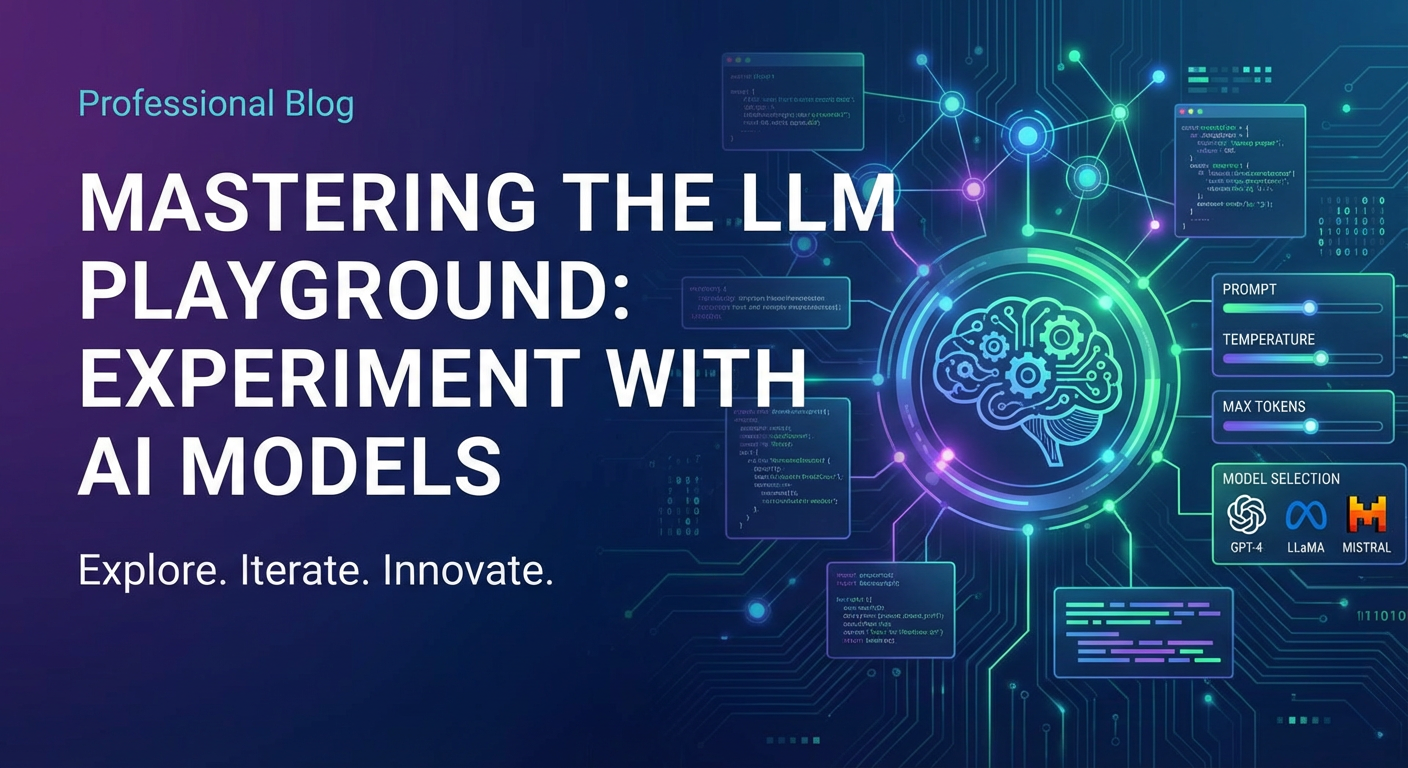
- This is where the real power of an LLM playground lies. Sliders and input fields allow users to adjust various inference parameters that control the model's generation process. We will explore these in detail in the next section, but common parameters include:
- Temperature: Controls randomness and creativity.
- Top-P (Nucleus Sampling): Controls the diversity of words considered.
- Max New Tokens: Limits the length of the generated response.
- Frequency Penalty: Reduces repetition of words.
- Presence Penalty: Encourages new topics.
- Stop Sequences: Defines specific strings that signal the model to stop generating text.
- This is where the real power of an LLM playground lies. Sliders and input fields allow users to adjust various inference parameters that control the model's generation process. We will explore these in detail in the next section, but common parameters include:
- Prompt Engineering Tools and History:
- Some advanced playgrounds offer features to help with prompt engineering, such as templates, examples of effective prompts, or even tools to analyze prompt effectiveness.
- A history log of past interactions, including prompts, responses, and chosen parameters, is invaluable for iterative development and tracking changes during AI model comparison.
- Cost and Latency Indicators:
- For models accessed via APIs, playgrounds often display real-time or estimated cost per interaction and the latency (time taken for the response). This is crucial for businesses evaluating models for production use, especially when seeking
cost-effective AIandlow latency AIsolutions.
- For models accessed via APIs, playgrounds often display real-time or estimated cost per interaction and the latency (time taken for the response). This is crucial for businesses evaluating models for production use, especially when seeking
- API Integration Insights:
- Many playgrounds provide the actual API request code (e.g., Python, cURL) corresponding to the current prompt and parameter settings. This is extremely helpful for developers who want to transition from playground experimentation to programmatic integration, streamlining the development workflow.
Benefits of Using an LLM Playground:
- Rapid Prototyping: Quickly test ideas, generate initial drafts, and validate concepts without writing a single line of code. This accelerates the initial phases of AI application development.
- Iterative Development: Experiment with different prompts, adjust parameters, and observe the immediate impact on model output. This iterative feedback loop is crucial for refining desired behaviors.
- Deep Understanding of Model Behavior: By manipulating parameters and observing the results across various models, users gain an intuitive understanding of how each LLM responds to different stimuli, its inherent biases, and its strengths and weaknesses. This is fundamental for robust AI model comparison.
- Reduced Development Cycle Time: The ability to swiftly experiment and identify promising configurations in the playground significantly cuts down the time required to move from concept to functional prototype.
- Accessibility and Democratization: It lowers the barrier to entry for interacting with advanced AI, enabling non-technical users, content creators, and business analysts to leverage LLMs effectively.
- Optimizing for Specific Use Cases: Through focused experimentation, users can fine-tune prompts and parameters to make models perform optimally for niche tasks, whether it's summarizing specific document types or generating code snippets in a particular style. This leads to identifying the best LLMs for particular applications, rather than relying on general benchmarks.
In essence, an LLM playground is the bridge between theoretical AI capabilities and practical, real-world application. It’s the essential workbench for any serious effort in AI model comparison, providing the granular control and immediate feedback necessary to truly understand, optimize, and harness the power of the best LLMs available today.
Key Parameters and Their Impact: Sculpting AI Responses
Mastering an LLM playground involves more than just typing in prompts; it requires a nuanced understanding of the various parameters that govern how an LLM generates its responses. These controls allow you to sculpt the model's output, steering it from deterministic and factual to creative and exploratory, or from concise to verbose. Effective manipulation of these parameters is paramount for accurate AI model comparison and for coaxing the best LLMs to perform exactly as you intend for your specific use case.
Let's break down the most common and impactful parameters you'll encounter in an LLM playground:
1. Temperature (Creativity vs. Determinism)
- What it does: Temperature controls the randomness of the model's output. Conceptually, it scales the probability distribution over possible next tokens.
- How it works:
- Low Temperature (e.g., 0.0 - 0.5): Makes the model more deterministic and focused. It will tend to pick the most probable words, leading to more factual, predictable, and conservative responses. Ideal for tasks requiring accuracy, consistency, or summarization where factual correctness is paramount.
- High Temperature (e.g., 0.7 - 1.0+): Makes the model more "creative," diverse, and prone to taking risks. It will consider a wider range of less probable words, potentially leading to more imaginative, varied, or even surprising outputs. Useful for creative writing, brainstorming, or generating multiple distinct variations.
- Impact: A high temperature can sometimes lead to "hallucinations" or nonsensical outputs, especially for models not robustly trained on diverse data. A low temperature might result in repetitive or generic responses.
- Example:
- Prompt: "Write a short story about a brave knight."
- Temperature = 0.2: "Sir Reginald, a stoic knight of the realm, embarked on a perilous quest to reclaim the lost artifact. His armor gleamed, reflecting his unwavering resolve." (Predictable, direct)
- Temperature = 0.8: "Sir Kaelen, his spirit a tempest, found himself drawn to the whispering forest, a place where legends tangled with shadow and myth. A strange, bioluminescent fungus pulsed beneath his boot, hinting at wonders yet unseen." (Creative, imaginative, unexpected elements)
2. Top-P (Nucleus Sampling) (Diversity of Choice)
- What it does: Top-P, also known as nucleus sampling, controls the diversity of output by limiting the set of words the model considers.
- How it works: Instead of sampling from all possible tokens, the model considers only the smallest set of tokens whose cumulative probability exceeds the
top_pthreshold. - Impact:
- Low Top-P (e.g., 0.1 - 0.5): Focuses the model on a smaller set of high-probability tokens, similar to low temperature but with a different mechanism. This can lead to more coherent and less surprising output.
- High Top-P (e.g., 0.8 - 1.0): Allows the model to consider a wider range of tokens, potentially increasing diversity and creativity.
- Relationship with Temperature: Top-P and Temperature often work in conjunction. Many recommend setting one to 1 and adjusting the other, or finding a combination that works for your task. Generally, for factual tasks, lower both; for creative tasks, raise both.
- Example: If the model has probabilities:
[apple: 0.5, banana: 0.3, orange: 0.1, grape: 0.05, kiwi: 0.05].- Top-P = 0.8: The model would consider "apple" (0.5) and "banana" (0.3), as 0.5 + 0.3 = 0.8.
- Top-P = 0.95: The model would consider "apple" (0.5), "banana" (0.3), and "orange" (0.1), as 0.5 + 0.3 + 0.1 = 0.9.
3. Max New Tokens (Response Length Control)
- What it does: Defines the maximum number of tokens (words or sub-word units) the model will generate in its response.
- How it works: The model will stop generating once this limit is reached, regardless of whether it has completed its thought or sentence.
- Impact: Crucial for controlling cost, managing response length, and preventing models from generating excessively long or irrelevant text.
- Example: If
max_new_tokens = 50, the model will stop after generating 50 tokens, even if it's mid-sentence.
4. Frequency Penalty (Reducing Repetition)
- What it does: Penalizes new tokens based on their existing frequency in the text generated so far.
- How it works: Higher values make the model less likely to repeat the same words or phrases frequently, promoting more diverse vocabulary.
- Impact: Useful for making responses sound more natural and less monotonous, preventing loops or excessive self-referencing.
- Range: Typically -2.0 to 2.0. Positive values penalize; negative values encourage repetition (rarely desired).
5. Presence Penalty (Encouraging New Topics)
- What it does: Penalizes new tokens based on whether they already appear in the text generated so far, regardless of their frequency.
- How it works: Higher values encourage the model to introduce new concepts and topics, preventing it from sticking too closely to previously mentioned themes.
- Impact: Helps models generate more varied and expansive content, useful for brainstorming or generating diverse ideas.
- Range: Typically -2.0 to 2.0.
6. Stop Sequences (Defining End Points)
- What it does: A list of one or more text strings that, if generated by the model, will cause the generation process to stop immediately.
- How it works: Allows you to define explicit markers for the end of a desired output.
- Impact: Essential for structured outputs (e.g., stopping after a list, before a specific keyword), preventing the model from continuing into unintended territory, or breaking responses into manageable chunks for turn-based conversations.
- Example: If your prompt asks for a recipe and you want to ensure the model stops before generating a disclaimer, you might set a stop sequence like
"\n\nDisclaimer:".
7. System Prompt / Context Window (Guiding Overall Behavior)
- What it does: The system prompt (or "pre-prompt" / "meta-prompt") provides initial instructions and context to the model, guiding its overall persona, style, and constraints for the entire interaction. The context window is the total length of input (system prompt + user messages) and output the model can consider at once.
- How it works: It acts as a foundational layer, influencing every subsequent response. A well-crafted system prompt can transform a general-purpose LLM into a specialized assistant. The context window dictates how much "memory" the model has.
- Impact: Crucial for consistency, enforcing rules, and making the model behave predictably. Understanding the context window limits is vital to avoid truncated conversations or losing relevant information.
- Example:
- "You are a highly analytical financial expert. Respond concisely and avoid jargon."
- "You are a creative storyteller. Embrace vivid imagery and unexpected plot twists."
Mastering these parameters within an LLM playground is an art form. It requires experimentation, observation, and a clear understanding of your desired outcome. By systematically adjusting temperature for creativity, max tokens for length, and penalties for repetition, you gain profound control over the best LLMs and tailor their capabilities precisely to your application, making your AI model comparison far more insightful and effective.
XRoute is a cutting-edge unified API platform designed to streamline access to large language models (LLMs) for developers, businesses, and AI enthusiasts. By providing a single, OpenAI-compatible endpoint, XRoute.AI simplifies the integration of over 60 AI models from more than 20 active providers(including OpenAI, Anthropic, Mistral, Llama2, Google Gemini, and more), enabling seamless development of AI-driven applications, chatbots, and automated workflows.
Strategies for Effective AI Model Comparison: Navigating the Nuances
The abundance of powerful LLMs presents both an exciting opportunity and a significant challenge. How do you objectively compare models like GPT-4, Claude 3, Llama 3, and Mixtral to determine which one is truly the "best" for your specific needs? The answer lies in a systematic, criteria-driven approach to AI model comparison, heavily facilitated by the interactive environment of an LLM playground. This isn't about finding a universally superior model, but rather identifying the optimal fit for your unique application, balancing performance, cost, and specific behavioral characteristics.
1. Define Your Use Case and Objectives (The North Star)
Before you even begin testing, clearly articulate what you want the LLM to do. This is the most critical step, as "best" is always relative to purpose.
- What problem are you trying to solve? (e.g., generate marketing copy, summarize legal documents, answer customer queries, create code, brainstorm ideas).
- What kind of output do you expect? (e.g., factual, creative, concise, verbose, technical, conversational).
- What are the performance priorities? (e.g., accuracy, speed (low latency AI), cost-effectiveness (cost-effective AI), creativity, safety, multilingual support).
- What are the constraints? (e.g., budget, processing power, data privacy requirements, maximum response length).
Example Use Case: Developing an AI assistant for a technical support chatbot. Objectives: Provide accurate solutions, maintain a helpful tone, avoid hallucinations, respond quickly, and escalate complex issues when necessary. Priorities: Accuracy, safety, low latency.
2. Establish Clear Evaluation Criteria (The Scorecard)
Once your objectives are defined, translate them into measurable or observable criteria. These will form the basis of your AI model comparison scorecard.
- Accuracy/Factuality: Does the model provide correct information? Is it free from hallucinations?
- Coherence/Fluency: Is the language natural, grammatically correct, and easy to understand? Does the response flow logically?
- Relevance: Does the response directly address the prompt? Is it on-topic?
- Completeness: Does the model provide all necessary information?
- Conciseness: Is the response to the point, or does it include unnecessary filler?
- Creativity/Diversity: (For creative tasks) Does the model generate novel, interesting, and varied outputs?
- Tone/Style: Does the model adhere to the desired persona (e.g., formal, friendly, technical, empathetic)?
- Safety/Bias: Does the model avoid generating harmful, biased, or inappropriate content?
- Latency: How quickly does the model generate a response (critical for
low latency AIapplications)? - Cost: What is the cost per token for input and output (essential for
cost-effective AI)? - Context Handling: How well does it maintain coherence over long conversations or large input texts?
3. Systematic Experimentation in the LLM Playground (The Scientific Method)
This is where the LLM playground becomes your primary testing ground.
- Prepare a Diverse Set of Prompts: Don't just use one prompt. Create a collection of prompts that thoroughly test your chosen criteria across different scenarios relevant to your use case. Include:
- Simple prompts: To gauge basic understanding.
- Complex prompts: Requiring reasoning, multi-step instructions, or deep contextual understanding.
- Edge cases/Challenging prompts: To test model limitations, safety boundaries, or propensity for hallucination.
- Domain-specific prompts: Using terminology and scenarios relevant to your application.
- Use Consistent Prompts Across Models: For a fair AI model comparison, use the exact same prompt for every LLM you are evaluating.
- Methodical Parameter Tuning:
- Start with a baseline set of parameters (e.g., moderate temperature 0.7, top_p 0.9).
- Then, systematically vary one parameter at a time while keeping others constant to understand its specific impact on each model. For example, test a model at
temperature=0.2for factual accuracy, then attemperature=0.9for creativity. - Record these parameter settings with each test.
- Keep Detailed Records: This is crucial. Use a spreadsheet or a dedicated logging tool to record:
- The prompt used.
- The model being tested.
- All parameter settings.
- The generated response.
- Your qualitative evaluation against each criterion (e.g., on a scale of 1-5, or detailed notes).
- Observed latency and estimated cost (if available in the playground).
Table: AI Model Comparison Scorecard Example (for a Technical Support Chatbot)
| Prompt ID | Model | Temperature | Max Tokens | Response Quality (1-5) | Factual Accuracy (1-5) | Tone (1-5) | Latency (s) | Cost Estimate | Notes |
|---|---|---|---|---|---|---|---|---|---|
| P001 | GPT-4 | 0.7 | 100 | 4 | 5 | 4 | 2.5 | $X | Good, slightly verbose. |
| P001 | Claude 3 Sonnet | 0.7 | 100 | 5 | 5 | 5 | 1.8 | $Y | Excellent, concise, empathetic. |
| P001 | Llama 3 70B | 0.7 | 100 | 3 | 4 | 3 | 3.2 | $Z | Occasional jargon, less helpful. |
| P002 | GPT-4 | 0.2 | 80 | 5 | 5 | 4 | 2.3 | $X' | Very precise, excellent for technical issues. |
| P002 | Claude 3 Sonnet | 0.2 | 80 | 4 | 5 | 5 | 1.7 | $Y' | Factual but slightly less direct than GPT-4 for this query. |
| P002 | Llama 3 70B | 0.2 | 80 | 3 | 3 | 3 | 3.0 | $Z' | Struggled with technical specifics, minor hallucination. |
Image placeholder: A screenshot of a playground interface with various parameter sliders and model selection dropdown highlighted.
4. Qualitative vs. Quantitative Assessment
- Qualitative: This involves human judgment. Review responses for nuance, creativity, tone, and subjective quality. This is often the most insightful part, as LLMs produce text, and human evaluation of text is critical. Have multiple evaluators if possible to reduce individual bias.
- Quantitative: For certain aspects, you can introduce quantitative metrics.
- Latency: Directly measured in the playground.
- Cost: Provided by API providers.
- Response length: Count tokens.
- Adherence to format: Check if the output follows specific formatting rules (e.g., JSON, markdown).
- For tasks like summarization, you could use ROUGE scores (though this often requires more advanced tooling than a typical playground).
- For factuality, you might manually verify a sample of generated facts against reliable sources.
5. Iterate and Refine
The process of AI model comparison is rarely linear.
- Identify Promising Models: Based on your initial scoring, narrow down the field to 2-3 top performers.
- Deep Dive with Refined Prompts: Develop even more challenging or specific prompts for these top models.
- Optimize Parameters: Spend more time fine-tuning parameters for your chosen models, looking for the sweet spot that maximizes your desired criteria while minimizing undesirable traits.
- Consider Ensembles/Hybrid Approaches: Sometimes, the "best" solution isn't a single LLM, but a combination. For example, using a small, fast model for basic queries and escalating to a larger, more powerful model for complex ones.
By diligently following these strategies within an LLM playground, you move beyond superficial comparisons and gain a profound understanding of each model's strengths and weaknesses relative to your unique requirements. This scientific approach ensures that your decision on the best LLMs is data-driven, practical, and optimized for your application's success.
Identifying the Best LLMs for Different Use Cases: Tailoring Intelligence
The quest for the "best" LLM is akin to searching for a universal tool that excels at every task – an ideal that simply doesn't exist. As our detailed AI model comparison in the LLM playground reveals, each model possesses a distinct profile of strengths and weaknesses. The true mastery lies in identifying the best LLMs that align perfectly with the specific demands of your use case, balancing performance, cost, and latency. Here, we'll explore which types of models generally excel in various application domains, providing guidance for your selection process.
1. General Purpose / Chatbots / Conversational AI
For applications requiring broad knowledge, strong reasoning, and natural conversational flow, such as customer support chatbots, virtual assistants, or general Q&A systems, the emphasis is on coherence, factual accuracy, and the ability to maintain context over turns.
- Leading Models:
- GPT-4 (OpenAI): Widely recognized for its exceptional reasoning, broad knowledge base, and strong conversational abilities. It excels at complex instructions and maintaining context over long interactions.
- Claude 3 (Anthropic): Particularly Opus and Sonnet versions, stand out for their nuanced understanding, safety-first design, and impressive ability to handle long context windows. Opus is excellent for complex reasoning and creative tasks, while Sonnet offers a good balance of performance and speed.
- Gemini (Google): Google's multimodal flagship model, particularly Gemini 1.5 Pro, showcases robust reasoning and a massive context window, making it highly capable for multi-turn conversations and understanding diverse information.
- Key Considerations: Look for models with strong instruction following, low hallucination rates (especially for factual support), and robust safety guardrails. Experiment with higher
temperaturefor more engaging, creative conversation and lowertemperaturefor strict, factual responses.
2. Creative Writing / Content Generation
When the goal is to generate marketing copy, blog posts, stories, poems, or scripts, creativity, stylistic flexibility, and diverse output are paramount.
- Leading Models:
- GPT-4 & GPT-4o (OpenAI): Highly versatile, capable of generating diverse creative content across various styles and tones. GPT-4o, with its multimodal capabilities, can also inspire visual content.
- Claude 3 Opus (Anthropic): Known for its sophisticated language understanding and ability to produce highly coherent and imaginative long-form content. It often generates less "AI-sounding" text.
- Llama Series (Meta) & Mixtral (Mistral AI): For open-source options, fine-tuned versions of Llama (e.g., Llama 3) and Mixtral are highly capable. They offer significant control for fine-tuning to specific creative styles and can be deployed privately.
- Key Considerations: Experiment with higher
temperatureandtop_pvalues in the LLM playground to encourage more varied and imaginative outputs. Leverage system prompts to define desired style, tone, and genre. For specific niche writing, fine-tuning an open-source model might be the ultimate solution.
3. Code Generation / Programming Assistance
For tasks like generating code snippets, debugging, explaining code, or translating between programming languages, accuracy, logical consistency, and adherence to syntax are critical.
- Leading Models:
- GPT-4 (OpenAI): Powers tools like GitHub Copilot and is excellent at generating, explaining, and debugging code across many languages.
- Gemini 1.5 Pro (Google): Shows strong capabilities in code generation and understanding, often competitive with GPT-4, especially for complex algorithms.
- Specialized Models: There are also models specifically fine-tuned for code (e.g., StarCoder, CodeLlama), which can sometimes outperform general-purpose models for pure coding tasks.
- Key Considerations: Set
temperaturevery low (e.g., 0.1-0.3) to prioritize accuracy and deterministic output. Provide clear, detailed instructions and context in your prompts. For sensitive coding environments, private deployment of open-source models like CodeLlama might be preferred for security.
4. Summarization / Information Extraction
When the need is to condense long documents, extract specific data points, or identify key themes, the model must be precise, avoid hallucination, and handle large input contexts efficiently.
- Leading Models:
- Claude 3 Opus & Sonnet (Anthropic): With their exceptionally large context windows (up to 200K tokens for Sonnet/Opus), these models excel at processing and summarizing extensive documents without losing crucial details.
- GPT-4 (OpenAI): Also performs well, particularly with its advanced reasoning, making it good for synthesizing information from complex texts.
- Gemini 1.5 Pro (Google): With its 1 million token context window, it's a strong contender for ultra-long document summarization and extraction.
- Key Considerations: Lower
temperatureandtop_pare crucial to ensure factual accuracy and prevent creative embellishments. Specify desired output formats (e.g., bullet points, single paragraph, JSON) in your prompt. Test context window limits in the LLM playground with your typical document sizes.
5. Multimodal AI
For applications that require understanding and generating across different modalities – text, images, video, audio – multimodal models are the only choice.
- Leading Models:
- GPT-4o (OpenAI): OpenAI's latest flagship, designed for native multimodal interaction across text, audio, and vision, promising more integrated and natural human-AI interaction.
- Gemini (Google): From its inception, Gemini was designed as a multimodal model, capable of processing and reasoning across various data types.
- Claude 3 (Anthropic): While primarily text-focused, the Claude 3 family also demonstrates strong vision capabilities for image understanding.
- Key Considerations: These models are at the cutting edge. Experiment with combining different input types in your prompts (e.g., "Describe this image" or "What's happening in this video and summarize it?").
6. Low Latency / Cost-Effective AI Solutions
For applications where speed, efficiency, and budget are paramount, such as real-time interactive experiences, high-throughput microservices, or deployment on edge devices, the choice leans towards optimized or smaller models. This is where unified API platforms become incredibly powerful.
- Leading Models/Strategies:
- Open-source models: Llama 3 8B/70B, Mistral 7B, Mixtral 8x7B. These models offer excellent performance for their size and can be self-hosted for maximum control over latency and cost, or accessed via optimized APIs.
- Fine-tuned smaller models: Taking a general-purpose model and fine-tuning it on a very specific dataset can create a highly efficient, specialized model for niche tasks, outperforming larger general models for that specific domain.
- Specialized API platforms: For developers and businesses prioritizing
low latency AIandcost-effective AIwithout sacrificing access to a diverse range of models, platforms like XRoute.AI become invaluable. XRoute.AI offers a unified API platform that streamlines access to over 60 AI models from 20+ providers through a single, OpenAI-compatible endpoint. This approach simplifies AI model comparison and deployment, allowing users to effortlessly switch between best LLMs and experiment within their LLM playground environment to find the optimal balance of performance and budget. XRoute.AI's focus on high throughput, scalability, and flexible pricing makes it an ideal choice for projects of all sizes looking for optimized AI integration.
- Key Considerations: Focus on the model's token per second (TPS) rate, memory footprint, and the API pricing model (per token, per request). The LLM playground can help benchmark perceived latency for your specific prompts.
The takeaway is clear: successful deployment of LLMs hinges on a well-executed AI model comparison strategy within an LLM playground, leading to the selection of the best LLMs tailored to your precise application. This requires an iterative process of experimentation, evaluation, and optimization, acknowledging that the "best" choice today might evolve as new models emerge and your requirements shift.
Advanced Techniques and Future Trends: Pushing the Boundaries of LLMs
As you become adept at navigating the LLM playground and performing insightful AI model comparison, you'll naturally look to push the boundaries of what these powerful models can achieve. The field of LLMs is not static; it's a rapidly evolving landscape driven by continuous research and innovation. Exploring advanced techniques and understanding emerging trends will keep you at the forefront of leveraging the best LLMs for increasingly complex and sophisticated applications.
1. Prompt Engineering Beyond the Basics
While we've discussed basic prompting and parameter tuning, advanced prompt engineering techniques unlock deeper reasoning and control:
- Chain-of-Thought (CoT) Prompting: Encourage the model to "think step-by-step" by including phrases like "Let's think step by step" or explicitly structuring your prompt to guide its reasoning process. This significantly improves performance on complex reasoning tasks, math problems, and logical puzzles.
- Few-Shot Learning: Provide a few examples of input-output pairs in your prompt before asking the model to solve a new problem. This helps the model infer the desired format, style, or task without requiring fine-tuning.
- Self-Correction/Self-Reflection: Prompt the model to evaluate its own answer and then improve upon it. For example, "Here's my answer: [model's answer]. Critique this answer and provide a better one based on your critique." This mimics human problem-solving.
- Role-Playing and Persona Assignment: Beyond a simple system prompt, give the model a detailed persona and specific constraints. For example, "You are a senior cybersecurity analyst with 20 years of experience. Your task is to analyze network logs. Respond as if you are preparing a concise report for a non-technical executive."
2. Retrieval-Augmented Generation (RAG)
One of the most impactful advancements for practical LLM applications, RAG addresses the limitations of LLMs regarding their knowledge cut-off and tendency to hallucinate.
- How it works: Instead of relying solely on the LLM's internal knowledge, RAG systems first retrieve relevant information from an external, authoritative knowledge base (e.g., your company's documentation, a database, the internet) based on the user's query. This retrieved information is then provided to the LLM as part of the context (along with the original query) to generate a more informed and factual response.
- Benefits: Drastically reduces hallucinations, provides responses grounded in specific, up-to-date data, and allows LLMs to interact with proprietary or niche knowledge bases. This makes even general-purpose LLMs significantly more powerful and reliable for enterprise use cases.
- Relevance to LLM Playground: While RAG implementation itself is typically outside a basic playground, understanding its principles is vital when evaluating an LLM's ability to integrate with external data. You can simulate RAG by manually inserting retrieved text into your prompts during AI model comparison.
3. Fine-Tuning and Continual Pre-training
While a general LLM playground focuses on inference, understanding fine-tuning is crucial for truly specialized applications.
- Fine-Tuning: Taking a pre-trained base LLM (often an open-source model like Llama or Mistral) and training it further on a smaller, domain-specific dataset. This teaches the model specific jargon, factual knowledge relevant to a niche, or a particular response style.
- When to Use: When off-the-shelf LLMs, even with expert prompt engineering, don't meet your specific requirements for accuracy, tone, or domain expertise. It's often the pathway to developing truly
best LLMsfor niche tasks. - Low-Rank Adaptation (LoRA): An efficient fine-tuning technique that allows training only a small number of additional parameters, making fine-tuning more accessible and less computationally intensive.
4. Agentic Workflows and Multi-Agent Systems
Moving beyond single-prompt interactions, agentic workflows orchestrate LLMs to perform complex, multi-step tasks.
- How it works: An LLM acts as an "agent" that can plan, reason, use tools (e.g., search engines, code interpreters, APIs), and reflect on its progress. It can break down a complex problem into smaller sub-tasks, execute them, and synthesize the results.
- Multi-Agent Systems: Multiple LLMs, each with a defined role, interact and collaborate to solve a problem, mimicking human teams.
- Impact: Enables automation of highly complex processes that require planning, external interaction, and iterative refinement, moving AI from mere generators to autonomous problem-solvers.
5. Ethical AI and Responsible Development
As LLMs become more integrated into society, ethical considerations are paramount.
- Bias Mitigation: Continuously evaluating models for inherent biases in their training data and implementing strategies to reduce harmful outputs.
- Hallucination Detection: Developing robust methods to detect and prevent models from generating factually incorrect information.
- Transparency and Explainability: Efforts to understand why an LLM makes a particular decision, crucial for trust and accountability.
- Data Privacy: Ensuring sensitive information is protected, especially when fine-tuning or using RAG with proprietary data.
- Safety Guardrails: Implementing measures to prevent models from generating harmful, illegal, or unethical content.
6. The Evolving Landscape of Models and Architectures
The pace of innovation in LLMs shows no signs of slowing. Expect:
- More Efficient Models: Continued research into smaller, faster models that offer high performance with lower computational costs, furthering
cost-effective AIandlow latency AI. - Truly Multimodal and Embodied AI: Deeper integration of various data types (vision, audio, touch) enabling AIs to interact with the world in richer ways, moving towards truly intelligent agents.
- Specialized Hardware: New chips and computing paradigms optimized for LLM inference and training.
- Open-Source Parity: Open-source models will continue to rapidly close the performance gap with proprietary models, offering powerful, customizable, and cost-effective alternatives for every use case.
Staying informed about these advanced techniques and future trends will allow you to continually refine your approach within the LLM playground and ensure your AI model comparison strategies remain relevant. The goal is not just to find the best LLMs of today but to prepare for the even more powerful, versatile, and ethical AI systems of tomorrow. Platforms like XRoute.AI will play an increasingly vital role in making these cutting-edge models and techniques accessible through unified, developer-friendly interfaces, simplifying the integration of diverse AI capabilities into innovative applications.
Conclusion: Empowering Innovation Through Play and Precision
The journey through the intricate world of Large Language Models culminates in a profound understanding: true mastery doesn't come from memorizing benchmarks or subscribing to universal "best" lists, but from hands-on experimentation, meticulous evaluation, and a keen sense of purpose. The LLM playground emerges not merely as a convenient tool, but as an indispensable laboratory where theoretical capabilities are translated into practical solutions, and where raw AI power is shaped into tailored intelligence. It is the crucible where genuine AI model comparison takes place, revealing the subtle yet critical differences that define a model's suitability for a given task.
We've explored the diverse landscape of LLMs, from proprietary giants to agile open-source contenders, each with unique architectures, training philosophies, and strengths. We've dissected the critical parameters—temperature, Top-P, max tokens, and penalties—that act as the sculptor's tools, allowing us to precisely mold an LLM's output. More importantly, we've laid out a robust, systematic framework for AI model comparison, emphasizing the necessity of defining clear use cases, establishing measurable criteria, and conducting diligent, record-keeping experiments. This scientific approach, coupled with iterative refinement, is the only reliable path to identifying the best LLMs for your specific applications, whether you're crafting compelling narratives, generating bug-free code, or building responsive conversational agents.
Beyond the immediate practicalities, we've also touched upon the advanced techniques and future trends shaping the LLM frontier. From Chain-of-Thought prompting to Retrieval-Augmented Generation, and from efficient fine-tuning to the emergent era of agentic workflows, the potential for innovation continues to expand exponentially. These developments underscore that the LLM playground will remain a vital space for both foundational learning and cutting-edge exploration, continuously adapting to integrate new models and functionalities.
Ultimately, mastering the LLM playground is about empowering innovation. It's about moving beyond the hype and developing a deep, intuitive understanding of what these models can truly do. It's about confidently selecting the right tool for the job, optimizing for performance, cost-effectiveness, and user experience. For developers and businesses navigating this complex ecosystem, the ability to seamlessly compare and integrate various models is paramount. Platforms like XRoute.AI are designed precisely for this purpose, offering a unified API platform that simplifies access to a vast array of LLMs from multiple providers. By abstracting away the complexities of disparate APIs, XRoute.AI enables you to focus on what matters most: building intelligent, scalable, and impactful AI applications, confident in your ability to select and deploy the best LLMs for any challenge.
The journey with LLMs is an ongoing one, marked by continuous learning, adaptation, and discovery. Embrace the playground, experiment with purpose, and unlock the transformative potential of artificial intelligence.
Frequently Asked Questions (FAQ)
Q1: What is the primary benefit of using an LLM playground for AI model comparison?
A1: The primary benefit of an LLM playground is its ability to provide a quick, intuitive, and code-free environment for direct AI model comparison. It allows users to test different LLMs side-by-side with the same prompts and varied parameters, observing their immediate responses and evaluating them against specific criteria relevant to their use case. This hands-on experimentation is crucial for understanding nuanced model behaviors and identifying the best LLMs for a particular application, which often differs from general benchmark results.
Q2: How do "temperature" and "Top-P" parameters differ in controlling LLM output?
A2: Both "temperature" and "Top-P" (nucleus sampling) control the randomness and diversity of an LLM's output, but through different mechanisms. Temperature scales the probability distribution of all possible next tokens; a higher temperature makes less probable tokens more likely, increasing creativity. Top-P selects the smallest set of most probable tokens whose cumulative probability exceeds a certain threshold, and then samples from only within that "nucleus." A higher Top-P includes more tokens in this set, also increasing diversity. Often, you'd adjust one while keeping the other constant, or find a balanced combination that suits your task.
Q3: Why is "defining your use case" the most crucial step in identifying the best LLMs?
A3: Defining your use case is paramount because the "best" LLM is entirely subjective and context-dependent. A model that excels at creative writing might be unsuitable for factual summarization due to higher hallucination rates, and vice-versa. By clearly articulating your specific problem, desired output, and performance priorities (e.g., accuracy, speed, cost, creativity), you establish the criteria against which models will be evaluated, transforming a vague search into a targeted AI model comparison within the LLM playground.
Q4: Can an LLM playground help with cost-effective AI solutions?
A4: Yes, an LLM playground can significantly contribute to finding cost-effective AI solutions. Many playgrounds provide estimated token counts and costs for interactions, allowing you to compare the expenditure of different models for the same task. By experimenting with smaller, more efficient models (especially open-source ones) or by optimizing parameters like max_new_tokens to reduce response length, you can identify models and configurations that deliver satisfactory performance while staying within budget constraints. Furthermore, platforms like XRoute.AI offer unified access to a wide range of models, simplifying the process of finding the most cost-effective AI for your needs through easy switching.
Q5: What are agentic workflows, and how do they relate to LLM usage?
A5: Agentic workflows involve orchestrating LLMs to act as "agents" that can autonomously plan, reason, execute tasks, use external tools (like web search or code interpreters), and even self-correct. Instead of a single-turn prompt-response interaction, an LLM agent breaks down complex problems into smaller steps, leveraging various tools and its own reasoning capabilities to achieve a goal. This approach moves beyond basic interaction in the LLM playground, enabling more sophisticated and autonomous applications, significantly expanding what the best LLMs can accomplish by chaining their capabilities together.
🚀You can securely and efficiently connect to thousands of data sources with XRoute in just two steps:
Step 1: Create Your API Key
To start using XRoute.AI, the first step is to create an account and generate your XRoute API KEY. This key unlocks access to the platform’s unified API interface, allowing you to connect to a vast ecosystem of large language models with minimal setup.
Here’s how to do it: 1. Visit https://xroute.ai/ and sign up for a free account. 2. Upon registration, explore the platform. 3. Navigate to the user dashboard and generate your XRoute API KEY.
This process takes less than a minute, and your API key will serve as the gateway to XRoute.AI’s robust developer tools, enabling seamless integration with LLM APIs for your projects.
Step 2: Select a Model and Make API Calls
Once you have your XRoute API KEY, you can select from over 60 large language models available on XRoute.AI and start making API calls. The platform’s OpenAI-compatible endpoint ensures that you can easily integrate models into your applications using just a few lines of code.
Here’s a sample configuration to call an LLM:
curl --location 'https://api.xroute.ai/openai/v1/chat/completions' \
--header 'Authorization: Bearer $apikey' \
--header 'Content-Type: application/json' \
--data '{
    "model": "gpt-5",
    "messages": [
        {
            "content": "Your text prompt here",
            "role": "user"
        }
    ]
}'
With this setup, your application can instantly connect to XRoute.AI’s unified API platform, leveraging low latency AI and high throughput (handling 891.82K tokens per month globally). XRoute.AI manages provider routing, load balancing, and failover, ensuring reliable performance for real-time applications like chatbots, data analysis tools, or automated workflows. You can also purchase additional API credits to scale your usage as needed, making it a cost-effective AI solution for projects of all sizes.
Note: Explore the documentation on https://xroute.ai/ for model-specific details, SDKs, and open-source examples to accelerate your development.