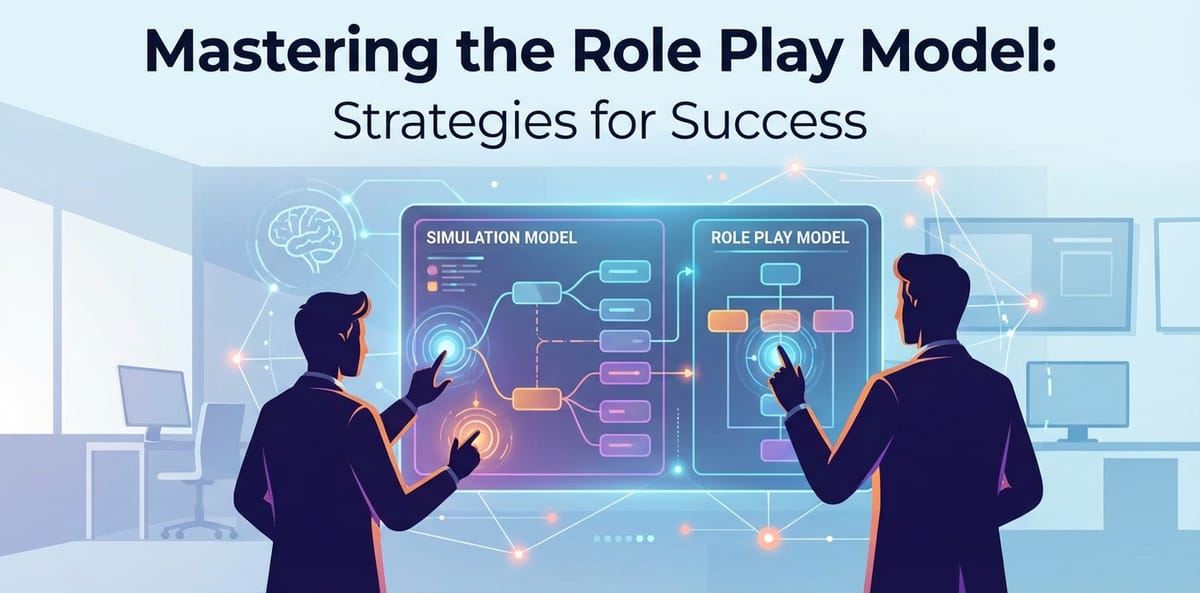
Mastering the Role Play Model: Strategies for Success

In a world increasingly driven by dynamic interactions, complex decision-making, and the need for adaptable skills, the role play model stands as an enduring pedagogical and developmental tool. From honing crucial professional capabilities to fostering empathy and enhancing creative expression, role-playing offers a unique, immersive environment for learning and growth. What began as a human-centric method for simulation and training has now been profoundly transformed by the advent of artificial intelligence, particularly large language models (LLMs). These sophisticated AI systems are revolutionizing how we conceive, design, and execute role-play scenarios, opening up unprecedented possibilities for scalability, personalization, and depth.
This comprehensive guide delves into the multifaceted world of the role play model, exploring its foundational principles, time-tested human-centric strategies, and the cutting-edge innovations brought forth by AI. We will dissect the elements that constitute successful role-play, provide actionable strategies for both traditional and AI-powered implementations, and illuminate how tools like the roleplay prompt generator are becoming indispensable. Furthermore, we will critically examine what makes the best LLM for roleplay and explore how platforms like XRoute.AI are streamlining the development of next-generation interactive experiences. Our journey aims to equip you with the knowledge and techniques to not just participate in, but truly master, the art and science of the role play model in its modern incarnation.
Understanding the Foundations of the Role Play Model
At its core, a role play model is a structured or semi-structured improvisational exercise where participants assume the roles of different characters within a predefined scenario. This simulation allows individuals to practice skills, explore complex situations, and gain insights from various perspectives in a safe, controlled environment. Its applications span an incredibly broad spectrum, from corporate training and educational settings to therapeutic interventions and even advanced AI development.
What is a Role Play Model?
From a traditional, human-centric viewpoint, a role play model is an experiential learning technique. Imagine a sales trainee practicing negotiation with a colleague pretending to be a difficult client, or a medical student simulating a patient consultation. In these scenarios, the objective is to immerse participants in a realistic context, allowing them to experiment with different approaches, make decisions, and observe the immediate consequences of their actions. The value lies not just in the performance but critically in the reflection and feedback that follow. It's a dress rehearsal for real life, where mistakes can be made and learned from without severe repercussions.
With the advent of artificial intelligence, the definition has expanded significantly. An AI-driven role play model involves a large language model adopting a specific persona, complete with background, personality traits, and conversational style, to interact with a human user or another AI. Here, the LLM acts as the dynamic character, responding to prompts and maintaining consistency within the fictional narrative. This allows for hyper-personalized training, engaging storytelling, and scalable simulations that were previously unimaginable. The AI doesn't just play a role; it embodies it, responding dynamically and adapting the narrative based on the user's input. This capability transforms the role play model from a human resource-intensive exercise into an on-demand, always-available learning or entertainment tool.
The benefits of engaging with a robust role play model are manifold:
- Skill Development: Provides a safe space to practice communication, problem-solving, negotiation, leadership, and emotional intelligence skills.
- Empathy Building: Encourages participants to step into someone else's shoes, fostering understanding of different perspectives and motivations.
- Problem-Solving: Allows for the exploration of complex issues and the testing of various solutions in a low-stakes environment.
- Confidence Building: Helps individuals overcome anxieties associated with difficult situations by providing opportunities for repeated practice.
- Behavioral Change: Can be used to challenge existing assumptions, break habits, and reinforce desired behaviors.
- Feedback & Reflection: Offers immediate, constructive feedback that is crucial for learning and improvement.
Historical Context and Evolution
The roots of role-playing can be traced back to ancient times, with theatrical performances serving not just as entertainment but also as a means to explore human dilemmas and societal norms. However, the formalization of the role play model as a psychological and educational tool gained prominence in the 20th century. Jacob L. Moreno, a psychiatrist, introduced "psychodrama" in the 1920s, using spontaneous dramatic role-playing to help individuals explore personal problems and relationships. His work laid much of the groundwork for modern therapeutic and training applications.
Following World War II, the role play model found its way into military training, business management, and educational curricula. Businesses used it to train sales teams and customer service representatives, while educators employed it to teach social studies, literature, and even scientific principles. The emphasis was always on active participation and experiential learning, moving beyond passive lectures.
The late 20th century saw the rise of digital role-playing games (RPGs) in video games, which further popularized the concept of adopting a persona and navigating intricate narratives. While primarily for entertainment, these games underscored the human desire for immersive storytelling and character interaction.
The 21st century marks a pivotal shift with the advent of advanced AI. Initially, AI simulations were rule-based and limited, but with the rapid development of deep learning and transformer architectures, Large Language Models emerged. These LLMs possess an unprecedented ability to generate human-like text, understand context, and maintain consistent personas over extended interactions. This technological leap has truly democratized and scaled the role play model, making sophisticated simulations accessible to individuals and organizations worldwide, and paving the way for tools like the roleplay prompt generator.
Key Components of an Effective Role Play
Regardless of whether a role play model is human-driven or AI-powered, several core components are essential for its effectiveness:
- Clear Scenario/Context: Every role play needs a well-defined setting, time, and initial situation. This background information helps participants (or the AI) understand the environment and the parameters of the interaction. For instance, "a difficult customer complaint in a busy retail store" provides far more structure than simply "customer service." The context sets the stage and dictates the challenges and opportunities within the simulation.
- Defined Roles and Objectives: Each character in the role play must have a clear identity, including their name, background, personality traits, motivations, and specific objectives for the interaction. For a human participant, understanding their character's goals (e.g., "to calm the customer and offer a suitable resolution") is crucial. For an AI, these details form the bedrock of its persona definition, guiding its responses and ensuring consistency. Without clear objectives, the role play can drift aimlessly, losing its developmental impact.
- Interaction and Dialogue: This is the heart of any role play model. It's the dynamic exchange between characters that drives the narrative forward. The quality of this interaction depends on active listening, responsive communication, and the ability to adapt to unexpected turns. In AI-powered role play, the LLM's capacity for natural, coherent, and contextually appropriate dialogue is paramount. The interplay should feel organic, mimicking real-world conversation as closely as possible.
- Feedback and Debriefing: Perhaps the most critical component for learning, especially in human-centric role play. After the interaction, participants and observers (or facilitators) discuss what happened, what went well, what could be improved, and why. This debriefing session helps connect the experience to tangible learning outcomes. For AI-driven simulations, feedback can come in the form of analytical reports on performance, suggested alternative responses, or even meta-commentary from the AI itself in a non-character mode.
- Learning Outcome/Goal: Every effective role play model is designed with a specific learning outcome in mind. Is it to improve negotiation skills? To practice empathy? To understand a historical event from a different perspective? Clearly defining this goal before the role play begins ensures that the exercise is focused and provides a benchmark against which success can be measured. The entire design, from scenario to roles, should funnel towards achieving this outcome.
Human-Centric Role Play Strategies for Success
Before delving into the digital realm, it's crucial to master the fundamentals of human-centric role-play. These strategies form the bedrock of effective simulation and remain highly relevant, even when augmented by AI.
Designing Engaging Scenarios
The scenario is the canvas upon which the role play unfolds. A well-designed scenario is the difference between a mundane exercise and a transformative learning experience.
- Relevance and Realism: The scenario must resonate with the participants' real-world experiences or professional contexts. If it feels artificial or irrelevant, engagement will plummet. Use situations that participants are likely to encounter, or that address specific challenges they face. For example, instead of a generic "conflict resolution" scenario, make it "resolving a dispute between two long-standing team members over resource allocation" if the audience is team leaders. Incorporating industry-specific jargon, typical challenges, and plausible outcomes significantly boosts realism.
- Clear Objectives and Challenges: Each scenario should have a primary objective for the participants, but also include inherent challenges or obstacles that prevent a straightforward resolution. These challenges could be a difficult personality, conflicting interests, unexpected information, or time pressure. These elements create tension and force participants to think critically and adapt. A simple "sell this product" scenario is less engaging than "sell this product to a client who has previously had a bad experience with our company and is highly skeptical, within a 15-minute window."
- Adding Layers of Complexity: Good scenarios are not one-dimensional. They might involve secondary characters, unexpected twists, or ethical dilemmas. For instance, a negotiation scenario could involve an undisclosed budget constraint or a hidden agenda of one party. These layers push participants beyond surface-level interactions and encourage deeper strategic thinking. However, balance is key; too much complexity can overwhelm rather than challenge.
- Preparation and Briefing: Provide participants with sufficient background information about the scenario, their roles, and the objectives well in advance. This might include character profiles, company policies, market data, or previous interaction summaries. A thorough briefing ensures everyone starts on the same page and can fully immerse themselves in their roles without constantly seeking clarification. Visual aids, short videos, or even pre-reading materials can enhance the briefing process.
- Contingency Planning: Even with the best preparation, role plays can go off-script. Facilitators should have some contingency plans or alternative paths in mind, especially for scenarios that might lead to an impasse. This ensures the learning continues even if the initial interaction doesn't unfold as expected.
Developing Convincing Characters
The success of a role play model heavily relies on the believability of the characters. Participants must commit to their roles to create an authentic interaction.
- Detailed Backstory and Motivations: Provide each character with a rich backstory. What are their personal and professional histories? What are their core values, fears, and aspirations? Most importantly, what motivates their actions in this particular scenario? Understanding these motivations allows participants to respond authentically, rather than just reciting lines. For example, a "difficult customer" isn't just difficult; they might be stressed from work, feeling unheard, or genuinely disappointed by a product failure.
- Personality Traits and Emotional Range: Define key personality traits (e.g., assertive, shy, aggressive, calm, sarcastic) and the emotional state the character might be experiencing (e.g., frustrated, anxious, defensive, excited). Encourage participants to embody these emotions and personality quirks, not just intellectually understand them. This helps in generating more realistic and nuanced interactions.
- Non-Verbal Cues: Remind participants to consider the non-verbal aspects of their character: posture, gestures, facial expressions, tone of voice, and eye contact. These elements often convey more than words and are critical for realistic communication. Practicing these can significantly enhance the impact of the role play.
- Empathy Mapping: Before a role play, ask participants to create an empathy map for the character they are playing, and even for the character they will be interacting with. What do they see, hear, think, feel, say, and do? This exercise deepens understanding and allows for more intuitive and compassionate responses.
- Role Sheets: Create comprehensive role sheets that encapsulate all the above details. These sheets serve as a quick reference for participants during the preparation phase and can help them stay in character. Encourage participants to add their own interpretations within the defined parameters, allowing for natural improvisation.
Effective Facilitation and Feedback
The facilitator is the architect of the learning experience, guiding the process and ensuring maximum educational impact.
- Setting Ground Rules: Before the role play begins, establish clear ground rules. This includes emphasizing psychological safety ("what happens here, stays here"), encouraging active participation, allowing for "time-outs" if someone feels overwhelmed, and ensuring respectful communication. These rules create a secure environment conducive to experimentation and vulnerability.
- Observation Skills: The facilitator must be an astute observer, paying close attention to both verbal and non-verbal cues, communication patterns, decision points, and emotional dynamics. Note specific instances or critical moments to bring up during debriefing. It’s helpful to have a checklist or observation sheet to ensure comprehensive feedback.
- Constructive Criticism vs. Judgment: Feedback must be constructive, focused on behavior and its impact, rather than personal criticism. Use "I observed..." or "When you said/did X, the impact was Y" statements. Frame feedback as opportunities for growth. For example, instead of "You were too aggressive," say, "I noticed your voice became louder and your posture more rigid when the client challenged you. How do you think that affected their willingness to listen?"
- Structured Debriefing Techniques: The debriefing session is where the real learning happens. Use a structured approach:
- Participant Reflection: Ask participants to first share their own feelings, thoughts, and observations about their performance and the interaction.
- Observer Feedback: Invite observers to share specific, behavioral feedback, focusing on strengths and areas for improvement.
- Facilitator Insights: The facilitator then provides their observations, connecting them to the learning objectives.
- Key Learnings & Action Planning: Guide a discussion on what lessons were learned and how these insights can be applied to real-world situations. Encourage participants to commit to specific action steps.
- Encouraging Peer Feedback: Foster an environment where participants feel comfortable providing constructive feedback to each other. Teach them how to give effective feedback – specific, actionable, and delivered with empathy. Peer feedback can often be very powerful, as it comes from someone who shared a similar experience.
Measuring Success and Iteration
To ensure that the role play model is achieving its goals, it's essential to measure its effectiveness and be prepared to iterate.
- Qualitative vs. Quantitative Metrics:
- Qualitative: This includes observations from facilitators and peers, participant self-reflection, and subjective assessments of skill improvement, confidence, and empathy. Debriefing sessions are primary sources for qualitative data.
- Quantitative: For more objective measurement, you might use pre- and post-role play surveys (e.g., confidence ratings, self-efficacy scales), checklists for specific behaviors during the role play (e.g., "did the participant use active listening techniques?"), or even video analysis of performance against a rubric. For sales role plays, metrics like "successful close rate" or "number of objections handled" could be tracked.
- Post-Roleplay Reflection: Beyond the immediate debrief, encourage participants to reflect on the experience over time. Journals, follow-up surveys, or group discussions a few weeks later can help solidify learning and reveal long-term impacts. What did they apply in real situations? What challenges did they still face?
- Adapting Scenarios for Continuous Improvement: Based on feedback and measured outcomes, scenarios and role definitions should be iteratively refined. Did a scenario prove too easy or too difficult? Were certain learning objectives not met? Adjust the complexity, introduce new challenges, or modify character profiles to continuously enhance the learning experience. The goal is not just to run a role play, but to evolve it into an increasingly effective developmental tool.
- Documenting Learning: Keep records of scenarios, outcomes, and feedback. This documentation serves as a valuable resource for future role play design and helps demonstrate the return on investment of these training initiatives.
The Digital Frontier: Role Play with AI and LLMs
The landscape of the role play model has been dramatically reshaped by artificial intelligence, particularly large language models (LLMs). These advanced AI systems are not just supplementing human-led role play; they are enabling entirely new forms of immersive and scalable learning and entertainment.
The Rise of AI in Role Play
The integration of AI into role play has transitioned from rudimentary chatbots to highly sophisticated conversational agents capable of embodying complex personas. This evolution has profound implications across various sectors:
- Simulation for Training: AI-powered role play offers realistic simulations for high-stakes professions. Medical students can practice diagnosing virtual patients, military personnel can simulate critical incident responses, and customer service agents can train with AI characters exhibiting diverse emotions and complaints. These simulations provide consistent, accessible training environments that can be practiced repeatedly without human resource constraints.
- Educational Tools: In education, AI role play can bring history to life by allowing students to interact with historical figures, practice foreign language skills with AI native speakers, or explore ethical dilemmas by debating with AI characters holding different viewpoints. This transforms passive learning into active, engaging exploration. Imagine a student practicing a persuasive speech with an AI playing a skeptical audience member, providing real-time feedback on arguments and delivery.
- Entertainment and Creative Writing: AI has become a powerful tool for interactive storytelling. Game developers leverage LLMs to create dynamic NPCs (non-player characters) that respond intelligently and unpredictably, making narrative experiences richer and more personal. Creative writers can use AI to generate dialogue for characters, explore plot points, or even engage in "co-authoring" sessions where the AI plays a character within a story.
- Personalized Learning Environments: One of the most significant advantages of AI in role play is its ability to adapt to individual learners. An AI character can adjust its difficulty, communication style, or knowledge base based on the user's performance, providing a truly personalized learning path. This adaptive quality ensures that each user is challenged appropriately and receives targeted feedback.
How LLMs Enhance Role Play
Large Language Models are at the forefront of this AI revolution, offering capabilities that are uniquely suited to the demands of a robust role play model:
- Dynamic, Responsive Characters: Unlike traditional scripted simulations, LLMs can generate novel, contextually relevant responses in real-time. This means AI characters can truly improvise, reacting naturally to unforeseen turns in conversation and adapting their demeanor based on the user's input. This dynamism makes the role play feel far more authentic and less like a rigid script.
- Ability to Handle Complex, Branching Narratives: LLMs excel at maintaining long conversational contexts, allowing for intricate storylines with multiple branching paths. A single role play can evolve in countless directions based on user choices, creating a high degree of replayability and depth. This moves beyond simple "choose your own adventure" to truly emergent narratives.
- Scalability: Human-led role play is resource-intensive, requiring trained facilitators and participants. AI-powered role play, however, can be deployed to thousands or millions of users simultaneously. This scalability makes high-quality simulations accessible globally, at any time, eliminating logistical bottlenecks. Businesses can train entire workforces on new protocols or complex scenarios efficiently.
- Access to Vast Knowledge Bases for Contextual Realism: LLMs are trained on enormous datasets, granting them access to a wealth of information. This enables AI characters to reference specific facts, cultural nuances, or technical details pertinent to their persona or the scenario, enhancing the realism and informational richness of the interaction. An AI playing a historical figure can draw upon historical records to inform its responses, adding layers of authenticity.
- Overcoming Human Limitations (Bias, Availability): While humans are essential, they bring inherent biases and are limited by availability. AI characters can be designed to minimize certain biases (though they can still reflect biases present in their training data) and are available 24/7. This consistency and perpetual availability ensure that training and practice can occur on demand, fitting into diverse schedules.
Identifying the Best LLM for Role Play
Choosing the best LLM for roleplay is not a one-size-fits-all decision; it depends heavily on the specific requirements of the role play scenario. However, several key criteria emerge as paramount for effective AI character embodiment:
- Coherence and Consistency: The LLM must maintain a consistent personality, knowledge base, and speaking style throughout the interaction. Nothing breaks immersion faster than an AI character suddenly contradicting itself or switching its tone. The best LLM for roleplay excels at remembering past interactions and adhering to its defined persona.
- Persona Adherence: Beyond general consistency, the LLM needs to deeply understand and embody the specific traits, motivations, and background defined for its role. If it's playing a cynical detective, it should respond with cynicism; if it's an empathetic counselor, its responses should reflect that.
- Context Window Size: Role play often involves extended conversations and intricate backstories. An LLM with a larger context window can "remember" more of the previous dialogue and background information, leading to more coherent and contextually rich interactions over longer durations. This is crucial for maintaining the illusion of a continuous conversation.
- Creativity and Flexibility: While consistency is vital, the best LLM for roleplay also needs a degree of creativity to generate novel responses and handle unexpected user input gracefully. It shouldn't just parrot back information but should be able to improvise within its character's boundaries. This allows for more dynamic and less predictable interactions.
- Safety and Ethical Considerations: Especially for sensitive role play scenarios (e.g., mental health simulations, conflict resolution), the LLM must adhere to ethical guidelines, avoid generating harmful content, and handle difficult topics responsibly. Robust safety filters and careful prompt engineering are essential.
- Customization and Fine-Tuning: The ability to fine-tune an LLM on specific datasets related to the role play's domain, character nuances, or desired conversational style can significantly enhance its performance. For instance, fine-tuning on scripts from a specific genre or dialect can make the AI character more authentic.
- Latency: For real-time, interactive role play, low latency is critical. Slow response times break immersion and make the interaction feel clunky. The best LLM for roleplay should offer quick generation of responses to maintain a natural conversational flow.
- Cost-Effectiveness: While powerful LLMs exist, their usage can be costly. Developers need to consider the trade-off between model capability and computational cost, especially for high-volume applications. Optimizing model choice for efficiency is a significant factor.
While specific models from providers like OpenAI (GPT series), Anthropic (Claude), Google (Gemini), or open-source initiatives (Llama) each have their strengths, the best LLM for roleplay often emerges from careful selection and fine-tuning based on these criteria. No single model is universally superior; rather, it's about matching the model's capabilities to the specific demands of the role play.
| Feature/Criterion | Description | Importance for Role Play |
|---|---|---|
| Coherence & Consistency | Ability to maintain logical flow and character traits. | Essential for believable, immersive, and stable interactions. |
| Persona Adherence | How well the LLM stays true to its defined character. | Prevents immersion breaks and ensures character integrity. |
| Context Window Size | The amount of prior conversation the LLM can "remember". | Crucial for long, detailed interactions and complex narratives. |
| Creativity & Flexibility | Generates novel, non-repetitive responses; handles unexpected input. | Keeps interactions engaging, dynamic, and realistic. |
| Safety & Ethics | Adherence to guidelines; avoids harmful or biased content. | Paramount for responsible and sensitive role-play applications. |
| Customization/Fine-tuning | Ability to adapt the model to specific domain or character styles. | Enhances authenticity and precision for niche scenarios. |
| Latency | Speed of response generation. | Critical for real-time, natural conversational flow. |
| Cost-Effectiveness | Balance between model capability and operational cost. | Important for scalability and sustainable deployment. |
XRoute is a cutting-edge unified API platform designed to streamline access to large language models (LLMs) for developers, businesses, and AI enthusiasts. By providing a single, OpenAI-compatible endpoint, XRoute.AI simplifies the integration of over 60 AI models from more than 20 active providers(including OpenAI, Anthropic, Mistral, Llama2, Google Gemini, and more), enabling seamless development of AI-driven applications, chatbots, and automated workflows.
Crafting Effective Role Play Prompts
The power of an LLM in a role play model is profoundly influenced by the quality of the prompts it receives. Just as a director guides actors with a script and stage directions, prompt engineering guides the AI in embodying its role and driving the scenario. This is where the roleplay prompt generator becomes an invaluable asset.
The Art and Science of Prompt Engineering
Prompt engineering is both an art and a science. It's the art of crafting instructions that are clear, comprehensive, and creatively inspiring for the AI, enabling it to perform its role effectively. It's the science of understanding how LLMs interpret language, what parameters influence their output, and iteratively refining prompts to achieve desired behaviors.
Why are prompts so crucial? An LLM, by itself, is a general-purpose text generator. Without specific instructions, it defaults to generic responses. A well-crafted prompt transforms it into a specialized role-player, capable of specific actions and personality traits within a predefined context. The prompt is the AI's entire script, background, and behavioral guidelines rolled into one. It dictates the AI's identity, the environment it inhabits, and the rules it must follow.
Think of prompts as the blueprint for an AI character. A flimsy blueprint leads to a shaky structure. A detailed, robust blueprint results in a stable, convincing edifice. For a role play model, this means ensuring the AI character doesn't break character, generates relevant dialogue, and helps progress the narrative in the intended direction.
Key Elements of a Powerful Role Play Prompt
To create an effective prompt for an AI-driven role play model, consider including these essential elements:
- Role Definition: This is the absolute cornerstone. Clearly articulate the AI's persona:Example: "You are Dr. Evelyn Reed, a seasoned but cynical trauma surgeon with 20 years of experience. You've seen it all and are often blunt, but deeply care about your patients. You speak in short, direct sentences, often using medical jargon. Your goal in this interaction is to assess the new intern's ability to handle high-pressure situations and make quick, accurate diagnoses under stress."
- Name: Give the character a name.
- Background: What's their history? Profession, education, significant life events?
- Personality Traits: Are they assertive, shy, sarcastic, optimistic, cynical, calm, easily frustrated? Use adjectives and describe behaviors.
- Motivations: What do they want to achieve in this interaction or in life generally? What are their hidden agendas?
- Speaking Style: How do they speak? Formal, informal, using slang, direct, verbose, concise? Provide examples if necessary.
- Goals for the Interaction: What is the AI's character trying to achieve specifically within this role play?
- Scenario/Context: Set the stage vividly.Example: "The scene is a dimly lit, chaotic emergency room at 2 AM. Sirens blare intermittently outside. A young intern, Dr. Alex Chen, has just received a critical patient with unusual symptoms. You, Dr. Reed, are overseeing the intern's initial assessment. The overall objective is to test the intern's diagnostic skills and ability to manage stress in a crisis."
- Location: Where does the interaction take place? (e.g., "a bustling emergency room," "a quiet coffee shop," "a medieval marketplace").
- Time: When is it happening? (e.g., "late at night," "during a stormy morning," "a week after the incident").
- Initial Situation: What is happening at the very beginning of the role play? What brought the characters together?
- Overall Objective: What is the overarching goal of the entire role play scenario (e.g., "to de-escalate a conflict," "to negotiate a deal," "to solve a mystery")?
- User's Role: Define the human participant's character, even if briefly. This helps the AI understand who it's interacting with and how to frame its responses. Example: "The user is Dr. Alex Chen, a bright but inexperienced intern on their first night in the ER, trying to prove themselves."
- Constraints & Rules: These are crucial for guiding the AI's behavior and preventing undesirable outputs.
- "Do not break character under any circumstances."
- "Always respond as Dr. Evelyn Reed, maintaining your cynical yet caring demeanor."
- "Keep your responses concise, typically 1-2 sentences."
- "Do not offer solutions unless prompted by the user's explicit question."
- "Introduce a new piece of critical patient information every 3-4 turns of dialogue."
- "Avoid generating content that is overly violent or sexually explicit."
- Examples (Few-Shot Prompting): Providing a few turns of dialogue can give the AI a strong example of the desired interaction style, tone, and pacing. This is especially useful for complex or highly nuanced role plays. Example: "User: Dr. Reed, the patient is experiencing severe abdominal pain and has a history of unknown allergies. What's our next step? Dr. Reed: Allergies are always a fun variable, aren't they, Chen? Bloodwork first. Stat. And don't just stand there, move."
- Output Format: Specify how the AI should structure its response. Example: "Respond as dialogue only, prefixed with 'Dr. Reed:'. If you have an internal thought or action, put it in parentheses at the end of your response, but keep it brief."
Strategies for Advanced Prompt Engineering
To truly master AI-driven role play, advanced prompt engineering techniques can significantly enhance the experience:
- Iterative Refinement: Prompt engineering is rarely a one-shot process. Start with a basic prompt, test it, observe the AI's responses, and then refine the prompt based on what works and what doesn't. This continuous loop of testing and improvement is key.
- Using System Messages vs. User Messages: Many LLM APIs allow for a "system message" that sets the overall behavior and context for the AI, distinct from "user messages" which represent the ongoing conversation. Leverage the system message for stable persona definition and core rules, and user messages for the dynamic interaction.
- Chaining Prompts for Complex Scenarios: For very intricate role plays, you might chain multiple prompts. For instance, an initial prompt sets up the overall scenario, and then subsequent, shorter prompts guide the AI through specific sub-objectives or introduce new information at critical junctures.
- Injecting Dynamic Variables: Instead of hard-coding every detail, use placeholders that can be dynamically filled in. For example, a
roleplay prompt generatormight insert a specific product name or customer complaint into a generic scenario prompt. - Temperature and Creativity Settings: Most LLM APIs offer a "temperature" parameter. A higher temperature makes the AI's output more random and creative, which can be good for open-ended role play. A lower temperature makes it more deterministic and focused, ideal for scenarios requiring strict adherence to facts or rules. Experiment with these settings to find the right balance for your specific role play.
- Negative Constraints: Clearly state what the AI should not do. "Do not offer unsolicited advice," "Do not ask open-ended questions that are outside your character's immediate goal."
The Roleplay Prompt Generator: Tools and Techniques
Creating complex prompts from scratch for diverse role-play scenarios can be time-consuming and challenging. This is precisely where a roleplay prompt generator comes into its own.
A roleplay prompt generator is a specialized tool, often AI-powered itself, designed to help users create detailed, effective prompts for LLMs to embody characters and scenarios. It abstracts away much of the complexity of prompt engineering, allowing users to focus on the creative aspects of their role play.
How it works: Typically, a roleplay prompt generator operates by taking high-level input from the user (e.g., character archetypes, scenario themes, genre) and then assembling a comprehensive prompt based on pre-defined templates, rules, and even leveraging another LLM to flesh out details.
Benefits of using a Roleplay Prompt Generator:
- Saves Time: Automates the tedious process of writing out every detail of a prompt, allowing users to generate complex scenarios in minutes.
- Ensures Consistency: Helps maintain a consistent structure and includes all necessary components for effective role play, reducing the chance of missing crucial instructions.
- Generates Novel Ideas: Can suggest unique character quirks, unexpected plot twists, or diverse settings, sparking creativity and expanding the range of possible role-play scenarios.
- Reduces Prompt Engineering Burden: Lowers the barrier to entry for individuals who are not expert prompt engineers, making sophisticated AI role play accessible to a wider audience.
- Facilitates Iteration: Provides a structured way to modify and refine prompts based on testing, enabling continuous improvement of the AI role-play experience.
Examples of features in a Roleplay Prompt Generator:
- Persona Builder: Users input high-level traits (e.g., "optimistic," "skeptical," "expert"), and the generator fleshes out a detailed character description, including backstory, motivations, and speaking style.
- Scenario Creator: Users define the core conflict, setting, and desired outcome, and the generator constructs a rich narrative context with initial conditions and potential challenges.
- Constraint Enforcer: Pre-set options for common rules (e.g., "don't break character," "keep responses short") can be easily toggled on or off.
- Dialogue Starters/Examples: Provides options to include "few-shot" examples to guide the LLM's initial responses.
- Genre and Tone Selector: Allows users to specify the overall tone (e.g., serious, humorous, dramatic) and genre (e.g., sci-fi, fantasy, corporate drama) to influence the AI's language and content generation.
| Feature | Description | Benefit for Role Play Model |
|---|---|---|
| Persona Builder | Guided input for character traits, backstory, motivations, and speaking style. | Creates richer, more consistent, and believable AI characters. |
| Scenario Creator | Helps define location, time, initial conflict, and overall objectives. | Generates engaging, structured narratives with clear parameters. |
| Constraint Enforcer | Provides templates for rules governing AI behavior and output. | Ensures AI adheres to specific guidelines, preventing off-topic or out-of-character responses. |
| Dialogue Examples (Few-shot) | Allows users to insert examples of desired interactions. | Greatly improves the AI's understanding of tone, style, and flow. |
| Iterative Refinement Tools | Features for easy modification and testing of generated prompts. | Enables continuous optimization of prompt quality and AI performance. |
| Dynamic Variable Integration | Allows for placeholders that can be filled with specific data. | Creates highly customizable and reusable prompt templates. |
| Genre/Tone Selector | Guides the AI to adopt a specific style appropriate for the role play's theme. | Enhances the immersive quality and thematic consistency. |
By leveraging a robust roleplay prompt generator, creators can unlock the full potential of LLMs for their role play model applications, turning complex ideas into vivid, interactive experiences with minimal effort.
Integrating AI-Powered Role Play for Maximum Impact
The true power of the modern role play model lies in intelligently integrating AI capabilities, not just replacing human elements but enhancing them. This hybrid approach often yields the most impactful outcomes.
Designing Hybrid Role Play Experiences
The most effective contemporary role play model often combines the strengths of AI with the irreplaceable nuances of human interaction and oversight.
- Combining Human Facilitation with AI Characters: Imagine a training scenario where participants interact with an AI character (e.g., a challenging customer, a difficult employee) for skill practice. A human facilitator then observes these interactions, provides expert debriefing, and offers personalized coaching. The AI provides scalable, consistent practice, while the human adds empathy, contextual understanding, and nuanced feedback that AI might struggle with. This setup optimizes resource utilization, allowing human experts to focus on higher-value tasks like analysis and individualized guidance.
- AI for Preparatory Exercises, Human for Critical Debriefing: AI can be used for initial skill-building and readiness assessment. Participants might engage with an AI role-play simulation to practice foundational skills or to pre-learn specific protocols. Once they demonstrate a baseline competency, they move on to more complex, human-facilitated role plays or real-world application. The AI acts as a digital coach for preliminary stages, freeing up human instructors for advanced intervention.
- Scalable Training Modules: AI-powered role play can be integrated into large-scale training programs. For instance, a global corporation can roll out a new sales methodology using AI simulations that allow thousands of employees to practice and receive immediate feedback in their own language, at their own pace. Human trainers can then focus on regional nuances, strategic discussions, and one-on-one performance reviews. This blend ensures both breadth and depth of training.
- AI as a "Rehearsal Partner": Individuals can use AI role-play to rehearse for important real-world conversations – a job interview, a difficult conversation with a colleague, a presentation. The AI can play the interviewer, the colleague, or a skeptical audience, providing a safe space to practice responses and build confidence before the actual event. This acts as a private, on-demand coaching tool.
Addressing Challenges in AI Role Play
While incredibly powerful, AI-driven role play is not without its challenges. Addressing these proactively is crucial for maximizing impact and ensuring ethical use.
- AI Hallucination and Factual Inaccuracies: LLMs can sometimes "hallucinate," generating plausible but incorrect information. In a role play model context, this could lead to an AI character providing inaccurate advice or facts, potentially undermining the learning objective or spreading misinformation.
- Mitigation:
- Grounding: Augment the LLM with a retrieval-augmented generation (RAG) system, providing it with specific, verified knowledge relevant to the role play.
- Fact-Checking: Implement a layer of automated or human fact-checking for critical outputs.
- Prompt Engineering: Use strict constraints in the prompt ("Only use information provided in the background documents").
- Mitigation:
- Maintaining Ethical Boundaries and Safety: Role play can involve sensitive topics. Ensuring the AI behaves ethically, avoids generating harmful, biased, or inappropriate content is paramount.
- Mitigation:
- Robust Content Filters: Utilize sophisticated content moderation systems on top of the LLM.
- Safety Prompts: Include negative constraints in prompts explicitly forbidding certain types of content or behavior.
- Human Oversight: For critical applications, maintain human-in-the-loop monitoring.
- Transparency: Clearly communicate to users that they are interacting with an AI.
- Mitigation:
- Over-reliance on AI; the Need for Human Judgment: While AI can simulate many interactions, it cannot fully replicate the depth of human empathy, intuition, or complex moral reasoning. Over-reliance on AI without developing critical human skills can be detrimental.
- Mitigation:
- Hybrid Models: Design role plays that mandate human debriefing and higher-level strategic discussions.
- Focus on 'Soft Skills': Use AI to practice technical skills and repeatable scenarios, but emphasize that human role play is still crucial for nuanced emotional intelligence.
- Training on AI Limitations: Educate users on what AI can and cannot do effectively.
- Mitigation:
- Managing AI Limitations (e.g., Empathy, Nuanced Emotional Understanding): Current LLMs, while capable of mimicking empathy, do not genuinely "feel" emotions. Their understanding of subtle human emotions and social cues is still limited compared to humans.
- Mitigation:
- Focused Design: Design role plays where these limitations are less critical or where the AI's role is well-defined to work around them (e.g., a challenging but not deeply empathetic character).
- Explicit Emotional Cues: Prompt the AI with explicit emotional states ("The client is now very frustrated, respond accordingly").
- Feedback Loops: Incorporate user feedback mechanisms to continuously improve the AI's emotional responsiveness.
- Mitigation:
Future Trends in Role Play Models
The evolution of the role play model is far from over. Emerging trends promise even more immersive and effective experiences:
- Multimodal AI Role-Play: Beyond text, future role plays will increasingly integrate voice (speech recognition and synthesis), visuals (AI-generated avatars, animated characters, virtual environments), and even haptic feedback. This will create truly immersive, sensory-rich simulations that blur the line between virtual and reality. Imagine practicing a public speaking engagement with an AI audience whose facial expressions and body language dynamically respond to your delivery.
- Personalized Adaptive Learning Paths: AI will move beyond simply adapting difficulty to creating entire learning paths tailored to an individual's unique strengths, weaknesses, learning style, and cognitive pace. The role play model will become a highly personalized tutor, identifying specific gaps and generating bespoke scenarios to address them.
- Advanced Emotional Intelligence in AI: As AI research progresses, LLMs will gain a more sophisticated understanding and expression of emotions, making AI characters even more believable and capable of handling complex interpersonal dynamics with greater nuance. This will enable more profound explorations of empathy and emotional regulation.
- Decentralized AI Role-Play Communities: The rise of decentralized AI frameworks could lead to user-generated AI characters and scenarios shared within communities, fostering a collaborative ecosystem for role-play development and engagement. Users could train and deploy their own specialized AI characters, creating a vast universe of interactive possibilities.
The Technological Backbone: Enabling Advanced AI Role Play
Realizing the potential of AI-driven role play model applications—especially those leveraging the best LLM for roleplay and requiring a robust roleplay prompt generator—demands a sophisticated technological infrastructure. Developers face a myriad of challenges in integrating, managing, and optimizing the diverse array of LLMs available today.
The Complexity of AI Model Integration
The current landscape of Large Language Models is fragmented. While innovations are rapid, so too are the challenges for developers:
- Managing Multiple APIs: Different LLM providers (OpenAI, Anthropic, Google, etc.) have distinct APIs, authentication methods, data formats, and rate limits. Integrating just a few models can become a significant development overhead, requiring custom code for each. This complexity discourages experimentation and limits flexibility in choosing the best LLM for roleplay for a given task.
- Varying Model Capabilities and Performance: Each LLM has unique strengths and weaknesses regarding coherence, creativity, context window size, and speed. What might be the best LLM for roleplay for one scenario (e.g., historical fiction) might be suboptimal for another (e.g., technical support simulation). Benchmarking and selecting the right model for specific role play model needs is an ongoing challenge.
- Different Pricing Models and Costs: LLM usage comes with varying costs, often based on token count, model size, and usage tier. Optimizing for cost while maintaining performance requires careful management and the ability to switch between providers based on real-time needs.
- Latency Issues: For real-time interactive role play, low latency is non-negotiable. Network overheads, model inference times, and API bottlenecks can significantly degrade the user experience. Ensuring fast responses across multiple models and providers adds another layer of complexity.
- Scalability Challenges: As an application grows, managing the load across different LLM endpoints, handling retries, and ensuring high throughput becomes a critical infrastructure concern. Building a system that can gracefully scale up or down based on demand is a significant engineering effort.
These complexities often force developers to make trade-offs, limiting their ability to innovate and deliver the most effective role play model experiences. They might stick with a single provider even if it's not the best LLM for roleplay for all their needs, simply to avoid integration headaches.
Introducing XRoute.AI: A Unified Solution for LLM Integration
This is precisely where XRoute.AI emerges as a game-changer for developers and businesses looking to master the role play model and build next-generation AI applications. XRoute.AI is a cutting-edge unified API platform designed to streamline access to large language models (LLMs) for developers, businesses, and AI enthusiasts. By abstracting away the inherent complexities of diverse LLM ecosystems, XRoute.AI empowers creators to build more sophisticated, flexible, and powerful AI-driven role-play experiences.
Here's how XRoute.AI specifically helps developers working on advanced role play model solutions:
- Single, OpenAI-Compatible Endpoint: XRoute.AI provides a unified, OpenAI-compatible endpoint. This means developers can integrate over 60 AI models from more than 20 active providers using a single, familiar API structure. This dramatically simplifies the integration process, eliminating the need to write custom code for each LLM provider. For
role play modeldevelopers, this means effortless switching between different LLMs to find the absolute best LLM for roleplay for a specific character persona or scenario, without rewriting core application logic. Want to test a new LLM for its creative storytelling abilities or its adherence to a complex character profile? XRoute.AI makes it a seamless swap. - Unparalleled Model Choice for Persona Fidelity: With access to
over 60 AI models from more than 20 active providers, XRoute.AI offers an unprecedented range of options. This directly addresses the challenge of identifying the best LLM for roleplay. Developers can experiment with various models, each with its unique strengths in areas like conversational coherence, persona consistency, emotional nuance, or specific domain knowledge, to craft the most authentic and engaging AI characters for theirrole play modelapplications. This vast choice allows for fine-grained control over character embodiment, a critical factor in immersive role play. - Low Latency and Cost-Effective AI for Real-time Interaction:
Low latency AIandcost-effective AIare paramount for interactiverole play modelexperiences. XRoute.AI is engineered for high performance, ensuring that AI characters respond swiftly and naturally, maintaining the flow of conversation and immersion. Furthermore, its flexible routing and optimization capabilities allow developers to manage costs effectively, potentially directing requests to the mostcost-effective AImodel that still meets performance requirements. This is crucial for scalablerole play modelapplications where thousands of users might be interacting concurrently. - High Throughput and Scalability for Enterprise Solutions: XRoute.AI provides
high throughput, scalability, and flexible pricing model, making it an ideal choice for projects of all sizes. Whether you're building a smallroleplay prompt generatortool for individual users or a large-scale enterprise training platform with hundreds of simultaneousrole play modelsimulations, XRoute.AI's infrastructure can handle the demand. This ensures that as your role-play application grows, your underlying AI access layer can scale with it, without bottlenecking. - Developer-Friendly Tools: By streamlining LLM integration, XRoute.AI frees developers from infrastructure management, allowing them to focus on what truly matters: designing compelling scenarios, crafting intricate prompts with a roleplay prompt generator, and refining the user experience of their
role play model. The platform empowers users to build intelligent solutions without the complexity of managing multiple API connections, accelerating development cycles and fostering innovation.
In essence, XRoute.AI acts as the essential bridge, connecting the boundless potential of diverse LLMs with the specific, demanding requirements of advanced role play model applications. It provides the robust, flexible, and efficient backbone needed to create truly immersive, intelligent, and scalable interactive experiences for training, education, and entertainment.
Conclusion
The role play model, a powerful crucible for learning and development, has undergone a remarkable transformation from its human-centric origins to its current, AI-augmented zenith. We have journeyed through its foundational principles, explored the art of crafting compelling scenarios and characters, and dissected the critical role of effective facilitation and feedback. The digital revolution, spearheaded by Large Language Models, has ushered in an era where the best LLM for roleplay can create dynamic, scalable, and personalized interactive experiences, enabling unprecedented opportunities for skill acquisition, empathy building, and creative exploration.
The emergence of sophisticated prompt engineering techniques and specialized tools like the roleplay prompt generator has empowered creators to guide AI characters with precision, crafting immersive narratives that were once the exclusive domain of human improvisation. However, realizing the full potential of AI-driven role play necessitates navigating challenges such as hallucination and ethical considerations, always striving for a hybrid approach that leverages the best of both human insight and artificial intelligence.
As we look to the future, multimodal AI, adaptive learning paths, and increasingly emotionally intelligent AI characters promise to push the boundaries of the role play model even further. To harness these advancements effectively, developers need a robust and flexible technological infrastructure. This is where platforms like XRoute.AI become indispensable, offering a unified API platform that streamlines access to a vast array of large language models (LLMs). By providing a single, OpenAI-compatible endpoint and guaranteeing low latency AI and cost-effective AI, XRoute.AI empowers creators to build, iterate, and scale their AI-driven role-play applications with unparalleled ease and efficiency.
Ultimately, whether for professional training, educational enlightenment, or pure entertainment, the role play model remains a potent and evolving tool. Augmented by intelligent technologies and supported by innovative platforms, its capacity to foster learning, spark creativity, and deepen human understanding is greater than ever before. Mastering its strategies, from scenario design to advanced prompt engineering and seamless AI integration, is not just about building better simulations—it's about shaping richer, more engaging, and more impactful experiences for everyone.
Frequently Asked Questions (FAQ)
1. What are the primary benefits of incorporating AI into role-play training?
Incorporating AI into role-play training offers several significant benefits: scalability, allowing numerous users to practice simultaneously; personalization, as AI can adapt scenarios and feedback to individual needs; consistency, providing uniform training experiences that human facilitators might vary; and accessibility, enabling on-demand practice anytime, anywhere. AI also frees human trainers to focus on higher-level coaching and complex strategic discussions.
2. How can I ensure my AI role-play characters remain consistent and realistic?
Ensuring consistency and realism in AI role-play characters relies heavily on effective prompt engineering. Provide detailed instructions for the AI's persona, including background, personality traits, motivations, and speaking style. Utilize system messages for core character definition and use specific constraints to prevent the AI from breaking character. Leveraging an LLM with a large context window also helps the AI "remember" previous interactions, maintaining coherence throughout the role play.
3. What are the key elements of an effective roleplay prompt generator?
An effective roleplay prompt generator typically includes a persona builder (for character details), a scenario creator (for setting and context), a constraint enforcer (for rules and AI behavior), and often tools to include dialogue examples (few-shot prompting) or integrate dynamic variables. These elements work together to create comprehensive prompts that guide the LLM to embody its role accurately and generate relevant, engaging interactions.
4. Are there ethical considerations when using the best LLM for roleplay scenarios?
Yes, ethical considerations are crucial when using the best LLM for roleplay. These include: ensuring AI safety and avoiding the generation of harmful, biased, or inappropriate content; maintaining transparency by clearly informing users they are interacting with an AI; addressing potential AI hallucination or factual inaccuracies by grounding the model with verified information; and being mindful of the limitations of AI in understanding nuanced human emotions or complex moral dilemmas.
5. How does XRoute.AI specifically assist developers in creating advanced role-play applications?
XRoute.AI significantly assists developers by providing a unified API platform for accessing over 60 AI models from more than 20 active providers through a single, OpenAI-compatible endpoint. This simplifies integration, allowing developers to easily switch between LLMs to find the best LLM for roleplay for specific character needs, optimize for low latency AI, and manage cost-effective AI. It offers high throughput, scalability, and developer-friendly tools, enabling creators to focus on designing compelling role play model applications rather than managing complex API integrations.
🚀You can securely and efficiently connect to thousands of data sources with XRoute in just two steps:
Step 1: Create Your API Key
To start using XRoute.AI, the first step is to create an account and generate your XRoute API KEY. This key unlocks access to the platform’s unified API interface, allowing you to connect to a vast ecosystem of large language models with minimal setup.
Here’s how to do it: 1. Visit https://xroute.ai/ and sign up for a free account. 2. Upon registration, explore the platform. 3. Navigate to the user dashboard and generate your XRoute API KEY.
This process takes less than a minute, and your API key will serve as the gateway to XRoute.AI’s robust developer tools, enabling seamless integration with LLM APIs for your projects.
Step 2: Select a Model and Make API Calls
Once you have your XRoute API KEY, you can select from over 60 large language models available on XRoute.AI and start making API calls. The platform’s OpenAI-compatible endpoint ensures that you can easily integrate models into your applications using just a few lines of code.
Here’s a sample configuration to call an LLM:
curl --location 'https://api.xroute.ai/openai/v1/chat/completions' \
--header 'Authorization: Bearer $apikey' \
--header 'Content-Type: application/json' \
--data '{
    "model": "gpt-5",
    "messages": [
        {
            "content": "Your text prompt here",
            "role": "user"
        }
    ]
}'
With this setup, your application can instantly connect to XRoute.AI’s unified API platform, leveraging low latency AI and high throughput (handling 891.82K tokens per month globally). XRoute.AI manages provider routing, load balancing, and failover, ensuring reliable performance for real-time applications like chatbots, data analysis tools, or automated workflows. You can also purchase additional API credits to scale your usage as needed, making it a cost-effective AI solution for projects of all sizes.
Note: Explore the documentation on https://xroute.ai/ for model-specific details, SDKs, and open-source examples to accelerate your development.