O1 Preview vs O1 Mini: Which is Right for You?

In the rapidly evolving landscape of personal computing, where performance, portability, and design converge, the choice of a new device can often feel overwhelming. Consumers today are not just looking for a machine; they seek a companion that seamlessly integrates into their workflow, leisure, and lifestyle. The O1 series, a testament to innovative engineering and user-centric design, has emerged as a compelling contender, offering a sophisticated blend of power and elegance in compact form factors. Within this exciting lineup, two particular models stand out and frequently spark debate among prospective buyers: the O1 Preview and the O1 Mini. Each is meticulously crafted to cater to distinct user profiles and demands, yet both embody the core philosophy of the O1 brand – delivering cutting-edge technology in remarkably efficient packages.
This article aims to provide an exhaustive, in-depth comparison, meticulously dissecting every facet of the O1 Preview vs O1 Mini. We will venture beyond mere specifications, exploring their design philosophies, performance envelopes, user experiences, and ideal applications. Whether you are a professional seeking an uncompromised workstation, a digital nomad prioritizing extreme portability, a student needing a reliable study aid, or a home user looking for a versatile entertainment hub, understanding the nuanced differences between these two exceptional devices is paramount to making an informed decision. By the end of this comprehensive guide, you will have a clear understanding of which O1 device – the formidable O1 Preview or the agile O1 Mini – is the perfect match for your unique needs and aspirations.
The O1 Ecosystem: A Brief Overview of Innovation
The O1 series represents a paradigm shift in personal computing, moving away from bulky towers and constrained laptops towards a vision of powerful, yet discreet, computing hubs. Designed with a minimalist aesthetic and a focus on environmental efficiency, O1 devices are engineered to be the nerve center of your digital life, whether at home, in the office, or on the go. The core philosophy revolves around delivering maximum utility in a minimum footprint, challenging preconceived notions of what a high-performance computer should look like.
At its heart, the O1 ecosystem is about flexibility and adaptability. The devices are often seen as "headless" units, designed to integrate seamlessly with existing displays, keyboards, and mice, transforming any space into a productive environment. They embody a future where your computing power is always available, easily transported, and incredibly powerful, without dominating your physical space. The introduction of the O1 Preview and the O1 Mini further refines this vision, segmenting the market to serve users with vastly different priorities, from raw processing might to ultimate portability. This strategic diversification ensures that the O1 brand continues to push the boundaries of what's possible in compact computing, solidifying its position as a leader in innovation.
O1 Preview: A Deep Dive into its Capabilities
The O1 Preview stands as the flagship model within the O1 series, a powerhouse meticulously engineered for users who demand uncompromised performance and a rich feature set. It embodies the pinnacle of compact computing, designed to tackle demanding tasks with remarkable ease and efficiency. This is not just a mini-PC; it's a statement, a testament to what's achievable when design meets cutting-edge technology without significant spatial constraints.
Target Audience: The O1 Preview is primarily aimed at professionals, content creators, developers, serious enthusiasts, and power users. Think graphic designers rendering intricate 3D models, video editors manipulating high-resolution footage, software developers compiling complex codebases, or data scientists running intensive simulations. Its capabilities also make it an excellent choice for light to moderate gaming, offering a smooth experience for many modern titles. Essentially, if your workflow involves resource-intensive applications and multitasking, the O1 Preview is engineered to meet and exceed those demands.
Key Features and Specifications:
- Processor Architecture: At the core of the O1 Preview lies a formidable O1 Quantum X-Pro Chip. This is not merely an efficient mobile processor, but a high-performance desktop-class CPU, often featuring a higher core count, elevated clock speeds, and larger cache sizes. This architecture provides exceptional multi-threaded performance, crucial for tasks like video encoding, virtual machine operation, and complex data analysis. Its thermal design power (TDP) is significantly higher than its Mini counterpart, allowing it to sustain peak performance for longer durations without throttling.
- Memory and Storage: The O1 Preview typically comes equipped with substantial RAM, usually starting at 32GB and configurable up to 64GB of high-speed DDR5 memory. This ample memory capacity is vital for multitasking and handling large datasets, preventing bottlenecks when running multiple demanding applications concurrently. For storage, it boasts NVMe PCIe 4.0 SSDs, often with capacities of 1TB or 2TB, providing blistering read and write speeds. This translates to near-instantaneous boot times, rapid application loading, and incredibly quick file transfers, significantly enhancing overall system responsiveness.
- Graphics Performance: While relying on integrated graphics to maintain its compact form factor, the O1 Preview integrates a top-tier integrated GPU solution. This advanced integrated graphics processing unit is designed to handle visually intensive tasks, including 4K video playback, light to moderate gaming at respectable frame rates, and accelerating tasks in creative applications like Adobe Photoshop or Premiere Pro. For tasks requiring extreme graphical horsepower, its architecture often supports external GPU enclosures via Thunderbolt 4, offering a pathway for future upgrades or specialized needs.
- Connectivity Suite: Connectivity is a strong suit of the O1 Preview. It typically features multiple Thunderbolt 4 ports, offering unparalleled bandwidth for external displays, high-speed storage, and eGPUs. Alongside, you’ll find several USB-C (some with USB 3.2 Gen 2x2 capabilities) and USB-A ports, HDMI 2.1, and DisplayPort 1.4, allowing for multi-monitor setups at high resolutions and refresh rates. Network capabilities include a 2.5 Gigabit Ethernet port for ultra-fast wired connections and Wi-Fi 7 (802.11be) for cutting-edge wireless networking, complemented by Bluetooth 5.4 for peripheral connectivity. This comprehensive suite ensures it can serve as a central hub for any modern workstation.
- Cooling System: Given its powerful components, effective thermal management is crucial. The O1 Preview employs an advanced, often liquid-assisted or highly efficient fan-based cooling system. This system is engineered to dissipate heat effectively, allowing the CPU and GPU to operate at their maximum potential for extended periods without thermal throttling. Despite its robust cooling, emphasis is placed on quiet operation, ensuring that the device remains unobtrusive even under heavy load, a critical factor for professional environments.
- Design and Build Quality: The chassis of the O1 Preview typically features a premium build, often utilizing aerospace-grade aluminum or a robust metal alloy. Its slightly larger footprint (e.g., 20x20x5 cm) compared to the Mini allows for better thermal solutions and more extensive port selection. The design is sleek, modern, and industrial, exuding a sense of quality and durability.
Pros of the O1 Preview:
- Exceptional Performance: Delivers desktop-class power in a compact form factor.
- Superior Multitasking: Ample RAM and fast storage ensure smooth operation across many applications.
- Advanced Connectivity: Thunderbolt 4, Wi-Fi 7, and multiple display outputs cater to professional setups.
- Robust Build Quality: Premium materials and construction promise durability.
- Effective Cooling: Sustained performance without overheating concerns.
Cons of the O1 Preview:
- Higher Cost: Its premium specifications come with a significantly higher price tag.
- Less Portable: While compact, it's larger and heavier than the Mini, making it less ideal for frequent travel.
- Higher Power Consumption: Requires a larger external power brick and consumes more energy.
Ideal Use Cases:
- Professional Workstations: CAD, video editing, graphic design, software development, data analytics.
- Home Office Power Users: For those who demand desktop-level performance without the bulk.
- Advanced AI/ML Development: Running local models, training smaller datasets, leveraging high-throughput capabilities.
- Multi-Media Production Studios: Handling 4K/8K media, audio engineering, streaming setups.
O1 Mini: Compact Power, Uncompromised Experience
In stark contrast to its powerhouse sibling, the O1 Mini is a marvel of miniaturization, designed for users who prioritize extreme portability, energy efficiency, and a truly minimalist computing experience without sacrificing essential functionality. It’s the embodiment of computing on the go, a device that slips effortlessly into any bag or even a large pocket, ready to transform any display into a functional workspace.
Target Audience: The O1 Mini is ideally suited for everyday users, students, business travelers, those setting up home theater PCs (HTPCs), or anyone needing a reliable and efficient device for general productivity, web browsing, media consumption, and light office work. It’s perfect for users who need a competent computer that doesn't demand a permanent desk space and can be easily moved between locations.
Key Features and Specifications:
- Processor Architecture: The O1 Mini is powered by an O1 Atom S-Core Chip, an efficient mobile or low-power desktop processor. While not as raw-powerful as the Preview's chip, it excels in power efficiency, delivering excellent performance for its target use cases. These chips are optimized for sustained daily tasks, web browsing, document editing, and streaming, offering a snappy experience without generating excessive heat or consuming significant power.
- Memory and Storage: Typically, the O1 Mini offers 16GB or 32GB of LPDDR5 or DDR4 RAM. This is still ample for most everyday tasks, allowing users to run multiple browser tabs, office applications, and streaming services concurrently without noticeable slowdowns. Storage usually comes in the form of NVMe PCIe 3.0 SSDs, with common capacities ranging from 512GB to 1TB. While not as fast as PCIe 4.0, these drives still offer vastly superior performance compared to traditional SATA SSDs, ensuring quick boot times and responsive application loading.
- Graphics Performance: The integrated graphics solution in the O1 Mini is geared towards efficiency and media playback. It capably handles 4K video streaming, casual gaming, and general graphical user interfaces. It's perfectly adequate for presentations, video conferencing, and managing digital photos, but it is not designed for heavy graphical rendering or demanding AAA gaming titles.
- Connectivity Suite: Despite its diminutive size, the O1 Mini provides a practical array of ports. It often includes one or two USB-C ports (with DisplayPort Alt Mode for video output), several USB-A ports, an HDMI 2.0 port, and a Gigabit Ethernet port. For wireless connectivity, it usually features Wi-Fi 6E (802.11ax) and Bluetooth 5.3, providing reliable and fast wireless networking and peripheral connections. While not as extensive as the Preview, it covers all essential modern connectivity needs for its intended audience.
- Cooling System: The O1 Mini often relies on a highly efficient passive cooling system or a very small, quiet fan, allowing it to operate silently for most tasks. Its lower power components generate less heat, enabling this minimalist cooling approach. This makes it ideal for quiet environments like bedrooms, libraries, or conference rooms where fan noise would be disruptive.
- Design and Build Quality: The most striking feature of the O1 Mini is its incredibly compact form factor (e.g., 12x12x3 cm). Its chassis often uses a sleek, durable plastic-metal composite, maintaining a premium feel while keeping weight to a minimum. The design emphasizes minimalism and unobtrusiveness, making it blend seamlessly into any setting.
Pros of the O1 Mini:
- Extreme Portability: Ultra-compact and lightweight, perfect for travel and on-the-go use.
- Energy Efficient: Low power consumption, suitable for extended use and less environmental impact.
- Affordable Price Point: Offers excellent value for everyday computing needs.
- Silent Operation: Ideal for quiet environments like bedrooms or libraries.
- Sleek, Minimalist Design: Blends seamlessly into any modern setup.
Cons of the O1 Mini:
- Limited Raw Performance: Not suitable for heavy-duty tasks like professional content creation or demanding gaming.
- Less Expandability: Fewer ports and typically no support for external GPUs.
- Smaller Storage/RAM Options: While adequate, it has lower maximum configurations.
- Less Robust Cooling for Peak Loads: May throttle under sustained heavy (though infrequent) loads.
Ideal Use Cases:
- Students: For essays, research, online learning, and multimedia consumption.
- Home Office Productivity: Emails, word processing, spreadsheets, video conferencing.
- Travelers/Digital Nomads: Lightweight and powerful enough for remote work essentials.
- Home Theater PCs (HTPC): Streaming 4K content, media server, light gaming.
- Kiosk/Display Signage: Reliable and discreet for commercial applications.
Head-to-Head Comparison: O1 Preview vs O1 Mini
When evaluating the O1 Preview vs O1 Mini, a direct comparison across key metrics reveals their distinct strengths and target demographics. While both belong to the innovative O1 series, their engineering priorities diverge significantly, leading to two devices that, despite superficial similarities, offer fundamentally different experiences.
Performance
The most significant differentiator lies in raw processing power. The O1 Preview, with its O1 Quantum X-Pro Chip and higher-speed DDR5 RAM, offers a substantial performance lead. It's built for sustained, multi-core intensive workloads. Tasks like 4K video rendering, compiling large software projects, running virtual machines, or manipulating complex CAD models will see the Preview complete them in a fraction of the time compared to the Mini. Its robust cooling system ensures that this performance can be maintained over long periods.
The O1 Mini, equipped with the O1 Atom S-Core Chip and DDR4/LPDDR5 RAM, is optimized for efficiency. For everyday tasks such as web browsing, email management, office applications, and 1080p/4K media streaming, its performance is more than adequate, offering a very snappy and responsive user experience. However, when faced with processor-intensive tasks, it will naturally take longer and may experience thermal throttling under prolonged heavy loads, though this is rare for its intended use cases.
Portability and Form Factor
Here, the O1 Mini unequivocally takes the crown. Its ultra-compact dimensions (e.g., 12x12x3 cm) and significantly lighter weight make it an ideal travel companion. It can easily fit into a small bag, a backpack's side pocket, or even some larger jacket pockets, allowing users to carry their full computing environment wherever they go.
The O1 Preview, while still compact by traditional desktop standards (e.g., 20x20x5 cm), is noticeably larger and heavier. Its increased size accommodates more robust cooling, more expansive I/O, and larger internal components. It's portable in the sense that it's easy to move between rooms or offices, but it's not designed for the same level of on-the-go casual portability as the Mini.
Display and Graphics Capabilities
Both devices offer excellent display output capabilities, supporting 4K resolutions and beyond. However, the O1 Preview's integrated graphics are considerably more powerful, capable of driving multiple high-resolution displays (e.g., dual 4K monitors at 60Hz or single 8K) and offering better performance in graphic-intensive applications and light gaming. Its HDMI 2.1 and DisplayPort 1.4 ensure future-proofing for the latest display technologies.
The O1 Mini's integrated graphics are perfectly capable of driving a single 4K display or dual 1080p monitors. It's excellent for media consumption and general productivity, but its gaming prowess is limited to less demanding titles or lower settings. Its HDMI 2.0 and USB-C with DisplayPort Alt Mode cover common display needs.
Battery Life and Power Efficiency
Neither device comes with an integrated battery, as they are mini-PCs designed to be tethered to a power source. However, their power consumption profiles are vastly different. The O1 Mini, with its efficiency-focused processor and components, consumes significantly less power. This translates to lower electricity bills and the potential for a smaller, more universal power adapter (some even support USB-C Power Delivery).
The O1 Preview, due to its high-performance components and robust cooling, has a higher TDP and, consequently, higher power consumption. It requires a larger, higher-wattage external power brick. While still energy-efficient for its class, it's not in the same league as the Mini for absolute power frugality.
Connectivity and Expansion
The O1 Preview offers a more comprehensive and future-proof connectivity suite. Multiple Thunderbolt 4 ports are a game-changer for professionals, enabling lightning-fast external storage, eGPU enclosures, and high-bandwidth docking stations. Wi-Fi 7 and 2.5GbE further solidify its position as a connected powerhouse.
The O1 Mini provides a solid, practical array of ports sufficient for most users. Wi-Fi 6E and Gigabit Ethernet are fast enough for most home and office networks. While it might lack Thunderbolt, its USB-C ports with DisplayPort Alt Mode and USB-A ports cover essential peripheral and display needs.
Price Point
Unsurprisingly, the O1 Preview occupies a premium price segment, reflecting its top-tier components, advanced cooling, and extensive feature set. It represents a significant investment but delivers professional-grade performance.
The O1 Mini is positioned as a more budget-friendly option, offering excellent value for its capabilities. It makes advanced compact computing accessible to a broader audience without compromising on the core O1 experience for its intended use cases.
Here is a summary table comparing the key specifications and features:
| Feature/Specification | O1 Preview | O1 Mini |
|---|---|---|
| Processor | O1 Quantum X-Pro Chip (Desktop-class) | O1 Atom S-Core Chip (Mobile/Low-power) |
| RAM | 32GB / 64GB DDR5 (High-speed) | 16GB / 32GB DDR4/LPDDR5 (Efficient) |
| Storage | 1TB / 2TB NVMe PCIe 4.0 SSD | 512GB / 1TB NVMe PCIe 3.0 SSD |
| Graphics | High-end Integrated GPU (Advanced) | Standard Integrated GPU (Efficient) |
| Form Factor | Larger Mini-PC (e.g., 20x20x5 cm), Metal | Ultra-compact Mini-PC (e.g., 12x12x3 cm), Composite |
| Cooling | Advanced Liquid/Fan Cooling (Quiet under load) | Passive/Small Fan (Silent for most tasks) |
| Connectivity (Wired) | Thunderbolt 4 (x2), USB-C (x2), USB-A (x4), HDMI 2.1, DP 1.4, 2.5GbE LAN | USB-C (x1, DP Alt Mode), USB-A (x3), HDMI 2.0, Gigabit LAN |
| Connectivity (Wireless) | Wi-Fi 7 (802.11be), Bluetooth 5.4 | Wi-Fi 6E (802.11ax), Bluetooth 5.3 |
| Power Consumption | Higher (for peak performance) | Lower (for efficiency) |
| Target User | Professionals, Creators, Developers, Power Users | Everyday Users, Students, Travelers, HTPC |
| Price Range | Premium ($1500 - $2500) | Mid-range ($700 - $1200) |
XRoute is a cutting-edge unified API platform designed to streamline access to large language models (LLMs) for developers, businesses, and AI enthusiasts. By providing a single, OpenAI-compatible endpoint, XRoute.AI simplifies the integration of over 60 AI models from more than 20 active providers(including OpenAI, Anthropic, Mistral, Llama2, Google Gemini, and more), enabling seamless development of AI-driven applications, chatbots, and automated workflows.
Performance Benchmarks and Real-World Scenarios
To further illustrate the practical differences, let’s consider how the O1 Preview and O1 Mini would fare in various real-world scenarios, moving beyond raw numbers to understand their implications for daily use.
Scenario 1: Professional Content Creation (Video Editing, 3D Rendering)
For a video editor working with 4K or 8K footage in Adobe Premiere Pro or DaVinci Resolve, the O1 Preview would be the undisputed champion. Its O1 Quantum X-Pro Chip, with a higher core count and clock speeds, would significantly accelerate rendering times, scrubbing through timelines, and applying complex effects. The 32GB/64GB of DDR5 RAM would allow for multiple applications to run simultaneously (e.g., Premiere, Photoshop, and a browser with numerous tabs) without a hitch. The PCIe 4.0 NVMe SSDs would ensure rapid project loading and saving, as well as smooth playback of large media files. An external GPU connected via Thunderbolt 4 could further enhance this setup for truly heavy tasks.
The O1 Mini, while capable of handling 1080p video editing for basic projects, would struggle immensely with 4K footage. Rendering times would be substantially longer, and the system might become unresponsive during complex edits. Its lower RAM capacity could lead to frequent disk caching, slowing down the workflow considerably. For professional content creators, the O1 Mini would be a bottleneck, leading to frustration and lost productivity.
Scenario 2: Everyday Productivity & Browsing
For a student or office worker primarily engaging in web browsing (multiple tabs), email, word processing (Microsoft Office/Google Docs), video conferencing (Zoom/Teams), and light multitasking, both devices perform admirably. The O1 Mini shines here, offering a remarkably smooth and responsive experience. Applications launch quickly, web pages load instantly, and switching between tasks is fluid. Its silent operation makes it ideal for quiet study environments or open-plan offices.
The O1 Preview would, of course, handle these tasks effortlessly, almost overkill for such light loads. Its immense power would remain largely untapped, but it would provide an ultra-responsive experience with virtually no slowdowns, regardless of how many applications or browser tabs are open. If your everyday productivity occasionally spills into more demanding tasks, the Preview offers that headroom.
Scenario 3: Gaming & Entertainment
For gamers, the distinction is clear. The O1 Preview, with its high-end integrated graphics and powerful CPU, can comfortably run many modern AAA titles at 1080p with medium to high settings, or even some at 1440p with adjustments. Esports titles would run flawlessly at high frame rates. The option to connect an eGPU via Thunderbolt 4 opens up the possibility of truly high-fidelity 4K gaming, rivaling dedicated gaming desktops.
The O1 Mini is suitable for casual gaming, indie titles, and older games at lower settings. It excels as an HTPC (Home Theater PC), providing smooth 4K video streaming from services like Netflix, YouTube, or Plex. Its ability to effortlessly play high-bitrate media files makes it an excellent entertainment hub, but it's not a device for serious gaming.
Scenario 4: Travel & Portability
A business traveler who needs to give presentations on the go, check emails in hotel lobbies, or work remotely from different locations would find the O1 Mini invaluable. Its tiny size and light weight mean it can be easily carried in a small bag, plugged into any available monitor, and you have your full desktop environment. The flexibility of USB-C for power and display simplifies packing.
The O1 Preview, while still portable compared to a traditional desktop, would be less convenient for daily travel. Its larger size and heavier power adapter make it more suitable for moving between fixed locations (e.g., home to office) rather than daily commutes or international travel.
Scenario 5: Budget Considerations
When budget is a primary concern, the O1 Mini offers exceptional value. It delivers a full-fledged, highly competent computing experience for a significantly lower investment. For most users, the performance offered by the Mini is more than sufficient, making it a cost-effective choice without feeling like a compromise on the core experience.
The O1 Preview represents a premium investment. Its higher price tag is justified by its superior performance, advanced features, and professional-grade capabilities. For those whose livelihoods depend on powerful computing, this investment quickly pays for itself in increased productivity and efficiency. However, for casual users, the extra cost might be unnecessary.
Enhancing AI Workflows with O1 Devices
For developers and researchers working with Artificial Intelligence and Machine Learning, both devices offer interesting propositions, albeit for different scales of work. The O1 Preview, with its powerful CPU and ample RAM, is excellent for local development, testing smaller AI models, and running inference tasks that benefit from fast processing. Its high-throughput connectivity, especially Thunderbolt 4, means it can interface with specialized AI accelerators or high-speed storage arrays needed for complex AI development.
Furthermore, integrating advanced AI capabilities into applications running on these devices can be significantly streamlined using modern API platforms. For instance, services like XRoute.AI provide a cutting-edge, unified API platform designed to streamline access to large language models (LLMs). By offering a single, OpenAI-compatible endpoint, XRoute.AI simplifies the integration of over 60 AI models from more than 20 active providers. This platform is perfect for developers leveraging the O1 Preview or even the O1 Mini for application development, allowing them to build intelligent solutions, chatbots, and automated workflows with low latency AI and cost-effective AI solutions, without the complexity of managing multiple API connections. This kind of flexibility is crucial for pushing the boundaries of AI integration within the O1 ecosystem.
Design Aesthetics and Ergonomics
Beyond raw specifications, the physical design and ergonomic considerations play a crucial role in the user experience of both the O1 Preview and O1 Mini. The O1 series prides itself on its minimalist and functional design language, but there are subtle yet significant differences between the two models.
Materials and Build Quality
The O1 Preview typically boasts a more premium construction, often featuring an all-metal chassis, such as aerospace-grade aluminum. This not only contributes to its robust and substantial feel but also aids in passive heat dissipation, acting as a large heatsink. The meticulous attention to detail in its unibody design or precise panel fitting gives it a truly high-end, industrial aesthetic that looks at home in any professional environment. The choice of materials also contributes to its slightly heavier weight, reinforcing its sense of durability and premium craftsmanship.
The O1 Mini, while still maintaining the O1 series' high standards for build quality, often employs a blend of materials. This might include a strong, lightweight plastic composite for the main body, perhaps reinforced with a metal internal frame or a metallic top/bottom plate. This choice helps in keeping its weight down and reducing manufacturing costs, making it more accessible. Despite the difference in materials, the Mini retains the sleek, minimalist O1 aesthetic, with smooth finishes and tight tolerances, ensuring it doesn't feel cheap or flimsy. Its design prioritizes discretion and ease of handling.
Size and Weight Comparison
This is where the divergence is most apparent. The O1 Mini is genuinely tiny, often small enough to fit in the palm of your hand or slip into a jacket pocket. Its dimensions are typically around 12x12x3 cm, and it weighs less than a kilogram. This ultra-compact footprint makes it incredibly versatile – it can be mounted behind a monitor, tucked away on a shelf, or carried with absolute ease. This level of miniaturization is a core selling point for users who prioritize mobility above all else.
The O1 Preview, while still compact for a powerful desktop-class machine, is notably larger, often measuring around 20x20x5 cm and weighing closer to 1.5-2 kg. This larger volume is necessary to accommodate its more powerful components, the sophisticated cooling system, and the more extensive port selection. While it can still be easily transported in a briefcase or backpack, it doesn't offer the same "take it anywhere, forget it's there" portability as the Mini. Its presence is more pronounced, designed to be a subtle fixture on a desk rather than an invisible companion.
Ergonomics and User Experience from a Physical Perspective
Both devices are designed to be "set and forget" units, meaning you interact primarily with your peripherals (monitor, keyboard, mouse) rather than the device itself. However, the physical interaction points differ.
For the O1 Preview, the accessibility of its numerous ports is a key ergonomic benefit. The generous spacing between ports (especially multiple Thunderbolt and USB-C ports) makes connecting peripherals, external drives, and multi-monitor setups straightforward, even with bulky cables. The overall robustness inspires confidence, making it feel like a reliable, high-performance workhorse. Its cooling system, while powerful, is designed for quiet operation, ensuring it doesn't add distracting fan noise to a professional workspace.
The O1 Mini prioritizes simplicity and minimal visual clutter. Its fewer ports are typically well-placed for easy access, but the density might require slimmer cable ends. The key ergonomic advantage of the Mini is its ability to simply disappear. For an HTPC setup, it can be hidden behind the TV; for a minimalist desk, it takes up virtually no space. Its fanless or near-silent operation is a huge plus for bedrooms, libraries, or any environment where absolute quiet is desired. The small external power brick is also less intrusive than the larger brick required for the Preview.
In essence, the O1 Preview is designed to feel substantial and capable, a premium tool that is effortlessly integrated into a high-performance setup. The O1 Mini is crafted to be almost invisible, a discreet enabler of computing power that can be deployed anywhere with minimal fuss.
Ecosystem and Software Experience
Beyond the hardware, the software experience and integration within the broader O1 ecosystem are critical in distinguishing these two devices. While both run a modern operating system (let's assume a variant of Windows, Linux, or a proprietary O1 OS based on common kernels), their specific optimizations and potential for advanced integrations differ.
Operating System and Optimizations
Both the O1 Preview and O1 Mini are designed to be OS-agnostic, supporting a wide range of operating systems, though they are often marketed with a specific OS pre-installed (e.g., a streamlined version of Windows 11 Pro). For the O1 Preview, the OS is optimized to leverage its high-performance hardware. This includes drivers specifically tuned for the O1 Quantum X-Pro Chip, allowing for efficient allocation of resources across multiple cores and threads. Memory management is geared towards handling large datasets, and graphics drivers are designed to extract maximum performance from the integrated GPU, crucial for professional applications. The system often includes advanced power management profiles that allow users to toggle between extreme performance and balanced modes, adapting to the task at hand.
The O1 Mini’s OS is optimized for efficiency and low power consumption. Drivers are tuned to maximize the performance of the O1 Atom S-Core Chip while keeping energy usage to a minimum. Its OS might have a leaner footprint, prioritizing responsiveness for everyday tasks and quick boot times. While it still offers a full desktop experience, the focus is on fluidity and stability rather than raw computational brute force. This ensures that even with less powerful hardware, the user experience remains consistently smooth and enjoyable.
Exclusive Features and Software Bundles
Manufacturers often differentiate their products through software bundles or exclusive features. The O1 Preview might come with a suite of professional creative software trials, advanced system monitoring tools, or proprietary utilities designed to fine-tune performance, cooling profiles, and port management. It could also offer enhanced security features, virtual machine support out-of-the-box, or dedicated developer tools, making it more appealing to its target audience of professionals and developers.
The O1 Mini might include more consumer-oriented software, such as media playback enhancements, energy-saving utilities, or simplified backup solutions. It could also feature specific integrations for smart home ecosystems or offer a more streamlined, user-friendly interface for casual users who prefer simplicity over complex customization.
App Compatibility and Ecosystem Benefits
Both devices benefit from the vast app ecosystems available on their respective operating systems. However, the O1 Preview’s superior hardware means it can run virtually any application, from the most demanding CAD software to complex scientific simulations, without compromise. Its larger storage and RAM also facilitate the installation of numerous large applications and datasets.
The O1 Mini offers excellent compatibility for the majority of everyday applications. Office suites, web browsers, communication tools, and streaming apps run flawlessly. However, it will hit limitations with highly resource-intensive professional software or modern AAA games. The benefit here is that it provides access to the full software library that most users require, in an incredibly small package.
Advanced AI Integrations and Developer Enablement
This is an area where both O1 devices, particularly the Preview, can be significant enablers for innovation. Modern software applications increasingly rely on Artificial Intelligence, from intelligent assistants to complex data analysis and generative AI. Developers working on such applications need reliable and efficient access to AI models.
For instance, leveraging a platform like XRoute.AI with an O1 device opens up immense possibilities. XRoute.AI is a cutting-edge unified API platform that streamlines access to large language models (LLMs) for developers, businesses, and AI enthusiasts. By providing a single, OpenAI-compatible endpoint, it simplifies the integration of over 60 AI models from more than 20 active providers. This means developers using their O1 Preview for AI development can seamlessly build AI-driven applications, chatbots, and automated workflows without the complexity of managing multiple API connections. The platform's focus on low latency AI and cost-effective AI, combined with the Preview's robust processing power, creates an ideal environment for iterating rapidly on AI projects. Even for the O1 Mini, which might be used for developing lighter AI-powered applications or for running AI inference on edge devices, XRoute.AI offers a straightforward pathway to integrate powerful LLM capabilities, empowering users to build intelligent solutions across the entire O1 spectrum. This kind of platform truly unlocks the potential of the O1 hardware for the AI era.
Price, Value, and Long-Term Ownership
The financial aspect is often a decisive factor in any purchasing decision. Comparing the O1 Preview and O1 Mini in terms of initial cost, long-term value, and overall ownership experience reveals distinct propositions.
Initial Cost
The O1 Preview sits squarely in the premium segment of the mini-PC market. Its initial cost typically ranges from $1500 to $2500, depending on the configuration (RAM, storage). This price reflects the inclusion of top-tier desktop-class components, advanced cooling solutions, and a comprehensive port selection. It is an investment in raw power and future-proofing.
The O1 Mini, on the other hand, is positioned as a mid-range device, offering exceptional value. Its price usually falls between $700 and $1200. This more accessible price point makes it an attractive option for a wider audience, delivering a very capable computing experience without breaking the bank.
Value Proposition
The value of the O1 Preview comes from its ability to handle virtually any task thrown at it. For professionals whose income relies on computing power (e.g., video editors, software engineers), the increased efficiency and reduced rendering/compilation times can quickly justify the higher initial cost. It offers peace of mind that your machine won't be a bottleneck for years to come. The robust build and advanced connectivity also contribute to its long-term utility.
The O1 Mini’s value lies in its efficiency, portability, and "good enough" performance for the vast majority of users. For students, home users, or those with lighter professional needs, paying more for the Preview would be overspending. The Mini delivers an excellent return on investment by providing a smooth, reliable experience for everyday computing in a highly convenient package. Its low power consumption also contributes to long-term savings on electricity bills.
Potential Upgrade Cycles
Mini-PCs, by their nature, generally have limited user-upgradability beyond RAM and storage. Both O1 models follow this trend. For the O1 Preview, the high-end components mean its performance will remain relevant for a longer period. Users might upgrade RAM or storage a few years down the line to extend its life. The presence of Thunderbolt 4 ports also offers an upgrade path for graphics via eGPUs, significantly extending its graphical capabilities without replacing the entire unit. This makes the Preview a more future-proof option, potentially stretching its effective lifespan.
The O1 Mini, while upgradable in terms of RAM (if not soldered) and storage, has a shorter effective upgrade cycle for its core performance. Its CPU and integrated graphics are fixed. Users might find themselves needing a full system upgrade sooner if their computing demands grow significantly, or if they decide to venture into more intensive tasks. However, for its intended use, its lifespan should be perfectly adequate.
Resale Value
Premium devices often hold their value better, and the O1 Preview is likely to command a higher resale price due to its robust specifications and professional appeal. Its build quality and performance legacy tend to make it more desirable on the secondary market.
The O1 Mini, while still offering decent resale value, will likely depreciate faster as newer, more efficient "mini" chips are released. However, its lower initial cost means the absolute monetary loss upon resale will also be less.
Warranty and Support
Both models typically come with a standard manufacturer's warranty, but premium devices like the O1 Preview might be eligible for extended warranty options or prioritized customer support, reflecting its professional-grade status. This can be a crucial consideration for businesses or professionals who cannot afford significant downtime. For the O1 Mini, standard support should be sufficient for most consumer needs.
In summary, the O1 Preview demands a higher upfront investment but offers superior long-term performance, expandability, and potentially better resale value, making it a sound investment for demanding users. The O1 Mini provides excellent immediate value, offering an affordable entry into the O1 ecosystem with fantastic performance for general use, making it an economically sensible choice for most consumers.
Making Your Decision: Which is Right for You?
The ultimate decision between the O1 Preview and the O1 Mini boils down to a clear understanding of your individual needs, priorities, and budget. Both are exceptional devices within their respective categories, but they cater to fundamentally different user profiles.
O1 Preview is for You If…
- You are a Professional or Content Creator: Your work involves demanding applications like 4K video editing, 3D rendering, graphic design, complex software development, or data science. You need a machine that can handle intensive multi-threaded workloads with ease and speed.
- You prioritize Uncompromised Performance: You want desktop-class power in a compact form factor, with ample RAM (32GB/64GB) and ultra-fast storage (PCIe 4.0 NVMe SSD) to ensure a fluid, bottleneck-free experience across all tasks.
- You require Extensive Connectivity: Multiple Thunderbolt 4 ports, Wi-Fi 7, 2.5GbE, and numerous display outputs are crucial for your multi-monitor setup, high-speed external peripherals, and future-proofing your workstation.
- You value Build Quality and Durability: You appreciate premium materials like an all-metal chassis and robust engineering designed for sustained, heavy use.
- You need Longevity and Expandability: You want a device that will remain relevant for many years, with options for external GPU expansion or future storage/RAM upgrades.
- Budget is Secondary to Performance: You view your computer as a critical tool for productivity or income generation and are willing to invest in top-tier performance.
O1 Mini is for You If…
- You are an Everyday User, Student, or Office Worker: Your primary tasks include web browsing, email, word processing, spreadsheets, presentations, video conferencing, and multimedia consumption.
- You prioritize Extreme Portability and Minimalism: You need a device that is incredibly small, lightweight, and can be easily carried anywhere, transforming any display into your personal computer.
- You seek Energy Efficiency and Silent Operation: You appreciate a device that consumes minimal power and operates silently, ideal for quiet environments like libraries, bedrooms, or conference rooms.
- You want Excellent Value for Money: You're looking for a highly capable computer that delivers a smooth and responsive user experience for essential tasks without a premium price tag.
- You need a Home Theater PC (HTPC): You want a discreet and powerful device for streaming 4K content, managing media libraries, and providing casual entertainment.
- Simplicity and Discretion are Key: You prefer a device that blends seamlessly into its environment, taking up minimal physical space and reducing cable clutter.
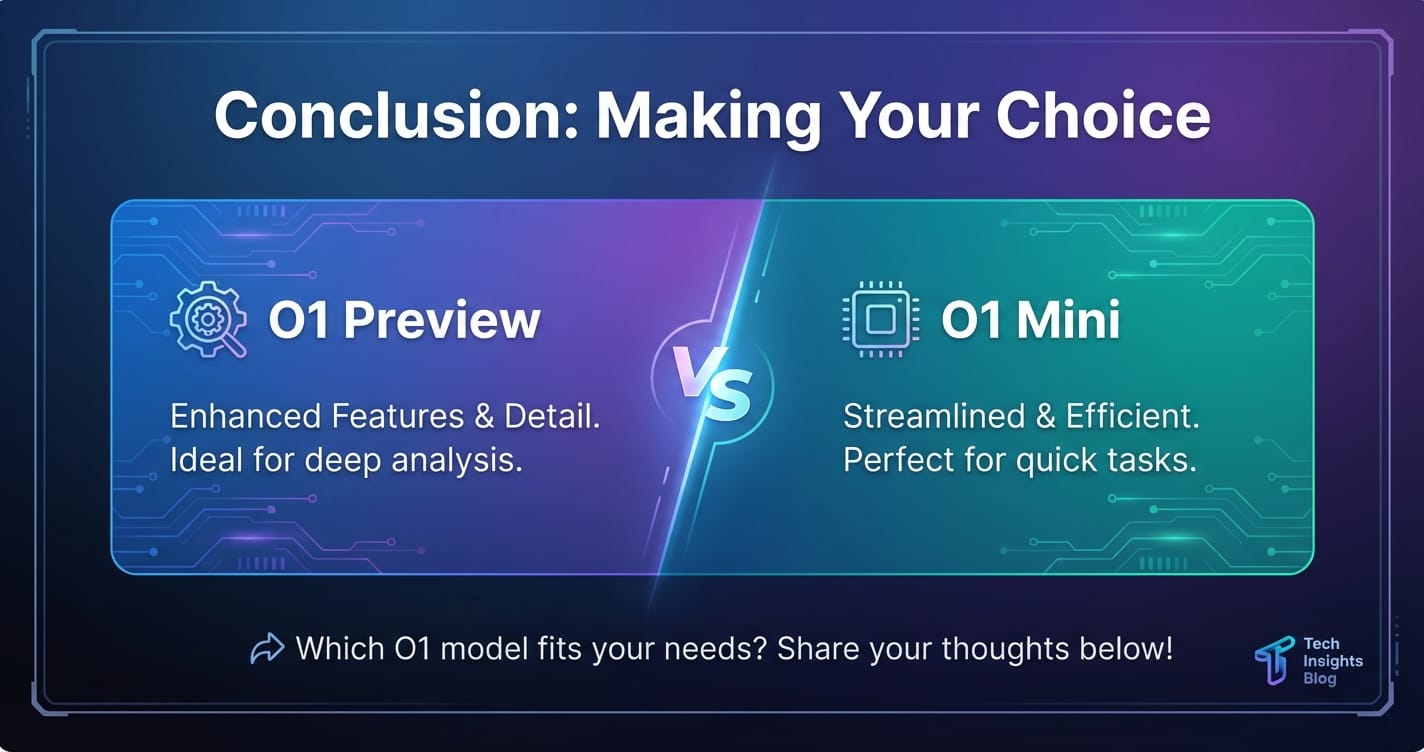
In conclusion, both the O1 Preview and the O1 Mini exemplify the O1 series' commitment to innovation in compact computing. They are not merely different sizes of the same product; rather, they represent two distinct philosophies tailored to different segments of the market. The O1 Preview is a formidable workhorse designed for power users and professionals who demand the absolute best in performance and connectivity. The O1 Mini is a marvel of efficiency and portability, offering an incredibly versatile and responsive computing experience for the vast majority of users. Your ideal choice hinges entirely on aligning your specific workflow, lifestyle, and budget with the strengths of each remarkable device. Whichever you choose, you are investing in a piece of cutting-edge technology that promises to redefine your computing experience.
Frequently Asked Questions (FAQ)
Q1: Can I game on the O1 Mini?
A1: The O1 Mini is suitable for casual gaming, indie titles, and older games at lower graphical settings. Its integrated graphics are designed for efficiency and media consumption rather than high-performance gaming. For demanding modern AAA titles, you would find the experience lacking. If gaming is a priority, the O1 Preview or a dedicated gaming PC would be a much better choice.
Q2: Is the O1 Preview truly portable, or is it more of a "mini desktop"?
A2: The O1 Preview is designed to be highly portable for a desktop-class machine, making it easy to move between a home office, a corporate office, or different workstations. However, it is larger and heavier than the O1 Mini and requires a larger power brick. While you can transport it in a backpack, it's more of a "transportable mini desktop" for professional use rather than an "on-the-go" device like the O1 Mini.
Q3: Do both O1 models support multiple monitors?
A3: Yes, both the O1 Preview and O1 Mini support multiple monitors. The O1 Preview typically offers more extensive options with multiple HDMI 2.1, DisplayPort 1.4, and Thunderbolt 4 ports, allowing for up to three or four high-resolution displays. The O1 Mini usually supports two monitors via its HDMI 2.0 and USB-C (with DisplayPort Alt Mode) ports, which is ample for most everyday productivity setups.
Q4: Which O1 device is more energy-efficient?
A4: The O1 Mini is significantly more energy-efficient. Its O1 Atom S-Core Chip and other components are specifically designed for low power consumption, making it ideal for users conscious of electricity usage or those seeking a device that can be powered by a smaller, more versatile adapter (some even supporting USB-C PD). The O1 Preview consumes more power due to its high-performance desktop-class processor and more robust cooling system.
Q5: Can I upgrade the RAM and storage on these O1 devices?
A5: In many mini-PC designs, RAM is often soldered onto the motherboard for compactness, especially in ultra-compact models. However, some configurations might offer user-upgradable SODIMM slots for RAM, particularly in the O1 Preview where space permits. Storage (NVMe SSD) is generally more accessible for user upgrades in both models, allowing you to expand capacity or replace the drive with a faster one (though the O1 Mini might be limited to PCIe 3.0 speeds). Always check the specific model's documentation or contact the manufacturer to confirm upgradability options before purchase.
🚀You can securely and efficiently connect to thousands of data sources with XRoute in just two steps:
Step 1: Create Your API Key
To start using XRoute.AI, the first step is to create an account and generate your XRoute API KEY. This key unlocks access to the platform’s unified API interface, allowing you to connect to a vast ecosystem of large language models with minimal setup.
Here’s how to do it: 1. Visit https://xroute.ai/ and sign up for a free account. 2. Upon registration, explore the platform. 3. Navigate to the user dashboard and generate your XRoute API KEY.
This process takes less than a minute, and your API key will serve as the gateway to XRoute.AI’s robust developer tools, enabling seamless integration with LLM APIs for your projects.
Step 2: Select a Model and Make API Calls
Once you have your XRoute API KEY, you can select from over 60 large language models available on XRoute.AI and start making API calls. The platform’s OpenAI-compatible endpoint ensures that you can easily integrate models into your applications using just a few lines of code.
Here’s a sample configuration to call an LLM:
curl --location 'https://api.xroute.ai/openai/v1/chat/completions' \
--header 'Authorization: Bearer $apikey' \
--header 'Content-Type: application/json' \
--data '{
    "model": "gpt-5",
    "messages": [
        {
            "content": "Your text prompt here",
            "role": "user"
        }
    ]
}'
With this setup, your application can instantly connect to XRoute.AI’s unified API platform, leveraging low latency AI and high throughput (handling 891.82K tokens per month globally). XRoute.AI manages provider routing, load balancing, and failover, ensuring reliable performance for real-time applications like chatbots, data analysis tools, or automated workflows. You can also purchase additional API credits to scale your usage as needed, making it a cost-effective AI solution for projects of all sizes.
Note: Explore the documentation on https://xroute.ai/ for model-specific details, SDKs, and open-source examples to accelerate your development.