OpenClaw API Fallback: Solutions for Robust System Design
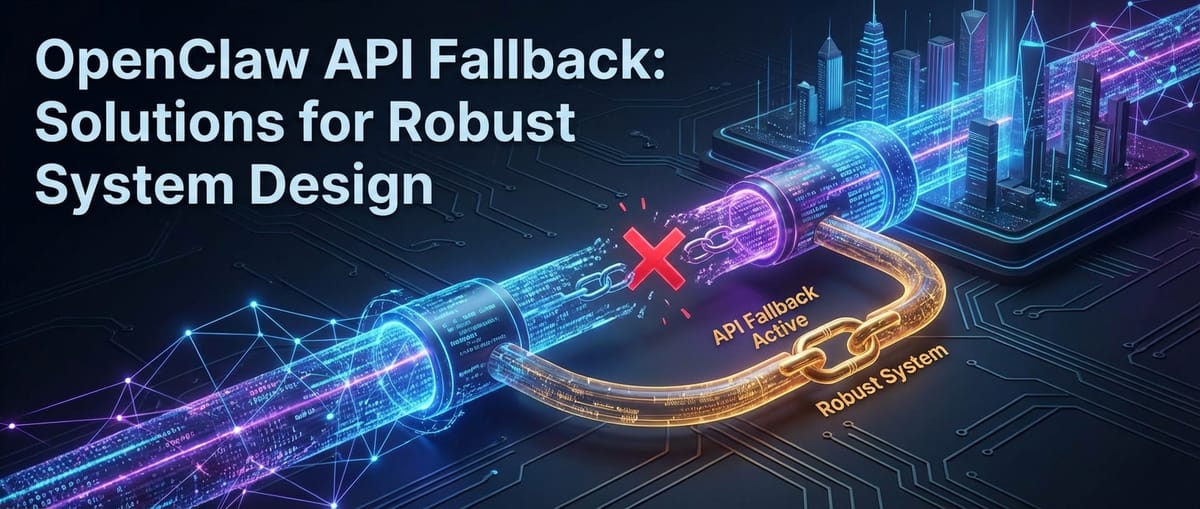

The burgeoning landscape of artificial intelligence has propelled Large Language Models (LLMs) from experimental curiosities to indispensable components of modern applications. From customer service chatbots and content generation tools to sophisticated data analysis and automation platforms, LLMs are now at the heart of critical business operations. However, this reliance on external API services, particularly those as complex and resource-intensive as LLMs, introduces a significant point of vulnerability. What happens when the primary LLM API experiences downtime, performance degradation, or suddenly changes its pricing structure or model availability? A single point of failure can lead to catastrophic disruptions, impacting user experience, operational continuity, and ultimately, a company's bottom line.
This article delves into the critical need for robust system design in the age of LLMs, focusing specifically on "OpenClaw API Fallback" strategies. We will explore the inherent challenges of integrating external LLM APIs, the principles behind building resilient systems, and practical solutions for implementing effective fallback mechanisms. Our discussion will encompass the strategic advantages of a "Unified API" approach, the sophisticated capabilities of "LLM routing," and the immense benefits of "Multi-model support" to ensure applications remain responsive, reliable, and cost-effective, even in the face of unpredictable API behaviors. By embracing these architectural paradigms, developers and businesses can fortify their AI-powered solutions against the inevitable volatilities of the digital infrastructure, transforming potential weaknesses into sources of competitive advantage.
The Inherent Volatility and Challenges of LLM API Integration
Integrating LLMs into production environments is not merely a matter of calling an API endpoint. It involves navigating a complex ecosystem characterized by rapid evolution, varied performance, and inherent unpredictability. Understanding these challenges is the first step towards building resilient systems.
Common Failure Modes and Performance Issues
LLM APIs, despite their sophistication, are subject to a range of issues that can impact application stability and user experience:
- Downtime and Outages: Like any cloud service, LLM providers can experience planned maintenance, unexpected outages, or regional service disruptions. During these periods, direct API calls will fail, rendering dependent applications inoperable. For businesses relying on real-time LLM interactions, even a few minutes of downtime can translate into significant losses. Imagine a customer support chatbot going offline during peak hours, leaving customers frustrated and unresolved.
- Rate Limiting and Throttling: To prevent abuse and ensure fair resource distribution, LLM providers impose strict rate limits on API requests. Exceeding these limits can lead to temporary blocks or sustained request failures. While applications can implement basic retry logic, sudden spikes in usage or misconfigured clients can quickly exhaust available quotas, halting operations.
- Performance Degradation and High Latency: Even when an API is "up," it might be experiencing performance issues. Increased latency can make interactive applications sluggish and unresponsive, leading to a poor user experience. Imagine a creative writing assistant that takes minutes to generate a paragraph; users would quickly abandon it. Performance can degrade due to network congestion, overloaded servers, or even the complexity of the LLM itself when processing certain types of requests.
- Model Availability and Deprecation: The LLM landscape is dynamic. Providers frequently release new models, update existing ones, or even deprecate older versions. Applications tightly coupled to a specific model might face compatibility issues, unexpected behavior changes, or complete loss of functionality if their primary model is retired without prior warning or a suitable migration path.
- Cost Spikes and Pricing Changes: LLM API costs can vary significantly based on model usage, token count, and provider pricing strategies. Sudden changes in pricing or unexpected increases in usage can lead to significant, unforeseen expenses for businesses, especially those operating at scale. A system designed without cost awareness can quickly become economically unsustainable.
- API Versioning and Breaking Changes: As LLM APIs evolve, providers introduce new versions. While often backward-compatible, major version upgrades can introduce breaking changes that require significant code modifications. Ignoring these updates can leave applications running on unsupported or less performant versions, while rushing to update can introduce new bugs.
- Semantic Failures and Hallucinations: Beyond technical errors, LLMs can produce responses that are factually incorrect, nonsensical, or simply not useful for the user's intent. While not a "down" API, such semantic failures can be just as detrimental, eroding user trust and undermining the application's value proposition. A robust system needs to consider how to handle not just if a response is returned, but what kind of response is returned.
Business Impact of LLM API Vulnerabilities
The technical challenges outlined above translate directly into tangible business risks:
- Revenue Loss: E-commerce platforms, content businesses, or service providers that rely on LLMs for core functionality can experience direct revenue loss during outages or performance slowdowns.
- Customer Dissatisfaction and Churn: Unreliable or slow applications lead to frustrated users who are likely to abandon the service and seek alternatives.
- Reputational Damage: Persistent issues can severely damage a brand's reputation, making it difficult to attract new customers and retain existing ones.
- Increased Operational Costs: Manual intervention required to troubleshoot and mitigate API issues can be costly in terms of labor and time. Furthermore, inefficient use of APIs due to lack of optimization can lead to bloated cloud bills.
- Reduced Innovation Velocity: Developers become bogged down in reactive maintenance instead of focusing on feature development and innovation. The fear of breaking changes or outages can make teams hesitant to adopt new, more powerful LLMs.
- Data Security and Compliance Risks: Relying on a single provider without a fallback can introduce risks related to data residency, privacy, and compliance if that provider's service is compromised or fails to meet regulatory standards.
These multifaceted challenges underscore the critical importance of designing systems with "OpenClaw API Fallback" as a fundamental principle. It's no longer sufficient to assume API stability; instead, developers must proactively architect for failure, ensuring continuity and resilience in an increasingly AI-driven world.
Understanding API Fallback Strategies: The Core of Resilience
At its heart, an API fallback strategy is a safety net. It's a pre-planned mechanism designed to ensure that an application can continue to function, perhaps with reduced capabilities or using alternative resources, when a primary service or API becomes unavailable, performs poorly, or fails to meet specific criteria. For LLMs, where the underlying models and infrastructure are complex and prone to various failure modes, fallback is not a luxury but a necessity for robust system design.
What is API Fallback?
API fallback involves identifying potential points of failure in API interactions and preparing alternative actions. Instead of simply letting an application crash or return an error to the user, a fallback system attempts to:
- Retry the request: Often, API failures are transient (e.g., network glitches, temporary server load). A quick retry might resolve the issue.
- Route to an alternative service: If the primary service is persistently failing, switch to a different provider or a different model from the same provider.
- Serve cached data: For requests where real-time accuracy isn't paramount, a cached response might be acceptable.
- Provide a default or degraded experience: If no functional API is available, present a message to the user, disable certain features, or return a predefined default response to prevent a complete application breakdown.
The objective is to minimize disruption, maintain a positive user experience, and ensure the application remains operational, even if in a limited capacity.
Why is Fallback Crucial for LLMs?
The specific characteristics of LLMs make fallback strategies even more critical:
- External Dependency: LLMs are typically consumed as external services, meaning their availability and performance are outside the direct control of the application developer.
- High Compute Cost: Retrying failed LLM requests without intelligence can be expensive. Intelligent fallback can prevent wasteful retries and optimize cost by switching to cheaper alternatives when appropriate.
- Latency Sensitivity: Many LLM applications are interactive (e.g., chatbots, real-time assistants). High latency or timeouts are immediately noticeable and frustrating for users. Fallback mechanisms, especially those involving "LLM routing," can help maintain acceptable response times.
- Model Specialization and Differences: Different LLMs excel at different tasks, have varying cost structures, and exhibit distinct latency profiles. A fallback strategy leveraging "Multi-model support" can intelligently select the best model for a given request based on current performance, cost, and specific task requirements.
- Rapid Evolution: The LLM landscape changes rapidly. Fallback strategies, particularly those built on a "Unified API," provide agility, allowing applications to adapt to new models, deprecations, or provider shifts without extensive refactoring.
In essence, fallback transforms a brittle reliance on a single external service into a flexible, adaptive, and resilient system. It's about designing for failure, acknowledging that external dependencies will fail, and having a plan in place when they do.
Core Principles of Robust System Design for LLM Applications
Building resilient LLM-powered applications goes beyond merely implementing retry logic. It requires a holistic approach rooted in several core principles of robust system design. These principles guide the architecture, development, and operational aspects, ensuring that applications can withstand failures and adapt to changing conditions.
1. Redundancy: The Foundation of Availability
Redundancy is the cornerstone of high availability. It involves duplicating critical components or data paths so that if one fails, an alternative can immediately take over. In the context of LLM APIs, redundancy manifests in several key ways:
- Multiple LLM Providers: Instead of relying on a single OpenAI or Anthropic API, a robust system integrates with two or more distinct providers. If one provider experiences an outage, requests can be seamlessly rerouted to another. This is where "Multi-model support" becomes crucial, as different providers offer different models.
- Multiple Models within a Provider: Even within a single provider, having access to various models (e.g., different versions of GPT, or specialized models) provides a layer of redundancy. A less-capable but more stable model can serve as a fallback if the primary, high-performance model is experiencing issues.
- Regional Redundancy: For global applications, deploying services and connecting to LLM APIs in multiple geographic regions can mitigate localized outages or network issues.
- Internal Fallback Mechanisms: Beyond external providers, having internal fallback logic (e.g., serving a cached response, using a simpler heuristic, or even human intervention) ensures some level of service even if all external LLM APIs fail.
2. Monitoring: The Eyes and Ears of Your System
You cannot manage what you do not measure. Comprehensive monitoring is essential for identifying issues proactively, understanding system health, and making informed decisions about fallback actions.
- API Health Checks: Continuous monitoring of primary and secondary LLM APIs to ascertain their operational status, latency, and error rates. This involves making synthetic requests or utilizing provider-specific status pages and webhooks.
- Application Performance Monitoring (APM): Tracking key metrics within your application, such as request latency, error rates, throughput, and resource utilization, helps pinpoint where problems originate – whether it's the external API or an internal component.
- Logging and Alerting: Detailed logs of API requests, responses, errors, and fallback activations are invaluable for debugging and post-mortem analysis. Robust alerting mechanisms should notify operations teams immediately when critical thresholds are breached (e.g., sustained high latency, elevated error rates from an LLM API).
- Cost Monitoring: Tracking token usage and associated costs for each LLM provider helps in optimizing spending and identifying potential cost overruns, which can also trigger routing decisions.
3. Proactive Failure Handling: Anticipating the Unforeseen
Instead of reacting to failures after they occur, robust systems are designed to anticipate and gracefully handle them. This involves embedding resilience patterns into the architecture:
- Circuit Breakers: This pattern prevents an application from repeatedly attempting an operation that is likely to fail. When an API or service repeatedly fails, the circuit breaker "trips," preventing further requests to that service for a predefined period, allowing it to recover.
- Bulkheads: Similar to the compartments in a ship, bulkheads isolate failures within one part of a system, preventing them from cascading and bringing down the entire application. For LLMs, this might involve isolating requests to different providers or models, so that a failure in one doesn't block requests to others.
- Graceful Degradation: When a primary service fails, instead of completely stopping, the application degrades gracefully. This might mean temporarily disabling certain LLM-powered features, providing simplified responses, or defaulting to a human agent, ensuring core functionality remains available.
- Automatic Retries with Exponential Backoff: When transient errors occur, retrying the request is often effective. Exponential backoff increases the delay between retries, preventing overwhelming the failing service and giving it time to recover, while also reducing the load on your own system.
- Idempotency: Designing API calls to be idempotent means that making the same request multiple times has the same effect as making it once. This is crucial for safe retries, as it prevents unintended side effects if a request is processed but the response is lost.
By consciously embedding these principles into the design and operation of LLM-powered applications, developers can move beyond fragile dependencies towards truly robust, reliable, and user-centric systems that can gracefully navigate the unpredictable nature of external API services.
Implementing OpenClaw API Fallback: Strategies and Technologies
Implementing effective "OpenClaw API Fallback" requires a layered approach, combining client-side resilience with sophisticated server-side management. The goal is to create a seamless experience for the end-user, irrespective of the underlying LLM API's health.
1. Local Fallback Mechanisms: Client-Side Resilience
The first line of defense often resides within the application client itself, whether it's a frontend web app, a mobile application, or a microservice calling the LLM API.
- Client-Side Retries with Exponential Backoff: For transient errors (e.g., network issues,
503 Service Unavailable), the client can implement a basic retry mechanism. Exponential backoff is crucial here: waiting longer between successive retries (e.g., 0.5s, 1s, 2s, 4s) prevents overwhelming a potentially struggling API and gives it time to recover. A maximum number of retries should always be defined to prevent infinite loops. - Timeouts: Setting strict timeouts for API requests prevents the application from hanging indefinitely if an LLM API becomes unresponsive. If a timeout occurs, it signals a potential issue and can trigger fallback logic.
- Cachable Responses: For certain types of LLM queries where the answer isn't highly dynamic or real-time critical, caching previous responses can serve as a quick and reliable fallback. If the LLM API fails, the application can serve a slightly stale but still useful cached answer.
- Default Responses/Graceful Degradation: If all else fails, the client can be programmed to return a polite error message ("Sorry, I'm unable to process your request right now") or provide a simplified, pre-defined response. For instance, a complex summary request might fall back to returning the original text if the summarization LLM is down.
These client-side strategies are foundational but are limited in their ability to handle systemic or prolonged API failures. They often don't address issues like rate limits or optimal model selection across multiple providers.
2. The Multi-Provider Strategy: Spreading the Risk
Moving beyond single-provider reliance is a critical step towards true resilience. A multi-provider strategy involves integrating with several distinct LLM API providers (e.g., OpenAI, Anthropic, Google Gemini, Cohere, etc.).
Benefits: * Increased Uptime: If one provider goes down, requests can be routed to another. * Geographic Redundancy: Providers often have data centers in different regions, offering regional failover. * Cost Optimization: Leverage different pricing models; use a cheaper provider for non-critical tasks or when primary is expensive. * Access to Specialized Models: Different providers might offer models excelling in specific tasks (e.g., code generation, creative writing, factual retrieval).
Challenges: * API Incompatibility: Each provider has its own API structure, authentication methods, and response formats, making integration complex. * Unified API Complexity: Managing credentials, rate limits, and monitoring for multiple APIs manually becomes an operational burden. * Consistency Issues: Different models may produce slightly different outputs, requiring careful handling of response parsing and application logic.
This is where the concept of a "Unified API" truly shines.
3. The Role of a Unified API: Simplifying Multi-Provider Management
A "Unified API" acts as an abstraction layer between your application and multiple LLM providers. Instead of integrating directly with OpenAI, then Anthropic, then Google, you integrate once with the Unified API. This platform then handles the underlying connections, authentication, and translation between your requests and the specific provider APIs.
Key Advantages:
- Simplified Integration: Developers write code once to interact with a single, consistent API endpoint, drastically reducing development time and complexity. It eliminates the need to learn and maintain multiple SDKs and API schemas.
- Seamless Provider Switching: The Unified API can automatically or intelligently route requests to different providers based on predefined rules or real-time metrics, making fallback transparent to your application.
- Centralized Management: All LLM interactions are funneled through one platform, centralizing monitoring, logging, cost tracking, and credential management.
- "Multi-model Support": A Unified API inherently offers "Multi-model support" across various providers. This allows your application to specify a desired model by a common identifier, and the Unified API handles mapping it to the correct provider and version.
- Enhanced Fallback Capabilities: The Unified API platform is ideally positioned to implement sophisticated fallback logic, including automatic retries to alternative providers or models.
| Feature / Aspect | Direct Integration (Multiple Providers) | Unified API Platform (e.g., XRoute.AI) |
|---|---|---|
| Integration Effort | High (multiple SDKs, different APIs) | Low (single endpoint, consistent API) |
| Fallback Complexity | Manual routing logic, custom error handling | Often built-in, intelligent routing & failover |
| Cost Management | Requires custom tracking for each provider | Centralized monitoring, potential cost optimization |
| Model Agnosticism | Tight coupling to specific provider APIs | Abstracts away provider specifics, easy model switching |
| Developer Focus | Managing integrations & platform specifics | Building application features with AI |
| Scalability | Requires scaling each integration independently | Platform handles underlying scaling & load balancing |
| "Multi-model support" | Complex to manage & switch models actively | Native support, simple model selection & routing |
Table 1: Comparison of Direct Multi-Provider Integration vs. Unified API Platform
4. Advanced LLM Routing: Intelligent Decision Making
With a "Unified API" in place that supports multiple models and providers, the next level of sophistication is "LLM routing." This is an intelligent system that dynamically decides which LLM API endpoint to use for each request, based on a set of predefined criteria and real-time data. "LLM routing" is the active brain behind sophisticated fallback.
Routing Criteria can include:
- Availability: If the primary model/provider is down or experiencing high error rates, route to an available alternative. This is the most basic form of fallback.
- Latency: Route requests to the LLM that is currently offering the lowest latency for a given type of query. This is crucial for real-time applications where speed is paramount.
- Cost: Direct requests to the cheapest available model or provider that can meet the requirements, especially for batch processing or non-urgent tasks. A cost-aware router can save significant operational expenses.
- Model Capability/Quality: Route specific types of queries to models known to perform best for that task (e.g., code generation to specialized coding models, creative writing to more artistic models). This leverages "Multi-model support" to its fullest.
- Rate Limit Awareness: Route requests to providers that currently have available capacity, preventing your application from hitting rate limits.
- Geographic Proximity: Direct requests to the closest available data center to minimize network latency.
- Custom Tags/Metadata: Route based on arbitrary tags associated with the request or the models (e.g., "sensitive-data" requests to a private, audited model).
How LLM Routing Works (Conceptual Flow):
- Request Ingress: Your application sends an LLM request to the Unified API endpoint, specifying the desired task (e.g., "summarize," "generate text") and perhaps a preferred model or set of capabilities.
- Telemetry Collection: The Unified API continuously collects real-time data on all integrated LLM providers:
- Health status (up/down)
- Current latency
- Error rates
- Available rate limits
- Cost per token/request
- Model availability and versions
- Routing Engine: Based on the incoming request and the collected telemetry, the routing engine applies a set of configurable rules:
- Prioritization: A primary model/provider is attempted first.
- Failover Logic: If the primary fails or exceeds a latency threshold, automatically switch to a secondary (fallback) option.
- Load Balancing: Distribute requests across multiple healthy providers to prevent any single one from being overloaded.
- Optimization Goals: Prioritize routing for cost, latency, or quality based on the application's current needs.
- Request Dispatch: The routing engine dispatches the request to the chosen LLM API.
- Response Handling: The Unified API receives the response, potentially normalizes it, and sends it back to your application. If an error occurs at this stage, the routing engine can initiate another fallback attempt.
"LLM routing" transforms static API calls into dynamic, adaptive interactions, making your application inherently more robust, efficient, and intelligent. It's the cornerstone of a truly resilient LLM-powered system, ensuring that even if one claw of your "OpenClaw API" encounters a challenge, others are ready to grasp the task.
Technical Implementation Details for Advanced Fallback
Beyond the conceptual framework, building an advanced "OpenClaw API Fallback" system requires attention to several technical details and patterns. These mechanisms provide the granular control and automation necessary to handle diverse failure scenarios gracefully.
1. Health Checks and Monitoring Integration
Effective fallback relies on accurate, real-time information about the health and performance of all integrated LLM APIs.
- Active Health Checks (Synthetic Transactions): Regularly send small, non-critical requests (e.g., "Hello, what's 2+2?") to each LLM endpoint to monitor their responsiveness, latency, and error rates. These checks should be performed frequently (e.g., every 10-30 seconds) from different geographic locations if your application is globally distributed.
- Passive Health Checks (Real-Time Metrics): Monitor actual production traffic. If a significant percentage of real requests to a specific LLM provider start failing or timing out, it's a strong indicator of an issue, even if active checks are still passing.
- Centralized Monitoring Dashboard: Aggregate all health metrics, latency data, error rates, and cost information into a single, accessible dashboard. This provides an "at-a-glance" view of the LLM ecosystem's health.
- Alerting: Configure alerts (email, SMS, Slack, PagerDuty) to notify operations teams immediately when an LLM API's health status degrades beyond acceptable thresholds (e.g., 5% error rate, >500ms latency).
- Integration with Provider Status Pages: While internal monitoring is crucial, also subscribe to status updates from LLM providers (e.g., via webhooks or RSS feeds) to get early warnings of widespread outages.
The data gathered from health checks and monitoring directly feeds into the "LLM routing" engine, enabling intelligent decisions about which provider or model to use.
2. Retry Mechanisms with Exponential Backoff and Jitter
While basic retries are good, sophisticated ones are better.
- Exponential Backoff: As discussed, increasing the delay between retries prevents overwhelming a failing service and gives it time to recover. A common sequence might be
base_delay * 2^n, wherenis the retry attempt number. - Jitter: To avoid "thundering herd" problems (where many retries hit the service at the exact same moment after a backoff period), introduce random "jitter" to the backoff delay. Instead of waiting exactly
2s, wait1.8sto2.2s. This spreads out the retries. - Max Retries and Max Total Time: Always define a maximum number of retries and a maximum total time allowed for all retries. Beyond these limits, the fallback system should move to an alternative provider or degrade functionality.
- Retriable vs. Non-Retriable Errors: Only retry for transient errors (e.g.,
5xxserver errors, network timeouts). Do not retry for client-side errors (4xx) or logical application errors, as these will likely fail again.
3. Circuit Breaker Pattern
The Circuit Breaker pattern is vital for preventing cascading failures and allowing services to recover.
- Closed State: The circuit is "closed," meaning requests are passed through to the LLM API.
- Open State: If the error rate for a specific LLM API exceeds a predefined threshold (e.g., 50% errors in a 60-second window), the circuit "trips" and moves to the "open" state. In this state, all subsequent requests to that API are immediately failed without even attempting to call it. This protects the failing service from further load and prevents your application from waiting on a dead endpoint.
- Half-Open State: After a configured timeout (e.g., 60 seconds), the circuit moves to a "half-open" state. A small number of "test" requests are allowed to pass through to the LLM API. If these requests succeed, the circuit closes, indicating the service has recovered. If they fail, it returns to the "open" state for another timeout period.
Implementing circuit breakers for each LLM provider/model within your "Unified API" layer is a powerful way to manage external dependencies.
4. Rate Limiting and Throttling Management
Effective "OpenClaw API Fallback" also involves managing your own usage of APIs to avoid hitting their limits in the first place.
- Local Rate Limiting: Implement client-side rate limiters to ensure your application adheres to each LLM provider's specific quotas. This prevents your application from being blocked.
- Distributed Rate Limiting: For microservice architectures, a centralized rate limiting service can coordinate usage across multiple instances of your application, ensuring the aggregate request rate doesn't exceed provider limits.
- Burst vs. Sustained Limits: Be aware of different types of rate limits (e.g., requests per minute vs. requests per second, burst allowances).
- Fallback on Rate Limit Exceeded: If a
429 Too Many Requestserror is received, the "LLM routing" mechanism should immediately redirect subsequent requests to another provider with available capacity, rather than waiting for the rate limit to reset.
5. Dynamic Configuration Management
The LLM ecosystem is constantly changing. A robust system needs to adapt without requiring code deployments.
- Externalized Configuration: Store LLM provider API keys, base URLs, rate limit settings, routing rules, and fallback priorities in an external configuration service (e.g., Consul, Etcd, AWS Systems Manager Parameter Store).
- Hot Reloading: Allow the application or the "Unified API" layer to dynamically reload these configurations without restarting, enabling quick adjustments to routing logic or provider credentials.
- A/B Testing of Models: Dynamic configuration also facilitates A/B testing of different LLM models or providers by allowing a percentage of traffic to be routed to experimental endpoints.
6. Prioritization and Weighting for LLM Routing
When multiple healthy LLM options are available, "LLM routing" needs a strategy to pick the best one.
- Ordered Priority List: Define a primary, secondary, tertiary, etc., list of providers/models. The router attempts the primary, then the secondary if the primary fails, and so on.
- Weighted Round Robin: Assign weights to different providers/models based on their performance, cost, or desired usage. A higher-weighted model receives a proportionally larger share of requests.
- Cost-Benefit Analysis: For each request, the router can assess the cost of using different models against their expected performance (e.g., latency, quality score) and select the optimal choice. This is particularly effective when dealing with tasks that have varying urgency or quality requirements.
7. Semantic Fallback
Sometimes, an LLM API returns a 200 OK status, but the generated response is useless (e.g., garbage text, "hallucinations," or a response that doesn't meet the prompt's intent). This is a semantic failure, not a technical one.
- Output Validation: Implement checks on the LLM's output (e.g., parsing for expected JSON structure, checking for minimum length, keyword presence, sentiment analysis).
- Confidence Scores: Some models might return confidence scores. If the score is too low, it can trigger a fallback.
- Human-in-the-Loop: For critical applications, a human review can be a final fallback, especially for edge cases where LLMs struggle.
- Simpler Models/Pre-Canned Responses: If the primary LLM consistently provides poor semantic responses for a specific type of query, a fallback might involve using a simpler, more deterministic model, or even a pre-written canned response.
By thoughtfully implementing these technical details, a truly resilient and intelligent "OpenClaw API Fallback" system can be constructed, capable of navigating the complex and often unpredictable world of LLM APIs with grace and efficiency.
XRoute is a cutting-edge unified API platform designed to streamline access to large language models (LLMs) for developers, businesses, and AI enthusiasts. By providing a single, OpenAI-compatible endpoint, XRoute.AI simplifies the integration of over 60 AI models from more than 20 active providers(including OpenAI, Anthropic, Mistral, Llama2, Google Gemini, and more), enabling seamless development of AI-driven applications, chatbots, and automated workflows.
Benefits of a Robust OpenClaw API Fallback System
Investing in a sophisticated "OpenClaw API Fallback" system, particularly one powered by a "Unified API" and intelligent "LLM routing" with "Multi-model support," yields a multitude of benefits that extend far beyond simply preventing downtime. These advantages contribute directly to business continuity, enhanced user satisfaction, and strategic operational efficiency.
1. Improved Uptime and Reliability
This is the most direct and obvious benefit. By having redundant LLM providers and models, your application's core AI functionality remains available even if a primary service experiences an outage or performance degradation. This translates to:
- Uninterrupted Service: Users can continue to interact with your AI features without encountering frustrating error messages or timeouts.
- Business Continuity: Critical operations powered by LLMs (e.g., automated customer support, real-time content generation, data processing) remain functional, preventing revenue loss and operational bottlenecks.
- Reduced Operational Stress: Operations teams spend less time firefighting sudden outages, as the system can automatically re-route requests.
2. Enhanced User Experience (UX)
A reliable and responsive application is key to user satisfaction and retention.
- Consistent Performance: Intelligent "LLM routing" can direct requests to the fastest available model, minimizing latency and providing snappy responses, which is crucial for interactive AI applications.
- Graceful Degradation: Instead of a hard failure, users might experience a slightly less sophisticated response or a brief message, but the application doesn't completely break, maintaining a sense of control and stability.
- Trust and Loyalty: Users develop trust in applications that consistently work well, even under stress, fostering long-term loyalty.
3. Cost Optimization through Intelligent Routing
"LLM routing" isn't just about availability; it's a powerful tool for cost management.
- Dynamic Provider Selection: Route requests to the cheapest available LLM that meets the quality requirements for a given task. For instance, less critical internal tasks might use a more cost-effective model, while high-value customer-facing interactions use premium models.
- Rate Limit Avoidance: By distributing load across multiple providers, the system can avoid hitting expensive burst rate limits or incurring penalties.
- Negotiating Power: The flexibility to switch providers reduces vendor lock-in, giving you more leverage in negotiations or allowing you to easily adapt if a provider's pricing becomes unfavorable.
4. Future-Proofing Against Model Changes and Obsolescence
The LLM landscape is highly dynamic, with new models emerging and old ones being deprecated frequently.
- Agility and Adaptability: A "Unified API" with "Multi-model support" allows for seamless integration of new LLMs and effortless deprecation of old ones. Your application becomes decoupled from specific model implementations.
- Reduced Rework: When a provider updates its API or deprecates a model, you don't need to rewrite significant portions of your application code; the "Unified API" layer handles the translation or directs traffic to an alternative.
- Access to Cutting-Edge Models: Easily experiment with and adopt the latest, most performant, or specialized models without extensive integration effort.
5. Increased Developer Productivity and Focus
Developers benefit significantly from abstraction and reduced complexity.
- Simplified Integration: A single "Unified API" endpoint means developers only need to learn one interface, rather than managing multiple provider SDKs and their unique quirks.
- Reduced Maintenance Overhead: The burden of monitoring, troubleshooting, and updating multiple individual LLM API integrations is offloaded to the fallback system.
- Focus on Core Logic: Developers can concentrate on building innovative features and business logic rather than battling with external API volatilities and complex error handling.
- Faster Iteration: Quickly switch between models or add new ones for A/B testing or experimentation without disrupting the main application flow.
6. Enhanced Security and Compliance Posture
While not immediately obvious, a multi-provider fallback strategy can bolster security and compliance.
- Reduced Single Point of Failure: Spreading data across multiple vendors (if appropriate) or having the ability to switch providers can mitigate risks associated with a single provider's security breach or service interruption.
- Data Residency Flexibility: For applications with strict data residency requirements, "LLM routing" can direct requests to providers or models hosted in specific geographic regions, ensuring compliance.
- Vendor Auditability: A "Unified API" often provides centralized logging and auditing capabilities across all LLM interactions, simplifying compliance audits.
In conclusion, adopting an "OpenClaw API Fallback" strategy transforms the challenge of LLM integration into a powerful differentiator. It creates systems that are not just functional but inherently resilient, adaptive, cost-efficient, and future-ready, ensuring that your AI-powered applications can thrive in a constantly evolving technological landscape.
Challenges and Considerations in Implementing LLM Fallback
While the benefits of a robust "OpenClaw API Fallback" system are compelling, its implementation is not without challenges. Addressing these considerations proactively is crucial for a successful and maintainable solution.
1. Increased System Complexity
The primary drawback of advanced fallback is the inherent increase in system complexity.
- Architectural Overhead: Designing and building a "Unified API" layer, an "LLM routing" engine, and integrating "Multi-model support" adds new components to your architecture.
- Configuration Management: Managing credentials, API endpoints, rate limits, and routing rules for multiple providers can become unwieldy without proper tools.
- Debugging and Observability: Diagnosing issues in a multi-provider, dynamically routed system can be more challenging than with a single, direct API call. You need robust logging and monitoring to trace requests across providers.
Mitigation: Leverage existing, mature "Unified API" platforms (like XRoute.AI, which we'll discuss shortly) that abstract away much of this complexity, allowing you to focus on configuration rather than building infrastructure from scratch.
2. Data Consistency and Model Output Differences
Different LLMs, even when attempting the same task, can produce varying outputs.
- Semantic Consistency: If a fallback model generates a response that is semantically different from the primary, it could impact the user experience or downstream application logic. For example, one model might be more verbose, another more concise.
- Format Differences: While "Unified APIs" normalize some aspects, subtle differences in JSON schema, argument interpretation, or tokenization can still occur.
- Context Management: If an application relies on a conversational context, switching LLMs mid-dialogue can lead to disjointed conversations unless context is carefully managed and transferred, or the fallback is limited to stateless requests.
Mitigation: * Output Normalization and Validation: Implement robust parsing and validation logic on the Unified API layer or within your application to ensure consistency. * Acceptance Criteria: Define clear acceptance criteria for LLM outputs and use them to evaluate fallback models. * Prioritize Semantic Similarity: In routing rules, prioritize models that offer similar output styles for critical tasks.
3. Potential for Increased Latency Overhead
Adding an intermediary "Unified API" layer and routing logic can introduce a small amount of additional latency.
- Network Hops: Each additional service in the request path adds network traversal time.
- Processing Time: The routing engine needs time to evaluate rules and select a provider.
- Retry Delays: Fallback often involves retries, which inherently increase the total request time in failure scenarios.
Mitigation: * Optimize the Unified API: Design the "Unified API" for low latency, efficient processing, and minimal network overhead. * Proximity: Deploy the "Unified API" layer geographically close to your application and the LLM providers. * Asynchronous Processing: For non-real-time tasks, use asynchronous processing to mask latency. * Prioritize Low Latency Routing: Configure "LLM routing" to prioritize the fastest available providers for latency-sensitive requests.
4. Vendor Lock-in (Even with Multi-Provider)
While a multi-provider strategy mitigates lock-in to a single LLM provider, you could potentially become locked into the Unified API platform itself.
Mitigation: * Open Standards: Choose a "Unified API" that adheres to open standards (e.g., OpenAI-compatible endpoints) or provides clear exit strategies. * Data Portability: Ensure you can easily export your configuration, logs, and any custom models or fine-tuning data from the platform. * Evaluate Switching Costs: Understand the effort required to switch from one Unified API platform to another, or to revert to direct integration.
5. Thorough Testing of Fallback Scenarios
Testing fallback mechanisms is notoriously difficult but absolutely essential.
- Simulating Failures: How do you simulate an outage or performance degradation for a third-party LLM API without actually breaking production?
- Edge Cases: Testing all combinations of provider failures, rate limit hits, and semantic errors is complex.
- Race Conditions: Fallback logic can be prone to race conditions if not carefully implemented, leading to unexpected behavior.
Mitigation: * Dedicated Testing Environments: Use isolated environments where you can throttle connections, block API calls, or introduce artificial delays. * Chaos Engineering: Proactively inject failures into your system in a controlled manner to test its resilience. * Automated Integration Tests: Write comprehensive tests that cover various fallback paths and assertions about the system's behavior under stress. * Canary Deployments: Gradually roll out changes to a small subset of users to catch issues early.
6. Managing LLM Model Versions and Capabilities
With "Multi-model support," keeping track of which model version offers what capabilities and features across different providers can be a challenge.
- Model Registry: Maintain a centralized registry or catalog of all available models, their capabilities, and their versions.
- Metadata Tagging: Use metadata tags (e.g.,
best-for-code,low-cost,creative) to help the "LLM routing" engine make informed decisions. - Semantic Versioning: Treat LLM models like software components and understand their versioning schemes.
By thoughtfully planning for and mitigating these challenges, organizations can build robust and resilient "OpenClaw API Fallback" systems that deliver consistent performance and reliability, ultimately enhancing the value of their AI-powered applications.
Introducing XRoute.AI: The Smart Solution for LLM API Fallback
Having explored the complexities and crucial necessity of "OpenClaw API Fallback," "Unified API," "LLM routing," and "Multi-model support," it becomes clear that building such a robust system from scratch is a significant undertaking. This is precisely where platforms like XRoute.AI provide immense value, offering a cutting-edge solution designed to simplify and optimize LLM integration.
XRoute.AI is a unified API platform that acts as an intelligent intermediary between your applications and the vast, fragmented world of Large Language Models. It directly addresses the challenges we've discussed by providing a single, OpenAI-compatible endpoint. This means that developers, businesses, and AI enthusiasts can integrate once with XRoute.AI, and instantly gain access to over 60 AI models from more than 20 active providers. This dramatically simplifies the integration process, eliminating the need to manage multiple API connections, SDKs, and varying data formats.
How XRoute.AI Addresses OpenClaw API Fallback Needs:
- Unified API for Seamless Integration: XRoute.AI's core offering is its unified API. By providing a single, consistent interface, it abstracts away the complexities of different providers' APIs. Your application communicates with XRoute.AI, and XRoute.AI handles the nuances of routing your request to the appropriate LLM provider. This is the foundational layer for simplified fallback implementation.
- Intelligent LLM Routing for Robustness: At the heart of XRoute.AI's resilience strategy is its sophisticated LLM routing engine. This engine doesn't just randomly pick an LLM; it intelligently directs your requests based on:
- Real-time Availability: If a primary provider is down or experiencing issues, XRoute.AI automatically routes your request to a healthy alternative. This is a fundamental "OpenClaw API Fallback" mechanism, ensuring continuous service.
- Performance Metrics: For applications where speed is critical, XRoute.AI can route to providers currently offering the low latency AI response times.
- Cost Optimization: For less urgent tasks, XRoute.AI can prioritize providers offering the most cost-effective AI solutions, helping manage your operational expenses.
- Model Capabilities: XRoute.AI's routing considers the specific capabilities of each model, ensuring the best fit for your prompt, leveraging its extensive "Multi-model support."
- Extensive Multi-model Support: With over 60 models from 20+ providers, XRoute.AI offers unparalleled multi-model support. This breadth of choice is essential for robust fallback:
- Diverse Options for Fallback: If your primary model fails, there are numerous alternative models ready to take its place, ensuring broad coverage for various tasks.
- Task-Specific Optimization: You can leverage specialized models for different tasks (e.g., code generation, creative writing, factual retrieval), and XRoute.AI's routing ensures the right model is chosen.
- Future-Proofing: As new models emerge or old ones are deprecated, XRoute.AI updates its platform, minimizing the impact on your integrated applications.
- Focus on Low Latency and High Throughput: XRoute.AI is engineered for low latency AI and high throughput, which are critical for responsive applications and handling large volumes of requests. This focus on performance ensures that even with intelligent routing and fallback, your applications remain fast and efficient.
- Developer-Friendly Tools and Scalability: The platform is designed with developers in mind, offering easy integration and seamless scalability. Its flexible pricing model accommodates projects of all sizes, from startups to enterprise-level applications, making it a powerful ally in building intelligent solutions without the complexity of managing multiple API connections.
In summary, for any developer or business seeking to build AI-driven applications, chatbots, or automated workflows that demand reliability, cost-efficiency, and adaptability, XRoute.AI presents an ideal solution. It encapsulates the very essence of robust "OpenClaw API Fallback" by providing a "Unified API" with intelligent "LLM routing" and extensive "Multi-model support," all while focusing on "low latency AI" and "cost-effective AI." It allows you to build with confidence, knowing that your AI applications are resilient against the unpredictable nature of external LLM services.
Best Practices for OpenClaw API Fallback
To maximize the effectiveness of your "OpenClaw API Fallback" strategy, consider these best practices:
- Start Simple, Then Iterate: Begin with basic retry logic and a clear primary-secondary provider fallback. As your needs evolve and understanding grows, introduce more sophisticated "LLM routing" criteria and "Multi-model support."
- Know Your RTO and RPO: Define your Recovery Time Objective (RTO – how quickly your system must be back up) and Recovery Point Objective (RPO – how much data loss you can tolerate). These metrics will guide your fallback design.
- Proactive Monitoring is Non-Negotiable: Implement comprehensive, real-time monitoring and alerting for all LLM APIs and your "Unified API" layer. Early detection of issues is key to effective fallback.
- Embrace "Unified API" Platforms: Unless you have vast resources and a core competency in managing diverse external APIs, leverage a platform like XRoute.AI. It dramatically reduces complexity, accelerates development, and ensures a more robust implementation.
- Design for Graceful Degradation: Always have a plan for what happens when even your fallback options fail. This might involve serving cached data, providing a simplified internal response, or informing the user of temporary limitations.
- Test, Test, Test: Regularly simulate failure scenarios (provider outages, network latency, rate limits) in non-production environments to validate your fallback logic. Chaos engineering principles can be invaluable here.
- Optimize for Cost and Performance: Don't just fallback to any available model. Use "LLM routing" to intelligently select alternatives based on your current priorities—whether it's cost, latency, or specific quality requirements.
- Educate Your Team: Ensure your development and operations teams understand the fallback mechanisms, how to interpret monitoring data, and what actions to take (or not take) during an incident.
- Stay Informed on LLM Ecosystem: The LLM landscape is dynamic. Keep abreast of new models, API changes, and provider status updates. Your dynamic configuration should reflect these changes.
- Document Your Strategy: Clearly document your fallback logic, routing rules, and decision-making processes. This is crucial for onboarding new team members and for troubleshooting.
Conclusion
The integration of Large Language Models has undeniably revolutionized application development, opening doors to unprecedented levels of intelligence and automation. However, this profound reliance on external API services also introduces significant vulnerabilities that, if left unaddressed, can lead to costly disruptions and diminished user trust. The unpredictable nature of API availability, performance, and pricing demands a proactive and intelligent approach to system design.
"OpenClaw API Fallback" is no longer a peripheral concern but a fundamental requirement for any serious LLM-powered application. By embracing principles of redundancy, comprehensive monitoring, and proactive failure handling, developers can construct resilient systems capable of navigating the dynamic challenges of the AI landscape. The strategic adoption of a "Unified API" approach simplifies the daunting task of managing multiple providers, while sophisticated "LLM routing" engines transform static API calls into adaptive, intelligent decisions. Coupled with extensive "Multi-model support," these architectural paradigms ensure that applications remain operational, performant, and cost-effective, even when primary services falter.
Platforms like XRoute.AI exemplify this forward-thinking approach, offering an elegant solution that empowers developers to build with confidence. By abstracting away the complexities of disparate LLM APIs and providing robust "LLM routing" capabilities for "low latency AI" and "cost-effective AI," XRoute.AI enables businesses to focus on innovation rather than infrastructure.
In an era where AI is not just an add-on but a core component, building robust, fault-tolerant systems is paramount. By meticulously implementing "OpenClaw API Fallback" strategies, organizations can ensure their AI applications are not merely functional, but truly resilient, reliable, and ready for the future.
FAQ: OpenClaw API Fallback for Robust LLM Systems
Q1: What is "OpenClaw API Fallback" and why is it essential for LLM applications?
"OpenClaw API Fallback" refers to a comprehensive strategy for ensuring that an application continues to function reliably even when its primary Large Language Model (LLM) API encounters issues like downtime, performance degradation, or rate limits. It's essential because LLM APIs are external dependencies subject to various failures. Without fallback, an application relying on a single LLM API becomes a single point of failure, leading to service interruptions, poor user experience, and potential business losses. It ensures resilience and continuous operation.
Q2: How does a "Unified API" contribute to effective LLM fallback?
A "Unified API" acts as a single, consistent interface between your application and multiple LLM providers. Instead of integrating directly with many different APIs, you integrate once with the Unified API. This significantly simplifies managing various LLM connections and credentials. For fallback, a Unified API is crucial because it allows the platform to seamlessly route requests to alternative providers or models in case of failure, all without your application needing to change its integration code. It centralizes control and simplifies the implementation of complex fallback logic.
Q3: What is "LLM routing" and how does it go beyond simple fallback?
"LLM routing" is an advanced mechanism that intelligently decides which LLM API (from potentially multiple providers and models) should handle a given request. It goes beyond simple fallback by making dynamic decisions based on various real-time criteria, not just availability. These criteria can include: * Availability: The most basic form of fallback – if one is down, use another. * Latency: Route to the fastest available LLM for responsive applications. * Cost: Direct requests to the cheapest available LLM that meets quality standards. * Capability: Route specific tasks to models best suited for them. * Rate Limit Awareness: Avoids hitting API limits by distributing requests. LLM routing transforms a reactive fallback into a proactive optimization strategy, enhancing both reliability and efficiency.
Q4: Why is "Multi-model support" important for a robust LLM system?
"Multi-model support" means the ability to integrate with and switch between various LLM models, often from different providers. This is vital for robustness because: * Redundancy: If a specific model (or its provider) goes down, you have other models ready to take over as fallback. * Flexibility: Different models excel at different tasks. Multi-model support allows you to choose the best model for a specific prompt or use case, optimizing for quality, cost, or speed. * Future-Proofing: The LLM landscape is rapidly evolving. Multi-model support allows your application to easily adopt new, more capable models or adapt to deprecations without extensive refactoring. A Unified API platform like XRoute.AI offers extensive multi-model support, simplifying this management.
Q5: What are some best practices for testing OpenClaw API Fallback mechanisms?
Testing fallback mechanisms is critical but challenging. Key best practices include: 1. Simulate Failures: Use dedicated testing environments to simulate API outages, network latency, and rate limits. Tools for chaos engineering can actively inject failures. 2. Define Clear Expectations: For each failure scenario, precisely define what the system should do (e.g., switch to a specific fallback model, return a default message). 3. Automated Integration Tests: Write comprehensive tests that cover various fallback paths, ensuring the system behaves as expected under stress. 4. Monitor During Tests: Use your monitoring and alerting tools during tests to ensure they accurately detect and report simulated issues. 5. Gradual Rollouts (Canary Deployments): When deploying changes to fallback logic, use canary deployments to expose the new logic to a small subset of users first, minimizing potential impact. 6. Review Logs and Metrics: After testing, thoroughly review logs and performance metrics to identify any unexpected behavior or bottlenecks.
🚀You can securely and efficiently connect to thousands of data sources with XRoute in just two steps:
Step 1: Create Your API Key
To start using XRoute.AI, the first step is to create an account and generate your XRoute API KEY. This key unlocks access to the platform’s unified API interface, allowing you to connect to a vast ecosystem of large language models with minimal setup.
Here’s how to do it: 1. Visit https://xroute.ai/ and sign up for a free account. 2. Upon registration, explore the platform. 3. Navigate to the user dashboard and generate your XRoute API KEY.
This process takes less than a minute, and your API key will serve as the gateway to XRoute.AI’s robust developer tools, enabling seamless integration with LLM APIs for your projects.
Step 2: Select a Model and Make API Calls
Once you have your XRoute API KEY, you can select from over 60 large language models available on XRoute.AI and start making API calls. The platform’s OpenAI-compatible endpoint ensures that you can easily integrate models into your applications using just a few lines of code.
Here’s a sample configuration to call an LLM:
curl --location 'https://api.xroute.ai/openai/v1/chat/completions' \
--header 'Authorization: Bearer $apikey' \
--header 'Content-Type: application/json' \
--data '{
    "model": "gpt-5",
    "messages": [
        {
            "content": "Your text prompt here",
            "role": "user"
        }
    ]
}'
With this setup, your application can instantly connect to XRoute.AI’s unified API platform, leveraging low latency AI and high throughput (handling 891.82K tokens per month globally). XRoute.AI manages provider routing, load balancing, and failover, ensuring reliable performance for real-time applications like chatbots, data analysis tools, or automated workflows. You can also purchase additional API credits to scale your usage as needed, making it a cost-effective AI solution for projects of all sizes.
Note: Explore the documentation on https://xroute.ai/ for model-specific details, SDKs, and open-source examples to accelerate your development.