OpenClaw Gateway: Enhance Connectivity & Security

The landscape of artificial intelligence is evolving at an unprecedented pace, with Large Language Models (LLMs) standing at the forefront of this revolution. From powering sophisticated chatbots and content generation tools to enabling advanced data analysis and complex decision-making processes, LLMs are reshaping how businesses operate and how users interact with technology. However, the proliferation of diverse LLMs—each with its unique strengths, APIs, pricing models, and performance characteristics—presents a formidable challenge for developers and organizations striving to integrate these powerful capabilities efficiently and securely into their applications. This complexity often leads to fragmented development efforts, security vulnerabilities, increased operational overhead, and suboptimal performance.
In this dynamic environment, a robust, intelligent intermediary is not merely a convenience but a necessity. Enter the OpenClaw Gateway: a sophisticated solution meticulously engineered to address these multifaceted challenges head-on. By acting as a centralized orchestration layer, OpenClaw Gateway fundamentally transforms how developers interact with the expansive LLM ecosystem. It promises not only to streamline the integration process but also to significantly enhance connectivity, bolster security, and unlock the full potential of multi-model AI deployments. This comprehensive article delves deep into the architecture, features, and profound benefits of OpenClaw Gateway, exploring how it serves as the linchpin for building secure, scalable, and high-performance AI applications in today's intricate digital landscape. We will uncover its innovative approach to Unified LLM API, explore its stringent API key management capabilities, and demonstrate the unparalleled advantages of its multi-model support, ultimately illustrating why OpenClaw Gateway is indispensable for anyone navigating the complexities of modern AI integration.
The LLM Ecosystem: A Landscape of Promise and Peril
The rapid ascent of Large Language Models has ushered in an era of unparalleled innovation, democratizing access to capabilities once confined to the realms of advanced research. Companies like OpenAI, Anthropic, Google, Meta, and a myriad of specialized providers continually release new models, each vying for supremacy in specific niches—be it raw generation power, summarization accuracy, code generation proficiency, or multimodal understanding. This diversity, while a boon for innovation, simultaneously creates a labyrinthine challenge for developers.
Consider a development team tasked with building a customer service chatbot. Initially, they might opt for a powerful general-purpose model. However, as the application scales, they might discover that a more specialized, cost-effective model is better suited for common FAQs, while a high-end model is reserved for complex inquiries requiring nuanced understanding. Furthermore, geopolitical considerations or data residency requirements might necessitate using models from different providers. Each of these models comes with its own API endpoint, authentication mechanism, data formats, rate limits, and even different jargon.
The inherent complexities in managing this diversity are manifold: * API Sprawl: Integrating multiple LLMs means dealing with a plethora of distinct APIs, each requiring separate boilerplate code, libraries, and integration logic. This dramatically increases development time and maintenance overhead. * Security Concerns: Every API integration introduces new authentication tokens and keys. Managing these securely across various platforms, ensuring proper access control, and mitigating the risk of exposure becomes a Herculean task, especially for enterprise-level applications. * Performance Optimization: Achieving optimal latency and throughput requires intelligent routing, load balancing, and caching strategies—tasks that are exceedingly difficult to implement when dealing with disparate backend services. * Cost Management: Different models have different pricing structures (per token, per request, per minute). Without a unified view and intelligent routing, costs can quickly spiral out of control, making budget forecasting a nightmare. * Vendor Lock-in: Deep integration with a single LLM provider, while initially simpler, poses a significant risk of vendor lock-in, making it difficult to switch providers if better models emerge or if commercial terms become unfavorable. * Scalability Challenges: Scaling an application that relies on multiple external LLM APIs requires meticulous planning to handle increased request volumes, manage rate limits, and ensure consistent availability across all integrated services.
These challenges underscore a critical need for a centralized, intelligent layer that can abstract away the underlying complexities, provide a unified interface, enhance security, and optimize performance. This is precisely the void that OpenClaw Gateway is designed to fill.
Understanding OpenClaw Gateway: A Paradigm Shift in AI Integration
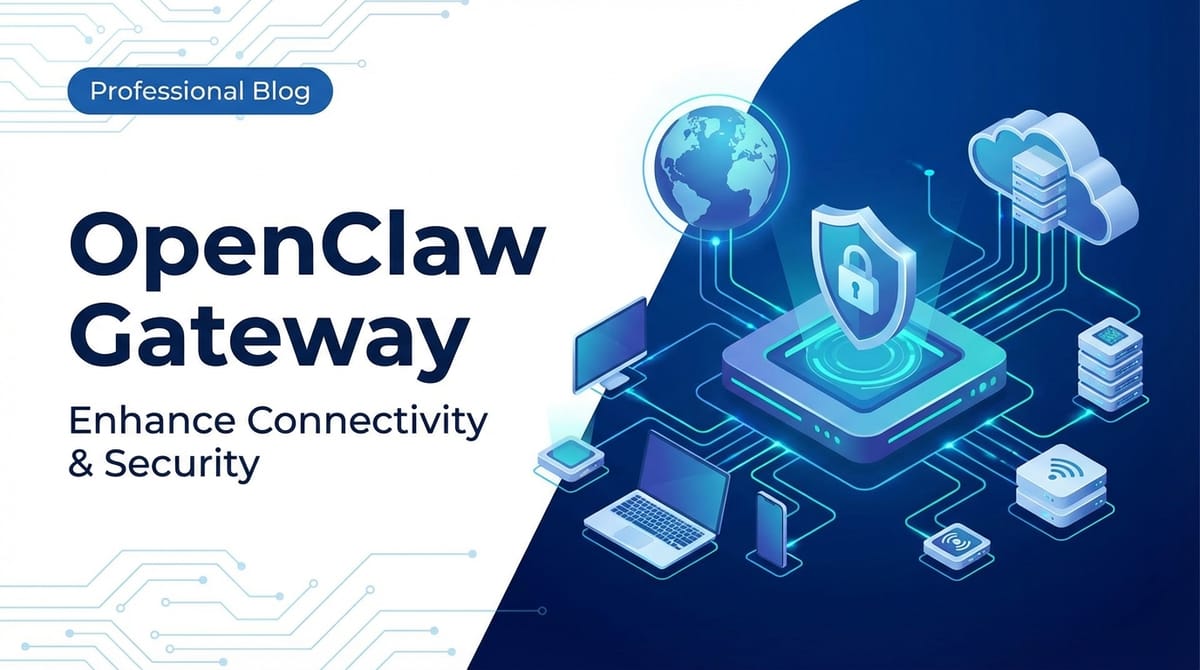
OpenClaw Gateway is not just another API proxy; it is a sophisticated, intelligent orchestration layer designed from the ground up to streamline and secure the integration of Large Language Models into any application. Imagine it as a command center, sitting between your application and the myriad of LLM providers, intelligently directing traffic, enforcing security policies, and optimizing performance. This architectural approach represents a paradigm shift from direct, point-to-point integrations to a unified, managed ecosystem.
At its core, OpenClaw Gateway acts as a single, consolidated entry point for all LLM interactions. Instead of your application needing to know the specifics of OpenAI's API, Anthropic's API, or Google's API, it simply communicates with OpenClaw Gateway. The Gateway then takes on the responsibility of translating your requests into the specific format required by the chosen LLM provider, routing them efficiently, and returning the responses in a consistent format back to your application. This abstraction layer is the bedrock upon which enhanced connectivity, superior security, and unparalleled flexibility are built.
The Foundational Principles of OpenClaw Gateway:
- Abstraction and Normalization: OpenClaw abstracts away the diverse interfaces, authentication methods, and data formats of various LLM providers. It normalizes requests and responses, presenting a single, consistent API to your application, regardless of the backend LLM being used.
- Centralized Control: All LLM traffic flows through the gateway, providing a central point for applying policies related to security, routing, rate limiting, logging, and monitoring. This centralization simplifies management and ensures consistency across all LLM interactions.
- Intelligence and Optimization: Beyond simple proxying, OpenClaw Gateway incorporates intelligent routing algorithms, load balancing, caching mechanisms, and cost optimization strategies. It dynamically makes decisions based on real-time data to ensure optimal performance and cost-efficiency.
- Security by Design: With API keys, access controls, and data encryption handled at the gateway level, OpenClaw significantly elevates the security posture of your LLM integrations, reducing the attack surface and simplifying compliance.
- Developer Empowerment: By simplifying complex integrations and abstracting away low-level details, OpenClaw empowers developers to focus on building innovative features rather than grappling with API intricacies. It accelerates development cycles and fosters rapid prototyping.
How it Changes the Game:
Prior to OpenClaw Gateway, integrating multiple LLMs often felt like assembling a patchwork quilt, with each piece requiring individual attention and bespoke solutions. This approach was brittle, difficult to scale, and prone to security lapses. OpenClaw Gateway transforms this into a highly organized, robust system. It liberates developers from the burden of managing API variations, allowing them to leverage the best-fit LLM for any given task without compromising on security, performance, or development velocity. This foundational shift is crucial for any organization serious about building sophisticated, resilient, and future-proof AI-powered applications.
Core Features of OpenClaw Gateway
The robust architecture of OpenClaw Gateway is underpinned by a suite of powerful features designed to tackle the most pressing challenges in LLM integration. Each feature contributes to a more connected, secure, and efficient AI development ecosystem.
1. Unified LLM API: The Heart of Connectivity
At the very core of OpenClaw Gateway's value proposition is its Unified LLM API. This feature is a game-changer for developers struggling with API sprawl. In essence, OpenClaw provides a single, consistent, and standardized API endpoint that your application interacts with, regardless of which underlying Large Language Model (or models) you intend to use.
Imagine the complexity of juggling distinct API calls, authentication headers, and request/response formats for OpenAI's GPT-4, Anthropic's Claude 3, Google's Gemini, and a specialized open-source model like Llama 3 hosted on a private server. Each would demand unique code pathways, error handling, and data parsing logic. The Unified LLM API offered by OpenClaw Gateway eradicates this headache entirely. Your application sends a standardized request to the OpenClaw endpoint, specifying the desired model (e.g., "gpt-4", "claude-3-opus", "gemini-pro"). OpenClaw then intelligently translates this generic request into the specific format expected by the chosen provider, handles the underlying communication, and normalizes the response back into a consistent structure before returning it to your application.
Key Benefits of a Unified LLM API:
- Accelerated Development: Developers write code once for the OpenClaw API, drastically reducing the time spent on integrating and testing different LLM providers. This means faster time-to-market for AI-powered features.
- Reduced Complexity: The cognitive load on developers is significantly lowered as they no longer need to be experts in the idiosyncrasies of every LLM API. This leads to cleaner, more maintainable codebases.
- Seamless Model Swapping: Need to switch from GPT-4 to Claude 3 for a specific task due to performance, cost, or ethical considerations? With OpenClaw's Unified LLM API, it's often a simple configuration change or a minor parameter adjustment in your request, without rewriting core logic. This flexibility is invaluable for A/B testing models or adapting to emerging LLM capabilities.
- Future-Proofing: As new LLMs emerge and existing ones evolve, OpenClaw Gateway handles the updates and adaptations at the gateway level. Your application remains insulated from these changes, ensuring long-term compatibility and reducing the burden of continuous maintenance.
- Standardized Error Handling and Logging: Errors and usage metrics across all integrated LLMs are presented in a uniform manner, simplifying debugging, monitoring, and compliance auditing.
This unifying layer is not just about convenience; it's about architectural elegance and operational efficiency, making it the bedrock for truly agile and scalable AI application development.
2. API Key Management: Fortifying Security and Control
In the realm of AI applications, API keys are the digital keys to your kingdom, granting access to powerful and often costly LLM services. Mishandling them can lead to devastating consequences, including unauthorized usage, data breaches, and significant financial losses. OpenClaw Gateway addresses this critical vulnerability head-on with its robust API key management capabilities, transforming a common security headache into a controlled and auditable process.
Instead of embedding multiple API keys directly within your application's code or environment variables—a practice fraught with security risks—OpenClaw Gateway centralizes the storage, management, and usage of all LLM provider keys. Your application only needs a single, secure key to access OpenClaw Gateway itself, which then manages the underlying provider keys with stringent security protocols.
Core Features and Benefits of OpenClaw's API Key Management:
- Centralized Secure Storage: All LLM provider keys are stored in a highly secure, encrypted vault within the OpenClaw Gateway environment, isolated from your application logic and potential client-side exposure. This drastically reduces the attack surface.
- Granular Access Control: Define precise permissions for each API key. You can specify which users, applications, or even specific endpoints can use certain LLM providers, and at what usage limits. For instance, a development team might have access to a specific set of models for testing, while the production environment uses a different set with higher rate limits.
- Automated Key Rotation: Security best practices recommend regular key rotation. OpenClaw Gateway can automate this process, generating new keys and seamlessly updating them with providers, minimizing downtime and maintaining a strong security posture.
- Usage Quotas and Rate Limiting: Prevent accidental or malicious overspending. OpenClaw allows you to set per-key or per-application quotas and rate limits, ensuring that LLM usage stays within budget and prevents a single runaway process from exhausting your entire API allowance.
- Audit Trails and Logging: Every API call made through OpenClaw Gateway, along with the key used, the model accessed, and the outcome, is meticulously logged. This provides an indispensable audit trail for security investigations, compliance adherence, and usage analysis.
- Developer-Friendly Security: Developers no longer need to worry about the complexities of managing individual provider keys. They interact with OpenClaw using a single, secure credential, simplifying development and reducing the chances of security misconfigurations.
- Encryption at Rest and in Transit: API keys and sensitive data are encrypted both when stored (at rest) and when transmitted between components (in transit), adhering to industry-leading security standards.
By centralizing and fortifying API key management, OpenClaw Gateway not only significantly enhances the security of your LLM integrations but also provides peace of mind, allowing organizations to leverage powerful AI models without undue exposure to critical vulnerabilities.
| API Key Management Aspect | Traditional Approach | OpenClaw Gateway Approach | Security Enhancement |
|---|---|---|---|
| Storage | Distributed, often in code/env vars | Centralized, encrypted vault | Reduced exposure, single point of control |
| Access Control | Manual, difficult to enforce per-app | Granular, role-based, per-key | Precise authorization, minimized unauthorized access |
| Rotation | Manual, disruptive, error-prone | Automated, seamless, scheduled | Continuous security, minimal operational impact |
| Usage Monitoring | Fragmented, provider-specific | Unified dashboard, real-time alerts | Proactive cost control, abuse detection |
| Audit Trail | Incomplete, siloed logs | Comprehensive, centralized logs | Enhanced compliance, quicker incident response |
| Exposure Risk | High, multiple points of vulnerability | Low, single secure gateway key | Minimized surface area for attacks |
3. Multi-model Support: Unlocking Diverse AI Capabilities
The AI landscape is characterized by its heterogeneity. No single LLM is a silver bullet for all tasks. Some models excel at creative content generation, others at precise code completion, some at multilingual translation, and still others at efficient summarization or complex reasoning. Leveraging this diversity is paramount for building truly sophisticated and adaptive AI applications. OpenClaw Gateway's multi-model support is explicitly designed to empower developers to harness the unique strengths of various LLMs without adding layers of operational complexity.
With OpenClaw Gateway, your application can seamlessly switch between, combine, or intelligently route requests to different LLMs based on predefined criteria or real-time evaluation. This capability moves beyond merely proxying to intelligent model orchestration.
Key Aspects and Advantages of Multi-model Support:
- Optimal Model Selection: Not all tasks require the most expensive, cutting-edge LLM. For simple queries or low-stakes content generation, a smaller, more cost-effective model might suffice. For critical, complex reasoning, a top-tier model is necessary. OpenClaw allows you to configure rules that automatically select the best model for a given request based on factors like:
- Task Type: Routing summarization requests to a model optimized for summarization.
- Cost: Prioritizing cheaper models for non-critical tasks.
- Latency: Selecting models known for quick response times.
- Accuracy/Capability: Using specialized models for specific domain knowledge.
- Availability: Falling back to alternative models if a primary provider experiences downtime.
- Hybrid AI Architectures: OpenClaw facilitates the creation of sophisticated hybrid AI systems. Imagine an application where:
- Initial user queries are handled by a fast, cheap model.
- If the query requires deeper understanding, it's escalated to a more powerful, expensive model.
- Specific tasks like code generation are routed to models trained specifically on code.
- Image generation requests go to a dedicated image synthesis model.
- Data extraction might use a fine-tuned open-source model.
- Enhanced Resilience and Failover: If a particular LLM provider experiences an outage or performance degradation, OpenClaw Gateway can automatically detect this and reroute requests to an alternative, available model. This significantly enhances the resilience and availability of your AI-powered applications, minimizing service interruptions.
- Cost Optimization through Intelligent Routing: By dynamically choosing the most cost-effective model for each request (while meeting performance and accuracy requirements), OpenClaw Gateway can dramatically reduce overall LLM API expenses. This granular control over model usage is a significant financial advantage for scaling applications.
- Experimentation and A/B Testing: Developers can easily experiment with different models to find the optimal balance of performance, cost, and output quality. OpenClaw allows for A/B testing scenarios where a percentage of traffic is directed to a new model, enabling data-driven decisions on model deployment.
- Access to Cutting-Edge and Specialized Models: The AI research community is vibrant, continuously releasing new open-source and proprietary models. OpenClaw’s multi-model support ensures that your application can quickly integrate and leverage these innovations without a complete architectural overhaul, keeping you at the forefront of AI capabilities.
The ability to seamlessly integrate and orchestrate multiple LLMs is no longer a luxury but a strategic imperative. OpenClaw Gateway’s multi-model support transforms this complex endeavor into a flexible, efficient, and cost-effective reality, empowering developers to build truly intelligent, adaptable, and robust AI applications.
4. Advanced Routing and Load Balancing
Beyond merely supporting multiple models, OpenClaw Gateway excels in intelligently directing traffic through advanced routing and load balancing mechanisms. This ensures optimal performance, minimizes latency, and maximizes the availability of your LLM-powered services.
- Intelligent Routing Rules: OpenClaw allows administrators to define sophisticated routing rules based on various criteria, such as:
- Latency: Route requests to the LLM provider with the lowest current latency.
- Cost: Prioritize providers that offer the most cost-effective pricing for specific request types or times of day.
- Model Capability: Direct requests requiring specific skills (e.g., summarization, code generation, sentiment analysis) to the most appropriate, specialized model.
- User Location/Data Residency: Route requests to data centers closest to the user or compliant with specific regional data governance laws.
- Custom Tags/Metadata: Route requests based on custom headers or payload content, allowing for highly granular control.
- Dynamic Load Balancing: For instances where multiple instances of the same model (either from a single provider or across different providers) are available, OpenClaw can distribute incoming requests across them to prevent any single endpoint from becoming overloaded. This includes strategies like:
- Round Robin: Distributing requests sequentially to each available instance.
- Least Connections: Sending requests to the instance with the fewest active connections.
- Weighted Load Balancing: Prioritizing instances with higher capacity or better performance.
- Automatic Failover: A critical component of resilience, OpenClaw Gateway automatically detects when an LLM provider or a specific model instance becomes unresponsive or starts returning errors. It then seamlessly reroutes subsequent requests to healthy alternative providers or instances. This failover mechanism ensures continuous service availability, minimizing disruption to end-users even when upstream services encounter issues.
- Caching Mechanisms: To further reduce latency and API costs, OpenClaw can implement caching for frequently requested or deterministic LLM responses. If a request has been made before and the response is deemed cacheable and still valid, the gateway can serve it directly from its cache without incurring a new LLM API call.
This intelligent traffic management layer is what truly elevates OpenClaw Gateway beyond a simple proxy, making it a powerful tool for optimizing both the user experience and the operational efficiency of AI applications.
5. Monitoring and Analytics
Visibility into the performance and usage of your LLM integrations is paramount for optimization, troubleshooting, and strategic planning. OpenClaw Gateway provides comprehensive monitoring and analytics capabilities, offering deep insights into every aspect of your LLM ecosystem.
- Real-time Dashboards: Intuitive dashboards provide a live view of key metrics, including:
- Request Volume: Total number of API calls over time, broken down by model, application, or user.
- Latency: Average, p95, p99 latency for LLM responses, identifying potential bottlenecks.
- Error Rates: Percentage of failed requests, categorized by error type and provider.
- Token Usage: Total input and output tokens consumed, crucial for cost tracking.
- Cost Estimates: Real-time estimation of LLM API expenses based on current usage and provider pricing.
- Customizable Alerts: Configure alerts based on thresholds for any monitored metric. Receive notifications via email, Slack, PagerDuty, or other channels if error rates spike, latency exceeds limits, or usage approaches predefined quotas.
- Detailed Logs: Comprehensive request and response logging for all LLM interactions, including metadata, timestamps, and routing decisions. This rich data is invaluable for debugging, auditing, and compliance.
- Historical Data and Reporting: Access historical data to analyze trends, identify peak usage periods, and generate detailed reports for business intelligence, cost allocation, and capacity planning.
- Performance Benchmarking: Compare the performance of different LLM providers and models over time, aiding in data-driven decisions for optimal model selection.
- Security Auditing: Utilize logs and metrics to detect suspicious activity, unauthorized access attempts, or deviations from normal usage patterns, bolstering overall security posture.
With OpenClaw's robust monitoring and analytics, organizations gain unparalleled transparency into their LLM operations, enabling proactive management, continuous optimization, and informed decision-making.
6. Cost Optimization Strategies
Managing the financial implications of using multiple LLMs can be complex, with different providers, models, and usage tiers leading to unpredictable expenditures. OpenClaw Gateway implements several intelligent strategies to significantly optimize and control your LLM-related costs.
- Intelligent Cost-based Routing: As discussed, OpenClaw can be configured to prioritize routing requests to the cheapest available model that still meets the required performance and accuracy criteria. For instance, non-critical summarization tasks might go to a more affordable open-source model, while high-stakes creative content generation uses a premium model.
- Dynamic Tiering and Rate Limits: Set granular rate limits and usage quotas per API key, per application, or per user. This prevents unexpected cost spikes due to runaway processes or accidental heavy usage. Developers can test with lower-cost models, and production workloads can be allocated higher, carefully monitored budgets.
- Caching for Reduced API Calls: By caching deterministic or frequently requested LLM responses, OpenClaw reduces the number of actual calls made to external LLM providers, directly lowering API costs.
- Detailed Cost Attribution: With comprehensive monitoring, OpenClaw provides granular data on token usage and estimated costs, broken down by model, application, project, or even specific user. This allows organizations to accurately attribute costs to different departments or projects, facilitating better budget management and accountability.
- Volume Discount Management: If your organization has negotiated volume discounts with specific LLM providers, OpenClaw can be configured to leverage these discounts by preferentially routing traffic to those providers when feasible, maximizing savings.
- "Least Cost Routing" Algorithms: Beyond simple prioritization, OpenClaw can employ sophisticated algorithms that continuously evaluate the real-time costs of various LLM providers and route requests to the most economical option moment-by-moment, especially useful in dynamic pricing environments.
Through these combined strategies, OpenClaw Gateway transforms LLM cost management from a reactive firefighting exercise into a proactive, optimized, and transparent process, ensuring that organizations get the most value from their AI investments.
7. Developer Experience and Ecosystem Integration
A powerful gateway is only truly effective if it's easy for developers to use and integrate into existing workflows. OpenClaw Gateway prioritizes an exceptional developer experience, aiming to make LLM integration as smooth and straightforward as possible.
- OpenAPI-compatible Endpoint: Many LLMs, particularly those like OpenAI's GPT models, utilize a well-defined and widely adopted API specification. OpenClaw Gateway often provides an OpenAI-compatible endpoint, meaning developers can use existing libraries, SDKs, and code patterns designed for OpenAI, even when interacting with other LLM providers through the gateway. This significantly lowers the learning curve and accelerates integration.
- Comprehensive Documentation: Clear, well-structured documentation with practical examples, API references, and quick-start guides ensures developers can get up and running quickly, regardless of their familiarity with gateway technologies.
- SDKs and Libraries: Availability of client-side SDKs for popular programming languages (Python, Node.js, Java, Go, etc.) simplifies the interaction with the OpenClaw API, abstracting away HTTP requests and response parsing.
- Integration with CI/CD Pipelines: OpenClaw's configuration and management APIs allow for programmatic control, enabling seamless integration into automated CI/CD pipelines for deployment, scaling, and policy management. This supports GitOps principles and infrastructure-as-code practices.
- Local Development Support: Tools and configurations that enable developers to test their applications locally against a mock or sandboxed OpenClaw environment, reducing reliance on live LLM API calls during early development stages.
- Community and Support: A vibrant developer community, active forums, and responsive support channels ensure that developers have access to resources and assistance when needed, fostering a collaborative environment.
- Extensibility and Customization: For advanced use cases, OpenClaw Gateway may offer hooks or plugins that allow developers to inject custom logic, such as pre-processing requests, post-processing responses, or integrating with internal systems.
By focusing on these aspects, OpenClaw Gateway not only provides powerful capabilities but also ensures that these capabilities are easily accessible and usable, truly empowering developers to innovate at speed.
XRoute is a cutting-edge unified API platform designed to streamline access to large language models (LLMs) for developers, businesses, and AI enthusiasts. By providing a single, OpenAI-compatible endpoint, XRoute.AI simplifies the integration of over 60 AI models from more than 20 active providers(including OpenAI, Anthropic, Mistral, Llama2, Google Gemini, and more), enabling seamless development of AI-driven applications, chatbots, and automated workflows.
Use Cases and Applications of OpenClaw Gateway
The versatility and power of OpenClaw Gateway make it an indispensable tool across a wide spectrum of industries and application types. Its ability to simplify, secure, and optimize LLM integrations unlocks new possibilities for innovation.
- Enterprise AI Applications:
- Customer Service & Support: Powering advanced chatbots that can leverage multiple LLMs for different query types (e.g., one for quick FAQs, another for complex troubleshooting). Securely handle sensitive customer data while routing queries to appropriate models.
- Internal Knowledge Management: Creating intelligent search and summarization tools that query various internal and external data sources, synthesizing information using different LLMs for specific tasks.
- Content Generation & Marketing: Automating the creation of marketing copy, product descriptions, or blog posts, with the ability to switch between creative and factual models as needed, while managing API keys for external services.
- Startup and SaaS Platforms:
- Rapid Prototyping: Startups can quickly iterate on AI-powered features by easily swapping out LLMs without significant code changes, accelerating their time-to-market.
- Cost-Effective Scaling: As user bases grow, OpenClaw allows startups to intelligently route requests to the most cost-effective models, ensuring sustainable growth without sacrificing performance.
- Feature-Rich Products: Integrate specialized LLMs for unique features (e.g., code generation for a developer tool, medical text summarization for a healthcare app) without the overhead of multiple direct integrations.
- Research and Development:
- Model Comparison & Benchmarking: Researchers can easily compare the outputs, performance, and costs of various LLMs for specific tasks, facilitating data-driven selection for experimental projects.
- Hybrid AI Experimentation: Developing novel AI architectures that combine the strengths of different models for advanced problem-solving.
- Data Processing and Automation:
- Document Analysis: Extracting entities, summarizing content, and performing sentiment analysis on large volumes of text using a combination of specialized LLMs, with robust API key management for data privacy.
- Automated Workflows: Integrating LLM capabilities into RPA (Robotic Process Automation) systems for tasks like email response generation, report summarization, or data enrichment, ensuring secure and controlled API access.
- Vertical-Specific Solutions:
- Healthcare: Securely processing patient records for summarization or insights, routing sensitive data through encrypted channels and authorized LLMs.
- Finance: Analyzing market data, generating financial reports, or assisting with fraud detection, maintaining strict access control and auditing for compliance.
- Legal: Assisting with contract review, legal research, and document generation, leveraging specific legal-trained models where available, all while ensuring secure API usage.
The common thread across these diverse applications is the need for efficient, secure, and flexible access to the rapidly evolving LLM ecosystem. OpenClaw Gateway stands as the enabling technology that makes these advanced AI integrations not just possible, but practical and scalable.
Implementing OpenClaw Gateway: A Practical Guide
Adopting OpenClaw Gateway into your existing infrastructure is a structured process designed for minimal disruption and maximum benefit. While the exact steps may vary depending on your specific environment and the deployment model (e.g., self-hosted vs. managed service), the general workflow remains consistent.
1. Assessment and Planning: * Identify LLM Needs: Determine which LLM providers and models your applications currently use or plan to use. * Security Requirements: Outline your organization's security policies regarding API keys, data transmission, and access control. * Performance Goals: Define latency, throughput, and availability targets for your LLM interactions. * Cost Management: Establish budget limits and cost allocation strategies. * Deployment Model: Decide whether OpenClaw Gateway will be deployed on-premises, in a private cloud, or as a managed service, factoring in operational overhead and scalability needs.
2. Gateway Setup and Configuration: * Installation/Provisioning: Deploy the OpenClaw Gateway instance(s) according to your chosen model. This might involve container orchestration (Kubernetes), VM deployment, or subscribing to a cloud service. * LLM Provider Integration: Configure the gateway to connect to your chosen LLM providers. This involves providing their API endpoints and securely inputting the respective API keys into OpenClaw's centralized management system. * API Key Management Configuration: Define and generate API keys for your applications to access OpenClaw Gateway. Configure granular access controls, usage quotas, and rate limits for these keys. * Routing Rules: Establish initial routing policies. This could be as simple as "route all requests for model-A to provider-X" or more complex, condition-based rules (e.g., "if model-B is requested and provider-Y has low latency, use provider-Y; otherwise, fallback to provider-Z"). * Monitoring and Alerts: Set up dashboards, logging integrations (e.g., to Splunk, ELK stack, Datadog), and alert rules to ensure comprehensive visibility.
3. Application Integration: * Update Application Endpoints: Modify your application code to direct all LLM API requests to the OpenClaw Gateway endpoint instead of directly to individual LLM providers. * Update Authentication: Your application will now use its OpenClaw Gateway API key for authentication. This often involves a single change in your application's configuration. * Leverage Unified API: Adapt your application to use OpenClaw's Unified LLM API format. This might involve minor adjustments to request bodies or parameter naming, but crucially, it avoids maintaining separate logic for each LLM provider. * Testing: Thoroughly test all LLM-dependent functionalities, ensuring correct routing, response parsing, error handling, and security enforcement through the gateway.
4. Optimization and Scaling: * Performance Tuning: Based on monitoring data, fine-tune routing rules, caching strategies, and load balancing configurations to optimize latency and throughput. * Cost Optimization: Analyze usage reports and adjust routing to prioritize more cost-effective models where appropriate. Implement more granular quotas and rate limits as needed. * Scalability: Monitor gateway resource utilization and scale gateway instances horizontally to handle increased request volumes. * Security Audits: Regularly review audit logs and access controls to ensure continued compliance and security.
Best Practices for Implementation:
- Start Small: Begin with a single application or a non-critical feature to gain familiarity with OpenClaw Gateway before migrating core services.
- Infrastructure as Code (IaC): Manage OpenClaw Gateway configurations and deployments using IaC tools (e.g., Terraform, Ansible) for consistency, version control, and automation.
- Continuous Monitoring: Treat monitoring as an ongoing process. Regular review of metrics and logs is key to maintaining performance, security, and cost-efficiency.
- Documentation: Maintain clear internal documentation for your OpenClaw Gateway setup, including routing rules, API key configurations, and integration guidelines for developers.
By following a structured approach, organizations can seamlessly integrate OpenClaw Gateway, transforming their LLM ecosystem into a more connected, secure, and highly optimized environment.
The Future of AI Integration with OpenClaw Gateway
The trajectory of AI development points towards an increasingly diverse and sophisticated landscape of Large Language Models. We can anticipate an explosion of specialized models, multimodal AI capabilities (integrating text, image, audio, video), and more sophisticated agents capable of complex reasoning and autonomous action. In this future, the role of an intelligent orchestration layer like OpenClaw Gateway will become not just valuable, but absolutely indispensable.
OpenClaw Gateway is perfectly positioned to evolve alongside these advancements, acting as the adaptable backbone for next-generation AI applications. Its inherent design for multi-model support means it can readily integrate new types of LLMs, including those with multimodal capabilities, allowing developers to leverage the latest innovations without fundamental architectural changes. The Unified LLM API will continue to abstract away increasing complexity as more specialized and diverse models emerge, ensuring a consistent developer experience across an ever-widening array of AI services. Furthermore, its robust API key management will be crucial for maintaining stringent security and compliance in an environment where AI systems will handle even more sensitive data and control more critical operations.
Looking ahead, OpenClaw Gateway is poised to become even more intelligent and proactive. We can envision enhanced capabilities such as: * Autonomous Model Selection: Advanced AI algorithms within the gateway that automatically determine the optimal model for a given request based on real-time performance, cost, and output quality metrics, potentially even learning and adapting over time. * Pre-emptive Optimization: Predictive analytics to anticipate traffic spikes or potential provider outages, allowing the gateway to reconfigure routing or provision additional resources proactively. * Enhanced Data Governance: More sophisticated mechanisms for data anonymization, redaction, and compliance checks at the gateway level before data is sent to external LLMs, ensuring adherence to evolving privacy regulations. * Observability for AI Agents: Deeper integration with AI agent frameworks, providing comprehensive observability and control over multi-step agentic workflows that leverage various LLMs.
The vision for future AI development is one of seamless integration, robust security, and unparalleled efficiency. Platforms that champion these principles are set to define the next era of innovation. For instance, cutting-edge solutions like XRoute.AI, a unified API platform, embody this very vision. XRoute.AI offers developers seamless access to over 60 AI models from more than 20 active providers through a single, OpenAI-compatible endpoint, fundamentally simplifying the integration of diverse LLMs. With its focus on low latency AI and cost-effective AI, XRoute.AI perfectly complements the principles OpenClaw Gateway champions. It empowers developers to build highly performant and economically viable AI solutions by abstracting away the complexities of managing multiple API connections, much like OpenClaw Gateway. This powerful synergy between gateway technologies and advanced platforms like XRoute.AI signifies a robust future where AI development is not just accessible, but also incredibly efficient, secure, and ripe for groundbreaking applications.
As AI continues its rapid evolution, solutions like OpenClaw Gateway will remain at the forefront, not merely facilitating access to current capabilities but actively shaping how we build and interact with the intelligent systems of tomorrow.
Conclusion
The journey into the burgeoning world of Large Language Models is filled with immense potential, yet it is also fraught with complexities ranging from fragmented API ecosystems and critical security vulnerabilities to challenging performance optimizations and unpredictable costs. For organizations and developers striving to harness the transformative power of AI, navigating this intricate landscape can quickly become an overwhelming endeavor, diverting valuable resources from core innovation.
OpenClaw Gateway emerges as the definitive solution to these modern AI integration challenges. By providing a centralized, intelligent orchestration layer, it fundamentally redefines how applications interact with the diverse LLM ecosystem. Through its pioneering Unified LLM API, OpenClaw Gateway liberates developers from the arduous task of managing disparate interfaces, accelerating development cycles and fostering unprecedented agility. Its stringent API key management capabilities fortify the security perimeter, ensuring that sensitive credentials are protected, usage is controlled, and compliance is maintained across all LLM interactions. Furthermore, the robust multi-model support unlocks the ability to strategically leverage the unique strengths of various LLMs, enabling the creation of highly intelligent, adaptive, and resilient AI applications that are both cost-effective and performant.
Beyond these core pillars, OpenClaw Gateway's advanced routing, comprehensive monitoring, and dedicated focus on developer experience collectively contribute to an ecosystem where AI integration is not just feasible, but genuinely empowering. It transforms the daunting complexity of multi-LLM deployments into a streamlined, secure, and scalable reality.
In an era where AI innovation is paramount, OpenClaw Gateway stands as more than just a technological component; it is a strategic asset. It empowers businesses to confidently build, deploy, and scale their AI-powered solutions, ensuring enhanced connectivity, unwavering security, and a future-proof foundation for the next generation of intelligent applications. For any organization committed to unlocking the full potential of Large Language Models, OpenClaw Gateway is not merely an option, but an essential cornerstone of success.
Frequently Asked Questions (FAQ)
Q1: What exactly is OpenClaw Gateway, and how is it different from a simple API proxy? A1: OpenClaw Gateway is an intelligent orchestration layer specifically designed for Large Language Models (LLMs), not just a simple API proxy. While a proxy merely forwards requests, OpenClaw Gateway actively manages, secures, optimizes, and unifies access to multiple LLM providers. It provides a single Unified LLM API endpoint, handles API key management, offers multi-model support, intelligent routing, load balancing, cost optimization, and comprehensive monitoring. It abstracts away complexities, enhances security, and ensures efficient, reliable interactions with the LLM ecosystem.
Q2: How does OpenClaw Gateway enhance the security of my LLM integrations? A2: OpenClaw Gateway significantly enhances security through its robust API key management features. Instead of scattering individual LLM provider keys across your applications, OpenClaw centralizes their secure storage in an encrypted vault. It allows for granular access control, automated key rotation, usage quotas, and detailed audit trails for every API call. This drastically reduces the risk of key exposure, unauthorized usage, and simplifies compliance, providing a much stronger security posture.
Q3: Can OpenClaw Gateway help me save costs on LLM usage? A3: Yes, absolutely. OpenClaw Gateway employs several strategies for cost optimization. Its multi-model support allows for intelligent, cost-based routing, directing requests to the most affordable LLM that meets the required criteria (e.g., performance, accuracy). It also enables setting granular usage quotas and rate limits per application or API key, preventing unexpected overspending. Furthermore, caching frequently requested responses can reduce the number of actual API calls to providers, directly lowering costs.
Q4: Is OpenClaw Gateway compatible with various LLM providers like OpenAI, Anthropic, and Google? A4: Yes, one of OpenClaw Gateway's core strengths is its broad multi-model support and Unified LLM API. It is designed to integrate seamlessly with a wide range of LLM providers, including popular ones like OpenAI (GPT models), Anthropic (Claude models), and Google (Gemini models), as well as open-source models and specialized AI services. It abstracts away the unique characteristics of each provider's API, presenting a consistent interface to your application.
Q5: How does OpenClaw Gateway facilitate developer experience and integration into existing workflows? A5: OpenClaw Gateway prioritizes a streamlined developer experience by offering a Unified LLM API, often an OpenAI-compatible endpoint, allowing developers to leverage familiar tools and libraries. It comes with comprehensive documentation, SDKs for popular programming languages, and robust APIs for programmatic control, enabling easy integration into CI/CD pipelines. This focus on ease of use minimizes the learning curve and allows developers to concentrate on building innovative AI features rather than managing complex API integrations.
🚀You can securely and efficiently connect to thousands of data sources with XRoute in just two steps:
Step 1: Create Your API Key
To start using XRoute.AI, the first step is to create an account and generate your XRoute API KEY. This key unlocks access to the platform’s unified API interface, allowing you to connect to a vast ecosystem of large language models with minimal setup.
Here’s how to do it: 1. Visit https://xroute.ai/ and sign up for a free account. 2. Upon registration, explore the platform. 3. Navigate to the user dashboard and generate your XRoute API KEY.
This process takes less than a minute, and your API key will serve as the gateway to XRoute.AI’s robust developer tools, enabling seamless integration with LLM APIs for your projects.
Step 2: Select a Model and Make API Calls
Once you have your XRoute API KEY, you can select from over 60 large language models available on XRoute.AI and start making API calls. The platform’s OpenAI-compatible endpoint ensures that you can easily integrate models into your applications using just a few lines of code.
Here’s a sample configuration to call an LLM:
curl --location 'https://api.xroute.ai/openai/v1/chat/completions' \
--header 'Authorization: Bearer $apikey' \
--header 'Content-Type: application/json' \
--data '{
    "model": "gpt-5",
    "messages": [
        {
            "content": "Your text prompt here",
            "role": "user"
        }
    ]
}'
With this setup, your application can instantly connect to XRoute.AI’s unified API platform, leveraging low latency AI and high throughput (handling 891.82K tokens per month globally). XRoute.AI manages provider routing, load balancing, and failover, ensuring reliable performance for real-time applications like chatbots, data analysis tools, or automated workflows. You can also purchase additional API credits to scale your usage as needed, making it a cost-effective AI solution for projects of all sizes.
Note: Explore the documentation on https://xroute.ai/ for model-specific details, SDKs, and open-source examples to accelerate your development.