OpenClaw Local-First Architecture Explained
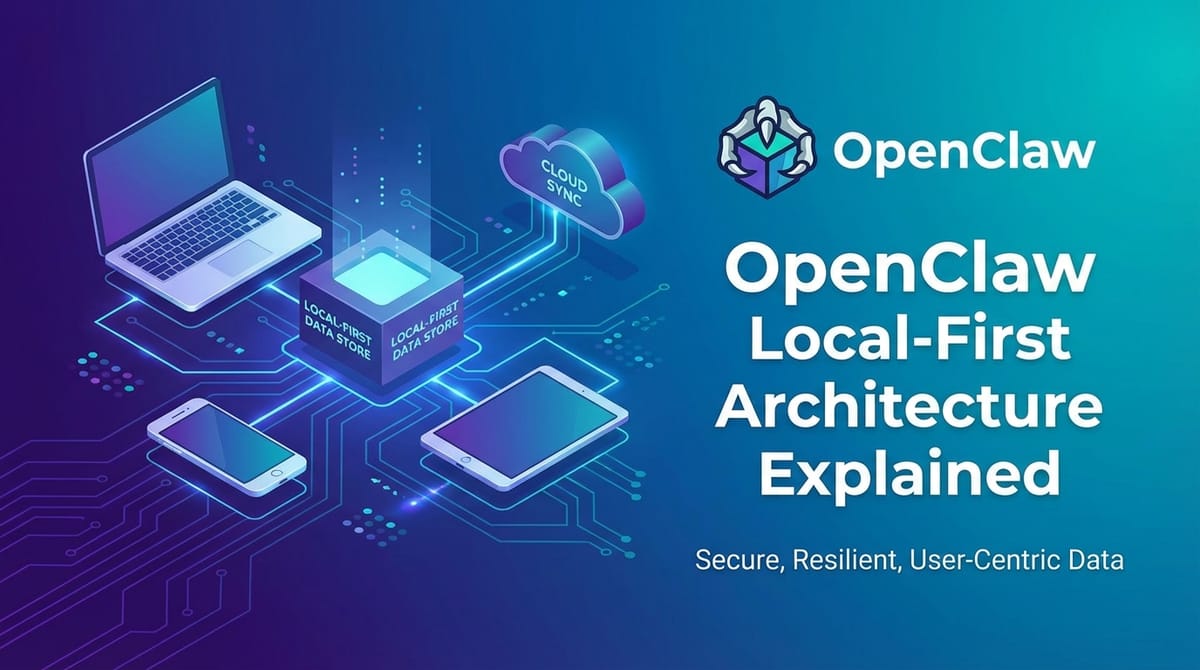

The relentless march of technology, driven by innovations in cloud computing, edge AI, and the burgeoning Internet of Things (IoT), has fundamentally reshaped our approach to software development and data management. Yet, amidst this era of hyper-connectivity and centralized cloud services, a subtle yet profound paradigm shift is gaining momentum: the "local-first" architecture. This approach, which prioritizes local data storage, computation, and user experience, is not merely a nostalgic return to desktop applications but a sophisticated evolution designed to address the inherent challenges of distributed systems: latency, connectivity, data privacy, and increasingly, cost.
Enter OpenClaw, a revolutionary platform that has meticulously engineered a local-first architecture to push the boundaries of what's possible in modern applications. By placing data and processing power at the very edge – close to the user or device – OpenClaw offers a compelling alternative to purely cloud-centric models. This comprehensive article will delve deep into the intricate design principles, operational mechanics, and transformative benefits of OpenClaw's local-first architecture. We will explore in detail how this innovative approach not only delivers remarkable cost optimization and performance optimization but also fosters greater data sovereignty and resilience. Furthermore, we will examine the crucial role a unified API plays in augmenting OpenClaw's capabilities, particularly in leveraging advanced AI services without compromising its core local-first tenets.
1. Understanding the Local-First Paradigm: A Foundational Shift
To truly appreciate OpenClaw's ingenuity, one must first grasp the essence of the local-first paradigm. It's more than just caching data locally; it's a fundamental design philosophy that places the user's local environment – their device, their network – at the center of the application's universe.
1.1 What Does "Local-First" Truly Mean?
At its core, a local-first application is one where data is primarily stored and manipulated on the user's device. This means:
- Offline Capability: The application remains fully functional, or at least highly operational, even without an internet connection. Users can continue to view, edit, and create data.
- Low Latency: Interactions with the application are immediate because data reads and writes occur directly on local storage, bypassing network round-trips to a remote server.
- Data Ownership and Control: Users maintain direct control over their data, as it resides on their own hardware. This enhances privacy and security.
- Resilience: The application is less susceptible to network outages or server-side failures, as critical functionality is self-contained.
- Local Computation: Significant processing, validation, and even AI inference can happen directly on the device, leveraging local CPU/GPU resources.
This isn't to say local-first applications are entirely disconnected. Instead, they operate with an intelligent synchronization layer that eventually reconciles local changes with a remote, authoritative cloud backend. The key is that the local experience is the primary, uninterrupted one, with cloud synchronization acting as a robust, asynchronous backup and collaboration mechanism.
1.2 Historical Context: The Pendulum Swings
Software development has witnessed a fascinating pendulum swing over decades. Initially, applications were entirely local (desktop software), managing all data and logic on the user's machine. The rise of the internet ushered in the client-server era, centralizing data on servers and introducing the concept of network latency. The subsequent explosion of cloud computing pushed this centralization to its extreme, with "cloud-first" applications relying almost entirely on remote infrastructure for data, computation, and even basic UI assets.
While cloud-first brought undeniable benefits in terms of scalability, accessibility, and reduced operational overhead for users, it also introduced new challenges: persistent network dependency, inherent latency for every interaction, escalating cloud costs, and burgeoning privacy concerns. The local-first movement represents a nuanced response to these challenges, not by abandoning the cloud, but by re-evaluating the optimal placement of data and computation. It seeks to combine the best aspects of traditional desktop applications (speed, offline access, privacy) with the power and collaborative capabilities of the cloud.
1.3 Core Principles and Distinctions
Let's delineate the core tenets that define the local-first approach and distinguish it from other architectures:
- Principle of Locality: Data is always present and modifiable on the local device first.
- Offline Availability: An absolute requirement, not an optional feature.
- Optimistic UI Updates: Changes made locally are immediately reflected in the UI, even before synchronization with the cloud. Conflicts are resolved gracefully in the background.
- Conflict-Free Replicated Data Types (CRDTs) / Operational Transformation (OT): These advanced data structures and algorithms are often employed to manage concurrent edits from multiple local sources and ensure eventual consistency without data loss.
- Cloud as a Peer/Backup: The cloud is seen less as the sole source of truth and more as a peer in a distributed system, or a reliable backup and synchronization hub.
This contrasts sharply with:
- Cloud-First: Where the cloud is the single source of truth, and local clients are mere terminals.
- Offline-Capable Caching: Where local data is a temporary cache that requires network access for most operations and validation.
- Hybrid Architectures: While local-first is a type of hybrid architecture, its defining characteristic is the prioritization of the local experience, rather than simply distributing components.
1.4 Why Now? The Driving Forces
The resurgence and refinement of local-first architectures are driven by several converging trends:
- Ubiquitous Connectivity, Yet Imperfect: While broadband is widespread, mobile networks can be unreliable, and remote locations often lack consistent access. Offline capability is crucial for productivity in these scenarios.
- Edge Computing and IoT: A massive influx of data is being generated at the edge (sensors, cameras, devices). Processing this data locally before sending only actionable insights to the cloud is essential for real-time response and data volume management.
- AI at the Edge: Modern mobile devices and edge hardware are increasingly powerful, capable of running sophisticated machine learning models for local inference without needing to send sensitive data to the cloud.
- Data Privacy and Sovereignty: Stricter regulations like GDPR, CCPA, and growing user awareness about data privacy demand solutions that keep sensitive data local by default.
- Network Latency in Globalized Systems: As applications serve a global user base, the physical distance to cloud data centers introduces unavoidable latency, impacting user experience. Local processing mitigates this.
- Exploding Cloud Costs: Data transfer (egress) fees, persistent compute usage, and storage accumulation in the cloud are becoming significant financial burdens for many organizations.
These powerful drivers set the stage for OpenClaw's innovation, making its local-first architecture not just an interesting academic concept, but a practical necessity for the future of robust, efficient, and user-centric applications.
2. The OpenClaw Philosophy and Vision
OpenClaw didn't simply adopt the local-first paradigm; it meticulously engineered a platform around it, driven by a clear philosophy and a bold vision for the future of distributed applications. At its heart, OpenClaw believes that software should empower users with immediate control over their data and functionality, regardless of network conditions, while still harnessing the collaborative and scalable power of the cloud when beneficial.
2.1 Origin Story and Core Motivation
The genesis of OpenClaw stemmed from a frustration with the compromises inherent in purely cloud-centric applications. Developers and users alike often faced a dilemma: either build highly responsive, offline-capable desktop applications with limited cloud integration, or embrace the cloud for its collaboration and scalability at the expense of performance, offline access, and often, privacy. The OpenClaw team envisioned a world where this trade-off was largely eliminated. They sought to build a system where the "best of both worlds" wasn't just a marketing slogan, but an architectural reality.
Their core motivation was to create a platform that would: * Prioritize User Experience: Ensure blazing fast interactions and uninterrupted workflows. * Empower Data Sovereignty: Give users and organizations granular control over where their data resides and how it's processed. * Optimize Resources: Intelligently distribute computation and data storage to achieve maximum efficiency and minimum cost. * Foster Resilience: Build applications that are inherently robust against network failures and infrastructure issues.
This led to the foundational decision to commit fully to a local-first architecture, building from the ground up to support its unique requirements, rather than attempting to retrofit it onto an existing cloud-first framework.
2.2 OpenClaw's Interpretation of Local-First
OpenClaw's interpretation of local-first is holistic and deeply integrated across its entire stack. It's not just about local caching; it's about a complete local runtime environment that includes:
- Decoupled Local Data Stores: Robust, embedded databases designed for high-performance reads and writes, capable of storing substantial amounts of application-specific data.
- Intelligent Synchronization Engines: Sophisticated algorithms that manage bidirectional data flow between local devices and a remote cloud backend, handling conflict resolution with grace and precision.
- Local Compute Capabilities: The ability to execute complex business logic, data transformations, and even machine learning inferences directly on the user's device.
- Adaptive Network Awareness: Applications built with OpenClaw are inherently aware of network status, seamlessly transitioning between online and offline modes without user intervention.
This integrated approach means that from the moment a developer chooses OpenClaw, they are embracing an ecosystem where local data and computation are first-class citizens, not an afterthought.
2.3 Target Audience and Use Cases
OpenClaw's architecture is uniquely suited for a diverse range of industries and application types where performance, reliability, data control, and cost-efficiency are paramount.
- Enterprise Applications: For businesses dealing with sensitive data, OpenClaw offers enhanced security and compliance by keeping data local. Examples include CRM, ERP, and project management tools where field agents need reliable access and data input even in remote locations.
- Healthcare: Patient records, diagnostic images, and medical device data can be processed and securely stored on local systems, enhancing privacy and speeding up critical decision-making without constant reliance on cloud connectivity.
- Manufacturing and Industrial IoT: Real-time data from factory sensors, machinery, and production lines can be analyzed at the edge, enabling immediate responses to anomalies, predictive maintenance, and operational control without the latency of cloud-based analytics.
- Logistics and Field Services: Mobile workers can access, update, and submit orders, inventory data, or service reports even without internet, with changes synchronizing automatically once connectivity is restored. This is critical for improving efficiency in areas with spotty network coverage.
- Creative Professionals: Designers, video editors, and artists can work with large media files locally, benefiting from native application performance, while still having their work backed up and shared via intelligent cloud synchronization.
- Data-Intensive Analytics at the Edge: For scenarios requiring on-device analytics for privacy-preserving insights, such as smart cities analyzing traffic patterns or retail stores optimizing layouts based on foot traffic.
- Government and Defense: Applications requiring stringent data sovereignty and operational continuity in challenging or disconnected environments.
2.4 Key Differentiators of OpenClaw's Approach
What sets OpenClaw apart from other solutions attempting to offer "offline capabilities" or "edge computing"?
- True Local-First Data Model: OpenClaw doesn't just cache; it treats the local database as the primary, mutable source of truth, with cloud synchronization as a peer-to-peer reconciliation process. This means full CRUD (Create, Read, Update, Delete) operations are always available locally.
- Sophisticated Conflict Resolution: Acknowledging that concurrent local edits and cloud updates are inevitable, OpenClaw incorporates advanced, configurable conflict resolution strategies (e.g., last-write-wins, merge functions, user-guided resolution) to ensure data integrity and prevent data loss.
- Optimized Synchronization Protocol: The synchronization engine is designed for efficiency, transferring only deltas (changes) rather than full datasets, minimizing bandwidth usage and speeding up updates.
- Integrated Edge Compute Runtime: OpenClaw provides a lightweight, performant runtime environment for executing custom logic, scripts, or AI models directly on local devices, pushing intelligence to the source of data.
- Developer-Centric Ecosystem: OpenClaw offers comprehensive SDKs, clear documentation, and intuitive tools that streamline the development of complex local-first applications, abstracting away much of the underlying complexity of distributed systems.
- Security by Design: Local data encryption, secure synchronization protocols, and fine-grained access controls are built into the architecture from the ground up, protecting data both at rest and in transit.
In essence, OpenClaw provides a complete, robust, and developer-friendly framework for building the next generation of resilient, high-performance, and cost-effective applications that truly put the user and their local context first.
3. Deep Dive into OpenClaw's Local-First Architecture Components
The magic of OpenClaw's local-first architecture lies in its meticulously designed and interconnected components. Each plays a critical role in enabling the seamless offline capabilities, high performance, and robust data management that define the platform.
3.1 Local Data Stores and Synchronization
At the heart of every OpenClaw application is a powerful, embedded local data store. This isn't a simple cache; it's a fully functional database designed for resilience and performance on local hardware.
3.1.1 Description of OpenClaw's Local Data Management
OpenClaw typically leverages highly optimized, embedded NoSQL databases (e.g., SQLite variants, RocksDB, Realm) that are perfectly suited for device-level storage. These databases are chosen for their small footprint, low resource consumption, and ability to handle complex data structures efficiently.
- Primary Data Residence: All application data that a user interacts with is primarily stored in this local database. This means reads and writes are near-instantaneous, as they bypass network latency entirely.
- Structured Data Handling: OpenClaw provides abstractions to define data schemas, ensuring data integrity even in a local context.
- Querying and Indexing: Local data stores are fully queryable, allowing applications to perform complex searches and aggregations directly on the device.
3.1.2 Replication Strategies
Managing data across multiple local devices and a central cloud without conflicts is a significant challenge. OpenClaw employs sophisticated replication strategies to ensure eventual consistency:
- Conflict-Free Replicated Data Types (CRDTs): For certain data types (e.g., collaborative text editing, counters), CRDTs are a powerful tool. They are data structures that can be concurrently updated by multiple users, and later merged without conflicts, regardless of the order of operations. OpenClaw may use or provide patterns for implementing CRDTs for specific application needs.
- Eventual Consistency: This is a core tenet. Changes made on one local device or the cloud will eventually propagate to all other replicas. The system prioritizes availability and performance over immediate global consistency.
- Delta-based Synchronization: Instead of sending entire datasets, OpenClaw's synchronization engine only transmits "deltas" – the specific changes that have occurred since the last sync. This dramatically reduces bandwidth usage and speeds up the synchronization process.
3.1.3 Conflict Resolution Mechanisms
Conflicts arise when the same piece of data is modified independently on different devices or on the cloud before synchronization. OpenClaw offers various strategies to manage these:
- Last-Write Wins (LWW): A common, simple strategy where the most recent change (based on timestamp) overrides older changes. While easy to implement, it can lead to data loss if not carefully considered.
- Merge Functions: For more complex data structures, OpenClaw allows developers to define custom merge functions. For instance, if two users increment a counter, the merge function adds both increments. If two users edit different fields of an object, the merge function combines their changes.
- User-Guided Resolution: In critical scenarios, OpenClaw can flag conflicts and present them to the user or administrator for manual resolution, ensuring human oversight where automated merging is insufficient.
- Version History: OpenClaw maintains a version history of changes, allowing for rollback or inspection of how a conflict was resolved.
3.1.4 Encryption and Local Security
Security is paramount. OpenClaw ensures local data is protected:
- Data at Rest Encryption: Local databases can be encrypted using industry-standard algorithms (e.g., AES-256), protecting sensitive information even if the device is compromised. Encryption keys are securely managed.
- Access Control: Local data stores can integrate with device-level authentication (e.g., biometric authentication) and application-specific authorization rules to prevent unauthorized access.
3.2 Local Compute Engine
Beyond storage, OpenClaw empowers applications with the ability to perform significant computation directly on the user's device. This is a critical enabler for performance and real-time responsiveness.
3.2.1 How OpenClaw Performs Computations Locally
OpenClaw's local compute engine provides a lightweight and efficient runtime for executing application logic. This can manifest in several ways:
- Embedded Runtimes: For mobile or desktop applications, OpenClaw leverages the native application environment to run business logic (e.g., JavaScript engines in web views, JVM on Android, Swift/Objective-C on iOS/macOS).
- WebAssembly (WASM): For cross-platform consistency and sandboxed execution, OpenClaw might support WebAssembly modules, allowing complex logic written in languages like Rust, C++, or Go to run efficiently and securely on diverse local devices.
- Embedded Machine Learning Models: OpenClaw integrates seamlessly with frameworks that allow deploying lightweight ML models (e.g., TensorFlow Lite, Core ML) directly to devices. This enables on-device inference for tasks like image recognition, natural language processing, or predictive analytics without sending data to the cloud.
3.2.2 Processing Workflows at the Edge
The local compute engine is designed to handle various processing workflows:
- Pre-processing and Filtering: Raw data generated at the edge (e.g., sensor readings, user input) can be immediately cleaned, aggregated, and filtered locally. Only relevant or summarized data is then prepared for synchronization.
- Real-time Analytics: For time-sensitive applications, local compute enables instant analysis of data. For instance, in an industrial setting, a local alarm system can react immediately to sensor anomalies without waiting for cloud processing.
- Complex Business Logic: Application-specific rules, validations, and data transformations can be executed locally, ensuring a consistent user experience and reducing reliance on cloud validation cycles.
3.2.3 Resource Management on Local Devices
OpenClaw's runtime is optimized to be resource-friendly, crucial for devices with limited battery, CPU, or memory:
- Efficient Memory Usage: Designed to minimize memory footprint.
- Optimized CPU Cycles: Computations are scheduled efficiently to avoid draining battery or slowing down the device.
- Background Processing: Synchronization and less critical computations can be intelligently performed in the background during opportune moments (e.g., when the device is charging or on Wi-Fi), minimizing impact on foreground user activities.
3.3 Synchronization Layer and Cloud Integration
While "local-first," OpenClaw is not "local-only." The synchronization layer is the bridge that connects local resilience with cloud scalability and collaboration.
3.3.1 The Delicate Balance: When to Synchronize?
OpenClaw's synchronization engine is intelligent and adaptive. It doesn't sync constantly but makes informed decisions:
- Event-Driven Sync: Triggered by significant local changes (e.g., saving a document, completing a task).
- Periodic Sync: Regular, background synchronization at configurable intervals.
- Network Condition Awareness: Prioritizes syncing when on reliable Wi-Fi, defers large transfers on cellular data, and pauses entirely when offline.
- User-Initiated Sync: Users can manually trigger a sync for immediate updates.
3.3.2 Intelligent Synchronization Algorithms
OpenClaw employs advanced algorithms for efficient and reliable data transfer:
- Delta-based Replication: As mentioned, only changes are sent, not entire datasets.
- Bidirectional Sync: OpenClaw manages both uploading local changes to the cloud and downloading cloud updates to local devices.
- Version Control Integration: Each data record often carries a version identifier or timestamp, enabling the sync engine to determine which version is newer and resolve conflicts.
- Batching and Compression: Multiple small changes are batched together, and data is compressed before transmission to further reduce bandwidth.
3.3.3 Cloud Components
The cloud backend for an OpenClaw application serves several vital functions:
- Central Data Aggregation and Storage: The cloud acts as the authoritative, long-term repository for all application data, enabling centralized backups, reporting, and large-scale analytics.
- Heavy Computation and Batch Processing: For tasks that are too resource-intensive for local devices (e.g., complex data migrations, large-scale ML model training, generating comprehensive reports across an entire organization), the cloud provides scalable compute resources.
- Collaboration Hub: The cloud backend facilitates collaboration by orchestrating the synchronization of changes between multiple users' local devices.
- Central Management and Administration: User management, access control, data retention policies, and application configuration are typically managed from the cloud.
- Integration Point: The cloud backend serves as the primary integration point with other enterprise systems, third-party APIs, and external services.
3.3.4 Security of Data in Transit
Data moving between local devices and the cloud is heavily protected:
- End-to-End Encryption: All communication channels utilize industry-standard encryption protocols (e.g., TLS 1.2/1.3), ensuring data confidentiality and integrity during transmission.
- Authentication and Authorization: Devices and users must be authenticated before they can synchronize data, and granular authorization rules determine what data they are permitted to access and modify.
- Secure API Endpoints: The cloud backend exposes secure API endpoints that are hardened against common web vulnerabilities.
3.4 Developer Experience and Tooling
A powerful architecture is only as good as its usability for developers. OpenClaw excels here by providing a rich ecosystem of tools and SDKs.
- Comprehensive SDKs: Available for various platforms (e.g., mobile, web, desktop), allowing developers to easily integrate OpenClaw's local-first capabilities into their chosen tech stack. These SDKs abstract away much of the complexity of data persistence, synchronization, and conflict resolution.
- Intuitive API Design: OpenClaw's APIs are designed to be clean, consistent, and easy to learn, empowering developers to quickly build robust local-first features.
- Debugging and Monitoring Tools: OpenClaw provides tools for inspecting local databases, monitoring synchronization status, tracking conflicts, and diagnosing issues across distributed instances, which is crucial for troubleshooting in a local-first environment.
- Simplified Deployment and Updates: OpenClaw streamlines the deployment of local-first applications and their subsequent updates, managing schema migrations and data transformations across different versions. This is a non-trivial problem in local-first systems.
- Offline Development Mode: Developers can simulate various network conditions to rigorously test their application's offline behavior and synchronization logic without needing to physically disconnect from the internet.
By combining robust local data management, a powerful compute engine, an intelligent synchronization layer, and a developer-friendly toolkit, OpenClaw creates an unparalleled platform for building high-performance, resilient, and cost-efficient applications.
4. Unleashing Cost Optimization with OpenClaw
One of the most compelling advantages of OpenClaw's local-first architecture is its profound impact on cost optimization. In an era where cloud bills can rapidly escalate, OpenClaw offers intelligent strategies to significantly reduce operational expenses without sacrificing capability or reliability.
4.1 Reduced Cloud Egress/Ingress Costs
Data transfer fees, particularly egress (data leaving the cloud), represent a substantial and often underestimated portion of cloud spending. OpenClaw directly tackles this:
- Minimizing Data in Transit: By processing data locally, OpenClaw drastically reduces the volume of raw data that needs to be sent to and from central cloud servers. Instead of streaming gigabytes of sensor data or image files to the cloud for processing, OpenClaw performs initial analysis at the edge, sending only processed insights, anomalies, or summary statistics. This can reduce data transfer volumes by orders of magnitude.
- Smart Synchronization: As discussed, OpenClaw's delta-based synchronization only transfers changes, not entire datasets. This means that after the initial sync, ongoing data transfer volumes are minimal, comprising only the updated records.
- Fewer API Calls: Every interaction with a cloud service often translates to an API call, which can be billable. By handling most read and write operations locally, OpenClaw significantly reduces the number of API calls made to the cloud backend, directly impacting billing based on request counts.
Consider an IoT deployment where thousands of sensors continuously generate data. A cloud-first approach would stream all this raw data to the cloud for processing, incurring massive egress costs. OpenClaw allows local gateways or devices to filter, aggregate, and analyze this data in real-time, sending only critical events or hourly summaries to the cloud.
4.2 Lower Compute Costs
Offloading computation from expensive cloud resources to more affordable or even existing local hardware is a cornerstone of OpenClaw's cost optimization strategy.
- Leveraging Existing Edge Hardware: Many organizations already have powerful edge devices, industrial PCs, or even user laptops/mobile phones with underutilized compute capacity. OpenClaw allows applications to leverage these local resources for tasks that would otherwise require dedicated cloud VMs or serverless functions.
- Reduced Cloud VM/Container Usage: By performing a significant portion of the workload locally, the demand on cloud-based compute instances (VMs, containers, Kubernetes clusters) is reduced. This allows organizations to provision smaller instances, run fewer instances, or scale down more aggressively, leading to substantial savings.
- Fewer Serverless Function Invocations: For serverless architectures, every function invocation is billed. OpenClaw's local compute engine handles many minor data transformations, validations, and business logic executions locally, minimizing the need for frequent, small serverless invocations. Cloud functions can then be reserved for heavier, less frequent tasks.
- Batching Cloud Operations: When cloud processing is necessary, OpenClaw can intelligently batch requests. For example, instead of making individual database updates to the cloud for every local change, it can consolidate multiple changes into a single, optimized transaction, further reducing resource consumption and billing units.
4.3 Storage Efficiency
OpenClaw's intelligent data management extends to how data is stored, both locally and in the cloud, contributing to further cost optimization.
- Intelligent Data Retention at the Edge: Not all data needs to live forever in the most expensive cloud storage tiers. OpenClaw enables policies to retain only a specific duration of data locally or to keep only summary data for historical analysis, offloading raw data to cheaper archival storage in the cloud, or even deleting it after a certain period if not required.
- Reduced Cloud Storage Footprint: By processing and filtering data locally, only the most valuable or long-term necessary data needs to be stored in the cloud. This reduces the overall volume of data stored in expensive cloud databases or object storage, directly lowering storage costs. For example, diagnostic logs from thousands of devices might only need to be retained for a short period locally, with only critical error summaries sent to cloud logs.
- Tiered Storage Strategy: OpenClaw facilitates a tiered storage strategy where hot data is kept local for immediate access, warm data is synchronized to fast cloud databases, and cold, archival data is moved to significantly cheaper cloud object storage.
4.4 Infrastructure Scaling Benefits
The distributed nature of OpenClaw's local-first architecture inherently improves infrastructure scaling, leading to long-term cost optimization.
- Distributed Workload: By pushing computation and data management to the edge, the workload is distributed across many local devices rather than being concentrated on a few central cloud servers. This means the central cloud infrastructure experiences less load.
- Delayed Expensive Upgrades: Reduced load on central infrastructure can delay or even eliminate the need for expensive vertical scaling (upgrading to larger, more powerful cloud instances) or horizontal scaling (adding more instances). This allows organizations to grow their user base or data volume with slower, more controlled growth in cloud infrastructure.
- Optimized Resource Utilization: Local resources, which might otherwise be idle, are put to productive use, leading to a more efficient overall utilization of computing power across the entire system.
- Reduced Operational Overhead: While local-first introduces some complexity, OpenClaw's SDKs and tools abstract much of it. The reduction in cloud-side load can simplify cloud infrastructure management, potentially reducing the need for extensive DevOps teams dedicated to constantly scaling and optimizing cloud services.
To illustrate the potential savings, consider this comparative table:
Table 4.1: Comparative Cost Analysis (Traditional Cloud-First vs. OpenClaw Local-First)
| Cost Category | Traditional Cloud-First (High Dependency) | OpenClaw Local-First (Reduced Dependency) | Potential Savings |
|---|---|---|---|
| Data Egress Fees | High, all raw data streamed to/from cloud. | Low, only processed deltas/insights sent. | 50-90% |
| Compute (VM/Serverless) | High, all processing done in cloud. Dedicated resources for peak loads. | Moderate to Low, substantial processing offloaded to local devices. Cloud for aggregation/heavy tasks only. | 30-70% |
| API Call Charges | High, every interaction often an API call. | Low, most reads/writes handled locally. | 60-95% |
| Cloud Storage | High, storing all raw and processed data centrally. | Moderate, storing only necessary/aggregated data in cloud; local devices handle immediate storage. | 20-50% |
| Network Infrastructure | Potentially high for dedicated VPNs/Direct Connect for performance. | Lower, less reliance on high-bandwidth, low-latency connections to the cloud for core operations. | 10-30% |
| Operational/Scaling | High, constant monitoring and scaling of central cloud resources. | Moderate, distributed nature reduces pressure on central systems, potentially simpler scaling needs. | 20-40% |
| Overall TCO | Can be very high, scales with data/usage. | Significantly lower, especially at scale. | 30-75% |
Note: Percentages are illustrative and highly dependent on specific use cases and architectures.
By strategically leveraging local resources and intelligently managing cloud interactions, OpenClaw's architecture provides a powerful framework for organizations to achieve significant and sustainable cost optimization across their entire application lifecycle, making advanced, data-intensive applications more economically viable.
XRoute is a cutting-edge unified API platform designed to streamline access to large language models (LLMs) for developers, businesses, and AI enthusiasts. By providing a single, OpenAI-compatible endpoint, XRoute.AI simplifies the integration of over 60 AI models from more than 20 active providers(including OpenAI, Anthropic, Mistral, Llama2, Google Gemini, and more), enabling seamless development of AI-driven applications, chatbots, and automated workflows.
5. Elevating Performance Optimization with OpenClaw
Beyond cost, the other paramount advantage of OpenClaw's local-first architecture is its ability to deliver superior performance optimization. In an increasingly impatient world, application responsiveness and reliability are not just desirable features, but critical determinants of user satisfaction and business success.
5.1 Near-Zero Latency for User Interactions
The most immediate and impactful benefit of OpenClaw's local-first approach is the drastic reduction in latency for user interactions.
- Eliminating Network Round-Trips: In a cloud-first application, almost every user action (e.g., clicking a button, saving data, fetching a record) necessitates a network request to a remote server, introducing latency from network transmission, server processing, and database lookups. With OpenClaw, these critical operations occur directly on the local device, removing the network round-trip bottleneck.
- Instantaneous Feedback: Data reads and writes happen in milliseconds on local storage, resulting in an "instant" feeling for users. Applications appear incredibly fast and responsive, leading to a smoother and more enjoyable user experience. This is crucial for creative tools, data entry forms, or any application where user flow is paramount.
- Improved User Experience: The difference between a 50ms local response and a 500ms cloud response, multiplied across hundreds of interactions per day, significantly impacts user productivity and reduces frustration. This enhanced responsiveness can be a key competitive differentiator.
5.2 Offline Capabilities: Uninterrupted Productivity
True offline capability is a hallmark of OpenClaw, directly contributing to performance optimization by ensuring continuity regardless of network status.
- Continuous Operation: Users can continue to work, modify data, and execute business logic even when entirely disconnected from the internet. This is invaluable for field service technicians in remote areas, factory workers on the shop floor with intermittent Wi-Fi, or anyone traveling with unreliable connectivity.
- Resilience Against Network Fluctuation: The application doesn't slow down or become unresponsive during periods of slow, flaky, or intermittent network coverage. It functions identically offline as it does online for core tasks, seamlessly synchronizing changes once a stable connection is re-established.
- Enhanced Reliability: Eliminates the "spinning wheel of death" caused by network timeouts or server errors, making the application inherently more robust and reliable from the user's perspective.
5.3 Bandwidth Efficiency
OpenClaw's intelligent synchronization and local processing contribute significantly to bandwidth efficiency, another aspect of performance optimization.
- Reduced Data Transfer Volumes: As detailed in the cost section, only deltas and necessary processed data are sent over the network. This frees up bandwidth for other critical applications or reduces the load on constrained networks (e.g., cellular data plans).
- Faster Loading Times: With much of the application's data and assets residing locally, initial application load times and subsequent data retrieval are dramatically faster.
- Improved Throughput for Critical Transfers: By minimizing background network noise from non-essential data, bandwidth is optimized for high-priority tasks, ensuring critical data synchronizes faster when a connection is available.
5.4 Real-time Decision Making at the Edge
Pushing computation to the edge with OpenClaw enables real-time decision-making, critical for time-sensitive applications and a crucial aspect of performance optimization.
- Immediate Response to Local Events: Devices can react instantly to local sensor inputs, user commands, or environmental changes without waiting for data to travel to the cloud, be processed, and then have a command sent back. This is vital for autonomous systems, industrial control, and safety-critical applications.
- Edge AI Inferencing: Running machine learning models locally allows for immediate insights and actions. For example, a surveillance camera equipped with OpenClaw can detect an anomaly and trigger an alert in milliseconds, far faster than sending video streams to a cloud AI service.
- Enhanced Safety and Security: In environments where even a fraction of a second delay can have severe consequences, local real-time processing ensures maximum safety and operational integrity.
5.5 Improved Reliability and Resilience
OpenClaw's distributed local-first architecture inherently boosts application reliability and resilience.
- Decentralization Reduces Single Points of Failure: While the cloud backend provides ultimate data consistency, the application's core functionality is not dependent on its constant availability. If the cloud service experiences an outage, local applications continue to function.
- Local Copies Provide Redundancy: Every local device holds a replica of its relevant data, acting as a form of distributed backup. If a central cloud component temporarily fails, local operations remain uninterrupted.
- Fault Tolerance: The architecture is designed to gracefully handle network partitions, device failures, and server-side issues without crippling the entire system or losing critical user data. Data is eventually reconciled, even after prolonged disconnections.
To summarize these performance advantages, let's look at a comparative table:
Table 5.1: Performance Metrics Comparison (Traditional Cloud-First vs. OpenClaw Local-First)
| Performance Metric | Traditional Cloud-First (Network Bound) | OpenClaw Local-First (Edge Optimized) | Impact on User/System |
|---|---|---|---|
| User Interaction Latency | High (100ms - >1000ms per interaction due to network) | Near-Zero (1ms - 50ms, local disk access) | Drastically improved responsiveness, smoother UX. |
| Offline Availability | Poor/None (Application becomes unusable without network) | Excellent (Full functionality for core tasks) | Uninterrupted productivity, high reliability. |
| Bandwidth Consumption | High (Constant streaming of data) | Low (Only deltas and critical data transferred) | Faster performance on limited networks, reduced data plans. |
| Real-time Processing | Limited (Dependent on network/cloud processing time) | Excellent (Immediate on-device computation and inference) | Instantaneous responses, critical for autonomous/IoT. |
| System Resilience | Moderate (Single point of failure at cloud if not multi-region) | High (Distributed data/logic, local copies provide redundancy and fault tolerance) | Increased uptime, robust against outages. |
| Application Load Time | Moderate to High (Requires fetching remote assets/data) | Low (Most assets and data are local) | Faster application startup, immediate access. |
| Scalability bottleneck | Cloud infrastructure can become a bottleneck under heavy load. | Load is distributed; cloud handles aggregation, allowing for more efficient scaling of central services. | More efficient scaling, better handling of spikes. |
OpenClaw's local-first architecture fundamentally redefines what's possible in terms of application speed, reliability, and user experience. By intelligently distributing intelligence and data closer to the source, it delivers unparalleled performance optimization that can transform how organizations build and operate their most critical applications.
6. The Role of a Unified API in OpenClaw's Ecosystem
While OpenClaw excels at managing data and computation locally, modern applications are rarely isolated islands. They frequently need to interact with a multitude of external services, especially in the rapidly evolving landscape of Artificial Intelligence. This is where the strategic integration of a unified API becomes not just beneficial, but transformative for OpenClaw's local-first ecosystem.
6.1 Simplifying Complex Integrations
Even with significant local processing, OpenClaw applications often require access to specialized cloud services. Consider these common scenarios:
- Advanced AI/ML Models: While OpenClaw can run lightweight ML models at the edge, more powerful, general-purpose Large Language Models (LLMs), image generation models, or complex data analytics services typically reside in the cloud due to their computational demands and massive data requirements.
- Third-Party Services: Integration with CRM systems, payment gateways, marketing automation platforms, identity providers, or enterprise resource planning (ERP) systems is standard practice.
- Diversified Data Sources: Applications might need to pull data from various external databases, public APIs, or social media platforms.
The challenge here is the sheer complexity of managing multiple API connections. Each external service often has its own unique API endpoint, authentication mechanism, data formats, rate limits, and versioning. Integrating directly with dozens of different APIs can become an architectural nightmare, leading to:
- Increased Development Time: Developers spend more time learning and implementing disparate API protocols.
- Maintenance Overhead: Keeping up with API changes from multiple providers is a constant burden.
- Vendor Lock-in: Switching providers for a specific service becomes a major refactoring effort.
- Inconsistent Data Handling: Managing different data models and error responses from various APIs is complex.
6.2 Introducing the Concept of a Unified API
A unified API (also known as an API aggregator or API orchestration layer) addresses these challenges by providing a single, standardized interface to access multiple underlying services. Instead of directly interacting with each individual API, an application connects to the unified API, which then intelligently routes requests to the appropriate backend service, translating formats and handling authentication behind the scenes.
Key benefits of a unified API include:
- Reduced Development Complexity: Developers only need to learn and integrate with one API endpoint, significantly streamlining the development process.
- Faster Integration: New services can be added to an application much more quickly, as the unified API abstracts away the provider-specific details.
- Future-Proofing and Flexibility: If an organization decides to switch from one AI model provider to another, the application using the unified API requires minimal (if any) code changes. The change happens transparently within the unified API layer.
- Standardized Data Formats: The unified API can normalize data input and output across various providers, ensuring consistency for the application.
- Centralized Management: Authentication, rate limiting, logging, and monitoring for all integrated services can be managed from a single point.
- Cost and Performance Optimization: A well-designed unified API can intelligently route requests to the most cost-effective or highest-performing provider for a given query, further enhancing cost optimization and performance optimization.
6.3 Synergy with OpenClaw: A Powerful Combination
The integration of a unified API with OpenClaw's local-first architecture creates a highly potent and efficient system. OpenClaw handles the immediate, high-volume, and privacy-sensitive local operations, while the unified API acts as the intelligent gateway for accessing external, cloud-based intelligence and services.
Here's how this synergy enhances both cost optimization and performance optimization:
- Intelligent Workload Distribution: OpenClaw can perform initial data filtering and simple AI inference locally. For more complex, resource-intensive, or specialized AI tasks (e.g., advanced sentiment analysis on complex documents, generating creative content), it can leverage the unified API to send only the necessary, pre-processed context to the cloud. This ensures that expensive cloud compute is used only when truly needed, contributing directly to cost optimization.
- Dynamic AI Model Switching: A unified API platform allows OpenClaw applications to dynamically switch between different AI models or providers based on real-time factors like cost, latency, availability, or specific model capabilities. For example, a basic chat feature might use a cheaper, faster LLM for common queries, but switch to a more powerful, albeit pricier, model via the unified API for complex analytical requests. This intelligent routing is a direct mechanism for cost optimization and ensures optimal performance optimization.
- Low Latency AI for Complex Tasks: While local processing handles immediate responses, when an OpenClaw application needs to consult a large language model, a unified API that prioritizes "low latency AI" ensures that the network overhead is minimized and the response from the cloud AI model is delivered as quickly as possible. This maintains a fluid user experience even for tasks requiring external intelligence.
- Simplified Access to Diverse AI Models: OpenClaw applications can leverage a vast array of AI models from different providers (e.g., OpenAI, Anthropic, Google, Mistral) through a single interface. This flexibility is crucial for developing sophisticated AI-driven features without being locked into a single vendor, ensuring OpenClaw developers can always access the "best-of-breed" AI solutions, again contributing to performance optimization by selecting the most appropriate tool for the job.
This is precisely where innovative platforms like XRoute.AI come into play. XRoute.AI is a cutting-edge unified API platform designed to streamline access to large language models (LLMs) for developers, businesses, and AI enthusiasts. By providing a single, OpenAI-compatible endpoint, XRoute.AI simplifies the integration of over 60 AI models from more than 20 active providers, enabling seamless development of AI-driven applications, chatbots, and automated workflows.
Within the OpenClaw ecosystem, XRoute.AI serves as an ideal partner. An OpenClaw application can manage its core logic and data locally, delivering incredible responsiveness. When it needs to perform a complex AI task – perhaps summarize a large document generated locally, translate text, or answer a nuanced question using an LLM – it can seamlessly make a call to XRoute.AI's unified API. XRoute.AI then intelligently routes this request to the most suitable backend AI model, considering factors like "low latency AI" and "cost-effective AI" options. This allows OpenClaw users to build intelligent solutions without the complexity of managing multiple API connections. The platform’s high throughput, scalability, and flexible pricing model make it an ideal choice for projects of all sizes, from startups to enterprise-level applications, further enhancing both cost optimization and performance optimization for OpenClaw deployments requiring advanced AI capabilities.
6.4 Advanced Use Cases with Unified API & OpenClaw
- Hybrid AI Workloads: An OpenClaw mobile app for field inspections can use local AI for immediate defect detection (e.g., image classification on device). If a defect is critical or requires expert opinion, it can send the relevant images and metadata to a cloud-based, high-accuracy vision model via XRoute.AI for more detailed analysis, ensuring optimal resource allocation and cost optimization.
- Dynamic Model Switching based on Cost/Performance: An OpenClaw-powered chatbot can route user queries to different LLMs via the unified API. Simple FAQs might go to a fast, cheaper model, while complex reasoning tasks are routed to a more powerful, potentially more expensive model. This intelligent routing, facilitated by a platform like XRoute.AI, directly contributes to both cost optimization and ensuring optimal performance optimization for varied user needs.
- AI-Enhanced Data Processing: Local data collected and processed by OpenClaw can be enriched by cloud AI models accessed through a unified API. For example, local sensor data (e.g., audio recordings) can be processed locally to detect anomalies, and then relevant snippets can be sent to an audio transcription and sentiment analysis AI model via XRoute.AI, adding rich metadata to local observations.
In conclusion, while OpenClaw champions the power of local-first, it does not advocate for isolation. By strategically integrating with a unified API platform like XRoute.AI, OpenClaw applications gain access to a world of external intelligence and services in a streamlined, cost-effective, and performance-optimized manner. This powerful combination represents a forward-thinking approach to building truly intelligent, resilient, and efficient distributed applications.
7. Implementing OpenClaw: Best Practices and Considerations
Adopting a local-first architecture like OpenClaw requires a thoughtful approach to development, moving beyond traditional cloud-centric paradigms. Here are key best practices and considerations for successful implementation.
7.1 Data Model Design for Local-First
The foundational step is designing a data model that embraces local-first principles.
- Offline-First Schema: Design your local database schema to support all necessary operations even when offline. This means ensuring that relationships, validations, and business logic can function independently.
- Version Control for Data: Incorporate mechanisms (e.g., timestamps, version numbers, hash digests) into your data records to track changes and facilitate conflict resolution during synchronization. CRDTs are excellent for certain types of data.
- Granular Data Access: Think about what data needs to be on each local device. Avoid downloading the entire dataset if only a subset is relevant to the user, to optimize storage and sync times.
- Immutable Append-Only Logs: For certain critical data types, an append-only log of changes can simplify conflict resolution and provide an audit trail.
7.2 Synchronization Strategies and Conflict Resolution
This is often the most complex part of local-first development and requires careful planning.
- Choose Appropriate Conflict Resolution: Understand the implications of "last-write wins" versus merge functions or user-guided resolution for different data types. For example, merging is better for collaborative text, while LWW might be acceptable for simple status updates.
- Optimize Sync Triggers: Don't synchronize constantly. Implement smart triggers based on significant user actions, connectivity status, or periodic background checks.
- Handle Large Data Transfers: For large files, implement chunking and resumable uploads/downloads to handle network interruptions gracefully.
- Rollback Capabilities: Ensure your system can revert to previous data states in case of disastrous merges or synchronization errors.
7.3 Security at the Edge and In Transit
With data residing on local devices and synchronizing with the cloud, security becomes a multi-layered concern.
- Local Data Encryption: Encrypt sensitive data at rest on the local device, leveraging device-native encryption capabilities where available.
- Secure Communication: Always use TLS/SSL for all data in transit between local devices and the cloud backend.
- Robust Authentication and Authorization: Implement strong authentication for users and devices. Use token-based authentication and ensure granular authorization rules are enforced both locally (for access control) and in the cloud (for synchronization and API access).
- Protect Local Secrets: Avoid hardcoding API keys or sensitive credentials in local applications. Use secure storage mechanisms provided by the operating system or environment.
7.4 Deployment and Update Mechanisms for Local Components
Managing software on potentially thousands of distributed local devices presents unique challenges.
- Over-the-Air (OTA) Updates: Design your application for seamless OTA updates for bug fixes, new features, and security patches.
- Backward Compatibility and Schema Migrations: Plan for backward compatibility in your data models and provide robust schema migration tools to handle updates to the local database without data loss.
- Rollout Strategies: Implement phased rollouts (e.g., canary deployments) for updates to test new versions with a subset of users before widespread release.
- Offline Update Capabilities: Consider how updates will be delivered and applied to devices that are frequently offline.
7.5 Monitoring and Debugging Challenges
Debugging a distributed system with local components requires specialized tools and approaches.
- Distributed Logging: Implement a robust logging strategy that captures logs from both local devices and cloud components, with correlated transaction IDs for end-to-end tracing.
- Local Data Inspection Tools: Provide developers with tools to inspect the contents of local databases and the state of the synchronization engine on individual devices.
- Network Simulation: Use tools to simulate various network conditions (latency, packet loss, complete disconnection) to test resilience.
- Conflict Tracking: Monitor how frequently conflicts occur and how they are resolved, which can provide insights into data model or workflow issues.
7.6 Scaling Local-First Applications
While local-first offloads significant load from the cloud, scaling still requires careful thought.
- Cloud Backend Scalability: Ensure your cloud backend for synchronization, aggregation, and heavy computation is designed to scale horizontally to handle a growing number of local devices and data volumes.
- Efficient Sync Protocol: A highly efficient delta-based sync protocol is crucial for scaling to many devices without overwhelming the cloud backend or network resources.
- Load Balancing and Distributed Databases: For the cloud components, employ load balancing and distributed cloud databases to ensure high availability and performance.
- Resource Management on Local Devices: Design local components to be resource-efficient, especially on lower-power devices, to ensure smooth operation at scale.
Implementing OpenClaw's local-first architecture successfully requires a shift in mindset and a deep understanding of distributed systems. However, by adhering to these best practices, developers can unlock its immense potential for delivering high-performance, resilient, and cost-effective applications.
8. Real-World Applications and Future Trends
OpenClaw's local-first architecture is not a theoretical concept; it's a practical solution driving innovation across diverse industries, laying the groundwork for future trends in computing.
8.1 Examples in Action
- Healthcare:
- Remote Patient Monitoring: Wearable devices and local gateways collect vital signs, process anomalies locally, and securely synchronize only critical alerts or summaries to the cloud, protecting patient privacy and ensuring timely medical intervention.
- Electronic Health Records (EHR) in Clinics: Doctors can access and update patient records on tablets instantly, even if the hospital network is down, with changes syncing to the central EHR system once connectivity is restored.
- Manufacturing and Industrial IoT:
- Predictive Maintenance: Sensors on factory machinery process vibration and temperature data locally. AI models running at the edge predict potential failures in real-time, triggering immediate alerts or maintenance orders without latency-prone cloud analysis.
- Quality Control: High-resolution cameras capture images on the production line. Local computer vision models instantly detect defects, preventing faulty products from moving down the line, significantly boosting performance optimization.
- Retail:
- Smart Inventory Management: Local devices track stock levels, customer movements, and sales data within a store. Local analytics optimize shelf placement and staff deployment, while aggregated sales data synchronizes to the central cloud for enterprise-wide reporting.
- Point-of-Sale (POS) Systems: POS terminals can function flawlessly during network outages, processing transactions and updating local inventory, then synchronizing all data to the cloud once stable internet is available, ensuring business continuity.
- Logistics and Field Services:
- Off-grid Operations: Delivery drivers or field technicians in remote areas can complete orders, capture signatures, and update job statuses entirely offline, with all data syncing efficiently when they return to coverage. This is a critical factor for cost optimization by reducing operational delays.
- Fleet Management: Telematics devices perform local processing of vehicle data, sending only aggregated data or critical events (e.g., hard braking, accident detection) to the cloud, reducing cellular data costs.
- Creative Collaboration:
- Document Editors: Multiple users can collaborate on documents, with local changes reflected instantly, and advanced CRDTs handling merges seamlessly, ensuring a fluid real-time experience.
8.2 The Convergence of Local-First, Edge AI, and Serverless Computing
The future of distributed computing will see OpenClaw's local-first principles converging with other powerful trends:
- Deep Integration of Edge AI: As edge hardware becomes more capable, more sophisticated AI models will run locally, pushing greater intelligence closer to the data source. OpenClaw provides the perfect architectural foundation for managing the data and computation for these edge AI models.
- Serverless Backends: The cloud backend for OpenClaw applications will increasingly leverage serverless functions (FaaS) and managed services (BaaS). This reduces the operational burden of managing servers, allowing developers to focus on application logic, and contributes to cost optimization for the cloud component. The intelligent routing of a unified API like XRoute.AI will be crucial for seamlessly connecting local-first applications to these diverse serverless AI endpoints.
- Federated Learning: Local-first architectures are ideal for federated learning, where AI models are trained on decentralized datasets (e.g., on individual devices) without sharing raw data with a central server, preserving privacy.
- Decentralized Web (Web3): The principles of data ownership, local control, and peer-to-peer synchronization inherent in OpenClaw align strongly with the ethos of Web3, where users regain control over their data and digital identities.
- Digital Twins and Immersive Experiences: Local-first processing for real-time sensor data and environmental feedback will be crucial for maintaining low-latency, highly responsive digital twin models and immersive AR/VR experiences, where every millisecond counts for performance optimization.
8.3 Ethical Considerations and Data Sovereignty
As applications become more powerful and pervasive, the ethical implications of data management come to the forefront.
- Enhanced Privacy: By keeping sensitive data local by default, OpenClaw empowers users and organizations with greater control over their information, reducing the attack surface and compliance burden associated with centralized data stores.
- Data Sovereignty: For countries or regions with strict data residency laws, OpenClaw's ability to process and store data locally before selective synchronization to a geographically appropriate cloud region is invaluable.
- Transparency and Control: OpenClaw's architecture facilitates greater transparency regarding where data resides and how it's processed, building trust with users.
The trajectory is clear: applications will continue to become more intelligent, more distributed, and more user-centric. OpenClaw's local-first architecture, augmented by powerful tools like a unified API such as XRoute.AI, stands at the forefront of this evolution, offering a robust, efficient, and ethical path forward for the next generation of software.
Conclusion
In a world increasingly reliant on instantaneous access and resilient operations, the OpenClaw local-first architecture emerges as a pivotal innovation. We have explored how its intricate design, prioritizing local data storage, computation, and intelligent synchronization, addresses the fundamental challenges of modern distributed systems.
The benefits are clear and profound: OpenClaw delivers unparalleled cost optimization by dramatically reducing cloud egress, compute, and storage expenses through intelligent workload distribution and efficient data handling. Simultaneously, it achieves superior performance optimization, offering near-zero latency for user interactions, robust offline capabilities, and enabling real-time decision-making at the edge, thereby enhancing user experience and operational efficiency. Furthermore, OpenClaw fosters enhanced data privacy and resilience, ensuring applications remain functional and secure even in the face of network outages or infrastructure failures.
As applications grow in complexity and leverage advanced capabilities, the need for streamlined integration becomes paramount. The strategic incorporation of a unified API platform, like XRoute.AI, perfectly complements OpenClaw's local-first approach. By providing a single, efficient gateway to a myriad of cloud AI models, XRoute.AI allows OpenClaw applications to intelligently tap into powerful external intelligence while maintaining their core local-first advantages, further accelerating innovation and driving efficiency. Its focus on low latency AI and cost-effective AI ensures that integrating advanced capabilities doesn't compromise the financial or performance benefits gained from OpenClaw's architecture.
The future of software is undeniably distributed, intelligent, and increasingly local-first. OpenClaw, fortified by the expansive reach of a unified API, is not just responding to this trend but actively shaping it, empowering developers to build the next generation of applications that are faster, more reliable, more secure, and inherently more economical. By understanding and embracing OpenClaw's architectural philosophy, organizations can unlock a competitive edge, delivering unparalleled value to their users and stakeholders in the evolving digital landscape.
FAQ: OpenClaw Local-First Architecture
Q1: What exactly does "local-first" mean in the context of OpenClaw, and how is it different from traditional offline caching? A1: In OpenClaw's local-first architecture, data is primarily stored and manipulated directly on the user's device. This means the local data store is the authoritative source for most operations, providing immediate reads and writes regardless of network connectivity. Traditional offline caching, in contrast, typically treats the local copy as a temporary, read-only replica of cloud data, often requiring a network connection for modifications or validation. OpenClaw ensures full CRUD (Create, Read, Update, Delete) functionality offline, with intelligent synchronization happening in the background to reconcile changes with the cloud.
Q2: How does OpenClaw achieve significant cost optimization for cloud resources? A2: OpenClaw achieves cost optimization by minimizing reliance on expensive cloud resources. It processes data and executes logic locally at the edge, drastically reducing data egress/ingress fees and the number of API calls to cloud services. By leveraging existing local compute power, it lessens the demand for cloud VMs or serverless function invocations. Furthermore, intelligent data retention policies mean only necessary, processed, or aggregated data is stored in the cloud, lowering storage costs. This distributed approach shifts workload away from central cloud infrastructure, leading to a more efficient overall resource utilization.
Q3: What are the key performance benefits of using OpenClaw's local-first architecture? A3: The primary performance benefits include near-zero latency for user interactions, as data is accessed and processed directly on the device, eliminating network round-trips. OpenClaw also provides robust offline capabilities, ensuring uninterrupted productivity even without internet. It offers superior bandwidth efficiency by only synchronizing data deltas, and enables real-time decision-making at the edge by performing immediate local computations and AI inference. This results in a faster, more responsive, and more reliable user experience.
Q4: How does a Unified API, such as XRoute.AI, integrate with and enhance OpenClaw's architecture? A4: A Unified API, like XRoute.AI, acts as a crucial intelligent gateway for OpenClaw applications to access powerful external cloud services, especially diverse Large Language Models (LLMs) and AI models. While OpenClaw handles local processing and data, it can intelligently send complex or resource-intensive AI tasks to XRoute.AI's single endpoint. XRoute.AI then routes these requests to the most suitable provider, abstracting away complex integrations and enabling dynamic model switching. This synergy allows OpenClaw to leverage advanced AI capabilities without compromising its local-first performance, further enhancing both cost optimization and performance optimization by ensuring efficient and flexible access to external intelligence.
Q5: What kind of applications are best suited for OpenClaw's local-first architecture? A5: OpenClaw is ideal for applications where offline capability, low latency, data privacy, and resource efficiency are critical. This includes enterprise applications for field services, manufacturing (Industrial IoT), healthcare (patient data management), logistics, and retail (POS systems). It's also highly beneficial for creative professionals working with large files, real-time analytics at the edge, and any scenario demanding high reliability and resilience against network instability. Essentially, any application that benefits from putting the user and their local context first will thrive with OpenClaw.
🚀You can securely and efficiently connect to thousands of data sources with XRoute in just two steps:
Step 1: Create Your API Key
To start using XRoute.AI, the first step is to create an account and generate your XRoute API KEY. This key unlocks access to the platform’s unified API interface, allowing you to connect to a vast ecosystem of large language models with minimal setup.
Here’s how to do it: 1. Visit https://xroute.ai/ and sign up for a free account. 2. Upon registration, explore the platform. 3. Navigate to the user dashboard and generate your XRoute API KEY.
This process takes less than a minute, and your API key will serve as the gateway to XRoute.AI’s robust developer tools, enabling seamless integration with LLM APIs for your projects.
Step 2: Select a Model and Make API Calls
Once you have your XRoute API KEY, you can select from over 60 large language models available on XRoute.AI and start making API calls. The platform’s OpenAI-compatible endpoint ensures that you can easily integrate models into your applications using just a few lines of code.
Here’s a sample configuration to call an LLM:
curl --location 'https://api.xroute.ai/openai/v1/chat/completions' \
--header 'Authorization: Bearer $apikey' \
--header 'Content-Type: application/json' \
--data '{
    "model": "gpt-5",
    "messages": [
        {
            "content": "Your text prompt here",
            "role": "user"
        }
    ]
}'
With this setup, your application can instantly connect to XRoute.AI’s unified API platform, leveraging low latency AI and high throughput (handling 891.82K tokens per month globally). XRoute.AI manages provider routing, load balancing, and failover, ensuring reliable performance for real-time applications like chatbots, data analysis tools, or automated workflows. You can also purchase additional API credits to scale your usage as needed, making it a cost-effective AI solution for projects of all sizes.
Note: Explore the documentation on https://xroute.ai/ for model-specific details, SDKs, and open-source examples to accelerate your development.