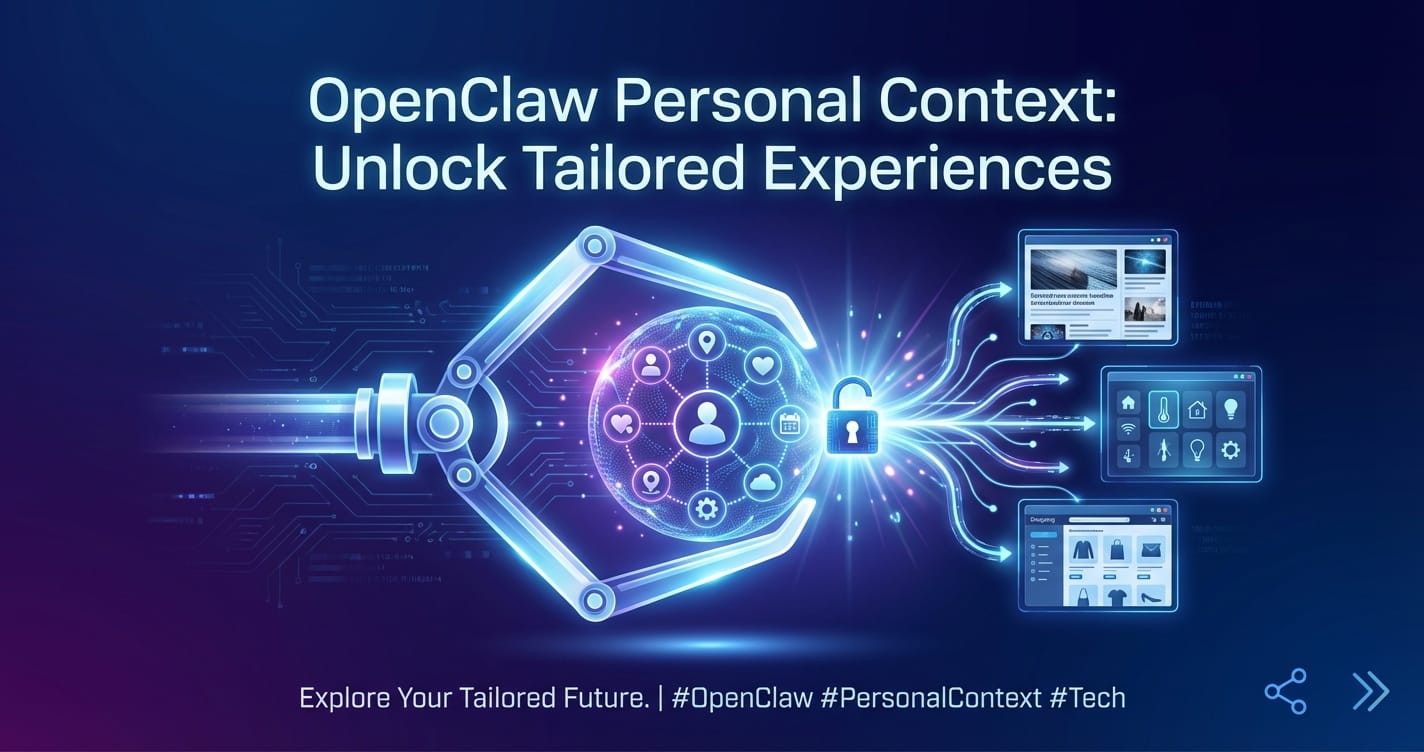
OpenClaw Personal Context: Unlock Tailored Experiences

The relentless march of artificial intelligence has brought us to a pivotal moment, a frontier where the promise of truly personalized digital interaction is no longer a distant dream but an imminent reality. For years, users have interacted with AI systems that, while capable, often felt generic, their responses lacking the nuanced understanding that defines human communication. This era of one-size-fits-all AI is rapidly drawing to a close, replaced by a burgeoning demand for intelligent agents that not only process information but deeply comprehend the individual, adapting and responding with uncanny relevance. This shift is powered by the profound concept of "Personal Context."
At the heart of unlocking these deeply tailored experiences lies an innovative framework we can conceptualize as "OpenClaw." OpenClaw represents an open, adaptive, and sophisticated approach to managing and leveraging an individual's unique digital footprint, preferences, history, and real-time state to inform AI interactions. It's about moving beyond mere data processing to true contextual intelligence, where every interaction is imbued with a sense of personal relevance, making the AI feel less like a tool and more like an extension of the user's own understanding. This is not just an incremental improvement; it's a paradigm shift towards an AI that truly understands you.
The journey to such a personalized AI experience is complex, fraught with challenges related to data management, model selection, and integration. Generic large language models (LLMs), despite their impressive capabilities, inherently lack the memory and specificity to cater to individual needs over time. Their responses, while fluent, can often feel hollow or off-topic when a deeper understanding of the user's specific circumstances is required. This limitation highlights a critical gap: the absence of a robust mechanism to intelligently manage and apply personal context across diverse AI tasks.
The solution, as envisioned by OpenClaw, involves a sophisticated orchestration of advanced AI techniques. Central to this orchestration are three interconnected pillars: intelligent LLM routing, robust multi-model support, and a streamlined unified API. Imagine an intelligent system that doesn't just use an LLM, but dynamically selects the best LLM for a given task, considering your personal context, the complexity of the query, and even the cost-efficiency of the model. This is the power of LLM routing. Furthermore, recognizing that no single AI model is a panacea, OpenClaw embraces multi-model support, allowing the system to draw upon the distinct strengths of various specialized and general-purpose LLMs, seamlessly combining their capabilities to construct a truly holistic and personalized response. Finally, to make this intricate system manageable for developers and scalable for users, a unified API acts as the crucial backbone, abstracting away the complexities of interacting with disparate AI services and models. This trinity of capabilities forms the bedrock upon which OpenClaw builds genuinely intelligent, deeply personal, and highly effective AI experiences, heralding a new era of human-computer interaction where every digital touchpoint feels uniquely yours.
1. The Evolution of AI and the Rise of Personalization
The history of artificial intelligence is a testament to humanity's enduring quest to replicate and augment its own cognitive abilities. From the early, rigid rule-based expert systems of the 1980s, which painstakingly encoded human knowledge into deterministic algorithms, to the statistical machine learning models of the 2000s that learned patterns from vast datasets, AI has undergone several transformative phases. Each phase brought us closer to machines that could mimic aspects of human intelligence, but often lacked the fluidity and adaptability of genuine understanding.
The last decade, however, has witnessed an unparalleled acceleration in AI capabilities, largely driven by advancements in deep learning. The advent of transformer architectures and the subsequent explosion of large language models (LLMs) like GPT-3, Claude, and Llama have redefined what's possible. These models, trained on unfathomable amounts of text data from the internet, possess an astonishing ability to generate coherent, contextually relevant, and often creative text, translate languages, summarize complex documents, and even write code. They brought generative AI into the mainstream, captivating the public imagination and demonstrating a level of general intelligence previously confined to science fiction.
Despite their breathtaking capabilities, generic LLMs deployed in isolation still present significant limitations when it comes to delivering truly personalized experiences. While they can answer a myriad of questions, their knowledge is often static, reflecting their training cutoff date. More importantly, they typically operate without a persistent memory of past interactions with a specific user, lacking an understanding of individual preferences, historical context, or nuanced personal information. A user might engage with a chatbot asking for travel advice, mentioning a preference for eco-friendly destinations. In a subsequent interaction, the same chatbot, if operating generically, would likely not recall this preference, requiring the user to reiterate their constraints. This "statelessness" leads to repetitive interactions, frustration, and a diminished sense of intelligence.
The growing sophistication of users, coupled with the increasing integration of AI into every facet of daily life, has amplified the demand for something more. We no longer just want machines that can do tasks; we want intelligent assistants that understand us. We crave digital companions that recall our last conversation, anticipate our needs, remember our likes and dislikes, and adapt their responses to our unique situations. This isn't merely a desire for convenience; it's a fundamental expectation that as AI becomes more pervasive, it should also become more personal.
This burgeoning need has propelled the concept of "Personal Context" to the forefront of AI development. Personal Context encompasses a rich tapestry of information about an individual user. This includes explicit data such as their demographic information, stated preferences (e.g., preferred travel destinations, dietary restrictions, communication style), and subscription details. More critically, it also involves implicit data gleaned from past interactions: browsing history, purchasing patterns, previous queries, emotional tones detected in text, engagement levels, and even the time of day or their geographical location. It considers their current intent, their long-term goals, and the evolving nuances of their relationship with the AI system. Furthermore, Personal Context can incorporate external environmental factors that influence a user's situation, such as current news events, weather conditions, or local traffic.
The integration of Personal Context into AI systems transcends mere feature enhancement; it's a necessity for fostering genuine user engagement and delivering tangible value. In an increasingly noisy digital world, generic content and interactions fail to capture attention. Personalized experiences, however, cut through the clutter, offering relevance and utility that resonate deeply with the individual. Whether it's a personalized learning path adapting to a student's pace and knowledge gaps, a healthcare assistant providing tailored advice based on a patient's medical history, or a virtual concierge anticipating your next need based on your schedule and preferences, personalization is the key to transforming AI from a utility into an indispensable partner. It elevates the interaction from transactional to relational, building trust and fostering a sense of being truly understood.
2. Understanding "OpenClaw" - A Framework for Deep Personalization
In the pursuit of truly tailored AI experiences, a robust and intelligent framework is indispensable. We conceptualize this framework as "OpenClaw": an open, modular, and adaptive system designed explicitly for comprehensive context management and application in AI interactions. OpenClaw isn't a single product but rather a conceptual architecture, a blueprint for building AI systems that can achieve profound levels of personalization. Its name evokes the idea of an open-ended, flexible system capable of "claws" or intelligently grasping and leveraging context from various sources to provide precise and effective responses.
The core principle underpinning OpenClaw is the understanding that personalization is not a one-time event but a continuous, dynamic process. It involves a sophisticated interplay of several key components working in concert to capture, store, infer, and apply an individual's context across every touchpoint.
Core Principles of OpenClaw:
- Context Capture: This is the initial and foundational step. OpenClaw advocates for a multi-modal, multi-source approach to gathering information about a user.
- Explicit Data: Directly provided information by the user, such as profile settings, stated preferences, feedback, and direct answers to questions. This forms the baseline of understanding.
- Implicit Data: Information inferred from user behavior and interactions. This includes browsing history, search queries, past conversations with the AI, sentiment analysis of user input, duration of engagement with content, device usage patterns, and even biometric data (with explicit consent, of course). The system continuously observes and learns from every interaction, building a richer, more nuanced profile over time.
- Environmental Data: Real-time information about the user's surroundings or external factors, such as location (GPS), time of day, weather, calendar events, local news, and even the type of device being used. This adds a layer of immediate relevance to the context.
- Context Storage and Representation: Once captured, context needs to be stored and organized in a way that is efficiently retrievable and interpretable by AI models.
- Dynamic User Profiles: Unlike static profiles, OpenClaw builds evolving user profiles that are constantly updated with new information and inferences. These profiles are not just flat data structures but rich, interconnected representations.
- Vector Databases: For storing semantic representations of interactions, documents, and user preferences. When a user query comes in, it can be vectorized and quickly compared against the user's past interactions or relevant knowledge bases stored in vector form, allowing for rapid retrieval of semantically similar context.
- Knowledge Graphs: Ideal for representing complex relationships between different pieces of contextual information. A knowledge graph can link a user's stated interests to past purchases, demographic data, and even the expertise of specific AI models. For example, if a user expresses interest in "sustainable travel," the knowledge graph can connect this to specific brands, destinations, and even past articles they've read, creating a holistic view.
- Episodic Memory Modules: Short-term memory specific to the current interaction or recent past, crucial for maintaining coherence within a single conversation session. This complements the long-term memory stored in profiles and knowledge graphs.
- Contextual Inference: This is where the raw data transforms into actionable insights. OpenClaw employs sophisticated algorithms to infer meaning, intent, and relevance from the stored context.
- Intent Recognition: Understanding the user's immediate goal or purpose behind their query, often enhanced by past interactions.
- Sentiment Analysis: Gauging the emotional tone of the user's input to tailor responses accordingly (e.g., more empathetic responses if frustration is detected).
- Preference Learning: Continuously refining models of user preferences based on explicit feedback and implicit behavior.
- Predictive Analytics: Anticipating future needs or questions based on historical patterns and current context, allowing the AI to be proactive.
- Contextual Application: The culmination of the process, where the gathered and inferred context is actively used to shape the AI's responses and behaviors.
- Personalized Responses: Generating text, recommendations, or actions that are uniquely relevant to the user's specific context. This means not just answering a question, but answering it for that specific user.
- Adaptive Workflows: Modifying the flow of an application or a series of AI interactions based on user context. For instance, a customer service bot might skip introductory questions if it already knows the user's recent purchase history.
- Proactive Suggestions: Offering relevant information or assistance before the user explicitly asks, based on anticipated needs.
- Dynamic Content Generation: Tailoring marketing messages, educational materials, or entertainment content to resonate with the individual's interests and learning style.
Architectural Overview:
An OpenClaw-inspired architecture would likely feature several key components:
- Context Ingestion Layer: Handles data collection from various sources.
- Context Processing and Enrichment Layer: Cleans, normalizes, and enriches raw data, performing initial inferences.
- Context Storage Layer: Manages vector databases, knowledge graphs, and user profiles.
- Contextual Reasoning Engine: The "brain" that performs deeper inferences and prepares context for LLM consumption.
- LLM Orchestration Layer: This is where LLM routing and multi-model support come into play, directing queries to appropriate models with the relevant context.
- Response Generation Layer: Formulates the final personalized output.
- Unified API Gateway: Provides a single point of access for applications to interact with the entire OpenClaw system.
The role of semantic understanding and reasoning cannot be overstated here. It's not enough to just store data; the system must be able to understand the meaning behind the data and the relationships between different pieces of information. For example, if a user mentions "trekking in Nepal," the system should semantically understand this as an interest in adventure travel, high-altitude environments, and perhaps cultural immersion, not just a keyword match. This deeper semantic understanding, facilitated by advanced natural language processing (NLP) and knowledge graph reasoning, is what allows OpenClaw to move beyond superficial personalization to genuinely intelligent and highly relevant interactions.
3. The Engine Room: LLM Routing and Multi-Model Support for Tailored Responses
Within the sophisticated architecture of OpenClaw, the true magic of personalization is often orchestrated in its "engine room," where intelligence decides not just what to say, but how and through which AI model to say it. This critical functionality is driven by two powerful concepts: intelligent LLM routing and comprehensive multi-model support. These aren't merely technical features; they are foundational pillars that enable the nuanced, efficient, and ultimately superior tailored experiences promised by OpenClaw.
LLM Routing: Directing Traffic to the Right Brain
What is LLM Routing? At its core, LLM routing is the intelligent process of dynamically directing a user's query or a specific AI task to the most appropriate large language model from a pool of available models. Instead of sending every request to a single, monolithic LLM, a routing system acts as a sophisticated traffic controller, making real-time decisions about which model is best equipped to handle the task given various parameters. This is particularly crucial when dealing with "Personal Context," as the optimal model might change depending on the user's history, the specific domain of their query, or even their current emotional state.
Why is LLM Routing Needed? The landscape of LLMs is rapidly evolving, with a proliferation of models each possessing unique strengths, weaknesses, and cost profiles. * Specialization: Different LLMs excel at different types of tasks. Some might be superior for creative writing and brainstorming, others for precise factual recall and summarization, coding, or translating specific legal jargon. A general-purpose LLM might provide a decent answer for many tasks, but a specialized one will often deliver a more accurate, nuanced, or efficient response. * Cost Efficiency: LLM usage often comes with a per-token cost. Routing allows the system to send simpler, less critical tasks to smaller, more cost-effective models, reserving more powerful and expensive models for complex, high-value queries where their advanced capabilities are truly justified. * Latency and Throughput: Some applications demand ultra-low latency, while others prioritize high throughput. Routing can direct requests to models or providers that meet specific performance requirements. * Context Window Limitations: Different models have varying context window sizes. Routing can send queries requiring extensive personal history or large documents to models capable of handling broader contexts. * Factual Accuracy and Hallucination Tendencies: Some models are known to "hallucinate" more than others. For tasks requiring high factual accuracy, routing can prioritize models with better grounding capabilities or direct the query to a verification module. * Language and Domain Specificity: For multilingual applications or highly specialized domains (e.g., medical, legal), routing can leverage models specifically trained or fine-tuned for those areas.
Factors Influencing Routing Decisions: An intelligent LLM routing system considers a multitude of factors to make its decisions: * User's Current Context: The most immediate and pertinent information from the OpenClaw context management system. Is the user asking a follow-up question related to a previous medical query? Then a medically-tuned model might be prioritized. * Query Type/Intent: Is it a creative writing prompt, a coding request, a summarization task, a factual lookup, or a complex problem-solving query? Pre-classification of the query guides the routing. * Historical Performance Data: Tracking which models performed best for similar user queries in the past. This creates a feedback loop for continuous optimization. * Model Availability and Load: Real-time monitoring of model uptime, API response times, and current load to ensure resilience and avoid bottlenecks. * Cost Constraints: Balancing performance and quality with budgetary considerations. * Security and Compliance: Routing sensitive data to models or providers that meet specific regulatory requirements. * Provider Diversity: Spreading requests across multiple providers to mitigate vendor lock-in and ensure business continuity.
Dynamic vs. Static Routing: * Static Routing: Predefined rules (e.g., "all coding questions go to Model X"). Simpler but less flexible. * Dynamic Routing: Utilizes machine learning and real-time data to make adaptive decisions, continuously learning and optimizing. This is the hallmark of OpenClaw's approach, allowing the system to evolve its routing intelligence.
Benefits of Intelligent LLM Routing: * Optimized Performance: Ensures the right tool is used for the job, leading to higher quality, more relevant responses. * Cost Efficiency: Significantly reduces operational costs by intelligently allocating resources. * Enhanced Reliability: Distributes load and provides failover options across different models and providers. * Scalability: Allows the system to grow by easily integrating new models without re-architecting the entire system. * Access to Specialized Knowledge: Leverages the collective intelligence of many models, providing depth beyond any single LLM.
Multi-Model Support: The Breadth of Capabilities
Leveraging a Diverse Portfolio of LLMs: Multi-model support is the direct enabler of intelligent LLM routing. It refers to the capability of an AI system to seamlessly integrate, manage, and utilize a diverse range of LLMs from various providers. This is akin to having a team of specialized experts rather than a single generalist. An OpenClaw system with multi-model support can, for example, leverage: * A powerful, large-context model (e.g., GPT-4) for complex reasoning and creative tasks. * A faster, cheaper model (e.g., a smaller open-source model like Llama) for quick, simple Q&A. * A specialized model fine-tuned for a specific industry (e.g., a legal LLM) for domain-specific queries. * A summarization-focused model for condensing long documents. * A text-to-code model for generating programming snippets.
How Different Models Contribute to a Richer, Personalized Experience: Imagine a user interacting with a personalized assistant powered by OpenClaw. * If the user asks for creative story ideas based on their favorite genre (from their personal context), the system might route the request to a highly creative LLM known for its imaginative outputs. * If the next query is to fact-check a historical event mentioned in the story, the system routes to a fact-oriented LLM with a strong retrieval augmented generation (RAG) capability. * If the user then asks to summarize a complex research paper related to their professional interests (also stored in their context), a summarization-focused model is engaged. * And if the conversation shifts to scheduling a meeting, a more compact, low-latency model might be used for the direct action.
This seamless orchestration ensures that the user always receives the best possible response, tailored not just to their query but also to the optimal capabilities available within the multi-model ecosystem, all while being informed by their unique personal context. The end result is an experience that feels exceptionally intelligent, responsive, and deeply understanding.
Orchestration Challenges and Benefits: While the benefits are clear, managing multiple models introduces orchestration challenges: * API Inconsistencies: Different models have different APIs, authentication methods, and data formats. * Versioning: Keeping up with updates and changes across numerous models. * Monitoring: Tracking performance, costs, and reliability for each model. * Security: Ensuring secure access and data handling across multiple providers.
However, the benefits far outweigh these challenges: * Unparalleled Flexibility: Adapt to evolving user needs and technological advancements by swapping or adding models. * Robustness and Redundancy: If one model or provider experiences downtime, others can take over. * Cutting-Edge Capabilities: Always access the latest and greatest AI innovations without being tied to a single vendor. * Hyper-Personalization: The ability to cherry-pick the exact cognitive strength required for each facet of a personalized interaction.
In essence, LLM routing and multi-model support are not just technical optimizations; they are the strategic enablers for OpenClaw to deliver truly tailored, high-performance, and cost-effective AI experiences that adapt and evolve with the user.
XRoute is a cutting-edge unified API platform designed to streamline access to large language models (LLMs) for developers, businesses, and AI enthusiasts. By providing a single, OpenAI-compatible endpoint, XRoute.AI simplifies the integration of over 60 AI models from more than 20 active providers(including OpenAI, Anthropic, Mistral, Llama2, Google Gemini, and more), enabling seamless development of AI-driven applications, chatbots, and automated workflows.
4. The Backbone: Unified API for Seamless Integration and Development
The vision of OpenClaw, with its intelligent LLM routing and expansive multi-model support, presents an architectural challenge: how does a developer effectively manage and integrate dozens, potentially hundreds, of different AI models from various providers? Each model comes with its own unique API, authentication scheme, data format expectations, error codes, and rate limits. The complexity of integrating and maintaining these disparate connections can quickly become overwhelming, hindering development speed, increasing maintenance overhead, and stifling innovation. This is precisely where the concept of a unified API becomes not just beneficial, but absolutely indispensable.
The Challenge of Fragmented AI Access
Imagine a developer attempting to build an application that leverages the best of what AI has to offer, perhaps using GPT-4 for creative writing, Claude for summarization, Llama for local processing, and a specialized legal model for specific queries. Without a unified approach, this would entail:
- Multiple SDKs and Libraries: Learning and integrating a different software development kit (SDK) for each provider.
- Inconsistent Endpoints: Calling different URLs and methods for each model.
- Varying Authentication: Managing a patchwork of API keys, tokens, and authorization flows.
- Disparate Data Formats: Transforming input and output data to match each model's specific requirements. One model might expect JSON with a
promptfield, another might usetext_input, and a third could require a nested object structure. - Version Control Headaches: Keeping up with API changes and updates from numerous vendors, often leading to broken integrations.
- Increased Development Time: A significant portion of development effort is spent on boilerplate integration code rather than on core application logic.
- Limited Experimentation: The friction of switching models discourages developers from easily testing and comparing different LLMs to find the optimal one for their use case.
This fragmentation creates a substantial barrier to entry for developers and limits the agility of businesses trying to leverage the rapidly evolving AI ecosystem.
The Solution: Unified API
A unified API acts as a powerful abstraction layer, providing a single, standardized interface through which developers can access a multitude of underlying AI models and services. It standardizes the request and response formats, centralizes authentication, and handles the intricate details of routing requests to the correct model and provider behind the scenes.
What a Unified API Provides:
- Simplified Integration: Developers write code once, interacting with a single API endpoint using a consistent data structure, regardless of which underlying LLM is being called. This drastically reduces the complexity of integration.
- Faster Development Cycles: By eliminating the need to learn and integrate multiple APIs, developers can focus on building features and innovation, accelerating the time to market for AI-driven applications.
- Reduced Maintenance Overhead: Updates or changes to underlying LLMs are managed by the unified API provider, shielding developers from constant re-coding. If a new, better model becomes available, it can be integrated into the unified API without impacting the application's codebase.
- Future-Proofing: A unified API insulates applications from the volatility of the AI market. If a particular model is deprecated or a new, superior one emerges, the application can often switch to the new model with minimal or no code changes, maintaining continuity and access to cutting-edge technology.
- Standardization of Inputs and Outputs: Ensures that regardless of the LLM chosen, the data format for sending prompts and receiving responses remains consistent, making it easier to parse, process, and integrate AI outputs into application logic.
- Centralized Management and Monitoring: A single point for managing API keys, monitoring usage, tracking costs across different models, and accessing consolidated performance metrics.
How it Enables Rapid Iteration and Experimentation:
With a unified API, the barrier to switching between LLMs is dramatically lowered. Developers can: * A/B Test Models: Easily compare the performance, quality, and cost of different LLMs for specific tasks in real-time, allowing for data-driven optimization. * Dynamic Model Switching: Implement sophisticated LLM routing strategies that dynamically select models based on performance, cost, or specific contextual needs without complex code changes. * Experiment with New Models: Quickly integrate and test emerging LLMs or fine-tuned versions to see if they offer better results for particular aspects of their personalized experience. This agility is crucial in the fast-paced AI landscape.
Introducing XRoute.AI: The Epitome of Unified API for OpenClaw's Vision
This is precisely the landscape where XRoute.AI emerges as a cutting-edge solution, perfectly aligning with and enabling the vision of OpenClaw. XRoute.AI is a unified API platform designed to streamline access to large language models (LLMs) for developers, businesses, and AI enthusiasts. By providing a single, OpenAI-compatible endpoint, XRoute.AI simplifies the integration of over 60 AI models from more than 20 active providers. This expansive multi-model support directly addresses the needs of OpenClaw's personalized experiences, allowing developers to leverage the best cognitive tool for any given task or personal context.
XRoute.AI's architecture inherently supports sophisticated LLM routing, enabling users to choose models based on latency, cost, or specific capabilities through a single interface. This is crucial for optimizing the personalized responses within an OpenClaw framework, ensuring that the most appropriate and efficient model is always utilized. Its focus on low latency AI and cost-effective AI directly translates to superior user experiences and optimized operational expenses for any system built on OpenClaw principles. Furthermore, its developer-friendly tools empower users to build intelligent solutions without the complexity of managing multiple API connections. The platform’s high throughput, scalability, and flexible pricing model make it an ideal choice for projects of all sizes, from startups developing niche personalized apps to enterprise-level applications aiming for deeply integrated, context-aware AI. In essence, XRoute.AI provides the robust, flexible, and efficient backbone that an OpenClaw system needs to transform complex AI orchestration into seamless, deeply personalized user interactions.
5. Implementing OpenClaw: Practical Considerations and Use Cases
Bringing the OpenClaw framework to life requires careful consideration of several practical aspects, from ethical implications to technical scalability. Successfully deploying a system capable of managing "Personal Context" and delivering "Tailored Experiences" involves navigating complexities that extend beyond mere API calls.
Data Privacy and Security: Ethical Considerations
The very essence of OpenClaw — deep understanding of personal context — necessitates handling vast amounts of sensitive user data. This brings paramount ethical responsibilities:
- Transparency and Consent: Users must be fully informed about what data is collected, how it's used, and who has access to it. Explicit, granular consent mechanisms are crucial.
- Data Minimization: Only collect data that is absolutely necessary for providing the personalized experience. Avoid collecting superfluous information.
- Anonymization and Pseudonymization: Where possible, data should be anonymized or pseudonymized to protect user identities.
- Robust Security Measures: Implement state-of-the-art encryption (at rest and in transit), access controls, and regular security audits to protect against breaches. Given the multi-model support and potential LLM routing to external providers, ensuring data security across all partners is critical.
- Compliance: Adhere to global data protection regulations such as GDPR, CCPA, and others relevant to the user base.
- Right to Be Forgotten/Data Portability: Empower users with control over their data, including the right to request deletion or transfer of their personal context.
Failing to prioritize privacy and security can erode user trust, leading to diminished adoption and severe reputational and legal repercussions.
Scalability Challenges and Solutions
A personalized AI system must be able to scale efficiently to accommodate a growing user base and increasing computational demands.
- Context Storage: As more users generate more data, the storage requirements for dynamic profiles, vector databases, and knowledge graphs will skyrocket. Solutions involve distributed databases, cloud-native storage, and efficient data compression.
- Processing Power: The contextual inference engine, LLM routing logic, and actual LLM inference require significant computational resources. Leveraging cloud computing platforms with auto-scaling capabilities (e.g., Kubernetes, serverless functions) is essential.
- LLM API Load: Directing queries to LLMs can create high traffic. A unified API like XRoute.AI helps manage this by potentially load-balancing across different providers and models, ensuring high throughput and reliability.
- Real-time Context Updates: Ensuring that personal context is updated and propagated in near real-time across the system without introducing unacceptable latency. This often requires event-driven architectures and message queues.
Performance Metrics: Latency, Throughput, Cost Efficiency
Measuring the effectiveness of an OpenClaw implementation goes beyond functional correctness:
- Latency: The time it takes for the system to process a query and return a personalized response. Low latency is paramount for real-time interactions. LLM routing can optimize this by selecting faster models for time-sensitive tasks.
- Throughput: The number of personalized interactions the system can handle per unit of time. High throughput is essential for large-scale deployments.
- Cost Efficiency: The monetary cost associated with delivering personalized experiences. This includes infrastructure, LLM API calls, and data storage. Intelligent LLM routing and multi-model support (leveraging cheaper models for simpler tasks) are direct drivers of cost optimization. XRoute.AI, with its focus on cost-effective AI, directly contributes here.
- Personalization Quality Score: A qualitative and quantitative measure of how relevant, accurate, and satisfying the personalized responses are to the user. This can be derived from explicit user feedback, engagement metrics, and A/B testing.
Training and Fine-tuning Models for Specific Personal Contexts
While off-the-shelf LLMs are powerful, true personalization often benefits from further customization:
- Retrieval Augmented Generation (RAG): Integrating LLMs with external knowledge bases (e.g., user-specific documents, company-internal wikis, personal notes) via vector search. This grounds responses in specific, up-to-date, and personal information, reducing hallucinations.
- Fine-tuning: Training smaller, domain-specific models or adapting larger models on a user's own data (with consent). This can make models more specialized, accurate, and aligned with a user's unique language and preferences, contributing to deeper "Personal Context" understanding.
- Personalized Embeddings: Generating unique embeddings for individual users or specific aspects of their context, allowing for more precise semantic matching and retrieval.
Comparing Approaches to Personalization
To illustrate the advantages of an OpenClaw-like approach, let's compare it to more traditional methods:
| Feature | Rule-Based Systems | Generic LLM (Standalone) | OpenClaw (LLM Routing, Multi-model, Unified API) |
|---|---|---|---|
| Personalization Level | Low (pre-defined conditions) | Low (stateless, generic answers) | High (dynamic, deep contextual understanding) |
| Context Management | Limited, explicit rules only | None (stateless) | Comprehensive (dynamic profiles, knowledge graphs) |
| Adaptability | Poor (requires manual updates) | Limited (relies on initial training) | Excellent (learns and adapts continuously) |
| Complexity to Develop | Moderate (extensive rule sets) | Low (simple API call) | High (architecture, integration, orchestration) |
| Scalability | Challenging (rules grow linearly) | Good (cloud-based LLMs) | Excellent (distributed, optimized routing) |
| Cost Efficiency | Low (manual effort) | Moderate (per-token cost) | High (optimized via LLM routing, cheaper models) |
| "AI Feel" | Robotic, rigid | Generic, sometimes repetitive | Human-like, intuitive, understanding |
| Multi-model Support | N/A | No | Yes (core feature, intelligent selection) |
| Unified API Benefits | N/A | No (direct to one provider) | Yes (simplifies integration, management) |
Compelling Use Cases for OpenClaw
The potential applications for an OpenClaw framework are vast and transformative across industries:
- Personalized Education: Adaptive learning platforms that adjust curriculum, teaching style, and pace based on a student's learning history, comprehension level, and preferred learning modalities. An AI tutor could recall past struggles, suggest targeted exercises, and provide explanations tailored to the student's background.
- Hyper-personalized Customer Service: AI agents that remember every past interaction, purchase, and preference, providing proactive support, resolving issues faster, and offering highly relevant product recommendations. Imagine a chatbot that knows your specific warranty details, past support tickets, and even your frustration level from previous conversations.
- Intelligent Personal Assistants: Beyond simple commands, these assistants anticipate needs based on calendar, location, past behavior, and environmental data. They could proactively suggest routes to avoid traffic, order groceries based on fridge contents, or recommend evening activities aligned with personal interests and mood.
- Dynamic Content Generation: Tailoring marketing messages, news feeds, entertainment recommendations, or even creative writing assistance to individual users. A marketing platform could generate ad copy specifically designed to resonate with a user's identified values and past engagement.
- Healthcare and Wellness: AI companions that offer personalized health advice based on a patient's medical history, genetic data, lifestyle, and real-time biometric readings. This could range from customized diet plans to mental health support that adapts to an individual's emotional state.
- E-commerce and Retail: Personalized shopping experiences, including tailored product recommendations, virtual stylists who understand your fashion preferences, and chatbots that can intelligently answer product questions based on your specific needs and past purchases.
In each of these scenarios, the deep understanding of "Personal Context," facilitated by LLM routing, multi-model support, and a unified API like XRoute.AI, transforms generic interactions into meaningful, highly effective, and deeply satisfying tailored experiences.
6. The Future of Tailored Experiences with OpenClaw
The journey towards truly personalized AI, championed by the OpenClaw framework, is an ongoing evolution, not a fixed destination. As we look to the horizon, the future promises even more profound and seamless tailored experiences, blurring the lines between human intuition and artificial intelligence. This future is characterized by AI that is not just reactive, but proactively anticipatory; not just text-based, but multi-modal; and not just static, but continuously self-improving.
One of the most exciting frontiers is the development of proactive AI. Imagine an OpenClaw system that not only understands your current context but can also predict your future needs and offer assistance before you even realize you need it. This could manifest as an AI assistant that reminds you to leave for your meeting early due to unexpected traffic, suggests a new recipe based on ingredients you just bought, or even flags a relevant news article based on your evolving professional interests. Achieving this requires even deeper contextual inference, leveraging predictive analytics and learning from subtle cues in behavior and environmental data. The sophisticated LLM routing will play a key role here, as different predictive tasks might be best handled by specialized forecasting models, seamlessly integrated through a unified API.
Furthermore, the future of personal context will transcend text alone, moving towards multi-modal context. This means incorporating information from various data streams beyond just text, such as: * Vision: Understanding images and videos from a user's environment or past interactions (e.g., recognizing objects in a photo, identifying a location from a video). * Audio: Processing speech nuances, tone of voice, and background sounds to infer emotional state or environmental context. * Sensors: Integrating data from wearables (heart rate, activity levels), smart home devices (temperature, lighting), or even vehicle telematics.
An OpenClaw system capable of processing multi-modal context would paint an even richer, more holistic picture of the user, leading to extraordinarily nuanced and intuitive tailored experiences. A smart home AI, for instance, could adjust lighting and music not just based on your explicit commands, but on your activity levels, time of day, and even your detected mood, all while remembering your preferences from past interactions. Multi-model support will be critical here, as specialized models for vision, audio processing, and time-series data analysis will need to work in concert with LLMs for generating coherent, contextualized responses.
The ambition also extends to creating self-improving personalization engines. Current systems require human intervention for significant improvements or fine-tuning. Future OpenClaw iterations will leverage advanced reinforcement learning and meta-learning techniques to continuously refine their understanding of personal context and their personalization strategies, autonomously learning from every interaction and user feedback loop. This iterative self-optimization will lead to personalization that not only adapts but intelligently evolves alongside the user.
Finally, the democratization of advanced AI through frameworks like OpenClaw and platforms like XRoute.AI will empower a new generation of developers and businesses to build intelligent solutions without the prohibitive complexity and cost previously associated with such endeavors. XRoute.AI, with its simplified access to over 60 LLMs via a single, OpenAI-compatible endpoint, its focus on low latency AI and cost-effective AI, is a prime example of how the technical barriers to implementing sophisticated LLM routing and multi-model support are being systematically dismantled. This accessibility ensures that tailored experiences, once the exclusive domain of tech giants, can become a standard feature across a multitude of applications and services.
The ultimate goal of OpenClaw is to create AI that feels less like an external tool and more like an intuitive extension of oneself – an intelligent partner that anticipates, understands, and interacts in a way that is uniquely and profoundly personal. As these technologies mature, we are not just building smarter machines; we are crafting a future where digital interactions are as rich, empathetic, and relevant as the best human connections.
Conclusion
The pursuit of personalized digital experiences is no longer a luxury but a fundamental expectation in our increasingly AI-driven world. The generic, one-size-fits-all approach to artificial intelligence is giving way to a more sophisticated paradigm, one centered on the profound understanding and application of "Personal Context." This transformative shift is epitomized by the conceptual framework of OpenClaw, an intelligent architecture designed to unlock deeply tailored interactions.
OpenClaw achieves its vision by meticulously capturing, storing, inferring, and applying an individual's unique preferences, history, and real-time state. This intricate process is made robust and efficient through the strategic integration of three core pillars: intelligent LLM routing, comprehensive multi-model support, and a streamlined unified API. LLM routing ensures that the most appropriate and cost-effective AI model is dynamically selected for each specific query, maximizing relevance and efficiency. Multi-model support empowers the system to leverage the distinct strengths of a diverse portfolio of LLMs, creating nuanced and holistic responses that no single model could achieve. Crucially, a unified API acts as the foundational backbone, simplifying the immense complexity of integrating and managing numerous disparate AI models, thus accelerating development and ensuring scalability.
Platforms like XRoute.AI exemplify this technical enablement. By offering a single, OpenAI-compatible endpoint to over 60 AI models, XRoute.AI directly addresses the need for low latency AI and cost-effective AI within an OpenClaw-inspired system. It provides the developer-friendly tools necessary to seamlessly implement sophisticated LLM routing and multi-model support, allowing businesses and developers to build intelligent, personalized solutions without the daunting complexity of managing multiple API connections.
The transformative potential of OpenClaw is immense, promising to revolutionize everything from personalized education and hyper-responsive customer service to intelligent personal assistants and dynamic content generation. As we continue to refine these technologies, moving towards proactive, multi-modal, and self-improving AI, we are not just enhancing digital tools; we are forging a future where every digital interaction is intuitive, empathetic, and uniquely relevant to the individual. The era of truly tailored experiences, driven by the intelligent orchestration of personal context, has arrived, poised to redefine our relationship with technology.
Frequently Asked Questions (FAQ)
1. What is "Personal Context" in AI? Personal Context in AI refers to the comprehensive collection of information about an individual user that helps an AI system understand and adapt to their unique needs. This includes explicit data (e.g., stated preferences, profile details) and implicit data (e.g., past interactions, browsing history, sentiment), as well as real-time environmental factors (e.g., location, time). It's crucial for moving beyond generic AI responses to truly tailored experiences.
2. How does OpenClaw ensure data privacy and security with personal context? OpenClaw, as a conceptual framework, emphasizes a strong commitment to data privacy and security. This involves strict adherence to principles like transparency and explicit consent for data collection, data minimization, anonymization where possible, and robust security measures (encryption, access controls). Compliance with regulations like GDPR and CCPA, along with empowering users with data control (e.g., right to be forgotten), are integral to its design.
3. What are the main benefits of LLM routing in a personalized AI system? LLM routing intelligently directs user queries to the most appropriate large language model (LLM) from a pool of available options. Its main benefits include optimizing performance (by using specialized models for specific tasks), enhancing cost efficiency (by leveraging cheaper models for simpler queries), ensuring reliability (through failover options), and enabling access to a broader range of specialized AI capabilities to deliver more accurate and nuanced personalized responses.
4. How does a Unified API simplify AI development for multi-model systems? A Unified API simplifies AI development by providing a single, standardized interface to access multiple underlying LLMs from various providers. This eliminates the need to integrate different SDKs, manage inconsistent endpoints, and handle disparate data formats. It accelerates development cycles, reduces maintenance overhead, enables easier experimentation with different models, and future-proofs applications against changes in the AI landscape, making multi-model support highly manageable.
5. Can OpenClaw be integrated with existing systems and data sources? Yes, an OpenClaw-inspired framework is designed to be modular and adaptable, allowing for integration with existing systems and data sources. It typically uses an ingestion layer to pull data from various enterprise systems (CRM, ERP, knowledge bases) and external sources. The use of a unified API for LLM access, combined with flexible context storage mechanisms like vector databases and knowledge graphs, facilitates seamless integration into diverse technological ecosystems, enhancing existing applications with deep personalization capabilities.
🚀You can securely and efficiently connect to thousands of data sources with XRoute in just two steps:
Step 1: Create Your API Key
To start using XRoute.AI, the first step is to create an account and generate your XRoute API KEY. This key unlocks access to the platform’s unified API interface, allowing you to connect to a vast ecosystem of large language models with minimal setup.
Here’s how to do it: 1. Visit https://xroute.ai/ and sign up for a free account. 2. Upon registration, explore the platform. 3. Navigate to the user dashboard and generate your XRoute API KEY.
This process takes less than a minute, and your API key will serve as the gateway to XRoute.AI’s robust developer tools, enabling seamless integration with LLM APIs for your projects.
Step 2: Select a Model and Make API Calls
Once you have your XRoute API KEY, you can select from over 60 large language models available on XRoute.AI and start making API calls. The platform’s OpenAI-compatible endpoint ensures that you can easily integrate models into your applications using just a few lines of code.
Here’s a sample configuration to call an LLM:
curl --location 'https://api.xroute.ai/openai/v1/chat/completions' \
--header 'Authorization: Bearer $apikey' \
--header 'Content-Type: application/json' \
--data '{
    "model": "gpt-5",
    "messages": [
        {
            "content": "Your text prompt here",
            "role": "user"
        }
    ]
}'
With this setup, your application can instantly connect to XRoute.AI’s unified API platform, leveraging low latency AI and high throughput (handling 891.82K tokens per month globally). XRoute.AI manages provider routing, load balancing, and failover, ensuring reliable performance for real-time applications like chatbots, data analysis tools, or automated workflows. You can also purchase additional API credits to scale your usage as needed, making it a cost-effective AI solution for projects of all sizes.
Note: Explore the documentation on https://xroute.ai/ for model-specific details, SDKs, and open-source examples to accelerate your development.