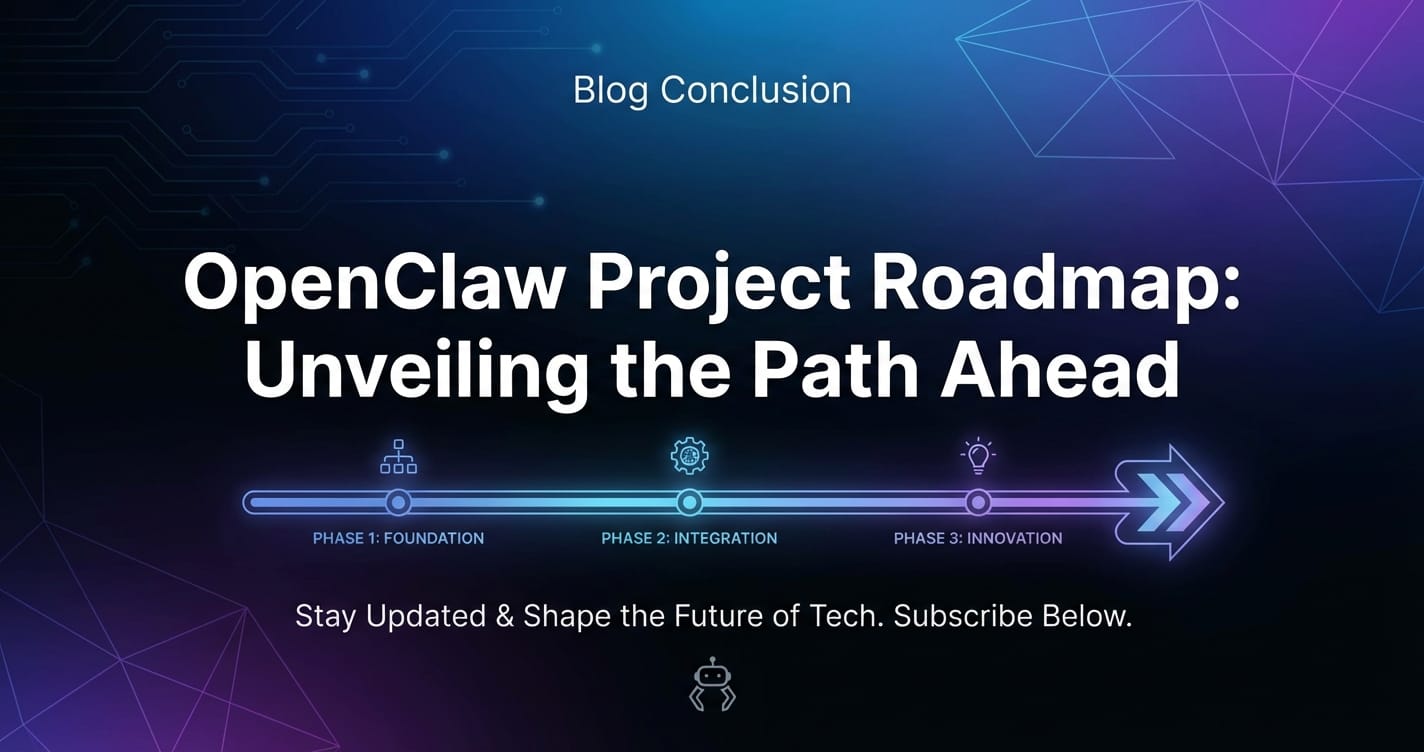
OpenClaw Project Roadmap: Unveiling the Path Ahead

Introduction: Charting the Course for Decentralized Innovation
The digital landscape is in constant flux, evolving at an unprecedented pace, driven by an insatiable demand for greater efficiency, transparency, and user empowerment. In this dynamic environment, the OpenClaw project emerges as a beacon of innovation, poised to redefine how we interact with decentralized technologies. Our vision extends beyond merely building a platform; we aim to cultivate a vibrant, resilient ecosystem that champions open standards, fosters collaboration, and delivers unparalleled value to its users and developers alike. This roadmap serves as our compass, meticulously outlining the strategic directions, technological milestones, and community initiatives that will guide OpenClaw from its foundational stages to its full realization as a transformative force.
The journey ahead is ambitious, yet meticulously planned, with each phase designed to build upon the last, ensuring a robust and sustainable development trajectory. We understand that success in the decentralized space hinges not only on groundbreaking technology but also on strategic cost optimization and relentless pursuit of performance optimization. These twin pillars are woven into the very fabric of our development philosophy, ensuring that OpenClaw is not just powerful, but also economically viable and exquisitely responsive. Furthermore, as the ecosystem matures, the demand for seamless integration and interoperability will necessitate a sophisticated unified API approach, a critical component of our long-term architectural strategy.
This document delves into the intricate details of our multi-phase plan, offering a transparent look into the engineering challenges we anticipate, the solutions we propose, and the vibrant community we aspire to build. It's an invitation to our stakeholders—developers, users, partners, and enthusiasts—to join us in shaping a future where decentralized applications are not only robust and secure but also intuitively accessible and universally beneficial. The OpenClaw project is more than just code; it's a commitment to a better, more decentralized digital future, and this roadmap is the testament to our unwavering dedication to that promise.
Section 1: The Genesis of OpenClaw: A Vision for Decentralized Innovation
The inception of OpenClaw was born from a collective realization: while decentralized technologies hold immense promise, their widespread adoption remains hampered by complexities in development, prohibitive operational costs, and often, a lack of cohesive performance. Many existing solutions, though innovative in their own right, present a fragmented landscape, requiring developers to navigate a maze of disparate protocols, inconsistent APIs, and often, economically unsustainable resource models. This fragmentation not only stifles innovation but also erects significant barriers to entry for both developers and end-users, limiting the true potential of decentralized applications.
1.1 Problem Statement: Bridging the Decentralization Gap
At its core, OpenClaw seeks to address this fundamental problem: the gap between the theoretical potential of decentralized technology and its practical, real-world utility. We identified several critical pain points:
- Developer Friction: The steep learning curve associated with blockchain and distributed ledger technologies (DLTs), coupled with the absence of standardized tools and a unified API interface, often leads to prolonged development cycles and increased project costs.
- Performance Bottlenecks: Many decentralized systems struggle with scalability and transaction throughput, resulting in slow user experiences and an inability to handle enterprise-level demands. This necessitates a proactive approach to performance optimization.
- Economic Unsustainability: The unpredictable and often high operational costs, particularly for complex dApps, pose a significant barrier to long-term project viability. Effective cost optimization is not merely a feature, but a foundational requirement.
- Lack of Interoperability: Siloed ecosystems prevent seamless data exchange and asset transfer, hindering the creation of truly interconnected and versatile applications.
- User Experience Deficiencies: Complex interfaces, opaque transaction processes, and a general lack of user-friendliness deter mainstream adoption.
1.2 Core Philosophy and Principles: Building on Openness and Efficiency
OpenClaw is meticulously engineered around a set of core philosophies designed to overcome these challenges. Our project is fundamentally committed to:
- Openness and Transparency: We embrace an open-source ethos, believing that collective intelligence and community contributions are paramount to building a secure, resilient, and universally adopted platform. All code, documentation, and decision-making processes will be transparent and accessible.
- Modularity and Extensibility: OpenClaw's architecture is designed to be highly modular, allowing developers to easily build, integrate, and extend functionalities without disrupting the core system. This approach also facilitates future upgrades and ensures adaptability to evolving technological landscapes.
- Efficiency and Sustainability: From the outset, we prioritize both cost optimization and performance optimization. This means designing protocols that minimize resource consumption, implementing intelligent scaling solutions, and fostering an economic model that sustains the network without burdening its users or developers.
- Developer-Centric Design: We aim to provide a comprehensive suite of tools, SDKs, and a robust unified API that abstracts away much of the underlying complexity of decentralized development, allowing creators to focus on innovation rather than infrastructure.
- Security by Design: Security is not an afterthought but an integral part of every layer of the OpenClaw architecture. Rigorous auditing, formal verification methods, and a proactive security posture will ensure the integrity and resilience of the network and its applications.
- Community Governance: As the project matures, we envision a progressive transition towards a decentralized governance model, empowering the community to guide the future direction and evolution of OpenClaw.
1.3 Initial Architectural Considerations: Scalability and Security from Day One
Our foundational architectural decisions are driven by the need for a system that is inherently scalable, secure, and future-proof. OpenClaw adopts a multi-layered approach, separating concerns and optimizing each layer for its specific function:
- Consensus Layer: A robust, energy-efficient, and highly secure consensus mechanism designed for rapid finality and resistance to various attacks. We are exploring hybrid models that combine the best aspects of Proof-of-Stake (PoS) and other innovative consensus algorithms to ensure both security and speed.
- Execution Layer: A high-performance virtual machine environment capable of executing smart contracts and dApps with minimal latency. This layer is engineered for parallel processing and efficient resource utilization, directly contributing to performance optimization.
- Data Availability Layer: A decentralized storage solution ensuring that all transaction data and state changes are readily accessible and verifiable by all network participants, enhancing transparency and data integrity.
- Networking Layer: An optimized peer-to-peer network protocol designed to minimize propagation delays and maximize data throughput, crucial for maintaining network health and responsiveness.
- API Gateway Layer: A sophisticated gateway that will eventually evolve into our unified API, providing a standardized, developer-friendly interface to the underlying network services, shielding developers from the complexities of interacting directly with core protocols.
These foundational decisions are not static; they are subject to continuous research, development, and community feedback. Our commitment is to build a decentralized ecosystem that is not only technologically superior but also sustainable, equitable, and truly open to all.
Section 2: Phase 1: Laying the Foundation – Core Infrastructure & Module Development
The initial phase of the OpenClaw roadmap is dedicated to establishing a rock-solid foundation. This involves crafting the core architectural blueprint, developing the fundamental modules, and meticulously laying the groundwork for a scalable and secure ecosystem. Without a robust base, any subsequent layers of functionality would be inherently unstable. This phase emphasizes meticulous engineering, rigorous testing, and a strategic approach to resource allocation, ensuring that the initial investments yield long-term dividends in stability and efficiency.
2.1 Architectural Blueprint & Initial Design Principles
Our architectural blueprint is the skeletal framework upon which OpenClaw will be built. It’s a carefully considered design that balances decentralization with efficiency, security with accessibility.
2.1.1 Modular Architecture, Microservices Approach
OpenClaw embraces a highly modular architecture, leveraging a microservices approach where discrete functionalities are encapsulated within independent services. This design offers several critical advantages:
- Isolation of Concerns: Each module focuses on a specific task (e.g., identity management, data storage, consensus mechanism), reducing interdependencies and simplifying development.
- Enhanced Resilience: A failure in one microservice is less likely to bring down the entire system, as other services can continue operating independently. This improves overall system reliability and uptime.
- Independent Scalability: Individual microservices can be scaled independently based on demand, allowing for more efficient resource utilization. For instance, if the identity service experiences high traffic, it can be scaled up without affecting other less-demanding services, directly contributing to cost optimization by avoiding over-provisioning for the entire system.
- Technological Flexibility: Different microservices can be developed using different technology stacks, allowing teams to choose the most appropriate tools for each specific task, fostering innovation and agility.
2.1.2 Security-First Design, Data Privacy
Security is paramount. Every component of OpenClaw is designed with a "security-first" mindset. This involves:
- Threat Modeling: Proactive identification and mitigation of potential vulnerabilities at every stage of development, from design to deployment.
- Least Privilege Principle: Components and users are granted only the minimum necessary permissions to perform their designated functions, minimizing the blast radius in case of a compromise.
- End-to-End Encryption: All data in transit and at rest is secured using state-of-the-art encryption protocols, protecting user privacy and data integrity.
- Regular Security Audits: Independent security experts will conduct frequent audits and penetration testing to identify and rectify vulnerabilities, ensuring continuous improvement in our security posture.
- Data Privacy Enhancements: Incorporating privacy-preserving technologies such as zero-knowledge proofs (ZKPs) or homomorphic encryption where applicable, allowing computations on encrypted data without revealing the underlying information. This ensures that user data remains private even within a transparent decentralized environment.
2.1.3 Scalability Considerations from Day One
Anticipating future growth, OpenClaw’s architecture is inherently scalable. We are not just building for today’s needs but for tomorrow’s demands. Key strategies include:
- Sharding (Planned): While not implemented in Phase 1, the architecture is designed to accommodate sharding solutions, allowing the network to process transactions in parallel across multiple shards, exponentially increasing throughput.
- Layer-2 Solutions (Planned Integration): Compatibility with existing and emerging Layer-2 scaling solutions (e.g., optimistic rollups, ZK-rollups) will enable off-chain transaction processing with on-chain finality, significantly boosting transaction capacity and reducing costs.
- Efficient Data Structures: Utilizing highly optimized data structures and indexing mechanisms to ensure rapid data retrieval and state transitions, which is fundamental to achieving high performance optimization.
- Stateless Components: Designing components to be largely stateless where possible reduces the overhead of maintaining session information and simplifies horizontal scaling.
2.2 Core Component Development
This sub-phase focuses on bringing the architectural blueprint to life by developing the foundational software components.
2.2.1 Key Modules (e.g., Identity, Data Storage, Communication Layer)
- Decentralized Identity (DID) Module: A cornerstone for user authentication and authorization, enabling self-sovereign identity management. This module will allow users to control their digital identities without relying on centralized intermediaries, enhancing security and privacy. It will incorporate verifiable credentials (VCs) for robust identity claims.
- Distributed Data Storage Module: A robust and resilient decentralized storage solution, ensuring data persistence, availability, and censorship resistance. This module will likely leverage distributed hash tables (DHTs) and content-addressable storage principles, designed for both redundancy and efficient retrieval.
- Inter-Module Communication Layer: A secure and efficient communication protocol facilitating seamless interaction between different OpenClaw microservices and external dApps. This layer is critical for the overall system's cohesion and responsiveness.
- Consensus Engine Prototype: Development of an initial, optimized consensus engine that prioritizes low latency and high transaction throughput. This prototype will be subjected to extensive testing and simulation to validate its robustness and efficiency.
2.2.2 Technology Stack Choices and Rationale
The selection of our technology stack is driven by factors such as maturity, community support, performance characteristics, and security track record.
- Programming Languages: Rust (for core protocols due to its memory safety and performance), Go (for network services and utilities due to its concurrency model and efficiency), and TypeScript/JavaScript (for client-side development and front-end tooling).
- Distributed Ledger Frameworks: Evaluation and potential integration of battle-tested DLT frameworks to accelerate development of the core blockchain components, while ensuring customizations meet OpenClaw’s specific needs.
- Containerization & Orchestration: Docker for containerization and Kubernetes for orchestration, enabling efficient deployment, scaling, and management of microservices across distributed environments. This approach is vital for achieving cost optimization through efficient resource allocation and automated scaling.
- Database Technologies: Decentralized database solutions for on-chain data, complemented by traditional high-performance databases (e.g., PostgreSQL, RocksDB) for off-chain indexing and analytics, ensuring both decentralization and query efficiency.
2.2.3 Iterative Development and Agile Methodologies
We adhere to an agile development methodology, embracing iterative cycles (sprints) to deliver incremental value, gather feedback, and adapt to evolving requirements. This approach includes:
- Regular Sprints: Short, focused development cycles culminating in working software increments.
- Continuous Integration/Continuous Deployment (CI/CD): Automated pipelines for building, testing, and deploying code, ensuring code quality and rapid iteration.
- Frequent Feedback Loops: Incorporating feedback from internal teams, early adopters, and the community to refine features and address issues proactively.
- Dedicated Quality Assurance (QA): A dedicated QA team to conduct comprehensive testing, including unit tests, integration tests, end-to-end tests, and performance benchmarks.
2.3 Community Engagement & Early Adopter Program
Building a vibrant ecosystem necessitates robust community engagement from the very beginning.
2.3.1 Open-Source Ethos, Contribution Guidelines
OpenClaw is an open-source project. We are drafting clear and comprehensive contribution guidelines, code of conduct, and licensing agreements to foster a welcoming and productive environment for external contributors. We believe in the power of collective intelligence and aim to decentralize not just the technology but also its development.
2.3.2 Alpha/Beta Testing
An early adopter program will be launched to invite select developers and power users to test the foundational modules. Their feedback will be instrumental in identifying bugs, usability issues, and areas for improvement before wider public release. This iterative testing approach is key to refining the platform for broader adoption.
2.3.3 Feedback Loops
Establishing multiple channels for feedback, including dedicated forums, Discord channels, GitHub issues, and regular community calls. Active listening and transparent communication are central to our community strategy, ensuring that the OpenClaw project evolves in alignment with the needs of its users and contributors. These early interactions will also help us understand specific user needs that could benefit from a unified API approach later on.
By meticulously executing Phase 1, OpenClaw will establish a formidable foundation—a secure, scalable, and modular platform ready for the expansion of its feature set and the growth of its vibrant community. The emphasis on security, scalability, and an agile development process sets the stage for efficient resource utilization and strong performance optimization in subsequent phases.
XRoute is a cutting-edge unified API platform designed to streamline access to large language models (LLMs) for developers, businesses, and AI enthusiasts. By providing a single, OpenAI-compatible endpoint, XRoute.AI simplifies the integration of over 60 AI models from more than 20 active providers(including OpenAI, Anthropic, Mistral, Llama2, Google Gemini, and more), enabling seamless development of AI-driven applications, chatbots, and automated workflows.
Section 3: Phase 2: Expanding Horizons – Feature Set & Ecosystem Growth
With the foundational infrastructure firmly in place, Phase 2 shifts focus towards enriching OpenClaw’s capabilities, expanding its feature set, and actively cultivating a robust ecosystem. This phase is about transitioning from core primitives to a more comprehensive platform that offers compelling value propositions for developers and end-users. It involves rolling out advanced functionalities, providing extensive developer support, and forging strategic partnerships that enhance OpenClaw’s interoperability and reach.
3.1 Introducing Advanced Functionalities
This sub-phase focuses on building out the core utility of OpenClaw, transforming it into a versatile platform for a wide range of decentralized applications.
3.1.1 Specific Features (e.g., Smart Contract Integration, Cross-Chain Compatibility, Advanced Analytics)
- Robust Smart Contract Environment: We will deploy and optimize our smart contract execution environment, enabling developers to write, deploy, and interact with dApps securely and efficiently. This includes support for widely adopted programming languages (e.g., Solidity, Rust with WebAssembly), comprehensive tooling, and a secure sandbox for contract execution. Emphasis will be placed on gas fee cost optimization mechanisms and predictable execution times to enhance developer experience and dApp viability.
- Cross-Chain Compatibility Layer: Recognizing the multi-chain future, OpenClaw will develop a native cross-chain communication protocol. This layer will facilitate seamless asset transfer and data exchange between OpenClaw and other major blockchain networks, enhancing liquidity and enabling complex, interconnected dApps. This is a critical step towards realizing a truly unified API experience across the decentralized landscape, where applications can leverage resources from various chains.
- Advanced On-Chain Analytics & Monitoring: Providing developers and users with powerful tools to analyze network activity, smart contract performance, and economic metrics. This includes customizable dashboards, real-time data feeds, and historical data querying capabilities. Such insights are crucial for performance optimization and identifying areas for cost optimization within dApps and the network itself.
- Decentralized File Storage & Content Delivery Network (CDN) Integration: Integrating with or building a decentralized file storage solution (e.g., IPFS, Arweave-like protocols) to host immutable content for dApps. This will be complemented by a decentralized CDN to ensure fast and resilient content delivery, essential for rich user experiences.
- Token Standard Support: Implementing support for various token standards (e.g., ERC-20, ERC-721, ERC-1155 equivalents) to facilitate the creation and management of fungible and non-fungible tokens within the OpenClaw ecosystem, fostering a dynamic digital economy.
3.1.2 User Experience (UX) Enhancements
A powerful platform is only truly successful if it is intuitive and enjoyable to use. Our UX efforts focus on:
- Intuitive Wallet Interfaces: Developing user-friendly wallet solutions (both web-based and potentially desktop/mobile) that simplify asset management, transaction signing, and dApp interactions. Emphasis on clear transaction details, secure key management, and streamlined onboarding.
- Developer Dashboard: A comprehensive dashboard for developers to manage their projects, monitor resource usage, access analytics, and interact with OpenClaw’s various services, including a centralized point for unified API access and management.
- Simplified Onboarding Flows: Reducing friction for new users and developers, providing clear guides, tutorials, and automated setup processes to lower the barrier to entry into the decentralized space.
- Error Handling & Feedback: Implementing clear, actionable error messages and providing immediate feedback for user actions, improving transparency and reducing frustration.
3.2 Developer Tools & SDKs
Empowering developers is key to rapid ecosystem growth. This sub-phase focuses on providing a comprehensive toolkit.
3.2.1 Ease of Integration for Third-Party Developers
- SDKs for Popular Languages: Releasing Software Development Kits (SDKs) for widely used programming languages (e.g., JavaScript/TypeScript, Python, Go, Java), allowing developers to easily integrate their applications with OpenClaw’s core functionalities. These SDKs will abstract complex blockchain interactions into simple function calls.
- Command-Line Interface (CLI) Tool: A powerful CLI for developers to interact with the OpenClaw network, deploy contracts, manage identities, and automate deployment workflows. This tool will be crucial for advanced users and CI/CD pipelines.
- Developer Sandbox Environment: A dedicated sandboxed environment for testing and experimentation without incurring real network costs, facilitating rapid prototyping and iteration. This directly supports cost optimization for developers during their development cycles.
- Integrated Development Environment (IDE) Plugins: Developing plugins for popular IDEs (e.g., VS Code) to provide features like syntax highlighting, auto-completion, debugging tools, and direct deployment options for OpenClaw smart contracts.
3.2.2 Comprehensive Documentation, Tutorials
- Living Documentation: Creating detailed, up-to-date documentation that covers every aspect of OpenClaw, from high-level concepts to granular API specifications. This documentation will be a living resource, continuously updated with new features and best practices.
- Step-by-Step Tutorials: A rich library of tutorials and code examples that guide developers through common use cases, from deploying a simple smart contract to building complex dApps leveraging multiple OpenClaw features.
- API Reference Guides: Detailed reference guides for the unified API endpoints, explaining parameters, return types, and example usage for seamless integration.
- Cookbooks & Best Practices: Curated collections of patterns, strategies, and best practices for developing secure, efficient, and scalable dApps on OpenClaw, addressing both performance optimization and cost optimization concerns.
3.2.3 Building a Vibrant Developer Community
- Developer Forums & Chat Groups: Establishing dedicated online forums and chat channels (e.g., Discord, Telegram) for developers to ask questions, share knowledge, and collaborate.
- Hackathons & Developer Challenges: Organizing regular hackathons and coding challenges to inspire innovation, identify talent, and attract new developers to the OpenClaw ecosystem.
- Grant Programs: Launching a grant program to fund promising projects and initiatives that contribute to the OpenClaw ecosystem, encouraging early adoption and high-quality dApp development.
- Educational Resources: Partnering with educational institutions and online learning platforms to create courses and workshops on OpenClaw development.
3.3 Strategic Partnerships & Integrations
Expanding OpenClaw’s reach and utility requires forging strategic alliances.
3.3.1 Collaboration with Other Projects/Platforms
- Decentralized Finance (DeFi) Protocols: Collaborating with established DeFi projects to integrate OpenClaw’s infrastructure, enabling new lending, borrowing, and trading opportunities.
- Decentralized Autonomous Organizations (DAOs): Partnering with DAO tooling providers to offer enhanced governance features and operational efficiency for DAOs built on or integrating with OpenClaw.
- Web2 Integrations: Exploring bridges to traditional Web2 services where appropriate, facilitating a smoother transition for enterprises and mainstream users seeking to leverage decentralized capabilities without a complete overhaul of existing infrastructure.
3.3.2 Enhancing Interoperability
- Standardization Efforts: Actively participating in and contributing to industry-wide standardization initiatives (e.g., W3C DID, ERC standards) to ensure OpenClaw remains interoperable with the broader decentralized landscape. This helps to consolidate efforts and move towards more coherent unified API principles across ecosystems.
- API Gateways & Oracles: Integrating with reliable oracle networks to bring real-world data securely onto the OpenClaw blockchain, enabling a new class of data-rich dApps. Developing specialized API gateways for external services to interact with OpenClaw in a standardized, secure manner.
By successfully navigating Phase 2, OpenClaw will evolve from a foundational infrastructure into a fully-fledged, feature-rich platform. The emphasis on developer empowerment, advanced functionalities, and strategic partnerships will attract a diverse range of builders and users, driving significant growth and adoption within the decentralized space. The continuous focus on cost optimization and performance optimization throughout this expansion ensures that growth is sustainable and efficient, laying the groundwork for even more advanced capabilities.
Section 4: Phase 3: Optimizing for Excellence – Performance, Cost, and Scalability
Phase 3 is the crucible where OpenClaw’s efficiency and robustness will be forged. Having established the core infrastructure and expanded its feature set, this phase is dedicated to an intensive period of refinement, focusing relentlessly on performance optimization, achieving significant cost optimization, and ensuring unparalleled scalability. This is where theoretical efficiencies are translated into demonstrable gains, cementing OpenClaw’s position as a leading-edge decentralized platform.
4.1 Unleashing Peak Performance with Performance Optimization
Achieving peak performance is critical for any system aspiring to handle high transaction volumes and deliver responsive user experiences. For OpenClaw, this means a multi-pronged attack on every potential bottleneck.
4.1.1 Detailed Strategies for Performance Optimization
- Code Refactoring & Algorithmic Improvements:
- Smart Contract Audits and Optimization: Deep-diving into the bytecode of deployed smart contracts to identify and eliminate inefficient patterns, reducing execution costs (gas) and speeding up transaction processing. This includes optimizing loops, minimizing storage reads/writes, and employing gas-efficient data structures.
- Core Protocol Refinements: Continuous review and optimization of the underlying consensus, networking, and execution layer algorithms. This might involve adopting newer, more efficient cryptographic primitives or enhancing parallel processing capabilities within the Virtual Machine.
- Compiler Optimizations: Working on custom compilers or optimizing existing ones to generate more efficient bytecode for smart contracts, directly impacting execution speed and resource consumption.
- Distributed Computing Paradigms:
- Asynchronous Processing: Implementing asynchronous execution models across various network components to prevent bottlenecks and ensure that high-latency operations don't block the entire system.
- Workload Distribution: Intelligent distribution of tasks (e.g., transaction validation, state computations) across network participants to prevent single points of overload and maximize parallel processing capabilities. This involves sophisticated load balancing techniques tailored for decentralized environments.
- Caching Mechanisms & Load Balancing:
- Layered Caching: Implementing multiple layers of caching—at the client-side, API gateway, and node levels—to store frequently accessed data and reduce the need for repeated on-chain queries. This drastically improves response times for read-heavy operations.
- Decentralized Load Balancing: Developing decentralized load balancing protocols that intelligently route requests to the least congested nodes or shards, ensuring optimal resource utilization and consistent performance even under heavy loads.
- Content Delivery Networks (CDNs) for Static Assets: Leveraging decentralized CDNs to deliver static assets (e.g., dApp front-ends, media) with extremely low latency, enhancing the overall user experience.
- Network Latency Reduction & Data Locality:
- Optimized Peer-to-Peer Networking: Fine-tuning the peer discovery, message propagation, and data synchronization protocols to minimize network latency. This involves researching and implementing advanced routing algorithms.
- Geographical Distribution of Nodes: Encouraging and supporting the geographical distribution of validator and full nodes globally to reduce network hops and improve data locality for users worldwide. This directly impacts transaction confirmation times.
- Data Sharding (Implementation Phase): Activating and optimizing the sharding architecture, allowing the network to process transactions in parallel across isolated segments. This is a monumental step in scaling transaction throughput and reducing contention.
- Benchmarking and Continuous Monitoring:
- Automated Performance Testing: Establishing robust, automated performance testing frameworks that continuously benchmark OpenClaw’s throughput, latency, and resilience under various load conditions.
- Real-time Monitoring Dashboards: Providing comprehensive, real-time monitoring dashboards for network operators and developers, offering granular insights into network health, resource utilization, and performance metrics.
- Alerting Systems: Implementing proactive alerting systems that notify administrators of potential performance degradation or anomalies, allowing for immediate intervention.
- User Experience Impact: Ultimately, these performance optimization efforts translate directly into a superior user experience: faster transaction confirmations, more responsive dApps, and a smoother, more reliable interaction with the OpenClaw ecosystem. Developers will also benefit from quicker feedback loops during development and testing.
4.2 Achieving Sustainable Growth through Cost Optimization
While performance is about speed and efficiency, cost optimization is about doing more with less, ensuring the economic viability and long-term sustainability of the OpenClaw network and the applications built upon it. This involves smart resource management and efficient protocol design.
4.2.1 In-depth Approaches to Cost Optimization
- Resource Provisioning Strategies (Cloud vs. On-Premise):
- Hybrid Cloud Models: Developing tools and guidelines for network participants to leverage hybrid cloud strategies, optimizing between cost-effective public cloud resources for burstable workloads and private infrastructure for stable base loads.
- Serverless Computing for Off-Chain Components: Utilizing serverless functions for event-driven, off-chain computations where applicable, eliminating the need for always-on servers and reducing operational costs.
- Rightsizing Resources: Implementing intelligent resource allocation models that dynamically adjust compute, storage, and network resources based on real-time demand, preventing over-provisioning and associated waste.
- Efficient Storage Solutions & Data Lifecycle Management:
- Tiered Storage: Implementing a tiered storage strategy where frequently accessed "hot" data is stored on high-performance, higher-cost solutions, while less frequently accessed "cold" data is migrated to more economical, archival-grade decentralized storage.
- Data Compression & Deduplication: Employing advanced data compression and deduplication techniques to minimize storage footprint on-chain and across nodes, significantly reducing storage costs.
- State Pruning & Archival: Developing sophisticated state pruning mechanisms that allow nodes to discard old, unnecessary state data while ensuring its verifiability and retrievability from archival layers, keeping active node requirements lean.
- Energy Efficiency & Green Computing Initiatives:
- Proof-of-Stake (PoS) Refinement: Continuously researching and implementing advancements in PoS consensus mechanisms to maximize energy efficiency, minimizing the carbon footprint of the OpenClaw network.
- Optimized Hardware Utilization: Providing guidance and tools for node operators to maximize the efficiency of their hardware, encouraging the use of energy-efficient processors and infrastructure.
- Carbon Neutrality Goals: Setting ambitious goals for network carbon neutrality and exploring partnerships with renewable energy providers or carbon offset programs.
- Smart Contract Gas Fee Reduction:
- Optimized Gas Models: Refining the gas model to accurately reflect computational costs while incentivizing efficient contract design and execution. This involves research into dynamic gas pricing mechanisms.
- Layer-2 Cost Abstraction: Integrating Layer-2 solutions more deeply to abstract away high transaction fees from users, making OpenClaw transactions significantly more affordable for everyday use.
- Batching Transactions: Implementing capabilities for dApps to batch multiple user transactions into a single on-chain transaction where feasible, amortizing gas costs across several operations.
- Automated Resource Scaling & Rightsizing:
- Elastic Scaling: Developing an infrastructure that can elastically scale compute and storage resources up or down automatically in response to fluctuating demand, minimizing idle resource costs.
- Predictive Scaling: Utilizing machine learning models to predict future network demand and proactively scale resources, ensuring readiness for peak loads without incurring unnecessary costs during troughs.
- Economic Models for Participants:
- Fair Fee Distribution: Designing a transparent and fair fee distribution model that incentivizes validator participation and network security without imposing excessive burdens on users or developers.
- Open-Source Tooling: Providing open-source tools and frameworks that allow developers to build cost-efficient dApps from the ground up, with clear visibility into potential resource consumption.
4.3 Scalability for the Future
Beyond current optimization, Phase 3 is about ensuring OpenClaw can gracefully accommodate exponential growth.
4.3.1 Horizontal vs. Vertical Scaling Strategies
- Horizontal Scaling Priority: OpenClaw's architecture heavily favors horizontal scaling, adding more machines or nodes to distribute the workload, which is inherently more resilient and cost-effective than vertical scaling (upgrading individual machines).
- Vertical Scaling for Specialized Components: While less common, certain specialized database or processing components might benefit from vertical scaling in specific scenarios, but the overarching strategy remains horizontal.
4.3.2 Sharding, Layer-2 Solutions (Implementation & Optimization)
- Sharding Implementation: Fully implementing and optimizing the sharding mechanism outlined in earlier phases. This involves developing sophisticated cross-shard communication protocols and ensuring seamless data consistency across shards.
- Layer-2 Deep Integration: Deeply integrating and optimizing multiple Layer-2 solutions (e.g., zk-Rollups, Optimistic Rollups) as first-class citizens within the OpenClaw ecosystem, offering developers choices based on their dApp's specific requirements for speed, cost, and security. This will allow dApps to achieve very high transaction throughputs at minimal cost.
4.3.3 Load Testing and Stress Testing
- Comprehensive Load Testing: Rigorously testing the network under simulated extreme load conditions to identify bottlenecks, measure breaking points, and validate the effectiveness of scaling solutions.
- Stress Testing: Pushing the system beyond its expected operational limits to assess its resilience and recovery mechanisms, ensuring robustness in the face of unforeseen surges in demand or malicious attacks.
- Chaos Engineering: Proactively injecting failures into the system to understand how it behaves under adverse conditions and to improve its fault tolerance and self-healing capabilities.
4.3.4 Anticipating Future Growth Patterns
- Predictive Analytics: Leveraging AI/ML to analyze network usage patterns, predict future growth trends, and proactively adjust scaling strategies and resource allocation.
- Architectural Flexibility: Maintaining architectural flexibility to integrate future innovations in scaling technologies (e.g., new consensus mechanisms, cryptographic advancements) without requiring a complete overhaul of the existing system.
| Optimization Area | Key Strategies | Expected Impact on Performance | Expected Impact on Cost |
|---|---|---|---|
| Performance Optimization | Code Refactoring, Asynchronous Processing, Caching | Significant throughput increase, | Reduced operational costs due |
| Load Balancing, Network Latency Reduction | lower latency, faster response times | to efficient resource usage | |
| Cost Optimization | Tiered Storage, Data Compression, PoS Refinement | Indirect: Smoother UX from stable | Substantial reduction in gas |
| Gas Fee Reduction, Automated Resource Scaling | network, but primary focus is cost | fees & infrastructure expenses | |
| Scalability | Sharding, Layer-2 Integration, Horizontal Scaling | Exponential increase in transaction | Lower per-transaction cost, |
| Load Testing, Predictive Scaling | capacity & user concurrency | economical growth |
Through the rigorous execution of Phase 3, OpenClaw will not only deliver exceptional performance but also ensure long-term economic viability for all participants. The dedication to performance optimization and cost optimization will create a foundation for sustainable growth, making OpenClaw an attractive and reliable platform for a diverse range of decentralized applications. This optimized infrastructure also makes the future integration of advanced services, especially those leveraging a unified API, far more efficient and impactful.
Section 5: Phase 4: The Future Unfolds – Advanced Capabilities & Global Reach
As OpenClaw matures and stabilizes through the meticulous work of Phase 3, Phase 4 represents the zenith of its potential—unveiling advanced capabilities, embracing cutting-edge technologies like AI/ML, and extending its influence to a global audience. This final phase focuses on intelligent automation, creating a truly unified API ecosystem, establishing decentralized governance, and ensuring OpenClaw's profound and lasting impact worldwide.
5.1 AI/ML Integration & Intelligent Automation
The integration of Artificial Intelligence and Machine Learning is not merely an addition; it's a profound enhancement that will imbue OpenClaw with unprecedented levels of intelligence, automation, and predictive power. This will allow for the creation of next-generation dApps that can learn, adapt, and operate autonomously.
5.1.1 Leveraging AI for Data Analysis, Predictive Capabilities
- On-Chain Data Analytics with AI: Utilizing machine learning algorithms to derive deeper insights from the vast amounts of on-chain data. This includes identifying trends, detecting anomalies, predicting market movements, and understanding user behavior patterns within the OpenClaw ecosystem. These insights will be crucial for optimizing network parameters, identifying potential security threats, and even providing predictive analytics for dApp developers.
- Predictive Resource Management: AI models will be employed to predict network load and resource demand, allowing for proactive scaling and cost optimization by dynamically adjusting infrastructure. This moves beyond reactive scaling to intelligent, anticipatory resource provisioning.
- Fraud Detection & Security Enhancements: AI-powered anomaly detection systems will continuously monitor network activity to identify suspicious patterns, potential fraud, and emerging security threats, enhancing the overall security posture of OpenClaw.
- Intelligent Smart Contract Auditing: Developing AI tools that can assist in the automated auditing of smart contracts, identifying vulnerabilities, and suggesting optimizations for both security and performance optimization.
5.1.2 Autonomous Agents within OpenClaw
- Self-Executing Smart Agents: Enabling the development and deployment of autonomous agents (bots) that can perform complex tasks on the OpenClaw network without human intervention. These agents could manage liquidity pools, execute arbitrage strategies, or automate governance proposals.
- Decentralized Autonomous Organizations (DAOs) with AI-Assisted Governance: Integrating AI to help DAOs with decision-making processes, proposal evaluation, and even automating certain administrative tasks, making decentralized governance more efficient and informed.
- Personalized User Experiences: AI can analyze user preferences and behaviors to offer personalized dApp recommendations, customized interfaces, and tailored content, improving user engagement.
5.1.3 The Need for Seamless AI Model Access: Introducing XRoute.AI
As OpenClaw integrates more AI/ML functionalities, developers will inevitably require access to a diverse array of advanced AI models, particularly Large Language Models (LLMs), for tasks like natural language processing, content generation, and intelligent conversational interfaces. The complexity of managing multiple AI API connections, each with its own authentication, rate limits, and pricing structures, can quickly become overwhelming, hindering development speed and increasing operational overhead.
This is where a solution like XRoute.AI becomes indispensable. XRoute.AI is a cutting-edge unified API platform designed to streamline access to LLMs for developers, businesses, and AI enthusiasts. By providing a single, OpenAI-compatible endpoint, XRoute.AI simplifies the integration of over 60 AI models from more than 20 active providers, enabling seamless development of AI-driven applications, chatbots, and automated workflows within the OpenClaw ecosystem.
Imagine OpenClaw dApps needing to incorporate advanced conversational AI or sophisticated content generation capabilities. Instead of spending valuable developer time integrating with numerous individual AI providers and constantly monitoring their performance and pricing, OpenClaw developers can leverage XRoute.AI's unified API. This approach ensures:
- Simplified Integration: A single API endpoint dramatically reduces the complexity and development time associated with incorporating diverse AI models.
- Cost-Effective AI: XRoute.AI’s platform is built with a focus on cost-effective AI, allowing developers to optimize expenditures by easily switching between models or providers based on price and performance, aligning perfectly with OpenClaw’s ongoing cost optimization efforts.
- Low Latency AI: With a focus on low latency AI, XRoute.AI ensures that AI model responses are delivered swiftly, crucial for responsive dApps and fluid user experiences on OpenClaw. This directly contributes to performance optimization for AI-driven functionalities.
- Model Agnostic Development: Developers can build applications that are resilient to changes in specific AI models or providers, as XRoute.AI abstracts away these underlying complexities.
By integrating with or recommending a platform like XRoute.AI, OpenClaw empowers its developers to build intelligent solutions without the complexity of managing multiple API connections, accelerating innovation and delivering superior AI-driven experiences. This synergy between OpenClaw’s decentralized backbone and XRoute.AI’s AI API consolidation further enhances the platform's utility and developer friendliness.
5.2 The Vision of a True Unified API Ecosystem for OpenClaw
Beyond integrating external unified API solutions, OpenClaw will also evolve its own comprehensive unified API layer for its internal services and for seamless interaction with the broader Web3 and Web2 landscapes. This internal unified API is the logical culmination of our modular architecture and developer-centric design.
5.2.1 Developing OpenClaw's Own Unified API Layer
- Standardized Access: Creating a single, well-documented, and consistent API layer that provides programmatic access to all of OpenClaw's core functionalities, from identity management and data storage to smart contract deployment and cross-chain operations. This eliminates the need for developers to learn multiple interfaces for different parts of the system.
- Microservices Orchestration: The unified API acts as an intelligent gateway, orchestrating calls to various underlying microservices within OpenClaw, ensuring efficient resource utilization and abstracting away the internal complexities of the network.
- GraphQL Endpoint: Implementing a GraphQL endpoint alongside traditional RESTful APIs to provide developers with greater flexibility in querying data, reducing over-fetching or under-fetching of resources, and further optimizing data retrieval performance.
- Real-time Data Streams: Offering WebSocket or equivalent real-time data streams through the unified API for events, transactions, and state changes, enabling dApps to react instantly to network activity.
5.2.2 Standardization Efforts, Open Standards
- API Design Principles: Adhering to strict API design principles that prioritize consistency, predictability, and ease of use. This includes clear naming conventions, robust error handling, and comprehensive versioning strategies.
- OpenAPI Specification (Swagger): Publishing detailed API specifications using OpenAPI (Swagger) to enable automated client generation, interactive documentation, and seamless integration with developer tools.
- Contribution to Web3 Standards: Actively contributing to emerging Web3 standards for API interfaces and data formats, ensuring OpenClaw's unified API remains compatible and interoperable with the broader decentralized ecosystem. This fosters a more cohesive and less fragmented Web3 landscape.
5.2.3 Simplifying Developer Experience Across the Ecosystem
The ultimate goal of the unified API is to drastically simplify the developer experience, reducing the learning curve and accelerating innovation.
- Reduced Boilerplate: Providing SDKs that wrap the unified API endpoints in developer-friendly functions, minimizing the amount of boilerplate code developers need to write.
- Consistent Tooling: Ensuring that all developer tools (CLIs, IDE plugins, dashboards) are designed to work seamlessly with the unified API, creating a cohesive and efficient development environment.
- Comprehensive Examples & Reference Applications: Offering a rich repository of example code, reference dApps, and tutorials that demonstrate how to leverage the unified API effectively for various use cases.
5.3 Decentralized Governance & Self-Sustaining Model
The long-term vision for OpenClaw culminates in a fully decentralized, community-governed network, capable of self-evolution and sustained growth.
5.3.1 Transition to Full Community Governance
- Progressive Decentralization: A phased rollout of governance mechanisms, starting with council-based decision-making and gradually transitioning to broader token-holder voting for critical network parameters, protocol upgrades, and treasury management.
- On-Chain Governance Framework: Implementing a robust on-chain governance framework that allows for transparent proposal submission, voting, and execution, ensuring immutability and verifiable decision-making.
- Education & Participation: Launching educational initiatives to inform and encourage community participation in governance, ensuring a well-informed and active electorate.
5.3.2 Treasury Management, Funding Mechanisms
- Community Treasury: Establishing a community-controlled treasury funded by network fees, grants, and other revenue streams. This treasury will be used to fund development, ecosystem growth initiatives, security audits, and community programs.
- Grant Programs (Continued): Sustaining and expanding the grant program to support independent developers and teams building essential tools, dApps, and infrastructure on OpenClaw, ensuring continuous innovation.
- Sustainable Economic Model: Refining the economic model to ensure long-term sustainability for validators, developers, and users, balancing incentives, fees, and resource allocation. This will inherently include further cost optimization at a systemic level.
5.3.3 Long-Term Sustainability
- Ecosystem Incubation: Supporting the creation of independent entities (e.g., foundations, development studios) dedicated to the long-term health and growth of the OpenClaw ecosystem.
- Research & Development Arm: Funding a dedicated R&D arm, potentially as a DAO-managed initiative, to explore cutting-edge technologies and ensure OpenClaw remains at the forefront of decentralized innovation.
5.4 Global Expansion & Impact
The ultimate goal of OpenClaw is to foster a truly global, inclusive decentralized ecosystem.
5.4.1 Localized Versions, International Partnerships
- Multi-Language Support: Localizing OpenClaw interfaces, documentation, and developer tools into multiple languages to cater to a global user base.
- Regional Community Hubs: Establishing and supporting regional community hubs to foster local adoption, education, and development efforts.
- International Collaborations: Forging strategic partnerships with organizations, universities, and governments across different regions to promote OpenClaw adoption and tailor solutions to local needs.
5.4.2 Addressing Diverse Regulatory Environments
- Regulatory Research & Compliance: Proactively engaging in research and dialogue with regulatory bodies worldwide to ensure OpenClaw’s compliance with evolving legal frameworks.
- Adaptive Frameworks: Developing adaptive architectural and operational frameworks that can accommodate diverse regulatory requirements without compromising the core decentralized principles.
- Legal & Policy Advocacy: Supporting initiatives that advocate for clear, innovation-friendly regulatory policies for decentralized technologies globally.
This comprehensive roadmap for OpenClaw outlines a path of continuous innovation, relentless optimization, and strategic expansion. From its foundational principles to its future vision of intelligent automation and global impact, every phase is designed to build a decentralized platform that is not only technologically superior but also economically sustainable, incredibly efficient, and universally accessible. The integration of advanced AI capabilities, simplified through a unified API approach (both internal and external, like XRoute.AI), combined with a commitment to performance optimization, cost optimization, and decentralized governance, positions OpenClaw to truly unveil the path ahead for decentralized innovation.
Conclusion: The Horizon of Decentralized Possibility
The OpenClaw Project Roadmap, meticulously detailed across these phases, is far more than a mere technical plan; it is a declaration of intent, a vision for a decentralized future built on the pillars of efficiency, innovation, and community empowerment. We have traversed from the foundational architectural blueprints to the intricacies of performance optimization and cost optimization, demonstrating our unwavering commitment to building a robust, sustainable, and economically viable platform. Our journey encompasses the expansion of rich feature sets, the cultivation of a vibrant developer ecosystem, and the strategic integration of cutting-edge technologies like AI, seamlessly accessible through a unified API approach.
The integration of external solutions like XRoute.AI for accessing diverse LLMs exemplifies our pragmatic approach to leveraging the best available tools to accelerate development and empower our community. This collaborative spirit, coupled with our internal efforts to forge a comprehensive unified API for OpenClaw's own services, ensures that developers will find OpenClaw not just powerful, but incredibly easy to build upon, fostering a new wave of decentralized applications.
As we look towards the horizon, we envision a future where OpenClaw stands as a testament to what's possible when technology meets purpose. A future where decentralized applications are not just niche tools but mainstream necessities, performing with unparalleled speed, operating with remarkable efficiency, and costing a fraction of traditional alternatives. This journey requires dedication, expertise, and most importantly, a collective effort. We invite every developer, every enthusiast, every visionary to join us in shaping this transformative future. The path ahead is clear, the possibilities are boundless, and together, we will unveil the full potential of decentralized innovation with OpenClaw.
Frequently Asked Questions (FAQ)
Q1: What is the core mission of the OpenClaw project?
A1: The core mission of the OpenClaw project is to build a highly performant, cost-effective, and developer-friendly decentralized platform that bridges the gap between the theoretical potential of decentralized technology and its practical, real-world utility. We aim to foster a vibrant ecosystem that promotes open standards, efficient resource management, and seamless interoperability for next-generation dApps.
Q2: How does OpenClaw ensure cost optimization for its users and developers?
A2: OpenClaw prioritizes cost optimization through several strategies: implementing an energy-efficient Proof-of-Stake consensus, optimizing smart contract gas models, utilizing Layer-2 scaling solutions, employing efficient storage solutions like tiered storage and data compression, and developing automated resource scaling for network infrastructure. These measures collectively reduce transaction fees and operational costs for dApps.
Q3: What measures are in place for performance optimization within the OpenClaw network?
A3: For performance optimization, OpenClaw employs rigorous code refactoring, algorithmic improvements, distributed computing paradigms, advanced caching mechanisms, and intelligent load balancing. We also focus on network latency reduction, data locality through geographical node distribution, and ultimately, sharding. Continuous benchmarking and real-time monitoring ensure the network consistently delivers high throughput and low latency.
Q4: How does OpenClaw address the need for a Unified API?
A4: OpenClaw approaches the need for a unified API in two ways. Firstly, we are developing our own comprehensive unified API layer to provide standardized, developer-friendly access to all of OpenClaw's core functionalities, simplifying dApp integration. Secondly, recognizing the growing demand for AI, we promote the use of platforms like XRoute.AI which offers a single, OpenAI-compatible endpoint to access over 60 AI models, streamlining AI integration for developers within our ecosystem and ensuring low latency AI and cost-effective AI.
Q5: What is the long-term vision for OpenClaw regarding governance and global impact?
A5: The long-term vision for OpenClaw includes a full transition to decentralized, community-driven governance, empowering token holders to guide the project's evolution and manage its community treasury. Globally, we aim for widespread adoption through localization efforts, fostering international partnerships, and proactively engaging with regulatory bodies to ensure compliance and promote an innovation-friendly environment for decentralized technologies worldwide.
🚀You can securely and efficiently connect to thousands of data sources with XRoute in just two steps:
Step 1: Create Your API Key
To start using XRoute.AI, the first step is to create an account and generate your XRoute API KEY. This key unlocks access to the platform’s unified API interface, allowing you to connect to a vast ecosystem of large language models with minimal setup.
Here’s how to do it: 1. Visit https://xroute.ai/ and sign up for a free account. 2. Upon registration, explore the platform. 3. Navigate to the user dashboard and generate your XRoute API KEY.
This process takes less than a minute, and your API key will serve as the gateway to XRoute.AI’s robust developer tools, enabling seamless integration with LLM APIs for your projects.
Step 2: Select a Model and Make API Calls
Once you have your XRoute API KEY, you can select from over 60 large language models available on XRoute.AI and start making API calls. The platform’s OpenAI-compatible endpoint ensures that you can easily integrate models into your applications using just a few lines of code.
Here’s a sample configuration to call an LLM:
curl --location 'https://api.xroute.ai/openai/v1/chat/completions' \
--header 'Authorization: Bearer $apikey' \
--header 'Content-Type: application/json' \
--data '{
    "model": "gpt-5",
    "messages": [
        {
            "content": "Your text prompt here",
            "role": "user"
        }
    ]
}'
With this setup, your application can instantly connect to XRoute.AI’s unified API platform, leveraging low latency AI and high throughput (handling 891.82K tokens per month globally). XRoute.AI manages provider routing, load balancing, and failover, ensuring reliable performance for real-time applications like chatbots, data analysis tools, or automated workflows. You can also purchase additional API credits to scale your usage as needed, making it a cost-effective AI solution for projects of all sizes.
Note: Explore the documentation on https://xroute.ai/ for model-specific details, SDKs, and open-source examples to accelerate your development.