Optimize LLM Performance with Smart Routing

The landscape of artificial intelligence has been irrevocably transformed by the advent of Large Language Models (LLMs). These sophisticated algorithms, capable of understanding, generating, and processing human-like text, have unlocked unprecedented possibilities across countless industries—from automating customer service to revolutionizing content creation, enhancing data analysis, and accelerating software development. However, harnessing the true potential of LLMs is not without its complexities. As businesses increasingly integrate these powerful tools into their core operations, they invariably encounter significant challenges related to performance optimization, cost optimization, reliability, and manageability. These hurdles, if left unaddressed, can impede innovation, inflate operational expenses, and compromise the user experience.
The sheer diversity of LLMs available today—from open-source giants to proprietary behemoths, each with its unique strengths, weaknesses, pricing structures, and performance profiles—presents a double-edged sword. While this abundance offers unparalleled flexibility, it also introduces a labyrinth of choices and management overhead. Developers and organizations often grapple with questions like: Which model is best suited for a specific task? How do we ensure consistent performance under varying loads? And critically, how can we control the escalating costs associated with extensive LLM usage? The answer, increasingly, lies in the intelligent application of LLM routing.
This comprehensive guide delves into the transformative power of smart routing strategies for LLMs. We will explore how sophisticated routing mechanisms can act as a strategic fulcrum, balancing the intricate demands of performance, cost, and reliability. By dynamically directing requests to the most appropriate model or provider based on real-time data and predefined criteria, organizations can unlock a new era of efficiency and agility in their AI deployments. We will dissect the core challenges, illuminate the benefits of intelligent routing, outline various routing strategies, and discuss practical implementation considerations, ultimately empowering you to not just deploy LLMs, but to truly optimize their impact and value.
The LLM Revolution and its Inherent Challenges
The meteoric rise of LLMs like GPT, Llama, Claude, and Gemini has ushered in a paradigm shift in how we interact with technology and process information. Their ability to generate coherent text, summarize vast documents, translate languages, answer complex questions, and even write code has made them indispensable assets for innovation. Yet, beneath the surface of their remarkable capabilities lie several critical challenges that demand strategic solutions for sustainable and scalable deployment.
1. The Prohibitive Cost of Computation
One of the most immediate and significant barriers to widespread LLM adoption, especially for high-volume applications, is cost. Running LLMs, particularly the larger, more powerful variants, is computationally intensive. Each API call, each token processed, incurs a cost, which can rapidly accumulate. Factors contributing to this expense include:
- Token Pricing: Models are typically priced per 1,000 or 1,000,000 tokens (input and output combined). The number of tokens can vary wildly depending on the complexity of the prompt and the length of the desired response.
- Model Specificity: More advanced, larger models often come with a higher price tag due to their increased complexity and training costs.
- Provider Variations: Different LLM providers have distinct pricing models, offering various tiers, discounts, and regional pricing which can complicate budget forecasting.
- Unoptimized Usage: Without careful management, applications might default to using expensive models for simple tasks, or generate unnecessarily verbose responses, leading to wasted expenditure.
For businesses operating on tight budgets or scaling rapidly, cost optimization is not merely a desirable feature but an absolute necessity.
2. The Volatility of Performance Metrics
LLM performance is a multifaceted concept that encompasses more than just raw processing power. It involves a delicate balance of speed, accuracy, and reliability, all of which can fluctuate significantly:
- Latency: The time it takes for a model to receive a prompt and generate a response. High latency can lead to poor user experiences, especially in real-time applications like chatbots or interactive tools. This can vary based on model size, server load, network conditions, and provider infrastructure.
- Throughput: The number of requests an LLM endpoint can handle per unit of time. As application usage scales, hitting throughput limits can lead to queueing, throttling, or outright service interruptions.
- Model Quality/Accuracy: While often subjective, the relevance, coherence, and factual correctness of an LLM's output are paramount. Different models excel at different types of tasks, and a "one-size-fits-all" approach to model selection can degrade the overall quality of an AI-powered application.
- Reliability & Uptime: Even the most robust cloud providers can experience outages or performance degradation. Relying on a single LLM endpoint without a fallback mechanism introduces a single point of failure that can cripple an application.
Achieving consistent and optimal performance optimization requires a dynamic strategy that can adapt to these variables in real-time.
3. The Complexity of Multi-Model and Multi-Provider Management
The burgeoning ecosystem of LLMs means that few organizations will exclusively rely on a single model or provider. A typical strategy involves:
- Task Specialization: Using a smaller, faster model for simple classification or summarization, and a larger, more capable model for complex reasoning or creative generation.
- Redundancy and Failover: Deploying multiple models or providers to ensure continuous service even if one experiences an outage.
- Experimentation and A/B Testing: Continuously evaluating new models or fine-tuned versions against existing ones to identify improvements.
- Vendor Lock-in Avoidance: Diversifying across providers to mitigate dependence on a single entity and leverage competitive pricing.
Managing multiple API keys, different SDKs, varying input/output formats, and disparate rate limits across numerous models and providers adds a significant layer of operational complexity. This fragmentation can slow down development, increase maintenance burden, and make global management challenging.
These intertwined challenges highlight a fundamental need: a sophisticated orchestration layer that can abstract away the underlying complexities, intelligently route requests, and continuously optimize for both performance and cost. This is precisely where the concept of LLM routing becomes not just beneficial, but indispensable.
Understanding LLM Performance Metrics: Beyond Just Speed
Before delving into how smart routing optimizes LLM performance, it's crucial to understand what "performance" truly entails in the context of large language models. It’s far more nuanced than simply how fast a response is generated. A holistic view considers several key metrics that collectively determine the effectiveness and efficiency of an LLM integration.
1. Latency: The Responsiveness Factor
Latency refers to the delay between sending a request to an LLM and receiving its complete response. In user-facing applications, low latency is paramount for a seamless and engaging experience. High latency can lead to frustration, abandonment, and a perception of sluggishness.
- Time to First Token (TTFT): This measures how quickly the LLM starts streaming its response. For interactive applications like chatbots or live content generation, a low TTFT is critical as it gives the user immediate feedback that the system is processing their request.
- Time to Complete (TTC): This is the total time from sending the request to receiving the very last token of the response. While TTFT impacts perceived responsiveness, TTC affects the overall task completion time. Longer responses naturally have higher TTC, but efficient models and infrastructure can minimize the delay for a given output length.
Factors influencing latency include model size, server load, network proximity to the data center, and the specific architecture of the LLM provider.
2. Throughput: Handling the Volume
Throughput measures the number of requests an LLM endpoint can process successfully within a given time frame (e.g., requests per second or minute). For applications experiencing high traffic, high throughput is essential to prevent bottlenecks, queueing, and dropped requests.
- Requests Per Second (RPS): A direct measure of how many user queries or API calls the system can handle concurrently.
- Tokens Per Second (TPS): This metric specifically focuses on the rate at which tokens are processed, which is crucial for understanding the computational intensity and scaling capabilities.
Achieving high throughput often requires robust infrastructure, efficient model serving techniques, and effective load balancing. Without sufficient throughput, even the fastest individual model can become a bottleneck when faced with a surge in demand.
3. Cost Per Token/Request: The Economic Impact
While not a direct "performance" metric in the traditional sense, cost is inextricably linked to the practical performance of an LLM system. An application that performs well but costs a fortune to run is not truly optimized.
- Input Token Cost: The price charged for the tokens sent in the prompt.
- Output Token Cost: The price charged for the tokens generated by the model. This is often higher than input token cost due to the computational expense of generation.
- Per-Request Cost: Some models or services might have a base charge per API call, irrespective of token count, though token-based pricing is more common.
Effective cost optimization involves minimizing these expenses without compromising on quality or latency. This often means strategically choosing models based on the complexity of the task and their respective pricing.
4. Accuracy and Relevance: The Quality Output
Ultimately, the most performant LLM is one that generates accurate, relevant, and useful responses. This metric is often the hardest to quantify and route dynamically, as it depends heavily on the specific task and context.
- Task-Specific Accuracy: How well the model performs a particular function (e.g., summarizing accurately, translating correctly, answering questions factually).
- Coherence and Fluency: The readability and naturalness of the generated text.
- Bias and Safety: Ensuring outputs are fair, unbiased, and free from harmful content.
While direct routing based on real-time accuracy is complex, smart routing can leverage predefined knowledge of a model's strengths for specific task types (e.g., Model A for creative writing, Model B for factual recall).
5. Reliability and Availability: The Uptime Guarantee
An LLM solution is only as good as its uptime. Reliability refers to the probability of an LLM service being operational and performing as expected over a given period.
- Uptime Percentage: The proportion of time the service is available.
- Error Rates: The frequency of failed requests, often due to API errors, timeouts, or internal server issues.
Ensuring high reliability often involves multi-provider strategies and failover mechanisms, which are core components of smart LLM routing.
By considering all these metrics collectively, organizations can develop a comprehensive strategy for performance optimization that goes beyond superficial speed, aiming for an optimal balance of responsiveness, throughput, cost-effectiveness, quality, and resilience. This holistic view forms the bedrock upon which effective LLM routing strategies are built.
The Rise of LLM Routing: What It Is and Why It's Crucial
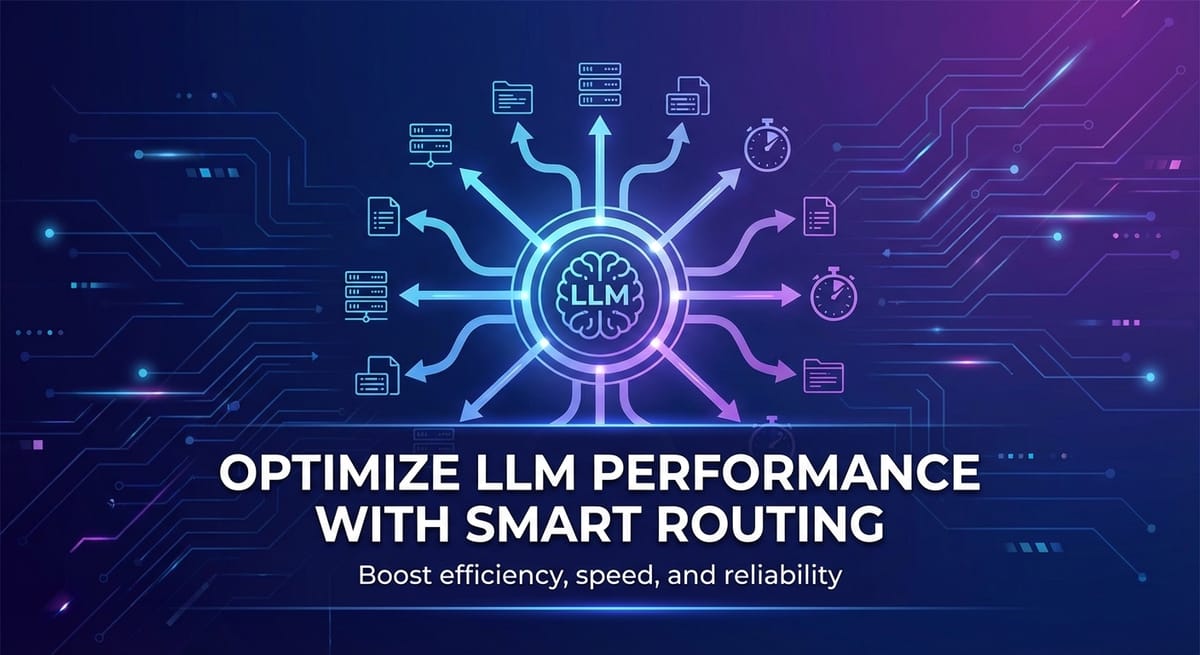
In a world increasingly reliant on diverse and ever-evolving LLMs, the concept of LLM routing has emerged as a cornerstone of efficient and scalable AI infrastructure. Far beyond simple load balancing, smart LLM routing is a sophisticated mechanism that dynamically directs incoming requests to the most suitable Large Language Model or provider based on a predefined set of criteria, real-time metrics, and business logic. It acts as an intelligent traffic controller for your AI operations, ensuring optimal resource utilization and delivering superior outcomes.
What is LLM Routing?
At its core, LLM routing involves placing an intelligent intermediary layer between your application and the various LLM endpoints you wish to utilize. Instead of your application making direct, hardcoded calls to a specific model, it sends requests to this routing layer. The router then evaluates the request, assesses the available models/providers, and forwards the request to the best-fit destination.
This "best-fit" determination can be based on a myriad of factors, including:
- Request Characteristics: Input length, complexity, semantic intent, keywords, language.
- Performance Metrics: Real-time latency, throughput, error rates of available models.
- Cost Considerations: Current token pricing, budget constraints.
- Model Capabilities: Specialization (e.g., code generation vs. creative writing), fine-tuning.
- Reliability: Uptime, availability, failover priorities.
- User Context: User role, subscription tier, geographic location.
Why Is LLM Routing Crucial Now?
The necessity for intelligent LLM routing stems directly from the challenges outlined earlier and the evolving nature of the LLM ecosystem itself:
- Explosion of Models and Providers: The market is saturated with options—from OpenAI's GPT series to Google's Gemini, Anthropic's Claude, Meta's Llama, and many others. Each has distinct strengths, weaknesses, and pricing. Manually managing this diversity for every application becomes untenable.
- Dynamic Pricing and Performance: Model costs and performance characteristics are not static. Providers adjust pricing, introduce new tiers, and experience varying loads. Without dynamic routing, applications are locked into potentially suboptimal choices.
- Preventing Vendor Lock-in: Relying solely on one provider exposes businesses to risks of price hikes, service changes, or outages without immediate alternatives. Routing allows for easy switching or simultaneous use of multiple vendors.
- Enabling Advanced Strategies: Routing makes sophisticated strategies like failover, A/B testing, and progressive rollouts of new models seamless.
- Simplified Development: Developers can write code against a single, consistent API endpoint, abstracting away the complexities of integrating with multiple, disparate LLM providers. This significantly reduces development time and technical debt.
- Granular Control and Visibility: A routing layer provides a central point for monitoring, logging, and applying policies across all LLM interactions, offering unparalleled control and insights into usage patterns and costs.
Differentiating "Smart" Routing from Simple Load Balancing
It's important to distinguish between basic load balancing and "smart" LLM routing.
- Simple Load Balancing: Typically distributes incoming requests across a pool of identical backend servers to ensure even distribution and prevent any single server from becoming overloaded. Its primary goal is distribution and basic resilience.
- Smart LLM Routing: Operates on a much more intelligent and contextual level. It doesn't just distribute; it decides. It might route a request for simple summarization to a low-cost, fast model, while a complex code generation request goes to a more powerful, potentially more expensive model. It actively optimizes for specific goals (cost, performance, quality) rather than just distributing uniformly. This often involves real-time monitoring and advanced decision-making logic.
In essence, LLM routing is the strategic backbone that allows organizations to navigate the complexities of the LLM landscape, transforming potential hurdles into opportunities for unparalleled performance optimization and cost optimization. It's the key to building truly resilient, efficient, and intelligent AI applications that can adapt and thrive in a constantly evolving technological frontier.
Key Benefits of Smart LLM Routing: Unlocking Efficiency and Excellence
Implementing a smart LLM routing strategy yields a multitude of profound benefits that directly address the core challenges of LLM deployment. By intelligently orchestrating requests, businesses can achieve a higher degree of efficiency, resilience, and adaptability, transforming their AI initiatives from costly experiments into robust, value-generating assets.
1. Unprecedented Performance Optimization
Smart routing is a powerful lever for performance optimization, ensuring that your applications are consistently fast, responsive, and scalable.
- Reduced Latency:
- Dynamic Model Selection: By monitoring real-time latency across various LLMs and providers, the router can automatically direct requests to the fastest available endpoint for a given task, even if that changes from minute to minute.
- Task-Specific Model Matching: Simple, short queries can be routed to smaller, faster, and often cheaper models, reserving larger models for complex, latency-tolerant tasks. This prevents powerful models from being tied up with trivial requests.
- Geographic Proximity: Routing requests to data centers closer to the user or application server minimizes network latency, providing a snappier response time.
- Increased Throughput:
- Load Balancing Across Providers: Requests can be distributed across multiple LLM providers and models, effectively sharding the load and preventing any single endpoint from being overwhelmed. This significantly enhances the total capacity of your AI infrastructure.
- Rate Limit Management: The router can intelligently manage and respect the API rate limits of different providers, queuing requests or switching to alternative models when a limit is approached, thereby avoiding errors and ensuring continuous service.
- Enhanced Reliability and Uptime:
- Automated Failover: If a primary LLM endpoint or provider experiences an outage, performance degradation, or returns an error, the router can automatically and seamlessly redirect the request to a pre-configured backup model or provider. This creates a resilient system that minimizes downtime and maintains service continuity.
- Proactive Monitoring: Continuous monitoring of model health and response times allows the router to anticipate issues and reroute traffic before a complete failure occurs, turning potential disruptions into transparent switches.
- Circuit Breaking: Implementing circuit breakers prevents repeated calls to failing services, protecting your application from cascading failures and allowing the faulty service time to recover.
2. Significant Cost Optimization
Perhaps one of the most compelling advantages of smart routing is its ability to dramatically reduce operational expenses related to LLM usage. Cost optimization strategies embedded within the routing logic ensure that you always get the best value for your AI spend.
- Dynamic Price-Based Routing: The router can continuously track the real-time token pricing of various models and providers. For tasks where model quality is comparable, it can automatically select the cheapest available option, leading to substantial savings, especially at scale.
- Tiered Model Usage: By defining clear rules, simpler or less critical tasks can be routed to less expensive models, while complex, high-value tasks are reserved for premium, higher-cost models. This "right-sizing" of models to tasks avoids overspending.
- Budget Management and Quotas: Centralized routing allows for the implementation of global or per-project budget caps. Once a spending threshold is reached for a particular model or provider, the router can automatically switch to a cheaper alternative, throttle requests, or alert administrators.
- Preventing Wasteful Usage: By optimizing for response length (e.g., using models that are more concise for specific tasks) or detecting and preventing redundant calls, routing can directly reduce the number of tokens consumed.
- Avoiding Vendor Lock-in: By making it easy to switch or distribute load across multiple providers, businesses gain leverage and can negotiate better terms, knowing they have viable alternatives.
3. Enhanced Flexibility and Scalability
Smart routing doesn't just optimize existing setups; it future-proofs your AI infrastructure, making it inherently more flexible and capable of scaling with demand.
- Seamless Model Integration: New LLMs, fine-tuned models, or updates from providers can be integrated into your routing system with minimal disruption to your application code. This allows for rapid experimentation and adoption of the latest advancements.
- Effortless A/B Testing: Routing rules can be configured to send a small percentage of traffic to a new model or prompt variation, allowing for real-world A/B testing and performance evaluation without impacting the main user base.
- Simplified Application Development: Developers interact with a single, unified API endpoint, abstracting away the complexities of multiple LLM providers. This reduces boilerplate code, speeds up development cycles, and allows engineers to focus on application logic rather than API integrations.
- Scalability on Demand: As user demand grows, the routing layer can dynamically scale by distributing requests across an increasing number of models and providers, ensuring that your AI application can handle peak loads without degradation.
4. Improved Observability and Control
A centralized routing layer offers a vantage point for monitoring and managing your entire LLM ecosystem.
- Centralized Logging and Analytics: All LLM requests and responses pass through the router, providing a single source of truth for logging, performance metrics, and cost data. This allows for comprehensive analysis of usage patterns, error rates, and spending.
- Granular Policy Enforcement: Implement security policies, content moderation, and usage restrictions at a central point, ensuring consistent governance across all LLM interactions.
- Developer Empowerment: Provides developers with a powerful tool to experiment with different models and prompts without significant code changes, fostering innovation.
By delivering substantial improvements in performance optimization and cost optimization, alongside greater flexibility, reliability, and control, smart LLM routing is rapidly becoming an indispensable component for any organization serious about maximizing the value and impact of their large language model investments.
XRoute is a cutting-edge unified API platform designed to streamline access to large language models (LLMs) for developers, businesses, and AI enthusiasts. By providing a single, OpenAI-compatible endpoint, XRoute.AI simplifies the integration of over 60 AI models from more than 20 active providers(including OpenAI, Anthropic, Mistral, Llama2, Google Gemini, and more), enabling seamless development of AI-driven applications, chatbots, and automated workflows.
Strategies for Effective LLM Routing: A Comprehensive Toolkit
Implementing smart LLM routing involves choosing from various strategies, often combining them to create a robust and highly optimized system. The best approach depends on your specific application requirements, budget, performance goals, and the characteristics of the LLMs you intend to use. Here, we explore the primary routing strategies and their applications.
1. Rule-Based Routing
This is often the simplest and most straightforward routing strategy, relying on predefined conditions or logic to direct requests.
- How it Works: Rules are set based on static attributes of the incoming request or application context.
- Criteria Examples:
- Input Length: Route short queries (e.g., less than 50 tokens) to a fast, cheap model; route longer, more complex inputs to a powerful, expensive model.
- Keywords/Intent: If the prompt contains specific keywords (e.g., "code generation," "summarize," "translate"), route to a model known for excellence in that particular task.
- User Role/Tier: Premium users might get routed to a higher-quality, lower-latency model, while free-tier users get a standard or more cost-effective option.
- Application Context: Route requests from a "chatbot" module to a conversational model, and requests from a "content generation" module to a creative writing model.
- Sentiment/Language: Route to specialized models for specific language processing tasks.
- Benefits: Easy to implement, predictable, good for clear task differentiation.
- Drawbacks: Lacks dynamic adaptability, requires manual updates as models or requirements change.
2. Latency-Based Routing
This strategy focuses purely on speed, aiming to minimize response times by directing requests to the fastest available LLM endpoint.
- How it Works: The routing layer continuously monitors the real-time latency (TTFT and TTC) of all integrated LLM models/endpoints. When a request comes in, it's sent to the endpoint currently exhibiting the lowest latency.
- Benefits: Maximizes responsiveness, ideal for real-time interactive applications where speed is paramount. Directly contributes to performance optimization.
- Drawbacks: May not consider cost or quality. A fast but expensive model might be chosen even if a slightly slower, much cheaper model would suffice for the task.
- Implementation: Requires sophisticated monitoring infrastructure to collect and update latency data continuously.
3. Cost-Based Routing
As the name suggests, this strategy prioritizes minimizing expenditure by selecting the most economical LLM for a given request. This is a core component of cost optimization.
- How it Works: The router tracks the current token pricing (input and output) from all providers. For each request, it identifies models capable of fulfilling the task and then selects the one with the lowest projected cost.
- Benefits: Directly reduces operational expenses, particularly valuable for high-volume, cost-sensitive applications.
- Drawbacks: May not always prioritize quality or speed. The cheapest model might be slightly slower or produce marginally less optimal results.
- Implementation: Requires up-to-date pricing data from all providers and intelligent estimation of output token count.
4. Quality-Based Routing (Advanced)
This is one of the more complex but potentially most rewarding strategies, aiming to deliver the best possible output quality.
- How it Works: This strategy often involves more sophisticated logic:
- Pre-defined Model Strengths: Route requests based on known strengths of models (e.g., Model A is known for creative writing, Model B for factual summarization).
- Small Evaluation Models: In some advanced scenarios, a small, fast model might first evaluate the input and recommend the best LLM for the task, or even evaluate the output of multiple models before sending the "best" one back.
- A/B Testing with Human Feedback: Gradually route traffic to new models, collect human feedback on output quality, and use this data to refine routing rules.
- Benefits: Ensures high-quality outputs, leading to better user satisfaction and more effective AI applications.
- Drawbacks: Difficult to implement and automate accurately. "Quality" is subjective and hard to measure programmatically in real-time. Can introduce additional latency if intermediate evaluation steps are required.
5. Load Balancing and Capacity-Based Routing
This strategy is about distributing requests evenly or intelligently to prevent any single LLM endpoint from becoming overloaded.
- How it Works: Similar to traditional load balancing, but with the added intelligence of LLM routing. Requests are distributed across multiple available models or providers to prevent any single one from hitting its rate limits or capacity constraints. This can be round-robin, least-connections, or weighted based on model capacity.
- Benefits: Improves throughput, enhances reliability, and prevents service degradation during peak usage. A key aspect of performance optimization.
- Drawbacks: Requires a pool of interchangeable models or endpoints.
6. Failover Routing
A critical strategy for ensuring high availability and resilience.
- How it Works: A primary LLM model or provider is designated. If it fails to respond, returns an error, or experiences unacceptable latency, the request is automatically rerouted to a pre-configured secondary (backup) model or provider.
- Benefits: Guarantees service continuity, minimizes downtime, and significantly improves the reliability of AI applications. Essential for mission-critical systems.
- Drawbacks: The backup model might be more expensive or slightly lower quality, requiring careful configuration of failover priorities.
7. Hybrid Routing Strategies
Most sophisticated LLM routing solutions employ a combination of the above strategies, dynamically adapting to real-time conditions.
- Example:
- First, apply rule-based routing: If the request is for "code generation," route to Model X.
- Then, apply cost-based routing: If multiple models can perform "summarization" adequately, choose the cheapest.
- Finally, apply latency-based routing (with failover): If the chosen model is experiencing high latency or an outage, switch to the next fastest/cheapest available option.
This layered approach allows for fine-grained control and maximum optimization across all critical dimensions.
Table 1: Comparison of LLM Routing Strategies
| Routing Strategy | Primary Goal | Key Benefit | Key Drawback | Ideal Use Cases |
|---|---|---|---|---|
| Rule-Based | Task/Context Matching | Simple to implement, predictable | Lacks dynamic adaptability, static | Differentiating tasks (e.g., short Q&A vs. long text gen), user tiers |
| Latency-Based | Minimize Response Time | Maximize responsiveness, user experience | May ignore cost/quality, requires real-time monitoring | Real-time chatbots, interactive UI elements, voice assistants |
| Cost-Based | Minimize Expenditure | Significant cost optimization | May sacrifice speed/quality, requires price tracking | High-volume batch processing, budget-constrained applications, non-critical tasks |
| Quality-Based | Maximize Output Quality | Superior results, higher user satisfaction | Complex to implement, subjective, can add latency | Creative writing, legal document analysis, medical applications (where accuracy is paramount) |
| Load Balancing/Capacity | Distribute Traffic, Prevent Overload | High throughput, scalability | Requires multiple capable endpoints, less "smart" | High-traffic APIs, applications with fluctuating demand |
| Failover | Ensure Availability and Reliability | Business continuity, resilience | Requires backup resources, potential cost increase | Mission-critical applications, any system where downtime is unacceptable |
| Hybrid | Optimal balance of all factors | Comprehensive optimization, highly adaptive | Most complex to design and maintain | Any sophisticated AI application with diverse requirements and high stakes |
By strategically combining these routing methodologies, organizations can build a resilient, efficient, and highly intelligent LLM infrastructure that is continuously optimized for performance optimization and cost optimization, while maintaining high quality and reliability.
Implementing Smart Routing Solutions: Build vs. Buy
Once the strategic importance of LLM routing is understood, the next critical step is implementation. Organizations typically face a "build vs. buy" decision: develop an in-house routing solution or leverage a specialized platform. Both approaches have their merits and challenges.
The "Build" Approach: Developing In-House
Building a custom LLM routing solution offers maximum control and customization. It involves architecting and developing several core components:
Components of an In-House Routing System:
- API Gateway/Proxy:
- Acts as the single entry point for all LLM requests from your applications.
- Handles authentication, rate limiting, and basic request validation before passing to the routing logic.
- Can perform request and response transformations to normalize data across different LLM provider APIs.
- Routing Logic Engine:
- The brain of the system, implementing the chosen routing strategies (rule-based, latency-based, cost-based, failover, hybrid).
- Needs access to real-time data (model prices, latencies, availability) to make informed decisions.
- Could involve a simple
if-elsecascade or a more sophisticated machine learning model for dynamic optimization.
- Model Adapters/Connectors:
- Abstracts away the differences between various LLM provider APIs (e.g., OpenAI, Anthropic, Google, open-source models).
- Translates incoming requests into the specific format required by each model and parses responses back into a unified format.
- Manages API keys and credentials securely.
- Monitoring and Analytics System:
- Collects real-time metrics on latency, throughput, error rates, token usage, and costs for each LLM endpoint.
- Visualizes data through dashboards to provide insights into performance and spending.
- Triggers alerts for performance degradation, outages, or budget overruns.
- Configuration and Policy Management:
- A centralized system to define and manage routing rules, model priorities, failover sequences, budget limits, and other operational policies.
Pros of Building In-House:
- Ultimate Customization: Tailor the solution precisely to your unique needs, integrating deeply with existing infrastructure.
- Full Control: Retain complete ownership over data, security, and intellectual property.
- No Vendor Dependence: Avoid reliance on external platforms, though you still depend on LLM providers.
Cons of Building In-House:
- Significant Development Effort: Requires a dedicated team of engineers, substantial time, and ongoing maintenance.
- High Initial Cost: Investment in development, testing, and deployment.
- Ongoing Maintenance: Keeping up with API changes from various LLM providers, evolving performance metrics, security updates, and bug fixes is a continuous task.
- Reinventing the Wheel: Many components (API gateway, monitoring, adapter patterns) are common challenges that external solutions have already solved.
- Complexity at Scale: As the number of models, providers, and routing rules grows, managing an in-house solution can become exceedingly complex.
The "Buy" Approach: Leveraging Specialized Platforms
For many organizations, especially those focused on rapid deployment and minimizing operational overhead, leveraging a specialized LLM routing platform is a more attractive option. These platforms abstract away much of the complexity, offering robust, pre-built solutions.
Key Features of Specialized Platforms:
- Unified API Endpoint: A single, consistent API that your applications interact with, regardless of the underlying LLM model or provider. Often OpenAI-compatible for easy migration.
- Pre-built Integrations: Ready-to-use connections to a wide array of LLM models from multiple providers (e.g., OpenAI, Anthropic, Google, open-source).
- Advanced Routing Logic: Out-of-the-box support for various routing strategies (cost-based, latency-based, failover, rule-based) with intuitive configuration interfaces.
- Real-time Monitoring & Analytics: Comprehensive dashboards for tracking usage, performance, costs, and error rates across all LLM interactions.
- Security & Compliance: Built-in features for API key management, data privacy, and often compliance with industry standards.
- Developer-Friendly Tools: SDKs, documentation, and sometimes CLI tools to simplify integration and management.
- Scalability & Reliability: Designed from the ground up to handle high throughput, provide high availability, and automatically manage failovers.
Pros of Buying a Solution:
- Faster Time-to-Market: Get up and running quickly without extensive development.
- Reduced Development & Maintenance Burden: Offload the complexities of integrating and managing multiple APIs to the platform provider.
- Expertise & Best Practices: Benefit from the platform provider's deep expertise in LLM orchestration, security, and performance optimization.
- Cost-Effective (Total Cost of Ownership): While there are subscription fees, the total cost of ownership (TCO) is often lower than building and maintaining a custom solution, especially considering engineering salaries and opportunity costs. Direct contribution to cost optimization.
- Focus on Core Business: Allows your engineering teams to concentrate on developing core application features rather than infrastructure.
Cons of Buying a Solution:
- Less Customization: May not offer the exact level of granular control or bespoke features that an in-house solution could provide.
- Vendor Dependence: Rely on the platform provider for updates, support, and feature development.
- Potential for Cost Overruns: If not carefully managed, platform fees can accumulate, especially with high usage.
The XRoute.AI Solution: A Prime Example of "Buy"
For organizations looking to rapidly deploy and optimize their LLM integrations without the heavy lifting of building an in-house routing system, a platform like XRoute.AI stands out as an exemplary "buy" solution.
XRoute.AI is a cutting-edge unified API platform designed to streamline access to large language models (LLMs) for developers, businesses, and AI enthusiasts. By providing a single, OpenAI-compatible endpoint, XRoute.AI simplifies the integration of over 60 AI models from more than 20 active providers, enabling seamless development of AI-driven applications, chatbots, and automated workflows.
Key features of XRoute.AI directly address the challenges of LLM management:
- Unified Access: Offers a single API endpoint, eliminating the need to manage multiple provider APIs and SDKs. This is an enormous boost to developer efficiency.
- Extensive Model Coverage: Supports a vast array of models from leading providers, allowing users to select the best model for any given task without complex re-integration.
- Smart Routing Capabilities: XRoute.AI enables intelligent LLM routing to optimize for low latency AI and cost-effective AI. This means requests are dynamically directed to the best-performing and most economical models in real-time, directly contributing to performance optimization and cost optimization.
- Developer-Friendly: Its OpenAI-compatible endpoint ensures a familiar development experience, significantly reducing the learning curve and integration time.
- High Throughput & Scalability: The platform is built to handle high volumes of requests and scale seamlessly, providing the robust infrastructure needed for enterprise-level applications.
- Focus on Value: XRoute.AI empowers users to build intelligent solutions without the complexity of managing multiple API connections, allowing them to focus on innovation and product development.
In essence, XRoute.AI exemplifies how a specialized platform can provide a powerful, ready-to-use solution for LLM routing, dramatically accelerating time-to-market, reducing operational costs, and ensuring optimal LLM performance optimization and cost optimization from day one. It transforms the daunting task of multi-model orchestration into a manageable, efficient process, allowing businesses to fully leverage the power of LLMs.
Case Studies and Real-World Applications of Smart LLM Routing
The theoretical benefits of smart LLM routing translate into tangible advantages across a myriad of real-world applications. By intelligently managing how requests are processed, organizations can achieve significant improvements in user experience, operational efficiency, and profitability. Here are several illustrative case studies demonstrating the impact of smart routing.
1. Enhancing Customer Support Chatbots
Challenge: A large e-commerce company operates a customer support chatbot that handles millions of inquiries daily. Queries range from simple FAQ lookups (e.g., "What's my order status?") to complex problem-solving (e.g., "My package is missing, and I need a refund"). Relying on a single, expensive LLM for all queries led to high costs and occasional latency for simple requests.
Smart Routing Solution: * Rule-Based & Cost-Based Routing: Implement rules to analyze incoming chat messages. * Simple, keyword-based queries (e.g., "order status," "return policy") are routed to a smaller, faster, and significantly cheaper LLM (e.g., a fine-tuned open-source model or a lower-tier proprietary model). * Complex, multi-turn conversations or queries requiring advanced reasoning (e.g., "investigate my lost package," "help me choose a product") are routed to a more powerful, higher-cost LLM (e.g., GPT-4, Claude 3 Opus). * Failover Routing: If the primary LLM for complex queries experiences an outage or severe latency, requests are automatically redirected to a secondary, perhaps slightly less performant but reliable, alternative. * Latency-Based Routing: For high-priority customers, all queries might be routed to the lowest-latency available model, regardless of cost, to ensure premium service.
Outcome: * Cost Optimization: Achieved a 40% reduction in LLM API costs by intelligently offloading simple queries to cheaper models. * Performance Optimization: Improved average response time for simple queries by 25%, leading to higher customer satisfaction. * Improved User Experience: Users received faster, more relevant responses, reducing frustration and decreasing the need for human agent intervention.
2. Streamlining Content Generation Platforms
Challenge: A digital marketing agency developed a platform for generating various types of marketing content (blog posts, social media captions, ad copy). Different content types require different creative strengths and lengths. Manually switching between LLM providers or models was cumbersome and inefficient.
Smart Routing Solution: * Rule-Based & Quality-Based Routing: * Social Media Captions/Short Ad Copy: Routed to models known for conciseness and punchy output, potentially cheaper models. * Long-Form Blog Posts/Detailed Product Descriptions: Routed to highly capable models (e.g., GPT-4, Claude 3) known for coherence, creativity, and longer context windows. * SEO Keyword Integration: Specific requests for SEO-optimized content trigger routing to models previously fine-tuned or demonstrated to excel at keyword density and natural language integration. * A/B Testing with Routing: New prompt engineering techniques or emerging LLMs are A/B tested by routing a small percentage of content generation requests to them, comparing output quality (human review or automated metrics) before full deployment.
Outcome: * Enhanced Content Quality: Consistency in output quality improved as tasks were matched with specialized models. * Increased Efficiency: Reduced manual effort in selecting models, accelerating content creation workflows. * Cost Optimization: Avoided using expensive, powerful models for tasks where a cheaper alternative delivered sufficient quality, leading to a 20% cost saving per content piece.
3. Optimizing Code Generation and Analysis Tools
Challenge: A software development company integrated LLMs into their IDE for code completion, bug detection, and refactoring suggestions. Different programming languages and code complexities demand varying LLM capabilities. The goal was to provide quick, accurate suggestions without excessive costs.
Smart Routing Solution: * Rule-Based (Language/Task Specific) & Latency-Based Routing: * Code Completion (Short Snippets): Routed to highly optimized, low-latency models known for specific languages (e.g., Python, JavaScript) to provide instant suggestions. * Bug Detection/Refactoring (Larger Code Blocks): Routed to more powerful models with larger context windows and stronger reasoning capabilities, even if slightly more expensive or slower, to ensure thorough analysis. * New Language Support: When supporting a new language, traffic is routed to models specifically trained or fine-tuned for that language. * Load Balancing: As developers concurrently use the tool, requests are distributed across multiple models and providers to prevent any single endpoint from becoming a bottleneck, ensuring consistent performance optimization.
Outcome: * Improved Developer Productivity: Faster and more accurate code suggestions reduced development time. * Cost Optimization: Smart routing ensured that expensive models were only used when necessary for complex tasks, leading to better resource allocation. * Enhanced User Experience: Developers experienced a responsive tool tailored to their specific coding needs.
4. Data Analysis and Extraction for Financial Services
Challenge: A financial firm used LLMs to extract key data points from diverse, unstructured financial documents (e.g., earnings reports, regulatory filings, news articles). Accuracy and speed were paramount, but data sensitivity also required specific models or hosting environments.
Smart Routing Solution: * Rule-Based (Data Sensitivity) & Quality-Based Routing: * Publicly Available Data (e.g., news articles): Routed to general-purpose, cost-effective LLMs for initial extraction and summarization. * Confidential/Proprietary Data (e.g., internal reports, client portfolios): Routed to models hosted in secure, private cloud environments or specifically chosen for their enhanced security and compliance features, potentially bypassing public APIs altogether. * Specific Data Extraction (e.g., extracting precise financial figures): Directed to models known for high accuracy in named entity recognition and numerical extraction, sometimes with an additional validation step using a smaller LLM. * Failover & Redundancy: Multiple secure models/providers are configured for confidential data processing to ensure high availability and prevent data processing delays.
Outcome: * Data Security & Compliance: Ensured sensitive data was processed in appropriate, secure environments. * Accuracy Improvement: Leveraging specialized models for specific extraction tasks led to higher accuracy in data capture. * Performance Optimization: Reduced overall processing time by parallelizing tasks and routing based on the specific extraction needs.
These case studies highlight the versatility and power of smart LLM routing. By strategically managing the flow of AI requests, organizations can achieve a delicate balance between performance optimization and cost optimization, ultimately building more resilient, efficient, and impactful AI-powered solutions across a wide range of industries and applications. Solutions like XRoute.AI provide the foundational platform to enable such sophisticated routing strategies without the heavy burden of in-house development.
The Future of LLM Management: Trends and Innovations
The field of Large Language Models is evolving at an unprecedented pace, and with it, the strategies for managing and optimizing their deployment. As LLMs become more integrated into enterprise workflows and consumer applications, the importance of sophisticated management tools, particularly LLM routing solutions, will only intensify. Several key trends and innovations are poised to shape the future of LLM management.
1. AI-Driven Routing Intelligence
Current smart routing often relies on predefined rules, real-time metrics, or basic heuristics. The future will see more advanced, AI-driven routing mechanisms.
- Machine Learning for Routing Decisions: Instead of static rules, an ML model could learn from historical usage data (latency, cost, quality of output, user satisfaction) to predict the optimal LLM for a given request in real-time. This would enable highly adaptive and predictive routing.
- Reinforcement Learning: Routing agents could use reinforcement learning to continuously optimize routing decisions based on feedback loops, evolving their strategies to minimize costs or maximize performance over time.
- Proactive Performance Prediction: AI models could predict potential slowdowns or outages from providers based on historical patterns and current network conditions, rerouting traffic before an issue impacts users.
This shift will make performance optimization and cost optimization even more dynamic and efficient, pushing beyond what static rules can achieve.
2. Enhanced Model Specialization and Fine-tuning
As LLMs proliferate, so will their specialization. We'll see:
- Hyper-Specialized Models: Smaller, highly efficient models fine-tuned for very specific tasks (e.g., legal document summarization, medical diagnostic support, code generation for a particular framework).
- Mixture of Experts (MoE) Architectures: These models inherently route sub-tasks to different "expert" sub-networks. Routing external requests to MoE models will become a common strategy, letting the internal model handle further distribution.
- Personalized Models: Fine-tuned models that learn from individual user preferences or enterprise data. Routing could involve selecting the right personalized model for each user or team.
LLM routing will become critical in orchestrating these specialized models, ensuring the right expert is always chosen for the job, thus maximizing output quality and efficiency.
3. Integrated Governance and Compliance
As LLMs handle increasingly sensitive data, governance, security, and compliance will become paramount. Future routing solutions will integrate these aspects more deeply.
- Data Residency and Sovereignty: Routing decisions will increasingly consider where data is processed and stored, ensuring compliance with regional regulations (e.g., GDPR, CCPA).
- Content Moderation at the Edge: Routing layers could incorporate real-time content moderation models to filter prompts or responses before they reach the main LLM or the end-user, enhancing safety and compliance.
- Audit Trails and Traceability: Advanced logging and auditing capabilities will be built into routing platforms, providing clear trails of which model processed which request, when, and under what conditions, crucial for accountability.
4. Unified Platforms as the Standard
The "buy" approach for LLM management will become the de facto standard, with platforms offering comprehensive solutions.
- Consolidated Management: Platforms will evolve to offer not just routing but also prompt management, model versioning, output evaluation, and budget control all within a single interface.
- Open-Source and Proprietary Integration: Unified API platforms will continue to bridge the gap between open-source models (often self-hosted) and proprietary cloud APIs, offering seamless orchestration across the entire spectrum.
- Interoperability Standards: Efforts to standardize LLM APIs will simplify integration, further empowering routing platforms to offer broader compatibility and easier switching between models.
Solutions like XRoute.AI are at the forefront of this trend, providing a "unified API platform" that abstract away complexities, making "low latency AI" and "cost-effective AI" accessible and manageable for a wide range of users. Their focus on an "OpenAI-compatible endpoint" is a testament to the future of simplified, standardized LLM integration.
5. Edge AI and Hybrid Deployments
The future of LLMs won't be exclusively cloud-based.
- Edge Computing Integration: Smaller, specialized LLMs will increasingly run on edge devices (e.g., smartphones, IoT devices). Routing decisions will need to consider whether a task can be processed locally on the device (for instant response and privacy) or requires offloading to a cloud-based LLM.
- Hybrid Cloud/On-Premise Routing: Enterprises with strict data security or compliance needs will deploy LLMs on-premise or in private clouds. Routing solutions will need to intelligently direct traffic between these private instances and public cloud models.
This hybrid approach will add another layer of complexity and opportunity for LLM routing to optimize for performance, cost, and data sovereignty.
In conclusion, the future of LLM management is one of increasing sophistication, driven by the need for greater efficiency, resilience, and control. Smart LLM routing will not just be a feature but a fundamental component of any successful AI strategy, evolving to meet the demands of an ever-changing technological landscape and empowering organizations to unlock the full, transformative potential of large language models. The emphasis will remain firmly on achieving superior performance optimization and cost optimization through intelligent, adaptive, and comprehensive orchestration.
Conclusion: Mastering the LLM Landscape with Smart Routing
The age of Large Language Models has dawned, promising unparalleled opportunities for innovation, automation, and enhanced intelligence across every sector. Yet, realizing this promise hinges not just on the raw power of these models, but on the strategic brilliance with which they are deployed and managed. As we have explored in depth, the inherent complexities of LLMs—from their fluctuating performance and escalating costs to the challenges of multi-model integration and ensuring robust reliability—demand a sophisticated solution. That solution is unequivocally smart LLM routing.
Intelligent LLM routing serves as the indispensable orchestration layer, acting as a dynamic conductor for your AI orchestra. It empowers organizations to navigate the intricate landscape of numerous models and providers, making real-time, data-driven decisions that balance speed, accuracy, and economy. Through its various strategies—be it rule-based, latency-driven, cost-focused, or quality-centric—smart routing actively transforms potential bottlenecks into pathways for efficiency and excellence.
The benefits are clear and profound:
- Unrivaled Performance Optimization: By dynamically selecting the fastest and most responsive models, smart routing drastically reduces latency and boosts throughput, delivering seamless user experiences even under heavy loads.
- Significant Cost Optimization: Through intelligent price-based model selection, tiered usage strategies, and proactive budget management, it ensures that every dollar spent on LLMs delivers maximum value, preventing wasteful expenditure and unlocking substantial savings.
- Enhanced Reliability and Resilience: Automated failover mechanisms and proactive monitoring guarantee continuous service, protecting your applications from outages and maintaining unwavering availability.
- Unprecedented Flexibility and Scalability: It abstracts away integration complexities, allowing for rapid experimentation, effortless scaling, and future-proofing your AI infrastructure against technological shifts and growing demands.
For developers, businesses, and AI enthusiasts, the choice is becoming increasingly evident. The days of hardcoding specific LLM API calls are giving way to a more intelligent, adaptive paradigm. Whether you opt to build a bespoke routing solution or, more commonly, to leverage robust, specialized platforms, the objective remains the same: to unlock the full potential of your LLM investments.
Platforms like XRoute.AI represent the vanguard of this new era. By offering a unified, OpenAI-compatible API that integrates a vast ecosystem of models, XRoute.AI significantly simplifies the journey toward achieving "low latency AI" and "cost-effective AI." It is precisely these kinds of cutting-edge solutions that enable developers to build intelligent applications and automated workflows without getting bogged down in the complexities of managing diverse APIs, allowing them to focus on innovation and delivering tangible value.
In a world where LLMs are no longer a luxury but a strategic imperative, mastering their management through smart routing is not just an advantage—it is a necessity. Embrace smart LLM routing, and you will not only optimize your AI performance and costs but also forge a future of resilient, scalable, and truly intelligent applications. The path to sustained success in the LLM-driven future is paved with intelligent orchestration.
Frequently Asked Questions (FAQ)
1. What is LLM routing and why is it important for my applications?
LLM routing is a system that intelligently directs your application's requests to the most suitable Large Language Model (LLM) or provider based on various criteria such as cost, performance, task type, or reliability. It's crucial because it allows you to dynamically optimize for specific goals, avoid vendor lock-in, ensure continuous service through failover, and significantly reduce operational costs and improve user experience by choosing the best model for each query in real-time.
2. How does smart LLM routing contribute to cost savings?
Smart routing achieves cost optimization by implementing strategies like: * Price-based selection: Automatically choosing the cheapest available model that meets your quality/performance requirements. * Tiered usage: Routing simple, less critical tasks to smaller, more affordable models, reserving expensive, powerful models for complex, high-value tasks. * Budget enforcement: Setting limits and switching to cheaper alternatives once a budget threshold is approached. This prevents overspending and ensures efficient resource allocation.
3. Can LLM routing improve my application's reliability and performance?
Absolutely. Performance optimization and reliability are core benefits. * Reliability: By implementing failover mechanisms, if your primary LLM model or provider experiences an outage or performance degradation, requests are automatically rerouted to a backup, ensuring continuous service and minimizing downtime. * Performance: Routing can reduce latency by directing requests to the fastest available endpoint, and increase throughput by distributing load across multiple models and providers, preventing bottlenecks during peak usage.
4. Is it better to build my own LLM routing solution or use a specialized platform?
The "build vs. buy" decision depends on your resources, expertise, and specific needs. * Building in-house offers maximum customization and control but requires significant development effort, ongoing maintenance, and expertise in API management, monitoring, and AI orchestration. * Using a specialized platform (like XRoute.AI) provides a ready-to-use solution with pre-built integrations, advanced routing logic, monitoring, and scalability, significantly reducing development time and operational burden. For most organizations, leveraging a platform is more cost-effective AI and faster time-to-market.
5. What are the key factors to consider when choosing an LLM routing strategy?
When selecting an LLM routing strategy, consider these factors: * Your primary goal: Is it primarily cost optimization, performance optimization (low latency, high throughput), output quality, or reliability? * Application type: Real-time interactive applications prioritize latency, while batch processing might prioritize cost. * Task complexity: Simple tasks can use cheaper models; complex tasks require powerful ones. * Data sensitivity: Some data might require specific secure models or on-premise solutions. * Budget constraints: How much are you willing to spend, and what are your cost-saving targets? Often, a hybrid strategy combining rules, real-time metrics, and failover is the most effective approach.
🚀You can securely and efficiently connect to thousands of data sources with XRoute in just two steps:
Step 1: Create Your API Key
To start using XRoute.AI, the first step is to create an account and generate your XRoute API KEY. This key unlocks access to the platform’s unified API interface, allowing you to connect to a vast ecosystem of large language models with minimal setup.
Here’s how to do it: 1. Visit https://xroute.ai/ and sign up for a free account. 2. Upon registration, explore the platform. 3. Navigate to the user dashboard and generate your XRoute API KEY.
This process takes less than a minute, and your API key will serve as the gateway to XRoute.AI’s robust developer tools, enabling seamless integration with LLM APIs for your projects.
Step 2: Select a Model and Make API Calls
Once you have your XRoute API KEY, you can select from over 60 large language models available on XRoute.AI and start making API calls. The platform’s OpenAI-compatible endpoint ensures that you can easily integrate models into your applications using just a few lines of code.
Here’s a sample configuration to call an LLM:
curl --location 'https://api.xroute.ai/openai/v1/chat/completions' \
--header 'Authorization: Bearer $apikey' \
--header 'Content-Type: application/json' \
--data '{
    "model": "gpt-5",
    "messages": [
        {
            "content": "Your text prompt here",
            "role": "user"
        }
    ]
}'
With this setup, your application can instantly connect to XRoute.AI’s unified API platform, leveraging low latency AI and high throughput (handling 891.82K tokens per month globally). XRoute.AI manages provider routing, load balancing, and failover, ensuring reliable performance for real-time applications like chatbots, data analysis tools, or automated workflows. You can also purchase additional API credits to scale your usage as needed, making it a cost-effective AI solution for projects of all sizes.
Note: Explore the documentation on https://xroute.ai/ for model-specific details, SDKs, and open-source examples to accelerate your development.