Seamless Connectivity: OpenClaw Multi-Device Support
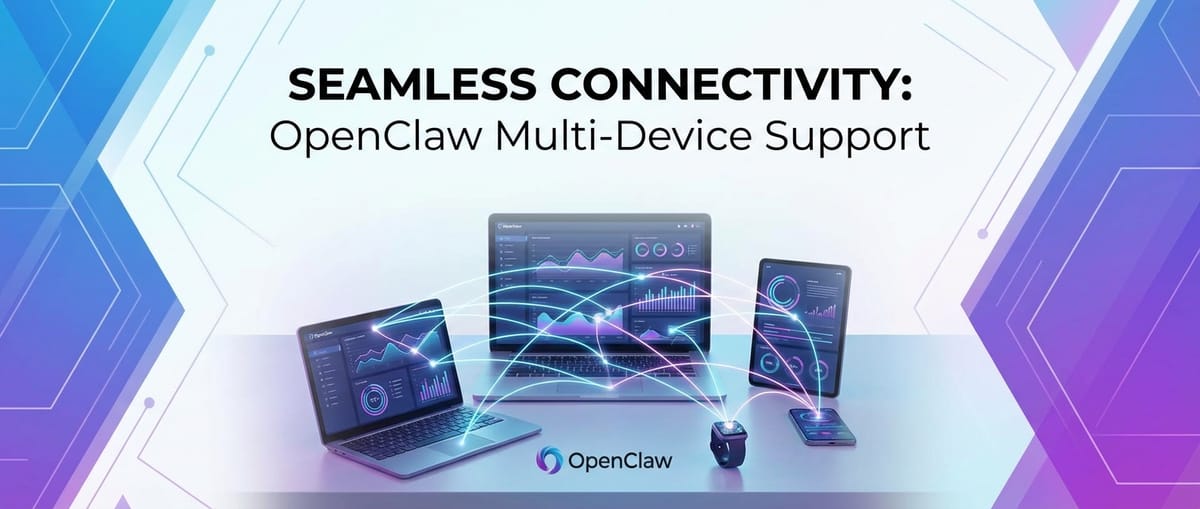

In an increasingly interconnected world, where smart devices permeate every aspect of our lives – from our homes and workplaces to our cars and even our bodies – the concept of "seamless connectivity" has transcended from a desirable feature to an absolute necessity. Users no longer tolerate fragmented experiences; they demand fluid, intuitive interactions across their entire digital landscape, regardless of the device type, operating system, or manufacturer. This profound shift has created immense pressure on developers and enterprises to build ecosystems that not only connect disparate hardware but also empower them to work in harmony, delivering a truly unified and intelligent experience. Enter OpenClaw, a groundbreaking framework designed to fundamentally transform how we approach multi-device support, offering a cohesive, robust, and future-proof solution for this complex challenge.
The vision behind OpenClaw is simple yet revolutionary: to eliminate the friction inherent in managing multiple devices and data streams, replacing it with an elegant, streamlined system that just works. It's about moving beyond mere device integration to true ecosystem orchestration, where every component, from the smallest sensor to the most powerful server, communicates effortlessly and intelligently. This article will delve deep into the core tenets of OpenClaw, exploring its architectural brilliance, the strategic role of its Unified API, its robust approach to API key management, and its expansive Multi-model support, ultimately illustrating how it empowers developers to build the next generation of truly integrated, user-centric experiences.
The Evolving Landscape of Multi-Device Interactions: A Digital Tapestry
The modern user’s digital footprint is no longer confined to a single device. A typical day might involve interacting with a smartphone, a smartwatch, a tablet, a smart home hub, a connected car, a desktop computer, and various IoT sensors – often within a single hour. Each device, while offering specific functionalities, contributes to a larger, often unspoken, expectation of continuity. Data captured on a fitness tracker should be viewable on a phone; a command issued to a smart speaker should control a light connected to a different hub; an email started on a laptop should be finishable on a tablet.
This proliferation of devices has brought incredible convenience and innovation, but it has also introduced significant complexity for developers. Each device often speaks a different "language," utilizes proprietary communication protocols, and comes with its own set of APIs. Building an application that can reliably communicate with, control, and synchronize data across this diverse array of hardware is a monumental task, frequently leading to:
- Fragmented Development Efforts: Developers spend inordinate amounts of time writing custom integrations for each device type, leading to bloated codebases and slower time-to-market.
- Inconsistent User Experiences: Juggling multiple apps or interfaces to control different parts of an ecosystem creates frustration and diminishes the perceived value of smart devices.
- Security Vulnerabilities: Managing a multitude of connections and authentication mechanisms increases the attack surface and makes robust security challenging.
- Scalability Nightmares: As more devices are added, the complexity grows exponentially, making it difficult to expand and maintain the ecosystem.
- Data Silos: Information remains trapped within individual devices or platforms, hindering the ability to derive holistic insights or enable intelligent automation.
The promise of the "Internet of Things" (IoT) often bumps up against the reality of the "Islands of Things," where devices struggle to interact meaningfully beyond their immediate manufacturers' ecosystems. This is the chasm OpenClaw seeks to bridge, offering a cohesive framework that transforms these islands into a seamless digital continent.
Introducing OpenClaw: A Paradigm Shift in Device Management
OpenClaw is not just another API; it’s an architectural philosophy encapsulated in a powerful framework designed for the age of ubiquitous computing. At its heart, OpenClaw aims to provide a standardized, robust, and extensible layer for managing, communicating with, and orchestrating actions across an almost limitless array of devices. It abstracts away the underlying complexities of hardware protocols, operating systems, and communication channels, presenting developers with a unified, high-level interface.
The core tenets of OpenClaw include:
- Abstraction and Standardization: Moving beyond device-specific implementations to a common language for interaction.
- Interoperability by Design: Fostering communication between devices that were never designed to speak to each other.
- Security First: Embedding robust security measures at every layer of the architecture.
- Scalability and Flexibility: Designed to grow with the ecosystem, supporting everything from a handful of devices to massive enterprise deployments.
- Developer Empowerment: Simplifying complex tasks, freeing developers to focus on innovation and user experience.
By embracing OpenClaw, organizations can transition from a reactive, device-by-device integration strategy to a proactive, ecosystem-wide orchestration approach. This fundamental shift not only accelerates development but also lays the groundwork for truly intelligent and adaptive multi-device applications.
The Power of a Unified API for Multi-Device Ecosystems
The concept of a Unified API stands as the cornerstone of OpenClaw’s architecture, representing its most profound departure from traditional multi-device management approaches. Instead of requiring developers to learn and implement separate APIs for a smart light, a thermostat, a door lock, and a wearable, OpenClaw provides a single, coherent interface through which all these diverse devices can be accessed, controlled, and monitored.
Imagine a single command structure that can dim lights, adjust heating, lock doors, and retrieve fitness data, all while abstracting the brand, model, and underlying communication protocol of each individual device. This is the transformative power of OpenClaw’s Unified API.
Simplified Development: Code Once, Connect Everywhere
For developers, the immediate and most tangible benefit of a Unified API is the dramatic simplification of their workflow. Instead of dealing with a patchwork of SDKs, authentication methods, and data formats, they interact with a single, well-documented endpoint. This means:
- Reduced Learning Curve: Developers only need to master one API specification, significantly lowering the barrier to entry for building multi-device applications.
- Faster Development Cycles: By eliminating the need for custom integrations, development time is drastically cut. Features that once took weeks to implement can now be deployed in days.
- Consistent Codebase: A single API leads to a more maintainable, less error-prone codebase. Updates and new device integrations become much simpler to manage.
- Enhanced Focus on Innovation: With the heavy lifting of device integration handled by OpenClaw, developers are freed to concentrate on crafting innovative features and compelling user experiences rather than wrestling with low-level protocol details.
- Cross-Platform Compatibility: A Unified API inherently promotes cross-platform development, as the underlying device interactions are consistent, regardless of whether the application is built for iOS, Android, web, or desktop.
Consider an application that manages a smart home. Without OpenClaw, a developer might need to integrate with Philips Hue for lighting, Nest for climate control, August for smart locks, and various Zigbee/Z-Wave hubs for other sensors. Each of these would have its own API, its own authentication scheme, and its own data models. With OpenClaw's Unified API, all these devices appear as abstracted entities, manageable through a consistent set of commands and data structures. This is a game-changer for agility and efficiency.
Enhanced User Experience: True Seamlessness
The benefits of a Unified API extend directly to the end-user experience, making it genuinely seamless and intuitive. When devices communicate through a common framework, the possibilities for intelligent automation and holistic control multiply exponentially:
- Single-App Control: Users can manage their entire multi-device ecosystem from a single application interface, eliminating the need to switch between multiple apps for different devices.
- Contextual Awareness: The system can leverage data from various devices simultaneously to create more intelligent and personalized experiences. For example, knowing a user's location from their phone, their activity level from their smartwatch, and the ambient temperature from a smart thermostat can trigger highly precise actions.
- Automated Workflows: Complex routines can be easily set up across devices. "Good Morning" could involve opening blinds, brewing coffee, turning on lights, and playing news podcasts – all orchestrated through a single command or schedule.
- Predictive Capabilities: By analyzing aggregated data from diverse sources, OpenClaw enables applications to anticipate user needs and proactively adjust device states, enhancing comfort and efficiency.
- Reduced Frustration: The absence of compatibility issues and the smooth flow of information between devices significantly reduce user frustration, leading to higher satisfaction and engagement.
Future-Proofing Your Applications
The rapidly evolving landscape of smart devices means that new hardware and communication protocols are constantly emerging. A traditional approach to multi-device support requires constant re-engineering to accommodate these changes. OpenClaw’s Unified API offers a powerful solution for future-proofing applications:
- Abstraction from Hardware Changes: Because applications interact with a high-level abstraction layer, they are insulated from changes in the underlying hardware. When a new device model or brand is introduced, OpenClaw handles the integration at its lower layers, preserving the consistency of the Unified API.
- Ease of Integration for New Devices: OpenClaw’s extensible architecture allows for straightforward integration of new device types or communication standards without requiring significant modifications to existing applications.
- Leveraging Emerging Technologies: The framework is designed to be adaptable, capable of incorporating future technologies like advanced AI inference at the edge, new connectivity standards (e.g., Matter, Thread), and novel interaction paradigms.
The strategic adoption of OpenClaw’s Unified API thus represents an investment in resilience and adaptability, ensuring that applications remain relevant and functional in a perpetually changing technological environment.
Mastering API Key Management in OpenClaw
In any connected ecosystem, security is paramount. The more devices and data streams involved, the greater the potential attack surface. Robust API key management is not merely a feature within OpenClaw; it is an indispensable component of its foundational security architecture, designed to protect sensitive data, control access, and ensure operational integrity across the entire multi-device environment.
An API key acts as a digital credential, authenticating requests from applications and users to interact with devices or services managed by OpenClaw. Effective management of these keys is critical to prevent unauthorized access, data breaches, and service disruptions. OpenClaw provides a comprehensive suite of tools and best practices for this, recognizing that lax key management can undermine even the most sophisticated security protocols.
Security Best Practices: The Foundation of Trust
OpenClaw integrates several core security best practices into its API key management system:
- Principle of Least Privilege: API keys are designed to grant only the minimum necessary permissions for an application or user to perform its intended function. A key for a light control app, for instance, won't have access to security camera feeds.
- Key Rotation Policies: OpenClaw encourages and facilitates regular key rotation, automatically expiring old keys and issuing new ones. This minimizes the window of opportunity for a compromised key to be exploited.
- Secure Storage: Guidelines and mechanisms are provided for securely storing API keys, both at rest and in transit, leveraging encryption and secure vaults where appropriate. Keys should never be hardcoded into applications or exposed in public repositories.
- Rate Limiting and Throttling: To prevent abuse and denial-of-service attacks, OpenClaw's API key system allows for granular control over the number of requests permitted within a given timeframe for each key.
- IP Whitelisting: For critical applications, API keys can be restricted to only be valid when requests originate from a predefined set of IP addresses, adding another layer of defense against unauthorized access.
- Auditable Events: Every action performed using an API key is logged, providing a clear audit trail for security monitoring, compliance, and forensic analysis.
By adhering to these principles, OpenClaw ensures that developers can implement powerful multi-device solutions without compromising the security posture of their ecosystem.
Granular Access Control: Precision at Your Fingertips
OpenClaw's API key management system offers an exceptionally granular level of access control, allowing administrators to define precisely what each key can and cannot do. This is crucial for complex multi-device environments where different applications or user roles require varying levels of interaction.
Consider an enterprise deployment of OpenClaw managing hundreds of IoT devices across multiple departments. The facilities management team might need keys with read/write access to HVAC systems and lighting controls. The security team might require read-only access to all sensor data for monitoring, and write access only to alarms. The finance department might only need aggregated usage data, with no direct device control.
OpenClaw enables this by allowing:
- Role-Based Access Control (RBAC): API keys can be associated with specific roles (e.g., "Administrator," "Monitor," "Guest"), each with a predefined set of permissions across different device types or functionalities.
- Resource-Specific Permissions: Permissions can be defined not just at a device type level, but for individual devices or even specific functionalities within a device (e.g., "read temperature sensor data from DeviceX" vs. "control actuator on DeviceY").
- Time-Limited Keys: For temporary access or specific projects, keys can be issued with an expiry date, automatically revoking access after a set period.
This level of detail ensures that access is tightly controlled, minimizing the risk of accidental or malicious misuse of device capabilities and data.
Lifecycle Management of Keys: From Creation to Revocation
The lifecycle of an API key in OpenClaw is meticulously managed, providing administrators with comprehensive control throughout its existence:
- Creation: Keys can be generated through a secure interface, with options for specifying permissions, expiry dates, and associated applications/users.
- Configuration: Post-creation, permissions can be modified, IP whitelists updated, and rate limits adjusted as operational needs evolve.
- Monitoring: Real-time dashboards and logs allow administrators to monitor key usage, detect unusual patterns, and identify potential security threats.
- Revocation: In case of compromise, change in role, or project completion, keys can be instantly revoked, rendering them invalid and cutting off access. OpenClaw supports both immediate and scheduled revocations.
- Audit Trails: A complete history of key creation, modification, and usage is maintained, providing an invaluable resource for compliance audits and security investigations.
A well-managed key lifecycle is instrumental in maintaining the security posture of a multi-device ecosystem, ensuring that only authorized entities can interact with the devices and services.
Auditing and Compliance: Meeting Regulatory Demands
For many organizations, particularly those in regulated industries (e.g., healthcare, finance, critical infrastructure), compliance with various data protection and security regulations (e.g., GDPR, HIPAA, ISO 27001) is non-negotiable. OpenClaw’s API key management capabilities are built with these requirements in mind.
The detailed logging and audit trails generated by OpenClaw provide the necessary evidence to demonstrate adherence to security policies and regulatory mandates. Administrators can easily generate reports on who accessed which devices, when, and what actions were performed, significantly simplifying the compliance burden and facilitating swift responses to audit requests or security incidents.
In summary, OpenClaw's robust API key management is a critical differentiator, transforming a potential security vulnerability into a strategic advantage. It empowers developers and administrators to build secure, compliant, and highly controlled multi-device applications, fostering trust and protecting valuable digital assets.
| Key Management Feature | Description | Benefit |
|---|---|---|
| Granular Permissions | Define specific read/write access to individual devices, device types, or functionalities. | Enforces the principle of least privilege, minimizing risk exposure. |
| Key Rotation | Automatically or manually expire and replace API keys at regular intervals. | Reduces the impact window of a compromised key and strengthens long-term security. |
| Secure Storage Guidance | Best practices and tools for protecting API keys at rest and in transit. | Prevents unauthorized access to keys themselves, the gateway to your ecosystem. |
| Rate Limiting | Control the number of API requests allowed per key within a given timeframe. | Protects against abuse, DDoS attacks, and ensures fair resource utilization. |
| IP Whitelisting | Restrict API key usage to requests originating from specific, trusted IP addresses. | Adds an extra layer of network-level security, preventing external access. |
| Audit Logging | Comprehensive records of all API key activities, including creation, usage, and revocation. | Provides full transparency for security monitoring, compliance audits, and incident response. |
| Revocation | Immediate or scheduled invalidation of compromised or expired API keys. | Rapidly mitigates security threats and manages key lifecycle effectively. |
Leveraging Multi-Model Support for Diverse Device Capabilities
The true power of a comprehensive multi-device platform lies not just in connecting devices but in intelligently interacting with their inherent diversity. Devices vary wildly in their capabilities, processing power, communication methods, and functional models. From simple sensors collecting environmental data to complex robotic arms performing intricate tasks, a robust framework must be capable of understanding and interacting with this spectrum of "models." OpenClaw’s Multi-model support is engineered precisely for this challenge, allowing developers to build applications that are adaptable, optimized, and extensible across a heterogeneous device landscape.
Multi-model support in OpenClaw refers to its ability to seamlessly integrate and manage various types of device models, each representing a unique set of functionalities, data structures, and interaction patterns. Instead of forcing all devices into a single, rigid template, OpenClaw acknowledges and embraces their unique characteristics, providing flexible mechanisms for interacting with them.
Adapting to Hardware Variations: From Microcontrollers to High-End Processors
The range of hardware in a multi-device ecosystem is vast. A smart light bulb, for instance, might be controlled by a simple microcontroller with limited memory and processing power, communicating via Zigbee. A smart camera, on the other hand, might feature a more powerful System-on-Chip (SoC) capable of on-device AI inference, connected via Wi-Fi.
OpenClaw’s Multi-model support addresses these hardware variations by:
- Abstraction Layers: Providing different levels of abstraction that match the complexity of the device. Simple devices might be represented by a basic "on/off" model, while more sophisticated devices might expose complex object models for configuration and control.
- Protocol Adapters: Utilizing a pluggable architecture for communication protocols. OpenClaw can integrate adapters for Wi-Fi, Bluetooth, Zigbee, Z-Wave, LoRaWAN, cellular (4G/5G), and more, ensuring compatibility with virtually any connected device.
- Data Model Mapping: Translating device-specific data formats into a common, standardized data model used by the Unified API. This allows applications to receive temperature readings, for example, regardless of whether the sensor sends it as an integer, float, or string, and regardless of the unit of measurement.
- Edge Processing Capabilities: For devices with sufficient processing power, OpenClaw can push certain logic or AI inference tasks to the "edge," reducing latency and bandwidth requirements, while seamlessly integrating the results with the broader system.
This adaptive approach ensures that OpenClaw can effectively communicate with and manage devices across the entire spectrum of hardware capabilities, without requiring applications to be rewritten for each specific variant.
Optimizing Performance Across Devices: Smart Resource Allocation
The diverse capabilities of devices also necessitate intelligent optimization strategies. A high-end server can process massive amounts of data, while a battery-powered sensor needs to conserve energy. OpenClaw’s Multi-model support contributes to performance optimization by:
- Intelligent Data Routing: Directing data flows efficiently based on device capabilities and network conditions. For instance, low-priority sensor data might be batched and sent periodically, while critical alarm data is transmitted instantly.
- Feature Negotiation: Allowing applications to query devices about their supported features and dynamically adjust their interaction patterns. If a smart lock supports both PIN codes and fingerprint scanning, the application can detect this and offer the appropriate UI.
- Resource Management: Providing mechanisms to manage device resources, such as battery life or processing cycles, by intelligently scheduling tasks or offloading computation to more powerful nodes in the ecosystem.
- Contextual Prioritization: Prioritizing data and commands based on the current context. During a security alert, data from security cameras and door sensors might receive higher priority than routine environmental readings.
By understanding the distinct models and capabilities of each device, OpenClaw enables applications to optimize their interactions, ensuring efficient performance, energy conservation, and reliable operation across the entire ecosystem.
Extensibility and Future Innovations: Ready for Tomorrow's Tech
The pace of innovation in the device landscape shows no signs of slowing down. New sensors, actuators, and communication technologies are constantly emerging. OpenClaw's Multi-model support is designed with extensibility at its core, making it resilient to future changes and capable of embracing new innovations:
- Pluggable Model Definitions: Developers can define and integrate new device models into OpenClaw as new hardware emerges, extending the framework's capabilities without requiring core changes.
- Standardized Interfaces for Model Creation: Clear guidelines and tools for defining how new device types will be represented in the Unified API, ensuring consistency and ease of integration.
- Community and Ecosystem Growth: By providing a flexible framework, OpenClaw fosters a rich ecosystem where manufacturers and developers can contribute new device models and integrations, accelerating the platform's overall growth and utility.
- Support for Emerging Interaction Paradigms: As devices become more sophisticated, OpenClaw’s Multi-model support can accommodate complex interactions like gesture control, voice commands, or even direct brain-computer interfaces, integrating them seamlessly into the broader ecosystem.
The ability to fluidly adapt to a constantly evolving hardware landscape is a significant advantage of OpenClaw's Multi-model support. It ensures that investments in multi-device applications remain valuable and forward-compatible, shielding them from technological obsolescence and paving the way for continuous innovation.
XRoute is a cutting-edge unified API platform designed to streamline access to large language models (LLMs) for developers, businesses, and AI enthusiasts. By providing a single, OpenAI-compatible endpoint, XRoute.AI simplifies the integration of over 60 AI models from more than 20 active providers(including OpenAI, Anthropic, Mistral, Llama2, Google Gemini, and more), enabling seamless development of AI-driven applications, chatbots, and automated workflows.
Architectural Deep Dive: How OpenClaw Achieves Seamlessness
The seamlessness that OpenClaw delivers is not magic; it’s the result of a meticulously engineered architecture designed to abstract complexity and foster interoperability. Understanding the underlying mechanisms provides deeper insight into its power and resilience.
Protocol-Agnostic Communication: Speaking Every Device's Language
At the lowest level, OpenClaw acts as a universal translator. Devices often communicate using a myriad of protocols: * Short-range wireless: Bluetooth, NFC * Mesh networks: Zigbee, Z-Wave, Thread * IP-based: Wi-Fi, Ethernet, cellular (MQTT, HTTP/S, CoAP) * Proprietary protocols: Many industrial or niche devices.
OpenClaw employs a modular, protocol-agnostic communication layer. This layer uses adapters (sometimes called "device drivers" or "gateways") for each specific protocol. When a device connects, its specific protocol adapter translates its native language into OpenClaw's internal, standardized communication format. Conversely, when an application sends a command via the Unified API, OpenClaw translates that command into the target device's native protocol via the appropriate adapter.
This design ensures that: 1. Isolation: Changes to one protocol adapter don't affect others or the core OpenClaw system. 2. Extensibility: Adding support for a new protocol only requires developing a new adapter, not modifying the entire framework. 3. Efficiency: Adapters can be optimized for the specific characteristics of their protocol (e.g., power efficiency for Zigbee, throughput for Wi-Fi).
State Synchronization Mechanisms: The Single Source of Truth
A critical aspect of seamless multi-device interaction is knowing the current state of every device at all times. If a light is turned off manually, the app should reflect that instantly. If a sensor detects an anomaly, all relevant systems should be updated. OpenClaw achieves this through robust state synchronization:
- Desired vs. Reported State: OpenClaw maintains a "desired state" (what the application intends the device to be) and a "reported state" (what the device actually reports its status to be). This helps identify discrepancies and trigger corrective actions.
- Event-Driven Architecture: Devices report changes in their state as events. OpenClaw's core processes subscribe to these events, updating its internal device registry and propagating relevant changes to connected applications. This push-based model minimizes polling and ensures real-time updates.
- Shadow Devices (Digital Twins): For many devices, OpenClaw creates a "digital twin" or "shadow device" in the cloud or an edge gateway. This digital twin mirrors the physical device's state and capabilities. Applications interact with the digital twin, and OpenClaw handles the synchronization with the physical device, even if the device is temporarily offline. This enhances reliability and responsiveness.
- Conflict Resolution: In scenarios where multiple sources try to change a device's state simultaneously, OpenClaw provides configurable conflict resolution strategies, such as "last write wins" or priority-based rules, to maintain data integrity.
Edge Intelligence and Cloud Integration: The Best of Both Worlds
OpenClaw leverages a hybrid architecture that combines the power of cloud computing with the responsiveness and localized processing of edge devices.
- Edge Gateways: These are local computing units (e.g., Raspberry Pis, dedicated IoT hubs) that connect to nearby devices using various protocols. Gateways handle:
- Local Communication: Bridging different device protocols to OpenClaw's internal format.
- Data Filtering and Aggregation: Reducing the volume of data sent to the cloud by processing it locally.
- Low-Latency Control: Executing critical commands and automations locally, without relying on cloud roundtrips, essential for real-time applications (e.g., industrial control, safety systems).
- Offline Operation: Maintaining basic functionality even when internet connectivity is lost.
- Cloud Backend: The central nervous system of OpenClaw, responsible for:
- Global Device Management: Storing the registry of all connected devices, their models, and configurations.
- Data Storage and Analytics: Ingesting, storing, and processing aggregated data from all devices for long-term trends, advanced analytics, and machine learning.
- Unified API Endpoint: Providing the external-facing Unified API for applications.
- Security and API Key Management****: Centralized management of authentication, authorization, and audit trails.
- Scalability: Handling large-scale deployments and high-throughput data processing.
This hybrid approach ensures optimal performance, reliability, and scalability, allowing OpenClaw to cater to a wide range of use cases, from individual smart homes to expansive industrial IoT deployments.
Real-World Applications and Use Cases of OpenClaw
The versatility of OpenClaw's architecture makes it applicable across virtually any domain where multiple devices need to interact intelligently. Its Unified API, robust API key management, and extensive Multi-model support unlock possibilities previously constrained by fragmentation.
Smart Home Ecosystems: Beyond Basic Automation
For consumers, the smart home promises convenience, security, and energy efficiency. OpenClaw can elevate this promise by:
- Truly Integrated Experiences: A single application powered by OpenClaw can manage lighting (Philips Hue, LIFX), climate (Nest, Ecobee), security (Ring, Arlo), entertainment (Sonos, smart TVs), and appliances (smart ovens, refrigerators) from different manufacturers, allowing for complex, personalized routines.
- Contextual Intelligence: Combining data from motion sensors, door/window sensors, smart cameras, and voice assistants to create truly intelligent automation. For example, if a "Good Night" command is given, OpenClaw can not only turn off lights and lock doors but also check if windows are closed, adjust the thermostat, and arm the security system, confirming all actions through the smart speaker.
- Seamless Guest Access: Using OpenClaw’s API key management, homeowners can grant time-limited, specific access to housekeepers or pet sitters for particular devices (e.g., unlocking the front door during specific hours) without sharing full control.
- Energy Optimization: Monitoring energy consumption across all devices and dynamically adjusting settings based on occupancy, time of day, and utility rates to minimize waste.
Industrial IoT (IIoT): Revolutionizing Operations
In industrial settings, multi-device ecosystems involve complex machinery, environmental sensors, asset trackers, and control systems. OpenClaw can drive significant operational efficiencies and safety improvements:
- Centralized Asset Monitoring: Connecting diverse sensors (temperature, pressure, vibration, chemical detectors) from different vendors across an entire factory floor into a single monitoring dashboard.
- Predictive Maintenance: Aggregating data from machine sensors to predict potential failures before they occur, scheduling maintenance proactively, and minimizing downtime. OpenClaw's Multi-model support handles the myriad of sensor types and data formats.
- Environmental Control and Safety: Automatically adjusting HVAC systems based on real-time air quality readings, triggering alarms, or shutting down equipment in response to hazardous conditions detected by various safety sensors.
- Supply Chain Visibility: Tracking goods and assets with various RFID, GPS, and environmental sensors across the supply chain, providing real-time visibility and optimizing logistics.
- Robotics and Automation: Orchestrating complex tasks involving multiple robotic arms, automated guided vehicles (AGVs), and human-machine interfaces, ensuring seamless communication and coordination.
Healthcare Devices: Enhancing Patient Care and Monitoring
The healthcare sector is increasingly adopting connected devices for patient monitoring, diagnostics, and elderly care. OpenClaw provides a secure and integrated foundation for these critical applications:
- Remote Patient Monitoring: Connecting various wearable sensors (heart rate, blood glucose, blood pressure, sleep trackers) from different manufacturers to a central platform, allowing healthcare providers to monitor patient vitals remotely and receive alerts for critical changes.
- Assisted Living Solutions: Integrating smart home devices with health sensors to support elderly or disabled individuals, enabling automated assistance (e.g., medication reminders, fall detection) and allowing caregivers to monitor wellbeing securely via API key management.
- Hospital Workflow Optimization: Connecting medical equipment, patient tracking systems, and staff communication devices to streamline operations, improve patient flow, and enhance response times.
- Data Aggregation for Research: Anonymously aggregating data from various medical devices for research purposes, while ensuring strict data privacy and security through granular API key management.
Automotive Infotainment and Telematics: The Connected Car
Modern vehicles are sophisticated multi-device ecosystems on wheels. OpenClaw can enhance the connected car experience and support advanced telematics:
- Integrated In-Car Experience: Seamlessly connecting smartphones, smartwatches, and vehicle systems (navigation, climate control, media playback) for a cohesive user experience.
- Vehicle-to-Everything (V2X) Communication: Facilitating communication between the vehicle and surrounding infrastructure, other vehicles, and pedestrians, enabling advanced safety features and traffic management.
- Personalized Driver Profiles: Using driver-specific data from wearables and in-car sensors to customize seating positions, climate settings, infotainment preferences, and even driving modes.
- Fleet Management: For commercial fleets, OpenClaw can centralize data from various vehicle sensors (engine diagnostics, GPS, driver behavior monitoring) to optimize routes, schedule maintenance, and improve fuel efficiency, all managed through secure API key management.
In each of these diverse scenarios, OpenClaw’s foundational principles – Unified API, robust API key management, and versatile Multi-model support – provide the necessary framework to overcome complexity, enhance security, and unlock truly intelligent and interconnected experiences.
Addressing Challenges and Future Directions
While OpenClaw offers a robust solution for multi-device support, no technology is without its challenges or areas for future growth. Addressing these proactively is key to its continued evolution and widespread adoption.
Scalability Concerns: Growing with the Demands
As multi-device ecosystems grow from dozens to thousands or even millions of connected entities, scalability becomes a critical concern. OpenClaw's architecture is designed for scalability, but real-world deployments will push these limits.
- Horizontal Scaling: The cloud backend must be capable of horizontally scaling its services to handle increasing data ingestion rates, API requests, and device registrations. This involves using distributed databases, microservices, and auto-scaling infrastructure.
- Edge Computing Optimization: Further optimization of edge gateways will be crucial to offload more processing from the cloud, especially for latency-sensitive applications or environments with intermittent connectivity.
- Efficient Data Management: Developing more sophisticated data compression, filtering, and aggregation techniques to minimize network traffic and storage requirements, particularly for high-frequency sensor data.
- Resource Management: Implementing advanced resource scheduling and load balancing algorithms to distribute processing tasks efficiently across the network of devices, gateways, and cloud infrastructure.
Security Imperatives: A Never-Ending Battle
Security in multi-device ecosystems is a dynamic and ongoing challenge. As technology advances, so do the methods of attack. OpenClaw must continuously evolve its security measures.
- Threat Intelligence Integration: Incorporating real-time threat intelligence feeds to identify new vulnerabilities and attack patterns, enabling proactive defense mechanisms.
- AI-Driven Anomaly Detection: Leveraging machine learning to detect unusual device behavior or API usage patterns that might indicate a security breach, beyond what traditional rule-based systems can identify.
- Post-Quantum Cryptography: As quantum computing advances, current encryption standards may become vulnerable. OpenClaw needs to research and integrate post-quantum cryptographic algorithms to secure communications in the long term.
- Zero-Trust Architecture: Further embedding zero-trust principles, where no device or user is inherently trusted, and all interactions are continuously authenticated and authorized, even within the network perimeter.
- Regular Security Audits and Penetration Testing: Continuous, independent security assessments to identify and patch vulnerabilities before they can be exploited.
Interoperability Standards: The Path to True Openness
While OpenClaw provides a powerful Unified API within its framework, the broader industry still grapples with a lack of universal interoperability standards. OpenClaw's future will benefit from contributing to and adopting emerging standards.
- Participation in Standard Bodies: Actively engaging with organizations like the Connectivity Standards Alliance (CSA) for Matter, or other industry groups defining IoT data models and communication protocols.
- Open-Source Contributions: Contributing to open-source projects related to device integration and IoT frameworks, fostering a collaborative environment.
- Extensible Adapter Ecosystem: Encouraging and facilitating the development of a broad ecosystem of device and protocol adapters, allowing OpenClaw to connect with virtually any device on the market.
- Semantic Interoperability: Moving beyond basic data exchange to enable devices to understand the meaning and context of data from other devices, allowing for more intelligent and autonomous interactions.
The journey towards truly seamless multi-device connectivity is an ongoing one, but OpenClaw's commitment to innovation, security, and open standards positions it as a leading force in shaping the future of integrated ecosystems.
The Role of Intelligent API Platforms in Enabling OpenClaw's Vision
As OpenClaw meticulously builds the infrastructure for seamless device connectivity, the intelligence layer that sits atop this framework becomes increasingly critical. The data flowing through OpenClaw's Unified API—from sensors, user interactions, and device states—is immensely valuable, but its true potential is unleashed when processed and interpreted by advanced artificial intelligence. This is where cutting-edge unified API platforms for large language models (LLMs) like XRoute.AI become indispensable partners, enhancing OpenClaw's capabilities and accelerating the development of truly intelligent multi-device applications.
OpenClaw simplifies the device-side integration and communication, creating a rich stream of data and a unified control plane. However, interpreting complex natural language commands, generating contextual responses, performing sophisticated data analysis, or enabling proactive, AI-driven automation requires powerful AI models. Integrating these AI models traditionally involves navigating a labyrinth of different providers, API specifications, authentication methods, and pricing structures—a challenge analogous to the multi-device fragmentation OpenClaw aims to solve.
XRoute.AI is designed to address this very complexity in the AI landscape. As a cutting-edge unified API platform for LLMs, it streamlines access to over 60 AI models from more than 20 active providers through a single, OpenAI-compatible endpoint. For developers building on OpenClaw, this means:
- Simplified AI Integration: Instead of managing separate APIs for OpenAI, Google, Anthropic, or specialized models, developers can connect to XRoute.AI and gain instant access to a vast array of LLM capabilities. This mirrors OpenClaw’s own Unified API philosophy, extending it to the AI domain.
- Low Latency AI and Cost-Effective AI: OpenClaw applications often require real-time responses, whether it's a voice command to a smart speaker or an immediate analysis of sensor data. XRoute.AI focuses on low latency AI and cost-effective AI, automatically routing requests to the best-performing and most economical models available, ensuring that AI-driven features in OpenClaw applications are both responsive and affordable.
- Enhanced Multi-Device Intelligence:
- Natural Language Interfaces: Developers can use XRoute.AI to power natural language understanding (NLU) for voice commands directed at OpenClaw-managed devices, making interactions more intuitive (e.g., "Dim the lights in the living room by 20% and play soothing music").
- Contextual Automation: LLMs can process aggregated data from diverse OpenClaw devices to infer complex user intent or environmental conditions, enabling more intelligent and proactive automations. For instance, analyzing calendar data (via an LLM), combined with room occupancy (from an OpenClaw sensor), can intelligently pre-condition a meeting room.
- Proactive Device Management: LLMs can analyze device performance data (collected through OpenClaw) to identify potential issues, suggest maintenance, or even generate summary reports for administrators.
- Personalized Experiences: By understanding user preferences and behaviors from interactions across multiple devices, LLMs can help tailor device responses and automations to individual users.
In essence, while OpenClaw orchestrates the physical layer of device connectivity and data flow, platforms like XRoute.AI provide the cognitive layer, transforming raw device interactions and data into intelligent actions and insights. The combination of OpenClaw's Unified API for devices and XRoute.AI's unified API platform for LLMs creates a powerful synergy, offering developers an unparalleled toolkit to build truly intelligent, seamless, and user-centric multi-device applications without the complexity of managing multiple API connections. This collaborative approach ensures high throughput, scalability, and flexibility, making it an ideal choice for projects ranging from innovative startups to enterprise-level AI-driven solutions built on OpenClaw's robust framework.
Conclusion: The Era of Seamless Multi-Device Ecosystems with OpenClaw
The trajectory of technological evolution is unequivocally moving towards a future where devices, regardless of their origin or function, communicate and cooperate effortlessly. The vision of a truly intelligent and responsive environment, whether it's a smart home, an automated factory, or a connected city, hinges upon overcoming the inherent complexities of multi-device fragmentation. OpenClaw stands as a pivotal innovation in this journey, offering a comprehensive and elegantly designed solution that transforms disparate hardware into a cohesive, intelligent ecosystem.
By championing a powerful Unified API, OpenClaw abstracts away the bewildering array of device-specific protocols and interfaces, dramatically simplifying development and accelerating time-to-market for multi-device applications. Its rigorous approach to API key management instills confidence, providing granular control over access and ensuring the utmost security and compliance across the entire connected landscape. Furthermore, OpenClaw’s robust Multi-model support embraces the rich diversity of devices, allowing for optimized performance and seamless integration of anything from the simplest sensor to the most complex intelligent actuator.
The architectural foundations, encompassing protocol-agnostic communication, sophisticated state synchronization, and a judicious blend of edge intelligence and cloud integration, empower OpenClaw to deliver unparalleled reliability, scalability, and responsiveness. From enhancing daily living in smart homes to revolutionizing efficiency in industrial operations and advancing patient care in healthcare, OpenClaw is not just connecting devices; it is orchestrating experiences, enabling developers to build applications that were once relegated to the realm of science fiction.
As we look to the future, the partnership between robust device management platforms like OpenClaw and intelligent API platforms like XRoute.AI will be crucial. While OpenClaw lays the foundational infrastructure for seamless device interaction, XRoute.AI provides the cognitive layer, enabling developers to imbue these multi-device ecosystems with advanced AI capabilities – from natural language understanding to predictive analytics – all through a simplified, high-performance unified API platform for LLMs. Together, they form a potent combination, pushing the boundaries of what's possible in the realm of connected technology.
OpenClaw is more than a framework; it's a declaration of a future where connectivity is truly seamless, intelligence is ubiquitous, and the digital tapestry woven by our devices empowers rather than complicates our lives. This is the era of integrated ecosystems, and OpenClaw is leading the charge.
Frequently Asked Questions (FAQ)
Q1: What core problem does OpenClaw aim to solve in multi-device ecosystems?
A1: OpenClaw primarily solves the problem of fragmentation and complexity in multi-device environments. Traditionally, developers face significant challenges integrating diverse devices from different manufacturers, each with its own protocols and APIs. OpenClaw unifies this fragmented landscape, providing a single, consistent framework for managing, communicating with, and orchestrating actions across virtually any connected device, simplifying development and enabling truly seamless user experiences.
Q2: How does OpenClaw's Unified API benefit developers and end-users?
A2: For developers, the Unified API dramatically simplifies the development process by providing a single interface for all devices, reducing the learning curve, accelerating development cycles, and creating more consistent codebases. For end-users, it translates to a truly seamless experience, allowing them to control and automate their entire multi-device ecosystem from a single application, fostering contextual intelligence, and enabling sophisticated automated workflows without the frustration of juggling multiple apps or interfaces.
Q3: What measures does OpenClaw take for API key management security?
A3: OpenClaw incorporates robust API key management with several security measures. These include adhering to the principle of least privilege, allowing for granular access control down to individual device functionalities, encouraging regular key rotation, providing guidance for secure key storage, implementing rate limiting and IP whitelisting to prevent abuse, and maintaining comprehensive audit logs for all API key activities. This ensures secure, controlled access and compliance with regulatory demands.
Q4: How does OpenClaw handle the diversity of device types and capabilities (Multi-model support)?
A4: OpenClaw's Multi-model support addresses device diversity by using abstraction layers, protocol adapters, and data model mapping. This allows it to communicate with various hardware types, from simple sensors to complex processors, regardless of their native communication protocols (e.g., Wi-Fi, Zigbee, Bluetooth). It also enables intelligent optimization across devices, adapting to their capabilities to ensure efficient performance, resource management, and extensibility for future innovations.
Q5: How does OpenClaw integrate with AI platforms like XRoute.AI to enhance its capabilities?
A5: While OpenClaw focuses on device connectivity and data flow, it naturally integrates with AI platforms to add intelligence. Platforms like XRoute.AI provide a unified API platform for accessing a wide range of Large Language Models (LLMs). This synergy allows OpenClaw-powered applications to interpret natural language commands, generate contextual responses, perform advanced data analysis on device data, and enable proactive, AI-driven automation across the multi-device ecosystem, all with low latency AI and cost-effective AI provided by XRoute.AI.
🚀You can securely and efficiently connect to thousands of data sources with XRoute in just two steps:
Step 1: Create Your API Key
To start using XRoute.AI, the first step is to create an account and generate your XRoute API KEY. This key unlocks access to the platform’s unified API interface, allowing you to connect to a vast ecosystem of large language models with minimal setup.
Here’s how to do it: 1. Visit https://xroute.ai/ and sign up for a free account. 2. Upon registration, explore the platform. 3. Navigate to the user dashboard and generate your XRoute API KEY.
This process takes less than a minute, and your API key will serve as the gateway to XRoute.AI’s robust developer tools, enabling seamless integration with LLM APIs for your projects.
Step 2: Select a Model and Make API Calls
Once you have your XRoute API KEY, you can select from over 60 large language models available on XRoute.AI and start making API calls. The platform’s OpenAI-compatible endpoint ensures that you can easily integrate models into your applications using just a few lines of code.
Here’s a sample configuration to call an LLM:
curl --location 'https://api.xroute.ai/openai/v1/chat/completions' \
--header 'Authorization: Bearer $apikey' \
--header 'Content-Type: application/json' \
--data '{
    "model": "gpt-5",
    "messages": [
        {
            "content": "Your text prompt here",
            "role": "user"
        }
    ]
}'
With this setup, your application can instantly connect to XRoute.AI’s unified API platform, leveraging low latency AI and high throughput (handling 891.82K tokens per month globally). XRoute.AI manages provider routing, load balancing, and failover, ensuring reliable performance for real-time applications like chatbots, data analysis tools, or automated workflows. You can also purchase additional API credits to scale your usage as needed, making it a cost-effective AI solution for projects of all sizes.
Note: Explore the documentation on https://xroute.ai/ for model-specific details, SDKs, and open-source examples to accelerate your development.