Seedance API: Integrate Effortlessly, Maximize Your Data
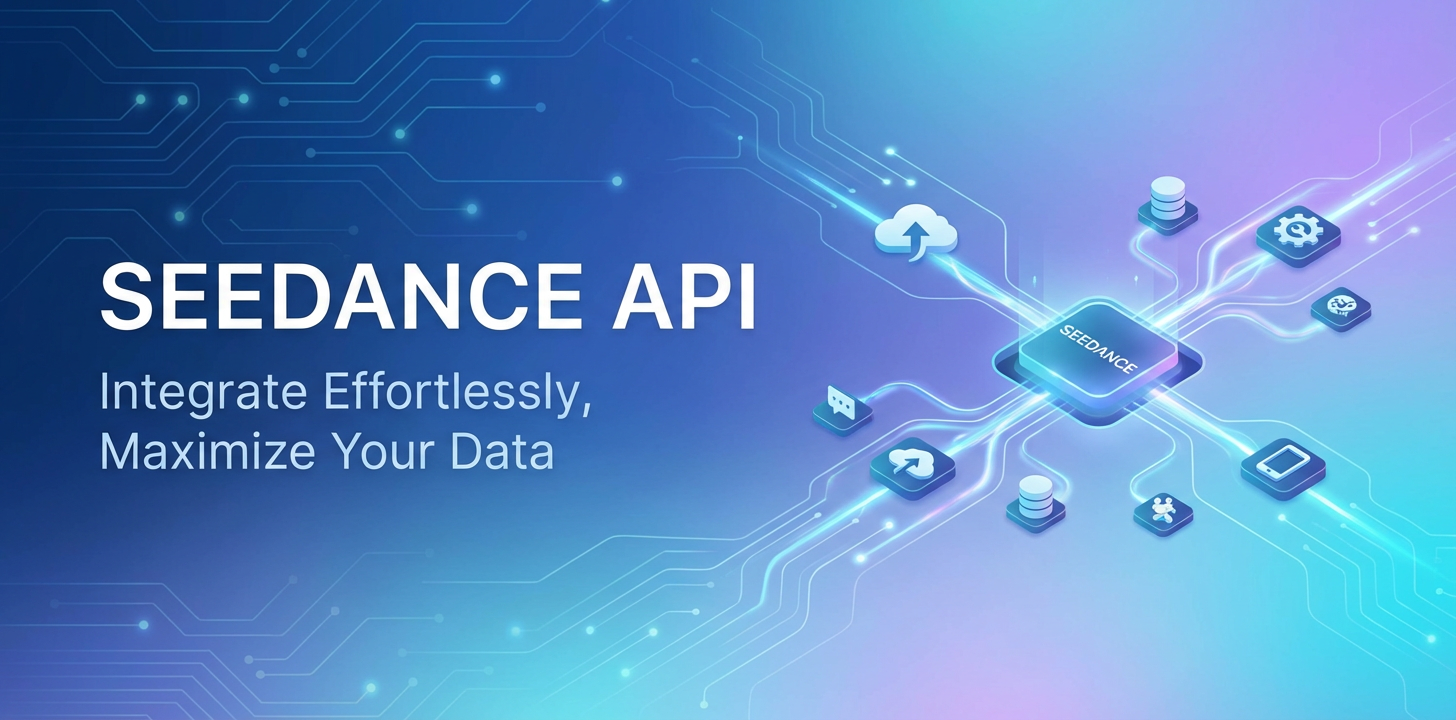

In the relentless march of technological progress, data has unequivocally emerged as the lifeblood of modern enterprises. From nascent startups to sprawling multinational corporations, the ability to collect, process, and derive insights from vast and often disparate datasets is no longer a competitive advantage – it is a fundamental prerequisite for survival and growth. Yet, for many organizations, the sheer volume and fragmentation of data present an overwhelming challenge, transforming potential into paralysis. Data sits in silos, trapped in legacy systems, cloud platforms, SaaS applications, and IoT devices, each speaking a different dialect, demanding specialized translation and painstaking manual integration. This intricate labyrinth of connectivity not only stifles innovation but also drains resources, delays critical decision-making, and ultimately hinders the pursuit of meaningful digital transformation.
This is precisely the chasm that Seedance API seeks to bridge. Imagined and engineered for an era defined by data complexity, Seedance API is a sophisticated, yet remarkably intuitive platform designed to demystify data integration. It's more than just a set of connectors; it's a comprehensive ecosystem that empowers businesses to effortlessly unite their scattered data sources, transform raw information into actionable intelligence, and unlock the full, often hidden, potential of their digital assets. By providing a unified, streamlined approach to data management, Seedance API doesn't just promise integration; it delivers a strategic pathway to truly maximize your data, turning complexity into clarity and raw potential into tangible value.
Throughout this extensive guide, we will embark on a deep exploration of Seedance API, dissecting its core functionalities, understanding its profound benefits, and illustrating its real-world impact. We will delve into how it addresses the inherent challenges of traditional data integration, fostering an environment where seamless data flow becomes the norm, not the exception. Furthermore, we will illuminate its crucial role in cost optimization, demonstrating how streamlined data operations directly translate into significant financial efficiencies. Crucially, we will also explore the synergistic relationship between robust data integration and the burgeoning landscape of artificial intelligence, particularly the transformative power of unified LLM APIs, setting the stage for how integrated data, powered by Seedance API, fuels the next generation of intelligent applications, including those leveraging platforms like XRoute.AI. Prepare to redefine your understanding of data integration and discover how to truly make your data work for you.
The Unfolding Challenge: Why Traditional Data Integration Falls Short
The digital age promised seamless connectivity and boundless information, yet for many organizations, it has delivered an increasingly fragmented reality. Businesses today operate across a sprawling digital landscape, utilizing a diverse array of applications, databases, and cloud services. Each department might use its preferred tools – Salesforce for CRM, SAP for ERP, HubSpot for marketing automation, Google Analytics for web insights, bespoke databases for proprietary information, and various cloud storage solutions like AWS S3 or Azure Blob Storage. While each of these systems excels in its specific function, their collective existence often creates a monumental integration challenge.
Fragmented Data Ecosystems: A Developer's Nightmare
Imagine trying to understand a complex story when each chapter is written in a different language, stored in a different library, and requires a unique key to access. This is the reality for developers tasked with integrating data across fragmented ecosystems. Each data source comes with its own API, data model, authentication mechanism, and set of quirks. Connecting these disparate systems often involves:
- Custom Code Development: Writing bespoke scripts and middleware for each point-to-point integration, a process that is time-consuming, error-prone, and resource-intensive.
- API Versioning Headaches: APIs evolve, and keeping track of updates for dozens or hundreds of different services can quickly become a full-time job. A single API change can break an entire data pipeline.
- Data Format Mismatches: Information from different sources rarely aligns perfectly. Dates might be in different formats, customer IDs might be named differently, and product descriptions might have varying structures. Harmonizing these differences requires significant effort.
- Security Complexities: Managing authentication tokens, access permissions, and data encryption across numerous systems introduces substantial security risks and compliance challenges.
This inherent fragmentation turns what should be a straightforward task – accessing and utilizing data – into a constant battle against technical debt and operational complexity.
The Bottlenecks of Manual Integration: Time, Cost, and Error
Relying on manual integration or custom-coded solutions introduces severe bottlenecks:
- Exorbitant Time Investment: Developers spend countless hours writing, testing, and debugging integration code instead of focusing on core product innovation. Business users wait weeks or months for critical data reports.
- High Development and Maintenance Costs: Beyond developer salaries, there are costs associated with hosting custom integration infrastructure, training staff, and constantly updating systems. Maintenance quickly becomes a significant drain, as any change in an integrated system can necessitate rewriting large portions of the integration code.
- Increased Risk of Errors and Data Inconsistencies: Manual coding is inherently susceptible to human error. A single typo or logical flaw can lead to corrupted data, inaccurate reports, and flawed business decisions. When data is inconsistently integrated across systems, it becomes difficult to trust any single source of truth, undermining the very purpose of data collection.
Missed Opportunities: When Data Remains Untapped
Perhaps the most insidious consequence of poor data integration is the proliferation of missed opportunities. When data is locked away in silos, its true potential remains untapped:
- Lack of a 360-Degree Customer View: Without integrated data from sales, marketing, support, and product usage, businesses struggle to build a holistic understanding of their customers, leading to disjointed experiences and ineffective personalization efforts.
- Stunted Business Intelligence: Managers and executives cannot make informed decisions if their dashboards are incomplete or rely on outdated, fragmented data. Strategic planning becomes a shot in the dark.
- Inefficient Operations: Processes that rely on information from multiple systems become bogged down by manual data transfer, leading to delays, duplicated efforts, and frustrated employees.
- Hindered Innovation: The inability to easily combine diverse datasets cripples efforts to develop new products, services, or AI-driven solutions that depend on rich, interconnected information. Predictive analytics, machine learning models, and advanced automation all starve without a steady, integrated data supply.
The need for a smarter, more efficient approach to data integration is not merely an operational desire; it's a strategic imperative for any organization aiming to thrive in the data-driven economy. The complexity of managing an ever-growing array of data sources demands a solution that can cut through the noise, simplify the process, and unleash the full power of information.
Seedance API: Architecting Seamless Data Flow
In the face of daunting data fragmentation and the limitations of traditional integration methods, Seedance API emerges as a beacon of clarity and efficiency. It’s not just another tool in the crowded data landscape; it's a paradigm shift, fundamentally rethinking how organizations connect, transform, and utilize their most valuable asset – data.
What is Seedance API?
At its core, Seedance API is a sophisticated, unified platform designed to streamline and automate the process of data integration across an organization's entire digital ecosystem. It acts as a central nervous system for your data, allowing diverse applications, databases, cloud services, and IoT devices to communicate seamlessly, speaking a common language regardless of their native dialects.
Its core philosophy is simple yet powerful: Simplify, Unify, Empower.
- Simplify: By abstracting away the complexities of individual APIs, data formats, and authentication mechanisms, Seedance API drastically reduces the technical burden on developers. It turns what was once a bespoke coding challenge into a configuration exercise.
- Unify: It creates a single, coherent layer through which all data flows. This unification establishes a "single source of truth," ensuring consistency and reliability across all applications and reports.
- Empower: With simplified, unified data, businesses are empowered to innovate faster, make smarter decisions, and unlock new revenue streams without being bogged down by integration woes.
Seedance API is more than just a collection of connectors; it’s a holistic integration platform that offers a complete toolkit for managing the entire data lifecycle, from ingestion and transformation to governance and delivery.
Effortless Integration: Redefining Connectivity
The hallmark of Seedance API is its ability to make the historically arduous task of data integration feel genuinely effortless. This is achieved through several innovative design choices and robust functionalities:
Universal Connectors: Bridging Disparate Systems
Seedance API boasts an extensive and ever-growing library of pre-built connectors. These aren't just generic interfaces; they are intelligently designed to understand the nuances of each system they integrate with. Whether you're pulling data from a relational database like PostgreSQL, a NoSQL database like MongoDB, a cloud warehouse like Snowflake or BigQuery, popular SaaS applications like Salesforce, Shopify, or Zendesk, or even real-time streams from IoT devices, Seedance API provides a tailored connector. This eliminates the need for developers to learn the intricacies of each platform's API, authentication flows, and data models. The connection process is guided, often requiring little more than credentials and a few clicks.
Intuitive Interface: Low-Code/No-Code Empowerment
While powerful under the hood, Seedance API is designed with usability at its forefront. Its intuitive, often visual, interface empowers a broader range of users – from data analysts to business users – to participate in data integration. Low-code and no-code capabilities allow users to define data flows, set up transformations, and schedule synchronizations without writing a single line of code. This democratization of data access and integration accelerates project timelines and frees up highly skilled developers for more complex, strategic tasks.
Real-time vs. Batch Processing: Flexibility for Every Need
Different business needs demand different data speeds. Seedance API recognizes this, offering flexible options for both real-time and batch data processing.
- Real-time Integration: For applications requiring immediate data updates – such as fraud detection, personalized customer experiences, or IoT monitoring – Seedance API can establish real-time data pipelines, ensuring that information flows instantaneously between systems.
- Batch Processing: For analytical workloads, reporting, or data warehousing, batch processing remains a highly efficient method. Seedance API allows users to schedule data synchronization at predefined intervals, ensuring that data warehouses and analytical platforms are regularly updated without overwhelming source systems.
This dual capability ensures that Seedance API can cater to the diverse operational and analytical requirements of any modern enterprise.
To illustrate the stark contrast, consider the table below comparing the traditional approach to data integration with the efficiency offered by Seedance API:
| Feature/Aspect | Traditional Data Integration (Manual/Custom Code) | Seedance API Integration Paradigm |
|---|---|---|
| Complexity | High: Requires deep understanding of multiple APIs, data models, and programming. | Low: Abstracted complexity, intuitive interface, pre-built connectors. |
| Development Time | Weeks to Months per integration, prone to delays. | Hours to Days per integration, significantly accelerated. |
| Maintenance | Very High: Fragile, breaks easily with API changes, constant code updates. | Low: Managed connectors, platform handles API changes, less prone to breaking. |
| Error Rate | High: Manual coding introduces human errors, data inconsistencies. | Low: Automated processes, validation, standardized transformations reduce errors. |
| Scalability | Challenging: Requires re-architecting/recoding for increased data volume or new sources. | High: Built-in scalability, handles growing data volumes and new integrations effortlessly. |
| Cost | High: Developer salaries, infrastructure, ongoing maintenance, opportunity cost. | Low: Reduced development costs, operational efficiency, optimized resource use. |
| Time-to-Market | Slow: Protracted development cycles for new data-driven features. | Fast: Rapid integration allows quicker deployment of new applications and analytics. |
| Skill Requirement | Senior developers, specialized integrators. | Broad: Developers, data analysts, even business users with low-code capabilities. |
Table 1: Traditional vs. Seedance API Integration Paradigm
Maximizing Your Data: Unlocking Latent Value
Integrating data is merely the first step. The true power of Seedance API lies in its ability to transform raw, disconnected information into a cohesive, enriched, and ultimately actionable asset. It empowers organizations to move beyond mere data collection to genuine data maximization.
Data Normalization and Transformation: Speaking a Common Language
Data from different sources invariably arrives in varying formats, structures, and levels of granularity. A customer's address might be stored as a single string in one system and as separate fields (street, city, state, zip) in another. Product IDs might be alphanumeric in one place and purely numerical in another. Seedance API's robust data transformation engine is designed to address these discrepancies head-on. It allows users to:
- Map Fields: Easily map fields from source to destination, even when names or structures differ.
- Cleanse Data: Remove duplicates, correct errors, and handle missing values, ensuring data quality at the point of integration.
- Standardize Formats: Convert data types, standardize date formats, unify categorical values, and ensure consistency across all integrated systems.
- Aggregate and De-aggregate: Combine granular data into summaries or break down aggregated data into more detailed components as needed.
This meticulous normalization process ensures that all integrated data "speaks a common language," making it readily consumable by downstream applications, analytics platforms, and AI models.
Data Enrichment: Adding Context and Depth
Raw data often tells only part of the story. Seedance API facilitates data enrichment by allowing users to combine internal datasets with external sources or to derive new insights from existing data. For instance:
- Customer 360: Combine transactional data from an ERP, behavioral data from a CRM, web analytics from a marketing platform, and support tickets from a helpdesk system to create a comprehensive, unified view of each customer.
- Geographical Data: Enrich sales records with geographical information to identify regional trends.
- Product Catalogs: Combine product details with inventory levels and supplier information for optimized supply chain management.
By adding layers of context and combining seemingly unrelated datasets, Seedance API helps uncover deeper insights that would remain hidden in siloed systems.
Centralized Data Governance: Trust and Compliance
In an age of stringent data privacy regulations (like GDPR and CCPA), centralized data governance is paramount. Seedance API provides the tools to establish and enforce consistent data policies across all integrated sources.
- Access Control: Define granular permissions for who can access, modify, or view specific datasets.
- Audit Trails: Maintain comprehensive logs of all data movements and transformations, ensuring transparency and accountability.
- Data Masking/Redaction: Implement rules to mask or redact sensitive information (e.g., PII) before it reaches less secure systems or non-authorized users, ensuring compliance with privacy regulations.
- Data Lineage: Track the origin and transformation path of data, providing clarity and trust in the data's journey from source to insight.
This centralized approach to governance not only helps meet regulatory requirements but also fosters a culture of data trust within the organization.
Actionable Insights: Turning Raw Data into Strategic Assets
Ultimately, the goal of data integration and maximization is to generate actionable insights. When data is clean, consistent, enriched, and easily accessible, businesses can:
- Improve Decision-Making: Executives and managers have real-time access to comprehensive, reliable data, enabling them to make faster, more informed strategic and operational decisions.
- Optimize Operations: Identify bottlenecks, inefficiencies, and opportunities for automation by analyzing integrated operational data.
- Personalize Customer Experiences: Leverage a 360-degree customer view to deliver highly targeted marketing campaigns, personalized product recommendations, and proactive customer support.
- Innovate Faster: Provide developers and data scientists with high-quality, integrated data pipelines, accelerating the development of new products, services, and AI-driven applications.
By making data truly work for the business, Seedance API transforms raw information from a liability into an invaluable strategic asset, driving growth and competitive advantage.
The Pillars of Seedance API: Features and Functionalities
The robust capabilities of Seedance API are underpinned by a suite of powerful features and functionalities, meticulously engineered to address the multifaceted demands of modern data integration. These pillars ensure that the platform is not only effective but also adaptable, secure, and scalable, catering to organizations of all sizes and complexities.
Extensive Connector Library
At the heart of Seedance API's "effortless integration" promise lies its comprehensive and constantly expanding library of pre-built connectors. This isn't just about quantity; it's about quality and depth. Each connector is designed to be intelligent, understanding the specific API calls, authentication methods, and data structures of the source or destination system.
- Databases: Support for relational databases (PostgreSQL, MySQL, SQL Server, Oracle), NoSQL databases (MongoDB, Cassandra, DynamoDB), data warehouses (Snowflake, Google BigQuery, Amazon Redshift), and data lakes.
- Cloud Services: Integrations with major cloud providers like AWS (S3, Lambda, RDS), Azure (Blob Storage, Azure SQL DB), and Google Cloud (Cloud Storage, Cloud SQL).
- SaaS Applications: Connectors for leading business applications across various domains:
- CRM: Salesforce, HubSpot, Zoho CRM
- ERP: SAP, Oracle ERP Cloud, Microsoft Dynamics 365
- Marketing Automation: Marketo, Mailchimp, Salesforce Marketing Cloud
- E-commerce: Shopify, Magento, WooCommerce
- Customer Support: Zendesk, Freshdesk, ServiceNow
- Analytics: Google Analytics, Adobe Analytics, Mixpanel
- IoT Platforms: Capabilities to ingest real-time data streams from IoT devices and platforms, enabling applications like predictive maintenance and smart city initiatives.
- Custom APIs: For niche or proprietary systems, Seedance API provides tools to quickly build custom connectors using generic REST/SOAP or webhook capabilities.
This vast array ensures that almost any data source or destination within an enterprise can be seamlessly integrated, minimizing the need for custom coding and accelerating time-to-value.
Robust Data Transformation Engine
Beyond merely connecting systems, Seedance API excels at transforming data into a usable, unified format. Its transformation engine is a powerful component that allows for complex manipulations without intricate coding.
- ETL/ELT Capabilities: Supports both Extract, Transform, Load (ETL) where data is transformed before loading into the destination, and Extract, Load, Transform (ELT) where data is loaded first and then transformed within the destination system (e.g., a data warehouse).
- Visual Mappers: Intuitive drag-and-drop interfaces for mapping source fields to destination fields, even with different data types or names.
- Data Cleansing & Validation: Tools to automatically detect and correct errors, handle missing values, remove duplicates, and validate data against predefined rules.
- Complex Logic & Functions: Users can apply a wide range of functions – string manipulations, date conversions, arithmetic operations, conditional logic, aggregations, and joins – to shape data exactly as needed.
- Schema Evolution Handling: Intelligent features to manage changes in source schemas, minimizing disruptions to data pipelines.
This engine is critical for ensuring data quality, consistency, and usability across the entire integrated ecosystem.
Advanced Data Security and Compliance
Data security is non-negotiable, and Seedance API is built from the ground up with enterprise-grade security features to protect your most valuable asset.
- Encryption In-Transit and At-Rest: All data moving through or stored within the Seedance API platform is encrypted using industry-standard protocols (e.g., TLS 1.2+ for transit, AES-256 for rest).
- Robust Authentication and Authorization: Supports various authentication methods (API keys, OAuth 2.0, SAML) and provides granular role-based access control (RBAC) to ensure that only authorized users and applications can access specific data flows.
- Compliance Certifications: Adherence to major regulatory standards such as GDPR, HIPAA, CCPA, SOC 2 Type II, and ISO 27001, providing peace of mind for organizations operating in regulated industries.
- Auditing and Logging: Comprehensive audit trails record all data access, modifications, and system events, crucial for security monitoring and compliance reporting.
- Data Masking and Redaction: Configurable rules to automatically mask or redact sensitive personally identifiable information (PII) before it is processed or stored in less secure environments.
Seedance API’s commitment to security ensures that data integrity and confidentiality are maintained throughout the integration lifecycle.
Scalability and Performance
Modern data volumes are unpredictable and often grow exponentially. Seedance API is engineered for resilience and scalability, capable of handling everything from small-scale integrations to enterprise-level data floods without compromising performance.
- Distributed Architecture: Built on a microservices-based, cloud-native architecture that allows for horizontal scaling. Components can be independently scaled up or down based on demand.
- High Throughput: Optimized for processing large volumes of data efficiently, minimizing latency and ensuring timely delivery of information.
- Load Balancing: Automatically distributes workloads across multiple nodes to prevent bottlenecks and ensure continuous availability.
- Auto-Scaling: Dynamically adjusts resources based on real-time demand, ensuring optimal performance during peak loads and cost efficiency during low-traffic periods.
This inherent scalability means that Seedance API can grow seamlessly with your business, adapting to evolving data needs without requiring costly re-architecture.
Monitoring and Analytics Dashboards
Visibility and control are paramount in complex data environments. Seedance API provides intuitive monitoring and analytics dashboards that offer real-time insights into the health and performance of your data pipelines.
- Real-time Metrics: Track data volume, transfer speeds, success/failure rates, and latency across all integrations.
- Alerting Capabilities: Configure custom alerts for anomalies, errors, or performance degradation, ensuring proactive issue resolution.
- Error Logs and Diagnostics: Detailed logs provide comprehensive information for troubleshooting and debugging any integration failures.
- Data Lineage Visualizations: Visually trace the journey of data from its source, through transformations, to its final destination, providing complete transparency.
- Performance Reporting: Generate reports on integration performance, resource utilization, and cost metrics to identify areas for optimization.
These dashboards empower users to maintain full control over their data ecosystem, ensuring data flows smoothly and reliably.
Developer-Friendly SDKs and Documentation
While Seedance API excels at low-code/no-code integration, it also provides robust tools for developers who need deeper customization and programmatic control.
- Comprehensive SDKs: Available for popular programming languages, enabling developers to integrate Seedance API functionality directly into their applications.
- Well-Documented APIs: A rich set of RESTful APIs with clear documentation, examples, and interactive API explorers, facilitating rapid development and integration.
- Webhooks: Support for webhooks allows external systems to trigger Seedance API workflows or for Seedance API to notify external systems of events, enabling real-time, event-driven architectures.
- Community and Support: Access to an active developer community, comprehensive tutorials, and responsive technical support to assist with any integration challenges.
By offering both user-friendly interfaces and powerful developer tools, Seedance API caters to a wide spectrum of technical expertise, fostering innovation across the entire organization.
Achieving Cost Optimization with Seedance API
In today's competitive business landscape, efficiency and fiscal prudence are paramount. Every investment must demonstrate a clear return, and operational expenses are under constant scrutiny. While the initial perceived value of a robust data integration platform might be related to enhanced data accessibility and improved decision-making, a deeper dive reveals that Seedance API is a powerful catalyst for significant cost optimization across multiple facets of an organization. It fundamentally shifts the cost structure associated with data management from reactive, expensive manual efforts to proactive, streamlined, and automated processes.
Reduced Development and Maintenance Overheads
This is arguably one of the most immediate and tangible areas of cost saving. Traditional data integration relies heavily on custom code development and specialized engineering talent.
- Less Custom Code, Fewer Developers: By providing an extensive library of pre-built connectors and a powerful transformation engine, Seedance API drastically reduces the need to write bespoke integration code. This means fewer developer hours are spent on integration tasks, freeing up valuable engineering resources to focus on core product development and innovation that directly drives revenue.
- Minimized Maintenance Burdens: Custom integrations are notoriously fragile. API changes from external vendors, schema updates, or even simple security patches can break custom code, leading to urgent, expensive, and time-consuming fixes. Seedance API’s managed connectors handle these complexities. When an upstream API changes, Seedance API’s team or its automated systems often manage the updates, shielding your organization from the ripple effects and eliminating constant maintenance costs.
- Reduced Training Costs: The intuitive low-code/no-code interface of Seedance API means that a broader range of personnel – data analysts, business intelligence specialists, and even non-technical business users – can set up and manage data flows. This reduces the reliance on highly paid integration specialists and lowers training costs.
The cumulative effect is a substantial reduction in both the upfront development expenditures and the ongoing, often hidden, costs of maintaining complex integration infrastructure.
Streamlined Operations
Inefficient data processes invariably lead to operational bloat and increased costs. Seedance API addresses this by automating and streamlining data workflows.
- Elimination of Manual Data Entry and Transfer: Many organizations still rely on manual copy-pasting or CSV exports/imports to move data between systems. This is not only prone to error but also incredibly time-consuming and inefficient. Seedance API automates these tasks, eliminating the need for manual labor and freeing up employees to focus on higher-value activities.
- Faster Data Availability: When data is integrated and transformed automatically, it becomes available to stakeholders much faster. This accelerates business processes, from sales order fulfillment to customer service responses, leading to greater operational fluidity and responsiveness. Delays often translate directly into lost revenue or increased operational costs (e.g., expedited shipping fees, prolonged customer support calls).
- Improved Data Quality, Reduced Rework: By standardizing and validating data at the point of integration, Seedance API significantly improves data quality. Higher quality data means less time spent correcting errors, reconciling inconsistencies, and re-running analyses, saving considerable resources in downstream processes.
Optimized Resource Utilization
Seedance API's architecture and intelligent resource management contribute directly to more efficient use of computational resources.
- Intelligent Scheduling and Load Balancing: The platform is designed to handle varying data loads efficiently, optimizing resource allocation. This means you're not over-provisioning infrastructure for peak times that are rarely met, nor are you under-provisioning and causing bottlenecks.
- Cloud-Native Efficiency: Leveraging cloud-native technologies, Seedance API often operates with elastic scalability, meaning you only pay for the computational resources you actually consume. This contrasts sharply with on-premises solutions that require upfront investment in hardware, ongoing maintenance, and often sit idle during off-peak hours.
- Reduced Data Storage Costs: By cleaning, normalizing, and de-duplicating data during the integration process, Seedance API can help reduce the sheer volume of data stored, especially in expensive data warehouses. Efficient data transformation means storing only what is necessary and in the most optimized format.
Faster Time-to-Market
While not a direct cost saving, accelerating the time-to-market for new products, services, or analytical capabilities has a profound impact on an organization's bottom line.
- Rapid Application Development: Developers can quickly access and integrate data needed for new features or applications without significant delays, meaning innovations reach customers faster.
- Quicker Insights, Better Decisions: Business intelligence teams can deploy new dashboards and reports in days, not months, providing timely insights that allow management to make agile, informed decisions, capitalizing on market opportunities before competitors.
- Competitive Advantage: Being able to adapt and release new data-driven solutions quickly translates into a stronger market position and the ability to capture new revenue streams ahead of the curve.
Mitigating Data Silo Costs
The hidden costs of data silos are often underestimated. They include:
- Duplicated Efforts: Multiple departments independently trying to solve the same data integration problem.
- Inconsistent Reporting: Different versions of "truth" leading to confusion and distrust in data.
- Regulatory Fines: Inability to quickly locate and govern sensitive data across fragmented systems can lead to hefty compliance penalties.
Seedance API breaks down these silos, offering a unified data fabric that eliminates duplication, ensures consistency, and provides the necessary governance tools, thereby mitigating these substantial indirect costs.
To quantify some of these benefits, consider a hypothetical breakdown of cost savings:
| Cost Area | Traditional Integration (Estimated Annual Cost) | Seedance API (Estimated Annual Cost) | Annual Savings (Seedance API) | Percentage Savings |
|---|---|---|---|---|
| Developer Salaries (Integration) | $250,000 (2 full-time senior developers) | $75,000 (1 part-time analyst/dev) | $175,000 | 70% |
| Maintenance & Bug Fixes | $75,000 | $15,000 | $60,000 | 80% |
| Infrastructure (Hosting/Servers) | $30,000 | $10,000 | $20,000 | 67% |
| Manual Data Processing Labor | $50,000 | $5,000 | $45,000 | 90% |
| Opportunity Cost (Delayed Insights) | $100,000 (Conservative estimate of lost revenue) | $20,000 | $80,000 | 80% |
| Total Estimated Annual Cost | $505,000 | $125,000 | $380,000 | 75% |
Table 2: Quantifying Cost Savings with Seedance API (Hypothetical Example)
Note: These figures are illustrative and will vary significantly based on organization size, complexity of existing infrastructure, and specific use cases.
The demonstrable financial benefits, coupled with the strategic advantages of enhanced data utilization, make Seedance API an indispensable tool for any organization committed to cost optimization and sustainable growth in the digital age.
XRoute is a cutting-edge unified API platform designed to streamline access to large language models (LLMs) for developers, businesses, and AI enthusiasts. By providing a single, OpenAI-compatible endpoint, XRoute.AI simplifies the integration of over 60 AI models from more than 20 active providers(including OpenAI, Anthropic, Mistral, Llama2, Google Gemini, and more), enabling seamless development of AI-driven applications, chatbots, and automated workflows.
Real-World Applications: Seedance API in Action
The versatility and power of Seedance API are best understood through its diverse applications across various industries. By providing a unified approach to data integration and transformation, Seedance API empowers organizations to solve complex challenges, enhance operational efficiency, and unlock new avenues for innovation.
E-commerce: Personalization and Inventory Management
In the fast-paced world of e-commerce, seamless data flow is paramount for delivering exceptional customer experiences and optimizing supply chains.
- Challenge: E-commerce businesses typically operate with fragmented data across online stores (Shopify, Magento), CRM systems (Salesforce), ERPs (SAP), marketing automation platforms (Mailchimp), and logistics providers. This fragmentation makes it difficult to offer personalized experiences, manage inventory effectively, and respond quickly to customer demands.
- Seedance API Solution:
- Customer 360 View: Seedance API integrates customer data from the e-commerce platform (browsing history, purchase history), CRM (interactions, support tickets), and marketing automation (email engagement) into a unified profile. This enables highly personalized product recommendations, targeted promotions, and proactive customer service.
- Real-time Inventory Synchronization: Connects the e-commerce platform with the ERP system and warehouse management software. Any sale on the website immediately updates inventory levels in the ERP, preventing overselling and ensuring accurate stock counts. Conversely, new stock arrivals are instantly reflected on the website.
- Order Fulfillment Automation: Automatically pushes new orders from the e-commerce store to the logistics provider or warehouse for fulfillment, reducing manual data entry and speeding up delivery times.
- Sales and Marketing Alignment: Integrates sales data with marketing platforms to measure campaign effectiveness, optimize ad spend, and segment customers for future campaigns.
Healthcare: Unified Patient Records and Predictive Analytics
The healthcare industry is notoriously data-rich but often data-fragmented due to disparate Electronic Health Record (EHR) systems, lab results, billing software, and administrative platforms.
- Challenge: Incomplete patient records, delayed access to critical information, and difficulty in correlating various data points hinder patient care, research, and operational efficiency.
- Seedance API Solution:
- Unified Patient Records: Seedance API integrates data from multiple EHR systems, lab information systems, radiology departments, and billing systems to create a comprehensive, real-time view of a patient's medical history. This empowers clinicians with immediate access to all relevant information, improving diagnostic accuracy and treatment planning.
- Operational Efficiency: Connects administrative data (admissions, discharges) with resource management systems (staffing, bed availability) to optimize hospital operations, reduce patient wait times, and improve resource allocation.
- Public Health Reporting: Aggregates and anonymizes data for public health agencies, facilitating disease surveillance and outbreak management while ensuring patient privacy.
Image: Diagram illustrating Seedance API integrating various data sources for a holistic view.

Financial Services: Fraud Detection and Compliance Reporting
The financial sector deals with vast amounts of sensitive transactional data, requiring robust security, real-time processing, and strict regulatory compliance.
- Challenge: Detecting fraudulent activities in real-time, reconciling disparate transaction systems, and generating comprehensive compliance reports are complex and demanding tasks.
- Seedance API Solution:
- Real-time Fraud Detection: Integrates transaction data from various banking systems, payment gateways, and external fraud databases. Seedance API’s real-time capabilities push this aggregated data to fraud detection engines, enabling immediate identification and blocking of suspicious transactions, minimizing financial losses.
- Consolidated Reporting: Unifies financial data from core banking systems, investment platforms, and general ledgers to generate accurate, real-time reports for regulators (e.g., AML, KYC) and internal stakeholders, ensuring compliance and transparency.
- Customer Onboarding: Streamlines the customer onboarding process by integrating data from identity verification services, credit bureaus, and internal customer databases, accelerating account opening while adhering to regulatory requirements.
Manufacturing: IoT Data for Predictive Maintenance
Modern manufacturing relies heavily on data from machinery and sensors to optimize production and prevent costly downtime.
- Challenge: Integrating diverse data streams from thousands of IoT sensors across a factory floor, machine health monitoring systems, and enterprise resource planning (ERP) systems is complex. Analyzing this data for predictive insights often requires significant manual effort.
- Seedance API Solution:
- IoT Data Ingestion: Seedance API seamlessly ingests high-volume, real-time sensor data (temperature, pressure, vibration, energy consumption) from various machinery into a central data lake or analytics platform.
- Predictive Maintenance: Integrates IoT data with historical maintenance records from the ERP system. This combined dataset fuels machine learning models that predict equipment failures before they occur, enabling proactive maintenance, reducing unscheduled downtime, and optimizing operational costs.
- Supply Chain Optimization: Connects production data with inventory levels and supplier information to ensure optimal material flow and prevent stockouts or overstocking.
Marketing: Customer 360 Views and Targeted Campaigns
Effective marketing hinges on a deep understanding of customer behavior and preferences, often gleaned from a multitude of touchpoints.
- Challenge: Marketing teams struggle to create a unified view of their customers when data resides in CRM, marketing automation, web analytics, social media, and advertising platforms. This leads to fragmented campaigns and inefficient spending.
- Seedance API Solution:
- Unified Customer Profiles: Seedance API brings together data from all marketing touchpoints – website visits (Google Analytics), email opens (Mailchimp), ad clicks (Google Ads, Facebook Ads), CRM interactions (Salesforce), and purchase history. This creates a holistic customer profile, enabling hyper-segmentation.
- Personalized Campaigns: Leveraging the unified customer data, marketers can create highly targeted and personalized campaigns across various channels, improving engagement rates and conversion metrics.
- Attribution Modeling: Integrates campaign performance data with sales outcomes to accurately attribute revenue to specific marketing efforts, optimizing future budget allocation.
- Lead Scoring Automation: Connects lead generation forms with CRM and marketing automation platforms, applying predefined rules and enrichment data to automatically score leads and route them to the appropriate sales team members in real-time.
These diverse examples underscore Seedance API's transformative potential. By systematically breaking down data silos and providing the tools for intelligent data management, it empowers organizations across industries to leverage their data for strategic advantage, fostering innovation and driving significant business outcomes.
The Synergistic Future: Seedance API and the Unified LLM API Ecosystem
The rapid ascent of Large Language Models (LLMs) represents a pivotal moment in the history of artificial intelligence. These powerful models, capable of understanding, generating, and processing human language with unprecedented fluency, are reshaping how businesses interact with information, automate tasks, and deliver intelligent experiences. However, the true potential of LLMs can only be realized when they are fed with high-quality, relevant, and well-structured data. This is where the symbiotic relationship between robust data integration, powered by Seedance API, and the emerging concept of a unified LLM API becomes critical.
The Rise of Large Language Models (LLMs): A Paradigm Shift
LLMs, such as OpenAI's GPT series, Google's Bard/Gemini, Anthropic's Claude, and many others, have moved beyond niche applications to become foundational technologies. Their capabilities extend across:
- Content Generation: Drafting articles, marketing copy, code, and creative content.
- Customer Service: Powering intelligent chatbots, summarizing conversations, and providing instant support.
- Information Retrieval: Answering complex queries by synthesizing information from vast datasets.
- Code Generation and Analysis: Assisting developers, debugging code, and explaining complex logic.
- Data Analysis: Summarizing large documents, extracting key entities, and identifying patterns in text-based data.
This paradigm shift means that almost every sector is exploring how to embed LLM intelligence into their operations and products.
The Data Challenge for LLMs: Quality, Context, and Accessibility
Despite their immense capabilities, LLMs are not magic. Their performance is fundamentally limited by the data they are trained on and, critically, the data they are provided at inference time. The "garbage in, garbage out" principle applies even more acutely to LLMs. Challenges include:
- Data Quality: LLMs can hallucinate or provide inaccurate responses if the input data is inconsistent, outdated, or erroneous.
- Contextual Relevance: For an LLM to provide truly useful and specific answers, it needs relevant contextual information – whether that's a customer's purchase history, internal company policies, or specific product specifications. This information often resides in disparate systems.
- Accessibility and Format: Data might be locked in PDFs, spreadsheets, legacy databases, or unstructured text. Making this data accessible and structured in a way that an LLM can effectively utilize is a significant hurdle.
- Real-time Updates: For many applications (e.g., dynamic pricing, customer support), LLMs need access to the most current data, which requires real-time data pipelines.
Seedance API as the Foundation: Preparing Data for Intelligent Systems
This is precisely where Seedance API's role becomes indispensable. It acts as the critical pre-processor, the intelligent data conduit that ensures LLMs receive the high-quality, relevant, and accessible information they need to perform optimally.
Aggregating Diverse Datasets
An LLM trying to answer a customer query about their account might need information from a CRM, an order management system, and a billing database. Seedance API seamlessly aggregates this diverse information into a unified view, which can then be fed to the LLM. It connects to all these sources, pulls the relevant data, and consolidates it.
Ensuring Data Quality and Consistency
Before data reaches an LLM, it must be clean and consistent. Seedance API's transformation engine can:
- Normalize data: Ensure that dates, names, and IDs are consistently formatted across all sources.
- Cleanse data: Remove duplicates, fill in missing values, and correct errors, preventing an LLM from "learning" or propagating inaccuracies.
- Validate data: Apply rules to ensure data integrity, so the LLM operates on reliable facts.
Providing Contextual Richness
To move beyond generic responses, LLMs require rich context. Seedance API can combine fragmented data points to build a comprehensive context for the LLM. For example, for a customer service LLM, Seedance API can provide:
- Customer's recent purchases from the e-commerce system.
- Previous support interactions from the helpdesk.
- Relevant product manual sections from a content management system.
- Customer loyalty status from the CRM.
This aggregated and enriched context allows the LLM to deliver highly personalized, accurate, and relevant responses.
Introducing the Unified LLM API: Bridging Data and Intelligence
Even with perfectly integrated data, interacting with LLMs can be complex. The AI landscape is rapidly evolving, with new models and providers emerging constantly. Each LLM often comes with its own API, specific authentication requirements, input/output formats, and pricing structures.
The Complexity of Multiple LLM Integrations
For developers, integrating multiple LLMs (e.g., GPT-4 for creative tasks, Claude for summarization, a fine-tuned open-source model for specific domain knowledge) can quickly become a "developer's nightmare," mirroring the challenges of traditional data integration.
- API Inconsistencies: Different APIs for different models, requiring bespoke code for each.
- Model Switching Logic: Building logic to dynamically choose the best model for a given task.
- Cost Management: Monitoring and optimizing costs across various providers.
- Latency Challenges: Managing varying response times and ensuring low latency for real-time applications.
- Version Control: Keeping up with constant model updates and ensuring backward compatibility.
The Promise of a Single, Streamlined Endpoint
A unified LLM API solves these challenges by providing a single, standardized interface to access multiple LLMs from various providers. It abstracts away the underlying complexities, offering developers a consistent way to interact with a diverse ecosystem of AI models. This significantly simplifies development, reduces integration time, and allows for greater flexibility and future-proofing.
Leveraging XRoute.AI: The Ultimate Unified LLM API Platform
This brings us to XRoute.AI, a cutting-edge unified API platform that perfectly embodies the solution to complex LLM integration. XRoute.AI is designed to streamline access to large language models (LLMs) for developers, businesses, and AI enthusiasts. By providing a single, OpenAI-compatible endpoint, XRoute.AI simplifies the integration of over 60 AI models from more than 20 active providers, enabling seamless development of AI-driven applications, chatbots, and automated workflows.
Here's how Seedance API's integrated data fuels XRoute.AI's LLMs:
- Data Source Integration (Seedance API): Seedance API connects to all your internal and external data sources (CRMs, ERPs, databases, IoT, etc.), performing essential data extraction, transformation, and loading (ETL/ELT). It cleanses, normalizes, and enriches this data, preparing it to be consumed by intelligent systems.
- Contextual Data Delivery: The structured, high-quality data prepared by Seedance API can then be easily fed as context to XRoute.AI's unified LLM endpoint. For example, if a user queries a chatbot powered by XRoute.AI about a specific product, Seedance API ensures that all relevant product information, customer history, and inventory status are readily available to XRoute.AI's chosen LLM.
- Intelligent Processing (XRoute.AI): XRoute.AI, acting as the unified LLM API, then routes this contextual data to the most appropriate or cost-effective AI model from its vast selection (over 60 models from 20+ providers). Its focus on low latency AI and high throughput ensures that responses are generated quickly and efficiently, even under heavy load.
- Seamless Application Development: Developers building applications – be it smart chatbots, intelligent assistants, or automated content generators – can rely on Seedance API for robust data provision and XRoute.AI for powerful, flexible LLM access. This combination empowers them to build intelligent solutions without the complexity of managing multiple data connections or numerous LLM APIs.
XRoute.AI's focus on developer-friendly tools, scalability, and a flexible pricing model makes it an ideal choice for projects of all sizes. By combining Seedance API's prowess in data integration with XRoute.AI's unified access to LLMs, organizations can build truly intelligent, data-driven applications that are both powerful and efficient. Seedance API handles the complexity of unifying your data, while XRoute.AI handles the complexity of unifying your AI models, creating a powerful synergy for the future of intelligent automation.

Image: Flowchart showing data moving from various sources, integrated by Seedance API, then fed into XRoute.AI's Unified LLM API for AI processing, resulting in intelligent applications.
Technical Deep Dive: Under the Hood of Seedance API
Understanding the foundational architecture and technical principles behind Seedance API offers valuable insight into its robustness, security, and efficiency. It’s not just a collection of features; it's a meticulously engineered platform built for the demands of enterprise-level data integration.
API Architecture and Design Principles
Seedance API is typically built upon a modern, cloud-native, microservices architecture. This design offers several significant advantages:
- Microservices: The platform is decomposed into small, independent services, each responsible for a specific function (e.g., connector management, data transformation, monitoring, authentication). This modularity allows for independent development, deployment, and scaling of individual components.
- Event-Driven Architecture: Many internal processes within Seedance API are event-driven. This means that actions (like data updates in a source system or completion of a transformation job) trigger events that propagate through the system, enabling real-time reactions and highly responsive workflows.
- Stateless Services: Where possible, services are designed to be stateless, making them easier to scale horizontally. State is managed externally in dedicated databases or caches.
- Containerization (e.g., Docker) and Orchestration (e.g., Kubernetes): These technologies are often employed to package microservices, ensure portability, and manage their deployment and scaling across cloud infrastructure, providing elasticity and resilience.
- API-First Approach: All functionalities are exposed through well-defined APIs (typically RESTful with JSON payloads), ensuring that the platform itself can be programmatically controlled and extended.
Security Protocols: Encryption, Authentication, and Authorization
Security is paramount for any platform handling sensitive data. Seedance API embeds robust security at every layer:
- Data Encryption:
- In-Transit: All data transmitted between Seedance API components and between Seedance API and external systems is encrypted using Transport Layer Security (TLS 1.2+). This protects data from interception during transfer.
- At-Rest: Data stored in Seedance API's internal databases or temporary storage (e.g., staging areas) is encrypted using industry-standard algorithms like AES-256. This ensures data confidentiality even if storage media are compromised.
- Authentication:
- Multi-Factor Authentication (MFA): Often supported for user logins, adding an extra layer of security.
- OAuth 2.0 / SAML: For integrating with corporate identity providers, enabling single sign-on (SSO) and centralized user management.
- API Keys / Tokens: Securely managed API keys or tokens for programmatic access by applications, with capabilities for rotation and revocation.
- Authorization (Role-Based Access Control - RBAC): Granular permissions are enforced to ensure users can only access the data and functionalities they are authorized for. This includes:
- Defining roles (e.g., Administrator, Data Engineer, Viewer).
- Assigning users to roles.
- Specifying permissions for each role on specific data sources, transformations, or pipelines.
- Network Security: Isolation of network segments, firewalls, intrusion detection/prevention systems (IDS/IPS), and regular vulnerability scanning protect the underlying infrastructure.
- Data Masking/Redaction: Configurable policies to automatically mask or redact sensitive data fields before they are processed or stored in destinations where they are not needed or where compliance rules dictate.
Scalability Mechanisms: Handling Data at Any Volume
Seedance API's architecture is inherently designed for high scalability and performance, capable of accommodating massive data volumes and complex processing needs.
- Horizontal Scaling: Components can be easily replicated and distributed across multiple servers or cloud instances. As data volume or processing demands increase, more instances can be spun up automatically (auto-scaling).
- Distributed Processing Frameworks: Leverages technologies like Apache Kafka for message queuing, enabling asynchronous processing and decoupling of services, which is crucial for handling bursts of data. Data transformation might use distributed computing frameworks for parallel processing.
- Caching: Intelligent caching mechanisms are employed to reduce latency and improve performance for frequently accessed metadata or lookup data.
- Database Sharding/Clustering: Underlying databases are designed for scalability through techniques like sharding (distributing data across multiple database instances) and clustering, ensuring high availability and performance even with growing data sets.
- Elastic Cloud Infrastructure: Built on public cloud providers (AWS, Azure, GCP), leveraging their elastic computing, storage, and networking capabilities to scale resources up and down dynamically based on demand.
Error Handling and Resilience: Ensuring Data Integrity
Robustness is critical for data pipelines. Seedance API incorporates sophisticated error handling and resilience features:
- Retry Mechanisms: Automated retries for transient failures (e.g., temporary network glitches, API rate limits), with exponential backoff to avoid overwhelming source systems.
- Dead-Letter Queues (DLQs): Failed messages or data records are shunted to a DLQ for later inspection and manual intervention, preventing data loss and ensuring no critical information slips through the cracks.
- Circuit Breaker Patterns: Prevent a cascading failure effect by temporarily stopping requests to a failing service, giving it time to recover.
- Idempotent Operations: Designing operations such that performing them multiple times has the same effect as performing them once, preventing data corruption from retries.
- Monitoring and Alerting: Integration with monitoring systems (covered below) provides real-time alerts for any anomalies or failures, allowing administrators to react quickly.
- Automated Failover: Critical components are designed with redundancy and automatic failover mechanisms to ensure continuous operation even in the event of hardware or software failures.
Observability: Logs, Metrics, and Tracing
To effectively manage and troubleshoot complex data pipelines, Seedance API provides comprehensive observability tools:
- Centralized Logging: All events, errors, and system activities are captured in a centralized logging system (e.g., ELK stack, Splunk, Datadog), making it easy to search, filter, and analyze logs across the entire platform.
- Metrics and Monitoring: Key performance indicators (KPIs) like data transfer rates, latency, success/failure counts, resource utilization (CPU, memory), and API call volumes are collected and visualized in dashboards. This allows for proactive identification of performance issues or bottlenecks.
- Distributed Tracing: For microservices architectures, distributed tracing tools track requests as they flow through multiple services, providing an end-to-end view of processing, which is invaluable for debugging complex interactions and performance analysis.
- Alerting: Configurable alerts based on predefined thresholds for metrics or specific log patterns, notifying operations teams via email, SMS, or incident management systems (e.g., PagerDuty).
This deep dive into the technical underpinnings of Seedance API reveals a platform that is not only feature-rich but also architecturally sound, secure, scalable, and resilient – qualities essential for enterprise data integration in the modern digital ecosystem.
Getting Started with Seedance API: A Developer's Journey
Embarking on a data integration project with Seedance API is designed to be a streamlined and intuitive experience, particularly for developers who appreciate well-documented APIs and efficient workflows. This section outlines a typical journey, from initial setup to establishing robust data pipelines.
1. API Key Management and Authentication
The first step for any developer is to establish secure access to the Seedance API platform.
- Account Creation: Sign up for a Seedance API account, which typically involves providing basic organizational and contact information.
- API Key Generation: Within the Seedance API dashboard, you will generate API keys or tokens. These are your credentials for programmatic access to the platform.
- Best Practice: Treat API keys like passwords. Store them securely (e.g., in environment variables, secret management services) and avoid hardcoding them directly into your application code.
- Security: Seedance API usually supports key rotation and revocation, allowing you to manage access securely over time. For more advanced enterprise setups, OAuth 2.0 or SAML integration with your organization's Identity Provider (IdP) might be available, offering Single Sign-On (SSO) capabilities.
- Authentication Method: Understand the required authentication method for API calls (e.g., API key in header, bearer token). The documentation will clearly specify this.
2. Connecting Your First Data Source
Once authenticated, the next logical step is to connect to a data source you wish to integrate.
- Choose a Connector: Navigate to the "Connectors" or "Sources" section in the Seedance API dashboard. Select the relevant connector from the extensive library (e.g., Salesforce, PostgreSQL, AWS S3).
- Provide Credentials: You will be prompted to enter the necessary credentials for the chosen source. This might include:
- Database connection strings (host, port, username, password).
- SaaS application API keys, OAuth tokens, or username/password.
- Cloud storage access keys and bucket names.
- Security Note: Seedance API securely encrypts and stores these credentials.
- Test Connection: Always use the "Test Connection" feature to verify that Seedance API can successfully establish a link to your data source. This helps catch misconfigurations early.
- Schema Discovery: For many connectors, Seedance API will automatically discover the schema of your data source (tables, fields, data types). This metadata is crucial for subsequent transformation and mapping steps.
3. Defining Data Transformations
Once data sources are connected, you'll likely need to transform the data to fit your target destination or analytical requirements.
- Create a Data Pipeline/Flow: In the Seedance API dashboard, create a new data pipeline. This involves selecting your source connector and your target destination connector.
- Visual Transformation Editor: Seedance API's intuitive visual editor is a powerful tool here.
- Field Mapping: Drag and drop source fields to corresponding destination fields.
- Data Types: Convert data types (e.g., string to integer, date format changes).
- Functions: Apply built-in functions for data cleansing (e.g., TRIM, UPPER), aggregation (SUM, AVG), conditional logic (IF/THEN), or complex calculations.
- Filtering: Define rules to include or exclude specific records.
- Joining/Merging: Combine data from multiple sources within a single transformation step.
- Preview Data: The transformation editor often provides a real-time or sample data preview, allowing you to see the effect of your transformations before deploying them.
- Validation: The platform may highlight potential issues or schema mismatches, guiding you to correct any errors.
4. Setting Up Automated Workflows
After defining your data transformation, you'll need to schedule when and how often the data moves.
- Scheduling: Configure the frequency of your data synchronizations:
- Real-time: For immediate updates (e.g., webhooks, change data capture).
- Batch: Hourly, daily, weekly, or custom intervals.
- Triggering: Define conditions or events that should trigger a data flow:
- Time-based schedule.
- File arrival: Trigger when a new file appears in a cloud storage bucket.
- API call: Trigger a flow programmatically via the Seedance API.
- Webhook event: Trigger based on an event in a source system.
- Error Handling: Configure what should happen if a job fails (e.g., retry, send alert, stop pipeline).
- Notifications: Set up notifications (email, Slack, PagerDuty) for job success, failure, or warnings.
5. Monitoring Your Data Pipelines
Once your pipelines are active, continuous monitoring is crucial for ensuring data integrity and operational health.
- Dashboard Overview: The Seedance API dashboard provides a centralized view of all your running pipelines, their status, recent activity, and any errors.
- Real-time Metrics: Monitor key metrics such as data volume processed, latency, success/failure rates, and resource utilization.
- Detailed Logs: Access comprehensive logs for each job run, invaluable for troubleshooting and auditing.
- Alerts: Respond to automated alerts for any anomalies or failures, allowing for proactive intervention.
- Data Lineage: Trace the flow of data from its origin through all transformations to its final destination, providing transparency and aiding in compliance.
Best Practices for Integration
- Start Small: Begin with a simple integration, test it thoroughly, and then gradually increase complexity.
- Version Control Your Flows: If possible, use Seedance API's versioning features or export pipeline configurations to your own version control system.
- Document Everything: Maintain clear documentation of your data sources, transformations, and destinations.
- Secure Credentials: Never hardcode API keys or sensitive information. Use environment variables or a secrets manager.
- Monitor Actively: Don't just set and forget. Regularly review your monitoring dashboards and respond to alerts.
- Leverage Support: Don't hesitate to consult Seedance API's comprehensive documentation, community forums, or support team for assistance.
By following this journey and adhering to best practices, developers can rapidly build robust, scalable, and reliable data pipelines using Seedance API, transforming data fragmentation into a cohesive, actionable asset for their organizations.
Conclusion: Empowering Innovation Through Connected Data
In the burgeoning digital age, the adage "data is the new oil" has evolved. It's no longer just about the raw resource, but about the sophisticated infrastructure and refined processes that transform crude data into a powerful, actionable fuel. The proliferation of diverse data sources, from legacy databases to cutting-edge IoT devices and a myriad of SaaS applications, has presented both unprecedented opportunities and formidable challenges for businesses striving for agility and insight. The traditional, fragmented approach to data integration, characterized by custom code, manual interventions, and perpetual maintenance, has proven to be a bottleneck, stifling innovation and draining invaluable resources.
Seedance API emerges as a visionary solution to this pervasive challenge. It stands as a testament to the power of intelligent design, offering a unified, robust, and remarkably intuitive platform that redefines data integration. From its extensive library of universal connectors to its powerful data transformation engine, Seedance API empowers organizations to effortlessly connect disparate systems, normalize complex datasets, and enrich information, thereby maximizing the latent value within their digital ecosystems. We have seen how its low-code/no-code interface democratizes data access, enabling a broader spectrum of users to contribute to data strategies, while its enterprise-grade security, scalability, and resilience ensure data integrity and compliance in an ever-evolving regulatory landscape.
Crucially, Seedance API is not merely a tool for operational efficiency; it is a strategic imperative for cost optimization. By dramatically reducing development and maintenance overheads, streamlining operations, and optimizing resource utilization, it directly contributes to a healthier bottom line. The acceleration of time-to-market for data-driven products and insights further amplifies its financial impact, ensuring businesses can react swiftly to market shifts and seize competitive advantages.
Furthermore, we've explored the indispensable role of robust data integration in the era of artificial intelligence. As Large Language Models (LLMs) continue to redefine the boundaries of what's possible, their efficacy is profoundly dependent on the quality, context, and accessibility of the data they consume. Seedance API acts as the foundational layer, diligently preparing, cleaning, and enriching data, making it perfectly primed for intelligent processing. This synergy is particularly evident when Seedance API is paired with a unified LLM API platform like XRoute.AI. While Seedance API masterfully handles the complexity of unifying your diverse data sources, XRoute.AI simplifies access to over 60 AI models from 20+ providers via a single, OpenAI-compatible endpoint, ensuring low latency AI and cost-effective AI. Together, they form a potent combination, empowering developers and businesses to construct sophisticated, intelligent applications with unprecedented ease and efficiency.
In conclusion, the future of business is inextricably linked to the ability to harness the full power of data. Seedance API is not just about connecting dots; it's about drawing a coherent, insightful picture from a previously fragmented canvas. It is about empowering innovation through connected data, ensuring that your organization is not just participating in the digital future, but actively shaping it. Embrace Seedance API, integrate effortlessly, maximize your data, and unlock a new era of intelligence and efficiency for your enterprise.
Frequently Asked Questions (FAQ)
1. What exactly is Seedance API and what problem does it solve?
Seedance API is a sophisticated, unified platform designed to simplify and automate data integration across an organization's various systems, including databases, cloud services, SaaS applications, and IoT devices. It solves the pervasive problem of data fragmentation, where critical business information is siloed in disparate systems, making it difficult to access, analyze, and leverage effectively. By providing universal connectors and robust transformation tools, Seedance API allows businesses to consolidate, cleanse, and enrich their data, creating a single source of truth and enabling holistic insights.
2. How does Seedance API contribute to cost optimization?
Seedance API significantly contributes to cost optimization by reducing the need for expensive custom coding and ongoing manual maintenance. It minimizes developer hours spent on integration tasks, streamlines operational workflows by automating data transfer, and ensures higher data quality, which reduces errors and rework. Furthermore, its scalable, cloud-native architecture optimizes resource utilization, meaning businesses only pay for the computational power they need, leading to substantial savings in infrastructure and operational costs over time.
3. Can Seedance API integrate with any data source?
Seedance API boasts an extensive and continuously growing library of pre-built connectors for a wide range of popular data sources, including major databases (SQL, NoSQL), cloud storage (AWS S3, Azure Blob Storage), leading SaaS applications (Salesforce, Shopify, SAP), and IoT platforms. For highly specialized or proprietary systems not covered by existing connectors, Seedance API often provides flexible tools and generic API capabilities (like REST/SOAP or webhooks) that allow developers to build custom integrations, ensuring near-universal connectivity.
4. How does Seedance API relate to Unified LLM APIs like XRoute.AI?
Seedance API plays a crucial, complementary role to unified LLM API platforms like XRoute.AI. Seedance API excels at integrating, cleaning, and enriching data from various sources, preparing it to be consumed by intelligent systems. This high-quality, contextual data is precisely what LLMs need to generate accurate and relevant responses. XRoute.AI then provides a single, OpenAI-compatible endpoint to access over 60 different LLMs from multiple providers, simplifying the integration of AI intelligence. Together, Seedance API handles the complexity of data unification, while XRoute.AI handles the complexity of LLM unification, creating a powerful synergy for building advanced, data-driven AI applications.
5. What kind of support and documentation does Seedance API offer?
Seedance API typically offers comprehensive support and documentation to ensure users can get started quickly and resolve any issues efficiently. This includes detailed API documentation with code examples, step-by-step tutorials, guides for common integration patterns, and an active community forum. For more direct assistance, organizations can usually access dedicated technical support channels, ensuring that help is available when needed to maintain smooth and reliable data pipelines.
🚀You can securely and efficiently connect to thousands of data sources with XRoute in just two steps:
Step 1: Create Your API Key
To start using XRoute.AI, the first step is to create an account and generate your XRoute API KEY. This key unlocks access to the platform’s unified API interface, allowing you to connect to a vast ecosystem of large language models with minimal setup.
Here’s how to do it: 1. Visit https://xroute.ai/ and sign up for a free account. 2. Upon registration, explore the platform. 3. Navigate to the user dashboard and generate your XRoute API KEY.
This process takes less than a minute, and your API key will serve as the gateway to XRoute.AI’s robust developer tools, enabling seamless integration with LLM APIs for your projects.
Step 2: Select a Model and Make API Calls
Once you have your XRoute API KEY, you can select from over 60 large language models available on XRoute.AI and start making API calls. The platform’s OpenAI-compatible endpoint ensures that you can easily integrate models into your applications using just a few lines of code.
Here’s a sample configuration to call an LLM:
curl --location 'https://api.xroute.ai/openai/v1/chat/completions' \
--header 'Authorization: Bearer $apikey' \
--header 'Content-Type: application/json' \
--data '{
    "model": "gpt-5",
    "messages": [
        {
            "content": "Your text prompt here",
            "role": "user"
        }
    ]
}'
With this setup, your application can instantly connect to XRoute.AI’s unified API platform, leveraging low latency AI and high throughput (handling 891.82K tokens per month globally). XRoute.AI manages provider routing, load balancing, and failover, ensuring reliable performance for real-time applications like chatbots, data analysis tools, or automated workflows. You can also purchase additional API credits to scale your usage as needed, making it a cost-effective AI solution for projects of all sizes.
Note: Explore the documentation on https://xroute.ai/ for model-specific details, SDKs, and open-source examples to accelerate your development.