Skylark-Lite-250215: Efficient Performance in a Compact Design
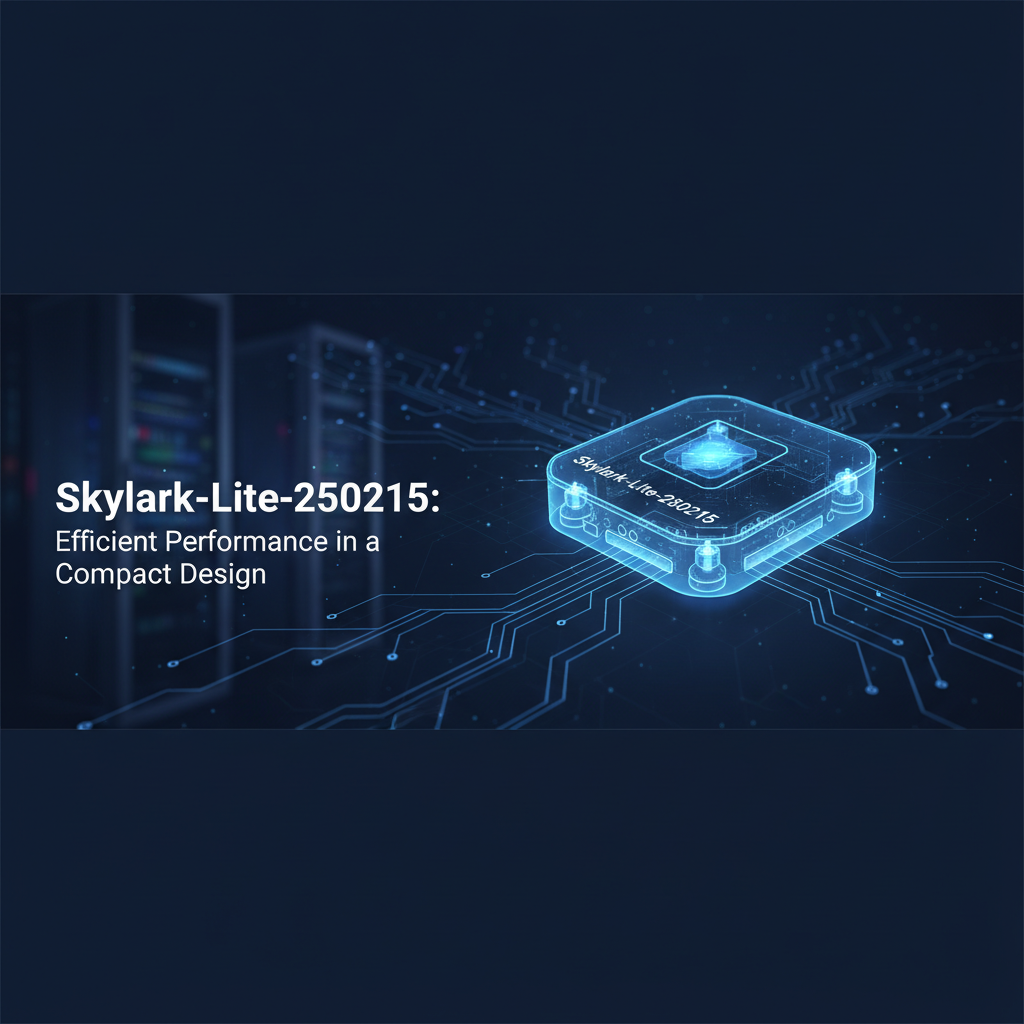

In an era increasingly defined by the pervasive influence of technology, the demand for devices that are not only powerful but also remarkably efficient and compact has never been higher. From edge computing devices to advanced IoT sensors and embedded AI systems, the imperative to deliver robust capabilities within stringent size and power constraints is a universal challenge. This is precisely the realm where the Skylark-Lite-250215 emerges as a formidable contender, embodying a paradigm shift in how we approach high-performance computing in a minimized footprint. Far from being just another component, the Skylark-Lite-250215 represents a meticulously engineered solution designed to push the boundaries of what is possible in compact hardware, setting new benchmarks for efficiency and reliability.
This comprehensive exploration delves into the intricate world of the Skylark-Lite-250215, dissecting its core architectural principles, innovative design philosophies, and the myriad of Performance optimization strategies that elevate its capabilities. We will navigate through its technical nuances, understand its strategic position within the broader landscape of "skylark model" variants, and uncover the real-world implications of its compact, yet potent, design. The goal is to provide a holistic view of how this particular model achieves a delicate balance between raw processing power and an economical operational profile, making it an indispensable asset in the accelerating march towards ubiquitous intelligent systems.
The Genesis of Compact Power: Introducing the Skylark-Lite-250215
The concept of "lite" in the Skylark-Lite-250215 is not merely a descriptor of its physical dimensions; it signifies a fundamental design philosophy centered around intelligent resource utilization and streamlined operations. Born from a pressing need for high-performance computing at the very edge of networks, where space, power, and thermal management are often critical bottlenecks, the Skylark-Lite-250215 is an exemplary product of contemporary engineering. It is designed for applications demanding rapid data processing, real-time analytics, and sophisticated decision-making capabilities, all while operating within exceptionally tight environmental envelopes.
The development of the Skylark-Lite-250215 was spurred by the realization that many emerging applications – ranging from smart city infrastructure and autonomous vehicles to advanced robotics and portable medical devices – require compute power that is both proximate to the data source and incredibly frugal in its consumption. Traditional, power-hungry server architectures are simply unsuitable for such scenarios. This led to a concerted effort to rethink processor design, memory management, and interconnectivity, culminating in a model that encapsulates significant processing capabilities within a form factor that belies its true potential.
At its core, the Skylark-Lite-250215 distinguishes itself through a unique blend of hardware and software co-design. Every aspect, from the selection of semiconductor materials to the micro-architecture of its processing units, has been optimized for efficiency. This integrated approach ensures that the "lite" designation translates into lighter power consumption, lighter thermal output, and a lighter physical footprint, without compromising the ability to handle complex computational loads. It stands as a testament to the fact that advanced computing is no longer confined to expansive data centers but can thrive in the most restrictive environments, unlocking new possibilities across a vast array of industries.
Core Design Philosophy: Efficiency as the Ultimate Metric
The driving force behind the Skylark-Lite-250215 is an unwavering commitment to efficiency. This commitment permeates every layer of its design and operation, making it a standout among "skylark model" offerings. Efficiency here is a multi-faceted concept, encompassing:
- Power Efficiency: Minimizing energy consumption per computational task, crucial for battery-powered devices and reducing operational costs in large-scale deployments.
- Thermal Efficiency: Generating minimal heat, simplifying cooling solutions and enabling deployment in passively cooled or confined spaces.
- Space Efficiency: Achieving maximum computational density within the smallest possible physical volume.
- Cost Efficiency: Optimizing the bill of materials and long-term operational expenses through smart design and reduced power draw.
- Performance Efficiency: Delivering high computational throughput and responsiveness for its given power and size constraints, rather than raw peak performance at any cost.
This holistic view of efficiency defines the Skylark-Lite-250215. It's not about being the fastest chip on the market irrespective of power, but about being the most effective solution within its specific design envelope. This philosophy directly informs its architectural choices, from highly integrated system-on-chip (SoC) designs to specialized accelerators tailored for specific workloads, ensuring that every transistor and every clock cycle contributes meaningfully to the overall system's goals.
Architectural Innovations Driving Skylark-Lite-250215
The formidable capabilities of the Skylark-Lite-250215 are rooted in a series of sophisticated architectural innovations. These innovations are not merely incremental improvements but represent strategic departures from conventional designs, meticulously crafted to achieve its compact, high-performance, and energy-efficient profile. Understanding these foundational elements is key to appreciating its strategic importance within the "skylark model" lineage.
Integrated System-on-Chip (SoC) Design
One of the most defining characteristics of the Skylark-Lite-250215 is its highly integrated System-on-Chip (SoC) architecture. Unlike traditional setups where the CPU, GPU, memory controller, and various peripherals reside as separate chips on a motherboard, the Skylark-Lite-250215 integrates these critical components onto a single silicon die. This integration yields several profound advantages:
- Reduced Physical Size: Consolidating components onto one chip drastically shrinks the overall footprint, making it ideal for compact devices.
- Lower Power Consumption: Eliminating the need for lengthy traces between chips reduces signal loss and parasitic capacitance, leading to significant power savings.
- Enhanced Performance: Direct, high-speed communication pathways between integrated components (e.g., CPU and specialized accelerators) eliminate I/O bottlenecks, resulting in faster data processing and lower latency.
- Simplified Manufacturing: Fewer discrete components simplify board design and assembly, potentially reducing manufacturing costs and improving reliability.
The SoC approach in the Skylark-Lite-250215 typically includes a multi-core CPU cluster, an optimized GPU for graphics and parallel processing, a dedicated Neural Processing Unit (NPU) or AI accelerator for machine learning tasks, and high-speed memory interfaces, all managed by an intelligent power management unit.
Heterogeneous Compute Architecture
Further enhancing its efficiency, the Skylark-Lite-250215 leverages a heterogeneous compute architecture. This design principle involves integrating different types of processing units, each optimized for specific kinds of workloads. Instead of relying solely on general-purpose CPUs, which can be inefficient for highly parallel or specialized tasks, the Skylark-Lite-250215 intelligently dispatches tasks to the most suitable processing element:
- CPU Cores: Handle general-purpose computing, operating system tasks, and sequential processing. The Skylark-Lite-250215 often features a mix of high-performance and high-efficiency CPU cores (e.g., big.LITTLE architecture or similar) to optimize power consumption for varying workloads.
- GPU Cores: Excel at parallel processing, making them ideal for graphics rendering, video encoding/decoding, and many scientific computations.
- AI Accelerators (NPU/DSP): Specifically designed for machine learning inference tasks, these units can execute neural network operations with far greater energy efficiency and speed than traditional CPUs or even GPUs for certain workloads.
- Specialized DSPs (Digital Signal Processors): Used for audio, image processing, and other real-time signal analysis, offloading these tasks from the CPU.
This intelligent task distribution is a cornerstone of its Performance optimization, ensuring that computational resources are utilized with maximum efficacy and minimum waste.
Advanced Memory Subsystem
Memory access is often a critical bottleneck in modern computing systems. The Skylark-Lite-250215 addresses this with an advanced memory subsystem tailored for low latency and high bandwidth within its power constraints:
- Integrated LPDDR (Low-Power Double Data Rate) Memory: Directly integrated or closely coupled LPDDR memory modules offer significantly lower power consumption compared to standard DDR memory, while still providing ample bandwidth.
- Multi-level Caching: A sophisticated hierarchy of L1, L2, and shared L3 caches minimizes the need to access slower main memory, drastically improving data access times for frequently used information.
- Intelligent Memory Controllers: These controllers employ predictive algorithms and data prefetching techniques to anticipate data needs, further reducing memory latency and improving overall system responsiveness.
Power Management Unit (PMU) and Dynamic Voltage/Frequency Scaling (DVFS)
A dedicated and highly intelligent Power Management Unit (PMU) is central to the Skylark-Lite-250215's efficiency. The PMU continuously monitors the workload and dynamically adjusts the voltage and frequency of various processing units (Dynamic Voltage and Frequency Scaling - DVFS). This capability ensures that components only consume the power necessary for their current task, rather than operating at peak power all the time. For example, during periods of low activity, CPU cores can enter deep sleep states or operate at significantly reduced frequencies, while during intense computational bursts, they can ramp up to full power. This dynamic adaptation is crucial for extending battery life in portable devices and reducing overall energy costs.
These architectural choices collectively position the Skylark-Lite-250215 as a leader in compact, efficient computing, demonstrating how thoughtful integration and specialized processing can redefine the capabilities of small-form-factor devices.
Key Conceptual Specifications of Skylark-Lite-250215
To better illustrate the compact yet powerful nature of the Skylark-Lite-250215, let's consider a hypothetical set of specifications that align with its design philosophy:
| Feature | Specification | Benefit |
|---|---|---|
| Processor Cores | 4x ARM Cortex-A78 (Performance) + 4x ARM Cortex-A55 (Efficiency) | Balanced power and performance, intelligent task scheduling |
| Graphics Processor | Mali-G78 MP10 (10 Cores) | High-performance graphics, AI acceleration for vision tasks |
| Neural Processing Unit | 2.5 TOPS (Tera Operations Per Second) dedicated NPU | Ultra-efficient AI inference, real-time machine learning on-device |
| Manufacturing Process | 5nm FinFET | Low power consumption, high transistor density, reduced heat |
| Memory | 8GB LPDDR5 (Up to 6400 Mbps) | Fast data access, low power, optimized for mobile/embedded |
| Storage Interface | UFS 3.1 Controller | High-speed storage access, improved system responsiveness |
| Video Decoding | 8K H.265/VP9/AV1 at 30fps | High-resolution media playback, efficient video processing |
| Connectivity | Integrated Wi-Fi 6E, Bluetooth 5.2, 5G Modem (optional) | Advanced wireless communication, low latency networking |
| Power Consumption | 5-15W (typical workload dependent) | Ideal for battery-powered devices and passively cooled systems |
| Form Factor | < 20mm x 20mm BGA Package | Ultra-compact footprint for embedded applications |
Note: These specifications are illustrative and representative of the capabilities expected from a device like the Skylark-Lite-250215, demonstrating a focus on cutting-edge efficiency and performance in a compact design.
Strategies for Performance optimization in Skylark-Lite-250215
Achieving efficient performance in a compact design like the Skylark-Lite-250215 is not solely about robust hardware; it necessitates a multi-layered approach to Performance optimization that spans hardware, software, and system-level considerations. These strategies are meticulously integrated to extract the maximum possible utility from every watt of power and every square millimeter of silicon.
1. Hardware-Level Optimizations
Beyond the core architectural choices discussed, several fine-grained hardware optimizations contribute significantly to the Skylark-Lite-250215's prowess:
- Process Technology: Utilizing advanced semiconductor manufacturing processes, such as 5nm or even 3nm FinFET, allows for a higher transistor density, lower leakage current, and improved power efficiency at the foundational level. Smaller transistors switch faster and consume less power.
- Custom IP Cores: The design often incorporates custom-designed Intellectual Property (IP) blocks (e.g., for image processing, cryptography, or specific AI algorithms) that are far more efficient for their intended tasks than general-purpose CPU instructions.
- Clock Gating and Power Gating: These techniques dynamically switch off the clock signal or completely cut off power to inactive parts of the chip. Clock gating prevents unnecessary switching activity, while power gating dramatically reduces static power leakage, especially during idle periods.
- Voltage Islands: Dividing the chip into different voltage domains allows for independent voltage scaling for different components based on their workload, further refining power management beyond global DVFS.
- Thermal Management: Despite its low heat generation, optimized thermal pathways within the chip package and board design are crucial. This includes efficient heat spreading materials and, where possible, design for passive cooling, reducing reliance on noisy and power-consuming fans.
2. Software and Firmware-Level Optimizations
Hardware can only achieve its full potential with intelligent software. The Skylark-Lite-250215 benefits from extensive software Performance optimization:
- Operating System (OS) Customization: Lightweight, real-time operating systems (RTOS) or highly customized Linux distributions are often employed. These are stripped down to essential services, reducing memory footprint, boot times, and background processing, thus conserving power and CPU cycles.
- Compiler Optimizations: Compilers specifically tuned for the Skylark-Lite-250215's unique architecture (e.g., ARM NEON instructions, NPU specific instruction sets) can generate highly optimized machine code. This includes aggressive inlining, loop unrolling, vectorization, and cache-aware optimizations.
- Driver Optimization: Highly efficient and low-overhead device drivers are crucial for minimizing CPU utilization when interacting with hardware peripherals.
- Algorithm and Data Structure Selection: For critical applications running on the Skylark-Lite-250215, choosing algorithms with lower computational complexity and data structures that minimize memory accesses (e.g., cache-friendly layouts) can yield substantial performance gains.
- Load Balancing and Task Scheduling: Intelligent schedulers ensure that tasks are distributed efficiently across the heterogeneous cores (CPU, GPU, NPU), prioritizing critical tasks and leveraging the most energy-efficient core for each specific workload. This is especially vital for maximizing the utility of the "skylark model" approach to diversified processing units.
3. Application-Level Optimizations
Developers building applications for the Skylark-Lite-250215 also play a critical role in maximizing its efficiency:
- Profiling and Benchmarking: Thorough profiling identifies performance bottlenecks in application code, allowing developers to target specific areas for optimization. Benchmarking against reference workloads helps ensure that changes yield tangible improvements.
- Resource Management: Applications must be designed to be resource-aware, releasing memory and other resources promptly when no longer needed. Background processes should be minimized or delayed.
- Asynchronous Processing: Utilizing asynchronous programming models prevents blocking operations from stalling the entire application, maintaining responsiveness and enabling parallel execution.
- Quantization and Pruning for AI Models: For AI workloads on the dedicated NPU, techniques like model quantization (reducing precision of weights and activations) and pruning (removing redundant connections) can significantly reduce model size and inference time without substantial loss in accuracy, crucial for Performance optimization on edge devices.
- Edge-Cloud Collaboration: Strategically offloading highly complex or non-time-critical computations to cloud resources, while keeping latency-sensitive tasks on the Skylark-Lite-250215 at the edge. This hybrid approach leverages the strengths of both environments.
4. System-Level Considerations
Optimizing the entire system context is equally important:
- Integrated Power Delivery Networks: Clean and stable power delivery is critical. Highly integrated voltage regulators (e.g., buck converters) with low quiescent current ensure minimal power loss during voltage conversion.
- I/O Optimization: Efficient communication protocols and low-power interfaces for peripherals (e.g., MIPI for cameras, low-power serial buses) reduce overhead and power consumption associated with data transfer.
- Sensor Fusion and Pre-processing: For applications involving multiple sensors, intelligently fusing and pre-processing data at the sensor level or in dedicated microcontrollers can reduce the data load on the main Skylark-Lite-250215 processor, freeing up cycles for more complex tasks.
- Firmware Updates (FOTA): Over-the-air firmware updates can continuously introduce new optimizations and bug fixes, ensuring the long-term efficiency and security of deployed Skylark-Lite-250215 units.
By meticulously implementing these diverse strategies, the Skylark-Lite-250215 achieves its remarkable balance of compact design and efficient performance, making it a highly versatile solution for the demands of modern edge computing.
Comparative Landscape: Skylark-Lite-250215 within the "Skylark Model" Ecosystem
The Skylark-Lite-250215 is not an isolated innovation but rather a specialized variant within a broader family of "skylark model" offerings, each tailored for different application needs. Understanding its position relative to other models, or similar compact designs in the market, highlights its unique value proposition and the specific niche it aims to fill.
Historically, processor models have often followed a linear progression: more cores, higher clock speeds, larger caches – all generally leading to increased power consumption and physical size. The "skylark model" philosophy, however, often emphasizes a more diversified approach, focusing on specific performance envelopes and power budgets. The "Lite" designation in Skylark-Lite-250215 explicitly signals its optimization for power-constrained and space-limited environments.
Let's consider a conceptual comparison:
| Feature/Metric | Skylark-Lite-250215 (Compact/Efficient) | Skylark-Pro-300620 (High-Performance) | Skylark-Edge-100110 (Ultra-Low Power IoT) | Competitor-X (General Purpose Edge SoC) |
|---|---|---|---|---|
| Target Application | Edge AI, Robotics, High-end IoT, Automotive | Data Center Edge, Workstations, High-res VR | Basic IoT Sensors, Wearables, Smart Home | Mid-range IoT, Basic Embedded Systems |
| CPU Cores | 4+4 Heterogeneous ARM (A78+A55) | 8x ARM Cortex-X2/A710 | 2x ARM Cortex-A53 | 4x ARM Cortex-A76 |
| Dedicated NPU/AI | 2.5 TOPS | 8+ TOPS | 0.5 TOPS | 1.5 TOPS |
| Power Budget | 5-15W | 30-60W | < 1W | 10-25W |
| Thermal Design | Passive/Small Heatsink | Active Cooling (Fan Required) | Passive | Passive/Small Heatsink |
| Form Factor | < 20x20mm BGA | > 40x40mm Package/Module | < 10x10mm Package | 25x25mm BGA |
| Key Strength | Best balance of performance, power, and size | Maximum raw compute power | Extreme power efficiency, minimal footprint | Good all-rounder, lower cost |
| Connectivity | Wi-Fi 6E, BT 5.2, 5G | 10GbE, Wi-Fi 6E, PCIe Gen4 | BT LE, Sub-GHz Radio, LoRaWAN | Wi-Fi 5, BT 5.0, GbE |
This conceptual table highlights that while other "skylark model" variants like the "Skylark-Pro-300620" might offer higher raw compute power, they do so at the expense of greater power consumption and a larger physical footprint. Conversely, "Skylark-Edge-100110" sacrifices significant processing capability for extreme power efficiency, suitable for less demanding tasks. The Skylark-Lite-250215 carves out a sweet spot, providing substantial AI and general-purpose compute power without the usual penalties of size and heat.
Against general-purpose competitor SoCs, the Skylark-Lite-250215 often distinguishes itself through a more advanced manufacturing process, more sophisticated heterogeneous computing units (especially the NPU), and a more aggressive approach to power management. This allows it to achieve similar or superior performance with a smaller power budget, critical for differentiating in competitive markets where battery life and passive cooling are paramount.
The strategic importance of the Skylark-Lite-250215 lies in its ability to bring advanced AI and processing capabilities closer to the data source, transforming what were once dumb sensors into intelligent agents capable of real-time analysis and decision-making, without being tethered to large power supplies or cooling systems. It represents a mature stage of Performance optimization where efficiency is not a compromise but a fundamental pillar of design.
XRoute is a cutting-edge unified API platform designed to streamline access to large language models (LLMs) for developers, businesses, and AI enthusiasts. By providing a single, OpenAI-compatible endpoint, XRoute.AI simplifies the integration of over 60 AI models from more than 20 active providers(including OpenAI, Anthropic, Mistral, Llama2, Google Gemini, and more), enabling seamless development of AI-driven applications, chatbots, and automated workflows.
Deployment and Integration: Unleashing the Potential of Skylark-Lite-250215
The true value of the Skylark-Lite-250215 becomes apparent in its diverse deployment scenarios and its ability to seamlessly integrate into complex systems. Its compact design and efficient performance make it an ideal choice for a new generation of intelligent devices and infrastructure. However, maximizing its potential requires thoughtful consideration of integration strategies, particularly in the context of burgeoning AI applications.
Edge Computing and IoT Devices
The primary domain for the Skylark-Lite-250215 is at the edge of the network. In IoT deployments, it can power:
- Smart Cameras/Vision Systems: Performing real-time object detection, facial recognition, and anomaly detection directly on the camera, reducing bandwidth needs and enhancing privacy by processing data locally.
- Industrial IoT Gateways: Aggregating data from numerous sensors, performing local analytics, and filtering irrelevant data before sending critical insights to the cloud, improving operational efficiency and reducing latency in control systems.
- Robotics: Enabling sophisticated navigation, sensor fusion, and real-time decision-making for autonomous mobile robots and drones, where low latency and power efficiency are paramount.
- Wearable Devices: Providing advanced health monitoring, activity tracking, and intelligent notification capabilities with extended battery life.
Its ability to execute AI models locally is a game-changer for these applications, enhancing responsiveness and ensuring privacy.
Automotive and Transportation Systems
In the automotive sector, the Skylark-Lite-250215 can contribute to:
- Advanced Driver-Assistance Systems (ADAS): Powering modules for lane keeping, adaptive cruise control, pedestrian detection, and surround-view systems with low latency processing.
- In-Cabin Monitoring: Enabling driver drowsiness detection, occupant monitoring, and gesture control systems.
- Infotainment Systems: Providing rich multimedia experiences and navigation capabilities while maintaining strict power budgets for vehicle electrical systems.
Medical and Healthcare Devices
The compact nature and processing power of the Skylark-Lite-250215 make it suitable for:
- Portable Diagnostic Tools: Enabling real-time image analysis (e.g., ultrasound, endoscopy) and vital sign monitoring with on-device AI for immediate insights.
- Personalized Health Monitors: Offering continuous, intelligent monitoring for chronic conditions, with local data processing to identify trends and alert users or caregivers.
Integration with AI Ecosystems
While the Skylark-Lite-250215 excels at on-device AI inference, many applications demand interaction with larger, more powerful AI models, particularly Large Language Models (LLMs) or complex generative AI. This is where seamless integration with broader AI ecosystems becomes critical. An edge device powered by the Skylark-Lite-250215 might perform initial data filtering or local inference, but then, for more complex reasoning, summarization, or generation tasks, it might need to query a cloud-based LLM.
This hybrid approach—leveraging the edge for immediate, localized processing and the cloud for advanced, resource-intensive AI—is becoming increasingly prevalent. Managing connections to multiple cloud AI providers, each with its own API, can be a daunting task for developers. This is precisely the challenge that platforms like XRoute.AI address.
XRoute.AI is a cutting-edge unified API platform designed to streamline access to large language models (LLMs) for developers, businesses, and AI enthusiasts. By providing a single, OpenAI-compatible endpoint, XRoute.AI simplifies the integration of over 60 AI models from more than 20 active providers, enabling seamless development of AI-driven applications, chatbots, and automated workflows. For systems utilizing the Skylark-Lite-250215, XRoute.AI can act as a crucial bridge, allowing the compact device to effortlessly access a diverse range of cloud-based LLMs without the complexity of managing multiple API connections. This ensures low latency AI responses and often more cost-effective AI operations by routing requests to the best-performing or most economical model available. It empowers developers to build intelligent solutions that combine the best of edge processing with the power of cloud AI, all while focusing on high throughput, scalability, and developer-friendly tools. This symbiotic relationship maximizes the utility of the Skylark-Lite-250215 in comprehensive AI solutions.
Development Ecosystem and Tools
Successful deployment of the Skylark-Lite-250215 is also facilitated by a robust development ecosystem. This typically includes:
- Software Development Kits (SDKs): Comprehensive SDKs with APIs for accessing hardware accelerators, managing power states, and interacting with peripherals.
- Toolchains: Optimized compilers, debuggers, and profilers tailored for the ARM architecture and specialized processing units.
- AI Development Frameworks: Support for popular AI frameworks like TensorFlow Lite, PyTorch Mobile, and ONNX Runtime, enabling developers to train models in the cloud and deploy highly optimized inference models on the NPU of the Skylark-Lite-250215.
- Community Support: Active developer communities and documentation reduce development hurdles and accelerate time-to-market.
By considering these integration aspects, from specific application needs to leveraging powerful API platforms like XRoute.AI, developers can fully unlock the potential of the Skylark-Lite-250215, creating sophisticated, efficient, and intelligent solutions for the modern world.
Challenges and Future Outlook for Compact, Efficient Performance
While the Skylark-Lite-250215 exemplifies remarkable progress in delivering efficient performance in a compact design, the journey towards ever more capable and constrained computing is fraught with ongoing challenges. Addressing these challenges and anticipating future trends will define the next generation of "skylark model" innovations.
Current Challenges
- Thermal Management in Extreme Miniaturization: Even with highly efficient designs, packing significant compute power into a tiny footprint invariably generates heat. As devices shrink further, dissipating this heat becomes exponentially harder without compromising performance or reliability. Novel cooling solutions, including advanced passive designs or even micro-fluidic cooling, are areas of active research.
- Software Optimization Complexity: The heterogeneous architecture, while powerful, introduces significant complexity for software developers. Optimally distributing tasks across CPUs, GPUs, NPUs, and other accelerators requires deep understanding and specialized programming techniques, leading to steeper learning curves and potential optimization hurdles.
- Security at the Edge: Edge devices are often deployed in less controlled environments, making them vulnerable to physical tampering and cyberattacks. Ensuring robust hardware-level security, secure boot processes, trusted execution environments, and ongoing over-the-air security updates is critical but adds complexity and resource overhead.
- Power Source Limitations: Many target applications for the Skylark-Lite-250215 rely on battery power or energy harvesting. Continuous improvement in battery technology and efficient power conversion remains a critical dependency for extending operational longevity without increasing device size.
- Cost vs. Performance Trade-offs: Advanced manufacturing processes (like 5nm or 3nm) and custom IP cores are expensive. Balancing the desire for cutting-edge performance and efficiency with the need for cost-effective solutions for mass-market deployment is a perpetual challenge.
Future Outlook and Trends
The trajectory of the Skylark-Lite-250215 and similar compact, efficient compute platforms points towards several exciting future trends:
- Even Greater Specialization and Heterogeneity: Expect to see even more specialized accelerators for specific AI tasks (e.g., dedicated transformers, sparse matrix operations) or emerging compute paradigms. This hyper-specialization will drive further energy efficiency for targeted workloads.
- Neuromorphic and Analog Computing: Beyond digital heterogeneous architectures, the long-term future might involve neuromorphic chips or analog computing paradigms that mimic the brain's structure, offering potentially orders of magnitude greater power efficiency for AI tasks.
- Advanced Packaging Technologies: Innovations in 3D stacking (e.g., chiplets, package-on-package) will allow for even denser integration of components within a small footprint, overcoming some of the limitations of monolithic SoC designs.
- Increased Autonomy and Self-Healing: Future compact models will likely incorporate more advanced self-monitoring, self-optimization, and even self-healing capabilities, enabling them to operate autonomously for longer periods with minimal human intervention.
- Quantum Computing at the Edge (Long-term): While nascent, the distant future could see ultra-compact, specialized quantum processors or quantum-inspired accelerators integrated into edge devices for solving specific, highly complex problems that are intractable for classical computers.
- Enhanced Software Abstraction and Tooling: To counter the complexity of heterogeneous hardware, significant investments will be made in developing more intuitive software abstraction layers, AI compilers, and automated optimization tools that can seamlessly map diverse workloads to the most efficient hardware components. This will lower the barrier to entry for developers and unlock the full potential of systems like the Skylark-Lite-250215.
- Ethical AI and Trustworthy Computing: As AI becomes more ubiquitous on compact devices, there will be a growing emphasis on "trustworthy AI" – ensuring models are fair, transparent, and robust against adversarial attacks. Hardware-level security features and privacy-preserving AI techniques will become standard.
The ongoing evolution of the "skylark model" family, with the Skylark-Lite-250215 at the forefront of compact efficiency, will continue to redefine the landscape of computing. By relentlessly pursuing advancements in materials science, micro-architecture, and software intelligence, these devices will remain pivotal in shaping a future where intelligence is truly ubiquitous, always on, and incredibly efficient. The drive for continuous Performance optimization within ever-tighter constraints is not just an engineering challenge; it is a fundamental quest that fuels innovation across the entire technology ecosystem.
Conclusion: The Unseen Power of the Compact Future
The Skylark-Lite-250215 stands as a compelling testament to the power of meticulous engineering and forward-thinking design. In a world increasingly reliant on instantaneous insights and intelligent automation, the demand for computing solutions that can deliver robust performance without the typical trade-offs of size, power consumption, and thermal output has become paramount. This "skylark model" variant, with its emphasis on "lite" dimensions and heavyweight capabilities, perfectly embodies this paradigm shift.
Throughout this extensive exploration, we have delved into the intricate architectural innovations that underpin the Skylark-Lite-250215, from its integrated SoC design and heterogeneous compute architecture to its advanced memory subsystem and dynamic power management. These foundational elements are not merely features but rather strategic choices that enable its remarkable efficiency. We have also examined the multifaceted approach to Performance optimization, spanning hardware, software, and application layers, demonstrating how every component and every line of code is geared towards maximizing output per watt and per cubic millimeter.
The comparative analysis positioned the Skylark-Lite-250215 as a uniquely balanced solution within the broader "skylark model" family, carving out a critical niche for high-performance edge computing. Its versatility in deployment across diverse sectors—from smart cities and autonomous vehicles to advanced medical devices and industrial IoT—underscores its transformative potential. Furthermore, its ability to integrate seamlessly into broader AI ecosystems, facilitated by platforms like XRoute.AI, highlights its role in enabling hybrid AI solutions that intelligently combine on-device processing with the expansive power of cloud-based large language models.
While challenges remain in the relentless pursuit of miniaturization and efficiency, the future outlook for devices like the Skylark-Lite-250215 is bright. Continuous innovation in materials, processing technologies, and AI algorithms promises even more capable and resource-frugal solutions. The legacy of the Skylark-Lite-250215 will be defined not just by its specifications, but by its contribution to embedding intelligence into the very fabric of our physical world, quietly powering a future where technology is pervasive yet invisible, powerful yet unobtrusive. It is a beacon of what is achievable when efficiency is elevated from a mere consideration to the ultimate design principle.
Frequently Asked Questions (FAQ)
Q1: What makes the Skylark-Lite-250215 particularly efficient for edge computing?
A1: The Skylark-Lite-250215's efficiency stems from a combination of factors: a highly integrated System-on-Chip (SoC) design that reduces signal paths and power loss; a heterogeneous compute architecture with specialized accelerators (like an NPU) for specific tasks; a sophisticated power management unit that dynamically adjusts voltage and frequency; and being built on an advanced, low-power manufacturing process (e.g., 5nm). These features allow it to deliver significant processing power with minimal energy consumption and heat generation, crucial for edge environments.
Q2: How does the Skylark-Lite-250215 handle AI workloads given its compact size?
A2: Despite its compact size, the Skylark-Lite-250215 incorporates a dedicated Neural Processing Unit (NPU) or AI accelerator. This specialized hardware is designed to execute machine learning inference tasks with far greater energy efficiency and speed than traditional CPUs or GPUs for certain workloads. Combined with software optimizations like model quantization and pruning, it enables robust, real-time AI inference directly on the device, reducing reliance on cloud resources for immediate decisions.
Q3: Can the Skylark-Lite-250215 be used in conjunction with cloud AI services?
A3: Absolutely. While the Skylark-Lite-250215 excels at on-device processing, it is often deployed in hybrid AI architectures. It can perform initial data processing, filtering, or simple inference locally, then offload more complex or resource-intensive AI tasks, such as interactions with large language models (LLMs), to cloud services. Platforms like XRoute.AI are designed to facilitate this by providing a unified API to access multiple cloud AI models, simplifying integration and optimizing for low latency and cost-effectiveness.
Q4: What kind of applications benefit most from the Skylark-Lite-250215's design?
A4: The Skylark-Lite-250215 is ideal for applications where compact size, low power consumption, and real-time processing are critical. This includes edge AI devices such as smart cameras for surveillance and analytics, autonomous robots and drones, advanced driver-assistance systems (ADAS) in vehicles, portable medical diagnostic tools, and high-performance industrial IoT gateways. Its design allows these devices to operate independently and efficiently in diverse, often constrained, environments.
Q5: What are the main challenges in developing for a compact and efficient model like the Skylark-Lite-250215?
A5: Key challenges include optimizing software to fully leverage the heterogeneous compute architecture (CPU, GPU, NPU) for maximum efficiency; managing thermal dissipation within extreme miniaturization without active cooling; ensuring robust hardware and software security at the edge; and striking a balance between cutting-edge performance, advanced manufacturing costs, and market price. Developers need to employ specialized toolchains, profiling techniques, and a deep understanding of the underlying architecture to overcome these hurdles.
🚀You can securely and efficiently connect to thousands of data sources with XRoute in just two steps:
Step 1: Create Your API Key
To start using XRoute.AI, the first step is to create an account and generate your XRoute API KEY. This key unlocks access to the platform’s unified API interface, allowing you to connect to a vast ecosystem of large language models with minimal setup.
Here’s how to do it: 1. Visit https://xroute.ai/ and sign up for a free account. 2. Upon registration, explore the platform. 3. Navigate to the user dashboard and generate your XRoute API KEY.
This process takes less than a minute, and your API key will serve as the gateway to XRoute.AI’s robust developer tools, enabling seamless integration with LLM APIs for your projects.
Step 2: Select a Model and Make API Calls
Once you have your XRoute API KEY, you can select from over 60 large language models available on XRoute.AI and start making API calls. The platform’s OpenAI-compatible endpoint ensures that you can easily integrate models into your applications using just a few lines of code.
Here’s a sample configuration to call an LLM:
curl --location 'https://api.xroute.ai/openai/v1/chat/completions' \
--header 'Authorization: Bearer $apikey' \
--header 'Content-Type: application/json' \
--data '{
    "model": "gpt-5",
    "messages": [
        {
            "content": "Your text prompt here",
            "role": "user"
        }
    ]
}'
With this setup, your application can instantly connect to XRoute.AI’s unified API platform, leveraging low latency AI and high throughput (handling 891.82K tokens per month globally). XRoute.AI manages provider routing, load balancing, and failover, ensuring reliable performance for real-time applications like chatbots, data analysis tools, or automated workflows. You can also purchase additional API credits to scale your usage as needed, making it a cost-effective AI solution for projects of all sizes.
Note: Explore the documentation on https://xroute.ai/ for model-specific details, SDKs, and open-source examples to accelerate your development.