Top LLM Models 2025: Predictions & Insights

The year 2025 is poised to be a landmark period in the rapidly accelerating world of Artificial Intelligence, particularly for Large Language Models (LLMs). As we stand on the precipice of unprecedented advancements, the landscape of top LLM models 2025 promises to be more dynamic, sophisticated, and impactful than anything we've witnessed thus far. What began as a fascinating research area has blossomed into a foundational technology, reshaping industries, fueling innovation, and fundamentally altering how we interact with information and technology. This comprehensive exploration delves deep into the anticipated evolution, key contenders, emerging trends, and the critical factors that will define the LLM rankings in the coming year, providing a granular look at the forces driving this transformative wave.
The Current LLM Landscape: A Foundation for Future Giants
Before we cast our gaze forward, it's essential to briefly acknowledge the titans that have defined the current era. Models like OpenAI's GPT series (GPT-3.5, GPT-4), Google's Gemini, Anthropic's Claude, and Meta's Llama family have pushed the boundaries of natural language understanding and generation, captivating the imagination of developers, businesses, and the general public alike. These models have demonstrated remarkable capabilities in tasks ranging from complex text summarization and code generation to creative writing and nuanced conversational AI.
However, the current generation, while impressive, often grapples with limitations such as occasional "hallucinations," computational intensity, and the need for increasingly sophisticated prompt engineering. These challenges are precisely what the next wave of innovation, leading into and through 2025, aims to address. The lessons learned from the deployment and scaling of these foundational models are invaluable blueprints for the architectural and algorithmic breakthroughs expected in the near future. The fierce competition among leading AI labs, coupled with the insatiable demand for more capable and reliable AI, creates a fertile ground for exponential growth and the emergence of truly groundbreaking systems.
Factors Shaping LLM Evolution Towards 2025
The trajectory of LLM development is not arbitrary; it's a meticulously engineered path influenced by several converging factors. Understanding these drivers is crucial for predicting which models will rise to the top and define the next generation of AI capabilities.
1. Data Diversity and Quality at Scale
The fuel for any LLM is data. While current models have devoured vast swathes of the internet, the future hinges on not just quantity, but unprecedented quality and diversity. Expect to see: * Curated Datasets: A move away from purely web-scraped data towards meticulously curated, domain-specific, and ethically sourced datasets. This includes specialized scientific texts, proprietary corporate data, and carefully vetted multimodal content. * Synthetic Data Generation: Advanced techniques for generating high-quality synthetic data to augment real-world data, especially for scarce or sensitive domains. This can help overcome biases inherent in existing datasets. * Multimodal Data Integration: Beyond text and images, the integration of audio, video, sensor data, and even haptic feedback will become paramount, allowing models to develop a more holistic understanding of the world.
2. Compute Power and Energy Efficiency
Training and running LLMs are incredibly resource-intensive. The race for more efficient compute is a major determinant of future success. * Advanced AI Accelerators: Continuous innovation in chips specifically designed for AI workloads (e.g., NVIDIA's next-gen GPUs, Google's TPUs, custom ASICs from startups) will be critical. These chips will offer higher throughput, lower latency, and improved energy efficiency. * Distributed Training Architectures: More sophisticated ways to distribute training across thousands of processors will enable the development of even larger and more complex models without hitting compute bottlenecks. * Algorithmic Efficiencies: Research into novel architectures, quantization techniques, sparsity, and distillation methods will reduce the computational burden for both training and inference, making LLMs more accessible and sustainable.
3. Architectural Innovations and Novel Paradigms
The Transformer architecture has been foundational, but its limitations are becoming apparent. 2025 will likely usher in new architectural breakthroughs. * Beyond Transformers: While Transformers will still play a role, hybrid architectures or entirely new paradigms that better handle long-range dependencies, reasoning, and multimodal inputs are on the horizon. * Modular and Mixture-of-Experts (MoE) Models: These models, which can dynamically activate specific "experts" for different tasks, offer a path to scaling capabilities without a proportional increase in compute, improving efficiency and specialization. * Neuro-symbolic AI Integration: Blending statistical learning with symbolic reasoning to enhance LLMs' ability to perform complex logical inferences, understand causal relationships, and reduce "hallucinations."
4. Multimodal Capabilities as a Standard
The ability to process and generate information across various modalities—text, images, audio, video—is rapidly moving from a novel feature to a fundamental expectation. * Seamless Integration: Future models won't just process different modalities; they will reason across them, generating coherent and contextually relevant outputs that blend multiple forms of information. Imagine an LLM that can watch a video, understand the emotional tone of the dialogue, and then generate a textual summary that accurately reflects both visual and auditory cues. * Unified Representations: Researchers are working on creating unified latent spaces where different modalities can be represented and processed cohesively, leading to a more profound understanding of complex real-world scenarios.
5. Ethical AI, Safety, and Alignment
As LLMs become more powerful, the ethical implications grow in significance. * Robust Alignment Techniques: Constitutional AI, reinforcement learning from human feedback (RLHF), and advanced red-teaming will be central to ensuring models are helpful, harmless, and honest. * Bias Mitigation and Fairness: Proactive measures to identify and reduce biases in training data and model outputs will be crucial for widespread adoption and trust. * Explainability (XAI): Developing methods to understand why an LLM makes a particular decision or generates a specific output will be vital for debugging, auditing, and building confidence, especially in critical applications.
6. Real-World Application Demands
The needs of industries and users drive much of the innovation. * Specialization: The market is demanding LLMs that excel in specific domains (e.g., legal, medical, financial) rather than generalists. These specialized models will leverage fine-tuned data and architectures. * Reliability and Factuality: For enterprise deployment, accuracy, consistency, and a low hallucination rate are non-negotiable. Research efforts are heavily focused on grounding LLMs with reliable knowledge bases and real-time data. * Low Latency and High Throughput: Business applications require models that can respond instantly and handle a massive volume of requests efficiently. Optimization for inference speed and scalability will be paramount.
Deep Dive into Anticipated Frontrunners: The Top LLM Models 2025 Contenders
The competition to create the definitive top LLM models 2025 is fierce, with several major players and innovative startups vying for supremacy. Each brings unique strengths and strategic advantages to the table.
1. OpenAI's Potential Contender: GPT-5 and Beyond
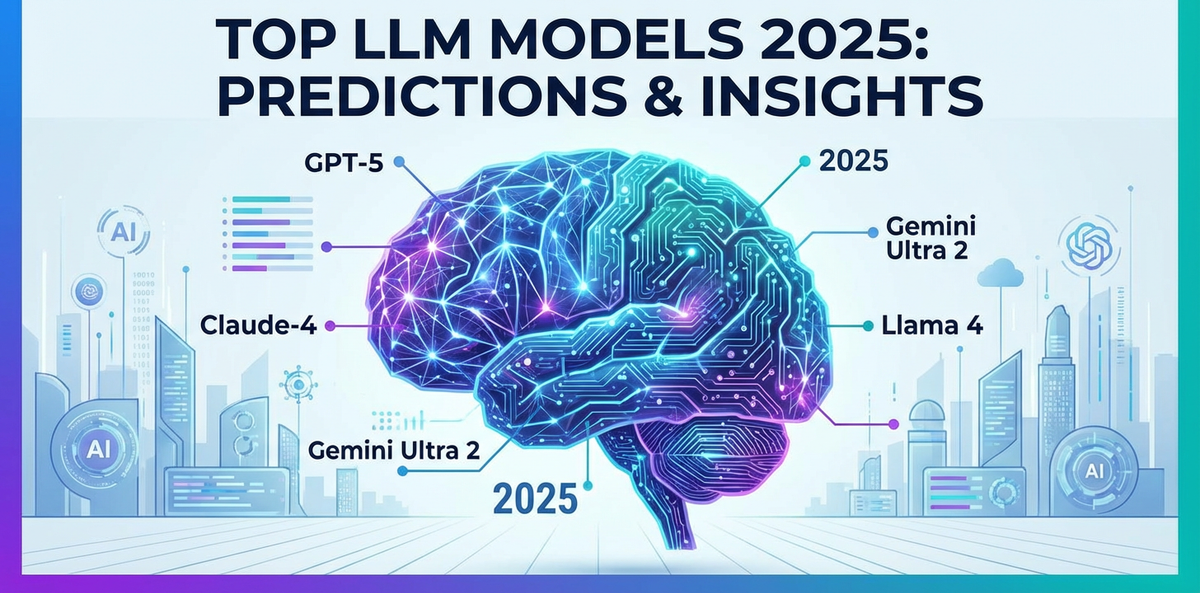
OpenAI has consistently set benchmarks with its GPT series, and the anticipation around GPT-5 is immense. While details remain speculative, drawing from OpenAI's trajectory and public statements, we can infer several key areas of advancement:
- Vastly Improved Reasoning Capabilities: GPT-5 is expected to demonstrate significantly enhanced logical reasoning, problem-solving, and abstract thinking. This would move it beyond pattern matching towards a more nuanced understanding of underlying principles and causal relationships, potentially tackling complex scientific or mathematical problems with greater accuracy.
- Advanced Multimodality: Beyond just understanding and generating text and static images, GPT-5 could seamlessly integrate real-time video, audio, and perhaps even interactive environments. Imagine an LLM that can analyze a complex engineering diagram, understand verbal instructions, and then suggest design optimizations while visually highlighting areas of concern. This seamless fusion of sensory input would unlock entirely new application possibilities.
- Extended Context Window and Memory: The ability to process and retain vastly longer contexts will be a game-changer. This means GPT-5 could analyze entire novels, extensive codebases, or years of corporate communication in a single query, maintaining coherence and extracting deep insights without losing track of details. This would enable more sophisticated long-form content generation, comprehensive document analysis, and persistent conversational agents.
- Reduced Hallucination Rates: OpenAI is heavily invested in improving factual accuracy and reliability. GPT-5 will likely incorporate advanced grounding techniques, perhaps leveraging vast knowledge graphs and real-time information retrieval systems, to minimize erroneous or fabricated outputs, making it more trustworthy for critical applications.
- Enhanced Controllability and Alignment: Building on "Constitutional AI" principles and sophisticated RLHF (Reinforcement Learning from Human Feedback), GPT-5 is expected to offer more granular control over its behavior, tone, and ethical boundaries. This would allow developers to fine-tune its responses for specific use cases while ensuring it adheres to safety guidelines and avoids harmful outputs.
- Efficiency and Scalability: Despite increased complexity, OpenAI is likely to prioritize architectural optimizations that enhance inference speed and reduce operational costs, making GPT-5 more practical for large-scale enterprise deployments. This could involve highly optimized Mixture-of-Experts (MoE) architectures or novel compression techniques.
The arrival of GPT-5 could redefine what's possible with generative AI, making it a strong contender for the very top spot in LLM rankings for 2025, especially given OpenAI's proven track record of innovation and widespread adoption.
2. Google's Gemini Family: Towards Ubiquitous Intelligence
Google's Gemini represents a multi-modal, highly capable family of models designed to be natively multimodal from the ground up. * Integrated Multimodal Reasoning: Gemini's strength lies in its ability to understand and operate across various data types (text, images, audio, video) holistically. Expect Google to push this further, enabling Gemini to perform complex tasks that require cross-modal understanding, such as analyzing a medical image, reading the associated patient history, and discussing potential diagnoses. * Scalability and Efficiency: Google's vast infrastructure and expertise in distributed systems will enable Gemini models to be exceptionally scalable, powering applications from mobile devices (Gemini Nano) to massive data centers (Gemini Ultra). * Enterprise Integration: With Google Cloud as its backbone, Gemini is poised for deep integration into enterprise solutions, offering tailored models for specific industry verticals and leveraging Google's extensive ecosystem of tools and services. * Ethical AI and Safety Focus: Google is heavily invested in responsible AI development, and future Gemini iterations will emphasize robust safety guardrails, bias detection, and alignment to Google's AI principles, aiming for reliable and trustworthy deployment.
3. Anthropic's Claude Series: The Safety-First Powerhouse
Anthropic, founded by former OpenAI researchers, has distinguished itself with its strong emphasis on safety, interpretability, and "Constitutional AI." * Advanced Constitutional AI: Claude models are trained using a set of principles derived from human values, leading to more helpful, harmless, and honest outputs. Expect further refinements to this approach, making Claude even more robust against adversarial attacks and biased responses. * Longer Context Windows and Memory: Claude has already demonstrated impressive capabilities in handling lengthy texts. Future iterations will likely extend this even further, enabling complex document analysis, legal research, and detailed code reviews. * Ethical Compliance and Enterprise Trust: Claude's design philosophy makes it particularly appealing for industries with stringent regulatory requirements and high stakes for ethical AI, such as finance, healthcare, and government. * Enhanced Reasoning and Self-Correction: Anthropic is likely to focus on improving Claude's ability to reason through complex problems and even self-correct its responses, leading to more reliable and nuanced interactions.
4. Meta's Llama Ecosystem: Democratizing LLM Access
Meta's Llama series, particularly Llama 2 and its open-source nature, has played a pivotal role in democratizing access to powerful LLMs, fostering a vibrant ecosystem of innovation. * Open-Source Advancements: Expect Llama 3 (or subsequent versions) to push the boundaries of open-source capabilities, offering performance that rivals or even surpasses proprietary models in certain benchmarks, while retaining the flexibility of open-source licensing. * Community-Driven Innovation: The open-source nature means a vast community of researchers and developers contribute to its improvement, creating specialized fine-tunes, novel applications, and faster iterations. * Efficiency and Accessibility: Meta is likely to continue optimizing Llama for efficiency, making it accessible on a wider range of hardware, from enterprise servers to edge devices, empowering a diverse array of developers. * Multimodal Integration: While primarily text-focused, future Llama models are expected to incorporate more robust multimodal capabilities, leveraging Meta's extensive research in vision and audio AI.
5. Other Promising Contenders: Diverse Approaches to Excellence
The LLM space is not a duopoly or triopoly. Several other players are making significant strides: * Mistral AI: Known for its highly efficient and powerful smaller models, Mistral AI is a dark horse to watch. Their focus on efficiency and performance with fewer parameters could lead to breakthrough models that offer top-tier capabilities at a fraction of the computational cost, challenging existing LLM rankings. * Cohere: Specializing in enterprise-grade LLMs, Cohere focuses on offering highly customizable and secure models for business applications, emphasizing grounding, RAG (Retrieval-Augmented Generation), and strong API integrations. * AI21 Labs: With models like Jurassic, AI21 Labs is known for its focus on providing robust, enterprise-ready language models with specific features like factual correctness and nuanced understanding. * Perplexity AI: While known for its search engine, Perplexity also develops powerful conversational AI models that excel in information retrieval and synthesis, potentially evolving into broader LLM offerings. * Specialized Vertical Models: Beyond general-purpose LLMs, expect a proliferation of highly specialized models tailored for specific industries (e.g., BloombergGPT for finance, Med-PaLM for healthcare). These models, leveraging proprietary datasets and domain expertise, will outperform generalists in their niche.
Emerging Trends and Innovations in 2025: Defining the Next Generation
Beyond individual models, several overarching trends will shape the top LLM models 2025 and influence how they are developed and deployed.
1. Multimodality as a Foundational Standard
The ability to process and generate information across text, image, audio, and video will no longer be a differentiator but a baseline expectation. Models will reason across these modalities, leading to more nuanced and contextually rich interactions. Imagine an AI that can understand a doctor's dictation, analyze a patient's MRI, and then generate a summary report, all while identifying potential discrepancies between the visual and auditory information. This unified understanding is critical for creating truly intelligent agents.
2. Enhanced Reasoning and AGI Alignment
The holy grail of AI—Artificial General Intelligence (AGI)—remains distant, but 2025 will see significant strides in LLMs' reasoning capabilities. This includes: * Causal Reasoning: Moving beyond correlation to understanding cause-and-effect relationships. * Symbolic Integration: Blending neural networks with symbolic logic to improve logical deduction and reduce factual errors. * Tool Use and Agents: LLMs acting as intelligent agents, capable of autonomously using external tools (APIs, databases, web search) to accomplish complex goals, plan multi-step processes, and self-correct based on feedback. This concept of "LLM agents" will drive many new applications.
3. Specialized and Domain-Specific LLMs
While generalist models will continue to advance, the market will increasingly demand "expert" LLMs. * Vertical AI: Models fine-tuned on vast amounts of industry-specific data (e.g., legal documents, medical journals, financial reports, engineering blueprints). These specialized LLMs will offer unparalleled accuracy and relevance within their domain. * Personalized AI: LLMs capable of adapting to individual user preferences, communication styles, and historical interactions, offering truly personalized assistance.
4. Ethical AI, Bias Mitigation, and Explainability (XAI)
As LLMs integrate into critical societal functions, ethical considerations will move to the forefront. * Proactive Bias Detection and Correction: Advanced techniques to identify and neutralize biases inherent in training data and model outputs. * Greater Transparency: Tools and methods to help users and developers understand why an LLM arrived at a particular conclusion, moving towards more explainable AI. * Robust Alignment Frameworks: Continuous development and implementation of frameworks like "Constitutional AI" to ensure models operate within defined ethical boundaries and societal values.
5. Efficiency and Cost Optimization
The immense computational resources required for LLMs pose a significant challenge. 2025 will see innovations focused on: * Smaller, More Powerful Models: Architectural breakthroughs and distillation techniques will enable smaller models to achieve performance levels previously only seen in much larger models, making them more cost-effective and deployable on edge devices. * On-Device AI: More powerful LLMs running directly on smartphones, laptops, and IoT devices, enabling real-time, personalized AI experiences without cloud dependency, enhancing privacy and reducing latency. * Cost-Effective Inference: Innovations in hardware, software, and algorithmic techniques to drastically reduce the cost of running LLMs in production, opening up new business models and applications.
6. Interactive and Embodied AI
LLMs will move beyond purely textual interactions to become more interactive and even "embodied." * Human-Robot Interaction: LLMs will power the conversational interfaces and reasoning capabilities of advanced robots and intelligent agents, allowing for more natural and intuitive physical interactions. * Virtual and Augmented Reality Integration: LLMs providing context, intelligent assistance, and dynamic content generation within immersive virtual and augmented reality environments.
7. Data Privacy and Security Enhancements
With more sensitive data flowing through LLMs, privacy and security will be paramount. * Federated Learning and Differential Privacy: Techniques allowing models to be trained on decentralized data while maintaining individual privacy. * Secure Multi-Party Computation: Methods that enable collaborative model training and inference across different entities without revealing proprietary or sensitive information. * Homomorphic Encryption: Advances that allow computations on encrypted data, offering a future path for highly secure AI processing.
XRoute is a cutting-edge unified API platform designed to streamline access to large language models (LLMs) for developers, businesses, and AI enthusiasts. By providing a single, OpenAI-compatible endpoint, XRoute.AI simplifies the integration of over 60 AI models from more than 20 active providers(including OpenAI, Anthropic, Mistral, Llama2, Google Gemini, and more), enabling seamless development of AI-driven applications, chatbots, and automated workflows.
The Science Behind the LLM Rankings: What Defines "Top" in 2025?
Identifying the "top" LLM is no longer a simple matter of looking at a single benchmark. The criteria for LLM rankings in 2025 will be multi-faceted and reflect the increasing complexity and diverse applications of these models.
1. Performance Benchmarks and Capabilities
- MMLU (Massive Multitask Language Understanding): Continues to be a key indicator of general knowledge and reasoning across various academic and professional domains.
- HellaSwag, ARC, WinoGrande: Benchmarks testing common-sense reasoning and robust understanding beyond superficial pattern matching.
- HumanEval, MBPP: Crucial for evaluating code generation and understanding capabilities.
- New Multimodal Benchmarks: The proliferation of multimodal LLMs will necessitate new benchmarks that rigorously test cross-modal reasoning, generation, and understanding across text, image, audio, and video inputs.
- Specialized Domain Benchmarks: For vertical AI, highly specific benchmarks (e.g., legal case summarization accuracy, medical diagnosis support, financial market prediction) will become vital.
2. Safety and Alignment
- Harmful Content Generation Rates: How effectively models resist generating toxic, biased, or dangerous content.
- Robustness to Adversarial Attacks: The model's resilience against malicious prompts designed to elicit harmful or incorrect responses.
- Adherence to Ethical Guidelines: How well the model aligns with a predefined set of ethical principles (e.g., Anthropic's Constitutional AI).
3. Efficiency and Resource Management
- Inference Latency: The speed at which a model generates a response, critical for real-time applications.
- Throughput: The number of requests a model can handle per unit of time, essential for scaling.
- Computational Cost (FLOPs/Token): The energy and processing power required for each generated token, impacting operational expenses and environmental footprint.
- Memory Footprint: The amount of RAM or VRAM required to run the model, affecting deployment options.
4. Developer Accessibility and Ecosystem
- API Usability and Documentation: Ease of integration for developers.
- Fine-tuning Capabilities: The flexibility and tools offered for adapting models to specific use cases.
- Ecosystem Support: Availability of libraries, frameworks, community support, and integrations with other developer tools.
- Licensing Models: The accessibility of the model (open-source vs. proprietary, various commercial licenses).
5. Real-World Impact and Adoption
- Market Share and Deployment: How widely the model is adopted across various industries and applications.
- Innovation Catalysis: The extent to which the model enables the creation of new products, services, and scientific breakthroughs.
- User Satisfaction and Trust: Qualitative measures of how users perceive the model's usefulness, reliability, and safety.
6. Robustness and Reliability
- Consistency: The ability of the model to produce consistent and predictable outputs under similar conditions.
- Factuality: The accuracy of the information generated and the model's ability to avoid "hallucinations."
- Error Handling: How gracefully the model deals with ambiguous inputs or unexpected scenarios.
Summary of Key Metrics for LLM Rankings 2025
| Metric Category | Key Considerations in 2025 | Impact on LLM Rankings |
|---|---|---|
| Performance | Multimodal Reasoning, Domain-Specific Accuracy, General NLP | Core for all rankings; specialized benchmarks gain importance; multimodal capabilities become non-negotiable. |
| Safety & Ethics | Bias Mitigation, Hallucination Reduction, Alignment Frameworks | Increasingly critical for enterprise adoption and public trust; a poor score here can sink an otherwise performant model. |
| Efficiency | Low Latency, High Throughput, Cost per Token, Small Footprint | Essential for commercial viability and scalability, especially for edge and mobile deployments. |
| Developer Experience | API Ease, Fine-tuning Tools, Open-Source Support, Community | Drives adoption and innovation; a vibrant ecosystem attracts more users and developers. |
| Trust & Reliability | Factuality, Consistency, Explainability (XAI) | Paramount for critical applications; impacts brand reputation and user confidence. |
| Innovation | Novel Architectures, New Modalities, Agentic Capabilities | Indicates future potential and thought leadership; can rapidly shift market perception. |
Challenges and Roadblocks for LLMs in 2025
While the future of LLMs is bright, it's not without significant hurdles that need to be overcome.
1. Compute and Energy Demands
Training and running increasingly massive and sophisticated models demand ever-growing computational power. This translates to enormous energy consumption and significant environmental concerns. Innovations in energy-efficient hardware and algorithms will be critical.
2. Data Scarcity and Quality
The internet, once a boundless source of data, is becoming saturated. High-quality, diverse, and ethically sourced data, especially for specialized domains or rare languages, is becoming a bottleneck. The reliance on synthetic data will grow, but its quality and ability to mimic real-world nuances remain a challenge.
3. Ethical Governance and Regulation
The rapid advancement of LLMs has outpaced regulatory frameworks. Issues such as copyright, intellectual property, deepfakes, misinformation, job displacement, and algorithmic bias require careful consideration and robust governance. Finding the right balance between fostering innovation and safeguarding society will be a continuous challenge.
4. Deployment at Scale
Moving LLMs from research labs to widespread, reliable enterprise deployment involves challenges like integrating with legacy systems, ensuring data privacy and security, managing inference costs, and providing robust monitoring and maintenance.
5. AI Hallucinations and Reliability
Despite improvements, LLMs still "hallucinate" or generate factually incorrect information. For critical applications, this unreliability is unacceptable. Research into grounding LLMs with verified knowledge bases and improving their truthfulness remains a top priority.
6. Talent Gap
The demand for skilled AI researchers, engineers, and ethicists continues to outstrip supply. Building, deploying, and maintaining these complex systems requires highly specialized expertise.
The Role of Unified API Platforms in Navigating the LLM Ecosystem
As the number of powerful LLM models proliferates, each with its unique strengths, API endpoints, and pricing structures, developers and businesses face a growing integration challenge. Managing multiple API keys, handling varying rate limits, ensuring consistent latency, and optimizing costs across different providers can quickly become a significant overhead. This is where unified API platforms become indispensable, acting as a crucial abstraction layer that simplifies access to the diverse LLM landscape.
Imagine trying to build an application that leverages the best of GPT-5 for complex reasoning, Claude for safety-critical summarization, and a specialized open-source model like Llama 3 for cost-effective content generation. Without a unified platform, this would entail managing three separate API integrations, each with its own quirks and maintenance requirements. This complexity can stifle innovation and slow down development cycles.
This is precisely the problem that a platform like XRoute.AI addresses. XRoute.AI is a cutting-edge unified API platform designed to streamline access to large language models (LLMs) for developers, businesses, and AI enthusiasts. By providing a single, OpenAI-compatible endpoint, XRoute.AI simplifies the integration of over 60 AI models from more than 20 active providers, enabling seamless development of AI-driven applications, chatbots, and automated workflows.
For companies striving to leverage the top LLM models 2025 without the headache of complex multi-provider management, XRoute.AI offers an elegant solution. It focuses on low latency AI, ensuring that your applications receive swift responses regardless of the underlying model. Furthermore, its emphasis on cost-effective AI helps businesses optimize their spending by dynamically routing requests to the most efficient model for a given task, or allowing easy switching between models to find the best performance-to-cost ratio. The platform’s high throughput, scalability, and flexible pricing model make it an ideal choice for projects of all sizes, from startups needing quick integration to enterprise-level applications demanding robust and flexible AI infrastructure. In a world where the best LLM might change monthly, or where different tasks demand different models, a platform like XRoute.AI empowers users to build intelligent solutions without the complexity of managing multiple API connections, ensuring they can always access the best tools to stay competitive in the rapidly evolving LLM rankings.
Conclusion: A Future Forged by Intelligent Systems
The year 2025 promises to be a pivotal moment in the history of Large Language Models. We stand on the cusp of an era where LLMs move beyond impressive parlor tricks to become genuinely indispensable tools, embedded in the fabric of our digital and physical lives. The race for the top LLM models 2025 is not just about raw computational power; it's about a holistic approach that integrates advanced reasoning, multimodal understanding, ethical considerations, and real-world applicability.
From the anticipated intellectual leap of GPT-5 to the ubiquitous intelligence of Google's Gemini, the ethical fortitude of Anthropic's Claude, and the open-source empowerment of Meta's Llama, the landscape will be rich and diverse. Beyond these giants, innovative players like Mistral AI and a surge in specialized models will ensure that the LLM rankings are continually contested and redefined.
The challenges are substantial, demanding continuous innovation in compute efficiency, data curation, and robust ethical governance. However, the potential rewards—from accelerating scientific discovery and revolutionizing education to enhancing human creativity and solving pressing global issues—are even greater. Unified API platforms like XRoute.AI will play a critical role in abstracting away complexity, allowing developers and businesses to focus on building groundbreaking applications rather than wrestling with intricate integrations. As we move into 2025, the evolution of LLMs will undoubtedly continue to captivate, challenge, and ultimately redefine the boundaries of what's possible with artificial intelligence. The future is intelligent, and it's arriving faster than we can imagine.
Frequently Asked Questions (FAQ)
Q1: What makes an LLM "top-tier" in 2025?
A1: In 2025, a "top-tier" LLM will be defined by a blend of factors including advanced multimodal reasoning capabilities, significantly reduced hallucination rates, strong ethical alignment and safety features, high efficiency (low latency, high throughput, cost-effectiveness), and robust developer accessibility. Domain-specific expertise will also become increasingly important for specialized applications.
Q2: How will GPT-5 differ from its predecessors like GPT-4?
A2: While speculative, GPT-5 is anticipated to offer substantial improvements in logical reasoning, extended context windows, enhanced multimodality (seamlessly integrating text, image, audio, video), and significantly reduced factual errors or "hallucinations." It is also expected to feature more advanced alignment techniques for greater controllability and safety.
Q3: Why is multimodality becoming so crucial for LLM rankings?
A3: Multimodality is crucial because the real world is inherently multimodal. To understand and interact with the world like humans do, LLMs need to process and generate information across various senses (text, sight, sound). Models that can seamlessly reason across these modalities will provide more comprehensive understanding, richer interactions, and unlock a wider range of applications, making them highly ranked.
Q4: What are the biggest challenges facing LLM development in 2025?
A4: Key challenges include the immense computational and energy demands of training and running larger models, ensuring access to high-quality and diverse data, establishing effective ethical governance and regulatory frameworks, and guaranteeing the reliability and factual accuracy of LLMs for critical applications.
Q5: How can businesses keep up with the rapid pace of LLM innovation and choose the right model?
A5: Businesses can navigate the rapid LLM landscape by focusing on their specific use cases and evaluating models based on relevant performance benchmarks, cost-effectiveness, and integration complexity. Leveraging unified API platforms like XRoute.AI can significantly simplify this process, allowing businesses to easily access and switch between the best available models from various providers without complex integrations, ensuring they always have access to cutting-edge AI.
🚀You can securely and efficiently connect to thousands of data sources with XRoute in just two steps:
Step 1: Create Your API Key
To start using XRoute.AI, the first step is to create an account and generate your XRoute API KEY. This key unlocks access to the platform’s unified API interface, allowing you to connect to a vast ecosystem of large language models with minimal setup.
Here’s how to do it: 1. Visit https://xroute.ai/ and sign up for a free account. 2. Upon registration, explore the platform. 3. Navigate to the user dashboard and generate your XRoute API KEY.
This process takes less than a minute, and your API key will serve as the gateway to XRoute.AI’s robust developer tools, enabling seamless integration with LLM APIs for your projects.
Step 2: Select a Model and Make API Calls
Once you have your XRoute API KEY, you can select from over 60 large language models available on XRoute.AI and start making API calls. The platform’s OpenAI-compatible endpoint ensures that you can easily integrate models into your applications using just a few lines of code.
Here’s a sample configuration to call an LLM:
curl --location 'https://api.xroute.ai/openai/v1/chat/completions' \
--header 'Authorization: Bearer $apikey' \
--header 'Content-Type: application/json' \
--data '{
    "model": "gpt-5",
    "messages": [
        {
            "content": "Your text prompt here",
            "role": "user"
        }
    ]
}'
With this setup, your application can instantly connect to XRoute.AI’s unified API platform, leveraging low latency AI and high throughput (handling 891.82K tokens per month globally). XRoute.AI manages provider routing, load balancing, and failover, ensuring reliable performance for real-time applications like chatbots, data analysis tools, or automated workflows. You can also purchase additional API credits to scale your usage as needed, making it a cost-effective AI solution for projects of all sizes.
Note: Explore the documentation on https://xroute.ai/ for model-specific details, SDKs, and open-source examples to accelerate your development.