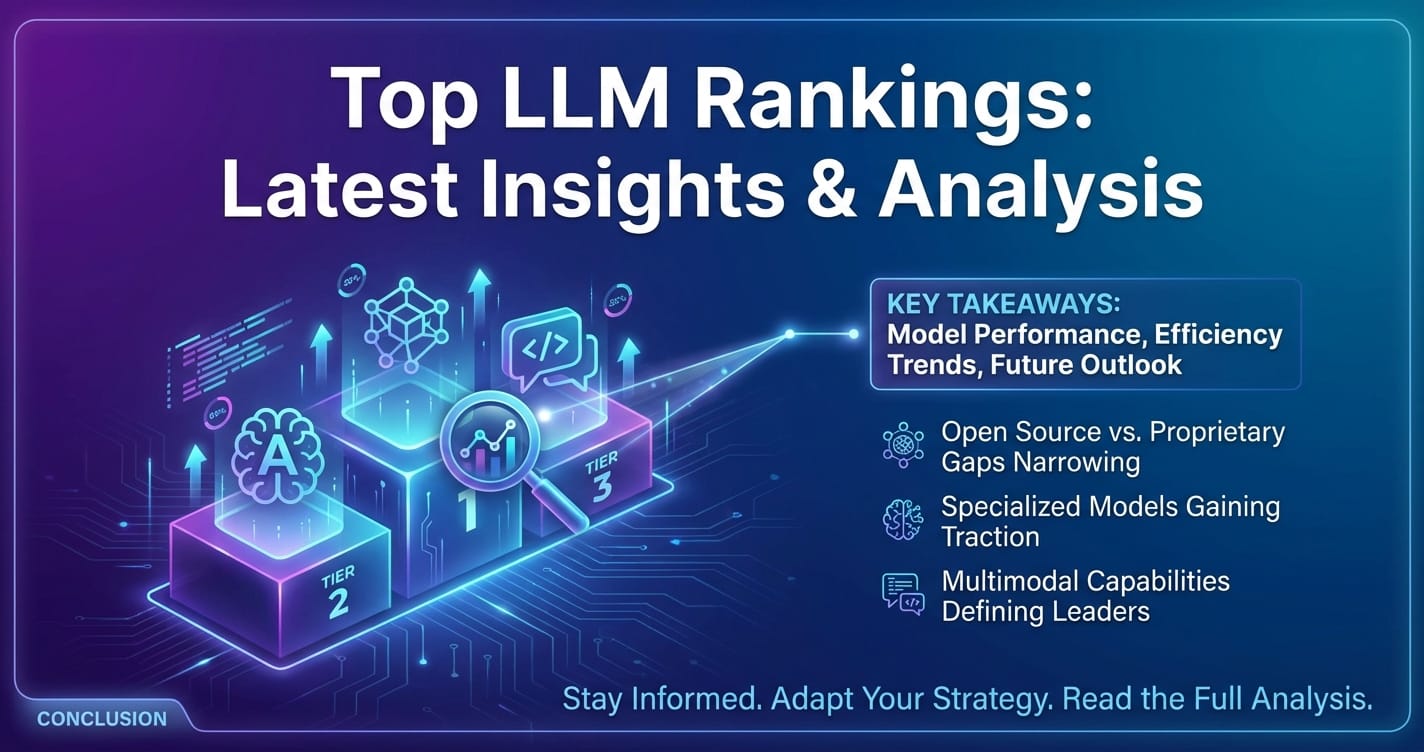
Top LLM Rankings: Latest Insights & Analysis

The landscape of Artificial Intelligence is experiencing an unprecedented period of rapid transformation, with Large Language Models (LLMs) at the vanguard of this revolution. These sophisticated AI systems, capable of understanding, generating, and manipulating human language with astonishing fluency, are reshaping industries, redefining human-computer interaction, and opening new frontiers for innovation. From sophisticated chatbots and intelligent content creation tools to advanced code generation and intricate data analysis, LLMs are no longer niche technologies but indispensable assets in a burgeoning digital ecosystem.
However, the sheer volume of new models emerging from research labs and tech giants weekly, if not daily, presents a significant challenge: how does one discern quality, performance, and suitability amidst this torrent of innovation? This is where LLM rankings become not just helpful, but absolutely critical. For developers, businesses, researchers, and enthusiasts alike, understanding the current best LLMs and having a robust framework for AI model comparison is essential for making informed decisions, optimizing resource allocation, and ensuring that the chosen tools genuinely meet their specific needs.
This comprehensive guide delves deep into the latest insights and analyses shaping the dynamic world of LLMs. We will explore the methodologies used to evaluate these powerful models, dissect the factors that contribute to their performance, and provide a detailed AI model comparison across various dimensions. Our goal is to offer a nuanced understanding of the current LLM rankings, moving beyond simplistic leaderboards to reveal the intricate interplay of capabilities, costs, ethical considerations, and practical applications that truly define the "best" in this rapidly evolving domain. Join us as we navigate the complexities and illuminate the path to leveraging the full potential of large language models.
Understanding Large Language Models (LLMs): The Foundation of AI Intelligence
Before diving into the intricate world of LLM rankings and AI model comparison, it's crucial to establish a foundational understanding of what Large Language Models are and how they operate. At their core, LLMs are a type of artificial neural network designed to process and generate human language. They represent a significant leap forward in AI, largely thanks to advancements in deep learning architectures, particularly the "Transformer" architecture introduced by Google in 2017.
What are LLMs? A Technical Overview
LLMs are built upon neural networks with billions, and sometimes trillions, of parameters. These parameters are essentially numerical values that the model learns during its training phase, representing the strength and nature of connections within the network. The "large" aspect refers not only to the number of parameters but also to the colossal datasets they are trained on. These datasets typically comprise vast swathes of text and code scraped from the internet – books, articles, websites, social media, scientific papers, and more – sometimes totaling terabytes of information.
The training process involves predicting the next word in a sequence, given the preceding words. Through this seemingly simple task, the model learns intricate patterns of language, grammar, syntax, semantics, and even a degree of factual knowledge and common sense embedded within the training data. This unsupervised pre-training phase is incredibly computationally intensive, requiring immense amounts of processing power (GPUs or TPUs) over extended periods.
Following pre-training, models often undergo a fine-tuning phase, frequently involving techniques like Reinforcement Learning from Human Feedback (RLHF) or Direct Preference Optimization (DPO). This phase aligns the model's outputs with human preferences, making them more helpful, honest, and harmless, and less prone to generating toxic or nonsensical content. This alignment is critical for real-world applications and significantly impacts how a model performs in practical AI model comparison scenarios.
Key Capabilities and Their Transformative Impact
The capabilities of LLMs are incredibly diverse and continue to expand. They can perform a wide array of natural language processing (NLP) tasks with remarkable proficiency:
- Text Generation: Creating coherent and contextually relevant text, from creative writing and marketing copy to technical documentation and personalized emails.
- Summarization: Condensing long articles or documents into concise summaries, extracting key information efficiently.
- Translation: Translating text between multiple languages while preserving meaning and nuance.
- Question Answering: Providing direct and accurate answers to a wide range of questions, often drawing upon its vast internal knowledge base or external Retrieval-Augmented Generation (RAG) systems.
- Code Generation and Debugging: Writing code in various programming languages, explaining code, and assisting in identifying and fixing bugs.
- Chatbots and Conversational AI: Powering highly intelligent virtual assistants and customer service agents that can engage in natural, flowing conversations.
- Sentiment Analysis: Identifying the emotional tone or sentiment expressed in a piece of text.
- Data Extraction and Information Retrieval: Pulling specific pieces of information from unstructured text.
The growing impact of LLMs on various industries is profound. In healthcare, they assist with diagnostic support and research synthesis. In finance, they analyze market trends and automate report generation. In education, they personalize learning experiences and provide tutoring. For businesses, they streamline customer support, enhance marketing efforts, and accelerate software development. The transformative potential is still being fully realized, making the ongoing AI model comparison and understanding of LLM rankings more vital than ever. As these models become more sophisticated, their integration into daily workflows promises to unlock new levels of productivity and innovation across virtually every sector.
Methodologies for Evaluating LLMs: The Science Behind the Rankings
Evaluating Large Language Models is a complex, multifaceted endeavor, crucial for establishing reliable LLM rankings and providing a meaningful AI model comparison. Unlike traditional software where functionality can often be tested with clear-cut inputs and expected outputs, LLMs deal with the inherent ambiguity and vastness of human language. Therefore, a comprehensive evaluation strategy must combine quantitative benchmarks with qualitative assessments to truly gauge a model's capabilities and limitations.
Why Evaluation is Crucial for Identifying the Best LLMs
Rigorous evaluation serves several critical purposes:
- Performance Benchmarking: It allows researchers and developers to measure progress, identify areas for improvement, and objectively compare different models.
- Application Suitability: For businesses and users, evaluation helps determine which model is the
best LLMfor a specific task, balancing factors like accuracy, speed, and cost. - Safety and Ethics: It helps uncover biases, potential for harmful content generation, and other ethical concerns, guiding the development of safer AI.
- Resource Allocation: Knowing where models excel and fall short helps in allocating computational resources efficiently for further training and development.
- Transparency: Publicly available benchmarks foster transparency and accountability in the AI community.
Common Benchmarks and Metrics
The LLM community has developed a suite of standardized benchmarks to evaluate various aspects of a model's performance. These can broadly be categorized by the skills they test:
- General Knowledge & Reasoning:
- MMLU (Massive Multitask Language Understanding): A widely used benchmark covering 57 subjects across STEM, humanities, social sciences, and more, testing a model's general knowledge and reasoning abilities. Scores are typically reported as accuracy on multiple-choice questions.
- GPQA (General Purpose Question Answering): Tests advanced question-answering capabilities on challenging, expert-level questions requiring deep reasoning and factual recall.
- ARC (AI2 Reasoning Challenge): Focuses on scientific questions requiring common sense reasoning.
- BBH (Big-Bench Hard): A challenging subset of tasks from Big-Bench, designed to stress-test frontier models on complex reasoning problems that humans find easy.
- Mathematical Reasoning:
- GSM8K: A dataset of 8,500 grade school math word problems, testing a model's ability to perform multi-step arithmetic reasoning.
- MATH: A more advanced dataset of competition-level mathematics problems, requiring sophisticated algebraic and geometric reasoning.
- Coding & Programming:
- HumanEval: Measures a model's ability to generate correct Python code from natural language prompts, often including test cases.
- CodeContests: Evaluates performance on competitive programming problems, assessing more complex algorithmic thinking.
- Instruction Following & Chat:
- MT-Bench (Multi-turn Benchmark): Developed by LMSYS Org, this uses multi-turn conversations and relies on strong LLMs (like GPT-4) to grade the responses of other models, assessing conversational ability and instruction following over extended interactions.
- AlpacaEval: Another automated evaluator that uses GPT-4 to judge model outputs against a baseline (like text-davinci-003) for instruction following.
- Safety & Bias:
- Specialized datasets and adversarial prompts are used to probe models for biased outputs, toxic language generation, and adherence to safety guidelines.
Many of these benchmarks are aggregated into meta-benchmarks like HELM (Holistic Evaluation of Language Models) from Stanford, which aims to provide a comprehensive, multi-faceted evaluation across diverse scenarios, metrics, and models.
Qualitative vs. Quantitative Assessment
While quantitative benchmarks provide objective numerical scores, they often don't capture the full picture of a model's utility or "feel."
- Quantitative Assessment: Involves running models against standardized datasets and measuring metrics like accuracy, perplexity, BLEU (for translation), ROUGE (for summarization), and F1-score. These are essential for systematic AI model comparison.
- Qualitative Assessment: This involves human evaluation, where expert annotators or general users interact with the models and provide subjective feedback on factors like coherence, creativity, helpfulness, tone, fluency, and safety. Platforms like LMSYS Chatbot Arena embody this, where users vote on which model produced the better response to a given prompt, creating a dynamic, ELO-like
LLM ranking.
Both approaches are vital. Quantitative metrics offer a reproducible and scalable way to track progress, while qualitative feedback provides crucial insights into real-world usability and subtle performance nuances that benchmarks might miss.
Challenges in Evaluation
Evaluating LLMs is fraught with challenges:
- Benchmarking Saturation: As models become more powerful, they can "solve" existing benchmarks, necessitating the creation of ever more difficult evaluation tasks.
- Data Contamination: There's a risk that benchmark datasets might accidentally be included in a model's training data, leading to inflated, non-indicative scores.
- Hallucination: Models can confidently generate factually incorrect information, which is hard to automatically detect and penalize in all contexts.
- Bias: LLMs can perpetuate and amplify biases present in their training data, leading to unfair or discriminatory outputs. Detecting and mitigating these is an ongoing challenge.
- Dynamic Nature: The field evolves so rapidly that benchmarks can quickly become outdated. What was considered a strong performance last month might be average today.
- Real-world Performance vs. Benchmark Performance: A model performing well on a benchmark doesn't always translate directly to superior performance in specific real-world applications due to factors like prompt engineering, context management, and integration complexities.
- Cost of Evaluation: Running comprehensive evaluations, especially with human feedback, can be incredibly expensive and time-consuming.
Discussion on Open-Source vs. Closed-Source Evaluation
Another key distinction lies in the evaluation of open-source versus closed-source models. For closed-source models (e.g., GPT-4, Gemini), evaluation is often limited to API access, meaning researchers can only test the model's outputs without inspecting its internal workings or training data. This makes it harder to diagnose issues or fully understand the source of certain behaviors.
Open-source models, conversely, allow full access to their weights and architecture, enabling deeper scrutiny, fine-tuning, and specialized evaluations tailored to specific research questions or applications. This transparency fosters a vibrant research community and accelerates innovation but also raises questions about responsible deployment.
In summary, a truly effective AI model comparison and the establishment of meaningful LLM rankings require a sophisticated blend of standardized benchmarks, human judgment, and a keen awareness of the inherent challenges in evaluating these complex and powerful systems.
Factors Influencing LLM Performance and Rankings
The journey to understanding LLM rankings and performing a meaningful AI model comparison requires a deeper look into the various factors that dictate a model's capabilities and, consequently, its position in the hierarchy. It's not just about raw computational power; a confluence of architectural choices, data strategies, and deployment considerations plays a pivotal role in shaping a model's utility and effectiveness.
Model Architecture
At the heart of every LLM is its architecture, predominantly based on the Transformer network. However, variations within this architecture significantly impact performance:
- Transformer Variants: While the original Transformer introduced the encoder-decoder structure with attention mechanisms, many LLMs primarily use a decoder-only stack (e.g., GPT series). Architectures like Mixture-of-Experts (MoE), as seen in models like Mixtral and DBRX, allow the model to selectively activate specific "expert" subnetworks for different tokens, leading to greater efficiency and scalability, particularly for models with a very high total parameter count but fewer active parameters per inference.
- Attention Mechanisms: Different attention mechanisms (e.g., FlashAttention for speed, grouped-query attention for efficiency) can influence how well a model handles long contexts and its processing speed.
- Positional Encodings: How a model encodes the position of words in a sequence affects its ability to understand long-range dependencies, crucial for handling extensive documents.
These architectural nuances are often a key differentiator in AI model comparison, impacting everything from processing speed to the length of context a model can effectively manage.
Training Data: Size, Quality, Diversity, and Pre-processing
The adage "garbage in, garbage out" is profoundly true for LLMs. The quality and characteristics of the training data are paramount:
- Size: Larger datasets generally lead to models with broader knowledge and improved generalization capabilities. Frontier models are trained on internet-scale datasets often spanning trillions of tokens.
- Quality: Data cleanliness is critical. Removing noise, redundancy, and low-quality content prevents the model from learning erroneous patterns. High-quality data sources, such as meticulously curated books, academic papers, and well-maintained code repositories, are invaluable.
- Diversity: A diverse dataset encompassing various topics, writing styles, genres, and languages helps the model generalize across different tasks and avoid narrow specializations.
- Pre-processing: Tokenization, filtering for harmful content, deduplication, and balancing different data sources are essential steps that significantly impact the final model's behavior and reduce biases. The careful curation of pre-training data is a major undertaking for developers of the best LLMs.
Model Size (Parameters)
The number of parameters in an LLM is often seen as a proxy for its capacity to learn and store information. While not the sole determinant, larger models typically exhibit more sophisticated reasoning, better language understanding, and superior generation quality. We often see models ranging from a few billion parameters (e.g., Mistral 7B) to hundreds of billions (e.g., Llama 3 70B) and even trillions for MoE models (e.g., DBRX with 132B active parameters out of 1.3T total). The "scaling laws" suggest that performance generally improves with more parameters and more training data, up to a point.
Compute Resources
Training and running LLMs demand immense computational power. Access to vast clusters of high-performance GPUs (like NVIDIA's A100s or H100s) is a bottleneck for many. The availability of these resources directly impacts the scale and sophistication of models that can be developed and fine-tuned, influencing which organizations can compete at the forefront of LLM rankings.
Fine-tuning and Alignment Techniques
Raw pre-trained LLMs are often unhelpful or even dangerous. Fine-tuning is crucial for aligning model behavior with human intent and values:
- Supervised Fine-Tuning (SFT): Training the model on specific instruction-response pairs to teach it to follow instructions.
- Reinforcement Learning from Human Feedback (RLHF): This technique involves human annotators ranking model responses. These rankings are then used to train a reward model, which in turn guides the LLM to generate more preferred outputs. This is a primary driver behind the helpfulness and safety of many
best LLMs. - Direct Preference Optimization (DPO): A newer, simpler alternative to RLHF that directly optimizes the model policy to align with human preferences without needing a separate reward model.
These alignment processes are vital for making models practical and safe for real-world deployment, significantly influencing their perception and utility in AI model comparison.
Cost-effectiveness
Beyond raw performance, the cost of running an LLM is a major factor, especially for businesses. This includes:
- Inference Cost: The cost per token for generating responses. This varies greatly between models and providers, with larger, more capable models typically being more expensive.
- Training Cost: The upfront cost of developing and training a model, which can be astronomical for frontier models.
- Deployment Cost: The cost of hosting and serving the model, which includes hardware and operational expenses.
Optimizing for cost while maintaining desired performance is a key challenge, and often a decision point when evaluating the best LLMs for a specific budget.
Latency and Throughput
For real-time applications like chatbots or interactive tools, latency (the time it takes for a response) is critical. Throughput (the number of requests a model can handle per unit of time) is important for scalability. Smaller, more efficient models, or those optimized for inference, often excel here, even if their raw benchmark scores are lower than their larger counterparts. This is a practical consideration often overlooked in pure benchmark LLM rankings.
Accessibility and API Availability
The ease with which developers can access and integrate an LLM significantly impacts its adoption. Models offered through well-documented, stable APIs (like OpenAI's, Anthropic's, or Google's) tend to see wider use compared to models requiring complex local deployment. Open-source models, while offering full control, require more technical expertise for deployment.
Safety and Ethical Considerations
Finally, and increasingly critically, are safety and ethical considerations. Models must be designed to minimize bias, avoid generating harmful, hateful, or misleading content, and protect user privacy. Ethical guardrails, robust moderation systems, and continuous monitoring are essential for responsible AI deployment and heavily influence public perception and regulatory scrutiny, impacting their long-term viability and trust in LLM rankings.
Understanding these interwoven factors provides a much richer context for interpreting LLM rankings and making informed decisions during AI model comparison. The "best" model is rarely simply the highest-scoring one; it's the one that best balances these diverse considerations for a given application.
Current Landscape of Top LLMs: A Comprehensive AI Model Comparison
The landscape of Large Language Models is a vibrant, fiercely competitive arena, with new entrants and significant advancements constantly shifting the LLM rankings. This section provides a comprehensive AI model comparison by categorizing models into tiers based on their scale, capabilities, and typical deployment scenarios. While "best" is subjective and context-dependent, we highlight models that consistently perform well across benchmarks and find widespread adoption.
Tier 1: Leading Frontier Models (Closed-Source & Large Open-Source)
These are the titans of the LLM world, often pushing the boundaries of what's possible in terms of reasoning, context understanding, and content generation. They are typically developed by major tech companies and represent the cutting edge of AI capabilities.
OpenAI (GPT Series)
- GPT-4: Widely regarded as one of the most capable and versatile models, GPT-4 (and its enhanced versions like GPT-4 Turbo and GPT-4o) excels across a broad spectrum of tasks, from complex reasoning and detailed content creation to advanced coding and multimodal understanding. Its strong instruction following and robust performance on MMLU, GPQA, and HumanEval have cemented its position at the top of many LLM rankings. It boasts a massive context window and strong factual recall, though it can still "hallucinate."
- GPT-3.5 Series: While older, models like
gpt-3.5-turboremain incredibly popular due to their impressive performance-to-cost ratio. They are fast, relatively inexpensive, and highly capable for many common NLP tasks, making them a default choice for applications where GPT-4's advanced capabilities aren't strictly necessary.
Google (Gemini Series, PaLM 2)
- Gemini (Ultra, Pro, Nano): Google's flagship multimodal model family. Gemini Ultra is designed for highly complex tasks, showing strong performance on benchmarks like MMLU and Big-Bench Hard, often rivaling or exceeding GPT-4 in specific areas, especially with its native multimodal capabilities (processing images, audio, and video alongside text). Gemini Pro offers a balance of capability and efficiency for broader applications, while Gemini Nano is optimized for on-device deployment.
- PaLM 2: Predecessor to Gemini, PaLM 2 is still used in various Google products. It showed strong multilingual capabilities and reasoning but is now being superseded by the Gemini family in terms of frontier research and general deployment.
Anthropic (Claude Series)
- Claude 3 (Opus, Sonnet, Haiku): Anthropic's latest suite, particularly Claude 3 Opus, has emerged as a fierce competitor to GPT-4 and Gemini Ultra. Opus has demonstrated superior performance on several key benchmarks, especially in complex reasoning, nuanced text analysis, and often exhibiting less "AI-like" behavior. It's known for its safety-first approach ("Constitutional AI") and exceptionally long context windows (up to 200K tokens). Sonnet offers a balance of intelligence and speed for enterprise use, while Haiku is designed for near-instant responsiveness and cost-effectiveness. The Claude series often earns high praise in qualitative LLM rankings for its helpfulness and ability to grasp subtle instructions.
Meta (Llama 3)
- Llama 3 (8B, 70B, and upcoming 400B+): While open-source, Llama 3's performance, especially the 70B parameter variant, puts it squarely in this frontier tier. It has significantly closed the gap with closed-source models on many benchmarks and offers state-of-the-art capabilities for open-source deployment. Its excellent reasoning, coding, and multilingual support make it a top choice for developers seeking powerful models with full transparency and flexibility. The upcoming larger variants promise even more competitive performance.
Table 1: Comparison of Top Frontier Models (Key Specs & Performance Highlights)
| Feature/Model | OpenAI GPT-4o | Google Gemini Ultra 1.5 | Anthropic Claude 3 Opus | Meta Llama 3 70B |
|---|---|---|---|---|
| Type | Closed-source, Multimodal | Closed-source, Native Multimodal | Closed-source, Multimodal | Open-source, Text-based (multimodal planned) |
| Key Strengths | Reasoning, coding, multimodal I/O, speed, broad API ecosystem | Complex reasoning, multimodality (video/audio analysis), long context | Nuanced understanding, long context (200K), strong safety, less "AI-like" | State-of-the-art open source, strong reasoning, code, multilingual |
| MMLU Score | ~88.7% | ~90% | ~92.0% | ~81.7% |
| HumanEval Score | ~88.4% | ~84.9% | ~84.9% | ~81.7% |
| Context Window | 128K tokens | 1M tokens (128K default) | 200K tokens (1M on request) | 8K tokens |
| Cost | High (varies per tier) | High (varies per tier) | High (varies per tier) | Free to use/deploy (inference costs apply) |
| Availability | API, ChatGPT | API, Google AI Studio, Vertex AI | API, claude.ai | Hugging Face, various platforms |
| Best For | General-purpose, complex tasks, multimodal apps | Advanced multimodal R&D, enterprise solutions, complex data analysis | Deep nuanced understanding, long form analysis, creative generation, safety-critical apps | Custom deployments, research, fine-tuning, open innovation |
Note: Benchmarks are approximate and depend on the specific version and evaluation setup.
Tier 2: Promising Open-Source Models and Emerging Contenders
This tier showcases models that offer excellent performance, often rivaling older frontier models, but are typically open-source or come from rapidly growing AI companies, offering more flexibility and sometimes better cost-effectiveness for specific use cases.
Mistral AI (Mixtral, Mistral Large, Mistral 7B)
- Mixtral 8x7B: A Sparse Mixture-of-Experts (MoE) model that has taken the open-source world by storm. It provides exceptional quality for its size, often outperforming much larger models like Llama 2 70B and even competing with GPT-3.5 on many benchmarks. Its MoE architecture allows it to be incredibly fast and cost-effective for inference. Mixtral's strong reasoning and coding capabilities make it a top choice for developers.
- Mistral Large: Mistral AI's flagship closed-source model, offered via API. It's designed to be on par with models like GPT-4 and Claude 2, demonstrating strong reasoning, multilingual support, and coding abilities. It solidifies Mistral AI's position as a major player in both open and closed LLM rankings.
- Mistral 7B: A compact yet powerful model, ideal for local deployment, fine-tuning, and applications requiring low latency and reduced resource consumption.
Meta (Llama 2)
- Llama 2 (7B, 13B, 70B): While Llama 3 is now the flagship, Llama 2 remains highly influential due to its early open-source release, fostering a massive ecosystem of fine-tuned derivatives. It performs well on many tasks and is still a solid choice for developers looking for a stable, well-understood open-source base model for customization.
Cohere (Command R+)
- Command R+: Cohere's latest enterprise-grade model, designed for RAG (Retrieval Augmented Generation) and multilingual business applications. It boasts strong reasoning, summarization, and a long context window (128K tokens) with a focus on enterprise privacy and deployment. It consistently ranks high in enterprise-focused AI model comparison.
Databricks (DBRX)
- DBRX: Another powerful Mixture-of-Experts (MoE) model released by Databricks, featuring 132 billion active parameters (out of 1.3 trillion total). It showcases strong performance across a wide range of benchmarks, including coding and math, often outperforming models like Llama 2 70B and even challenging older GPT-3.5 models. Its enterprise-friendly licensing makes it appealing for business applications.
Table 2: Notable Open-Source LLMs and Their Strengths
| Model | Developer | Architecture | Key Strengths | Typical Use Cases |
|---|---|---|---|---|
| Mixtral 8x7B | Mistral AI | MoE Transformer | High quality for size, speed, cost-effective inference, strong reasoning & coding | Chatbots, code generation, summarization, RAG, research |
| Mistral 7B | Mistral AI | Transformer | Compact, fast, easily fine-tuned, good base performance | Edge deployment, local AI, specific task fine-tuning |
| Llama 2 70B | Meta | Transformer | Robust, widely adopted, large ecosystem of fine-tunes, good generalist | Research, custom chatbots, content generation |
| Cohere Command R+ | Cohere | Transformer | Enterprise-grade, RAG optimized, multilingual, long context | Business automation, intelligent search, customer support |
| DBRX | Databricks | MoE Transformer | Strong generalist, particularly good at coding & math, enterprise-focused | Data analysis, code assistants, advanced analytics |
| Falcon 180B | TII (Technology Innovation Institute) | Transformer | Very large open-source model, competitive performance (pre-Llama 3) | Large-scale content generation, research, knowledge systems |
Tier 3: Specialized and Smaller Models
This tier includes models optimized for specific tasks, constrained environments, or research purposes. While they might not lead the overall LLM rankings, they are often the most practical and efficient choice for niche applications.
- Quantized Models: Many larger models (like Llama, Mistral) are often released in quantized versions (e.g., 4-bit, 8-bit) that reduce their memory footprint and computational requirements, making them suitable for deployment on consumer-grade hardware or even mobile devices. Their performance might see a slight drop, but the efficiency gains are significant.
- Specialized Fine-tunes: The open-source community thrives on fine-tuning base models for specific domains (e.g., medical, legal, financial) or tasks (e.g., creative writing, specific coding languages). Examples include models trained for specific RAG pipelines or focused on instruction following for a particular style.
- Smaller Parameter Models: Models with fewer than 7 billion parameters (e.g., Phi-2 from Microsoft, Gemma 2B/7B from Google) are designed for speed, efficiency, and edge deployment. They are excellent for tasks where full frontier model capabilities are overkill, such as simple chatbots, data extraction, or running AI directly in web browsers.
The "best" model truly depends on the specific requirements, balancing capabilities with cost, speed, and deployment environment. The rich diversity across these tiers ensures that there is an LLM suitable for almost any conceivable application, making continuous AI model comparison a vital activity.
XRoute is a cutting-edge unified API platform designed to streamline access to large language models (LLMs) for developers, businesses, and AI enthusiasts. By providing a single, OpenAI-compatible endpoint, XRoute.AI simplifies the integration of over 60 AI models from more than 20 active providers(including OpenAI, Anthropic, Mistral, Llama2, Google Gemini, and more), enabling seamless development of AI-driven applications, chatbots, and automated workflows.
Deep Dive into LLM Rankings - Latest Insights
The dynamic nature of LLM development means that LLM rankings are constantly in flux. What was considered a leading model a few months ago might now be surpassed by a newer, more efficient, or more capable contender. Understanding the latest insights requires examining recent benchmark results, tracking key trends, and appreciating the nuances behind the numbers.
Analyzing Recent Benchmark Results
Platforms like the Hugging Face Open LLM Leaderboard, LMSYS Chatbot Arena Leaderboard, and various academic benchmarks (MMLU, HumanEval, MT-Bench scores, etc.) offer valuable windows into current performance.
- Hugging Face Open LLM Leaderboard: This widely recognized leaderboard tracks open-source models across several key benchmarks, including ARC, HellaSwag, MMLU, TruthfulQA, and GSM8K. It provides a composite score that quickly indicates a model's general capabilities. Recent trends here show models like Llama 3 70B and Mistral Large consistently topping the charts, followed closely by Mixtral 8x7B and various DBRX models. The competition among these models is fierce, with fine-tuned versions often surpassing the base models.
- LMSYS Chatbot Arena: This unique leaderboard is based on human preference data. Users interact anonymously with two different LLMs for a given prompt and then vote for the "better" response. This ELO-like rating system provides a strong qualitative measure of a model's helpfulness, coherence, and instruction following in conversational settings. OpenAI's GPT-4o, Anthropic's Claude 3 Opus, and Google's Gemini Ultra 1.5 often occupy the top spots, reflecting their superior conversational and reasoning abilities as perceived by human evaluators. It often highlights models that feel more "natural" and less "robotic."
- Individual Benchmarks: A closer look at specific benchmark scores reveals distinct strengths. For example, while one model might excel at
MMLU(general knowledge), another might lead significantly inHumanEval(coding), indicating specialization or optimized training for certain tasks.
It's crucial to look beyond a single composite score and consider performance across a range of benchmarks relevant to your specific use case when conducting an AI model comparison.
Discussing Trends in LLM Rankings
Several overarching trends are shaping the current LLM rankings:
- Open-Source Closing the Gap: The most significant trend is the rapid advancement of open-source models. With models like Llama 3, Mixtral, and DBRX, the performance gap between open-source and proprietary frontier models has narrowed dramatically. This democratization of powerful AI is fostering incredible innovation, allowing smaller teams and researchers to build on state-of-the-art foundations. This also means the "best LLM" for many might now be an open-source solution that can be fine-tuned and deployed with full control.
- Multimodality Becoming Standard: What was once a specialized feature is now a core expectation for frontier models. The ability to process and generate not just text, but also images, audio, and potentially video, is becoming a key differentiator. Models like GPT-4o and Gemini Ultra 1.5 demonstrate native multimodal reasoning, allowing for more intuitive and powerful applications. This significantly impacts AI model comparison for applications beyond pure text generation.
- Focus on Long Context Windows: As LLMs mature, the ability to process and understand very long inputs (e.g., entire books, lengthy codebases, full legal documents) is becoming increasingly important. Models offering context windows of 100K, 200K, or even 1M tokens (like Claude 3 Opus or Gemini 1.5 Pro) are gaining an edge in applications requiring deep contextual understanding and knowledge retrieval.
- Emphasis on Reasoning and Instruction Following: Beyond simply generating fluent text, models are now being pushed to demonstrate sophisticated reasoning, problem-solving, and precise instruction following. Benchmarks like GPQA and more challenging coding tasks reflect this shift. Models that can break down complex problems, plan, and execute multi-step instructions are highly valued.
- Emergence of Specialized Models: While generalist models are powerful, there's a growing recognition of the value of specialized LLMs. Whether it's models specifically fine-tuned for legal tasks, healthcare, or coding, or smaller, efficient models for specific on-device applications, specialization often leads to superior performance and cost-effectiveness within a narrow domain. The rise of MoE architectures also contributes to this, allowing models to selectively activate "experts" for specific tasks.
- Cost-Performance Optimization: Developers are increasingly balancing raw capability with inference speed and cost. For many production applications, a slightly less capable but significantly cheaper and faster model (e.g., GPT-3.5 Turbo or Claude 3 Haiku) might be preferred over the absolute top-tier model. This pragmatic approach strongly influences practical LLM rankings for real-world business use.
Understanding the Nuances: Why a "Single Best" Doesn't Exist
Perhaps the most crucial insight in evaluating LLM rankings is that there is rarely a single "best" LLM for all purposes. The optimal choice is always context-dependent.
- Task Specificity: A model that excels at creative writing might not be the
best LLMfor precise code generation or factual question-answering. - Resource Constraints: A large, powerful model might be prohibitively expensive or slow for a high-volume, low-latency application.
- Deployment Environment: Open-source models offer unparalleled flexibility for local deployment and fine-tuning, while proprietary APIs provide convenience and managed infrastructure.
- Ethical and Safety Requirements: For highly sensitive applications, models with robust safety mechanisms and transparent development practices might be prioritized.
- Data Privacy: For applications handling sensitive user data, models that offer strong data privacy assurances or allow for on-premises deployment might be preferred.
Highlighting Specific Models with Significant Shifts in LLM Rankings
- Claude 3 Opus: Its launch marked a significant shake-up, particularly challenging GPT-4's dominance in complex reasoning and long-context understanding, often earning top marks in human evaluations.
- Llama 3: Meta's latest open-source release dramatically elevated the standard for openly available models, moving many open-source solutions significantly higher in overall LLM rankings.
- GPT-4o: OpenAI's "omnimodel" showed a leap in multimodal integration and efficiency, blending visual and audio capabilities seamlessly with text, and often at a lower cost for specific uses.
- Mixtral 8x7B: Proved that smaller, efficiently designed models (especially MoE) can punch far above their weight, making high-performance open-source AI accessible to a wider audience.
These shifts underscore the need for continuous monitoring and a flexible approach to AI model comparison. Relying on outdated information can lead to suboptimal choices in a field where innovation is relentless.
Selecting the Best LLMs for Your Needs
Navigating the crowded landscape of LLMs and making an informed decision about which model to adopt can be daunting. With so many contenders vying for the top spots in LLM rankings, selecting the best LLMs requires a strategic approach tailored to your specific requirements. It's less about finding a universally "superior" model and more about identifying the optimal fit for your application, budget, and operational constraints.
Defining Your Use Case
The first and most crucial step is to clearly define what you intend to achieve with the LLM. Different models excel at different tasks:
- Chatbots & Conversational AI: For engaging, natural dialogues, models with strong instruction following and a good conversational flow (e.g., Claude 3, GPT-4o, fine-tuned Llama 3) are ideal.
- Content Generation: For creative writing, marketing copy, or long-form articles, models known for coherence, creativity, and adherence to specific styles (e.g., GPT-4o, Claude 3 Opus) are strong choices.
- Coding & Development: For generating code, debugging, or explaining algorithms, models like GPT-4, Llama 3, or DBRX, which demonstrate high proficiency in programming benchmarks, are preferred.
- Retrieval-Augmented Generation (RAG): If your application requires grounded factual answers by leveraging external knowledge bases, models optimized for long context windows and precise information extraction (e.g., Claude 3, Command R+, Gemini 1.5 Pro) are crucial.
- Data Extraction & Analysis: For pulling specific entities, sentiments, or summaries from unstructured text, efficient models with good instruction following (e.g., GPT-3.5 Turbo, Mistral 7B) might suffice.
- Translation & Multilingual Applications: Models with robust multilingual support (e.g., Gemini, PaLM 2, specific fine-tunes of Llama/Mistral) are necessary.
Considering Practical Factors
Beyond raw performance, several practical considerations heavily influence the choice of the best LLMs:
- Cost: This is often a deal-breaker. Proprietary frontier models can be expensive per token, especially at scale. Open-source models, while "free" to use, incur deployment and inference costs on your infrastructure. Evaluate the cost-per-input/output token, potential batching capabilities, and overall infrastructure costs.
- Latency: For real-time user-facing applications (e.g., live chat), low latency is paramount. Smaller, optimized models or efficient architectures like MoE (e.g., Mixtral, Claude 3 Haiku) are often chosen over larger, slower ones, even if they have slightly lower benchmark scores.
- Accuracy & Reliability: For critical applications (e.g., medical, legal), accuracy, factual grounding (especially with RAG), and minimal hallucination are non-negotiable. This often pushes towards the top-tier frontier models or highly specialized fine-tunes.
- Context Window Size: If your application requires processing lengthy documents or maintaining extended conversational history, a model with a large context window is essential to avoid information loss or the need for complex external memory management.
- Safety & Moderation: For public-facing applications, robust safety features, content moderation capabilities, and adherence to ethical guidelines are vital. Many commercial APIs offer built-in moderation tools.
- Data Privacy & Security: For sensitive data, understand where your data is processed, stored, and how it's used. Some providers offer data residency options or allow for private deployments, which can be critical for compliance.
Evaluating API Availability and Ease of Integration
The practicality of integrating an LLM into your existing tech stack is a significant factor.
- API Quality: Look for well-documented APIs, comprehensive SDKs, and active developer communities. This simplifies development, reduces integration time, and provides support when issues arise.
- Managed Services: Cloud providers like AWS, Azure, and Google Cloud offer managed LLM services (e.g., Amazon Bedrock, Azure OpenAI Service, Google Vertex AI) that simplify deployment, scaling, and access to various models under a unified platform.
- Open-Source Deployment: If opting for open-source models, consider the complexity of setting up and managing your own inference infrastructure, including GPU provisioning, model serving frameworks (e.g., vLLM, TGI), and scaling solutions.
The Role of Unified API Platforms for AI Model Comparison and Selection
In this complex landscape, where the best LLMs change frequently and developers often need to experiment with multiple models to find the right fit, unified API platforms have emerged as a game-changer. These platforms abstract away the complexities of integrating with individual LLM providers, offering a single, standardized interface (often OpenAI-compatible) to access a multitude of models.
This is precisely where XRoute.AI shines. XRoute.AI is a cutting-edge unified API platform designed to streamline access to large language models (LLMs) for developers, businesses, and AI enthusiasts. By providing a single, OpenAI-compatible endpoint, XRoute.AI simplifies the integration of over 60 AI models from more than 20 active providers, enabling seamless development of AI-driven applications, chatbots, and automated workflows.
With XRoute.AI, you can:
- Effortlessly Compare Models: Easily switch between different models (e.g., GPT-4, Claude 3, Llama 3, Mixtral) with minimal code changes. This capability is invaluable for efficient AI model comparison, allowing you to benchmark and test various models against your specific use case to determine the truly
best LLMfor your needs. - Optimize for Cost and Performance: XRoute.AI offers advanced routing logic, allowing you to direct requests to the most cost-effective AI model or the model offering low latency AI based on your real-time requirements. This dynamic routing ensures you're always getting the best value and performance.
- Simplify Development: Avoid the hassle of managing multiple API keys, different authentication methods, and varying API schemas from individual providers. XRoute.AI provides a consistent experience, significantly accelerating development cycles.
- Enhance Scalability and Reliability: The platform handles the underlying infrastructure, ensuring high throughput, scalability, and reliability, so you can focus on building your application rather than managing API connections.
In essence, XRoute.AI empowers users to build intelligent solutions without the complexity of managing multiple API connections. Its focus on low latency AI, cost-effective AI, and developer-friendly tools makes it an ideal choice for projects of all sizes, from startups needing quick iteration to enterprise-level applications requiring robust and flexible AI model comparison capabilities. When navigating the intricate world of LLM rankings, a platform like XRoute.AI can be the ultimate tool for cutting through the noise and finding the optimal LLM for your specific goals.
Challenges and Future Trends in LLM Development
The exponential growth and transformative impact of Large Language Models come hand-in-hand with significant challenges and a horizon brimming with exciting future trends. Understanding these aspects is crucial for anyone seeking to stay ahead in the dynamic world of LLM rankings and AI model comparison.
Current Challenges
Despite their impressive capabilities, LLMs face several critical hurdles:
- Hallucination: LLMs can confidently generate plausible-sounding but factually incorrect information. This tendency for "hallucination" is a major barrier to trustworthiness, especially in high-stakes applications like healthcare or legal advice. While advancements in RAG and fine-tuning help, it remains an active research area.
- Bias: LLMs learn from the vast, unfiltered datasets of the internet, which inherently contain human biases (gender, racial, cultural, etc.). These biases can be perpetuated and even amplified by the models, leading to unfair, discriminatory, or offensive outputs. Detecting, measuring, and mitigating these biases is a complex and ongoing ethical challenge.
- Energy Consumption and Environmental Impact: Training and operating frontier LLMs require immense computational resources, consuming vast amounts of electricity. The environmental footprint of large-scale AI is a growing concern, pushing for more energy-efficient architectures and training methods.
- Ethical Concerns: Beyond bias, other ethical dilemmas include intellectual property rights (given models are trained on copyrighted data), the potential for misuse (e.g., generating disinformation, deepfakes), job displacement, and the broader societal implications of increasingly autonomous AI systems.
- Data Scarcity for Frontier Models: As models grow in size and complexity, they demand ever larger and higher-quality datasets. Researchers are beginning to face a "data wall," where the supply of unique, high-quality text data on the internet is finite, potentially limiting future scaling opportunities.
- Fine-tuning Costs and Accessibility: While base models might be open source, fine-tuning them for specific, high-performance tasks can still require substantial computational resources and expertise, making advanced customization less accessible to smaller teams.
- Interpretability and Explainability: LLMs are often "black boxes," making it difficult to understand why they arrive at a particular answer or how they process information. This lack of interpretability hinders debugging, trust, and compliance in regulated industries.
Future Trends in LLM Development
The challenges notwithstanding, the pace of innovation suggests a fascinating future for LLMs:
- Further Advancements in Reasoning Capabilities: Future LLMs will move beyond pattern matching to exhibit more robust, logical, and abstract reasoning abilities. This includes capabilities like multi-step planning, causal reasoning, and deeper understanding of complex problem domains, which will significantly impact LLM rankings for advanced applications.
- Greater Multimodality: Expect seamless integration of more modalities beyond text and images, including audio, video, haptics, and even sensor data. This will enable LLMs to interact with and understand the physical world in richer ways, paving the way for more natural and intuitive human-computer interfaces. This will become a critical differentiator in AI model comparison.
- Even Longer Context Windows: While current models offer impressive context lengths, the ability to process and reason over truly massive contexts (e.g., entire libraries, decades of company documents, full human memories) will continue to expand, unlocking new use cases in research, legal analysis, and enterprise knowledge management.
- More Efficient Architectures and Training Methods: Research will focus on developing models that are equally or more capable but require significantly less computational power for training and inference. This includes innovations in sparse models, new attention mechanisms, and more efficient data processing techniques, addressing the energy consumption challenge.
- Personalized and Agentic AI: LLMs will become more personalized, learning individual preferences and styles, acting as intelligent agents that can autonomously perform complex tasks by interacting with various tools and systems. This includes planning, executing, and monitoring multi-step workflows with minimal human intervention.
- Emphasis on Transparency and Interpretability: Future research will aim to make LLMs less opaque, providing insights into their decision-making processes. This will foster greater trust, allow for better debugging, and help address ethical concerns.
- Ethical AI Development and Regulation: As LLMs become more powerful and pervasive, there will be an intensified focus on developing ethical AI guidelines, robust safety protocols, and potentially regulatory frameworks to ensure responsible deployment and mitigate societal risks. This will influence how models are designed, trained, and evaluated in future LLM rankings.
- Edge AI Integration: Smaller, highly optimized LLMs will increasingly run directly on devices (smartphones, IoT devices, embedded systems), enabling low-latency, privacy-preserving AI applications without relying on cloud connectivity.
The journey of LLMs is far from over. While challenges remain, the continuous breakthroughs promise an exciting future where these intelligent systems become even more integral to our personal and professional lives, constantly redefining the benchmarks for excellence in AI model comparison.
Conclusion
The world of Large Language Models is a rapidly evolving frontier, characterized by relentless innovation and a constant reshuffling of LLM rankings. As we've explored, discerning the truly best LLMs is far from a simplistic exercise; it demands a nuanced understanding of evaluation methodologies, a keen awareness of the myriad factors influencing model performance, and a practical consideration of specific use cases and operational constraints.
From the cutting-edge capabilities of proprietary giants like OpenAI's GPT-4o, Google's Gemini Ultra, and Anthropic's Claude 3 Opus, to the democratizing power of open-source champions such as Meta's Llama 3 and Mistral AI's Mixtral, the diversity and sophistication of available models are breathtaking. Each model brings unique strengths to the table, excelling in different benchmarks, offering varying cost-performance trade-offs, and catering to distinct application needs. The insights from platforms like the Hugging Face Leaderboard and LMSYS Chatbot Arena highlight the dynamic shifts, with open-source models rapidly closing the gap and multimodality becoming a defining feature of the next generation of AI.
Ultimately, the "best" LLM is not a fixed entity at the top of a leaderboard, but rather the model that most effectively addresses your specific challenges, aligns with your budget, meets your performance requirements for latency and accuracy, and integrates seamlessly into your ecosystem. This requires diligent AI model comparison, continuous testing, and a flexible approach to adoption.
As the industry continues to push the boundaries of reasoning, multimodality, and efficiency, staying informed about the latest developments and having the tools to adapt are paramount. Platforms like XRoute.AI offer a crucial advantage in this complex environment, simplifying access to a vast array of models and enabling developers to easily compare, switch, and optimize their AI solutions for low latency and cost-effectiveness.
The transformative power of LLMs is undeniable. They are not merely tools but catalysts for profound change, reshaping how we interact with technology, generate content, analyze data, and innovate across every sector. By embracing a strategic and informed approach to LLM rankings and AI model comparison, we can unlock their full potential and build a future where intelligent systems truly augment human capabilities in unprecedented ways.
Frequently Asked Questions (FAQ)
Q1: What are LLM rankings and why are they important? A1: LLM rankings are evaluations and comparisons of Large Language Models based on various benchmarks, human feedback, and performance metrics. They are crucial because they help developers, businesses, and researchers understand the capabilities, strengths, and weaknesses of different models. This allows for informed decision-making when selecting the best LLMs for specific tasks, optimizing resource allocation, and staying updated on the rapidly evolving AI landscape.
Q2: How is the "best LLM" determined? A2: The "best LLM" is subjective and depends heavily on the specific use case, desired performance metrics (e.g., accuracy, speed, cost), and deployment environment. While benchmarks like MMLU, HumanEval, and MT-Bench provide quantitative scores for AI model comparison, qualitative factors like coherence, creativity, safety, and ease of integration also play a significant role. A model considered "best" for complex creative writing might not be the best for low-latency data extraction.
Q3: What are some key factors influencing an LLM's performance? A3: Key factors include the model's architecture (e.g., Transformer, MoE), the size and quality of its training data, the number of parameters, the computational resources used for training, fine-tuning and alignment techniques (like RLHF), and practical considerations such as inference cost, latency, and context window size. These elements collectively determine a model's capabilities and its position in LLM rankings.
Q4: Are open-source LLMs catching up to proprietary models? A4: Yes, absolutely. Recent advancements, particularly with models like Meta's Llama 3 and Mistral AI's Mixtral, have shown open-source LLMs rapidly closing the performance gap with proprietary frontier models like GPT-4 and Claude 3. This trend is democratizing access to state-of-the-art AI, offering developers greater flexibility, transparency, and control for customization and deployment.
Q5: How can a platform like XRoute.AI help with LLM selection and integration? A5: XRoute.AI is a unified API platform that simplifies access to over 60 LLM models from more than 20 providers through a single, OpenAI-compatible endpoint. It helps with AI model comparison by allowing developers to easily switch between different models to benchmark performance for their specific use case. Furthermore, it optimizes for low latency AI and cost-effective AI through intelligent routing, and streamlines integration by abstracting away the complexities of managing multiple individual APIs, making it easier to find and deploy the best LLMs for any project.
🚀You can securely and efficiently connect to thousands of data sources with XRoute in just two steps:
Step 1: Create Your API Key
To start using XRoute.AI, the first step is to create an account and generate your XRoute API KEY. This key unlocks access to the platform’s unified API interface, allowing you to connect to a vast ecosystem of large language models with minimal setup.
Here’s how to do it: 1. Visit https://xroute.ai/ and sign up for a free account. 2. Upon registration, explore the platform. 3. Navigate to the user dashboard and generate your XRoute API KEY.
This process takes less than a minute, and your API key will serve as the gateway to XRoute.AI’s robust developer tools, enabling seamless integration with LLM APIs for your projects.
Step 2: Select a Model and Make API Calls
Once you have your XRoute API KEY, you can select from over 60 large language models available on XRoute.AI and start making API calls. The platform’s OpenAI-compatible endpoint ensures that you can easily integrate models into your applications using just a few lines of code.
Here’s a sample configuration to call an LLM:
curl --location 'https://api.xroute.ai/openai/v1/chat/completions' \
--header 'Authorization: Bearer $apikey' \
--header 'Content-Type: application/json' \
--data '{
    "model": "gpt-5",
    "messages": [
        {
            "content": "Your text prompt here",
            "role": "user"
        }
    ]
}'
With this setup, your application can instantly connect to XRoute.AI’s unified API platform, leveraging low latency AI and high throughput (handling 891.82K tokens per month globally). XRoute.AI manages provider routing, load balancing, and failover, ensuring reliable performance for real-time applications like chatbots, data analysis tools, or automated workflows. You can also purchase additional API credits to scale your usage as needed, making it a cost-effective AI solution for projects of all sizes.
Note: Explore the documentation on https://xroute.ai/ for model-specific details, SDKs, and open-source examples to accelerate your development.