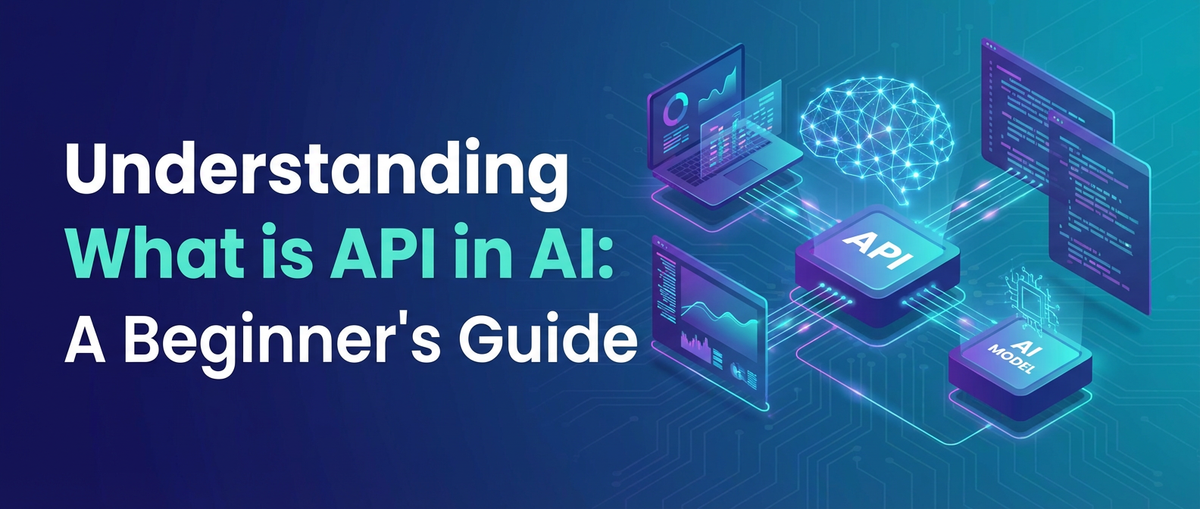
Understanding What is API in AI: A Beginner's Guide

In the rapidly evolving landscape of artificial intelligence, the ability to seamlessly integrate powerful AI capabilities into everyday applications is no longer a futuristic dream but a present-day reality. This transformation is largely thanks to a fundamental concept in software development: the Application Programming Interface, or API. When AI meets API, a synergy emerges that democratizes access to complex algorithms, machine learning models, and sophisticated cognitive services, empowering developers and businesses to build intelligent solutions with unprecedented ease.
This comprehensive guide aims to demystify what is API in AI, exploring its foundational principles, practical applications, and the profound impact it has on innovation across industries. Whether you're a budding developer, a seasoned professional, or simply curious about how AI is woven into the fabric of modern technology, understanding what is an AI API is crucial for navigating the digital frontier. We'll delve into how these interfaces abstract away the intricate complexities of AI models, making them accessible to anyone with a few lines of code, and how they fuel the next generation of smart applications, from natural language processing to advanced computer vision. Join us as we unpack the mechanics, benefits, and future potential of API AI.
1. The Foundation: Understanding APIs in General
Before we can fully grasp the intricacies of what is API in AI, it's essential to first establish a solid understanding of what an API is in its broader context. At its core, an API is a set of definitions and protocols that allows different software applications to communicate with each other. Think of it as a universal translator and messenger service for digital systems, enabling them to request services, exchange data, and integrate functionalities seamlessly.
What is an API? The Restaurant Analogy
To illustrate this concept, let's use a common analogy: a restaurant. * You (the customer) are the client application or developer wanting a specific service. * The Kitchen is the server or backend system that has the resources and capabilities to fulfill your request (e.g., prepare a meal). * The Menu represents the API documentation. It tells you what you can order (available functions), how to order it (required parameters), and what you can expect in return. * The Waiter (or Waitress) is the API itself. You don't go into the kitchen to cook your meal; you tell the waiter what you want from the menu. The waiter takes your order (sends a request) to the kitchen, waits for the kitchen to prepare it (processes the request), and then brings you the finished meal (sends a response).
In this analogy, the waiter (API) abstracts away the complexity of the kitchen (server's internal logic). You don't need to know how the chef prepares the ingredients, the cooking times, or the internal workings of the kitchen. You just need to know how to interact with the waiter according to the menu. Similarly, with an API, your application doesn't need to understand the server's operating system, programming language, or database structure. It just needs to know how to send a request in the format the API expects and how to interpret the response.
How Do APIs Work? The Request-Response Cycle
The fundamental interaction model for most APIs is a request-response cycle:
- Request: Your application (the client) sends a request to a server that hosts the API. This request typically specifies:
- Endpoint: The specific URL where the API service can be accessed (e.g.,
https://api.example.com/data). - Method: The type of action desired (e.g., GET to retrieve data, POST to send new data, PUT to update data, DELETE to remove data).
- Headers: Metadata about the request, such as authentication tokens, content type, etc.
- Body (optional): The actual data being sent to the server (e.g., JSON payload for a POST request).
- Endpoint: The specific URL where the API service can be accessed (e.g.,
- Processing: The server receives the request, validates it (e.g., checks authentication, ensures correct parameters), processes the requested operation, and retrieves or generates the necessary data.
- Response: The server sends back a response to your application. This response includes:
- Status Code: An HTTP status code indicating the outcome (e.g., 200 OK for success, 404 Not Found, 500 Internal Server Error).
- Headers: Metadata about the response.
- Body (optional): The requested data, often in a structured format like JSON or XML.
This constant back-and-forth communication forms the backbone of countless digital interactions, from fetching weather data for your phone app to processing payments on an e-commerce website.
Why Are APIs Essential?
APIs are indispensable in modern software development for several critical reasons:
- Interoperability: They enable disparate systems, often built with different technologies, to communicate and share data, fostering a connected digital ecosystem.
- Efficiency and Speed: Developers don't have to reinvent the wheel. Instead of building every functionality from scratch, they can leverage pre-built, robust services exposed through APIs, significantly accelerating development cycles.
- Innovation: By abstracting complex functionalities, APIs allow developers to focus on creating unique user experiences and novel features, rather than getting bogged down in backend infrastructure. This fosters a culture of innovation and rapid prototyping.
- Scalability: API providers often manage the underlying infrastructure, allowing developers to scale their applications without worrying about server capacity, load balancing, or other operational complexities.
- Data Sharing and Ecosystems: APIs facilitate the sharing of data and services, leading to the creation of vast digital ecosystems where different applications can complement each other, offering richer experiences to users. For example, social media APIs allow third-party apps to post updates or retrieve user information (with consent), expanding the platform's reach.
Types of APIs (Briefly)
While the core concept remains the same, APIs come in various architectures and styles:
- REST (Representational State Transfer): The most common and flexible API style, relying on standard HTTP methods (GET, POST, PUT, DELETE) and typically returning data in JSON or XML format. It's stateless, meaning each request from client to server contains all the information needed to understand the request.
- SOAP (Simple Object Access Protocol): An older, more rigid, and protocol-based style that often uses XML for message formatting. It emphasizes security and reliability, often used in enterprise environments.
- GraphQL: A newer query language for APIs that allows clients to request exactly the data they need, reducing over-fetching or under-fetching of data. It provides a more efficient way to query and manipulate data from a single endpoint.
Understanding these foundational concepts of general-purpose APIs is the first step towards truly appreciating the power and purpose of what is API in AI.
2. Diving into AI: A Primer
Before we explore what is API in AI, let's briefly touch upon what Artificial Intelligence entails. AI is a broad field of computer science dedicated to creating machines that can perform tasks that typically require human intelligence. This includes learning, problem-solving, pattern recognition, understanding language, and even creativity. The goal is to enable machines to simulate and enhance human cognitive functions.
What is Artificial Intelligence?
AI encompasses a wide range of sub-fields and technologies:
- Machine Learning (ML): A subset of AI where systems learn from data, identify patterns, and make decisions or predictions without being explicitly programmed. Instead of hard-coding rules, ML models are "trained" on vast datasets.
- Supervised Learning: Learning from labeled data (e.g., predicting house prices based on historical data of houses with known prices).
- Unsupervised Learning: Finding patterns in unlabeled data (e.g., clustering customers into segments).
- Reinforcement Learning: Learning through trial and error, based on rewards and penalties (e.g., AI playing games).
- Deep Learning (DL): A specialized branch of machine learning that uses neural networks with multiple layers (hence "deep") to analyze data. Deep learning models excel at tasks like image recognition, speech recognition, and natural language understanding, often achieving state-of-the-art results due to their ability to learn complex features directly from raw data.
- Natural Language Processing (NLP): Focuses on the interaction between computers and human language. This includes tasks like text translation, sentiment analysis, text summarization, chatbot development, and understanding spoken commands.
- Computer Vision (CV): Enables computers to "see" and interpret visual information from the world, much like humans do. Applications include object detection, facial recognition, image classification, medical imaging analysis, and autonomous driving.
- Speech Recognition and Synthesis: Converting spoken language into text (speech-to-text) and generating human-like speech from text (text-to-speech).
Why AI is Transformative
AI's transformative power lies in its ability to:
- Automate Complex Tasks: Taking over repetitive, data-intensive, or complex tasks, freeing up human resources for more creative or strategic work.
- Extract Insights from Data: Discovering hidden patterns, correlations, and trends in massive datasets that would be impossible for humans to process manually.
- Personalize Experiences: Tailoring content, recommendations, and services to individual user preferences, leading to more engaging interactions.
- Enhance Decision-Making: Providing data-driven predictions and recommendations that improve the quality and speed of decision-making in various domains, from finance to healthcare.
- Drive Innovation: Creating entirely new products, services, and business models that were previously unimaginable.
The Challenge of Building AI from Scratch
Despite its immense potential, building AI systems from the ground up presents significant challenges:
- Data Scarcity and Quality: Training robust AI models requires vast quantities of high-quality, labeled data, which is often expensive and time-consuming to acquire and prepare.
- Computational Resources: Training deep learning models, especially large language models, demands immense computational power (GPUs, TPUs) and significant energy, which can be prohibitively expensive for many organizations.
- Specialized Expertise: Developing sophisticated AI algorithms requires a deep understanding of mathematics, statistics, computer science, and specific domain knowledge. Skilled AI researchers and engineers are in high demand and short supply.
- Model Management and Deployment: Once a model is trained, deploying it efficiently, monitoring its performance, and maintaining it over time (e.g., retraining with new data) introduces further complexity.
- Ethical Considerations: Ensuring fairness, transparency, and accountability in AI systems is paramount, requiring careful design and continuous evaluation to mitigate biases and prevent unintended consequences.
These challenges often create a high barrier to entry for businesses and developers looking to leverage AI. This is precisely where the concept of what is API in AI comes into play, offering a powerful solution to democratize access to these cutting-edge capabilities.
3. Bridging the Gap: What is API in AI?
Now that we understand both APIs and the fundamentals of AI, we can seamlessly bridge the gap to define what is API in AI. Simply put, an AI API is a type of API that provides access to pre-built artificial intelligence models and functionalities as a service. Instead of requiring developers to build, train, and deploy complex AI algorithms from scratch, an AI API allows them to integrate powerful AI capabilities into their applications with just a few lines of code, through standard HTTP requests.
The core idea behind what is an AI API is abstraction. The API provider (e.g., Google, Amazon, OpenAI, or a specialized AI company) handles all the heavy lifting: gathering vast datasets, training sophisticated machine learning models, managing the underlying infrastructure (GPUs, servers), optimizing performance, and continuously updating the models with new data and research. What they expose to developers is a simple, well-documented interface that takes input data, sends it to their powerful AI models, and returns an AI-generated output.
How AI APIs Abstract Complexity
Imagine you want to add sentiment analysis to your customer service application to automatically detect the emotional tone of customer feedback. Without an AI API, you would need to:
- Collect and Label Data: Gather thousands, if not millions, of text snippets and manually label them as positive, negative, or neutral.
- Choose an Algorithm: Select an appropriate machine learning algorithm (e.g., Naive Bayes, Support Vector Machine, or a deep learning model like a Transformer).
- Train the Model: Write code to train the chosen algorithm on your labeled dataset, which requires significant computational resources and time.
- Evaluate and Refine: Test the model's accuracy, fine-tune hyperparameters, and iterate until performance is acceptable.
- Deploy and Maintain: Set up servers, develop an inference endpoint, and continuously monitor and update the model as new data becomes available or its performance degrades.
This process is costly, time-consuming, and requires specialized AI expertise.
With an AI API, this entire workflow is condensed into a single API call:
- You send a piece of text (e.g., "The product is terrible!") to the sentiment analysis API endpoint.
- The API's backend (where the trained AI model resides) processes the text.
- The API returns a response, typically a JSON object, indicating the sentiment (e.g.,
{"sentiment": "negative", "score": 0.95}).
This dramatically simplifies development, allowing developers to focus on integrating the AI's output into their application's logic rather than building the AI itself. This is the essence of what is api in ai – making advanced intelligence consumable as a service.
Concrete Examples of AI Capabilities Exposed via APIs
The range of AI capabilities made accessible through APIs is vast and continually expanding. Here are some prominent examples:
- Natural Language Processing (NLP):
- Sentiment Analysis: Determining the emotional tone (positive, negative, neutral) of text.
- Text Translation: Translating text from one language to another.
- Named Entity Recognition (NER): Identifying and classifying named entities (people, organizations, locations, dates) in text.
- Text Summarization: Condensing longer texts into shorter, coherent summaries.
- Topic Modeling: Identifying dominant themes or topics within a collection of documents.
- Large Language Models (LLMs): APIs like those for GPT-3, GPT-4, LLaMA, and Claude allow developers to generate human-like text, answer questions, write code, create content, and perform complex reasoning tasks. These are prime examples of advanced API AI.
- Computer Vision:
- Image Classification: Categorizing images (e.g., "dog," "cat," "car").
- Object Detection: Identifying and locating specific objects within an image or video (e.g., drawing bounding boxes around cars and pedestrians in a street scene).
- Facial Recognition: Identifying individuals from images or videos.
- Optical Character Recognition (OCR): Extracting text from images (e.g., digitizing scanned documents).
- Image Moderation: Detecting inappropriate or harmful content in images.
- Speech Services:
- Speech-to-Text (STT): Transcribing spoken audio into written text.
- Text-to-Speech (TTS): Converting written text into natural-sounding spoken audio.
- Recommendation Engines:
- Providing personalized recommendations for products, content, or services based on user behavior and preferences.
- Fraud Detection:
- APIs that analyze transactions or user behavior patterns to identify potential fraudulent activities.
Benefits of Using AI APIs
Leveraging AI APIs offers numerous advantages for businesses and developers:
- Accelerated Development: Integrate sophisticated AI features in days or weeks instead of months or years.
- Cost-Effectiveness: Avoid the massive upfront investments in hardware, data acquisition, and specialized personnel required to build and maintain AI models. Most APIs operate on a pay-as-you-go model.
- Access to Expertise: Tap into the cutting-edge research and engineering efforts of leading AI providers without needing an in-house team of AI experts.
- Scalability and Performance: API providers manage the infrastructure, ensuring that the AI models can handle varying loads and deliver results with high performance and low latency.
- Reduced Maintenance: The API provider is responsible for model updates, bug fixes, and infrastructure maintenance, allowing developers to focus on their core application logic.
- Continuous Improvement: Many AI APIs are continuously improved and retrained with new data by their providers, meaning your application benefits from these enhancements automatically.
In essence, API AI transforms AI from a resource-intensive, specialist domain into an accessible, on-demand utility, fueling innovation across all sectors.
4. The Architecture of an AI API
To effectively utilize an AI API, it's helpful to understand its typical architecture and how data flows through it. While the specific implementations vary between providers, the fundamental components and interaction patterns remain consistent, whether you're using a simple image classification API AI or a complex large language model.
Key Components of an AI API Interaction
- Endpoint:
- This is the specific URL that your application sends requests to. Different AI capabilities usually have different endpoints. For example, a text translation API might have an endpoint like
https://api.ai-provider.com/v1/translate, while a sentiment analysis API might usehttps://api.ai-provider.com/v1/sentiment. The endpoint acts as the precise address for the service you want to access.
- This is the specific URL that your application sends requests to. Different AI capabilities usually have different endpoints. For example, a text translation API might have an endpoint like
- Authentication:
- To ensure secure and authorized access, most AI APIs require authentication. This typically involves:
- API Keys: A unique string provided by the API service that you include in your request headers or parameters. This key identifies your application and tracks your usage.
- OAuth 2.0: A more robust standard for delegated authorization, often used for more complex integrations where user consent is required (e.g., granting an app access to your cloud drive).
- Authentication is crucial for billing, rate limiting, and protecting the API from misuse.
- To ensure secure and authorized access, most AI APIs require authentication. This typically involves:
- Request Parameters:
- These are the inputs you provide to the AI model through the API. The parameters specify what task you want the AI to perform and with what data. They are typically sent in the request body (often as JSON) or as URL query parameters.
- Example for a Sentiment Analysis API:
json { "text": "I absolutely love this new feature, it's incredibly helpful!", "language": "en" }Here,textis the primary input for the AI to analyze, andlanguageis an optional parameter to specify the input language, guiding the model.
- Response Data:
- After the AI model processes your request, the API sends back a response containing the results. This data is usually in JSON format for easy parsing by client applications.
- Example for a Sentiment Analysis API Response:
json { "sentiment": "positive", "score": 0.98, "confidence": { "positive": 0.98, "negative": 0.01, "neutral": 0.01 }, "model_version": "v3.2.1" }The response includes the inferred sentiment, a score indicating the strength of that sentiment, and sometimes additional details like confidence scores for other sentiments or metadata about the model used.
Data Flow and Processing in an AI API
Let's trace the journey of a request through an AI API:
- Client Application Initiates Request: Your application, running on a mobile device, web browser, or server, constructs an HTTP request. This includes the API endpoint URL, necessary authentication credentials, and the input data as specified by the API documentation.
- Request Sent to API Gateway: The request travels over the internet to the API provider's servers. Often, it first hits an API Gateway, which handles authentication, rate limiting, and routing.
- Authentication and Validation: The API Gateway verifies your API key or token. If authentication fails or if you've exceeded your rate limits, an error response is sent back immediately.
- Request Routed to AI Service: If authorized, the request is forwarded to the specific backend AI service responsible for the requested capability (e.g., the NLP service for text translation).
- Data Pre-processing: The input data might undergo some pre-processing steps before being fed into the AI model. For example, text might be tokenized, or images might be resized.
- AI Model Inference: The pre-processed data is fed into the trained AI model. This is where the actual "intelligence" happens – the model makes a prediction, generates text, classifies an image, or performs whatever task it was designed for. This step often leverages specialized hardware like GPUs or TPUs for speed.
- Data Post-processing: The raw output from the AI model might be post-processed to format it into a user-friendly and structured response, like a JSON object.
- Response Sent Back: The formatted response is sent back through the API Gateway to your client application.
- Client Application Processes Response: Your application receives the response, parses the JSON data, and uses the AI-generated output to perform its next actions, display results to the user, or trigger other processes.
Example Request/Response Structures (JSON)
JSON (JavaScript Object Notation) is the de facto standard for data interchange with most modern APIs due to its lightweight nature and human readability.
Example 1: Image Classification API
- Request: Send a base64-encoded image or a URL to an image.```json POST /v1/image-classification Host: api.ai-provider.com Authorization: Bearer YOUR_API_KEY Content-Type: application/json{ "image_url": "https://example.com/my-image.jpg", "num_predictions": 3 } ```
- Response: Returns a list of predicted labels with confidence scores.```json HTTP/1.1 200 OK Content-Type: application/json{ "predictions": [ {"label": "cat", "score": 0.92}, {"label": "mammal", "score": 0.05}, {"label": "animal", "score": 0.02} ], "request_id": "abc123xyz" } ```
Example 2: Text Generation (LLM) API
- Request: Send a prompt for the LLM.```json POST /v1/chat/completions Host: api.llm-provider.com Authorization: Bearer YOUR_API_KEY Content-Type: application/json{ "model": "gpt-4o", "messages": [ {"role": "system", "content": "You are a helpful assistant."}, {"role": "user", "content": "Tell me a short story about a brave knight."} ], "max_tokens": 150, "temperature": 0.7 } ```
- Response: Returns the generated text from the LLM.```json HTTP/1.1 200 OK Content-Type: application/json{ "id": "chatcmpl-EXAMPLE", "object": "chat.completion", "created": 1677652288, "model": "gpt-4o", "choices": [ { "index": 0, "message": { "role": "assistant", "content": "Sir Reginald, known for his gleaming armor and unwavering courage, faced the dreaded Shadow Dragon. Its scales shimmered like obsidian, and its roar echoed through the ancient peaks. With his enchanted sword, 'Truthsinger,' Reginald charged, not for glory, but for the peaceful village nestled below. The battle was fierce, a symphony of fire and steel, but Reginald's heart, pure and resolute, shone brighter than any flame. In the end, Truthsinger found its mark, and the Shadow Dragon fell, its darkness dissolving into the mountain air. The villagers rejoiced, their protector once again securing their peace." }, "finish_reason": "stop" } ], "usage": { "prompt_tokens": 25, "completion_tokens": 128, "total_tokens": 153 } } ```
Understanding this architecture is key to successfully integrating and troubleshooting API AI services within your applications, allowing you to harness their power with confidence.
5. Key Categories and Examples of AI APIs
The landscape of AI APIs is incredibly diverse, offering specialized functionalities that cater to a wide range of needs. From understanding human language to interpreting visual cues, these APIs enable developers to imbue their applications with intelligence across various domains. Here, we'll explore some of the most prominent categories and provide examples to illustrate their utility, highlighting how what is an AI API can be applied in practice.
Natural Language Processing (NLP) APIs
NLP APIs are designed to enable computers to understand, interpret, and generate human language. They are fundamental to applications involving text and speech.
- Sentiment Analysis API:
- Function: Analyzes text to determine the emotional tone (positive, negative, neutral, or mixed).
- Use Cases: Monitoring social media mentions for brand reputation, analyzing customer reviews and feedback, prioritizing customer support tickets, understanding public opinion on products or services.
- Example: A marketing team uses a sentiment analysis API AI to gauge real-time public perception of a new product launch from Twitter feeds.
- Translation API:
- Function: Translates text from one natural language to another.
- Use Cases: Real-time translation in chat applications, localizing websites and software, facilitating communication in multinational businesses, translating documents.
- Example: An e-commerce platform integrates a translation AI API to automatically translate product descriptions and customer reviews for international users.
- Text Summarization API:
- Function: Condenses long pieces of text into shorter, coherent summaries while retaining key information.
- Use Cases: Summarizing news articles, academic papers, legal documents, or meeting transcripts to save time.
- Example: A research assistant uses a text summarization API AI to quickly grasp the main points of numerous scientific papers.
- Named Entity Recognition (NER) API:
- Function: Identifies and classifies named entities (e.g., persons, organizations, locations, dates, monetary values) within text.
- Use Cases: Information extraction from documents, enhancing search capabilities, building knowledge graphs, content categorization.
- Example: A legal tech company uses an NER API AI to automatically identify key parties, dates, and locations in legal contracts.
- Large Language Model (LLM) APIs:
- Function: Advanced generative AI models capable of understanding prompts and generating human-like text, answering questions, writing code, summarizing, translating, and more. These are at the forefront of what is api in ai.
- Use Cases: Powering chatbots and virtual assistants, content creation (articles, marketing copy, social media posts), code generation and debugging, sophisticated data analysis, complex reasoning and problem-solving.
- Example: A startup builds an intelligent assistant for financial advisors, leveraging an LLM API AI to answer complex client queries and draft personalized financial reports. This is where platforms like XRoute.AI become incredibly valuable, by providing a unified, OpenAI-compatible endpoint to access multiple LLMs from over 20 providers, ensuring developers can choose the best model for their task without juggling multiple API keys and integrations.
Computer Vision APIs
Computer Vision APIs enable applications to "see" and interpret images and videos, deriving meaningful information.
- Object Detection API:
- Function: Identifies and locates specific objects within an image or video, often drawing bounding boxes around them.
- Use Cases: Surveillance, autonomous vehicles, retail inventory management, quality control in manufacturing, analyzing sports footage.
- Example: A smart city initiative uses an object detection API AI to monitor traffic flow and identify congestion points from CCTV camera feeds.
- Facial Recognition API:
- Function: Identifies individuals from images or video frames. Can also detect facial features like age, gender, and emotions.
- Use Cases: Security and access control, identity verification, personalized customer experiences, missing person searches.
- Example: An event management system uses a facial recognition API AI for seamless, ticketless entry for pre-registered attendees.
- Image Moderation API:
- Function: Automatically detects and flags inappropriate, offensive, or harmful content in images and videos.
- Use Cases: Content filtering for social media platforms, safeguarding online communities, ensuring brand safety in advertising.
- Example: A user-generated content platform integrates an image moderation API AI to automatically review uploaded images and prevent the spread of illicit content.
Speech APIs
Speech APIs bridge the gap between human speech and digital text, and vice versa.
- Speech-to-Text (STT) API:
- Function: Converts spoken audio into written text.
- Use Cases: Voice assistants, transcription services, automated customer service, meeting minutes generation, voice control for applications.
- Example: A medical professional uses an STT API AI to dictate patient notes directly into their electronic health record system.
- Text-to-Speech (TTS) API:
- Function: Converts written text into natural-sounding spoken audio.
- Use Cases: Creating audio versions of articles, accessible interfaces for visually impaired users, voiceovers for videos, interactive voice response (IVR) systems.
- Example: An e-learning platform utilizes a TTS API AI to generate audio lectures from written course materials, offering flexibility to students.
Recommendation Engine APIs
- Function: Provides personalized suggestions for products, services, or content based on user behavior, preferences, and historical data.
- Use Cases: E-commerce product recommendations, personalized content feeds (news, videos), music streaming suggestions, job matching platforms.
- Example: A streaming service employs a recommendation engine API AI to suggest movies and TV shows tailored to each user's viewing history, increasing engagement.
Generative AI APIs
While often overlapping with LLMs, this category broadly covers AI that generates new content.
- Image Generation APIs:
- Function: Creates unique images from text descriptions (prompts).
- Use Cases: Concept art generation, marketing visuals, personalized content creation, virtual world asset generation.
- Example: A graphic designer uses an image generation API AI to quickly prototype various visual concepts for a client's branding campaign.
These diverse API AI categories illustrate the immense power that these interfaces bring to the table. By abstracting the complexity of cutting-edge AI models, they empower developers and businesses to integrate sophisticated intelligence into virtually any application, accelerating innovation across every sector.
Below is a table summarizing some popular AI API categories and their common use cases:
| AI API Category | Core Functionality | Example Use Cases |
|---|---|---|
| Natural Language Processing (NLP) | Understand, interpret, and generate human language. | Sentiment Analysis (customer feedback, social media monitoring), Translation (multilingual apps, localization), Text Summarization (news, documents), Named Entity Recognition (information extraction), Large Language Models (chatbots, content creation, code generation, Q&A) |
| Computer Vision (CV) | Interpret and understand visual data (images, video). | Object Detection (autonomous vehicles, security, retail inventory), Facial Recognition (access control, identity verification), Image Classification (content tagging, product search), OCR (document digitization), Image Moderation (filtering inappropriate content) |
| Speech Services | Convert between spoken language and text. | Speech-to-Text (voice assistants, transcription, call center analytics), Text-to-Speech (audiobooks, voiceovers, accessible interfaces, IVR systems) |
| Recommendation Engines | Provide personalized suggestions. | E-commerce (product recommendations), Media Streaming (movie/music suggestions), Content Platforms (news feeds), Job Portals (candidate matching) |
| Generative AI | Create new content (text, images, audio, code). | Large Language Models (creative writing, code, answers), Image Generation (concept art, marketing visuals), Code Generation (developer tools), Music Composition (AI-generated soundtracks) |
| Forecasting & Prediction | Predict future outcomes based on historical data. | Sales forecasting, demand prediction, financial market analysis, resource allocation, predictive maintenance |
| Fraud Detection | Identify suspicious or fraudulent activities. | Financial transactions, online user behavior, insurance claims, anti-money laundering |
This table underscores the breadth of applications for API AI and its potential to revolutionize how we interact with technology and data.
XRoute is a cutting-edge unified API platform designed to streamline access to large language models (LLMs) for developers, businesses, and AI enthusiasts. By providing a single, OpenAI-compatible endpoint, XRoute.AI simplifies the integration of over 60 AI models from more than 20 active providers(including OpenAI, Anthropic, Mistral, Llama2, Google Gemini, and more), enabling seamless development of AI-driven applications, chatbots, and automated workflows.
6. Benefits of Integrating AI APIs into Your Applications
The decision to integrate AI APIs into software applications is driven by a compelling set of advantages that address common challenges in modern development and business operations. Moving beyond the theoretical what is an AI API, let's explore the tangible benefits that make them indispensable tools for innovation.
Accelerated Development Cycles
One of the most significant benefits of using AI APIs is the drastic reduction in development time. Building AI models from scratch is a highly specialized and time-consuming endeavor involving: * Data collection and annotation. * Model selection and architecture design. * Training and hyperparameter tuning. * Rigorous testing and validation. * Deployment and continuous monitoring.
Each of these steps can take months, even for experienced AI teams. By contrast, integrating an AI API is often a matter of reading documentation, obtaining an API key, and writing a few lines of code to send requests and parse responses. This means developers can add advanced AI functionalities to their applications in days or weeks, allowing for faster prototyping, quicker iterations, and a much faster time-to-market for new features or products.
Cost-Effectiveness
Building and maintaining an in-house AI infrastructure requires substantial financial investment: * Hardware: Powerful GPUs, TPUs, and servers. * Software Licenses: Specialized AI frameworks and tools. * Talent: Hiring highly paid AI researchers, data scientists, and ML engineers. * Data: Acquiring, storing, and managing large datasets. * Operational Costs: Electricity, cooling, and ongoing maintenance.
AI APIs offer a pay-as-you-go model, transforming these large capital expenditures into operational costs. You only pay for the resources you consume (e.g., per API call, per token, per image processed). This dramatically lowers the barrier to entry for startups and small to medium-sized businesses, enabling them to leverage cutting-edge AI without the prohibitive upfront investment. Furthermore, the efficiency gains from using pre-optimized models can lead to long-term cost savings compared to self-managed solutions.
Access to Specialized Expertise and State-of-the-Art Models
Most leading AI APIs are developed and maintained by major tech companies or specialized AI labs with vast resources and unparalleled expertise. These providers employ world-class AI researchers and engineers who continuously improve their models, incorporating the latest advancements in the field. When you use an AI API, you're effectively gaining access to: * Advanced Algorithms: Sophisticated deep learning models that are difficult to replicate. * Massive Training Data: Models trained on enormous, high-quality datasets, leading to superior performance and generalization. * Ongoing Research & Development: Your application benefits automatically from continuous updates, performance improvements, and new features rolled out by the API provider.
This democratizes access to state-of-the-art AI, allowing any developer to integrate capabilities that would otherwise require an elite team of experts.
Scalability and High Performance
AI models, especially deep learning models and LLMs, require significant computational resources for inference (making predictions). Managing this infrastructure for fluctuating demand can be complex. AI API providers manage this complexity on your behalf: * Elastic Scalability: They ensure their infrastructure can handle millions of requests per second, automatically scaling resources up or down to meet demand without impacting your application's performance. * Optimized Performance: Providers dedicate extensive resources to optimizing their models for speed and efficiency, ensuring low latency responses. They often use specialized hardware (GPUs, custom AI chips) and sophisticated load-balancing techniques. * Reliability: API providers typically offer high availability, guaranteeing that the service is almost always accessible, often with robust backup and disaster recovery mechanisms.
This allows your application to scale seamlessly without you needing to worry about the underlying AI infrastructure.
Focus on Core Business Logic and Unique Features
By outsourcing the complex task of AI model development and management to API providers, your development team can reallocate their time and resources to what matters most: * Building Core Product Features: Focusing on the unique value proposition of your application. * Crafting User Experience: Designing intuitive and engaging interfaces. * Business Innovation: Exploring new market opportunities and strategic initiatives.
Instead of spending cycles on training models or optimizing GPU utilization, developers can concentrate on integrating the AI's output into a cohesive and compelling user experience, driving innovation faster.
Reduced Maintenance and Operational Burden
Maintaining an AI system is an ongoing task that includes: * Monitoring model performance for drift. * Retraining models with new data. * Applying security patches. * Updating underlying software dependencies. * Troubleshooting infrastructure issues.
When you use an AI API, all these operational burdens are handled by the service provider. They ensure the models are up-to-date, secure, and performing optimally. This significantly reduces your team's operational overhead, allowing for greater efficiency and stability.
In summary, integrating AI APIs transforms AI from a daunting, resource-heavy challenge into an accessible, efficient, and cost-effective utility. This shift empowers businesses and developers to rapidly build intelligent, scalable, and innovative applications, cementing the crucial role of what is API in AI in the modern technological landscape.
7. Challenges and Considerations When Using AI APIs
While the benefits of AI APIs are compelling, their adoption is not without challenges and important considerations. A comprehensive understanding of what is an AI API must also include an awareness of these potential pitfalls to ensure successful and responsible integration.
Data Privacy and Security
One of the foremost concerns when using external AI APIs involves data privacy and security. When you send data (text, images, audio) to an API for processing, that data leaves your control and is handled by a third-party provider. * What data is sent? It's critical to understand exactly what information your application is transmitting. Is it sensitive personal data, proprietary business information, or anonymous public data? * How is it stored and used? API providers have different policies regarding data retention, encryption, and how they use your data (e.g., for model training, debugging, or never storing it). Review their terms of service and privacy policies meticulously. * Compliance: Ensure the API provider's practices comply with relevant data protection regulations (e.g., GDPR, CCPA, HIPAA) that apply to your business and users. * Data Minimization: Only send the absolute minimum data required by the API. Mask or redact sensitive information whenever possible before transmission.
Vendor Lock-in
Relying heavily on a single AI API provider can lead to vendor lock-in. If you build your entire application around a specific API's unique features, data formats, or model outputs, switching to a different provider later can be difficult and costly. * Cost Increases: The provider might increase prices, and you'd have limited leverage to negotiate if migration is too expensive. * Feature Discontinuation: A provider might deprecate or alter an API feature that is critical to your application. * Performance Issues: If a provider experiences downtime or performance degradation, your application will suffer directly. * Limited Choice: You might miss out on superior models or more cost-effective options from other providers.
Mitigation strategies include designing your application with an abstraction layer that can swap out different AI API backends, or using unified API platforms like XRoute.AI, which aggregates multiple providers and models, giving you flexibility.
Latency and Throughput
Network latency and API throughput are critical performance considerations, especially for real-time applications. * Latency: The time it takes for a request to travel to the API server, be processed by the AI model, and for the response to return. Geographic distance between your application and the API server, network congestion, and the complexity of the AI model all contribute to latency. High latency can degrade user experience. * Throughput: The number of requests an API can handle per unit of time (often measured in requests per second or minute). API providers typically impose rate limits to prevent abuse and ensure fair usage. If your application exceeds these limits, requests will be throttled or rejected.
For applications requiring low latency AI or high throughput AI, choosing a provider with optimized infrastructure and understanding their rate limits is crucial. Platforms like XRoute.AI specifically address these concerns by optimizing routing for low latency and high throughput across multiple providers.
Cost Management
While AI APIs can be cost-effective, managing expenses requires vigilance. Pricing models vary significantly: * Per Call/Request: Flat fee per API interaction. * Per Token/Character: Common for NLP and LLM APIs (e.g., based on input and output text length). * Per Image/Video Second: For computer vision and speech APIs. * Tiered Pricing: Different rates based on volume (e.g., lower price per unit for higher usage). * Dedicated Instances: For very high-volume users, a dedicated model instance might be more cost-efficient but requires commitment.
Without careful monitoring and optimization, costs can quickly escalate, especially with high-volume usage or unexpected spikes in demand. It's essential to understand the pricing structure, implement usage tracking, and set budget alerts.
Ethical Considerations
Integrating AI, even through an API, comes with ethical responsibilities. * Bias: AI models are trained on data, and if that data reflects societal biases (e.g., gender, racial), the model can perpetuate and even amplify those biases in its predictions or generations. For instance, a facial recognition API might perform worse on certain demographics, or a hiring recommendation API AI might unfairly favor certain candidate profiles. * Fairness and Transparency: Can you explain why the AI made a particular decision? Lack of transparency (the "black box" problem) can be a significant issue in regulated industries. * Misuse: How might the AI capability be misused? For example, powerful generative API AI can be used to create deepfakes or propagate misinformation. * Accountability: Who is responsible if an AI system causes harm? The developer, the API provider, or both?
Developers must evaluate the ethical implications of the AI API they choose and how its outputs are used in their applications.
API Stability and Documentation
The reliability of an AI API directly impacts your application's stability. * Downtime: While providers strive for high availability, outages can occur, making your AI-dependent features unavailable. * Version Changes: API providers regularly update their services, which can sometimes introduce breaking changes. Robust documentation and clear versioning policies are crucial. * Documentation Quality: Clear, comprehensive, and up-to-date documentation is essential for developers to understand how to use the API correctly, handle errors, and leverage all its features. Poor documentation leads to frustration and integration issues.
Regularly monitoring API health status pages, subscribing to update notifications, and building in graceful degradation for your application can help mitigate these risks.
By carefully considering these challenges alongside the numerous benefits, developers and businesses can make informed decisions when integrating AI APIs, ensuring that their AI-powered solutions are robust, responsible, and sustainable.
8. Best Practices for Working with AI APIs
To maximize the benefits and mitigate the challenges associated with AI APIs, adopting a set of best practices is crucial. These guidelines help ensure that your integration is robust, efficient, secure, and cost-effective, truly leveraging the power of what is API in AI.
Read Documentation Thoroughly
The API documentation is your primary guide. It details: * Endpoints: The specific URLs for each service. * Authentication: How to secure your requests (API keys, OAuth). * Request Formats: The expected structure and parameters for input data. * Response Formats: The structure of the data you'll receive back. * Error Codes: What different error messages mean and how to handle them. * Rate Limits: How many requests you can make in a given period. * Pricing: The cost associated with different types of usage. * Data Handling Policies: Important for privacy and compliance.
Investing time in understanding the documentation upfront will save countless hours of debugging and potential integration issues down the line. It also helps you grasp the full capabilities and limitations of the API AI you're using.
Implement Robust Error Handling
External APIs are not infallible; network issues, invalid requests, authentication failures, or provider-side errors can occur. Your application must be prepared to handle these gracefully: * Check Status Codes: Always inspect the HTTP status code in the API response (e.g., 200 OK for success, 4xx for client errors, 5xx for server errors). * Specific Error Messages: Parse error messages from the API response body to provide more informative feedback to users or for logging. * Retry Mechanisms: For transient errors (e.g., 500 server errors, network timeouts), implement exponential backoff and retry logic. This means waiting progressively longer before retrying a failed request, to avoid overwhelming the API. * Fallback Logic: Design your application to function (perhaps with reduced functionality) if an API is temporarily unavailable or returns an unexpected error. For example, if a sentiment analysis API AI fails, you might default to a neutral sentiment or simply indicate that the analysis is unavailable.
Optimize API Calls for Efficiency and Cost
Inefficient API usage can lead to higher costs and slower performance. * Batching Requests: If the API supports it, send multiple data points in a single request (batch processing) instead of making individual requests. This reduces network overhead and often incurs lower costs. * Caching: For data that doesn't change frequently (e.g., static classifications, common translations), implement caching mechanisms. Store the API's response locally for a period, and serve it directly without making a new API call. * Minimize Redundant Calls: Avoid making the same API call multiple times for the same input if the result is predictable. * Pre-processing on Client-side: Perform as much data cleaning, validation, and transformation as possible on your application's side before sending it to the API. This reduces the amount of data transmitted and ensures valid inputs. * Leverage Unified API Platforms: Platforms like XRoute.AI can optimize API calls by routing them to the most cost-effective or lowest-latency model among multiple providers, offering an additional layer of optimization.
Monitor Usage and Costs
Proactive monitoring is essential to prevent unexpected bills and ensure fair usage. * Set Budget Alerts: Most cloud providers and API services offer tools to set up alerts when your usage approaches a predefined budget limit. * Track Usage Metrics: Monitor the number of API calls, tokens processed, or data transferred. Integrate this data into your internal dashboards. * Analyze Billing Reports: Regularly review detailed billing statements to understand your cost drivers and identify any anomalies. * Understand Rate Limits: Stay within the API's rate limits to avoid throttling or rejected requests. If you anticipate higher usage, communicate with the API provider to explore increased limits or enterprise plans.
Prioritize Data Security and Privacy
Given the sensitive nature of some AI applications, robust security practices are paramount. * Secure Authentication: Always transmit API keys or tokens securely (e.g., via HTTP headers, never in URLs). Store keys securely in environment variables or secrets management systems, never hardcode them in your application code. * Encrypt Data in Transit: Ensure all communication with the API uses HTTPS/SSL to encrypt data during transmission. * Data Minimization: Only send the essential data required for the AI task. Avoid sending Personally Identifiable Information (PII) if it's not strictly necessary. Mask or tokenize sensitive data where possible. * Understand Data Retention: Be aware of the API provider's data retention policies. Does the provider store your data? For how long? For what purpose? Choose providers with strong data governance practices.
Choose the Right API Provider
The market for AI APIs is competitive. Selecting the right provider is critical. * Performance: Evaluate latency, throughput, and accuracy for your specific use case. * Cost: Compare pricing models and ensure they align with your budget and expected usage. * Documentation & Support: Look for clear documentation, active community forums, and responsive customer support. * Features & Flexibility: Does the API offer all the functionalities you need? Is it flexible enough to evolve with your requirements? * Data Policies: Scrutinize data privacy, security, and compliance assurances. * Reliability: Check their uptime guarantees (SLAs) and historical reliability. * Ecosystem & Integrations: How well does it integrate with other tools and services you use?
For diverse AI needs, consider platforms that offer access to multiple providers, allowing you to pick and choose the best model for each specific task without deep integration efforts. This approach can also mitigate vendor lock-in.
By adhering to these best practices, developers can confidently integrate API AI capabilities, building powerful and intelligent applications that deliver real value while maintaining security, efficiency, and scalability.
9. The Future of AI APIs and the Role of Platforms like XRoute.AI
The journey into what is API in AI reveals a powerful paradigm shift, transforming complex AI models into accessible, on-demand services. As AI capabilities continue to expand at an astonishing pace, the role of AI APIs will only become more central to innovation. However, this growth also brings new complexities, paving the way for advanced solutions that streamline access to this burgeoning intelligence.
Growing Complexity and Number of AI Models
The AI landscape is characterized by relentless innovation. New models, architectures, and capabilities are emerging constantly, often with specialized strengths: * More Diverse Models: Beyond general-purpose LLMs, we're seeing highly specialized models for specific domains (e.g., medical imaging, legal text analysis) or tasks (e.g., generating specific code functions, creating highly stylized art). * Multi-modal AI: The trend towards AI that can process and generate information across multiple modalities (text, images, audio, video) is accelerating. This means a single API call might involve inputting text and generating an image, or analyzing a video to extract both speech and object detection insights. * Open Source vs. Proprietary: A growing number of powerful open-source models (like LLaMA 2, Mistral) are competing with proprietary offerings (like GPT-4, Claude), each with its own advantages in terms of cost, customizability, and performance.
This proliferation of models, while beneficial, presents a significant challenge for developers: choosing the right model for a specific task and integrating it efficiently. Each model, whether proprietary or open-source, often comes with its own API, authentication methods, pricing structures, and data formats. Managing these disparate connections can quickly become an integration nightmare.
The Need for Orchestration and Unified Access
As developers aim to leverage the best AI model for each specific part of their application – perhaps one LLM for creative writing, another for precise code generation, and yet another for cost-effective summarization – the challenge of managing multiple API integrations becomes acute. This leads to: * Increased Development Time: More code to write for different API clients. * Higher Maintenance Overhead: Keeping up with changes from multiple providers. * Vendor Lock-in Risk: Despite using multiple APIs, deeply integrating with each still ties you to individual providers. * Complex Cost Management: Juggling different billing cycles and pricing models. * Suboptimal Performance: Manually switching between models to find the best fit for latency or accuracy is inefficient.
This evolving landscape highlights a clear need for platforms that can orchestrate and unify access to this diverse ecosystem of AI models.
Introducing XRoute.AI: Simplifying Access to Advanced AI
This is precisely where innovative platforms like XRoute.AI step in. XRoute.AI is a cutting-edge unified API platform designed to streamline access to large language models (LLMs) for developers, businesses, and AI enthusiasts. By providing a single, OpenAI-compatible endpoint, XRoute.AI simplifies the integration of over 60 AI models from more than 20 active providers, enabling seamless development of AI-driven applications, chatbots, and automated workflows.
How does XRoute.AI address the emerging challenges of API AI?
- Unified Access: Instead of integrating with 20+ different APIs, developers interact with a single XRoute.AI endpoint. This drastically reduces integration complexity and development time. The "OpenAI-compatible" aspect is particularly powerful, as many developers are already familiar with this standard, making adoption even easier.
- Model Agnosticism & Flexibility: XRoute.AI allows developers to easily switch between different LLMs and AI models with minimal code changes. This mitigates vendor lock-in, enabling users to always choose the best model for their specific task based on performance, cost, or unique capabilities, without re-writing their integration code.
- Low Latency AI & High Throughput AI: The platform is engineered for high performance. XRoute.AI intelligently routes requests to optimize for low latency, ensuring that applications receive rapid responses crucial for real-time interactions. Its design also supports high throughput, managing large volumes of concurrent requests efficiently.
- Cost-Effective AI: By providing access to multiple providers, XRoute.AI enables dynamic routing to the most cost-effective model for a given query, or allows users to configure cost thresholds, ensuring developers can manage their AI expenditures more effectively.
- Simplified Management: Authentication, rate limiting, and monitoring are handled centrally by XRoute.AI, offloading significant operational burdens from developers.
- Future-Proofing: As new AI models and providers emerge, XRoute.AI integrates them into its platform, meaning your application can access the latest advancements without constant re-integration efforts.
In essence, XRoute.AI acts as an intelligent AI gateway, abstracting away the underlying fragmentation of the AI model landscape. It empowers developers to build intelligent solutions without the complexity of managing multiple API connections, accelerating innovation and making advanced AI more accessible and practical.
Democratization of AI
The future of AI APIs, especially through platforms like XRoute.AI, points towards a further democratization of AI. Complex AI capabilities, once the exclusive domain of large tech giants, are now within reach of startups, small businesses, and individual developers. This means: * Broader Innovation: More diverse applications and solutions can be built, addressing a wider range of problems. * Reduced Barriers to Entry: Lower costs and simplified integration mean more people can experiment and build with AI. * Enhanced Productivity: Developers can focus on creativity and problem-solving, letting AI APIs handle the heavy lifting.
The journey of what is API in AI is one of continuous evolution, moving from simple interfaces to powerful orchestration platforms that manage an increasingly complex and rich ecosystem of intelligent services. The ability to seamlessly tap into this intelligence, as exemplified by platforms like XRoute.AI, will be a defining factor in the next wave of technological advancement.
Conclusion
Our exploration of what is API in AI has traversed from the fundamental principles of Application Programming Interfaces to their transformative role in democratizing access to cutting-edge artificial intelligence. We've seen how AI APIs act as vital bridges, abstracting away the monumental complexities of building, training, and deploying sophisticated AI models, and making powerful capabilities like natural language processing, computer vision, and generative AI consumable through simple, standardized requests.
The benefits of integrating AI APIs are undeniable: accelerated development cycles, significant cost-effectiveness, access to specialized expertise, unparalleled scalability, and a focus on core business logic. These advantages empower developers and businesses to rapidly infuse intelligence into their applications, driving innovation across every sector.
However, a mature understanding of what is an AI API also requires acknowledging the challenges, including data privacy concerns, the risk of vendor lock-in, latency considerations, and the critical importance of ethical AI use. By adopting best practices – thoroughly reading documentation, implementing robust error handling, optimizing API calls, and diligently monitoring usage – these challenges can be effectively managed.
Looking ahead, the proliferation of diverse AI models and providers signals a new era for API AI, one that necessitates intelligent orchestration. Platforms like XRoute.AI are at the forefront of this evolution, offering a unified API platform that simplifies access to a multitude of large language models from numerous providers. By providing a single, OpenAI-compatible endpoint optimized for low latency AI and cost-effective AI, XRoute.AI empowers developers to navigate the complexity of the AI landscape with ease, fostering seamless development of intelligent applications.
In a world increasingly shaped by artificial intelligence, understanding and leveraging API AI is no longer an option but a necessity. It is the key to unlocking unprecedented innovation, building smarter applications, and ensuring that the transformative power of AI is accessible to all, paving the way for a more intelligent and interconnected future.
FAQ: Frequently Asked Questions about API in AI
Q1: What exactly is an API in AI, and how is it different from a regular API?
A1: An API (Application Programming Interface) in general is a set of rules and protocols that allows different software applications to communicate. An API in AI (or an AI API) specifically provides access to pre-trained artificial intelligence models and algorithms as a service. The key difference is that an AI API exposes intelligent capabilities (like sentiment analysis, image recognition, or text generation) that leverage machine learning, whereas a regular API might expose database operations, payment processing, or map services. The AI component is the intelligence running on the provider's side that processes your input and returns an AI-generated output.
Q2: Why should I use an AI API instead of building my own AI model?
A2: Using an AI API offers several significant advantages over building your own AI model: 1. Cost-Effectiveness: Avoids massive upfront investment in hardware, data acquisition, and specialized AI talent. You pay only for what you use. 2. Speed to Market: Integrate powerful AI features in days or weeks, rather than months or years of development. 3. Access to Expertise: Leverage state-of-the-art models and continuous improvements from leading AI providers without needing an in-house AI team. 4. Scalability: Providers manage the infrastructure, ensuring high performance and scalability for your AI features. 5. Reduced Maintenance: The API provider handles model updates, bug fixes, and infrastructure maintenance. Building your own model is only advisable if you have unique data, highly specific requirements not met by existing APIs, or sufficient resources and expertise.
Q3: Are AI APIs secure for handling sensitive data?
A3: Data security and privacy are critical considerations for AI APIs. Reputable API AI providers implement robust security measures, including data encryption in transit (HTTPS/SSL) and at rest, strict access controls, and compliance with industry standards and regulations (e.g., GDPR, HIPAA). However, it's crucial for you to: * Carefully review the API provider's data handling policies and privacy terms. * Only send the minimum necessary data to the API. * Mask or redact any highly sensitive information before transmission if possible. * Ensure your own application's security practices are strong.
Q4: How do platforms like XRoute.AI enhance the use of AI APIs?
A4: Platforms like XRoute.AI enhance the use of AI APIs by acting as a unified API platform and intelligent orchestrator for multiple AI models from various providers. Instead of integrating with each individual API AI (e.g., OpenAI, Google, Anthropic) separately, you integrate with a single XRoute.AI endpoint. This offers: * Simplified Integration: A single, OpenAI-compatible endpoint reduces development effort. * Vendor Agnosticism: Easily switch between different models to find the best fit for performance, cost, or specific capabilities without re-coding. * Optimized Performance: XRoute.AI can route requests for low latency AI and ensure high throughput AI across different providers. * Cost-Effectiveness: Enables dynamic routing to the most cost-effective AI model for a given task. * Reduced Management: Centralized authentication, billing, and monitoring.
Essentially, XRoute.AI simplifies the complexity of managing a diverse AI ecosystem, allowing developers to focus on building intelligent applications.
Q5: What are some common use cases for API AI in real-world applications?
A5: API AI is integrated into countless applications across various industries: * Customer Service: Chatbots powered by Large Language Model (LLM) APIs, sentiment analysis of customer feedback, automated response generation. * Content Creation: Generating articles, marketing copy, social media posts, and even code using generative AI APIs. * Accessibility: Text-to-speech for visually impaired users, speech-to-text for voice control and dictation. * E-commerce: Personalized product recommendations, image search (computer vision), automated product categorization. * Healthcare: Medical image analysis (computer vision), clinical note summarization (NLP), diagnostic assistance. * Security: Facial recognition for access control, object detection for surveillance, fraud detection in financial transactions. * Translation: Real-time language translation in communication apps and websites.
These examples highlight the vast potential of API AI to add intelligence and automation to almost any digital product or service.
🚀You can securely and efficiently connect to thousands of data sources with XRoute in just two steps:
Step 1: Create Your API Key
To start using XRoute.AI, the first step is to create an account and generate your XRoute API KEY. This key unlocks access to the platform’s unified API interface, allowing you to connect to a vast ecosystem of large language models with minimal setup.
Here’s how to do it: 1. Visit https://xroute.ai/ and sign up for a free account. 2. Upon registration, explore the platform. 3. Navigate to the user dashboard and generate your XRoute API KEY.
This process takes less than a minute, and your API key will serve as the gateway to XRoute.AI’s robust developer tools, enabling seamless integration with LLM APIs for your projects.
Step 2: Select a Model and Make API Calls
Once you have your XRoute API KEY, you can select from over 60 large language models available on XRoute.AI and start making API calls. The platform’s OpenAI-compatible endpoint ensures that you can easily integrate models into your applications using just a few lines of code.
Here’s a sample configuration to call an LLM:
curl --location 'https://api.xroute.ai/openai/v1/chat/completions' \
--header 'Authorization: Bearer $apikey' \
--header 'Content-Type: application/json' \
--data '{
    "model": "gpt-5",
    "messages": [
        {
            "content": "Your text prompt here",
            "role": "user"
        }
    ]
}'
With this setup, your application can instantly connect to XRoute.AI’s unified API platform, leveraging low latency AI and high throughput (handling 891.82K tokens per month globally). XRoute.AI manages provider routing, load balancing, and failover, ensuring reliable performance for real-time applications like chatbots, data analysis tools, or automated workflows. You can also purchase additional API credits to scale your usage as needed, making it a cost-effective AI solution for projects of all sizes.
Note: Explore the documentation on https://xroute.ai/ for model-specific details, SDKs, and open-source examples to accelerate your development.