Unified API: Master Your Integration Strategy
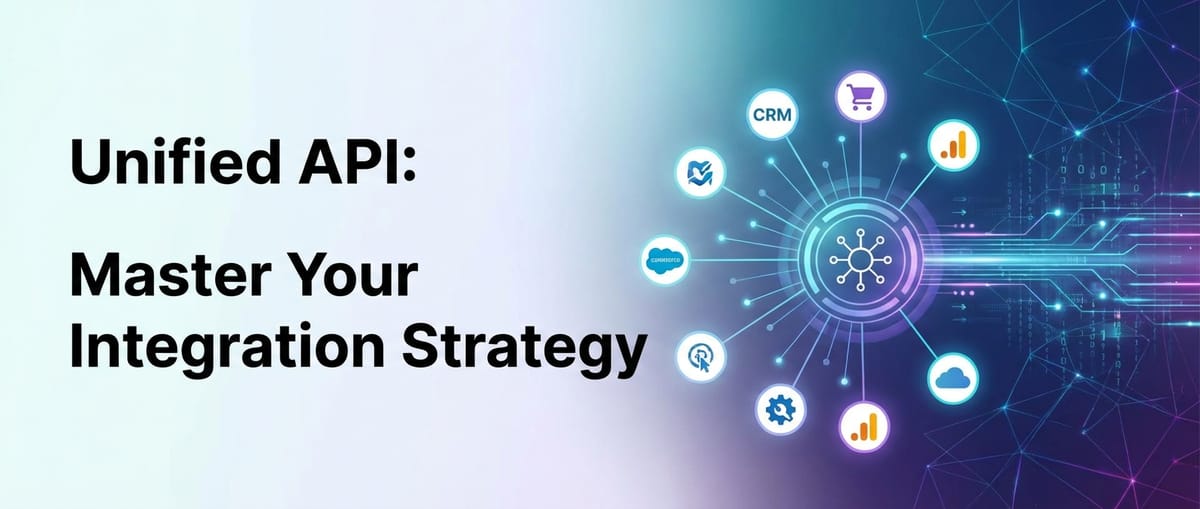

In the intricate tapestry of modern software development, applications rarely exist in isolation. They are increasingly interconnected, relying on a diverse ecosystem of services, data sources, and computational power to deliver robust functionality and rich user experiences. This interconnectedness, while enabling unparalleled innovation, introduces a formidable challenge: the complexity of API integration. Developers and businesses alike grapple with the arduous task of orchestrating myriad application programming interfaces (APIs), each with its unique protocols, authentication mechanisms, and data formats. The sheer volume of these interfaces, coupled with their dynamic nature, can quickly transform a promising project into a quagmire of technical debt and maintenance overhead.
The advent of artificial intelligence, particularly the explosion of Large Language Models (LLMs), has amplified this challenge exponentially. With a constantly evolving landscape of powerful AI models from various providers—each offering distinct capabilities, pricing structures, and API specifications—the integration burden on developers seeking to leverage AI has never been heavier. Navigating this fragmented ecosystem demands a strategic approach, one that not only simplifies current integrations but also future-proofs against rapid technological shifts. This is where the concept of a Unified API emerges as a critical enabler, transforming a fragmented mosaic of connections into a streamlined, cohesive conduit for innovation.
This comprehensive article will delve deep into the strategic imperative of mastering your integration strategy through the lens of a Unified API. We will explore the burgeoning complexities of traditional integration, uncover the foundational principles and immense benefits of a unified approach, with a particular focus on the indispensable role of a unified LLM API offering multi-model support. We will examine the practical advantages this brings, from accelerated development and cost optimization to enhanced reliability and scalability. Furthermore, we will outline best practices for implementation and introduce cutting-edge solutions designed to help you navigate this intricate landscape, ensuring your applications remain agile, efficient, and at the forefront of technological advancement. By the end of this journey, you will possess a profound understanding of why embracing a Unified API is not merely a technical choice, but a strategic imperative for sustained success in the digital age.
The Landscape of API Integration Complexity
The digital economy thrives on interconnectedness. From processing payments and sending emails to retrieving customer data and generating content, almost every modern application relies heavily on APIs. These digital bridges allow different software systems to communicate and share data, forming the backbone of services we use daily. However, this proliferation of APIs, while revolutionary, has led to a significant increase in development and operational complexity, creating a challenging environment for businesses striving for efficiency and innovation.
The Proliferation of APIs: A Double-Edged Sword
In the early days of the internet, applications were largely monolithic, self-contained units. Today, the microservices architecture, cloud computing, and the API-first paradigm have shifted the landscape dramatically. Businesses now leverage dozens, if not hundreds, of third-party APIs for various functions:
- Payment Gateways: Stripe, PayPal, Square, Adyen
- Communication Services: Twilio, SendGrid, Mailchimp, Slack
- Cloud Infrastructure: AWS, Google Cloud, Azure
- CRM & ERP: Salesforce, HubSpot, SAP
- Data Analytics: Google Analytics, Mixpanel
- Mapping & Location: Google Maps, Mapbox
- Authentication: Auth0, Okta, OAuth providers
- Artificial Intelligence: OpenAI, Anthropic, Google AI, Hugging Face
Each of these services provides a specific piece of functionality, and integrating them directly means dealing with their individual API specifications. While this modularity offers flexibility and allows developers to leverage specialized services without building them from scratch, it also introduces substantial overhead.
Challenges of Traditional Point-to-Point Integration
Integrating each service individually, often referred to as point-to-point integration, comes with a host of challenges that can hinder development velocity, increase costs, and compromise system stability:
- Technical Debt Accumulation: Every direct API integration adds a new layer of code that needs to be maintained, updated, and debugged. When an external API changes its version, deprecates endpoints, or alters its data format, all applications directly consuming that API must be updated. This continuous maintenance drains resources and diverts developers from building core features. Over time, these individual integrations become a tangled web, a breeding ground for technical debt that stifles future development.
- Development Overhead and Learning Curves: Each third-party API comes with its own documentation, SDKs, authentication schemes (API keys, OAuth tokens, JWTs), rate limits, and error handling protocols. Developers must spend considerable time learning these nuances for every single integration. This steep learning curve translates into slower development cycles, increased onboarding time for new team members, and a higher potential for implementation errors. The cognitive load associated with managing multiple distinct API paradigms can be immense.
- Performance Bottlenecks and Reliability Issues: Directly managing multiple API calls can lead to performance inefficiencies. Chaining requests, handling retries, and implementing robust error recovery mechanisms for each individual API is complex. Moreover, if one critical API experiences downtime or performance degradation, it can cascade and impact the entire application. Ensuring consistent reliability and optimal performance across a multitude of external dependencies becomes a significant operational challenge.
- Security Risks and Compliance Concerns: Every new API integration represents another potential attack vector. Managing multiple API keys, client secrets, and authentication tokens across different services increases the surface area for security breaches. Ensuring proper access control, data encryption, and compliance with various data privacy regulations (e.g., GDPR, CCPA) becomes exponentially more complex when dealing with numerous uncoordinated external interfaces. Auditing and monitoring security across such a diverse landscape is an ongoing battle.
- Vendor Lock-in and Lack of Flexibility: Direct integration often leads to vendor lock-in. If a business decides to switch providers for a specific service (e.g., move from one payment gateway to another), the entire integration code needs to be rewritten, which is a costly and time-consuming endeavor. This lack of flexibility stifles innovation and prevents businesses from easily adopting better, more cost-effective, or more specialized services as they emerge.
The Rise of AI and LLMs: A New Dimension of Complexity
The challenges outlined above are further exacerbated by the rapid proliferation of Artificial Intelligence, particularly Large Language Models (LLMs). The AI landscape is incredibly dynamic, with new, more powerful, and specialized models emerging almost weekly.
- Diverse Providers: OpenAI (GPT series), Anthropic (Claude series), Google (Gemini, PaLM), Meta (Llama), Mistral AI, Cohere, and many open-source alternatives. Each of these providers offers a unique set of models, often with different strengths, weaknesses, and pricing structures.
- Model Specialization: Some LLMs excel at creative writing, others at code generation, summarization, translation, or structured data extraction. Developers often need to leverage a specific model for a particular task to achieve optimal results.
- API Inconsistencies: Just like traditional APIs, LLM APIs vary significantly in their request/response formats, endpoint structures, authentication methods, and rate limits. A model from one provider might use a specific parameter for "temperature," while another uses a different name or scale.
- Rapid Evolution: LLMs are evolving at an unprecedented pace. Models are frequently updated, new versions are released, and older ones are deprecated. Managing these continuous changes across multiple direct integrations is a nightmare for developers.
- Cost and Performance Optimization: Different models have different performance characteristics and pricing tiers. To optimize for cost, latency, or quality, developers might need to dynamically switch between models based on the specific query or user context. This level of dynamic routing is incredibly difficult to implement and manage with direct integrations.
The integration burden for AI-driven applications is not just about connecting to one LLM; it's about potentially connecting to many, understanding their individual quirks, and having the flexibility to switch between them as needs evolve. This is precisely where the traditional point-to-point integration model breaks down, paving the way for a more sophisticated, streamlined approach: the Unified API.
Understanding the Unified API Concept
Given the increasing complexity of modern software ecosystems, particularly with the advent of diverse AI models, the need for a more elegant and efficient integration strategy has become paramount. This need has driven the emergence and widespread adoption of the Unified API concept. Far from being just another buzzword, a Unified API represents a fundamental shift in how developers interact with and leverage external services.
What is a Unified API?
At its core, a Unified API acts as a single, standardized interface that provides access to multiple underlying services of a similar type or domain. Instead of integrating directly with each individual service provider's API, developers interact solely with the Unified API. This intermediary then translates the requests and responses, routing them to the appropriate underlying service and normalizing the output back to a consistent format.
Imagine a universal adapter for all your electronic devices, or a master remote control that works with every brand of TV, DVD player, and sound system. A Unified API plays a similar role in the digital realm, abstracting away the idiosyncrasies of individual service providers and presenting a coherent, simplified interface to the developer.
Core Principles of a Unified API
A successful Unified API embodies several key principles:
- Abstraction: It hides the complexity of individual APIs. Developers don't need to know the specific endpoints, data structures, or authentication methods of each underlying service. They only interact with the standardized interface provided by the Unified API.
- Standardization: It normalizes disparate data formats and interaction patterns into a consistent schema. For example, if different payment gateways return transaction IDs in varying fields (e.g.,
transaction_id,payment_ref,id), a Unified API would ensure that all responses present this information under a single, consistent field name. - Simplification: By abstracting and standardizing, a Unified API drastically simplifies the development process. Developers write less code, face fewer integration-specific bugs, and spend less time on documentation for individual services.
- Centralization: It provides a single point of entry and management for a category of services. This central hub can then handle cross-cutting concerns like authentication, rate limiting, logging, and monitoring more efficiently.
Types of Unified APIs
Unified APIs can be broadly categorized based on the domain or vertical they address:
- Domain-Specific Unified APIs: These focus on a particular functional domain, such as:
- Payment Gateways: Unifying Stripe, PayPal, Square, etc., under one API for processing transactions.
- CRM Systems: Providing a single interface to interact with Salesforce, HubSpot, Zoho CRM, etc.
- Communication Platforms: Integrating Twilio, SendGrid, Mailchimp for SMS, email, and marketing.
- Vertical-Specific Unified APIs: These cater to the needs of a specific industry, often combining multiple domain-specific functions relevant to that industry. For example, a Unified API for healthcare might integrate patient management systems, electronic health records, and telemedicine platforms.
- Crucially, Unified LLM API: This is a specialized category that addresses the unique challenges of integrating with Large Language Models. A unified LLM API provides a single endpoint to access a multitude of AI models from different providers (OpenAI, Anthropic, Google, Mistral, etc.). This category is particularly vital in the rapidly evolving AI landscape.
How a Unified API Works: The Proxy Architecture
The most common architectural pattern for a Unified API is a proxy or gateway model:
- Developer Interaction: A developer sends a request to the Unified API's single endpoint using a standardized format.
- Request Routing: The Unified API receives the request and, based on the request's parameters (e.g., desired service, model ID, specific task), intelligently routes it to the appropriate underlying third-party API.
- Translation and Authentication: Before sending the request, the Unified API translates it into the specific format required by the target service and applies the necessary authentication credentials for that service.
- Service Execution: The underlying service processes the request and returns a response in its native format.
- Response Normalization: The Unified API receives the native response, normalizes its data structure, and potentially filters or augments it to match the standardized output schema.
- Developer Response: The standardized response is then returned to the developer, who receives it in a predictable and consistent format, regardless of which underlying service actually handled the request.
This proxy architecture allows developers to abstract away the complexity of diverse integrations, focusing instead on their core application logic. It effectively creates a universal language layer between your application and the myriad of external services it relies upon.
Analogy: Think of a universal remote control. You press "Play," and the remote sends the correct, specific signal to your DVD player (or Blu-ray, or streaming stick). You don't need to know the specific infrared code for each device; the remote handles the translation. Similarly, a Unified API translates your generic request into the specific commands required by each underlying service. This approach is transformative, particularly when dealing with the dynamic and diverse world of Large Language Models.
The Indispensable Role of Unified LLM APIs and Multi-Model Support
The last few years have witnessed an unprecedented explosion in the capabilities and accessibility of Large Language Models (LLMs). These sophisticated AI models are revolutionizing how we interact with technology, generate content, analyze data, and automate complex tasks. However, this rapid innovation also brings with it significant challenges for developers and businesses striving to integrate AI into their products and workflows. The diversity of LLMs, coupled with the need for optimal performance, cost-efficiency, and flexibility, underscores the indispensable role of a unified LLM API with robust multi-model support.
The AI Revolution and Model Diversity
The landscape of LLMs is vast and continuously expanding. We now have a plethora of powerful models, each with unique architectures, training datasets, and fine-tuning, leading to specialized strengths:
- General Purpose Models: Such as OpenAI's GPT series or Google's Gemini, capable of handling a wide range of natural language tasks from creative writing to complex reasoning.
- Code Generation Models: Optimized for understanding and generating programming code.
- Summarization Models: Excelling at condensing long texts into concise summaries.
- Translation Models: Specifically trained for high-quality language translation.
- Creative Writing Models: Designed to generate imaginative text, poetry, or stories.
- Instruction-Following Models: Adept at executing specific instructions and constraints.
This diversity means that a single LLM might not be the best solution for every task within an application. For instance, a finance application might need one model for summarizing earnings reports, another for generating email responses, and yet another for analyzing market sentiment. Directly integrating with each of these specific models from different providers becomes a monumental task.
Why a Unified LLM API is Critical
A unified LLM API addresses these challenges head-on by providing a single, consistent interface to access multiple AI models from various providers. This approach is not merely a convenience; it's a strategic necessity for any organization looking to seriously leverage AI.
- Future-Proofing and Avoiding Vendor Lock-in: The AI market is highly competitive and rapidly evolving. Today's leading model might be surpassed tomorrow. Directly integrating with a single provider creates strong vendor lock-in. If you need to switch models due to performance, cost, or even geopolitical reasons, rewriting significant portions of your code is inevitable. A unified LLM API acts as a buffer, allowing you to swap out underlying models with minimal code changes, effectively future-proofing your AI integrations.
- Optimization for Performance, Cost, and Quality: Different LLMs have different performance characteristics, pricing models, and quality outputs for specific tasks.
- Cost Optimization: Some models are significantly cheaper for certain tasks, especially for high-volume, less critical operations. A unified API can facilitate dynamic routing to the most cost-effective model.
- Latency Optimization: For real-time applications, low latency is crucial. A unified API can route requests to the fastest available model or provider.
- Quality Optimization: For critical tasks, the best performing model is paramount. A unified API allows for easy experimentation and switching to the model that yields the highest quality results for a specific use case.
- Simplified Development and Faster Iteration: Instead of learning and implementing the unique API specifications for OpenAI, Anthropic, Google, and others, developers only need to understand one standardized interface. This significantly reduces development time, lowers the barrier to entry for AI integration, and allows teams to iterate on AI-powered features much faster. The developer experience is dramatically improved, freeing engineers to focus on innovative application logic rather than integration plumbing.
Delving into Multi-Model Support
The cornerstone of an effective unified LLM API is its multi-model support. This capability goes beyond simply providing access to a few models; it's about offering a comprehensive gateway to a wide array of LLMs from various active providers, all through a single, consistent endpoint.
What Multi-Model Support Means:
- Access to Diverse Providers: It means your application can seamlessly tap into models from OpenAI, Google AI, Anthropic, Meta, Mistral AI, Cohere, and potentially many others, without needing to maintain separate integrations for each.
- Unified Interaction: Regardless of the underlying model, you send your requests and receive responses in a standardized, predictable format. The unified API handles all the translation and normalization behind the scenes.
- Dynamic Routing: The unified API can intelligently decide which model to use based on predefined rules or real-time conditions (e.g., cost, latency, specific model capabilities, provider uptime).
Benefits of Robust Multi-Model Support:
- Unparalleled Flexibility and Agility: As new models emerge or existing ones are updated, your application can adapt quickly. You can easily switch models for specific tasks, experiment with new capabilities, or pivot your AI strategy without major refactoring. This agility is crucial in the fast-paced AI domain.
- Enhanced Cost Efficiency: A unified API with multi-model support enables intelligent cost optimization. You can implement routing logic to direct requests to the cheapest model that meets your performance or quality criteria. For example, a simple summarization task might go to a smaller, less expensive model, while a complex reasoning task goes to a premium, high-capability model. This dynamic allocation can lead to significant cost savings, especially at scale.
- Superior Performance and Reliability:
- Performance: Route requests to the model/provider that offers the lowest latency for a given region or current load. This ensures a snappier user experience for AI-powered features.
- Reliability & Redundancy: If one AI provider experiences an outage or performance degradation, the unified API can automatically failover to an alternative model from a different provider, ensuring continuous service availability. This built-in redundancy dramatically improves the resilience of your AI-driven applications.
- Simplified Experimentation and A/B Testing: With a single interface, trying out different models for the same task becomes trivial. Developers can easily set up A/B tests to compare outputs, performance, and costs of various LLMs, allowing them to make data-driven decisions about model selection.
- Leveraging Specialization: As mentioned, different models excel at different tasks. Multi-model support allows you to pick the "best tool for the job." You can use a fine-tuned translation model for translations, a coding model for code generation, and a creative model for content brainstorming, all orchestrated through one central API. This allows for higher quality outputs for diverse use cases within a single application.
- Centralized Management and Observability: A unified LLM API provides a single dashboard or interface to monitor usage, costs, and performance across all integrated models. This centralized observability is invaluable for debugging, optimizing, and understanding the overall health of your AI integrations.
To illustrate the diverse capabilities and why multi-model support is essential, consider the following table showcasing various types of LLMs and their typical use cases:
| LLM Type/Provider Focus | Primary Strengths | Typical Use Cases | Why Multi-Model Support is Key |
|---|---|---|---|
| General Purpose (e.g., GPT-4, Gemini Advanced, Claude 3 Opus) | High-level reasoning, complex problem-solving, creative generation, diverse tasks | Content creation, chatbots, coding assistance, research, brainstorming, data analysis | Serves as a powerful default, but can be expensive; route niche tasks to specialized, cheaper models. |
| Cost-Optimized (e.g., GPT-3.5-turbo, Llama 3 8B, Mistral Small) | Fast inference, lower cost, good for simpler tasks | Basic summarization, quick Q&A, sentiment analysis, internal tool automation | Essential for high-volume, non-critical tasks to manage operational costs effectively. |
| Code Generation/Completions (e.g., GPT-4 Turbo, Code Llama, Gemini Code) | Understanding programming context, generating code, debugging, refactoring | IDE integrations, automated script generation, code reviews, documentation generation | Pair with general models for broader context, but rely on these for specific coding tasks for accuracy. |
| Instruction-Following (e.g., Claude 3 Sonnet/Haiku, Fine-tuned Llama) | Adherence to specific instructions, structured output | Data extraction, form filling, rule-based text transformation, controlled content generation | Crucial for tasks requiring precision and strict adherence to formats or constraints. |
| Summarization (e.g., specific fine-tunes, Anthropic models) | Condensing long documents, extracting key information | News briefings, report summarization, meeting minutes, quick content overviews | Often smaller, faster models can perform well here, freeing up larger models for complex reasoning. |
| Multi-modal (e.g., Gemini, GPT-4V) | Processing and generating across text, image, audio, video | Image captioning, visual Q&A, generating descriptions from visuals, video content analysis | Integrate when visual or audio input/output is required, complementing text-only models. |
This table clearly illustrates that no single LLM is a silver bullet. An effective AI strategy requires the flexibility to choose the right model for the right job, optimizing for cost, performance, and quality. This is precisely the power that a unified LLM API with comprehensive multi-model support unlocks, transforming what would be a sprawling, unmanageable integration effort into a streamlined and highly efficient system.
XRoute is a cutting-edge unified API platform designed to streamline access to large language models (LLMs) for developers, businesses, and AI enthusiasts. By providing a single, OpenAI-compatible endpoint, XRoute.AI simplifies the integration of over 60 AI models from more than 20 active providers(including OpenAI, Anthropic, Mistral, Llama2, Google Gemini, and more), enabling seamless development of AI-driven applications, chatbots, and automated workflows.
Strategic Advantages and Benefits of a Unified API Integration Strategy
Adopting a Unified API strategy, especially for complex domains like LLM integration, transcends mere technical convenience; it becomes a strategic differentiator. By centralizing and standardizing interactions with external services, businesses unlock a cascade of benefits that impact every facet of their operations, from development velocity to long-term financial health.
1. Accelerated Development Cycles and Faster Time-to-Market
One of the most immediate and tangible benefits of a Unified API is the dramatic acceleration of development cycles. * Reduced Integration Time: Instead of spending days or weeks deciphering new API documentation, handling unique authentication flows, and writing custom connectors for each service, developers can integrate once with the Unified API. This significantly slashes the upfront development effort. * Standardized Developer Experience: With a consistent interface, developers quickly become familiar with the interaction patterns. This reduces the learning curve for new integrations and allows engineers to be productive almost instantly when new services are onboarded through the unified platform. * Focus on Core Innovation: By abstracting away the plumbing of third-party integrations, developers are freed to concentrate on building unique features, enhancing user experience, and innovating on core business logic. This shift in focus is critical for maintaining a competitive edge. * Rapid Prototyping and Experimentation: The ease of swapping out underlying services or integrating new ones allows teams to prototype new features and experiment with different service providers much faster, leading to quicker validation and iteration cycles.
2. Reduced Technical Debt and Streamlined Maintenance
Technical debt is a silent killer of development teams and budgets. Traditional point-to-point integrations are notorious for accumulating it. A Unified API mitigates this problem significantly. * One Codebase for Many Services: Instead of multiple distinct integration modules, there's a single, well-defined integration point with the Unified API. This reduces the amount of code to maintain and test. * Simplified Updates and Version Management: When an underlying third-party API updates its version or makes breaking changes, only the Unified API layer needs to be updated. Your application, which interacts with the unified layer, remains largely unaffected, provided the unified API maintains its backward compatibility. * Consistent Error Handling: A Unified API can normalize error codes and messages across different services, providing a consistent way for your application to handle failures, rather than needing to parse diverse error formats from each individual API. * Consolidated Monitoring and Logging: Centralizing API interactions simplifies monitoring, logging, and auditing, making it easier to identify and debug issues across multiple services.
3. Enhanced Reliability and Scalability
Modern applications demand high availability and the ability to scale efficiently. A Unified API platform can contribute significantly to both. * Centralized Load Balancing and Throttling: The Unified API can manage requests to underlying services, distributing load intelligently and respecting individual rate limits, preventing your application from being blocked. * Automatic Failover and Redundancy (especially for LLMs): For a unified LLM API with multi-model support, this is a game-changer. If one LLM provider experiences an outage, the unified API can automatically route requests to an alternative model from another provider, ensuring uninterrupted service for your AI-powered features. This built-in redundancy dramatically improves application resilience. * Performance Optimization: The unified layer can implement caching mechanisms, optimize request payloads, and intelligently route requests to the closest or fastest data centers of the underlying services, leading to overall performance improvements and low latency AI. * Simplified Scaling: As your application's usage grows, the Unified API manages the increased demand on the underlying services, abstracting away the complexities of scaling each individual integration.
4. Significant Cost Optimization
Cost management is a critical concern for businesses, especially when dealing with metered services like LLMs. A Unified API can drive substantial cost savings. * Dynamic Routing for Cost-Effective AI: A sophisticated unified LLM API can analyze incoming requests and dynamically route them to the most cost-effective model that meets the required quality and performance criteria. For example, less complex queries might go to cheaper models, while high-value, complex queries go to premium models. This intelligent routing ensures you're not overpaying for AI inferences. * Negotiating Power: For platform providers, aggregating usage across many customers for various services can lead to better bulk pricing or direct negotiations with underlying service providers, which savings can then be passed on. * Reduced Operational Costs: Fewer developer hours spent on integration, debugging, and maintenance directly translate to lower operational expenses.
5. Improved Security Posture and Compliance Management
Security is paramount in an age of increasing cyber threats and stringent data regulations. A Unified API can fortify your security posture. * Single Point of Entry and Consolidated Authentication: Instead of managing numerous API keys and authentication schemes across your application, the Unified API provides a single, secure gateway. This centralizes authentication logic and simplifies credential management. * Enhanced Auditability and Access Control: All API calls pass through the unified layer, providing a central point for logging, auditing, and enforcing granular access control policies to underlying services. * Data Masking and Transformation: The Unified API can implement data masking or transformation policies to ensure sensitive information is handled securely before being sent to or received from third-party services, aiding in compliance efforts (e.g., GDPR, CCPA). * Reduced Attack Surface: By presenting a single, well-secured interface, the overall attack surface is reduced compared to managing many direct, potentially inconsistent, integration points.
6. Greater Strategic Flexibility and Business Agility
Beyond the technical benefits, a Unified API offers significant strategic advantages, empowering businesses to be more adaptable and responsive to market changes. * Vendor Agnosticism: The ability to easily swap out underlying service providers (e.g., switching from one LLM provider to another) gives businesses significant leverage and prevents being locked into a single vendor's ecosystem. This leads to more competitive pricing and access to best-of-breed services. * Faster Adoption of New Technologies: As new APIs or LLMs emerge, integrating them into your application becomes a matter of adding support at the unified layer, rather than a full-scale refactoring project. This allows businesses to quickly adopt and experiment with cutting-edge technologies. * Empowering Business Users: With simpler, more robust integrations, business users can often contribute more directly to defining requirements or even configuring workflows without deep technical knowledge of individual APIs.
In essence, a Unified API transforms API integration from a burdensome technical chore into a powerful strategic asset. It's about building a robust, flexible, and efficient foundation that supports current business needs while also paving the way for future innovation and growth, especially in the rapidly expanding and critical domain of AI.
Implementing a Unified API Strategy: Best Practices and Considerations
Embarking on a Unified API strategy is a significant architectural decision that requires careful planning and execution. It's not merely about plugging in a new tool; it's about fundamentally rethinking how your applications interact with external services. This section outlines best practices and key considerations for successfully implementing a unified approach, with a particular emphasis on choosing the right solution for unified LLM APIs with robust multi-model support.
1. Assessment of Needs: What to Unify and Why?
Before diving into implementation, a thorough assessment is crucial:
- Identify Integration Pain Points: Which existing integrations are causing the most headaches in terms of maintenance, performance, cost, or development time?
- Prioritize Domains for Unification: Start by identifying groups of similar APIs that would benefit most from unification. For instance, if you're heavily reliant on multiple LLM providers, a unified LLM API is a clear candidate. Other areas might include payment gateways, CRM tools, or communication services.
- Define Scope and Requirements: What level of abstraction is needed? Do you require full standardization across all operations, or just for common actions? What are the performance, security, and scalability requirements for the unified layer?
- Anticipate Future Needs: Consider your long-term roadmap. Will you need to integrate more services in the future? How rapidly do the underlying services evolve in the domains you're considering? The dynamic nature of the AI/LLM space makes a unified approach particularly compelling here.
2. Build vs. Buy: Choosing the Right Solution
Once you've identified your needs, the next critical decision is whether to build your own Unified API or leverage a third-party platform.
- Building Your Own (Custom Solution):
- Pros: Complete control, tailored to exact specifications, no vendor lock-in with the unified layer itself.
- Cons: High initial development cost, significant ongoing maintenance burden (keeping up with underlying API changes, security, scaling, monitoring), requires specialized expertise. This path is often viable only for very large enterprises with ample resources and highly unique requirements.
- Buying (Third-Party Platforms/Vendors):
- Pros: Faster time-to-market, reduced development and maintenance burden, access to expert-managed infrastructure, often includes advanced features (e.g., dynamic routing, analytics, failover), typically more cost-effective AI in the long run.
- Cons: Potential vendor lock-in to the unified platform provider, less customization flexibility, reliance on the provider's roadmap.
- Recommendation: For most organizations, especially those looking to rapidly integrate and scale AI capabilities, a third-party unified LLM API platform is the more pragmatic and strategic choice. It allows you to focus on your core business rather than API plumbing.
3. Key Features to Look For in a Unified API Solution (especially for LLMs)
When evaluating third-party Unified API platforms, particularly those designed for LLMs, consider these essential features:
- Extensive Multi-Model Support: The platform should support a wide array of LLMs from diverse providers (OpenAI, Anthropic, Google, Mistral, etc.). The more models and providers, the greater your flexibility and ability to optimize.
- OpenAI Compatibility: This is crucial. Many AI applications are initially built with OpenAI's API. A unified LLM API that offers an OpenAI-compatible endpoint allows for seamless migration and integration without rewriting existing code, significantly reducing transition friction.
- Low Latency AI: For real-time applications, the unified API should be optimized for speed, minimizing the overhead introduced by the proxy layer. Look for platforms with geographically distributed infrastructure and efficient routing mechanisms.
- Cost-Effective AI Features:
- Dynamic Routing: Ability to route requests based on cost, performance, or specific model capabilities.
- Pricing Transparency: Clear understanding of how costs are incurred across different models and providers.
- Usage Analytics: Tools to monitor and optimize spending.
- High Throughput and Scalability: The platform must be able to handle high volumes of requests and scale effortlessly as your application grows, without introducing bottlenecks.
- Robust Analytics and Monitoring: Comprehensive dashboards and logging capabilities to track API usage, performance metrics (latency, error rates), and costs across all integrated services. This is vital for optimization and troubleshooting.
- Security Features: Strong authentication (API keys, OAuth, IAM), data encryption, compliance certifications, and robust access control mechanisms are non-negotiable.
- Developer-Friendly Tools: Clear documentation, SDKs for popular programming languages, easy-to-use dashboards, and responsive support are essential for a smooth developer experience.
- Reliability and Uptime Guarantees: Look for platforms with strong Service Level Agreements (SLAs) and proven track records of high availability.
- Caching Mechanisms: The ability to cache responses for repeated queries can significantly reduce costs and improve performance, especially for LLMs.
4. Gradual Adoption and Phased Implementation
Don't attempt a "big-bang" overhaul of all your integrations at once. A phased approach is generally more successful:
- Start Small: Begin by unifying a single domain or a small set of APIs that are causing the most issues or offer the most immediate benefits. For instance, migrate your existing LLM integrations to the unified LLM API.
- Test Thoroughly: Rigorously test the unified layer for functionality, performance, security, and reliability before rolling it out widely.
- Iterate and Expand: Once the initial implementation is stable and proven, gradually expand the scope to other API categories.
- Monitor and Gather Feedback: Continuously monitor the performance and impact of the unified API. Gather feedback from developers and adjust your strategy as needed.
5. Continuous Monitoring and Optimization
Implementing a Unified API is not a one-time project; it's an ongoing strategy. * Performance Tracking: Regularly monitor latency, throughput, and error rates to ensure the unified layer is performing optimally and not introducing unforeseen bottlenecks. * Cost Analysis: Continuously analyze usage patterns and costs, especially for LLMs. Leverage dynamic routing and model switching to optimize for cost-effectiveness. * Security Audits: Periodically review security configurations and access controls to maintain a robust security posture. * Stay Informed: Keep abreast of updates to the underlying services and the unified API platform itself. Regularly evaluate new models or features that could further enhance your application.
By adhering to these best practices and carefully considering your options, you can successfully implement a Unified API strategy that streamlines your integrations, accelerates innovation, and provides a resilient, cost-effective foundation for your applications, particularly in the dynamic and crucial realm of AI.
XRoute.AI: A Practical Example of a Unified LLM API
Having explored the theoretical underpinnings and strategic advantages of a Unified API, especially for managing the burgeoning complexity of Large Language Models, it's beneficial to examine a real-world solution that embodies these principles. This is where a platform like XRoute.AI comes into focus, serving as an excellent illustration of how a cutting-edge unified LLM API can transform the AI integration landscape for developers and businesses.
XRoute.AI is a prime example of a unified API platform specifically engineered to streamline access to a vast ecosystem of large language models (LLMs). It directly addresses the challenges we’ve discussed—API sprawl, vendor lock-in, and the complexity of managing diverse AI models—by offering a singularly elegant solution.
What makes XRoute.AI stand out is its commitment to developer-centric design and performance optimization. It provides a single, OpenAI-compatible endpoint, which is a critical feature for any developer already familiar with the OpenAI API. This compatibility means that existing AI applications or workflows built around OpenAI can be seamlessly migrated to XRoute.AI with minimal code changes, drastically reducing the friction and cost associated with switching or expanding AI providers.
The true power of XRoute.AI lies in its extensive multi-model support. It simplifies the integration of over 60 AI models from more than 20 active providers. This vast selection includes not just the general-purpose powerhouses but also specialized models, giving developers the unparalleled flexibility to choose the right model for any specific task, whether it's creative content generation, precise data extraction, or efficient code completion. This eliminates the need to manage dozens of individual API keys, understand disparate documentation, or wrestle with inconsistent data formats from each provider.
Beyond simplifying access, XRoute.AI is meticulously designed for performance and cost-effectiveness. It focuses on delivering low latency AI, ensuring that your applications respond quickly and efficiently, which is crucial for real-time user experiences. Furthermore, its intelligent routing capabilities enable cost-effective AI usage by dynamically directing requests to the most efficient or economical model available that meets the desired quality and performance thresholds. This ensures that you're always optimizing your spend without compromising on output quality.
With high throughput and scalability built into its core, XRoute.AI empowers users to build intelligent solutions, chatbots, and automated workflows without the inherent complexity of managing multiple API connections. From startups to enterprise-level applications, its flexible pricing model and robust infrastructure make it an ideal choice for projects of all sizes seeking to harness the full potential of AI without the integration headaches. In essence, XRoute.AI exemplifies how a well-implemented unified API can abstract away the chaos of the multi-LLM landscape, allowing developers to focus on innovation and product differentiation.
Conclusion
The journey through the intricate world of API integration has underscored a fundamental truth: in an increasingly interconnected and AI-driven digital landscape, the traditional point-to-point approach to connecting services is no longer sustainable. The sheer proliferation of APIs, particularly the diverse and rapidly evolving ecosystem of Large Language Models, presents a formidable challenge that can stifle innovation, accumulate technical debt, and drain precious resources. This article has illuminated why a strategic shift towards a Unified API integration strategy is not merely a technical upgrade, but a critical business imperative for agility, efficiency, and sustained competitive advantage.
We’ve delved into the profound complexities introduced by managing myriad individual APIs, highlighting the burdens of technical debt, development overhead, performance bottlenecks, and security risks. Against this backdrop, the concept of a Unified API emerged as the beacon of simplification and standardization, offering a single, consistent interface to a family of underlying services. This abstraction dramatically reduces integration time, streamlines maintenance, and empowers developers to focus on their core competencies.
Crucially, we emphasized the indispensable role of a unified LLM API with comprehensive multi-model support. In a world where specialized AI models are constantly emerging from various providers, the ability to seamlessly switch, route, and optimize across a diverse range of LLMs through a single endpoint is transformative. It future-proofs applications against rapid technological shifts, ensures optimal cost efficiency through dynamic model routing, enhances performance with low latency AI, and bolsters reliability through built-in redundancy and failover capabilities. This level of flexibility and control is paramount for building truly intelligent and resilient AI-powered solutions.
The strategic advantages are undeniable: accelerated development cycles, significantly reduced technical debt, enhanced reliability and scalability, profound cost optimization, improved security posture, and greater strategic flexibility to adapt to market changes. By adopting best practices in assessment, choosing the right solution—often a third-party platform like XRoute.AI that offers an OpenAI-compatible endpoint, extensive multi-model support, and features for cost-effective AI and low latency AI—and committing to continuous monitoring, organizations can unlock the full potential of their API integrations.
In conclusion, mastering API integration through unification is no longer an optional luxury but a strategic necessity. It is the cornerstone upon which modern, agile, and intelligent applications are built, enabling businesses to navigate the complexities of the digital age with confidence and to continually innovate at the speed of thought. Embracing a Unified API strategy is about empowering your teams, optimizing your resources, and securing your position at the forefront of the technological frontier.
Frequently Asked Questions (FAQ)
Q1: What exactly is a Unified API, and how does it differ from a traditional API? A1: A Unified API acts as a single, standardized interface to access multiple underlying services of a similar type or domain. Instead of integrating directly with each individual service's API (which would be a traditional, point-to-point integration), you interact only with the Unified API. It handles the translation, routing, and normalization of requests and responses to and from the various underlying services, simplifying development and management significantly.
Q2: Why is a Unified LLM API with multi-model support so important for AI development? A2: The AI landscape is rapidly evolving with many LLMs from different providers (OpenAI, Anthropic, Google, etc.), each having unique strengths, pricing, and API structures. A unified LLM API with multi-model support allows developers to access and switch between these diverse models through a single, consistent endpoint. This provides flexibility, avoids vendor lock-in, enables dynamic cost/performance optimization (e.g., cost-effective AI through intelligent routing), enhances reliability with failover, and simplifies experimentation for better AI outcomes.
Q3: What are the main benefits of adopting a Unified API integration strategy for businesses? A3: The benefits are extensive and include accelerated development cycles (faster time-to-market), significantly reduced technical debt and maintenance burden, enhanced reliability and scalability (including automatic failover for underlying services), substantial cost optimization (especially for metered services like LLMs), improved security posture, and greater strategic flexibility to adapt to new technologies and vendor changes.
Q4: Should my company build its own Unified API or use a third-party platform? A4: For most organizations, leveraging a third-party Unified API platform is the more strategic choice. Building your own entails high upfront development costs, significant ongoing maintenance, and the need for specialized expertise in various API integrations. Third-party platforms, like XRoute.AI, offer faster time-to-market, reduced operational overhead, robust features (e.g., low latency AI, multi-model support, OpenAI compatibility), and managed infrastructure, allowing your teams to focus on core product innovation.
Q5: How does a Unified API help with cost optimization, especially for LLMs? A5: A sophisticated Unified API, particularly a unified LLM API, can offer powerful cost-effective AI features. It can dynamically route requests to the most economical LLM that still meets your performance and quality requirements. For example, simple queries might be sent to a cheaper, smaller model, while complex, critical tasks are routed to a more expensive, high-capability model. This intelligent allocation ensures you're not overpaying for AI inferences and helps manage operational expenses at scale.
🚀You can securely and efficiently connect to thousands of data sources with XRoute in just two steps:
Step 1: Create Your API Key
To start using XRoute.AI, the first step is to create an account and generate your XRoute API KEY. This key unlocks access to the platform’s unified API interface, allowing you to connect to a vast ecosystem of large language models with minimal setup.
Here’s how to do it: 1. Visit https://xroute.ai/ and sign up for a free account. 2. Upon registration, explore the platform. 3. Navigate to the user dashboard and generate your XRoute API KEY.
This process takes less than a minute, and your API key will serve as the gateway to XRoute.AI’s robust developer tools, enabling seamless integration with LLM APIs for your projects.
Step 2: Select a Model and Make API Calls
Once you have your XRoute API KEY, you can select from over 60 large language models available on XRoute.AI and start making API calls. The platform’s OpenAI-compatible endpoint ensures that you can easily integrate models into your applications using just a few lines of code.
Here’s a sample configuration to call an LLM:
curl --location 'https://api.xroute.ai/openai/v1/chat/completions' \
--header 'Authorization: Bearer $apikey' \
--header 'Content-Type: application/json' \
--data '{
    "model": "gpt-5",
    "messages": [
        {
            "content": "Your text prompt here",
            "role": "user"
        }
    ]
}'
With this setup, your application can instantly connect to XRoute.AI’s unified API platform, leveraging low latency AI and high throughput (handling 891.82K tokens per month globally). XRoute.AI manages provider routing, load balancing, and failover, ensuring reliable performance for real-time applications like chatbots, data analysis tools, or automated workflows. You can also purchase additional API credits to scale your usage as needed, making it a cost-effective AI solution for projects of all sizes.
Note: Explore the documentation on https://xroute.ai/ for model-specific details, SDKs, and open-source examples to accelerate your development.