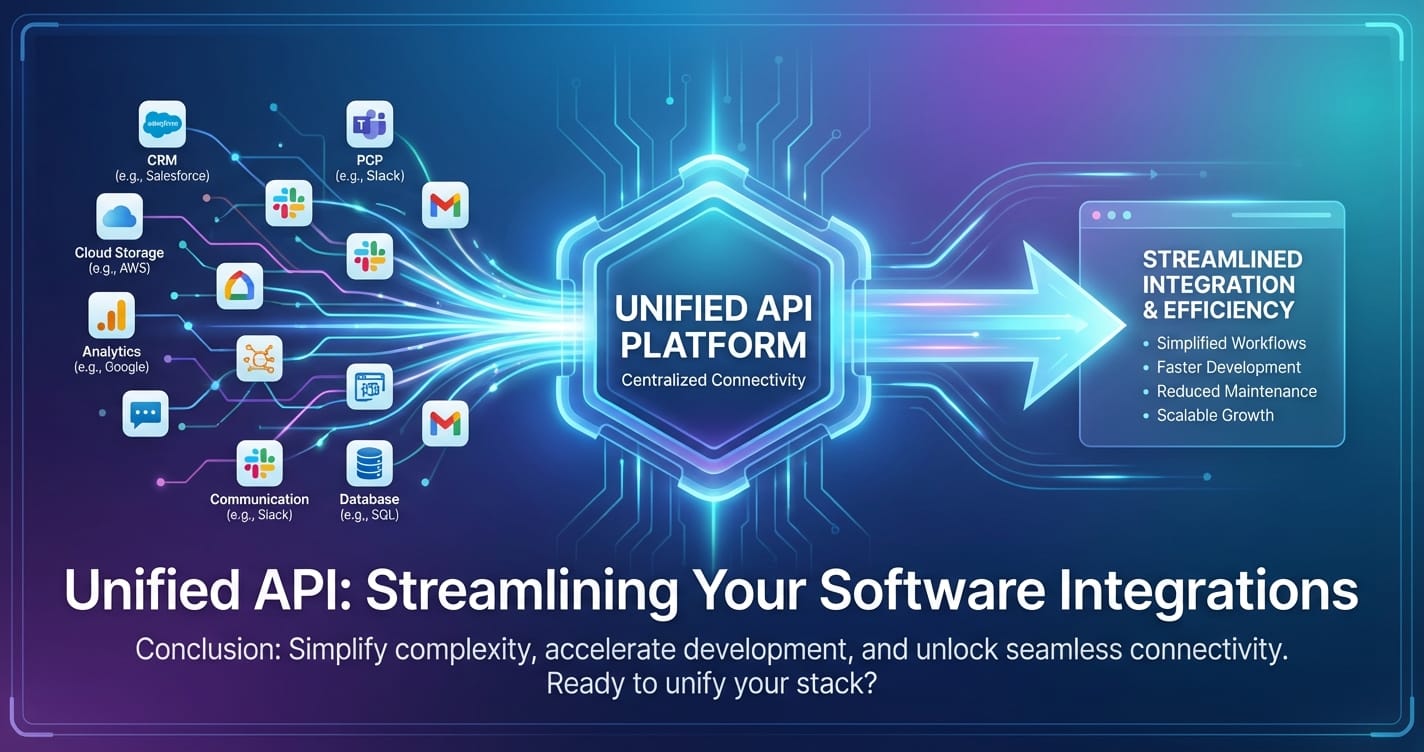
Unified API: Streamlining Your Software Integrations
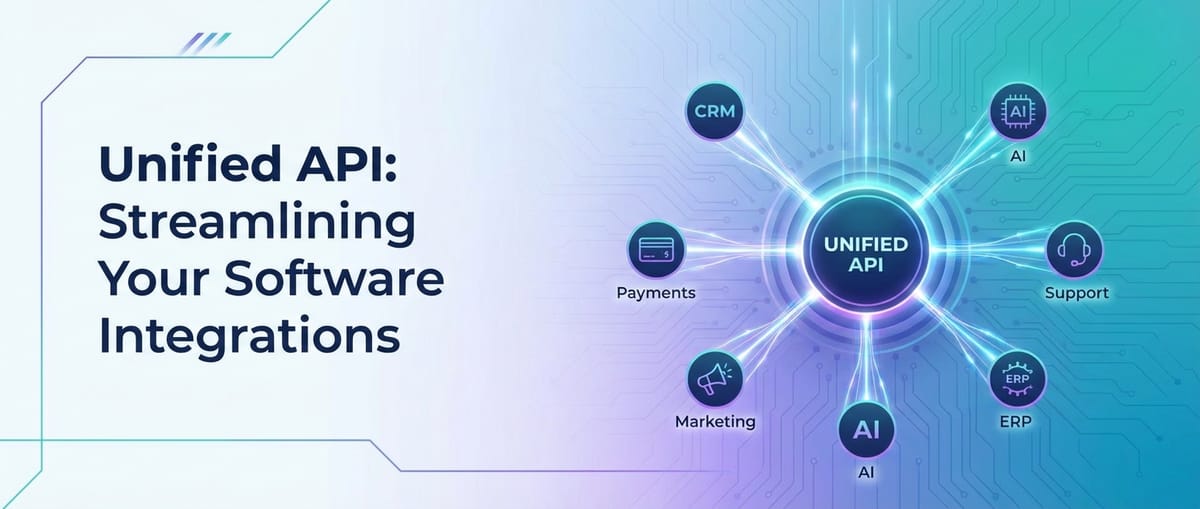

In the rapidly evolving landscape of modern software development, the quest for efficiency, scalability, and robust performance often feels like navigating a dense, ever-expanding forest. Businesses, regardless of their size or industry, increasingly rely on a diverse array of digital services, platforms, and specialized tools to power their operations. From customer relationship management (CRM) systems and enterprise resource planning (ERP) solutions to payment gateways, marketing automation platforms, and increasingly, sophisticated artificial intelligence (AI) models, the technological ecosystem supporting an organization can become incredibly complex. Each of these vital components typically comes with its own unique Application Programming Interface (API), serving as its digital gateway for interaction. While APIs are the fundamental building blocks of interconnected software, the sheer volume and diversity of these interfaces present a formidable challenge: the integration labyrinth.
Developers and IT teams routinely grapple with the arduous task of connecting these disparate systems. This involves learning distinct authentication methods, understanding varying data formats, adhering to different rate limits, and constantly adapting to API version changes across dozens, if not hundreds, of individual integrations. The time and resources consumed by this integration overhead can be staggering, diverting precious developer hours away from core product innovation and strategic initiatives. It's a problem that not only hampers productivity but also introduces significant technical debt, security vulnerabilities, and a constant drain on maintenance efforts.
This escalating complexity has paved the way for a revolutionary approach: the Unified API. Imagine a single, harmonized interface that acts as a universal translator and orchestrator for a multitude of underlying services. Instead of building and maintaining custom connectors for every single tool, a Unified API provides a standardized pathway, abstracting away the intricacies and inconsistencies of individual APIs. It’s like having one master key that unlocks many doors, or a universal remote that controls all your entertainment devices. This paradigm shift simplifies development, accelerates deployment, and significantly reduces the ongoing burden of integration management.
Moreover, as AI continues its explosive growth, particularly with the advent of Large Language Models (LLMs), the challenge of integration has taken on a new dimension. Developers are eager to harness the power of models from OpenAI, Anthropic, Google, and a growing ecosystem of open-source and specialized providers. However, each LLM typically comes with its own distinct API, creating a fresh set of integration hurdles. This is where the concept of a unified LLM API emerges as a critical enabler. A unified LLM API not only offers the benefits of a general Unified API but specifically addresses the complexities of integrating diverse AI models, providing a consistent interface for accessing cutting-edge generative AI capabilities. This approach, often characterized by robust multi-model support, empowers developers to seamlessly switch between models, experiment with different providers, and optimize for cost, performance, and specific use cases without rewriting large portions of their codebase.
In the following sections, we will delve deep into the mechanics, advantages, and transformative potential of Unified APIs. We will explore why they are no longer just a convenience but a strategic imperative for modern software architecture, with a particular focus on how a unified LLM API with comprehensive multi-model support is democratizing access to artificial intelligence and streamlining the development of intelligent applications. This article aims to provide a comprehensive understanding of how adopting a unified approach can fundamentally streamline your software integrations, unleash developer potential, and drive unparalleled innovation.
The Labyrinth of Software Integration: Why We Need a Unified Approach
The digital age has brought forth an unparalleled proliferation of software services. From the smallest startups to the largest enterprises, organizations increasingly rely on a complex tapestry of applications to manage their operations, engage with customers, and drive growth. Cloud computing, the rise of Software-as-a-Service (SaaS), and the adoption of microservices architectures have led to an ecosystem where specialized tools excel at specific tasks. While this specialization brings efficiency and innovation to individual functions, it simultaneously creates a formidable challenge: the integration labyrinth.
The Proliferation of APIs and the Fragmented Landscape
Consider a typical business stack today. It might include Salesforce for CRM, Stripe for payments, Mailchimp for email marketing, Zendesk for customer support, an internal ERP system, various analytics tools, and a growing number of AI-powered applications for tasks like content generation or customer service chatbots. Each of these services, invaluable in its own right, exposes its functionality through an API. These APIs are the programmatic interfaces that allow different software components to communicate and exchange data.
However, the problem isn't the existence of APIs; it's the sheer number and the lack of standardization across them. Every service provider designs their API with their own conventions, data models, authentication mechanisms, and rate limits. A developer tasked with connecting these systems must contend with:
- Diverse Data Structures: One API might represent a "customer" with fields like
firstName,lastName, andemail, while another usesgiven_name,family_name, andemail_address. Dates might be in ISO 8601 format in one, Unix timestamp in another. - Varying Authentication Methods: OAuth2, API keys, basic authentication, token-based systems – the list goes on, each requiring specific implementation details.
- Inconsistent Error Handling: Different status codes, error messages, and response formats make it difficult to build robust error recovery mechanisms.
- Disparate Rate Limits: Some APIs allow thousands of requests per second, others only a handful per minute, necessitating complex throttling logic.
- Version Mismatch Challenges: API providers frequently update their APIs, introducing new versions with breaking changes, forcing developers to continuously adapt their integrations.
This fragmentation means that every new service added to the stack often requires a completely custom integration, effectively reinventing the wheel each time.
Common Integration Challenges: A Developer's Nightmare
The consequences of this fragmented API landscape manifest as a series of persistent challenges for development teams:
- High Development Overhead: Integrating a new service isn't a simple plug-and-play operation. Developers must spend significant time:
- Reading extensive documentation for each API.
- Writing custom code to handle authentication, request/response formatting, and error handling.
- Developing data transformation layers to map between different systems.
- Testing each integration meticulously to ensure data integrity and system stability. This drains resources that could otherwise be allocated to developing core product features or improving user experience.
- Maintenance Nightmares and Technical Debt: Integrations are not a one-time effort. APIs evolve. Services update. Dependencies change. When an upstream API introduces a breaking change, an entire integration might cease to function, potentially disrupting critical business processes. Keeping all integrations up-to-date and functional requires continuous monitoring, debugging, and refactoring, leading to substantial technical debt. The more integrations, the heavier the maintenance burden.
- Scalability Issues: As a business grows, so does its data volume and the number of transactions between systems. Custom-built point-to-point integrations often struggle to scale efficiently. Managing complex rate limiters, ensuring data consistency across multiple systems under heavy load, and optimizing performance across diverse API endpoints can become a bottleneck for growth.
- Security Risks: Each API key, each authentication token, represents a potential vulnerability. Managing credentials for dozens of different services securely, ensuring proper access controls, and responding to potential security incidents across a fragmented landscape is a daunting task. A single compromised integration point can expose an entire system.
- Lack of Centralized Visibility and Control: Without a unified approach, it's challenging to gain a holistic view of data flows, integration health, and performance across the entire ecosystem. Debugging issues can become a multi-system investigation, protracted and frustrating.
The Hidden Costs of Disjointed Integrations
Beyond the immediate technical hurdles, disjointed integrations impose significant hidden costs on an organization:
- Financial Costs: Increased developer salaries for integration specialists, licensing fees for multiple integration tools, and the cost of downtime due to integration failures.
- Time Costs: Slower time-to-market for new features, delayed product launches, and prolonged project cycles due to integration complexities.
- Opportunity Costs: Developers are tied up with integration work instead of innovating, creating new customer value, or focusing on strategic differentiators. This can lead to missed market opportunities and a competitive disadvantage.
- Operational Inefficiencies: Siloed data, manual data entry (due to integration gaps), and inconsistent information across systems lead to errors, delays, and poor decision-making.
Recognizing these pervasive challenges underscores the urgent need for a more intelligent, streamlined approach to software integration. This is precisely the void that the Unified API paradigm seeks to fill, transforming a chaotic landscape into an ordered, efficient ecosystem.
Understanding the Unified API Paradigm
The concept of a Unified API represents a significant leap forward in addressing the complexities of modern software integration. It's a strategic architectural pattern designed to bring order, efficiency, and scalability to an otherwise fragmented digital landscape. At its core, a Unified API acts as an intelligent intermediary, providing a single, consistent interface to interact with multiple underlying services or platforms.
What is a Unified API?
A Unified API, often referred to as a universal API, an integration layer, or an API aggregator, is essentially a standardized API that consolidates access to a collection of related but distinct services. Instead of developers needing to learn and implement separate APIs for each individual service (e.g., one for Stripe, one for PayPal, one for Square for payments), a Unified API offers a single point of interaction. This single interface then translates requests and responses to and from the respective underlying services, abstracting away their unique quirks and complexities.
To use an analogy, if each individual API is a specific remote control for a single device (TV, DVD player, stereo), a Unified API is like a universal remote that can control all these devices with a standardized set of buttons and commands. The user (developer) only needs to learn how to use the universal remote, not the specifics of each individual device's remote.
Key Principles and Architecture
The effectiveness of a Unified API stems from several fundamental architectural principles:
- Abstraction Layer: This is the most crucial component. The Unified API sits between the client application and the target third-party services. It hides the underlying complexities, variations in data models, authentication methods, and specific endpoints of each individual API. Developers interact solely with the consistent interface of the Unified API.
- Standardized Data Models: One of the biggest challenges in integration is the disparate ways different services represent the same entities (e.g., a "user," an "order," or a "product"). A Unified API establishes a canonical, standardized data model. When data flows through the Unified API, it's transformed into this common format on ingress and egress, ensuring consistency for the client application.
- Centralized Authentication and Authorization: Instead of managing separate API keys or OAuth flows for every service, a Unified API typically provides a single, centralized authentication mechanism. The client authenticates with the Unified API, which then manages the underlying authentication tokens for each connected service. This simplifies credential management and enhances security control.
- Intelligent Request Routing and Transformation: When a request comes into the Unified API, it intelligently determines which underlying service (or services) needs to process it. It then transforms the request into the format expected by that specific service and forwards it. Similarly, it captures the response from the service, transforms it back into the standardized format, and sends it to the client.
- Versioning and Updates Management: API providers frequently update their interfaces. A Unified API provider takes on the responsibility of managing these updates. When an underlying API changes, the Unified API team adapts its internal connectors, shielding client applications from breaking changes and reducing maintenance burden.
Types of Unified APIs
Unified APIs can be broadly categorized based on their scope and focus:
- Domain-Specific Unified APIs: These focus on a particular business domain or vertical. Examples include:
- Payment Unified APIs: Consolidate access to various payment gateways (Stripe, PayPal, Adyen, etc.).
- CRM Unified APIs: Provide a single interface for interacting with different CRM systems (Salesforce, HubSpot, Zoho CRM).
- HRIS Unified APIs: Integrate with various HR and payroll systems (Workday, ADP, BambooHR).
- Marketing Unified APIs: Connect to email marketing platforms, ad networks, and analytics tools.
- General Purpose Integration Platforms: Broader platforms that offer Unified APIs or connectors for a wide range of services across different domains. These often come with workflow automation capabilities.
- Specialized Unified APIs for Emerging Technologies (e.g., Unified LLM API): With the rapid advancements in AI, especially Large Language Models, a new category has emerged. A unified LLM API specifically targets the challenges of integrating diverse AI models from various providers. It offers a consistent interface for accessing different LLMs, streamlining AI application development and enabling robust multi-model support. This specialized type of Unified API is particularly impactful given the rapid evolution and fragmentation within the AI ecosystem.
Benefits of a Unified API
The adoption of a Unified API paradigm yields a multitude of significant benefits:
- Reduced Development Time and Cost: Developers spend less time learning individual APIs and building custom connectors. They write against a single, consistent interface, drastically accelerating development cycles and reducing development costs.
- Improved Maintainability and Reliability: The burden of keeping integrations updated falls on the Unified API provider. This frees internal teams from constant refactoring due to upstream API changes, leading to more stable applications and fewer integration-related bugs.
- Enhanced Scalability and Performance: Well-designed Unified APIs often include built-in features for load balancing, caching, and intelligent routing, which can significantly improve the performance and scalability of integrations compared to custom point-to-point solutions.
- Simplified Security Management: Centralized authentication means fewer credentials to manage and secure. The Unified API provider typically handles compliance and security best practices for the integration layer, reducing the security burden on client applications.
- Faster Time-to-Market: By accelerating development and reducing integration complexities, businesses can launch new features, products, or services much faster, gaining a competitive edge.
- Focus on Core Business Logic: Developers can dedicate more energy to innovating on the core product and delivering unique value to customers, rather than grappling with integration plumbing.
- Future-Proofing: As new services emerge or existing ones evolve, the Unified API acts as a buffer. Adding a new underlying service simply means the Unified API provider builds a new internal connector; the client's interaction remains largely unchanged.
In essence, a Unified API transforms the integration challenge from a continuous, resource-intensive struggle into a manageable, strategic advantage, allowing businesses to build more agile, robust, and innovative software solutions.
XRoute is a cutting-edge unified API platform designed to streamline access to large language models (LLMs) for developers, businesses, and AI enthusiasts. By providing a single, OpenAI-compatible endpoint, XRoute.AI simplifies the integration of over 60 AI models from more than 20 active providers(including OpenAI, Anthropic, Mistral, Llama2, Google Gemini, and more), enabling seamless development of AI-driven applications, chatbots, and automated workflows.
The Specialized Realm of Unified LLM APIs and Multi-model Support
While the general benefits of a Unified API apply across various domains, the emergence of Large Language Models (LLMs) has introduced a particularly compelling and critical use case for this architectural pattern. The transformative power of LLMs from various providers has created both immense opportunities and complex integration challenges, making a unified LLM API an indispensable tool for modern AI development.
The Rise of Large Language Models (LLMs)
Over the past few years, LLMs have moved from academic research to mainstream applications, revolutionizing tasks like natural language understanding, content generation, summarization, translation, and even code generation. Models like OpenAI's GPT series, Anthropic's Claude, Google's Gemini, and a plethora of open-source alternatives (e.g., Llama, Mistral) are pushing the boundaries of what AI can achieve. Businesses are scrambling to embed these capabilities into their products and workflows to gain a competitive edge, enhance customer experience, and automate complex processes.
Challenges of LLM Integration
However, integrating these powerful LLMs directly into applications is not without its hurdles. The very innovation that drives the LLM space also creates significant fragmentation:
- Diversity of Models and Providers: The LLM ecosystem is booming. Developers might want to use GPT-4 for complex reasoning, Claude for its longer context windows, Gemini for multimodal capabilities, or an open-source model for cost-effectiveness or privacy concerns. Each of these models comes from a different provider, each with its own API.
- Varying APIs and SDKs: OpenAI has its API, Anthropic has theirs, Google has theirs, and open-source models often require different serving infrastructure (e.g., Hugging Face Inference API, self-hosted solutions). Each API has distinct endpoints, request/response formats, parameter names, and authentication mechanisms. This forces developers to write boilerplate code for each model they wish to integrate.
- Performance Optimization and Cost-Effectiveness: Different LLMs have varying strengths in terms of latency, throughput, and cost per token. An application might need a low-latency model for real-time chat, a high-throughput model for batch processing, or the most cost-effective model for less critical tasks. Manually switching between these based on dynamic conditions is incredibly complex.
- Vendor Lock-in Concerns: Relying heavily on a single LLM provider can lead to vendor lock-in. If that provider raises prices, changes its API, or deprecates a model, the application faces significant rework. The ability to easily switch providers is crucial for flexibility and resilience.
- Feature Discrepancies: While many LLMs share common functionalities (e.g., chat completions), specific features like function calling, vision capabilities, or advanced prompt engineering techniques can vary, making a unified approach to these features challenging.
How a Unified LLM API Addresses These Challenges
A unified LLM API specifically targets these integration complexities, offering a sophisticated solution that abstracts away the underlying differences and provides a streamlined experience for AI developers. It is a specialized form of Unified API tailored for the unique characteristics of generative AI models.
- Single Endpoint, Multiple Models: The cornerstone of a unified LLM API is its ability to provide a single, consistent API endpoint through which developers can access dozens of different LLMs. Whether you want to call GPT-4, Claude 3, or Llama 3, the request format from your application remains largely the same. The unified LLM API handles the translation and routing to the correct underlying model.
- Multi-model Support as a Core Feature: This is a crucial differentiator. A robust unified LLM API offers extensive multi-model support, meaning it's designed from the ground up to allow seamless switching and dynamic invocation of various LLMs. Developers can specify which model they want to use in their request (e.g.,
model: "gpt-4"ormodel: "claude-3-opus"), and the unified LLM API handles the rest. This is vital for:- Experimentation: Easily test different models to find the best fit for specific tasks.
- Fallback Strategies: If one model fails or is unavailable, automatically switch to another.
- Optimized Routing: Route requests to the most appropriate model based on criteria like cost, latency, or specific capabilities (e.g., send summarization tasks to a cheaper model, complex reasoning to a more powerful one).
- Standardized Request/Response: The unified LLM API transforms disparate LLM API calls into a common, developer-friendly format, often mimicking widely adopted standards like OpenAI's API specification. This means a developer learns one API structure and can apply it to a multitude of models, dramatically reducing learning curve and coding effort.
- Dynamic Routing and Optimization: Advanced unified LLM API platforms go beyond simple routing. They can implement intelligent logic to:
- Load Balancing: Distribute requests across multiple instances or providers to prevent bottlenecks.
- Cost Optimization: Automatically select the cheapest available model that meets performance requirements for a given task.
- Latency Reduction: Route to the model with the lowest expected response time for critical operations.
- Redundancy and Reliability: Automatically failover to a different model or provider if one becomes unresponsive, ensuring high availability.
Practical Applications and Use Cases
The power of a unified LLM API with strong multi-model support unlocks a new era of AI application development:
- Building Dynamic Chatbots: Developers can design chatbots that leverage different LLMs for various conversational stages or user intents. For example, a quick Q&A might use a fast, cheaper model, while a complex problem-solving scenario automatically switches to a more powerful, robust LLM.
- Intelligent Content Generation and Summarization: Generate diverse content styles by switching between models known for creativity, factual accuracy, or specific tones. Summarize long documents using the most efficient model for text compression.
- Advanced Sentiment Analysis and Data Extraction: Apply multiple LLMs in parallel or sequence to analyze text for nuanced sentiment or extract structured data, leveraging the strengths of each model to achieve higher accuracy.
- Code Generation and Refactoring Tools: Create coding assistants that can generate code snippets using one LLM and then refactor or review them using another, integrating best practices from different AI engines.
- Personalized User Experiences: Dynamically select LLMs to generate highly personalized recommendations, responses, or content based on user profiles and real-time interactions, optimizing for both relevance and efficiency.
The following table illustrates the stark contrast between managing multiple individual LLM APIs versus leveraging a unified LLM API:
| Feature/Task | Traditional Multiple LLM APIs | Unified LLM API with Multi-model Support |
|---|---|---|
| Integration Complexity | High: Separate authentication, endpoints, request formats for each model. | Low: Single endpoint, standardized request format for all models. |
| Developer Effort | Significant: Custom code for each API, data mapping, error handling. | Minimal: Write once, use across multiple models. |
| Model Switching | Difficult: Requires rewriting code, changing API calls, retesting. | Effortless: Simple parameter change (e.g., model: "gpt-4" to model: "claude-3"). |
| Cost Optimization | Manual & Complex: Requires custom logic to track and switch models for cost. | Automated: Platform can dynamically route to cheapest model. |
| Latency/Throughput Mgmt. | Manual & Complex: Custom load balancing, rate limiting. | Automated: Platform handles routing for optimal performance. |
| Vendor Lock-in | High: Deep integration with one provider makes switching hard. | Low: Easy to experiment and switch providers. |
| Maintenance Burden | High: Adapting to changes in multiple upstream APIs. | Low: Unified API provider handles upstream API changes. |
| Scalability | Challenging: Managing scale for diverse, independent APIs. | Simplified: Platform handles scaling and resource allocation. |
| Experimentation | Slow & Resource-intensive due to integration overhead. | Fast & Agile: Quick iteration on different models. |
The emergence of a unified LLM API is not just about convenience; it's about enabling developers to fully exploit the diverse power of the LLM ecosystem without being bogged down by its inherent fragmentation. It's a strategic tool that accelerates AI innovation and democratizes access to cutting-edge generative capabilities.
Implementing and Choosing the Right Unified API Solution
Adopting a Unified API solution, especially one focused on LLMs and multi-model support, is a strategic decision that can profoundly impact a software project's efficiency, scalability, and future trajectory. However, with various providers and approaches available, selecting the right solution requires careful consideration.
Key Considerations for Selection
When evaluating Unified API platforms, particularly for complex integrations involving LLMs, several critical factors should guide your decision-making process:
- Scope and Coverage (Multi-model Support is Key for LLMs):
- For General Unified APIs: How many third-party services does the API cover? Are these the services your organization currently uses or plans to use? Look for broad coverage within your specific domains (e.g., payments, CRM, HR).
- For Unified LLM APIs: This is paramount. Does the platform offer extensive multi-model support? Which specific LLMs and providers are integrated (OpenAI, Anthropic, Google, open-source models, etc.)? Does it support different versions of these models? The broader the coverage, the more flexibility you'll have.
- Feature Parity: Does the Unified API expose all the necessary features of the underlying services/models, or does it abstract away too much, limiting advanced use cases? For LLMs, this includes support for function calling, vision inputs, streaming, and specific prompt engineering techniques.
- Documentation and Developer Experience (DX):
- Is the documentation clear, comprehensive, and easy to navigate? Are there code examples in multiple languages?
- How easy is it to get started? Does the platform offer intuitive SDKs, CLI tools, and a user-friendly dashboard?
- Is there an active community or responsive support team to assist with integration challenges? A smooth DX is critical for adoption and productivity.
- Performance (Latency, Throughput, Reliability):
- Latency: How much overhead does the Unified API add to each request? For real-time applications, low latency AI is non-negotiable.
- Throughput: Can the platform handle your expected volume of requests, especially during peak times? High throughput is essential for scalable applications.
- Reliability: What are the uptime guarantees (SLAs)? How does the platform handle outages or rate limits from underlying providers? Does it offer automatic retries or fallback mechanisms?
- Scalability and Resilience:
- Can the Unified API scale horizontally to accommodate growth in your application's user base and data volume?
- Does it have built-in redundancy and disaster recovery mechanisms to ensure continuous availability?
- Security Features and Compliance:
- How does the platform handle API keys, sensitive data, and authentication? Look for robust encryption, tokenization, and access control mechanisms.
- Does it comply with relevant industry standards and regulations (e.g., GDPR, SOC 2, HIPAA)?
- What are its data privacy policies, especially when processing sensitive information through LLMs?
- Pricing Model and Cost-effectiveness:
- How is the platform priced? Is it usage-based, tiered, or subscription-based?
- Does it offer features for cost optimization, such as intelligent routing to cheaper models or caching?
- Compare the total cost of ownership (TCO) against building and maintaining custom integrations. Consider not just monetary cost but also developer time saved.
- Customization and Extensibility:
- Can you extend the Unified API with custom logic or connect to niche services not natively supported?
- Does it allow for custom data transformations or pre/post-processing hooks?
Integration Best Practices
Once you've chosen a Unified API solution, adhering to best practices during implementation will maximize its benefits:
- Start Small, Scale Up: Begin with integrating one or two critical services or LLMs. Validate the integration, gather performance metrics, and then gradually expand to more services.
- Monitor and Optimize: Continuously monitor API usage, latency, error rates, and costs. Leverage the Unified API's dashboard and analytics to identify bottlenecks and optimize configurations (e.g., fine-tune model routing for cost or performance).
- Plan for Fallbacks and Error Handling: Even with a Unified API, underlying services can experience outages. Design your application with robust error handling and fallback strategies. For LLMs, this might mean falling back to a different model or provider if the primary one is unavailable.
- Security First: Always follow security best practices. Use strong authentication, limit access to API keys, and encrypt sensitive data both in transit and at rest. Regularly review access permissions.
- Leverage Advanced Features: Explore capabilities beyond basic integration, such as caching, rate limiting, request queuing, and advanced routing logic, to further enhance performance and reliability.
- Keep Up-to-Date: Stay informed about updates and new features released by the Unified API provider to take advantage of improvements and new integrations.
Introducing XRoute.AI: A Premier Unified LLM API Platform
For developers and businesses navigating the complexities of AI model integration, platforms like XRoute.AI stand out as prime examples of a cutting-edge unified API platform. XRoute.AI is specifically designed to streamline access to large language models (LLMs), offering a single, OpenAI-compatible endpoint. This eliminates the headache of managing multiple API connections, as it integrates over 60 AI models from more than 20 active providers. Emphasizing low latency AI and cost-effective AI, XRoute.AI empowers users with high throughput, scalability, and flexible pricing, enabling seamless development of AI-driven applications, chatbots, and automated workflows. Its robust multi-model support allows developers to leverage the strengths of various models without extensive re-coding, truly embodying the power of a unified LLM API.
XRoute.AI's commitment to a unified LLM API solution means developers can:
- Access Diverse LLMs with Ease: From major players like OpenAI and Anthropic to specialized and open-source models, all accessible through one consistent interface. This simplifies multi-model support and drastically reduces integration time.
- Optimize for Performance and Cost: The platform's intelligent routing capabilities ensure that requests are directed to the most appropriate model based on your defined criteria, whether that's achieving low latency AI for real-time interactions or prioritizing cost-effective AI for batch processing tasks.
- Future-Proof AI Applications: With new LLMs emerging constantly, XRoute.AI manages the integration complexities, allowing your applications to evolve without massive refactoring efforts. You can swap models, try new providers, and leverage the latest AI advancements with minimal code changes.
- Scale with Confidence: Built for high throughput and scalability, XRoute.AI provides the robust infrastructure needed to support AI applications from pilot projects to enterprise-level deployments, handling large volumes of requests reliably.
By providing a single, powerful gateway to the fragmented world of LLMs, XRoute.AI effectively liberates developers from integration overhead, allowing them to focus entirely on building innovative, intelligent solutions that deliver real business value. It's an embodiment of how a well-implemented unified API can transform a complex challenge into a strategic advantage, especially in the fast-paced domain of artificial intelligence.
Conclusion
In an era defined by interconnectedness and rapid technological advancement, the ability to seamlessly integrate diverse software services is no longer a luxury but a fundamental necessity. The traditional approach of building custom, point-to-point integrations for every new tool or platform has proven to be unsustainable, leading to significant development overhead, maintenance nightmares, and stifled innovation. The inherent fragmentation of the digital ecosystem, exacerbated by the explosion of specialized APIs, demands a more intelligent and streamlined solution.
The Unified API paradigm emerges as the strategic answer to this challenge. By offering a single, standardized interface to interact with multiple underlying services, a Unified API abstracts away complexity, harmonizes data models, and centralizes management. This fundamental shift empowers developers to accelerate product development, improve reliability, enhance scalability, and refocus their efforts on creating core value rather than wrestling with integration plumbing. The benefits extend beyond the technical realm, translating into faster time-to-market, reduced operational costs, and a more agile response to evolving business needs.
Nowhere is the impact of a Unified API more profound than in the burgeoning field of artificial intelligence. The rapid proliferation of Large Language Models (LLMs) from various providers, each with its unique API and capabilities, has introduced a new layer of integration complexity. Here, the unified LLM API shines as an indispensable tool. By providing a consistent, single endpoint with comprehensive multi-model support, a unified LLM API allows developers to effortlessly switch between cutting-edge AI models, optimize for cost and performance (achieving low latency AI and cost-effective AI), and build truly dynamic and intelligent applications. This not only democratizes access to advanced AI capabilities but also future-proofs applications against vendor lock-in and the fast-paced evolution of the AI landscape.
Platforms like XRoute.AI exemplify the power and potential of this approach. By offering a robust unified API platform that streamlines access to over 60 LLMs through an OpenAI-compatible endpoint, XRoute.AI empowers developers to focus on innovation rather than integration. It underscores that a Unified API is not merely a convenience; it is a strategic imperative for businesses aiming to build resilient, scalable, and future-ready software solutions.
Embracing a Unified API is a commitment to efficiency, agility, and sustainable growth. It's about transforming the integration labyrinth into a clear, well-defined path, enabling organizations to fully harness the power of their technological ecosystem and unlock unprecedented levels of innovation.
Frequently Asked Questions (FAQ)
1. What is the primary benefit of using a Unified API? The primary benefit of using a Unified API is simplification. It provides a single, consistent interface to interact with multiple disparate underlying services, drastically reducing development time, integration complexity, and ongoing maintenance costs. Developers no longer need to learn and manage numerous distinct APIs, allowing them to focus on core product innovation.
2. How does a Unified LLM API differ from a general Unified API? While sharing core principles, a unified LLM API is specifically tailored for integrating Large Language Models (LLMs). A general Unified API might aggregate services like CRMs or payment gateways, whereas a unified LLM API focuses on providing a single, standardized entry point to access various LLMs from different providers (e.g., OpenAI, Anthropic, Google), managing their unique request formats, authentication, and optimization.
3. Is multi-model support important for LLM applications? Absolutely. Multi-model support is crucial for LLM applications because it offers flexibility, resilience, and optimization. It allows developers to easily experiment with different LLMs, leverage the strengths of specific models for various tasks, implement fallback strategies, and dynamically route requests to the most cost-effective or performant model (e.g., achieving low latency AI or cost-effective AI) without extensive code changes.
4. Can using a Unified API improve application performance? Yes, a well-designed Unified API can significantly improve application performance. By centralizing requests, it can implement intelligent routing, caching mechanisms, load balancing, and optimized data transformations that might be difficult or inefficient to build into individual point-to-point integrations. This often results in faster response times and higher throughput.
5. How secure are Unified API platforms? Security is a top priority for reputable Unified API platforms. They typically implement robust security measures such as end-to-end encryption, centralized authentication with strong access controls, tokenization of sensitive credentials, and continuous monitoring for vulnerabilities. By centralizing security management for integrations, they can often offer a higher level of security assurance than individually managed custom integrations, reducing the attack surface and ensuring compliance with industry standards.
🚀You can securely and efficiently connect to thousands of data sources with XRoute in just two steps:
Step 1: Create Your API Key
To start using XRoute.AI, the first step is to create an account and generate your XRoute API KEY. This key unlocks access to the platform’s unified API interface, allowing you to connect to a vast ecosystem of large language models with minimal setup.
Here’s how to do it: 1. Visit https://xroute.ai/ and sign up for a free account. 2. Upon registration, explore the platform. 3. Navigate to the user dashboard and generate your XRoute API KEY.
This process takes less than a minute, and your API key will serve as the gateway to XRoute.AI’s robust developer tools, enabling seamless integration with LLM APIs for your projects.
Step 2: Select a Model and Make API Calls
Once you have your XRoute API KEY, you can select from over 60 large language models available on XRoute.AI and start making API calls. The platform’s OpenAI-compatible endpoint ensures that you can easily integrate models into your applications using just a few lines of code.
Here’s a sample configuration to call an LLM:
curl --location 'https://api.xroute.ai/openai/v1/chat/completions' \
--header 'Authorization: Bearer $apikey' \
--header 'Content-Type: application/json' \
--data '{
    "model": "gpt-5",
    "messages": [
        {
            "content": "Your text prompt here",
            "role": "user"
        }
    ]
}'
With this setup, your application can instantly connect to XRoute.AI’s unified API platform, leveraging low latency AI and high throughput (handling 891.82K tokens per month globally). XRoute.AI manages provider routing, load balancing, and failover, ensuring reliable performance for real-time applications like chatbots, data analysis tools, or automated workflows. You can also purchase additional API credits to scale your usage as needed, making it a cost-effective AI solution for projects of all sizes.
Note: Explore the documentation on https://xroute.ai/ for model-specific details, SDKs, and open-source examples to accelerate your development.