Unified API: The Key to Seamless Integrations
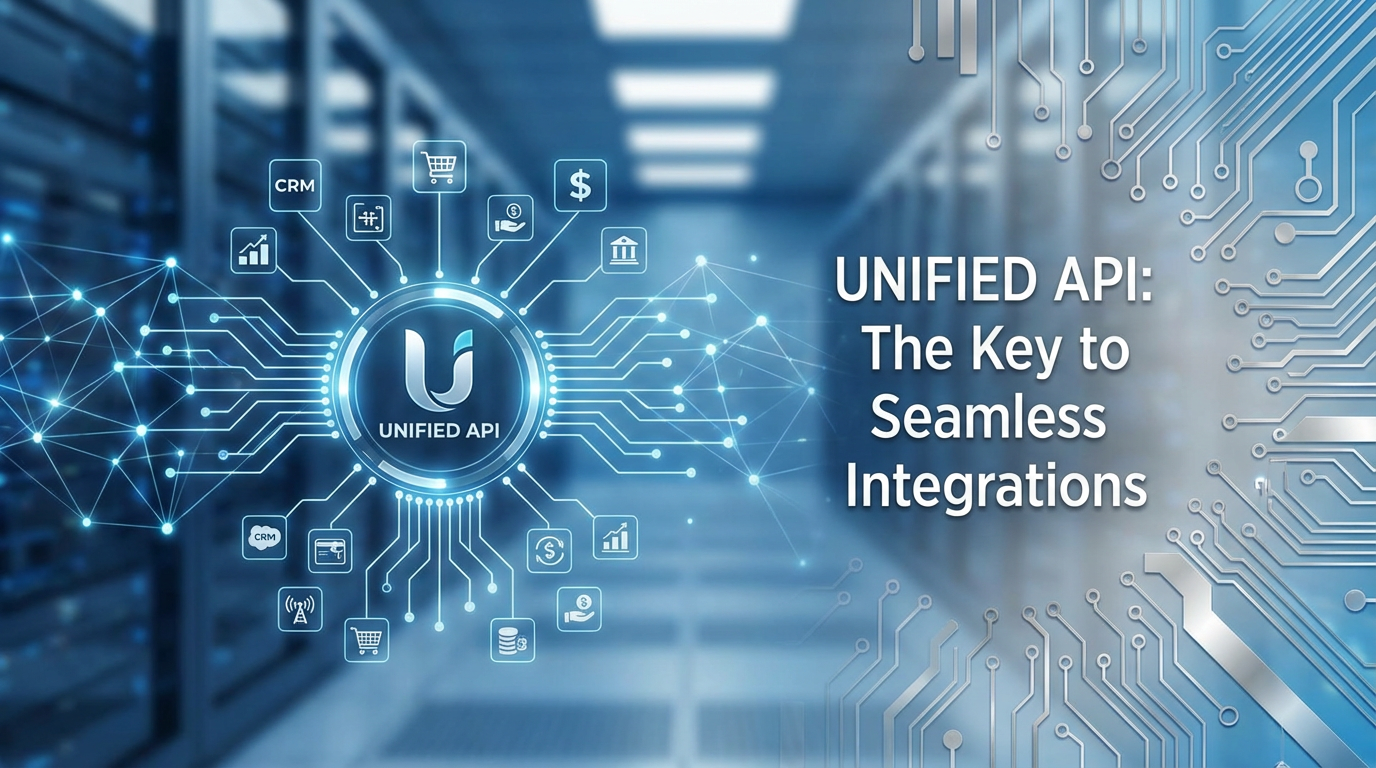

The Dawn of a New Era: Navigating the Complexities of AI Integrations
In the rapidly evolving landscape of artificial intelligence, innovation unfolds at an unprecedented pace. Every week, it seems, brings forth a new large language model (LLM), a specialized AI service, or a groundbreaking API designed to push the boundaries of what machines can achieve. From sophisticated natural language processing capabilities that power intelligent chatbots to advanced image recognition and predictive analytics, the possibilities are virtually limitless. This proliferation of AI technologies, while exciting, has simultaneously introduced a significant challenge for developers, businesses, and innovators: the escalating complexity of integration.
Imagine a developer tasked with building a cutting-edge application that requires multiple AI functionalities. Perhaps it needs to summarize user queries using one LLM, generate creative content with another, analyze sentiment with a specialized service, and translate text with yet another. Each of these functionalities typically comes with its own unique API, its own authentication methods, data formats, rate limits, and documentation. The result is an intricate web of integrations, often referred to as "API sprawl," which can quickly overwhelm even the most experienced development teams. This fragmentation leads to increased development time, higher maintenance costs, a steeper learning curve, and a constant struggle to keep pace with the latest advancements without rewriting substantial portions of the codebase.
The dream of a truly intelligent, seamlessly integrated application often collides with the harsh reality of managing disparate APIs. This is where the concept of a Unified API emerges, not just as a convenience, but as a critical necessity for navigating the modern AI ecosystem. A Unified API acts as a single, standardized gateway, abstracting away the underlying complexities of numerous individual AI models and services. It promises to transform the chaotic symphony of diverse APIs into a harmonious, orchestrated experience, allowing developers to focus on innovation rather than integration headaches. This article will delve deep into the transformative power of Unified APIs, exploring their mechanics, benefits, and how they unlock unparalleled efficiency, flexibility, and future-proofing in the age of AI. We will uncover how they simplify multi-model support and revolutionize LLM routing, paving the way for a new era of seamless, intelligent applications.
The Evolving Landscape of AI and APIs: From Niche Tools to Ubiquitous Powerhouses
The journey of artificial intelligence from academic curiosity to a cornerstone of modern technology has been marked by a staggering increase in both capability and accessibility. What began with specialized algorithms performing narrow tasks has blossomed into a diverse ecosystem of powerful models, each excelling in distinct areas. This evolution has been intrinsically linked to the rise of Application Programming Interfaces (APIs), which serve as the conduits through which developers can tap into the immense power of these AI services without needing to understand their intricate internal workings.
Initially, AI models were often standalone, requiring significant computational resources and expertise to deploy and utilize. However, the advent of cloud computing and the maturation of AI research led to a paradigm shift. Companies began offering their sophisticated AI models as services, accessible via simple API calls. This democratization of AI meant that even small startups or individual developers could integrate advanced capabilities into their applications, from natural language understanding and speech-to-text conversion to computer vision and recommendation engines.
The true explosion, however, came with the advent of large language models (LLMs) like GPT, Claude, Llama, and Gemini. These foundational models demonstrated unprecedented capabilities in understanding, generating, and manipulating human language, triggering a Cambrian explosion of AI-powered applications. Developers suddenly had access to tools that could write code, summarize documents, brainstorm ideas, and engage in sophisticated conversational interactions. Each new model, often developed by different organizations with varying architectural philosophies, typically came with its own bespoke API specification.
While this abundance of choice is undeniably beneficial, fostering competition and driving innovation, it also presents a formidable challenge: API Sprawl. For an application to leverage the best of what the AI world offers, it often needs to integrate with multiple distinct APIs. Consider an advanced virtual assistant: * It might use a specialized LLM for highly creative text generation. * Another, more cost-effective LLM for routine question-answering. * A sentiment analysis API to gauge user emotion. * A translation API for multilingual support. * Perhaps even a speech-to-text API for voice commands.
Each of these integrations demands dedicated development effort: * Learning Curve: Understanding each API's unique documentation, request/response formats, authentication schemes, and error handling mechanisms. * Code Duplication: Writing boilerplate code for each API, often repeating tasks like credential management, retry logic, and data serialization/deserialization. * Maintenance Overhead: Keeping up with updates and changes across multiple APIs from different providers, which can introduce breaking changes or require code adjustments. * Vendor Lock-in: Becoming deeply coupled to a specific provider's API, making it difficult and costly to switch to a different model or service if a better, cheaper, or more performant alternative emerges. * Performance Management: Monitoring latency, throughput, and reliability across various independent services. * Cost Optimization: Manually tracking and optimizing usage across different billing models and pricing structures.
The absence of a standardized approach to accessing these powerful tools creates bottlenecks, consumes valuable engineering resources, and ultimately slows down the pace of innovation. Developers find themselves spending more time on integration plumbing than on building novel features or refining user experiences. This complex, fragmented landscape underscores the urgent need for a unifying layer, a solution that can abstract away this heterogeneity and present a coherent, simplified interface – precisely the role a Unified API is designed to fulfill. It's about moving beyond merely accessing individual AI powers to orchestrating them effectively and efficiently.
What is a Unified API? The Universal Translator for Your AI Stack
At its core, a Unified API is an abstraction layer designed to provide a single, standardized interface for accessing multiple underlying APIs from various providers. Think of it as a universal remote control for your entire AI stack. Instead of juggling dozens of different remotes—each with its unique buttons, functions, and learning curve—a Unified API offers one intuitive interface through which you can command all your connected AI services.
The primary objective of a Unified API is to simplify the development process by eliminating the need for developers to learn, integrate, and maintain separate connections to each individual AI model or service. It stands between your application and the diverse array of AI providers, acting as an intelligent intermediary that translates your standardized requests into the specific formats required by each underlying service, and then normalizes their varied responses back into a consistent format for your application.
Let's break down the core components and functionalities that define a robust Unified API:
- Abstraction Layer: This is the most fundamental aspect. The Unified API hides the intricacies of the individual APIs it integrates. Developers interact with a single, consistent API endpoint, using a uniform request/response schema, regardless of which underlying AI model or provider is actually processing the request. This means your application code remains cleaner, simpler, and significantly less coupled to specific vendor implementations.
- Normalization and Standardization: Different AI providers often have distinct ways of representing data, handling errors, and structuring responses. For instance, one LLM might return its generated text under a
response_textkey, while another usesgenerated_content, and a third might embed it within a nested JSON object. A Unified API normalizes these disparate outputs into a common format. This consistency is invaluable, as it allows your application to process responses predictably, reducing the need for complex conditional logic or data transformations on your end. The same applies to input parameters; the Unified API maps your standardized input to the provider-specific requirements. - Authentication and Credential Management: Managing API keys and credentials for numerous services can be a security and operational nightmare. A Unified API centralizes this process. You provide your provider-specific credentials to the Unified API platform, which then securely manages and applies them to outgoing requests. This not only enhances security by reducing the surface area for credential exposure but also simplifies configuration and reduces the risk of authentication-related errors.
- Routing Capabilities: Beyond mere abstraction, a sophisticated Unified API incorporates intelligent LLM routing capabilities. This means it can dynamically decide which underlying AI model or service is best suited to handle a given request based on predefined criteria such as cost, latency, performance, specific task requirements, or even geographical location. This is a critical feature that transforms a simple aggregator into a powerful optimization engine. We will explore LLM routing in much greater detail later, but it’s crucial to understand that it’s an integral part of what makes a Unified API truly powerful for multi-model AI.
- Rate Limiting and Load Balancing: Individual APIs have their own rate limits, and hitting these limits can lead to application downtime or degraded performance. A Unified API can manage and enforce rate limits across multiple providers, often including smart retry mechanisms and load balancing strategies to distribute requests efficiently. This ensures higher availability and smoother operation for your application.
- Monitoring and Analytics: Centralized logging, performance metrics, and usage analytics across all integrated AI services are significant advantages. A Unified API can provide a single dashboard to monitor the health, cost, and performance of all your AI integrations, offering valuable insights that would be cumbersome to gather from individual services.
In essence, a Unified API acts as a powerful middleware, abstracting away the inherent heterogeneity of the AI ecosystem. It allows developers to "set it and forget it," focusing their creative energy on building innovative features and delightful user experiences, rather than wrestling with the minutiae of dozens of distinct API specifications. By providing this single point of access and normalization, it significantly reduces the cognitive load, accelerates development cycles, and fundamentally alters how applications interact with the ever-expanding universe of artificial intelligence. It's not just about making integrations easier; it's about making them smarter, more resilient, and infinitely more flexible.
The Indispensable Benefits of Unified APIs for Developers
The adoption of a Unified API architecture isn't merely a technological choice; it's a strategic decision that delivers profound and multifaceted benefits across the entire development lifecycle. For developers grappling with the complexities of modern AI, these benefits translate directly into increased productivity, reduced stress, and the ability to build more robust, agile, and future-proof applications.
1. Simplified Integration: A Single Entry Point to Endless Possibilities
This is perhaps the most immediate and tangible benefit. Instead of writing and maintaining distinct codebases for each AI service—each with its own SDK, authentication method, request/response formats, and error handling—developers interact with just one API. * Reduced Boilerplate Code: No need to write repetitive code for authentication, data parsing, or error management for every single provider. * Consistent Development Experience: Once a developer understands the Unified API's interface, they can access any integrated model or service, drastically shortening the learning curve for new AI capabilities. * Cleaner Codebase: A single integration point results in less code, fewer dependencies, and a more maintainable, readable application. This simplifies debugging and future modifications.
2. Faster Time-to-Market: Accelerating Innovation
By abstracting away integration complexities, Unified APIs free up significant developer bandwidth. Teams can spend less time on plumbing and more time on core business logic, feature development, and refining the user experience. * Rapid Prototyping: Quickly experiment with different AI models and functionalities without extensive integration work for each. * Agile Development: New AI features can be integrated and deployed much faster, allowing businesses to respond swiftly to market demands and competitive pressures. * Focus on Value Creation: Developers can concentrate on solving domain-specific problems rather than wrestling with API compatibility issues.
3. Enhanced Flexibility & Vendor Lock-in Mitigation: True Multi-model Support
One of the most powerful advantages of a Unified API is its ability to foster true multi-model support. The AI landscape is dynamic, with new, more performant, or more cost-effective models emerging constantly. * Effortless Model Swapping: With a Unified API, switching from one LLM provider to another (e.g., from GPT to Claude, or from a proprietary model to an open-source alternative) can be as simple as changing a configuration parameter or a routing rule. Your application code remains largely unaffected. * A/B Testing and Experimentation: Easily compare the performance, accuracy, or cost-effectiveness of different models for specific tasks without significant refactoring. This is invaluable for optimizing AI workflows. * Reduced Vendor Dependence: By acting as a buffer, the Unified API prevents your application from being tightly coupled to a single vendor's specific API, mitigating the risks of price hikes, service changes, or discontinuation. This empowers businesses to always choose the best tool for the job.
4. Cost Efficiency: Optimizing AI Spending
Unified APIs offer powerful mechanisms for optimizing expenditure on AI services. * Intelligent LLM Routing: As we will explore, a Unified API can intelligently route requests to the most cost-effective model for a given task, leveraging pricing differences between providers or different model tiers. * Centralized Usage Monitoring: Gain a consolidated view of AI consumption across all integrated models, making it easier to track, analyze, and predict spending. * Tiered Access: Some Unified APIs allow for defining policies that automatically switch to a cheaper model for non-critical tasks or during off-peak hours.
5. Improved Reliability & Resilience: Building Robust AI Applications
Centralizing access to multiple AI models enhances the overall robustness and reliability of your application. * Automatic Fallback: If a primary AI model or provider experiences downtime or a service degradation, a well-configured Unified API can automatically route requests to a secondary, healthy provider. This built-in redundancy minimizes service interruptions and ensures higher availability. * Load Balancing: Distribute requests across multiple providers or instances of a single provider to prevent any single point from being overwhelmed, improving overall system performance and stability. * Consistent Error Handling: A Unified API can normalize error codes and messages from disparate providers into a consistent format, making it easier for your application to handle failures gracefully.
6. Enhanced Scalability: Meeting Growing Demands
As your application gains users and its AI usage increases, a Unified API is built to handle the growth. * Managed Throughput: The platform can manage high volumes of requests, intelligently distributing them and ensuring that underlying API rate limits are respected without manual intervention. * Elasticity: Unified API providers are typically built on scalable cloud infrastructures, capable of dynamically adjusting resources to meet fluctuating demand. * Simplified Expansion: Adding new AI models or providers to your stack becomes a configuration task rather than a major development project, allowing your AI capabilities to scale alongside your business needs.
7. Future-Proofing: Adapting to Tomorrow's AI
The rapid pace of AI innovation means that today's cutting-edge model could be superseded by a new breakthrough tomorrow. * Seamless Upgrades: When new versions of models or entirely new models emerge, the Unified API provider handles the integration. Your application can often leverage these advancements with minimal or no code changes, just by updating a configuration. * Access to Emerging Technologies: Unified API platforms are incentivized to quickly integrate new and popular AI services, ensuring their users have access to the latest tools without the burden of individual integration.
In conclusion, a Unified API transforms the way developers interact with artificial intelligence. It moves beyond the tedious, error-prone task of individual API integration to offer a powerful, strategic layer that amplifies development efficiency, maximizes flexibility, optimizes costs, and guarantees resilience in an ever-changing AI world. It's the infrastructure that empowers developers to truly innovate, rather than just integrate.
Deep Dive into Multi-model Support and LLM Routing
While the overarching concept of a Unified API provides a powerful abstraction layer, its true strategic value is amplified by two key capabilities: robust multi-model support and intelligent LLM routing. These features collectively empower developers to build highly optimized, resilient, and future-proof AI applications by dynamically leveraging the strengths of diverse AI models.
The Power of Multi-model Support: A Toolkit for Every Task
The landscape of large language models (LLMs) is incredibly diverse. No single LLM is a universal panacea; each excels in certain areas, comes with different pricing structures, latency characteristics, and even distinct ethical guidelines or safety filters.
- Specialization and Performance:
- Some LLMs are highly tuned for creative writing, poetry, or elaborate storytelling.
- Others are optimized for precise code generation or debugging.
- Certain models are specifically designed for efficient summarization of long documents.
- Some excel at factual question answering, drawing from vast knowledge bases.
- Smaller, faster models might be ideal for low-latency, high-volume tasks like basic classification or sentiment analysis.
- Larger, more powerful models, though potentially more expensive and slower, might be necessary for complex reasoning or highly nuanced tasks.
- Cost Considerations:
- Different providers and models have varying pricing tiers based on input/output tokens, compute time, or specific features.
- Leveraging a cheaper model for routine tasks can significantly reduce operational costs, while reserving more expensive, powerful models for high-value or complex operations.
- Regulatory and Compliance Requirements:
- Data privacy regulations (like GDPR, HIPAA) or industry-specific compliance standards might necessitate using models hosted in specific regions or offered by providers with particular security certifications.
- Some models might offer better control over data residency or fine-tuning capabilities that are crucial for sensitive applications.
A Unified API with strong multi-model support allows developers to seamlessly switch between these diverse models without altering their core application logic. This means: * Best Tool for the Job: You're no longer constrained by the capabilities or limitations of a single model. Your application can dynamically select the most appropriate LLM based on the user's request, the required output quality, or performance targets. * Experimentation and Innovation: It becomes trivial to experiment with new models as they emerge. Developers can quickly integrate and compare different LLMs for A/B testing, identifying which one delivers the best results for a given use case in terms of accuracy, creativity, or efficiency. * Optimized Resource Allocation: By having access to a diverse pool of models, you can ensure that you're always using the right amount of compute power for the task at hand, preventing over-provisioning or under-delivering.
Understanding LLM Routing: The Intelligent Traffic Controller
The concept of LLM routing takes multi-model support a significant step further. It's not just about having access to multiple models; it's about intelligently deciding which model should handle a particular request at a specific moment in time. LLM routing is the intelligent traffic controller for your AI queries, directing them to the optimal destination based on predefined or dynamic criteria.
The complexity abstracted away by LLM routing is immense. Without it, a developer would need to manually implement sophisticated conditional logic within their application to decide which model to call, manage fallback scenarios, and monitor each model's performance and cost. A Unified API automates this entire decision-making process.
Here are the key criteria and strategies employed in LLM routing:
- Cost-Based Routing:
- Description: Prioritizes sending requests to the LLM that offers the lowest cost per token or per request, given the current pricing structures.
- Use Case: Ideal for high-volume, less critical tasks where cost optimization is paramount, such as routine content generation or internal summarization.
- Latency-Based Routing:
- Description: Directs requests to the model that can respond the fastest, minimizing delays. This often involves checking real-time latency metrics of different providers.
- Use Case: Crucial for real-time applications like conversational AI, live customer support chatbots, or interactive user experiences where immediate responses are vital.
- Performance/Accuracy-Based Routing:
- Description: Routes requests to the model known to deliver the highest quality, most accurate, or most contextually relevant responses for a specific type of task. This might be based on internal benchmarks or historical performance data.
- Use Case: Critical for tasks requiring high precision, such as medical diagnostics support, financial analysis, or legal document review.
- Task-Specific Routing (Contextual/Semantic Routing):
- Description: Analyzes the incoming query or its context (e.g., intent, keywords, complexity) and routes it to an LLM specifically trained or optimized for that particular task. For example, a creative writing prompt goes to a generative model, while a factual query goes to a knowledge-retrieval model.
- Use Case: Advanced chatbots that handle diverse user intents, content platforms generating various types of media, or specialized research tools.
- Fallback Routing (Resilience Routing):
- Description: If the primary chosen LLM fails to respond, returns an error, or exceeds its rate limits, the request is automatically rerouted to a secondary, predefined fallback model.
- Use Case: Enhancing application reliability and uptime, ensuring continuous service even if one provider experiences an outage or temporary degradation.
- Load-Balancing Routing:
- Description: Distributes incoming requests evenly across multiple available LLM instances or providers to prevent any single endpoint from becoming a bottleneck, optimizing overall throughput.
- Use Case: High-traffic applications that require consistent performance under heavy load, ensuring all users receive timely responses.
- Data Residency/Compliance Routing:
- Description: Routes requests based on data sovereignty requirements, ensuring that data is processed only in specific geographical regions or by providers adhering to particular compliance standards.
- Use Case: Enterprises operating in regulated industries or across multiple jurisdictions, needing to adhere to strict data governance policies.
By combining these strategies, a Unified API can implement highly sophisticated LLM routing policies. This means that for a single application, a user's request might be routed to a small, fast model for initial classification, then to a specialized creative model for content generation, and finally, if that model fails, to a general-purpose LLM as a fallback—all transparently to the developer and the end-user. This level of dynamic optimization is practically impossible to manage manually at scale and represents a monumental leap in the efficiency and robustness of AI-powered applications.
Table: Comparative Analysis of LLM Routing Strategies
| Routing Strategy | Description | Primary Benefit(s) | Ideal Use Case(s) | Considerations |
|---|---|---|---|---|
| Cost-Based Routing | Directs requests to the LLM with the lowest cost per token/request. | Cost Optimization, Budget Control | High-volume, non-critical tasks; internal tools; summary generation. | Requires real-time pricing data; might compromise on speed/quality for cost. |
| Latency-Based Routing | Routes requests to the LLM offering the fastest response time. | Speed, Real-time Responsiveness | Conversational AI, chatbots, interactive user interfaces, real-time analytics. | Requires continuous latency monitoring; fastest might not be cheapest or most accurate. |
| Performance/Accuracy-Based Routing | Sends requests to the LLM that provides the highest quality, most accurate, or best-performing output. | Quality, Precision, Reliability | Critical applications (medical, financial, legal), complex reasoning tasks. | Requires robust benchmarking and evaluation metrics; potentially higher cost/latency. |
| Task-Specific Routing | Analyzes query intent/type and routes to an LLM specialized for that specific task. | Relevancy, Specialized Output Quality | Multi-purpose chatbots, content platforms, specialized research tools. | Requires robust intent detection/classification; initial setup complexity. |
| Fallback Routing | If the primary LLM fails or errors, automatically reroutes to a secondary, backup LLM. | High Availability, Resilience, Disaster Recovery | Any mission-critical application requiring continuous service. | Requires careful selection of fallback models; potential performance/cost differences during fallback. |
| Load-Balancing Routing | Distributes requests across multiple LLM instances/providers to prevent overload. | Throughput, Stability, Scalability | High-traffic applications, sudden spikes in demand. | Requires careful resource provisioning; statefulness might be a challenge across different instances. |
| Data Residency Routing | Routes requests to LLMs located in specific geographical regions to meet compliance requirements. | Regulatory Compliance, Data Sovereignty | Enterprises in regulated industries, international applications. | Limited choice of providers/models in some regions; potential impact on latency. |
The intelligent orchestration provided by LLM routing through a Unified API ensures that applications are not only more resilient and cost-effective but also capable of delivering the optimal user experience by always leveraging the best-suited AI model for any given situation. This strategic layer truly elevates the potential of AI-driven development.
XRoute is a cutting-edge unified API platform designed to streamline access to large language models (LLMs) for developers, businesses, and AI enthusiasts. By providing a single, OpenAI-compatible endpoint, XRoute.AI simplifies the integration of over 60 AI models from more than 20 active providers(including OpenAI, Anthropic, Mistral, Llama2, Google Gemini, and more), enabling seamless development of AI-driven applications, chatbots, and automated workflows.
Use Cases and Real-World Applications: Where Unified APIs Shine Bright
The theoretical benefits of a Unified API, encompassing simplified integration, multi-model support, and intelligent LLM routing, translate into tangible, transformative advantages across a myriad of real-world applications and industries. From enhancing customer service to accelerating scientific discovery, the ability to seamlessly orchestrate diverse AI models unlocks unprecedented capabilities.
1. Generative AI Applications: Powering the Creative Economy
The rise of generative AI has created an explosion of applications requiring sophisticated text, image, and even code generation. Unified APIs are central to their success: * Intelligent Chatbots and Virtual Assistants: A single chatbot can leverage one LLM for creative dialogue, another for precise factual recall from a knowledge base, and yet another for sentiment analysis to tailor responses. LLM routing can dynamically switch between these based on user intent, ensuring optimal responses and cost-efficiency. * Content Generation Platforms: Marketing agencies or content creators can use a Unified API to access various LLMs for blog post generation, ad copy, social media captions, or even scriptwriting. They can A/B test different models for specific content types or audiences, ensuring the best output quality and tone. * Code Completion & Generation Tools: Developers can use a Unified API to integrate multiple coding LLMs. One model might be excellent for Python, another for JavaScript, and a third for generating SQL queries. The API can route code requests to the specialized model, improving accuracy and efficiency. * Personalized Learning & Entertainment: Educational platforms can generate personalized learning paths or quizzes, while streaming services could generate synopsis or character backstories, all drawing from a diverse pool of LLMs via a Unified API for varying content needs and styles.
2. Data Analysis & Processing: Extracting Intelligence from Chaos
Unified APIs streamline complex data workflows that involve multiple AI tasks. * Document Summarization and Extraction: Legal firms or research institutions can process vast amounts of text. One LLM might summarize legal precedents, another extracts specific clauses, and a third classifies documents by topic. A Unified API orchestrates these tasks, ensuring data consistency and efficiency. * Sentiment Analysis and Market Research: Businesses can feed customer reviews, social media posts, and survey responses through a Unified API. It can route these texts to different sentiment analysis models (e.g., one general, one industry-specific) to gauge public opinion, identify trends, and understand brand perception with high accuracy. * Data Classification and Categorization: Large datasets can be automatically categorized. For example, incoming support tickets can be classified by urgency and topic, routing them to the appropriate department. LLM routing can ensure the most accurate classifier is used for each data type.
3. Automated Workflows: Enhancing Operational Efficiency
Automating repetitive and intelligence-demanding tasks is where Unified APIs deliver significant operational value. * Customer Service Automation: Beyond chatbots, a Unified API can power an entire customer service workflow. It might summarize incoming emails, extract key issues, suggest relevant knowledge base articles using one LLM, and even draft initial responses using another, all before a human agent intervenes. * Internal Tools and Enterprise Search: Organizations can build powerful internal search engines that go beyond keyword matching. A Unified API can connect to LLMs for semantic search, document understanding, and question answering across internal repositories, making employees more productive. * HR and Recruitment: Automate resume screening by routing candidate profiles through LLMs for skill extraction and initial fit assessment, significantly reducing manual effort and speeding up the hiring process.
4. Experimentation & A/B Testing: Driving Continuous Improvement
For any organization serious about leveraging AI, continuous experimentation is key. Unified APIs make this process not just feasible but effortless. * Model Performance Benchmarking: Easily compare the outputs, latency, and cost of different LLMs for specific tasks in a live environment. This is crucial for iterating and optimizing AI performance. * New Feature Rollouts: When a new, potentially better LLM becomes available, a Unified API allows for a controlled rollout, directing a small percentage of traffic to the new model while monitoring its performance and impact before a full deployment. * Hyperparameter Tuning: Experiment with different prompts, temperature settings, and other model parameters across various LLMs to find the optimal configuration for your use case, all managed through a single API interface.
5. Enterprise Solutions: Centralized AI Access and Governance
Large organizations with complex IT environments and diverse departmental needs benefit immensely from a centralized approach to AI. * Standardized AI Access: Provide a consistent way for all internal teams (marketing, sales, engineering, HR) to access approved AI models, ensuring security, compliance, and consistent usage. * Cost Management and Attribution: Gain a consolidated view of AI spending across the entire organization, with the ability to attribute costs to specific teams or projects, facilitating better budget management and resource allocation. * Security and Compliance: A Unified API can enforce security policies, data governance rules, and access controls across all AI integrations, which is critical for sensitive enterprise data and regulated industries. * API Gateway Functionality: Acts as a gateway, providing additional features like request validation, caching, and analytics across all AI services, further enhancing security and performance.
In essence, the Unified API is becoming the backbone for any forward-thinking organization that seeks to harness the full, diverse power of artificial intelligence without being bogged down by its inherent complexities. It transforms the challenge of AI integration into an opportunity for unparalleled innovation and efficiency across virtually every sector.
Challenges and Considerations for Implementing Unified APIs
While the advantages of adopting a Unified API are compelling, the implementation and ongoing management of such a system are not without their considerations and potential challenges. Understanding these aspects upfront is crucial for a successful deployment and for maximizing the benefits.
1. Initial Setup & Configuration Complexity
Although a Unified API simplifies ongoing development, the initial setup can still involve a degree of complexity, especially when dealing with a large number of underlying AI models and providers. * Credential Management: While centralized, you still need to obtain and securely store API keys for each individual provider you wish to integrate. * Mapping and Transformation: Defining how the Unified API maps your standardized requests to provider-specific formats and normalizes responses back can require careful configuration, especially for highly customized use cases. * Routing Rule Definition: Establishing intelligent LLM routing rules (e.g., cost-based, performance-based, task-specific) requires an understanding of your application's needs, the characteristics of each LLM, and potentially some initial benchmarking. * Learning the Unified API Itself: While simpler than learning dozens of individual APIs, there's still a learning curve associated with the specific Unified API platform, its SDKs, and its configuration options.
2. Security & Compliance: A Centralized Responsibility
A Unified API becomes a critical point of access for all your AI interactions. This centralization, while convenient, also centralizes security responsibility. * Single Point of Failure/Attack: If the Unified API itself is compromised, it could potentially expose credentials or affect all connected AI services. Robust security measures (encryption, access control, regular audits) are paramount. * Data Privacy: Ensuring that data transmitted through the Unified API adheres to all relevant privacy regulations (GDPR, CCPA, HIPAA, etc.) across all integrated providers. This might involve careful selection of providers and configuration of data handling policies. * Authentication and Authorization: Implementing strong authentication and granular authorization controls within the Unified API itself is vital to ensure only authorized applications and users can access specific AI capabilities.
3. Performance Optimization: Latency and Throughput Management
While Unified APIs are designed for performance, they introduce an additional layer in the request path, which can theoretically add latency. * Network Overhead: Each request must travel to the Unified API platform before being routed to the target LLM and then back, potentially adding milliseconds of latency. For hyper-latency-sensitive applications, this needs careful consideration and potentially geographical proximity optimization. * Throughput Management: The Unified API needs to be capable of handling the cumulative throughput of all your AI requests, ensuring it doesn't become a bottleneck. Its own infrastructure must be robust and scalable. * Caching Strategies: For frequently queried, static or semi-static AI responses, implementing caching at the Unified API layer can significantly improve performance and reduce costs.
4. Monitoring & Analytics: Holistic View is Key
One of the benefits is centralized monitoring, but ensuring this monitoring is comprehensive and actionable is a task in itself. * Granular Metrics: The Unified API should provide detailed metrics on usage, costs, latency, and error rates for each individual LLM, not just an aggregated view. This helps in fine-tuning routing and identifying underperforming models. * Alerting and Logging: Robust alerting mechanisms for failures or performance degradation, along with comprehensive logging, are essential for debugging and proactive management. * Cost Attribution: For large organizations, attributing AI costs to specific projects, teams, or departments through the Unified API's analytics is crucial for budget management.
5. Vendor Selection and Platform Dependence
Choosing the right Unified API provider is a significant decision. * Provider Lock-in (at a Higher Level): While mitigating lock-in to individual AI models, you introduce a new layer of dependence on the Unified API provider itself. Assess their reliability, support, future roadmap, and exit strategy. * Feature Completeness: Not all Unified API platforms are created equal. Evaluate features like the number of supported models, flexibility of routing rules, analytics capabilities, security features, and customizability. * Pricing Model: Understand the Unified API provider's own pricing structure, which might be based on requests, data volume, active connections, or specific features, and how it aligns with your budget and usage patterns.
6. Managing Updates and New Model Integrations
The AI landscape changes rapidly. A good Unified API provider will keep pace, but this still requires vigilance. * New Model Adoption: While the Unified API handles integration, you still need to decide when and how to incorporate new LLMs into your application's routing policies. * API Versioning: The Unified API must handle versioning of the underlying models effectively, ensuring backward compatibility or providing clear migration paths.
Despite these considerations, the overarching benefits of a Unified API—especially in managing the complexity of multi-model support and intelligent LLM routing—typically far outweigh these challenges. By carefully planning, selecting a reputable provider, and maintaining robust operational practices, organizations can successfully leverage a Unified API to unlock immense value from their AI investments.
The Future of AI Integration with Unified APIs: Beyond Simplification
The journey of Unified APIs is still in its early stages, but their trajectory points towards an increasingly sophisticated and indispensable role in the future of AI integration. As AI models become even more diverse, specialized, and capable, the need for intelligent orchestration will only intensify. The future of Unified APIs will move beyond mere simplification to truly becoming intelligent AI meta-layers, offering capabilities that are currently nascent or entirely theoretical.
1. More Sophisticated and Autonomous Routing
Today's LLM routing is powerful, but often relies on predefined rules. The future will see more autonomous and adaptive routing mechanisms: * AI-Powered Routing: The Unified API itself could use AI to learn optimal routing strategies dynamically. It could observe real-time performance, cost fluctuations, and even contextual nuances of queries to automatically adjust routing without manual configuration. * Predictive Routing: Predicting future model loads, potential downtimes, or pricing changes to preemptively route requests for maximum efficiency and resilience. * Hyper-Personalized Routing: Routing not just based on task, but on specific user profiles, historical preferences, or even the emotional state detected in a query. * Multi-Modal Routing: As AI moves beyond text to encompass image, audio, and video, Unified APIs will route multi-modal inputs to the best-suited multi-modal models, orchestrating complex AI pipelines that blend different sensory inputs and outputs.
2. Enhanced Security Features and Ethical AI Governance
With AI becoming critical infrastructure, security and responsible AI practices will be paramount. * Advanced Threat Detection: Unified APIs will incorporate sophisticated AI-driven threat detection to identify malicious inputs, prompt injections, and potential data exfiltration attempts before they reach the underlying LLMs. * Automated Content Moderation and Safety Filters: Built-in, configurable content moderation across all integrated models, ensuring outputs adhere to ethical guidelines and brand safety standards, regardless of the underlying LLM. * Explainable AI (XAI) Integration: Providing insights into why a particular LLM was chosen for a request or how a response was generated, fostering transparency and trust. * Centralized Compliance Monitoring: Continuously monitoring and reporting compliance with various regulatory frameworks, simplifying governance for global applications.
3. Broader Model Support and Interoperability
The concept of multi-model support will expand significantly. * Beyond LLMs: Unified APIs will support a wider array of AI models, including computer vision, speech synthesis/recognition, time-series forecasting, reinforcement learning, and specialized knowledge graphs, all accessible through a single, coherent interface. * Open-Source and Private Models: Seamless integration of open-source models (hosted internally or externally) and proprietary, fine-tuned models alongside commercial ones, providing ultimate flexibility. * Cross-Modal Integration: The ability to pipe outputs from one type of AI model (e.g., text summary from an LLM) as input to another (e.g., text-to-speech for an audio response) seamlessly within the Unified API layer.
4. Seamless Integration with the Broader Developer Ecosystem
Unified APIs will become more deeply embedded into the developer workflow. * Low-Code/No-Code Platforms: Direct integrations into visual development environments, allowing non-technical users to build sophisticated AI applications by simply dragging and dropping AI components. * IDE Extensions and Tooling: Enhanced tooling within Integrated Development Environments (IDEs) for easier configuration, debugging, and monitoring of Unified API interactions. * Serverless and Edge Deployments: Optimized for serverless functions and edge computing environments, enabling low-latency AI inference closer to the data source and users.
5. AI Orchestration and Workflow Management
Unified APIs will evolve into full-fledged AI orchestration platforms. * Complex AI Pipelines: Building multi-step AI workflows (e.g., "analyze sentiment -> summarize key points -> generate tailored response -> translate to user's language") becomes a declarative process within the Unified API, rather than imperative code in the application. * Stateful AI Interactions: Managing context and state across multiple AI calls and different models, enabling more natural and coherent long-running conversations or processes. * Federated Learning Integration: Facilitating the use of federated learning approaches where models are trained on decentralized data, enhancing privacy and data security.
In essence, the future Unified API will be more than just an integration layer; it will be an intelligent co-pilot for developers, empowering them to design, deploy, and manage highly sophisticated, adaptive, and ethically sound AI systems with unprecedented ease. It will transform the concept of building AI applications from assembling individual components to orchestrating intelligent ecosystems.
Introducing XRoute.AI - A Pioneer in Unified AI API Platforms
As we have explored the immense potential and critical necessity of Unified APIs in today's intricate AI landscape, it's clear that developers and businesses require robust, intelligent solutions to harness the power of diverse AI models without succumbing to integration complexities. This is precisely the vision behind XRoute.AI, a cutting-edge unified API platform designed to streamline access to large language models (LLMs) for developers, businesses, and AI enthusiasts.
XRoute.AI stands out as a leading example of how a Unified API can transform the development experience. It addresses the core challenges discussed throughout this article by providing a single, OpenAI-compatible endpoint. This means that if you're already familiar with the OpenAI API, integrating XRoute.AI into your existing projects is incredibly straightforward, minimizing the learning curve and accelerating your development cycles.
What truly sets XRoute.AI apart is its comprehensive multi-model support. The platform simplifies the integration of over 60 AI models from more than 20 active providers. This extensive coverage includes not only popular foundational models but also specialized LLMs, ensuring that you always have access to the best tool for any specific task. Whether you need a model for creative content generation, precise code completion, efficient summarization, or rapid classification, XRoute.AI provides a single gateway to a vast ecosystem of AI capabilities. This eliminates vendor lock-in and empowers you to choose the optimal model based on performance, cost, or specific requirements, all from one unified interface.
At the heart of XRoute.AI's intelligence lies its advanced LLM routing capabilities. This feature is crucial for achieving cost-effective AI and low latency AI. XRoute.AI intelligently directs your requests to the most appropriate LLM, considering factors such as: * Cost: Automatically selecting the most budget-friendly model for a given query. * Latency: Prioritizing models that offer the quickest response times for real-time applications. * Performance: Routing to models known for superior accuracy or output quality for critical tasks. * Reliability: Implementing fallback mechanisms to ensure continuous service even if an upstream provider experiences issues.
This intelligent routing ensures that your AI applications are not only highly efficient but also resilient and consistently optimized. By abstracting away the complexities of managing multiple API connections, XRoute.AI enables seamless development of AI-driven applications, chatbots, and automated workflows. Developers can focus on building intelligent solutions without the overhead of manually juggling dozens of different APIs.
Key features and benefits of XRoute.AI include: * Low Latency AI: Optimized infrastructure and intelligent routing ensure that your applications receive rapid responses, critical for interactive user experiences. * Cost-Effective AI: Leveraging smart routing and access to a wide array of models, XRoute.AI helps you minimize your AI operational expenditures. * Developer-Friendly Tools: With its OpenAI-compatible endpoint and comprehensive documentation, developers can quickly integrate and experiment. * High Throughput and Scalability: The platform is built to handle significant volumes of requests, ensuring your applications can scale effortlessly as your user base grows. * Flexible Pricing Model: Designed to accommodate projects of all sizes, from startups to enterprise-level applications, offering transparent and adaptable pricing.
In summary, XRoute.AI embodies the future of AI integration. It is not just an API aggregator; it's a strategic platform that empowers developers to unlock the full potential of artificial intelligence by simplifying access, optimizing performance, and ensuring flexibility across an ever-expanding universe of LLMs. By providing a unified, intelligent gateway, XRoute.AI enables you to build cutting-edge AI solutions with unparalleled ease and efficiency.
Conclusion: The Unified API as the Cornerstone of Modern AI Development
The journey through the intricate world of artificial intelligence has revealed a landscape brimming with innovation but also fraught with complexity. The exponential growth in the number and diversity of AI models, particularly large language models (LLMs), has presented developers with an unprecedented challenge: how to effectively integrate, manage, and optimize access to these powerful tools without drowning in the minutiae of individual API specifications. The answer, unequivocally, lies in the strategic adoption of a Unified API.
We've explored how a Unified API acts as a crucial abstraction layer, transforming the chaotic symphony of disparate AI services into a harmonious, manageable orchestra. Its ability to provide a single, standardized interface dramatically simplifies integration, drastically reduces development time, and liberates valuable engineering resources that would otherwise be consumed by repetitive boilerplate coding and maintenance. This simplification is not just a convenience; it's a catalyst for faster innovation and quicker time-to-market.
Furthermore, the true power of a Unified API shines brightest through its robust multi-model support. In an ecosystem where no single LLM reigns supreme for all tasks, the ability to seamlessly switch between models based on performance, cost, or specific capabilities is invaluable. This freedom from vendor lock-in fosters experimentation, drives continuous optimization, and ensures that developers always have the best possible tool at their disposal, dynamically adapting to the ever-evolving AI landscape.
Perhaps the most sophisticated and impactful feature within this architecture is intelligent LLM routing. This capability transforms a simple API aggregator into a powerful, dynamic optimization engine. By intelligently directing requests to the most appropriate LLM based on criteria such as cost, latency, performance, or task specificity, LLM routing ensures that AI applications are not only highly efficient and cost-effective but also resilient, reliable, and capable of delivering superior user experiences. It is the invisible hand that orchestrates the optimal use of AI resources, making complex decisions in real-time.
From revolutionizing generative AI applications and streamlining data analysis to powering automated workflows and enabling enterprise-wide AI governance, the real-world impact of Unified APIs is undeniable. They serve as the foundational infrastructure for building scalable, flexible, and future-proof AI solutions across every industry.
As the AI revolution continues its relentless march forward, the complexities will only mount. The need for intelligent intermediaries that can abstract, optimize, and orchestrate the vast array of AI capabilities will become even more pronounced. The Unified API, therefore, is not merely a transient trend but a fundamental architectural shift that will define the future of AI development. It empowers developers and businesses to focus on creating groundbreaking applications and solving complex problems, rather than wrestling with the underlying plumbing. Embracing this unifying approach is not just smart; it's essential for staying at the forefront of the artificial intelligence frontier.
FAQ: Unified API for AI Integrations
Q1: What exactly is a Unified API for AI, and how is it different from a regular API?
A1: A Unified API for AI is a single, standardized interface that allows you to access multiple different AI models (like various LLMs, vision APIs, etc.) from various providers through one connection. A regular API typically provides access to a single service or a set of related services from one provider. The key difference is that a Unified API abstracts away the unique specificities (authentication, data formats, endpoints) of each individual AI provider, presenting a consistent interface to the developer, simplifying multi-model support and integration across a diverse AI ecosystem.
Q2: Why should my development team consider using a Unified API for our AI projects?
A2: Using a Unified API offers significant benefits: 1. Simplified Integration: Drastically reduces the effort required to connect to multiple AI services. 2. Faster Development: Accelerates time-to-market by letting developers focus on application logic, not integration headaches. 3. Flexibility & Vendor Lock-in Mitigation: Easily switch or combine different AI models/providers without refactoring your codebase. 4. Cost Optimization: Enables intelligent LLM routing to direct requests to the most cost-effective model. 5. Improved Reliability: Offers features like automatic fallback to ensure continuous service even if one provider fails. 6. Future-Proofing: Easily incorporate new AI models as they emerge with minimal effort.
Q3: What is "LLM routing" and why is it important in a Unified API context?
A3: LLM routing is the intelligent process by which a Unified API dynamically directs an incoming request to the most appropriate Large Language Model (LLM) among its integrated options. This decision can be based on criteria such as cost, latency, performance, the specific task required, or provider reliability. It's crucial because it optimizes your AI usage, ensuring you're always using the best-suited (and often most cost-efficient) model for a given query, enhancing both application performance and resource management.
Q4: Can a Unified API help me save costs on my AI usage?
A4: Yes, absolutely. Cost-based LLM routing is one of the primary ways a Unified API can help. By automatically sending requests to the LLM that offers the lowest cost for a particular task at that moment, it helps optimize your spending across different providers and model tiers. Additionally, centralized monitoring and analytics provided by a Unified API give you a clearer picture of your overall AI consumption, allowing for better budget management.
Q5: How does a Unified API handle new AI models or updates to existing ones?
A5: A reputable Unified API platform constantly monitors the AI landscape and integrates new models or updates to existing ones on its backend. This means that as a developer, you often gain access to these new capabilities with little to no change to your application code. The Unified API provider handles the complex integration work, abstraction, and normalization, allowing you to leverage the latest AI advancements simply by updating a configuration or making a minor change to your routing rules, embodying true multi-model support. For example, platforms like XRoute.AI are specifically designed to abstract this complexity, offering seamless access to a continuously updated pool of models.
🚀You can securely and efficiently connect to thousands of data sources with XRoute in just two steps:
Step 1: Create Your API Key
To start using XRoute.AI, the first step is to create an account and generate your XRoute API KEY. This key unlocks access to the platform’s unified API interface, allowing you to connect to a vast ecosystem of large language models with minimal setup.
Here’s how to do it: 1. Visit https://xroute.ai/ and sign up for a free account. 2. Upon registration, explore the platform. 3. Navigate to the user dashboard and generate your XRoute API KEY.
This process takes less than a minute, and your API key will serve as the gateway to XRoute.AI’s robust developer tools, enabling seamless integration with LLM APIs for your projects.
Step 2: Select a Model and Make API Calls
Once you have your XRoute API KEY, you can select from over 60 large language models available on XRoute.AI and start making API calls. The platform’s OpenAI-compatible endpoint ensures that you can easily integrate models into your applications using just a few lines of code.
Here’s a sample configuration to call an LLM:
curl --location 'https://api.xroute.ai/openai/v1/chat/completions' \
--header 'Authorization: Bearer $apikey' \
--header 'Content-Type: application/json' \
--data '{
    "model": "gpt-5",
    "messages": [
        {
            "content": "Your text prompt here",
            "role": "user"
        }
    ]
}'
With this setup, your application can instantly connect to XRoute.AI’s unified API platform, leveraging low latency AI and high throughput (handling 891.82K tokens per month globally). XRoute.AI manages provider routing, load balancing, and failover, ensuring reliable performance for real-time applications like chatbots, data analysis tools, or automated workflows. You can also purchase additional API credits to scale your usage as needed, making it a cost-effective AI solution for projects of all sizes.
Note: Explore the documentation on https://xroute.ai/ for model-specific details, SDKs, and open-source examples to accelerate your development.