Unified LLM API: Simplify Your AI Workflow

In the rapidly evolving landscape of artificial intelligence, Large Language Models (LLMs) have emerged as transformative tools, revolutionizing how we interact with technology, process information, and automate complex tasks. From crafting compelling marketing copy and generating intricate code to powering sophisticated conversational agents and deriving deep insights from vast datasets, LLMs offer unparalleled capabilities. However, the true potential of these models often remains partially untapped due to the inherent complexities of integrating and managing them within diverse application environments. Developers and businesses frequently grapple with a fragmented ecosystem, where each LLM, from providers like OpenAI, Anthropic, Google, and many others, presents its own unique API structure, authentication mechanisms, rate limits, and pricing models. This creates a labyrinth of integration challenges, diverting valuable development resources from innovation to mere management.
This comprehensive article delves into the critical role of a unified LLM API as a pivotal solution to this burgeoning complexity. We will explore how a single, coherent interface can dramatically simplify the integration process, unlock true multi-model support, and ultimately streamline the entire AI workflow. By abstracting away the underlying intricacies of various LLM providers, a Unified API empowers developers to build more resilient, cost-effective, and future-proof AI applications, fostering an environment where innovation can truly flourish. We will journey through the pain points of traditional, fragmented approaches, illuminate the profound benefits a unified solution offers, dissect its technical underpinnings, examine diverse real-world applications, and provide insights into selecting the optimal platform for your needs.
The Fragmented Landscape: Understanding the Challenges of Direct LLM Integration
Before we fully appreciate the elegance and utility of a unified LLM API, it's crucial to understand the challenges that arise when developers choose to integrate directly with multiple individual LLM providers. While direct integration offers maximum control over specific models, it quickly introduces a cascade of complexities that can hinder development velocity, inflate costs, and introduce significant operational overhead.
Imagine a scenario where an application needs to leverage the code generation capabilities of one model, the creative writing prowess of another, and the summarization accuracy of a third. Each interaction with a different provider means:
- Multiple API Keys and Authentication Schemes: Every LLM provider requires its own set of API keys, often with different scopes and permissions. Managing these credentials securely across an application, ensuring their rotation, and handling access controls becomes a significant security and administrative burden. Developers must juggle disparate authentication methods, from bearer tokens to more complex OAuth flows, adding layers of boilerplate code.
- Disparate API Structures and Data Schemas: One of the most significant hurdles is the lack of standardization in API endpoints, request bodies, and response formats. While many LLMs now offer a
chat/completionsstyle endpoint, the specifics of how parameters are passed (e.g.,temperature,max_tokens,stop_sequences) and how responses are structured (e.g.,choices[0].message.contentvs.response.text) can vary subtly yet critically. This forces developers to write extensive parsing and normalization logic for each model, consuming precious time and introducing potential points of failure. This fragmentation directly impacts the ability to achieve true multi-model support without significant custom engineering. - Inconsistent Rate Limits and Usage Policies: Each LLM provider imposes its own set of rate limits – how many requests per minute, how many tokens per minute, or concurrent requests are allowed. Exceeding these limits leads to errors, application slowdowns, and poor user experiences. Developers must implement sophisticated retry logic, token bucket algorithms, and backoff strategies for each integrated API, making robust error handling a complex endeavor.
- Vendor Lock-in and Limited Flexibility: Committing to a single LLM provider, or deeply embedding multiple specific APIs, creates vendor lock-in. If a new, more performant, or more cost-effective model emerges from a different provider, switching becomes a monumental task. It often means rewriting substantial portions of the integration code, retraining internal teams, and redeploying the application, effectively stifling the agility required in the fast-paced AI domain. The absence of multi-model support at a foundational level restricts strategic flexibility.
- Cost Management and Optimization Challenges: Pricing models for LLMs vary wildly, from per-token charges (input vs. output tokens) to per-request fees, and even tiered subscriptions. Optimizing costs when using multiple models requires intricate logic to route requests to the cheapest available model that meets performance criteria. Without a centralized system, monitoring and analyzing spending across different providers becomes a nightmare, making accurate budgeting and cost forecasting incredibly difficult.
- Performance and Latency Management: While LLMs are powerful, their inference can introduce latency. Different models and providers have varying response times. Optimizing for low latency often involves selecting the right model for the job and potentially implementing caching or concurrent request strategies. Managing these performance aspects across a patchwork of APIs is a complex undertaking, impacting the responsiveness of AI-powered features.
- Reliability and Failover: What happens if a specific LLM provider experiences an outage or degradation in service? Without a unified orchestration layer, the application might fail outright or revert to a degraded state, impacting users. Implementing automatic failover to an alternative model or provider requires significant custom engineering to detect issues and seamlessly re-route requests.
In essence, the fragmented nature of the current LLM ecosystem forces developers to become expert API integrators rather than innovative AI solution builders. This is precisely where the concept of a unified LLM API offers a compelling and transformative alternative.
Understanding the Unified LLM API: A Paradigm Shift
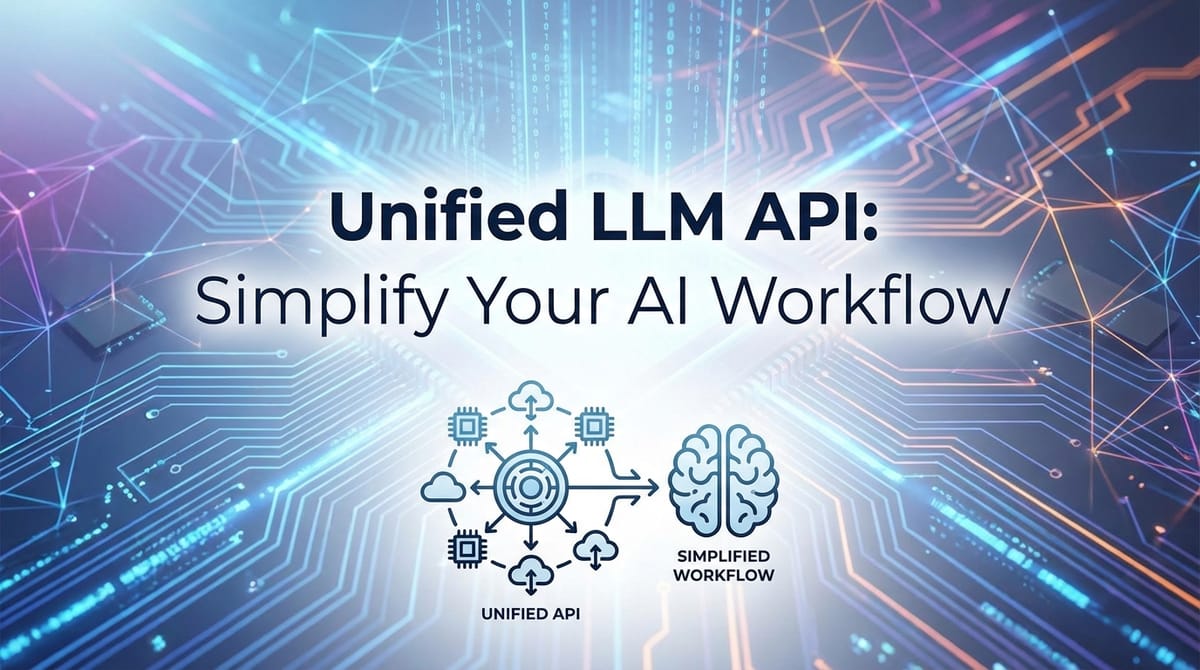
A unified LLM API represents a powerful abstraction layer designed to sit between your application and various underlying Large Language Model providers. At its core, it acts as a central gateway, providing a single, standardized interface through which your application can access a multitude of different LLMs. Instead of integrating with OpenAI, Anthropic, Google, Meta, and others individually, you integrate once with the Unified API, and it handles the complexities of routing, normalizing, and managing requests to the appropriate backend model.
Core Principles of a Unified LLM API
The architecture and functionality of a unified LLM API are built upon several key principles:
- Standardization: The most fundamental principle is to provide a consistent, canonical API interface, regardless of the underlying LLM. This typically means a standardized endpoint (e.g.,
/chat/completions), request body format, and response structure that mirrors common patterns (like OpenAI's popular API), making it instantly familiar to most developers. This standardization is the bedrock of simplified integration. - Abstraction: The unified API abstracts away the provider-specific details. Developers no longer need to worry about the nuances of each LLM's authentication, rate limiting, or data formats. The unified layer handles these translations and orchestrations transparently.
- Routing and Orchestration: A critical component is intelligent routing. The unified API can dynamically determine which LLM is best suited for a particular request based on predefined criteria such as cost, performance, specific model capabilities, or even real-time availability. This allows for seamless load balancing and failover across providers.
- Multi-model Support: By design, a unified LLM API inherently supports a broad spectrum of models from various providers. This capability is not just about connecting to multiple models but enabling effortless switching and comparison between them without rewriting application code. It fosters an environment of experimentation and optimization.
- Centralized Management: All aspects of LLM usage – API keys, spending, performance metrics, and logging – are consolidated within a single platform. This provides a holistic view of AI operations, simplifying monitoring, debugging, and auditing.
By adhering to these principles, a unified LLM API transforms the daunting task of LLM integration into a streamlined, efficient, and flexible process, allowing developers to focus on building intelligent features rather than managing infrastructure.
Key Features and Profound Benefits of a Unified LLM API
The adoption of a unified LLM API brings forth a myriad of advantages that significantly impact development efficiency, operational costs, application performance, and strategic flexibility.
1. Simplified Integration: The Power of a Single Endpoint
Perhaps the most immediate and tangible benefit is the dramatic simplification of integration. Instead of writing custom code for dozens of different APIs, developers interact with just one.
- One API, Many Models: Applications connect to a single unified LLM API endpoint, regardless of whether they intend to use GPT-4, Claude 3, Llama, or any other model. This drastically reduces the boilerplate code, integration effort, and cognitive load on development teams.
- OpenAI-Compatible Endpoint: Many unified APIs offer an endpoint that is directly compatible with OpenAI's widely adopted API specification. This means developers can often migrate existing OpenAI integrations with minimal code changes, making the transition seamless and rapid.
- Reduced Development Time: With a single integration point, developers spend less time understanding disparate API docs and more time building innovative features, accelerating time-to-market for AI-powered products.
2. Multi-model Support and Vendor Agnosticism
A unified LLM API champions true multi-model support, offering unparalleled flexibility and hedging against vendor lock-in.
- Access to a Broad Ecosystem: Developers gain immediate access to a vast array of LLMs from multiple providers, often including both proprietary and open-source models, without requiring individual provider contracts or integrations. This extensive multi-model support allows for unparalleled choice.
- Effortless Model Switching: The ability to switch between models (e.g., from GPT-4 to Claude 3, or to an open-source alternative) becomes a configuration change rather than a code rewrite. This is invaluable for A/B testing models, leveraging the strengths of different models for specific tasks, or adapting to changing performance and cost landscapes.
- Future-Proofing: As new and better LLMs emerge, they can be seamlessly integrated into the unified platform without disrupting existing application code. This protects investments and ensures applications can always leverage cutting-edge AI capabilities.
3. Cost Optimization and Intelligent Routing
Cost management is a significant concern when dealing with LLMs. A unified LLM API provides sophisticated mechanisms to optimize spending.
- Dynamic and Smart Routing: The platform can intelligently route requests to the most cost-effective model that still meets performance and quality criteria. For example, less critical requests or specific simple tasks might be routed to a cheaper, smaller model, while complex, high-stakes prompts go to a premium model.
- Real-time Cost Monitoring: Centralized dashboards provide granular visibility into token usage and spending across all models and providers, enabling precise cost analysis, budgeting, and optimization strategies.
- Tiered Pricing and Volume Discounts: Some unified platforms aggregate usage across their user base, potentially negotiating better rates with providers and passing those savings on.
4. Performance Enhancement: Low Latency AI and High Throughput
Optimizing for speed and efficiency is crucial for responsive AI applications. A unified LLM API can significantly enhance performance.
- Low Latency AI: By optimizing network paths, utilizing edge infrastructure, and potentially caching common responses, unified APIs can often deliver lower latency than direct integrations. They can also route requests to providers with the best real-time performance.
- High Throughput: The platform can manage concurrent requests and load balance across multiple models or instances, ensuring high throughput even during peak usage. This is essential for applications serving a large user base or processing extensive data volumes.
- Automatic Retries and Fallbacks: If a request to a primary model fails or times out, the unified API can automatically retry with another model or provider, ensuring service continuity and reliability without application-level logic.
5. Enhanced Reliability and Failover Mechanisms
Downtime or degradation from a single LLM provider can be catastrophic for an application. A unified LLM API builds in resilience.
- Automatic Failover: In the event of an outage or performance degradation from a specific LLM provider, the unified API can automatically reroute requests to an alternative, healthy model or provider, ensuring uninterrupted service. This seamless failover is a game-changer for critical applications.
- Health Checks and Monitoring: Continuous monitoring of upstream LLM APIs allows the unified platform to proactively identify and react to issues, preventing them from impacting end-users.
6. Centralized Security, Compliance, and Governance
Managing security and compliance for multiple APIs can be complex. A unified platform consolidates these concerns.
- Single Point of Control: All API keys, access permissions, and data flow are managed from a central dashboard, simplifying security audits and ensuring consistent policy enforcement.
- Data Masking and Redaction: Some unified APIs offer features for anonymizing sensitive data before it's sent to LLMs, aiding in compliance with privacy regulations like GDPR or HIPAA.
- Usage Logging and Auditing: Comprehensive logs of all requests and responses provide a clear audit trail, essential for compliance and debugging.
7. Superior Developer Experience
Beyond the technical advantages, a unified LLM API significantly improves the overall developer experience.
- Consistent Documentation: Developers only need to learn one set of API documentation, reducing the learning curve and accelerating onboarding.
- SDKs and Libraries: Unified platforms often provide well-maintained SDKs in various programming languages, further simplifying integration and interaction.
- Tooling and Playground: Integrated tools, like API playgrounds, allow developers to easily test different models, experiment with prompts, and compare responses side-by-side, fostering rapid prototyping and iteration.
A Simplified Technical Architecture of a Unified LLM API
While the internal workings of a unified LLM API can be complex, understanding its simplified technical architecture helps grasp how it achieves its benefits. Imagine it as a sophisticated proxy layer.
At a high level, the architecture typically involves:
- Client Application: This is your software (web app, mobile app, backend service) that needs to interact with LLMs.
- Unified API Gateway/Endpoint: This is the single entry point your application communicates with. It exposes a standardized API (e.g.,
/chat/completions). - Request Normalizer/Translator: When a request comes in, this component translates the standardized request from your application into the specific format required by the target LLM provider (e.g., converting
temperaturetorandomness_factorif needed). It also injects the correct API key for that provider. - Intelligent Router/Orchestrator: This is the brain of the operation. Based on configuration (e.g., requested model, cost preferences, performance metrics, availability), it decides which LLM provider to send the request to. It can handle:
- Direct Routing: Send to a specific named model (e.g.,
model: "gpt-4" -> OpenAI). - Cost-Optimized Routing: Pick the cheapest available model that meets quality thresholds.
- Performance-Optimized Routing: Select the model with the lowest real-time latency.
- Failover Routing: If provider A fails, automatically route to provider B.
- Load Balancing: Distribute requests across multiple instances or providers to prevent bottlenecks.
- Direct Routing: Send to a specific named model (e.g.,
- LLM Provider APIs: These are the actual endpoints of models like OpenAI, Anthropic, Google, etc.
- Response Denormalizer/Translator: Once a response is received from an LLM provider, this component translates it back into the standardized format expected by your application.
- Monitoring, Logging, and Billing Module: Throughout this process, every request and response is logged, metrics are captured (latency, token usage), and billing information is recorded. This powers the centralized dashboards for insights and cost management.
This layered approach allows the unified API to insulate your application from the underlying variations, providing a robust and flexible foundation for AI development.
XRoute is a cutting-edge unified API platform designed to streamline access to large language models (LLMs) for developers, businesses, and AI enthusiasts. By providing a single, OpenAI-compatible endpoint, XRoute.AI simplifies the integration of over 60 AI models from more than 20 active providers(including OpenAI, Anthropic, Mistral, Llama2, Google Gemini, and more), enabling seamless development of AI-driven applications, chatbots, and automated workflows.
Use Cases and Applications Benefiting from a Unified LLM API
The flexibility and power of a unified LLM API open up a vast array of practical applications across industries. By simplifying the integration of multi-model support, these platforms accelerate the development of intelligent features and services.
1. Building Intelligent Chatbots and Virtual Assistants
- Dynamic Persona Management: Route user queries to different LLMs based on the context or desired tone. For instance, customer support queries might go to a fact-oriented, precise model, while creative brainstorming requests go to a more imaginative one.
- Robust Fallback: If a primary model fails or struggles with a specific type of query, the unified API can automatically switch to a backup, ensuring a seamless conversational experience for users.
- Cost-Effective Interactions: Optimize the cost of conversational AI by using cheaper, smaller models for routine FAQs and only escalating complex or high-value queries to more expensive, powerful LLMs.
2. Content Generation and Summarization
- Diverse Content Styles: Leverage different LLMs for various content needs: one for SEO-optimized blog posts, another for creative story generation, and a third for concise news summaries. The unified LLM API makes switching between these content engines effortless.
- A/B Testing Content: Easily test which LLM generates the most engaging headlines or compelling product descriptions by routing a percentage of requests to different models and analyzing performance metrics.
- Multi-language Support: Integrate specialized LLMs for different languages without complex, individual API setups.
3. Code Generation and Refactoring
- Best-of-Breed Coding Assistants: Combine the strengths of various code-generating LLMs. One model might be excellent at boilerplate generation, while another excels at bug fixing or refactoring legacy code.
- Secure Development Workflows: Route sensitive code snippets to models that offer enhanced privacy or run locally within a secure environment, while general-purpose code tasks use external, cost-effective models.
- Automated Testing: Generate diverse test cases using multiple LLMs to ensure comprehensive code coverage and robustness.
4. Data Analysis and Insights
- Natural Language Querying: Enable users to ask complex questions about their data in natural language, with the unified API routing to the LLM best equipped to parse, understand, and generate insights.
- Automated Report Generation: Generate detailed reports, summaries, and data narratives by feeding structured data into various LLMs, choosing the best fit for clarity and conciseness.
- Sentiment Analysis and Trend Spotting: Process large volumes of text data (e.g., social media comments, customer reviews) through different LLMs to identify sentiment, emerging trends, and key topics more accurately.
5. Personalized User Experiences
- Adaptive Recommendations: Tailor product recommendations, content suggestions, or service offerings by using LLMs to understand user preferences and past behavior, with the unified API managing the choice of model for generating highly personalized responses.
- Dynamic Content Delivery: Adjust website content, email marketing copy, or in-app messages based on real-time user engagement and profiles, leveraging multiple LLMs to generate diverse, context-aware content.
6. Automated Workflows and Enterprise Automation
- Intelligent Document Processing: Automate the extraction of information from invoices, contracts, or legal documents by routing different sections or document types to specialized LLMs for optimal accuracy.
- Email Automation: Draft personalized email responses, summarize long threads, or categorize incoming emails using various LLMs, orchestrated by the unified API.
- Integration with RPA (Robotic Process Automation): Augment traditional RPA bots with advanced language understanding and generation capabilities by integrating LLMs via a unified API, enabling more complex and adaptive automation.
The common thread across all these use cases is the ability to leverage the diverse strengths of multiple LLMs without incurring the heavy integration burden. This allows businesses and developers to experiment, optimize, and scale their AI initiatives with unprecedented agility.
Choosing the Right Unified LLM API Platform
The market for unified LLM API platforms is growing, with various providers offering different features and focuses. Selecting the right platform is a critical decision that can significantly impact the success of your AI projects. Here are key criteria to consider:
| Feature/Criterion | Description | Importance (1-5) |
|---|---|---|
| Model Coverage & Multi-Model Support | How many LLM providers and specific models (e.g., GPT-4, Claude 3, Llama, Gemini) does the platform support? Does it include specialized models? | 5 |
| API Compatibility | Does it offer an OpenAI-compatible endpoint? How easy is it to migrate existing integrations? | 4 |
| Performance (Latency & Throughput) | What are the typical latencies? How does it handle high volumes of requests? Are there features like caching or optimized routing for speed? | 5 |
| Cost Optimization Features | Does it offer intelligent routing based on cost? Real-time cost monitoring? Transparent pricing? | 5 |
| Reliability & Failover | What mechanisms are in place for automatic failover? Uptime guarantees? How does it handle upstream provider outages? | 4 |
| Security & Compliance | Data privacy policies, encryption in transit/at rest, access control, audit logging, compliance certifications (e.g., SOC 2, ISO 27001). | 5 |
| Developer Experience | Quality of documentation, availability of SDKs (Python, Node.js, etc.), CLI tools, playground/UI for testing, active community. | 4 |
| Scalability | Can the platform handle growing demand without performance degradation? Does it support enterprise-level usage? | 4 |
| Customization & Control | Can you define custom routing rules? Fine-tune models? Manage your own API keys for providers? | 3 |
| Monitoring & Analytics | Comprehensive dashboards for usage, performance, errors, and cost analysis. Real-time alerts. | 4 |
| Pricing Model | Clear, predictable, and competitive pricing. Is it usage-based, tiered, or subscription-based? Any hidden fees? | 4 |
| Support & SLA | Responsiveness of customer support, availability of dedicated support plans, Service Level Agreements. | 3 |
Carefully evaluating these criteria against your specific project requirements, budget, and long-term vision will guide you toward the most suitable unified LLM API platform.
XRoute.AI: A Premier Solution for Unified LLM Access
In the burgeoning ecosystem of unified LLM API platforms, XRoute.AI stands out as a cutting-edge solution meticulously designed to address the complexities we've discussed. It's an enterprise-grade platform that not only simplifies LLM integration but also empowers developers and businesses to build intelligent applications with unparalleled efficiency, flexibility, and cost-effectiveness.
XRoute.AI is built on the principle of providing a single, coherent entry point for the vast and diverse world of Large Language Models. At its core, it offers an OpenAI-compatible endpoint, a strategic choice that immediately resonates with a massive developer base. This compatibility means that if you're already familiar with or have existing applications built around OpenAI's API, transitioning to XRoute.AI is remarkably smooth, often requiring minimal code changes. This significantly reduces the barrier to entry and accelerates time-to-market for new features and applications.
The platform's commitment to multi-model support is truly impressive. XRoute.AI provides seamless access to over 60 AI models from more than 20 active providers. This extensive coverage includes leading models from giants like OpenAI, Anthropic, Google, and Meta, alongside specialized open-source alternatives. This rich diversity means you're never locked into a single vendor. You can effortlessly experiment with different models for specific tasks, compare their performance, and dynamically route requests to the best-fit model based on accuracy, speed, or cost, all through the same unified LLM API. This vendor agnosticism is a powerful differentiator, fostering true innovation and allowing your solutions to evolve with the rapidly changing AI landscape.
One of the critical strengths of XRoute.AI lies in its focus on low latency AI and cost-effective AI. The platform is engineered for high performance, ensuring that your AI-driven applications remain responsive and deliver a superior user experience. By intelligently routing requests and optimizing underlying infrastructure, XRoute.AI minimizes delays, providing quick inference times crucial for real-time applications like chatbots and interactive assistants. Furthermore, its intelligent routing capabilities extend to cost optimization. Developers can configure XRoute.AI to automatically select the most economical model for a given task, balancing performance and cost to maximize ROI. This strategic approach to cost-effective AI ensures that you get the most out of your LLM budget without compromising on quality or speed.
XRoute.AI also prides itself on its high throughput and scalability. Whether you're a startup developing a proof-of-concept or an enterprise deploying mission-critical AI applications, the platform is designed to handle immense volumes of requests without breaking a sweat. This robust infrastructure ensures that your applications can scale seamlessly with your user base and data processing needs, providing consistent performance even under heavy load.
Beyond its technical prowess, XRoute.AI emphasizes a developer-friendly experience. It simplifies the complexity of managing multiple API connections, offering a centralized platform for credential management, usage monitoring, and detailed analytics. This allows developers to focus on building intelligent solutions rather than grappling with the operational overhead of fragmented API integrations. The flexible pricing model further adds to its appeal, making it an ideal choice for projects of all sizes.
In essence, XRoute.AI embodies the future of LLM integration. By providing a unified, high-performance, and cost-effective gateway to a vast array of AI models, it empowers developers to unleash the full potential of LLMs, simplifying AI workflows and accelerating the journey from concept to deployment. Whether you're building sophisticated chatbots, automated content pipelines, or intelligent data analysis tools, XRoute.AI offers the robust foundation you need to succeed in the AI era.
Future Trends in LLM API Integration
The journey of LLM integration is far from over. As the underlying models grow more sophisticated, so too will the platforms designed to manage them. Here are some key trends to watch in the future of unified LLM APIs:
- More Intelligent and Context-Aware Routing: Future unified APIs will move beyond simple cost/performance routing. They will incorporate deeper understanding of the prompt's content, user history, and even real-time emotional state to select the absolute best LLM for a given interaction, potentially even dynamically chaining multiple models.
- Hybrid Model Architectures (On-Premise & Cloud): For organizations with stringent data privacy requirements, unified APIs will offer more seamless integration of local, self-hosted LLMs with cloud-based ones. This "hybrid" approach will allow sensitive data to stay on-premise while leveraging cloud models for general tasks, all orchestrated through a single interface.
- Specialized Model Ensembles: Instead of just picking one model, unified APIs might intelligently orchestrate an ensemble of models for a single complex query. For instance, one model might extract entities, another might perform sentiment analysis, and a third might synthesize the final response, all managed transparently.
- Integrated Agentic Workflows: The rise of AI agents means future unified APIs will likely provide tools and frameworks for building and managing complex agentic workflows, where LLMs interact with external tools and databases, and the unified API orchestrates these multi-step processes across different models.
- Enhanced Explainability and Observability: As LLMs become more critical, understanding why a particular response was generated and which model contributed will be paramount. Unified platforms will offer more advanced tools for debugging, tracing, and auditing LLM interactions, including provenance tracking for responses.
- Ethical AI and Bias Detection: Future unified APIs will increasingly incorporate tools for detecting and mitigating biases in LLM outputs, ensuring fairness and ethical usage across diverse models and applications. This might involve pre-filtering prompts or post-processing responses.
- Serverless and Edge LLM Deployment: The trend towards deploying smaller, specialized LLMs at the edge (closer to the user's device) for lower latency and improved privacy will likely see unified APIs offering orchestration and management for these distributed LLM deployments.
- Automated Prompt Engineering: With dozens of models available, finding the optimal prompt for each can be daunting. Future unified APIs might offer AI-powered prompt engineering tools that suggest or even generate optimal prompts for specific models and tasks, further simplifying the development process.
These trends underscore a continuous drive toward making LLM integration not just easier, but smarter, more robust, and more aligned with complex enterprise needs. The unified LLM API will evolve from a simple proxy into an intelligent orchestration layer, essential for navigating the next generation of AI.
Conclusion: Unleashing the Full Potential of LLMs with a Unified API
The proliferation of Large Language Models has ushered in a new era of innovation, promising to redefine how businesses operate and how individuals interact with technology. However, realizing this promise has historically been hampered by the intricate complexities of managing a fragmented LLM ecosystem. Developers have faced a daunting task of individually integrating, maintaining, and optimizing connections to a multitude of providers, often diverting critical resources away from core innovation.
The advent and maturation of the unified LLM API represent a pivotal paradigm shift, offering a clear and compelling solution to these challenges. By providing a single, standardized interface, these platforms dramatically simplify integration, enabling effortless multi-model support and liberating developers from the intricacies of disparate APIs. This streamlined approach not only accelerates development cycles but also unlocks significant advantages in terms of cost optimization, performance enhancement, and operational resilience.
From intelligent routing that directs queries to the most cost-effective or highest-performing model, to automatic failover mechanisms that ensure uninterrupted service, a Unified API transforms the daunting task of LLM integration into a strategic advantage. It fosters an environment of experimentation and flexibility, allowing businesses to leverage the best-of-breed models for every specific task without incurring prohibitive technical debt or vendor lock-in. Whether it's crafting more engaging content, building smarter chatbots, or automating complex enterprise workflows, the ability to seamlessly switch and combine LLMs empowers organizations to achieve unprecedented levels of AI sophistication and agility.
Platforms like XRoute.AI exemplify this transformative power, offering an OpenAI-compatible endpoint that provides access to over 60 models from more than 20 providers. With its emphasis on low latency AI, cost-effective AI, high throughput, and robust scalability, XRoute.AI stands as a testament to how a well-designed unified LLM API can truly simplify and supercharge your AI workflow.
In an increasingly AI-driven world, embracing a unified approach to LLM integration is no longer merely a convenience; it is a strategic imperative. It's about building future-proof applications, maximizing your AI investments, and empowering your teams to focus on creating value rather than managing complexity. By abstracting away the noise, a unified LLM API allows the true potential of Large Language Models to shine, paving the way for a more intelligent, efficient, and innovative future.
Frequently Asked Questions (FAQ)
Q1: What is a Unified LLM API and why is it important?
A1: A Unified LLM API is a single, standardized interface that allows your application to connect to multiple Large Language Model (LLM) providers (e.g., OpenAI, Anthropic, Google) through one common endpoint. It's crucial because it simplifies integration, offers multi-model support, optimizes costs, enhances performance, and provides greater flexibility, preventing vendor lock-in and streamlining your AI development workflow.
Q2: How does a Unified LLM API help with cost optimization?
A2: A Unified LLM API helps with cost optimization through intelligent routing. It can dynamically send your requests to the most cost-effective LLM model or provider that still meets your performance and quality requirements. For example, less complex tasks can be routed to cheaper models, while critical ones go to premium models, all managed automatically by the unified platform. Centralized monitoring also provides clear visibility into spending.
Q3: Can I use my existing OpenAI integrations with a Unified LLM API?
A3: Many Unified LLM API platforms, including XRoute.AI, offer an OpenAI-compatible endpoint. This means that applications built using OpenAI's API often require minimal to no code changes to transition to a unified API. This compatibility significantly eases the migration process and allows developers to leverage their existing knowledge and codebase.
Q4: What does "Multi-model support" mean in the context of a Unified LLM API?
A4: Multi-model support means the unified API gives you access to a wide range of LLMs from various providers (e.g., GPT-4, Claude 3, Gemini, Llama) through that single interface. You can switch between these models with a simple configuration change, compare their performance for different tasks, and even dynamically route requests to the best-suited model without having to integrate with each provider individually.
Q5: How does a Unified LLM API improve application reliability and performance?
A5: A Unified LLM API significantly improves reliability by offering automatic failover. If one LLM provider experiences an outage or performance degradation, the unified API can seamlessly reroute requests to an alternative, healthy model or provider, ensuring uninterrupted service. For performance, it often provides low latency AI through optimized routing and infrastructure, and high throughput by managing concurrent requests and load balancing across multiple models.
🚀You can securely and efficiently connect to thousands of data sources with XRoute in just two steps:
Step 1: Create Your API Key
To start using XRoute.AI, the first step is to create an account and generate your XRoute API KEY. This key unlocks access to the platform’s unified API interface, allowing you to connect to a vast ecosystem of large language models with minimal setup.
Here’s how to do it: 1. Visit https://xroute.ai/ and sign up for a free account. 2. Upon registration, explore the platform. 3. Navigate to the user dashboard and generate your XRoute API KEY.
This process takes less than a minute, and your API key will serve as the gateway to XRoute.AI’s robust developer tools, enabling seamless integration with LLM APIs for your projects.
Step 2: Select a Model and Make API Calls
Once you have your XRoute API KEY, you can select from over 60 large language models available on XRoute.AI and start making API calls. The platform’s OpenAI-compatible endpoint ensures that you can easily integrate models into your applications using just a few lines of code.
Here’s a sample configuration to call an LLM:
curl --location 'https://api.xroute.ai/openai/v1/chat/completions' \
--header 'Authorization: Bearer $apikey' \
--header 'Content-Type: application/json' \
--data '{
    "model": "gpt-5",
    "messages": [
        {
            "content": "Your text prompt here",
            "role": "user"
        }
    ]
}'
With this setup, your application can instantly connect to XRoute.AI’s unified API platform, leveraging low latency AI and high throughput (handling 891.82K tokens per month globally). XRoute.AI manages provider routing, load balancing, and failover, ensuring reliable performance for real-time applications like chatbots, data analysis tools, or automated workflows. You can also purchase additional API credits to scale your usage as needed, making it a cost-effective AI solution for projects of all sizes.
Note: Explore the documentation on https://xroute.ai/ for model-specific details, SDKs, and open-source examples to accelerate your development.