Unified LLM API: Streamlining AI Integration
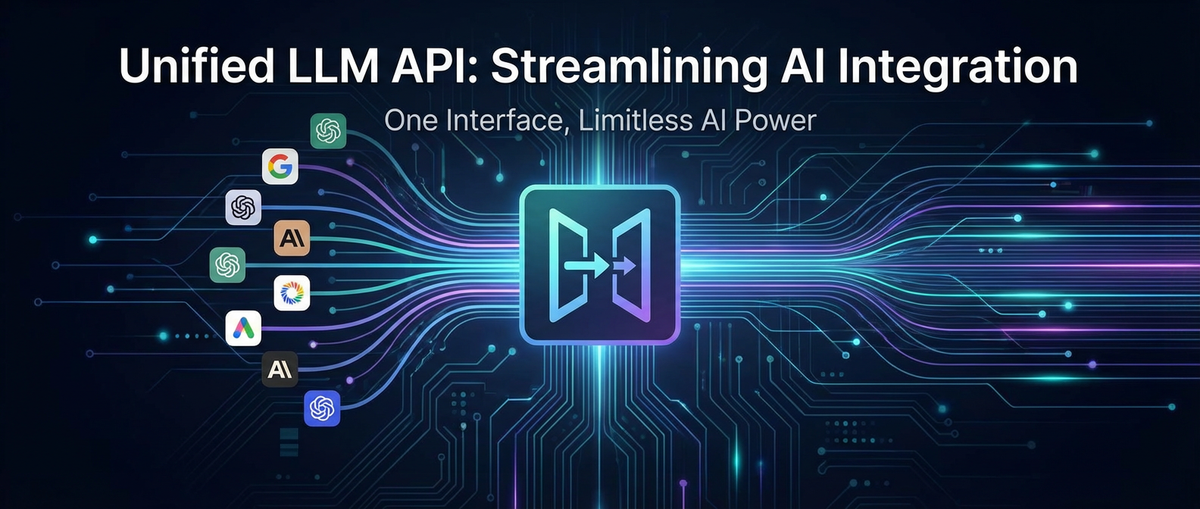

The rapid evolution of Artificial Intelligence, particularly in the domain of Large Language Models (LLMs), has ushered in an era of unprecedented innovation. From sophisticated chatbots that can converse with human-like fluidity to advanced content generation engines capable of crafting compelling narratives, LLMs are reshaping industries and redefining what's possible in software development. However, this burgeoning landscape, while exciting, presents a significant challenge for developers and businesses: the sheer complexity of integrating and managing a multitude of distinct LLM APIs. Each model, whether from OpenAI, Anthropic, Google, or the myriad of open-source initiatives, often comes with its own unique API interface, data formats, authentication methods, and rate limits. This fragmentation can quickly turn the promise of AI into a perplexing maze of integration hurdles, hindering agile development and efficient deployment.
Enter the Unified LLM API – a groundbreaking solution designed to cut through this complexity. By acting as a single, standardized gateway to an expansive ecosystem of AI models, a Unified LLM API simplifies the entire integration process, offering developers a streamlined, efficient, and future-proof pathway to leverage the full power of modern AI. This paradigm shift not only provides robust Multi-model support, allowing seamless access to the best models for any given task, but also introduces intelligent LLM routing capabilities that optimize for performance, cost, and reliability. In this comprehensive exploration, we will delve into the intricacies of Unified LLM APIs, uncover their profound benefits, examine their core functionalities, and highlight how they are becoming an indispensable tool for anyone serious about building cutting-edge AI-driven applications.
The Fragmented Frontier: Navigating the LLM Landscape and Its Integration Challenges
The past few years have witnessed an explosive growth in the development and deployment of Large Language Models. What began with early transformer architectures and models like BERT has rapidly progressed to sophisticated generative models such as OpenAI's GPT series, Anthropic's Claude, Google's Gemini, Meta's Llama, and countless others. Each of these models boasts unique strengths, ranging from superior reasoning capabilities and creative writing prowess to enhanced factual recall and multilingual support. This diversity is a double-edged sword: while it offers an unparalleled toolkit for solving a vast array of problems, it also introduces substantial operational and technical overhead.
For developers and organizations striving to integrate AI into their products and services, the fragmented nature of the LLM ecosystem presents several critical challenges:
- API Proliferation and Inconsistency: Every major LLM provider, and indeed many smaller ones, offers its own proprietary API. This means distinct endpoints, varying request and response schemas (e.g., different ways to specify prompts, temperature, or max tokens), unique authentication mechanisms (API keys, OAuth flows), and often entirely different SDKs. Integrating even a handful of these models necessitates learning and maintaining multiple codebases, significantly increasing development time and bug surface area.
- Model Selection Dilemma: With so many models available, choosing the "best" one for a specific task becomes a non-trivial exercise. Factors like cost per token, latency, output quality, context window size, and specific capabilities (e.g., code generation vs. creative writing) all play a role. Benchmarking and comparing these models often requires extensive boilerplate code, making iterative experimentation slow and cumbersome. Developers need to constantly evaluate new models as they emerge, and switching between them often means refactoring significant portions of their application logic.
- Vendor Lock-in Concerns: Committing to a single LLM provider, while simplifying initial integration, carries the risk of vendor lock-in. This can manifest as limited negotiation power on pricing, dependence on a single provider's uptime and reliability, and the inability to easily leverage innovations from competitors. Businesses need the flexibility to diversify their AI dependencies to maintain competitive advantage and resilience.
- Scalability and Reliability Issues: Managing API rate limits, ensuring high availability, and implementing robust retry mechanisms for multiple independent APIs can be an operational nightmare. What happens if one provider experiences an outage? How do you gracefully failover to another without disrupting user experience? Building these resilient systems from scratch for each integrated API adds significant complexity.
- Cost Management and Optimization: Each LLM comes with its own pricing model, often based on input and output tokens. Keeping track of costs across various providers, and more importantly, optimizing for cost by dynamically choosing the cheapest viable model for a given request, is extremely challenging without a centralized system. This is especially true for applications with high request volumes where small per-token savings can add up dramatically.
- Data Governance and Security: Ensuring consistent data handling, privacy compliance, and secure access across disparate LLM APIs adds another layer of complexity. Managing API keys and credentials for multiple services securely requires careful architectural planning and robust security protocols.
These challenges collectively slow down innovation, increase operational costs, and divert valuable developer resources from building core product features to managing complex infrastructure. The need for a more elegant, standardized approach became glaringly apparent, paving the way for the Unified LLM API.
Understanding the Unified LLM API Paradigm: A Single Gateway to Infinite Intelligence
At its core, a Unified LLM API acts as an intelligent intermediary layer that sits between your application and a multitude of disparate LLM providers. It provides a single, consistent API endpoint that your application interacts with, abstracting away the underlying complexities of individual LLM vendor APIs. Imagine it as a universal translator and intelligent switchboard for all things LLM.
The fundamental objective of a Unified LLM API is to simplify, standardize, and optimize how developers access and utilize large language models. Instead of writing custom integration code for OpenAI, then another for Anthropic, and yet another for Google, you write code once to interact with the Unified LLM API. This single interaction point then intelligently handles the translation of your request, forwards it to the appropriate underlying LLM, processes the response, and returns it to your application in a standardized format.
Key components and functionalities typically found within a robust Unified LLM API platform include:
- Abstraction Layer: This is the heart of the unified API. It presents a common interface (e.g., an OpenAI-compatible endpoint is a popular choice due to its widespread adoption) that applications can use regardless of the target LLM. This layer normalizes input parameters (like
prompt,temperature,max_tokens) and output structures across different models, so your application receives a consistent response format. - "LLM routing" Mechanism: Perhaps one of the most powerful features, intelligent LLM routing determines which specific underlying LLM should process a given request. This routing can be dynamic and based on various criteria such as cost, latency, model capability, availability, or even custom business logic. This is where significant optimization and flexibility are gained.
- Authentication and Security: The unified API handles the secure management and rotation of API keys or credentials for all integrated LLM providers. Your application only needs to authenticate with the unified API, which then securely manages access to the downstream services. This centralizes security concerns and reduces the surface area for credential exposure.
- Monitoring and Analytics: A unified platform typically provides a centralized dashboard and logging capabilities to track all LLM requests, responses, costs, latencies, and errors across all providers. This unparalleled visibility is crucial for performance tuning, cost optimization, and debugging.
- Rate Limiting and Caching: To prevent hitting provider-specific rate limits and to optimize response times for frequently requested prompts, a unified API can implement its own intelligent rate limiting and caching strategies, adding another layer of resilience and efficiency.
- Failover and Redundancy: In the event of an outage or degraded performance from a primary LLM provider, the unified API can automatically route requests to an alternative, ensuring continuous service availability and application resilience.
By consolidating these complex functionalities into a single, cohesive platform, a Unified LLM API transforms the challenging task of multi-model integration into a smooth and manageable process. It empowers developers to focus on building innovative applications rather than wrestling with API plumbing, paving the way for more agile development cycles and more robust AI-powered solutions.
Benefits of a Unified LLM API for Developers and Businesses: Unleashing AI Potential
The adoption of a Unified LLM API brings a cascade of advantages that fundamentally reshape how developers and businesses interact with and deploy AI. These benefits extend beyond mere convenience, impacting development velocity, operational costs, system resilience, and strategic flexibility.
1. Simplified Integration and Accelerated Development
This is perhaps the most immediate and tangible benefit. Instead of dealing with disparate SDKs, authentication flows, and data models for each LLM provider, developers interact with a single, consistent API endpoint. This drastically reduces the learning curve and the amount of boilerplate code required. * One SDK to Rule Them All: Developers only need to learn and integrate one SDK or API specification, regardless of how many underlying LLMs they wish to access. This standardizes the development process. * Faster Prototyping: Experimenting with different models becomes trivial. With a unified interface, switching from GPT-4 to Claude 3 to Gemini Pro is often a matter of changing a single configuration parameter or model name in the API call, rather than re-architecting significant portions of the application. This accelerates the prototyping and validation phases of AI development. * Reduced Maintenance Overhead: Less varied code means fewer potential points of failure and easier maintenance. Updates or changes from individual LLM providers can be handled by the unified API provider, shielding your application from breaking changes.
2. Enhanced Flexibility and Robust "Multi-model support"
The dynamic nature of the LLM landscape means new and improved models are constantly emerging. A unified API ensures your application is always at the forefront without incurring significant re-integration costs. * Best-of-Breed Access: Leverage the unique strengths of different models for different tasks. A Unified LLM API with Multi-model support allows you to route complex reasoning tasks to a highly capable model like GPT-4, while using a faster, cheaper model like Llama for simpler summarizations or prompt validations. This maximizes efficiency and output quality. * Mitigating Vendor Lock-in: By abstracting away specific providers, a unified API significantly reduces the risk of vendor lock-in. If one provider changes its pricing, deprecates a model, or experiences reliability issues, you can easily switch to another without disrupting your application's core logic. This ensures long-term strategic flexibility. * Future-Proofing: As new models (both proprietary and open-source) are released, the unified API platform often integrates them quickly, making them immediately available to your application without any additional development effort on your part.
3. Optimized Performance with Intelligent "LLM routing"
Performance is paramount for responsive AI applications. A unified API can implement sophisticated LLM routing strategies to ensure optimal response times and resource utilization. * Low Latency AI: Intelligent routing can direct requests to the model/provider currently offering the lowest latency, or to regions geographically closer to the user, significantly improving user experience. This is crucial for real-time applications like chatbots or interactive AI assistants. * Load Balancing: Distribute requests across multiple providers or even multiple instances of the same model to prevent bottlenecks and ensure high throughput during peak demand. * Conditional Routing: Define rules for routing based on the content of the prompt, the type of task (e.g., creative writing vs. factual query), or even user preferences. For example, sensitive requests could be routed to an on-premise or privacy-focused model, while general queries go to a cloud provider.
4. Significant Cost Efficiency ("Cost-effective AI")
Managing costs across multiple token-based pricing models can be complex. A unified API simplifies and optimizes this. * Dynamic Cost-Based Routing: One of the most compelling features of intelligent LLM routing is the ability to automatically select the cheapest available model that meets predefined quality or capability thresholds for each request. This can lead to substantial savings, especially for high-volume applications. * Centralized Billing and Usage Tracking: Gain a consolidated view of your LLM expenditure across all providers, making budgeting and cost analysis far simpler and more accurate. * Optimized Resource Allocation: By understanding usage patterns and costs, you can make informed decisions about which models to prioritize for specific workflows, leading to more "cost-effective AI" deployment.
5. Increased Reliability and Resilience
Downtime from a single LLM provider can cripple an application. A unified API builds in layers of redundancy. * Automatic Failover: If a primary LLM provider becomes unavailable or experiences degraded performance, the unified API can automatically reroute requests to a secondary, healthy provider. This built-in redundancy ensures continuous service and minimal disruption. * Retry Mechanisms: Implement smart retry logic to handle transient errors, ensuring that requests are eventually processed successfully without burdening the application with this complexity.
6. Centralized Management, Observability, and Analytics
Gain a holistic view of your AI operations from a single pane of glass. * Unified Monitoring: Track performance metrics, error rates, and API usage across all models and providers in one place. This simplifies troubleshooting and allows for proactive issue resolution. * Detailed Analytics: Understand which models are being used most frequently, their average latency, success rates, and associated costs. These insights are invaluable for strategic decision-making and continuous optimization. * API Key Management: Securely store and manage all your LLM API keys within the unified platform, reducing the administrative burden and improving security posture.
In summary, a Unified LLM API transforms the challenging task of integrating advanced AI into a streamlined, cost-effective, and robust process. It empowers developers to build more intelligent, resilient, and adaptable applications, ensuring businesses can fully harness the transformative power of generative AI.
Key Features and Capabilities of Advanced Unified LLM APIs: Beyond Basic Abstraction
While the core concept of a Unified LLM API is to provide a single endpoint for Multi-model support, advanced platforms go significantly further, offering a rich suite of features designed to maximize developer efficiency, optimize performance, and ensure enterprise-grade reliability. These capabilities are what truly elevate a unified API from a mere convenience to an indispensable strategic asset.
1. Sophisticated "LLM routing" Strategies
This is arguably the most impactful capability, moving beyond simple round-robin to intelligent, data-driven decision-making.
- Cost-Based Routing: Dynamically routes requests to the model that offers the lowest per-token cost while still meeting predefined quality or capability criteria. This is particularly valuable for high-volume applications where minor cost differences accumulate rapidly.
- Latency-Based Routing: Directs requests to the model or provider endpoint that is currently exhibiting the lowest response latency. This is critical for real-time applications like interactive chatbots or voice assistants where user experience is directly tied to speed.
- Performance/Accuracy-Based Routing: For specific tasks, one model might consistently outperform others in terms of quality, coherence, or factual accuracy. Routing can be configured to prioritize these models for critical operations, potentially falling back to cheaper models for less sensitive tasks.
- Load Balancing: Distributes incoming requests across multiple models or instances to prevent any single endpoint from becoming a bottleneck, ensuring high throughput and consistent performance even under heavy load.
- Geographic Routing: Directs requests to LLM endpoints hosted in data centers geographically closest to the end-user or the application's servers, further reducing latency.
- Conditional/Semantic Routing: This advanced form of routing can analyze the incoming prompt or request payload to determine the best model. For instance, questions requiring factual retrieval might be routed to a model known for strong knowledge recall, while creative writing prompts go to a model excelling in generative tasks. Sensitive data might be routed to models with stronger privacy guarantees or even to self-hosted models.
- Failover Routing: Automatically reroutes requests to a backup model or provider if the primary one is unresponsive, throws an error, or exceeds a defined latency threshold. This ensures application resilience and continuous service.
- Model-Specific Parameters: Allows developers to pass model-specific parameters (e.g.,
top_p,frequency_penalty,logprobs) through the unified API, which are then correctly translated and forwarded to the target LLM.
2. Comprehensive "Multi-model support" and Versatility
An advanced unified API doesn't just support a few popular models; it strives for comprehensive coverage and versatility.
- Broad Provider Coverage: Integration with a vast array of proprietary LLM providers (OpenAI, Anthropic, Google, Cohere, etc.) and popular open-source models (Llama, Falcon, Mistral, etc.), often hosted on various cloud platforms.
- Diverse Model Types: Beyond text generation, support for other crucial AI capabilities such as text embeddings (for RAG systems and semantic search), image generation, speech-to-text, and text-to-speech models. This transforms the platform into a general-purpose AI gateway.
- Model Versioning: The ability to specify and use different versions of the same model (e.g.,
gpt-3.5-turbo-0613vs.gpt-3.5-turbo-1106), ensuring consistency for production applications while allowing for experimentation with newer versions. - Provider-Specific Features: While striving for abstraction, a robust unified API might also expose certain unique features of underlying models when necessary, providing the best of both worlds – standardization with optional specialized access.
3. Caching and Rate Limiting for Efficiency
These features are crucial for optimizing performance and managing costs, especially for high-traffic applications.
- Intelligent Caching: Caching identical or highly similar requests can dramatically reduce latency and cost for frequently asked prompts, without even needing to hit the underlying LLM.
- Unified Rate Limiting: Manage and enforce rate limits across all connected LLM providers, preventing your application from hitting individual provider limits and ensuring fair usage. This centralizes quota management.
4. Advanced Observability and Analytics
Visibility into LLM usage, performance, and costs is essential for optimization and debugging.
- Centralized Logging: Comprehensive logs for all requests and responses, including metadata like model used, latency, token count, and cost. This simplifies debugging and auditing.
- Real-time Dashboards: Intuitive dashboards visualizing key metrics such as request volume, average latency, error rates, token consumption, and aggregate costs across all models and providers.
- Alerting and Notifications: Configure alerts for unusual activity, high error rates, or cost thresholds, allowing proactive intervention.
- Cost Breakdown: Detailed cost analysis per model, per provider, per user, or per application, empowering granular cost optimization strategies.
5. Robust Security and Compliance
Enterprise-grade AI integration demands stringent security and compliance measures.
- Secure API Key Management: Centralized, encrypted storage and management of API keys for all underlying LLM providers.
- Access Control (RBAC): Role-Based Access Control to manage who in your organization can access, configure, and monitor the unified API, ensuring proper governance.
- Data Privacy and Anonymization: Features to help with data anonymization or secure handling of sensitive data, ensuring compliance with regulations like GDPR or HIPAA.
- Audit Trails: Comprehensive audit logs of all administrative actions and API calls for accountability and compliance.
6. Developer Experience Enhancements
A truly advanced unified API focuses on making the developer's life easier.
- OpenAI-Compatible Endpoint: Many unified APIs offer an endpoint that mimics the OpenAI API specification, making it incredibly easy for existing OpenAI users to switch or add Multi-model support without significant code changes.
- SDKs and Libraries: Well-documented SDKs in popular programming languages to simplify integration.
- Prompt Engineering Tools: Features for A/B testing different prompts with various models, versioning prompts, and managing prompt templates to find optimal outputs.
- Playgrounds and Sandboxes: Interactive environments to test API calls, experiment with models, and understand routing behavior without impacting production systems.
By integrating these advanced features, a Unified LLM API transforms from a simple abstraction layer into a powerful AI operations platform, providing the tools necessary for building, deploying, and managing complex, high-performance, and cost-effective AI applications at scale.
XRoute is a cutting-edge unified API platform designed to streamline access to large language models (LLMs) for developers, businesses, and AI enthusiasts. By providing a single, OpenAI-compatible endpoint, XRoute.AI simplifies the integration of over 60 AI models from more than 20 active providers(including OpenAI, Anthropic, Mistral, Llama2, Google Gemini, and more), enabling seamless development of AI-driven applications, chatbots, and automated workflows.
Implementing a Unified LLM API: Practical Considerations for Seamless AI Integration
Embarking on the journey of implementing a Unified LLM API requires careful consideration and a structured approach to ensure maximum benefit. While the promise of simplified integration is compelling, making the right choices and following best practices are crucial for a successful deployment.
1. Choosing the Right Unified LLM API Platform
The market for unified AI platforms is growing, with various providers offering different sets of features, supported models, and pricing structures. This is where a strategic decision is paramount.
- Breadth of "Multi-model support": Evaluate which LLM providers and specific models are supported. Does it cover your current needs and anticipated future requirements? Does it include both proprietary and open-source models?
- "LLM routing" Capabilities: Assess the sophistication of the routing mechanisms. Does it offer cost, latency, performance, and conditional routing? Can you define custom routing logic?
- OpenAI Compatibility: For many, an OpenAI-compatible endpoint is a huge advantage, enabling seamless migration or parallel usage.
- Scalability and Reliability: Inquire about the platform's infrastructure, uptime guarantees, and ability to handle high throughput. What are their failover strategies?
- Cost and Pricing Model: Understand the platform's pricing. Is it usage-based, subscription-based, or a hybrid? How does it compare to direct API access, considering the value added? Look for "cost-effective AI" solutions.
- Observability and Analytics: Check the depth of monitoring, logging, and analytics tools. Can you gain granular insights into usage and performance?
- Security and Compliance: Ensure the platform meets your organization's security standards and any relevant industry compliance requirements.
- Developer Experience: Evaluate the documentation, SDKs, community support, and ease of use. A good developer experience is key to rapid adoption.
- Vendor Reputation and Support: Research the provider's track record, customer reviews, and the quality of their technical support.
This is precisely where solutions like XRoute.AI shine. XRoute.AI is a cutting-edge unified API platform designed to streamline access to large language models (LLMs) for developers, businesses, and AI enthusiasts. By providing a single, OpenAI-compatible endpoint, XRoute.AI simplifies the integration of over 60 AI models from more than 20 active providers, enabling seamless development of AI-driven applications, chatbots, and automated workflows. With a focus on low latency AI, cost-effective AI, and developer-friendly tools, XRoute.AI empowers users to build intelligent solutions without the complexity of managing multiple API connections. The platform’s high throughput, scalability, and flexible pricing model make it an ideal choice for projects of all sizes, from startups to enterprise-level applications, embodying robust Multi-model support and intelligent LLM routing capabilities.
2. Integration Steps and Best Practices
Once a platform is chosen, the integration process itself can be highly streamlined.
- Authentication: Obtain your API key for the chosen unified API platform. This will be your primary credential for all LLM interactions.
- SDK Integration: Install the platform's SDK in your preferred programming language. Most platforms offer comprehensive libraries for Python, Node.js, Go, etc.
- Request/Response Standardization: Familiarize yourself with the unified API's common request and response formats. This typically mirrors popular standards like the OpenAI chat completion API.
- Model Specification: Learn how to specify the target LLM within your API calls. This might involve a simple
modelparameter (e.g.,model="gpt-4"ormodel="claude-3-opus"ormodel="mistral-7b-instruct"), or a specific routing rule. - Error Handling: Implement robust error handling for API calls. Understand the common error codes and how the unified API reports issues (e.g., rate limits, provider outages).
Table 1: Comparison of Traditional LLM Integration vs. Unified LLM API Integration
| Feature/Aspect | Traditional LLM Integration | Unified LLM API Integration |
|---|---|---|
| API Endpoints | Multiple, provider-specific | Single, standardized endpoint |
| SDKs | Multiple SDKs (one per provider) | Single SDK for the unified API |
| Auth & Keys | Multiple API keys, managed independently | Single API key for the unified API, centralized management |
| Model Switching | Requires significant code changes & refactoring | Simple parameter change, no code refactoring |
| "LLM routing" | Manual implementation, complex logic | Built-in, intelligent routing (cost, latency, performance) |
| "Multi-model support" | Complex to manage, limited at scale | Native, seamless access to many models |
| Observability | Fragmented logs and metrics across providers | Centralized dashboards, logs, and analytics |
| Cost Opt. | Manual tracking, difficult dynamic optimization | Automated cost-based routing, consolidated billing |
| Resilience | Requires custom failover logic | Built-in automatic failover and retry mechanisms |
| Development Speed | Slower due to integration overhead | Faster due to abstraction and standardized approach |
| Vendor Lock-in | High risk, difficult to switch providers | Low risk, easy to switch or combine providers |
3. Testing and Validation
Thorough testing is paramount to ensure that your AI applications behave as expected.
- Functional Testing: Verify that requests are correctly routed to the intended models and that responses are accurate and consistent.
- Performance Testing: Test under various load conditions to understand latency, throughput, and the effectiveness of the unified API's load balancing and caching.
- Failover Testing: Simulate outages for individual LLM providers to ensure that the unified API's failover mechanisms work as designed and that your application remains resilient.
- Cost Monitoring: Continuously monitor the costs associated with different models and routing strategies to ensure you are achieving "cost-effective AI".
4. Continuous Monitoring and Optimization
Integration is not a one-time event; it's an ongoing process of monitoring and refinement.
- Leverage Analytics: Regularly review the unified API's dashboards and analytics to identify opportunities for performance improvement or cost savings through optimized LLM routing.
- Prompt Engineering: Use the unified API's capabilities to A/B test different prompts across various models to find the most effective and efficient combinations for specific tasks.
- Stay Updated: Keep an eye on new models and features introduced by the unified API platform and the underlying LLM providers. The landscape is constantly evolving, and staying updated ensures you leverage the latest advancements.
- Security Audits: Periodically review access controls and API key management practices to maintain a strong security posture.
By thoughtfully selecting a robust Unified LLM API like XRoute.AI and meticulously following these practical considerations, developers and businesses can not only streamline their AI integration but also unlock new levels of flexibility, efficiency, and intelligence in their applications.
Case Studies and Use Cases: Transforming Applications with Unified LLM APIs
The versatility and power of a Unified LLM API manifest across a broad spectrum of real-world applications, significantly enhancing their capabilities and operational efficiency. By leveraging Multi-model support and intelligent LLM routing, developers are building more dynamic, responsive, and "cost-effective AI" solutions.
1. Intelligent Chatbots and Conversational AI
Perhaps the most common and impactful use case. Modern chatbots need to handle diverse queries, from simple FAQs to complex problem-solving. * Dynamic Model Switching: A Unified LLM API allows a chatbot to dynamically switch models based on the nature of the user's query. For instance, a simple "hello" might be handled by a small, fast, and cheap model for quick greetings, while a complex technical support question could be routed to a more capable, instruction-tuned model. If a user asks for creative story ideas, the request might go to a model known for its creative writing prowess, ensuring optimal output quality and "low latency AI" for appropriate tasks. * Sentiment Analysis and Routing: In customer service, an incoming message could first be processed by a sentiment analysis model (often an LLM specialized in classification), and if negative sentiment is detected, the conversation could be routed to a premium, highly empathetic model or even trigger a human escalation. * Failover for Critical Conversations: If the primary LLM provider for a customer support bot experiences an outage, the Unified LLM API can automatically failover to a secondary provider, ensuring uninterrupted service and preventing customer frustration.
2. Advanced Content Generation and Marketing Automation
Content creation is a massive application area for LLMs, and a unified API makes it even more powerful. * Tailored Content Styles: A marketing team can use a Unified LLM API to generate different types of content. For a catchy social media post, a model optimized for conciseness and engagement might be chosen. For a detailed blog post requiring research and structured arguments, a more verbose and knowledge-intensive model could be routed. This ensures the output is always fit for purpose. * Multilingual Content: Leverage Multi-model support to route translation tasks to models specifically trained for high-quality language translation, while routing original content generation to a different model. * A/B Testing Content: Easily A/B test different content variations generated by various LLMs to see which performs best with target audiences, without complex code changes. This directly contributes to "cost-effective AI" by optimizing marketing spend.
3. Code Generation and Developer Assistance Tools
LLMs are revolutionizing software development by assisting with code generation, debugging, and documentation. * Language-Specific Routing: A coding assistant can use LLM routing to send Python-related queries to a model known for its Python expertise and JavaScript queries to another, ensuring highly accurate and idiomatic code suggestions. * Security Code Analysis: Certain code snippets could be routed to a specialized LLM for security vulnerability detection or code review, adding an extra layer of quality control. * Documentation Generation: Automate the creation of technical documentation by feeding API specifications or codebases to an LLM, routing it to a model best suited for clear, concise technical writing.
4. Data Analysis, Summarization, and Extraction
LLMs excel at understanding and processing unstructured text data. * Dynamic Summarization: For extremely long documents, a high-context window model might be used for initial summarization. For short executive summaries, a faster, more succinct model could be employed, all managed by intelligent LLM routing. * Information Extraction: Extract specific entities (names, dates, locations, product codes) from large volumes of text using specialized LLMs or by routing to the most accurate model for that particular entity type, ensuring data quality. * Report Generation: Automatically generate business reports from raw data and textual inputs by leveraging Multi-model support for different sections (e.g., one model for data interpretation, another for executive summary).
5. Educational and Research Platforms
LLMs can personalize learning and streamline research. * Personalized Learning Paths: Educational platforms can route student queries to LLMs tailored to specific subjects or learning styles, providing explanations at an appropriate complexity level. * Research Paper Summarization: Researchers can feed papers into the system, and LLM routing can ensure they are summarized by models known for their ability to distill complex scientific information accurately.
6. Dynamic Backend API for AI Agents
As AI agents become more prevalent, they will need dynamic access to various LLM capabilities. * Agent Decision Making: An AI agent's decision-making module can use a Unified LLM API to decide which LLM to query for a sub-task, based on its characteristics (e.g., a "reasoning model" for planning, a "tool-use model" for API calls). * Adaptive Tool Use: The agent can switch between different models for interacting with external tools or databases, ensuring the most efficient and accurate interaction.
These examples illustrate how a Unified LLM API empowers developers to build sophisticated, flexible, and resilient AI applications. By abstracting away the complexities of individual LLM providers and introducing intelligent LLM routing, these platforms are not just simplifying integration; they are fundamentally changing how we envision and create AI-powered solutions, making "cost-effective AI" and "low latency AI" a reality across diverse applications.
The Future of AI Integration with Unified LLM APIs: A Glimpse Ahead
The journey of Unified LLM APIs is still in its early stages, yet its trajectory points towards an even more integral role in the future of AI development. As LLMs become increasingly sophisticated and pervasive, the need for robust, intelligent, and flexible integration layers will only intensify. The future vision for these platforms extends beyond mere API consolidation, moving towards comprehensive AI orchestration and intelligence amplification.
1. Hyper-Personalization Through Advanced Routing
Future Unified LLM APIs will leverage even more granular LLM routing logic. This could include: * User-Specific Model Preferences: Routing requests based on individual user profiles, their past interactions, or explicit preferences for certain model types (e.g., a user might prefer a more verbose model for explanations). * Contextual Routing: Beyond semantic analysis of the prompt, the routing mechanism might consider the broader conversation history, application state, and external data sources to make even more intelligent model selections. * Adaptive Learning: The routing system itself could learn and adapt over time, optimizing routing decisions based on observed performance, cost, and user satisfaction metrics.
2. Deeper Integration with the Broader AI Ecosystem
Unified LLM APIs will become more deeply intertwined with other critical components of modern AI architectures. * Vector Databases and RAG Systems: Seamless integration with vector databases for Retrieval-Augmented Generation (RAG). The unified API could intelligently query the vector database for relevant context and then route the combined prompt to the optimal LLM for generation, all within a single API call. * AI Agents and Multi-Agent Systems: Acting as the core intelligence layer for complex AI agents, enabling them to dynamically select the best tools and LLMs for planning, execution, and reflection. * Low-Code/No-Code Platforms: Becoming the backbone for intuitive drag-and-drop AI builders, allowing non-developers to create sophisticated AI applications by simply configuring routing rules and model preferences.
3. Ethical AI and Responsible Deployment Facilitated by Controlled Model Access
The ethical implications of AI are paramount, and unified APIs can play a crucial role in managing them. * Content Moderation Routing: Requests could be routed through specialized content moderation LLMs before reaching a generative model, or post-processing could be done to filter out harmful outputs. * Bias Mitigation: Routing decisions could incorporate model bias scores, favoring less biased models for sensitive applications, or applying debiasing techniques on model outputs. * Explainability and Auditability: Enhanced logging and analytics will provide more granular insights into why a particular model was chosen and how it processed a request, improving the explainability and auditability of AI systems.
4. Evolution of "Multi-model support" to Include Multimodal AI
The "Multi-model support" will naturally extend beyond text-only LLMs. * Integrated Multimodal Models: As models capable of processing and generating combinations of text, images, audio, and video become more prevalent, Unified LLM APIs will offer single endpoints to access these multimodal capabilities. * Specialized Multimodal Routing: Routing logic could determine if a request involves image analysis, audio transcription, or video summarization, and send it to the most appropriate multimodal AI service.
5. Standardization Efforts and Open Protocols
As the field matures, there will likely be increased pressure for standardization, similar to how Kubernetes standardized container orchestration. * Open API Specifications: Development of more open and community-driven API specifications for interacting with LLMs, reducing reliance on proprietary endpoints. * Interoperability: Enhanced interoperability between different unified API platforms, allowing for greater flexibility and competition.
6. Edge AI Integration
For applications requiring ultra-low latency and offline capabilities, Unified LLM APIs might extend their reach to orchestrate models deployed at the edge. * Hybrid Cloud/Edge Routing: Intelligent routing could determine whether a request should be processed by a powerful cloud-based LLM or a smaller, faster model running on a local device.
The future of AI integration, powered by Unified LLM APIs, is one of increased abstraction, intelligent automation, and unprecedented flexibility. These platforms are not just about connecting to LLMs; they are about orchestrating intelligence, optimizing resource utilization, and ultimately accelerating the development of a more sophisticated, responsible, and impactful AI-driven world. They are the essential infrastructure that will empower developers to innovate at the speed of thought, ensuring "low latency AI" and "cost-effective AI" become the norm, rather than the exception.
Conclusion: The Indispensable Role of Unified LLM APIs in the AI Era
The proliferation of Large Language Models marks a pivotal moment in technological history, offering unparalleled opportunities for innovation across every sector. Yet, the journey from raw AI power to practical, deployed applications is fraught with complexities, primarily stemming from the fragmented nature of the LLM ecosystem. The challenge of integrating, managing, and optimizing a diverse array of models has become a significant bottleneck for developers and businesses alike.
The emergence of the Unified LLM API paradigm directly addresses these challenges head-on. By providing a single, standardized, and intelligent gateway, it transforms the labyrinthine task of AI integration into a streamlined, efficient, and highly flexible process. We've seen how this approach delivers profound benefits: from significantly simplified integration and accelerated development cycles to the strategic advantage of Multi-model support that mitigates vendor lock-in and fosters innovation. The power of intelligent LLM routing further amplifies these benefits, enabling dynamic optimization for low latency AI and ensuring cost-effective AI operations through smart resource allocation and failover mechanisms.
A robust Unified LLM API is more than just an abstraction layer; it is a sophisticated AI operations platform, offering critical features such as comprehensive monitoring, advanced analytics, enterprise-grade security, and developer-friendly tools. These capabilities empower organizations to build resilient, high-performance, and adaptable AI applications that can evolve with the rapidly changing LLM landscape.
As the AI frontier continues to expand, encompassing multimodal capabilities and increasingly complex agentic systems, the role of Unified LLM APIs will only grow in importance. They are not merely a convenience but an indispensable piece of modern AI infrastructure, enabling developers to focus their creative energy on building groundbreaking applications rather than wrestling with integration plumbing. By embracing platforms like XRoute.AI, which offers a cutting-edge unified API platform with OpenAI-compatible endpoints and Multi-model support for over 60 AI models, developers and businesses are well-positioned to harness the full, transformative potential of large language models, driving the next wave of intelligent innovation. The future of AI integration is unified, intelligent, and remarkably accessible.
FAQ: Unified LLM API Explained
1. What is a Unified LLM API? A Unified LLM API is a single, standardized interface or platform that allows developers to access and manage multiple Large Language Models (LLMs) from various providers (e.g., OpenAI, Anthropic, Google) through a common API endpoint. It abstracts away the individual complexities of each LLM's API, providing a consistent way to interact with diverse models.
2. How does a Unified LLM API provide "Multi-model support"? "Multi-model support" is a core feature where the unified API integrates with numerous LLMs. Developers can then specify which model they want to use within a single API call, or even allow the unified API to intelligently select the best model for a given task based on predefined criteria. This enables applications to leverage the unique strengths of different models without complex re-integration.
3. What is "LLM routing" and why is it important? "LLM routing" refers to the intelligent mechanism within a Unified LLM API that directs an incoming request to the most appropriate underlying LLM. This routing can be based on various factors like cost (choosing the cheapest model), latency (selecting the fastest model), performance (picking the most accurate model for a task), availability (failover to a healthy model), or custom business logic. It's crucial for optimizing performance, cost-efficiency, and reliability in AI applications.
4. Can a Unified LLM API help me save costs? Absolutely. Many Unified LLM APIs offer "cost-effective AI" features through intelligent "LLM routing" that can automatically select the cheapest viable model for each request. Additionally, centralized monitoring provides a clear overview of token usage and costs across all providers, helping you identify and implement cost-saving strategies. Caching of frequently requested prompts can also reduce repeated calls to expensive LLMs.
5. How does XRoute.AI fit into the Unified LLM API concept? XRoute.AI is an example of a cutting-edge unified API platform that embodies the principles discussed. It provides a single, OpenAI-compatible endpoint to integrate with over 60 AI models from more than 20 providers. XRoute.AI focuses on "low latency AI", "cost-effective AI", and developer-friendly tools, offering robust "Multi-model support" and intelligent "LLM routing" to streamline AI integration and empower developers to build sophisticated AI applications efficiently.
🚀You can securely and efficiently connect to thousands of data sources with XRoute in just two steps:
Step 1: Create Your API Key
To start using XRoute.AI, the first step is to create an account and generate your XRoute API KEY. This key unlocks access to the platform’s unified API interface, allowing you to connect to a vast ecosystem of large language models with minimal setup.
Here’s how to do it: 1. Visit https://xroute.ai/ and sign up for a free account. 2. Upon registration, explore the platform. 3. Navigate to the user dashboard and generate your XRoute API KEY.
This process takes less than a minute, and your API key will serve as the gateway to XRoute.AI’s robust developer tools, enabling seamless integration with LLM APIs for your projects.
Step 2: Select a Model and Make API Calls
Once you have your XRoute API KEY, you can select from over 60 large language models available on XRoute.AI and start making API calls. The platform’s OpenAI-compatible endpoint ensures that you can easily integrate models into your applications using just a few lines of code.
Here’s a sample configuration to call an LLM:
curl --location 'https://api.xroute.ai/openai/v1/chat/completions' \
--header 'Authorization: Bearer $apikey' \
--header 'Content-Type: application/json' \
--data '{
    "model": "gpt-5",
    "messages": [
        {
            "content": "Your text prompt here",
            "role": "user"
        }
    ]
}'
With this setup, your application can instantly connect to XRoute.AI’s unified API platform, leveraging low latency AI and high throughput (handling 891.82K tokens per month globally). XRoute.AI manages provider routing, load balancing, and failover, ensuring reliable performance for real-time applications like chatbots, data analysis tools, or automated workflows. You can also purchase additional API credits to scale your usage as needed, making it a cost-effective AI solution for projects of all sizes.
Note: Explore the documentation on https://xroute.ai/ for model-specific details, SDKs, and open-source examples to accelerate your development.