Unlock OpenClaw WhatsApp Bridge: Seamless Messaging Solution
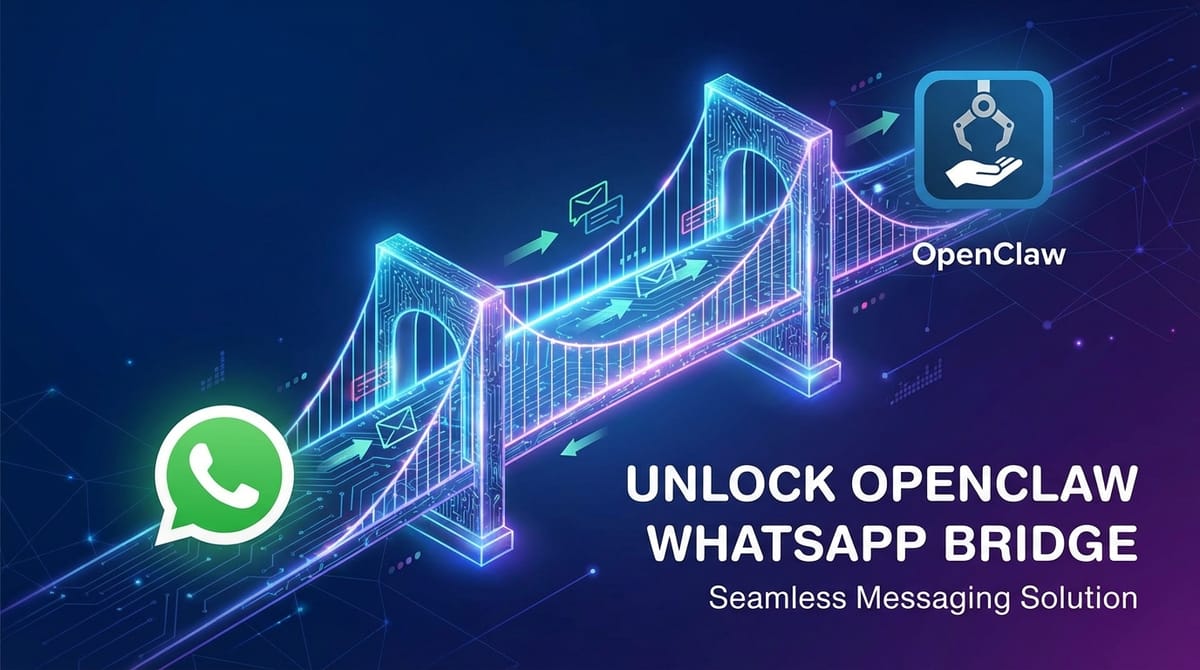

Introduction: Bridging the Communication Divide
In today's hyper-connected world, businesses face an ever-growing imperative to engage with their customers wherever they are. This mandate has propelled WhatsApp to the forefront of customer communication strategies. With over two billion users globally, WhatsApp is no longer just a personal messaging app; it has become a critical channel for customer support, marketing, sales, and internal operations. However, integrating WhatsApp effectively into existing business workflows and applications is far from straightforward. The WhatsApp Business API, while powerful, presents a complex labyrinth of technical specifications, policy adherence, and infrastructure management that can overwhelm even seasoned development teams.
This is precisely where the OpenClaw WhatsApp Bridge emerges as a game-changer. It represents a paradigm shift, offering a sophisticated yet elegantly simple solution to the intricate challenges of WhatsApp integration. OpenClaw isn't just an API; it's an intelligent intermediary, a robust and flexible bridge meticulously engineered to abstract away the underlying complexities, allowing businesses to harness the full potential of WhatsApp messaging without the customary headaches. By embracing advanced architectural principles, including a potent Unified API approach, OpenClaw is designed from the ground up to deliver unparalleled cost optimization and performance optimization, ensuring that your messaging solutions are not only seamless but also economically viable and impeccably fast.
Imagine a world where connecting your CRM, marketing automation platform, or e-commerce system to WhatsApp is as simple as making a few API calls, without worrying about message delivery status, media handling, or intricate template management. OpenClaw makes this vision a reality. It empowers developers and businesses to focus on creating compelling conversational experiences and driving business value, rather than getting bogged down in the minutiae of API integrations. This article will delve deep into the intricacies of the OpenClaw WhatsApp Bridge, exploring its architecture, its unparalleled benefits, and how it revolutionizes the way businesses communicate in the digital age.
The Labyrinth of WhatsApp Business API Integration
To truly appreciate the elegance and necessity of the OpenClaw WhatsApp Bridge, it's essential to first understand the inherent complexities of direct WhatsApp Business API integration. While the API offers rich functionalities, its implementation presents several significant hurdles for businesses aiming for a robust, scalable, and compliant messaging solution.
Firstly, the technical overhead is substantial. Businesses must not only understand the WhatsApp Business API's endpoints, request/response formats, and authentication mechanisms but also manage the underlying infrastructure. This often involves setting up and maintaining servers, ensuring high availability, handling secure network configurations, and managing webhook endpoints for receiving incoming messages. This infrastructure needs to scale dynamically to accommodate fluctuating message volumes, which can be a considerable engineering challenge.
Secondly, policy adherence and compliance are critical and constantly evolving. WhatsApp maintains strict messaging policies to prevent spam and ensure a high-quality user experience. This includes limitations on initiating conversations, requirements for template messages (HSMs), specific rules for promotional content, and guidelines for user opt-in/opt-out. Businesses must navigate these policies meticulously to avoid account flagging or suspension, which often necessitates dedicated teams to monitor and adapt to changes.
Thirdly, diverse message types and media handling add another layer of complexity. WhatsApp supports various message formats beyond simple text, including images, videos, documents, audio, location, contacts, and interactive messages like buttons and lists. Each type has its own API structure, file size limitations, and hosting requirements. Building a system that can reliably send and receive all these types, process media securely, and ensure proper formatting across different devices requires significant development effort.
Fourthly, scalability and reliability are paramount for business-critical communications. A direct integration needs to be engineered to handle bursts of high message traffic, manage message queues, implement robust error handling (retries, dead-letter queues), and ensure high delivery rates. Downtime or message delivery failures can lead to lost sales, frustrated customers, and reputational damage. Achieving this level of resilience often requires advanced architectural patterns and extensive testing.
Finally, developer experience and maintenance are often overlooked. Each time WhatsApp updates its API or introduces new features, developers must adjust their integrations, which can be time-consuming and prone to errors. The learning curve for new developers joining a project can also be steep, as they need to become proficient in WhatsApp's specific API nuances.
These challenges cumulatively lead to significant resource consumption, prolonged development cycles, and potential operational inefficiencies. They divert valuable engineering talent from core product development towards managing communication infrastructure, highlighting the pressing need for a simplified, abstracted solution like the OpenClaw WhatsApp Bridge.
| Feature/Challenge | Direct WhatsApp Business API Integration | OpenClaw WhatsApp Bridge Solution |
|---|---|---|
| Infrastructure Management | Requires businesses to host, maintain, and scale their own servers, databases, and network components. | OpenClaw handles all underlying infrastructure, offering a fully managed, scalable solution. |
| API Complexity | Developers interact directly with WhatsApp's granular and evolving API specifications, managing various endpoints. | Provides a simplified, abstract Unified API interface, shielding developers from WhatsApp's underlying complexities. |
| Policy Adherence | Businesses are solely responsible for monitoring and enforcing WhatsApp's strict messaging policies. | OpenClaw incorporates policy compliance checks and guidelines, helping users stay within WhatsApp's rules. |
| Message Types | Manual handling and formatting for diverse message types (text, media, interactive, templates). | Automates handling of all message types, ensuring correct formatting and delivery without manual intervention. |
| Scalability | Requires significant engineering effort to design and maintain a system that scales with message volume. | Built for inherent scalability, dynamically adjusts resources to manage varying message loads, ensuring high throughput. |
| Error Handling | Developers must implement custom error detection, retry mechanisms, and delivery status tracking. | Includes robust error handling, automatic retries, and comprehensive delivery status reporting. |
| Development Time | Longer development cycles due to steep learning curve and intricate API interactions. | Significantly reduces development time, allowing faster time-to-market for WhatsApp-enabled applications. |
| Maintenance & Updates | Requires ongoing developer effort to adapt to WhatsApp API changes and updates. | OpenClaw manages all API updates and maintenance, ensuring continuous compatibility with WhatsApp's evolving platform. |
Table 1: Challenges of Direct WhatsApp Integration vs. OpenClaw Bridge
OpenClaw WhatsApp Bridge: A Paradigm Shift in Connectivity
The OpenClaw WhatsApp Bridge is not merely an integration tool; it is a meticulously engineered solution designed to revolutionize how businesses interact with the WhatsApp ecosystem. At its core, OpenClaw acts as an intelligent, secure, and highly efficient intermediary, abstracting away the formidable complexities of the native WhatsApp Business API. Its mission is clear: to provide a seamless, reliable, and scalable pathway for applications to communicate with WhatsApp users, enabling businesses to leverage this pervasive platform effortlessly.
Conceptually, OpenClaw operates as a sophisticated API gateway and message router. When an application needs to send a message to a WhatsApp user, it sends a request to the OpenClaw API, not directly to WhatsApp. OpenClaw then takes over, handling all the intricate details: authentication, message formatting, media upload, policy compliance checks, and the actual dispatch via WhatsApp's infrastructure. Conversely, when a WhatsApp user sends a message to a business, OpenClaw receives it via webhooks, processes it, and then forwards it to the business's application through a pre-configured webhook endpoint, ensuring structured and actionable data delivery.
The architectural philosophy behind OpenClaw is built on several key pillars:
- Abstraction Layer: The most fundamental principle is abstraction. OpenClaw provides a high-level, developer-friendly API that shields users from the low-level complexities of the WhatsApp Business API. This means developers don't need to be experts in WhatsApp's specific message templates, media hosting requirements, or conversational flow rules. They interact with OpenClaw's consistent and simplified interface, which then translates these requests into WhatsApp-compliant actions.
- Scalability and Reliability: Designed for enterprise-grade usage, OpenClaw is built with inherent scalability. It leverages cloud-native architectures, allowing it to dynamically scale resources up or down based on message volume. This ensures consistent performance during peak loads and efficient resource utilization during quieter periods. Redundant systems, robust error handling, and intelligent retry mechanisms are integral to its design, guaranteeing high message delivery rates and minimal downtime.
- Security and Compliance: Given the sensitive nature of customer communications, security is paramount. OpenClaw incorporates industry-standard security protocols, including end-to-end encryption where applicable, secure authentication mechanisms (like API keys and OAuth), and strict data privacy measures. It also assists businesses in maintaining compliance with WhatsApp's ever-evolving messaging policies, providing tools and guidance to ensure communications remain within acceptable parameters.
- Message Routing and Management: OpenClaw features an intelligent message router that can handle diverse message types – from simple text and rich media to interactive buttons and list messages. It manages the lifecycle of each message, providing real-time delivery status updates and ensuring that messages are correctly formatted and delivered to the intended recipient. For incoming messages, it efficiently parses the data and routes it to the correct application endpoint, enabling dynamic and context-aware responses.
- Analytics and Monitoring: To provide businesses with actionable insights, OpenClaw integrates comprehensive logging and monitoring capabilities. This allows users to track message delivery rates, understand user engagement, identify potential issues, and optimize their messaging strategies.
By embodying these principles, OpenClaw WhatsApp Bridge transforms a daunting technical challenge into an accessible opportunity. It significantly reduces development time, lowers operational costs, and empowers businesses to innovate faster, creating richer, more engaging conversational experiences for their customers on WhatsApp.
The Strategic Advantage of a Unified API for OpenClaw
The concept of a Unified API lies at the very heart of OpenClaw's strategic advantage, particularly in the complex landscape of digital communications. In essence, a Unified API provides a single, coherent, and consistent interface to access functionalities that might otherwise be scattered across multiple, disparate, or proprietary APIs. For OpenClaw, this means abstracting away the labyrinthine details of the WhatsApp Business API and presenting developers with one streamlined, intuitive endpoint.
Consider the traditional approach: if a business wanted to integrate WhatsApp, they would interact directly with WhatsApp's own API. This involves understanding its specific authentication methods, message object structures for text, images, videos, templates, interactive messages, and handling webhooks for incoming messages—all with their unique quirks and version dependencies. Now, imagine if that business also wanted to integrate with Telegram, SMS, or other messaging platforms; they'd have to repeat this complex integration process for each platform, learning a new set of APIs every time. This fragmentation leads to increased development time, higher maintenance costs, and a steeper learning curve for developers.
OpenClaw's Unified API approach eliminates this fragmentation for WhatsApp. Instead of wrestling with WhatsApp's native APIs, developers simply send their requests to OpenClaw's API. OpenClaw then intelligently translates these requests into the appropriate WhatsApp-specific calls, handles all the nuances, and ensures delivery. This single interface handles all WhatsApp message types – from simple text to sophisticated interactive buttons – presenting them in a standardized format.
The benefits of this Unified API approach for OpenClaw are profound:
- Accelerated Development Cycles: Developers can get started almost immediately, as they only need to learn OpenClaw's API documentation, not WhatsApp's extensive and often changing specifications. This significantly reduces the time-to-market for new features and applications leveraging WhatsApp.
- Reduced Learning Curve: New team members can quickly become productive. The consistent structure and predictable behavior of a Unified API mean less time spent on deciphering complex platform-specific rules and more time on building core application logic.
- Simplified Maintenance and Updates: As WhatsApp evolves its API, OpenClaw's engineering team takes on the burden of updating the bridge. Developers using OpenClaw continue to interact with the stable OpenClaw API, insulated from underlying changes. This dramatically reduces maintenance overhead and ensures continuous compatibility.
- Enhanced Consistency and Reliability: By funneling all WhatsApp communications through a single, well-managed API, OpenClaw ensures consistency in message formatting, error handling, and delivery status reporting. This leads to more reliable and predictable application behavior.
- Future-Proofing and Extensibility: While OpenClaw initially focuses on WhatsApp, the philosophy of a Unified API makes it inherently extensible. Should OpenClaw decide to support other messaging channels in the future, developers would find it easier to adapt, as the underlying principle of a single, consistent interface would remain. For now, it provides a unified layer specifically for WhatsApp's diverse functionalities.
- Improved Developer Experience (DX): Developers prefer working with clean, well-documented, and predictable APIs. OpenClaw delivers this, making the process of building WhatsApp-enabled applications more enjoyable and less frustrating. This improved DX translates directly into higher productivity and better quality software.
By embodying the principles of a Unified API specifically for WhatsApp, OpenClaw empowers businesses to deploy sophisticated messaging solutions with unprecedented ease and speed. It transforms what was once a complex, resource-intensive integration into a straightforward, efficient, and scalable process, allowing businesses to truly unlock the potential of conversational commerce and customer engagement on WhatsApp.
| Aspect | Description | Benefit for Businesses |
|---|---|---|
| Single Endpoint | Developers interact with one consistent API endpoint for all WhatsApp messaging functions (sending, receiving, media handling, templates, interactive messages), instead of multiple WhatsApp-specific APIs. | Rapid Development: Significantly reduces integration time and effort, allowing businesses to launch WhatsApp-enabled features much faster. |
| Abstraction of Complexity | OpenClaw handles the intricacies of WhatsApp's specific message formats, policy rules, authentication flows, and evolving API versions, presenting a simplified interface. | Reduced Learning Curve & Maintenance: Developers don't need deep expertise in WhatsApp's internal workings, freeing them to focus on core business logic. Future API changes are managed by OpenClaw. |
| Standardized Data Formats | Both incoming and outgoing messages adhere to a predictable, consistent data structure provided by OpenClaw, regardless of the underlying WhatsApp message type. | Enhanced Reliability & Consistency: Simplifies parsing and processing of messages, leading to fewer errors and more robust applications. Ensures a consistent user experience. |
| Centralized Control | All WhatsApp communication flows through OpenClaw, allowing for centralized monitoring, logging, and application of business logic or compliance rules. | Improved Operations & Governance: Easier to monitor message status, troubleshoot issues, and enforce organizational messaging policies across all WhatsApp interactions. |
| Future-Proofing | As WhatsApp's API evolves, OpenClaw's team updates the bridge internally, insulating integrated applications from breaking changes. | Reduced Technical Debt & Longevity: Ensures long-term compatibility without requiring constant re-engineering of existing integrations, protecting IT investments. |
| Resource Efficiency | A single API means fewer resources (developers, infrastructure) are needed to manage and maintain WhatsApp connectivity. | Cost Savings: Directly contributes to cost optimization by minimizing engineering effort, infrastructure needs, and operational overhead associated with multi-platform or complex single-platform API management. |
| Scalability (Integrated) | The Unified API is built on a scalable architecture, ensuring that the underlying WhatsApp connection can handle increasing volumes of messages without requiring changes to the application's integration logic. | Performance Optimization: Facilitates high throughput and responsiveness, enabling applications to scale seamlessly with growing user bases and message volumes without compromising on speed or reliability. A single API call to OpenClaw can trigger complex, optimized processes. |
Table 2: Benefits of OpenClaw's Unified API Approach
Driving Efficiency and Savings: OpenClaw's Cost Optimization Strategies
In the fiercely competitive digital economy, every business seeks avenues for cost optimization without compromising on functionality or customer experience. OpenClaw WhatsApp Bridge is not only a technical enabler but also a strategic financial advantage, delivering significant cost savings across various operational and developmental fronts. By offloading the complexities of WhatsApp integration, OpenClaw allows businesses to reallocate resources more effectively and achieve a superior return on investment.
One of the most immediate and substantial areas of cost optimization stems from reduced development and integration costs. Building a robust WhatsApp integration from scratch demands considerable developer hours, often involving senior engineers to navigate the API's intricacies, set up infrastructure, and ensure compliance. This lengthy development cycle translates directly into high labor costs. OpenClaw, with its Unified API, drastically compresses this timeframe. Developers can integrate WhatsApp capabilities in days or weeks, rather than months, by interacting with OpenClaw's simplified interface. This reduction in engineering effort and faster time-to-market frees up valuable resources that can be redirected to core product innovation, generating greater business value.
Beyond initial development, OpenClaw delivers substantial operational expense reduction. Running your own WhatsApp Business API infrastructure entails ongoing costs for servers, databases, load balancers, monitoring tools, and network bandwidth. Furthermore, these systems require continuous maintenance, security patching, and scaling adjustments, all of which demand dedicated IT personnel or managed service contracts. OpenClaw operates as a fully managed service, absorbing all these infrastructure and operational burdens. Businesses no longer need to provision, monitor, or scale servers; OpenClaw handles it all seamlessly in the cloud. This eliminates capital expenditures on hardware and significantly reduces ongoing operational expenditures.
Scalability and resource efficiency are inherent to OpenClaw's design, directly contributing to cost optimization. Businesses often face unpredictable message volumes, which can lead to either over-provisioning (wasting resources during low traffic) or under-provisioning (leading to performance bottlenecks during high traffic). OpenClaw's cloud-native architecture ensures dynamic scaling, meaning resources are automatically adjusted to match demand. You only pay for what you use, avoiding the inefficiencies of fixed infrastructure. This "pay-as-you-grow" model ensures that businesses are not incurring unnecessary costs during quiet periods while remaining fully capable of handling surges without additional investment.
Furthermore, OpenClaw helps in the elimination of redundancy and complexity. Without a bridge, different teams within an organization might attempt their own WhatsApp integrations for various purposes (e.g., marketing, customer support), leading to duplicated efforts, inconsistent approaches, and fragmented data. OpenClaw provides a single, centralized platform for all WhatsApp interactions, consolidating efforts and ensuring a unified approach. This reduces the overhead associated with managing multiple, disparate systems and streamlines communication workflows.
Finally, the Unified API approach inherently fosters strategic resource reallocation. By abstracting away the communication plumbing, OpenClaw enables development teams to shift their focus from infrastructure management and API maintenance to designing innovative conversational experiences and building intelligent applications that truly differentiate the business. This strategic refocusing of talent ultimately leads to higher productivity, better products, and a stronger competitive edge, representing a profound form of cost optimization through enhanced business agility and innovation. In essence, OpenClaw doesn't just save money; it optimizes how your money is spent, ensuring maximum impact for every dollar invested in your digital communication strategy.
XRoute is a cutting-edge unified API platform designed to streamline access to large language models (LLMs) for developers, businesses, and AI enthusiasts. By providing a single, OpenAI-compatible endpoint, XRoute.AI simplifies the integration of over 60 AI models from more than 20 active providers(including OpenAI, Anthropic, Mistral, Llama2, Google Gemini, and more), enabling seamless development of AI-driven applications, chatbots, and automated workflows.
Unlocking Peak Performance: The Core of OpenClaw's Engineering
In the realm of digital communication, especially for real-time interactions and critical notifications, performance optimization is not merely a desirable feature; it is an absolute necessity. OpenClaw WhatsApp Bridge has been meticulously engineered from the ground up with performance at its core, ensuring that businesses can deliver seamless, instantaneous, and reliable messaging experiences to their customers. Poor performance – characterized by slow message delivery, unreliability, or inability to handle traffic spikes – can directly lead to customer frustration, missed opportunities, and a damaged brand reputation. OpenClaw mitigates these risks through a multi-faceted approach to performance.
A primary focus for OpenClaw is low latency messaging. In conversational commerce or customer support, every millisecond counts. Delays in message delivery can disrupt the flow of a conversation, diminish user satisfaction, and even impact conversion rates. OpenClaw achieves low latency by deploying its infrastructure in strategically located data centers, utilizing optimized network routes, and implementing highly efficient message processing algorithms. Requests are handled with minimal overhead, ensuring that messages traverse the bridge and reach WhatsApp's network (and ultimately the end-user) as quickly as technologically possible. This near real-time communication capability is crucial for engaging customers effectively.
Closely tied to low latency is high throughput and scalability. Businesses, particularly those with large customer bases or during peak seasons (e.g., holiday sales, major announcements), often experience massive bursts of message traffic. An underperforming system can quickly become a bottleneck, leading to message backlogs, failures, and a breakdown in communication. OpenClaw's architecture is inherently scalable, built on cloud-native principles that allow it to dynamically adjust resources to handle colossal volumes of messages concurrently. Whether you need to send a hundred messages per minute or tens of thousands, OpenClaw ensures that your messages are processed and delivered efficiently, without degradation in speed or reliability. This elasticity is a cornerstone of its performance optimization strategy.
Reliability and resilience are paramount. A message not delivered is a conversation lost, or worse, a critical notification missed. OpenClaw incorporates robust error handling, intelligent retry mechanisms, and failover strategies to ensure message delivery even in the face of temporary network issues or API outages. Messages are tracked meticulously, and businesses receive granular delivery status updates, providing transparency and accountability. This commitment to reliability means businesses can trust OpenClaw to be the unwavering conduit for their most important customer interactions.
Furthermore, OpenClaw prioritizes efficient resource utilization. Its underlying code and infrastructure are optimized to process messages using minimal computational resources. This efficiency not only contributes to cost optimization (as discussed earlier) but also directly enhances performance by reducing processing times and enabling more messages to be handled per unit of resource. Intelligent queuing and load balancing techniques distribute message loads evenly, preventing any single component from becoming overwhelmed and ensuring smooth operation across the entire bridge.
Finally, real-time analytics and monitoring provide businesses with critical insights into the performance of their messaging operations. OpenClaw offers dashboards and logs that allow users to monitor message delivery rates, latency metrics, error rates, and overall system health. This proactive monitoring enables businesses to quickly identify and address any potential bottlenecks, ensuring continuous performance optimization and a consistently high-quality messaging experience. By delivering messages with speed, reliability, and precision, OpenClaw empowers businesses to build deeper connections with their customers, drive engagement, and ultimately achieve their communication objectives.
| Performance Metric | Description | OpenClaw's Performance Optimization Approach |
|---|---|---|
| Latency | The delay between a message being sent from the application and its delivery to the end-user (or vice versa). Critical for real-time interactions. | Optimized Network Paths & Infrastructure: Deploys infrastructure in strategically chosen, low-latency data centers. Utilizes efficient routing algorithms and high-speed network connections. Efficient Processing: Minimizes processing overhead within the bridge, ensuring requests are handled and forwarded with minimal delay. |
| Throughput | The number of messages that can be successfully processed and delivered per unit of time (e.g., messages per second). Essential for handling high volumes. | Scalable Architecture: Built on cloud-native, auto-scaling infrastructure that dynamically adjusts resources (servers, message queues) to handle fluctuating message volumes without manual intervention. Parallel Processing: Designed to process multiple messages concurrently, maximizing the utilization of underlying resources. |
| Reliability | The consistency and assurance of message delivery, even in the presence of errors, network issues, or system failures. | Robust Error Handling & Retries: Implements intelligent retry mechanisms for transient failures and comprehensive error reporting for persistent issues. Redundancy & Failover: Utilizes redundant systems and automated failover capabilities to ensure continuous operation and prevent single points of failure. Delivery Status Tracking: Provides granular, real-time updates on message status (sent, delivered, read) to integrated applications. |
| Availability | The percentage of time the OpenClaw service is operational and accessible. Crucial for business continuity. | High Availability Architecture: Employs multiple active instances and load balancing across geographically dispersed data centers to ensure service uptime. Proactive Monitoring & Alerting: Continuously monitors system health and performance, with automated alerts for potential issues, allowing for rapid response. |
| Resource Usage | The amount of CPU, memory, bandwidth, and other computational resources consumed to process messages. Impacts cost and the ability to scale efficiently. | Optimized Code & Algorithms: Software is engineered for efficiency, minimizing computational footprint per message. Intelligent Queuing & Load Distribution: Manages message queues effectively and distributes load across available resources to prevent overload and ensure smooth operation. |
Table 3: Key Performance Metrics & OpenClaw's Performance Optimization Approach
Transformative Use Cases for OpenClaw WhatsApp Bridge
The versatility and robust capabilities of the OpenClaw WhatsApp Bridge unlock a myriad of transformative use cases across various industries. By simplifying WhatsApp integration, OpenClaw empowers businesses to re-imagine and enhance their customer interactions, streamline operations, and drive new levels of efficiency. Here are some of the most impactful applications:
Customer Support & Engagement
OpenClaw revolutionizes customer support by enabling businesses to offer immediate, personalized assistance directly on WhatsApp. * Automated FAQs & Chatbots: Deploy AI-powered chatbots via OpenClaw to answer common customer queries 24/7, reducing agent workload and improving response times. * Live Agent Handover: Seamlessly transition conversations from a bot to a human agent, providing full chat history for context, ensuring a smooth customer experience. * Proactive Support: Send automated notifications about service outages, system updates, or personalized troubleshooting steps directly to users' WhatsApp. * Feedback Collection: Easily solicit customer feedback post-interaction through WhatsApp surveys or quick rating prompts.
Marketing & Sales Automation
WhatsApp, through OpenClaw, becomes a powerful channel for direct, personalized marketing and sales initiatives. * Personalized Promotions: Deliver targeted offers, discounts, or new product announcements directly to opted-in customers, enhancing engagement and conversion rates. * Lead Qualification & Nurturing: Use interactive messages to qualify leads, gather preferences, and guide them through the sales funnel with automated drip campaigns. * Abandoned Cart Reminders: Send timely reminders to customers who have left items in their shopping carts, potentially recovering lost sales. * Event Registrations & Reminders: Facilitate event sign-ups and send automated reminders to attendees, reducing no-shows.
E-commerce & Logistics
For businesses dealing with online sales and physical product delivery, OpenClaw streamlines critical customer communications. * Order Confirmations & Updates: Instantly send order confirmations, shipping notifications, and delivery status updates, enhancing customer trust and reducing inquiries. * Returns Management: Simplify the returns process by allowing customers to initiate returns, print labels, or schedule pickups directly through WhatsApp. * Inventory Alerts: Notify customers when out-of-stock items are back in stock, driving re-engagement and sales. * Payment Reminders: Send gentle reminders for outstanding payments or subscription renewals.
Healthcare & Education
In sectors requiring sensitive and timely communication, OpenClaw offers a secure and efficient bridge. * Appointment Reminders: Reduce missed appointments for patients or students with automated, personalized reminders. * Secure Information Sharing: With appropriate security measures, share test results, prescription updates, or academic grades directly with individuals. * Course Notifications: Alert students about assignment deadlines, class cancellations, or new course materials. * Emergency Alerts: Disseminate critical information rapidly during emergencies or crises to relevant stakeholders.
Financial Services
OpenClaw enables secure and reliable communication for banks, fintech companies, and insurance providers. * Account Alerts: Send notifications for large transactions, login attempts, or low balance alerts. * Transaction Confirmations: Instantly confirm successful payments, fund transfers, or bill payments. * Fraud Detection Notifications: Alert customers to suspicious activity on their accounts, enabling quick verification or action. * Policy Updates: Inform customers about changes to terms and conditions, new product offerings, or regulatory updates.
By facilitating these and countless other use cases, OpenClaw WhatsApp Bridge empowers businesses to transform their operational efficiency, deepen customer relationships, and unlock new revenue streams. The ability to communicate seamlessly and effectively on a platform as ubiquitous as WhatsApp is no longer a luxury but a strategic imperative, and OpenClaw provides the essential toolkit to achieve this.
Implementing OpenClaw: A Developer's Perspective
For developers, the promise of OpenClaw WhatsApp Bridge lies in its simplification of a notoriously complex task. The Unified API approach means that getting started and building sophisticated WhatsApp-enabled applications becomes an intuitive and efficient process. This section provides a practical overview of what a developer can expect when working with OpenClaw.
1. Getting Started: Authentication and Setup
The initial step typically involves signing up for the OpenClaw service and obtaining your unique API key(s). This key is your primary method of authenticating requests to the OpenClaw API. OpenClaw might also provide a dashboard where you can manage your WhatsApp business accounts, set up webhooks, and view usage statistics.
- API Key Management: Your API key will be included in the header of your HTTP requests to OpenClaw. Securely manage this key to prevent unauthorized access.
- Webhook Configuration: To receive incoming messages from WhatsApp (sent via OpenClaw), you'll configure a webhook URL in your OpenClaw dashboard. This is an endpoint on your server that OpenClaw will call whenever a new message arrives from a WhatsApp user.
2. Sending Messages: Simple and Advanced
OpenClaw's Unified API shines when it comes to sending messages. Instead of learning WhatsApp's specific JSON structures for various message types, you interact with OpenClaw's consistent endpoint.
- Simple Text Messages: You'll make an HTTP POST request to OpenClaw's
/sendendpoint, providing the recipient's WhatsApp number and the text content.json POST /send Headers: { "Authorization": "Bearer YOUR_OPENCLAW_API_KEY" } Body: { "to": "whatsapp:+1234567890", "type": "text", "body": "Hello from OpenClaw! How can I help you today?" }OpenClaw handles all the underlying WhatsApp API calls, including ensuring the message conforms to WhatsApp's text message format. - Media Messages (Images, Videos, Documents): Sending media is equally straightforward. Instead of directly uploading to WhatsApp's servers or managing pre-signed URLs, you provide OpenClaw with a publicly accessible URL of your media file.
json POST /send Headers: { "Authorization": "Bearer YOUR_OPENCLAW_API_KEY" } Body: { "to": "whatsapp:+1234567890", "type": "image", "media_url": "https://example.com/image.jpg", "caption": "Here's a beautiful image!" }OpenClaw takes care of fetching the media, uploading it to WhatsApp-compatible storage if necessary, and sending the correct WhatsApp media message object. - Template Messages (HSMs): For initiating conversations or sending structured notifications, WhatsApp requires approved message templates (HSMs). OpenClaw allows you to specify the template name and dynamic parameters.
json POST /send Headers: { "Authorization": "Bearer YOUR_OPENCLAW_API_KEY" } Body: { "to": "whatsapp:+1234567890", "type": "template", "template_name": "order_update", "language_code": "en", "components": [ { "type": "body", "parameters": [ { "type": "text", "text": "John Doe" }, { "type": "text", "text": "12345" }, { "type": "text", "text": "shipped" } ] } ] }This abstracts the complex structure of template components (header, body, buttons) into a more digestible format. - Interactive Messages (Buttons, Lists): OpenClaw also supports interactive messages, which allow users to select options with a tap. This is crucial for building engaging chatbots and guided experiences. The API structure for these will be designed to be intuitive and follow a consistent pattern.
3. Receiving Messages: Webhooks and Parsing
When a WhatsApp user sends a message to your business, OpenClaw receives it and forwards it to your configured webhook URL. The incoming payload will be standardized, regardless of the original WhatsApp message type.
// Example Incoming Webhook Payload from OpenClaw
{
  "event": "message_received",
  "message": {
    "id": "gBGGN_F93cO_FgIBA07-sN4k4",
    "from": "whatsapp:+1234567890",
    "to": "whatsapp:+1122334455",
    "timestamp": "1678886400",
    "type": "text",
    "text": {
      "body": "I need help with my order."
    }
  },
  "metadata": {
    "openclaw_account_id": "acc_xyz",
    "webhook_id": "wh_abc"
  }
}
Your application simply needs to parse this consistent JSON structure to identify the sender, message type, and content, enabling you to build powerful conversational logic. OpenClaw handles the verification of webhook signatures to ensure the requests are legitimate.
4. Security Best Practices
Working with OpenClaw, developers should still adhere to security best practices: * Secure API Keys: Never hardcode API keys in public repositories. Use environment variables or secure secret management systems. * Webhook Verification: Always verify incoming webhook signatures to ensure that payloads are genuinely from OpenClaw and haven't been tampered with. * HTTPS Everywhere: Ensure all communication with OpenClaw (and your webhooks) occurs over HTTPS. * Data Encryption: Encrypt any sensitive customer data at rest and in transit within your own systems.
By providing a Unified API that simplifies sending and receiving diverse message types, OpenClaw dramatically reduces the developer effort and expertise required for WhatsApp integration. It allows developers to focus on crafting compelling user experiences and intelligent business logic, rather than wrestling with the underlying communication plumbing, thereby contributing to faster iterations and a more robust application ecosystem.
The Synergistic Future: OpenClaw and AI-Driven Communications
The landscape of digital communication is rapidly evolving, with Artificial Intelligence, particularly Large Language Models (LLMs), playing an increasingly pivotal role. While OpenClaw WhatsApp Bridge excels at providing a Unified API for seamless, cost-effective, and performant WhatsApp connectivity, the true potential of conversational AI emerges when this robust messaging conduit is paired with sophisticated AI capabilities. This synergy allows businesses to move beyond mere automated responses to genuinely intelligent, personalized, and context-aware interactions.
OpenClaw provides the perfect infrastructure for these AI capabilities to reach WhatsApp users. It handles the message delivery, ensuring that AI-generated responses are sent reliably and quickly, and that user inputs are captured and delivered to the AI system. However, integrating with a myriad of LLM providers – each with its own API, pricing structure, and performance characteristics – can introduce a new layer of complexity, reminiscent of the challenges OpenClaw itself solves for WhatsApp. Developers might find themselves managing multiple AI API keys, dealing with varying data formats, optimizing for latency, and constantly striving for cost-efficiency across different models.
This is precisely where a platform like XRoute.AI steps in, acting as a powerful complement to OpenClaw. XRoute.AI is a cutting-edge unified API platform specifically designed to streamline access to large language models (LLMs) for developers, businesses, and AI enthusiasts. Imagine building an intelligent WhatsApp chatbot on top of OpenClaw: OpenClaw handles the WhatsApp connection, sending user messages to your backend and delivering your backend's responses to the user. But for the intelligence itself – processing natural language, generating human-like responses, summarizing conversations, or performing sentiment analysis – you need LLMs.
By integrating with XRoute.AI, your OpenClaw-powered application can effortlessly tap into the vast ecosystem of AI models without the integration headache. XRoute.AI provides a single, OpenAI-compatible endpoint, simplifying the integration of over 60 AI models from more than 20 active providers. This means your application, interacting with OpenClaw, can then route its AI-related queries through XRoute.AI's unified API to access the best LLM for a given task, whether it's for generating a personalized marketing message, answering a complex customer query, or translating a conversation.
The benefits of this partnership are multifold and directly address the core concerns of businesses:
- Low Latency AI for Responsive Chatbots: XRoute.AI prioritizes
low latency AI. This is critical for OpenClaw-powered WhatsApp chatbots where instantaneous responses are essential for a natural conversation flow. Slow AI responses can break immersion and frustrate users. XRoute.AI's optimized routing and infrastructure ensure that your AI models respond as quickly as possible, enhancing the user experience. - Cost-Effective AI through Intelligent Routing: XRoute.AI empowers
cost-effective AI. It allows developers to select models based on performance, cost, and specific task requirements. Its platform can intelligently route requests to the most economical model that still meets performance criteria, or even dynamically switch models based on real-time pricing and availability. This granular control over model usage ensures you're getting the most out of your AI budget, which is a direct form ofcost optimization. - Simplified Development and Scalability: Just as OpenClaw simplifies WhatsApp integration, XRoute.AI simplifies LLM integration. Its
unified APImeans developers write code once, then gain access to a multitude of AI models, reducing complexity and accelerating development. Furthermore, XRoute.AI's focus on high throughput and scalability ensures that your AI applications can handle increasing user loads without sacrificing performance, complementing OpenClaw's own robust scalability.
Consider a scenario: a customer asks a complex product question on WhatsApp. OpenClaw receives the message and sends it to your application. Your application then sends this query to XRoute.AI. XRoute.AI routes the query to the most suitable LLM, which processes the request and generates a detailed answer. XRoute.AI sends this answer back to your application, which then uses OpenClaw to send the intelligent, timely response back to the customer on WhatsApp. This entire process is streamlined, efficient, and highly performant.
In essence, OpenClaw WhatsApp Bridge handles the "how" of getting messages to and from WhatsApp, while XRoute.AI enhances the "what" – providing the intelligence that fuels truly engaging and effective conversations. Together, they create an unparalleled ecosystem for building the next generation of AI-driven, high-performance, and cost-optimized communication solutions on WhatsApp, pushing the boundaries of what's possible in conversational commerce and customer engagement.
Conclusion: Embrace the Future of Messaging with OpenClaw
The journey through the complexities of WhatsApp Business API integration reveals a clear truth: while the platform offers unparalleled reach, its direct implementation can be a significant technical and financial burden for businesses. This is precisely the chasm that the OpenClaw WhatsApp Bridge elegantly spans, transforming a daunting challenge into an accessible and powerful opportunity.
OpenClaw is more than just a piece of software; it's a strategic asset for any business aiming to thrive in the era of conversational commerce. By embracing a sophisticated Unified API approach, OpenClaw liberates developers from the intricate labyrinth of WhatsApp's native APIs, allowing them to focus on innovation rather than integration plumbing. This fundamental shift not only accelerates development cycles but also dramatically simplifies maintenance, ensuring that your WhatsApp communication channels remain robust and future-proof.
The tangible benefits ripple across the entire organization, delivering profound cost optimization. Businesses can significantly reduce development expenses by minimizing the need for specialized WhatsApp API expertise and extensive coding. Operational costs are slashed as OpenClaw handles the demanding infrastructure, scaling, and ongoing maintenance. Resources that were once tied up in managing communication backends can now be strategically reallocated to core business functions, fostering greater innovation and efficiency.
Crucially, OpenClaw is engineered for uncompromising performance optimization. From ensuring low latency messaging for seamless real-time interactions to guaranteeing high throughput and reliability for massive message volumes, OpenClaw provides the speed and resilience essential for critical business communications. This commitment to performance directly translates into superior customer experiences, reduced frustration, and increased engagement across all touchpoints.
Furthermore, when augmented by advanced AI platforms like XRoute.AI, OpenClaw paves the way for a truly intelligent and responsive conversational future. By effortlessly connecting your WhatsApp bridge to cutting-edge LLMs via XRoute.AI's unified API, you unlock capabilities for dynamic chatbots, insightful analytics, and highly personalized customer journeys, all while benefiting from XRoute.AI's low latency AI and cost-effective AI strategies.
In summary, OpenClaw WhatsApp Bridge stands as an indispensable tool for businesses of all sizes. It simplifies, optimizes, and empowers your WhatsApp strategy, enabling you to connect with customers seamlessly, efficiently, and intelligently. Embrace OpenClaw to unlock the full potential of WhatsApp, revolutionize your customer engagement, and confidently navigate the evolving landscape of digital communication. The future of messaging is here, and OpenClaw is your bridge to it.
Frequently Asked Questions (FAQ)
Q1: What exactly is OpenClaw WhatsApp Bridge and how does it differ from directly using the WhatsApp Business API? A1: OpenClaw WhatsApp Bridge is a sophisticated intermediary platform that provides a simplified, Unified API for interacting with the WhatsApp Business API. Instead of developers needing to learn and manage the complex, granular details of WhatsApp's native API, OpenClaw provides a single, consistent interface. It handles all the underlying complexities like message formatting, media uploads, policy compliance, scalability, and error handling, significantly reducing development time and operational overhead compared to direct API integration.
Q2: How does OpenClaw contribute to Cost Optimization for businesses? A2: OpenClaw drives cost optimization in several ways. It drastically cuts down development time and labor costs by simplifying integration through its Unified API. It reduces operational expenses by handling all infrastructure management, scaling, and maintenance. By providing a "pay-as-you-grow" model and optimizing resource utilization, it prevents over-provisioning and ensures efficient spending, allowing businesses to reallocate resources to core value-generating activities.
Q3: What specific aspects of Performance Optimization does OpenClaw address? A3: OpenClaw is engineered for performance optimization by focusing on low latency messaging for rapid delivery and responsiveness. It ensures high throughput and scalability, dynamically adjusting resources to handle massive message volumes without degradation. Additionally, it provides robust reliability through advanced error handling, retry mechanisms, and redundant systems, ensuring messages are delivered consistently and efficiently.
Q4: Can OpenClaw handle different types of WhatsApp messages, including interactive ones? A4: Yes, OpenClaw is designed to handle a wide array of WhatsApp message types. This includes simple text messages, rich media (images, videos, documents), approved template messages (HSMs), and interactive messages such as buttons and list messages. Its Unified API abstracts the complexities of each type, allowing developers to send and receive them through a consistent, simplified interface.
Q5: How does OpenClaw integrate with Artificial Intelligence models, and where does XRoute.AI fit in? A5: OpenClaw provides the robust messaging conduit for AI-driven communications on WhatsApp. While OpenClaw handles the connection to WhatsApp, integrating advanced AI capabilities (like chatbots, sentiment analysis, or complex query handling) requires access to Large Language Models (LLMs). This is where XRoute.AI becomes a powerful complement. XRoute.AI is a unified API platform for LLMs, offering a single endpoint to access over 60 AI models from 20+ providers. By using OpenClaw for WhatsApp connectivity and XRoute.AI for AI processing, businesses benefit from XRoute.AI's low latency AI and cost-effective AI to build highly intelligent, responsive, and optimized WhatsApp solutions.
🚀You can securely and efficiently connect to thousands of data sources with XRoute in just two steps:
Step 1: Create Your API Key
To start using XRoute.AI, the first step is to create an account and generate your XRoute API KEY. This key unlocks access to the platform’s unified API interface, allowing you to connect to a vast ecosystem of large language models with minimal setup.
Here’s how to do it: 1. Visit https://xroute.ai/ and sign up for a free account. 2. Upon registration, explore the platform. 3. Navigate to the user dashboard and generate your XRoute API KEY.
This process takes less than a minute, and your API key will serve as the gateway to XRoute.AI’s robust developer tools, enabling seamless integration with LLM APIs for your projects.
Step 2: Select a Model and Make API Calls
Once you have your XRoute API KEY, you can select from over 60 large language models available on XRoute.AI and start making API calls. The platform’s OpenAI-compatible endpoint ensures that you can easily integrate models into your applications using just a few lines of code.
Here’s a sample configuration to call an LLM:
curl --location 'https://api.xroute.ai/openai/v1/chat/completions' \
--header 'Authorization: Bearer $apikey' \
--header 'Content-Type: application/json' \
--data '{
    "model": "gpt-5",
    "messages": [
        {
            "content": "Your text prompt here",
            "role": "user"
        }
    ]
}'
With this setup, your application can instantly connect to XRoute.AI’s unified API platform, leveraging low latency AI and high throughput (handling 891.82K tokens per month globally). XRoute.AI manages provider routing, load balancing, and failover, ensuring reliable performance for real-time applications like chatbots, data analysis tools, or automated workflows. You can also purchase additional API credits to scale your usage as needed, making it a cost-effective AI solution for projects of all sizes.
Note: Explore the documentation on https://xroute.ai/ for model-specific details, SDKs, and open-source examples to accelerate your development.