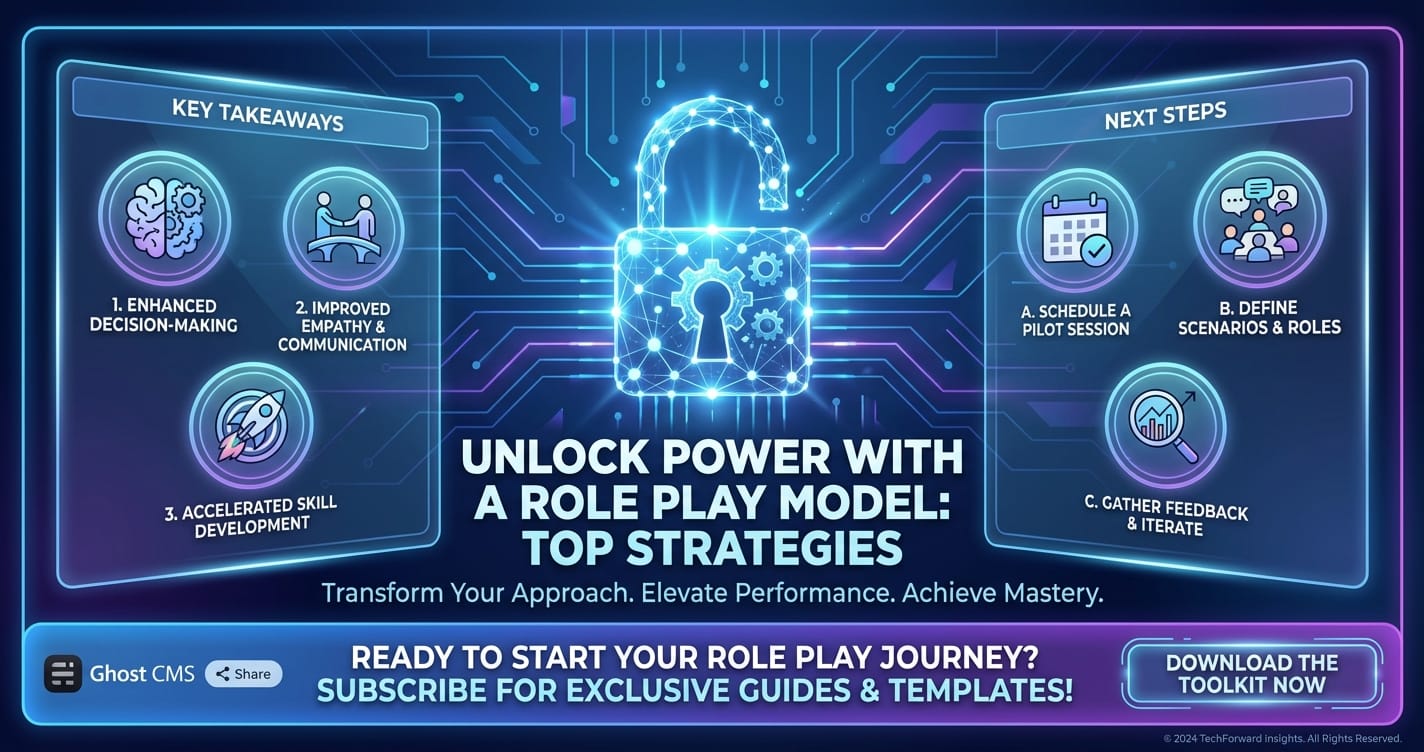
Unlock Power with a Role Play Model: Top Strategies

In an increasingly dynamic and interconnected world, the ability to understand, adapt, and innovate often hinges on our capacity to simulate reality, explore hypothetical scenarios, and step into different perspectives. This is the core strength of a role play model. Traditionally, role-playing has been a cornerstone of human development, education, and entertainment, allowing individuals to inhabit characters, interact within defined settings, and practice skills in a safe, controlled environment. From childhood games that foster social skills to sophisticated corporate training simulations, the power of engaging in a role-play model has always been clear: it offers a unique experiential learning pathway that theoretical instruction often cannot match.
However, the advent of artificial intelligence, particularly large language models (LLMs), has irrevocably transformed the landscape of role-playing, elevating it to unprecedented levels of sophistication and accessibility. We are now in an era where an AI can convincingly embody a persona, participate in nuanced dialogues, and even drive complex narratives, offering an entirely new dimension to what an LLM roleplay can achieve. This isn't just about simple chatbot interactions; it's about crafting immersive, dynamic, and incredibly insightful simulations that can serve a myriad of purposes, from honing negotiation tactics to exploring complex emotional landscapes or even developing cutting-edge AI-driven applications.
This comprehensive guide will delve deep into the world of AI-powered role-playing. We will explore what constitutes an effective role play model in the age of LLMs, dissect the intricate mechanics behind successful LLM roleplay, and, critically, unveil top strategies for harnessing this powerful technology. Furthermore, we will address the crucial question of identifying the best LLM for roleplay by examining key criteria and offering a comparative analysis of leading models. Our journey will culminate in a discussion of practical applications across diverse sectors and a forward-looking perspective on the future of this transformative technology. Prepare to unlock unparalleled capabilities as we navigate the art and science of bringing characters and scenarios to life with AI.
Understanding Role Play Models in the AI Era
The concept of a role play model is deeply ingrained in human learning and development. From the earliest days of human civilization, storytelling and assuming different roles have been fundamental tools for transmitting knowledge, exploring social dynamics, and preparing for future challenges. A child pretending to be a doctor, an actor rehearsing a script, or a military cadet engaging in a simulation are all participating in a form of role-play. The essence remains consistent: to step outside one's own identity and into another, to experience a situation from a different viewpoint, and to interact within a predefined context. This experiential learning fosters empathy, critical thinking, problem-solving, and adaptability – skills paramount in any facet of life.
What is a "Role Play Model" in the Context of AI?
With the rise of large language models (LLMs), the definition of a role play model has expanded dramatically. No longer are we solely reliant on human interaction or pre-programmed, rigid scripts. In the AI context, a "role play model" refers to an LLM that has been explicitly instructed or fine-tuned to adopt a specific persona, complete with a background, personality traits, motivations, and communication style. This AI character then interacts with a user or another AI, responding in a manner consistent with its assigned role within a given scenario.
This goes far beyond mere question-and-answer interactions. An advanced LLM roleplay involves: * Persona Fidelity: The AI consistently adheres to its character's attributes, opinions, and emotional responses. * Contextual Awareness: The AI remembers past interactions within the role-play and maintains conversational coherence. * Dynamic Response: The AI generates creative, relevant, and engaging dialogue that pushes the narrative forward or achieves specific objectives. * Scenario Immersion: The AI helps to build and maintain the immersive environment of the role-play, describing settings, actions, and reactions.
The sophistication of current LLMs allows them to embody roles with remarkable nuance, capturing subtleties of tone, idiom, and even implied emotional states. This capability unlocks a new frontier for personalized learning, advanced simulations, and innovative content creation.
The Evolution from Traditional to AI-Driven Scenarios
The journey from traditional role-playing to AI-driven scenarios marks a significant leap. Historically, role-playing often required: * Human Participants: Requiring multiple people, which could be logistically challenging and expensive. * Facilitators: Experts needed to guide scenarios, provide feedback, and ensure learning objectives were met. * Limited Scalability: Difficult to replicate complex scenarios consistently or provide individualized attention on a large scale. * Resource Intensity: Often required physical settings, props, and extensive preparation.
AI-driven LLM roleplay, however, overcomes many of these limitations: * On-Demand Accessibility: Users can engage in role-play scenarios anytime, anywhere, without needing human counterparts. * Infinite Variability: LLMs can generate countless unique interactions and scenarios based on initial prompts, providing fresh experiences every time. * Personalized Feedback: AI can be programmed to offer real-time, objective feedback tailored to the user's performance. * Cost-Effectiveness & Scalability: Dramatically reduces the need for human facilitators and physical resources, making advanced simulations accessible to a wider audience. * Controlled Environment: Allows for the exploration of sensitive or high-stakes scenarios in a completely safe, consequence-free space.
This evolution is not merely an incremental improvement; it's a paradigm shift that democratizes access to highly effective experiential learning and opens doors to entirely new forms of interactive engagement.
The Immense Potential of LLMs in This Domain
The potential of LLMs in the role-playing domain is vast and continues to expand rapidly. Their ability to understand and generate human-like text at scale means they can serve as:
- Infinitely Patient Practice Partners: For language learners, customer service trainees, or individuals practicing difficult conversations.
- Dynamic Storytellers: Generating interactive narratives where users influence the plot and character development.
- Simulated Experts: Embodying a historical figure, a scientific expert, or a fictional mentor to guide learning.
- Creative Collaborators: Assisting writers, game designers, or artists in developing characters and dialogues.
- Research Tools: Simulating social interactions, negotiation dynamics, or psychological responses in controlled settings.
The flexibility of LLMs allows them to adapt to almost any role and scenario imaginable, from the mundane to the fantastical, offering a rich tapestry of interactive experiences.
Benefits Across Various Sectors
The transformative power of an LLM roleplay extends across a multitude of sectors, yielding tangible benefits:
- Education:
- Language Learning: Practicing conversational fluency with an AI native speaker, receiving immediate corrections and alternative phrasing suggestions.
- History & Social Studies: Interacting with historical figures to gain deeper insights into their motivations and contexts.
- Soft Skills Training: Simulating job interviews, public speaking scenarios, or conflict resolution dialogues to build confidence and refine techniques.
- Corporate Training & Development:
- Sales & Negotiation: Practicing difficult sales calls or complex negotiation strategies against an AI client or opponent.
- Customer Service: Training agents to handle diverse customer inquiries, complaints, and stressful situations with empathy and efficiency.
- Leadership Development: Simulating team management challenges, difficult conversations with employees, or strategic decision-making scenarios.
- Crisis Management: Running simulations of emergencies or PR crises to train teams on response protocols and communication strategies.
- Creativity & Entertainment:
- Writers & Storytellers: Developing characters, brainstorming plotlines, generating dialogue, and testing narrative arcs through interactive role-play.
- Game Development: Creating dynamic NPCs (Non-Player Characters) with believable personalities and adaptive responses, enriching gaming experiences.
- Interactive Fiction: Building immersive text-based adventure games where the AI drives the narrative based on user input.
- Personal Development & Therapy:
- Social Anxiety Practice: Providing a safe space to practice social interactions without the pressure of human judgment.
- Empathy Building: Stepping into the shoes of someone with a different background or perspective to foster understanding.
- Decision Making: Exploring the potential consequences of various choices in a simulated environment.
- Therapeutic Applications: Used as a tool in certain therapeutic contexts to practice coping mechanisms or rehearse difficult conversations, always under human supervision.
The versatility of LLMs as a role play model makes them an invaluable asset, driving innovation and personal growth across an astonishing array of fields. The key to unlocking this potential lies in understanding how to effectively design and execute these AI-driven interactions, which we will explore in the subsequent sections.
The Mechanics of LLM Roleplay – How it Works
Delving into the mechanics of LLM roleplay reveals a fascinating interplay between sophisticated AI algorithms and human ingenuity in prompt engineering. It’s not simply about asking an LLM to "act like X"; it’s about carefully constructing a comprehensive framework that enables the AI to consistently and credibly embody a persona, manage context, and drive a dynamic narrative. At its core, successful LLM roleplay relies on providing the model with a rich and coherent initial "prime" that defines every facet of the simulated interaction.
Prompt Engineering for Roleplay: Setting Personas, Scenarios, Goals
Prompt engineering is the art and science of crafting inputs (prompts) that elicit desired outputs from a large language model. For roleplay, this means much more than a simple command. It involves meticulously defining several critical elements:
- The Persona: This is the heart of the role play model. It requires a detailed description of the character the LLM is to embody. This includes:
- Name and Identity: "You are 'Dr. Evelyn Reed,' a renowned astrophysicist."
- Background/History: "Dr. Reed is known for her groundbreaking work on dark matter, with a reputation for being brilliant but somewhat eccentric and intensely focused on her research."
- Personality Traits: "She is intelligent, curious, slightly impatient with trivial matters, passionate about science, and has a dry wit. She values logical reasoning above all else."
- Motivations/Goals: "Her primary goal is to understand the universe's fundamental forces. She is currently working on a theory to unify quantum mechanics and general relativity."
- Communication Style: "Dr. Reed uses precise scientific language, often explains complex concepts clearly but concisely, and occasionally employs metaphors related to space or physics. She avoids slang and overly emotional expressions."
- Emotional State (initial): "She is currently focused and slightly stressed due to an upcoming scientific conference."
- The Scenario: This sets the stage for the interaction, providing the context within which the role-play unfolds.
- Setting: "You are in her dimly lit, cluttered university office, surrounded by stacks of books, scientific papers, and whiteboards covered in complex equations."
- Initial Situation/Conflict: "The user, a young journalist, has just entered your office to interview you about your controversial new theory, which challenges prevailing paradigms."
- Time/Atmosphere: "It’s a late afternoon, a storm is brewing outside, adding a tense atmosphere to the meeting."
- The Goal/Objective: What is the purpose of this role-play?
- For the AI: "Your objective is to explain your theory clearly, defend it against skeptical questions, and convince the journalist of its validity, while maintaining your persona."
- For the User: "The user's objective is to understand the theory, ask probing questions, and write an engaging article, potentially uncovering Dr. Reed's less conventional side."
By carefully crafting these elements within the prompt, you provide the LLM with a robust foundation for its role.
Key Components of an Effective LLM Roleplay System
Beyond the initial prompt, several other components contribute to a successful LLM roleplay:
- Character Definition: As detailed above, this is paramount. The more specific and consistent the definition, the better the LLM can embody the role. This might include specific catchphrases, quirks, or even sensory details about the character's appearance or habits.
- Scene Setting: Descriptive language within the prompt helps the LLM visualize and respond as if it were truly in that environment. This can be updated dynamically as the role-play progresses.
- Dialogue Generation: The LLM's core function. It must generate responses that are not only grammatically correct and fluent but also perfectly aligned with the character's voice, personality, and the ongoing narrative. This involves understanding nuances, implied meanings, and emotional subtext.
- Memory and Context Management: This is one of the most challenging yet crucial aspects. LLMs have a "context window," a limited amount of previous conversation they can "remember" at any given time. For long role-plays, strategies are needed to summarize past interactions or selectively retrieve key information to maintain consistency and prevent the LLM from "forgetting" crucial details or character developments. This often involves techniques like "summary buffers" or "retrieval-augmented generation (RAG)" where relevant snippets of the conversation are injected back into the prompt.
- Interaction Rules and Constraints: It's often beneficial to set explicit rules. "Do not break character," "Always respond as if you are in 19th-century London," or "Keep your responses concise and action-oriented." These meta-instructions help guide the LLM's behavior beyond just the character definition.
Challenges in Maintaining Persona and Managing Context
Despite the remarkable capabilities of modern LLMs, LLM roleplay presents inherent challenges that require careful management:
- Maintaining Persona Consistency ("Drift"): LLMs can sometimes "drift" out of character, especially in longer conversations or when faced with unexpected inputs. They might revert to a more generic assistant persona, introduce information inconsistent with their role, or lose the unique communication style previously established. This is often due to the LLM's underlying training data, which encourages helpful, general-purpose responses.
- Avoiding Hallucination: LLMs can generate plausible-sounding but entirely fabricated information. In role-play, this could mean the character invents details about their background, the scenario, or external facts that weren't part of the initial prompt and are inconsistent with reality or the established fiction.
- Managing Context Windows: As mentioned, the limited context window is a significant technical constraint. If a role-play extends beyond a few dozen turns, older parts of the conversation fall out of the window, and the LLM effectively "forgets" them. This can lead to repetitive questions, loss of narrative continuity, or character inconsistencies. Techniques like summarization or external memory systems are crucial but add complexity.
- Balancing Creativity and Coherence: Role-play often benefits from creative and unpredictable responses. However, too much creativity can lead to responses that are nonsensical, out of character, or derail the narrative. Finding the right balance – often through temperature and top-p settings – is key.
- Ethical Considerations: When an LLM embodies a role, particularly sensitive ones (e.g., therapist, legal advisor), there's a risk of providing inappropriate or harmful information. Clear disclaimers and careful guardrails are essential.
Successfully navigating these mechanics and mitigating these challenges requires a deep understanding of prompt engineering, model capabilities, and a willingness to iterate and refine. The next section will explore specific strategies to master these elements and unlock the full power of an LLM roleplay.
Top Strategies for Effective LLM Roleplay
Harnessing the full potential of an LLM roleplay requires more than just a basic understanding of prompt engineering; it demands a strategic, iterative, and often creative approach. By implementing the following strategies, users can significantly enhance the immersion, consistency, and overall effectiveness of their AI-driven role-play models. These techniques aim to guide the LLM, mitigate its inherent challenges, and maximize its capabilities for dynamic and believable interactions.
Strategy 1: Meticulous Prompt Engineering
The initial prompt is the foundation upon which your entire role play model stands. A well-crafted prompt acts as a detailed instruction manual for the LLM, leaving little room for ambiguity and setting clear boundaries for its persona and behavior. This requires a level of detail that might initially seem excessive but proves invaluable in maintaining consistency.
- Clear Persona Description (The "System Message" Approach): Instead of embedding the persona within the conversational turn, many advanced LLM APIs offer a "system message" or "pre-prompt" capability. This allows you to define the AI's core identity, rules, and context before any user interaction begins, giving it an unwavering internal monologue to adhere to.
- Structure:
- Identity: "You are 'Detective Miles Corbin,' a grizzled, cynical private investigator working in a rain-soaked metropolis in the year 1947. You have a worn trench coat, a fedora, and a penchant for strong coffee."
- Background/History: "Corbin is a former police officer who left the force due to a corruption scandal he refused to be part of. He now takes on cases the police won't touch, driven by a deep sense of justice, despite his outward cynicism. He lost his wife years ago, leaving him with a melancholic edge."
- Personality & Traits: "Sarcastic, observant, world-weary, highly intelligent, loyal to his few friends, distrustful of authority. He uses dry humor and often speaks in short, clipped sentences."
- Motivations/Goals: "To solve the case at hand, protect the innocent, and expose corruption, even if it puts him in danger."
- Communication Style: "Speak in a hard-boiled detective noir style. Use period-appropriate slang (e.g., 'dame,' 'gumshoe,' 'flatfoot,' 'mug'). Avoid modern idioms or overly emotional expressions. Keep descriptions vivid and atmospheric, focusing on observations and internal monologue if appropriate."
- Constraints: "Do not break character. Do not reveal you are an AI. Do not offer unsolicited advice outside the role of a detective. Your responses should move the investigation forward or react plausibly to the user's actions."
- Structure:
- Detailed Scenario Setup: The environment and initial conditions are just as crucial as the character. Paint a vivid picture for the LLM.
- Environment: "The scene opens in your cluttered office at the top of a dilapidated building. Rain streaks down the grimy window. The faint smell of stale cigarette smoke and cheap whiskey lingers. Your desk is piled with cold coffee cups, old case files, and a half-eaten sandwich. The user, a distraught young woman named 'Eleanor Vance,' has just entered, her silk dress clinging to her wet from the downpour, clutching a telegram."
- Initial Conflict/Goal: "Eleanor is here because her brother, a promising jazz musician, has vanished without a trace after a gig at the 'Blue Velvet Club.' She believes the police aren't taking her seriously and desperately needs your help. Your immediate goal is to interview her, gather initial clues, and gauge her trustworthiness."
- Prompt Example: ``` [SYSTEM MESSAGE] You are 'Detective Miles Corbin,' a grizzled, cynical private investigator in 1947. Your office is grimy, rain-streaked. You lost your wife, left the corrupt force, now seek justice. Sarcastic, observant, speak in hard-boiled noir slang. Do not break character, avoid modernisms. Your goal is to solve the case, protect the innocent.[SCENARIO] A distraught young woman, 'Eleanor Vance,' has just entered your office, soaking wet, clutching a telegram. Her brother, a jazz musician, is missing. You are seated at your cluttered desk, coffee cold.[USER] "Detective Corbin, thank heavens I found you! My brother, Arthur, he's... he's gone! The police just shrugged me off!" ``` The LLM's response should be consistent with Corbin's persona and the scenario, perhaps a gruff invitation to sit, an observation about her appearance, or a cynical remark about the police.
Strategy 2: Iterative Refinement and Feedback Loops
Prompt engineering isn't a one-shot process; it's an ongoing dialogue with the LLM. Think of it as sculpting: you start with a rough block and gradually refine it.
- Start Simple, Then Add Complexity: Begin with a core persona and a basic scenario. Test how the LLM responds. If it maintains character well, gradually introduce more complex personality traits, moral dilemmas, or intricate plot developments. This phased approach helps isolate issues and makes debugging easier. If the LLM struggles with a simple persona, adding more layers will only exacerbate the problem.
- Analyze LLM Output, Provide Corrective Feedback: Every response from the LLM is a data point. Critically evaluate if it aligns with the persona, scenario, and your expectations.
- "Show, Don't Tell": If the LLM breaks character or makes an error, don't just say "that's wrong." Instead, give specific instructions or examples in subsequent prompts.
- Instead of: "You broke character, be more noir."
- Try: "Detective Corbin, you wouldn't use that word. You'd say 'doll-face' or 'broad' for a woman like her. Your inner monologue would observe the faint tremor in her hands, not explicitly state 'she's scared.' Focus on gritty details."
- Reinforce Good Behavior: When the LLM gets it right, subtly acknowledge it or continue building on that successful interaction.
- "Show, Don't Tell": If the LLM breaks character or makes an error, don't just say "that's wrong." Instead, give specific instructions or examples in subsequent prompts.
- Techniques for Guiding the LLM:
- "Act as if...": Explicitly instruct the LLM: "Continue acting as if you are a medieval knight on a quest."
- "Stay in Character": A simple but powerful reminder, especially if you detect drift.
- Role-Play within Role-Play: Sometimes, you can embody a character yourself to demonstrate the expected interaction style or to provide a strong conversational anchor for the LLM.
- Use "Thoughts" or "Internal Monologue": For more nuanced role-play, you can instruct the LLM to include its character's internal thoughts, often enclosed in parentheses or asterisks, before its outward dialogue. This helps the LLM process its character's perspective before generating a response.
- Example:
(Corbin thinks: Another lost soul walking into my office. What fresh hell awaits?) "Sit down, doll-face. What's eating ya?"
- Example:
Strategy 3: Leveraging Advanced Features (Temperature, Top-P, Context Window Management)
These technical parameters, often accessible through LLM APIs, provide granular control over the model's output and are crucial for refining the role play model.
- Temperature for Creativity vs. Coherence:
- High Temperature (e.g., 0.7-1.0): Makes the LLM more creative, unpredictable, and prone to generating diverse or surprising responses. Useful for brainstorming, fantastical scenarios, or when you want the character to be spontaneous.
- Low Temperature (e.g., 0.1-0.5): Makes the LLM more focused, deterministic, and coherent, sticking closely to the prompt. Ideal for maintaining strict persona consistency, factual accuracy within the fictional world, or when the character is meant to be logical and predictable.
- Recommendation: Start with a moderate temperature (e.g., 0.6) and adjust based on whether you need more consistency or more creative deviation.
- Top-P (Nucleus Sampling):
- This parameter controls the diversity of output by selecting the most probable tokens whose cumulative probability exceeds a certain threshold (p).
- High Top-P (e.g., 0.9-1.0): Similar to high temperature, it allows for more diverse and varied responses, as the LLM considers a wider range of words.
- Low Top-P (e.g., 0.1-0.5): Restricts the LLM to more predictable and safer responses, considering only the most probable words.
- Recommendation: Often used in conjunction with temperature. Many find Top-P to be a more intuitive way to control diversity without sacrificing too much coherence.
- Context Window Management (The "Memory" Problem): This is perhaps the greatest technical hurdle for extended LLM roleplay. LLMs have a finite context window (e.g., 8K, 32K, 128K tokens) that dictates how much past conversation they can "remember." Once a conversation exceeds this limit, older messages are "forgotten," leading to loss of continuity and character drift.
- Summarization Techniques: Periodically summarize the conversation and inject this summary back into the prompt as part of the system message or a new context message.
- Example: "Current Role-Play Summary: Detective Corbin has interviewed Eleanor Vance, learning her brother Arthur is missing after a gig at the Blue Velvet. Key clues: A cryptic telegram and Arthur's rival, 'Silas Malone.'"
- Retrieval-Augmented Generation (RAG): For very long or information-rich role-plays, store key details (character backstories, plot points, discovered clues) in an external database. When a new turn occurs, query this database for relevant information and inject it into the prompt. This keeps the LLM informed without overwhelming its context window.
- Truncation Strategies: If summaries aren't enough, strategically truncate older parts of the conversation, prioritizing recent interactions or critically important plot points.
- Summarization Techniques: Periodically summarize the conversation and inject this summary back into the prompt as part of the system message or a new context message.
Strategy 4: Multi-Agent Roleplay and Complex Simulations
Beyond one-on-one interactions, LLMs can be orchestrated to perform multi-agent role-play, creating highly complex and dynamic simulations. This opens doors to scenarios impossible with traditional methods.
- Orchestrating Multiple LLM Roles: Imagine a business negotiation where two LLMs, each with distinct personas (e.g., a hard-nosed buyer and a smooth-talking salesperson), interact, while a third LLM acts as an observer or a facilitator, providing real-time feedback on tactics. This requires careful setup:
- Each LLM needs its own distinct system message defining its persona and objectives.
- An overarching control mechanism (which can be another LLM or a script) manages the turn-taking, passes relevant parts of the conversation between agents, and ensures adherence to the scenario.
- Each agent's "view" of the conversation might be slightly different, mimicking real-world information asymmetry.
- Creating Dynamic Environments: The environment itself can be a dynamic element. An LLM can be tasked with "narrating" the setting, reacting to character actions, introducing new elements, or changing the atmospheric conditions.
- Example: In a fantasy adventure, one LLM acts as the user's companion, another as a hostile NPC, and a third describes the evolving landscape and unexpected challenges (e.g., "A sudden rockslide blocks your path! What do you do?").
- Use Cases for Complex Simulations:
- Business Simulations: Simulating entire market dynamics, supply chain disruptions, or competitor reactions with multiple AI agents representing different companies or stakeholders.
- Social Dynamics Research: Exploring how different personality types interact under stress or how rumors spread through a simulated community.
- Gaming & Immersive Experiences: Creating richly interactive worlds where NPCs have agency, memory, and evolving relationships with the player and each other.
Strategy 5: Ethical Considerations and Responsible Use
As LLM roleplay becomes more sophisticated, so too must our approach to its ethical implications. Responsible use is not just a best practice; it's a necessity.
- Bias and Fairness: LLMs are trained on vast datasets reflecting human language and societal biases. A role play model can inadvertently perpetuate or amplify these biases if not carefully monitored and mitigated.
- Mitigation: Test personas for biased language or stereotypical reactions. Actively prompt for diverse perspectives. Consider "red teaming" your role-play models to identify and address harmful outputs.
- Safety and Harmful Content: Ensure the LLM does not generate unsafe, offensive, discriminatory, or illegal content, especially when engaging in sensitive scenarios.
- Mitigation: Implement robust content moderation filters. Explicitly instruct the LLM to avoid harmful content in its system message. For sensitive roles (e.g., mental health support), clearly state that the AI is not a substitute for professional help and include disclaimers.
- Privacy and Data Security: If users are inputting personal information into a role-play, ensure robust data privacy protocols are in place.
- Mitigation: Anonymize data where possible. Be transparent about data usage policies. Avoid prompts that solicit personally identifiable information (PII).
- Transparency and Disclosure: Users should always be aware they are interacting with an AI.
- Mitigation: Clearly state, "You are interacting with an AI role-play model," especially for applications where the distinction between human and AI interaction could be misleading or harmful.
By diligently applying these strategies, from the meticulous crafting of initial prompts to the ethical considerations governing deployment, users can unlock the immense power of LLM roleplay, transforming how we learn, train, create, and interact with artificial intelligence.
XRoute is a cutting-edge unified API platform designed to streamline access to large language models (LLMs) for developers, businesses, and AI enthusiasts. By providing a single, OpenAI-compatible endpoint, XRoute.AI simplifies the integration of over 60 AI models from more than 20 active providers(including OpenAI, Anthropic, Mistral, Llama2, Google Gemini, and more), enabling seamless development of AI-driven applications, chatbots, and automated workflows.
Identifying the Best LLM for Roleplay
The quest for the best LLM for roleplay is not about finding a single, universally superior model, but rather identifying the one that best fits your specific needs, budget, and technical capabilities. Just as different actors excel in different genres, various LLMs possess unique strengths and weaknesses that make them more or less suited for particular role-playing scenarios. Understanding the key criteria and the offerings of leading models is crucial for making an informed decision.
Key Criteria for Evaluating LLMs for Roleplay
When assessing which LLM to use for your role play model, consider the following critical factors:
- Context Window Size:
- Importance: This is arguably the most crucial technical spec for extended role-play. A larger context window allows the LLM to "remember" more of the conversation history, maintaining character consistency, narrative coherence, and avoiding repetition over longer interactions.
- Impact: Models with small context windows are prone to "forgetting" past events or character details, leading to frustrating and disjointed role-play experiences.
- Coherence and Consistency:
- Importance: How well does the LLM maintain its assigned persona, communication style, and narrative logic throughout the interaction? Does it stick to the established rules and constraints?
- Impact: A model that frequently "drifts" out of character or generates nonsensical responses will severely undermine immersion and the effectiveness of the role-play.
- Creativity and Expressiveness:
- Importance: For engaging role-play, the LLM shouldn't just be consistent; it should also be able to generate varied, imaginative, and engaging dialogue. Can it embody emotional nuances, subtle humor, or dramatic flair when required?
- Impact: A model that produces generic, bland, or repetitive responses will make the role-play feel lifeless and uninspired.
- Ability to Follow Instructions:
- Importance: How accurately and reliably does the LLM adhere to the detailed instructions in your prompt (persona, scenario, constraints, output format)?
- Impact: Models that struggle with instruction following will require more extensive prompt engineering and correctional feedback, increasing development time and effort.
- Latency and Throughput:
- Importance: Latency refers to the time it takes for the LLM to generate a response. Throughput is the number of requests it can handle per unit of time. For interactive role-play, especially real-time simulations, low latency and high throughput are essential for a smooth, natural-feeling conversation.
- Impact: High latency can lead to awkward pauses and break immersion, while low throughput can limit the scalability of your application. This is where platforms like XRoute.AI become incredibly valuable, offering low latency AI and high throughput for diverse models.
- Cost-Effectiveness:
- Importance: LLM usage, especially for long contexts and high volumes, can become expensive. Evaluate the pricing model (per token, per request) relative to your budget and expected usage.
- Impact: Choosing an expensive model for a high-volume application without considering alternatives can quickly deplete resources. XRoute.AI is designed to provide cost-effective AI solutions by allowing users to switch between models and providers dynamically.
- Availability of API and Developer Tools:
- Importance: For integrating LLM role-play into applications, a robust, well-documented API and supportive developer tools are crucial. Ease of integration, flexible libraries, and clear error handling simplify development.
- Impact: A powerful model with a poor API or limited documentation can be incredibly difficult to work with. This is a primary benefit of XRoute.AI, which offers a unified API platform that streamlines access to over 60 AI models through a single, OpenAI-compatible endpoint.
Comparative Analysis of Popular LLMs for Roleplay
While the landscape of LLMs is constantly evolving, several models have emerged as strong contenders for role-play applications. Here's a comparative overview, recognizing that performance can vary with specific prompt engineering and fine-tuning.
| LLM Model/Family | Strengths for Roleplay | Weaknesses for Roleplay | Ideal Use Cases for Roleplay |
|---|---|---|---|
| GPT-4 | - Excellent instruction following | - Can be costly for high-volume, long-context use | - Complex character simulations, narrative generation, advanced educational scenarios, multi-agent role-play. |
| - High coherence & persona consistency | - Occasional tendency to be overly "helpful" | ||
| - Large context windows (up to 128K tokens) | - May require more explicit "stay in character" prompts | ||
| - Strong creativity & expressiveness | |||
| Claude 3 (Opus/Sonnet) | - Very strong instruction following & safety | - Latency can sometimes be higher than GPT-4 (Opus) | - Sensitive therapeutic simulations, empathetic character interactions, detailed conversational practice, legal/medical role-play. |
| - Good for maintaining ethical boundaries | - Context window management can be complex | ||
| - Exceptionally large context windows (up to 200K tokens) | |||
| - Empathetic and nuanced responses | |||
| Llama 3 (8B/70B) | - Open-source, self-hostable (privacy, customization) | - 70B requires significant computational resources | - Research into social dynamics, custom game NPCs, privacy-sensitive applications, specialized training simulations. |
| - Excellent performance for its size (70B) | - Context window generally smaller than leading proprietary models (though improving) | ||
| - Good for nuanced interactions (70B) | - May require more fine-tuning for specific personas | ||
| Gemini (Pro/Ultra) | - Strong multimodal capabilities (potential for visual role-play) | - Consistency can vary between versions/updates | - Interactive storytelling with images/video, dynamic game environments, creative writing assistance, multi-modal teaching. |
| - Good instruction following & reasoning | - Less established developer ecosystem compared to OpenAI | ||
| - Decent context window sizes |
Note: This table reflects general observations at the time of writing. The LLM landscape is rapidly evolving, and performance can vary based on specific tasks, prompt engineering, and model updates.
The Role of API Platforms Like XRoute.AI
Navigating the diverse and rapidly changing world of LLMs can be a significant challenge for developers and businesses. Each LLM often comes with its own API, its own authentication methods, and its own unique quirks. This is precisely where platforms like XRoute.AI become indispensable, particularly when seeking the best LLM for roleplay applications.
XRoute.AI is a cutting-edge unified API platform designed to streamline access to large language models (LLMs) for developers, businesses, and AI enthusiasts. It addresses the complexity of managing multiple API connections by providing a single, OpenAI-compatible endpoint. This means you can:
- Access a Wide Array of Models: With XRoute.AI, you can seamlessly integrate over 60 AI models from more than 20 active providers, including many of the leading models mentioned above. This unparalleled choice means you're not locked into a single provider and can select the truly best LLM for roleplay based on your specific scenario, without rebuilding your integration.
- Optimize for Performance: The platform emphasizes low latency AI and high throughput, which are critical for interactive role-play experiences where quick, natural responses are paramount. XRoute.AI's infrastructure is built to deliver speed and reliability.
- Achieve Cost-Effectiveness: By offering the flexibility to switch between models and providers, XRoute.AI enables users to find the most cost-effective AI solution for their particular usage patterns. You might use a powerful, expensive model for critical sections of a role-play and a more economical one for less demanding conversational turns, optimizing your expenditure without compromising quality.
- Simplify Development: The single, OpenAI-compatible endpoint drastically simplifies the integration process, reducing development time and complexity. Developers can focus on building intelligent solutions like chatbots and automated workflows, rather than grappling with disparate APIs.
In essence, XRoute.AI empowers you to experiment with different LLMs to find the optimal balance of consistency, creativity, and cost for your role play model, all through a single, developer-friendly interface. It democratizes access to advanced AI capabilities, making sophisticated LLM roleplay more attainable for projects of all sizes.
Practical Applications and Use Cases of Role Play Models
The theoretical understanding and strategic implementation of an LLM roleplay come to life through its diverse and impactful practical applications. The ability of AI to simulate complex human interactions and environments opens up a vast array of possibilities across numerous sectors, transforming traditional approaches to learning, training, creativity, and personal growth. These real-world use cases demonstrate why mastering the role play model is becoming an increasingly valuable skill.
Education and Training
Perhaps the most immediately impactful application of LLM roleplay is in the realm of education and training. The experiential nature of role-playing, now scalable and personalized through AI, offers unparalleled opportunities for skill development.
- Language Learning: Imagine a student practicing French by conversing with an AI persona acting as a Parisian waiter, a local historian, or a friendly shopkeeper. The LLM can correct grammar, offer vocabulary suggestions, and adapt its conversation based on the student's fluency level, providing an infinitely patient and always-available practice partner. This goes far beyond simple translation; it's about cultural immersion and real-time conversational improvisation.
- Soft Skills Training: Developing soft skills like empathy, active listening, and conflict resolution is notoriously difficult through lectures alone. An LLM roleplay can simulate challenging scenarios such as:
- Job Interview Practice: An AI interviewer, embodying different personalities (e.g., stern, encouraging, distracted), can put candidates through realistic interview simulations, offering feedback on their responses, body language (if multimodal), and overall presence.
- Customer Service Excellence: Trainees can practice handling irate customers, complex technical support issues, or upselling scenarios with AI customers that exhibit a range of emotions and demands, preparing them for real-world interactions.
- Crisis Communication: PR professionals can run simulations of media interviews during a corporate crisis, practicing their messaging, staying calm under pressure, and responding to difficult questions.
- Healthcare Simulation: Medical students can practice patient interviews, breaking bad news, or discussing treatment plans with AI patients programmed with specific conditions, personalities, and emotional states, honing their communication and diagnostic skills in a safe environment.
- Historical Immersion: Students can "interview" historical figures like Abraham Lincoln or Marie Curie, gaining a deeper understanding of their perspectives, challenges, and contributions by asking questions directly relevant to their studies.
Content Creation
Writers, game designers, and content creators are finding LLM role-play to be an invaluable tool for sparking creativity and streamlining the development process.
- Storytelling and Narrative Development:
- Character Brainstorming: A writer can role-play with an LLM embodying a new character, asking them questions about their past, motivations, and fears, effectively "interviewing" the character into existence. This helps flesh out personalities in ways traditional brainstorming might miss.
- Plot Exploration: Role-playing different scenarios between characters can reveal unexpected plot twists, conflicts, or resolutions, guiding the writer's narrative choices.
- Dialogue Generation: LLMs can generate natural-sounding dialogue consistent with character personas, helping writers overcome writer's block or explore different conversational styles.
- Scriptwriting: For film, television, or stage, an LLM can act as an individual character in a scene, allowing writers to test dialogue flow, character reactions, and scene pacing interactively.
- Game Development (NPCs): Developers can create highly dynamic and believable Non-Player Characters (NPCs) for video games. An LLM-powered NPC can have a persistent memory of interactions, react realistically to player choices, and even develop a "personality" over time, making game worlds feel more alive and responsive. Imagine a tavern keeper who remembers your past deeds or a quest-giver whose trust you must earn through consistent role-play.
Personal Development
The individualized and non-judgmental nature of LLM roleplay makes it a powerful tool for self-improvement and emotional intelligence.
- Empathy Building: By stepping into the shoes of an AI persona representing someone with a different cultural background, political viewpoint, or personal struggle, users can gain new perspectives and cultivate empathy.
- Problem-Solving and Decision-Making: Users can present an LLM acting as a mentor, advisor, or even an opposing viewpoint with a personal dilemma or a tough decision. Role-playing through potential scenarios and their outcomes can help clarify thoughts and explore consequences in a safe, consequence-free space.
- Social Skills Practice: For individuals struggling with social anxiety or those looking to improve their conversational skills, an AI role-play model offers a safe practice ground. One can rehearse difficult conversations, practice small talk, or learn to navigate social cues without the pressure of human judgment.
- Confidence Building: Repeated successful interactions in a simulated environment can build confidence for real-world situations, whether it's preparing for a presentation, a date, or a challenging family discussion.
Business Simulations
Beyond individual training, LLM roleplay can be scaled to simulate complex business environments and strategic interactions, providing valuable insights for organizational decision-making.
- Negotiation Practice: Sales teams can practice complex negotiations with AI clients programmed to be demanding, hesitant, or strategic, improving their closing rates and negotiation tactics.
- Strategic Planning: Business leaders can simulate market reactions to new product launches, competitor moves, or economic shifts by role-playing with multiple AI agents representing different market forces, customer segments, or rival companies.
- Customer Service Scenario Testing: Before rolling out new policies or scripts, companies can test them against AI customer personas to anticipate potential issues, refine language, and ensure a positive customer experience.
- Leadership and Team Management: Managers can role-play difficult conversations with employees (e.g., performance reviews, disciplinary actions, conflict resolution), practicing their approach and receiving feedback on their communication style.
Gaming and Entertainment
The integration of role play models into gaming and entertainment is redefining interactive experiences, moving beyond static scripts to dynamic, player-driven narratives.
- Interactive Fiction and Text Adventures: LLMs can power next-generation text adventures where player choices genuinely matter, and the narrative branches in unpredictable ways based on interactions with AI characters.
- Immersive Role-Playing Games (RPGs): NPCs can become truly intelligent and responsive, remembering player actions, reacting to character development, and offering dynamic quests or dialogues that make each playthrough unique.
- Virtual Companions: AI companions can offer engaging conversations, personal stories, and adaptive interactions, providing a deeper sense of connection and presence in virtual worlds.
In summary, the applications of LLM roleplay are vast and continually expanding. From fostering critical skills in education to catalyzing creative endeavors and supporting personal growth, the role play model powered by advanced AI is proving to be a versatile and powerful tool for unlocking human potential and enhancing interactive experiences across virtually every domain. The ability to simulate reality with unprecedented realism and flexibility ensures its place as a cornerstone technology for the future.
Conclusion
The journey through the intricate world of role play models, particularly as they are reshaped by the capabilities of large language models, reveals a landscape of profound potential. We've seen how the traditional, invaluable practice of stepping into another's shoes has been augmented and transformed by AI, moving from limited, resource-intensive simulations to scalable, personalized, and deeply immersive LLM roleplay experiences.
We've explored the fundamental mechanics, emphasizing that successful LLM roleplay is less about raw AI power and more about the precision and artistry of prompt engineering. By meticulously defining personas, scenarios, and objectives, and by understanding the subtle interplay of various LLM parameters, we can sculpt AI interactions that are not only believable but also incredibly insightful and effective. The top strategies discussed – from detailed system messages and iterative refinement to sophisticated context management and multi-agent orchestration – provide a robust framework for anyone looking to master this transformative technology.
Crucially, the quest for the best LLM for roleplay is highly contextual. It hinges on a careful consideration of factors like context window size, consistency, creativity, latency, and cost-effectiveness. As we've seen, while proprietary models like GPT-4 and Claude 3 offer cutting-edge performance, platforms like XRoute.AI democratize access to this diverse ecosystem. By providing a unified API platform with low latency AI and cost-effective AI access to over 60 models, XRoute.AI empowers developers and businesses to flexibly choose and integrate the optimal LLM for their specific role play model needs, simplifying development and maximizing impact.
The practical applications are already reshaping how we learn, train, create, and grow. From revolutionizing language acquisition and corporate skill development to fueling creative storytelling and enhancing personal empathy, the role play model is proving to be an indispensable tool across education, business, entertainment, and personal development.
As AI continues to evolve, the sophistication of LLM roleplay will only deepen. We can anticipate even more nuanced character portrayals, more complex multi-agent simulations, and richer, more dynamic interactive narratives. The future promises a world where every individual can access a personalized tutor, a strategic advisor, a creative collaborator, or an empathetic listener, all embodied by an AI that understands and responds with remarkable fidelity. Unlocking this power is not just about leveraging technology; it's about expanding the horizons of human learning, creativity, and connection in an increasingly intelligent world.
FAQ: Frequently Asked Questions about LLM Roleplay
1. What exactly is an LLM role-play model, and how is it different from a regular chatbot?
An LLM role-play model is a Large Language Model specifically instructed or fine-tuned to adopt a distinct persona, complete with a unique background, personality traits, and communication style, within a defined scenario. Unlike a regular chatbot, which primarily aims to provide general information or complete simple tasks, an LLM role-play model maintains consistent character adherence, generates dynamic and context-aware dialogue, and often drives a narrative or simulation, offering an immersive, experiential interaction rather than a purely functional one.
2. What are the main benefits of using an LLM for role-playing over traditional human-led role-play?
LLM role-play offers several key advantages: it provides on-demand accessibility (anytime, anywhere), infinite variability of scenarios and interactions, personalized feedback, cost-effectiveness due to reduced need for human facilitators, and a safe, consequence-free environment to practice sensitive or high-stakes situations. It also allows for scalability, making advanced simulations available to a broader audience without logistical constraints.
3. How do I ensure the LLM stays in character and doesn't "break character"?
To ensure an LLM stays in character, meticulous prompt engineering is crucial. This includes using a detailed system message to define the persona (identity, background, personality, communication style) and scenario, setting explicit constraints like "Do not break character" or "Always respond as [Character Name]," and employing iterative refinement with specific corrective feedback if the LLM drifts. Using lower "temperature" settings can also encourage more consistent, less creative responses.
4. Which is the best LLM for role-play?
There isn't a single "best" LLM for role-play; the ideal choice depends on your specific needs. Key factors to consider include the LLM's context window size (for memory), its consistency in persona, its creativity and expressiveness, its ability to follow complex instructions, and practical considerations like latency, cost, and API availability. Models like GPT-4 and Claude 3 are generally strong contenders for their overall capabilities. Platforms like XRoute.AI can help you access and compare multiple LLMs to find the optimal fit for your project.
5. What are some common challenges in implementing LLM role-play, and how can they be overcome?
Common challenges include maintaining persona consistency (character drift), preventing hallucination (generating false information), and managing the LLM's limited context window (forgetting past details). These can be overcome by: * Prompt Refinement: Continuously refining your initial prompts with more detail and clearer instructions. * Feedback Loops: Providing specific, corrective feedback during the role-play. * Context Management: Employing techniques like conversation summarization or Retrieval-Augmented Generation (RAG) to ensure the LLM retains crucial information for longer interactions. * Ethical Guardrails: Implementing content moderation and clear disclaimers for sensitive topics.
🚀You can securely and efficiently connect to thousands of data sources with XRoute in just two steps:
Step 1: Create Your API Key
To start using XRoute.AI, the first step is to create an account and generate your XRoute API KEY. This key unlocks access to the platform’s unified API interface, allowing you to connect to a vast ecosystem of large language models with minimal setup.
Here’s how to do it: 1. Visit https://xroute.ai/ and sign up for a free account. 2. Upon registration, explore the platform. 3. Navigate to the user dashboard and generate your XRoute API KEY.
This process takes less than a minute, and your API key will serve as the gateway to XRoute.AI’s robust developer tools, enabling seamless integration with LLM APIs for your projects.
Step 2: Select a Model and Make API Calls
Once you have your XRoute API KEY, you can select from over 60 large language models available on XRoute.AI and start making API calls. The platform’s OpenAI-compatible endpoint ensures that you can easily integrate models into your applications using just a few lines of code.
Here’s a sample configuration to call an LLM:
curl --location 'https://api.xroute.ai/openai/v1/chat/completions' \
--header 'Authorization: Bearer $apikey' \
--header 'Content-Type: application/json' \
--data '{
    "model": "gpt-5",
    "messages": [
        {
            "content": "Your text prompt here",
            "role": "user"
        }
    ]
}'
With this setup, your application can instantly connect to XRoute.AI’s unified API platform, leveraging low latency AI and high throughput (handling 891.82K tokens per month globally). XRoute.AI manages provider routing, load balancing, and failover, ensuring reliable performance for real-time applications like chatbots, data analysis tools, or automated workflows. You can also purchase additional API credits to scale your usage as needed, making it a cost-effective AI solution for projects of all sizes.
Note: Explore the documentation on https://xroute.ai/ for model-specific details, SDKs, and open-source examples to accelerate your development.