Unveiling the OpenClaw Roadmap 2026
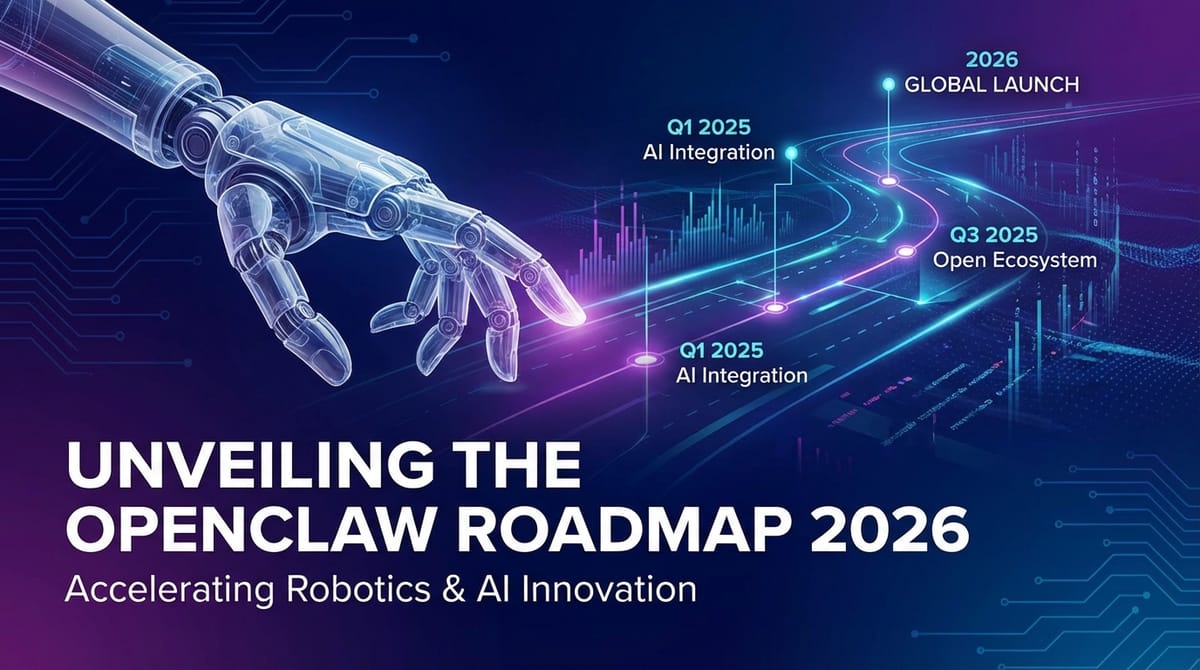

The rapid evolution of artificial intelligence has propelled us into an era where intelligent systems are no longer a luxury but a fundamental necessity for innovation and competitive advantage. Yet, the journey for developers and businesses integrating these powerful AI capabilities is often fraught with complexity, fragmentation, and escalating costs. Navigating a labyrinth of diverse models, disparate APIs, and inefficient resource allocation has become a significant bottleneck, hindering the full potential of AI adoption. It is against this backdrop of both immense opportunity and pressing challenges that OpenClaw proudly presents its Roadmap 2026 – a visionary blueprint designed to dismantle these barriers and usher in a new paradigm of seamless, efficient, and universally accessible AI integration.
The OpenClaw Roadmap 2026 is more than just a strategic plan; it represents a commitment to empowering every developer, every startup, and every enterprise with the tools to harness AI's transformative power without compromise. Our vision is to simplify the complex, unify the fragmented, and optimize the expensive, thereby accelerating the pace of innovation across every conceivable industry. This roadmap is built upon three foundational pillars: the development of a robust and intuitive Unified API, comprehensive Multi-model support to embrace the full spectrum of AI advancements, and sophisticated Cost optimization strategies to ensure that cutting-edge AI remains accessible and sustainable for all.
This document delves deep into each of these pillars, outlining OpenClaw's strategic initiatives, technological advancements, and the anticipated impact on the global AI landscape. We will explore how these interconnected elements will redefine AI integration, foster unprecedented creativity, and establish a new benchmark for what is achievable in intelligent application development. Join us as we unveil the future of AI integration, meticulously crafted to not only meet the demands of tomorrow but to actively shape them.
1. The Vision Behind OpenClaw 2026 – Redefining AI Integration
In the contemporary technological landscape, AI is no longer a niche domain but a ubiquitous force, permeating every sector from healthcare to finance, entertainment to logistics. The sheer velocity of advancements, particularly in areas like large language models (LLMs), computer vision, and predictive analytics, has created an unparalleled demand for integrating these intelligent capabilities into existing systems and new applications. However, this burgeoning ecosystem, while vibrant, often presents a fragmented and arduous path for developers. Imagine a scenario where integrating a sentiment analysis model from provider A, a natural language generation model from provider B, and a sophisticated image recognition service from provider C requires learning three distinct APIs, managing three separate authentication mechanisms, and meticulously orchestrating data flows between them. This is the reality many developers face today.
The core challenge lies in the sheer diversity and rapid proliferation of AI models and service providers. Each new breakthrough often comes with its own unique interface, its own data format requirements, and its own set of performance characteristics. This multiplicity, while fostering innovation, inadvertently creates silos, increasing integration complexity, raising development costs, and extending time-to-market for AI-powered solutions. Furthermore, the operational burden of monitoring, maintaining, and updating these disparate integrations can quickly become overwhelming, diverting precious resources away from core product development and innovation.
OpenClaw's overarching philosophy, underpinning the entire 2026 roadmap, is elegantly simple: to democratize access to advanced AI by abstracting away its inherent complexity. We envision a future where developers can focus solely on building innovative applications, leaving the intricate details of model integration, management, and optimization to a powerful, intelligent platform. This isn't just about making things easier; it's about unlocking creativity and enabling a new generation of AI-driven solutions that might otherwise be stifled by technical hurdles. Our strategic importance lies in becoming the universal translator and orchestrator for the diverse world of AI, empowering developers to seamlessly weave intelligence into their products with unparalleled efficiency and flexibility.
The 2026 roadmap is meticulously crafted to address these fundamental challenges head-on. It's a strategic pivot towards a more unified, flexible, and cost-effective approach to AI integration, ensuring that OpenClaw remains at the forefront of this transformative technological wave. By setting ambitious goals across our three pillars – Unified API, Multi-model support, and Cost optimization – we aim to not only meet the current needs of the market but to anticipate and proactively shape the future direction of AI development. This roadmap is our promise to foster an environment where innovation thrives, where technical barriers recede, and where the boundless potential of AI can be realized by everyone.
2. Pillar 1 – The Power of a Unified API for Seamless AI Development
At the heart of OpenClaw's transformative vision for 2026 lies the profound commitment to a truly Unified API. In the current fragmented AI landscape, developers often grapple with a cacophony of interfaces. Each AI service provider, be it for a cutting-edge large language model, a sophisticated image recognition engine, or a nuanced recommendation system, typically offers its own unique API endpoint, data schema, authentication methods, and rate limiting policies. This fragmentation forces developers to spend an inordinate amount of time on boilerplate integration code, API key management, error handling for diverse response formats, and continuous adaptation to provider-specific updates. This is not just a nuisance; it's a significant drain on resources, directly impacting time-to-market, increasing the likelihood of integration bugs, and elevating the overall development cost.
The concept of a Unified API is designed to be the definitive antidote to this complexity. Imagine a single, consistent interface through which developers can access a multitude of AI models and services, regardless of their underlying provider. This means one authentication mechanism, one data input format, and one predictable output structure, even if the request is routed to different backend models based on specific requirements. For instance, whether a developer needs to summarize text using GPT-4, Claude, or a specialized open-source model, the interaction with OpenClaw's Unified API remains identical, with only a parameter indicating the desired model or capability. This abstraction layer is not merely a convenience; it's a profound paradigm shift that drastically simplifies the developer experience.
The benefits of this approach for developers are multifaceted and far-reaching. Firstly, it leads to significantly reduced complexity. Instead of managing a sprawling codebase tailored to numerous vendor APIs, developers interact with a single, well-documented OpenClaw API. This translates into less code to write, fewer edge cases to handle, and a smoother development cycle. Secondly, it enables faster iteration and deployment. With the overhead of integration drastically reduced, developers can experiment with different AI models and integrate new functionalities much more rapidly. Imagine swapping out one LLM for another with a single configuration change rather than rewriting entire sections of integration code. This agility is critical in the fast-paced AI domain, allowing businesses to adapt quickly to new model releases or changing performance requirements.
OpenClaw's approach to designing and implementing this Unified API is rigorous and developer-centric. We are not merely aggregating existing APIs; we are building a robust abstraction layer that intelligently normalizes inputs and outputs, handles credential management securely, and provides a consistent error reporting mechanism across all integrated services. Our design philosophy prioritizes:
- Standardization: Adopting industry best practices for RESTful APIs, clear documentation, and consistent naming conventions. We aim for an experience akin to interacting with a single, powerful AI service, rather than a patchwork of many.
- Flexibility: While providing a unified interface, the API will also allow for granular control and access to provider-specific features when necessary, ensuring that advanced users are not constrained by the abstraction. This is achieved through carefully designed payload structures that can include optional, model-specific parameters.
- Scalability: The Unified API must handle high throughput and low latency demands, acting as a resilient gateway to an ever-growing ecosystem of AI models. This involves sophisticated load balancing, intelligent caching, and a distributed architecture.
- Security: All interactions through the Unified API will be secured with robust authentication (e.g., API keys, OAuth) and encryption protocols, ensuring data integrity and user privacy.
Consider a practical example: a startup building an AI-powered customer support chatbot. Without a Unified API, they might need to integrate a natural language understanding (NLU) model from Google Dialogflow, a sentiment analysis model from AWS Comprehend, and a generative AI model for response generation from OpenAI. Each integration would be a separate project. With OpenClaw's Unified API, they interact with a single endpoint, sending user queries and receiving processed responses, with OpenClaw intelligently routing the sub-tasks to the most appropriate backend models based on the configuration – potentially even optimizing for cost or performance in real-time. This streamlines development, reduces maintenance overhead, and allows the startup to focus on perfecting the customer experience rather than wrestling with API minutiae. The Unified API stands as the cornerstone of our strategy, designed to transform a fragmented landscape into a cohesive, powerful, and intuitive environment for all AI developers.
3. Pillar 2 – Embracing Diversity with Comprehensive Multi-model Support
The AI landscape is characterized not just by its rapid growth but by its incredible diversity. Beyond the widely publicized large language models (LLMs), there's a burgeoning ecosystem of specialized AI models catering to a myriad of tasks: vision models for image recognition and object detection, speech-to-text and text-to-speech models, recommendation engines, time-series forecasting models, and many more. Each category addresses specific problems, offering unique strengths and performance characteristics. For developers striving to build truly intelligent and versatile applications, the ability to selectively leverage the best model for a given task, regardless of its origin or type, is paramount. This necessitates robust Multi-model support, a core tenet of the OpenClaw Roadmap 2026.
The current challenge lies in the sheer effort required to integrate and manage this diversity. A developer building a multimodal AI application might need to connect to OpenAI for text generation, Google Cloud Vision for image analysis, and Hugging Face for a specialized translation model. Each of these integrations comes with its own learning curve, maintenance overhead, and potential compatibility issues. This fragmentation prevents developers from easily experimenting with different models, benchmarking their performance, or seamlessly swapping them out as new, superior alternatives emerge. Without comprehensive Multi-model support, developers are often locked into a limited set of providers or forced to invest heavily in complex custom integration layers, which severely curtails innovation and flexibility.
OpenClaw's strategy for achieving comprehensive Multi-model support is multifaceted, focusing on both breadth and depth of integration. Our aim is to create an agnostic platform that can seamlessly onboard and orchestrate a vast array of AI models, encompassing:
- Large Language Models (LLMs): Integration with leading LLMs from various providers (e.g., OpenAI, Anthropic, Google, Meta, open-source models like Llama derivatives) for tasks like text generation, summarization, translation, Q&A, and code generation.
- Vision Models: Support for image classification, object detection, facial recognition, optical character recognition (OCR), and image generation from providers like Google Cloud Vision, AWS Rekognition, and specialized open-source models.
- Speech Models: Integration of high-quality speech-to-text (STT) and text-to-speech (TTS) services, enabling voice interfaces and audio content generation.
- Embedding Models: Access to various embedding models for semantic search, recommendation systems, and data clustering, crucial for many advanced AI applications.
- Specialized Models: Inclusion of models for tasks like sentiment analysis, entity extraction, time-series forecasting, and other domain-specific AI functions.
The technical implications of managing such diverse models are significant. It requires a sophisticated routing layer that can intelligently direct requests to the appropriate backend model based on the type of task, specified parameters, or even real-time performance metrics. Furthermore, OpenClaw will handle the intricacies of data transformation, ensuring that inputs are correctly formatted for the chosen model and outputs are normalized back into a consistent structure for the developer. This internal orchestration layer is critical to maintaining the promise of the Unified API while leveraging the power of heterogeneous models.
The impact of robust Multi-model support on application versatility and innovation cannot be overstated. Developers will gain unprecedented flexibility to:
- Build richer, multimodal applications: Easily combine text, image, and audio processing capabilities within a single application. For instance, an application could analyze a customer's spoken query (STT), identify objects in an uploaded photo (Vision), and then generate a personalized, human-like response (LLM).
- Experiment and benchmark with ease: Rapidly switch between different models for the same task to compare performance, accuracy, and cost, allowing for optimal model selection without significant re-engineering.
- Future-proof their solutions: As new, more advanced models emerge, they can be seamlessly integrated into existing applications via OpenClaw's platform, ensuring that solutions remain cutting-edge without extensive refactoring.
- Leverage niche expertise: Access highly specialized models that might offer superior performance for specific tasks, even if they come from smaller, niche providers, broadening the scope of what's achievable.
Consider a media company looking to automate content creation and moderation. With OpenClaw's Multi-model support, they could use a generative LLM to draft article outlines, a vision model to verify image copyright and content appropriateness, a sentiment analysis model to gauge public reaction to current events, and a translation model to localize content for different markets – all orchestrated through a single platform. This dramatically reduces the integration burden and unlocks a level of agility previously unimaginable.
To illustrate the breadth of our intended Multi-model support, the following table outlines some key model categories and their applications within the OpenClaw ecosystem:
| Model Category | Example Use Cases | Integrated Providers/Types (Illustrative) | Key Benefits for Developers |
|---|---|---|---|
| Large Language Models | Content generation, summarization, chatbot logic, code generation, translation | OpenAI GPTs, Anthropic Claude, Google Gemini, Llama 2/3, Mistral | High-quality text output, versatile conversational AI, rapid prototyping |
| Vision Models | Image classification, object detection, OCR, facial recognition, image generation | Google Cloud Vision, AWS Rekognition, Stable Diffusion, YOLO | Automated image analysis, enhanced security, creative asset generation |
| Speech Models | Speech-to-Text (STT), Text-to-Speech (TTS), voice assistants | AWS Polly/Transcribe, Google Speech-to-Text, OpenAI Whisper | Natural language interfaces, accessibility features, audio content creation |
| Embedding Models | Semantic search, recommendation systems, data clustering, RAG | OpenAI Embeddings, Cohere Embeddings, Instructor models | Improved search relevance, personalized experiences, context retrieval |
| Specialized Models | Sentiment analysis, entity extraction, time-series forecasting, anomaly detection | Niche open-source models, specialized commercial APIs | Precise domain-specific insights, advanced analytics, proactive monitoring |
This robust framework for Multi-model support is not just about connecting to more models; it's about fundamentally changing how developers interact with and leverage the vast, diverse, and ever-expanding universe of artificial intelligence. It empowers them to build more intelligent, more adaptable, and more impactful applications with unprecedented ease and efficiency.
4. Pillar 3 – Driving Efficiency Through Advanced Cost Optimization Strategies
The exponential growth in AI adoption, particularly with resource-intensive models like LLMs, has brought a critical challenge to the forefront: the significant and often unpredictable operational costs associated with running AI workloads at scale. From the computational expense of model inference to the costs of data storage, bandwidth, and API calls, these expenditures can quickly spiral, becoming a major barrier for businesses looking to scale their AI initiatives. Without intelligent Cost optimization strategies, even the most innovative AI applications can become economically unviable, stifling their potential impact. This is precisely why Cost optimization stands as a pivotal pillar in the OpenClaw Roadmap 2026.
The problem is multifaceted. Different AI models, even those performing similar tasks, can have wildly varying pricing structures. Some charge per token, others per character, some per inference, and others per hour of compute. Furthermore, choosing the most powerful model for every single request often leads to overspending, as many tasks can be adequately handled by less expensive, albeit slightly less capable, alternatives. Manual management of these costs across multiple providers is a nightmare, requiring constant monitoring, intricate financial modeling, and often, compromises on performance or desired functionality. Businesses need not only visibility into their AI spending but also proactive mechanisms to control and reduce it without sacrificing the quality or responsiveness of their AI applications.
OpenClaw's commitment to Cost optimization is deeply embedded in the platform's architecture and operational philosophy. We are developing a suite of advanced features designed to intelligently minimize expenditure while maximizing performance and reliability. Our strategies focus on several key areas:
- Intelligent Routing and Model Selection: This is perhaps the most powerful cost-saving mechanism. OpenClaw will employ sophisticated algorithms to dynamically route API requests to the most cost-effective model that still meets the specified performance or quality criteria. For example, a non-critical internal summarization task might be routed to a cheaper, smaller LLM, while a customer-facing, high-stakes request would go to a premium, more powerful model. This dynamic decision-making happens transparently to the developer, driven by user-defined policies and real-time model performance metrics.
- Caching Mechanisms: For repetitive or frequently requested AI inferences (e.g., common customer support queries, widely used image tags), OpenClaw will implement robust caching. By storing and reusing previous model responses, the platform can significantly reduce the number of direct API calls to expensive backend models, thereby cutting costs and simultaneously improving latency. This is especially effective for content generation or retrieval augmented generation (RAG) where source documents may not change frequently.
- Tiered Access and Priority Queues: OpenClaw will offer flexible pricing tiers and the ability for developers to prioritize requests. Non-critical or batch processing tasks can be assigned lower priority, potentially leveraging cheaper, off-peak compute resources, while high-priority, real-time requests receive expedited processing, albeit at a potentially higher cost. This allows businesses to fine-tune their spending based on the urgency and importance of each AI workload.
- Payload Optimization: Automatically compressing input and output data where possible, or identifying redundancies in requests to minimize data transfer costs, particularly relevant for models that charge by token count or data volume.
- Provider Load Balancing and Fallbacks: By intelligently distributing requests across multiple providers, OpenClaw can not only ensure high availability but also leverage pricing differentials. If one provider temporarily raises prices or offers a promotional rate, traffic can be intelligently shifted to more cost-effective alternatives.
- Detailed Cost Analytics and Reporting: Providing developers with granular insights into their AI spending, broken down by model, task, project, and time period. This transparency empowers users to identify spending patterns, detect anomalies, and make informed decisions about their AI resource allocation.
Consider a large e-commerce platform using AI for personalized product recommendations, customer service chatbots, and content generation for product descriptions. Without OpenClaw, they might be running all these tasks on the most expensive, general-purpose LLM. With OpenClaw's Cost optimization, their product descriptions might be generated by a fine-tuned, moderately priced LLM, their customer service chatbot might leverage a combination of a smaller, cheaper LLM for initial queries and a premium one for complex escalations, and their recommendation engine might use a highly optimized, specialized model, further reducing token costs. The platform’s intelligent routing and caching would ensure that frequently requested recommendations are served from cache, saving significant API call costs.
The trade-offs between performance and cost are ever-present in AI. A faster response time usually means higher computational demands and potentially higher costs. OpenClaw helps developers navigate this delicate balance by providing granular control and intelligent defaults. Users can define performance SLAs (Service Level Agreements) and cost ceilings, allowing OpenClaw to make real-time decisions that optimize for both. For instance, a developer might specify that "latency for customer-facing chatbot responses must be under 500ms, and cost per query must not exceed $0.01." OpenClaw's system would then dynamically select the model and routing strategy that satisfies both constraints.
Here's a table summarizing OpenClaw's key Cost optimization features and their expected benefits:
| Optimization Feature | Mechanism | Expected Benefits |
|---|---|---|
| Intelligent Routing | Dynamically selects the most cost-effective model for each request based on policy & real-time pricing. | Up to 30-50% reduction in API call costs, optimal price-performance balance. |
| Response Caching | Stores and reuses model inferences for common or repetitive requests. | Significant reduction in repeat API calls, improved latency, reduced operational costs. |
| Tiered Access & Priority | Allows users to define request priority, routing non-critical tasks to cheaper resources. | Flexible spending, ability to leverage off-peak pricing, ensures critical tasks are prioritized. |
| Payload Optimization | Compresses data, identifies redundancies to minimize transfer costs. | Reduced data transfer costs, potentially lower token counts for LLMs. |
| Provider Load Balancing | Distributes requests across multiple providers to leverage pricing differentials and ensure availability. | Cost savings through competitive pricing, enhanced resilience and uptime. |
| Detailed Cost Analytics | Provides granular breakdown of AI spending by model, task, and project. | Informed decision-making, identifies cost-saving opportunities, transparent budgeting. |
By implementing these advanced Cost optimization strategies, OpenClaw empowers businesses to scale their AI initiatives with confidence, ensuring that the transformative power of artificial intelligence is not constrained by prohibitive expenses but is instead democratized and made sustainable for long-term growth and innovation.
XRoute is a cutting-edge unified API platform designed to streamline access to large language models (LLMs) for developers, businesses, and AI enthusiasts. By providing a single, OpenAI-compatible endpoint, XRoute.AI simplifies the integration of over 60 AI models from more than 20 active providers(including OpenAI, Anthropic, Mistral, Llama2, Google Gemini, and more), enabling seamless development of AI-driven applications, chatbots, and automated workflows.
5. Beyond the Pillars – Security, Scalability, and Community Engagement
While the Unified API, Multi-model support, and Cost optimization form the bedrock of the OpenClaw Roadmap 2026, our vision extends far beyond these core pillars. To truly deliver a revolutionary AI integration platform, OpenClaw recognizes the critical importance of foundational elements such as robust security, unparalleled scalability, and a vibrant, engaged developer community. These interconnected aspects are essential for building trust, fostering growth, and ensuring the long-term viability and success of the ecosystem.
Security Measures and Data Governance
In an era where data breaches are rampant and privacy concerns are paramount, security is not an afterthought but a fundamental design principle for OpenClaw. Our platform will be engineered from the ground up with enterprise-grade security protocols, ensuring that user data and intellectual property remain protected at every layer.
- End-to-End Encryption: All data in transit between user applications and OpenClaw, as well as between OpenClaw and third-party AI providers, will be secured using TLS 1.2+ encryption. Data at rest, particularly any cached inferences or user-specific configurations, will also be encrypted using industry-standard algorithms.
- Strict Access Control: A robust role-based access control (RBAC) system will govern who can access which features, manage API keys, and view sensitive data. This ensures that only authorized personnel can configure and operate AI workflows.
- Data Minimization and Anonymization: OpenClaw will adhere to principles of data minimization, only processing the necessary information required for AI inference. Where possible and consistent with functionality, data anonymization techniques will be employed, especially for diagnostic logging and performance monitoring.
- Compliance with Global Regulations: The platform will be designed to assist users in meeting various global data protection regulations, including GDPR, CCPA, and HIPAA (where applicable). This involves features like data residency options, auditable access logs, and transparent data processing policies.
- Threat Detection and Incident Response: Continuous monitoring for security vulnerabilities, intrusion detection systems, and a well-defined incident response plan will be in place to proactively identify and mitigate potential threats, ensuring rapid and effective remediation.
- Secure Credential Management: API keys and other credentials for third-party AI providers will be stored and managed securely within OpenClaw’s infrastructure, leveraging secrets management best practices, reducing the risk of exposure for developers.
Our commitment to data governance extends to clear, transparent policies regarding data retention, usage, and privacy, empowering users with full control and visibility over their information processed through the platform.
Scalability Architecture for Enterprise-Level Applications
AI applications, particularly those serving large user bases or processing vast quantities of data, demand an infrastructure that can scale effortlessly to meet fluctuating demand. The OpenClaw platform is being architected for hyper-scalability, ensuring high performance and availability even under immense load.
- Distributed Microservices Architecture: The platform is built on a distributed microservices paradigm, allowing individual components (e.g., API gateway, routing engine, caching service, analytics engine) to scale independently. This provides superior resilience and performance compared to monolithic architectures.
- Containerization and Orchestration: Leveraging technologies like Kubernetes, OpenClaw will ensure efficient resource utilization, automated deployment, and self-healing capabilities, minimizing operational overhead and maximizing uptime.
- Global Edge Network: For optimal latency and compliance, OpenClaw plans to deploy its services across multiple geographic regions and potentially leverage content delivery networks (CDNs) for edge computing, bringing AI inference closer to the end-users.
- Asynchronous Processing: Non-real-time or batch AI tasks will be handled asynchronously using message queues, preventing bottlenecks and ensuring that the core API remains responsive for critical, real-time requests.
- Fault Tolerance and Redundancy: Redundant components, failover mechanisms, and automated recovery procedures will be inherent in the architecture, minimizing single points of failure and ensuring continuous service availability.
- Performance Monitoring and Auto-Scaling: Comprehensive monitoring tools will track performance metrics in real-time, automatically triggering resource scaling up or down based on demand, optimizing both performance and infrastructure costs.
This robust architectural foundation ensures that OpenClaw can support applications ranging from small prototypes to enterprise-grade solutions serving millions of users, providing consistent performance and reliability.
Developer Tools, SDKs, and Community Initiatives
A powerful platform is only as good as the ease with which developers can use it. OpenClaw is dedicated to providing an exceptional developer experience through comprehensive tools, SDKs, and a thriving community.
- Comprehensive SDKs: Official client libraries (SDKs) will be provided for popular programming languages (e.g., Python, JavaScript, Go, Java), making integration with the Unified API straightforward and idiomatic. These SDKs will handle authentication, request formatting, and response parsing, reducing boilerplate code.
- Interactive Documentation and Tutorials: High-quality, interactive documentation with code examples, clear API references, and step-by-step tutorials will guide developers through every aspect of the platform, from getting started to implementing advanced features.
- Developer Portal: A dedicated developer portal will serve as a central hub for API keys, usage analytics, billing information, troubleshooting guides, and access to support resources.
- Community Forums and Support: Active community forums, Slack channels, and dedicated technical support will provide avenues for developers to ask questions, share insights, and get assistance. We believe in fostering a collaborative environment where knowledge can be freely exchanged.
- Integrations with Popular Frameworks: OpenClaw will actively pursue integrations with popular AI/ML frameworks, MLOps tools, and development environments (e.g., LangChain, LlamaIndex, VS Code extensions) to further streamline workflows.
- Hackathons and Developer Challenges: Regular hackathons, workshops, and coding challenges will be organized to inspire creativity, showcase the platform's capabilities, and gather valuable feedback from the developer community.
By investing in these critical areas, OpenClaw aims to create not just a product, but a complete ecosystem that empowers developers at every stage of their AI journey, fostering innovation and collaboration that extends well beyond the platform itself. The combined strength of robust security, scalable architecture, and a vibrant community will solidify OpenClaw's position as the trusted partner for AI integration in 2026 and beyond.
6. OpenClaw in Action – Use Cases and Industry Impact
The transformative power of the OpenClaw Roadmap 2026 isn't merely theoretical; it's designed to manifest in tangible, impactful applications across a diverse array of industries. By simplifying AI integration, providing versatile model access, and ensuring cost efficiency, OpenClaw empowers both nascent startups and established enterprises to innovate faster, operate smarter, and deliver more value to their customers. Let's explore some illustrative use cases and the profound industry impact our platform is set to create.
Healthcare: Personalized Patient Care and Research Acceleration
In healthcare, the stakes are incredibly high, and the need for precision and efficiency is paramount. OpenClaw can facilitate revolutionary advancements:
- AI-Powered Diagnostics: A medical imaging startup could use OpenClaw’s Unified API to route radiology scans (X-rays, MRIs) to specialized vision models from different providers for anomaly detection (e.g., one model for tumor detection, another for bone fractures). The Multi-model support ensures they can use the best-in-class model for each specific anomaly, while Cost optimization intelligently selects between GPU-intensive models and more efficient alternatives based on urgency, reducing the cost of complex image analysis.
- Personalized Treatment Plans: Leveraging LLMs, healthcare providers can analyze vast amounts of patient data (medical history, genomic data, real-time vitals) to suggest personalized treatment pathways. OpenClaw allows easy switching between different LLMs for different tasks – one for summarizing patient history, another for sifting through research papers for drug interactions, and a third for drafting patient-friendly communication, all managed through a single API endpoint.
- Drug Discovery and Research: Researchers can utilize OpenClaw to quickly prototype and test hypotheses. By accessing various generative AI models for molecular design and predictive models for drug efficacy, they can accelerate early-stage drug discovery, significantly cutting down on development cycles and costs.
Finance: Enhanced Fraud Detection and Customer Service Automation
The financial sector benefits immensely from AI’s ability to process large datasets and identify complex patterns.
- Real-time Fraud Detection: A bank can integrate OpenClaw into its transaction monitoring system. Incoming transactions are simultaneously analyzed by multiple specialized fraud detection models (accessible via Multi-model support) for different types of fraud (e.g., credit card fraud, money laundering, identity theft). The Unified API streamlines the integration of these disparate models, providing a consolidated risk score almost instantly. Cost optimization can prioritize low-risk transactions for cheaper, faster checks, while flagging high-risk ones for more intensive, potentially more expensive, but accurate analysis.
- Automated Customer Support: Financial institutions can deploy sophisticated chatbots that handle a wide range of customer inquiries, from account balance checks to loan application assistance. OpenClaw enables these chatbots to leverage multiple LLMs for nuanced conversational understanding, sentiment analysis, and precise information retrieval, ensuring consistent, high-quality service around the clock, while Cost optimization ensures sustainable operation.
E-commerce: Hyper-Personalization and Supply Chain Optimization
E-commerce thrives on understanding customer behavior and optimizing logistics, areas where AI excels.
- Dynamic Product Recommendations: An online retailer can use OpenClaw to power its recommendation engine. By combining embedding models for semantic similarity, LLMs for understanding user queries, and predictive analytics models for purchase probability, they can offer hyper-personalized product suggestions. Multi-model support ensures the flexibility to use the best model for each aspect of the recommendation, while the Unified API simplifies managing this complex interplay, leading to higher conversion rates.
- Intelligent Inventory and Supply Chain Management: Predictive AI models, accessible through OpenClaw, can analyze sales data, seasonality, and external factors (weather, geopolitical events) to forecast demand with high accuracy. This allows retailers to optimize inventory levels, reduce waste, and streamline logistics. OpenClaw's Cost optimization ensures that these predictive models, often resource-intensive, run efficiently without breaking the budget.
- Automated Product Content Generation: Creating compelling product descriptions and marketing copy at scale is a challenge. LLMs accessed via OpenClaw can generate high-quality, SEO-friendly content from basic product specifications, freeing up marketing teams and accelerating product launches.
Manufacturing and IoT: Predictive Maintenance and Quality Control
In industrial settings, AI can significantly enhance operational efficiency and reduce downtime.
- Predictive Maintenance: IoT sensors on factory equipment generate vast amounts of data. OpenClaw can be used to feed this data to time-series forecasting models and anomaly detection models. These models, accessed through the Unified API, can predict equipment failures before they occur, enabling proactive maintenance and preventing costly downtime. Multi-model support allows engineers to experiment with different predictive algorithms to find the most accurate one for various machine types.
- Automated Quality Control: Vision models can analyze products on an assembly line for defects. OpenClaw facilitates the integration of high-speed vision AI, allowing manufacturers to conduct real-time quality checks, reduce rework, and improve overall product quality, with Cost optimization ensuring the continuous operation of these GPU-intensive models is economically feasible.
Cross-Industry Impact: Democratizing AI Innovation
Beyond specific industry applications, OpenClaw’s Roadmap 2026 will have a profound, overarching impact:
- Lowering the Barrier to Entry: By abstracting away complexity and providing cost-effective access, OpenClaw democratizes AI development, enabling smaller teams, individual developers, and startups to build sophisticated AI applications that were previously the exclusive domain of large tech giants.
- Accelerating Innovation Cycles: Developers can prototype, test, and deploy AI features much faster, leading to a quicker pace of innovation and the rapid introduction of new, intelligent products and services.
- Fostering AI Agility: Businesses gain the flexibility to adapt to the rapidly changing AI landscape. As new models emerge or existing ones improve, they can seamlessly integrate them without major architectural overhauls, staying at the cutting edge.
- Maximizing ROI on AI Investments: Through intelligent Cost optimization, businesses can ensure that their AI initiatives are not only powerful but also economically sustainable, yielding a higher return on investment.
The OpenClaw Roadmap 2026 is designed to be the catalyst for the next wave of AI-driven innovation. By addressing the core challenges of integration, diversity, and cost, we are not just building a platform; we are forging a pathway for every industry to unlock the full, transformative potential of artificial intelligence.
7. A Glimpse into the Future – OpenClaw's Long-term Vision
The OpenClaw Roadmap 2026 is an ambitious blueprint, yet it represents just the initial phase of our long-term vision. The world of AI is dynamic, characterized by relentless innovation and unforeseen breakthroughs. Our commitment extends beyond 2026, focusing on continuous evolution, adaptability, and the pursuit of even greater levels of intelligence, efficiency, and accessibility. We envision a future where OpenClaw is not just a platform for AI integration, but an intelligent co-pilot for developers, proactively suggesting optimizations and unlocking new capabilities.
Anticipated advancements post-2026 include several exciting frontiers:
- Proactive AI Orchestration: Beyond simply routing requests based on predefined policies, OpenClaw will evolve to intelligently anticipate developer needs. This could involve recommending the optimal model for a newly uploaded dataset, suggesting fine-tuning opportunities, or even automatically composing complex multi-model workflows based on a high-level description of desired outcomes.
- Hybrid AI Deployments: The distinction between cloud-based and on-premise AI deployments will blur. OpenClaw will offer advanced capabilities for hybrid AI, allowing businesses to seamlessly integrate proprietary models running on their private infrastructure with public cloud models, all managed through the Unified API. This will be crucial for industries with strict data sovereignty or low-latency requirements.
- Decentralized AI Integration: We foresee exploring integrations with decentralized AI networks and federated learning paradigms, further broadening the spectrum of accessible models and potentially enhancing data privacy and security through collaborative, distributed intelligence.
- Enhanced Generative AI Control: As generative AI models become increasingly sophisticated, OpenClaw will develop advanced control mechanisms, allowing developers to fine-tune outputs with greater precision, steer model behavior, and integrate real-time feedback loops for continuous improvement.
- Ethical AI and Explainability: A major focus will be on embedding ethical AI principles and explainability features directly into the platform. This means providing tools to monitor for bias, ensure fairness, and offer transparency into model decisions, particularly critical for regulated industries.
- Automated Model Training and Fine-tuning: OpenClaw aims to simplify the entire AI lifecycle. Post-2026, we envision offering streamlined tools for automated model selection, data preparation, training, and fine-tuning, allowing developers to create highly specialized models from their own datasets with minimal effort, all orchestrated through the platform.
The role of AI itself in shaping OpenClaw's evolution is central to our strategy. We will leverage AI within the OpenClaw platform to continuously improve its own operations – from optimizing our internal routing algorithms to predicting resource needs and automating system maintenance. This self-improving loop ensures that OpenClaw remains at the cutting edge, adapting to new model architectures, pricing structures, and developer demands in real-time.
Our long-term vision is to establish OpenClaw as the indispensable backbone for all AI-driven innovation. We aim to foster an ecosystem where the most advanced AI capabilities are not only accessible but also effortlessly integrated, intelligently managed, and economically viable for every organization, regardless of size or technical prowess. We believe that by creating this frictionless environment, we can unlock unprecedented levels of human creativity and problem-solving, driving global progress in ways we can only begin to imagine.
As we look to this exciting future, it’s worth noting that the principles OpenClaw is building upon are already being demonstrated by forward-thinking platforms today. For instance, XRoute.AI is an excellent example of a cutting-edge unified API platform that is already streamlining access to large language models (LLMs). By providing a single, OpenAI-compatible endpoint, XRoute.AI simplifies the integration of over 60 AI models from more than 20 active providers, enabling seamless development of AI-driven applications. Its focus on low latency AI, cost-effective AI, and developer-friendly tools empowers users to build intelligent solutions without the complexity of managing multiple API connections. The platform’s high throughput, scalability, and flexible pricing model resonate strongly with OpenClaw’s own strategic pillars, showcasing the power of such an approach in the real world and serving as an inspiration for the broader, multi-modal vision we are building. OpenClaw aims to build on these foundations, extending these benefits to an even wider array of AI model types and integration challenges, thereby creating an even more comprehensive and versatile AI integration fabric for the future.
We invite developers, businesses, and AI enthusiasts to join us on this exhilarating journey. The OpenClaw Roadmap 2026 is an invitation to collaborate, innovate, and collectively shape a future where AI's full potential is within everyone's reach. Let's build the next generation of intelligent applications, unburdened by complexity and fueled by limitless possibility.
Conclusion
The OpenClaw Roadmap 2026 stands as a bold declaration of our intent to fundamentally transform the landscape of AI integration. We've meticulously outlined our strategic initiatives, built upon the three indispensable pillars of a Unified API, comprehensive Multi-model support, and advanced Cost optimization. These pillars are not isolated components but rather interconnected forces, designed to collectively dismantle the prevailing barriers of complexity, fragmentation, and unsustainable expense that currently hinder AI adoption and innovation.
Our commitment to a Unified API will empower developers with unparalleled simplicity, abstracting away the intricacies of diverse AI services behind a single, consistent interface. This means faster development cycles, reduced technical debt, and more time spent on creative problem-solving rather than integration headaches. The pursuit of comprehensive Multi-model support ensures that OpenClaw users will always have access to the best-in-class AI model for any given task, from the latest LLMs to specialized vision and speech models, fostering versatility and future-proofing applications against rapid technological shifts. Finally, our relentless focus on Cost optimization strategies, from intelligent routing to sophisticated caching, guarantees that cutting-edge AI remains economically viable and sustainable for projects of all scales, turning potential liabilities into strategic advantages.
Beyond these core tenets, OpenClaw is committed to building a robust and trustworthy ecosystem, underpinned by enterprise-grade security, hyper-scalable architecture, and a thriving developer community. We envision a future where AI is not just a powerful tool, but an accessible, intuitive, and seamlessly integrated component of every innovative solution. The impact of this roadmap will reverberate across industries, accelerating breakthroughs in healthcare, finance, e-commerce, manufacturing, and beyond, ultimately democratizing access to the transformative power of artificial intelligence.
The OpenClaw Roadmap 2026 is more than just a plan; it's an invitation to embark on a shared journey towards a more intelligent, efficient, and innovative future. We are confident that by executing this vision, OpenClaw will not only meet the evolving demands of the AI era but will actively define its trajectory, empowering a new generation of creators and problem-solvers to build what was once unimaginable. Join us as we unlock the boundless potential of AI, together.
Frequently Asked Questions (FAQ)
Q1: What is the primary goal of the OpenClaw Roadmap 2026? A1: The primary goal of the OpenClaw Roadmap 2026 is to revolutionize AI integration by addressing key challenges such as complexity, fragmentation, and high operational costs. It aims to achieve this through three core pillars: a Unified API for simplified access, comprehensive Multi-model support for versatility, and advanced Cost optimization strategies for sustainable AI deployment.
Q2: How does the Unified API benefit developers? A2: The Unified API significantly benefits developers by providing a single, consistent interface to access a multitude of AI models and services, regardless of their underlying provider. This reduces integration complexity, shortens development cycles, enables faster iteration and deployment, and eliminates the need to manage disparate APIs, authentication methods, and data formats.
Q3: What does "Multi-model support" entail, and why is it important? A3: Multi-model support means OpenClaw will integrate and orchestrate a vast array of AI models, including Large Language Models (LLMs), vision models, speech models, embedding models, and specialized AI, from various providers. This is crucial because it allows developers to leverage the best model for any specific task, build richer multimodal applications, experiment easily, and future-proof their solutions as the AI landscape evolves.
Q4: How will OpenClaw help businesses reduce their AI operational costs? A4: OpenClaw will implement advanced Cost optimization strategies such as intelligent routing (sending requests to the most cost-effective model), robust caching of responses, tiered access and priority queues, payload optimization, and dynamic provider load balancing. Additionally, detailed cost analytics will provide transparency, empowering businesses to make informed decisions and significantly reduce their AI expenditure.
Q5: Will OpenClaw integrate with existing AI tools and frameworks? A5: Yes, OpenClaw is committed to providing an excellent developer experience. This includes offering comprehensive SDKs for popular programming languages, interactive documentation, a dedicated developer portal, and actively pursuing integrations with popular AI/ML frameworks (e.g., LangChain, LlamaIndex) and development environments. The goal is to make OpenClaw a seamless part of existing developer workflows.
🚀You can securely and efficiently connect to thousands of data sources with XRoute in just two steps:
Step 1: Create Your API Key
To start using XRoute.AI, the first step is to create an account and generate your XRoute API KEY. This key unlocks access to the platform’s unified API interface, allowing you to connect to a vast ecosystem of large language models with minimal setup.
Here’s how to do it: 1. Visit https://xroute.ai/ and sign up for a free account. 2. Upon registration, explore the platform. 3. Navigate to the user dashboard and generate your XRoute API KEY.
This process takes less than a minute, and your API key will serve as the gateway to XRoute.AI’s robust developer tools, enabling seamless integration with LLM APIs for your projects.
Step 2: Select a Model and Make API Calls
Once you have your XRoute API KEY, you can select from over 60 large language models available on XRoute.AI and start making API calls. The platform’s OpenAI-compatible endpoint ensures that you can easily integrate models into your applications using just a few lines of code.
Here’s a sample configuration to call an LLM:
curl --location 'https://api.xroute.ai/openai/v1/chat/completions' \
--header 'Authorization: Bearer $apikey' \
--header 'Content-Type: application/json' \
--data '{
    "model": "gpt-5",
    "messages": [
        {
            "content": "Your text prompt here",
            "role": "user"
        }
    ]
}'
With this setup, your application can instantly connect to XRoute.AI’s unified API platform, leveraging low latency AI and high throughput (handling 891.82K tokens per month globally). XRoute.AI manages provider routing, load balancing, and failover, ensuring reliable performance for real-time applications like chatbots, data analysis tools, or automated workflows. You can also purchase additional API credits to scale your usage as needed, making it a cost-effective AI solution for projects of all sizes.
Note: Explore the documentation on https://xroute.ai/ for model-specific details, SDKs, and open-source examples to accelerate your development.