What is an AI API? A Comprehensive Guide.
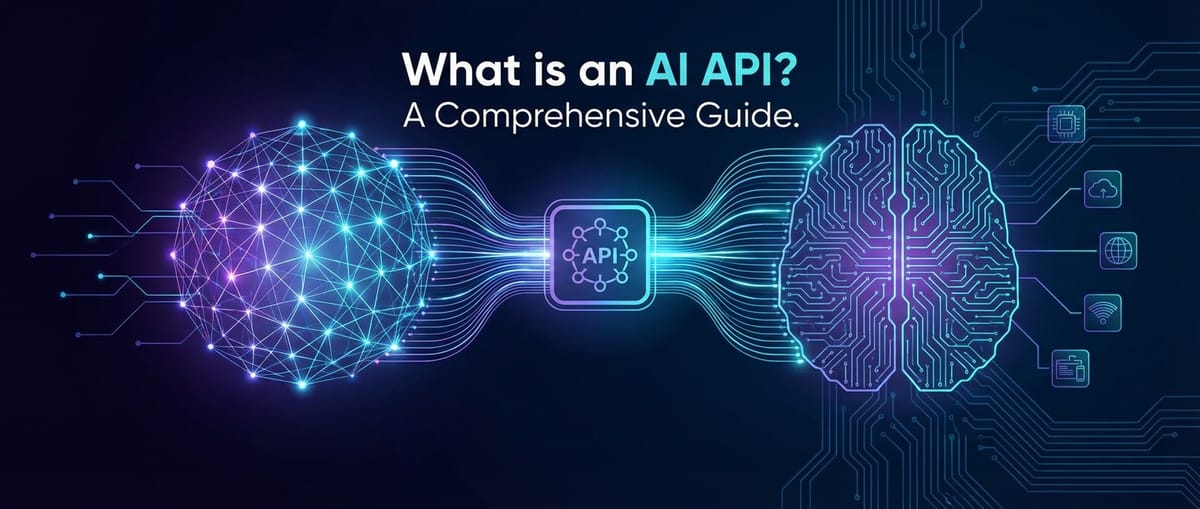

In an era increasingly shaped by artificial intelligence, the ability to integrate advanced AI functionalities into applications, services, and workflows has become not just a luxury, but a necessity for innovation and competitive advantage. At the heart of this transformative capability lies the AI API. Far more than just a technical interface, an AI API acts as a crucial bridge, connecting developers and businesses directly to sophisticated machine learning models without requiring deep expertise in AI development or extensive computational resources. This comprehensive guide will demystify what an AI API is, explore its multifaceted applications, and provide practical insights into how to use AI API effectively to build intelligent solutions.
The Dawn of Intelligence: Understanding the Core Concept of an AI API
The rapid evolution of artificial intelligence, from complex neural networks to powerful large language models (LLMs), has democratized access to capabilities once confined to research labs and tech giants. This democratization is largely thanks to the proliferation of Application Programming Interfaces (APIs). To truly grasp "what is an AI API," we must first understand the foundational concept of an API itself, and then overlay the unique characteristics that infuse it with artificial intelligence.
What is an API? The Digital Handshake
At its most fundamental level, an API (Application Programming Interface) is a set of definitions and protocols for building and integrating application software. Think of it as a meticulously designed menu in a restaurant. When you visit a restaurant, you don't go into the kitchen to cook your meal yourself. Instead, you look at the menu, tell the waiter (the API) what you want, and the kitchen (the server/service) prepares it and sends it back to you. You don't need to know how the food is prepared, just what you can order and how to order it.
In the digital world, an API facilitates communication between different software systems. It allows one application to request specific services or data from another application without needing to understand the intricate internal workings of that second application. This abstraction is incredibly powerful, enabling modular design, faster development, and greater interoperability across diverse platforms.
The "AI" in AI API: Bringing Intelligence to the Interface
Now, introduce "AI" into this equation, and the concept of an AI API comes into sharper focus. An AI API is an API that exposes the functionalities of an underlying artificial intelligence or machine learning model. Instead of providing access to, say, a database or a payment processing service, an AI API provides access to intelligence. This intelligence could manifest as the ability to understand human language, recognize objects in images, make predictions based on data, generate creative content, or perform complex data analysis.
When you interact with an AI API, you're essentially sending data (an image, a piece of text, a numerical dataset) to a pre-trained AI model residing on a remote server. The API then returns the model's output – a sentiment score, an object detection bounding box, a translated sentence, a generated response, or a prediction. The magic here is that you, as the developer, don't need to build, train, or maintain these sophisticated AI models yourself. You simply integrate the API, send your data, and receive the intelligent insights or actions.
Core Components and Characteristics of AI APIs
While the specific implementation details vary between providers, most AI APIs share common architectural elements:
- Endpoints: These are specific URLs that define the access points for different AI functionalities. For example, one endpoint might be for text sentiment analysis, another for image object detection.
- Requests: This is the data you send to the AI API, typically in a structured format like JSON or XML. It includes your input (e.g., the text to analyze, the image URL) and any parameters (e.g., language preference, confidence threshold).
- Responses: This is the data returned by the AI API after processing your request. It contains the AI model's output (e.g., the sentiment score, the detected objects and their coordinates, the translated text).
- Authentication: To ensure secure and authorized access, AI APIs almost always require some form of authentication, such as API keys, OAuth tokens, or JWTs.
- Documentation: Comprehensive documentation is crucial, detailing how to interact with the API, available endpoints, required parameters, expected response formats, and error codes.
Why are AI APIs Essential for Modern Development?
The widespread adoption of AI APIs stems from several compelling advantages they offer:
- Accessibility and Democratization of AI: AI APIs significantly lower the barrier to entry for utilizing advanced AI. Developers and businesses without deep machine learning expertise or the resources to build and train their own models can still integrate powerful AI capabilities into their products. This makes AI accessible to a much broader audience, fostering innovation across industries.
- Accelerated Development Cycles: Building AI models from scratch is a time-consuming and resource-intensive process, involving data collection, cleaning, model selection, training, evaluation, and deployment. AI APIs bypass much of this complexity, allowing developers to integrate sophisticated AI functionalities in a matter of hours or days, rather than months. This dramatically speeds up product development and time-to-market.
- Scalability and Performance: Reputable AI API providers host their models on robust, scalable cloud infrastructures. This means your application can handle varying loads, from a few requests per minute to thousands per second, without you needing to manage the underlying compute resources. These providers also optimize for performance, ensuring low latency and high throughput for AI inference.
- Cost-Effectiveness: While there are costs associated with using AI APIs (typically on a pay-per-use model), these are often far lower than the capital and operational expenses of developing, deploying, and maintaining custom AI models in-house. This allows businesses to access cutting-edge AI without massive upfront investments.
- Access to State-of-the-Art Models: Leading AI API providers continuously update and improve their underlying models, often incorporating the latest breakthroughs in AI research. By using an API, your application automatically benefits from these advancements, keeping your product at the forefront of AI capabilities without constant re-engineering.
- Focus on Core Business Logic: By outsourcing the AI component to an API, development teams can concentrate their efforts on their core business logic, user experience, and unique product features, rather than getting bogged down in the intricacies of AI model management.
In essence, AI APIs are the digital arteries that allow the lifeblood of artificial intelligence to flow into countless applications, empowering developers to build smarter, more intuitive, and more powerful solutions with unprecedented ease and efficiency. The next sections will delve deeper into the diverse types of AI APIs available and provide a practical guide on how to use AI API in your projects.
Exploring the Diverse Landscape: Types and Categories of AI APIs
The world of AI APIs is incredibly diverse, mirroring the vast and rapidly expanding fields of artificial intelligence itself. These APIs are categorized primarily by the type of AI capability they offer, enabling developers to integrate specific forms of intelligence into their applications. Understanding these categories is crucial for identifying the right tools for your project.
1. Natural Language Processing (NLP) APIs
NLP APIs are perhaps one of the most widely adopted categories, enabling machines to understand, interpret, and generate human language. They are the backbone of many modern interactive applications.
- Text Analysis and Understanding:
- Sentiment Analysis: Determines the emotional tone (positive, negative, neutral) of a piece of text. Example: Analyzing customer reviews to gauge product satisfaction.
- Entity Recognition: Identifies and classifies key entities (people, organizations, locations, dates) within text. Example: Extracting key information from news articles or legal documents.
- Topic Modeling/Categorization: Identifies the main themes or categories within a body of text. Example: Automatically sorting incoming support tickets.
- Text Summarization: Condenses long texts into shorter, coherent summaries. Example: Generating quick digests of lengthy reports.
- Language Translation:
- Translates text from one natural language to another. Example: Real-time translation in communication apps or localizing website content.
- Speech-to-Text (STT) and Text-to-Speech (TTS):
- STT: Converts spoken language into written text. Example: Transcribing voice notes, powering voice assistants, or generating captions for videos.
- TTS: Synthesizes human-like speech from written text. Example: Providing voice narration for e-learning materials, creating audio versions of articles, or enhancing accessibility features.
- Conversational AI (Chatbots & Virtual Assistants):
- Often powered by a combination of NLP techniques, these APIs allow applications to understand user queries, maintain context, and generate natural language responses. This is where the concept of API AI often comes into play, referring to APIs that specifically power intelligent conversational interfaces. Many platforms offer robust SDKs and APIs for building sophisticated chatbots capable of understanding natural language input and driving dynamic, context-aware dialogues. Example: Customer service chatbots, virtual personal assistants, interactive voice response (IVR) systems.
2. Computer Vision APIs
Computer Vision APIs enable machines to "see" and interpret the visual world. They allow applications to process and understand images and videos.
- Image Recognition and Analysis:
- Object Detection: Identifies and locates specific objects within an image or video frame, often drawing bounding boxes around them. Example: Counting inventory in a warehouse, monitoring security footage for anomalies.
- Facial Recognition: Detects and identifies human faces, often used for authentication or content moderation. Example: Unlocking smartphones, tagging people in photos.
- Image Moderation: Detects inappropriate or offensive content in images. Example: Filtering user-generated content on social media platforms.
- Attribute Recognition: Identifies specific attributes like age, gender, emotions, or clothing styles. Example: Personalizing shopping experiences or understanding customer demographics.
- Optical Character Recognition (OCR):
- Converts images of text (e.g., from scanned documents, photos) into machine-readable text. Example: Digitizing invoices, extracting data from business cards, reading license plates.
- Video Analysis:
- Processes video streams to detect events, track objects, or analyze behavior over time. Example: Traffic monitoring, sports analytics, surveillance.
3. Machine Learning (ML) Prediction and Recommendation APIs
These APIs provide access to general-purpose machine learning models for tasks like prediction, classification, and recommendation. While many specific AI APIs (like sentiment analysis) are built using ML, this category often refers to more generalized predictive models.
- Predictive Analytics:
- Predicts future outcomes based on historical data. Example: Predicting sales trends, forecasting stock prices, anticipating equipment failures.
- Recommendation Engines:
- Suggests items or content to users based on their past behavior, preferences, or similarity to other users. Example: Product recommendations on e-commerce sites, movie suggestions on streaming platforms.
- Anomaly Detection:
- Identifies unusual patterns or outliers in data that deviate from expected behavior. Example: Detecting fraudulent transactions, identifying network intrusions.
4. Generative AI APIs (Large Language Models & Content Creation)
This is one of the most exciting and rapidly evolving areas, with APIs providing access to powerful generative models capable of creating new content.
- Large Language Models (LLMs):
- Generate human-like text based on prompts, perform complex reasoning, answer questions, write code, summarize, translate, and more. Example: Powering advanced chatbots, drafting emails, writing articles, generating creative fiction.
- Image Generation:
- Create unique images from text descriptions (text-to-image) or modify existing images. Example: Generating artwork, creating marketing visuals, designing game assets.
- Code Generation/Assistance:
- Generate code snippets, refactor code, or explain code. Example: Accelerating software development, assisting programmers with complex tasks.
5. Other Specialized AI APIs
Beyond these main categories, there are many highly specialized AI APIs tailored for specific industries or unique problems:
- Fraud Detection APIs: Leverage AI to identify suspicious financial transactions or activities.
- Drug Discovery APIs: Assist in identifying potential drug candidates or predicting molecular properties.
- Personalization APIs: Power dynamic content and experiences tailored to individual users.
Table: Comparison of Common AI API Types and Their Applications
| AI API Type | Core Functionality | Common Applications | Example Providers (Illustrative) |
|---|---|---|---|
| Natural Language Processing (NLP) | Understand, interpret, and generate human language. | Chatbots, sentiment analysis, language translation, text summarization, voice assistants. | OpenAI, Google Cloud NLP, AWS Comprehend, Microsoft Azure Cognitive Services. |
| Computer Vision | Process and understand images and videos. | Object detection, facial recognition, OCR, image moderation, visual search. | Google Cloud Vision AI, AWS Rekognition, Microsoft Azure Computer Vision. |
| Generative AI (LLMs, Images) | Create new content (text, images, code) based on prompts. | Advanced chatbots, content creation, image generation, code assistants. | OpenAI (GPT models, DALL-E), Google (Gemini, Imagen), Anthropic (Claude). |
| Machine Learning Prediction | Make predictions, classify data, recommend items. | Recommendation engines, fraud detection, predictive maintenance, personalized marketing. | Google Cloud AI Platform, AWS SageMaker, custom model deployment APIs. |
| Speech-to-Text (STT) & Text-to-Speech (TTS) | Convert audio to text and text to audio. | Voice transcription, voice commands, audio content creation, accessibility features. | Google Cloud Speech-to-Text, AWS Polly, Microsoft Azure Speech Service. |
By offering such a wide array of intelligent capabilities, AI APIs have become indispensable tools for developers seeking to infuse their applications with sophisticated, powerful AI functionalities without the overhead of building and maintaining these complex models themselves. The next crucial step is understanding how to use AI API in practice to unlock these capabilities.
The Practical Pathway: How to Use an AI API
Integrating an AI API into your application might seem daunting at first, but with a clear understanding of the process, it becomes a straightforward and highly rewarding endeavor. This section will walk you through the typical steps and best practices for successfully using an AI API, from identifying your needs to deploying your intelligent solution. The keyword "how to use ai api" is central here, providing practical, actionable guidance.
Step-by-Step Guide to Integrating an AI API
The journey to leveraging an AI API generally follows these stages:
1. Define Your Problem and Identify the Need for AI
Before diving into code, clearly articulate what problem you're trying to solve or what new functionality you want to add. * What specific task requires intelligence? (e.g., "I need to understand the sentiment of customer feedback," "I want to automatically tag products in user-uploaded images," "I need to generate human-like responses for a chatbot.") * Why is AI the right solution? (e.g., scalability, accuracy, automation). * What kind of data will you be sending to the AI? (text, images, numbers). * What kind of output do you expect from the AI? (a score, a list of objects, a generated text).
This clarity will guide your choice of API and simplify the integration process.
2. Choose the Right AI API Provider and Service
With your requirements defined, research and select an appropriate AI API. Consider these factors:
- Specific Functionality: Does the API offer the exact AI capability you need (e.g., sentiment analysis specifically for financial news, object detection for medical images)?
- Accuracy and Performance: Review benchmarks and user testimonials. Some APIs excel in certain domains or languages more than others.
- Cost Model: Understand the pricing structure (pay-per-call, tiered pricing, subscription). Factor in expected usage volumes. Many providers offer free tiers for initial testing.
- Documentation and Support: Comprehensive, clear documentation and responsive support are invaluable, especially when troubleshooting.
- Ease of Integration: Are there SDKs (Software Development Kits) available in your preferred programming language? Is the API design intuitive?
- Scalability and Reliability: Can the API handle your expected load? What are its uptime guarantees?
- Data Privacy and Security: Crucial for sensitive data. Understand how your data is handled, stored, and used by the API provider.
- Features and Customization: Does it offer parameters for fine-tuning behavior? Can you integrate custom models if needed?
For developers working with a variety of LLMs, a unified API platform like XRoute.AI can be particularly beneficial. It provides a single, OpenAI-compatible endpoint to access over 60 AI models from 20+ active providers, simplifying the integration of diverse generative AI capabilities. This approach specifically addresses the complexity of managing multiple AI APIs, offering low latency AI, cost-effective AI, and high throughput.
3. Set Up Authentication and Obtain Credentials
Once you've chosen an API, you'll need to authenticate your requests. This typically involves:
- Signing Up: Create an account with the API provider.
- Generating API Keys: Most providers issue unique API keys or client secrets. Treat these like passwords and keep them secure. Do not hardcode them directly into your public codebase. Use environment variables or secure configuration management.
- Understanding Authentication Methods: Familiarize yourself with how to include your credentials in your API requests (e.g., as a header, query parameter, or part of the request body). OAuth 2.0 is also common for more robust authentication flows.
4. Integrate the API into Your Codebase
This is where the actual coding happens. Most AI APIs are RESTful, meaning they interact over standard HTTP protocols.
- Choose Your Language and Libraries:
Python: The requests library is a popular choice for making HTTP requests. ```python import requests import jsonapi_key = "YOUR_API_KEY" endpoint_url = "https://api.example.com/sentiment" # Replace with actual API endpointheaders = { "Content-Type": "application/json", "Authorization": f"Bearer {api_key}" # Or 'X-API-Key': api_key, depending on the API }data = { "text": "This product is absolutely amazing! I love it.", "language": "en" }try: response = requests.post(endpoint_url, headers=headers, data=json.dumps(data)) response.raise_for_status() # Raise an exception for HTTP errors sentiment_result = response.json() print("Sentiment Analysis Result:", sentiment_result) except requests.exceptions.HTTPError as err: print(f"HTTP error occurred: {err}") print("Response content:", response.content.decode()) except Exception as err: print(f"An unexpected error occurred: {err}") * **JavaScript (Node.js/Browser):** The `fetch` API or libraries like `axios` are commonly used.javascript async function analyzeSentiment(text) { const apiKey = "YOUR_API_KEY"; const endpointUrl = "https://api.example.com/sentiment"; // Replace with actual API endpoint
const headers = {
    "Content-Type": "application/json",
    "Authorization": `Bearer ${apiKey}` // Or 'X-API-Key': apiKey
};

const data = {
    text: text,
    language: "en"
};

try {
    const response = await fetch(endpointUrl, {
        method: "POST",
        headers: headers,
        body: JSON.stringify(data)
    });

    if (!response.ok) {
        const errorBody = await response.text();
        throw new Error(`HTTP error! Status: ${response.status}, Details: ${errorBody}`);
    }

    const sentimentResult = await response.json();
    console.log("Sentiment Analysis Result:", sentimentResult);
    return sentimentResult;
} catch (error) {
    console.error("An error occurred:", error);
    throw error;
}
}analyzeSentiment("This is a fantastic example!"); ``` * Constructing Requests: Based on the API documentation, build your request body with the necessary input data and parameters. * Making the Call: Send the HTTP request (usually POST for sending data, GET for retrieving pre-processed data or status). * Handling Responses: Parse the JSON (or XML) response to extract the AI model's output. * Error Handling: Implement robust error handling for network issues, API rate limits, invalid inputs, and other potential failures. Check HTTP status codes and API-specific error messages.
5. Test Thoroughly
- Unit Tests: Test your integration code with various inputs (valid, invalid, edge cases) to ensure it handles responses and errors correctly.
- Integration Tests: Test the end-to-end flow within your application.
- Performance Tests: If latency is critical, measure response times and throughput under load.
- Edge Cases: What happens with very short text, very long text, unusual characters, or images with no clear objects?
6. Deploy and Monitor
- Deployment: Once satisfied, deploy your application to your production environment.
- Monitoring: Set up logging and monitoring for your API calls. Track request volumes, success rates, error rates, and latency. This helps you identify issues quickly and manage costs.
- Security Best Practices: Regularly review your API key management and ensure your application's security posture is strong.
Common Challenges and Solutions When Using AI APIs
While straightforward, using AI APIs can present a few common hurdles:
- Rate Limiting: Most APIs limit the number of requests you can make within a certain timeframe.
- Solution: Implement exponential backoff for retries, use request queues, or upgrade your API plan if your usage requires higher limits.
- Data Privacy and Compliance: Sending sensitive data to third-party APIs requires careful consideration.
- Solution: Anonymize data where possible, choose providers with strong data privacy policies (e.g., GDPR, HIPAA compliance), and understand their data retention policies.
- Latency: Network delays and model inference time can impact user experience.
- Solution: Optimize your data payloads, use asynchronous processing, consider geographically closer API endpoints, or employ caching for frequently requested or static results.
- Model Bias and Limitations: AI models are trained on specific datasets and can inherit biases or have limitations in certain contexts.
- Solution: Be aware of the model's limitations, test with diverse datasets, and provide clear user expectations about the AI's capabilities.
- Cost Management: Uncontrolled usage can lead to unexpected bills.
- Solution: Set up billing alerts, monitor usage dashboards, and optimize calls by caching or batching requests where appropriate.
By understanding these practical steps and potential challenges, you are well-equipped to effectively answer the question of how to use AI API in your development projects, unlocking the power of artificial intelligence to build innovative and intelligent applications.
XRoute is a cutting-edge unified API platform designed to streamline access to large language models (LLMs) for developers, businesses, and AI enthusiasts. By providing a single, OpenAI-compatible endpoint, XRoute.AI simplifies the integration of over 60 AI models from more than 20 active providers(including OpenAI, Anthropic, Mistral, Llama2, Google Gemini, and more), enabling seamless development of AI-driven applications, chatbots, and automated workflows.
The Transformative Impact: Benefits of AI APIs for Developers and Businesses
The widespread adoption and continuous evolution of AI APIs signify more than just a technological trend; they represent a fundamental shift in how intelligence is integrated into our digital world. The benefits extend broadly, empowering individual developers to innovate faster and enabling businesses of all sizes to achieve unprecedented levels of efficiency and insight.
Benefits for Developers: Empowering Innovation
For developers, AI APIs are game-changers, dramatically altering the landscape of what's possible and how quickly it can be achieved.
- Accelerated Development Cycles: The most immediate and tangible benefit is speed. Instead of spending months building, training, and fine-tuning complex machine learning models, developers can integrate powerful AI capabilities in a matter of hours or days. This allows them to focus on the core functionality of their applications and rapidly iterate on ideas.
- Example: A developer building a new social media app can instantly add automatic content moderation or intelligent search without needing a dedicated ML team.
- Access to State-of-the-Art AI: AI research is advancing at an astonishing pace. Leading AI API providers continually update their underlying models with the latest breakthroughs. By using an API, developers automatically gain access to these cutting-edge algorithms and models without needing to re-engineer their own solutions. This ensures their applications remain competitive and utilize the best available technology.
- Example: An e-commerce platform using an LLM API for product descriptions can benefit from improved text generation capabilities as the API provider updates its model.
- Reduced Complexity and Overhead: Building and managing AI models involves significant infrastructure (GPUs, data storage), expertise (data scientists, ML engineers), and operational costs. AI APIs abstract away this complexity. Developers don't need to worry about model scaling, maintenance, hardware provisioning, or performance optimization – the API provider handles it all.
- Example: A small startup doesn't need to hire a full team of ML experts to launch a product with advanced image recognition; they can simply consume an API.
- Focus on Core Product Differentiation: By offloading generic AI tasks to APIs, development teams can allocate their valuable time and resources to developing unique features and improving the user experience that truly differentiates their product in the market.
- Example: A healthcare app development team can focus on secure patient data management and intuitive UI, while an AI API handles the natural language processing of doctor's notes.
- Lower Entry Barrier to AI: AI APIs democratize artificial intelligence. They make sophisticated AI accessible to developers with varying levels of ML expertise, from seasoned engineers to those just starting out. This broadens the pool of innovators capable of building intelligent applications.
Benefits for Businesses: Driving Growth and Efficiency
For businesses, AI APIs translate directly into competitive advantages, operational efficiencies, and new revenue opportunities.
- Rapid Innovation and New Product Features: Businesses can quickly prototype and launch new products or enhance existing ones with AI-powered features. This agility allows them to respond faster to market demands and customer needs.
- Example: A bank can quickly introduce a chatbot for customer support, improving service availability and reducing call center load.
- Enhanced Customer Experience: AI APIs enable more personalized, efficient, and intelligent interactions with customers.
- Example: Using NLP APIs for sentiment analysis of customer feedback, businesses can quickly identify pain points and improve services. Recommendation engines can personalize product offerings, leading to higher engagement and sales.
- Operational Efficiency and Automation: Many routine, data-intensive tasks can be automated or significantly optimized using AI APIs, freeing up human resources for more strategic work.
- Example: OCR APIs can automate data entry from invoices, saving countless hours. Predictive analytics can optimize inventory management, reducing waste.
- Cost Reduction: While there's a cost associated with API usage, it's often significantly lower than the expense of building and maintaining custom AI solutions in-house. This includes costs for talent, infrastructure, and ongoing research and development.
- Example: A marketing firm can use AI APIs for content generation or ad optimization on a pay-per-use basis, avoiding the need for a large internal ML team.
- Data-Driven Insights and Better Decision-Making: AI APIs can process vast amounts of data to uncover patterns, make predictions, and provide insights that human analysis alone might miss.
- Example: Using ML prediction APIs, a retail business can forecast demand more accurately, optimize pricing, and identify fraudulent activities.
- Competitive Advantage: Businesses that strategically leverage AI APIs to build smarter products, streamline operations, and understand their customers better gain a significant edge over competitors who lag in AI adoption.
Industry-Specific Applications of AI APIs
The impact of AI APIs is pervasive across nearly every industry:
- Healthcare: AI APIs power diagnostic tools, assist in drug discovery by analyzing molecular structures, personalize patient treatment plans, and automate administrative tasks like medical transcription (STT).
- Finance: Used for fraud detection, algorithmic trading, credit scoring, personalized financial advice, and automated customer service chatbots.
- Retail and E-commerce: Drive product recommendation engines, personalize marketing campaigns, automate customer support, optimize supply chains, and enhance visual search capabilities.
- Media and Entertainment: Enable content recommendation, automated video captioning, content moderation, personalized news feeds, and even AI-assisted content creation.
- Manufacturing: Used for predictive maintenance of machinery, quality control through computer vision, and optimizing production schedules.
- Logistics and Transportation: Optimize routing (further emphasizing the need for efficient route planning, perhaps hinting at areas where specialized AI might be used for logistics optimization, or where unified API platforms could manage various AI models for different aspects of logistics like demand forecasting, route optimization, and vehicle maintenance predictions), forecast demand, and manage autonomous vehicles.
The ability to seamlessly integrate powerful AI capabilities through APIs has not only democratized access to intelligence but also fundamentally reshaped how businesses operate and how developers create. This transformation is only accelerating, pushing the boundaries of what's possible and paving the way for even more sophisticated and interconnected AI-driven solutions.
The Horizon of Intelligence: The Future of AI APIs and Unified Platforms
The landscape of artificial intelligence is in a constant state of flux, with breakthroughs emerging at an unprecedented pace. This dynamism directly impacts the evolution of AI APIs, pushing them towards greater sophistication, integration, and accessibility. Looking ahead, several key trends are shaping the future of AI APIs, with unified platforms emerging as a critical component in navigating this complex ecosystem.
Emerging Trends Shaping AI APIs
- Multimodal AI: Current AI models often specialize in one modality (text, image, audio). The future is increasingly multimodal, where AI APIs will handle and integrate information from multiple types of data simultaneously. Imagine an API that can analyze a video, understand the spoken dialogue, identify objects, and interpret emotional cues to provide a comprehensive summary or response.
- Smaller, Specialized Models and Edge AI: While large foundational models like GPT-4 are incredibly powerful, there's a growing need for smaller, more efficient, and specialized models that can run on edge devices (smartphones, IoT devices) with low latency and reduced computational requirements. AI APIs will increasingly offer access to these optimized models for specific tasks.
- Ethical AI and Explainable AI (XAI): As AI becomes more pervasive, the demand for transparency, fairness, and accountability grows. Future AI APIs will likely incorporate features for Explainable AI (XAI), providing insights into how a model arrived at its decision. Ethical considerations regarding bias, privacy, and responsible use will be built into the API design and governance.
- No-Code/Low-Code AI Platforms: To further democratize AI, platforms will continue to emerge that allow non-technical users to build and deploy AI-powered applications using drag-and-drop interfaces and pre-built templates, all leveraging AI APIs in the background.
- Enhanced Personalization and Context-Awareness: AI APIs will become even more adept at understanding user context, preferences, and historical interactions to provide highly personalized experiences, moving beyond generic responses to truly tailored intelligence.
- AI Agents and Automation Workflows: The integration of AI APIs into broader automation platforms will allow for the creation of sophisticated AI agents capable of performing multi-step tasks, making decisions, and interacting with various systems autonomously.
The Rise of Unified AI API Platforms: Simplifying Complexity
As the number of AI models and providers explodes, developers face a new challenge: fragmentation. Integrating multiple AI APIs from different vendors (e.g., one for text generation, another for image analysis, a third for sentiment) can become a management nightmare, leading to:
- Increased Integration Complexity: Each API has its own authentication, request/response formats, and documentation.
- Vendor Lock-in: Dependence on a single provider for critical AI capabilities.
- Performance and Cost Inconsistencies: Varying latency, throughput, and pricing models across different APIs.
- Difficulty in Switching Models: Changing from one LLM to another for better performance or cost requires significant code refactoring.
This is precisely where unified AI API platforms step in, offering a compelling solution. These platforms act as an intelligent abstraction layer, providing a single, standardized interface to access a multitude of underlying AI models from various providers.
Introducing XRoute.AI: A Pioneer in Unified AI API Access
XRoute.AI is a cutting-edge unified API platform designed to streamline access to large language models (LLMs) for developers, businesses, and AI enthusiasts. It directly addresses the challenges of AI fragmentation by offering a single, OpenAI-compatible endpoint. This means developers can integrate once and gain access to a vast ecosystem of AI capabilities.
How XRoute.AI Transforms AI Integration:
- Simplified Integration: By providing a single, OpenAI-compatible endpoint, XRoute.AI drastically simplifies the integration process. Developers familiar with OpenAI's API can seamlessly switch to XRoute.AI to access a wider range of models without extensive code changes.
- Access to a Vast Model Ecosystem: XRoute.AI offers access to over 60 AI models from more than 20 active providers. This includes a diverse array of powerful LLMs, ensuring developers can choose the best model for their specific task, whether it's for natural language understanding, content generation, code assistance, or complex reasoning.
- Focus on Performance and Cost-Efficiency: The platform is engineered for low latency AI and cost-effective AI. It intelligently routes requests to optimize for speed and price, ensuring users get the best performance at the most competitive rates. This is crucial for applications requiring high responsiveness or operating at scale.
- Developer-Friendly Tools: XRoute.AI is built with developers in mind, providing tools and an environment that simplifies the development of AI-driven applications, chatbots, and automated workflows.
- High Throughput and Scalability: The platform's robust infrastructure ensures high throughput and scalability, making it suitable for projects of all sizes, from startups developing their first AI feature to enterprise-level applications handling millions of requests.
- Flexible Pricing Model: A flexible pricing model further enhances its appeal, allowing businesses to manage their AI spend efficiently.
By abstracting away the complexities of managing multiple API connections, XRoute.AI empowers users to build intelligent solutions without the overhead, allowing them to focus on innovation and leveraging the power of AI to its fullest potential. It exemplifies how unified API platforms are becoming essential navigators in the rapidly expanding universe of AI models.
The Strategic Importance of Unified Platforms
Unified platforms like XRoute.AI are not just convenience tools; they are strategically important because they:
- Future-Proof Applications: By decoupling applications from specific AI models or providers, unified platforms make it easier to switch models as new, better, or more cost-effective options emerge, ensuring applications remain cutting-edge.
- Reduce Vendor Lock-in: Developers are no longer tied to a single AI vendor, fostering a more competitive and innovative ecosystem.
- Optimize for Performance and Cost: These platforms can intelligently route requests to the best-performing or most cost-effective model for a given task, something individual developers would find challenging to manage manually.
- Accelerate Experimentation: Trying out different models for a specific task becomes much simpler, speeding up the experimentation and optimization process.
The future of AI APIs is bright, characterized by increasing sophistication, multimodal capabilities, and a strong emphasis on ethics and explainability. Unified platforms like XRoute.AI are at the forefront of this evolution, providing the necessary infrastructure and abstraction layers to make this complex future accessible and manageable for developers and businesses alike, truly enabling the seamless development of AI-driven applications.
Conclusion: Embracing the Intelligent Future with AI APIs
The journey through "what is an AI API" reveals a fundamental truth about modern technological advancement: intelligence is no longer confined to the labs of AI researchers but is now readily accessible as a service. AI APIs serve as the crucial conduit, empowering developers and businesses worldwide to infuse their applications with sophisticated capabilities like natural language understanding, computer vision, and generative content creation, all without the arduous task of building and maintaining complex AI models from the ground up.
We've explored the diverse landscape of AI APIs, from those enabling detailed text analysis and voice interactions to those powering advanced image recognition and the revolutionary capabilities of large language models. The practical guide on "how to use AI API" provided a clear pathway for integration, emphasizing the importance of defining needs, choosing the right provider, securing authentication, and implementing robust error handling. The benefits are undeniable: accelerated development, access to state-of-the-art AI, significant cost savings, and the ability to drive innovation across every industry imaginable.
As we look to the future, the trends towards multimodal AI, specialized models, and ethical considerations underscore the ongoing evolution of this field. Amidst this complexity, unified AI API platforms are emerging as vital tools, simplifying access and management. Platforms like XRoute.AI exemplify this shift, offering a single, OpenAI-compatible endpoint to over 60 AI models from more than 20 providers. This approach not only streamlines development but also ensures low latency AI and cost-effective AI, empowering developers to build intelligent solutions with unprecedented efficiency and flexibility.
In essence, AI APIs are more than just technical interfaces; they are the keys to unlocking a future where artificial intelligence seamlessly augments human capabilities, drives unprecedented innovation, and transforms every facet of our digital lives. Embracing and understanding these powerful tools is no longer optional but essential for anyone looking to build the next generation of intelligent applications.
Frequently Asked Questions (FAQ)
Q1: What is the primary difference between a regular API and an AI API?
A1: A regular API provides access to data or specific functions of a software application (e.g., retrieving weather data, processing payments). An AI API, on the other hand, specifically exposes the capabilities of an underlying artificial intelligence or machine learning model, allowing applications to perform intelligent tasks like sentiment analysis, image recognition, or text generation without needing to build the AI model itself.
Q2: Is "API AI" a specific product or a general term?
A2: "API AI" can be a general term referring to APIs that provide AI functionalities. Historically, "API.AI" was also the former name of Google's conversational AI platform, which is now known as Dialogflow. In current usage, when people refer to "API AI," they generally mean any API that enables artificial intelligence features, particularly in the realm of conversational AI or natural language processing.
Q3: Do I need to be an AI expert or data scientist to use an AI API?
A3: No, that's one of the greatest benefits of AI APIs! You do not need to be an AI expert or data scientist. AI APIs abstract away the complexity of building, training, and deploying AI models. As a developer, you primarily need to understand how to make HTTP requests, handle JSON responses, and interpret the API's documentation. The AI expertise is provided by the API vendor.
Q4: How do AI APIs ensure data privacy and security?
A4: Reputable AI API providers implement robust security measures, including data encryption (in transit and at rest), secure authentication methods (like API keys and OAuth), and strict access controls. They also typically comply with relevant data privacy regulations (e.g., GDPR, HIPAA). However, as a user, it's crucial to always review the provider's data handling policies, terms of service, and privacy agreements, especially when dealing with sensitive information. Anonymizing data before sending it to an API is often a good practice where feasible.
Q5: Can I integrate multiple AI APIs into a single application?
A5: Yes, absolutely. It's common for complex applications to leverage multiple AI APIs to achieve different functionalities (e.g., an NLP API for text understanding, a computer vision API for image analysis). However, managing multiple API connections, each with its own authentication and request/response formats, can become complex. This is where unified API platforms like XRoute.AI become invaluable, as they offer a single, standardized endpoint to access a wide array of AI models from various providers, streamlining the integration and management process.
🚀You can securely and efficiently connect to thousands of data sources with XRoute in just two steps:
Step 1: Create Your API Key
To start using XRoute.AI, the first step is to create an account and generate your XRoute API KEY. This key unlocks access to the platform’s unified API interface, allowing you to connect to a vast ecosystem of large language models with minimal setup.
Here’s how to do it: 1. Visit https://xroute.ai/ and sign up for a free account. 2. Upon registration, explore the platform. 3. Navigate to the user dashboard and generate your XRoute API KEY.
This process takes less than a minute, and your API key will serve as the gateway to XRoute.AI’s robust developer tools, enabling seamless integration with LLM APIs for your projects.
Step 2: Select a Model and Make API Calls
Once you have your XRoute API KEY, you can select from over 60 large language models available on XRoute.AI and start making API calls. The platform’s OpenAI-compatible endpoint ensures that you can easily integrate models into your applications using just a few lines of code.
Here’s a sample configuration to call an LLM:
curl --location 'https://api.xroute.ai/openai/v1/chat/completions' \
--header 'Authorization: Bearer $apikey' \
--header 'Content-Type: application/json' \
--data '{
    "model": "gpt-5",
    "messages": [
        {
            "content": "Your text prompt here",
            "role": "user"
        }
    ]
}'
With this setup, your application can instantly connect to XRoute.AI’s unified API platform, leveraging low latency AI and high throughput (handling 891.82K tokens per month globally). XRoute.AI manages provider routing, load balancing, and failover, ensuring reliable performance for real-time applications like chatbots, data analysis tools, or automated workflows. You can also purchase additional API credits to scale your usage as needed, making it a cost-effective AI solution for projects of all sizes.
Note: Explore the documentation on https://xroute.ai/ for model-specific details, SDKs, and open-source examples to accelerate your development.