What is an AI API? Simplified & Explained

In an era increasingly shaped by artificial intelligence, the power of machines to learn, reason, and create is no longer confined to academic labs or tech giants. From smart assistants that schedule our days to sophisticated algorithms that predict market trends, AI has seamlessly integrated into the fabric of our daily lives and professional workflows. But how do developers, businesses, and innovators harness this incredible potential without needing to be machine learning PhDs or possessing vast computational resources? The answer lies in a seemingly simple yet profoundly powerful concept: the AI API.
The phrase "what is an AI API?" is becoming a fundamental question for anyone looking to innovate in the digital space. It’s the key that unlocks access to complex AI models, transforming them into accessible tools that can be integrated into virtually any application. Whether you’re building a customer service chatbot, developing a smart analytics dashboard, or creating an entirely new AI-powered product, understanding "what is API in AI" is paramount. This article aims to demystify AI APIs, explaining their core mechanics, diverse applications, undeniable benefits, and critical considerations, ultimately illustrating how these interfaces are democratizing artificial intelligence and propelling a new wave of innovation. We will delve into the intricacies of "api ai" – the application programming interface for artificial intelligence – exploring how it functions as a bridge between your software and the cutting-edge capabilities of machine learning and deep learning models.
The Foundational Understanding: What Exactly is an API?
Before we dive into the specifics of an AI API, it’s essential to grasp the fundamental concept of an Application Programming Interface (API) itself. Think of an API as a digital waiter in a restaurant. You, the customer, want a specific dish (data or functionality). You don't go into the kitchen to prepare it yourself, nor do you need to understand the complex cooking processes involved. Instead, you tell the waiter what you want from the menu. The waiter takes your order to the kitchen, retrieves the prepared dish, and brings it back to your table.
In the digital world, an API plays this exact role. It is a set of defined rules and protocols that allows different software applications to communicate with each other. It specifies how software components should interact, enabling programs to exchange data and invoke functionality without needing to understand the internal workings of the other program.
Key Components of an API:
- Endpoints: These are specific URLs that represent particular resources or functions that an API can access. For instance,
/usersmight be an endpoint to retrieve user data, while/productscould fetch product information. - Requests: When one application (the client) wants to interact with another application (the server) via an API, it sends a request. This request typically includes:
- Method: An action to be performed (e.g., GET to retrieve, POST to create, PUT to update, DELETE to remove).
- Headers: Metadata about the request (e.g., authentication tokens, content type).
- Body: The actual data being sent (e.g., JSON payload for creating a new user).
- Responses: After processing a request, the server sends back a response to the client. This response contains:
- Status Code: Indicates the success or failure of the request (e.g., 200 OK, 404 Not Found, 500 Internal Server Error).
- Headers: Metadata about the response.
- Body: The data requested or the result of the operation, often in a structured format like JSON or XML.
- Authentication: Most APIs require some form of authentication (e.g., API keys, OAuth tokens) to ensure that only authorized applications can access their resources. This protects the data and services provided by the API.
APIs are the backbone of modern software development. They enable modularity, allowing developers to build complex applications by integrating various specialized services rather than building everything from scratch. This fosters innovation, reduces development time, and promotes an ecosystem of interconnected services that power much of the internet as we know it today.
Bridging the Gap: What is an AI API?
Now that we have a solid understanding of APIs in general, let's narrow our focus to answer the core question: what is an AI API?
An AI API, or Artificial Intelligence Application Programming Interface, is a specific type of API that provides access to pre-built, pre-trained, or custom AI models and their functionalities. Instead of requiring developers to build, train, and deploy their own machine learning models (which demands extensive data science expertise, computational resources, and time), an AI API allows them to simply send data to a cloud-based AI service and receive intelligent insights or actions in return.
In essence, "what is API in AI" means it's the standardized communication channel that allows your software to tap into the capabilities of artificial intelligence. It acts as an intermediary, translating your requests into instructions that an AI model can understand, processing the data with its intelligence, and then delivering the results back to your application in a usable format.
How AI APIs Differ from Traditional APIs:
While the basic mechanics of requests and responses remain the same, AI APIs introduce unique characteristics:
- Complexity Abstraction: The most significant difference is the level of abstraction. Traditional APIs often manage CRUD (Create, Read, Update, Delete) operations on data or trigger specific business logic. AI APIs, however, abstract away the immense complexity of machine learning algorithms, neural networks, data preprocessing, model training, and inference engines. Developers interact with high-level functions like "detect objects," "analyze sentiment," or "generate text," without needing to understand the underlying statistical models or deep learning architectures.
- Intelligent Processing: AI APIs perform intelligent processing on the input data. Instead of merely fetching or storing information, they analyze, interpret, predict, or generate based on learned patterns. For example, sending an image to a traditional API might return its metadata; sending it to an AI Vision API might return a list of objects detected within the image.
- Data-Driven Outcomes: The responses from AI APIs are often probabilistic, analytical, or generative. They might provide confidence scores (e.g., "95% sure this is a cat"), sentiment labels ("positive," "negative," "neutral"), or completely new content (e.g., a generated paragraph or image).
- Continuous Improvement: Many cloud-based AI API providers continuously update and improve their underlying AI models. This means applications leveraging these APIs often benefit from enhanced performance, accuracy, and new features automatically, without requiring any code changes on the developer's part.
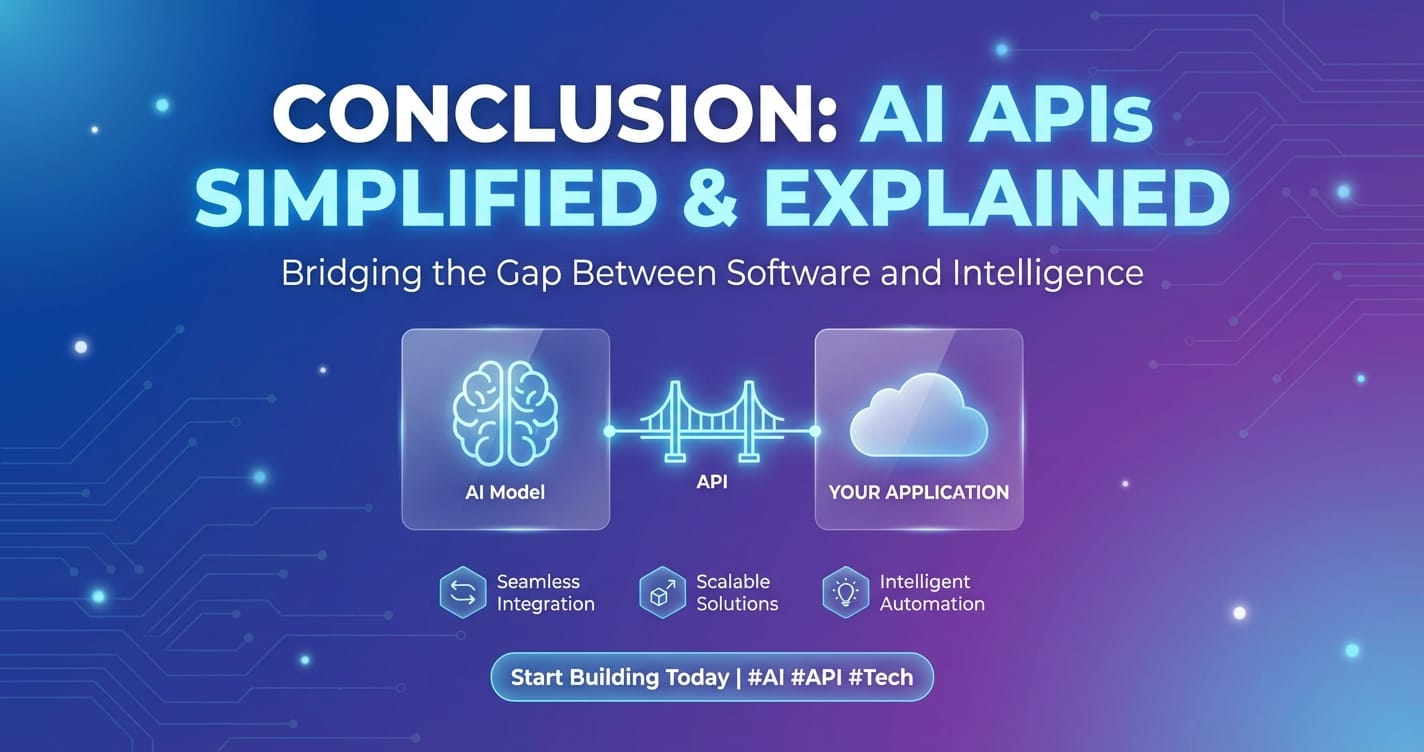
So, when we talk about "api ai," we are referring to the entire ecosystem of interfaces that make artificial intelligence accessible. It’s the bridge that transforms cutting-edge research into practical, deployable features for any software application, democratizing AI by lowering the barrier to entry significantly.
The Architecture Behind the Intelligence: How AI APIs Work
Understanding the inner workings of an AI API involves appreciating a sophisticated interplay between client applications, API gateways, and powerful AI inference engines, often residing in the cloud. Let's break down the typical architecture and data flow:
- Client Application Initiates Request:
- A user interacts with a client application (e.g., a mobile app, a web dashboard, a backend service).
- The client application needs to perform an AI-driven task (e.g., translate text, classify an image, predict a value).
- The application formats a request, including the necessary data (e.g., the text to translate, the image file), authentication credentials (like an API key), and the desired operation, and sends it to the AI API endpoint.
- API Gateway:
- The request first hits an API Gateway. This gateway acts as the front door for the AI service.
- Its responsibilities include:
- Authentication & Authorization: Verifying the client's identity and ensuring they have permission to access the requested AI service.
- Request Routing: Directing the request to the appropriate backend AI model or service.
- Rate Limiting: Preventing abuse by limiting the number of requests a client can make within a certain timeframe.
- Logging & Monitoring: Recording API calls for analytics, billing, and debugging.
- Input Validation: Ensuring the data sent by the client meets the API's requirements.
- Data Preprocessing (Optional but Common):
- Before the data reaches the core AI model, it might undergo preprocessing. This step prepares the raw input for optimal consumption by the AI model.
- Examples include:
- Resizing images to a standard dimension.
- Tokenizing text into individual words or subwords.
- Normalizing numerical data.
- Converting audio files to a specific format.
- AI Model Inference Engine:
- This is the heart of the operation. The preprocessed data is fed into the deployed AI model.
- The model, which has been extensively trained on vast datasets, performs its task (inference).
- For instance:
- A Natural Language Processing (NLP) model analyzes text for sentiment.
- A Computer Vision (CV) model identifies objects in an image.
- A Large Language Model (LLM) generates coherent text.
- A predictive model calculates a probability or a forecast.
- This process often leverages specialized hardware like GPUs or TPUs for accelerated computation, especially for deep learning models.
- Output Post-processing (Optional but Common):
- The raw output from the AI model might need to be refined before being sent back to the client.
- Examples:
- Formatting raw sentiment scores into "positive," "negative," "neutral" labels.
- Converting bounding box coordinates from an object detection model into human-readable descriptions.
- Structuring generated text into a JSON object.
- Response Back to Client:
- The processed output is then packaged into a response (usually JSON) by the API gateway.
- This response is sent back to the client application, which can then use the AI-generated insight or action to enhance its functionality or user experience.
This entire process, from client request to response, typically occurs in milliseconds, providing a near real-time interaction with sophisticated AI capabilities. This cloud-based, service-oriented architecture allows AI API providers to manage complex infrastructure, scale resources dynamically, and continuously improve their models, while developers focus solely on integrating the intelligence into their applications.
Diverse Landscape: Types of AI APIs and Their Applications
The world of AI APIs is incredibly diverse, with services tailored to almost every facet of artificial intelligence. Understanding these categories is crucial for any developer or business seeking to integrate AI effectively. Each type of API AI offers unique capabilities, solving specific problems and opening doors to innovative applications.
1. Natural Language Processing (NLP) APIs
NLP APIs are designed to enable computers to understand, interpret, and generate human language. They are among the most popular AI APIs due to the ubiquitous nature of text data.
- Sentiment Analysis: Identifies the emotional tone (positive, negative, neutral) within a piece of text.
- Applications: Customer feedback analysis, social media monitoring, brand reputation management.
- Text Summarization: Condenses long documents into shorter, coherent summaries.
- Applications: News aggregation, research paper review, content creation.
- Machine Translation: Translates text from one language to another.
- Applications: Real-time communication, localization of content, travel apps.
- Entity Recognition (NER): Identifies and categorizes key information (people, organizations, locations, dates) within text.
- Applications: Information extraction, content categorization, legal document analysis.
- Large Language Models (LLMs) & Generative Text: These advanced NLP APIs can generate human-like text, answer questions, write code, create stories, and much more, based on prompts.
- Applications: Chatbots, content generation, virtual assistants, code completion, interactive storytelling.
- Chatbot & Conversational AI: Powers interactive conversational agents that can understand user queries and provide relevant responses.
- Applications: Customer support, virtual receptionists, interactive marketing.
2. Computer Vision (CV) APIs
Computer Vision APIs empower applications to "see" and interpret visual data from images and videos.
- Object Detection & Recognition: Identifies and locates specific objects within an image or video frame.
- Applications: Inventory management, autonomous vehicles, security surveillance, retail analytics.
- Image Classification: Assigns labels or categories to entire images (e.g., "landscape," "portrait," "animal").
- Applications: Content moderation, photo organization, medical imaging analysis.
- Facial Recognition: Identifies and verifies individuals based on their facial features.
- Applications: Access control, user authentication, security systems (with ethical considerations).
- Optical Character Recognition (OCR): Extracts text from images of documents, signs, or handwritten notes.
- Applications: Digitizing documents, invoice processing, license plate recognition.
- Image Moderation: Automatically detects inappropriate or harmful content in images.
- Applications: Social media platforms, online marketplaces.
3. Speech-to-Text & Text-to-Speech APIs
These APIs bridge the gap between spoken and written language.
- Speech-to-Text (STT): Transcribes spoken language into written text.
- Applications: Voice assistants, meeting transcription, call center analytics, dictation software.
- Text-to-Speech (TTS): Converts written text into natural-sounding spoken audio.
- Applications: Audiobooks, navigation systems, voiceovers, accessibility tools, IVR systems.
4. Recommendation Engine APIs
Recommendation APIs analyze user behavior, preferences, and item characteristics to suggest relevant products, content, or services.
- Applications: E-commerce product recommendations ("Customers who bought this also bought..."), personalized content feeds (Netflix, Spotify), dynamic advertising.
5. Predictive Analytics & Machine Learning APIs
These APIs provide access to models trained for forecasting, anomaly detection, and pattern recognition across various data types.
- Forecasting: Predicts future trends based on historical data.
- Applications: Sales forecasting, demand planning, resource allocation.
- Fraud Detection: Identifies suspicious transactions or activities in financial or online systems.
- Applications: Banking, e-commerce security, insurance claims processing.
- Anomaly Detection: Pinpoints unusual patterns or outliers in data that might indicate problems or insights.
- Applications: Network security, industrial equipment monitoring, performance optimization.
6. Generative AI APIs
A rapidly evolving category, these APIs allow for the creation of new, original content beyond just text.
- Image Generation: Creates images from text descriptions (e.g., "a futuristic cityscape at sunset").
- Applications: Digital art, marketing assets, game development, virtual reality.
- Code Generation: Generates code snippets or entire functions based on natural language prompts.
- Applications: Developer productivity, rapid prototyping.
- Music & Audio Generation: Creates original musical compositions or sound effects.
The landscape of AI APIs is constantly expanding, with new specialized services emerging regularly. This rich variety underscores the profound impact of "what is an AI API" in making advanced artificial intelligence accessible and adaptable for virtually any innovative endeavor.
To illustrate the breadth of these capabilities, consider the following table:
| AI API Type | Core Functionality | Common Use Cases | Key Features |
|---|---|---|---|
| Natural Language Processing (NLP) | Understands, processes, and generates human language. | Sentiment analysis, translation, chatbots, content generation, summarization. | Text analysis, language models, tokenization, entity extraction. |
| Computer Vision (CV) | Enables machines to "see" and interpret images/video. | Object detection, facial recognition, image classification, OCR, content moderation. | Image/video analysis, pattern recognition, spatial understanding. |
| Speech-to-Text (STT) | Converts spoken audio into written text. | Voice assistants, transcription services, call center analytics, dictation. | Audio processing, natural language understanding, speaker diarization. |
| Text-to-Speech (TTS) | Converts written text into natural-sounding speech. | Audiobooks, voiceovers, accessibility tools, IVR systems, interactive voice response. | Voice synthesis, prosody control, multiple language/voice options. |
| Recommendation Engines | Predicts user preferences and suggests items. | Product recommendations, personalized content feeds, targeted advertising. | Collaborative filtering, content-based filtering, real-time adaptability. |
| Predictive Analytics | Forecasts future outcomes based on data. | Sales forecasting, fraud detection, risk assessment, anomaly detection. | Statistical modeling, time-series analysis, pattern identification. |
| Generative AI | Creates new, original content (text, images, code). | AI art, creative writing, code generation, synthetic data creation. | Deep learning models (GANs, Transformers), content synthesis, prompt engineering. |
This table merely scratches the surface, but it highlights how the answer to "what is an AI API?" extends to a powerful ecosystem of specialized intelligent services.
XRoute is a cutting-edge unified API platform designed to streamline access to large language models (LLMs) for developers, businesses, and AI enthusiasts. By providing a single, OpenAI-compatible endpoint, XRoute.AI simplifies the integration of over 60 AI models from more than 20 active providers(including OpenAI, Anthropic, Mistral, Llama2, Google Gemini, and more), enabling seamless development of AI-driven applications, chatbots, and automated workflows.
The Undeniable Benefits of Utilizing AI APIs
The adoption of AI APIs has surged because they offer compelling advantages for businesses and developers alike, significantly accelerating innovation and efficiency. Understanding these benefits solidifies why "what is an ai api" has become such a critical component in modern tech strategies.
1. Speed and Efficiency in Development
Perhaps the most significant advantage is the drastic reduction in development time. Building an AI model from scratch is a monumental undertaking, requiring: * Data Collection & Curation: Gathering massive, high-quality datasets. * Model Selection & Architecture Design: Choosing the right algorithms and neural network structures. * Training & Optimization: Running computationally intensive training processes, often for days or weeks, and fine-tuning hyperparameters. * Deployment & Maintenance: Setting up scalable infrastructure and continuously monitoring model performance.
With an AI API, all this complexity is handled by the provider. Developers simply integrate a few lines of code to access state-of-the-art models. This allows teams to focus on their core application logic and user experience, rather than becoming machine learning experts. The ability to quickly prototype and deploy AI-powered features means faster time-to-market for new products and services.
2. Cost-Effectiveness
Developing and maintaining AI infrastructure is incredibly expensive. It involves investing in: * Specialized Hardware: GPUs, TPUs, high-performance computing clusters. * Data Scientists & ML Engineers: Highly skilled and expensive personnel. * Software Licenses & Tools: For development, monitoring, and deployment.
AI APIs typically operate on a pay-as-you-go model. You only pay for the specific API calls you make, eliminating upfront capital expenditure on hardware and significantly reducing operational costs. This makes advanced AI accessible even for startups and small businesses with limited budgets, addressing the challenge of "what is api in ai" from an economic perspective.
3. Accessibility and Democratization of AI
AI APIs democratize artificial intelligence. They lower the barrier to entry for developers who may not have a background in machine learning or data science. Any programmer familiar with making HTTP requests can integrate sophisticated AI capabilities into their applications. This means: * Wider Adoption: More applications and industries can leverage AI. * Diverse Innovation: A broader range of ideas can be explored and brought to life, not just those from large tech companies. * Skill Bridging: Developers can quickly add "api ai" skills to their repertoire without extensive academic training.
4. Scalability and Reliability
Cloud-based AI API providers manage the underlying infrastructure, ensuring that the services are scalable and highly available. As your application's user base grows and the demand for AI processing increases, the API provider automatically scales their resources to meet that demand. This eliminates the headache of managing servers, load balancing, and ensuring uptime for your own AI models. You get enterprise-grade reliability and performance without the operational burden.
5. Continuous Improvement and Updates
AI models are not static; they need continuous monitoring, retraining, and updates to maintain accuracy and adapt to new data trends. AI API providers constantly work on improving their models, incorporating the latest research, expanding their datasets, and enhancing performance. When you use an AI API, your application automatically benefits from these improvements without any code changes on your part. This ensures your AI features remain cutting-edge and robust.
6. Reduced Complexity and Maintenance
By outsourcing AI functionality to an API, you significantly reduce the complexity of your own application's architecture. You don't need to worry about: * Setting up machine learning environments. * Managing dependencies and libraries. * Monitoring model drift or performance degradation. * Applying security patches to your AI infrastructure.
This simplification of the technology stack leads to easier maintenance, fewer bugs, and a more stable application overall.
7. Focus on Core Business Logic
With AI APIs handling the heavy lifting of machine learning, developers and businesses can channel their energy and resources into what they do best: developing unique features, refining user experiences, and focusing on their core business objectives. Instead of reinventing the AI wheel, they can innovate on top of existing, reliable AI capabilities.
The combined impact of these benefits makes a compelling case for adopting AI APIs. They are not just technological conveniences; they are strategic enablers that allow companies of all sizes to infuse intelligence into their products and services quickly, affordably, and effectively.
Navigating the Challenges and Considerations
While the benefits of AI APIs are substantial, it's crucial to approach their adoption with an awareness of potential challenges and considerations. A clear understanding of these aspects ensures a more robust and sustainable integration of "api ai" into your projects.
1. Data Privacy and Security Concerns
When you send data to a third-party AI API, you are entrusting that provider with potentially sensitive information. * Data Handling Policies: It's paramount to understand the provider's data handling, storage, and retention policies. Does the provider use your data to train their models? How is data encrypted in transit and at rest? * Compliance: Ensure the API provider complies with relevant data privacy regulations (e.g., GDPR, CCPA, HIPAA) pertinent to your industry and user base. * Risk of Breach: While reputable providers invest heavily in security, any external service introduces a potential attack vector.
2. Latency and Throughput
For real-time applications (e.g., voice assistants, live video analysis), the speed at which an AI API responds is critical. * Network Latency: Data has to travel from your application to the cloud AI service and back, which introduces network latency. The physical distance between your servers and the API's servers can impact this. * Processing Time: Complex AI models, especially large language models or high-resolution image processing, can take time to perform inference, impacting the overall response time (throughput). * Rate Limits: Providers often impose rate limits on the number of requests you can make per second or minute. Exceeding these limits can lead to throttled requests or errors, impacting user experience.
3. Vendor Lock-in
Relying heavily on a single AI API provider can lead to vendor lock-in. * Migration Difficulty: If you decide to switch providers, migrating your application might be complex and costly due to differences in API endpoints, data formats, and response structures. * Pricing Changes: A provider could change its pricing model, which might become unfavorable for your application. * Service Discontinuation: While rare for major providers, a service could be deprecated or discontinued, leaving you scrambling for an alternative.
4. Customization Limitations
Pre-trained models offered via APIs are designed for general use cases. While this provides broad applicability, it can also mean limitations for highly specialized or niche requirements. * Domain Specificity: A general NLP sentiment model might not accurately interpret industry-specific jargon or nuances. * Model Fine-tuning: While some providers offer options for fine-tuning models with your own data, this often comes at an additional cost and complexity, and might not be available for all services. * Bias in Models: Pre-trained models can inherit biases present in their training data, leading to unfair or inaccurate results for certain demographics or situations. Understanding and mitigating these biases is crucial.
5. Cost Management and Unexpected Scaling
While pay-as-you-go is cost-effective initially, uncontrolled usage can lead to unexpected and substantial bills. * Spikes in Usage: A sudden surge in user activity or an inefficient application design (e.g., making redundant API calls) can rapidly escalate costs. * Complex Pricing Models: Some AI APIs have intricate pricing tiers based on usage, features, and model complexity, making it difficult to accurately forecast expenses. * Monitoring is Key: Robust cost monitoring and alert systems are essential to prevent budget overruns.
6. Ethical Implications and Responsible AI
The power of AI comes with significant ethical responsibilities, especially when integrated through APIs. * Bias and Fairness: Ensuring that AI models operate fairly across different groups and do not perpetuate or amplify societal biases. * Transparency and Explainability: Understanding why an AI model made a particular decision can be challenging ("black box" problem), especially important in sensitive applications (e.g., loan approvals, medical diagnosis). * Misuse Potential: Certain AI capabilities (e.g., deepfakes, surveillance) have the potential for misuse, requiring careful consideration of ethical guidelines and responsible deployment.
Addressing these challenges requires careful planning, due diligence when selecting providers, robust monitoring, and a commitment to ethical AI development. While "what is an ai api" simplifies access, it doesn't absolve developers of the responsibility to use these powerful tools wisely.
Choosing the Right AI API for Your Project
Selecting the appropriate AI API is a critical decision that can significantly impact the success, scalability, and cost-effectiveness of your project. With numerous providers offering various specialized "api ai" services, a methodical approach is essential. Here are key factors to consider:
1. Performance and Accuracy
- Accuracy: For your specific use case, how accurate is the model at performing its task (e.g., sentiment analysis, object detection)? Many providers publish benchmarks, but it's best to test with your own representative data.
- Latency: How quickly does the API respond to requests? Critical for real-time applications. Look for average response times and P99 (99th percentile) latency.
- Throughput: How many requests per second can the API handle? Essential for high-volume applications to ensure responsiveness under heavy load.
2. Pricing Model and Cost-Effectiveness
- Pay-as-You-Go: Most common. Understand the cost per request, per character, per image, or per unit of compute time.
- Tiered Pricing: Are there different pricing tiers based on usage volume, feature sets, or model versions?
- Free Tiers/Trials: Many providers offer a free tier or trial period, which is excellent for initial testing and prototyping.
- Cost Predictability: Can you accurately estimate costs as your usage scales? Look for transparent pricing.
- Total Cost of Ownership (TCO): Beyond the API call cost, consider potential charges for data storage, bandwidth, or specialized features.
3. Documentation and Developer Experience
- Comprehensive Documentation: Is the documentation clear, well-organized, and easy to understand? Does it include code examples in popular programming languages?
- SDKs (Software Development Kits): Do they offer SDKs that simplify integration for various platforms (Python, Node.js, Java, etc.)?
- Community and Support: Is there an active developer community, forums, or reliable technical support available if you encounter issues?
- Ease of Integration: How straightforward is it to get started and integrate the API into your existing codebase?
4. Scalability and Reliability
- Uptime Guarantees (SLA): Does the provider offer a Service Level Agreement that guarantees a certain level of uptime and performance?
- Global Reach: Does the API have data centers in regions relevant to your users, minimizing latency?
- Automatic Scaling: Does the API infrastructure automatically scale to handle fluctuating demand without manual intervention?
5. Data Privacy, Security, and Compliance
- Data Handling Policies: Thoroughly review how the provider handles your data, especially if it's sensitive. Does it comply with regulations like GDPR, CCPA, HIPAA?
- Encryption: Is data encrypted in transit (TLS/SSL) and at rest?
- Certifications: Does the provider have industry security certifications (e.g., ISO 27001, SOC 2)?
- Regional Data Storage: Can you specify the geographic region where your data will be processed and stored?
6. Customization and Flexibility
- Model Fine-tuning: For specialized needs, can you fine-tune the provider's models with your own data?
- Feature Set: Does the API offer all the specific features you require (e.g., multiple languages for NLP, specific object categories for CV)?
- Model Versions: Does the provider offer different versions of models (e.g., smaller, faster models for edge devices vs. larger, more accurate models for backend processing)?
7. Ecosystem and Future-Proofing
- API Evolution: How often is the API updated with new features and improvements?
- Roadmap: Does the provider have a clear roadmap for future developments?
- Integration with Other Services: Does the API integrate well with other cloud services or tools you might be using?
- Avoiding Vendor Lock-in: Consider strategies to mitigate vendor lock-in, such as using abstraction layers in your code or exploring unified API platforms.
By carefully evaluating these factors in the context of your project's specific requirements and constraints, you can make an informed decision and select an AI API that truly empowers your application with intelligent capabilities.
The Future Landscape: AI APIs and Beyond
The rapid evolution of artificial intelligence ensures that the landscape of AI APIs is constantly shifting, introducing new capabilities and paradigms. As we look ahead, several trends are shaping the future of "what is an AI API" and how developers will interact with intelligent systems.
1. Rise of Multimodal AI APIs
Current AI APIs often specialize in one modality: text, images, or audio. The future will see a significant increase in multimodal AI APIs that can process and generate information across multiple modalities simultaneously. Imagine an API that can: * Understand a spoken command, analyze a video feed, and generate a textual summary. * Take a text description and generate a corresponding image, then narrate it. * Combine visual and textual context to answer complex questions about an environment.
This integration will enable more natural and human-like interactions with AI, leading to more sophisticated applications in areas like robotics, advanced virtual assistants, and immersive experiences.
2. Edge AI APIs and On-Device Inference
While cloud-based AI APIs offer immense power and scalability, certain applications require low latency, offline capabilities, or enhanced privacy. This is driving the growth of Edge AI, where AI models run directly on devices (smartphones, IoT devices, embedded systems). * Edge AI APIs will provide mechanisms to deploy, update, and manage lightweight AI models on the edge, enabling real-time processing without constant communication with the cloud. * This will be crucial for autonomous vehicles, industrial IoT, smart home devices, and privacy-sensitive applications where data should not leave the device.
3. Federated Learning and Privacy-Preserving AI
Concerns about data privacy and security will continue to drive innovation in AI API design. Federated learning allows AI models to be trained on decentralized datasets located on individual devices or servers without the raw data ever leaving its source. * Privacy-Preserving AI APIs will enable collective model training and inference while ensuring that sensitive user data remains private. Techniques like differential privacy and homomorphic encryption will be integrated into API offerings. * This will unlock AI applications in highly regulated industries like healthcare and finance, where data sharing is heavily restricted.
4. Specialization and Micro-APIs
While general-purpose LLMs are powerful, there will be a continued trend towards highly specialized "micro-APIs" tailored for very specific tasks or domains. These smaller, more efficient models can offer superior performance, lower latency, and reduced costs for their niche. * Examples could include APIs specifically trained for legal document analysis, medical image diagnostics, or highly specific linguistic tasks.
5. Unified API Platforms: Simplifying the AI Integration Landscape
As the number of AI models and providers explodes, developers face a new challenge: managing multiple API connections, different authentication methods, varying data schemas, and inconsistent performance across providers. This complexity can hinder innovation and increase development overhead, especially for those leveraging a broad spectrum of AI capabilities.
This is where unified API platforms emerge as a crucial solution. These platforms act as a single gateway to a multitude of AI models from various providers, streamlining the entire integration process. Take, for instance, XRoute.AI.
XRoute.AI is a cutting-edge unified API platform designed to streamline access to large language models (LLMs) for developers, businesses, and AI enthusiasts. By providing a single, OpenAI-compatible endpoint, XRoute.AI simplifies the integration of over 60 AI models from more than 20 active providers, enabling seamless development of AI-driven applications, chatbots, and automated workflows. With a focus on low latency AI, cost-effective AI, and developer-friendly tools, XRoute.AI empowers users to build intelligent solutions without the complexity of managing multiple API connections. The platform’s high throughput, scalability, and flexible pricing model make it an ideal choice for projects of all sizes, from startups to enterprise-level applications.
Platforms like XRoute.AI directly address the challenges of "what is an ai api" from a practical integration standpoint. They allow developers to: * Reduce Integration Time: Connect to one API instead of dozens. * Optimize Costs: Dynamically route requests to the most cost-effective or performant model available across providers. * Enhance Resilience: Automatically switch to alternative models if one provider experiences an outage or performance degradation. * Simplify Model Management: Experiment with different LLMs and AI models without changing their codebase.
The future of AI API integration will increasingly rely on such intelligent orchestration layers that abstract away multi-vendor complexity, allowing developers to truly focus on building innovative applications with the best available AI models.
Conclusion
The journey from "what is an ai api" to its myriad applications and future trends reveals a powerful story of technological enablement. AI APIs are more than just technical interfaces; they are catalysts for innovation, democratizing access to complex artificial intelligence and accelerating the pace at which intelligent solutions can be brought to life. By abstracting away the formidable challenges of machine learning model development and deployment, AI APIs empower developers and businesses of all sizes to infuse their products and services with advanced capabilities, from understanding human language and vision to generating creative content and making insightful predictions.
While embracing AI APIs requires careful consideration of security, cost, and ethical implications, the overwhelming benefits in terms of speed, cost-effectiveness, scalability, and accessibility make them an indispensable tool in the modern developer's arsenal. As the AI landscape continues to evolve, with multimodal capabilities, edge deployments, and privacy-preserving techniques, unified platforms like XRoute.AI will play an increasingly vital role in simplifying this complexity, ensuring that the power of AI remains accessible and manageable for all. The "api ai" is not just a passing trend; it is the fundamental bridge connecting the promise of artificial intelligence with the practical realities of software development, paving the way for a smarter, more connected, and more innovative future.
Frequently Asked Questions (FAQ)
Q1: What's the main difference between a traditional API and an AI API?
A1: A traditional API typically allows applications to perform standard operations like retrieving, storing, or updating data, or triggering specific business logic (e.g., fetching user profiles, processing payments). An AI API, on the other hand, provides access to intelligent functionalities powered by machine learning models. Instead of just handling data, it interprets, analyzes, predicts, or generates content based on complex AI algorithms (e.g., recognizing objects in an image, translating text, generating human-like responses). It abstracts away the complexity of building and training AI models, offering their capabilities as a service.
Q2: Do I need machine learning expertise to use an AI API?
A2: No, one of the primary benefits of AI APIs is that they democratize access to AI by significantly lowering the barrier to entry. You generally do not need extensive machine learning expertise or data science knowledge. If you can make an HTTP request and handle a JSON response in your preferred programming language, you can integrate an AI API. The AI API provider handles all the complex model training, deployment, and infrastructure management, allowing you to focus on integrating the intelligent output into your application.
Q3: Are AI APIs secure for handling sensitive data?
A3: The security of AI APIs, especially when handling sensitive data, is a critical concern. Reputable AI API providers invest heavily in security measures, including data encryption in transit (TLS/SSL) and at rest, strict access controls, and compliance with global data privacy regulations (e.g., GDPR, CCPA). However, it's crucial for you to thoroughly review the provider's data handling policies, security certifications, and privacy agreements. Always ensure that the chosen API adheres to your specific industry's compliance requirements (e.g., HIPAA for healthcare). If your data is extremely sensitive, consider options for on-premise AI or privacy-preserving AI techniques like federated learning.
Q4: How are AI APIs typically priced, and how can I manage costs?
A4: Most AI APIs operate on a pay-as-you-go model, where you are charged based on your actual usage. This often translates to pricing per API call, per unit of data processed (e.g., per character for text, per image for vision, per minute for audio), or per compute unit. Some providers offer tiered pricing based on usage volume, with lower rates for higher usage. To manage costs effectively: * Monitor Usage: Regularly track your API calls and spending. * Set Budgets & Alerts: Configure spending limits and alerts within your cloud provider's console. * Optimize Calls: Ensure your application makes efficient API calls and avoids redundant requests. * Explore Free Tiers: Utilize free tiers for testing and low-volume applications. * Consider Unified Platforms: Platforms like XRoute.AI can help optimize costs by intelligently routing requests to the most cost-effective provider.
Q5: What is a "unified API platform" in the context of AI APIs, and why is it useful?
A5: A unified API platform (like XRoute.AI) acts as a single, consolidated gateway that provides access to multiple AI models from various underlying providers. Instead of integrating with each AI provider's API individually (which involves managing different endpoints, authentication methods, data schemas, and pricing), developers connect to just one unified API. This is incredibly useful because it: * Simplifies Integration: Reduces development time and complexity. * Optimizes Performance & Cost: Can intelligently route requests to the best-performing or most cost-effective model across providers in real-time. * Reduces Vendor Lock-in: Offers flexibility to switch underlying providers without changing your application's code. * Enhances Reliability: Provides failover capabilities if one provider experiences issues. * Streamlines Management: Centralizes billing and monitoring for all your AI API usage.
🚀You can securely and efficiently connect to thousands of data sources with XRoute in just two steps:
Step 1: Create Your API Key
To start using XRoute.AI, the first step is to create an account and generate your XRoute API KEY. This key unlocks access to the platform’s unified API interface, allowing you to connect to a vast ecosystem of large language models with minimal setup.
Here’s how to do it: 1. Visit https://xroute.ai/ and sign up for a free account. 2. Upon registration, explore the platform. 3. Navigate to the user dashboard and generate your XRoute API KEY.
This process takes less than a minute, and your API key will serve as the gateway to XRoute.AI’s robust developer tools, enabling seamless integration with LLM APIs for your projects.
Step 2: Select a Model and Make API Calls
Once you have your XRoute API KEY, you can select from over 60 large language models available on XRoute.AI and start making API calls. The platform’s OpenAI-compatible endpoint ensures that you can easily integrate models into your applications using just a few lines of code.
Here’s a sample configuration to call an LLM:
curl --location 'https://api.xroute.ai/openai/v1/chat/completions' \
--header 'Authorization: Bearer $apikey' \
--header 'Content-Type: application/json' \
--data '{
    "model": "gpt-5",
    "messages": [
        {
            "content": "Your text prompt here",
            "role": "user"
        }
    ]
}'
With this setup, your application can instantly connect to XRoute.AI’s unified API platform, leveraging low latency AI and high throughput (handling 891.82K tokens per month globally). XRoute.AI manages provider routing, load balancing, and failover, ensuring reliable performance for real-time applications like chatbots, data analysis tools, or automated workflows. You can also purchase additional API credits to scale your usage as needed, making it a cost-effective AI solution for projects of all sizes.
Note: Explore the documentation on https://xroute.ai/ for model-specific details, SDKs, and open-source examples to accelerate your development.